Promenade over the sea
溫和的連接堡壘強烈的幾何形狀與其扎根的岩石的自然殘酷之間的直接相遇,幾乎沒有什麼比這更戲劇性的了。在自然與建築之間這種堅硬的關係中,總是並不清楚到底是什麼支撐了什麼,因為材料的原始性和牆壁的幾何形狀彼此模糊且相互溝通。在巴斯蒂亞,城堡的牆壁為14世紀熱那亞人建造的 Terra Nova(新城),即上城,所在的強大岩石加冕。當眺望大海,時間似乎凝固在石頭景觀上方,這裡好像無法再建造更多東西。但 Dietmar Feichtinger Architectes 被賦予了一項艱巨的任務,就是在承載著歷史悠久的城牆的這一段戲劇性海岸線前,創造一條溫和的連接,將城鎮的不同部分連接起來。這意味著設計一條無障礙通道的行人路,同時也可供騎自行車者使用。Dietmar Feichtinger 的辦公室與Schlaich Bergerman et Partner 的工程師一起開發了這個項目,並與當地建築師 Buzzo Spinelli 以及景觀建築師 InSitu 合作。
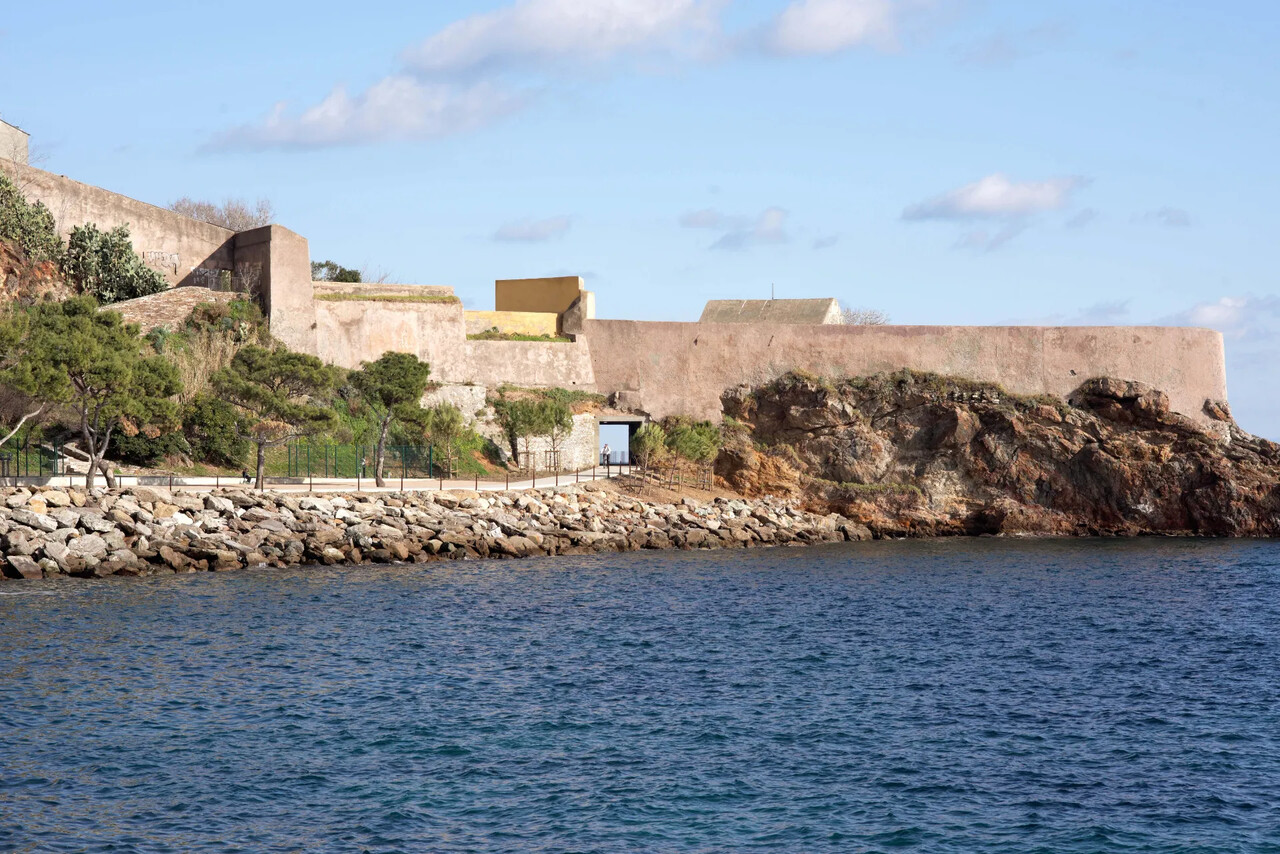
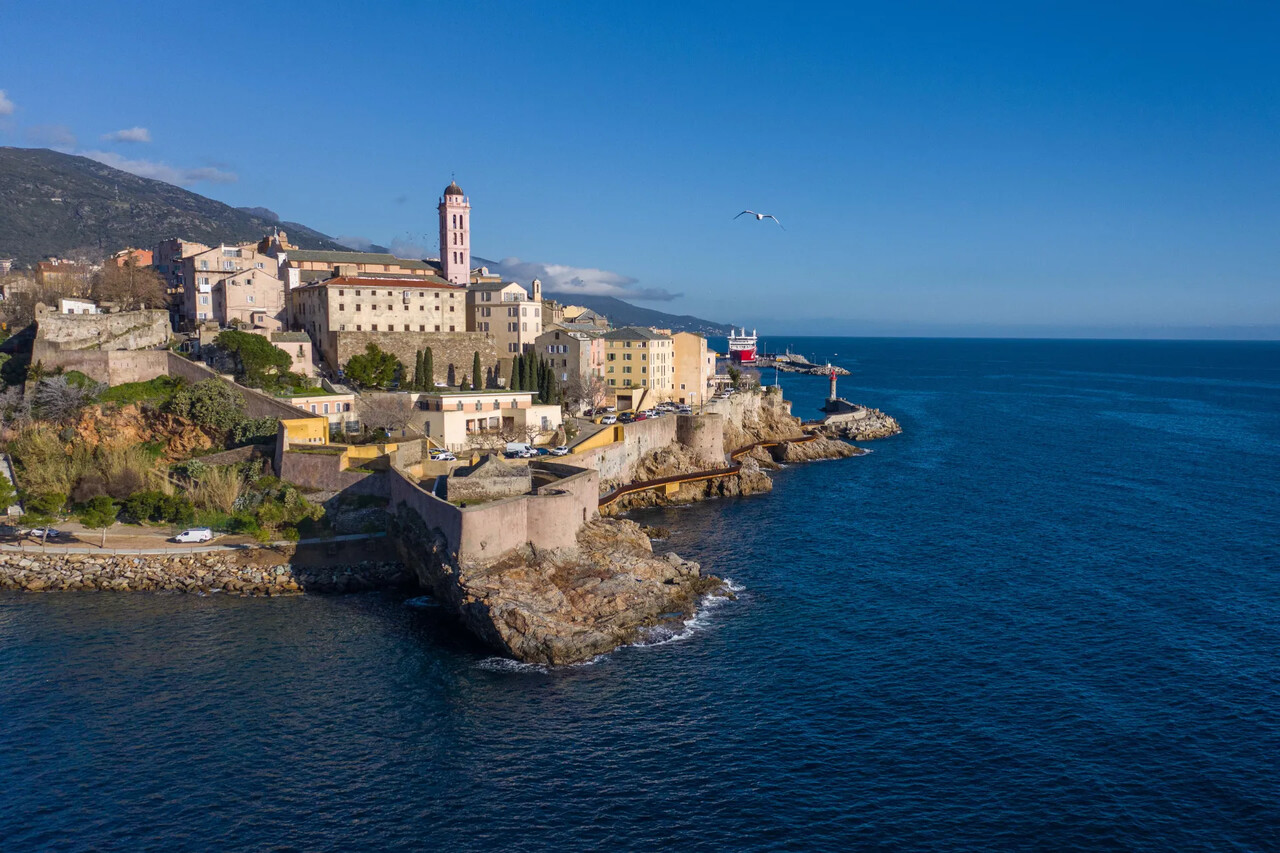
Gentle connections There can hardly be anything more dramatic than the direct encounter between the powerful geometry of a fortress and the natural brutality of the rocks on which it has taken root. In this gritty relationship between nature and architecture it is not always clear what supports what, such is the extent to which the rawness of the materials and the geometry of the walls blur and communicate with each other. In Bastia, the fortress walls of the citadel crown the mighty rock on which the Genoese built Terra Nova, the upper city, in the 14th century. Looking out to sea, where time seems frozen above a landscape of stone, it seems as if nothing more could be built here. But Dietmar Feichtinger Architectes were entrusted with the demanding task of creating, precisely in front of this dramatic part of the coastline that carries the historic town walls, a gentle connection between the different parts of the town. This meant designing a pedestrian way that can be accessed barrier-free and can also be used by cyclists. The office of Dietmar Feichtinger developed the project together with engineers of Schlaich Bergerman et Partner, and worked with the local architects Buzzo Spinelli and the landscape architects InSitu.
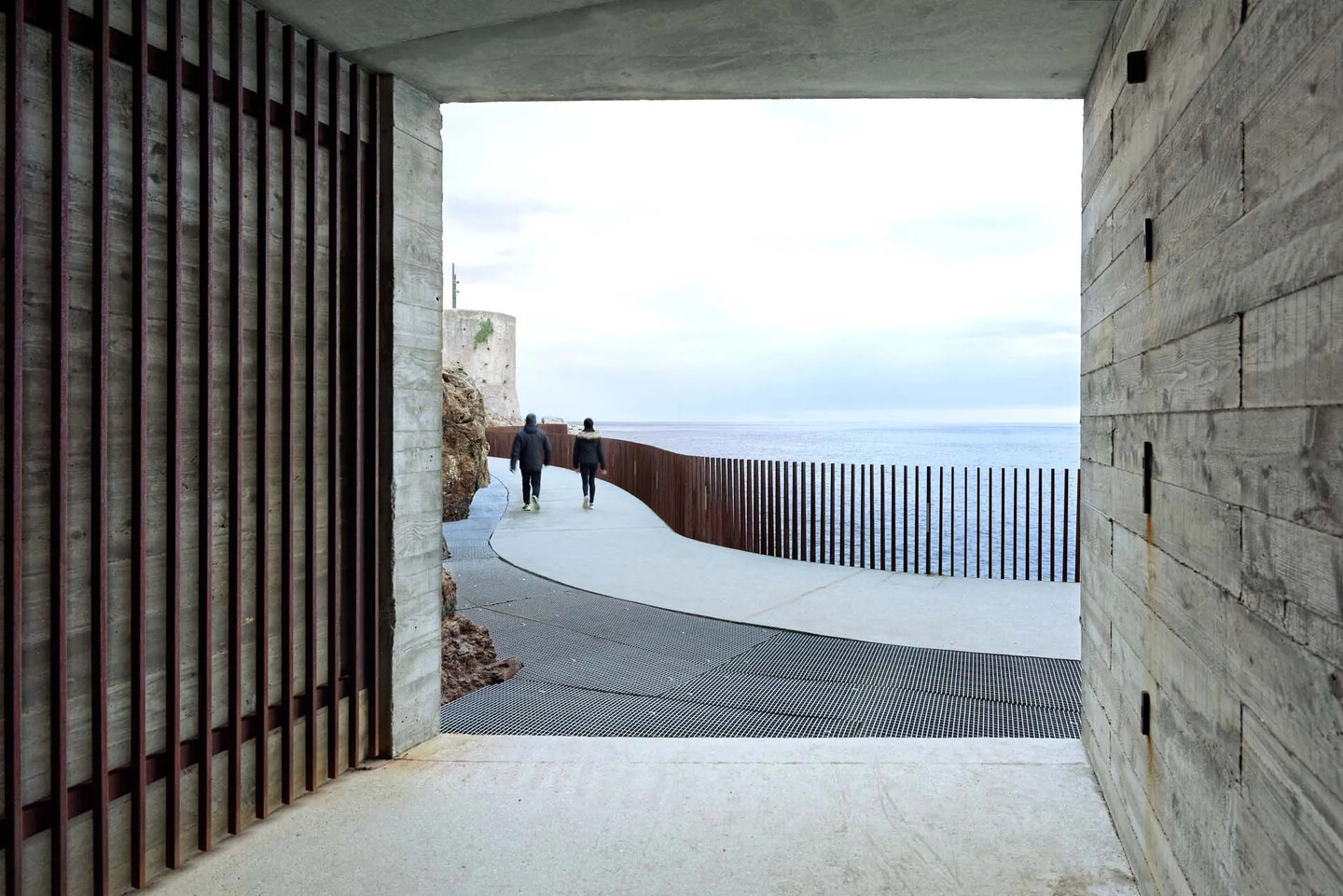
眺望大海全景 因為它環繞著城堡,所以在科西嘉語中被稱為 Aldilonda,意為“海上方”,遠不止是遊客的一條漫遊步道:它是更廣泛遠景的一部分,將成為 Spassimare 的最終加冕,這是一個旨在重新連接城市和海濱的城市項目,多年來這樣的連接一直被城市所剝奪。這種僵化的關係長期以來被港口工程損害,近年來則是被沿海岸線的海岸公路所分隔,這條公路將上科西嘉的首府與地中海隔開。這條步道嵌入 Spassimare 中,從南邊的舊港灣開始,穿過火藥庫的堡壘下方,那裡有石頭填充保護著海岸。當小徑穿越堡壘下方時,被雕刻出的炮台內的光井所照亮。一條在岩石中製成的台階可快速通往火藥庫的露台和它的小型博物館。這條25米長的地下通道被挖掘成一條溝渠,被再次覆蓋,這裡的牆壁由素面混凝土製成。隧道是設計的重點之一,它沒有接觸重要的炮台,這個對城市如此重要的地方,以往人們會從牆上跳下海中潛水。
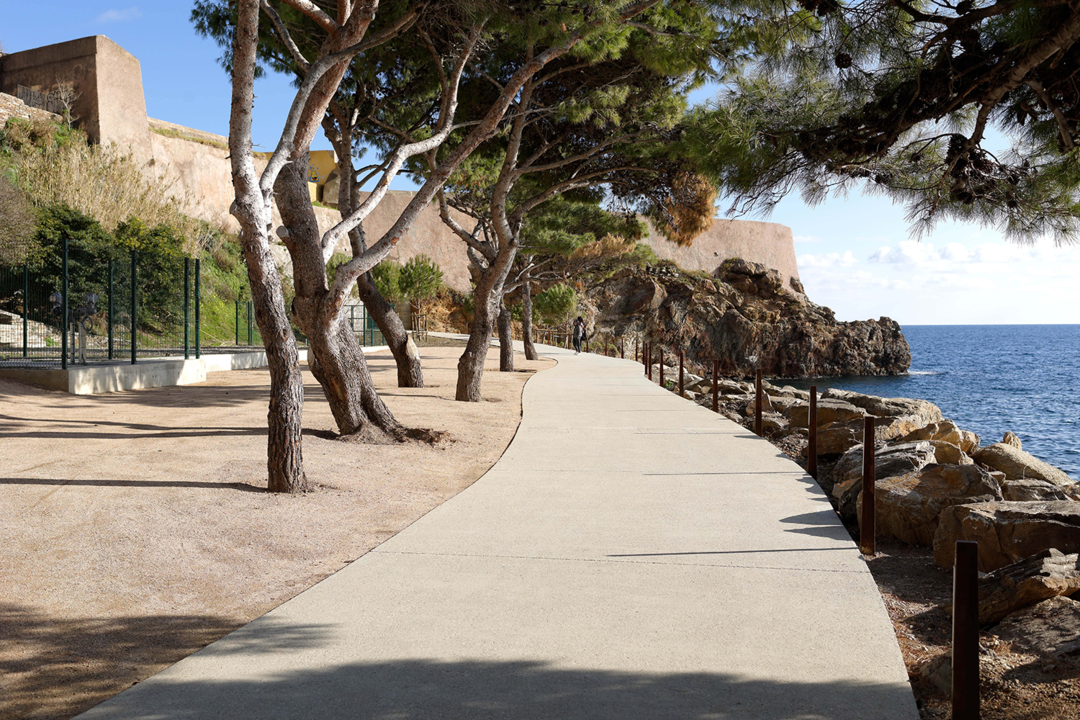
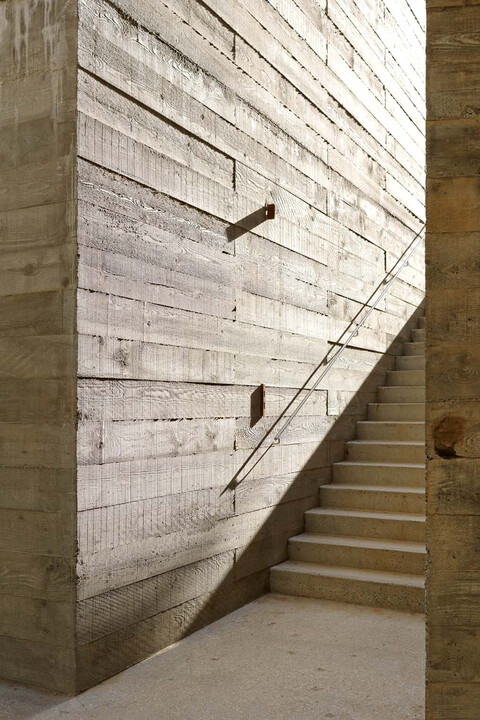
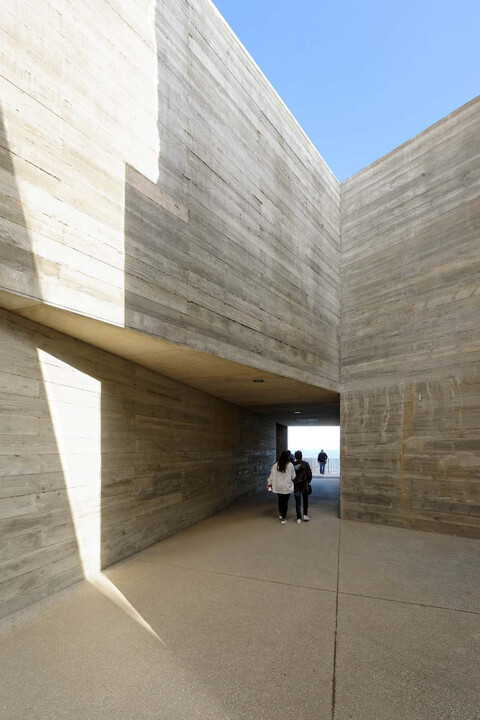
Panoramic view across the sea Because it leads around the citadel, Aldilonda, which in Corsican means "above the sea", is far more than just a promenade for tourists: it is part of a wider vision and will become the crowning termination of Spassimare, an urban project that aims at again connecting the city and the sea front, a connection that the city has been denied for years. This old established relationship has long been impaired by the port works and, more recently, by the coast road that runs along the shoreline and separates the capital of Haute Corse from the Tyrrhenian Sea. Embedded in the Spassimare, the promenade starts in the bay of the Old Harbour in the south and runs below the fortifications of the powder magazine, where stone fill protects the coast. Where the path penetrates beneath the fortress, the path is lit by a light shaft carved out of the bastion. A flight of steps made in the rock allows rapid access to the terrace of the powder magazine and to its small museum. The 25-metre-long underpass was excavated as a trench and then covered over again, here the walls are made of fair-faced concrete. This tunnel is one of the highpoints of the design. It leaves the bastion untouched, this place that is so important for the city, where traditionally people used to jump over the wall to dive into the sea.
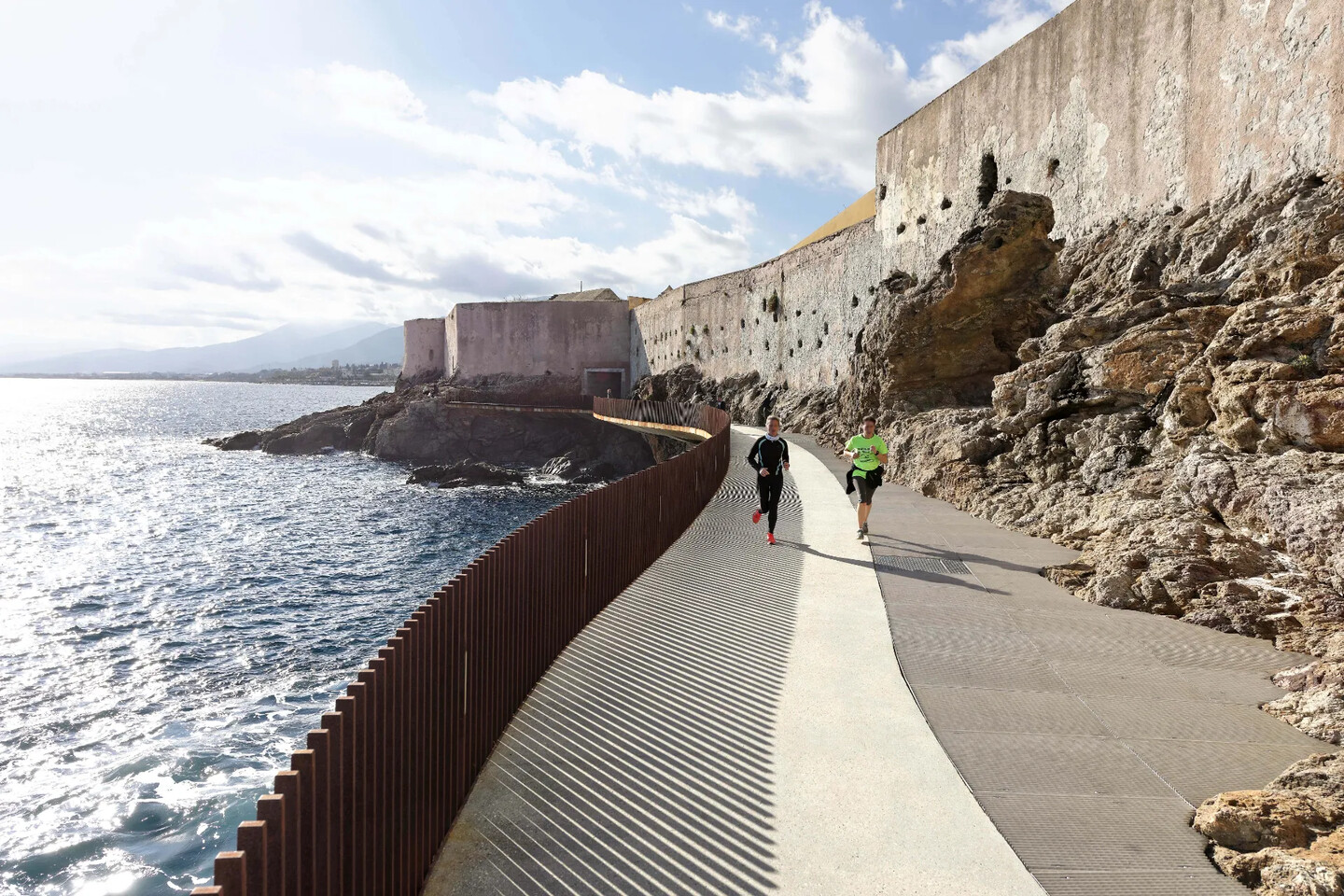
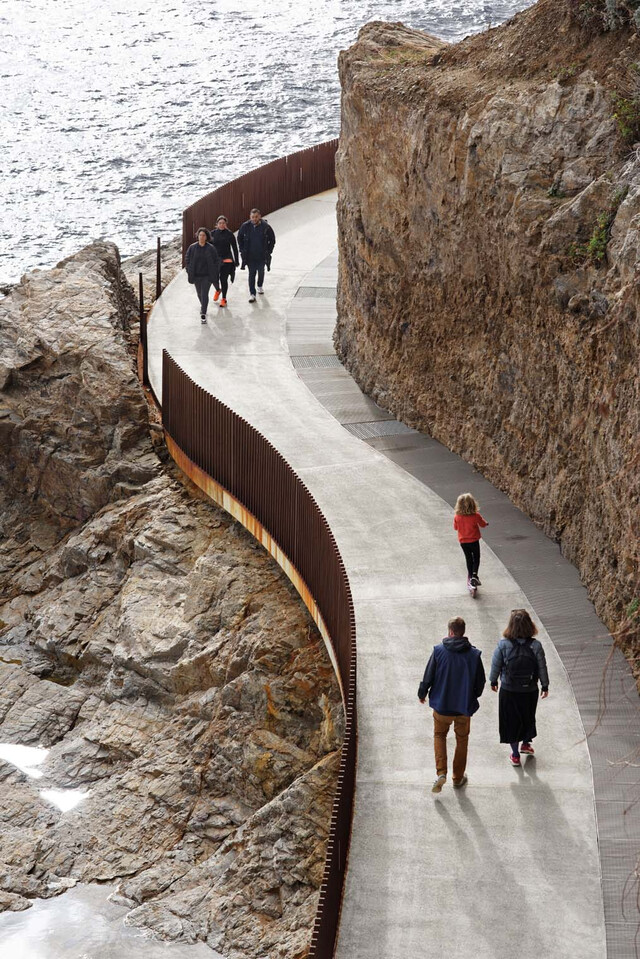
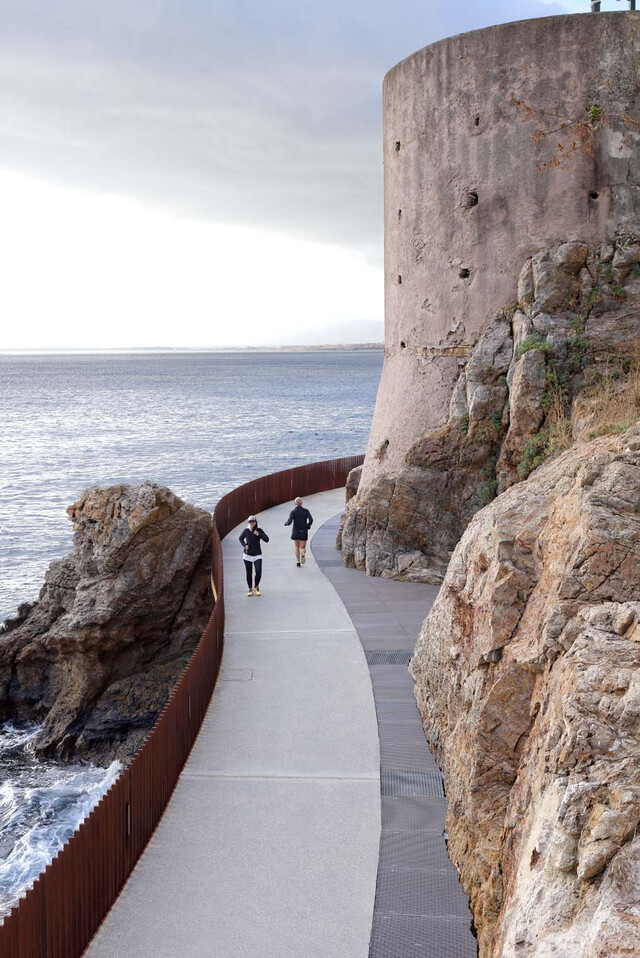
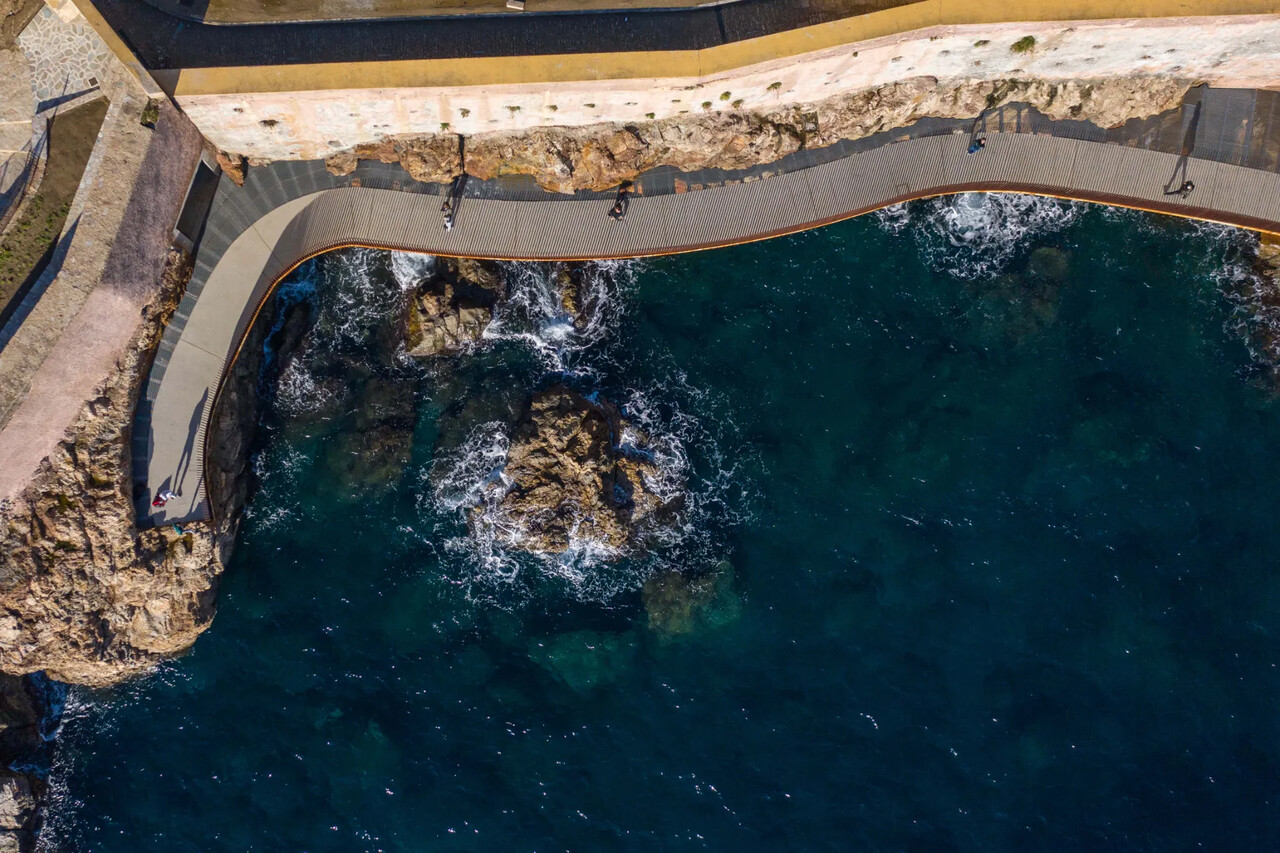
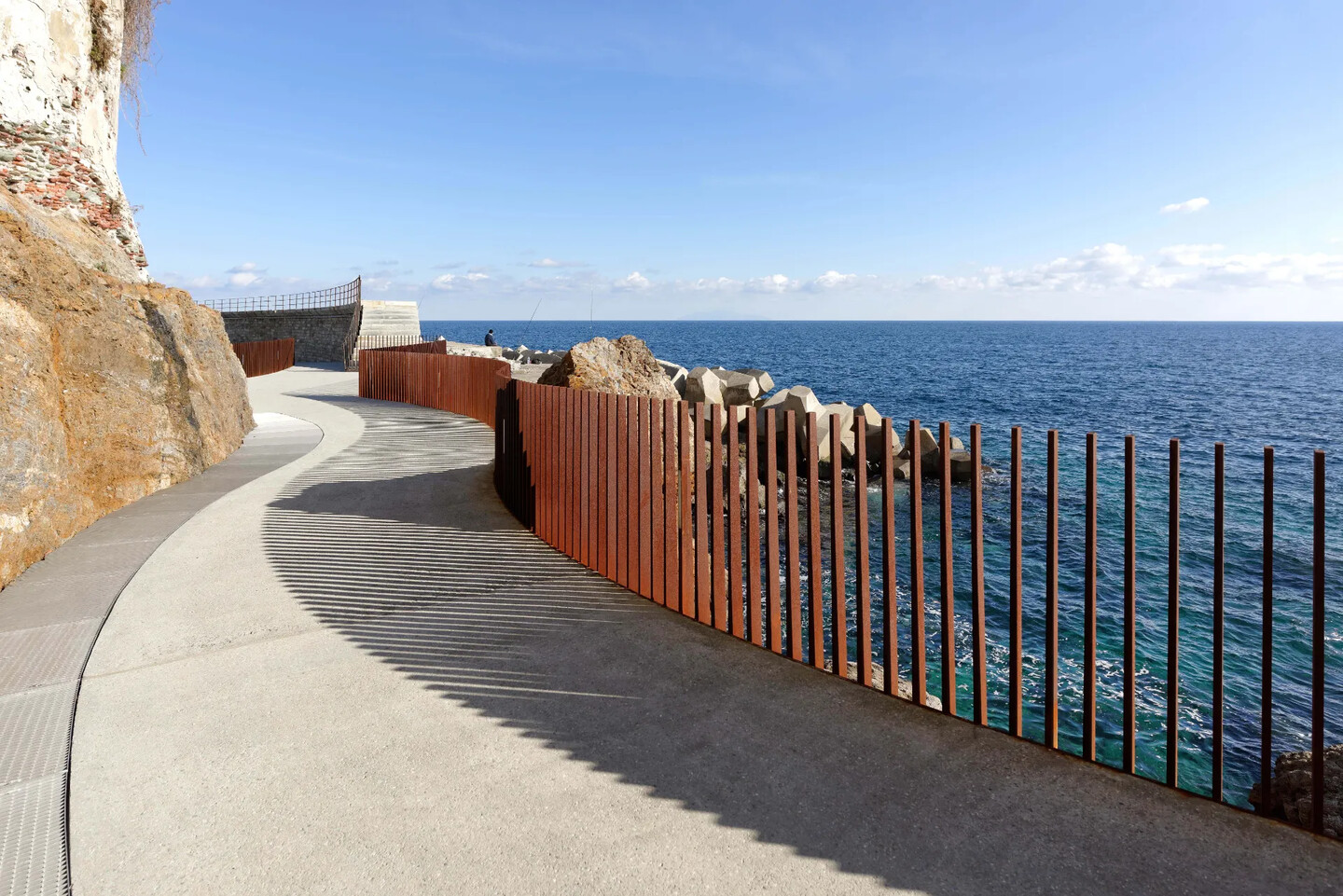
嚴謹邏輯的建造這個項目的亮點是重建了城市北部與南部地區之間的重要連結,這是一條錨定在懸崖底部岩石上的漫步道。它承載著堡壘牆。混凝土的水平線位於波浪上方五米處,發揮尺度的作用,強調岩石的形態:回應了古老城牆步道。它之所以能如此自然地流淌在上城下方,多虧了構成步道的混凝土板與 Corten 鋼護欄的連接。這些與金色石英岩的銹與赭色調完美融合,岩石上縱橫交錯著藍灰色的條紋。溫暖的材質與古老城鎮房屋的粉刷相互協調,上方則是 Sainte Marie 大教堂的塔樓高聳入雲。該結構看似簡單,實則遵循嚴謹的邏輯:在這 300 米長的陽台上,有些混凝土板直接倒在岩石上,有些部分則懸吊在海面上。預應力拉杆用於將 23 個預製混凝土控制台固定在深入岩石中。其中一些拉杆長達 24 米。在施工過程中,研究發現岩壁存在弱點,需要加固岩石。必須填補凹陷處。這些控制台承載著18塊預製混凝土板,每塊寬 2.4 米。它們是複雜工程努力的成果;其輪廓被設計成能夠承受“世紀浪潮”的衝擊,並在面對波濤洶湧的日子裡,承受浪花拍打的應對阻力;它們被小心地楔在每個預製混凝土的兩側。
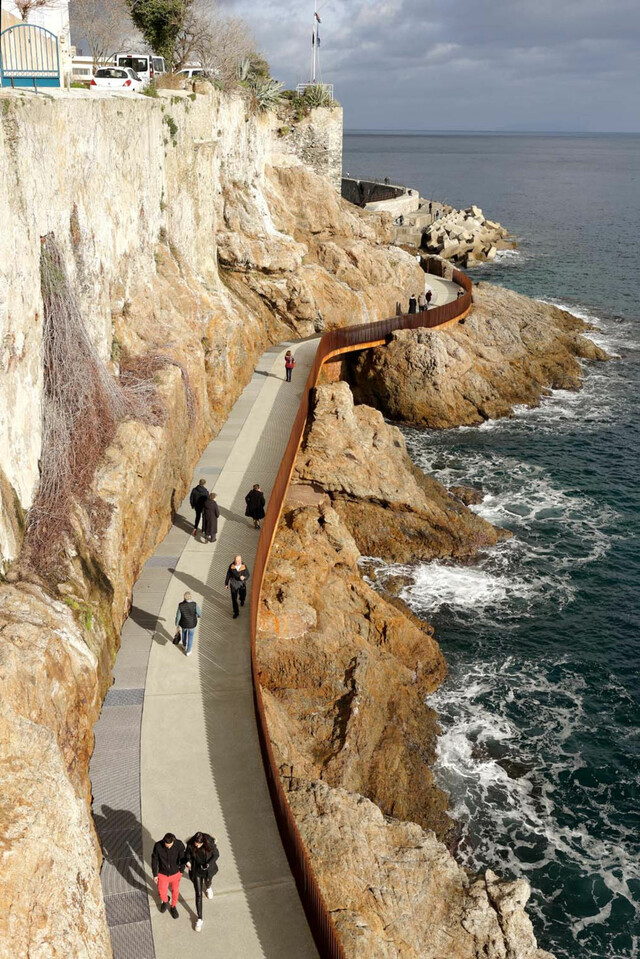
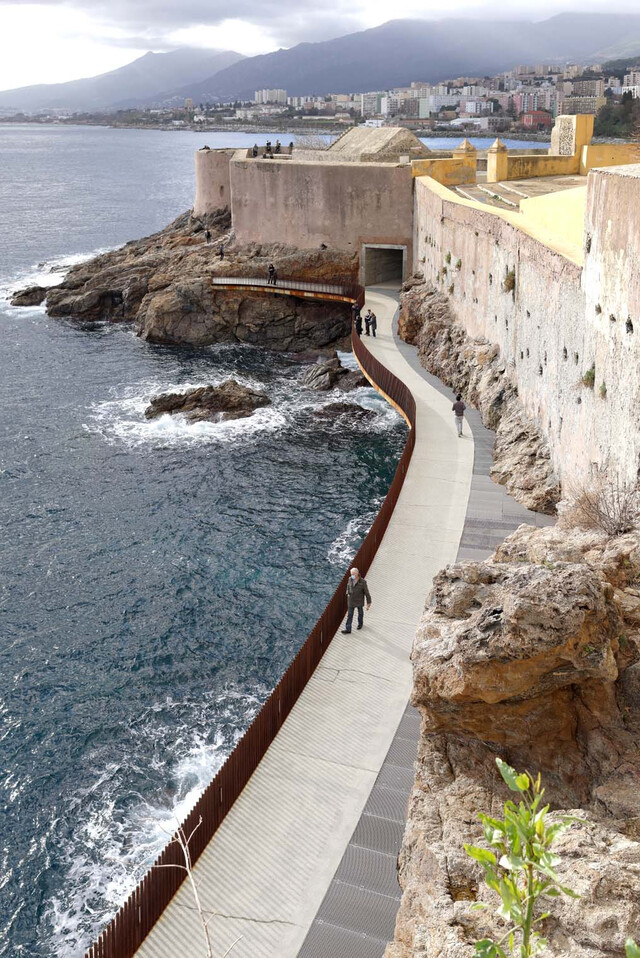
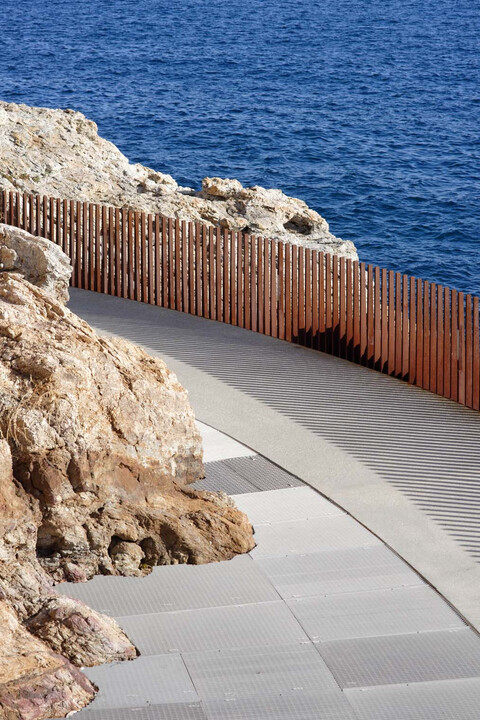
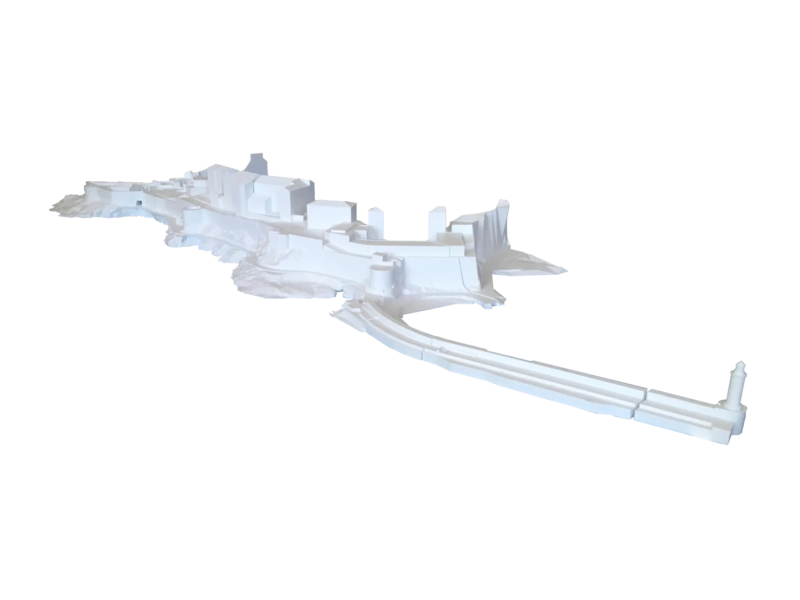
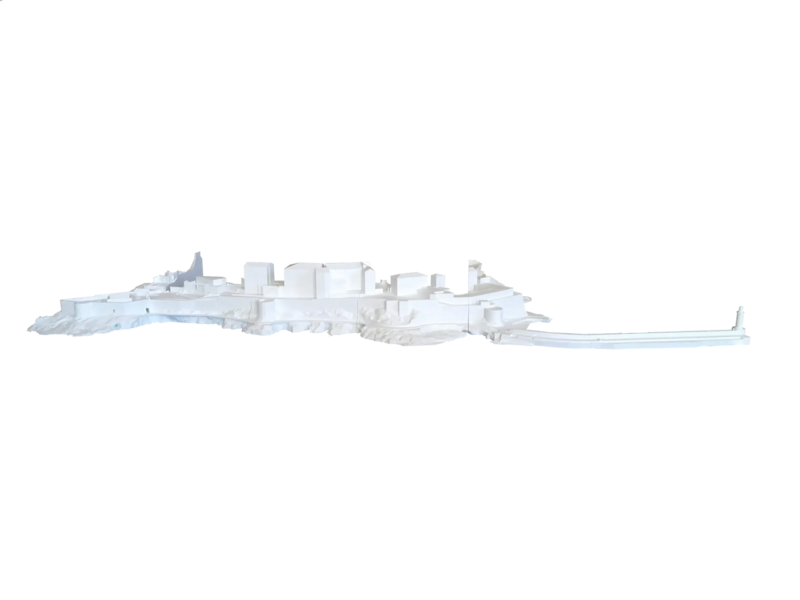
Strictly logical construction The showpiece of this project, which re-establishes a direct connection between the north of the city and the districts to the south, is the promenade anchored in the rock at the foot of the cliff face. It carries the fortress wall. A horizontal line of concrete, five metres above the waves, which functions as a scale and emphasises the morphology of the rock: a reference to the old battlement walks. That this pedestrian bridge flows in such a self-evident way below the Upper City is thanks to the connection of the concrete slabs that make up the walkway with the Corten steel parapet. These harmonise perfectly with the rust and ochre shades of the gold-coloured quartzite rock that is streaked with blue-grey lines. A warm materiality that harmonises with the render of the old town houses, above which the tower of the Cathedral of Sainte Marie soars. The apparently simplicity of the structure follows a strict logic: on the 300-metre-long balcony there are stretches where the concrete slabs were poured directly onto the rock and sections that cantilever out over the sea. Prestressed tie rods were used to fix 23 prefabricated concrete consoles deep in the rock. Some of these rods are 24 metres long. While the construction work was being carried out, studies revealed weaknesses in the rock wall, making it necessary to strengthen the rock. Hollows had to be filled in. The consoles carry 18 prefabricated concrete slabs, all with a width of 2.40 metres. They are the outcome of a complex engineering effort; their profile is designed to handle the impact of a "wave of the century" and to offer the least possible resistance to the pounding surf on days with heavy sea swells; they are carefully wedged on both sides of each console.
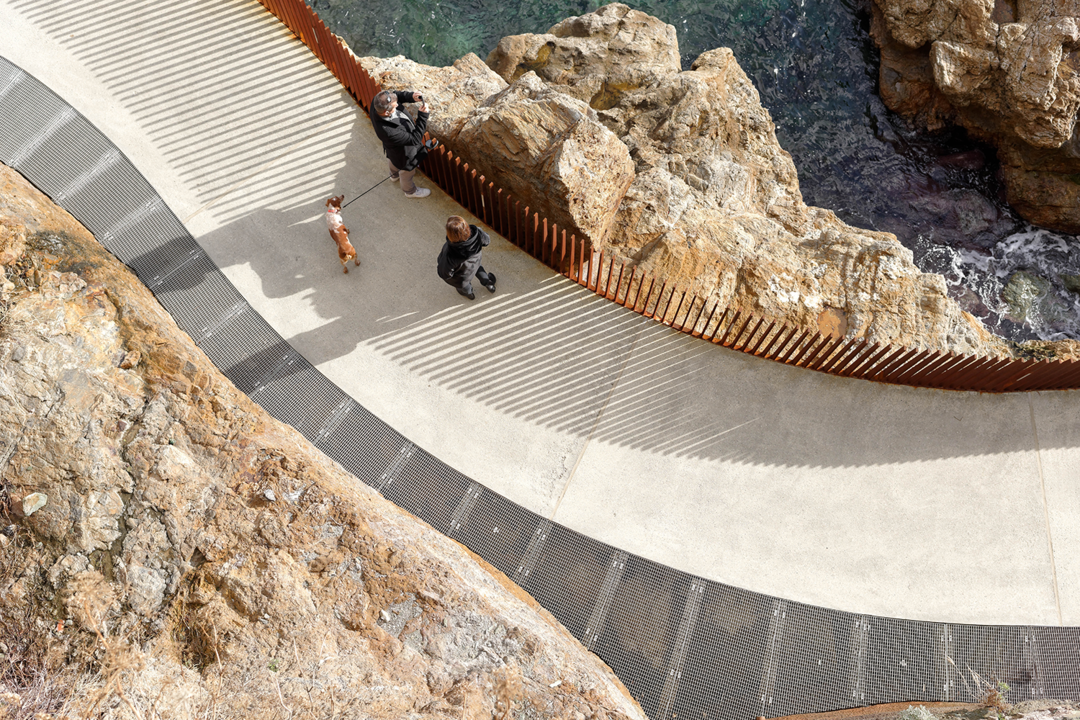
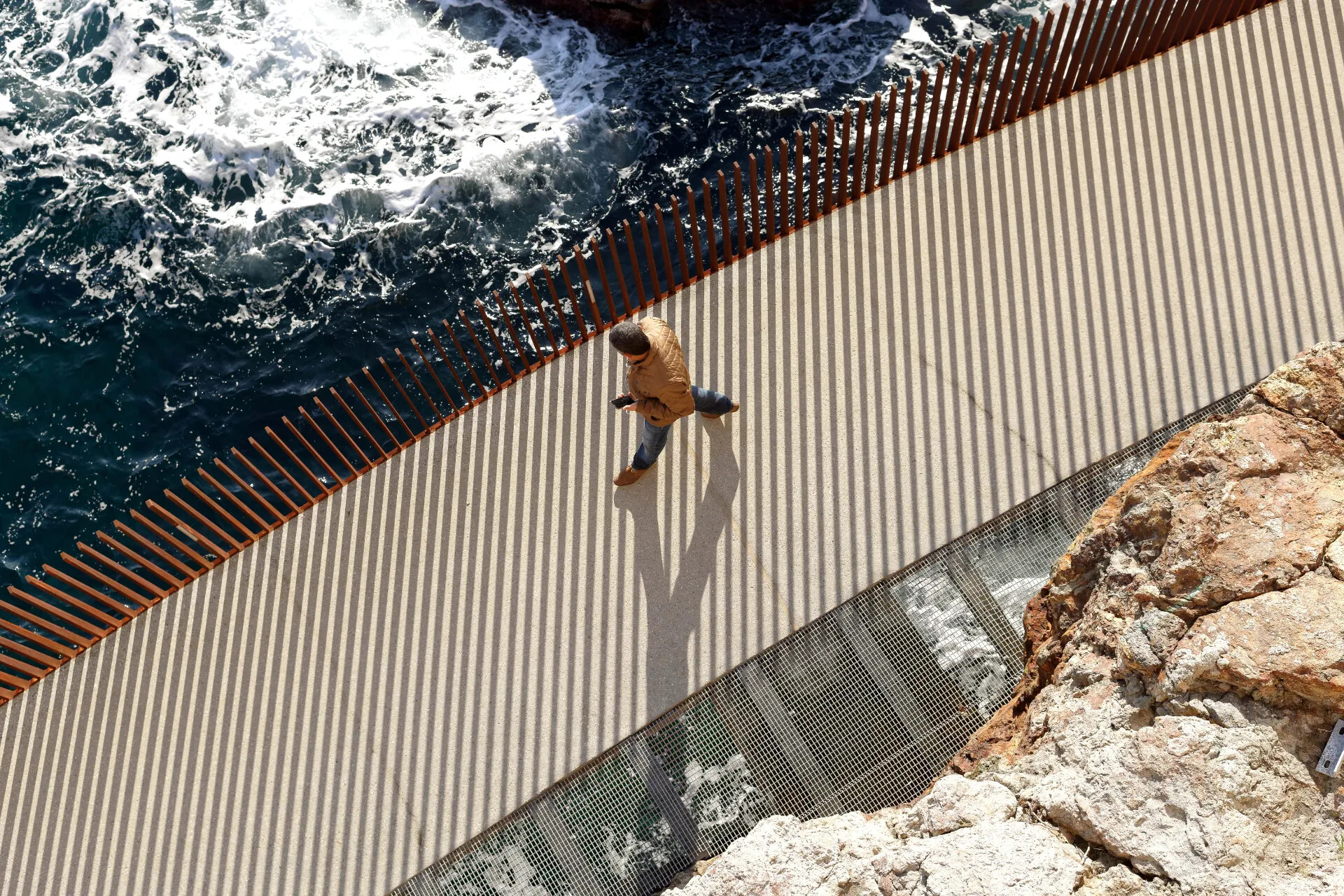
抗風化混凝土的使用經過改良,能夠克服海水的影響。與 Seyne-sur-Mer 的工程辦公室Océanide 合作,進行了一系列水力學研究,目的是設計能夠應對海浪的建築。這些研究使結構的抗壓性得以增強,因此能夠承受高達14噸/平方米的衝擊。混凝土板的“V”形輪廓安裝在離岩石一段距離之處,使海浪引起的氣流可以在岩石與結構之間流通。最後混合開挖產生的碎石作為骨料的混凝土表面,被應用於板材上。混凝土彎曲帶與岩壁不規則輪廓間的空間由透水元件填充。鋼格柵讓平台擴大,並創造更大的區域,邀請人們在陽光下停留。護欄和其垂直元素的設計也採取了同樣清晰的方法:兩厘米厚的 Corten 鋼立柱無欄杆,每13厘米設置一個,使人們能看到大海和地平線。鋼鐵的鏽色反映了岩石的顏色,在每三米設置在柱子中的 LED 燈帶照射下,在夜晚閃爍。在海浪過重的情況下,可以封鎖通往漫步道的路徑:以鋼格柵來封閉其兩端。
Weather proof The concrete used is adapted to deal with the effects of seawater. Together with the engineering office Océanide in Seyne-sur-Mer a series of hydraulic studies was made with the aim of designing a construction that could handle the waves. These studies enabled the resistance of the structure to be increased so that it can deal with impacts of up to 14 t/m². The "V "shaped profile of the concrete slab was mounted at a distance to the rock so that the movement of air caused by the waves can pass between the rock and the structure. Finally, a concrete surface in which rubble from the excavation work was added as aggregate, was applied to the slabs. The space between the curving ribbon of concrete and the irregular outline of the rock wall is filled by permeable elements. Steel gratings allowed the platform to be widened and larger areas to be created, which invite people to spend time in the sun. The same clear approach was taken to the design of the parapet and its vertical elements: two-centimetre-thick Corten steel posts without a handrail, placed at 13 cm centres, allow a view of the sea and the horizon. The rust colour of the steel reflects the pigment of the rock and gleams at night in the shine of the LED strips integrated in the posts every three metres. In the case of excessively heavy seas, access to the promenade can be blocked: steel gratings are used to close the path at both ends.
自然與文化遺產漫步道保持距離,一方面保留了岩壁和岩石突出部分的自然特性,另一方面也因缺乏任何可能損害項目簡單的“街道家具”。在晴朗的日子裡,人們可以坐在岩石上,聆聽海浪的呼吸,享受格柵下海沫的氣味。北側的漫步道通往老港口,並以沿著碼頭牆Jetée du Dragon 延伸坡道盡頭。從這裡,你可以沿著一個小型天然沙灘再次走向城市。對於巴斯蒂亞的居民來說,這個項目意味著重新建立他們與海洋熟悉的關係,同時詮釋新的視角來觀察城市及文化遺產。就像相機在海浪上方移動拍攝的畫面一樣,Aldilonda 提供了一系列圖像,同時尊重這些歷史地點的身份。它成為了海中浸泡舞台的新方式。海景的開闊讓你能夠與他人交流互動,或安靜地沈思。混凝土線條的極簡外觀,強調了堡壘牆,保留自然景觀的永恆特性,看起來自然就像什麼都沒有介入增加一樣。
Nature and cultural legacy The natural character of the rock wall and of the rocky outcrops is preserved on the one hand by the fact that the walkway slabs keep their distance, on the other by the absence of any kind of "street furniture" which might detract from the simplicity of the project. On fine days one can sit on the rocks to listen to the breathing of the waves and to enjoy the smell of the seafoam below the grating. In the north the promenade leads to the old harbour and ends with a ramp that runs along the quay wall Jetée du Dragon. From here you can reach the city again by walking along a small natural beach. For the residents of Bastia this project means re-establishing a relationship with the sea that they are so familiar with, while at the same time offering a new perspective of the city and its cultural legacy. Like pictures taken by a camera moving above the waves Aldilonda offers a series of images while at the same time respecting the identity of these historical places. It becomes a stage for new ways of bathing in the sea. The expansiveness of the seascape here allows you to gather with other people or simply to rest in quiet. The minimalist appearance of this line of concrete, which underlines the fortress wall, preserves the timeless character of the natural landscape. It looks as if nothing at all has been added.