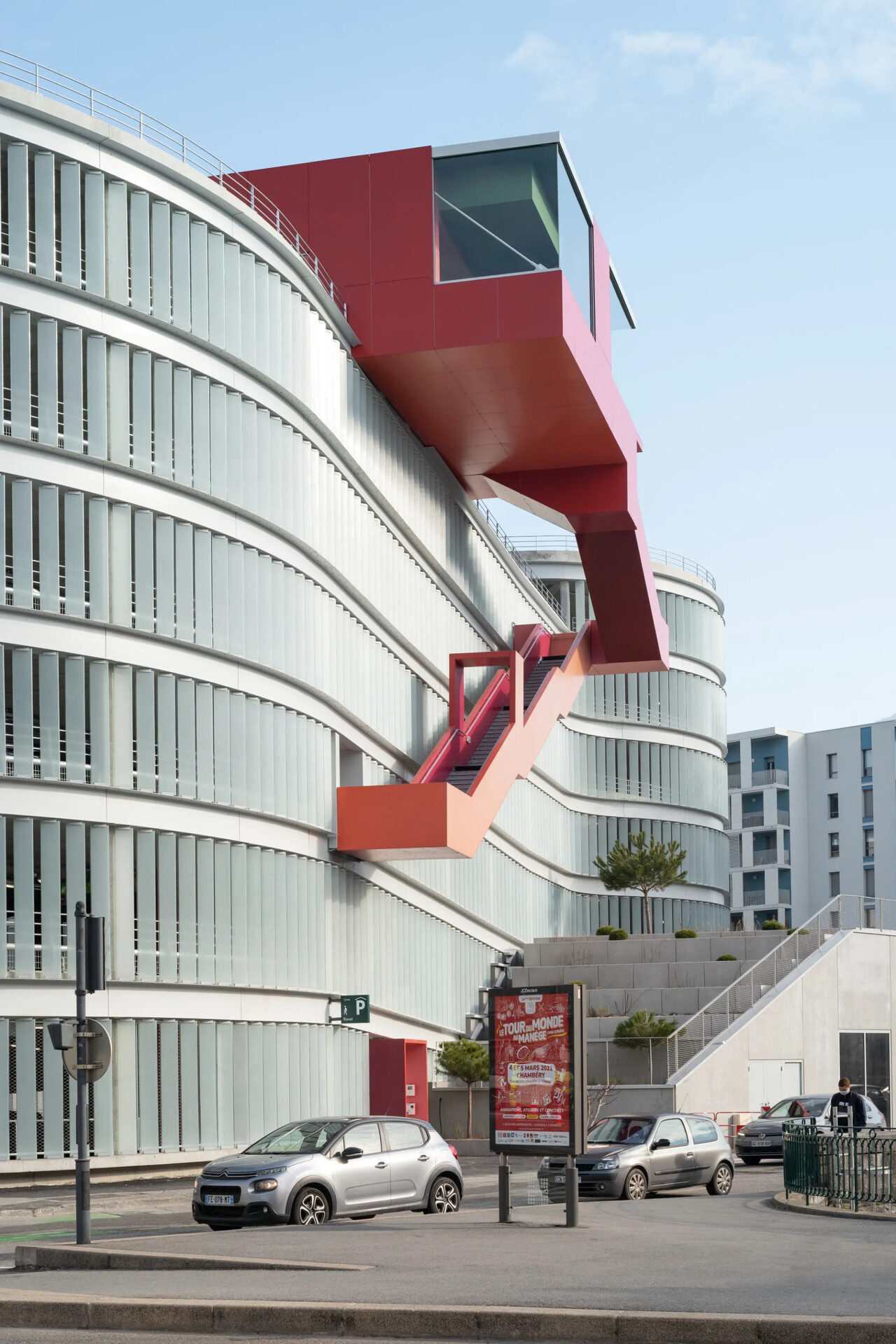
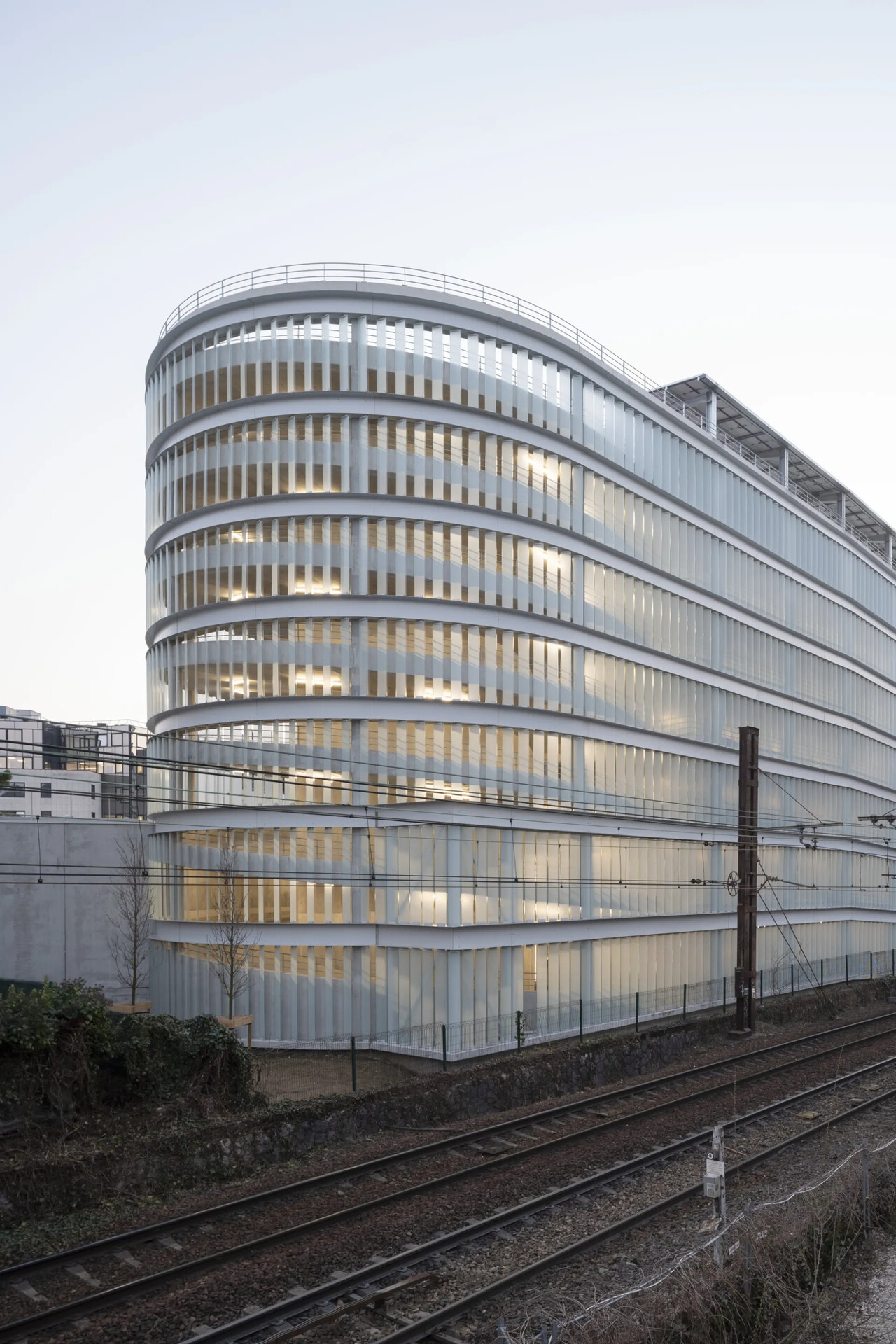
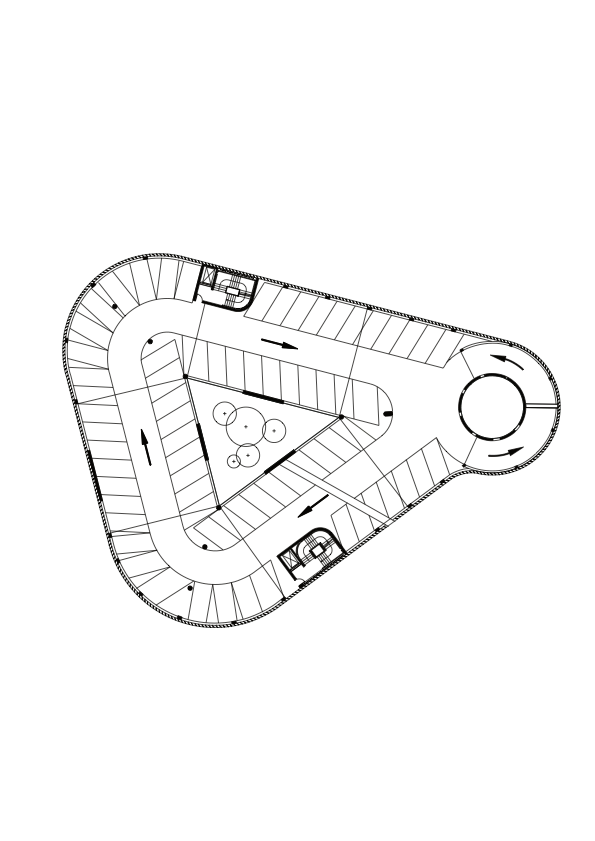
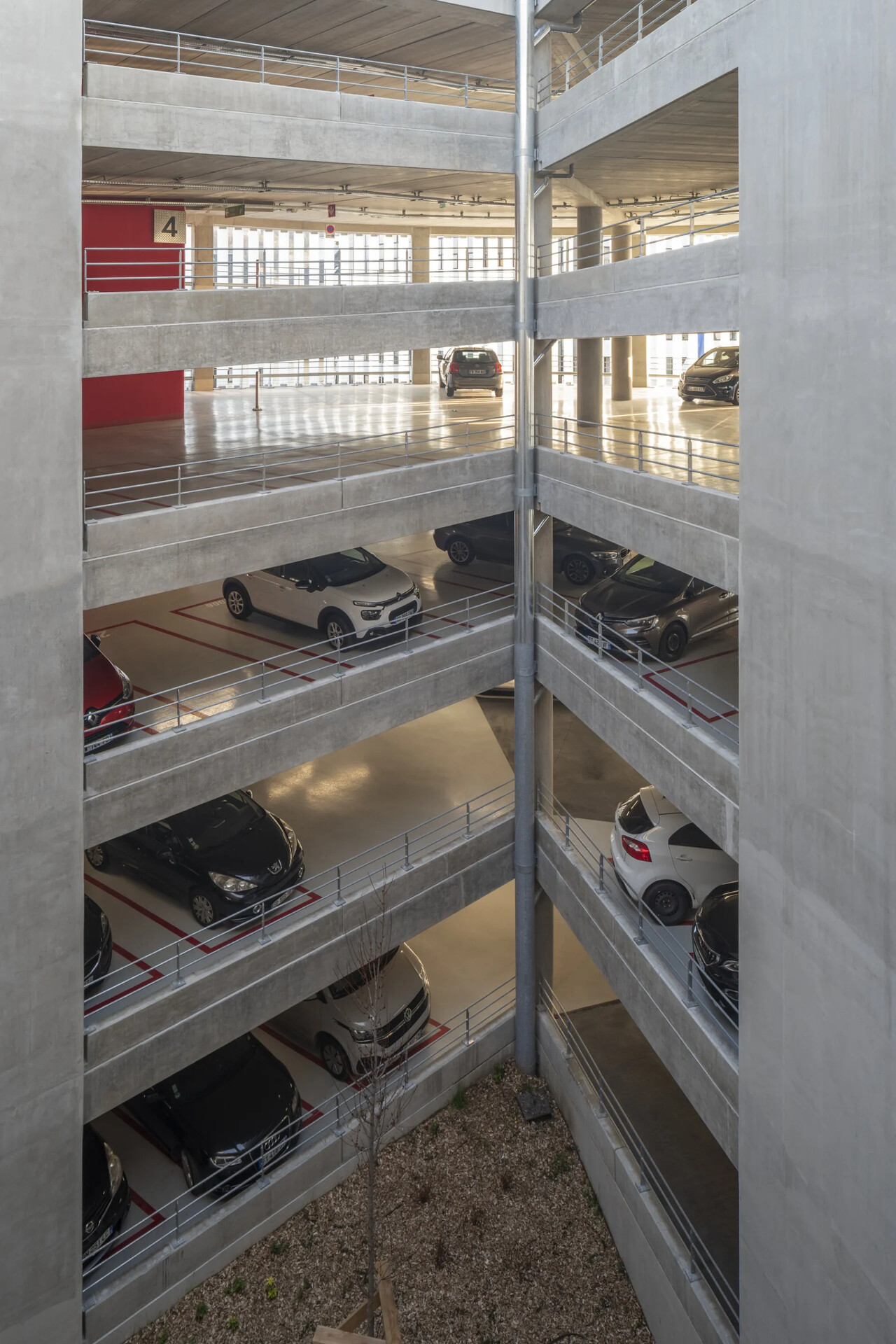
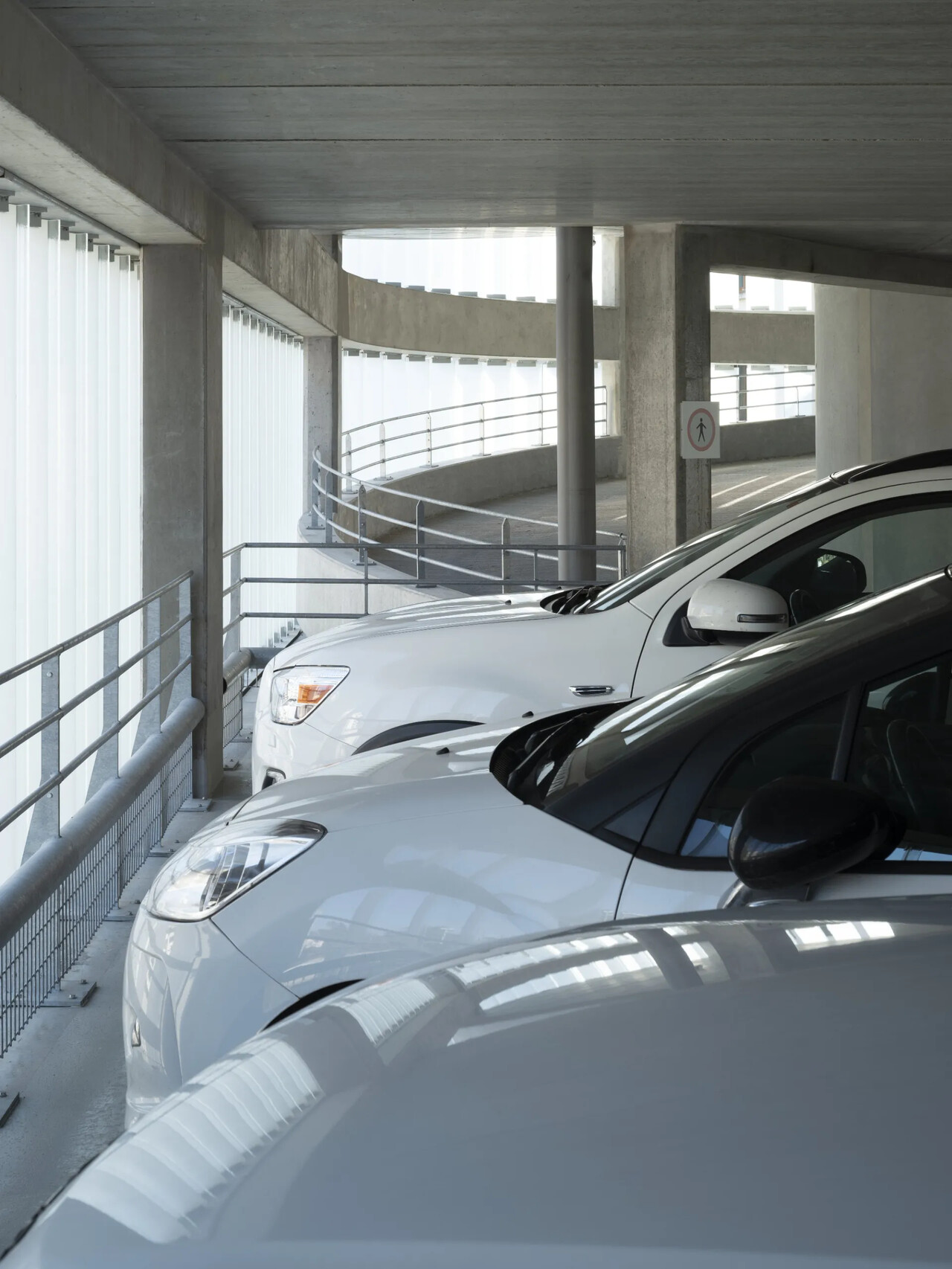
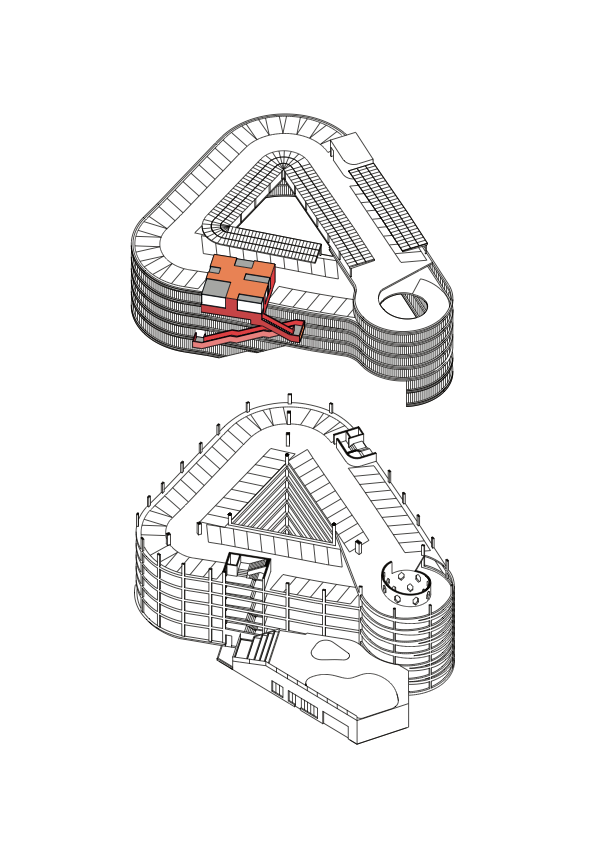
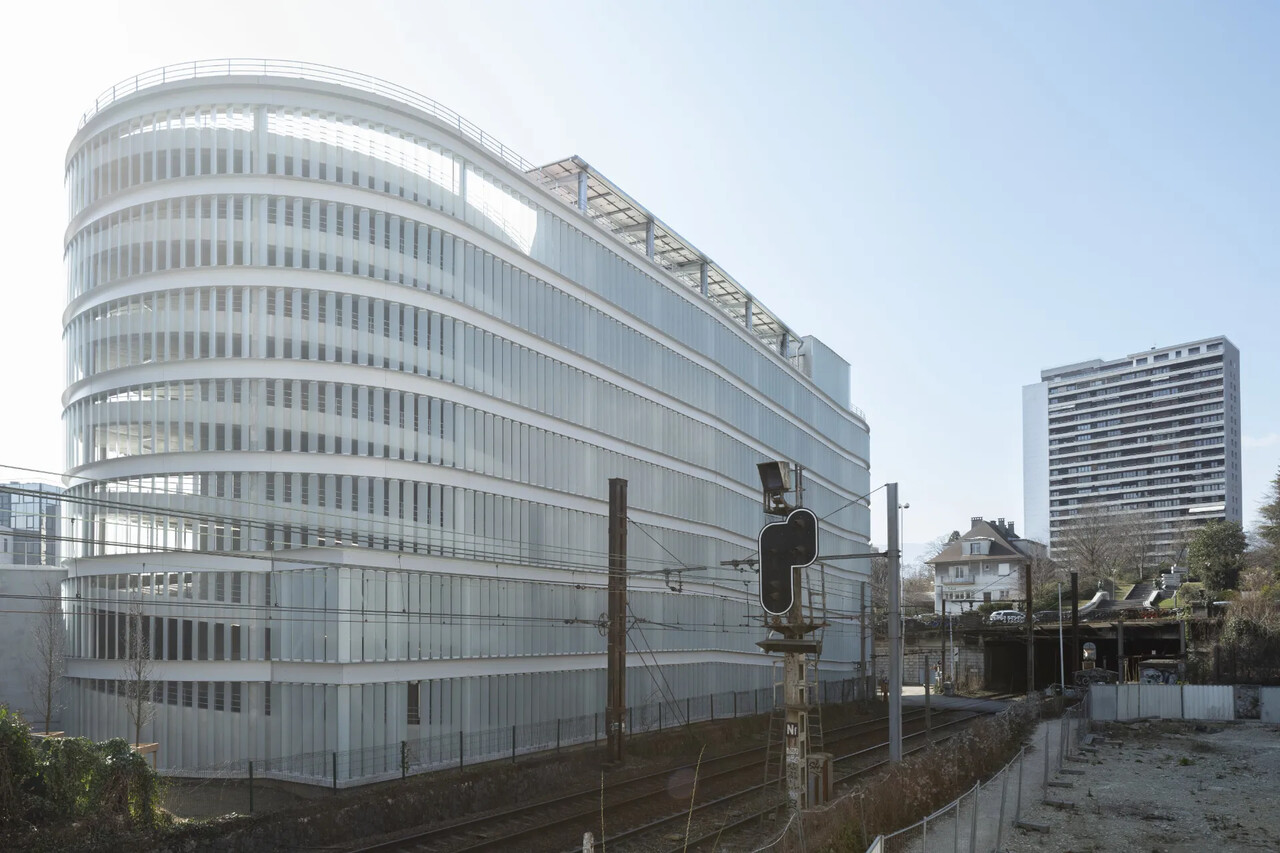
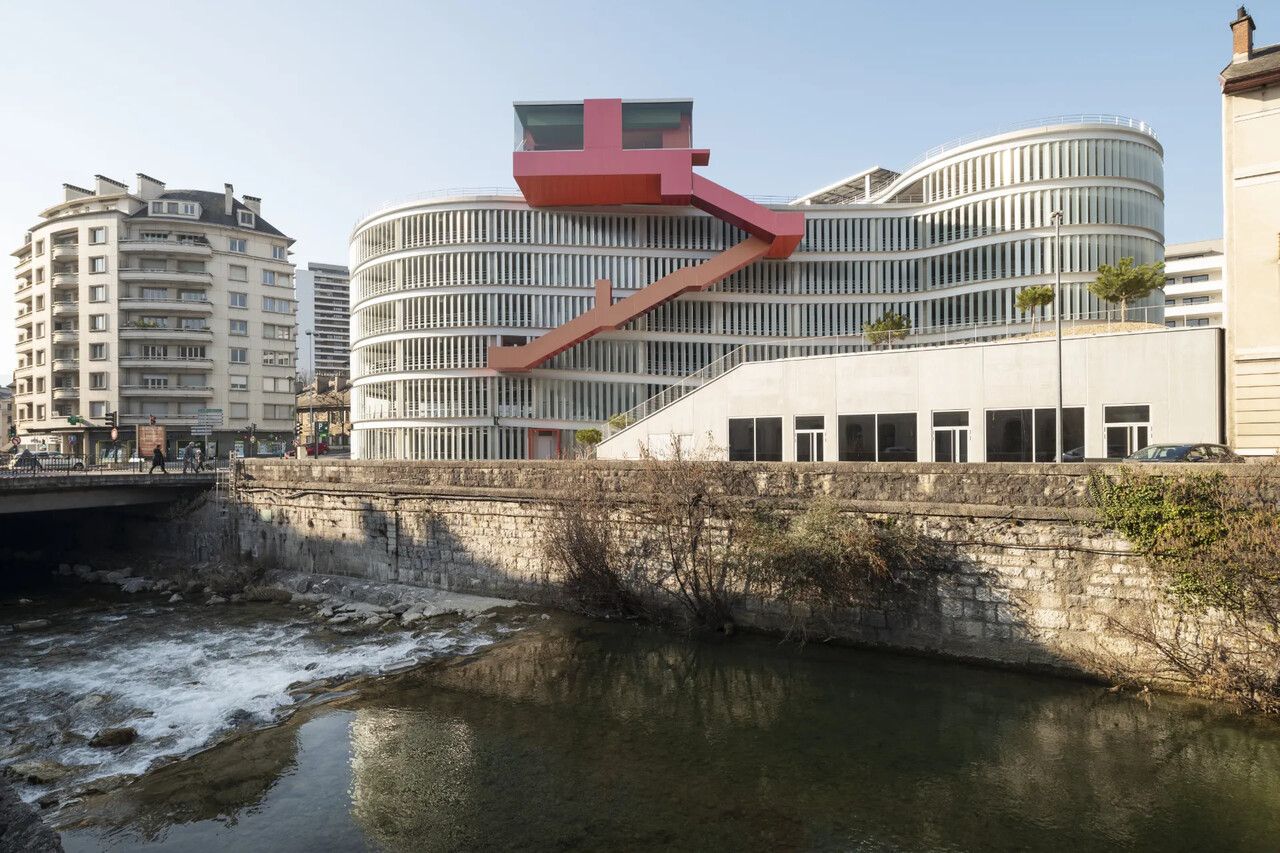
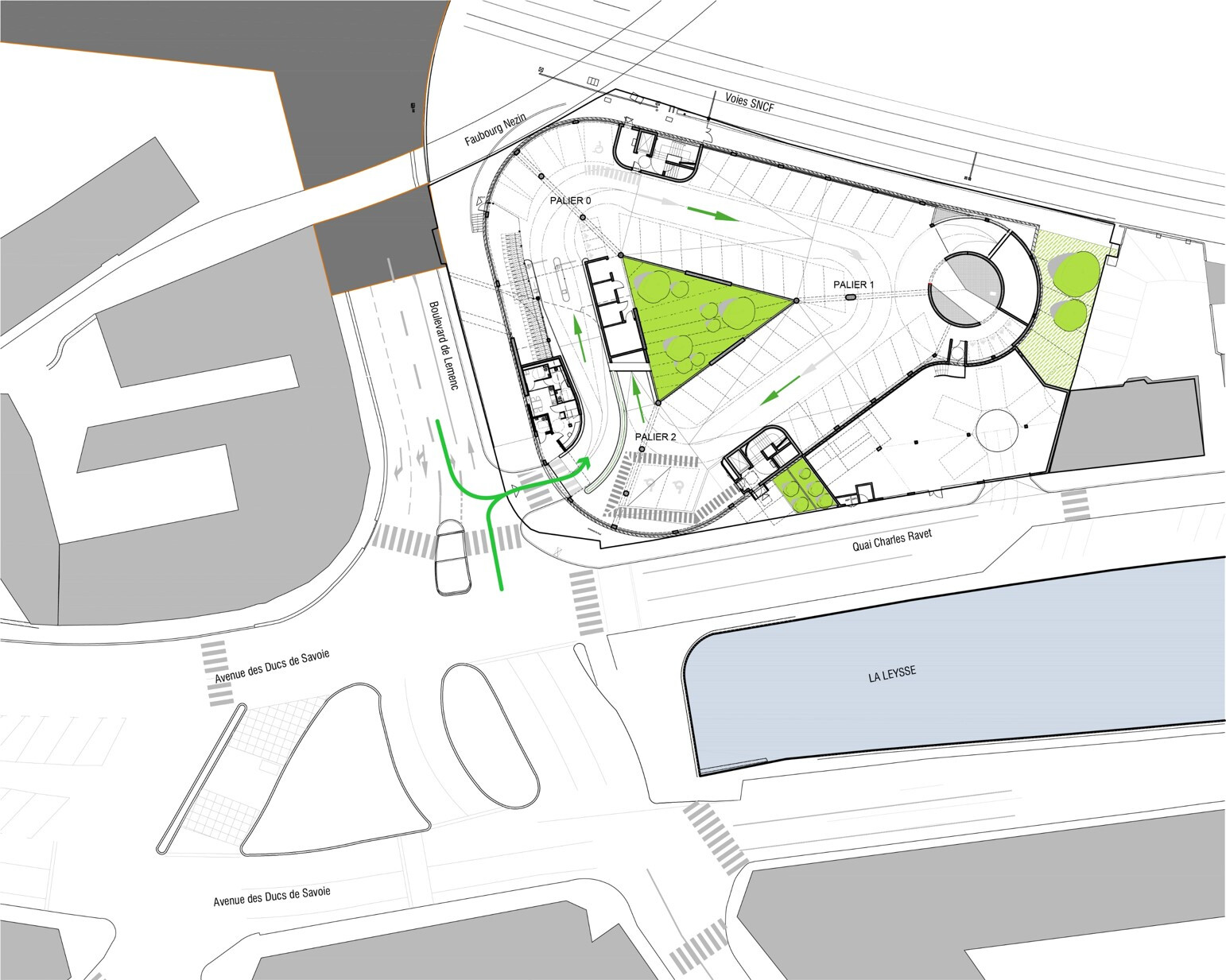
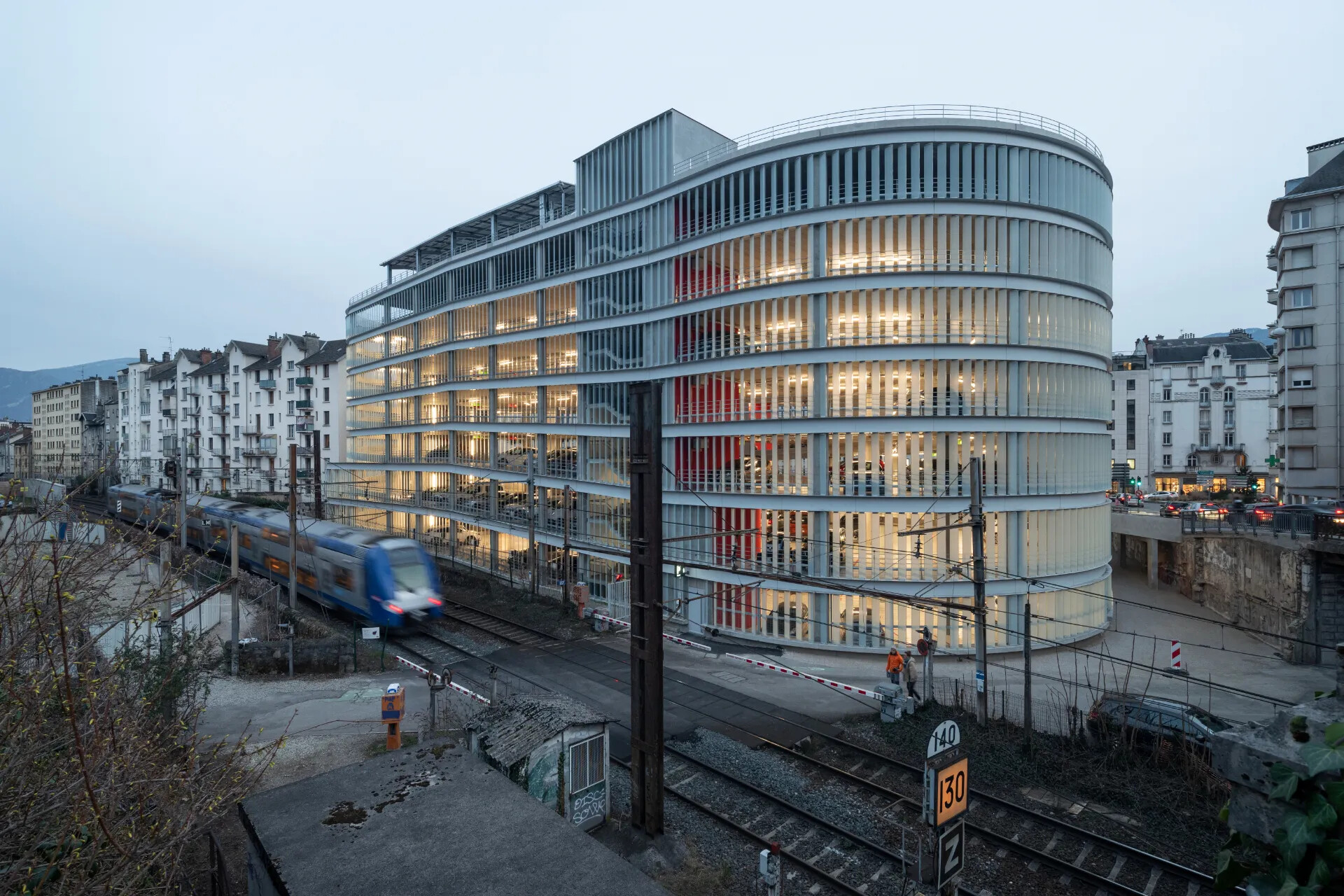
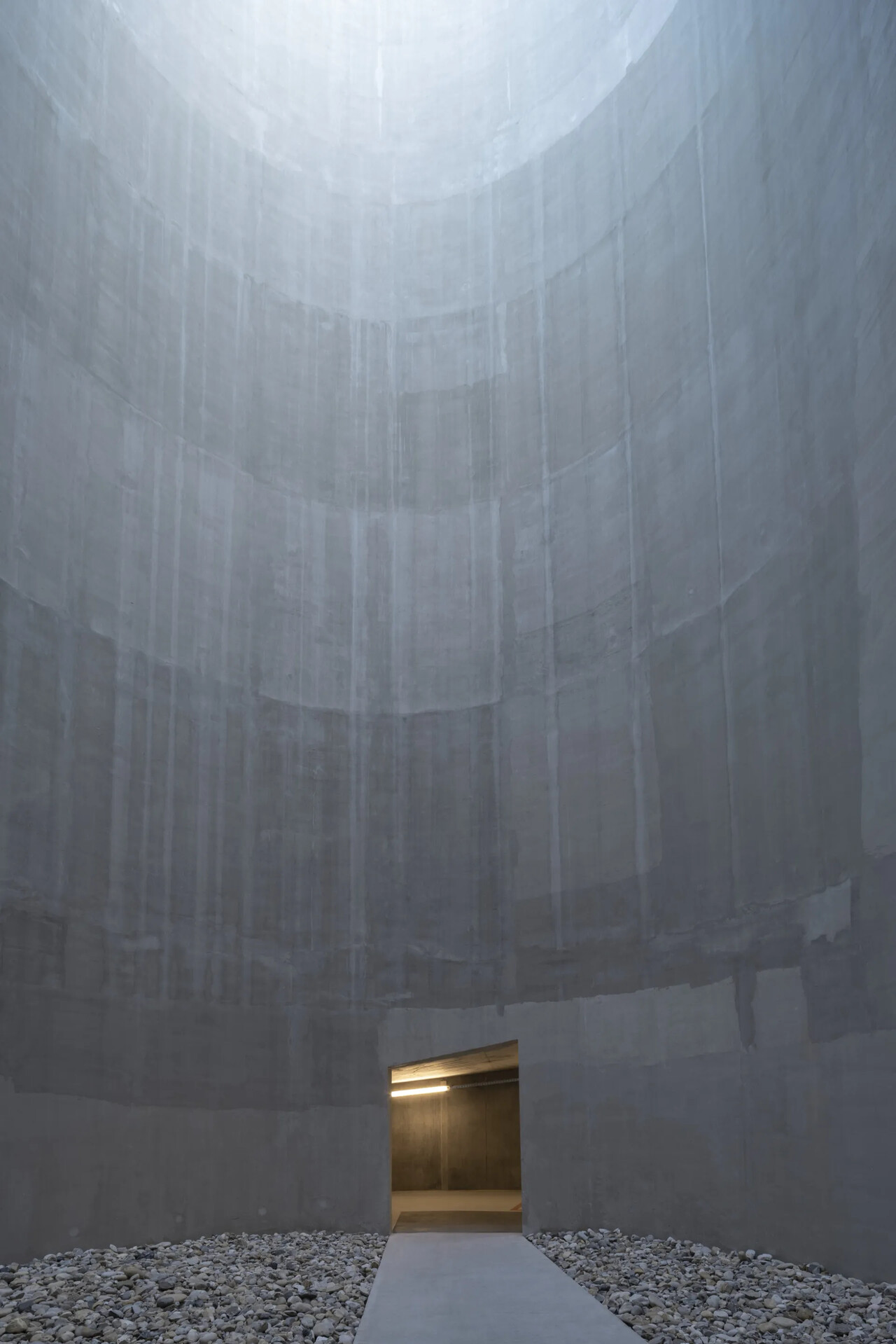
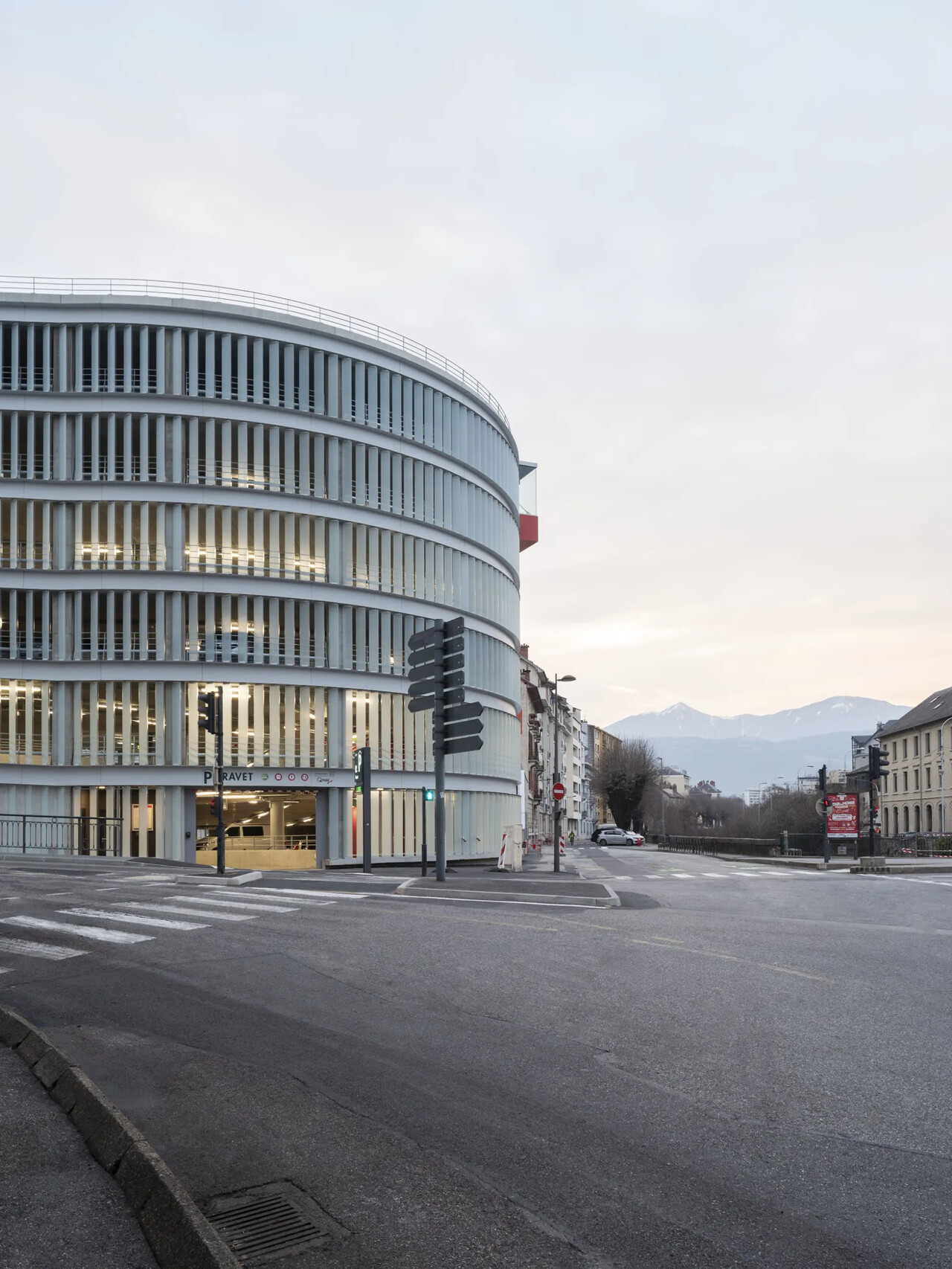
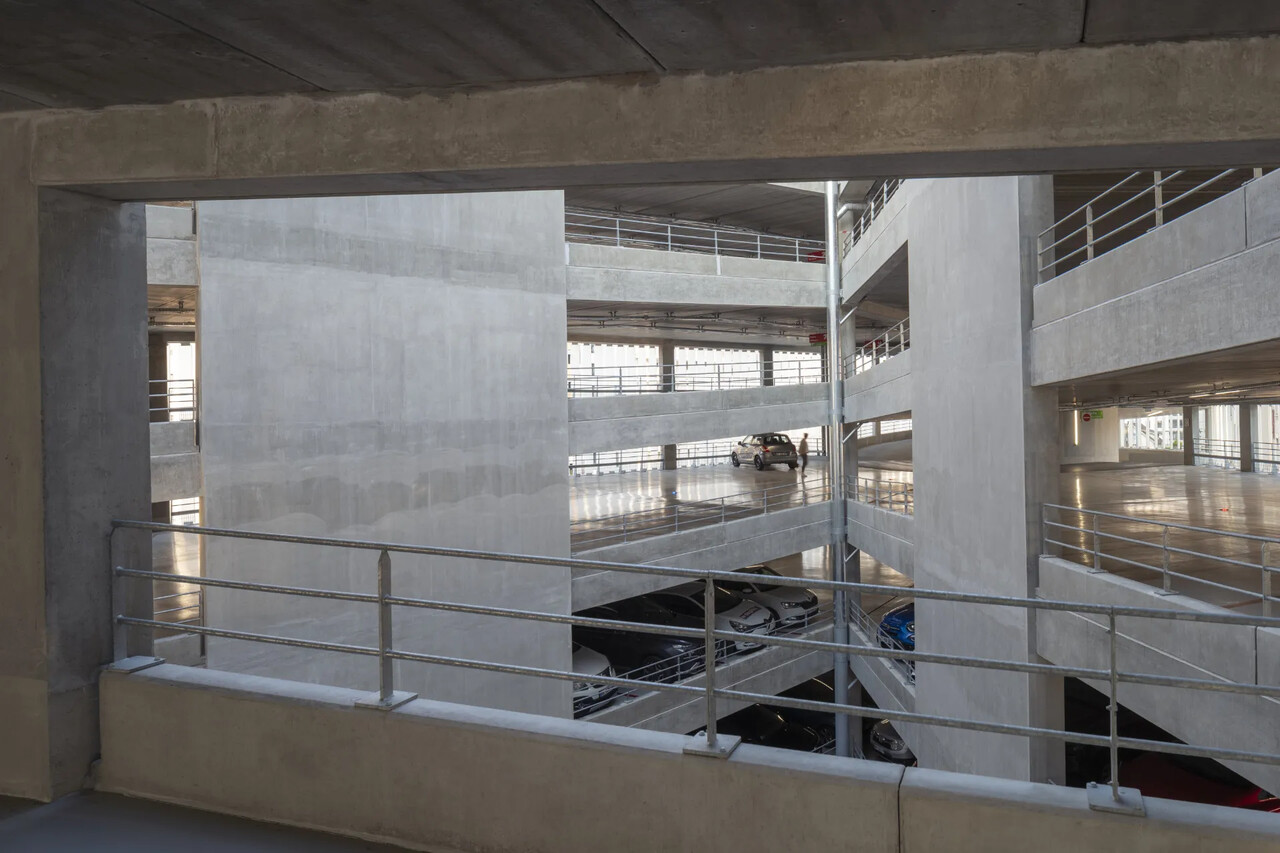
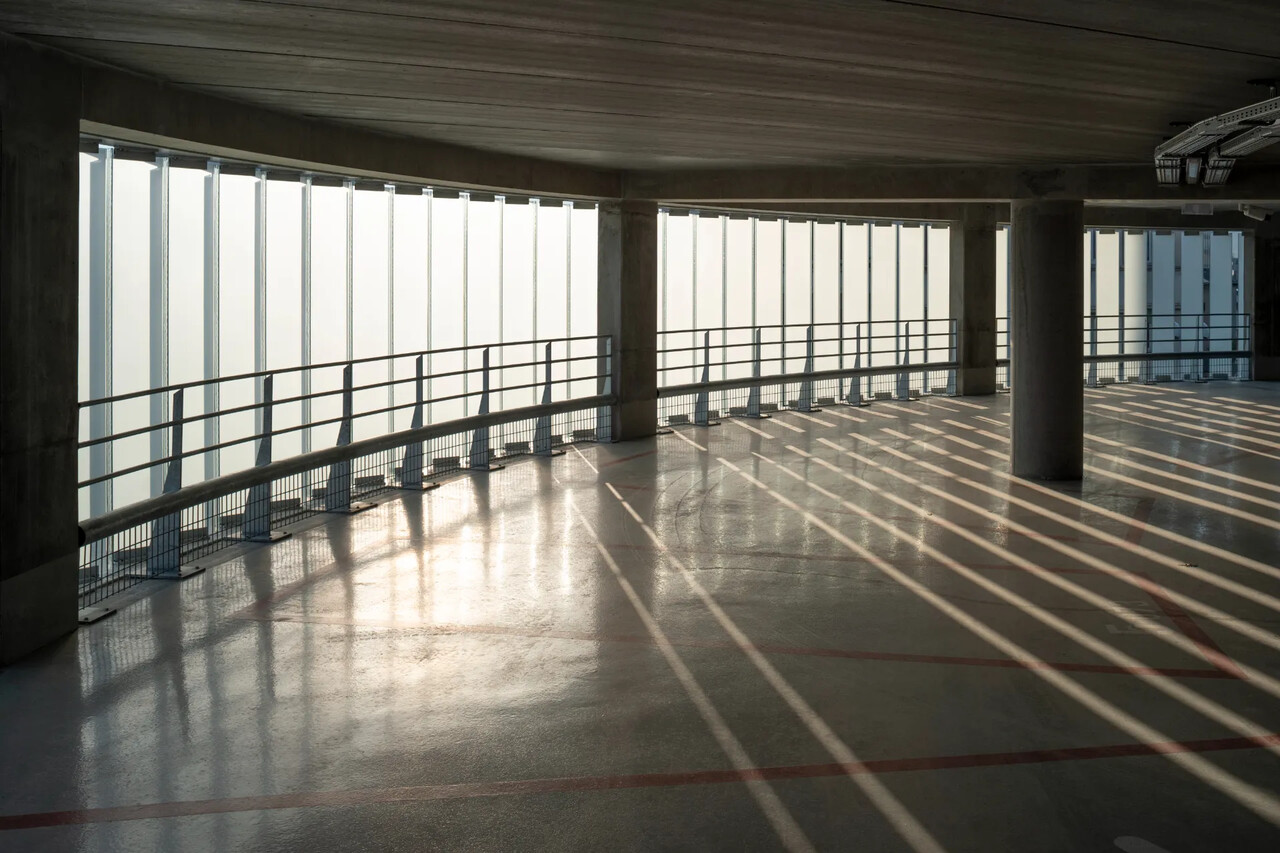
The exterior of the building consists of a U-shaped metal profile that wraps around the building from street level to the top floor. Between these metallic U-shaped sections, the glass strips mask the interior in a show-and-tell pattern that can be seen from both inside and outside the garage. By day, the functionality of the building is on full display. By night, perceptions changes thanks to indoor lighting that softly etches the urban landscape. Located on the car park rooftop, shading structures equipped with photovoltaic cells shelter the cars. The interior of the triangular patio is a garden of shadows, planted with undergrowth vegetation – ferns, periwinkles, maples, hydrangeas, and more. The facing south terrace features Mediterranean-type vegetation with umbrella pines, fig trees , lavender, and grasses.
The belvedere, orthogonal and colorful
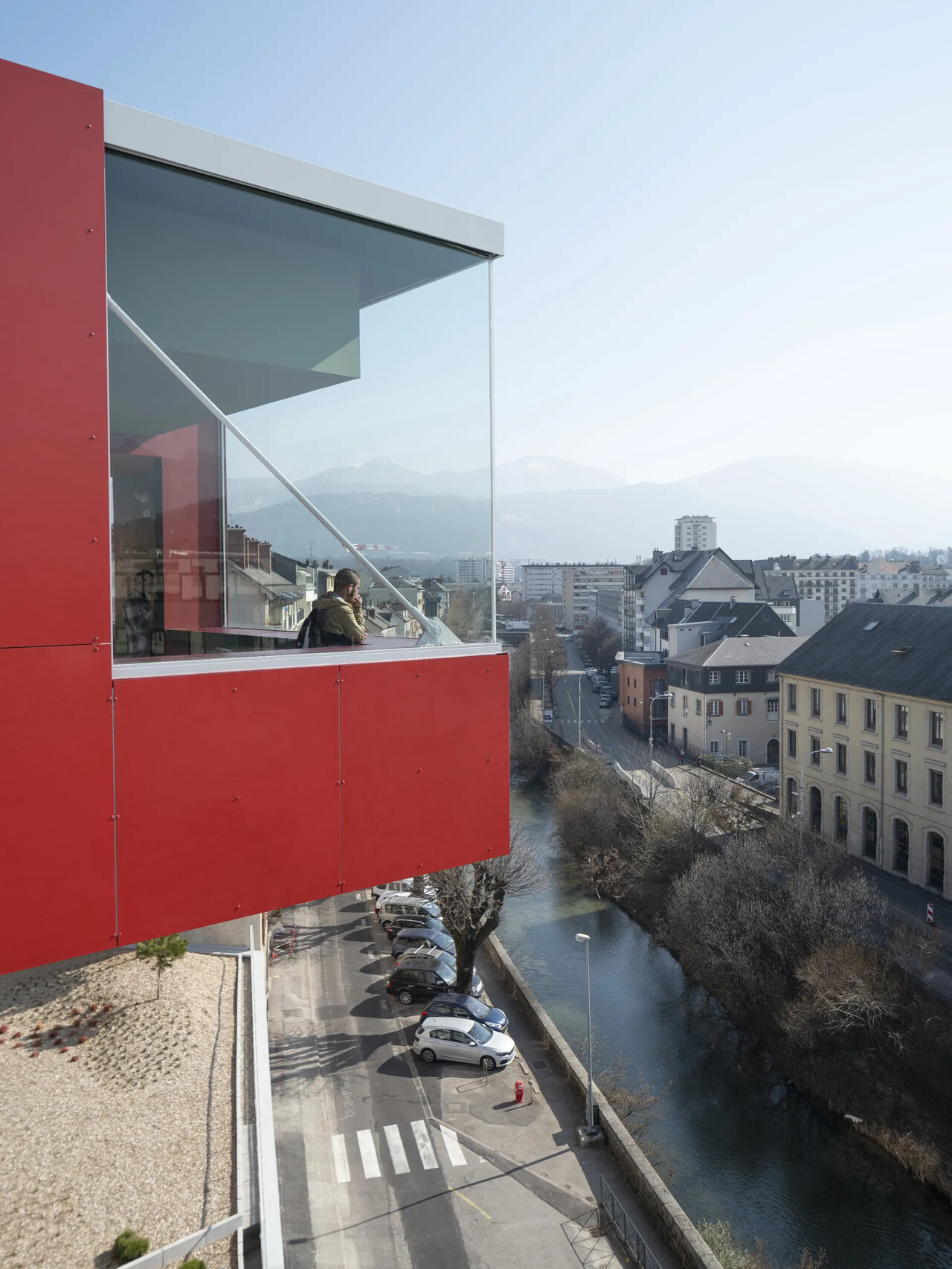
The strategic position of the project at the end of the main historical city street led to the design of an architectural solution that offers something more to both residents and visitors, adding another function to the parking project. The belvedere lends a public and urban dimension to the building, enabling a new way to embrace the city.
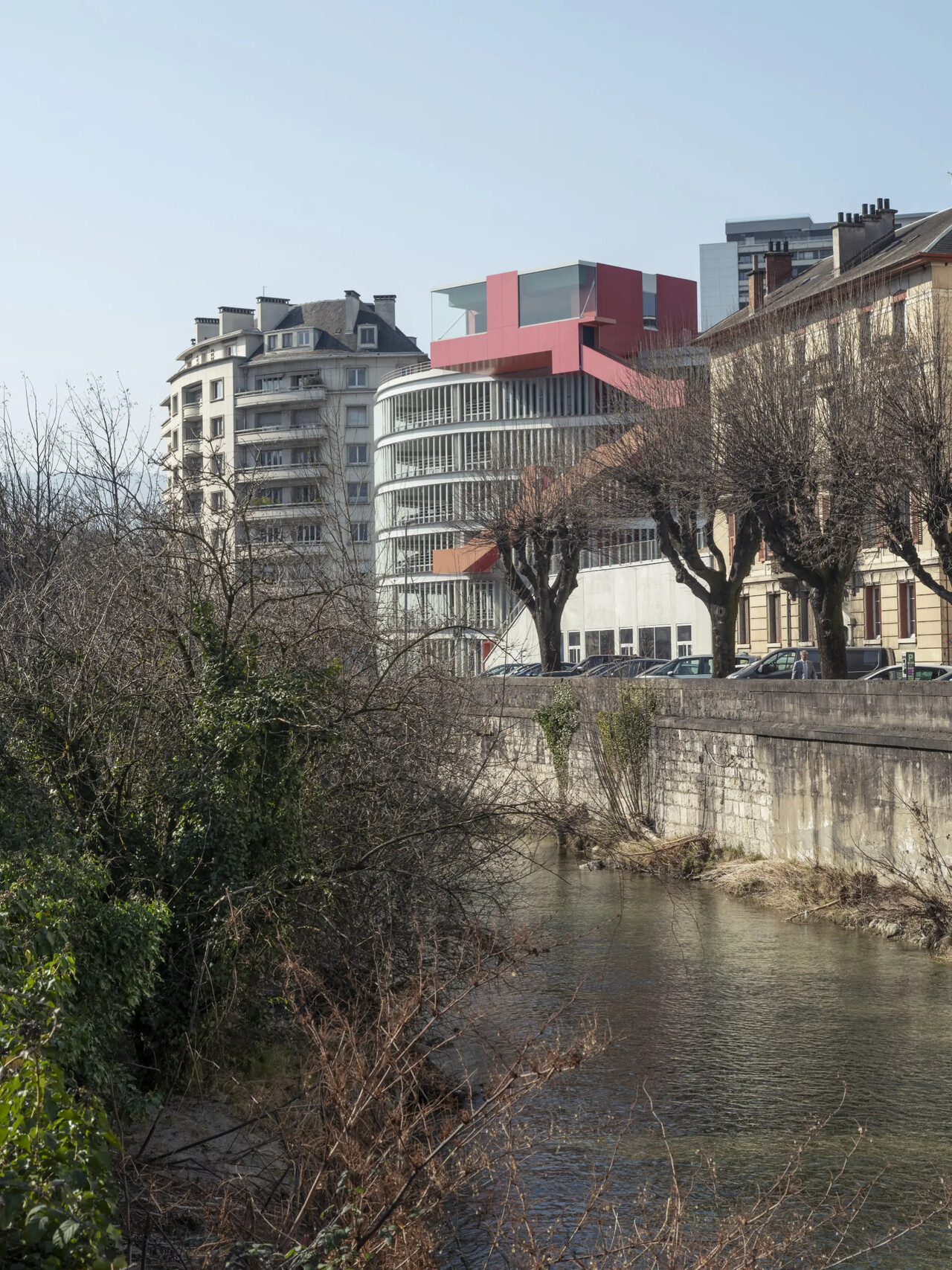
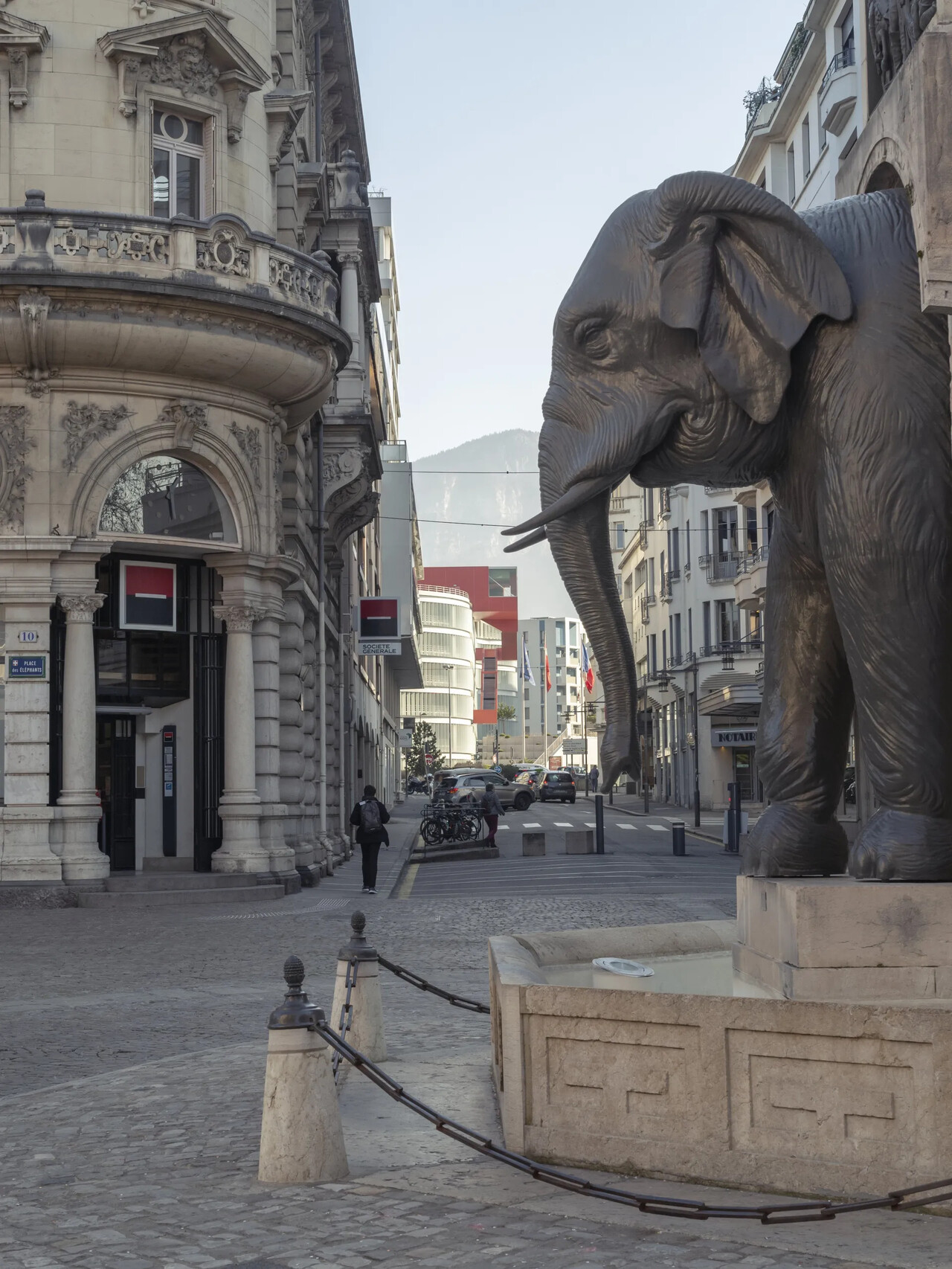
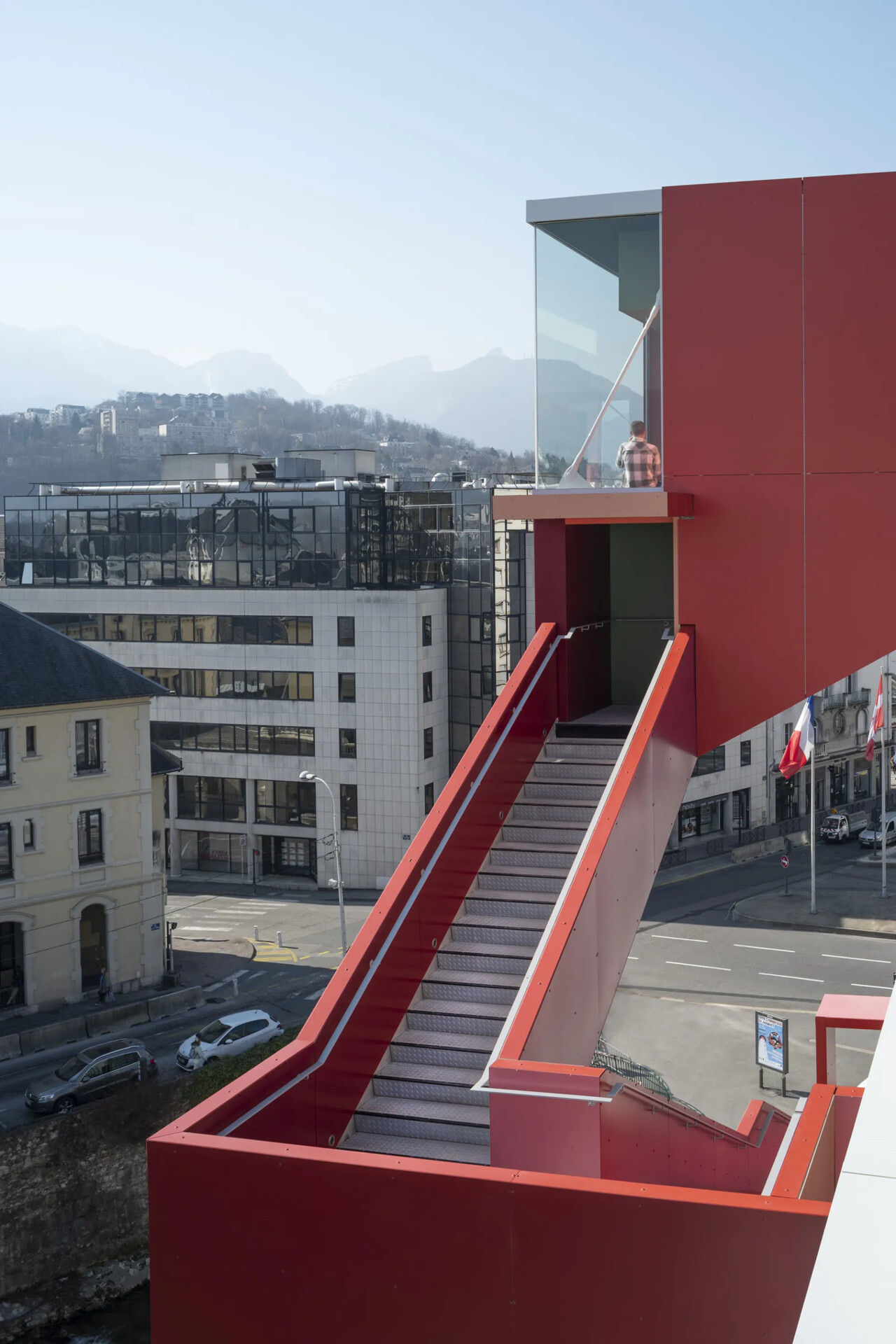
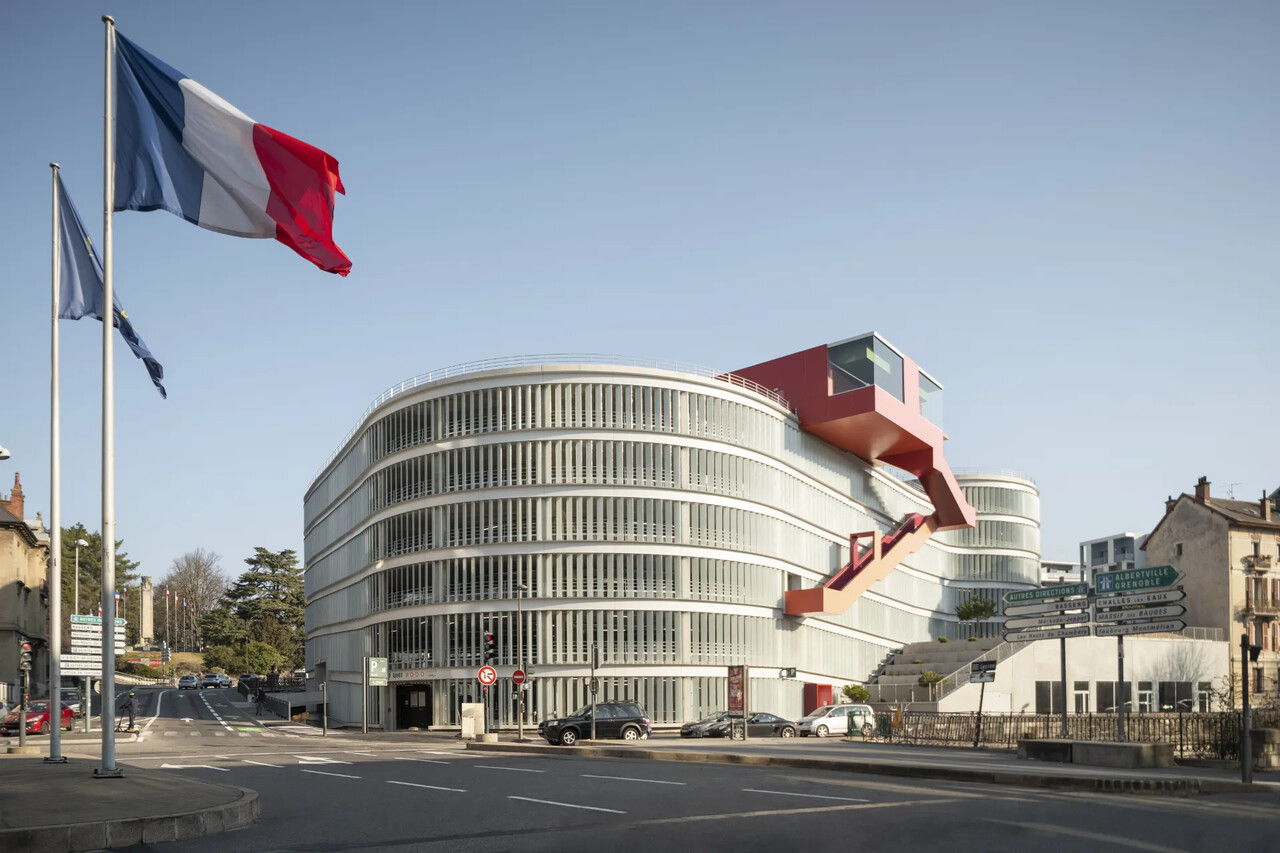
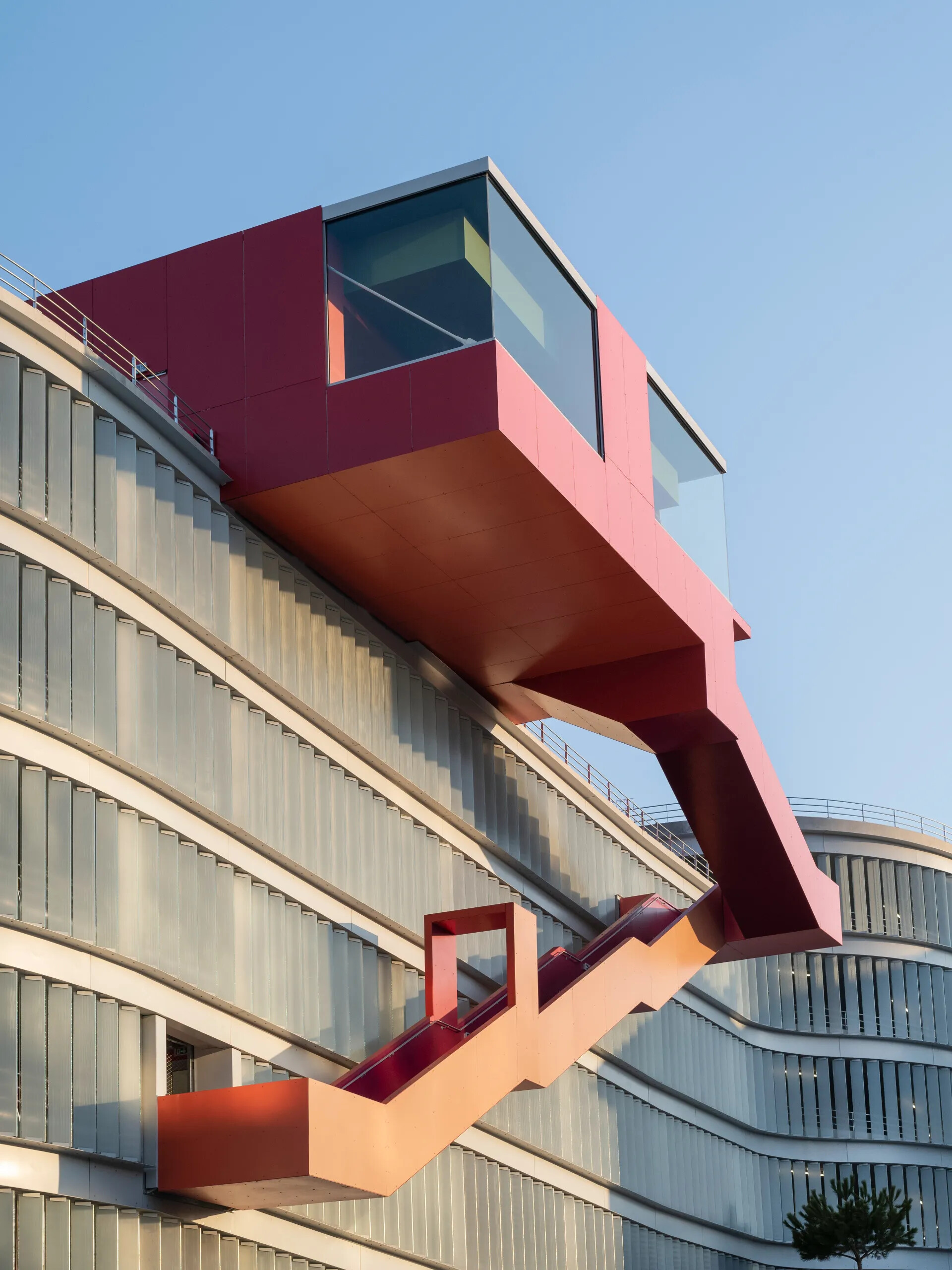
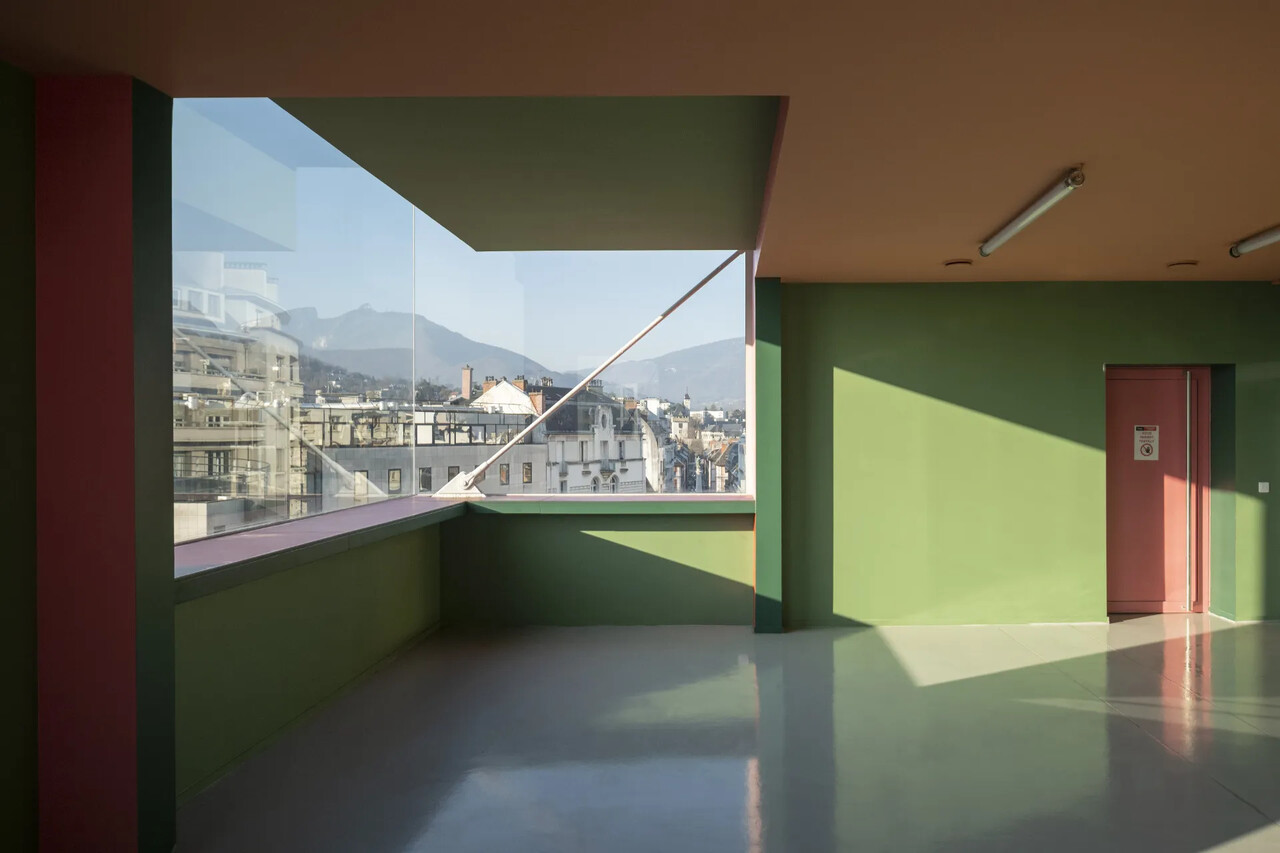
Via an external staircase, the belvedere can be accessed from the second floor without going through the parking garage. The belvedere-sculpture, cantilevered out to the axis of the rue de Boigne, is attached to the building of the car park, with tones subduing the warm colors of the old town houses facades. From above, it offers a majestic panorama towards the urban landscape, the river, the castle, and the Alps. Descending the belvedere staircase puts you on the axis of the street, and it is framed at mid-height to highlight a unique perspective of the historic city. In the other direction, the street perspective ends with the mountain background and the curved, translucent volumes combination of the car park and the sculptural belvedere that leans against it in the axis of the city street.
The architectural gesture is based on the complementarity between the curved, minimal, and translucent car park facades, and the sculptural sky bar, orthogonal and colored. This assembly of the car park and the belvedere gives the building its unique identity. It was in line with this idea that the collaboration with Krijn de Koning was established.
雕塑式建築
市政府在尚貝里市中心的Boigne街道上建造停車場建築,這是一條歷史悠久的街道。這條建於19世紀上半葉的街道通往薩沃伊公爵城堡,是一座鑑於12世紀最重要的文化遺產建築,街道兩旁都是拱廊,經過著名的大象噴泉,城堡對面街道的視野聚焦於Q-Park Ravet拉維停車場項目,以山脈為背景。建築師們思考著如何在面對城市最具歷史價值的紀念碑,建造一個功能性的停車場。然而,這個問題得到了獨特的建築回應,建築師們提議除了停車場的設計外,同時與藝術家Krijn de Koning合作,要在位於街道和城堡的軸線上,建一個雕塑式的景觀台。
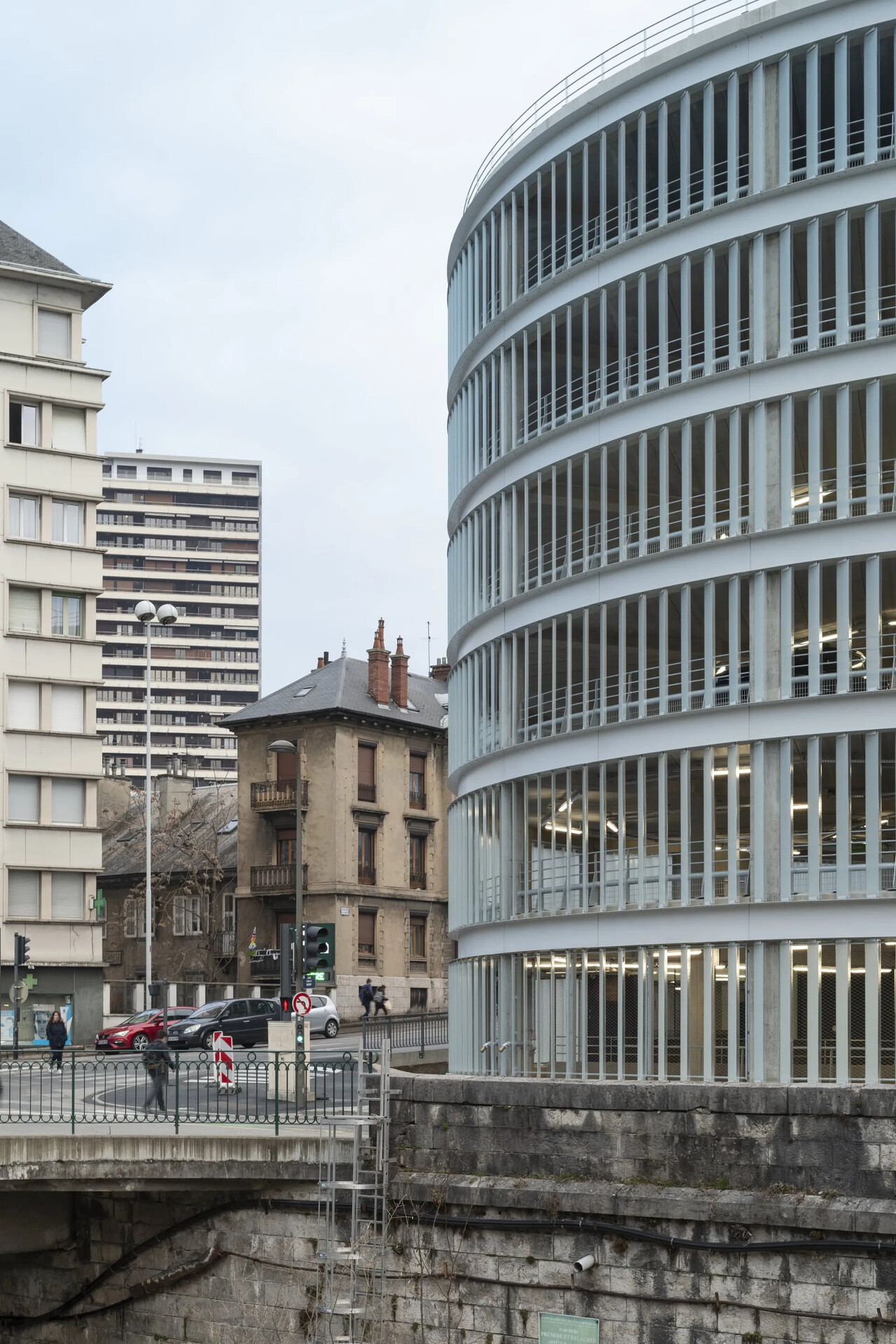
建築外觀由一個U形金屬輪廓組成,從街道水平線一直包圍到頂層。在這些金屬U形部分之間,玻璃條以一種展示和說明的方式遮蔽著內部,從車庫內外都看得到。白天,建築物的功能性充分展現,夜晚,室內燈光柔和的雕刻出城市景觀,有著不同的感受。車場屋頂的遮蔭結構裝有光伏電池設備,可以保護車輛。三角庭院的內部是一個遮蔭花園,種植低矮的植物,朝南的露台上則種有地中海型植物。
景觀台,直角且色彩繽紛
此計畫在歷史悠久的主要城市街道盡頭,具有戰略性的位置,這促使了建築的設計有了解決方案,為居民和遊客提供更多功能,為停車場項目增添了另一種功能。景觀台為建築物提供了公共和城市維度,使人們可以以新的方式擁抱城市。
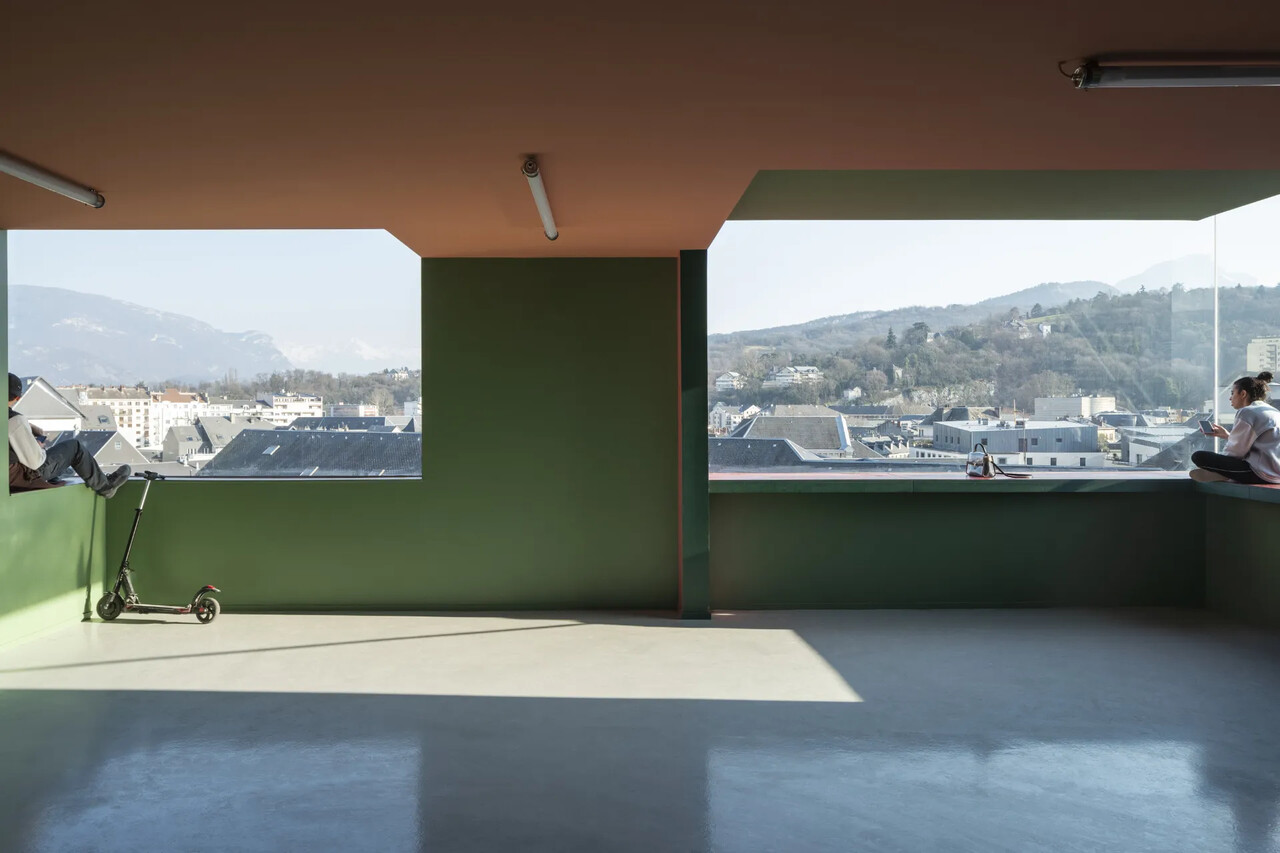
沿著戶外樓梯,可以從二樓進入觀景台,不需要經過停車場。景觀台雕塑懸吊在Boigne街的軸線上,與停車場的建築物相連接,其色調抑制了舊城房屋外立面的暖色調。從上方看,它像城市景觀,河流、城堡和阿爾卑斯山形成了壯麗的畫面。走下景觀台的樓梯,你會站在街道的軸線上,並且在中高處形成一個框架的鋪陳,顯現出歷史城市的獨特視角。從另一個方向來看,街景以山脈作為背景並與停車場和雕塑式belvedere的曲線、半透明的建築體結合呈現,與街道軸線上的停車場互相依靠。
這個建築的設計靈感來自於曲線、極簡、半透明的停車場外牆立面,以及雕塑式立體感強、直角且色彩豐富的天空酒吧兩者互相輝映。停車場和景觀台的結合賦予了建築獨特的身份,使建築獨樹一幟。而這個想法,也與藝術家Krijn de Koning一起合作完成。