Renovation in Honancho
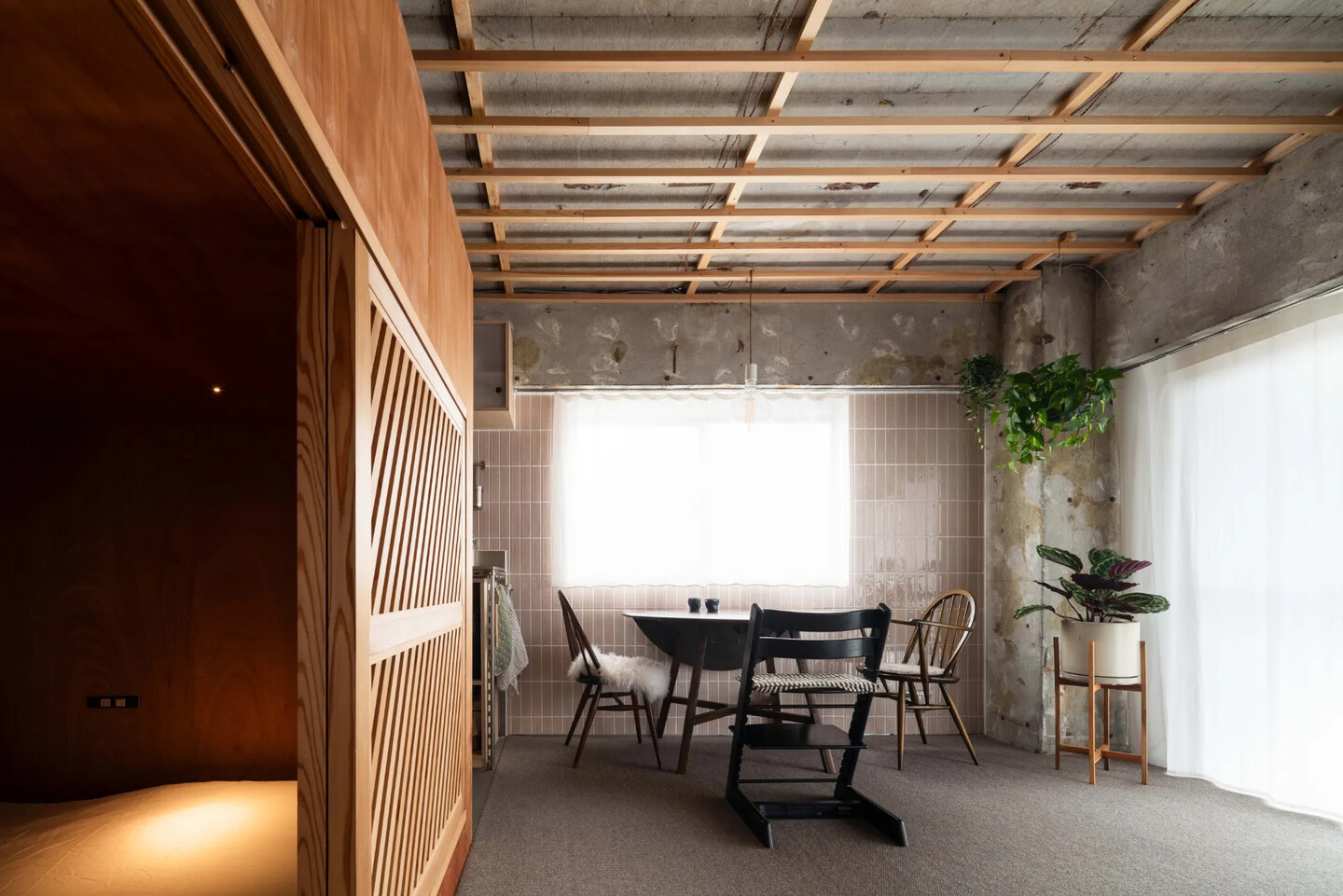
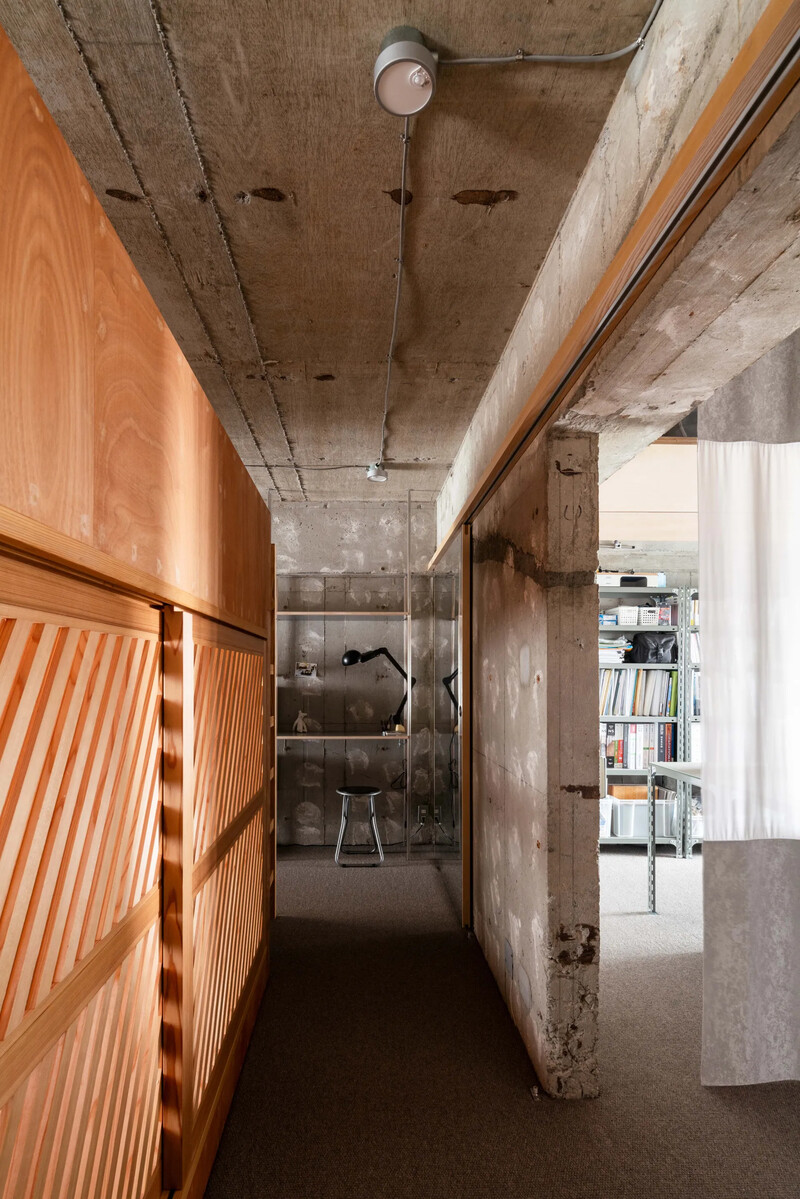
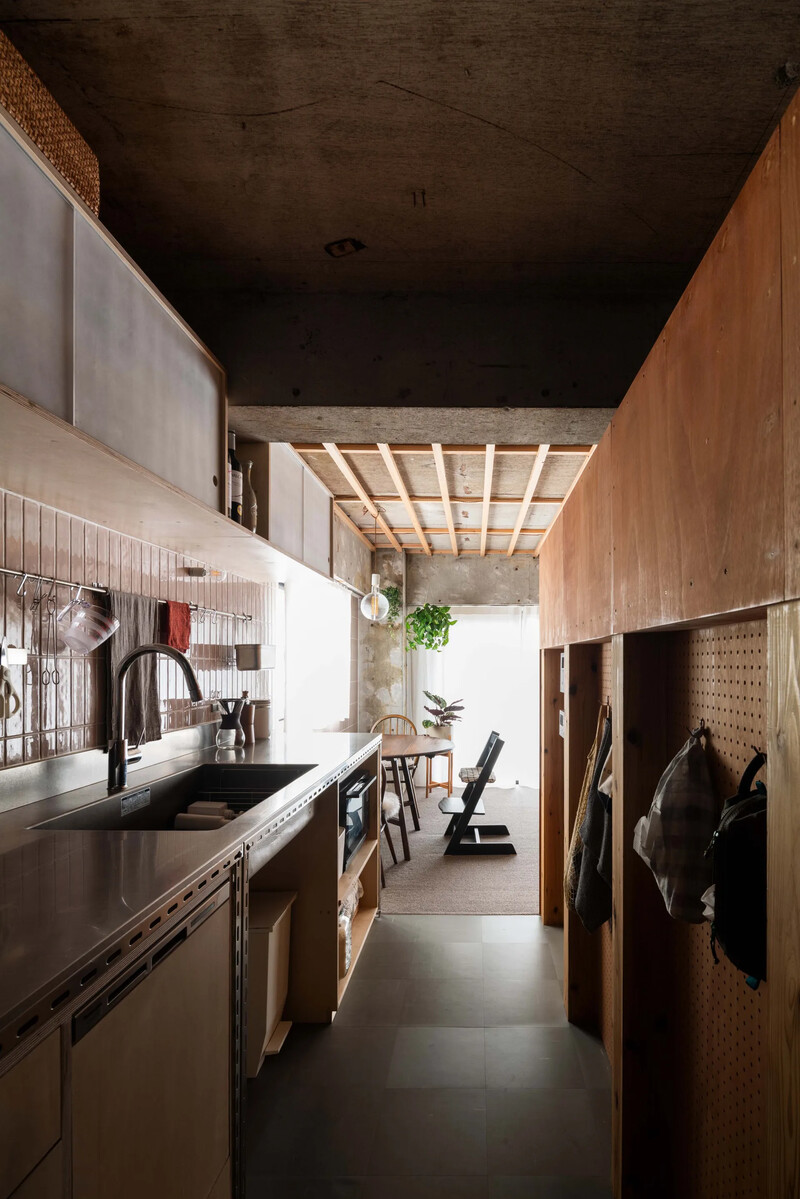
這是東京40年的老公寓住宅單元,約21坪的室內翻新項目,為一對夫婦及一個孩子加上丈夫辦公空間的住所。該項目位於五層樓建築的頂層角間,三面都有對外窗。拆除原始室內後,我們將辦公室和衛浴設置在RC承重牆的北側,而生活空間則設置在其南側。
This is an interior renovation project of a dwelling unit in a 40-year-old apartment building in Tokyo. The unit with around 70 square meters is renovated as a residence for a couple and a child, plus an office space for the husband. The unit is a corner room on the top floor of the five-story building with windows on three sides. After removing all the original interior work into the skeleton form, we put the office and sanitary on the north side of the RC bearing wall, and the living space on the south side of it.
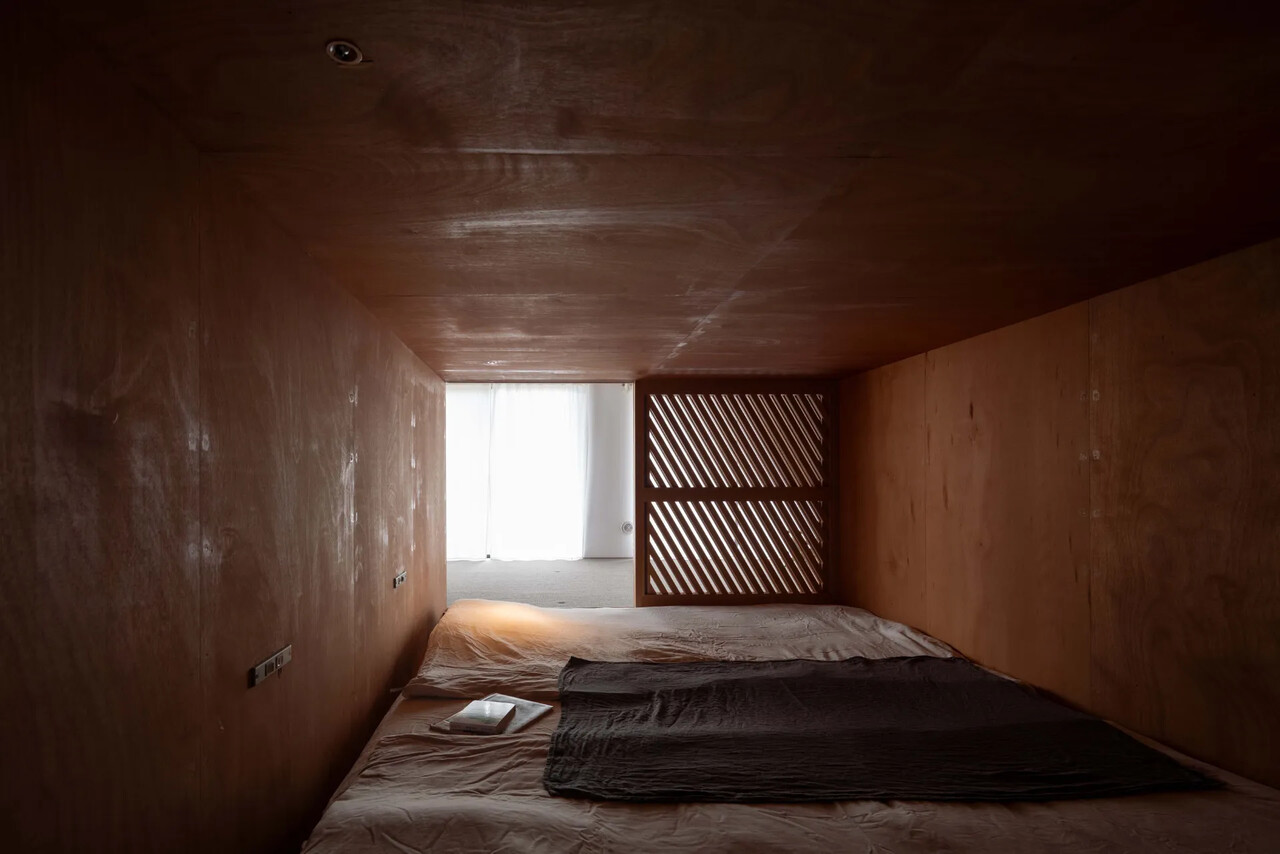
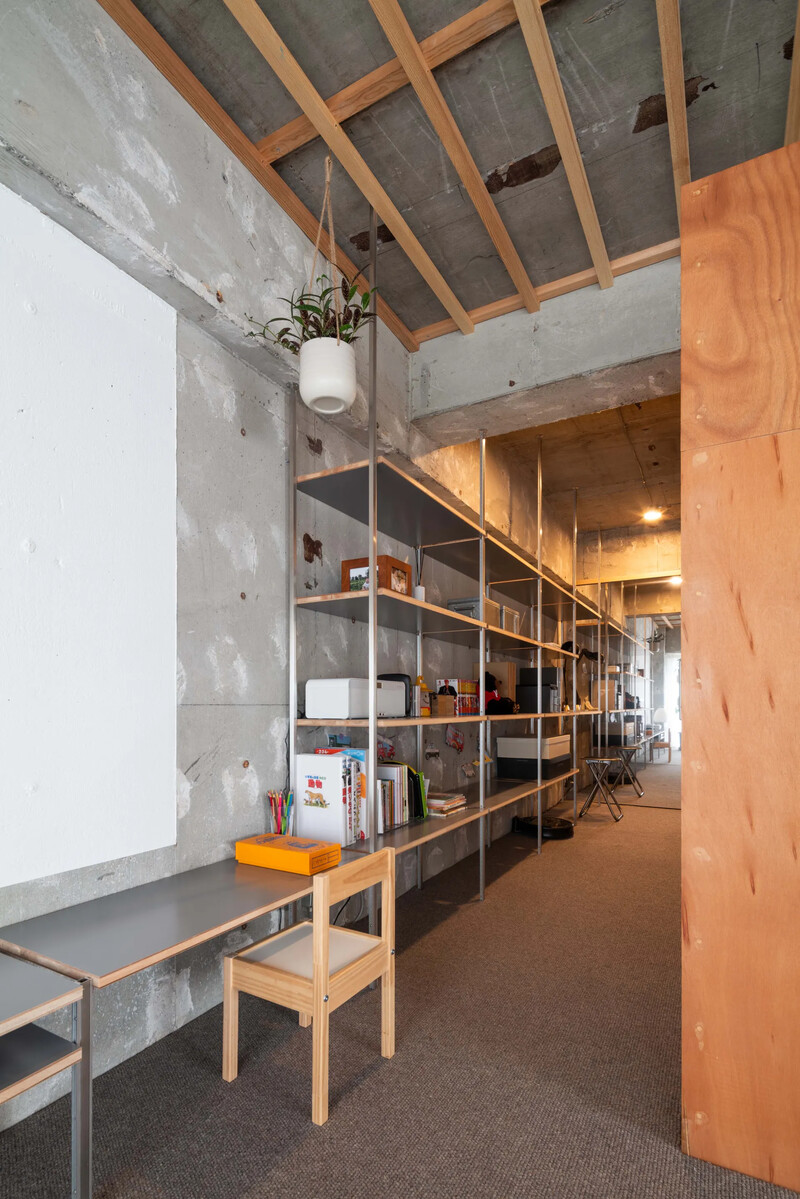
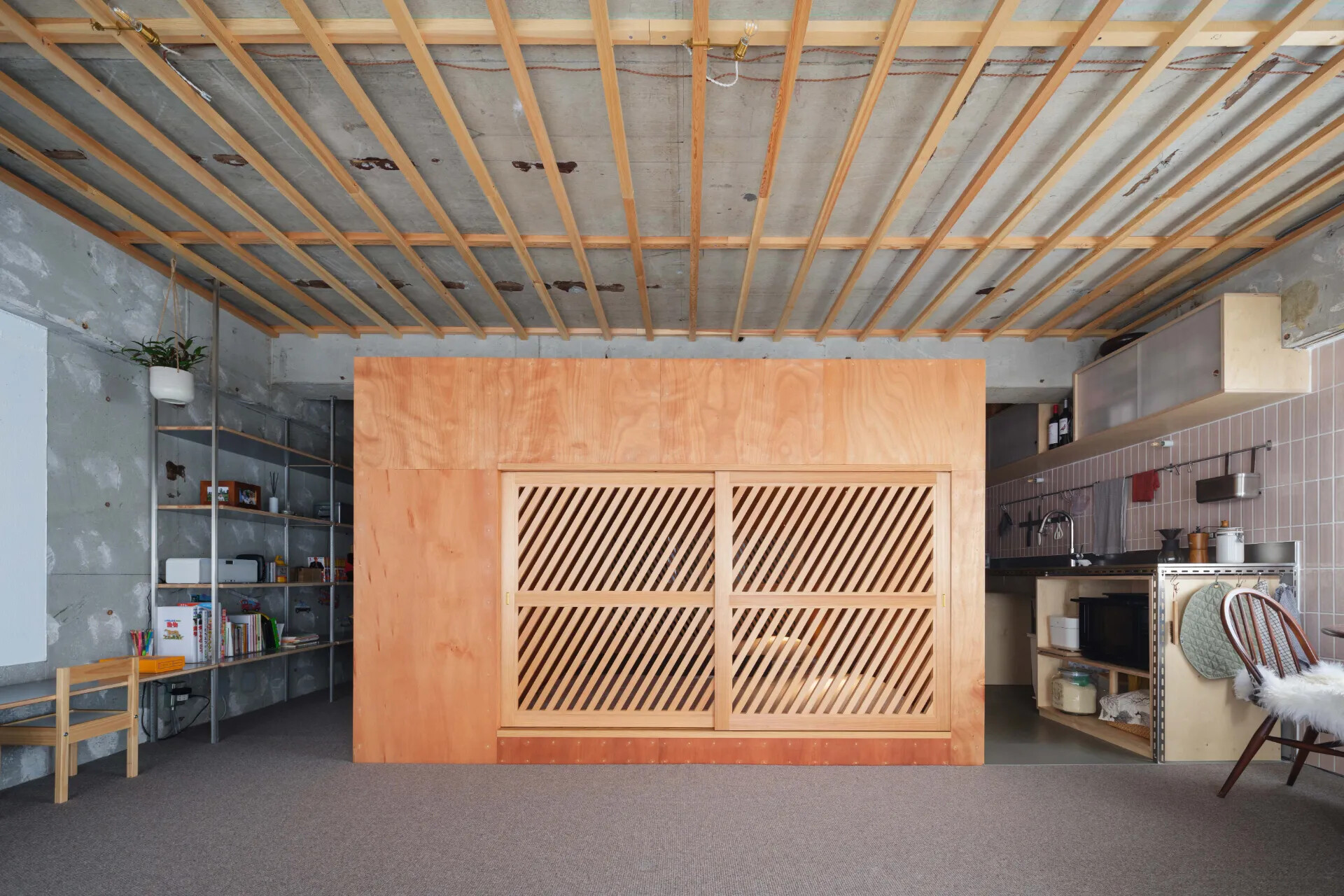
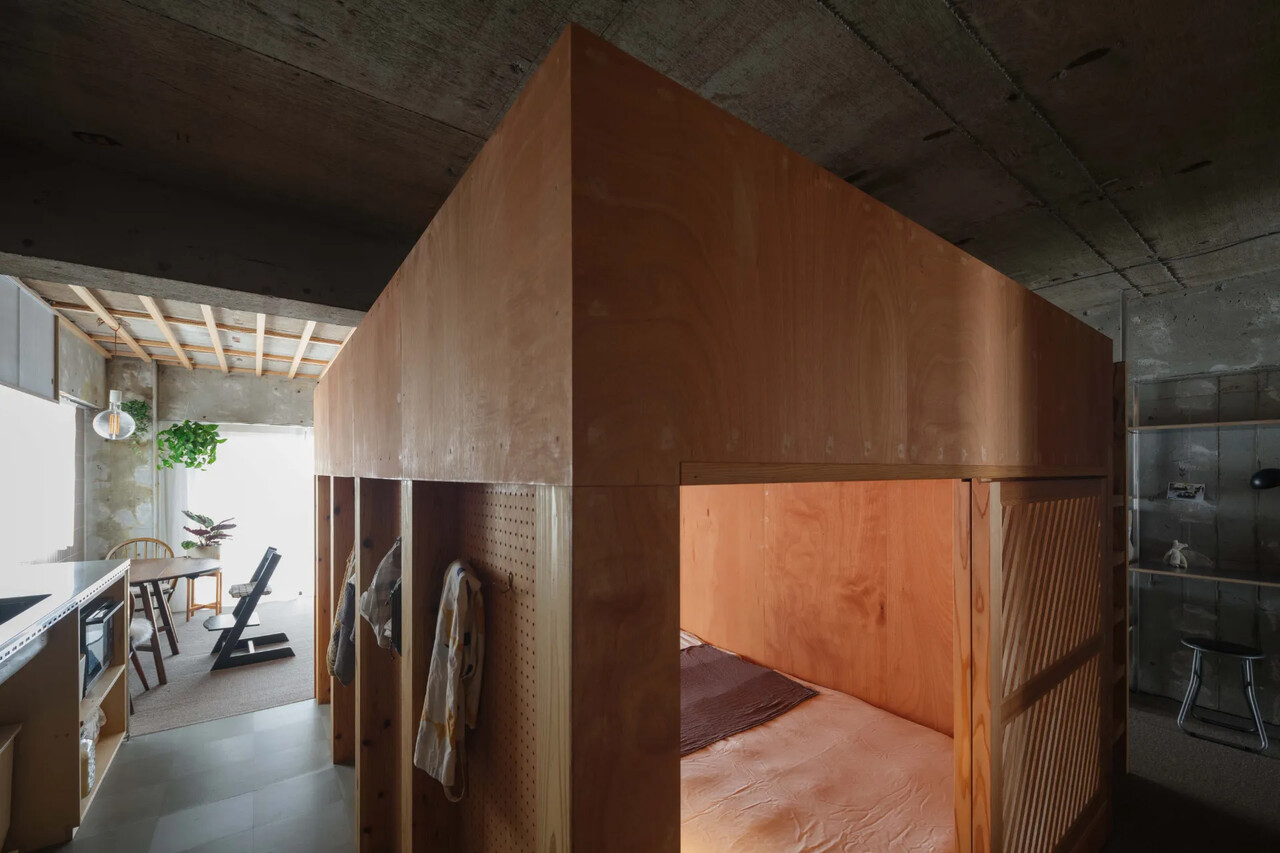
生活空間的中央是一間臥室,周圍安排廚房、客廳/餐廳、衣櫃、儲藏室和書桌空間。這種佈局方便家人四處移動,並在彼此之間保有一定的隱私。與此同時,這種沒有死角的佈局便於將來自三面開窗的陽光灑進各空間,以及確保其通風性。而中央臥室上方有一個閣樓,作爲孩子的遊樂場及儲藏室。
The living space has a bedroom in its center, and it’s surrounded by a kitchen, living/dining room, closet, storage, and desk space. This layout allows the residents to move around and creates a sense of distance between the residents. At the same time, the layout without dead ends is convenient for distributing the light and wind coming through the windows on three sides into the entire unit. There is a loft above the bedroom, and it is used as a playground for the kid and storage.
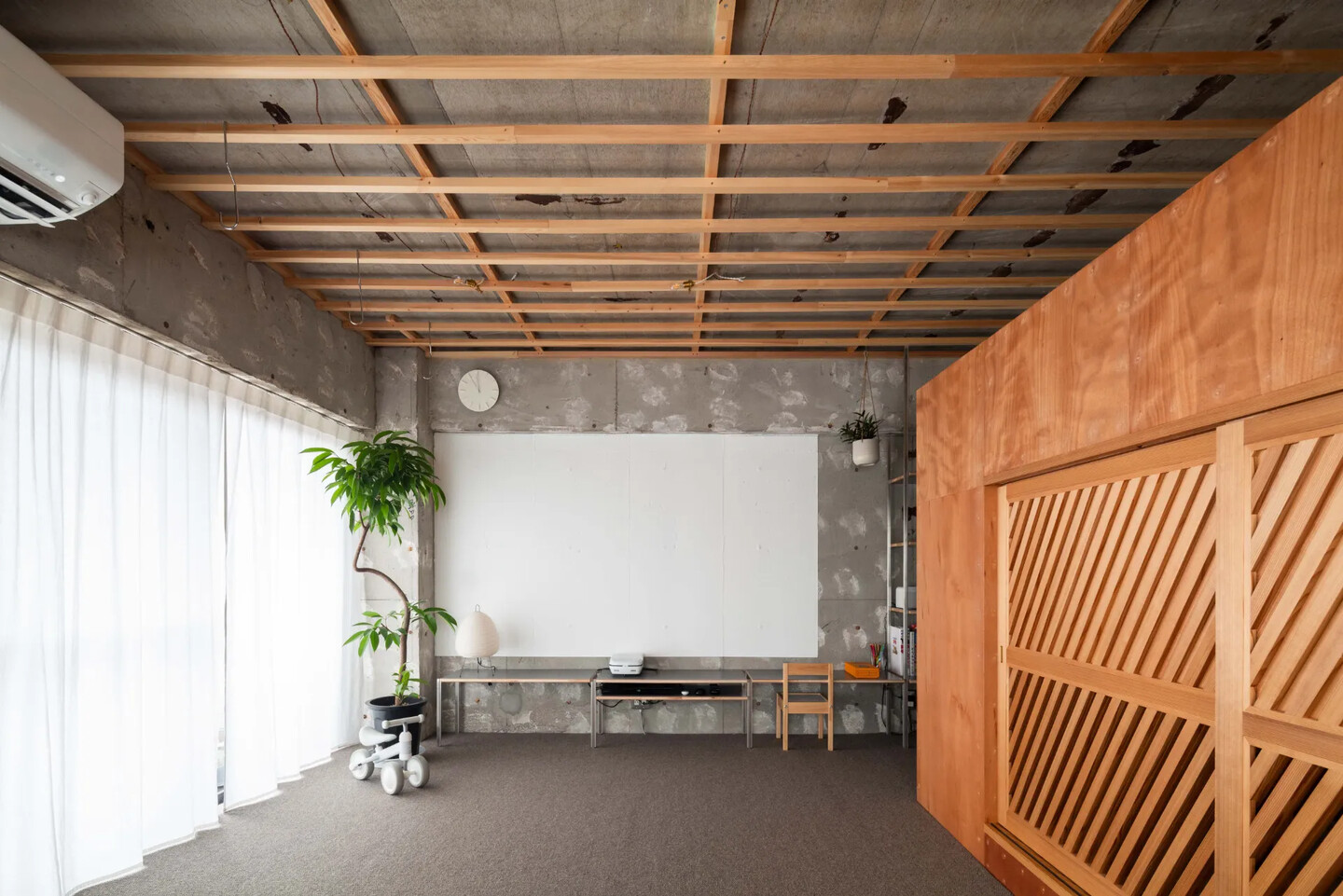
具體施工的過程中,我們設計了可以由住戶主動調整的空間分隔界面。我們的目的是營造不同活動情境、心情,以及各種光源、溫度及聲音環境的舒適共存,這些都會根據個人的喜好而有所不同。我們特別投入於這些可調節之界面或“配件”的功能。
In materialization of the planning above, we’ve implemented boundary surfaces between spaces that can be actively adjusted by the residents. The aim is to create a comfortable coexistence of different activities, moods, also various light, heat, and sound environments, which vary according to the individual's preferences. We’ve focused on the development of these adjustable boundary surfaces, or “fittings.”
1.斜向Muso-mado配件
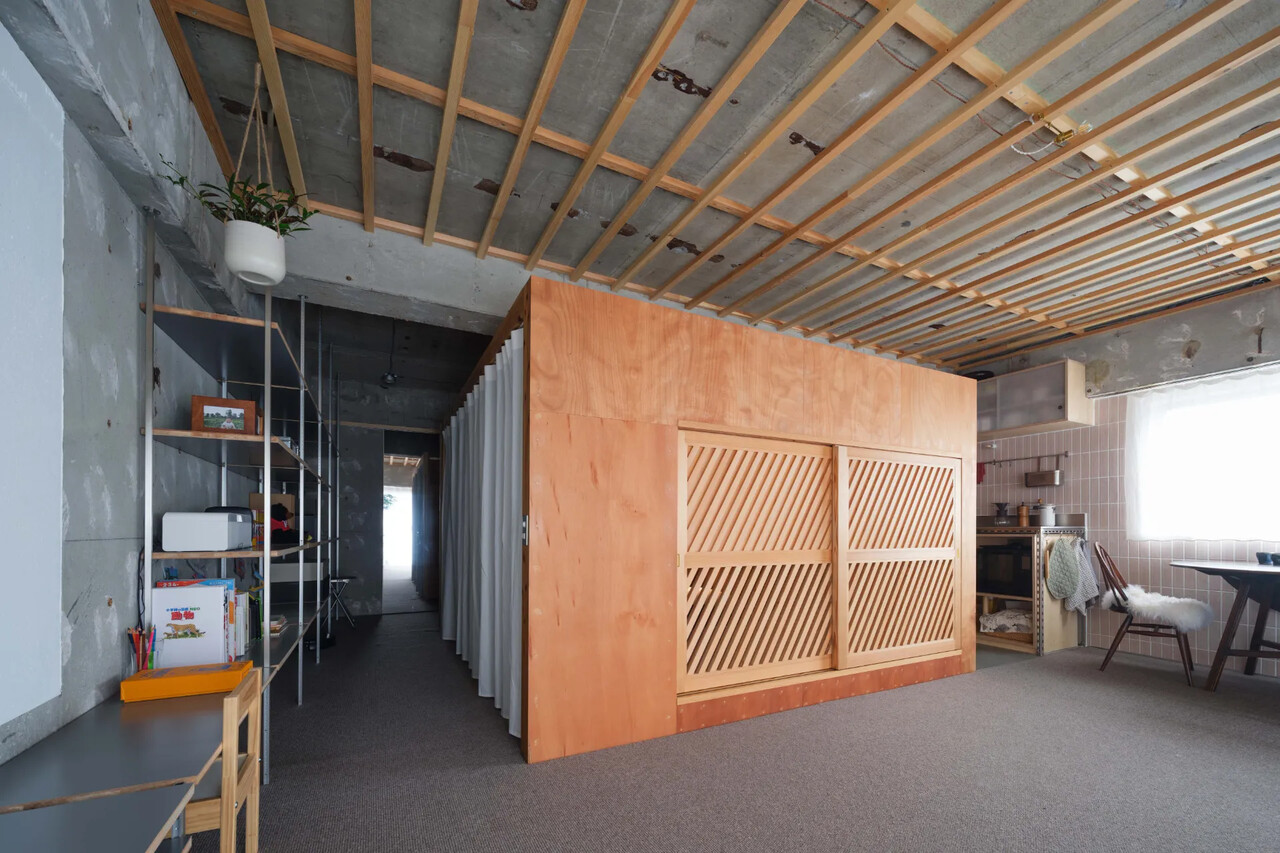
參考日本傳統的雙格子配件,稱為Muso-mado,Takehiko Suzuki Architects設計了一個斜格子,而不是傳統的直立格子,這個傾斜的格子能夠在住戶的水平和垂直移動時控制視線。此外,格子的開口率可以微細地調整,從而創造不同的照明和通風環境。因此,這些配件能夠適應日常生活中的各種情境,如“遮擋視線但讓風進入”,“在感受到父母存在的同時入睡”,或“完全關閉這些配件專注的閱讀”。
1. Diagonal Muso-mado fittings
Referring to the Japanese traditional double-lattice fittings called Muso-mado, we have designed one with diagonal lattices instead of the conventional vertical ones. The slanted lattice enables sight control over both horizontal and vertical movement of the residents. Also, the opening rate of the lattice can be adjusted delicately to create a variety of lighting and ventilation environments. As a result, the fittings create an environment that fits various situations in daily life, such as ‘blocking the line of sight but letting the wind in,’ ‘sleeping while feeling the presence of parents,’ or ‘closing the fittings completely and concentrating on reading.’
2.架構式隱藏門
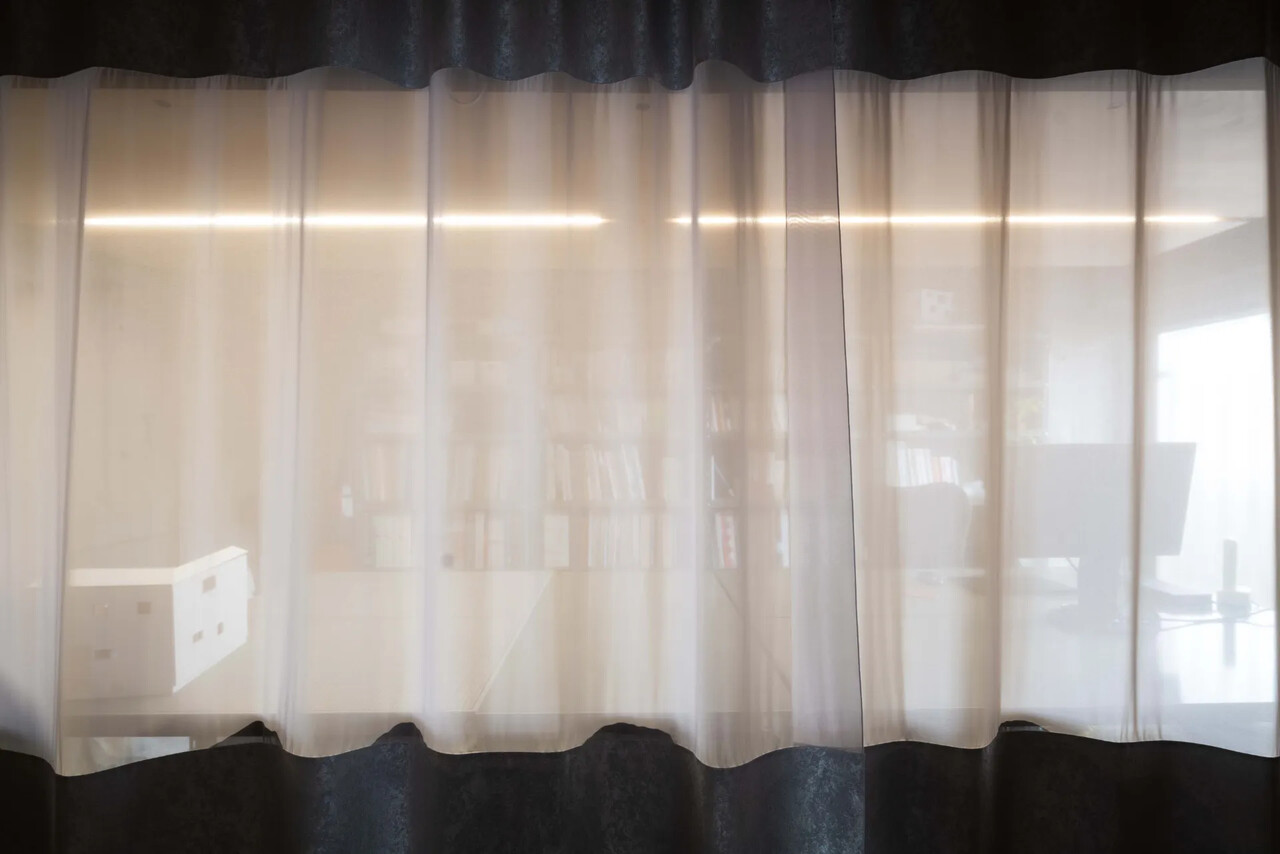
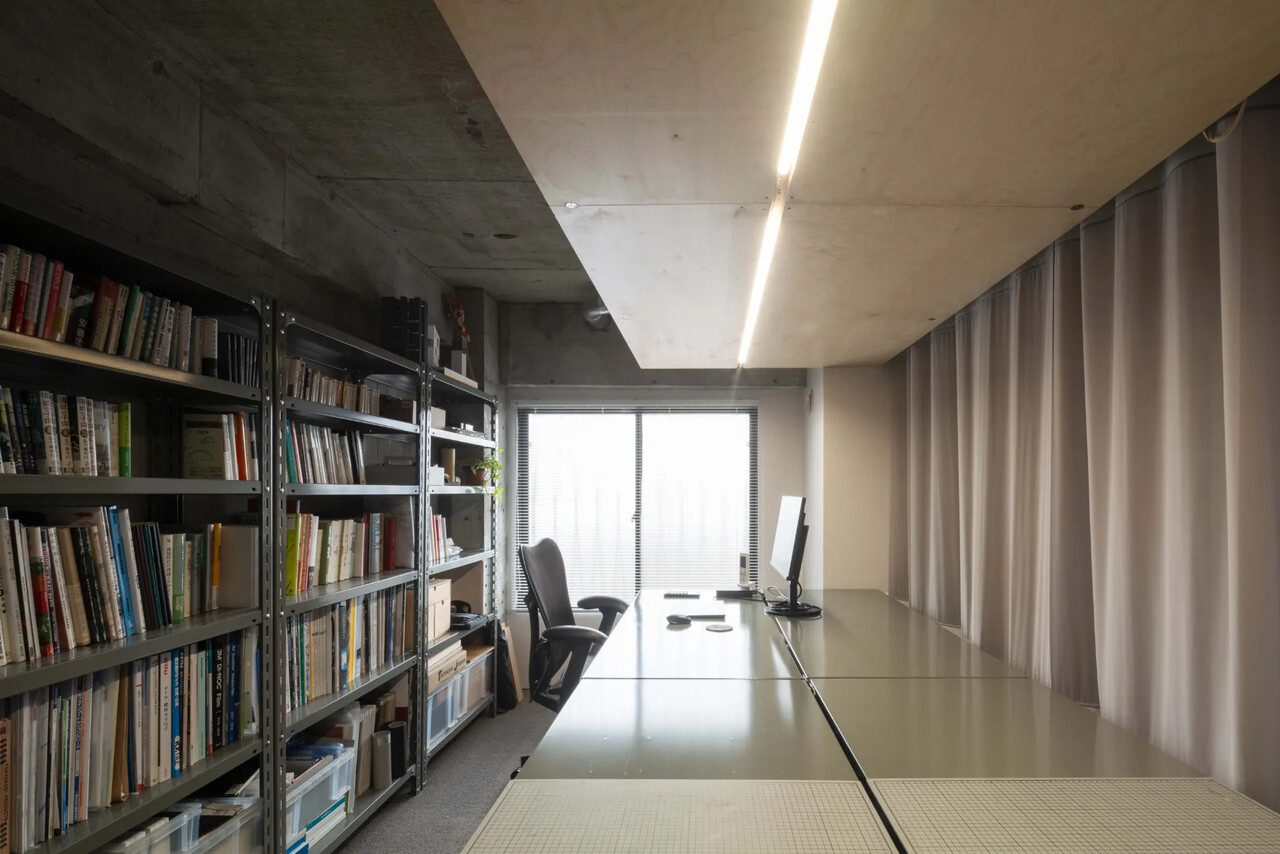
透過表面材質替換為日本傳統的障子紙,我們設計了一個隱藏門,允許光線透過它。核心材料是蜂巢紙,它用於一般的隱藏門,它比普通的隱藏門輕,但比傳統的障子門更堅固,而且蜂巢結構創造出獨特的陰影,其厚度控制了向更衣室的視線,同時透過更衣室的窗戶所引入的採光,可導向辦公室一側。藉由這些新的配件,柔和地使採光和通風導入,並能精細地調整家人們的視線和私密性,我們企圖打造一個非常規的佈局,一個集中獨立與擴展開放供存的環境,體現生活的豐富與層次感。
2. Skeleton flush door
By replacing its surface material with Japanese traditional Shoji paper, we’ve designed a flush door that allows light to pass through itself. The core material is paper honeycomb, which is used in general flush doors. It is lighter than a normal flush door and sturdier than a traditional shoji door, also its honeycomb structure creates unique shadows. The thickness of the honeycomb controls the line of sight into the dressing room while at the same time directing the outside light taken in through the dressing room window to the office side. By these new fittings which allow light and wind to pass through softly and control the line of sight and presence of residents delicately, we’ve tried to realize an environment expanding and contracting beyond the planning layout, and the rich gradation of life that results from.