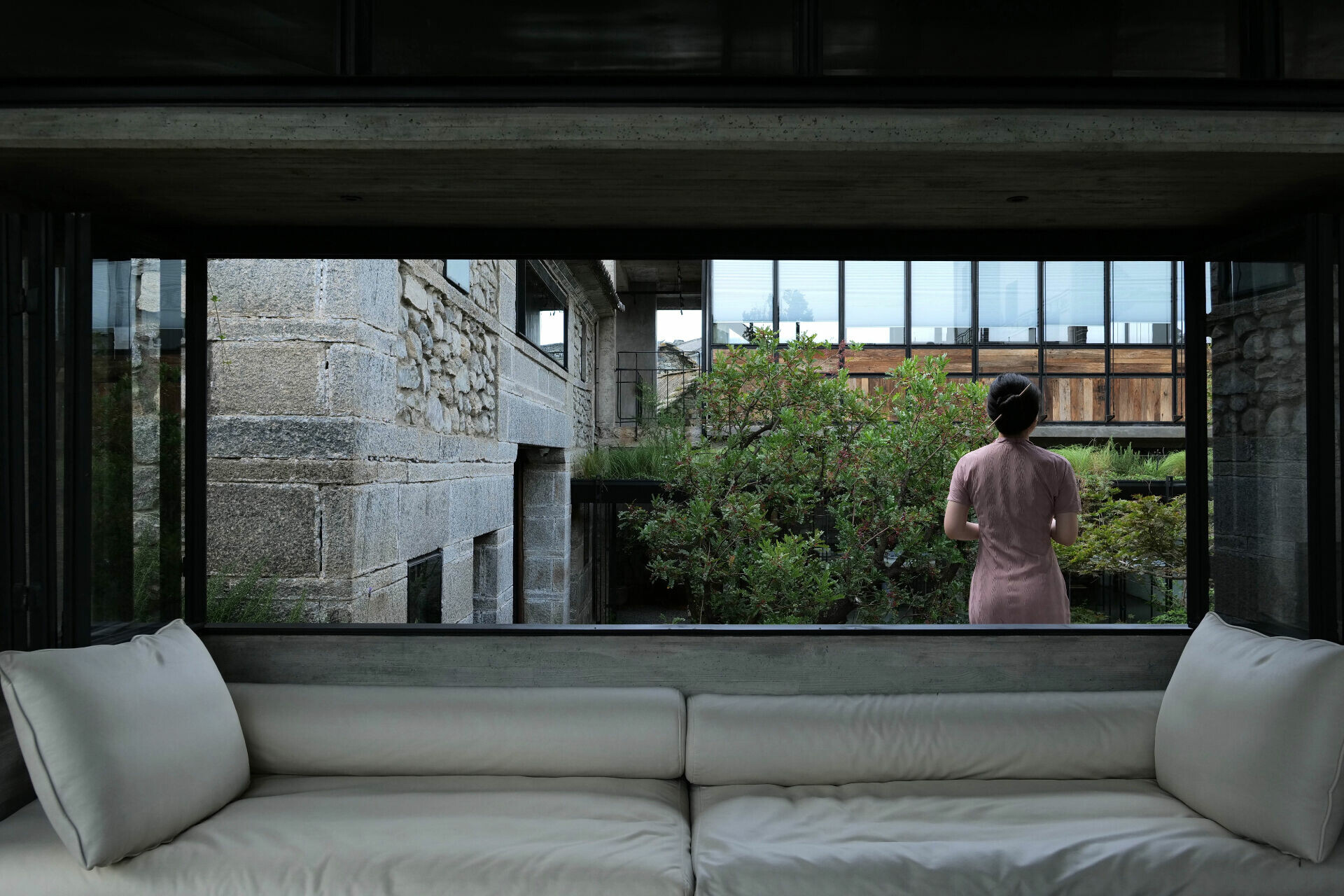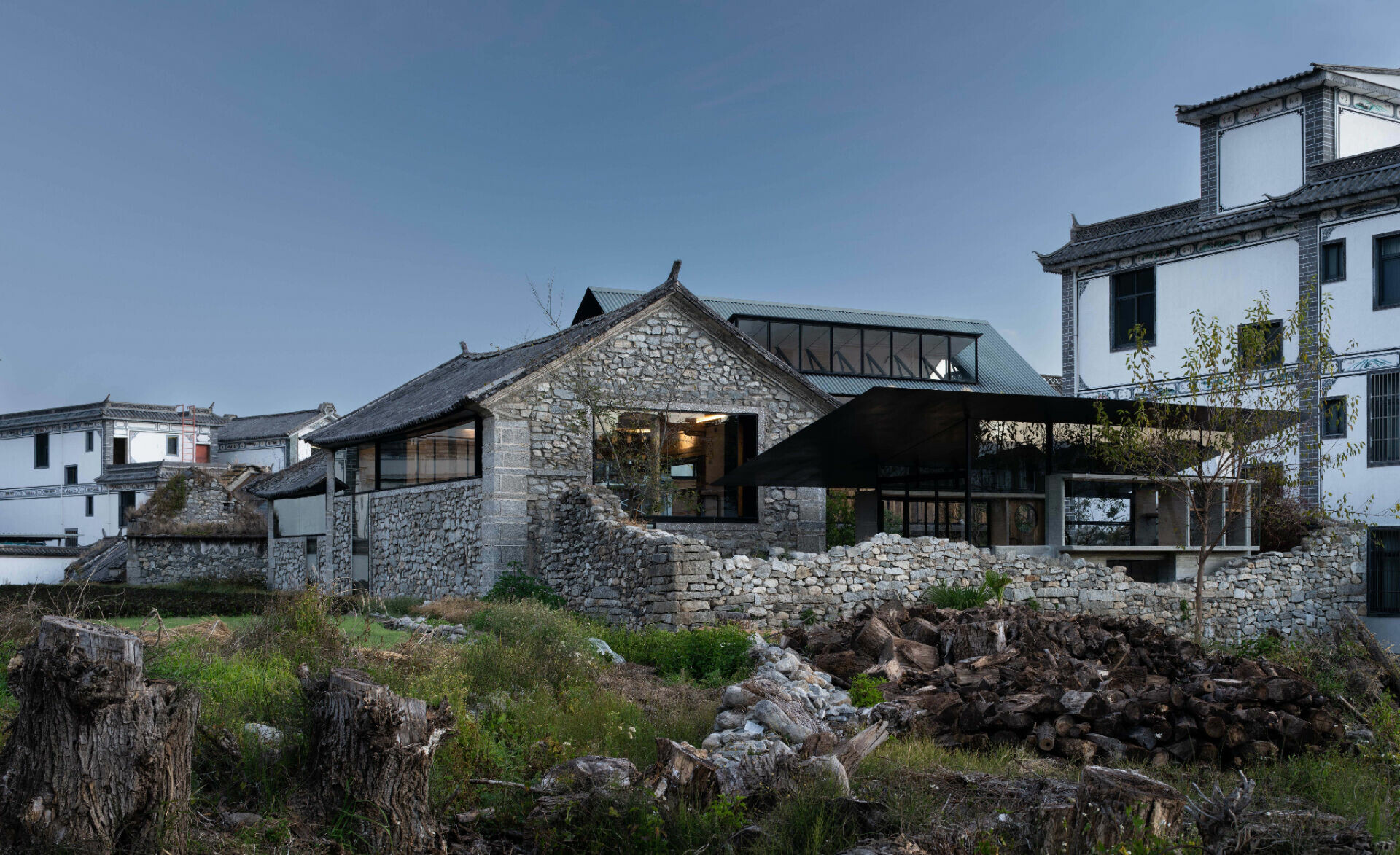
➤ Elevation of southwest corner, photograghy by Chen Hao
Ruins Cave Garden
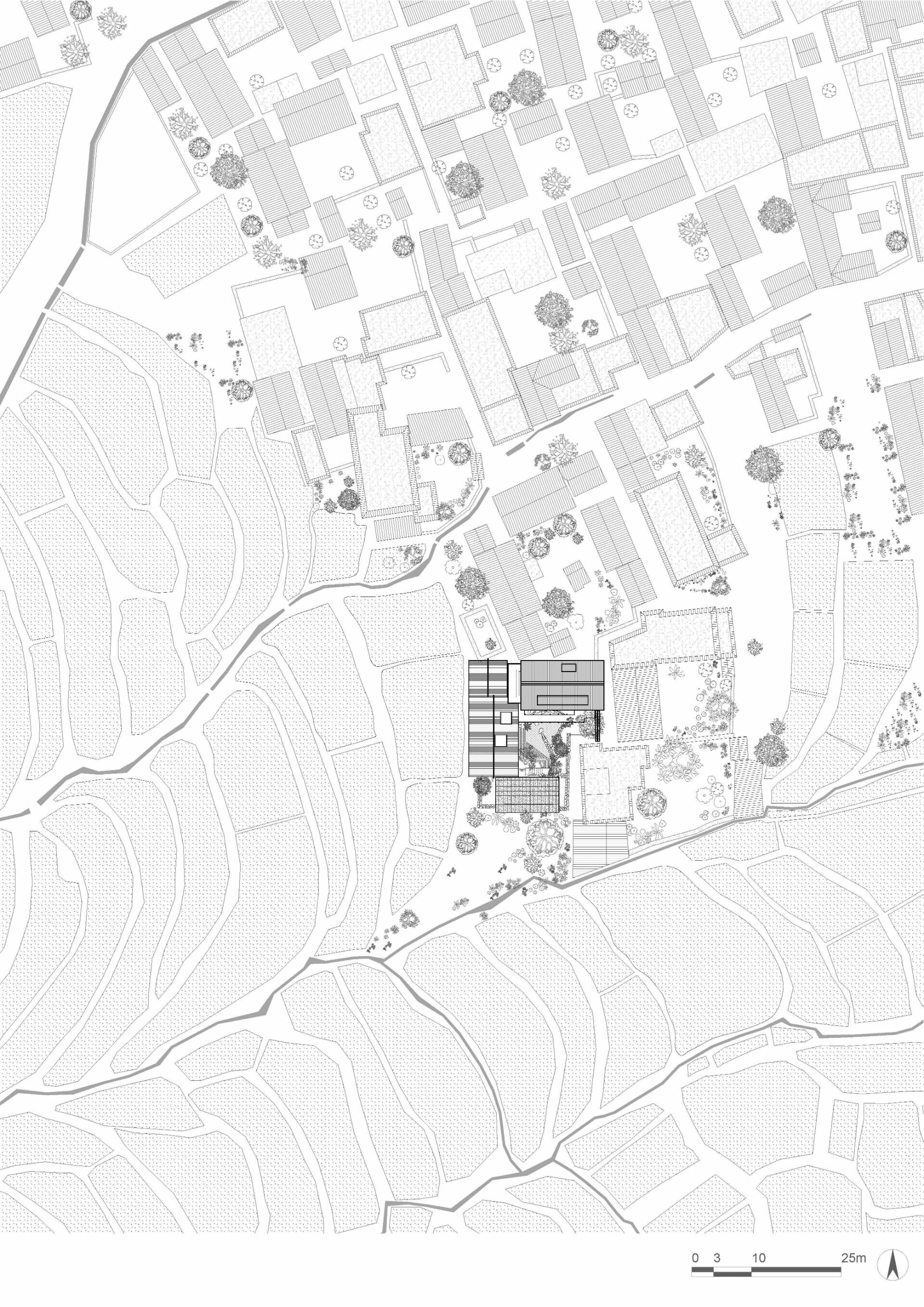
Nestled at the foot of the Cang Mountains, the fertile plains of the Haixihai Lake in Dali embody a seamless blend of natural beauty and cultural richness. These plains have nurtured a thriving agricultural civilization and distinct traditional residential culture. Villages and homes in this area are thoughtfully positioned to back against the mountains while facing Erhai Lake, forming a harmonious "mountain-water relationship." This layout not only suits the region’s climate and lifestyle but also offers an exceptionally comfortable living environment. Against this backdrop, Ruins Cave Garden—a new studio space for an architect’s team—arises as both a sanctuary for exploring a nature-driven lifestyle and an immersive dialogue between site, architecture, and human presence.
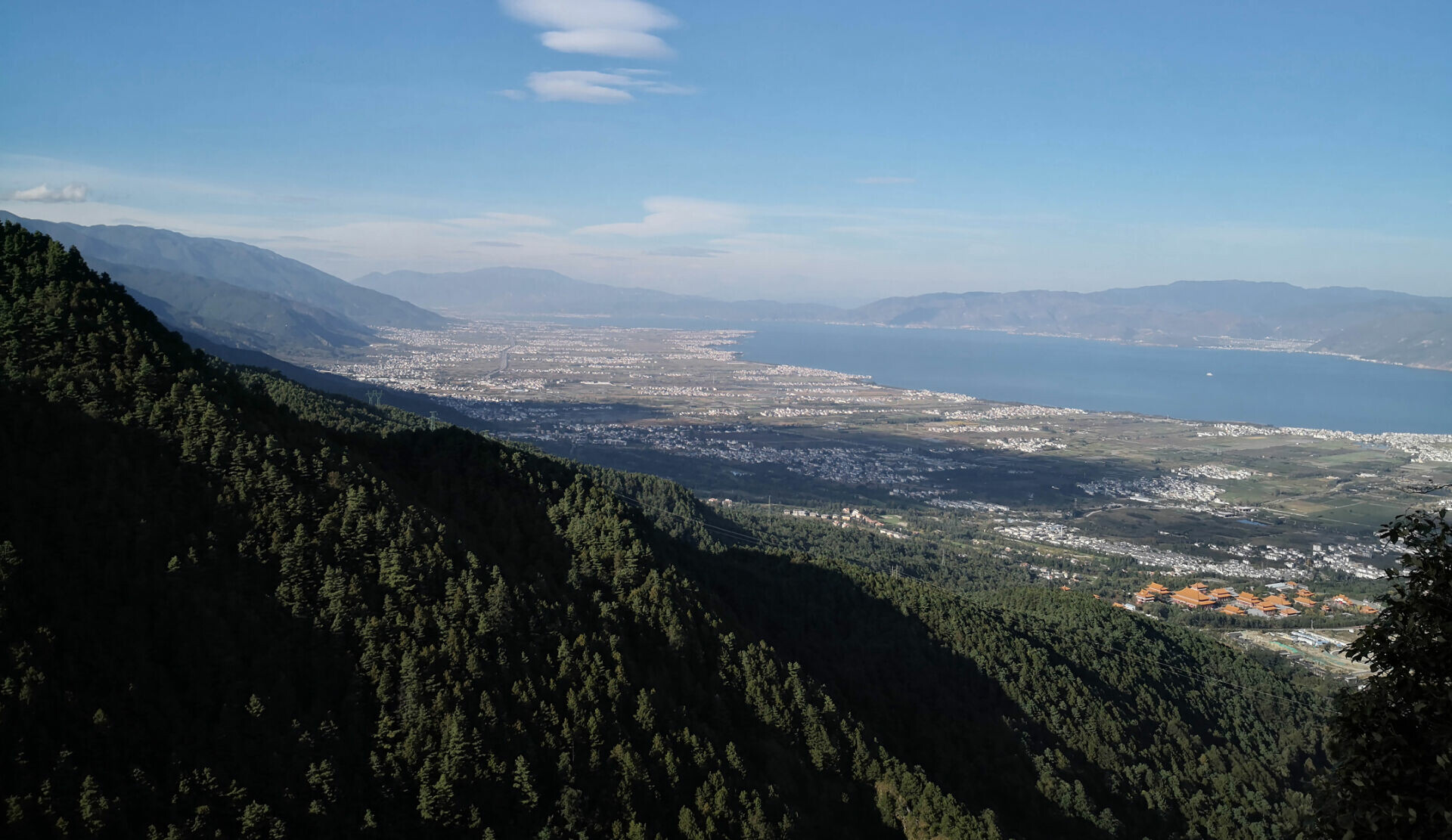
➤ Aerial view of the west coastal plain from Cang Shan, photograghy by Wu Zhou
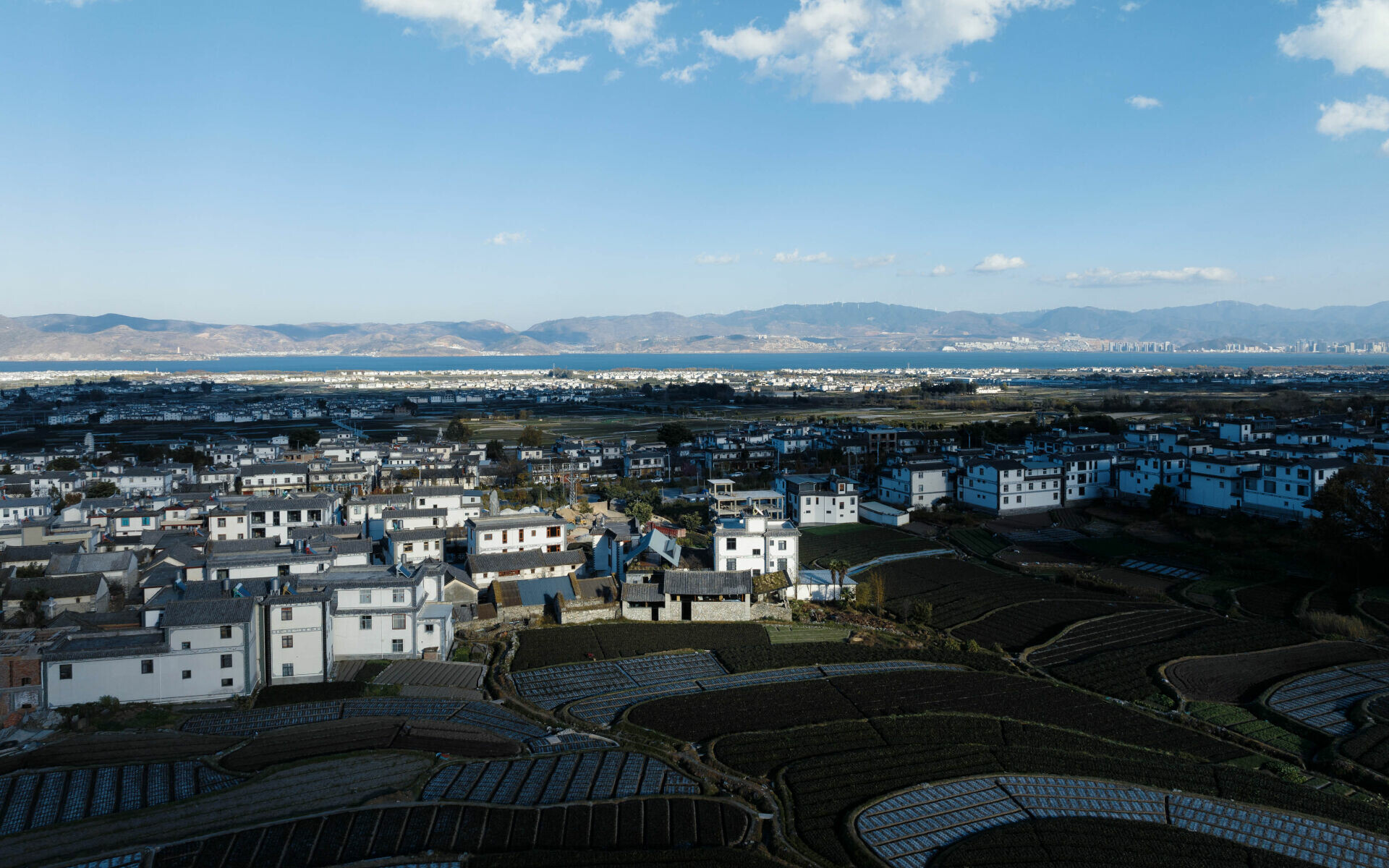
➤ Aerial view of site, photograghy by Chen Hao
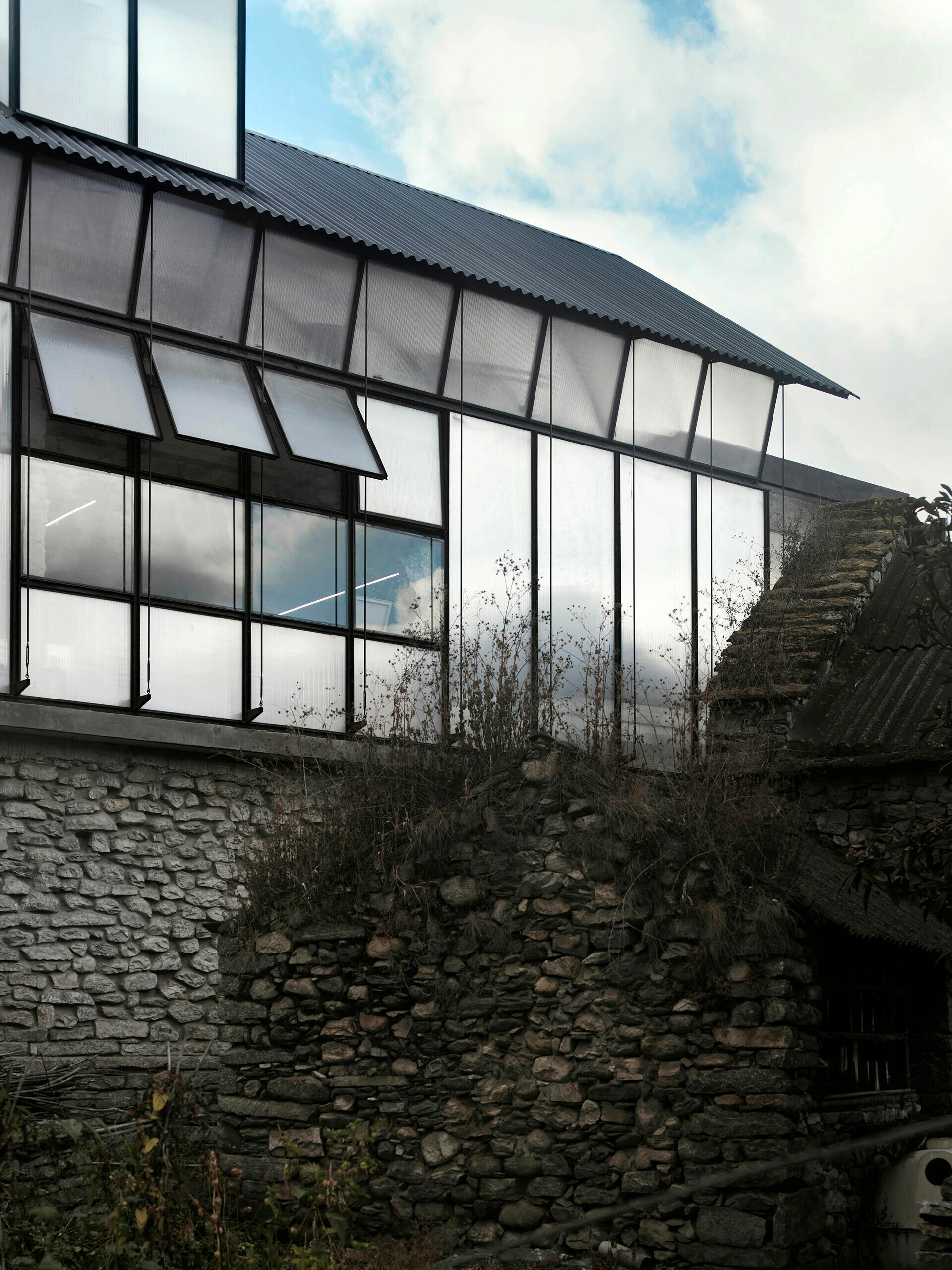
➤ detail of façade of north building, photograghy by Wang Pengfei
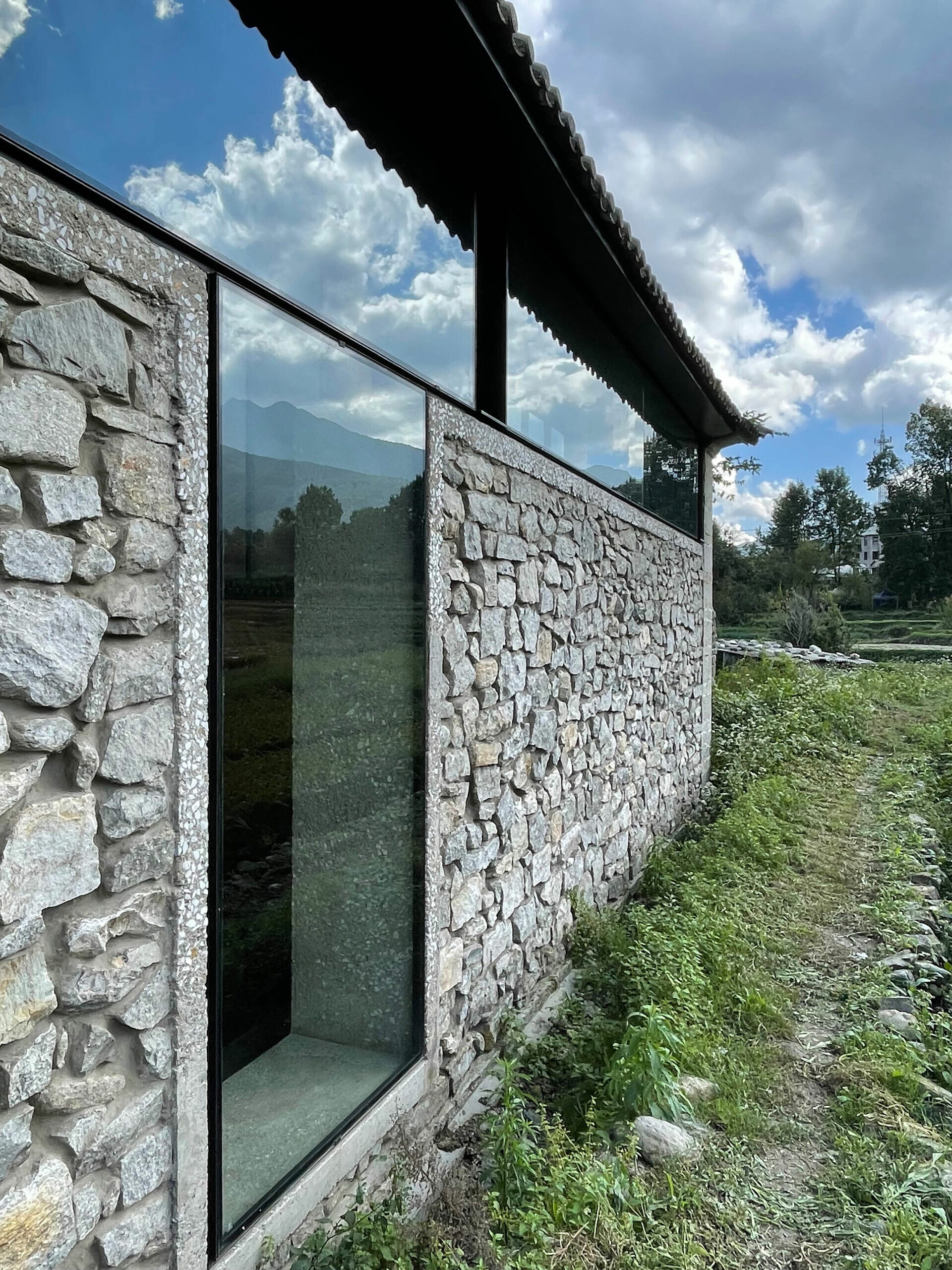
➤ Detail of Façade of stone house, photograghy by Wu Zhou
The site of Ruins Cave Garden was once an abandoned courtyard, where stone and wood structures coexisted with overgrown vegetation, evoking a poetic blend of human history and natural reclamation. Upon their first visit, the team noticed that the collapsed southern wing of the courtyard created a rare opening toward the Cang Mountains, juxtaposing the inward-facing nature of traditional courtyard homes with a newfound outward perspective. This discovery inspired the core design strategy: to reconnect the traditional inward-facing space with the expansive landscape beyond, crafting an experience that merges the interior and exterior realms.
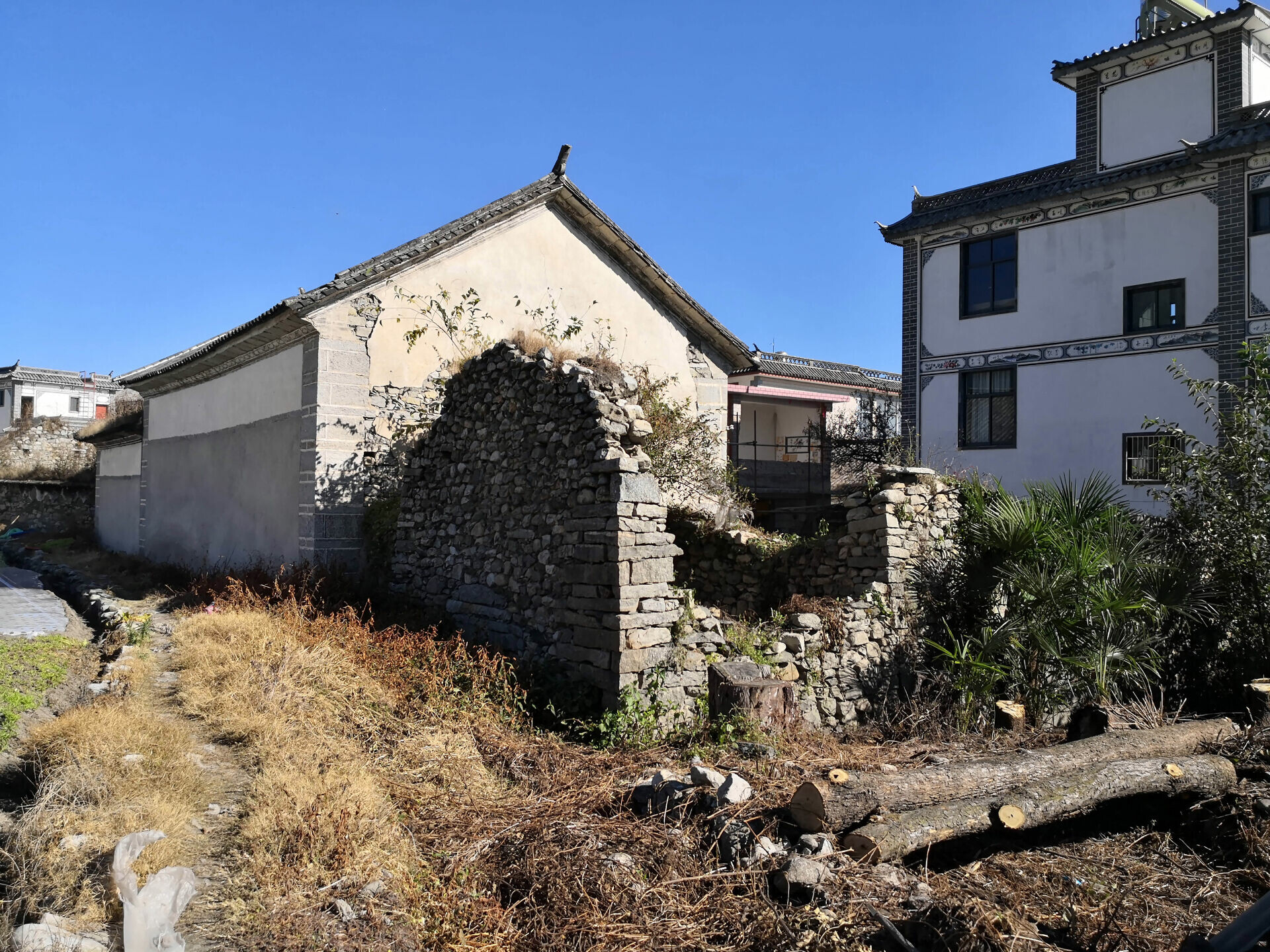
➤ Extant stone ruin, photograghy by Wu Zhou
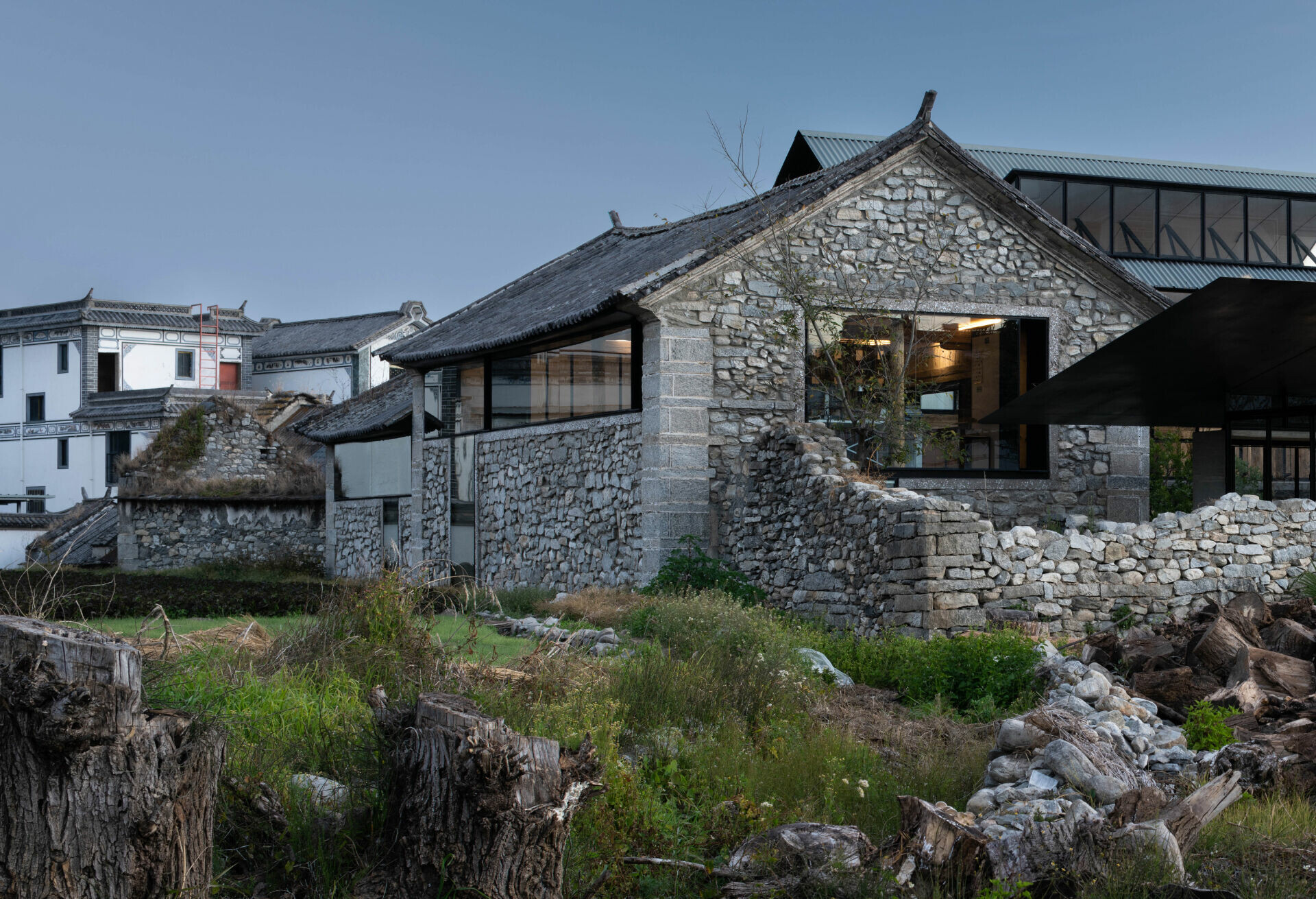
➤ view of the southwest corner, photograghy by Chen Hao
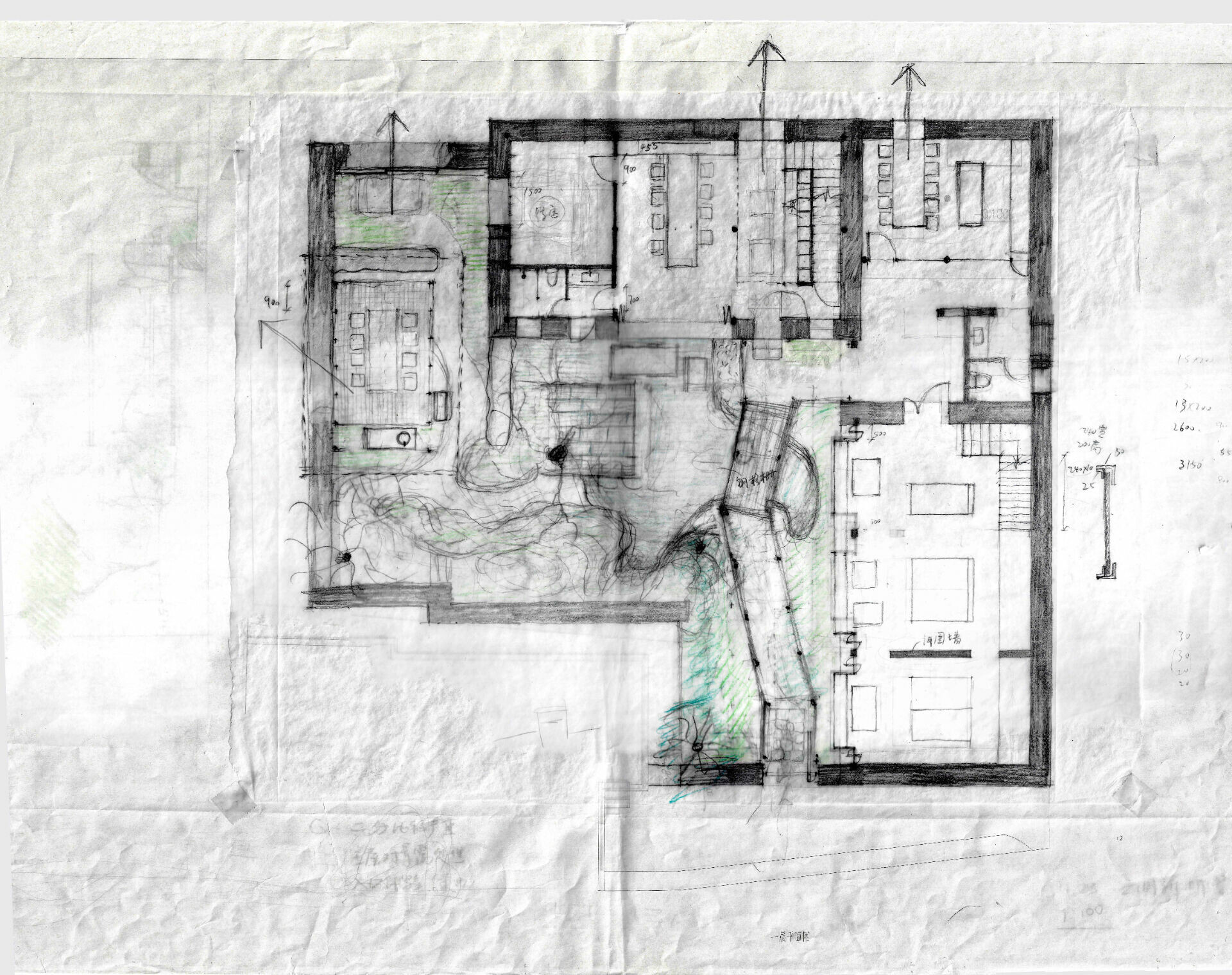
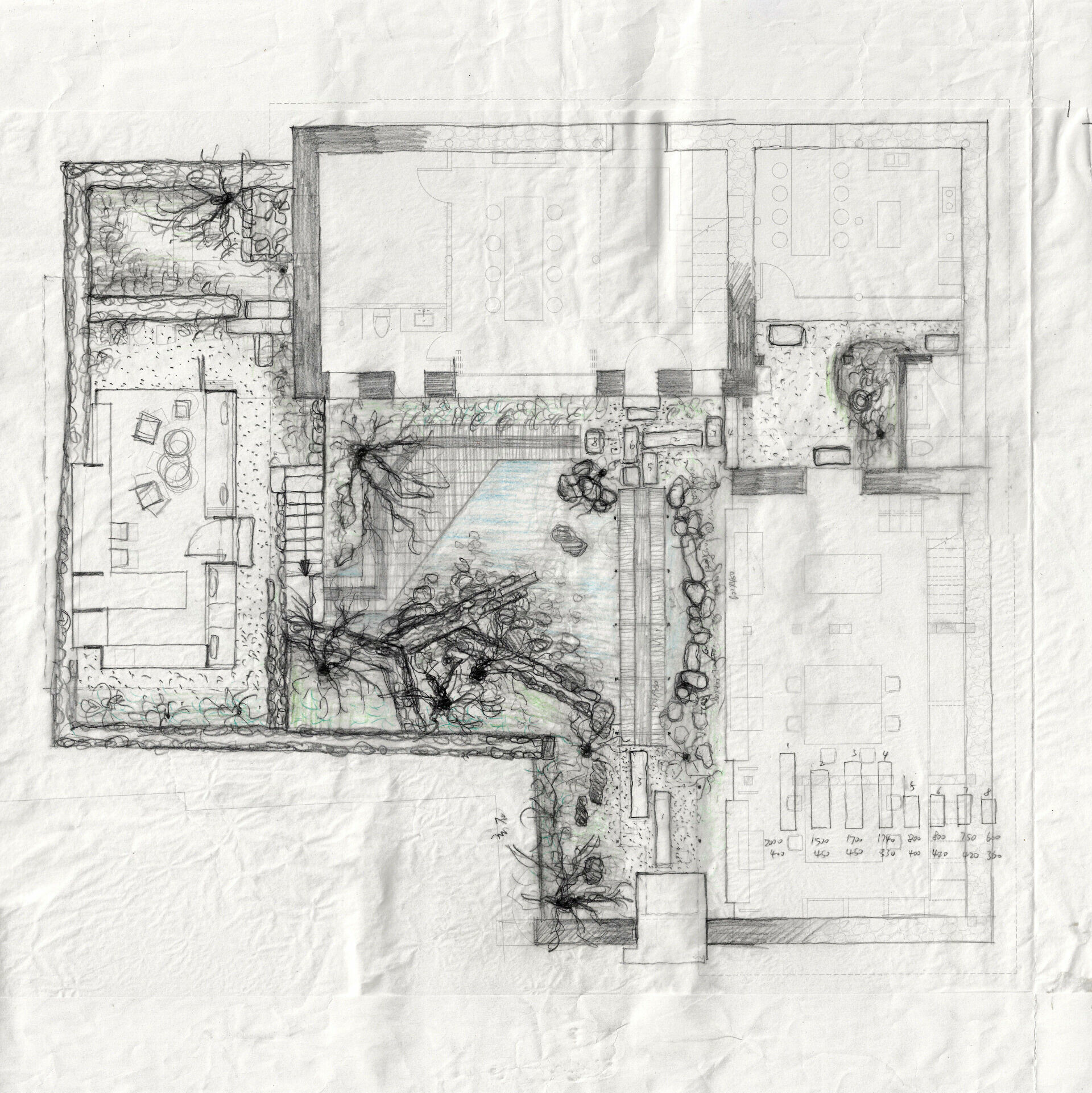
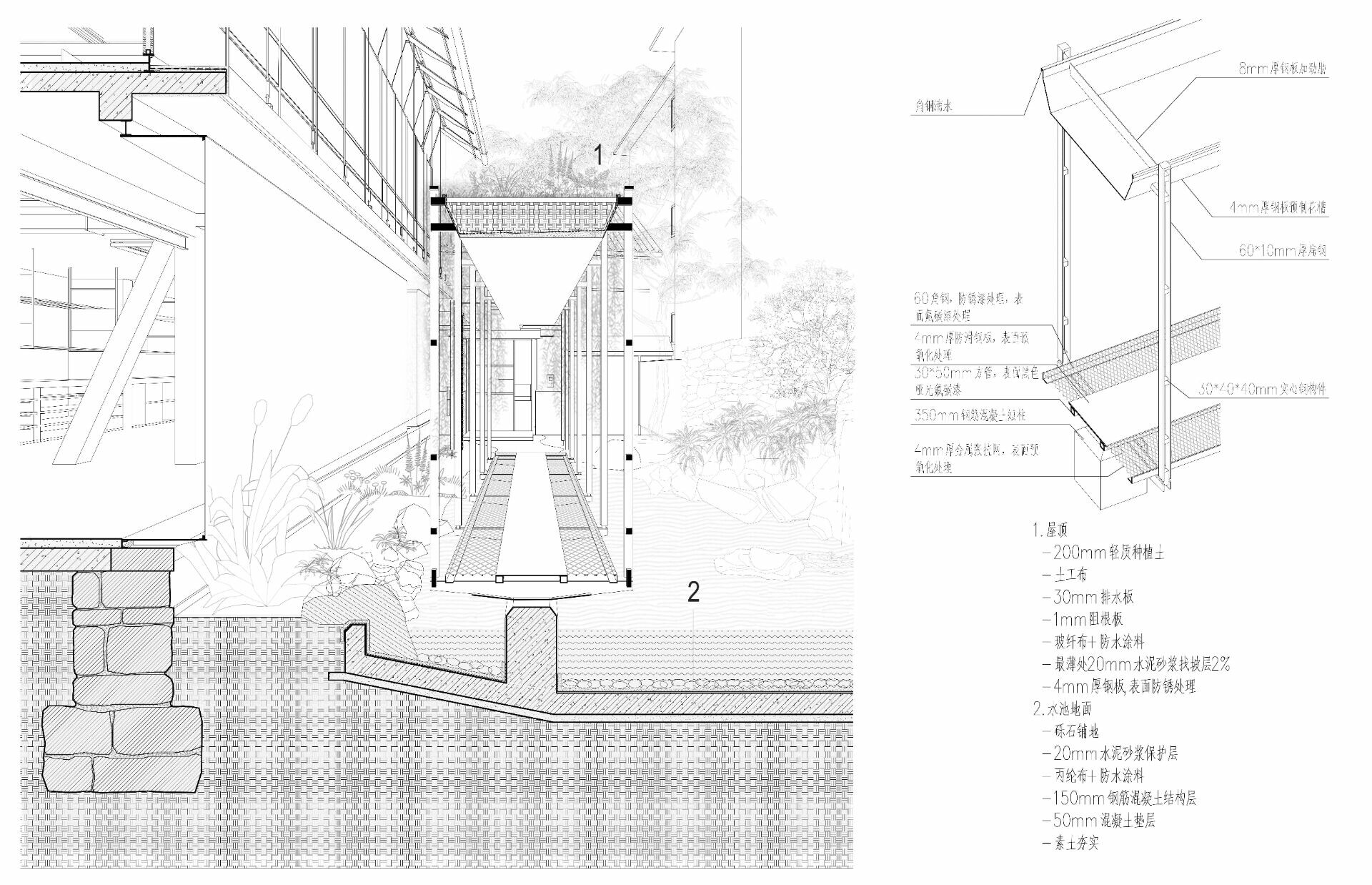
With only eight months to complete both design and construction, the team adopted a dynamic, presence-driven approach. Initial designs focused on the overall spatial relationships, but real-time adjustments were made throughout the construction process based on direct, on-site observations. The transformation involved opening up compact internal spaces, enhancing functionality, and integrating the ruins into a broader spatial dialogue. Through two phases of construction, the project redefined the existing structures and surrounding courtyard, introducing elements such as the "Stone Mountain," a water feature, and a meandering bridge to form a cohesive landscape.
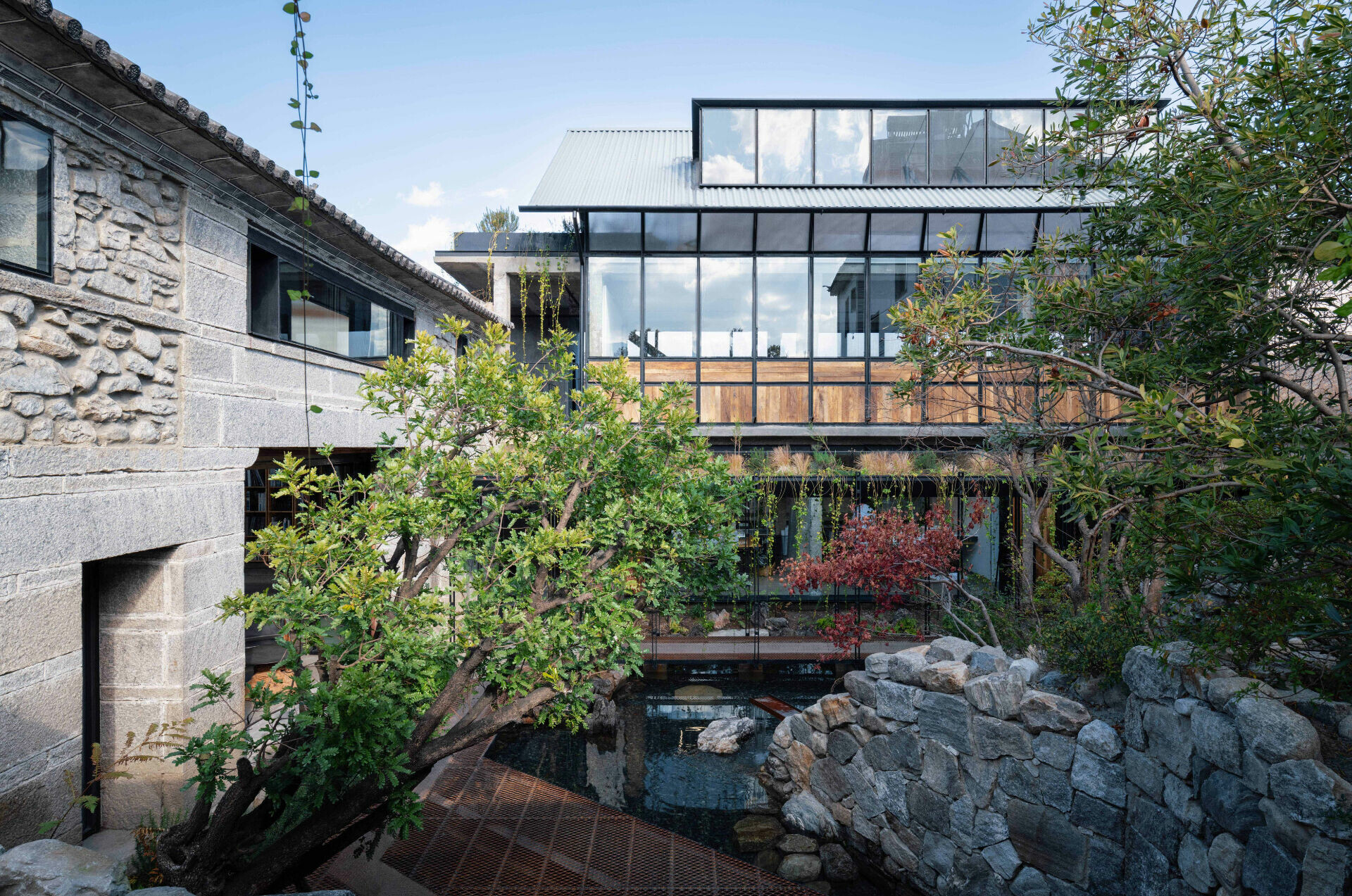
➤ External view of north building, photograghy by Chen Hao
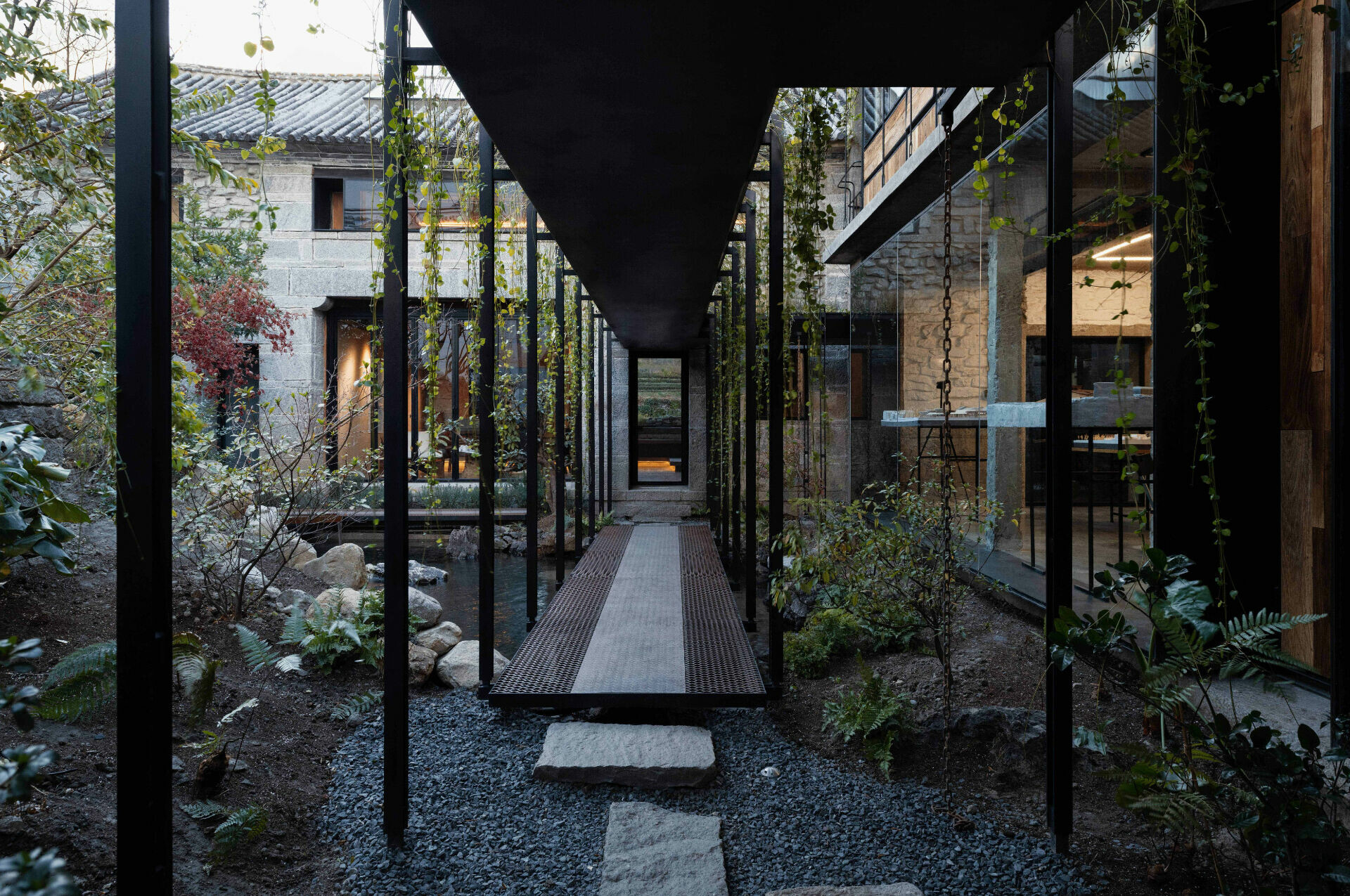
➤ View of finished courtyard, photograghy by Chen Hao
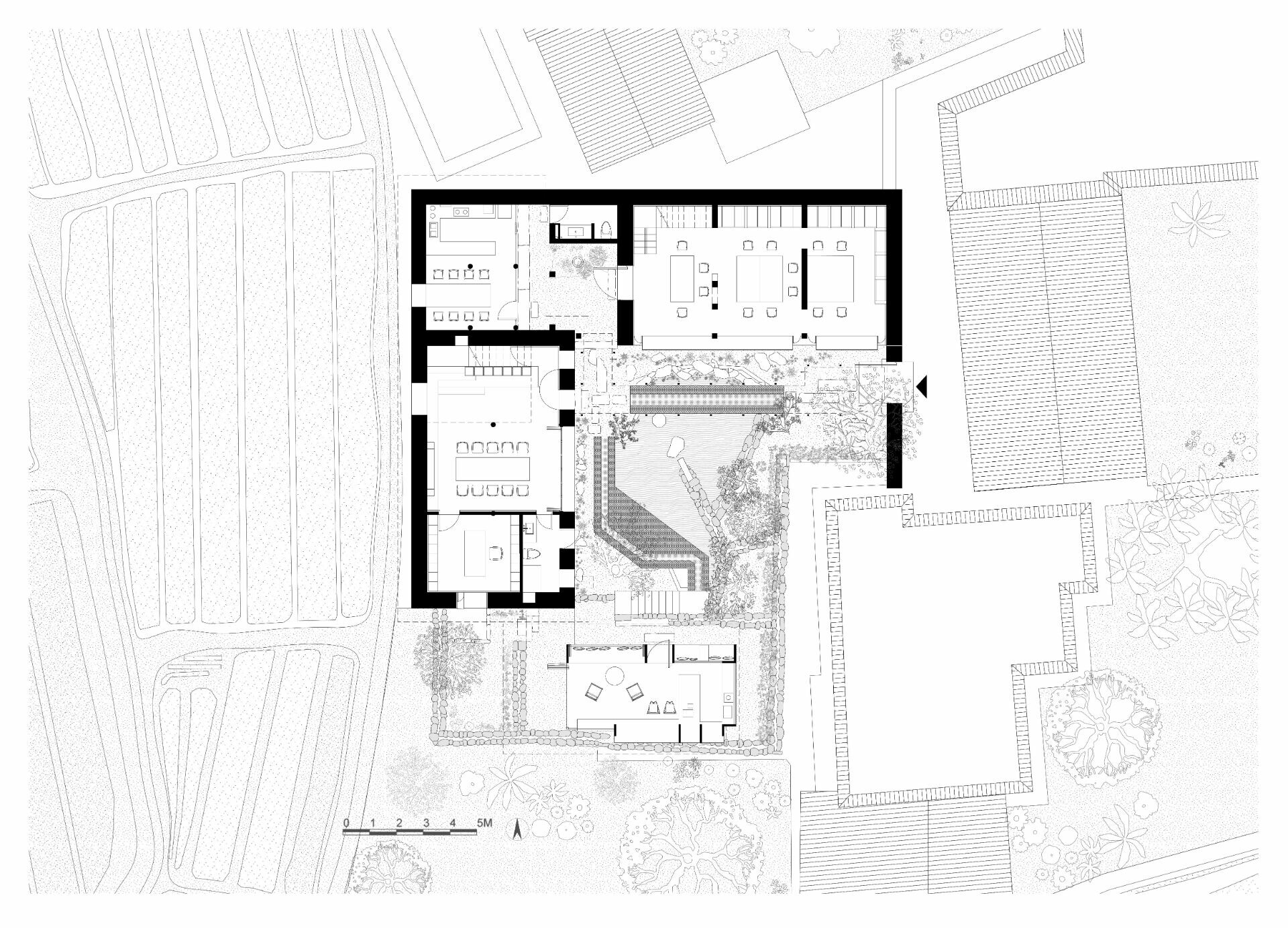
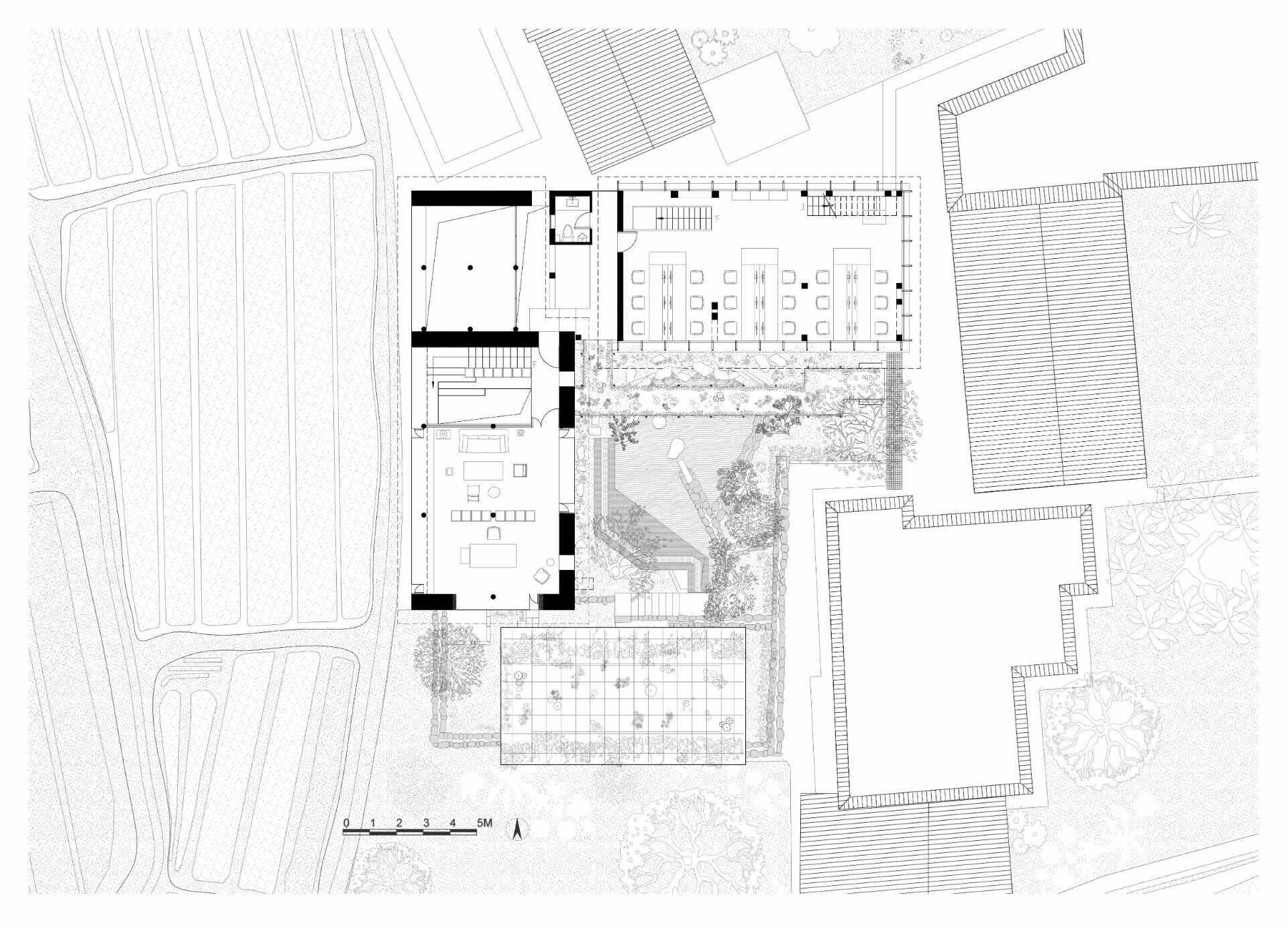
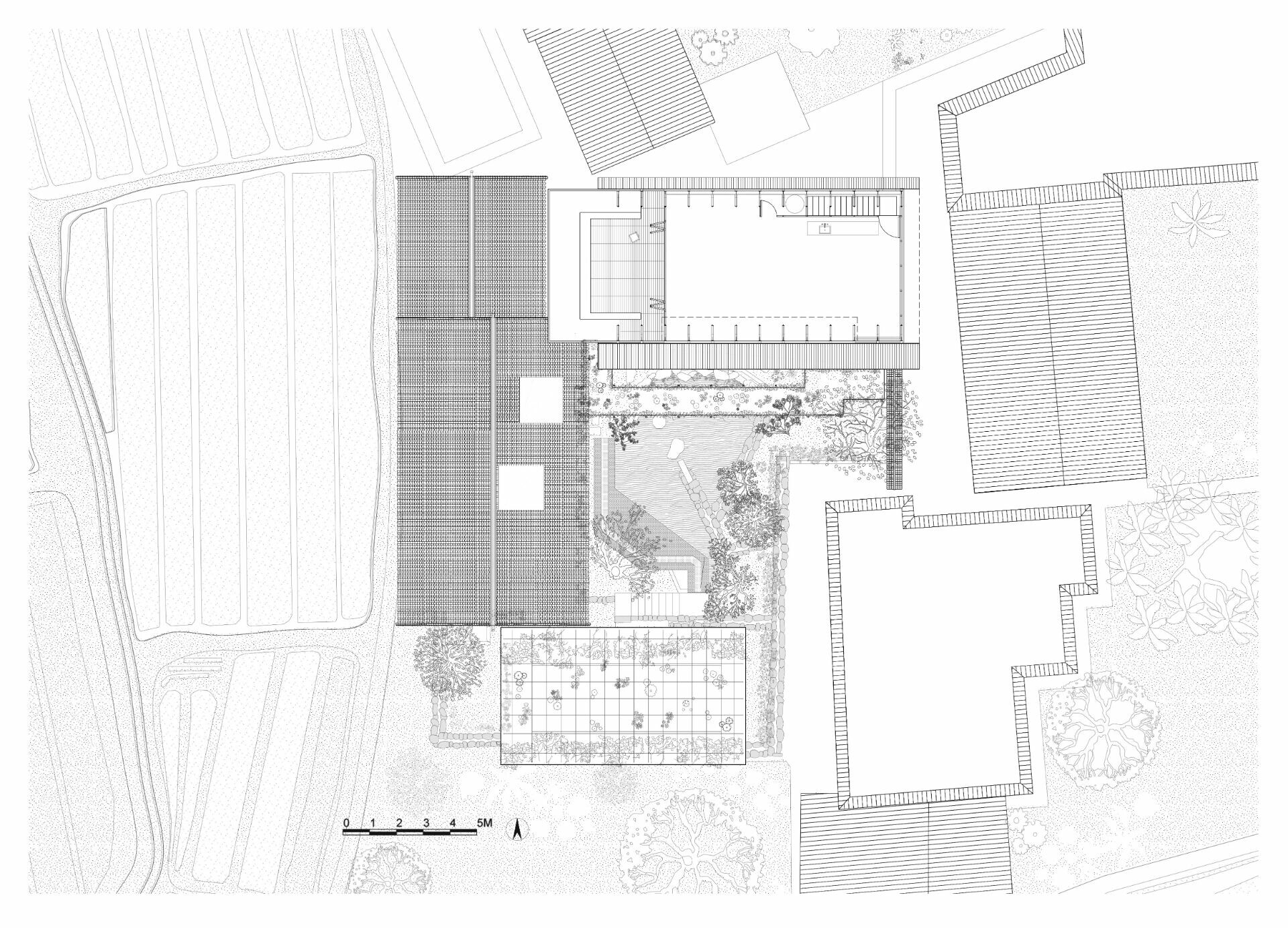
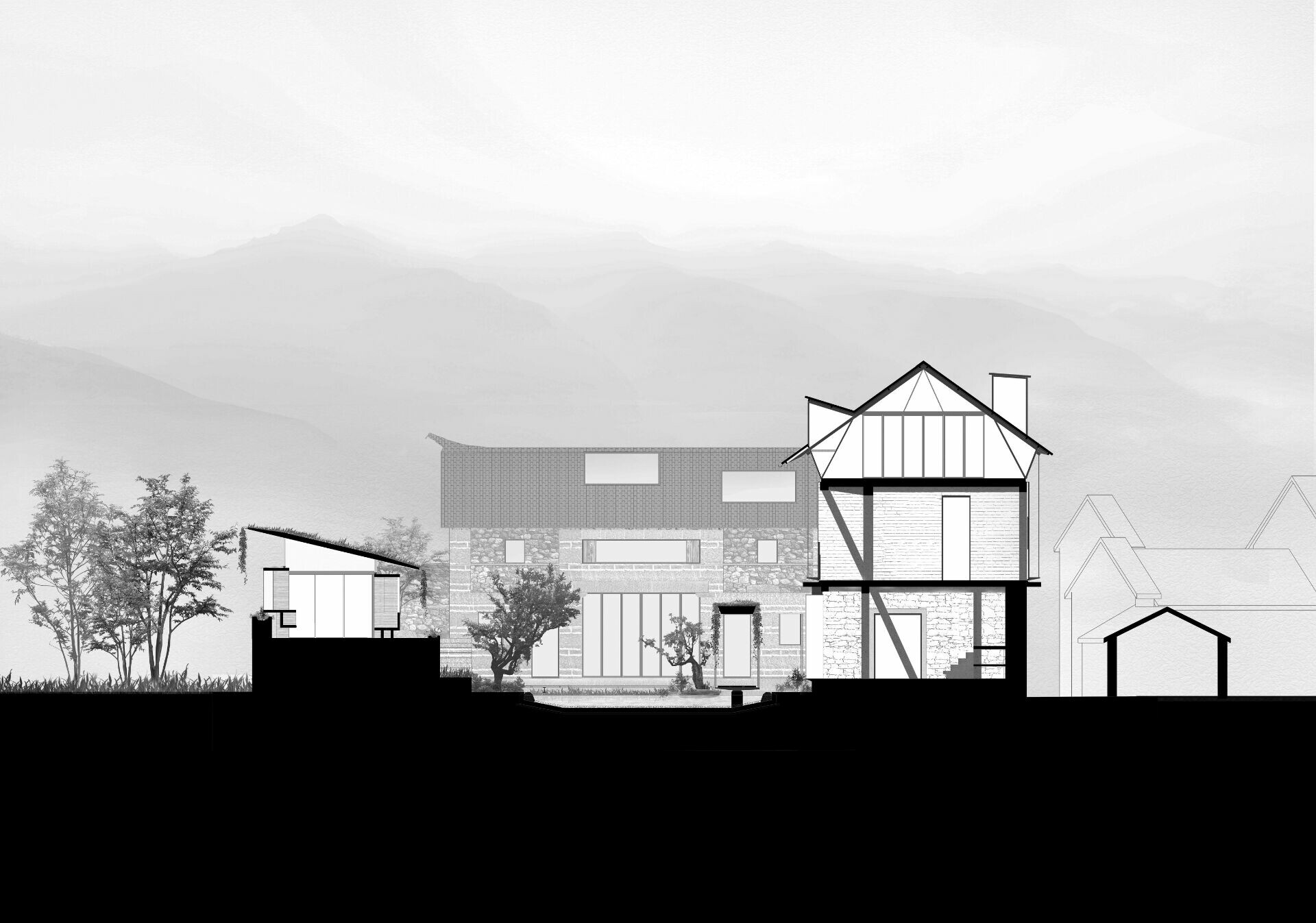
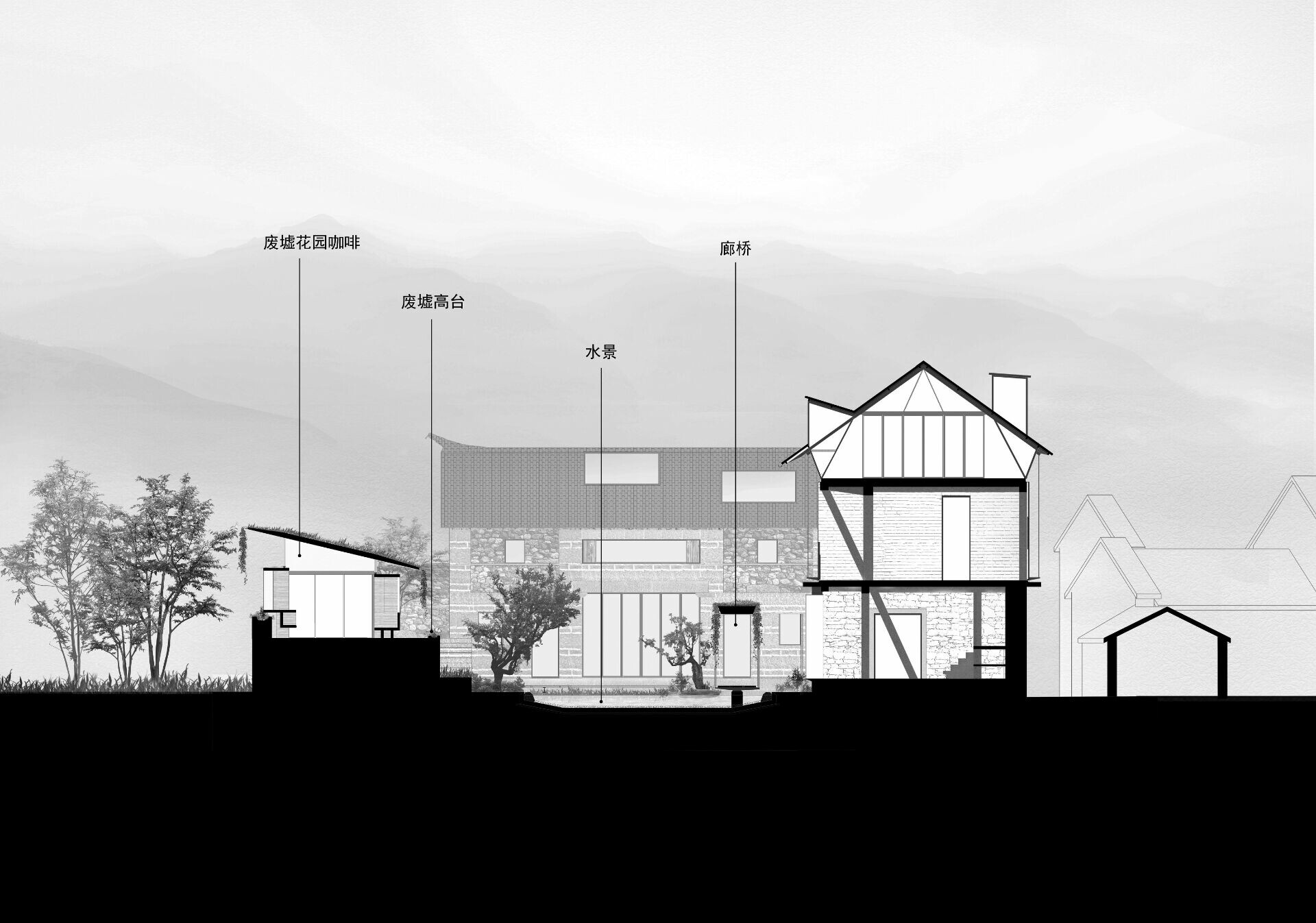
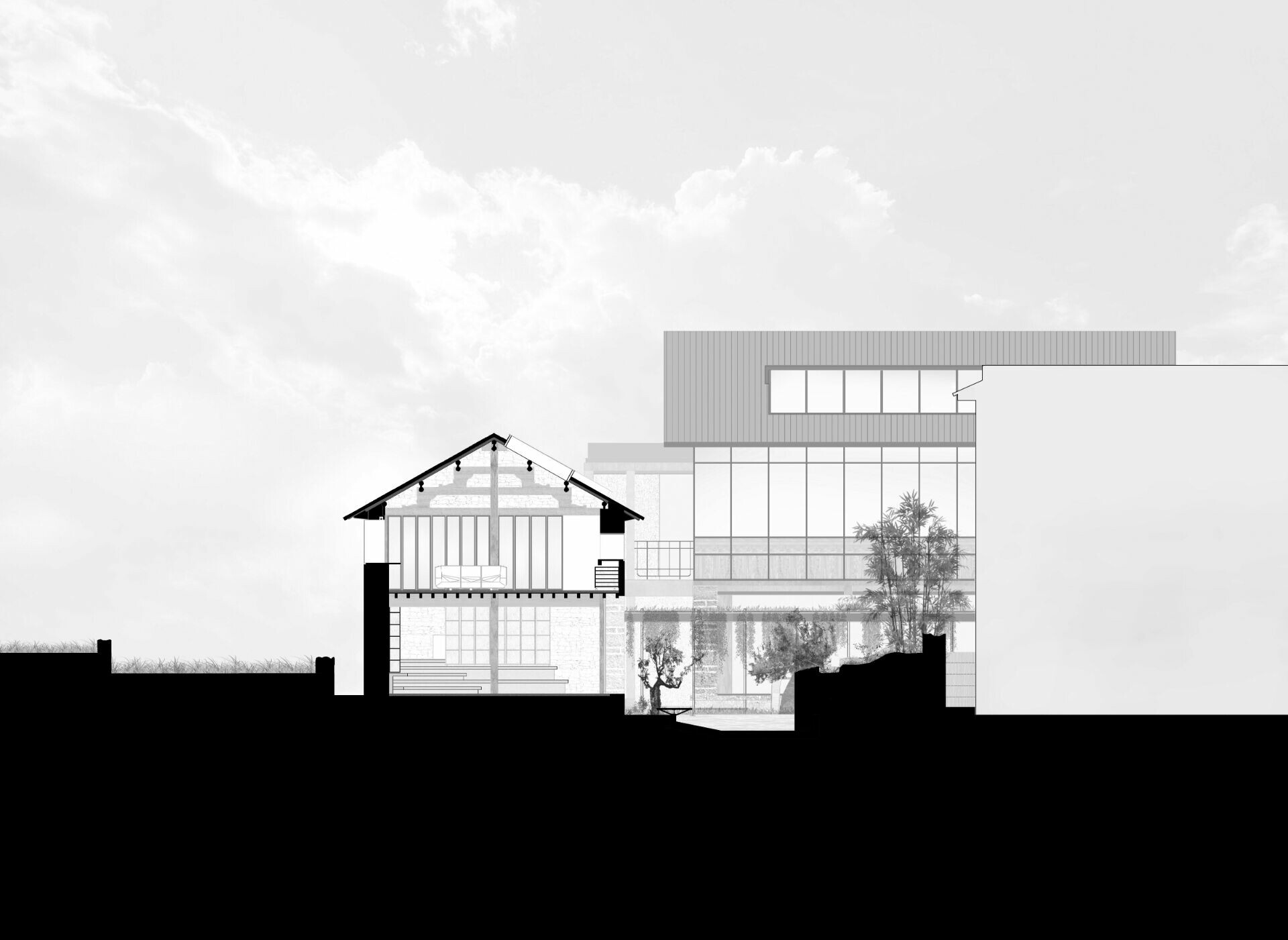
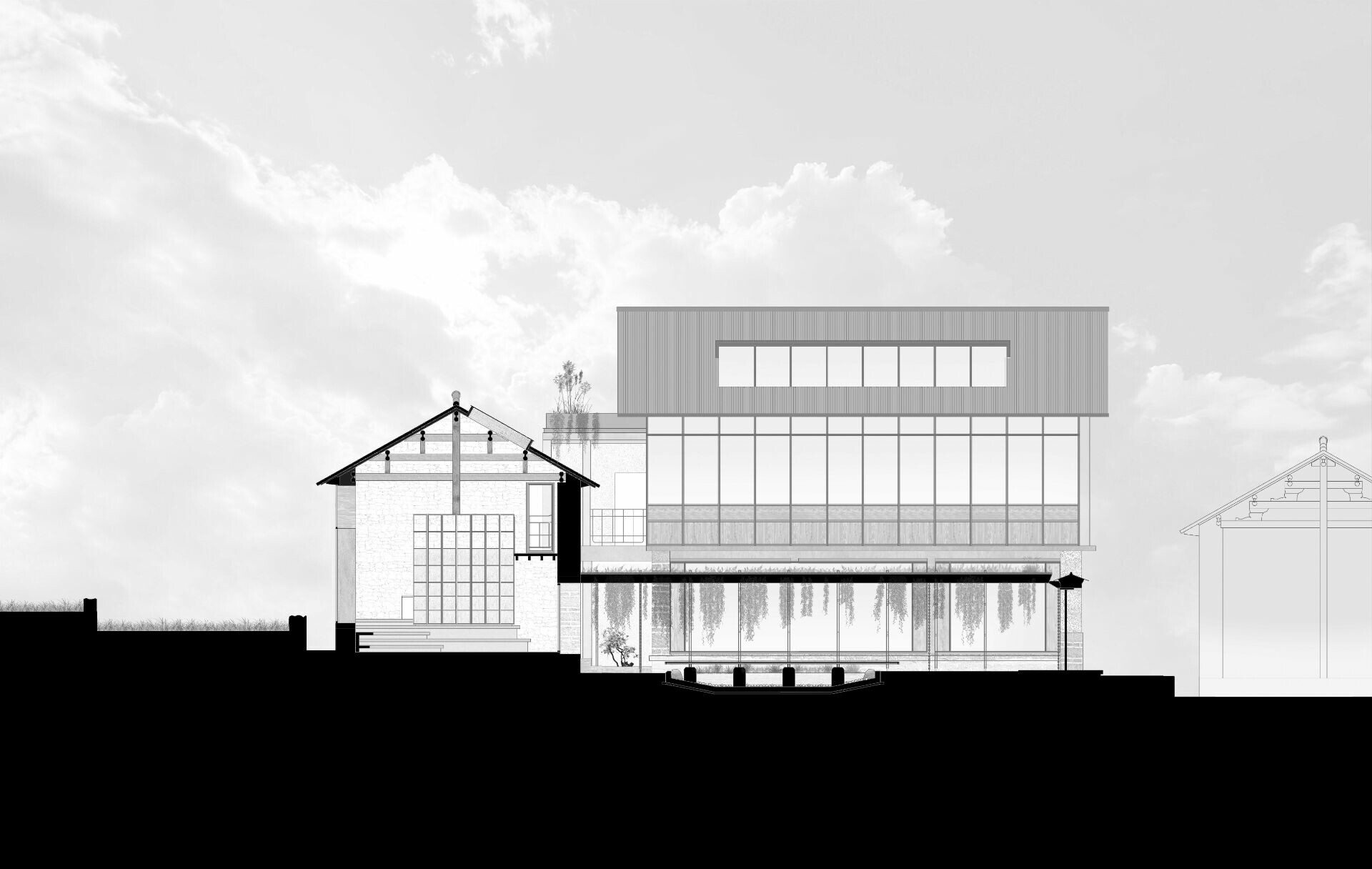
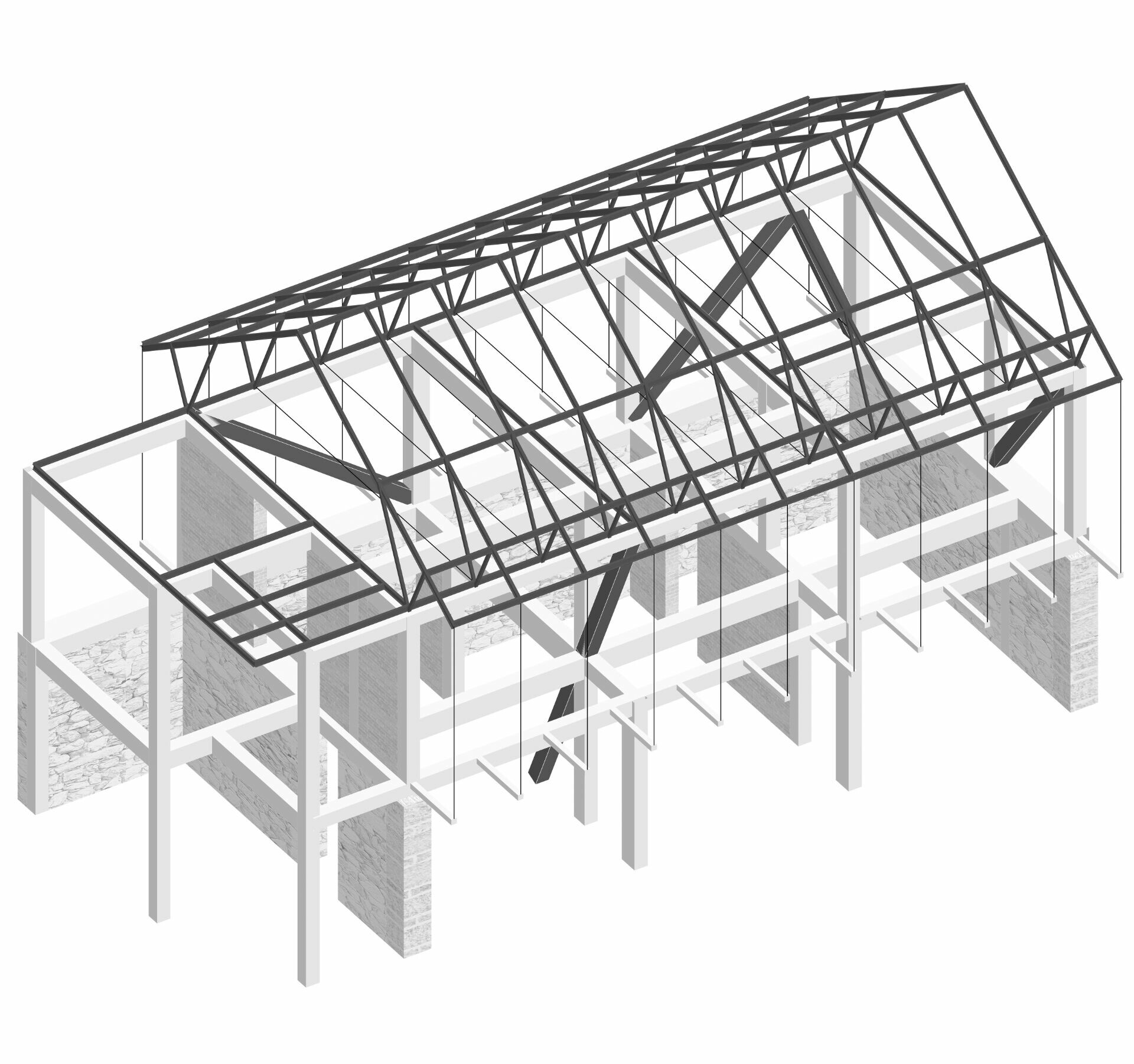
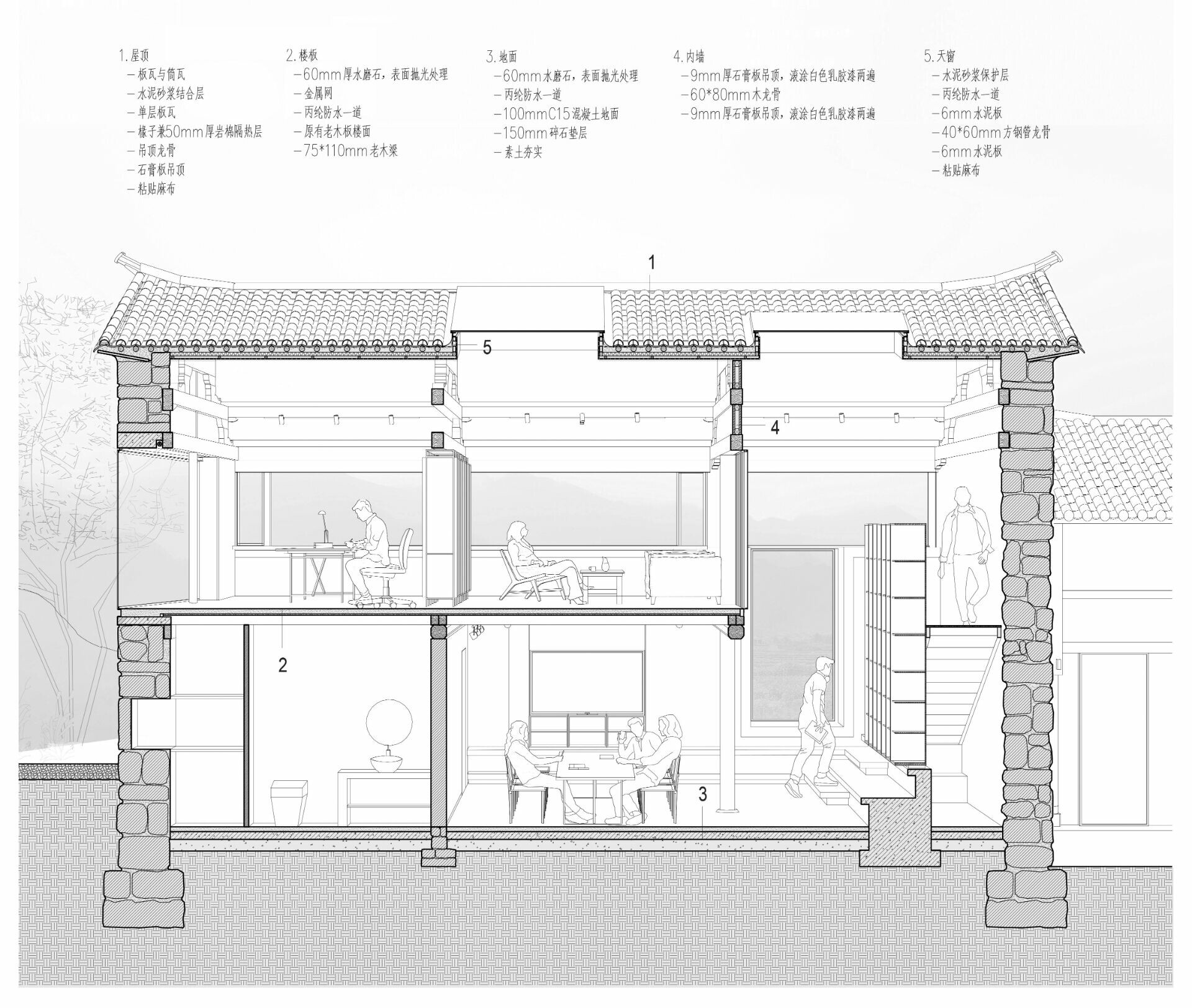
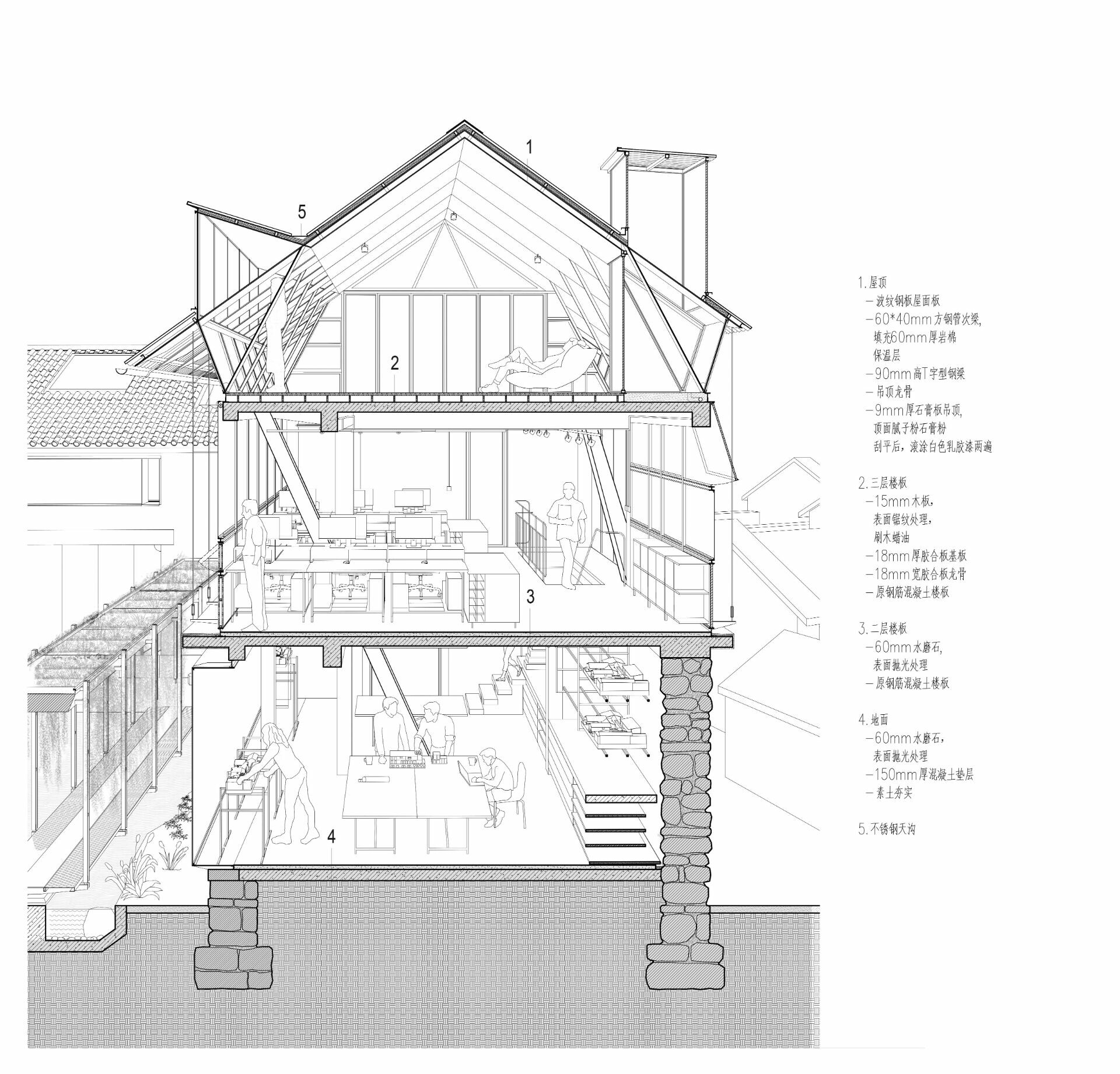
The western Stone House retains its original texture of local stone, complemented by carefully designed T-shaped openings that frame views of the Cang Mountains. The ground floor hosts meeting rooms and a library, while the double-height library area invites abundant natural light, creating a serene and contemplative atmosphere. The North Building, in contrast, emphasizes vertical transitions, evolving from a semi-underground "cave-like" ground floor to an airy second-floor workspace and a lightweight steel-framed attic that opens to panoramic views of the mountains and lake. Together, these buildings exemplify a balance between preservation and innovation, connecting interior and exterior spaces.
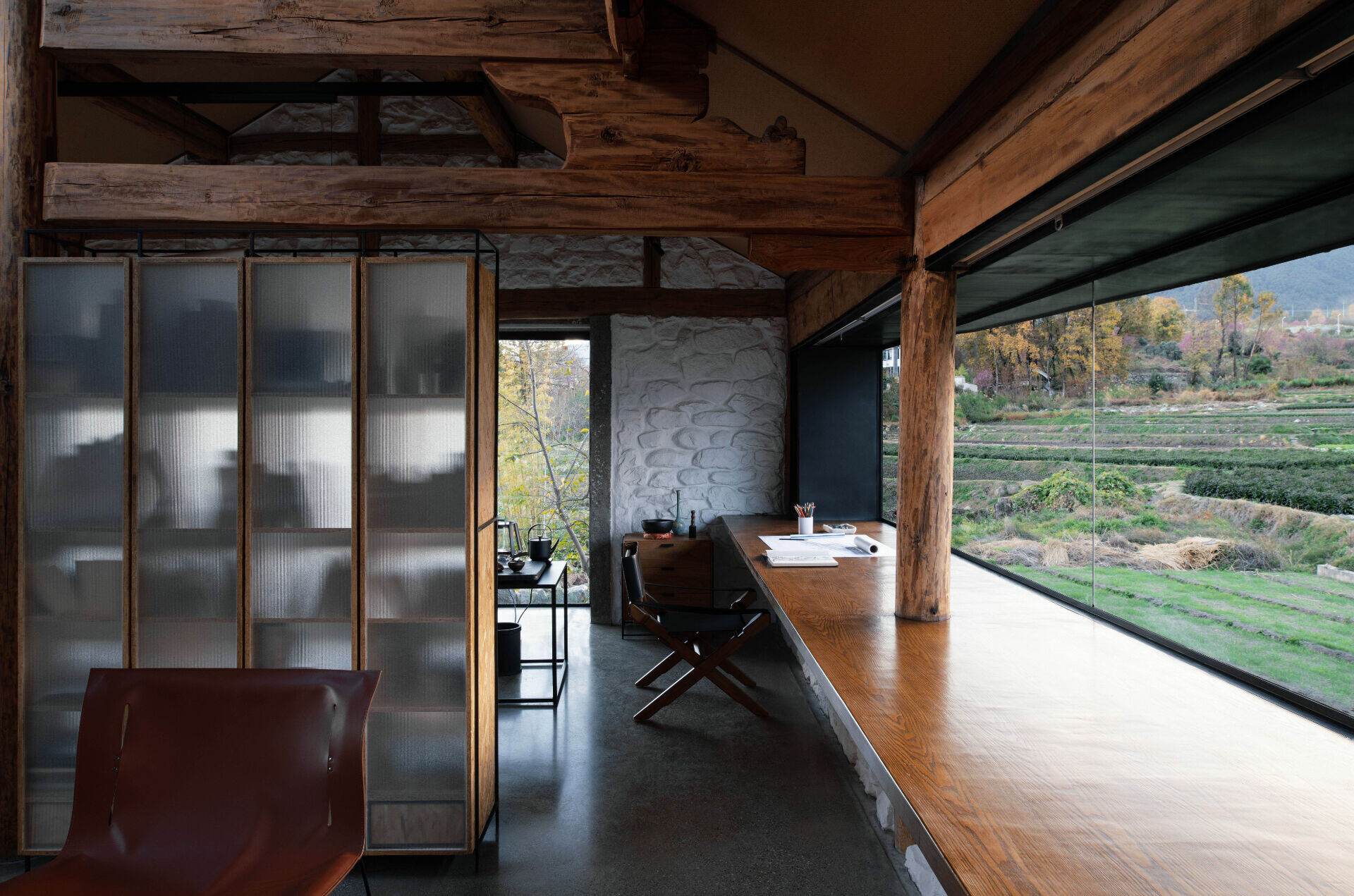
➤ Ribbon Window integrated with a workbench of stone house, photograghy by Chen Hao
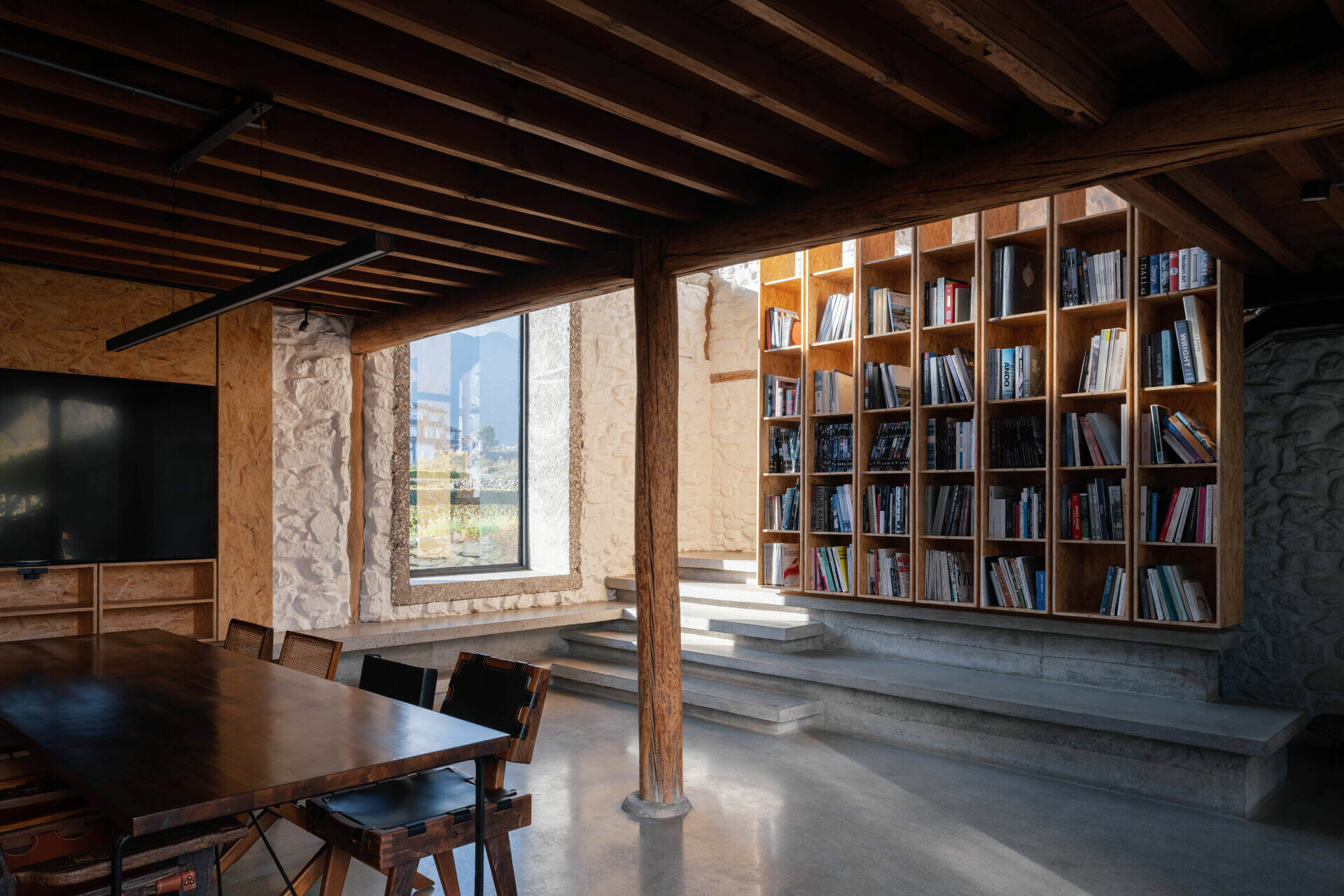
➤ Interior view of reading area and meeting area, photograghy by Chen Hao
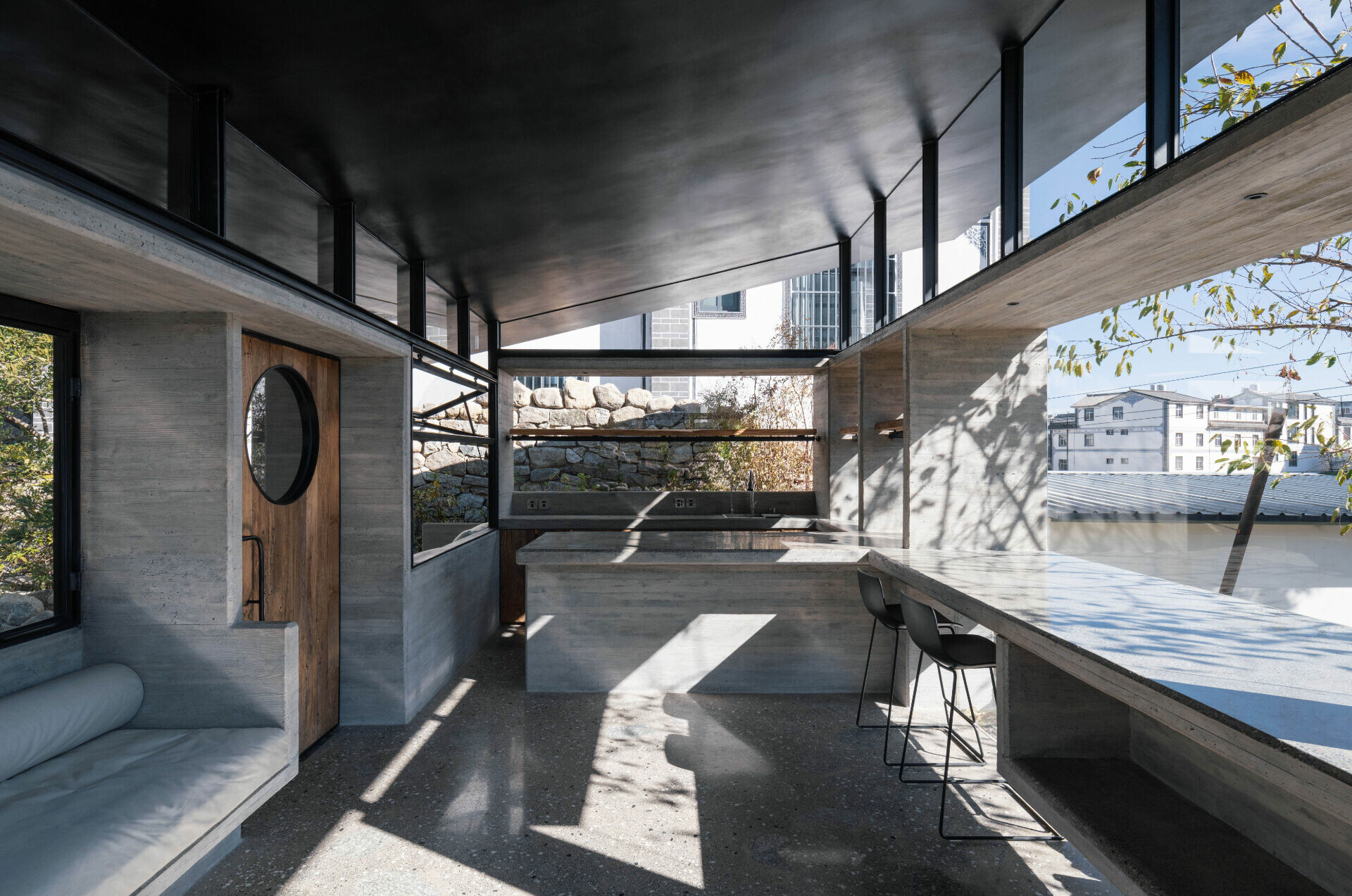
➤ View of interior of café, photograghy by Chen Hao
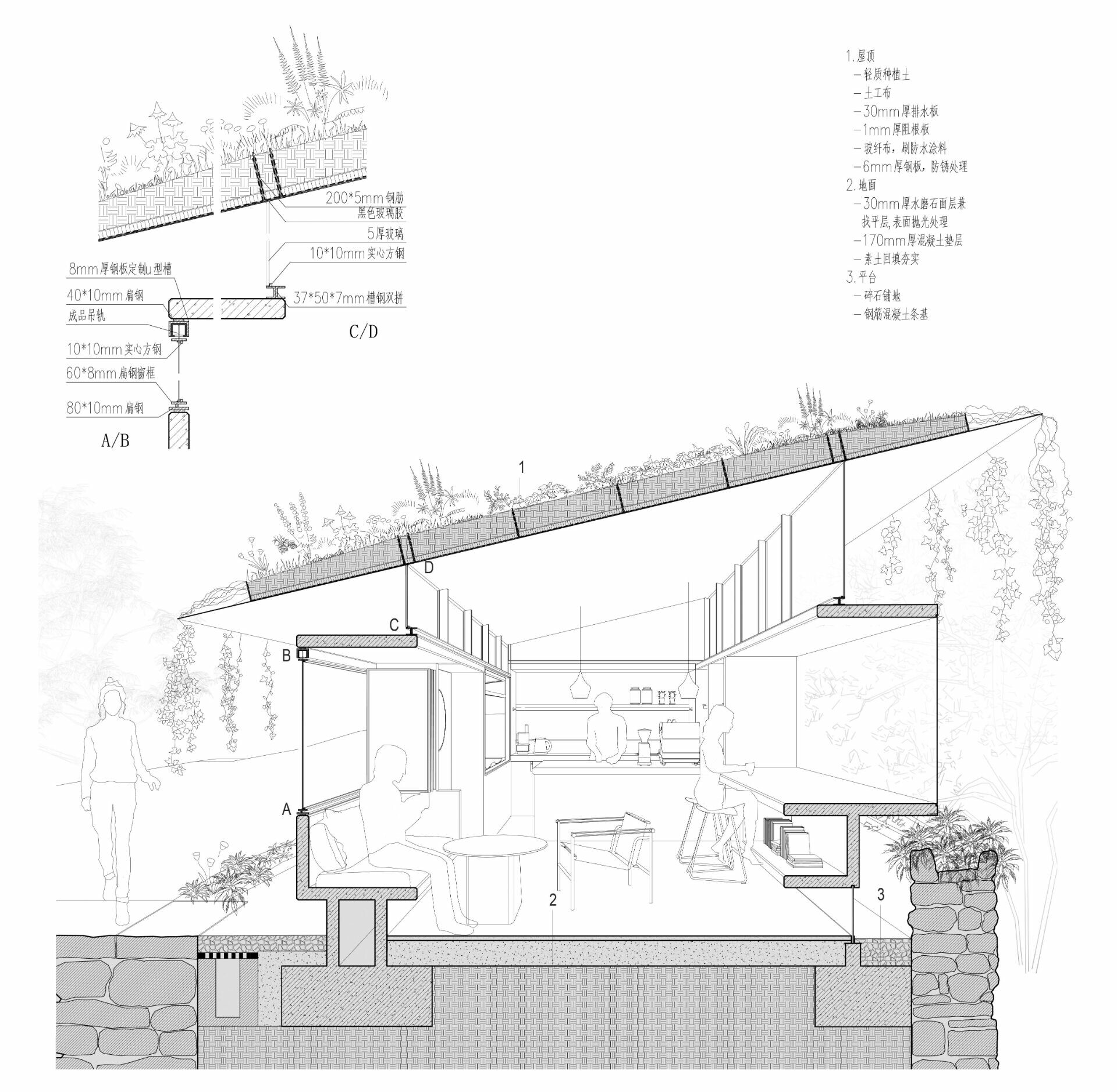
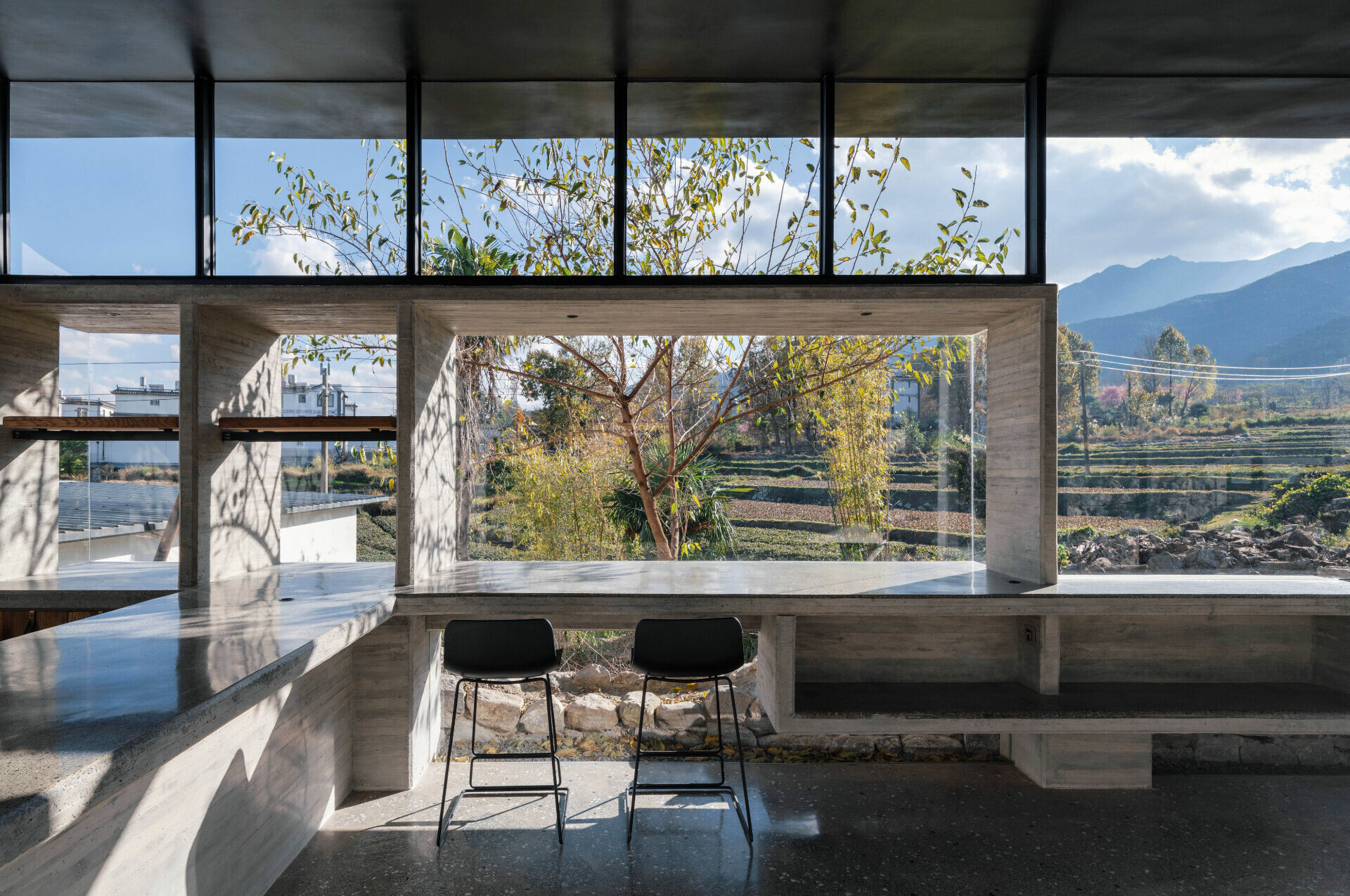
The courtyard design revolves around the concept of "turning ruins into a garden." The remnants of the collapsed wing were transformed into a "Stone Mountain," paired with a water feature to define the dual characteristics of the space: an intimate inner courtyard and an outward-facing elevated platform. A bridge gracefully connects these spaces, softening the visual dominance of the individual buildings while guiding visitors’ gaze toward the courtyard and distant mountains. Atop the ruins, a garden café with a single-sloped roof introduces a duality of scales: its low eaves create an intimate connection with the courtyard, while the elevated roof opens to sweeping views of the mountains.
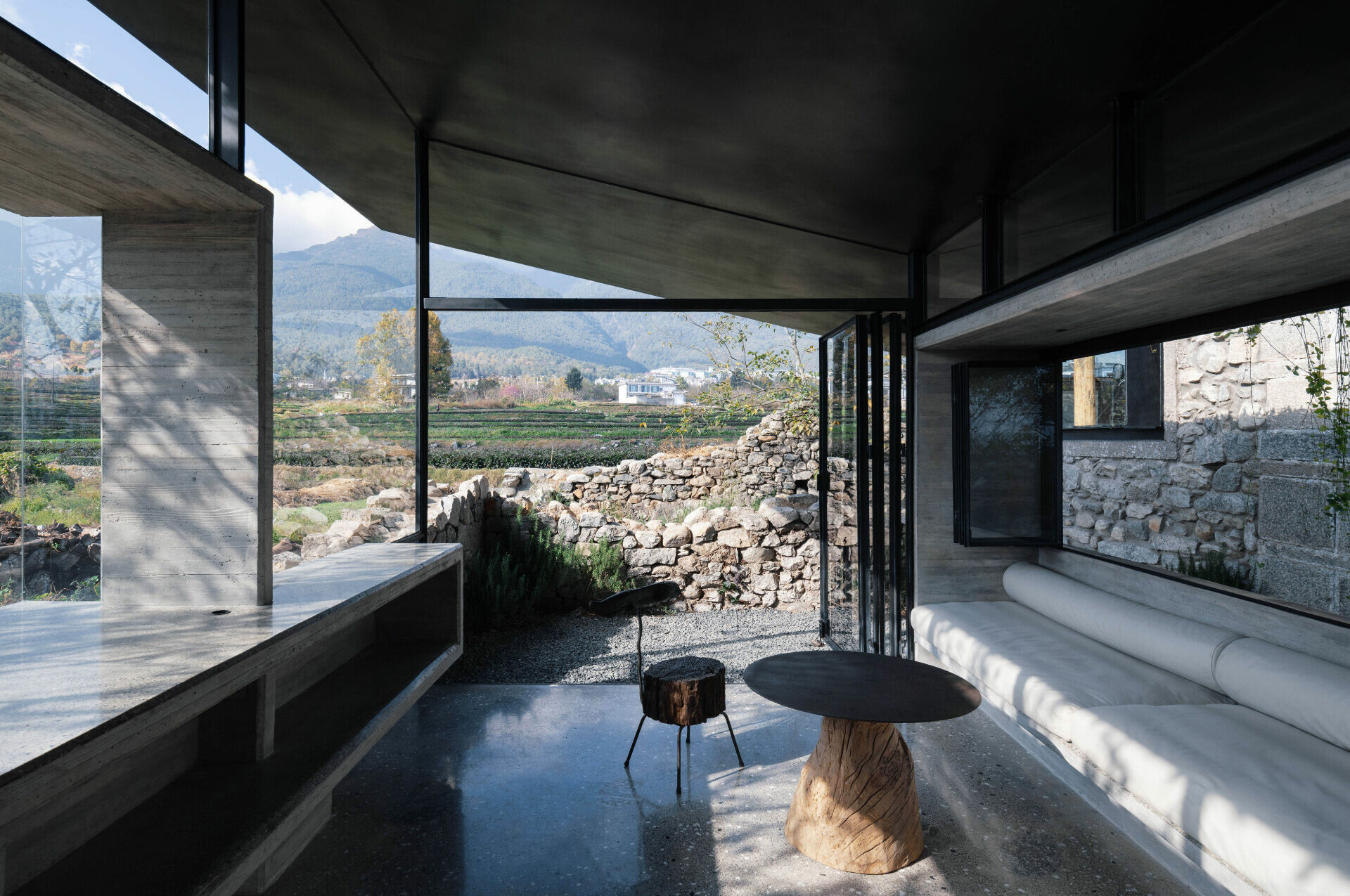
➤ view of Cang Shan from the interior of café, photograghy by Chen Hao
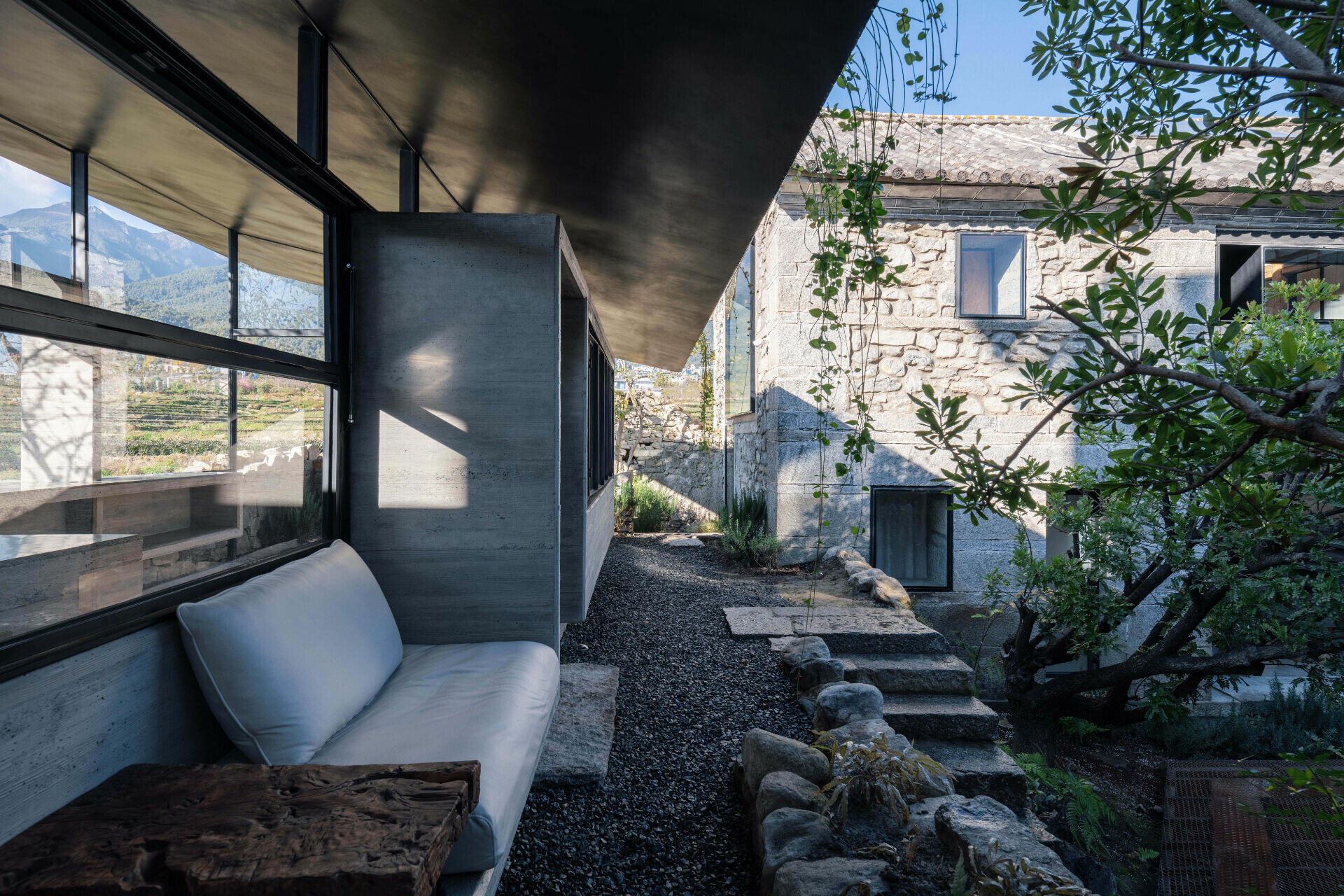
➤ View of café seats after the completion of the whole studio, photograghy by Chen Hao
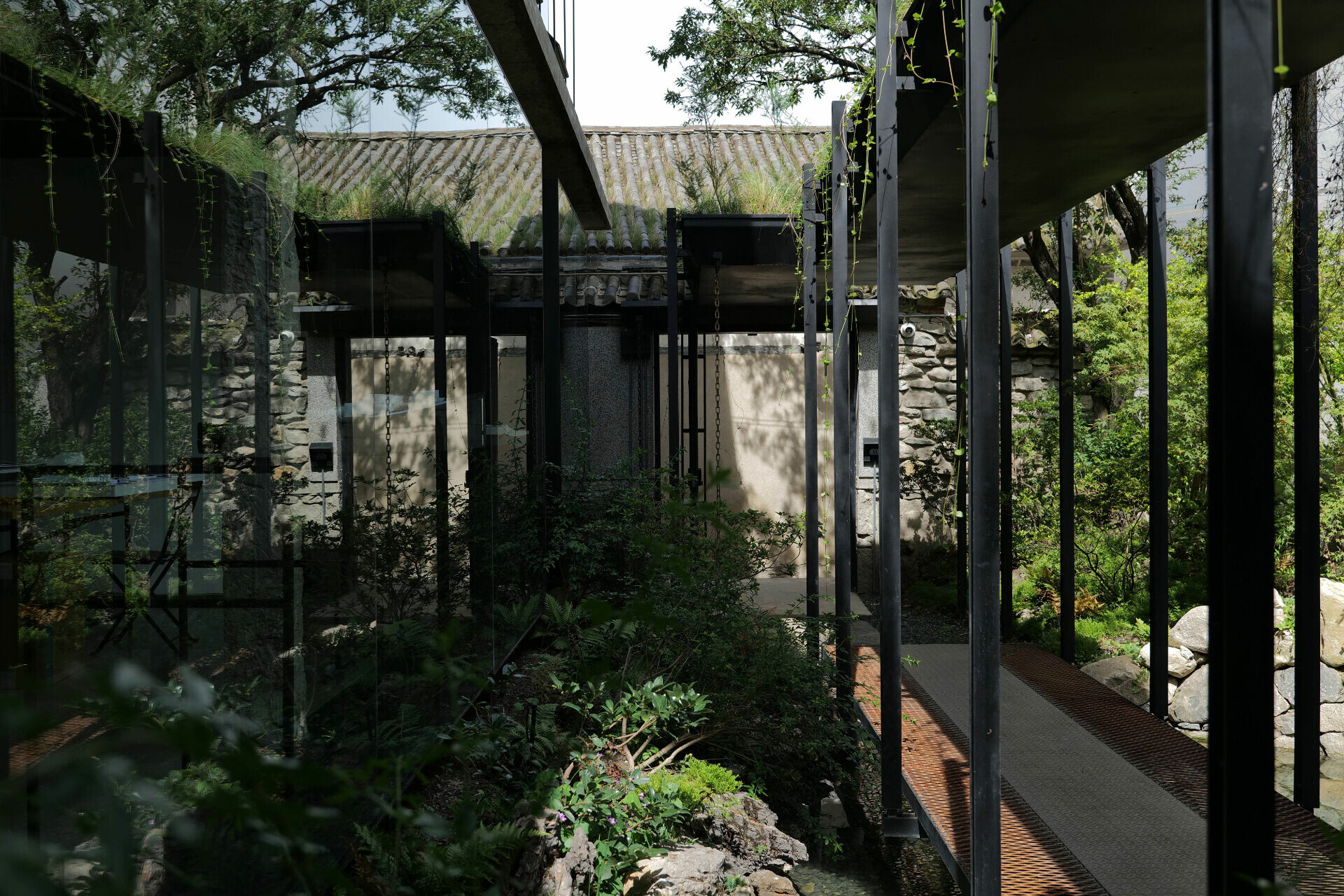
➤ Glass reflects the bridge and courtyard, photograghy by Luo Qingshan
The construction of Ruins Cave Garden represents both an exploration of natural living and a reflection on architectural essence. Grounded in sensory experiences, the design rediscovered the site’s latent potential, stitching together interior and exterior realms into an integrated spatial narrative. The name "Ruins Cave Garden" captures its layered identity: "Ruins" refers to the starting point of the site’s transformation, "Cave" evokes the intimate, sheltering quality of the stone structures, and "Garden" symbolizes the intertwining of natural and architectural experiences. This endeavor not only exemplifies an architect’s personal journey of self-discovery but also offers a broader vision of how spaces can nurture and inspire humanity.
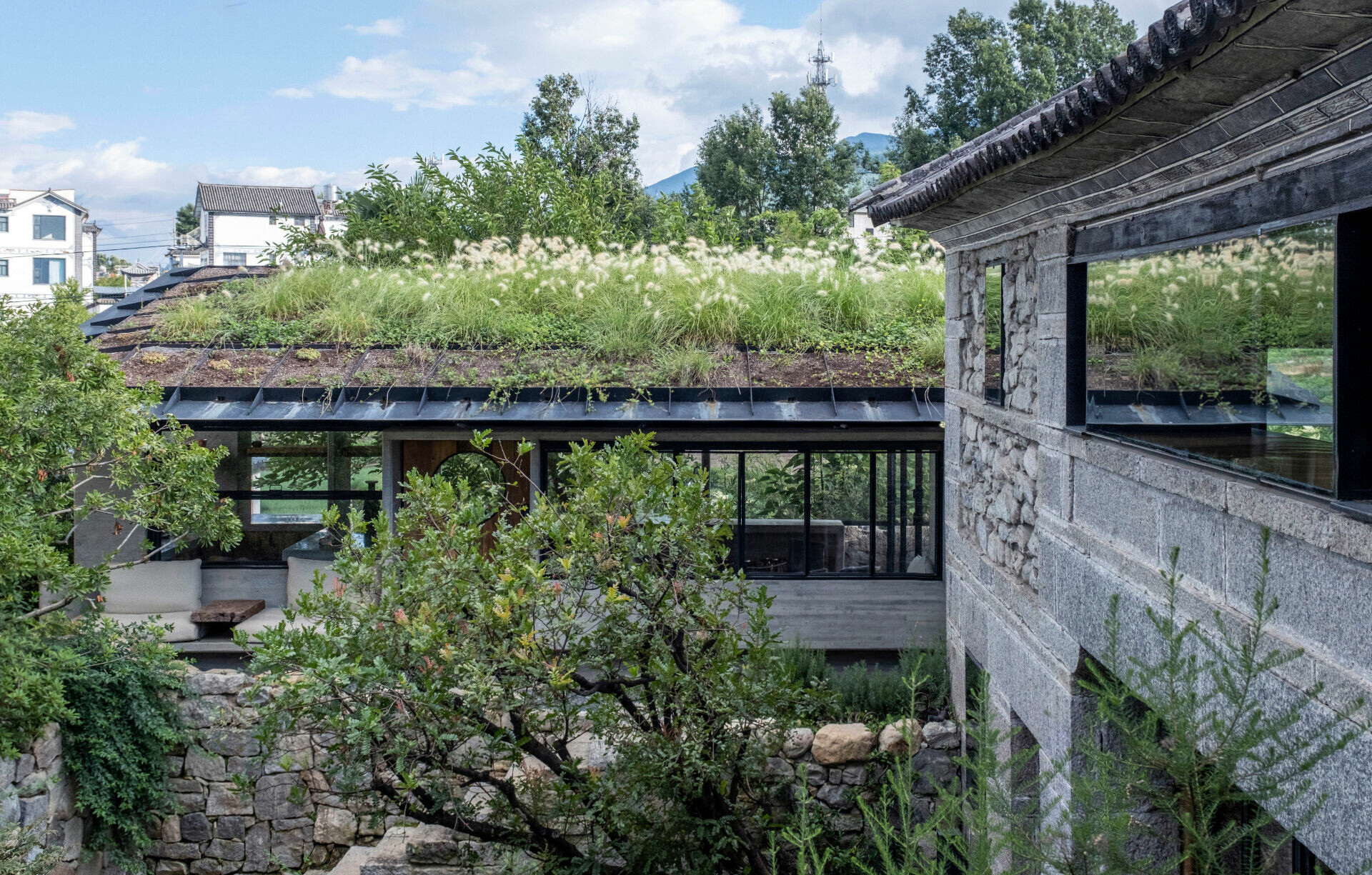
➤ View of planted roof of ruins garden cafe, photograghy by Liu Changrui
➤ view of Cang Shan from the interior of café, photograghy by Chen Hao
Architect | Wu Zhou @wuzhou_arconnect
Landscape Design | Liu Ju, Wu Zhou
Structural Design | Cai Yanming
Design Team | Chen Nuo (Project Architect), Ye Xinmiao, Cai Huangyi, Liu Changrui, Bai Haowen, Tang Zhiting, Hu Jiaqi, Chen Yunxiang, Sun Yiqi, Zhou Chunxiang, Mu Ziqi, Chen Ziyao, Zhang Huaxin, Deng Yunrui, Chen Xiaoyong, Wang Huiyan
Resident Architect | Chen Nuo, Ye Xinmiao
Constructor | Phase I Building Remodeling and Decoration --- Dali Sicheng Decoration Co.
Phase II Steel Structure | Guo Hanwen Team
Phase II Stonemasons | Yang Maozhong, Yang Maoze, Li Xilin, Yang Gailiang (Bai ethnic group from this village)
Phase II carpentry | Yang Jin, Yang Xueyou, Yang Shesong, Shui An (Bai)
Phase II civil engineering and odd jobs | Ao Guoxiang team (Yi ethnic group)
Phase II Terrazzo | Yang Zhilin Team
Phase II Plumbing and Electrical | Chen Sheng Team
Concrete Consultant | Suzao Architects
Building area | 518 square meters
Floor space | 448 square meters
Location | Shangyanghe, Dali, Yunnan Province, China