➤ Photography by Tian Fangfang
Shunde Yunlu Wetland Museum
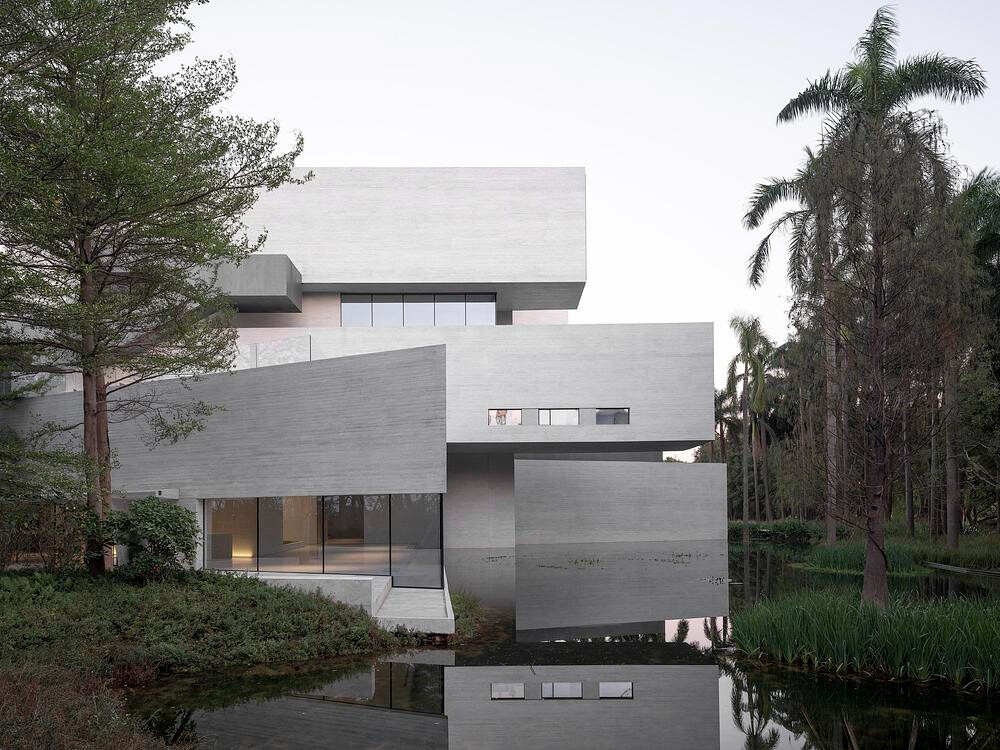
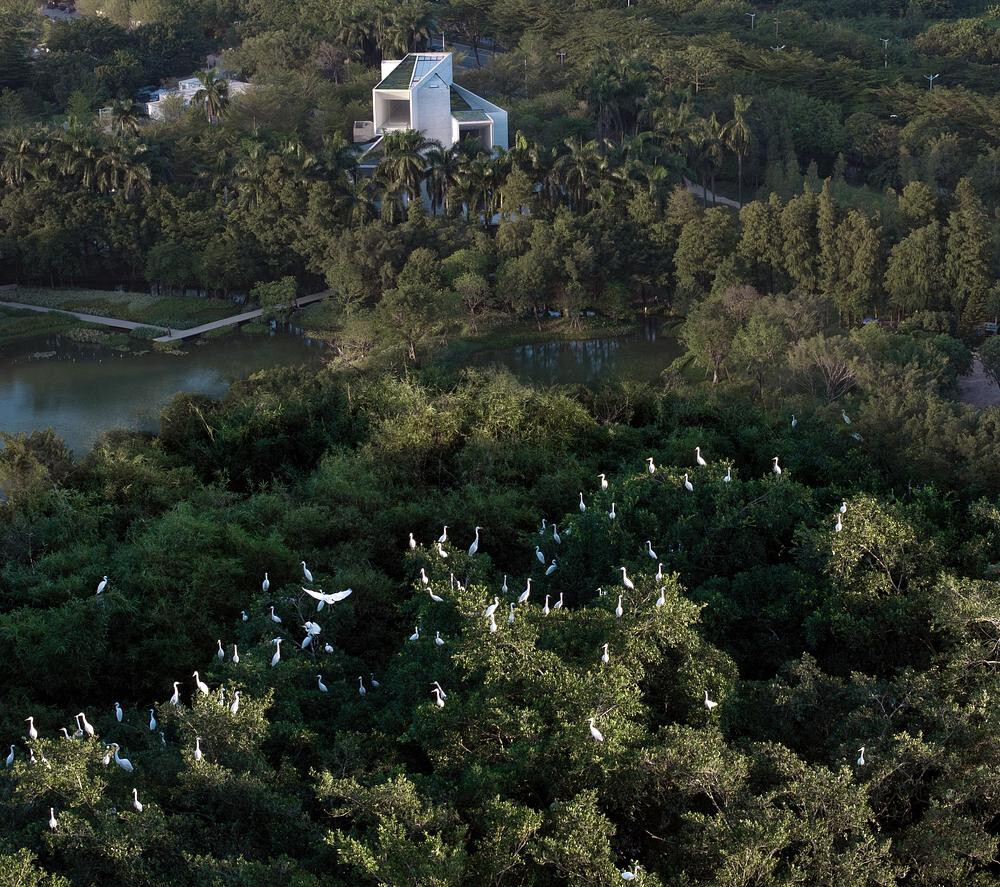
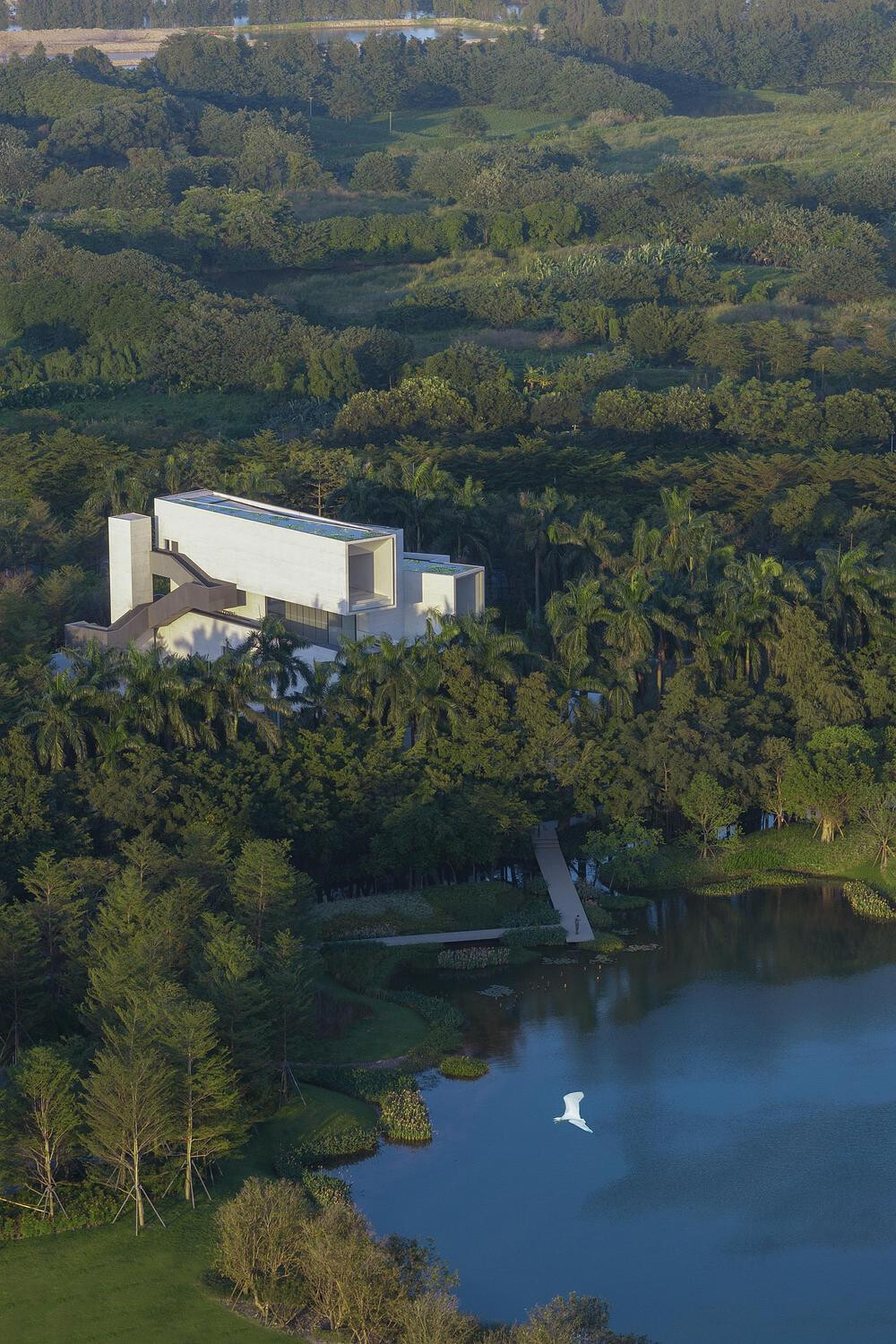
The Shunde Yunlu Wetland Museum is a building that steps beyond a human-centred point of view. Located within Yunlu Wetland Park in Shunde, Guangdong, China, the protected park’s has expanded to roughly 100 hectares and is home to around 25,000 egrets. In shifting daylight and passing cloud shadow, their flight through the woodland becomes a constantly changing view. When Studio Link-Arc set out to create a project combining a birdwatching tower with a wetland museum, the team asked not only how to secure the best viewing angles, but also how the original residents of the habitat might perceive a new architectural presence.
➤ Photography by Arch-Exist
➤ Photography by Arch-Exist
➤ Photography by Tian Fangfang
The wetland’s story began with an unintended act of care. About 26 years ago, a local figure known as “Uncle Bird” planted a bamboo grove here, inadvertently attracting large numbers of egrets. He then dug a protective channel and leased fishponds along the woodland edge, releasing more than 600,000 fry. From a small gesture, an ecosystem capable of sustaining the birds gradually took shape. Today, the Shunde government has reorganised surrounding waterways and fishponds and, together with architects and landscape designers, restored the water network and renewed the bamboo grove, substantially expanding the protected area and reshaping the site into an ecological landscape that reads as an urban oasis.
➤ Photography by Arch-Exist
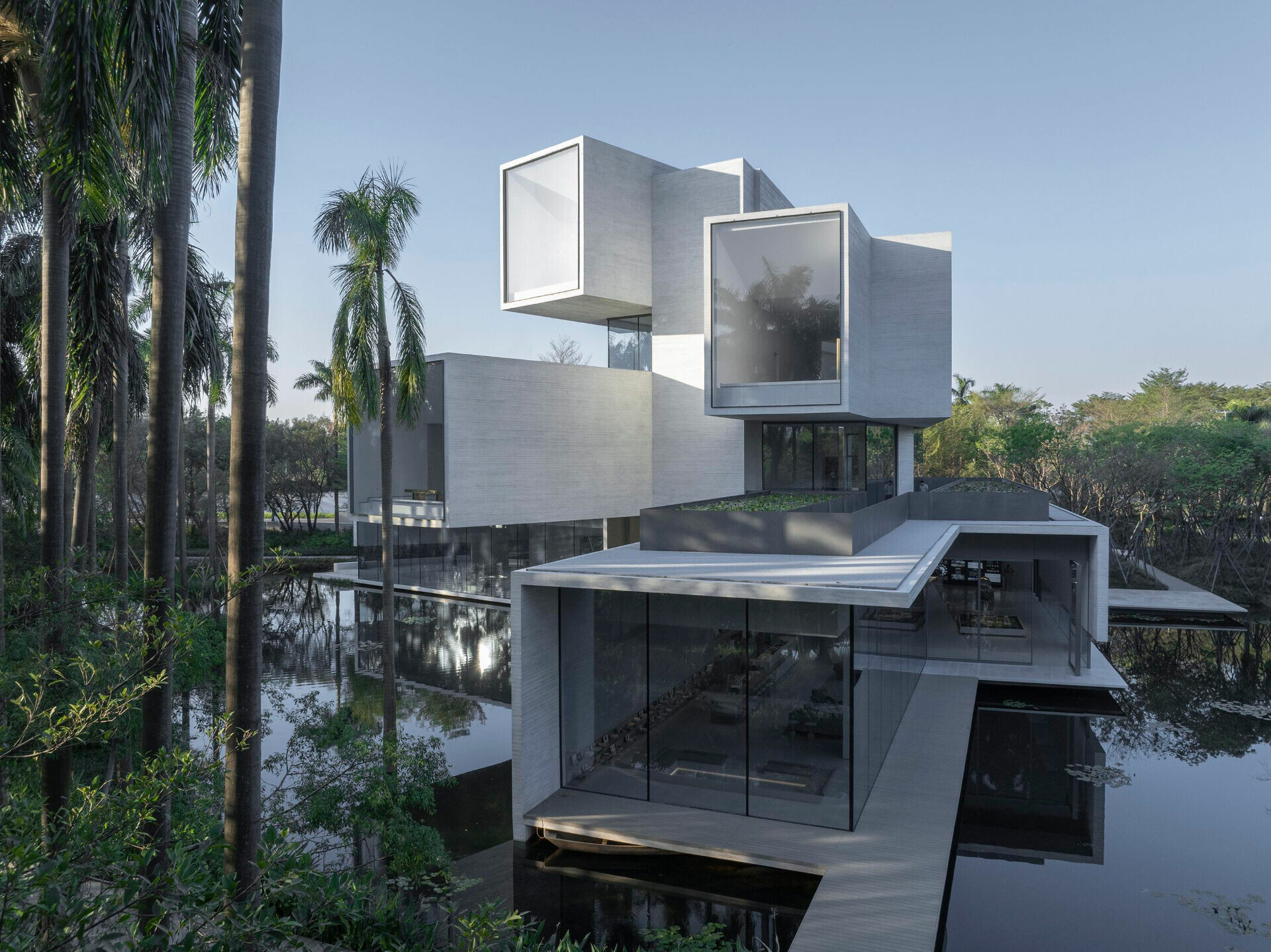
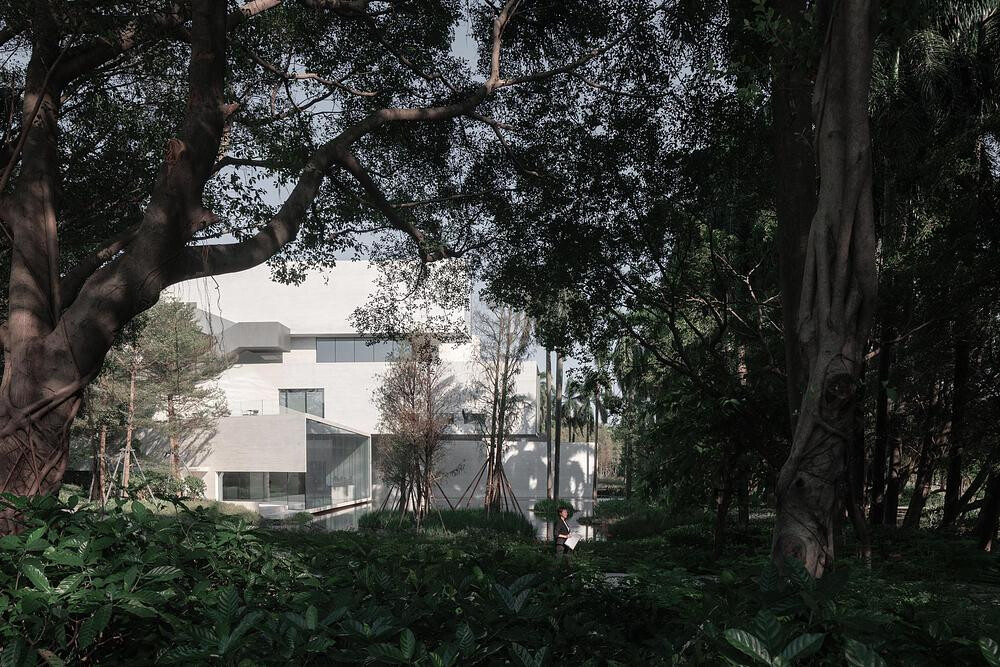
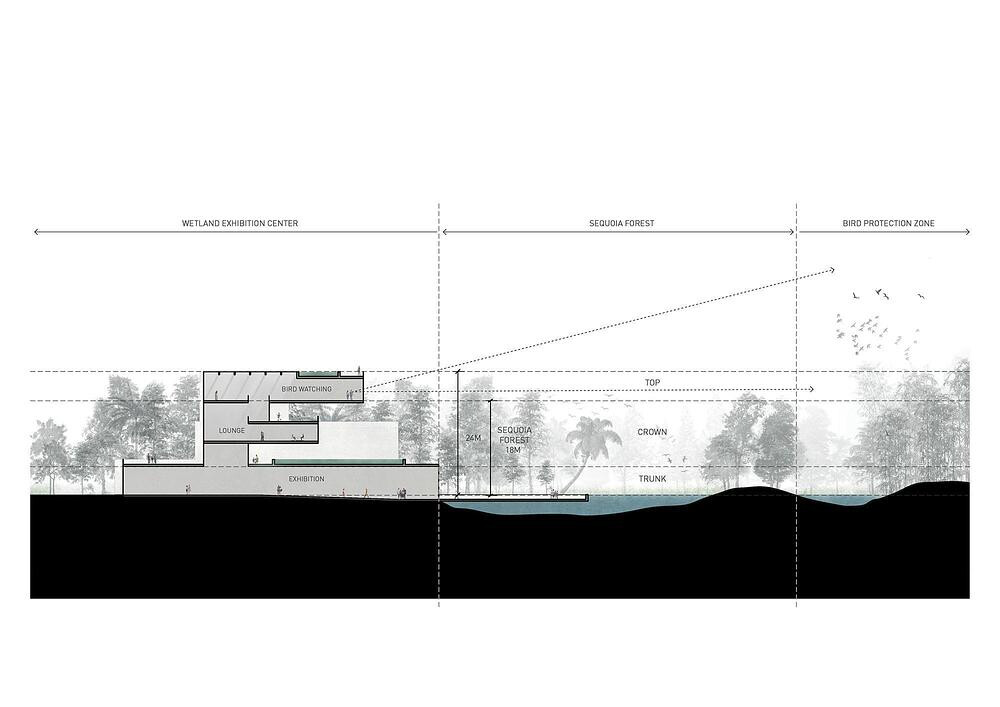
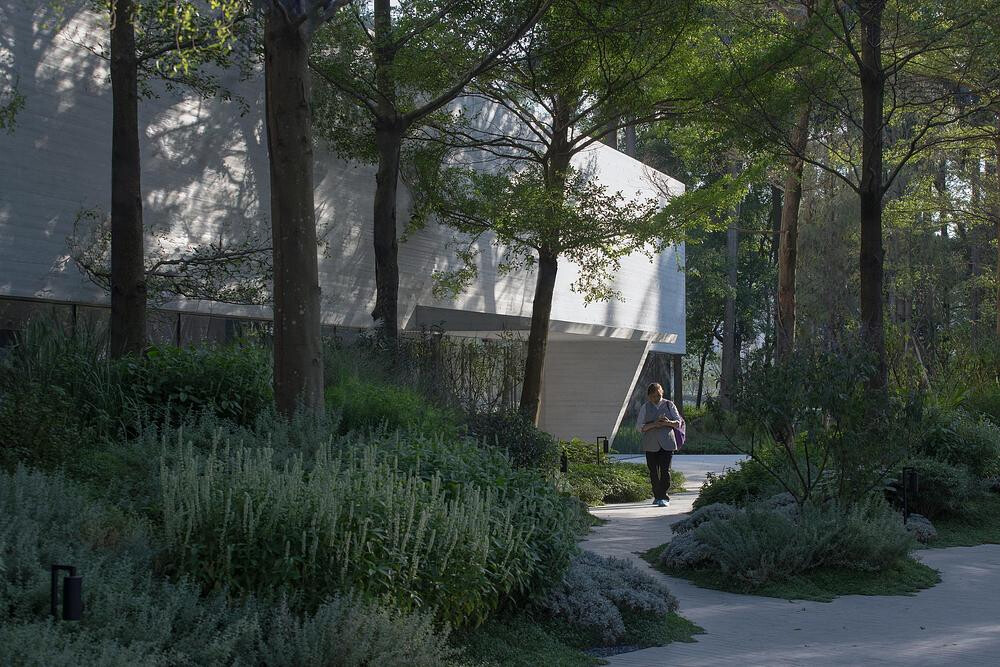
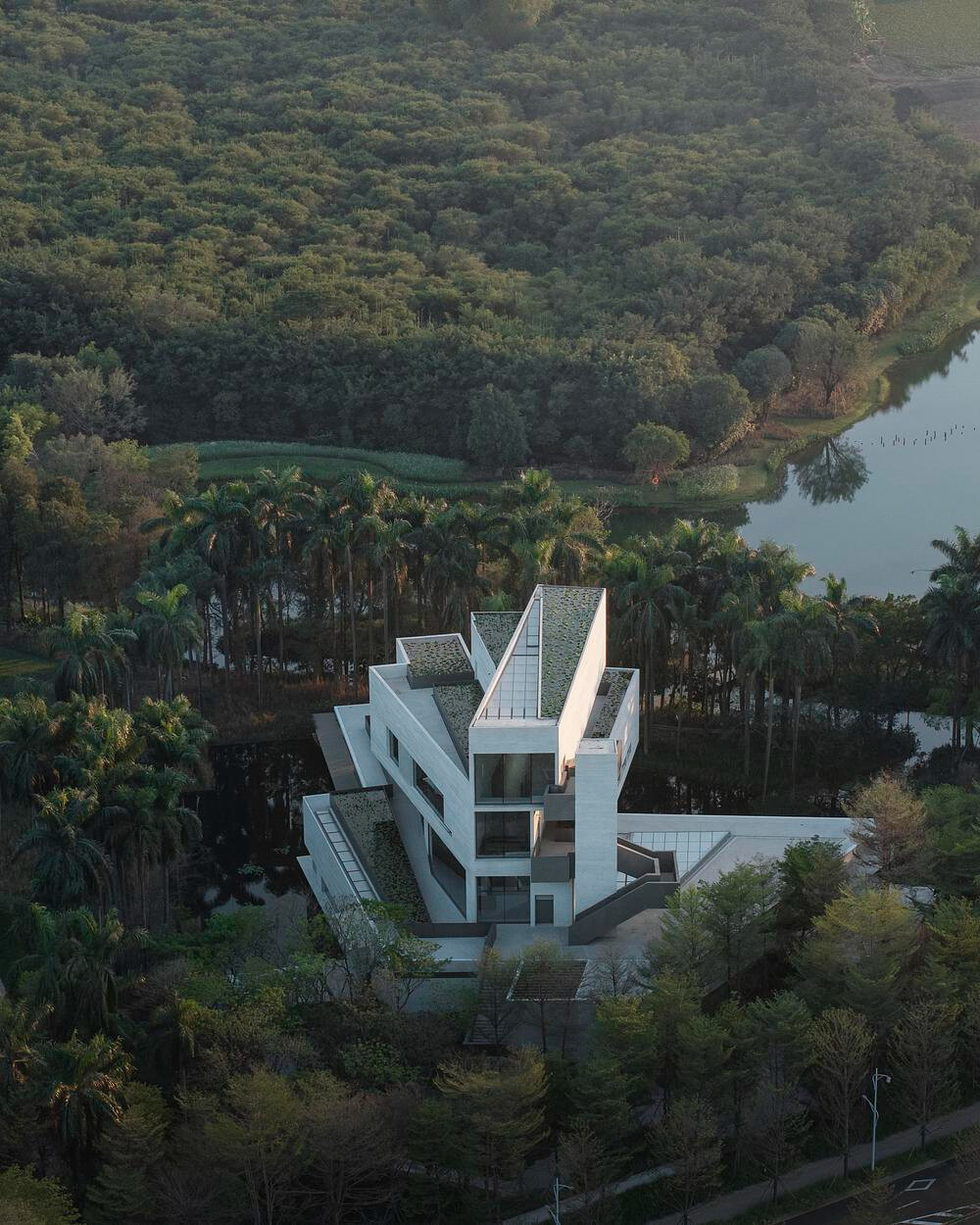
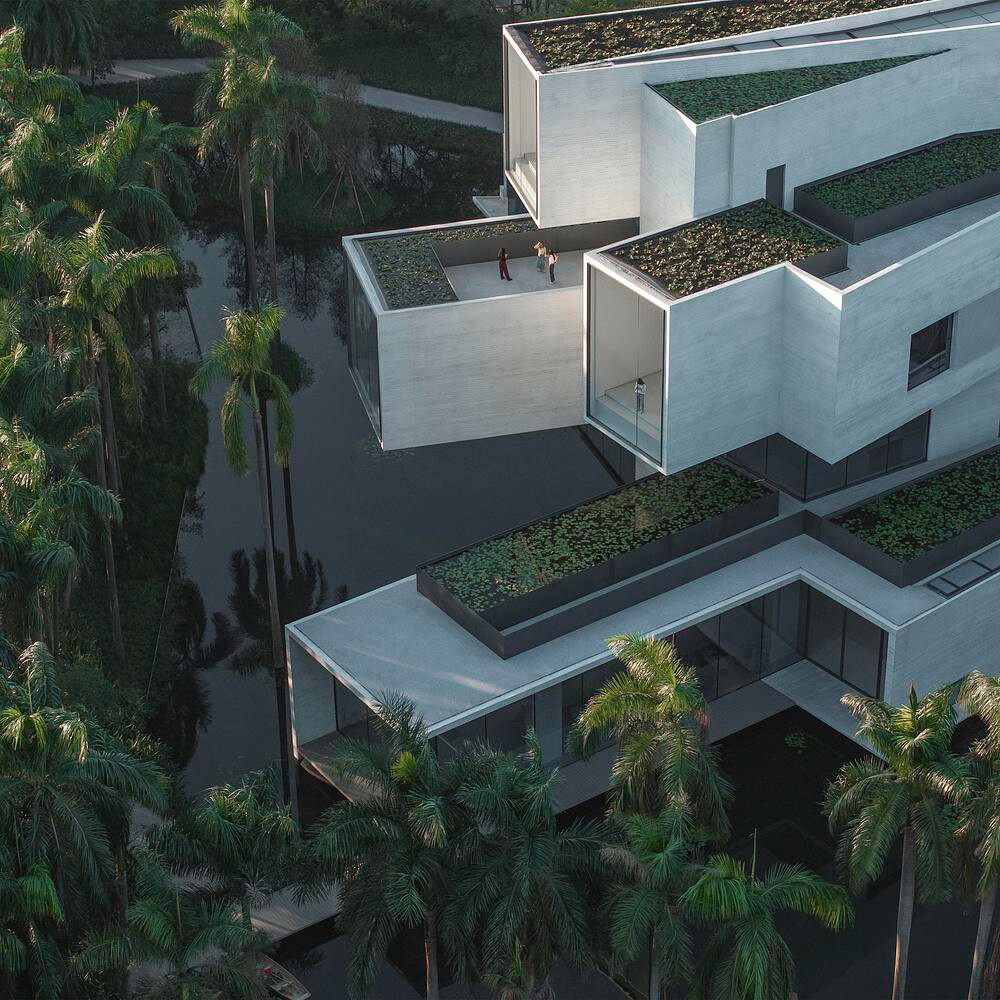
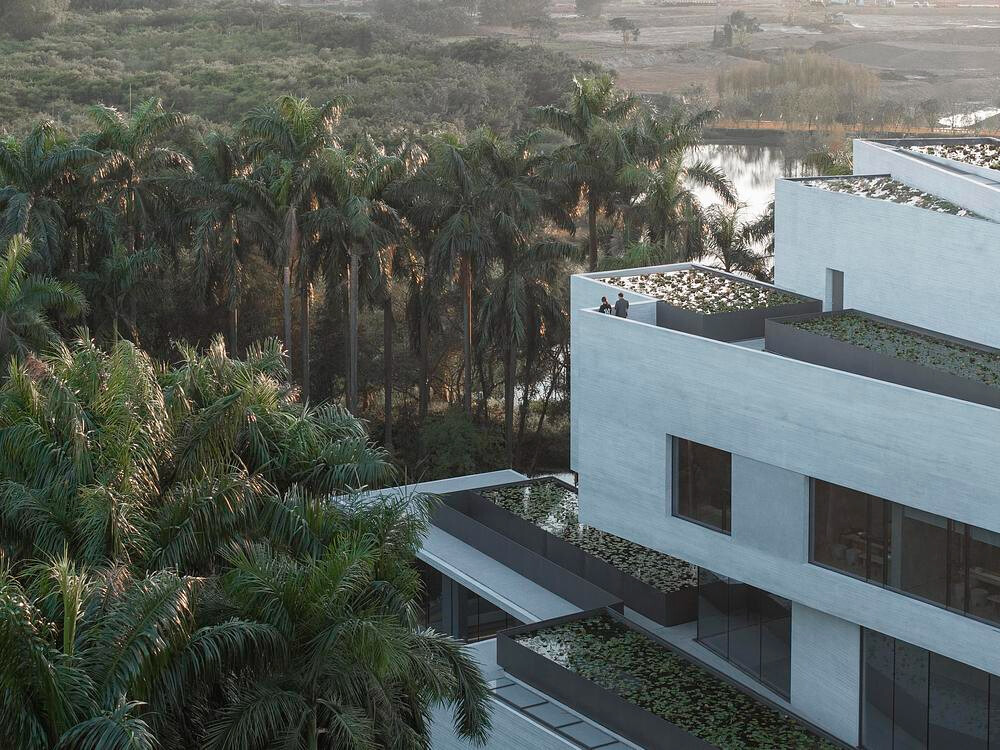
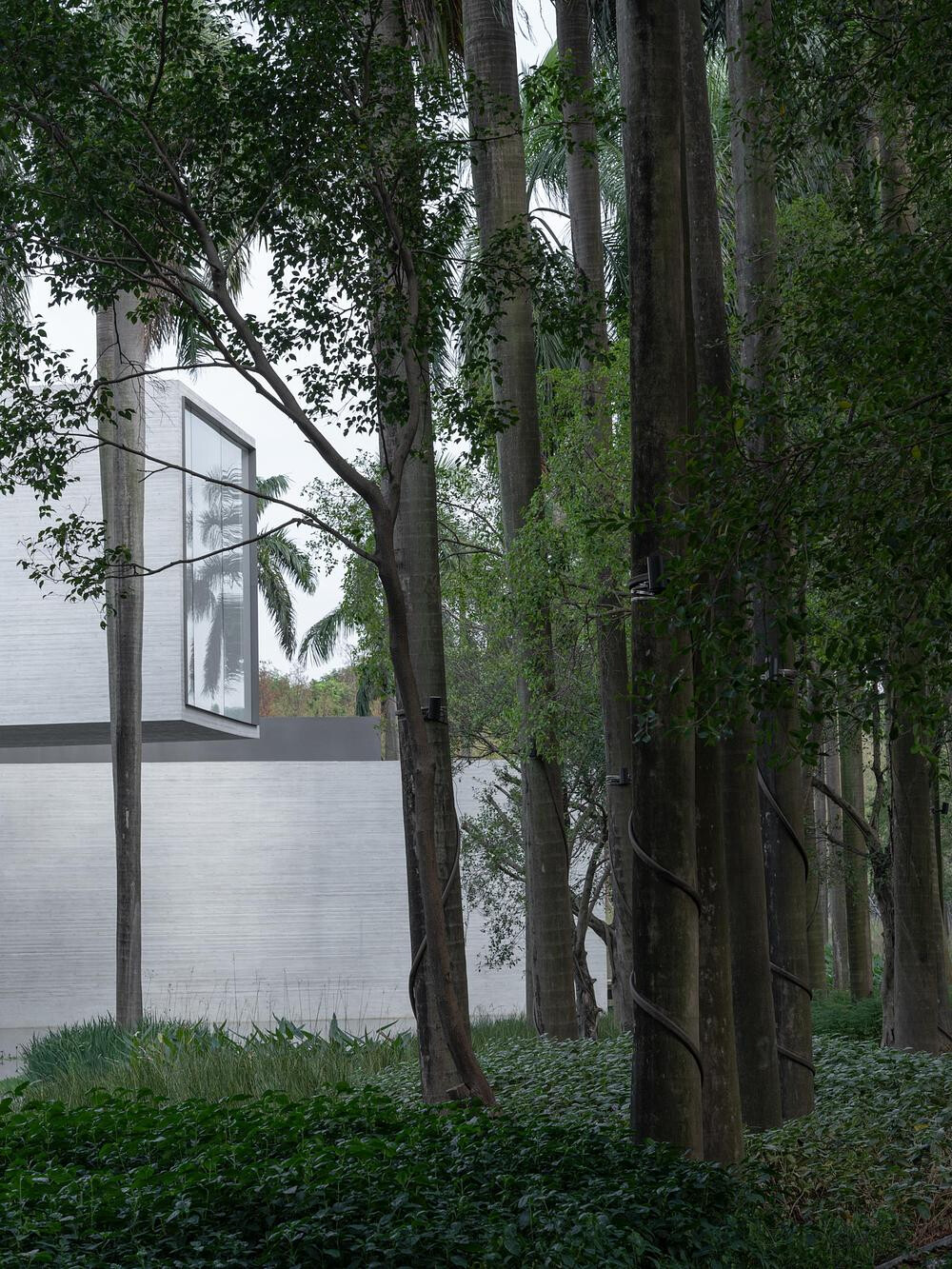
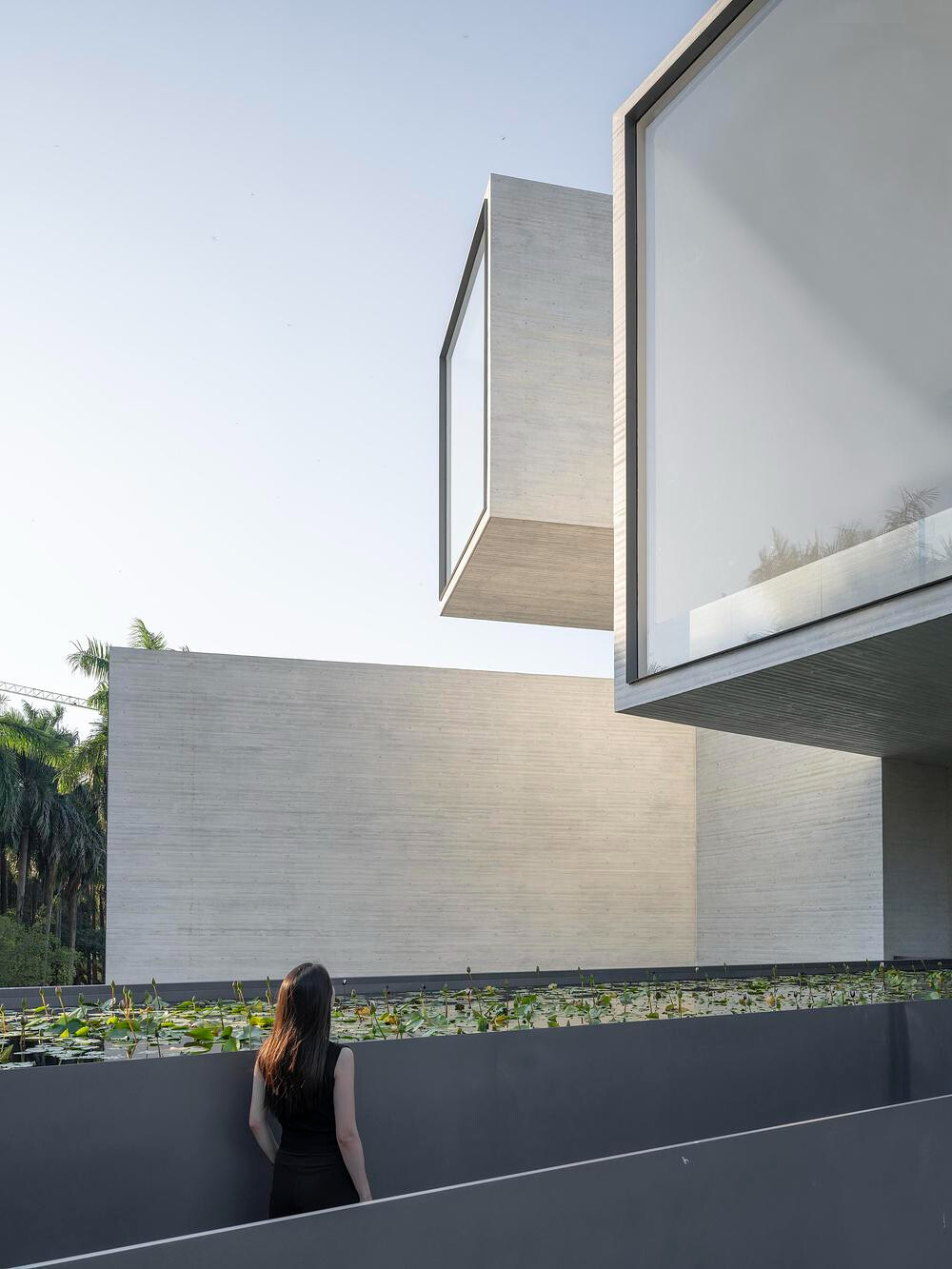
To minimise intervention in the wetland environment, the design team surveyed and mapped 560 trees, working to reduce the building footprint while limiting the felling of native vegetation and still maintaining effective birdwatching sightlines. The exterior is cast in place, retaining the fine grain of pine formwork on its surface in response to the surrounding woodland. Above, a roof-level lotus pond forms a water garden that softens the building’s presence when seen from above.
➤ Photography by Arch-Exist
➤ Photography by Tian Fangfang
➤ Photography by Tian Fangfang
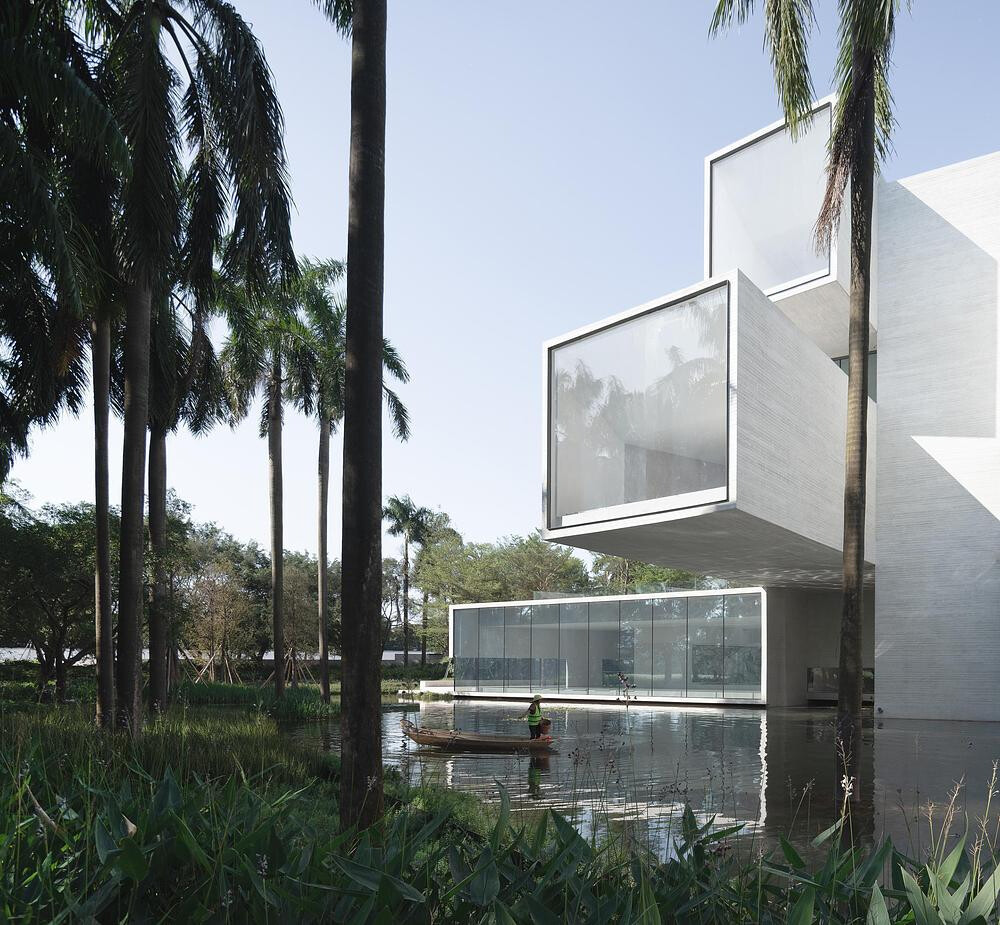
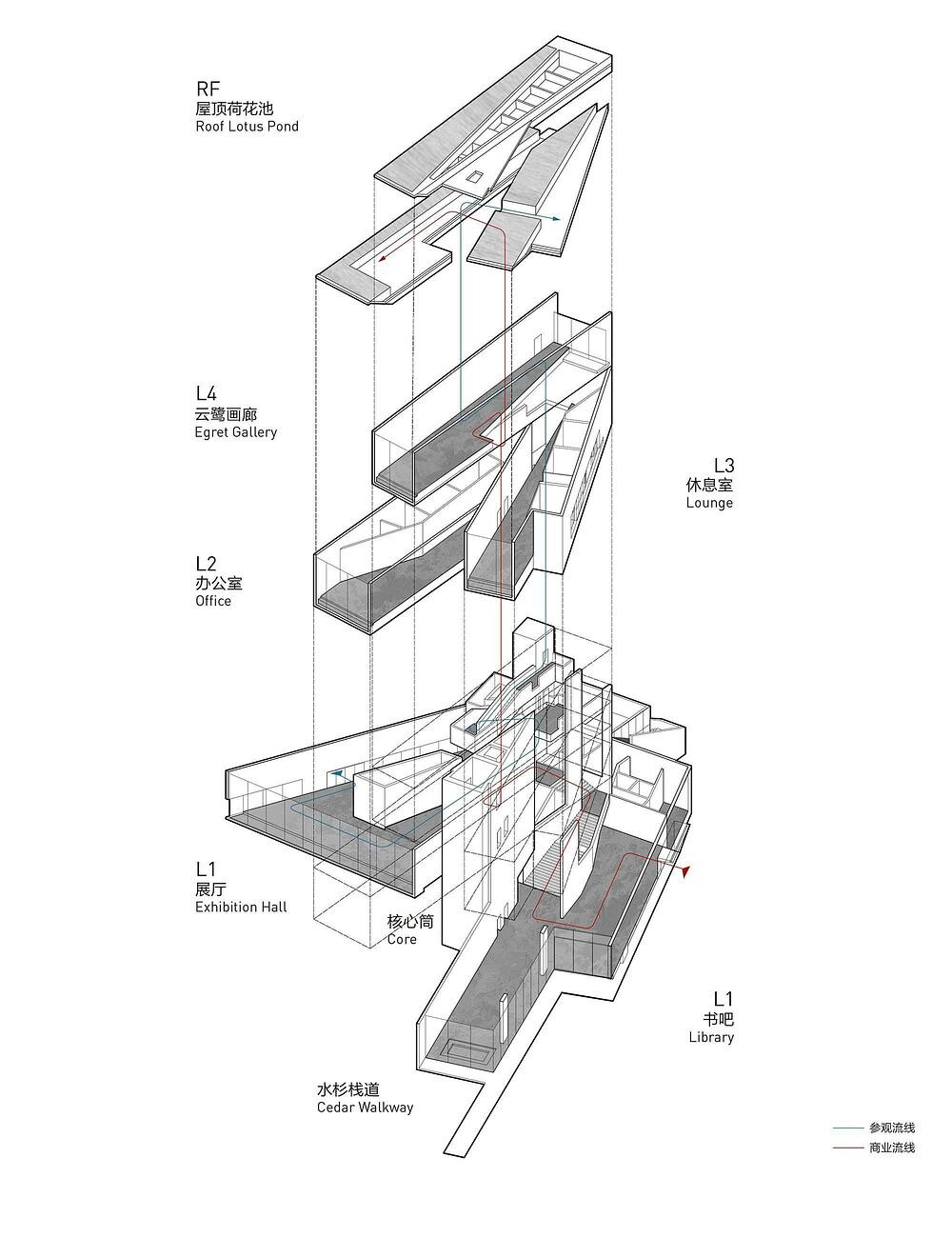
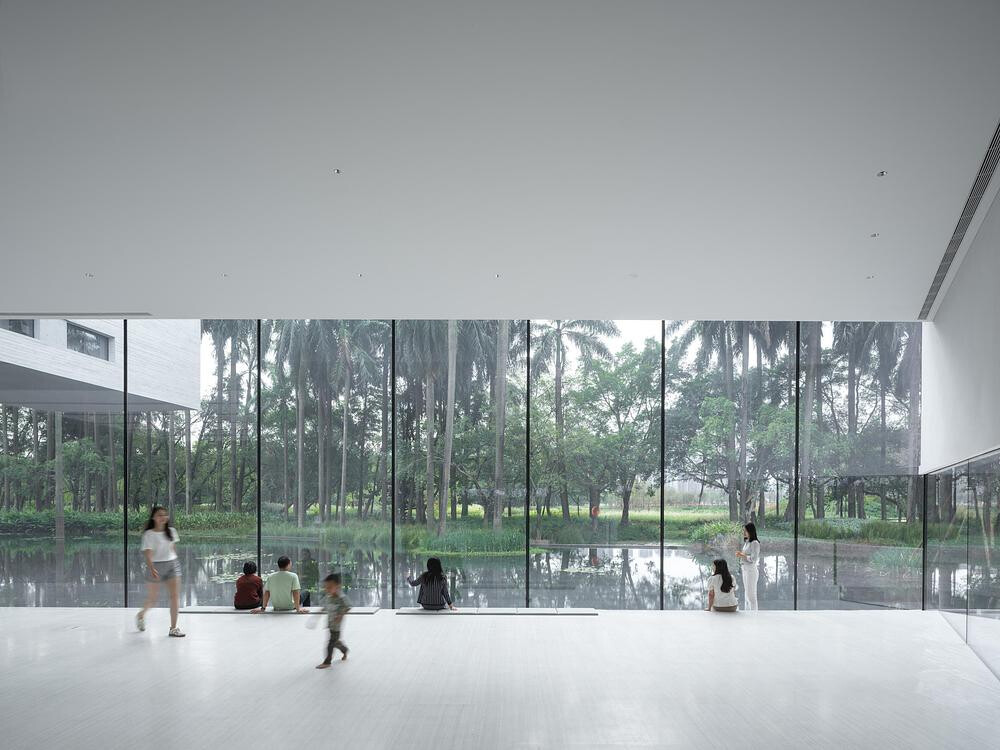
To make the architecture appear to “disappear” into the subtropical forest, the volumes are set back behind a grove of bald cypresses. Four stacked, tube-like forms are conceived as multi-directional “lenses,” adopting a restrained, low-profile posture that avoids competing with the habitat. Sited at the park’s north-western edge, the museum remains unobtrusive from a distance: only the suggestion of four telescope-like forms is visible, vertically staggered and stacked in concrete. Their varied heights and multiple viewing directions create a rich sequence for birdwatching and landscape observation, allowing each “lens” to frame a distinct view aligned with the heights at which birds move through the forest. Structurally, the building adopts a box-type concrete system. Within each volume, the side walls, roof slab, and floor slab act together to carry loads. Forces from the cantilevered ends are taken back to a triangular structural core, formed by the core walls that wrap the central atrium, providing stable support. The four tube-like viewfinder windows correspond, from bottom to top, to different forest layers and patterns of bird activity. Across levels one to four, the views rise in sequence from roots to trunks, canopy, and finally the treetops. In doing so, the concept dismantles a conventional, single-direction perspective centred on the human eye, replacing it with a multi-viewpoint experience that unfolds through movement and allows nature to become the primary subject.
➤ Photography by Tian Fangfang
➤ Photography by Tian Fangfang
➤ Photography by Tian Fangfang
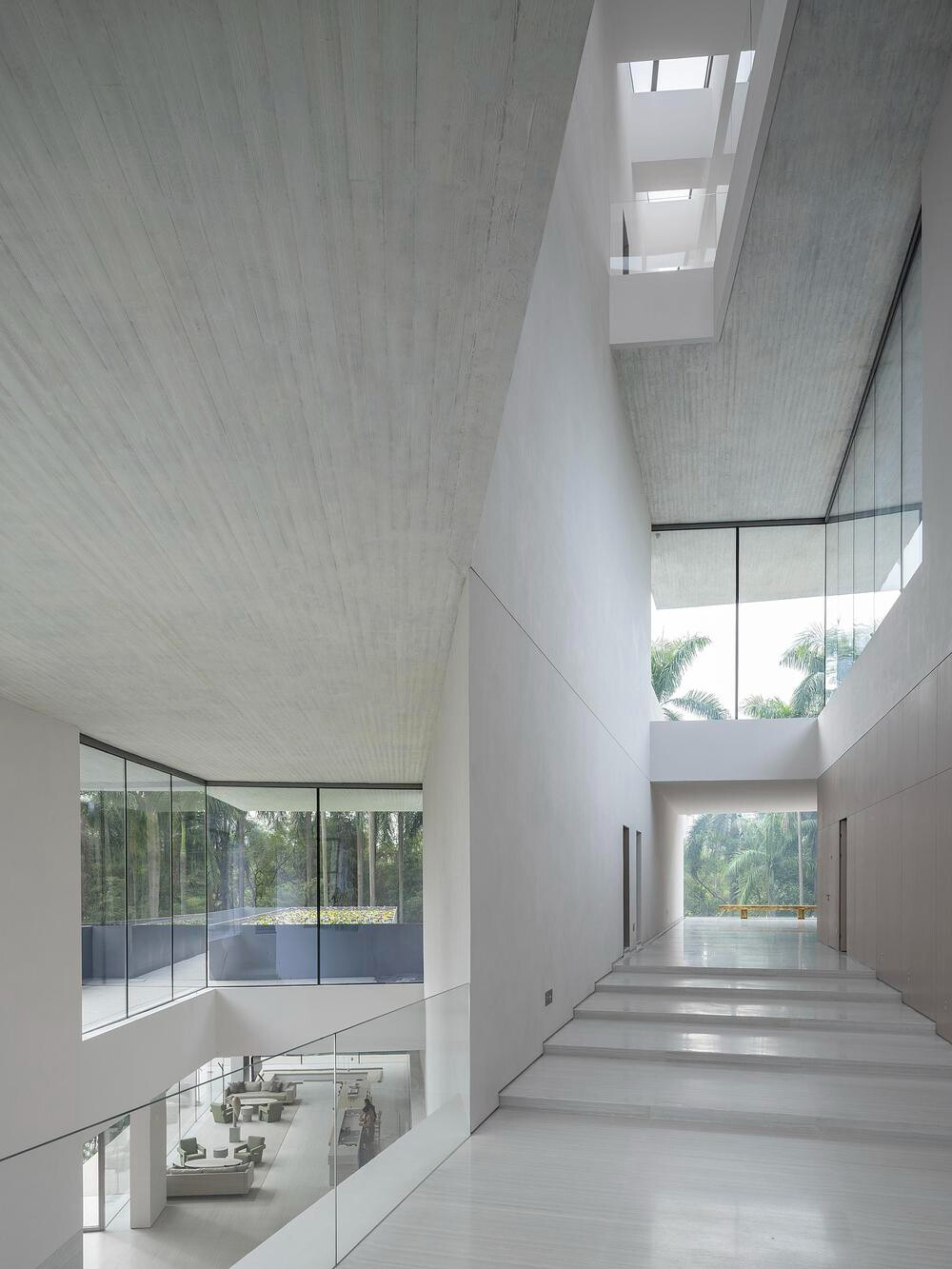
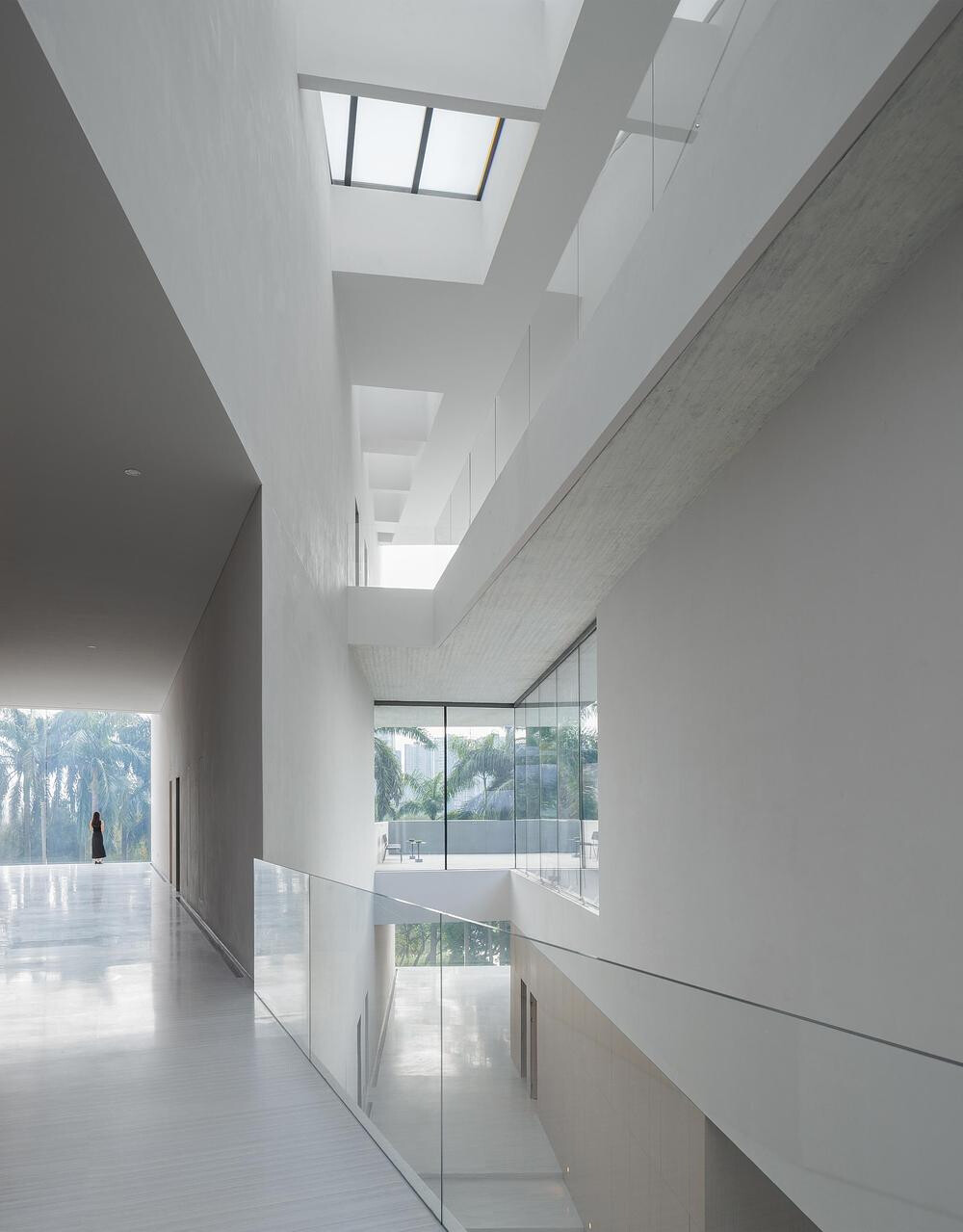
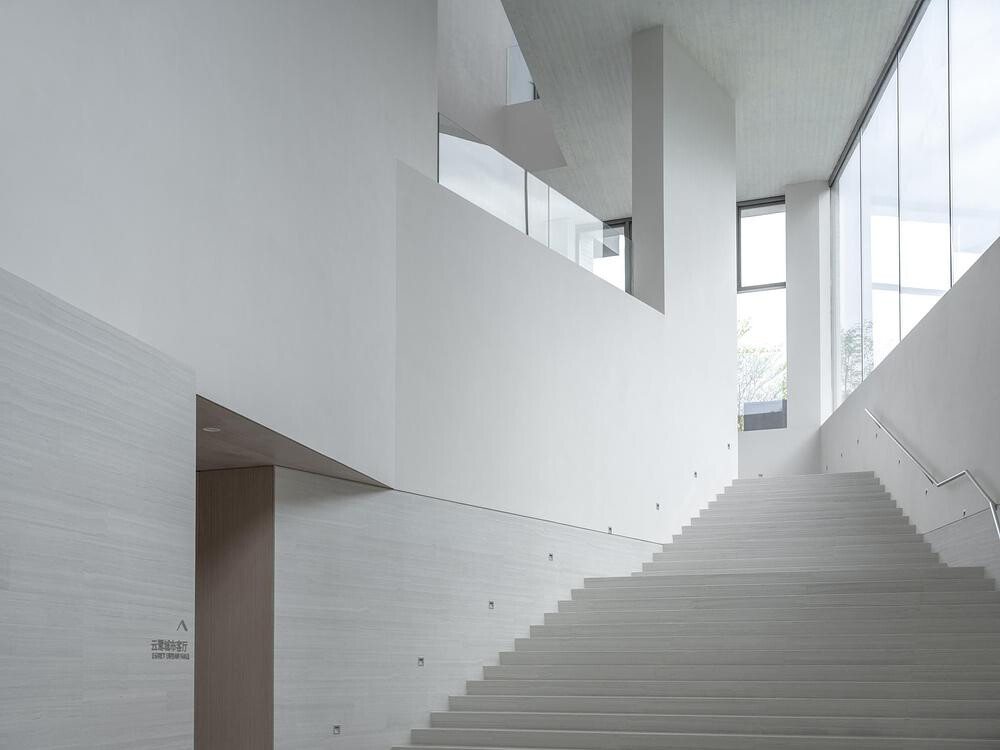
A tall triangular atrium anchors the interior. Daylight enters from a skylight above and is cut and diffused by deep beams, settling evenly and softly across the space. From the centre of the atrium, one can take in viewfinder windows in different directions at once, as if fragments of the landscape were stitched into a single, continuous act of looking. It suggests a broader way to read architecture: as perspectives shift through movement, and the relationship between viewing and being viewed subtly reverses, the museum may itself become part of the scenery, seen in turn from the egrets’ world.
➤ Photography by Tian Fangfang
➤ Photography by Arch-Exist
➤ Photography by Tian Fangfang
Principal Designers | Yichen Lu
Interior Consultant | Yu Studio
Landscape Designer | CHANGE
Structural Consultant | Shenzhen WS Engineering Design Consultant Ltd.
Curtain Wall Consultant | Zheng Xiang Consultant
Lighting Consultant | Gradient Lighting Design
Construction:China Construction Fourth Engineering Division Corp. Ltd. / Beijing Yihuida Architectural Concrete Engineering Co., Ltd.
Architect & Engineer of Record | Shenzhen A+E Design Co., Ltd.
Character of Space | Cultural Architecture
Building Area | 1800㎡
Structure | Box structure
Materials | pine moulded fair-faced concrete / glass curtain wall / stainless steel plat / woodgrain stone / texture paint / wood veneer
Location | Guangdong, China
➤ Photography by Tian Fangfang