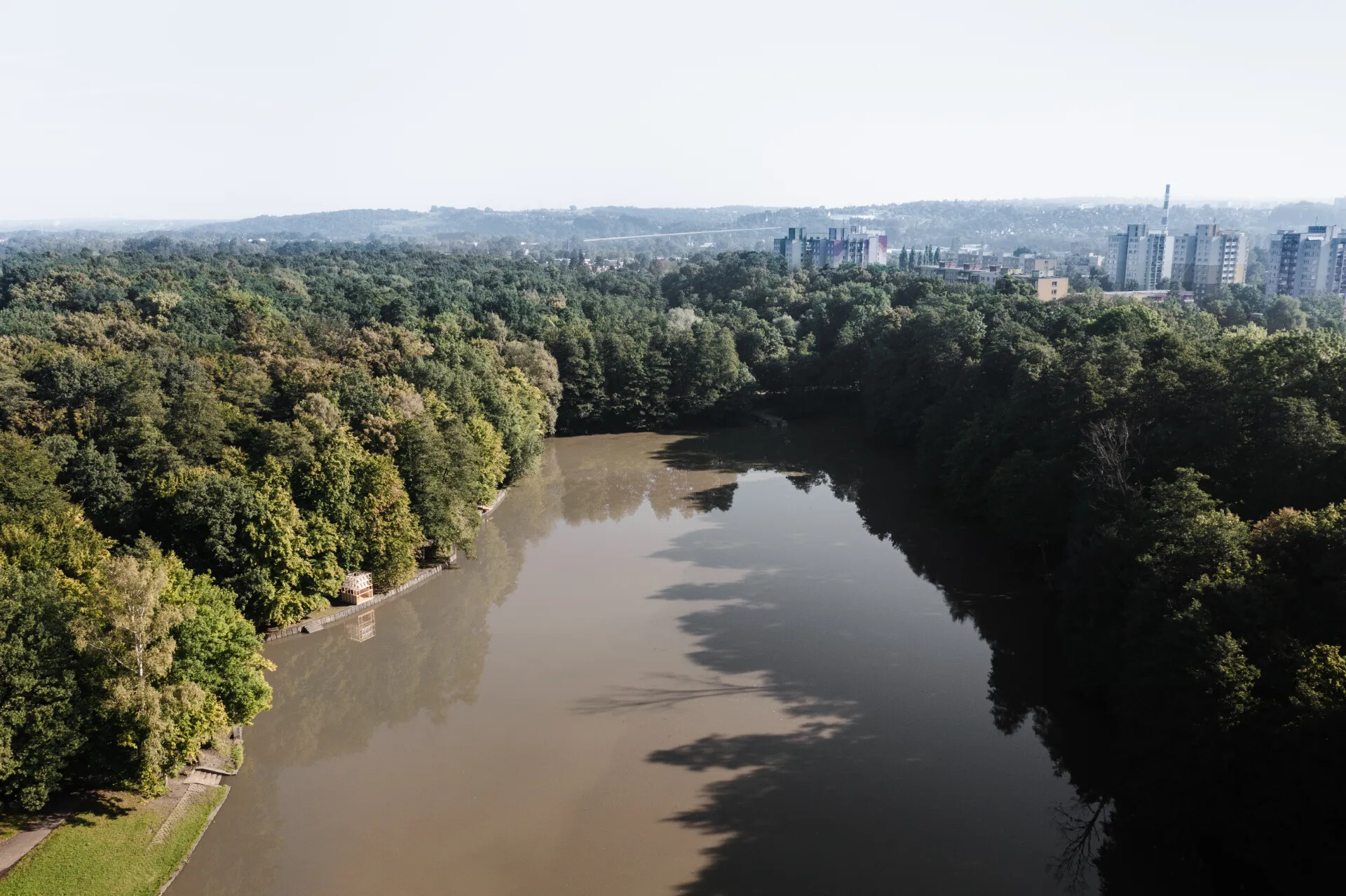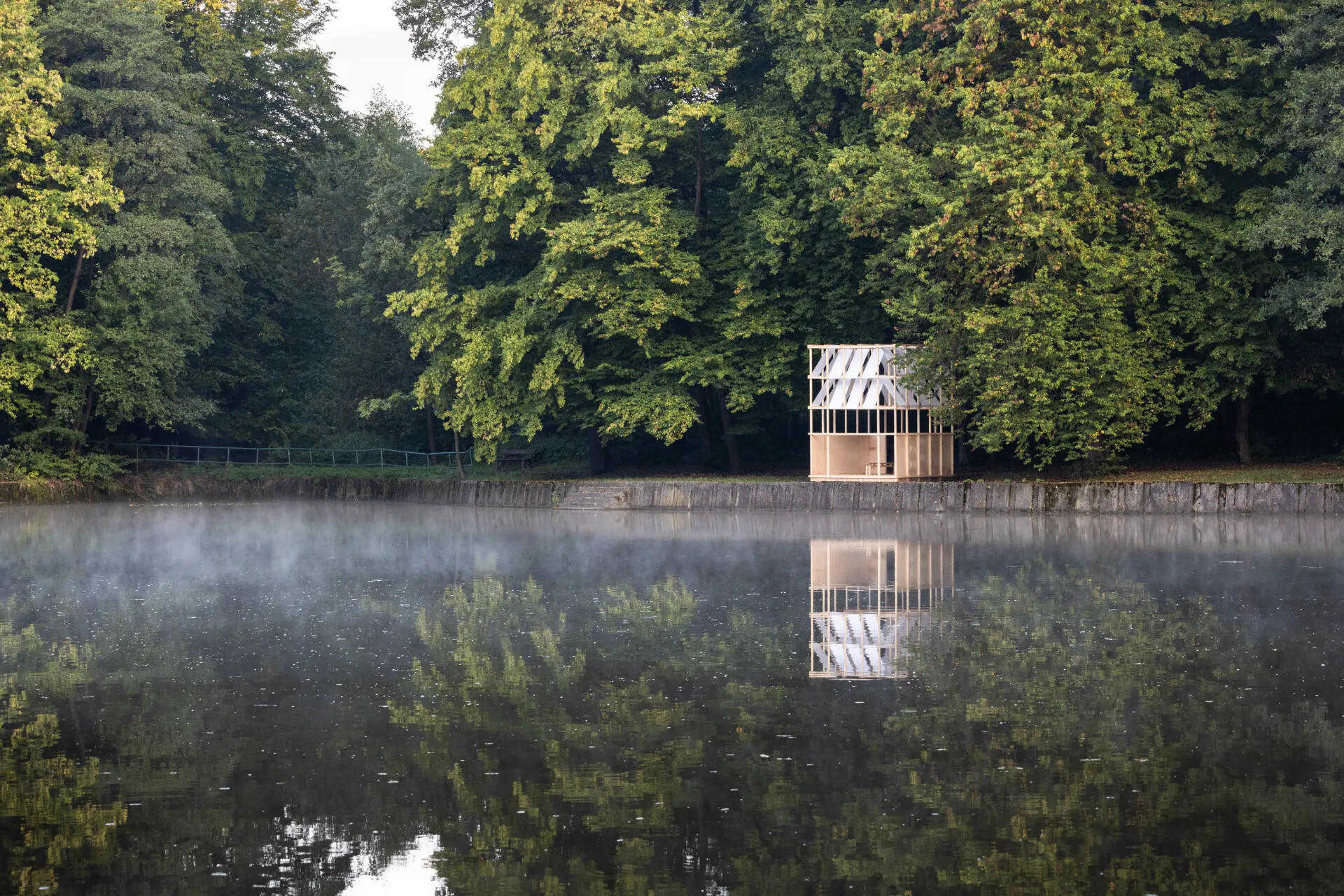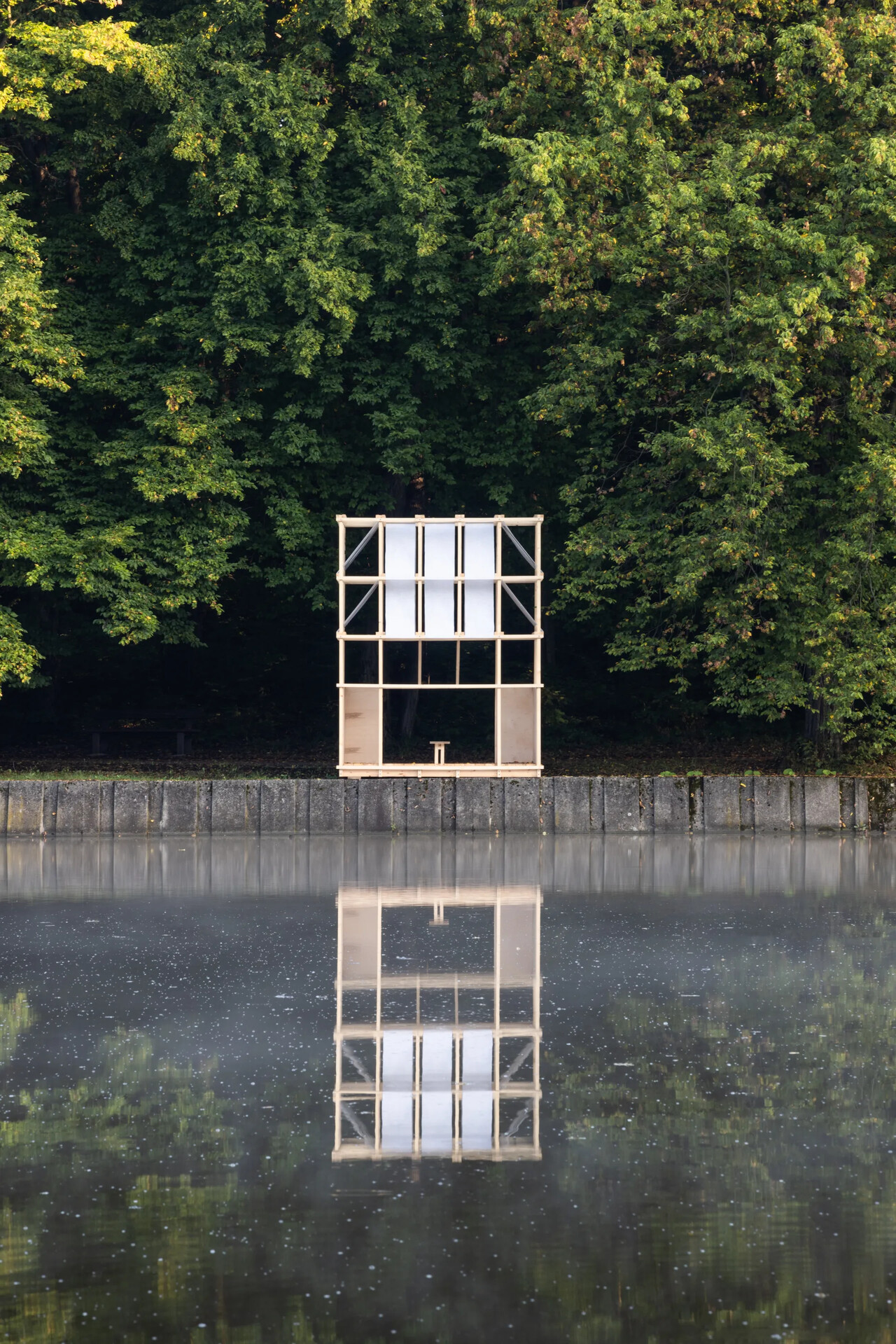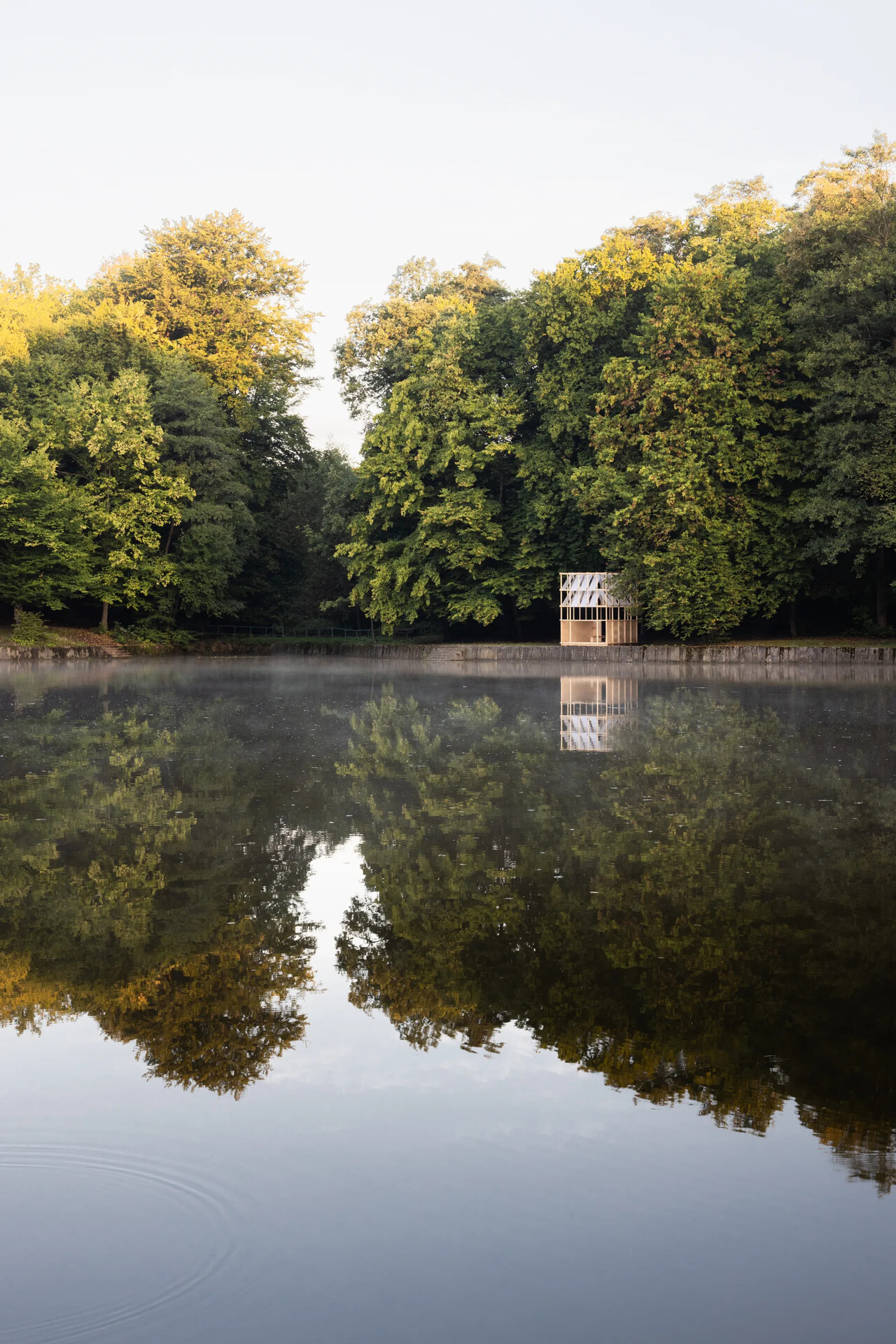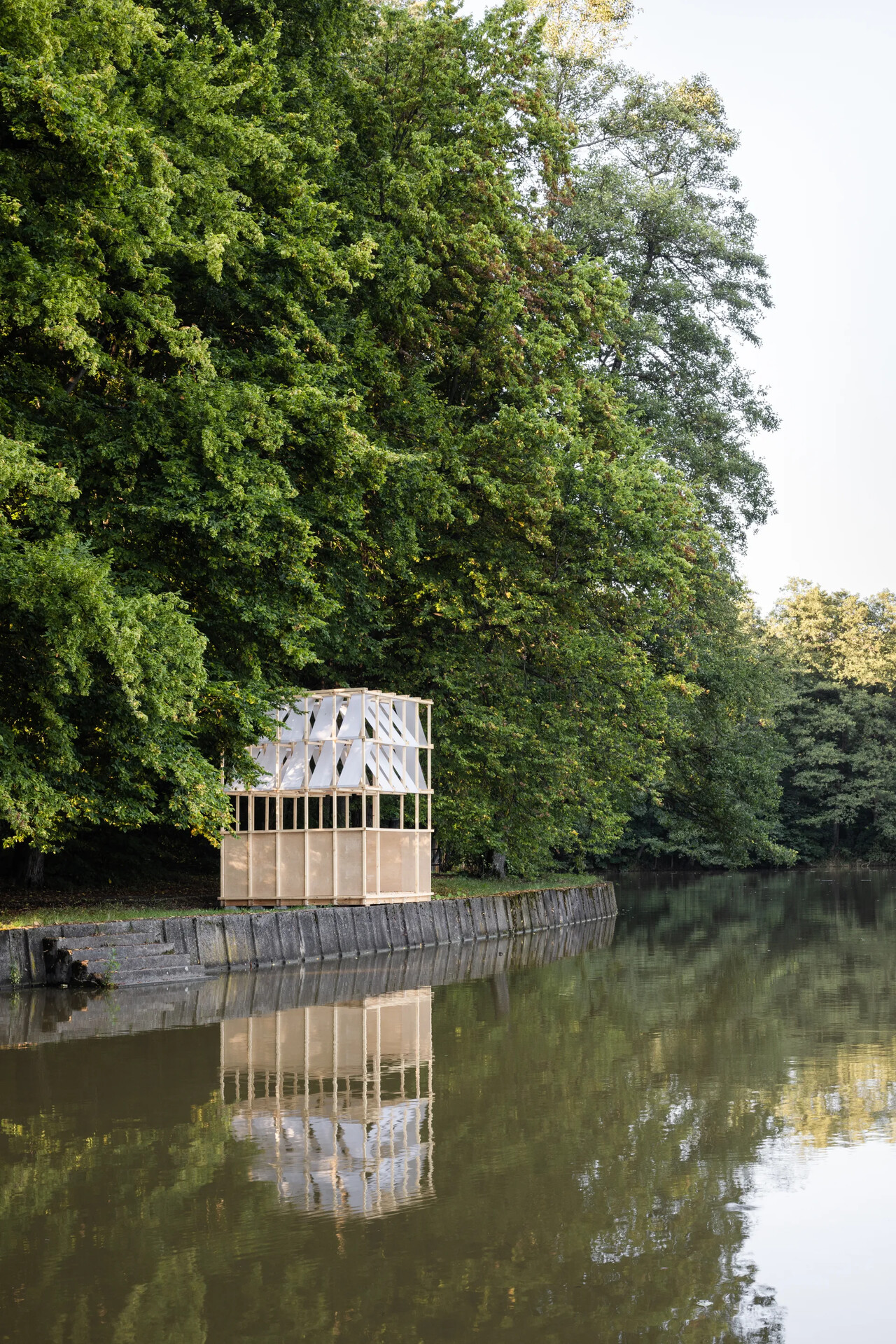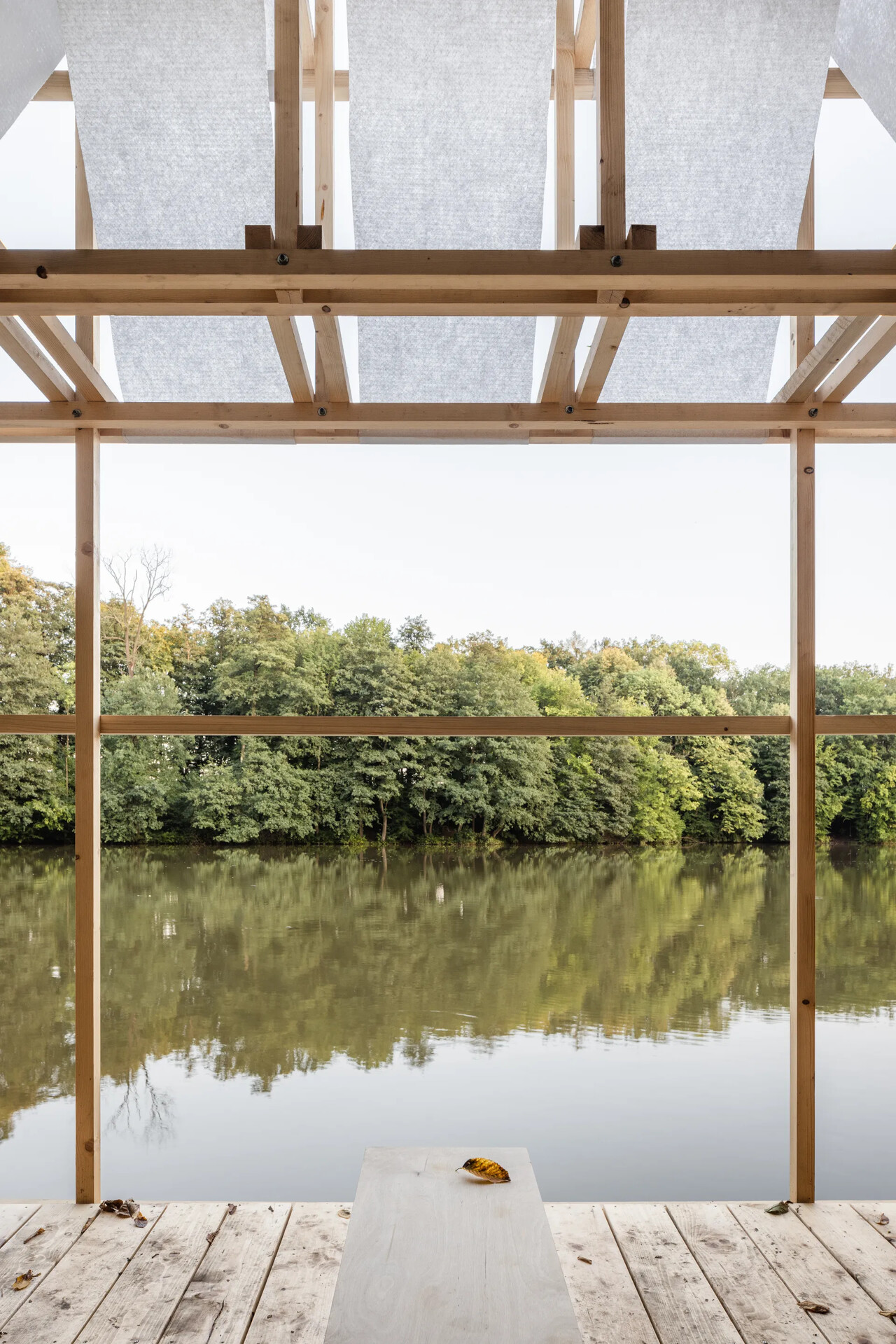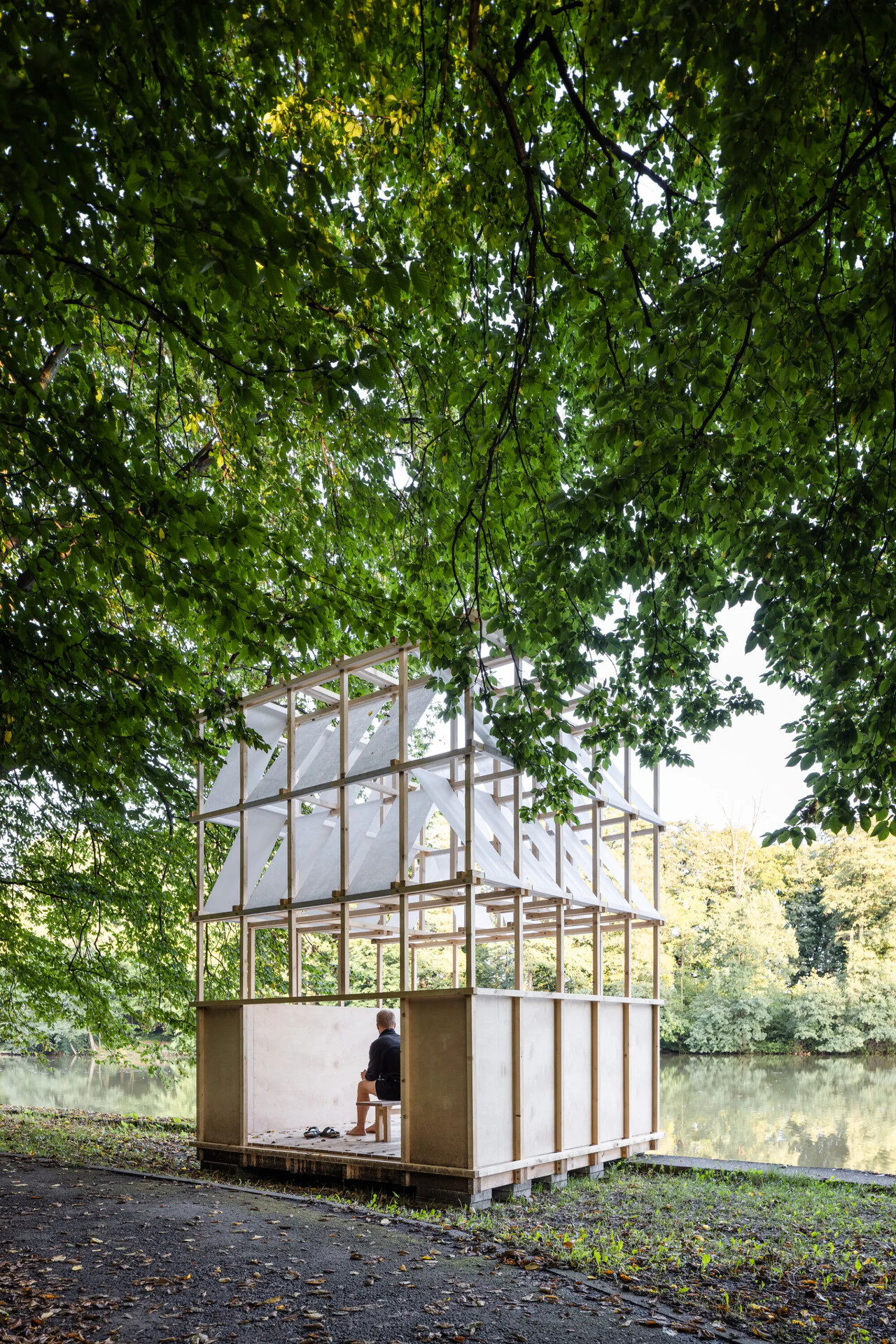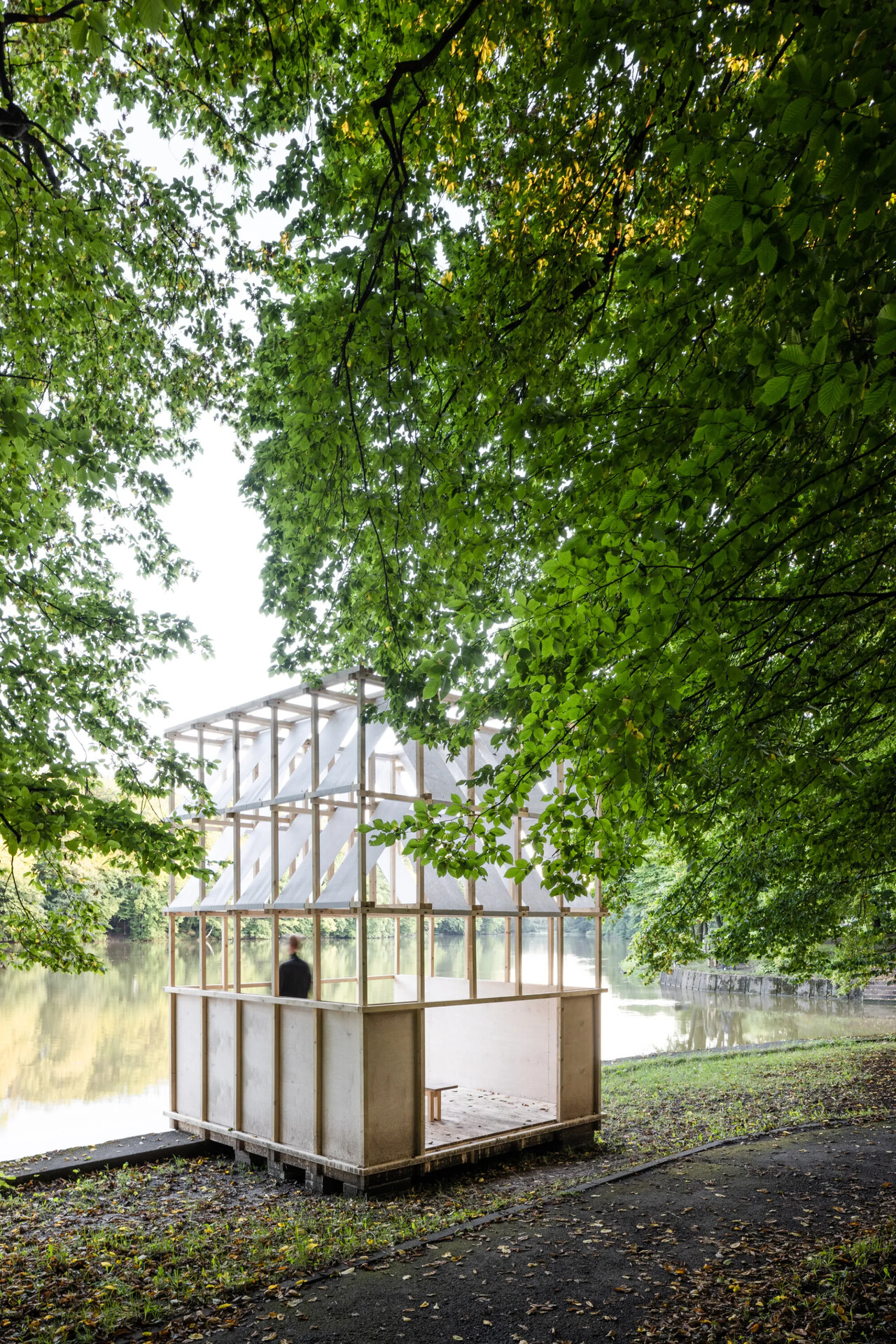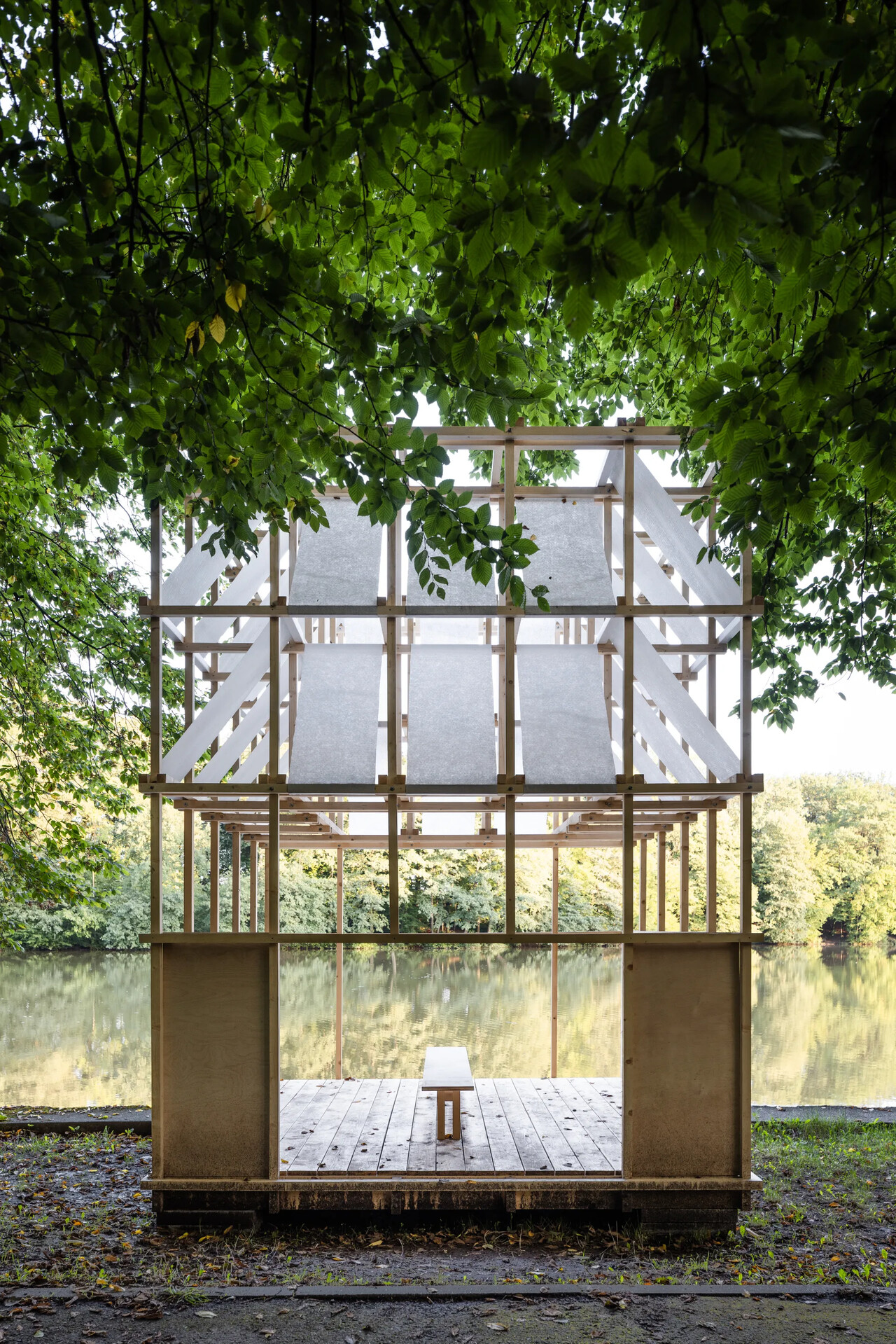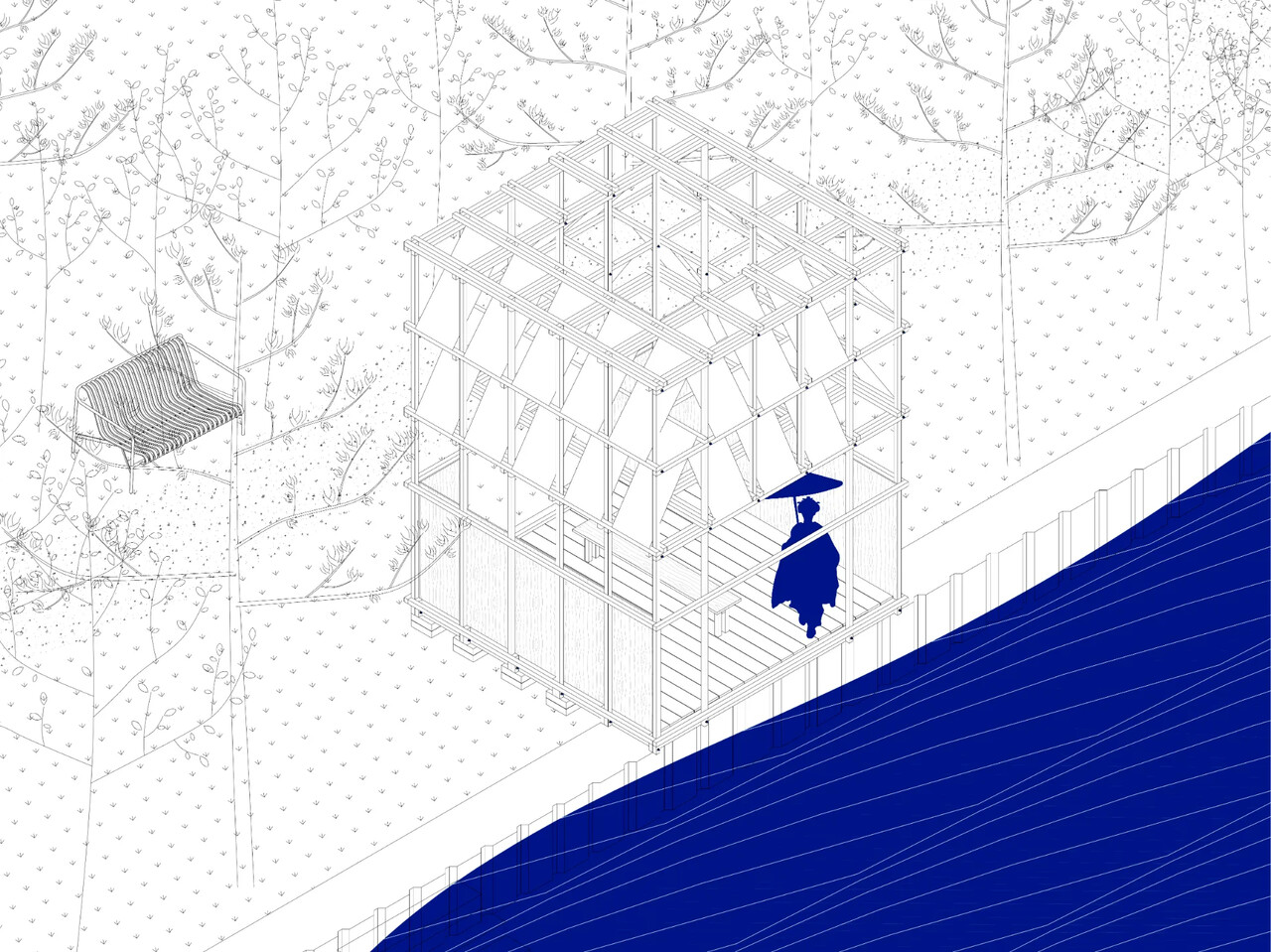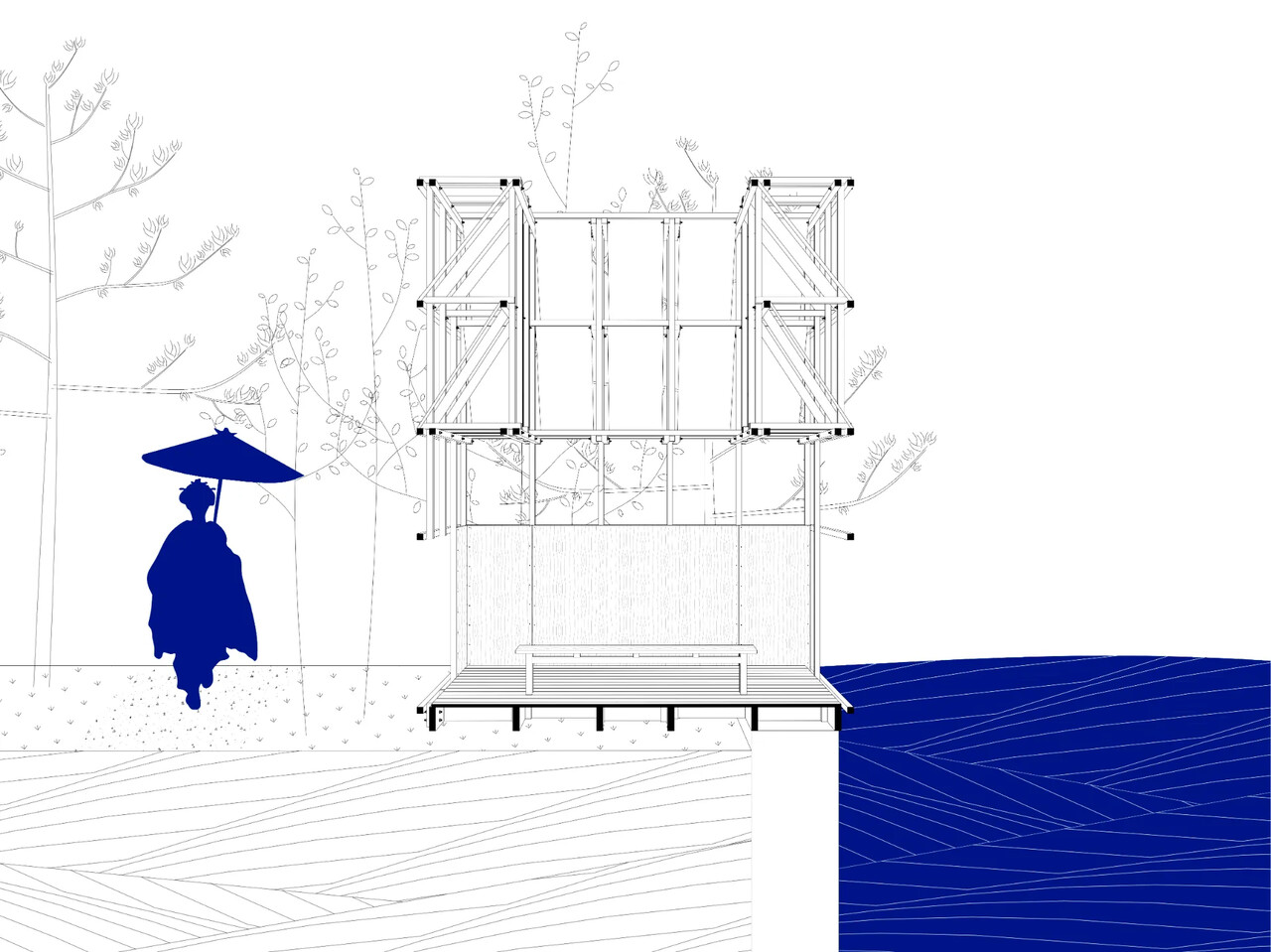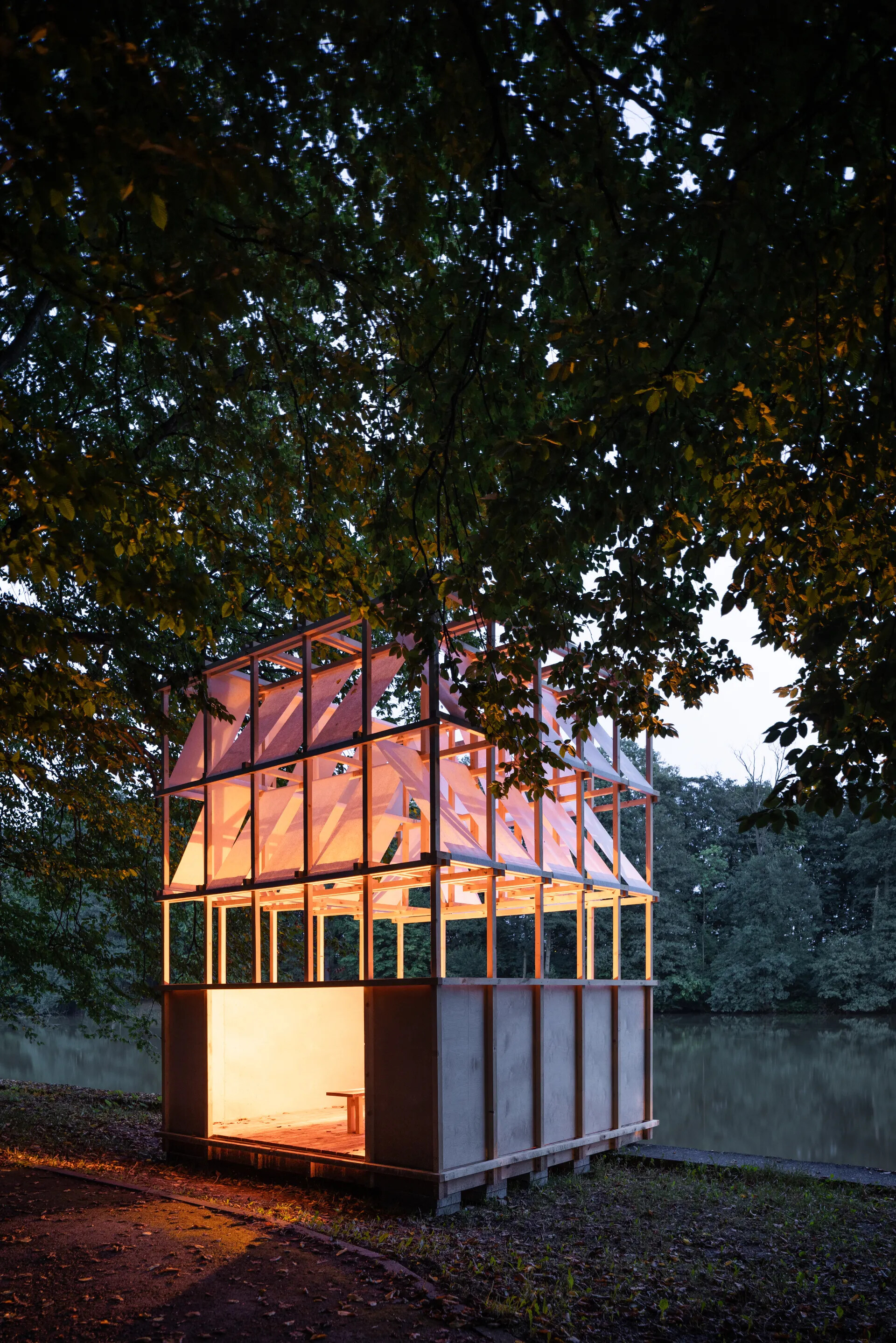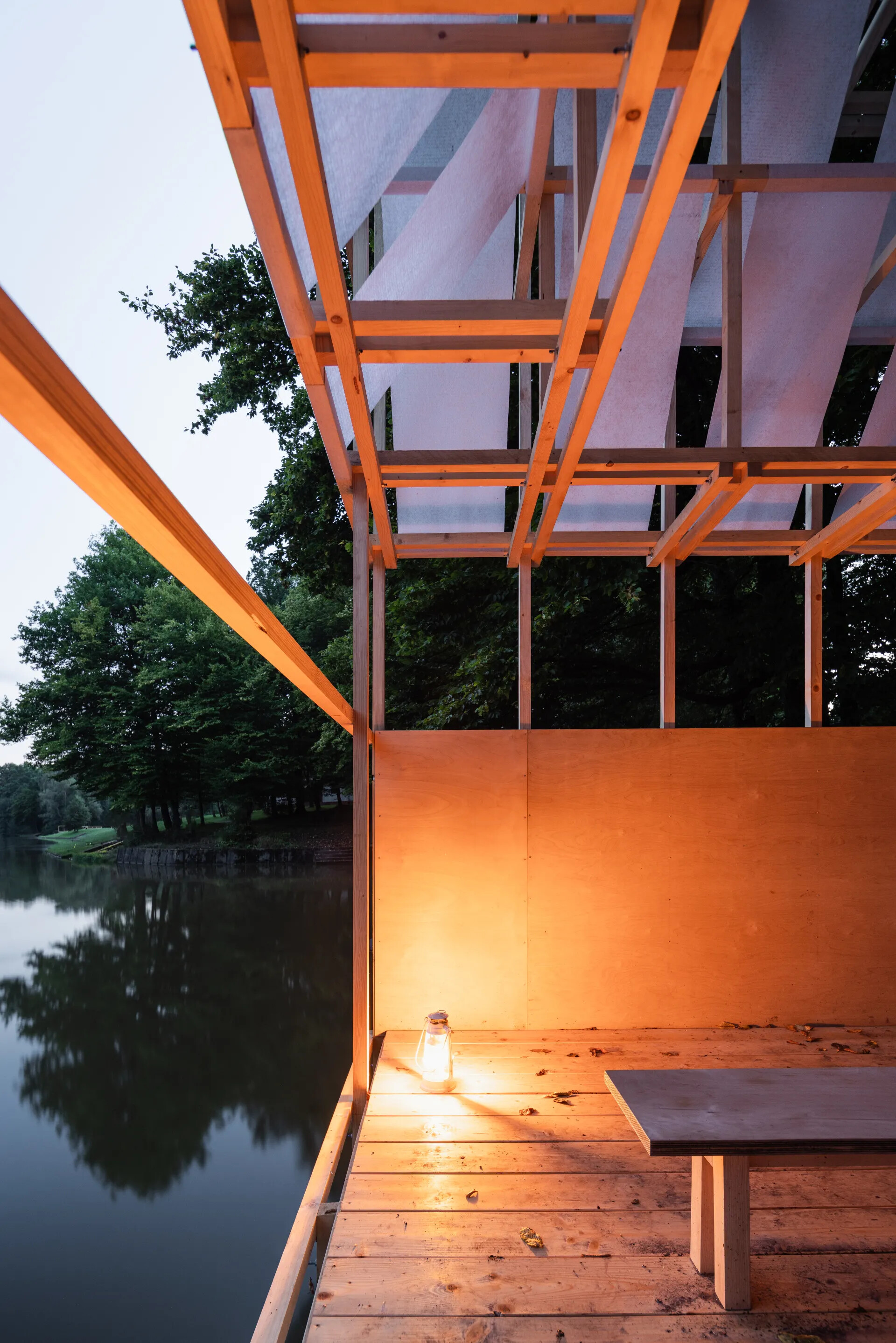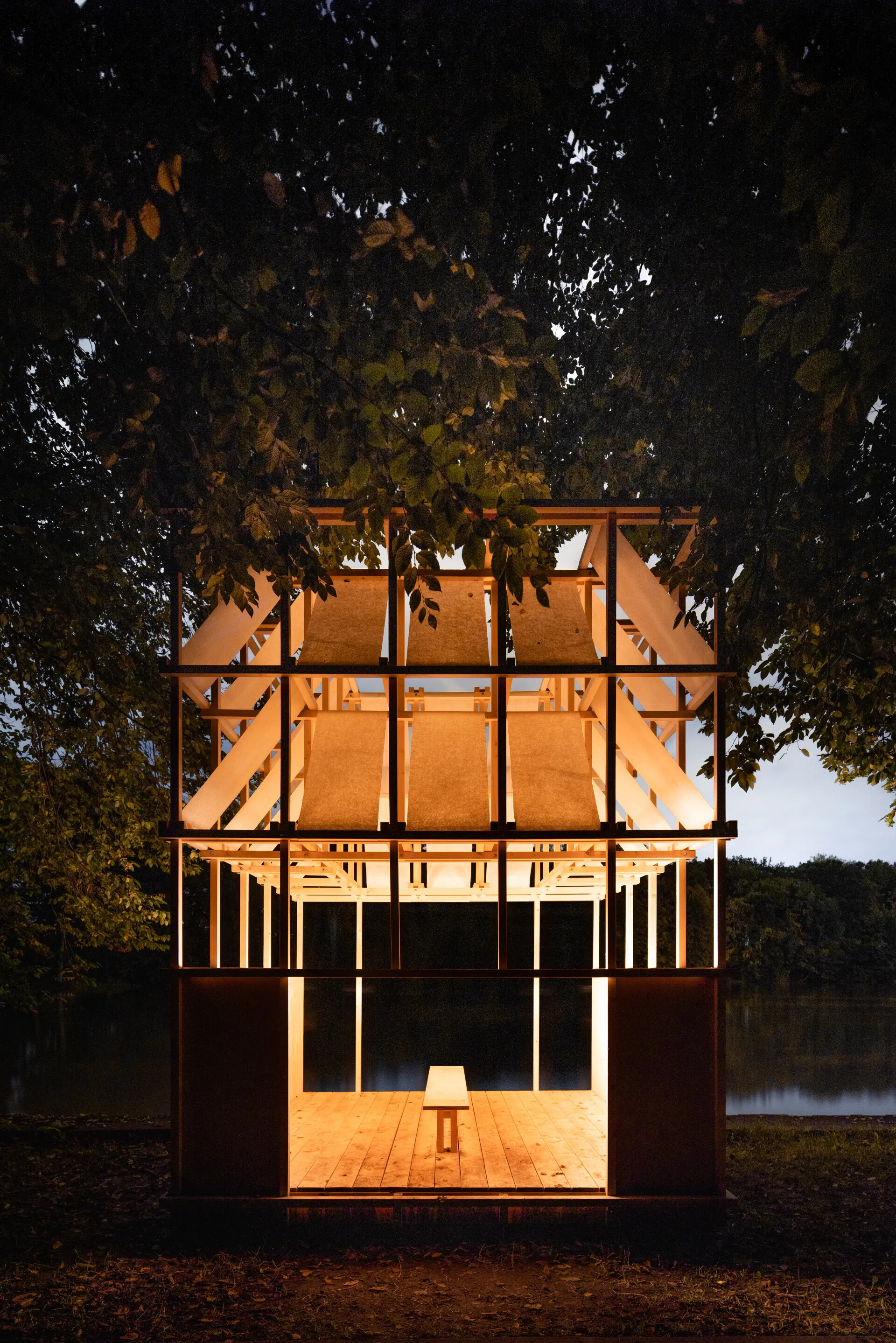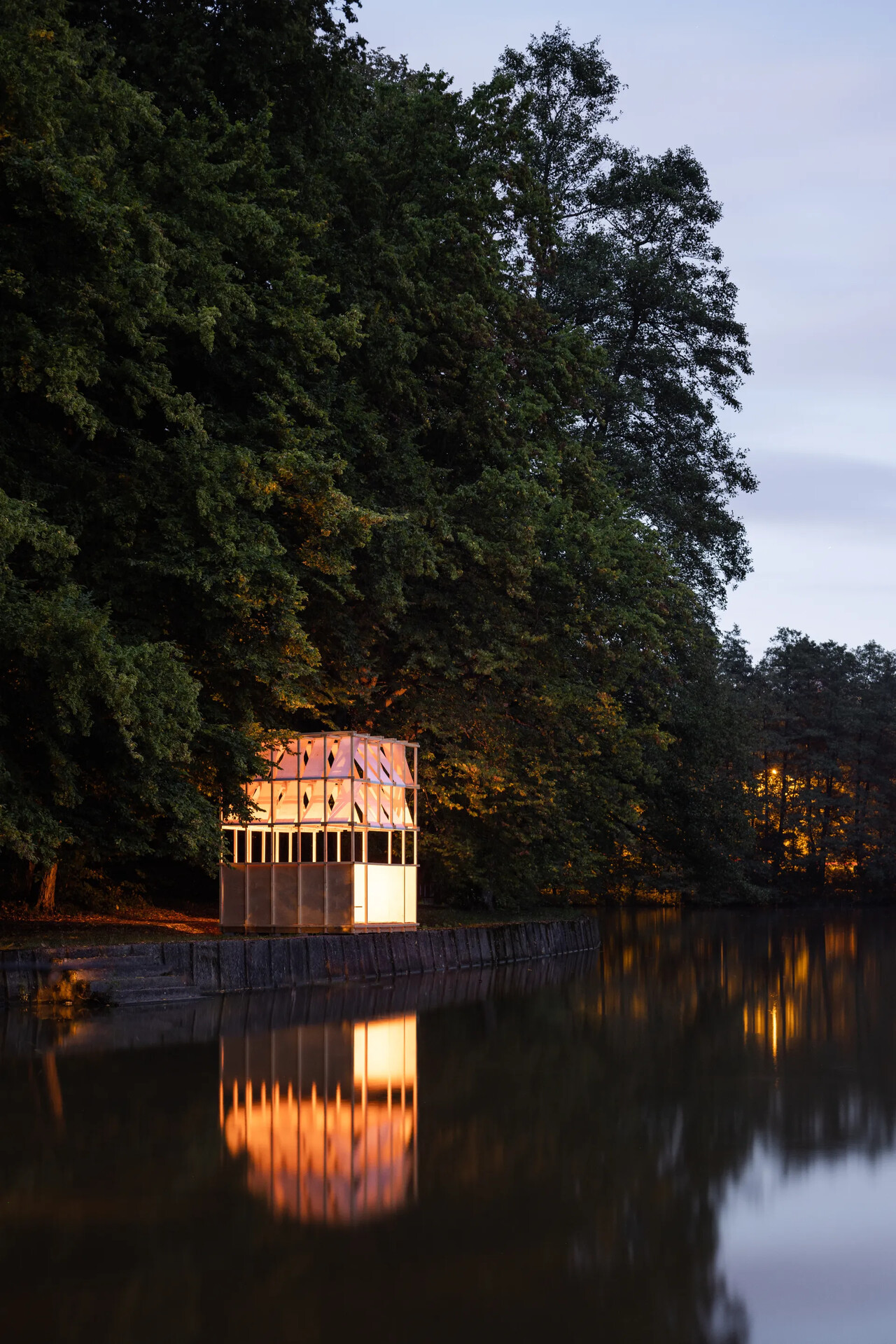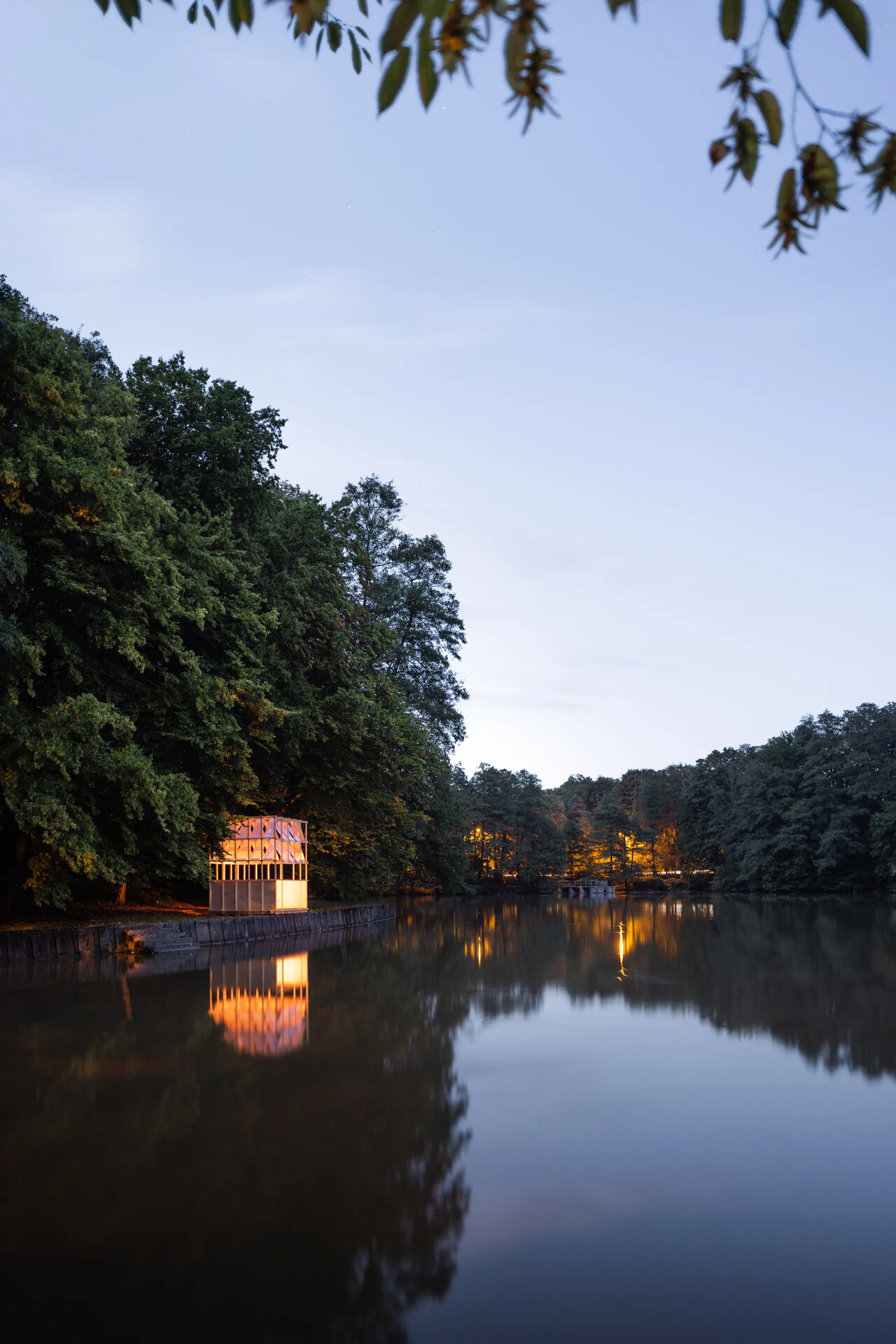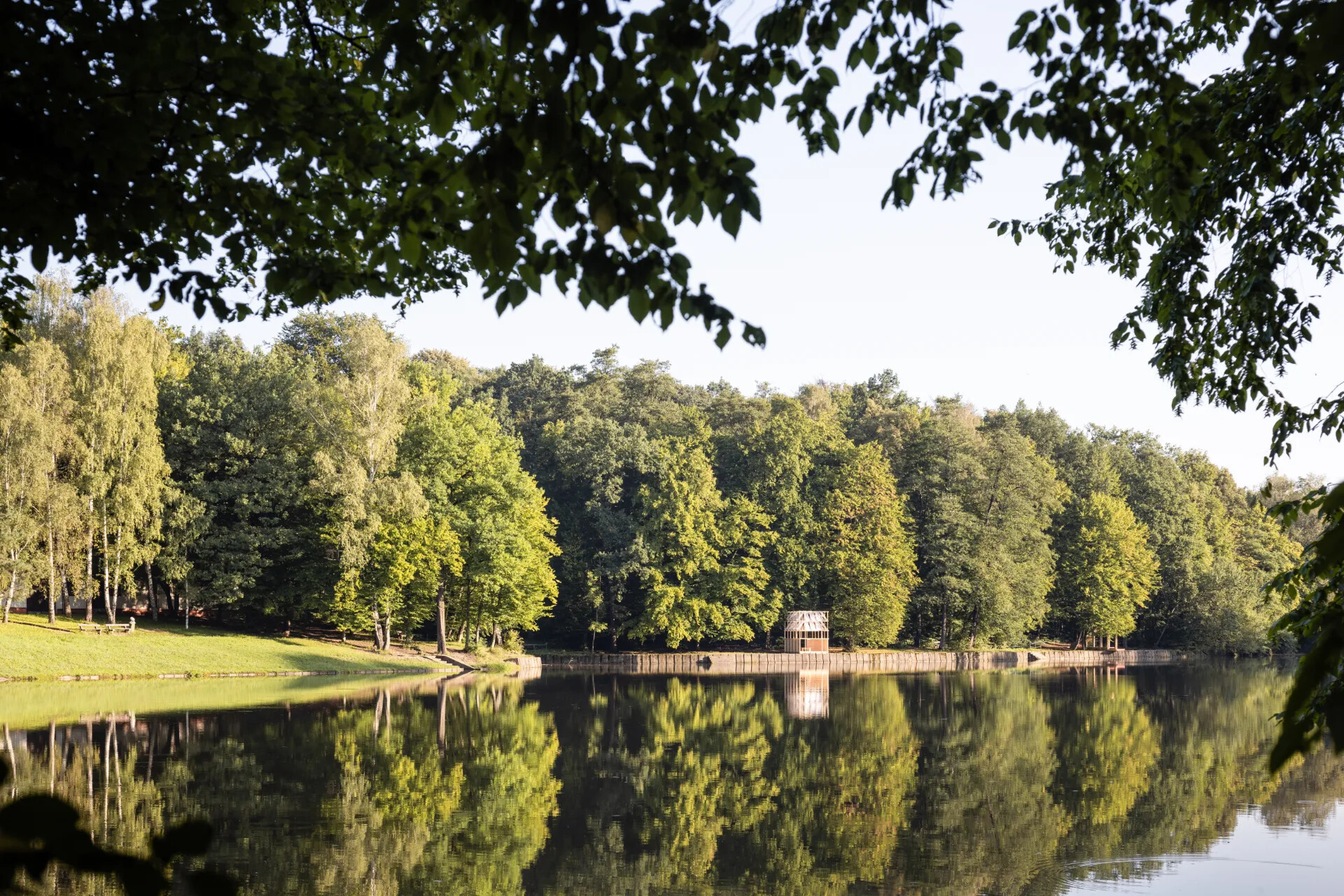
Several rules of the traditional tea ceremony were transferred to the final design. When entering the interior, each visitor must bend down to pass under the lowest horizontal beam of the structure, which refers to the niriji-guchi door, a symbol of the equality of all participants in the ceremony. At the same time, upon entering, a rectifying view opens up attention to the water reservoir. A low table in the middle of the layout invites visitors to sit on their knees as is customary in Japanese culture. Stiffening of the lower part of the structure with plywood boards provides a feeling of privacy and detachment from exterior noises. The open entrance frame allows a view into the interior and passers-by can see the tea ceremony in progress. The height of the table gives it versatility when used both during the tea ceremony or as a bench offering a place for sitting and quiet contemplation, thus following the Japanese ideology focused on simplicity and aesthetic sophistication. The table becomes the only central furniture of the pavilion, its depth allows the participants of the ceremony to sit in close proximity with a feeling of mutuality. The pavilion has a multifunctional character and, in addition to the tea ceremony, it can also function as a pleasant summer pavilion with soothing views of nature. The square-shaped floor plan refers to simplicity, and the use of primary elements depicts the symbol of matter and man.
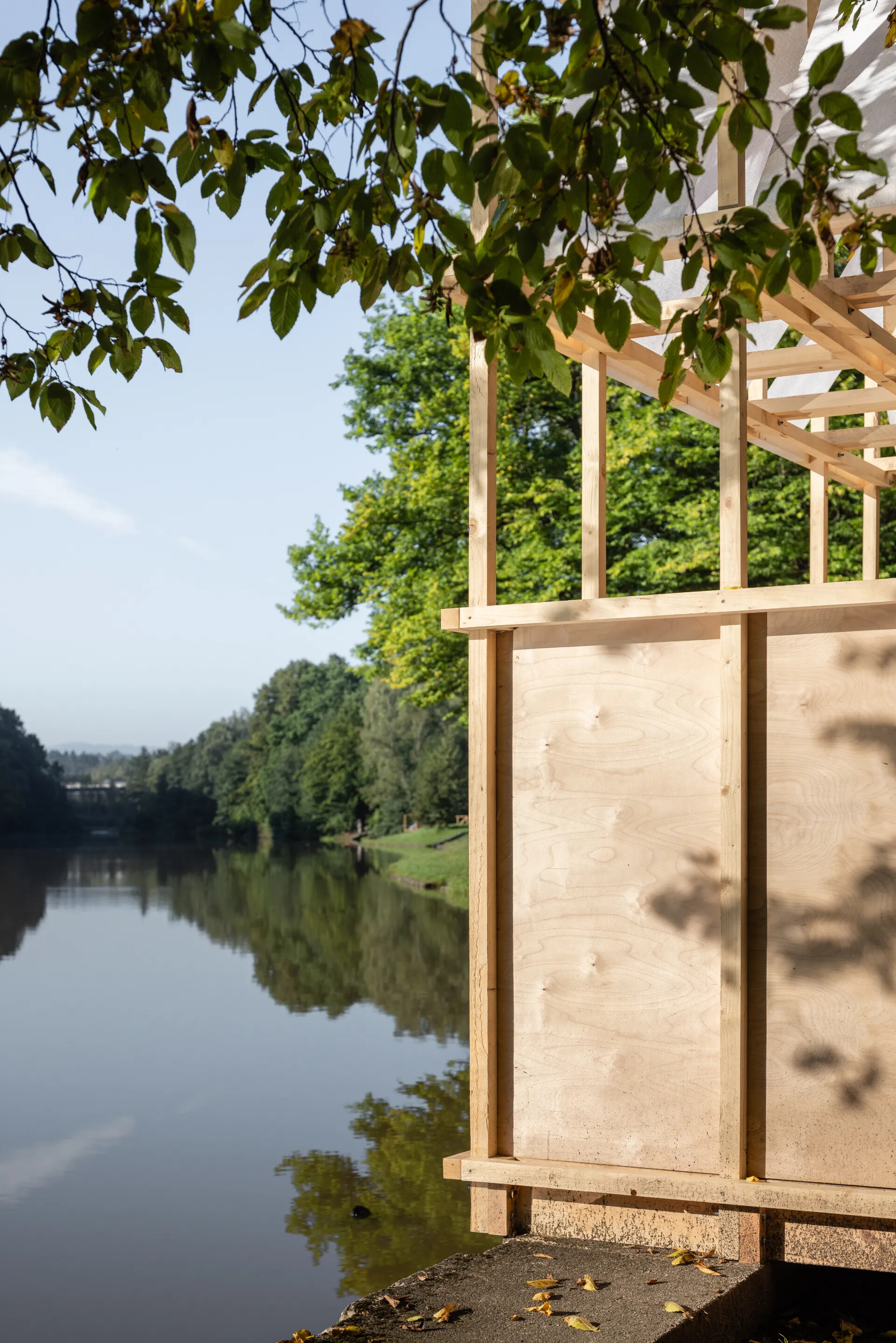
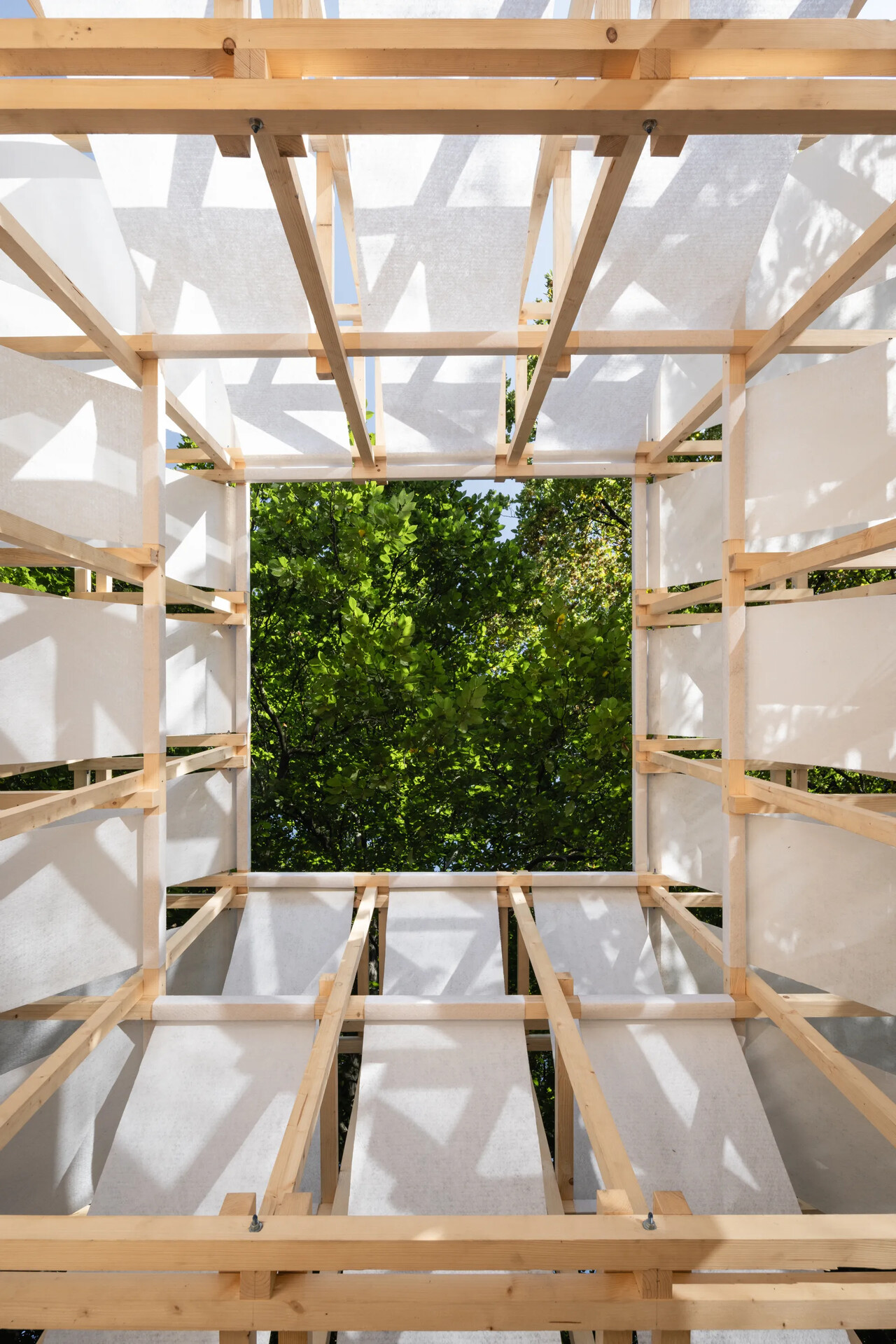
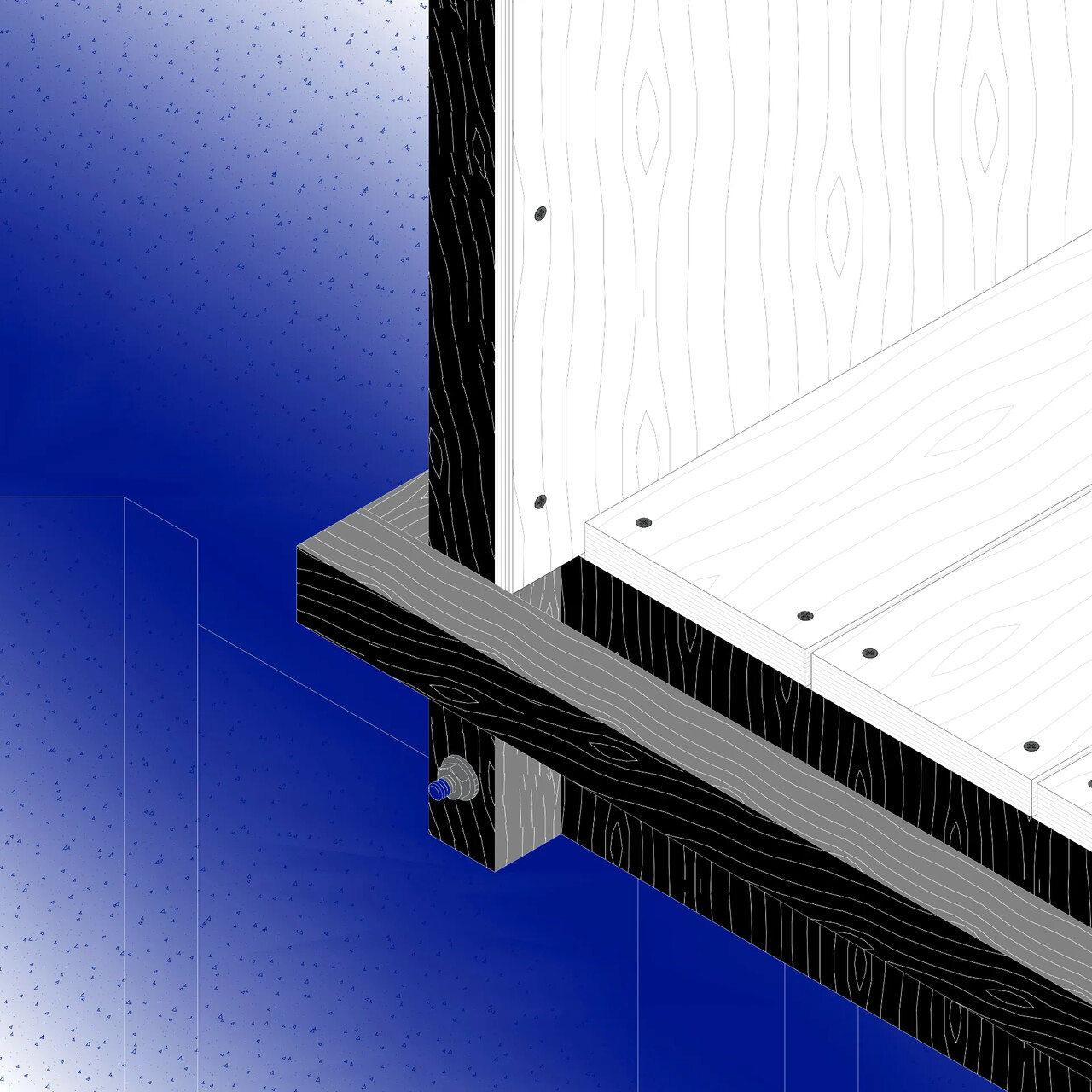
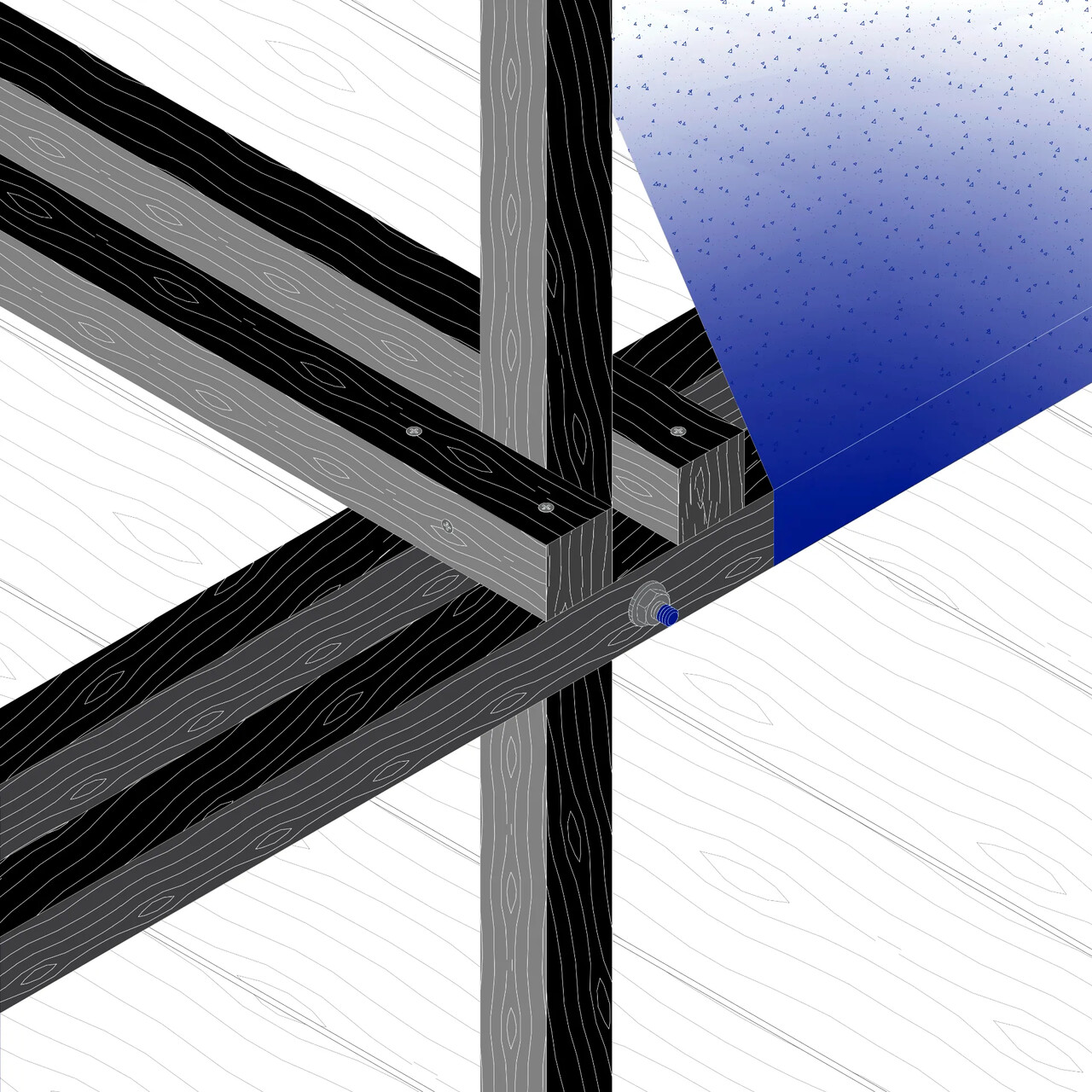
The structure of the pavilion is based on a plan area of 3 x 3 m with a height of 4 m, which is also the structural height of wooden spruce prisms of square cross-section and the maximum permitted height of the pavilion. The raw wooden elements are complemented by a soft fabric that brings a feeling of coziness, but keeps the pavilion still minimalist, so that it does not distract from the ceremony itself, from achieving a sense of peace and harmony. Other materials used are spruce floor planks, birch plywood and roof geotextile. The mass of the pavilion is based on the shape of traditional tea pavilions. Diagonally fixed fabric together with closing two side walls with birch plywood create an impression of privacy and protection against weather conditions such as sun and rain, which the house provides, but at the same time the frame structure remains airy and open enough to allow a connection with the exterior and the creation of non-traditional views. Textiles in two levels bring a certain play to the pavilion, which is meant to evoke traditional Japanese architecture.
將傳統茶道儀式的幾個規則要素融入此設計中,進入空間內時,人們必須低頭彎腰、蹲下身子通過結構最低的橫樑進入,這個形式是指niriji-guchi 門,稱作”躙口”,象徵在這個地方所有參與者在儀式中都是平等的。進入室內後,開放的視野隨即引導人們的視角關注在延伸出去的湖面景色。室內中間的低矮桌子,暗示到訪者像日本文化中一樣可以跪坐下來,底部用樺木膠合板覆蓋,提供隱私感,也隔離了外部的噪音干擾,開放的入口框架能夠一覽內部空間,路人可以看到裡面正進行著茶道儀式。矮桌的高度既可在茶道儀式的過程中使用,亦能作為安靜沈思的長凳,從而依循著日本專注於極簡美學的思想,闡述茶道的精髓、簡樸而精緻。矮桌成為空間中唯一的家具,其深度允許儀式參與者近距離地坐在一起,感受到彼此之間的互動。除此之外,它還可以作為一個舒適的夏季涼亭,讓人們在這裡享受大自然的美景,而方形的平面設計呼應簡樸的風格,主要元素的使用描繪了物質和人的象徵。
涼亭的結構面積,平面3 x 3米,高度為4米,這也是木製雲杉柱子結構高度與該空間允許的最高限度。原木元素與柔軟的布料相輔相成,帶來一種舒適感,卻仍然維持涼亭極簡主義的風格,不會分散在內儀式的注意力,從而實現該設計能帶來平靜和諧的語彙。其他使用的材料包括雲杉地板、樺木膠合板和屋頂防水材料。它借鑒了傳統茶亭的形狀,斜向固定的布料和用樺木膠合板封閉的兩側牆面,營造了隱私和保護的感覺,能夠遮擋陽光和雨水,防止天氣因素的干擾,讓人在這裡感到舒適,但同時維持結構的通風與開放性,能夠兼具與室外的連結,並創造出非傳統的視野。在茶亭內使用兩層紗網,為空間帶來了趣味性的元素,旨在喚起傳統日本建築的風格,並實現和諧平靜的氛圍。