The Taste Journey
THOMAS CHIEN restaurant, renowned for its commitment to 'Sustainable Food,' has engaged TaG Living to renovate a dining space near Kaohsiung Harbor. Drawing inspiration from sustainable dining, seafood menus, and the unique sea-land interface, the design features a circular layout inspired by ocean currents. Focused on four core themes: sustainability, cross-cultural influences, culinary artistry, and environmental friendliness, it seamlessly integrates landscape motifs indoors. The design blends harbor and maritime elements with French elements, utilizing gentle curves and creamy silk tones to create distinct immersive zones within the approximately 198.34-square-meter space.
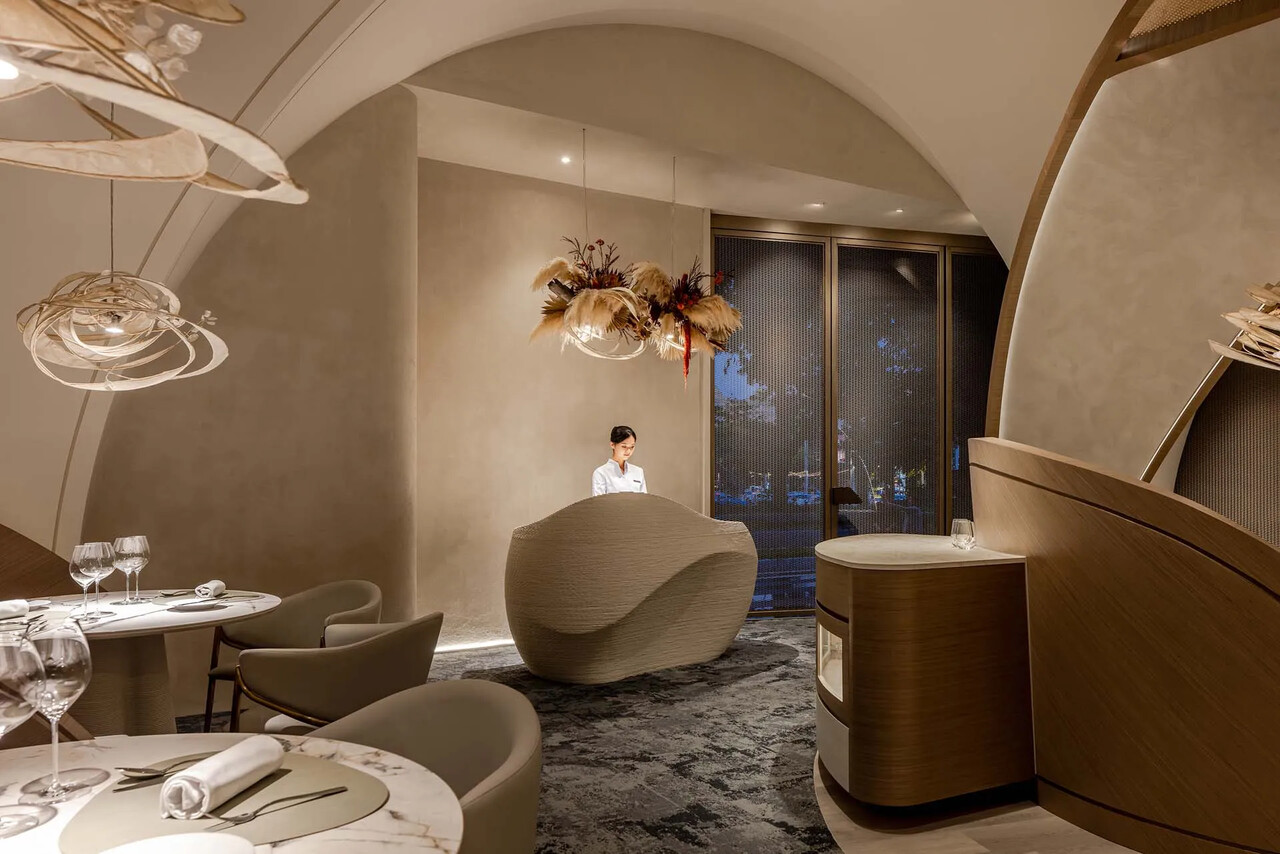
The original space's entrance suffered from intense sunlight reflected off glass curtain walls of nearby steel skyscrapers across the street, leading to prolonged discomfort due to high temperatures and glare. The design team repositioned the entrance and installed slanted, recessed door panels crafted from a metal mesh to remedy this. This material choice effectively manages light reflection angles and density, thereby reducing visual discomfort and excessive heat. During sunset, the filtered light through the mesh casts silhouettes that turn the facade into an evening landscape, thereby softening the entrance's overall imposing presence.
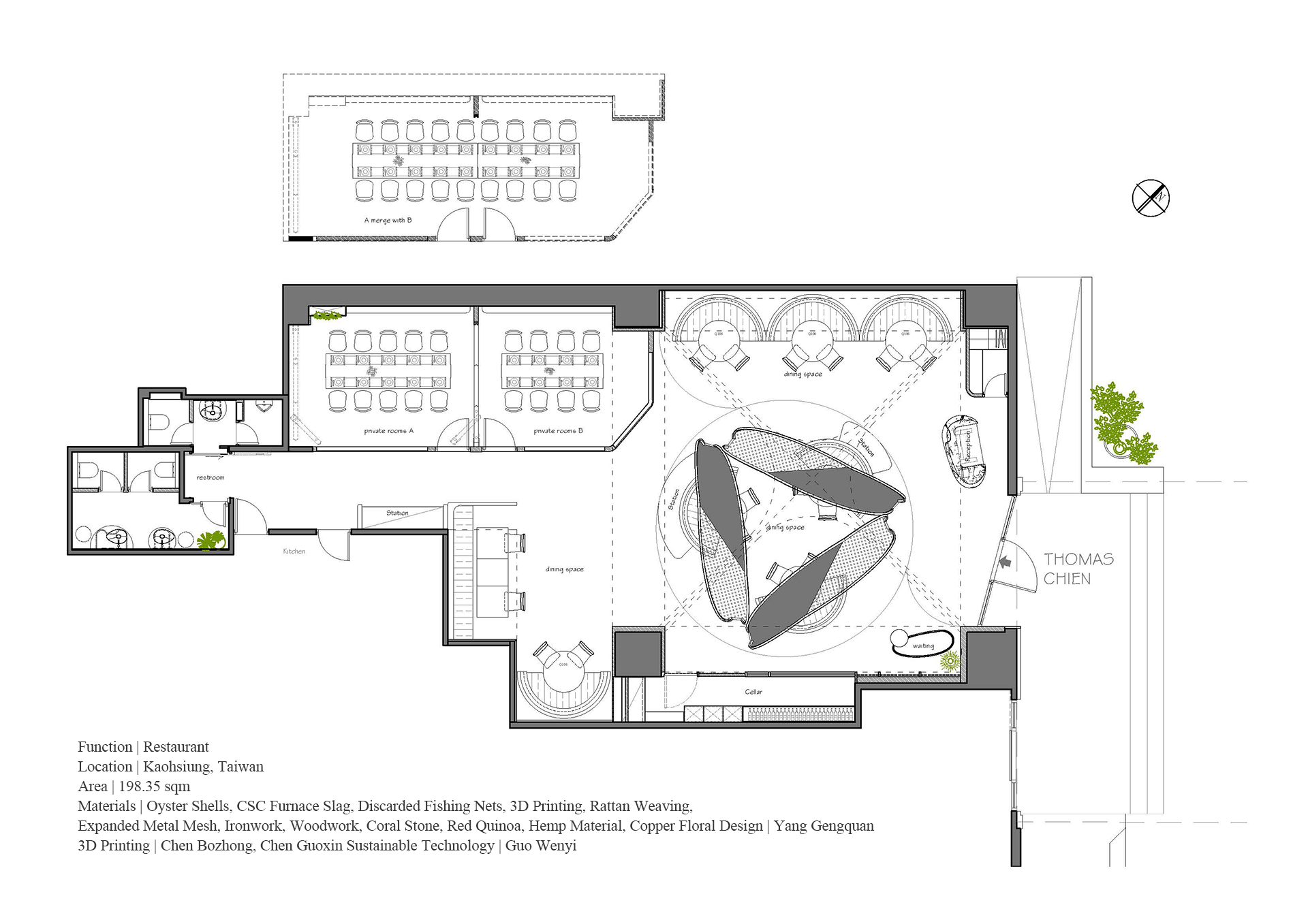
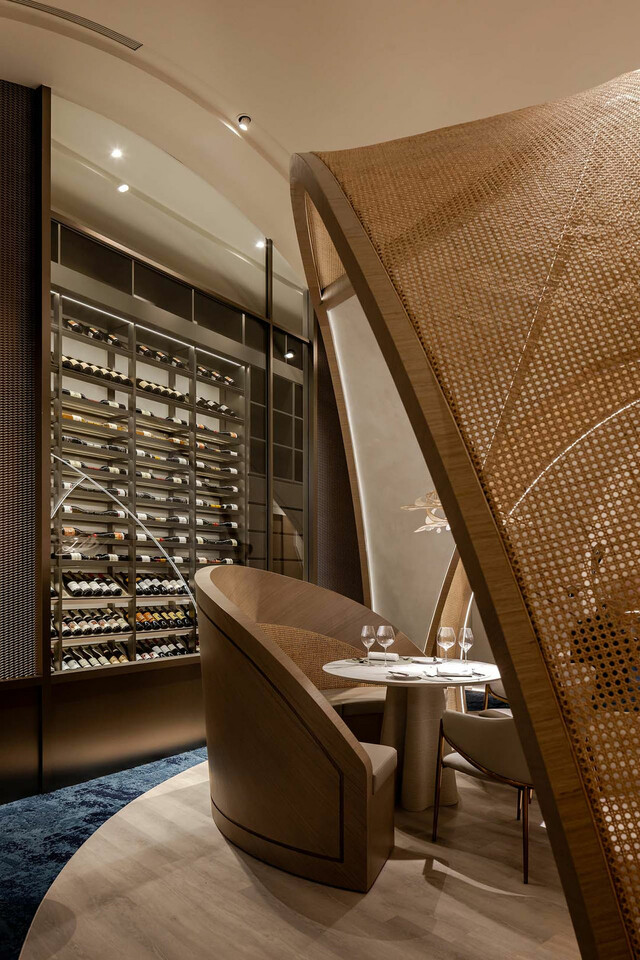
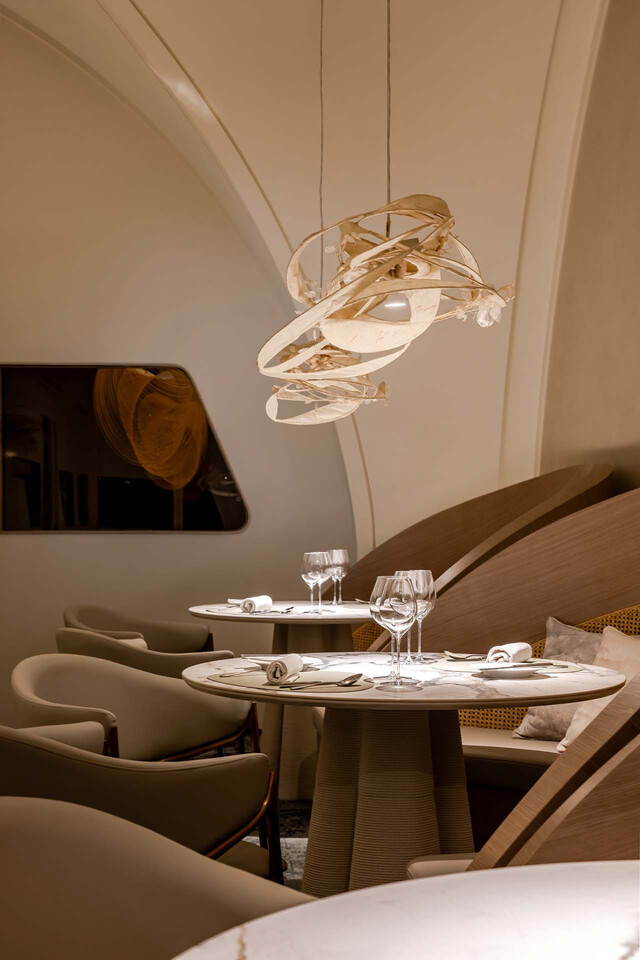
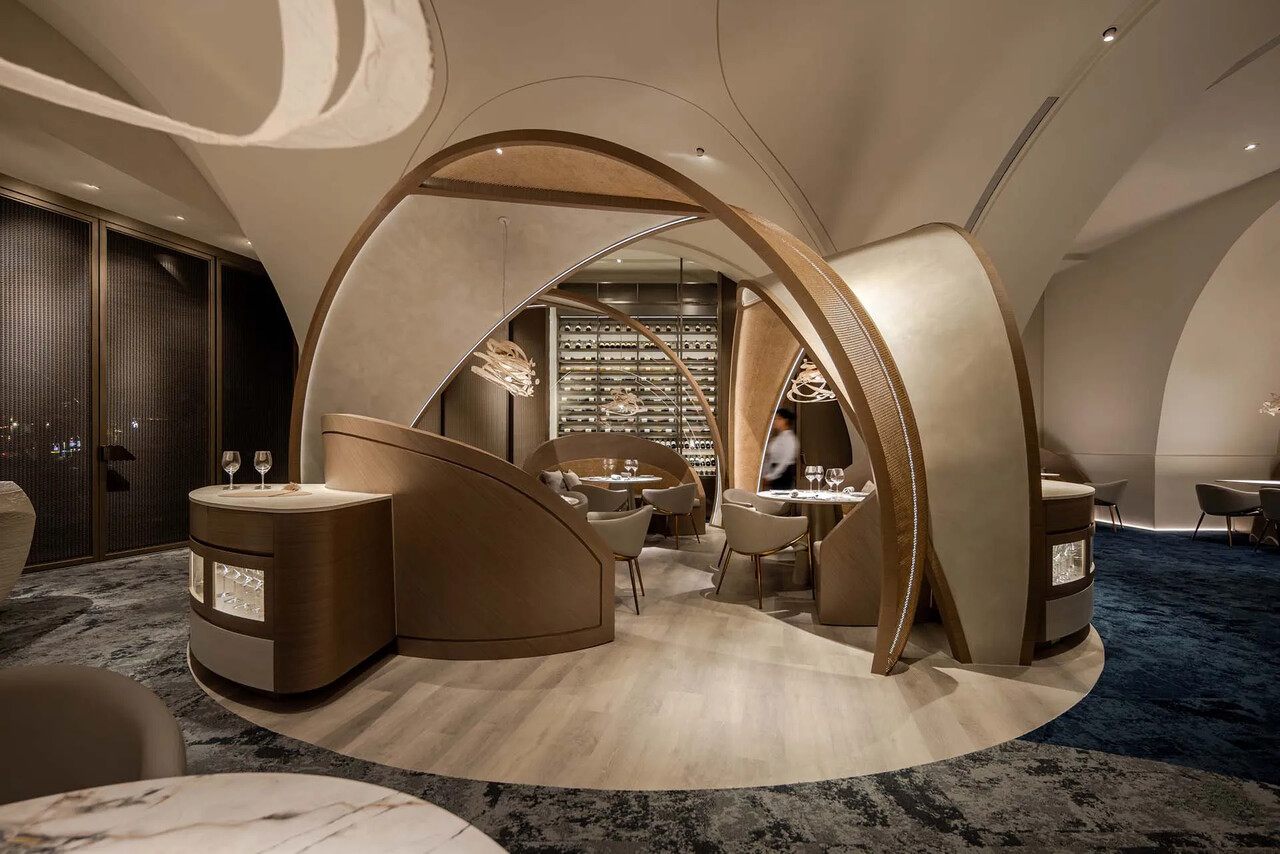
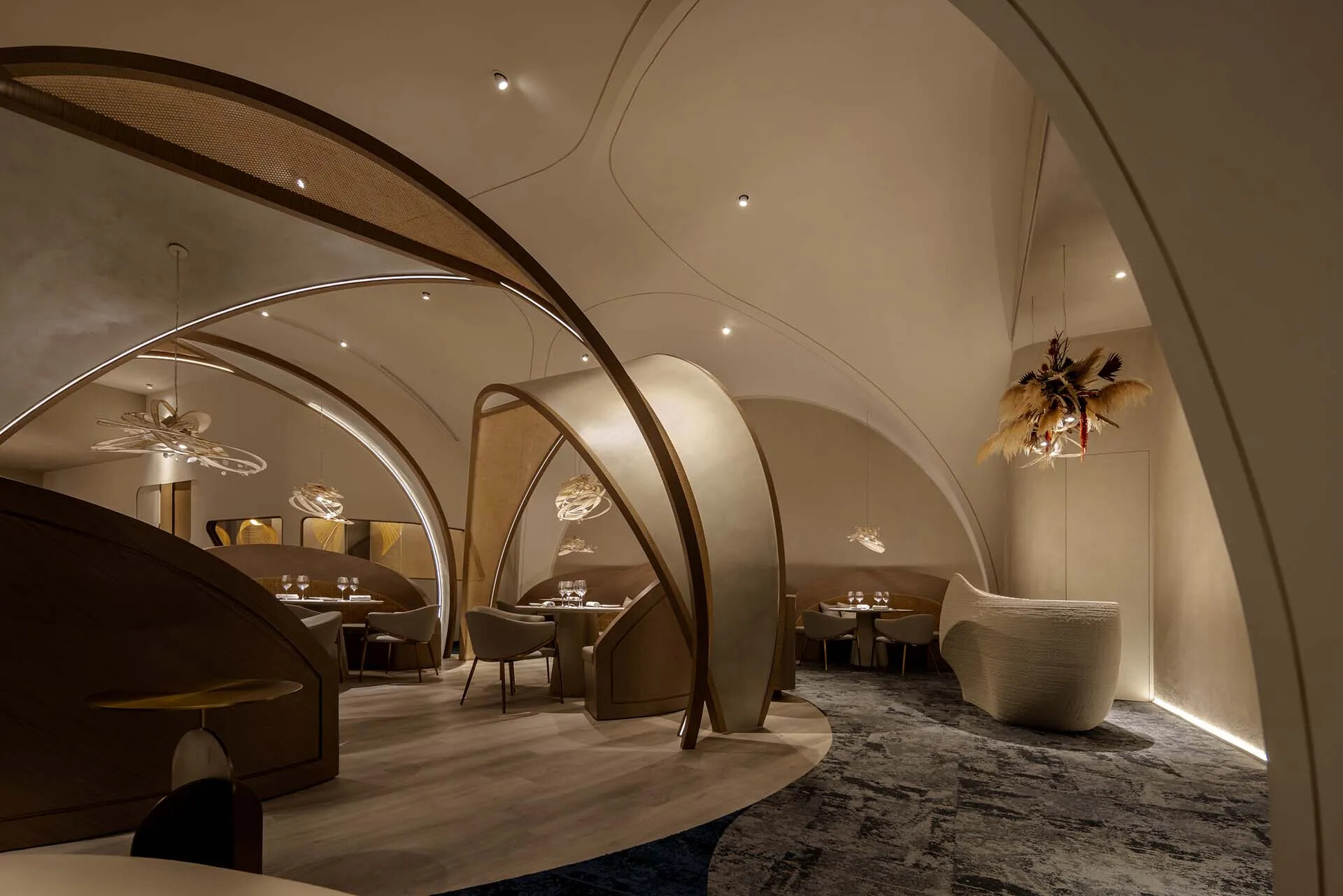
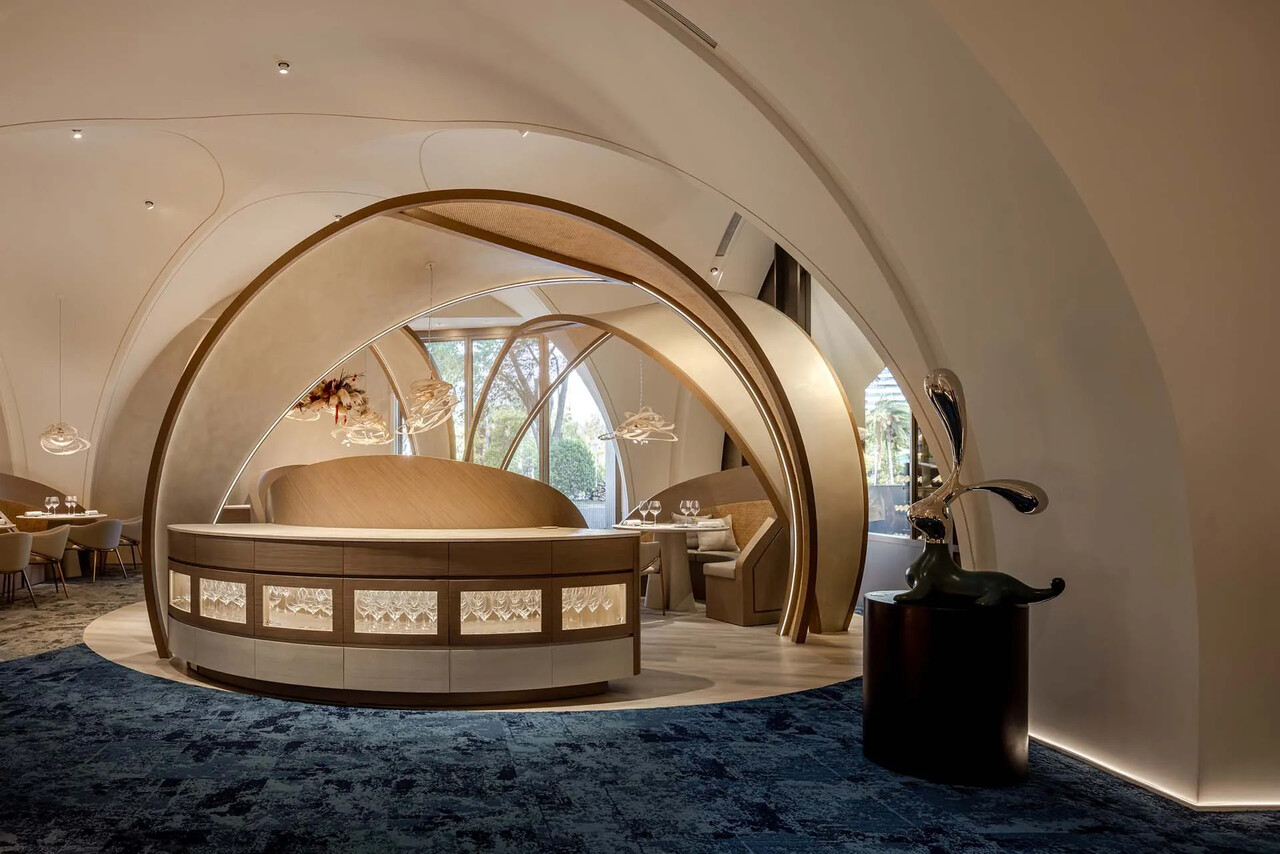
Chef CHIEN, celebrated for his innovative blend of traditional and contemporary culinary techniques, inspires the design team to reinterpret local traditional elements into a fresh design language. Central to the spatial design are three sculptural arc-shaped canopies, reminiscent of traditional banquet ceilings, reimagined to offer a "dining under the canopy" experience that embodies local charm. This circular arrangement evolves into a cross-cultural culinary stage. The woven cane canopies delicately filter light and shadow, introducing organic layers that enhance privacy and establish a comfortable distance between tables, cultivating an intimate dining ambiance.
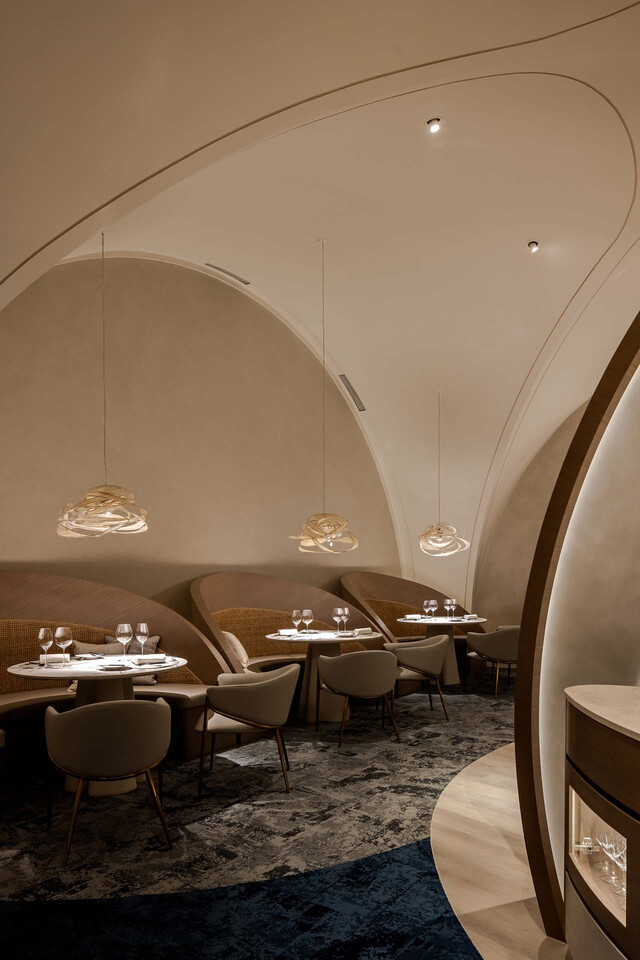
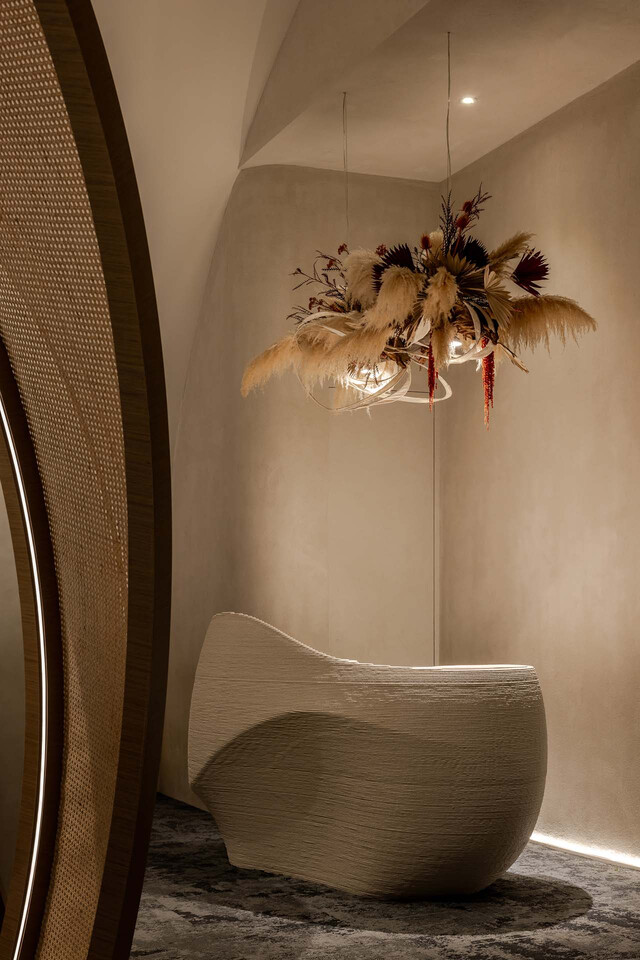
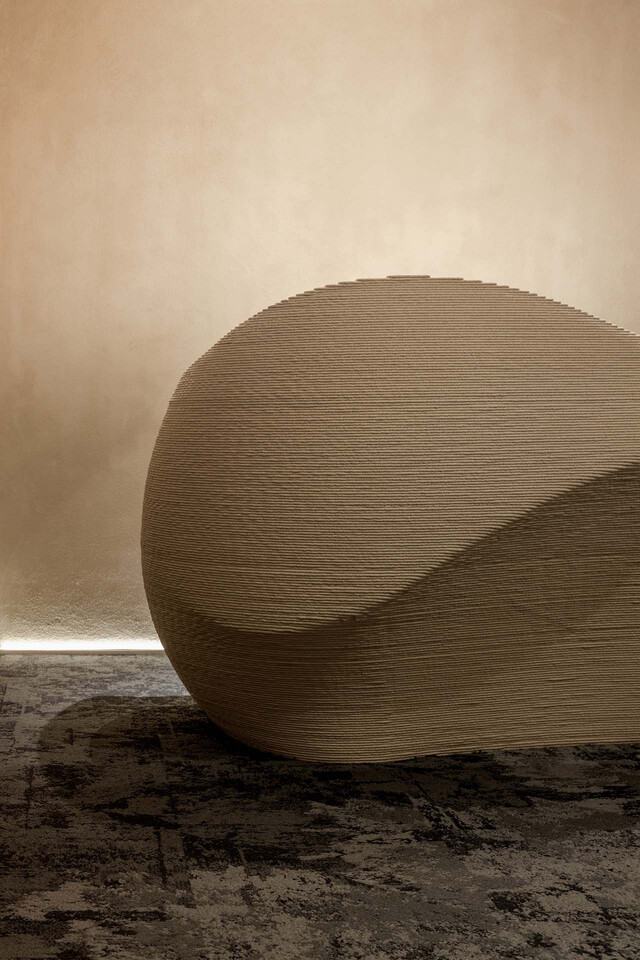
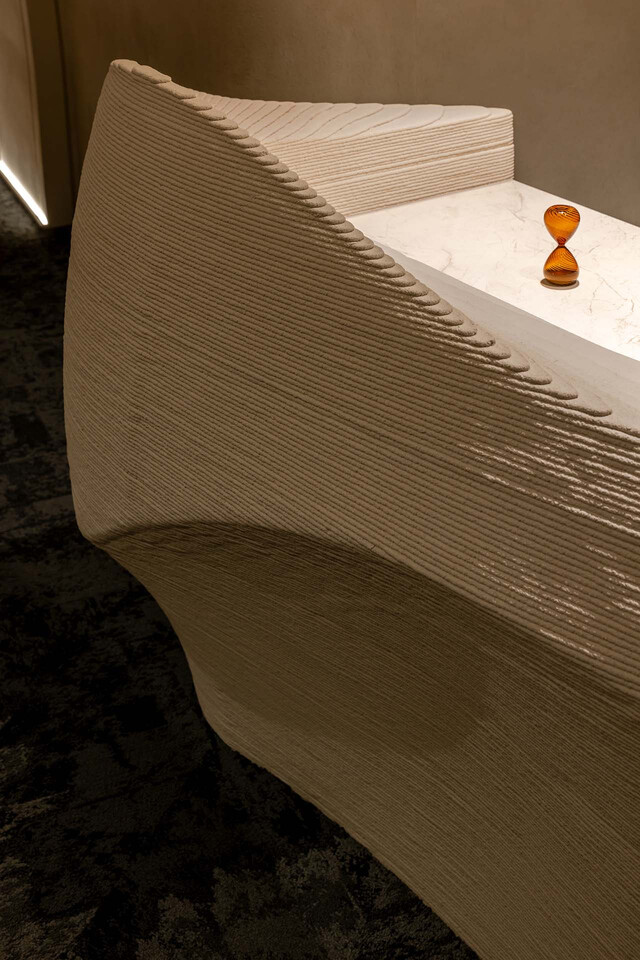
Under the premise of sustainability and recognizing the environmental drawbacks of high-carbon-emitting cement, the design strategy involves using furnace slag and oyster shell waste as primary materials for wall surfaces and furniture. By harnessing the eco-friendly advantages of 3D printing, the project develops sustainable furniture pieces like counters, public seating, and table legs. This approach not only minimizes the carbon footprint associated with transporting traditional materials such as wood, stone, and metal over long distances but also promotes the reuse of industrial by-products, contributing to a more environmentally friendly design solution.
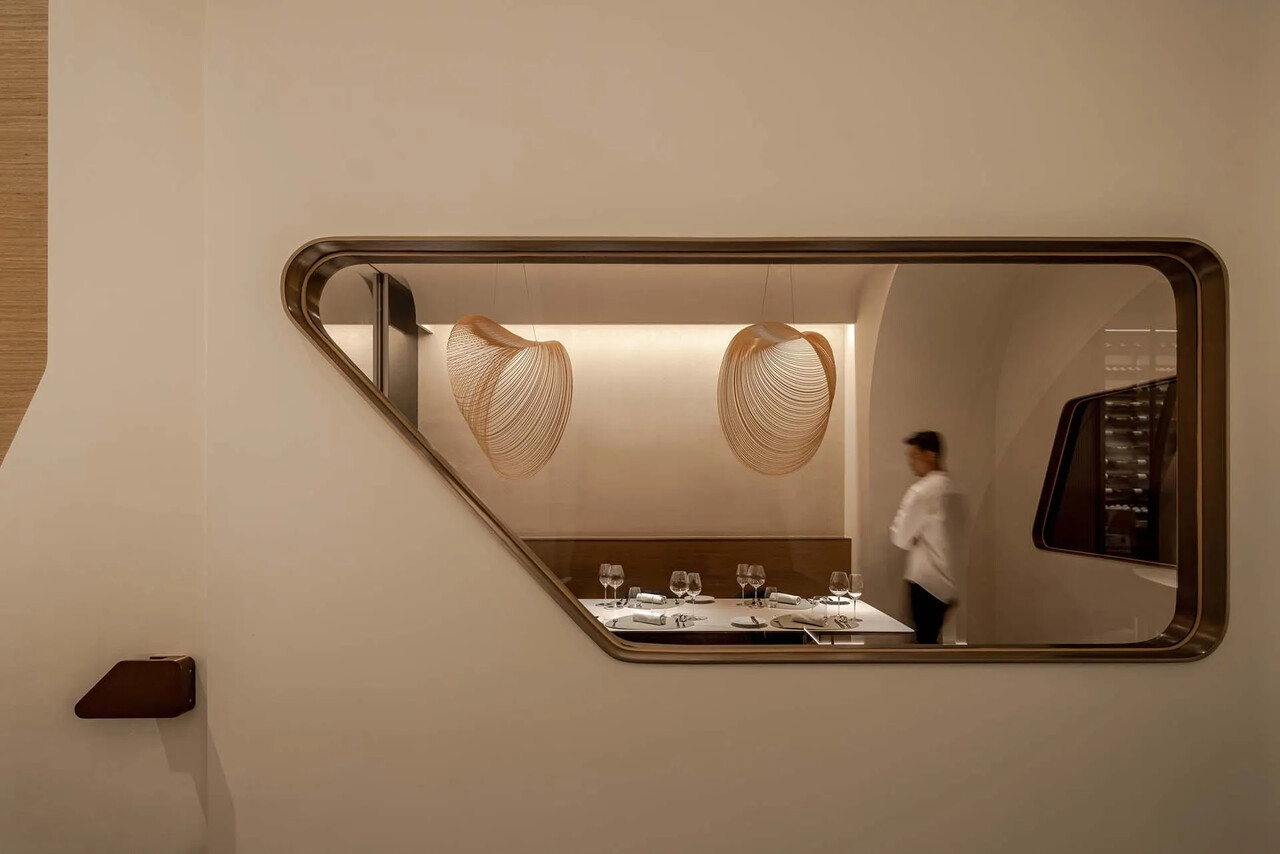
Indoors, the space is a micro-architectural marvel where French classical elements, such as the vaults, are creatively deconstructed and reimagined. These classical lines, resembling flowing water, manifest as arches throughout, harmonizing with French culinary themes while resolving practical challenges like low ceilings and intricate piping. The ceiling, crafted with CNC technology and measuring 7.6 meters in diameter and 4.3 meters in height, replaces rigid right angles with graceful curves, evoking fluidity and elegance. Booths are adorned with rounded doors, windows, and lighting that evoke a cozy cabin ambiance, seamlessly integrating with the surrounding harbor landscape.
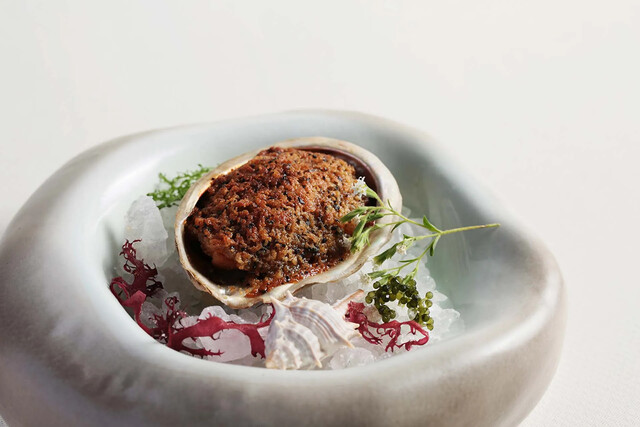
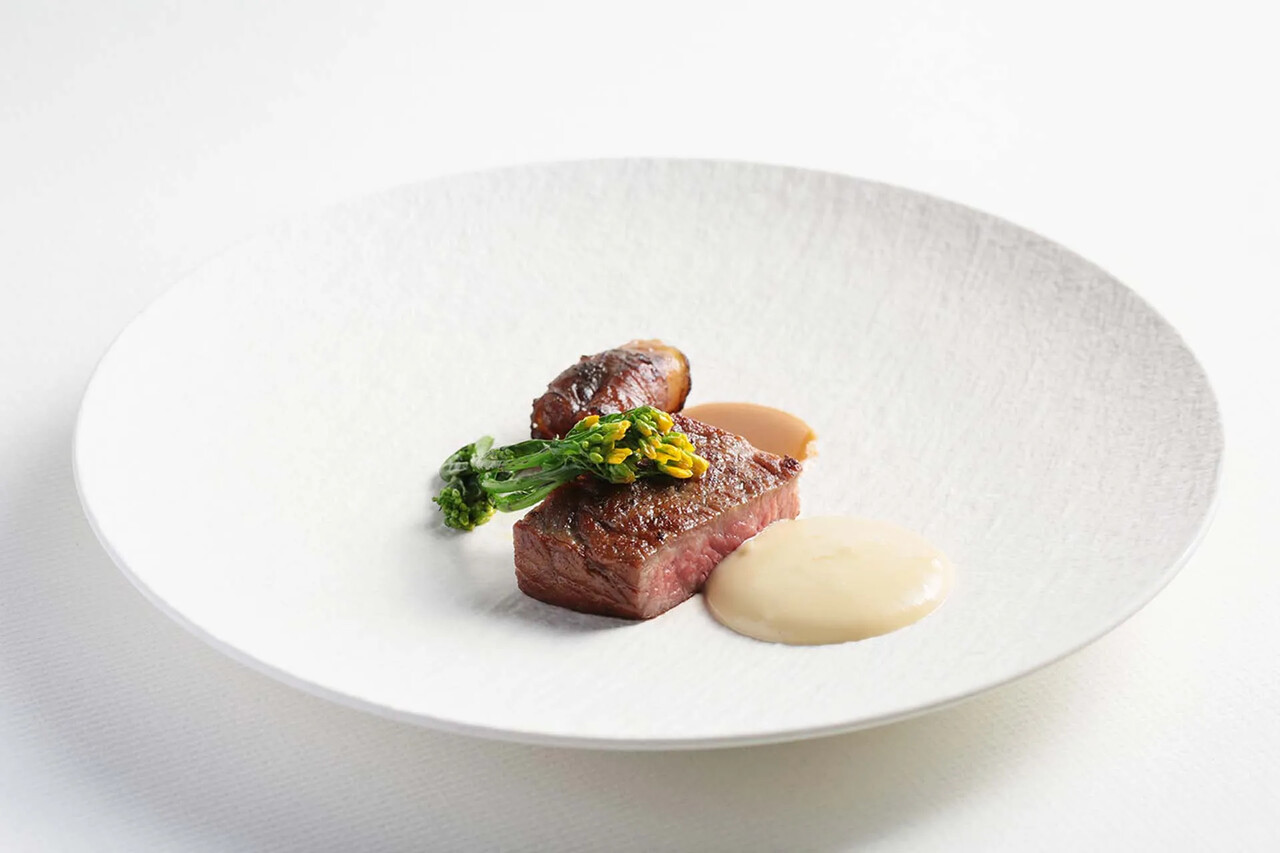
➤ Ocean and Land Delicacy: Abalone, Braised Onion, Black Truffle
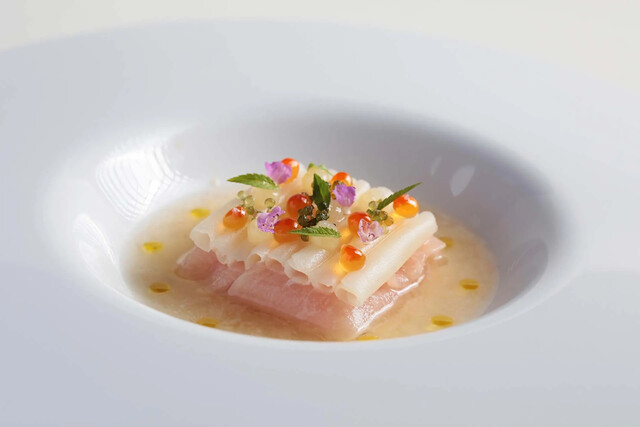
➤ Falling Blossom Medley: Swordfish, Bamboo Shoots, Cherry Blossom Sauce
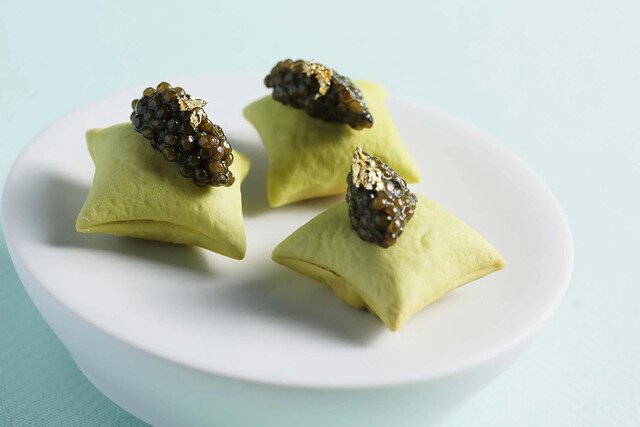
➤ Yogurt Cauliflower Pillow: Yogurt White Cauliflower with Caviar

➤ Butterfly Pea Spring Soup: Butterfly Pea Flower Seafood and Vegetable Soup