Upcycled Sauna
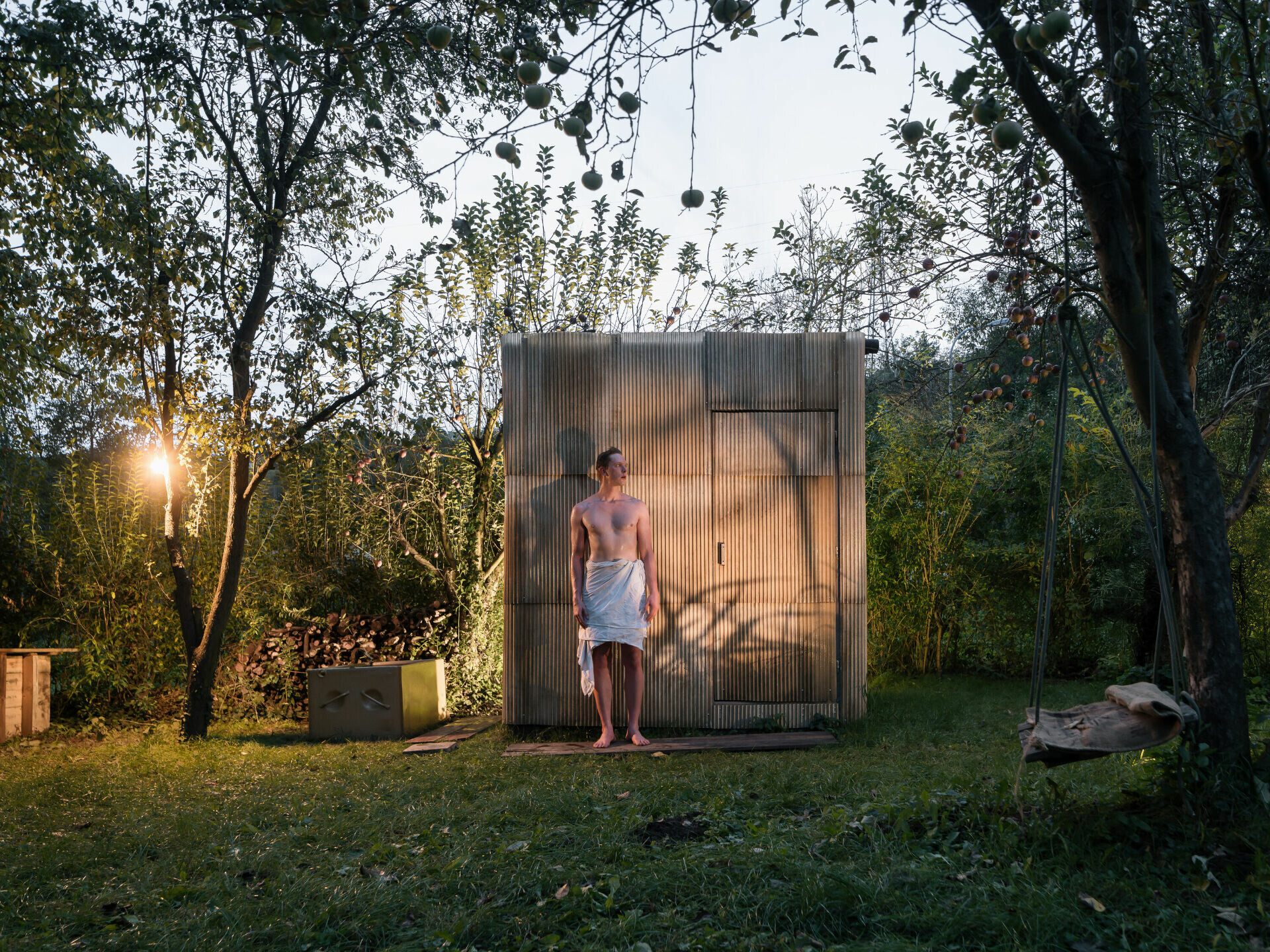
Among the world’s time-honored bathing traditions—Japanese onsen, Korean jjimjilbang, Turkish hammam, and Roman thermae—the Finnish sauna holds a distinct cultural position. The word sauna itself originates from Finnish, embodying a legacy of warmth, ritual, and quiet renewal. Echoing that spirit, a modest 4-square-meter sauna now nestles within a private garden in Brno, Czech Republic—humble in scale, yet resonant in meaning.

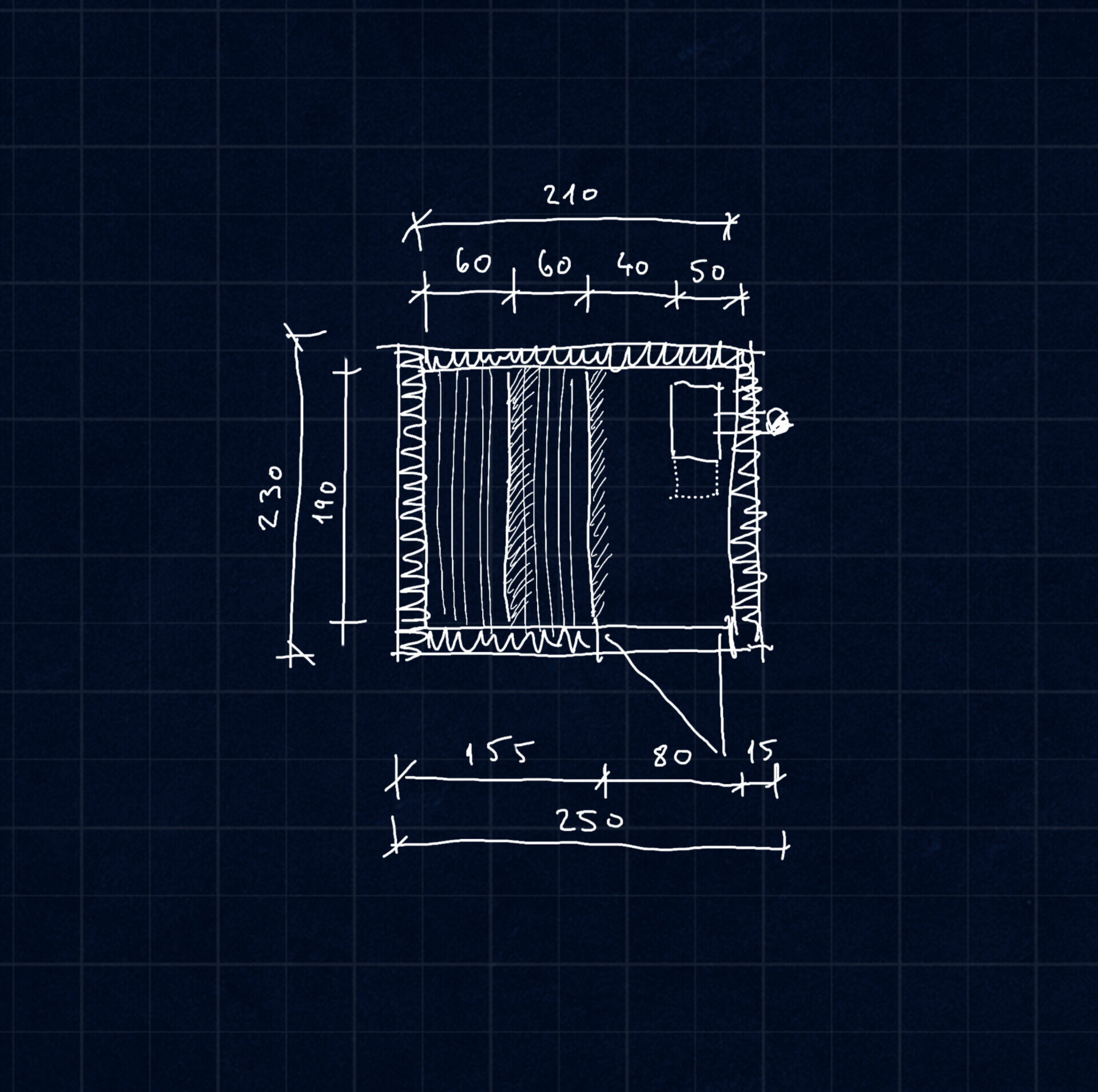
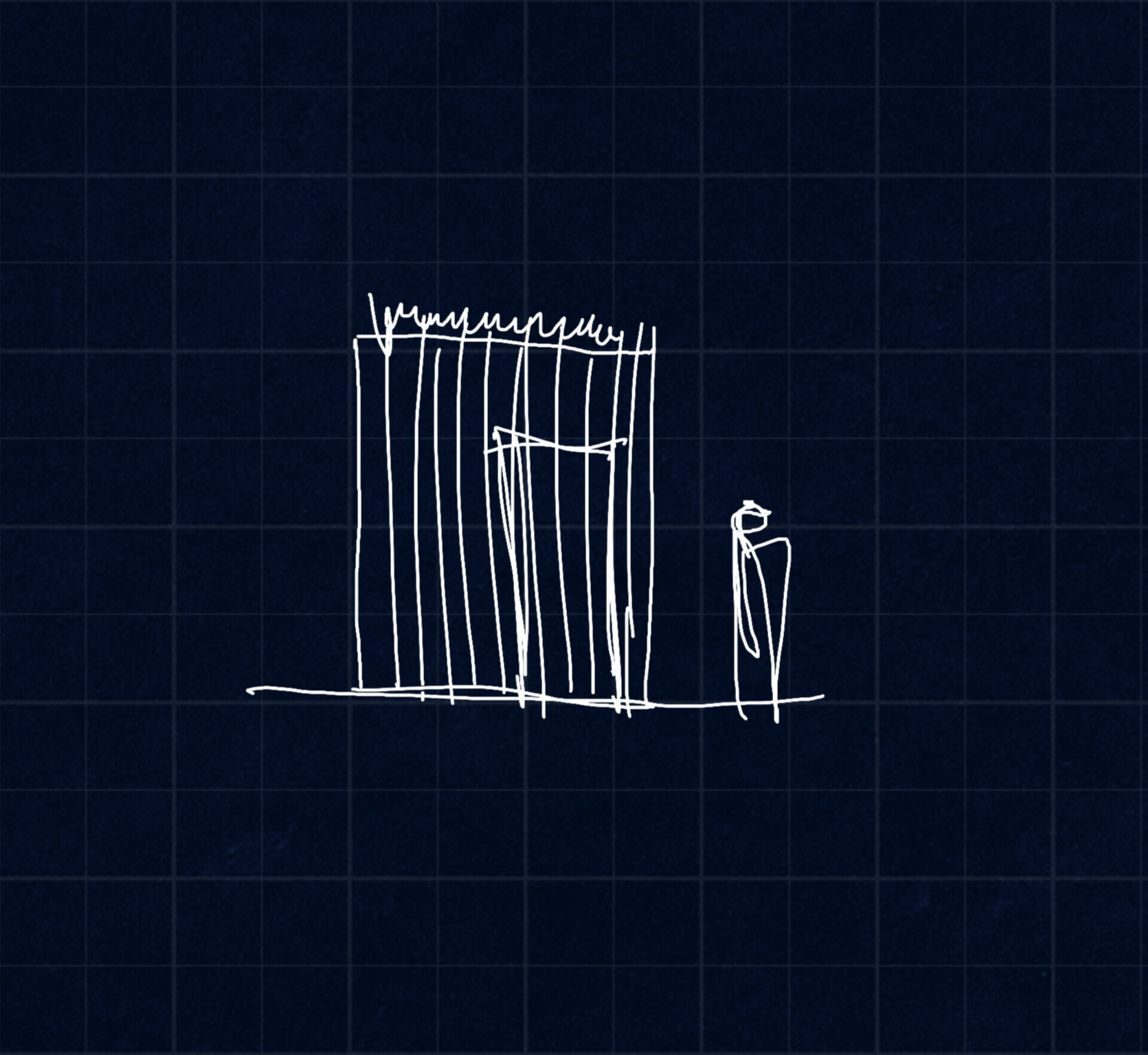
This project, Upcycled Sauna, was conceived and built by architects Tomáš Dvořák and Lenka Bažík of ika.architekti as a personal weekend endeavor. From its earliest sketches to the final assembly, every step was guided by a love for hand-built architecture and a belief in the latent value of reclaimed materials.
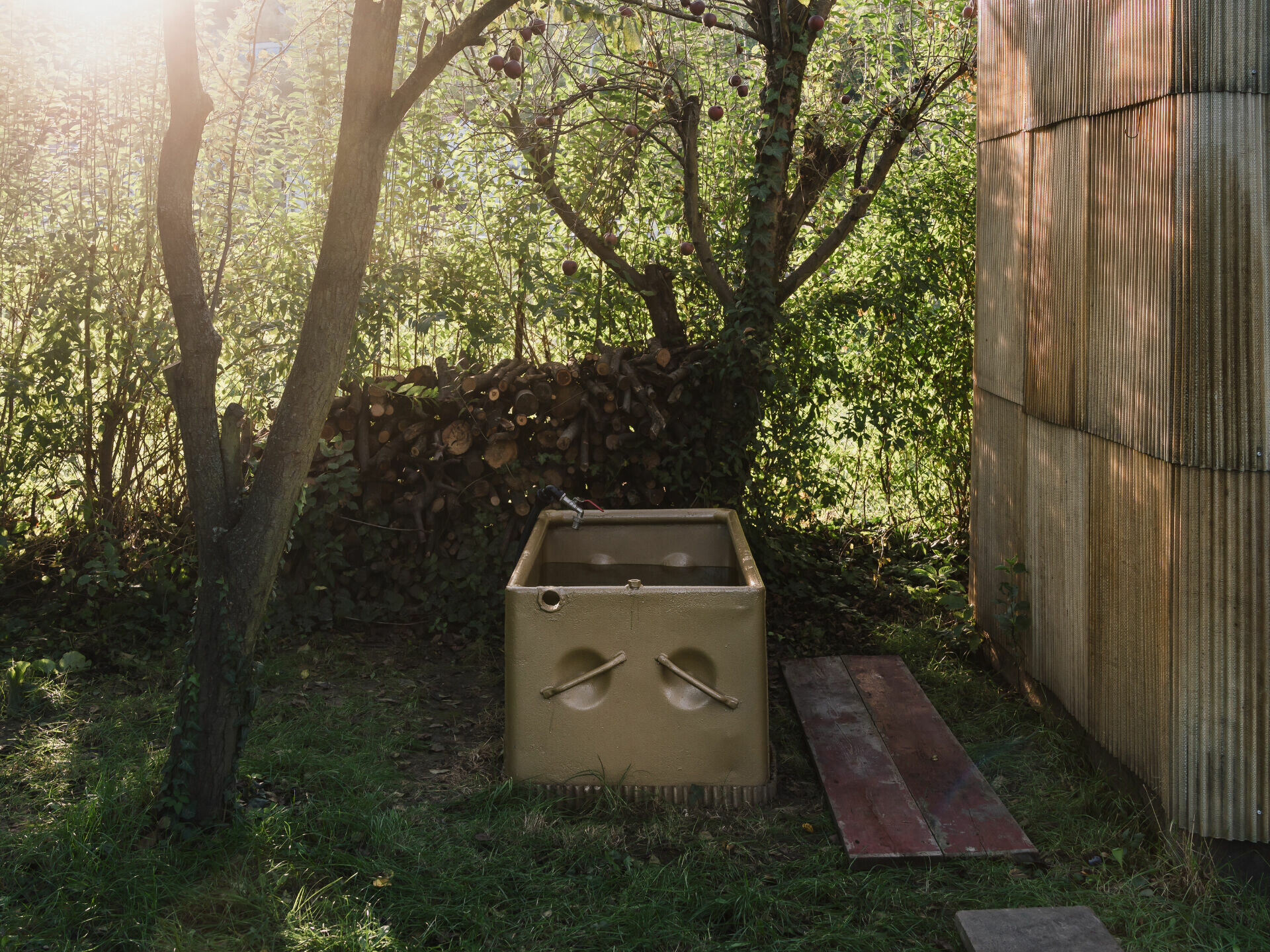
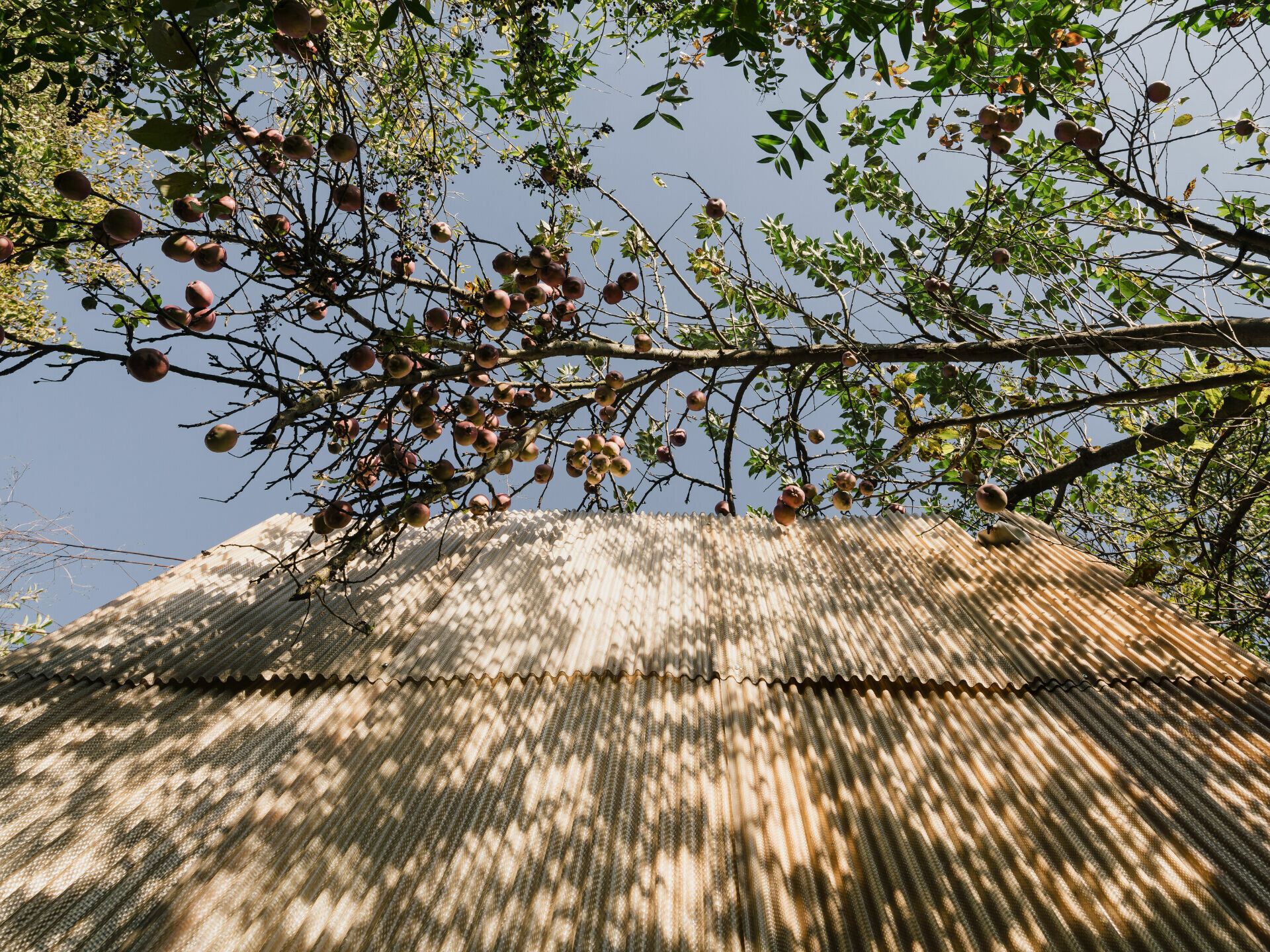
Constructed almost entirely from salvaged components—including used pallets, railway sleepers, cement-bonded particle boards, and raw sheep wool purchased from a local shepherd—the sauna celebrates the tactile memory of its materials. Rather than disguise their past, the architects carefully preserved it. Each piece was cleaned by hand and recomposed using a logic that is both minimal and adaptive, resulting in a small but fully functional structure.
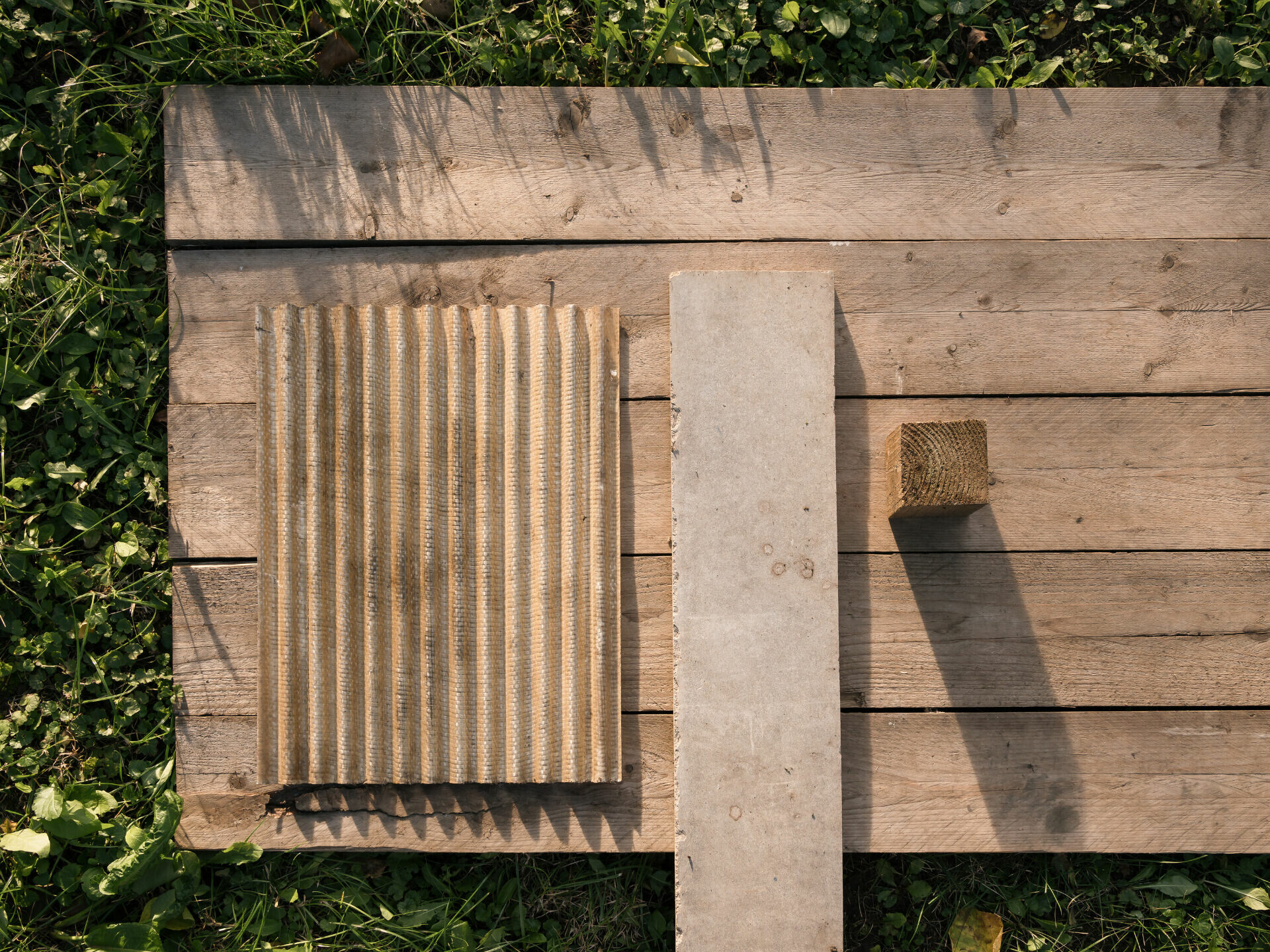
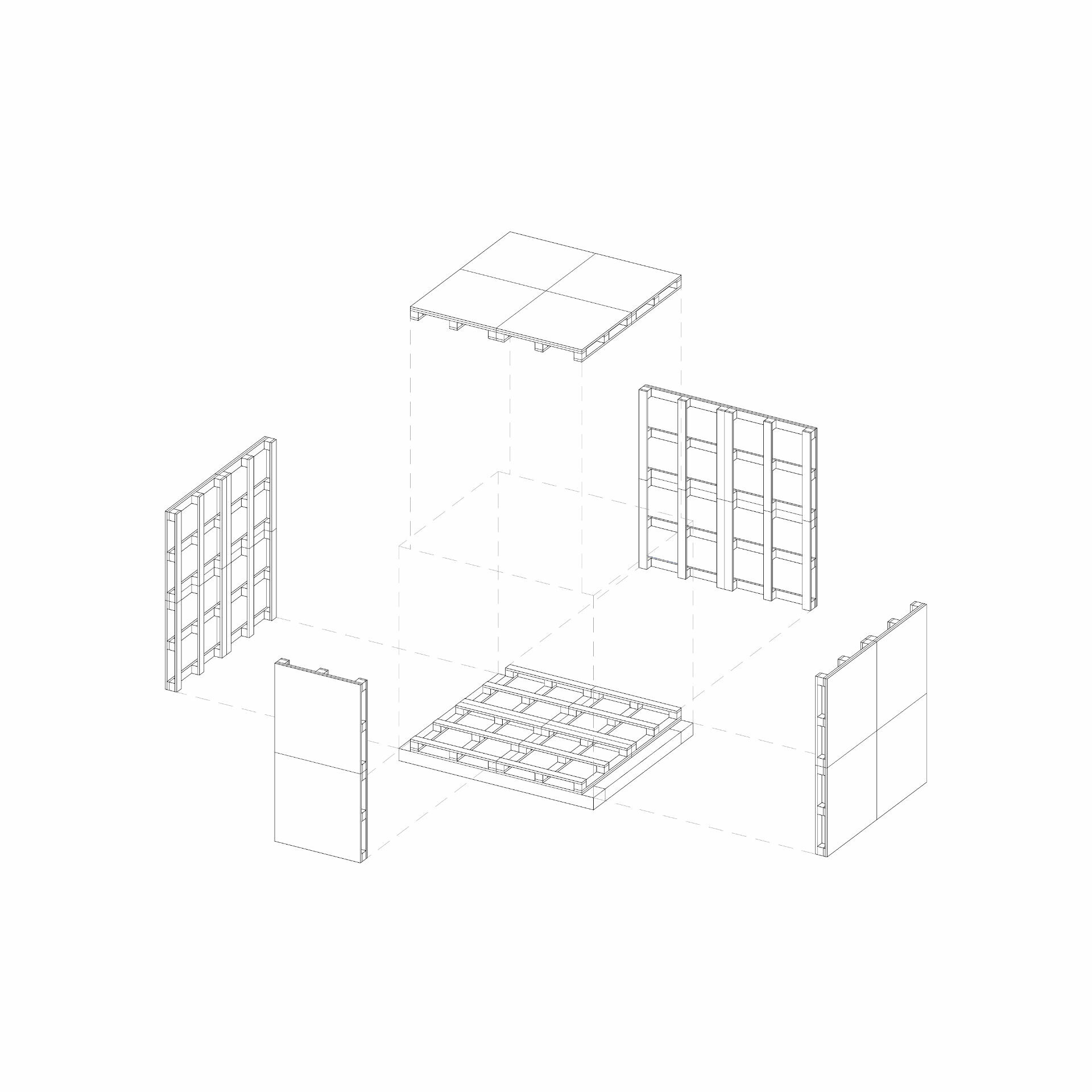
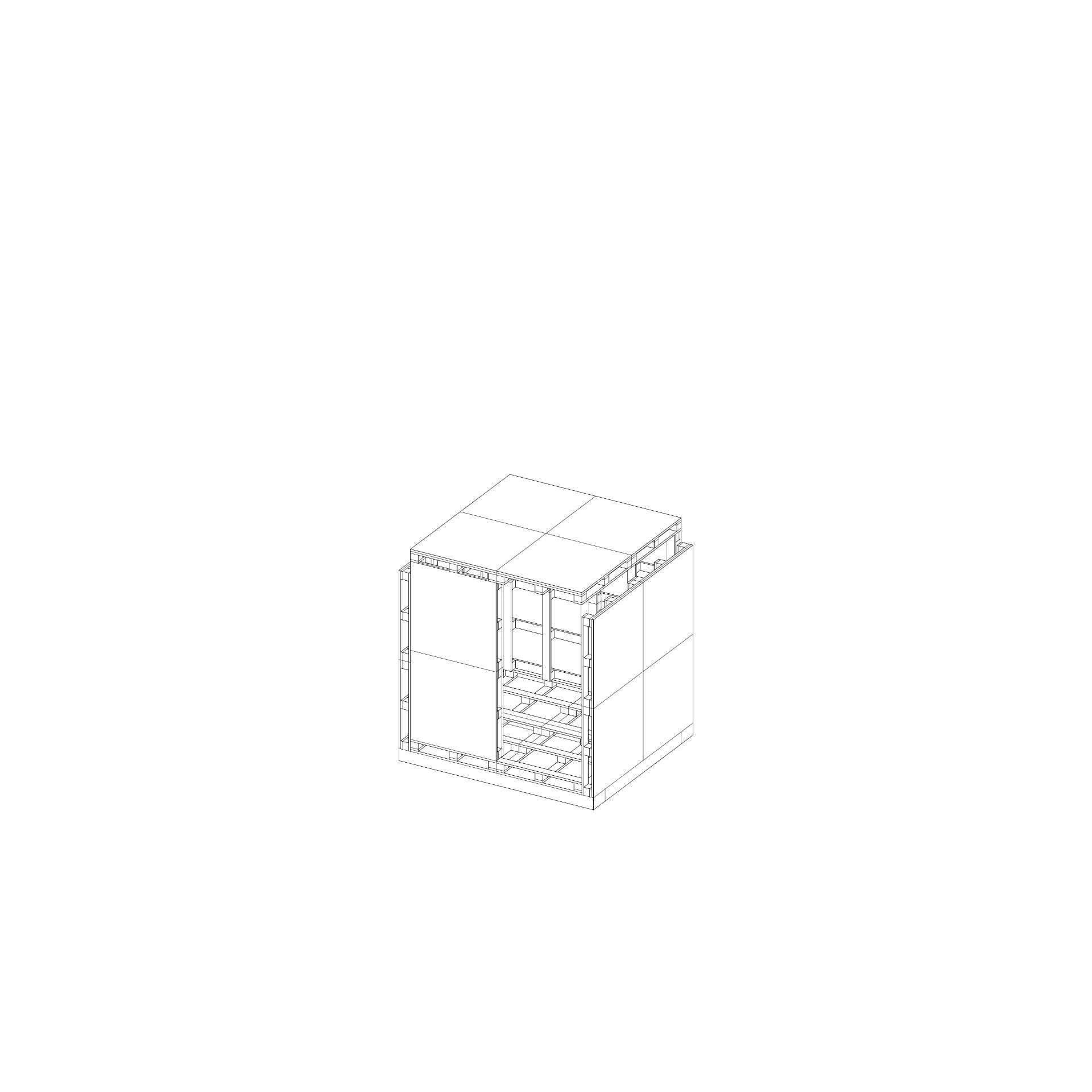
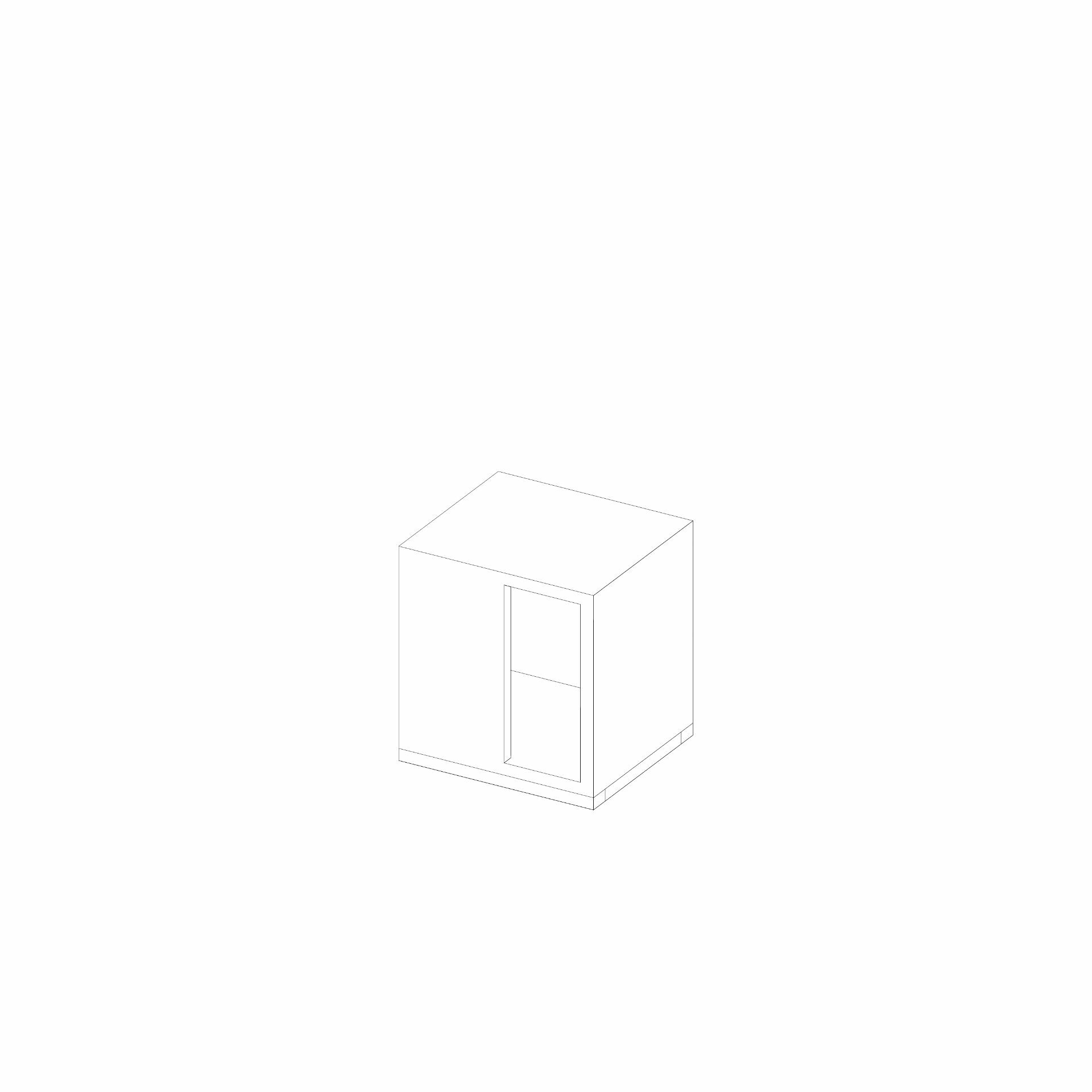
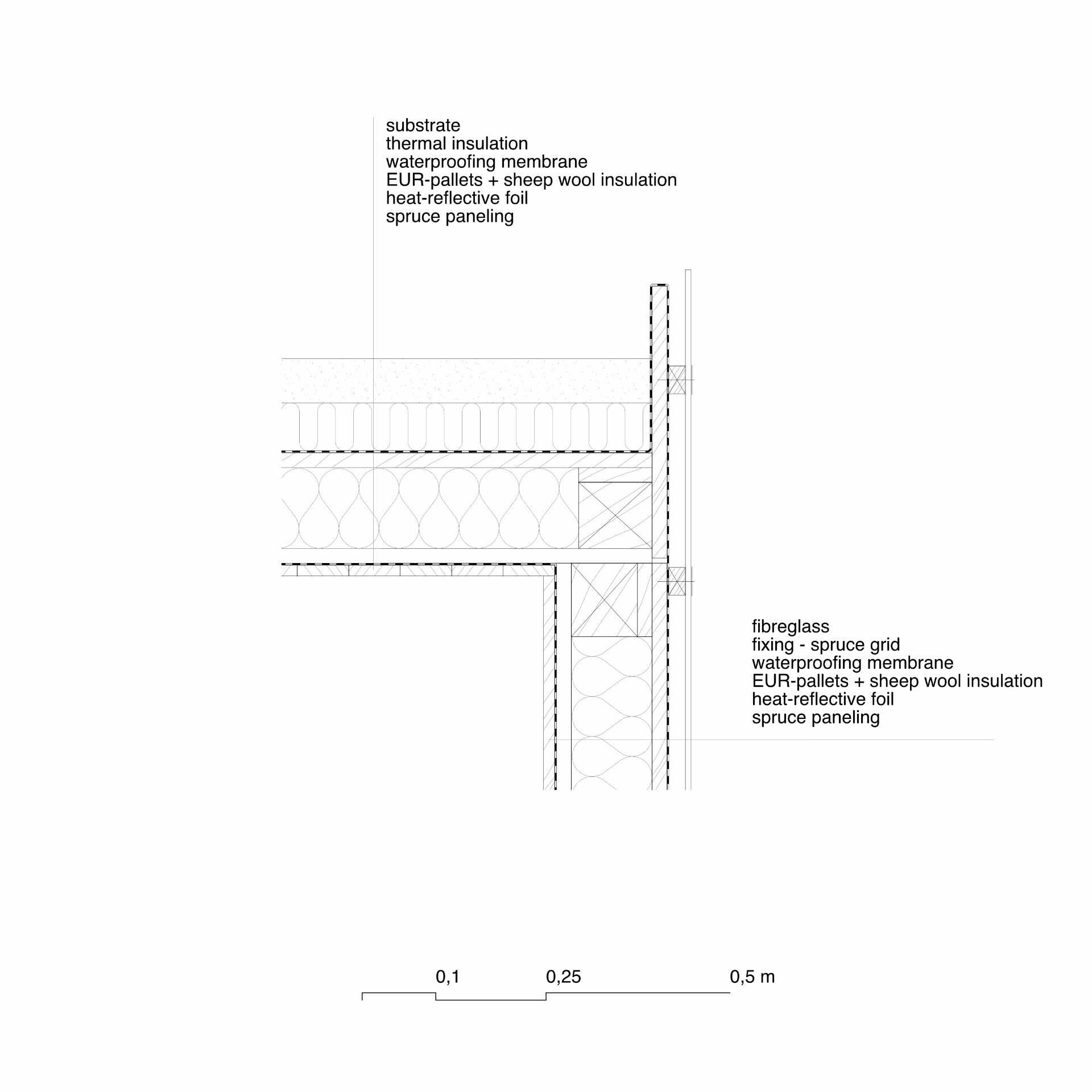
The foundation rests on reused timber sleepers, marked by the cracks and darkened grain left by time and weather—imbuing the base with a subtle sense of history. The load-bearing frame was assembled from one-meter modular pallets, joined with steel brackets and embedded connectors. The floor is insulated with mineral wool and covered in cement-bonded boards, offering basic thermal and fire resistance. The roof, made from repurposed beams and pallets, is gently sloped to ensure proper drainage. Walls and ceilings are lined with sheep wool, allowing the interior to regulate humidity and maintain a comfortable ambient climate.
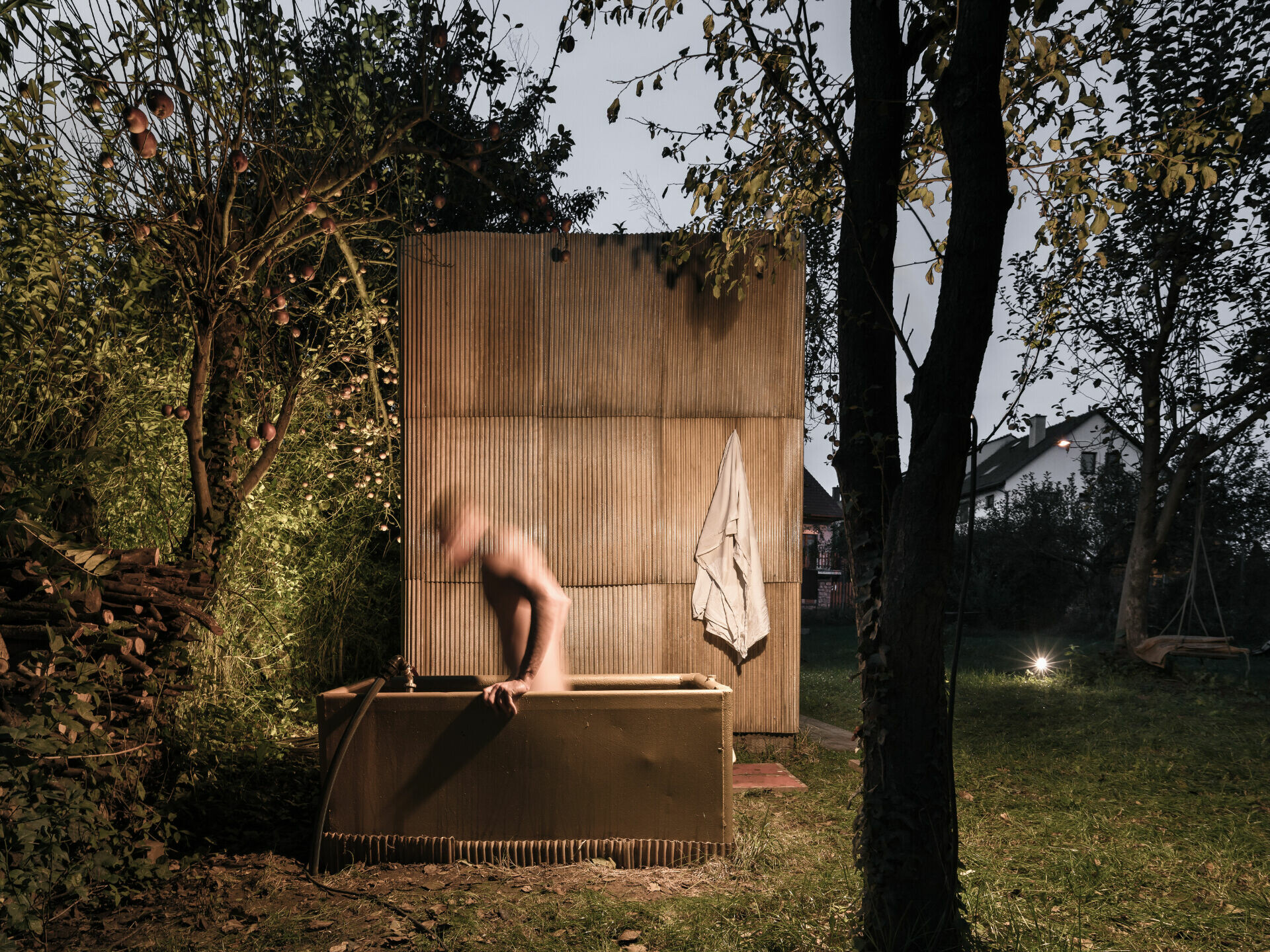
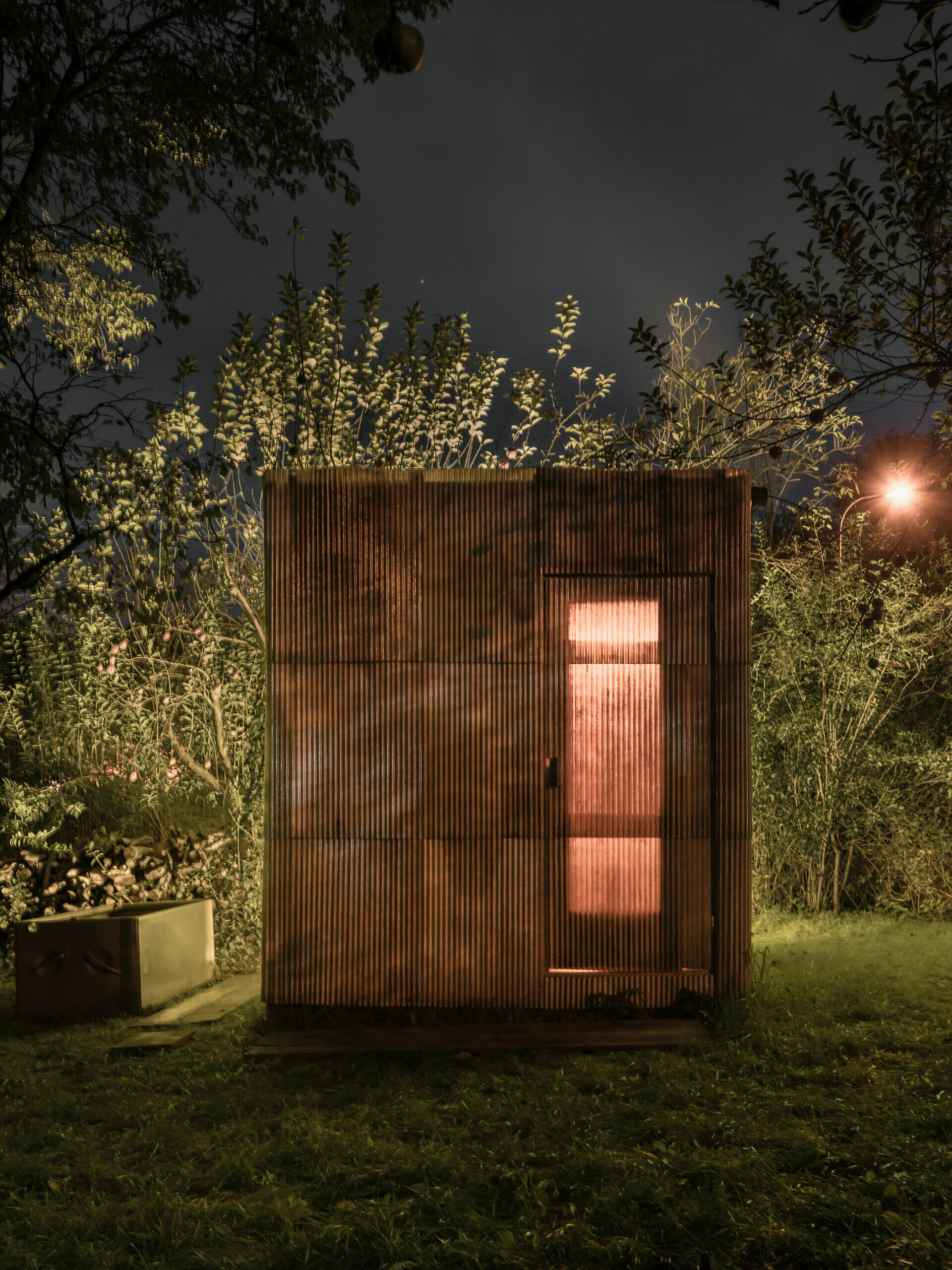
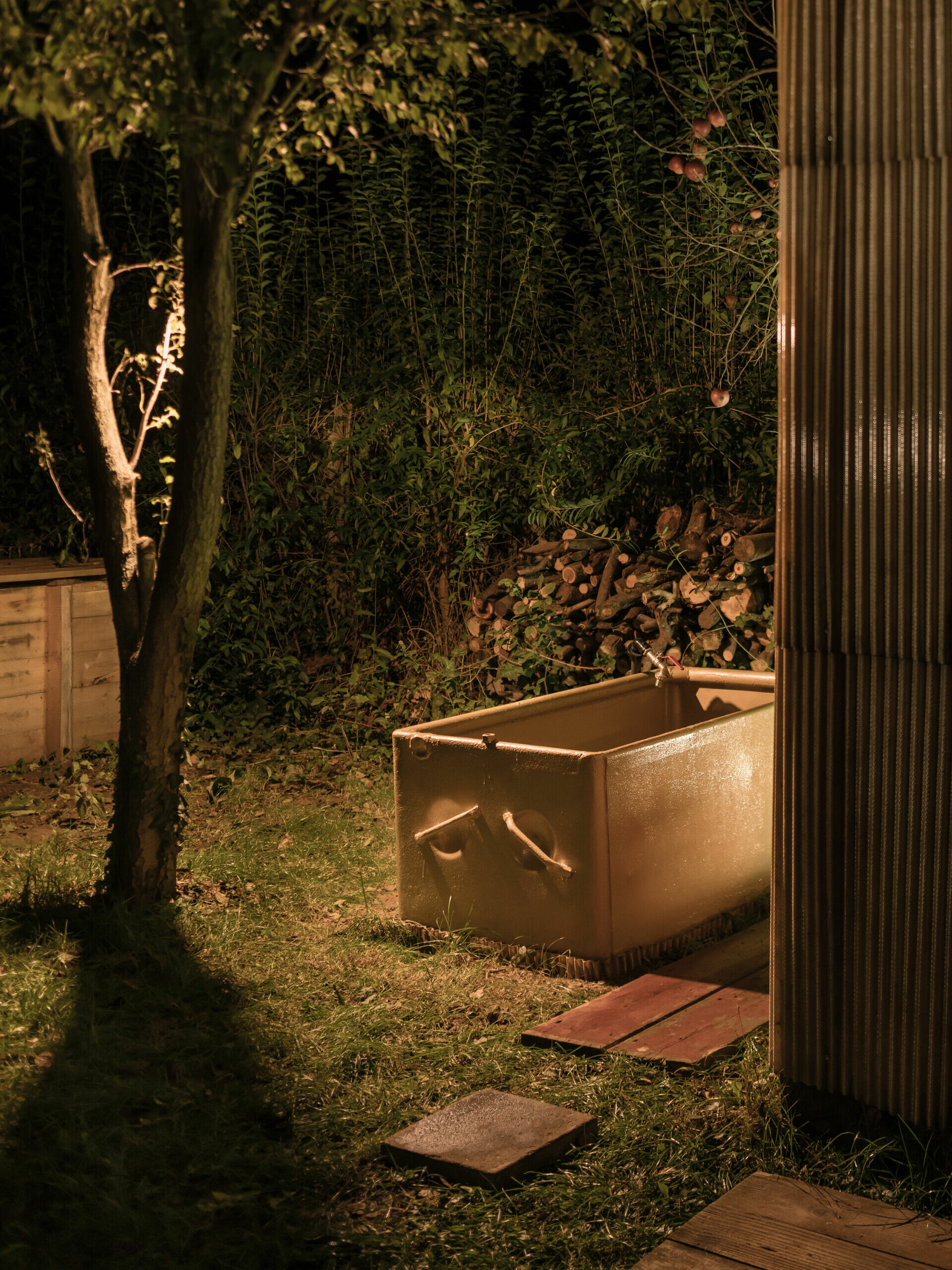
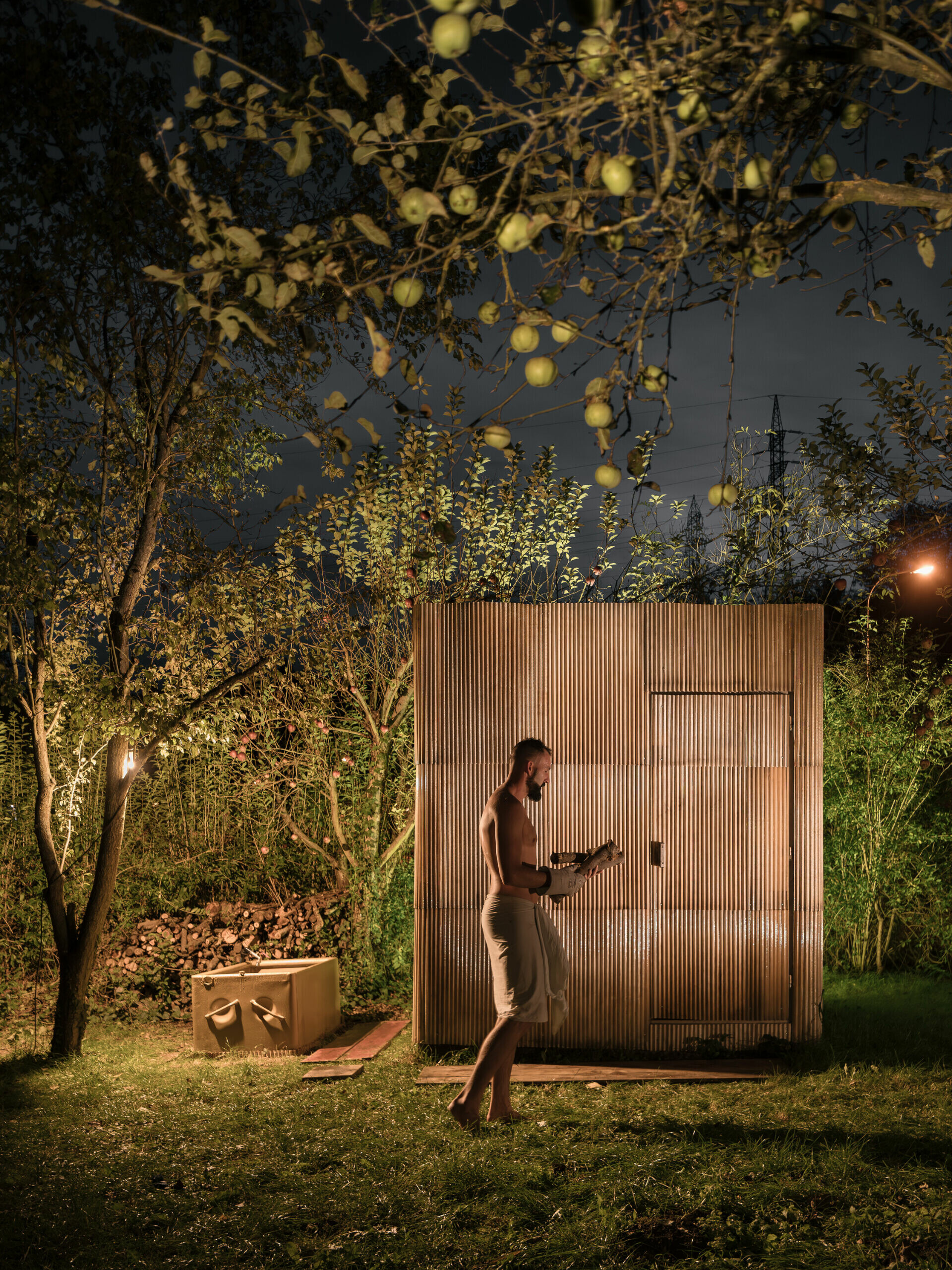
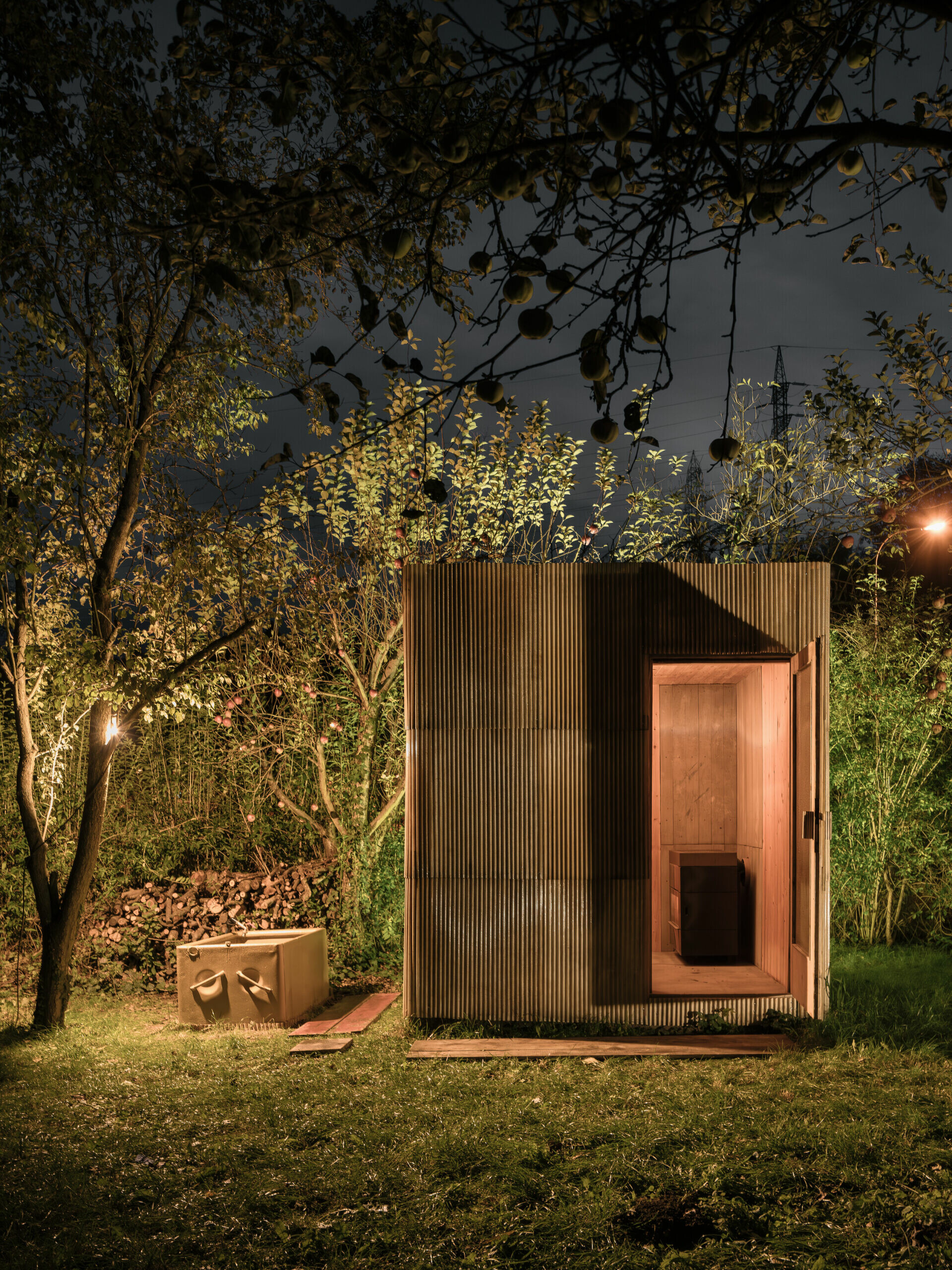
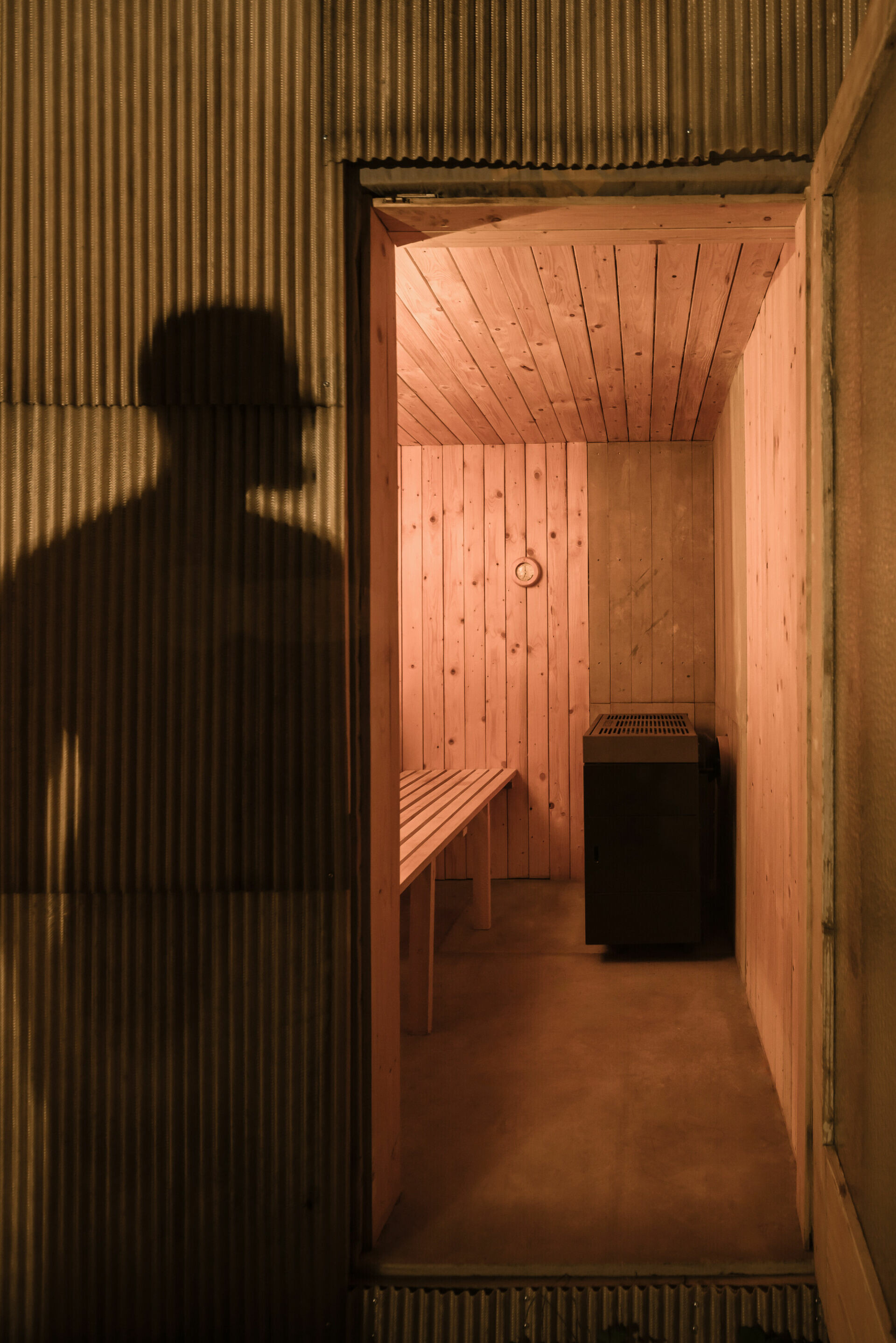
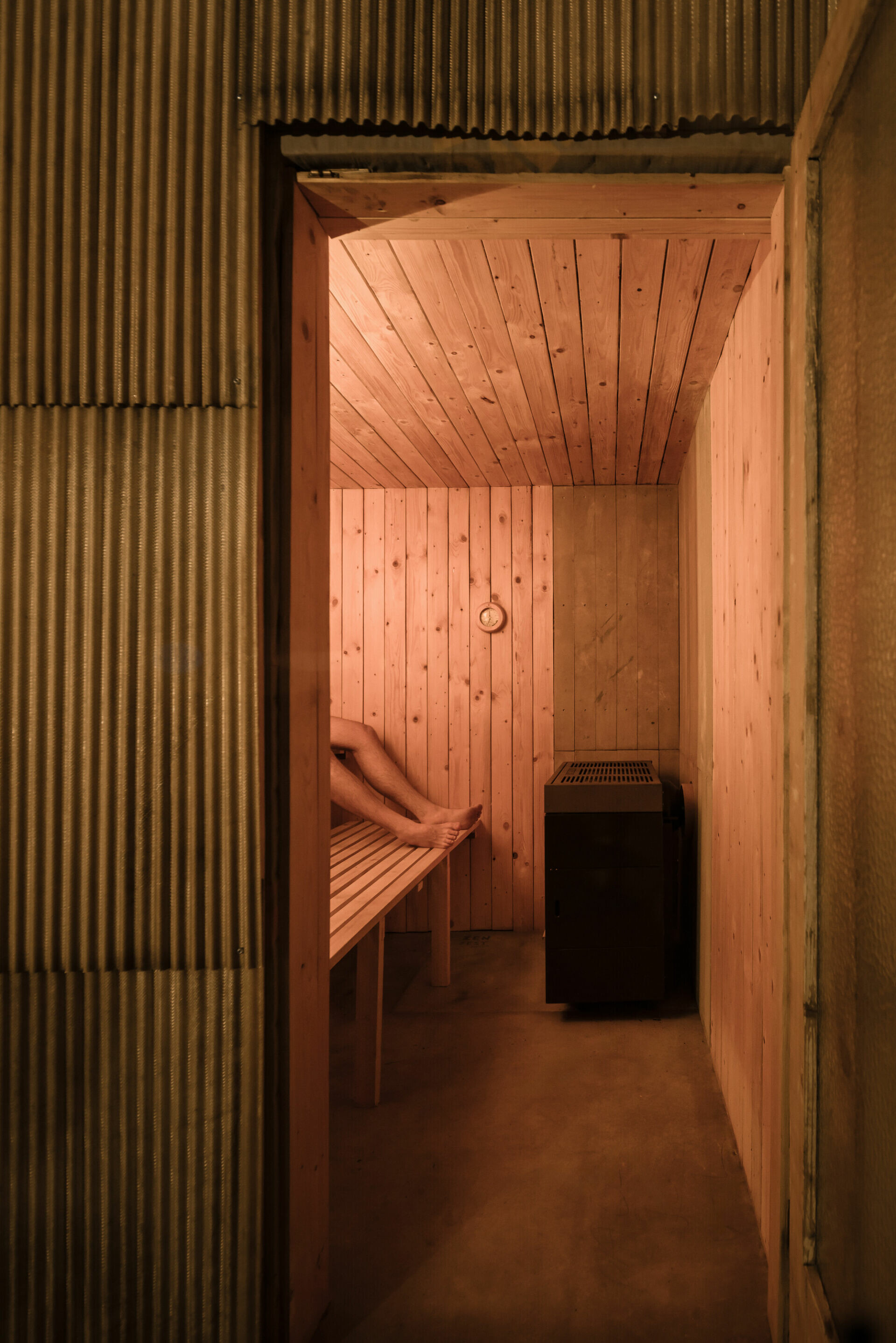
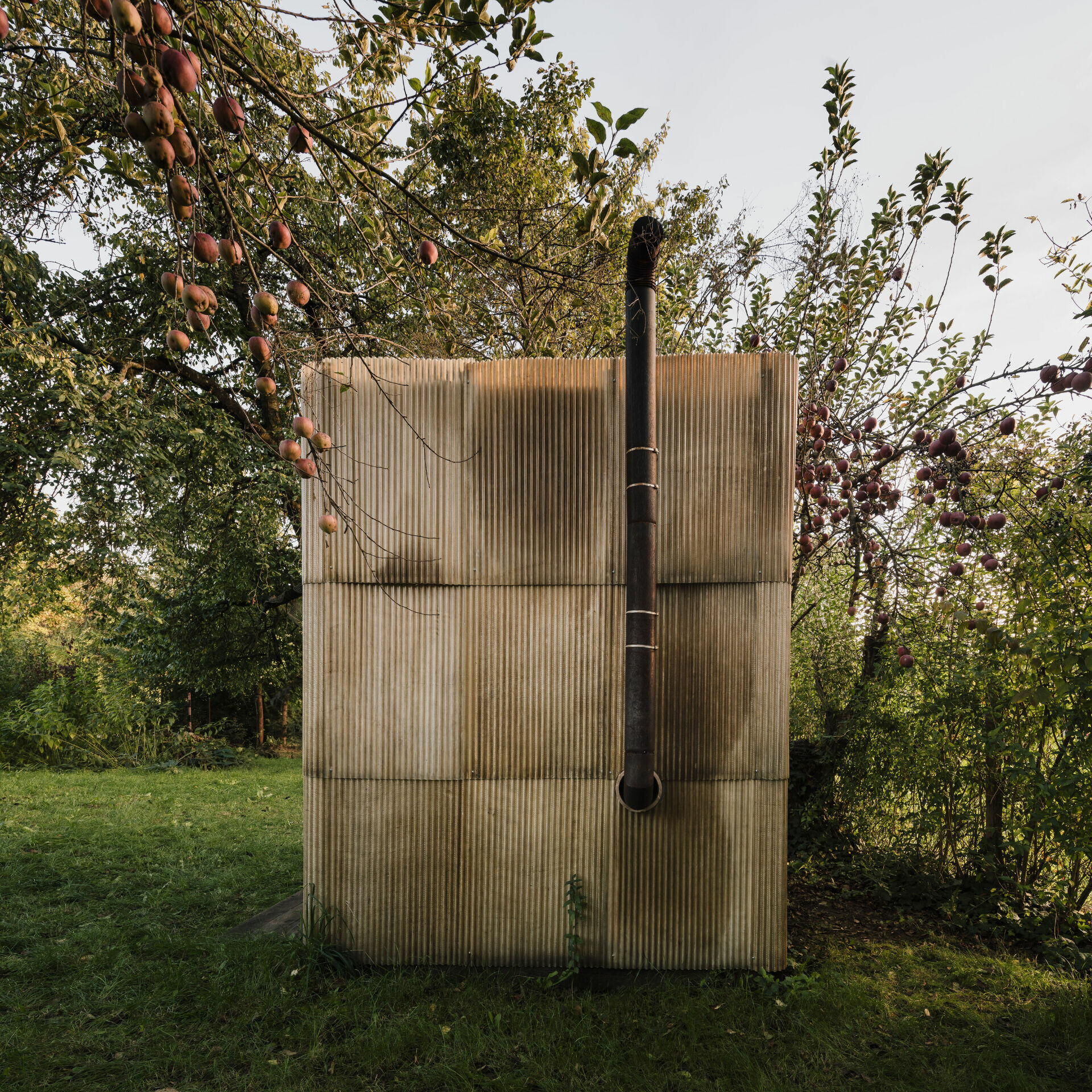
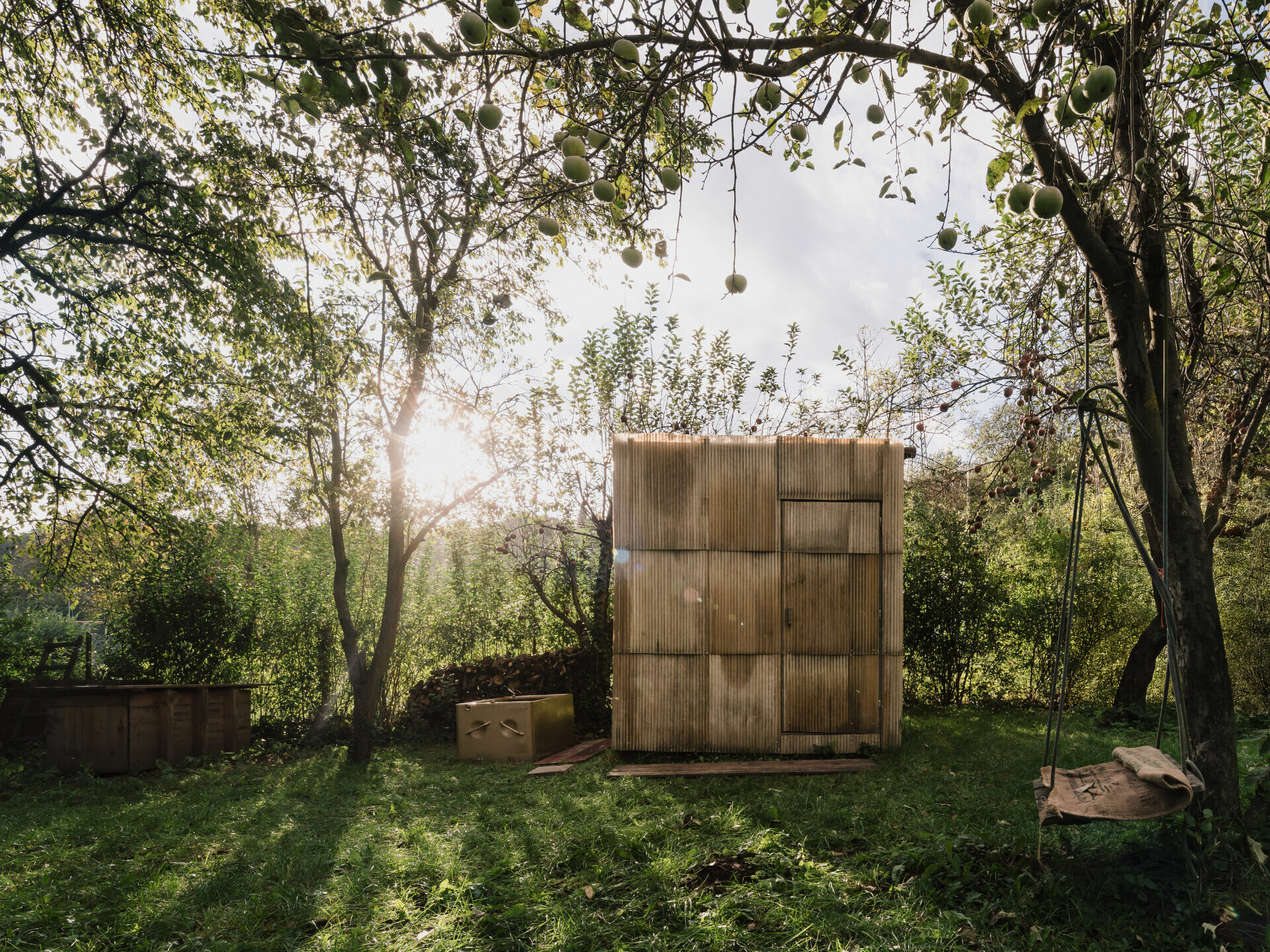
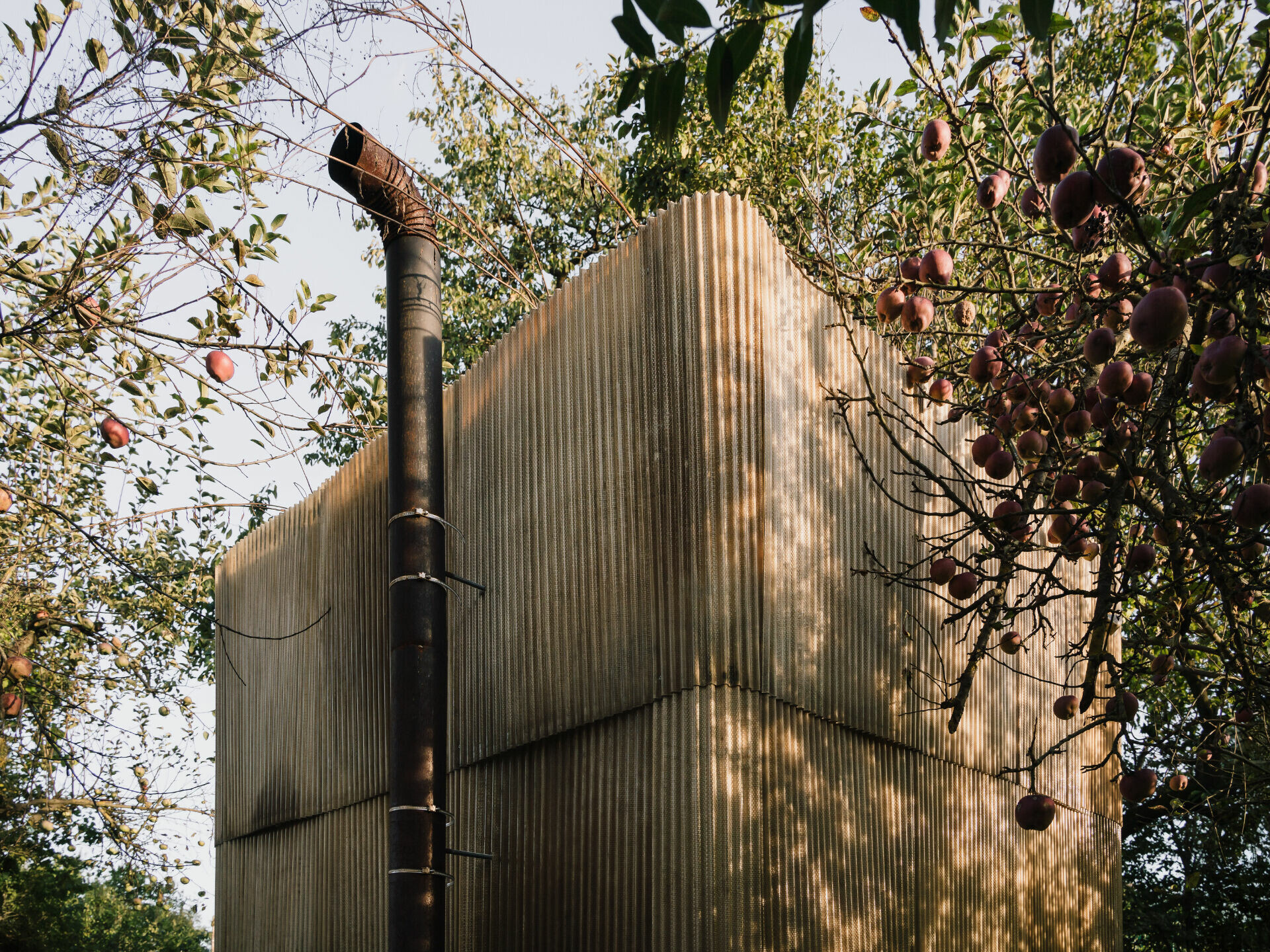
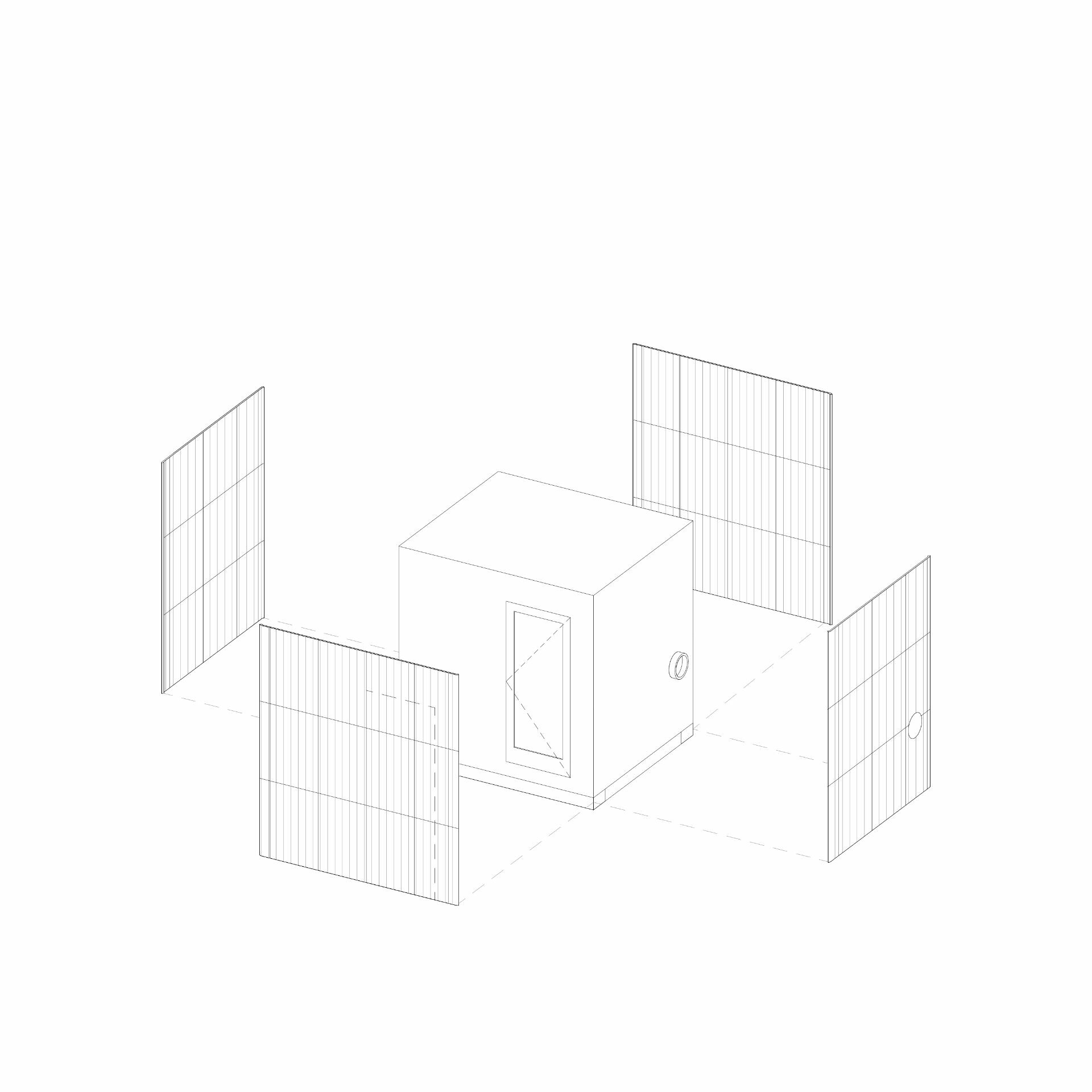
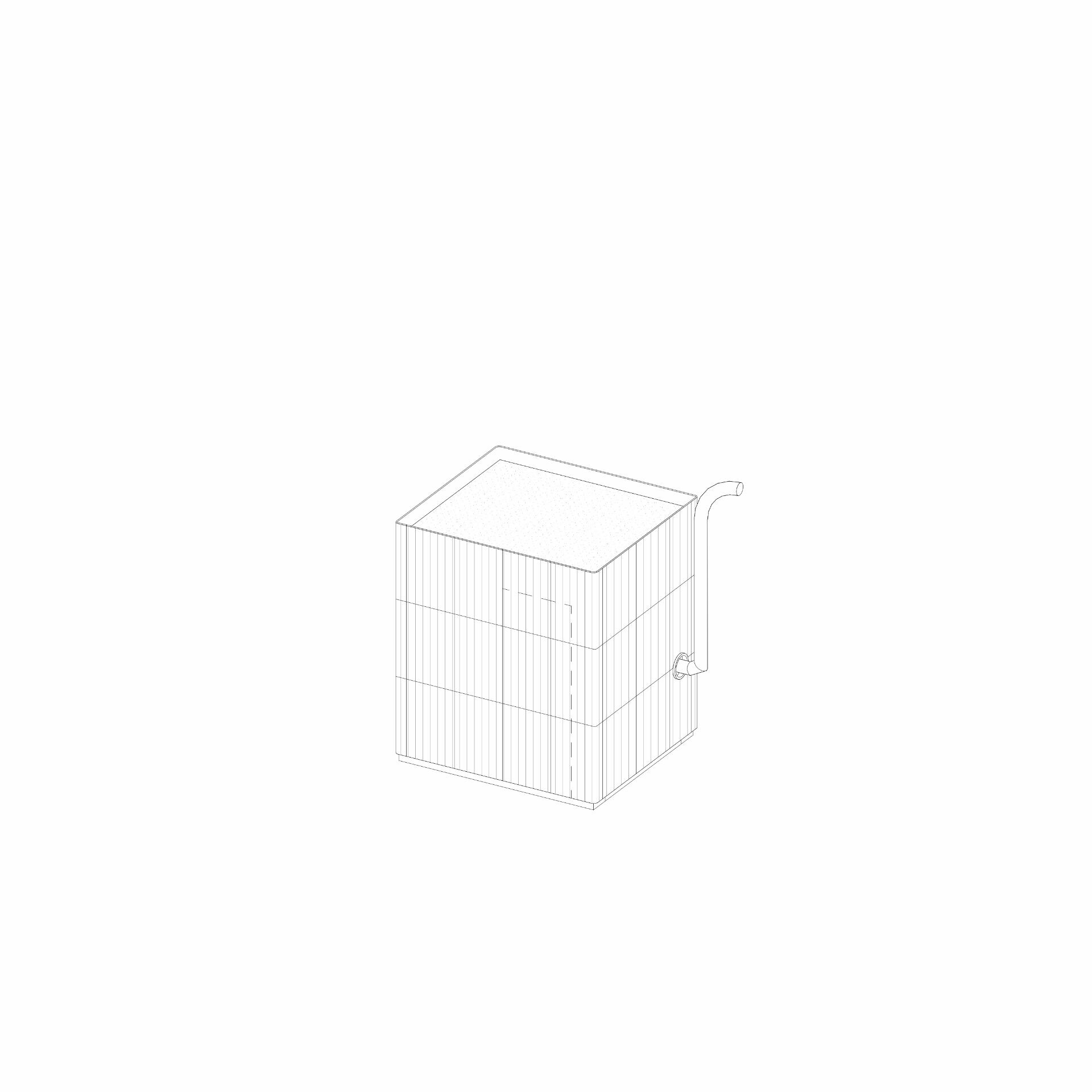
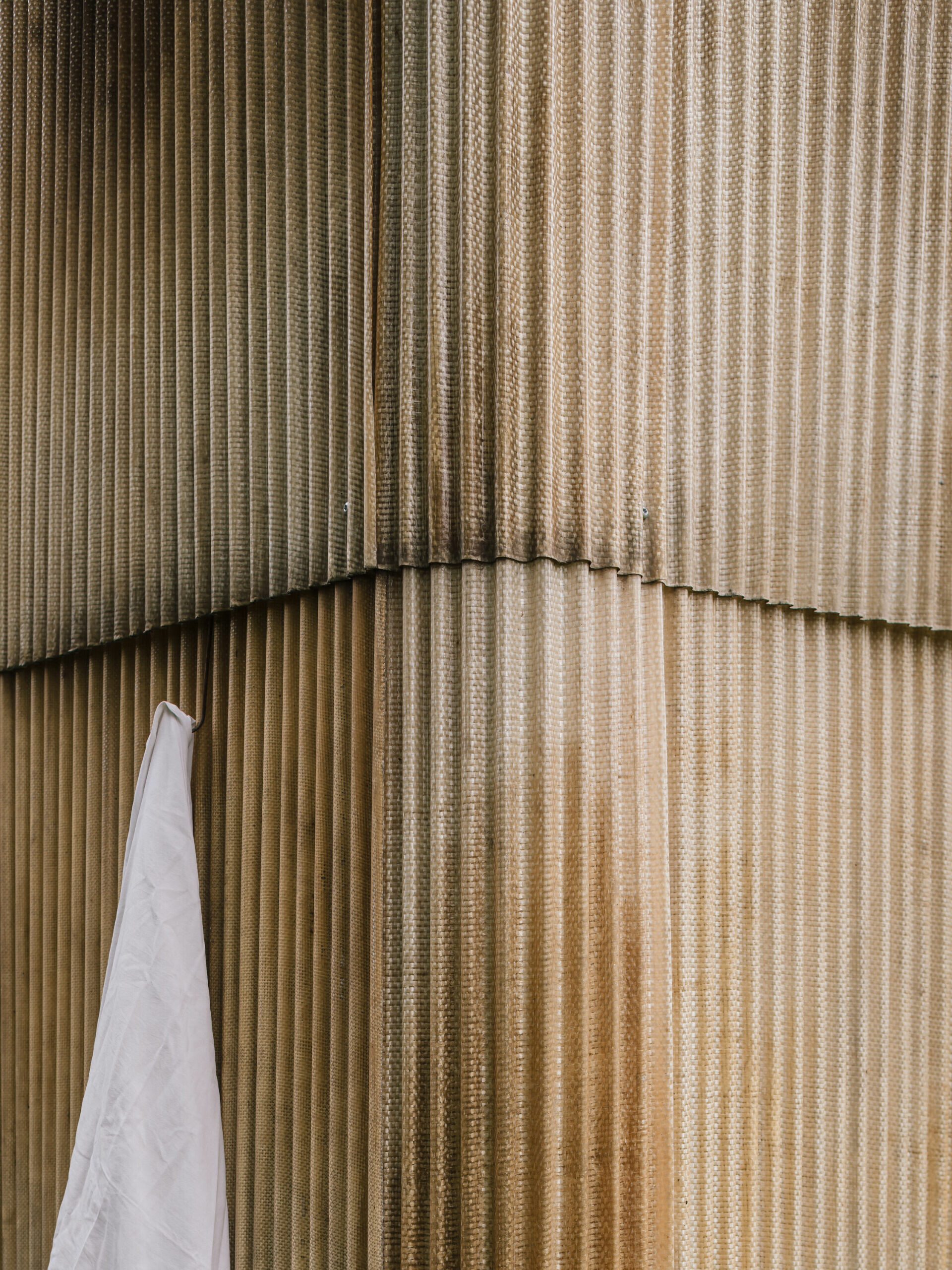
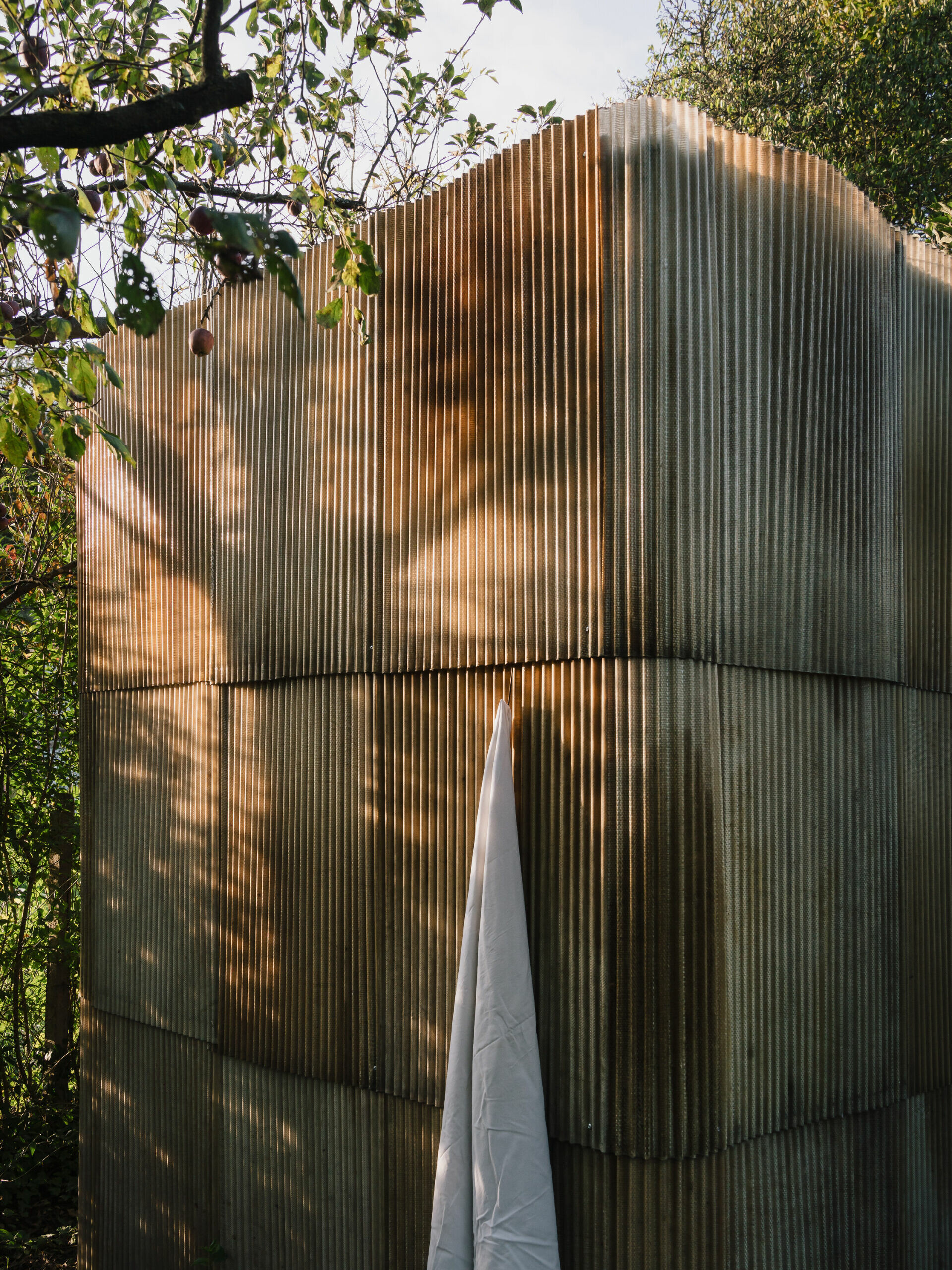
Inside, the structure is wrapped in reflective foil and metal mesh, then finished with timber cladding. Behind the stove, high-performance cement boards provide additional thermal protection. The exterior is weatherproofed with a breathable membrane, while the façade features a grid of reused wooden battens overlaid with secondhand corrugated fiberglass panels. At the corners, the panels are intentionally curved—softening the building’s outline and imparting a subtle, organic character.
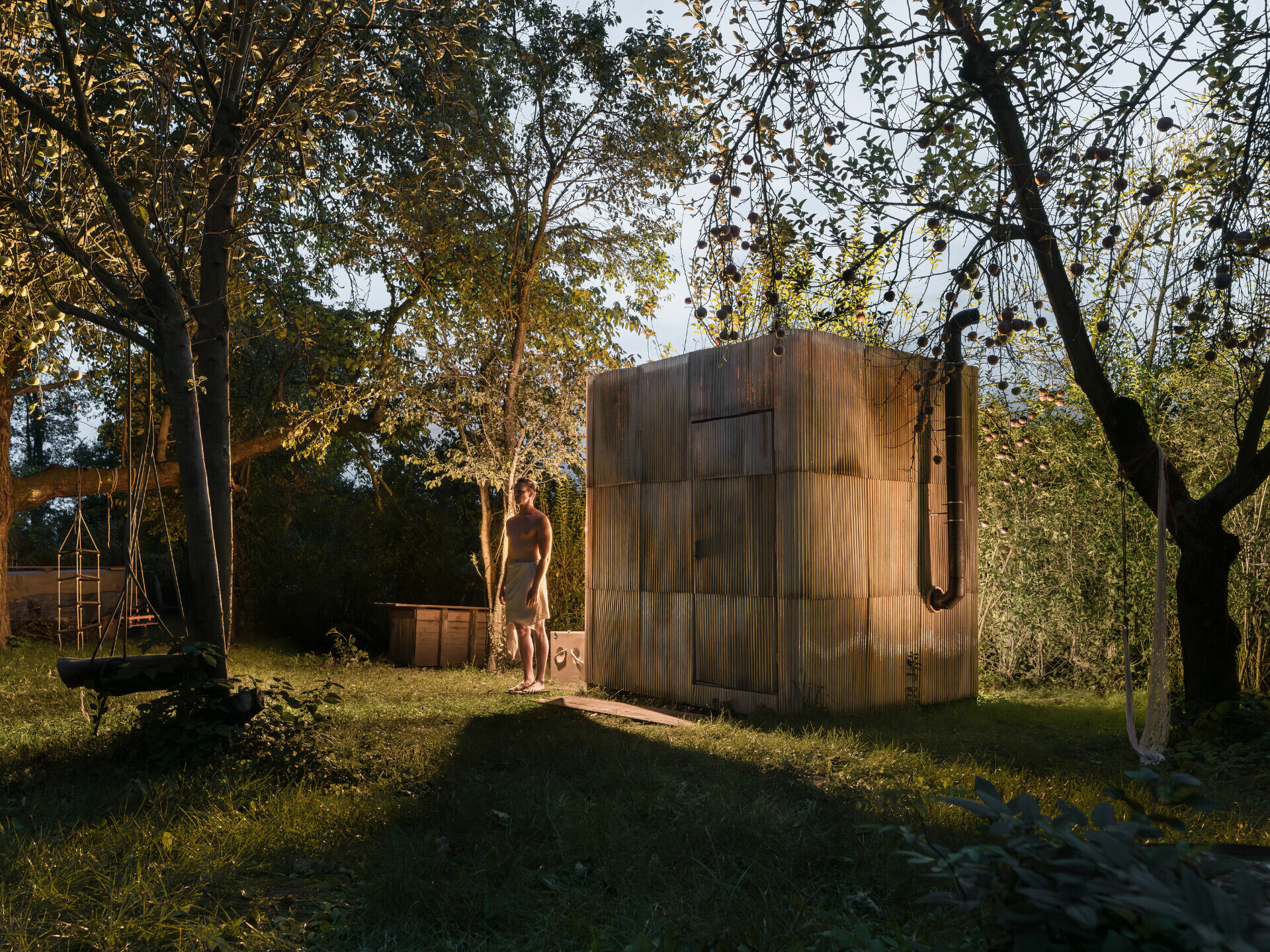
For Dvořák and Bažík, this sauna is more than a space for bathing—it’s a distilled model of how we might live, build, and reuse. It’s a physical embodiment of action over abstraction, of working with one’s hands, time, and local leftovers to create something quietly radical. In an era defined by digital detachment and fast consumption, Upcycled Sauna offers a modest yet deeply human response: warm, grounded, and made to last.
Principal Designers | Tomáš Dvořák, Lenka Bažík
Design Studio | ika.architekti
Location | Brno, Czech Republic
Project Year | 2023
Completion Year | 2024
Built-up Area | 6 m²
Gross Floor Area | 4 m²
Usable Floor Area | 4 m²
Dimensions | 2.3 m × 2.5 m × 2.5 m
Materials | Wood – sleepers, pallets, planks, beams. Insulation – sheep wool, mineral wool. Flooring – cement-bonded particle boards. Façade – fibreglass corrugated panels
Client | Tomáš Dvořák