VILLA CAVA
Tulum, the dreamlike escape nestled in Mexico’s Quintana Roo, offers more than just tropical reverie—it is where Villa Cava quietly emerges from the dense Mayan jungle, enveloped by wilderness and lush vegetation. Conceived by Espacio 18 Arquitectura in collaboration with developers Adrian Salamunovic and Andrea, the project draws deeply from the region’s ecological richness, ancient Mayan heritage, and the natural formations of local cenotes. Rather than imposing itself on the landscape, the architecture takes a humble stance—its massing sculpted with restraint, evoking the raw physicality of Brutalist forms. Here, architecture acts not as a monument, but as an extension of the land, inviting guests into a space of elemental return and ecological harmony.
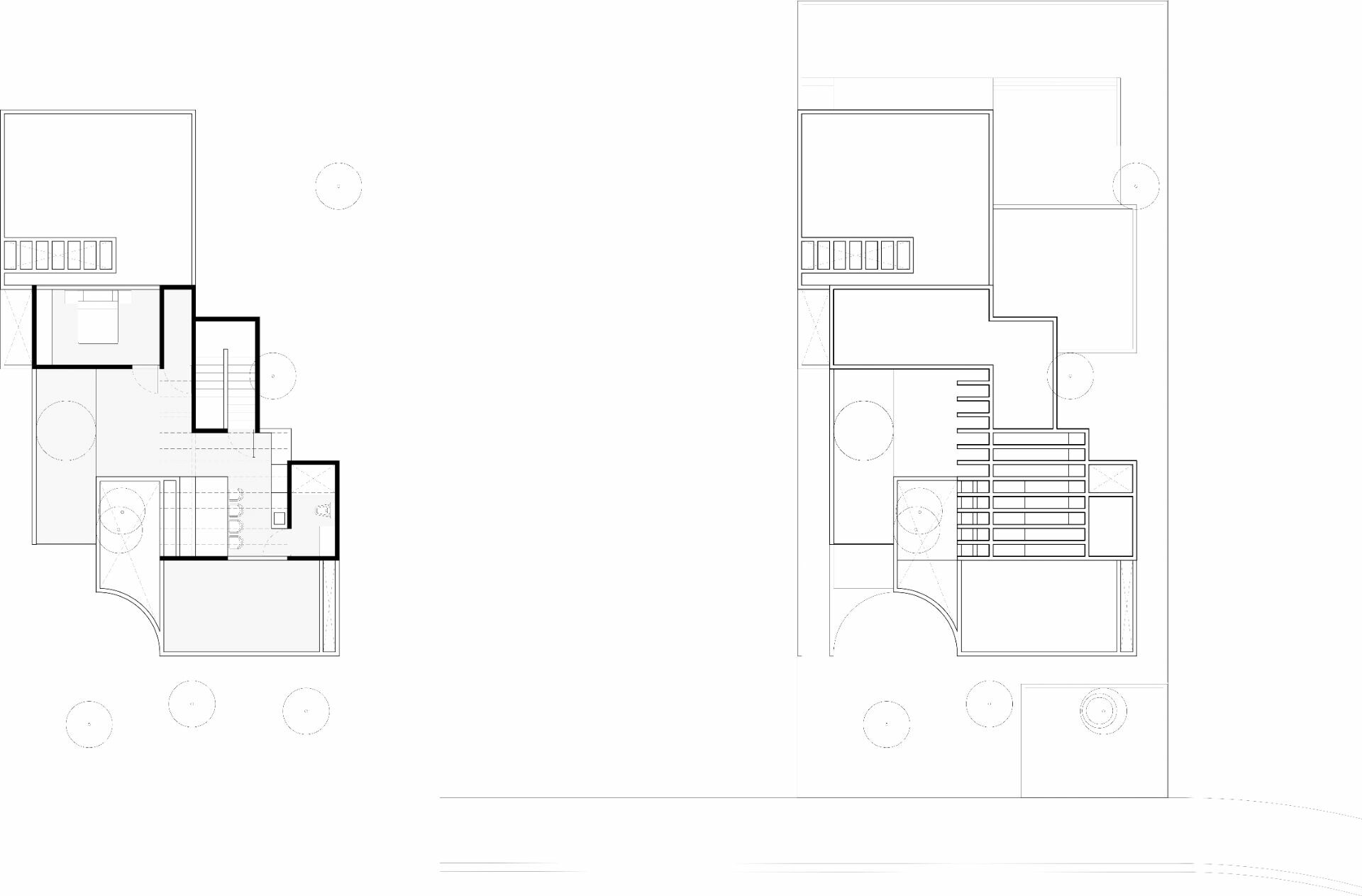
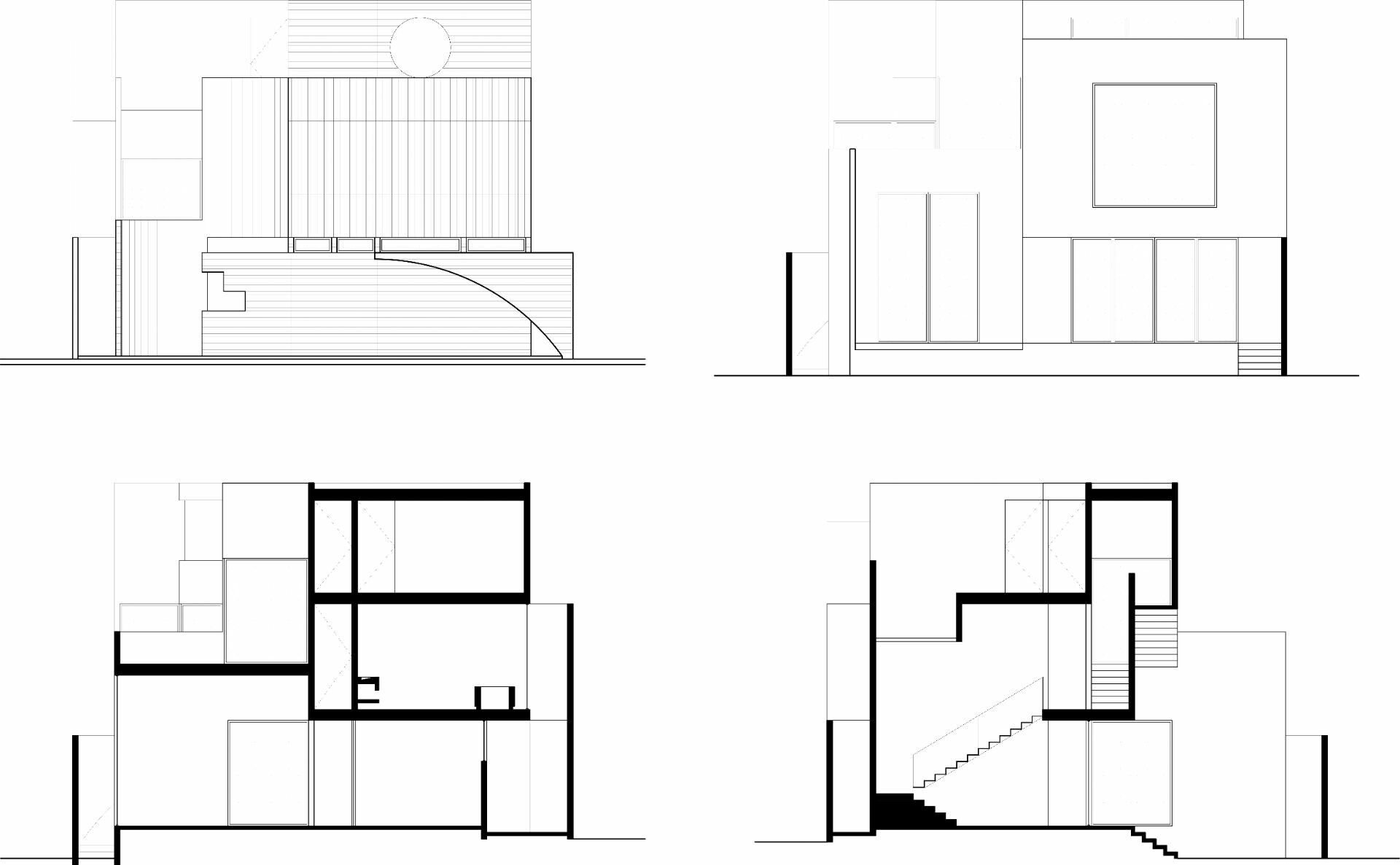
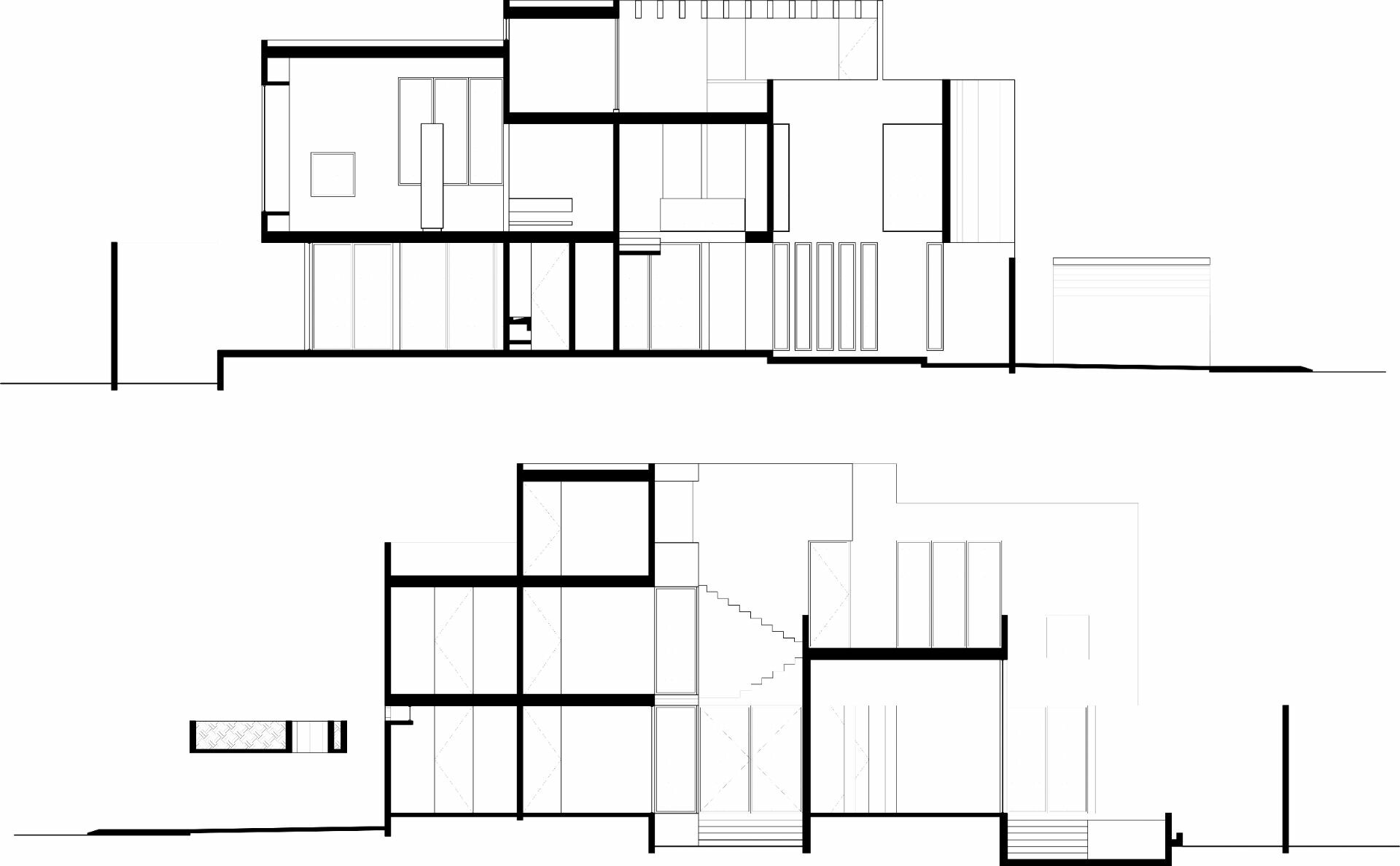
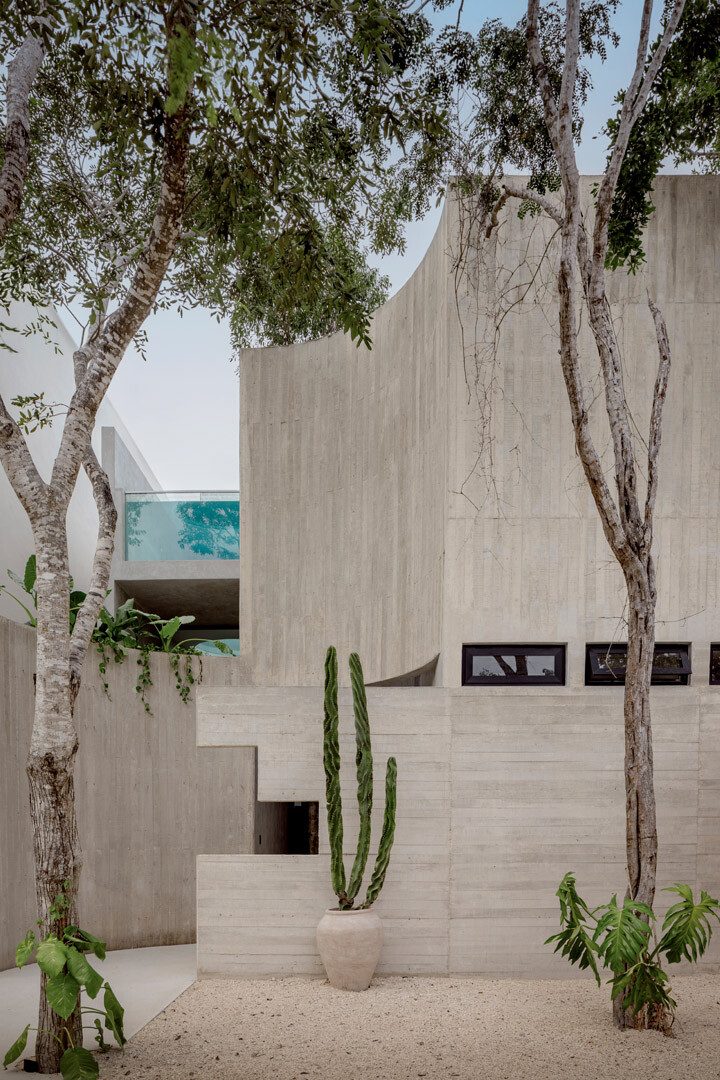
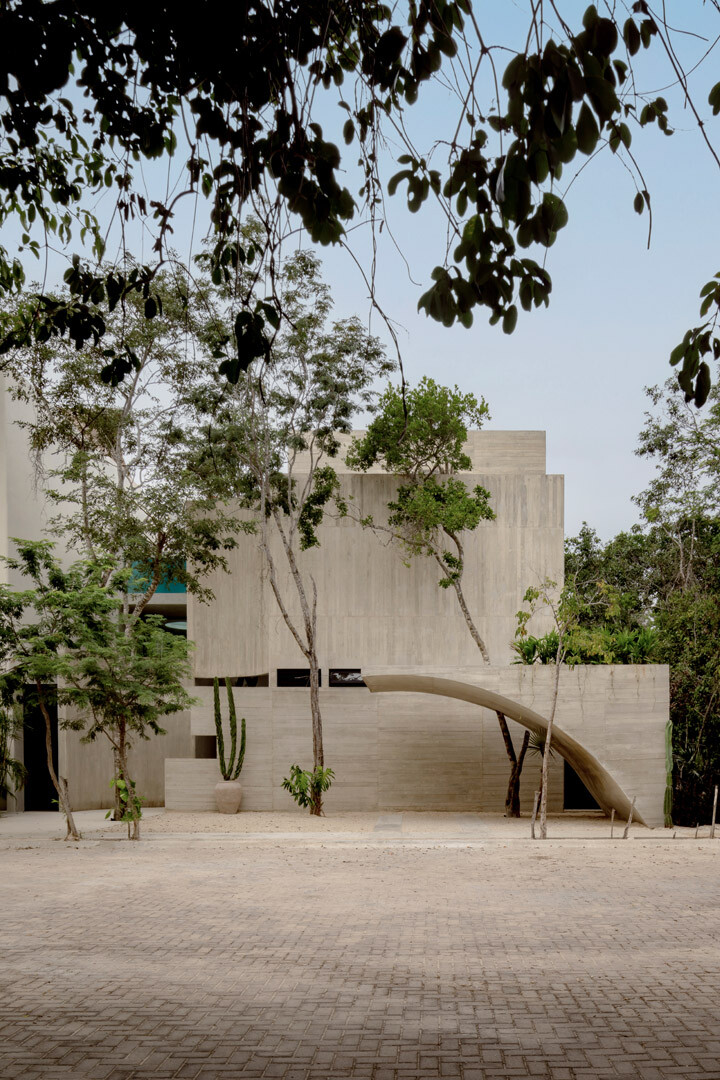
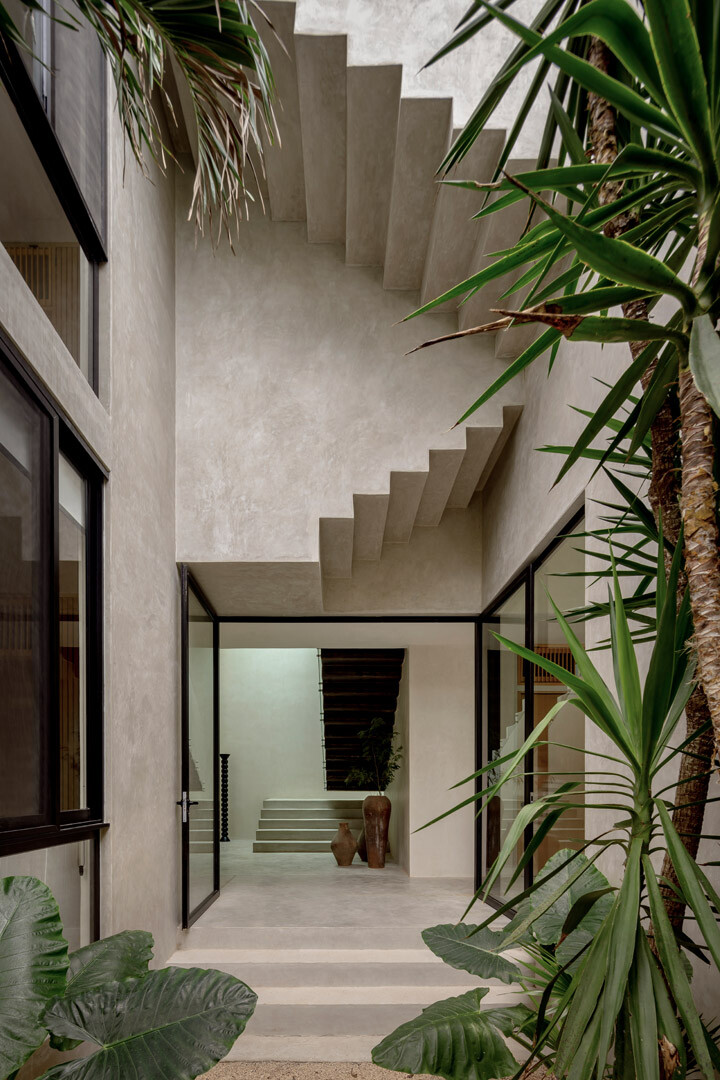
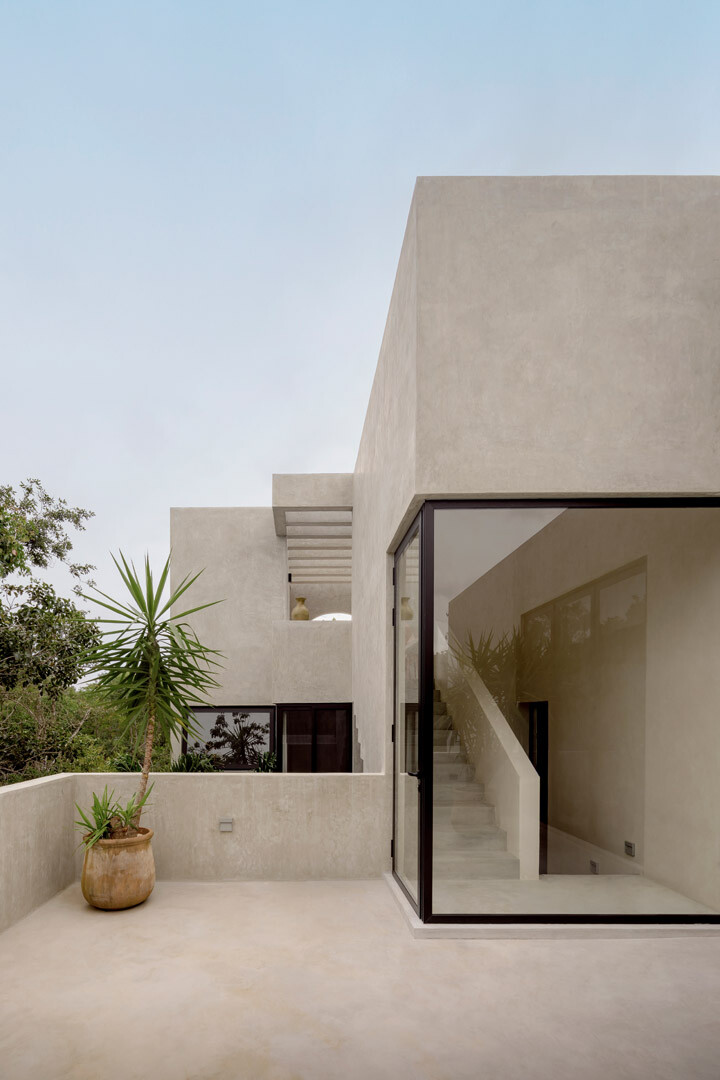
Designed as an immersive retreat, Villa Cava redefines the lodging experience as a place of rest, renewal, and sensory discovery. From the outset, the design team prioritized emotional and physical resonance, crafting a habitat where every spatial move is intentional. Local regulations and the site’s topography were carefully integrated into the planning, while native jungle vegetation was preserved to ensure privacy and symbiosis between built form and natural environment. The structure is clad in board-formed exposed concrete, its surfaces bearing the unrefined grain of timber formwork—an honest material expression that responds to the region’s humid, wild terrain.
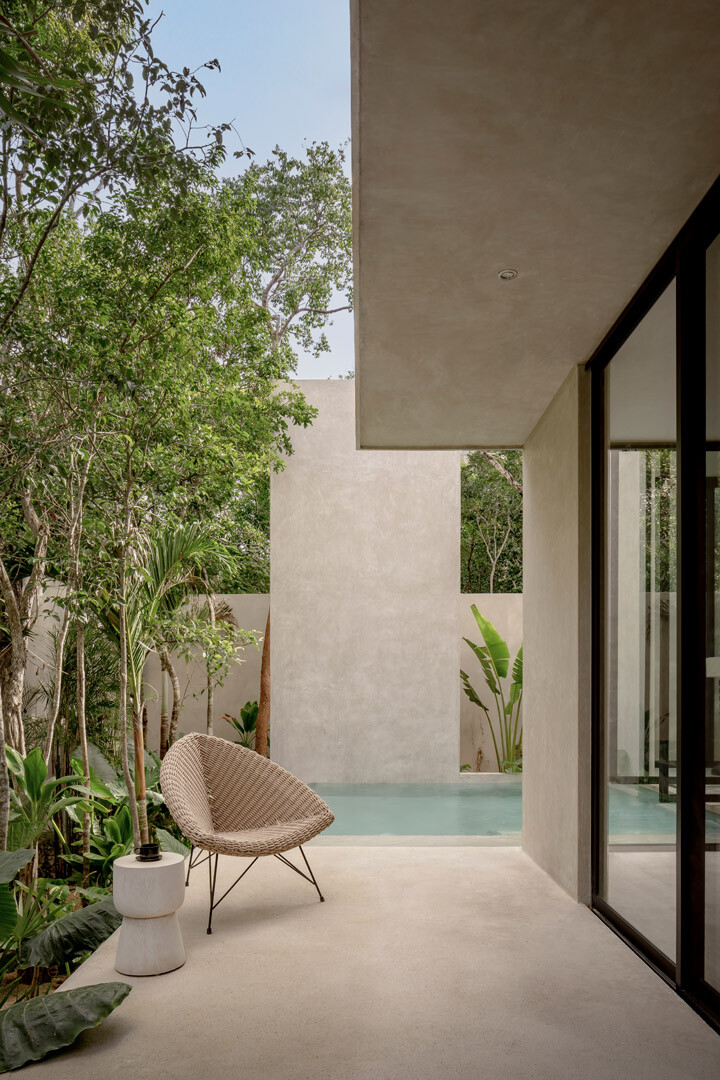
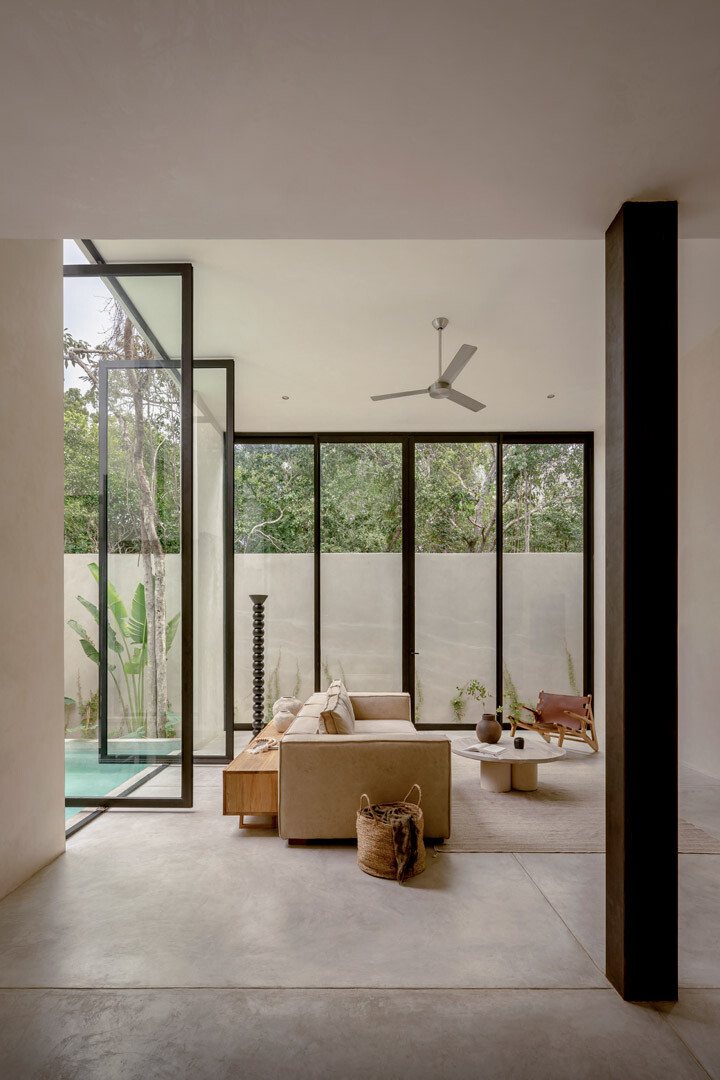
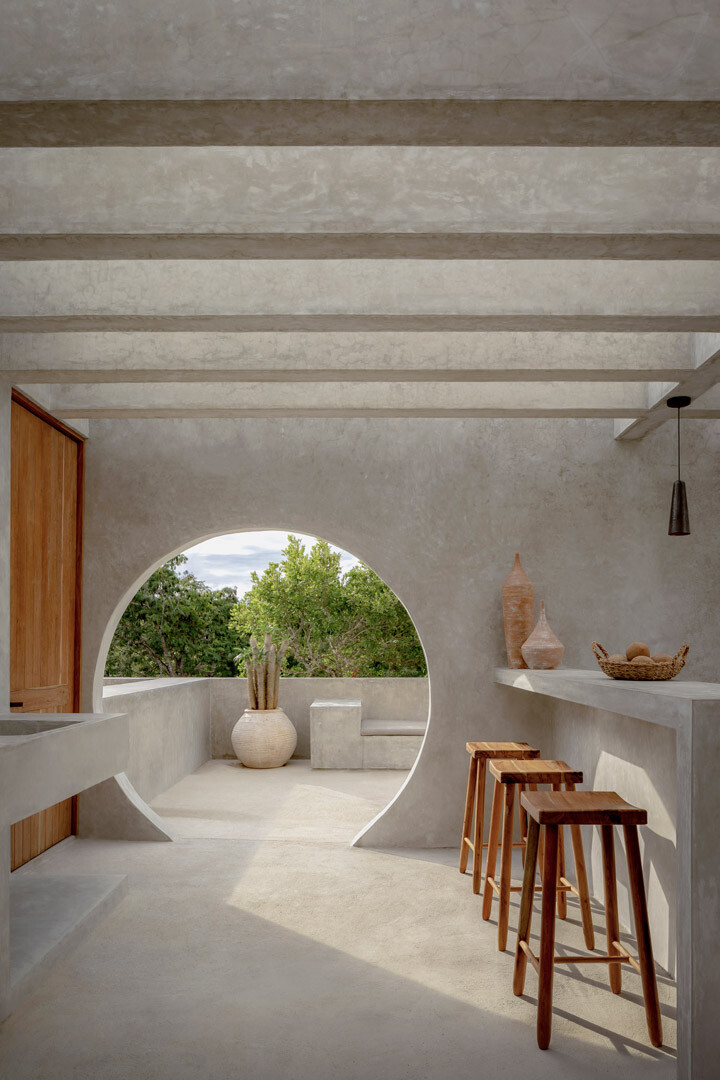
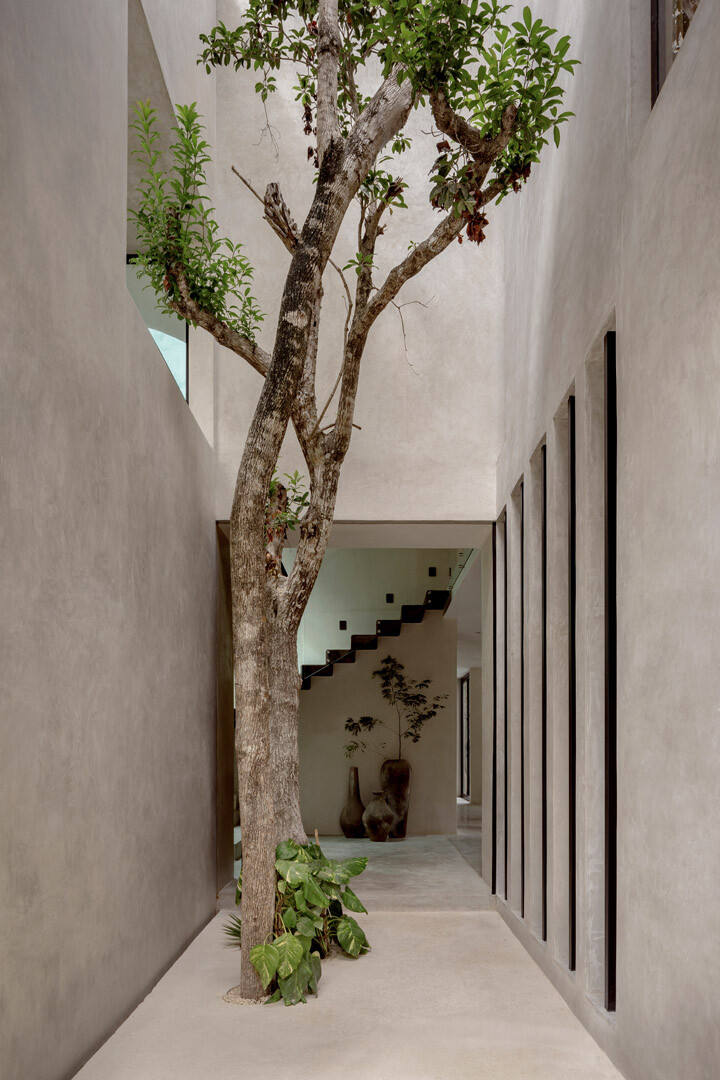
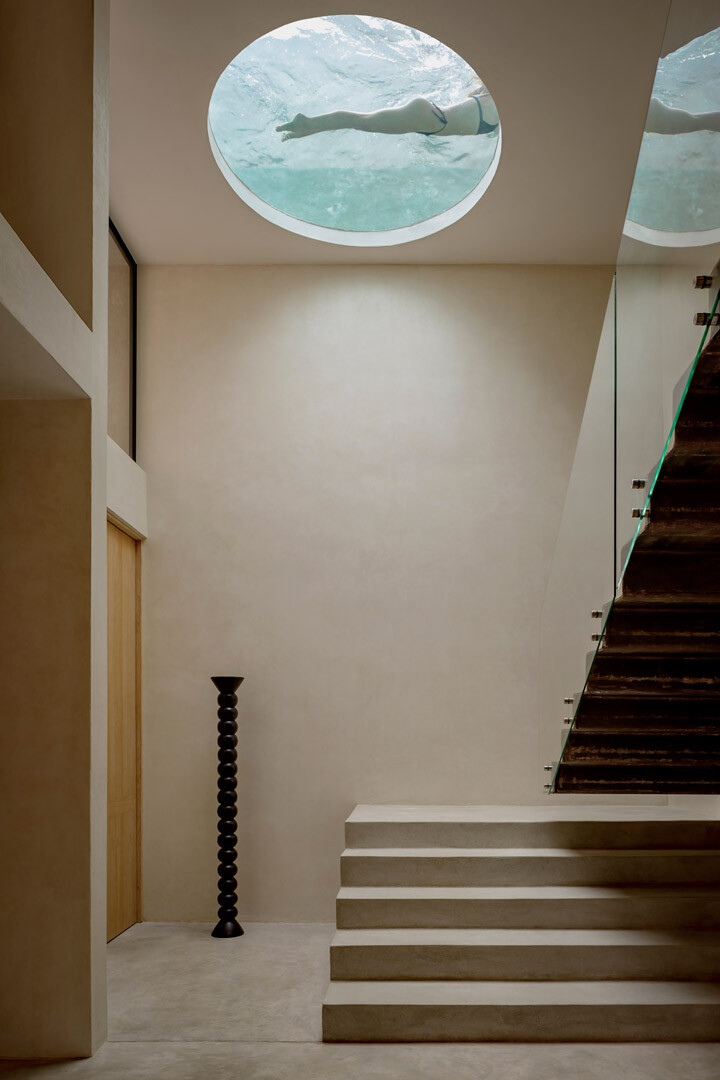
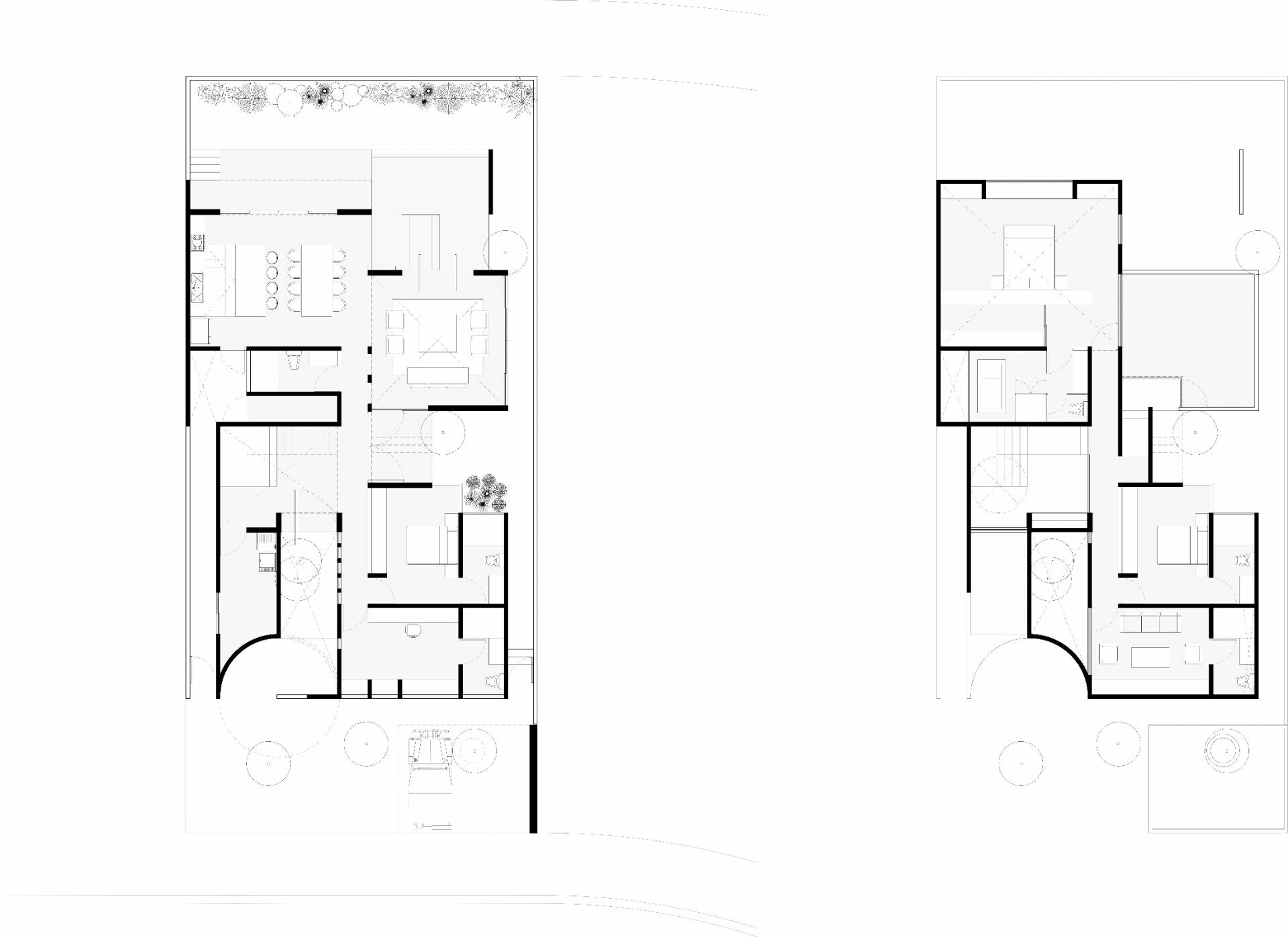
Entry to the house is marked by a soft arc—an elongated, portal-like threshold that curves around two preserved trees. It suggests a transition, inviting guests to slow their pace, as if descending into a cave. Light shifts gradually, enriching the senses as one moves deeper within. Drawing upon the typology of cenotes, the interior subtly embeds varying spatial volumes and natural elements, articulated through a glass-bottom pool that channels daylight into the communal areas from above. Here, luxury emerges not from excess, but from the unmediated presence of water, light, and shadow—reminding guests of time’s quiet flow and reconnecting them with the land.
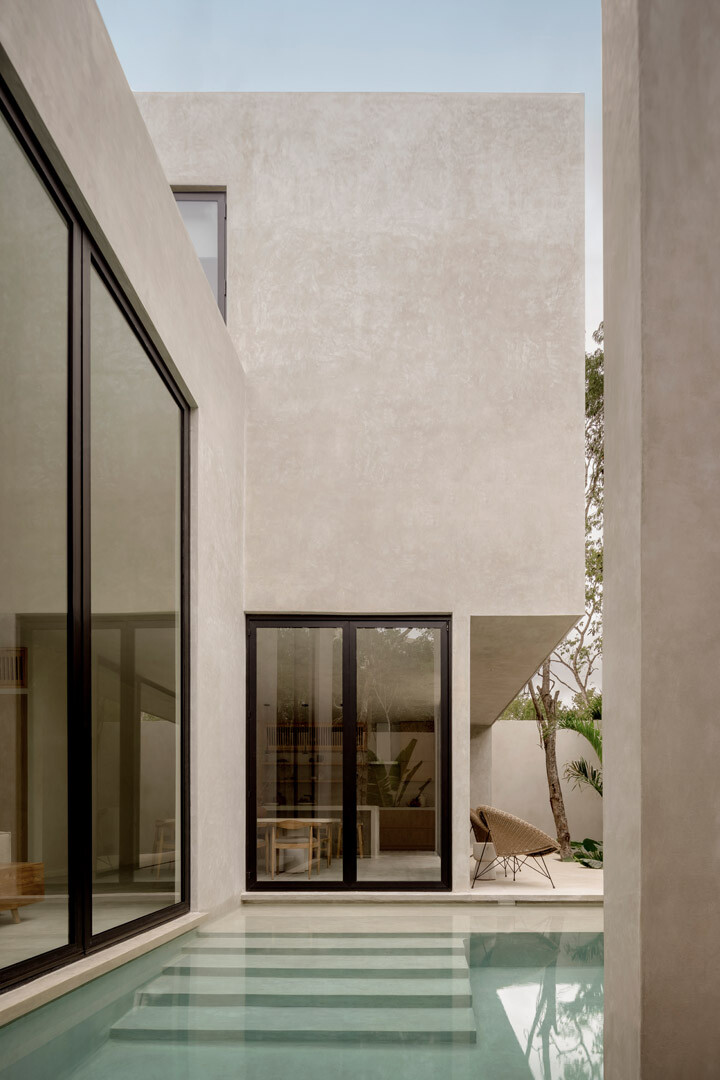
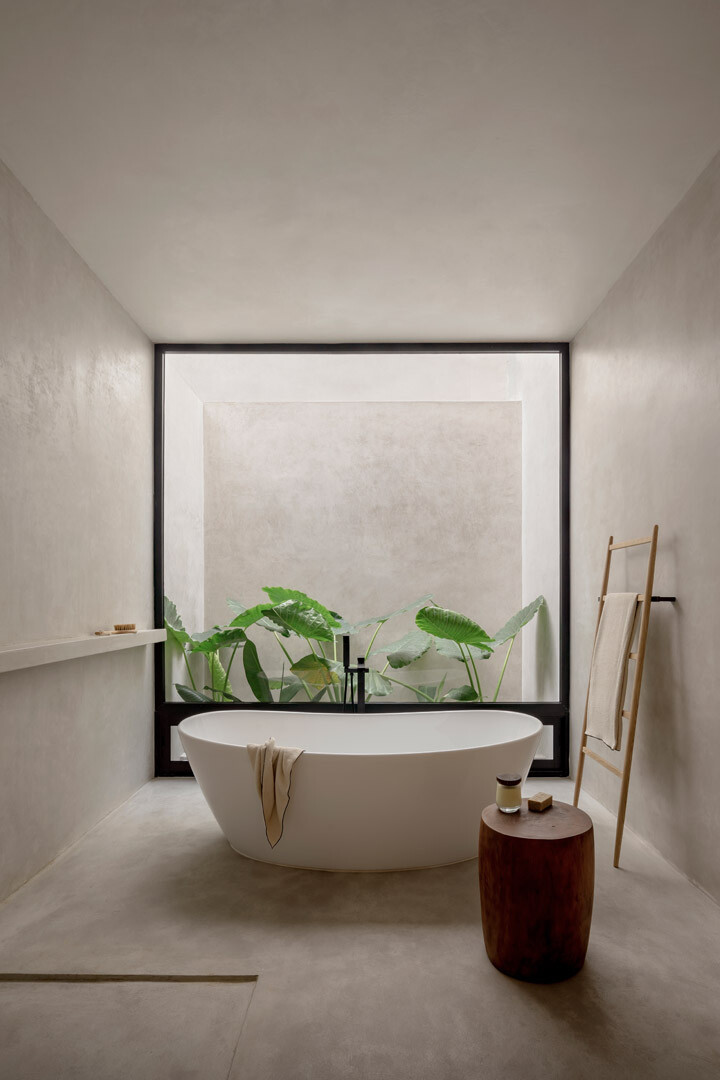
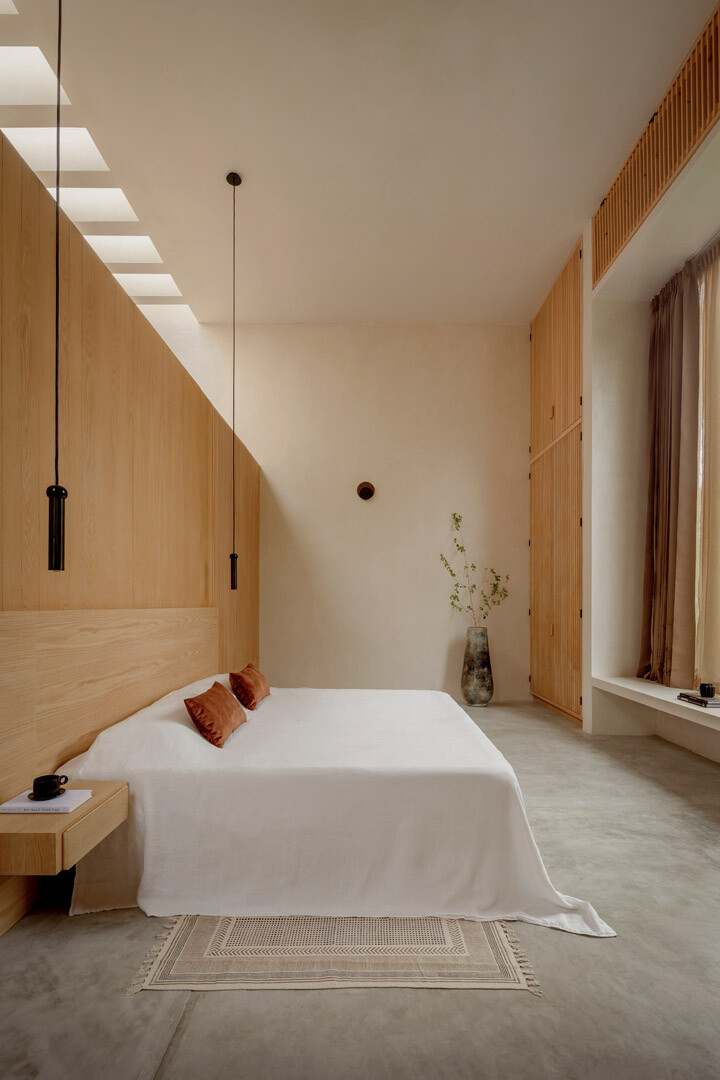
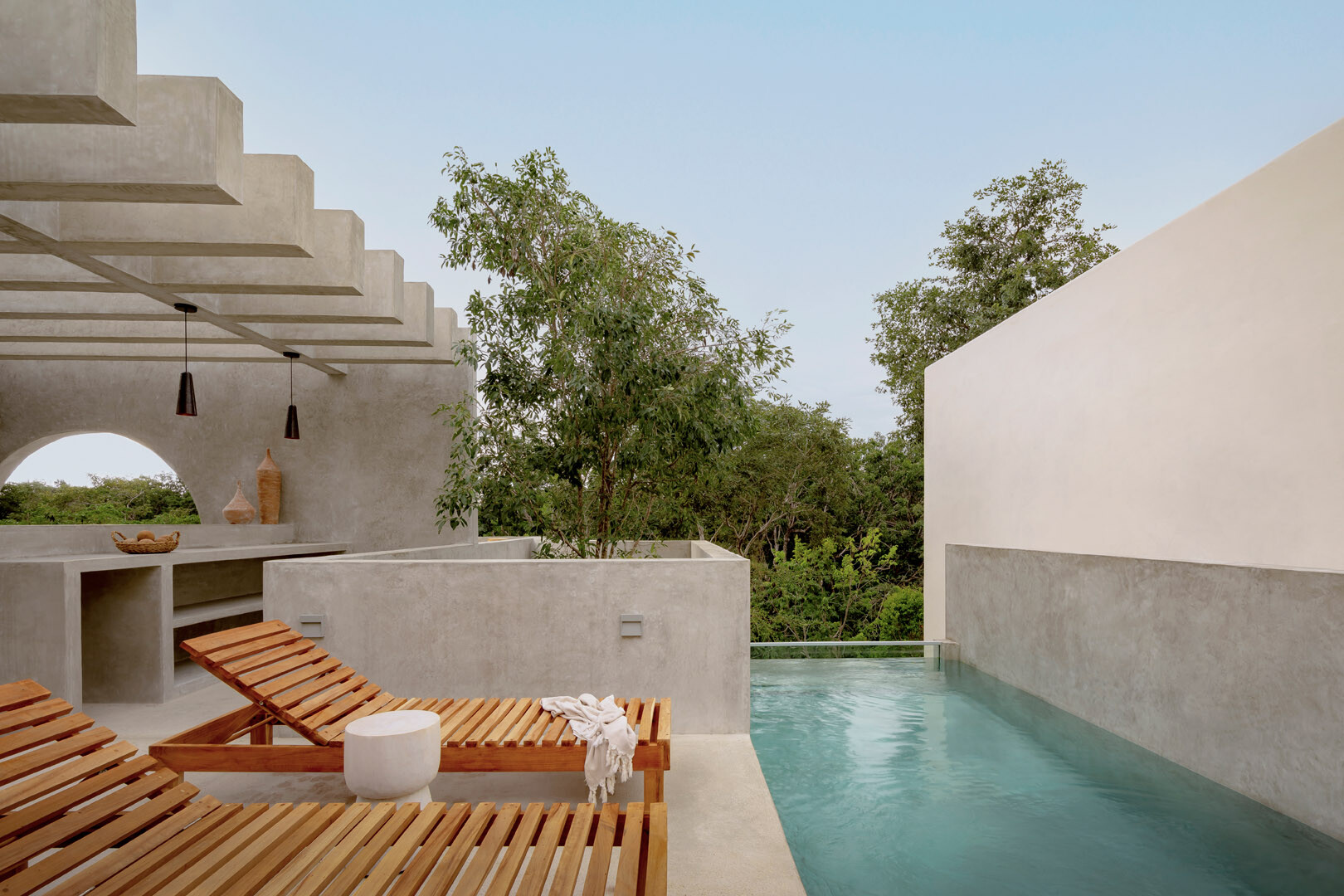
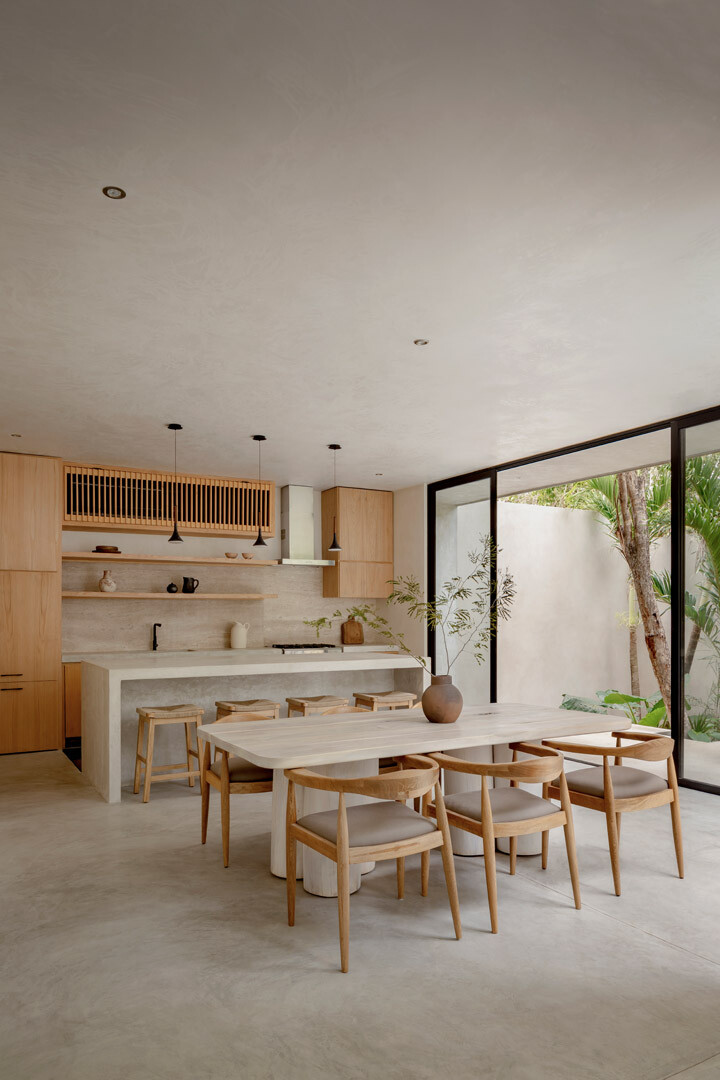
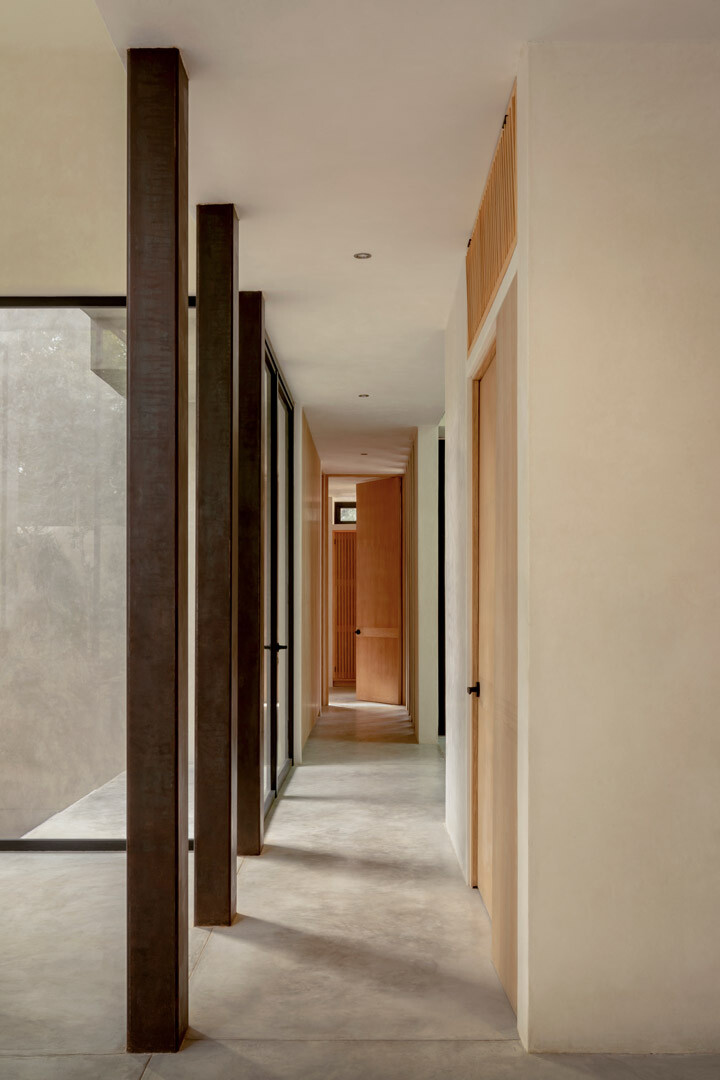
The spatial rhythm is non-linear and intentionally choreographed. Ceiling heights rise and compress, gently guiding the eye and body through a sequence of moments before opening into the main social areas—living room, kitchen, and pool—seamlessly joined in a fluid, tropical continuum. The kitchen is minimalist yet highly responsive, reflecting a nuanced understanding of domestic rituals and social gatherings. Private rooms and intimate outdoor areas are positioned on the upper floor, where the master bedroom, with its soaring ceiling and discreet skylight, is softly awakened each morning by the sun. From the rooftop terrace, expansive views unfold across the jungle canopy, a moment of stillness that frames nature not merely as scenery, but as a living texture—an invitation to rediscover one’s own longing, and to find repose.
Team | Mario Ávila, Carla Osorio, Sonia Morales, Andrea Fox, Adrian Salamunovic, Caty, Pato and Kayla Pongrac
Building Area | 445 m2
Interior Design | Kayla Pongrac @kaypongrac
Developer | Adrian Salamunovic @king_of_canvas
Landscaping | Di Tulum @ditulum
Location | Tulum, Quintana Roo.