Vung Tau House
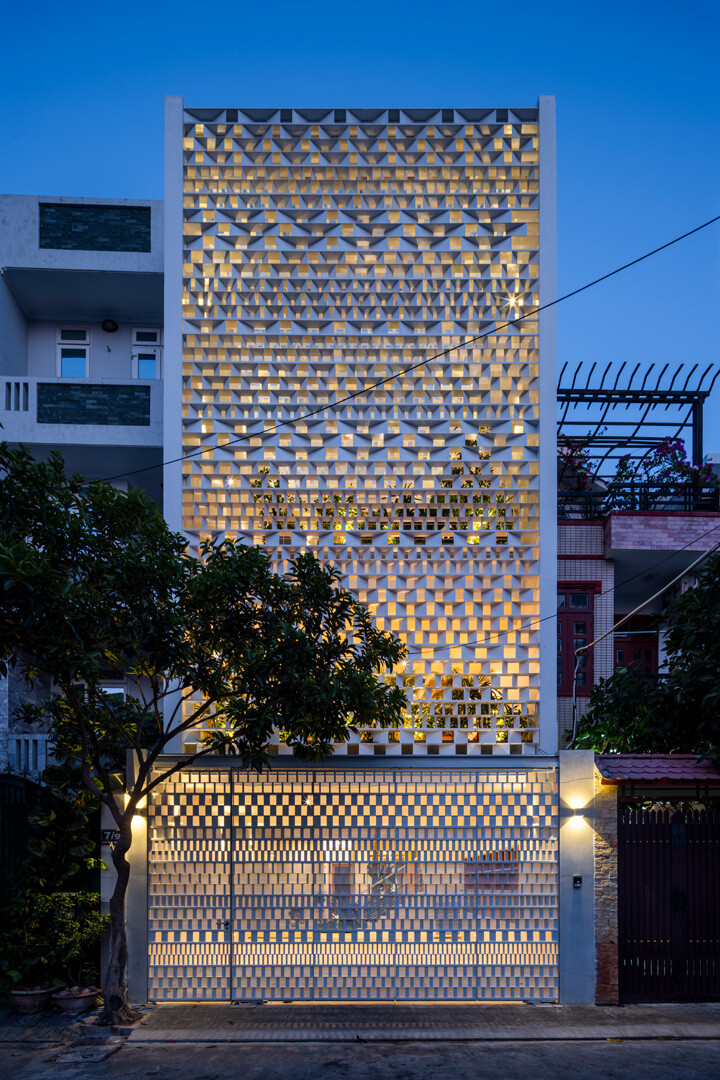
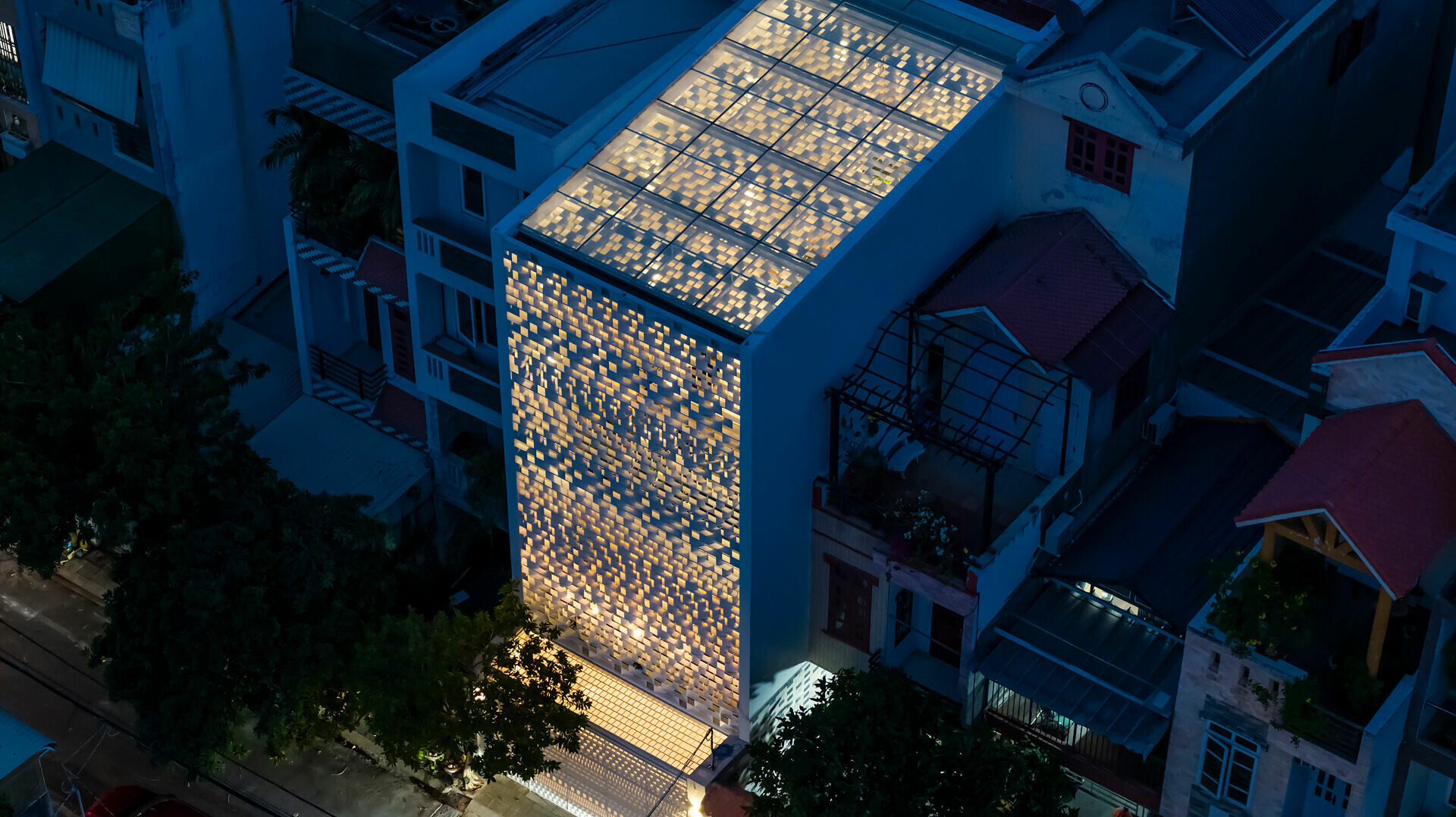
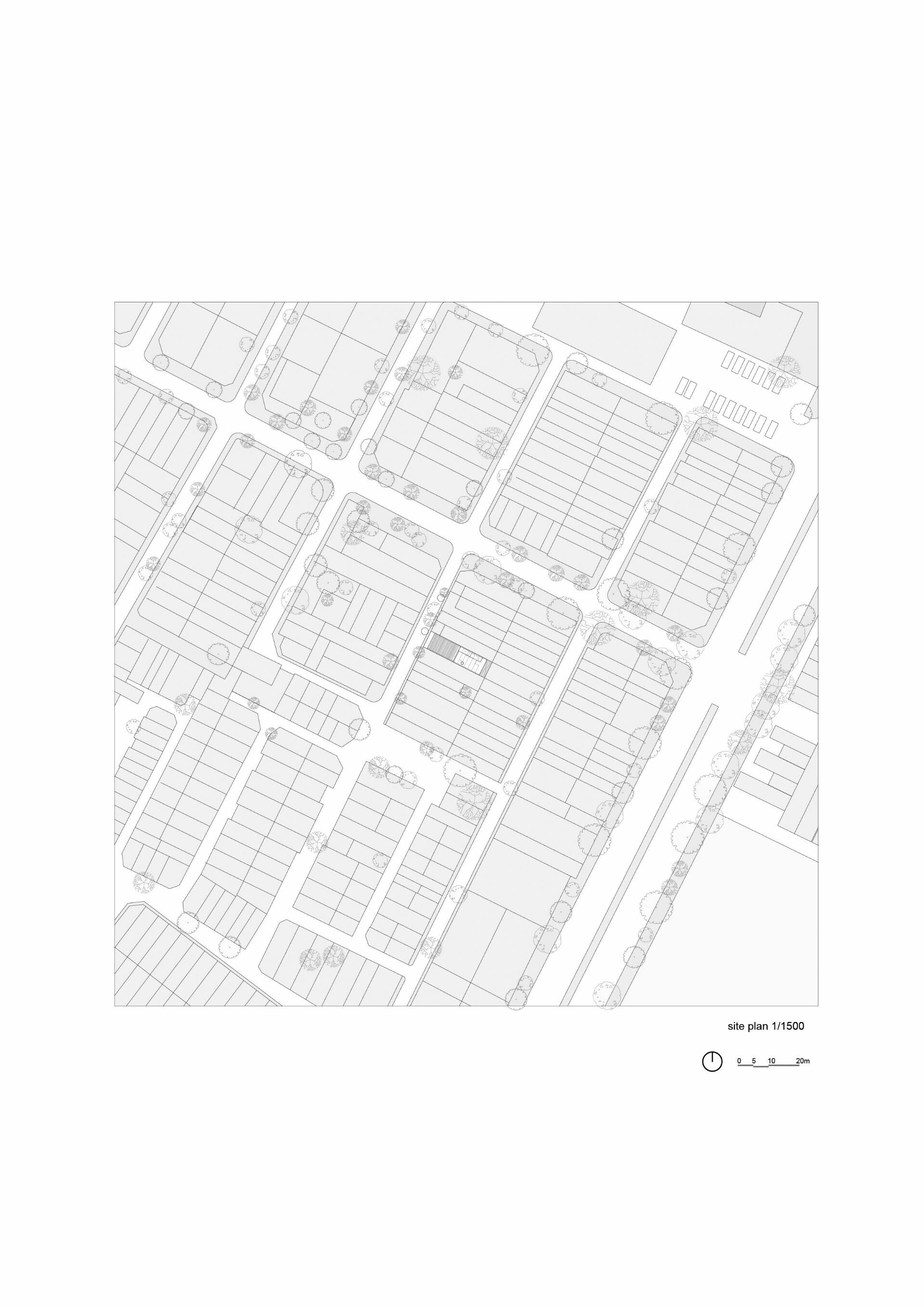
In a city where land is scarce and buildings crowd tightly together, only walls remain to separate one home from the next. The wind loses its way, and light filters in as if by reluctance. In Vung Tau, a coastal city in southern Vietnam, a private residence occupies a narrow strip of land—a typical tube house plot, just 4 to 8 meters wide and about 20 meters deep, with structures rising up to four or six stories. In this compressed, airless setting, the house seeks to recover a space where one can breathe—where openness might quietly return.
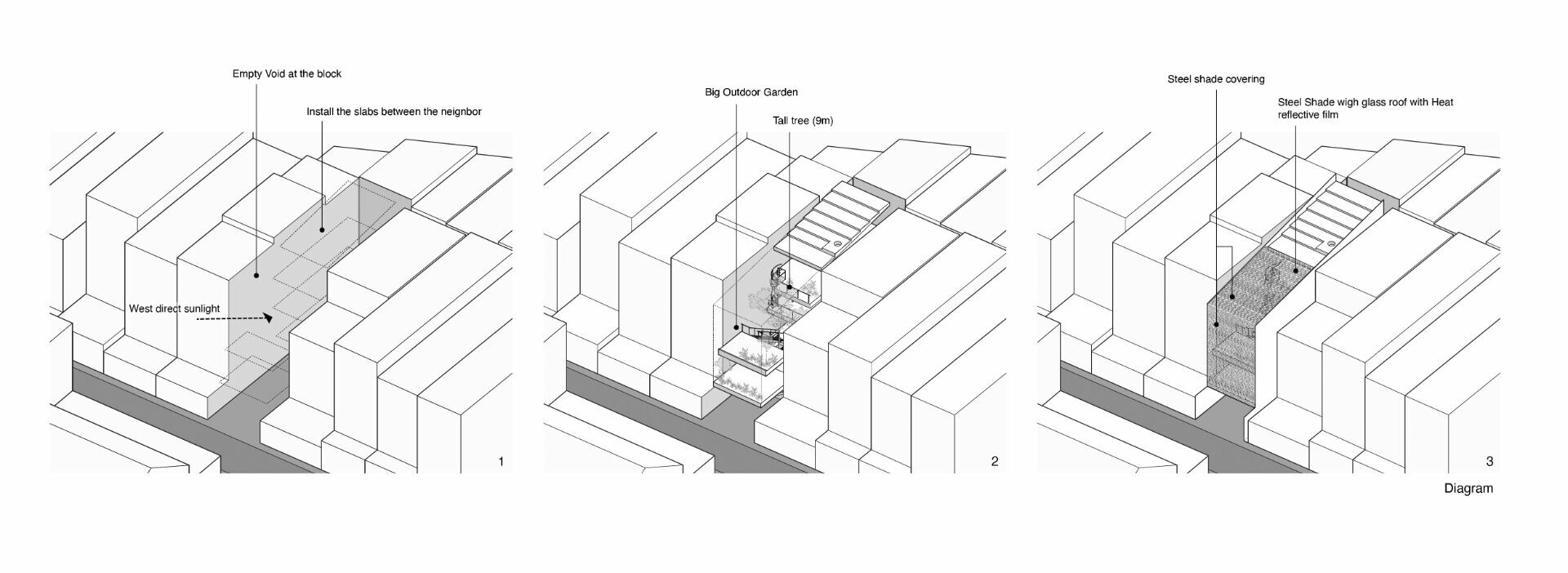
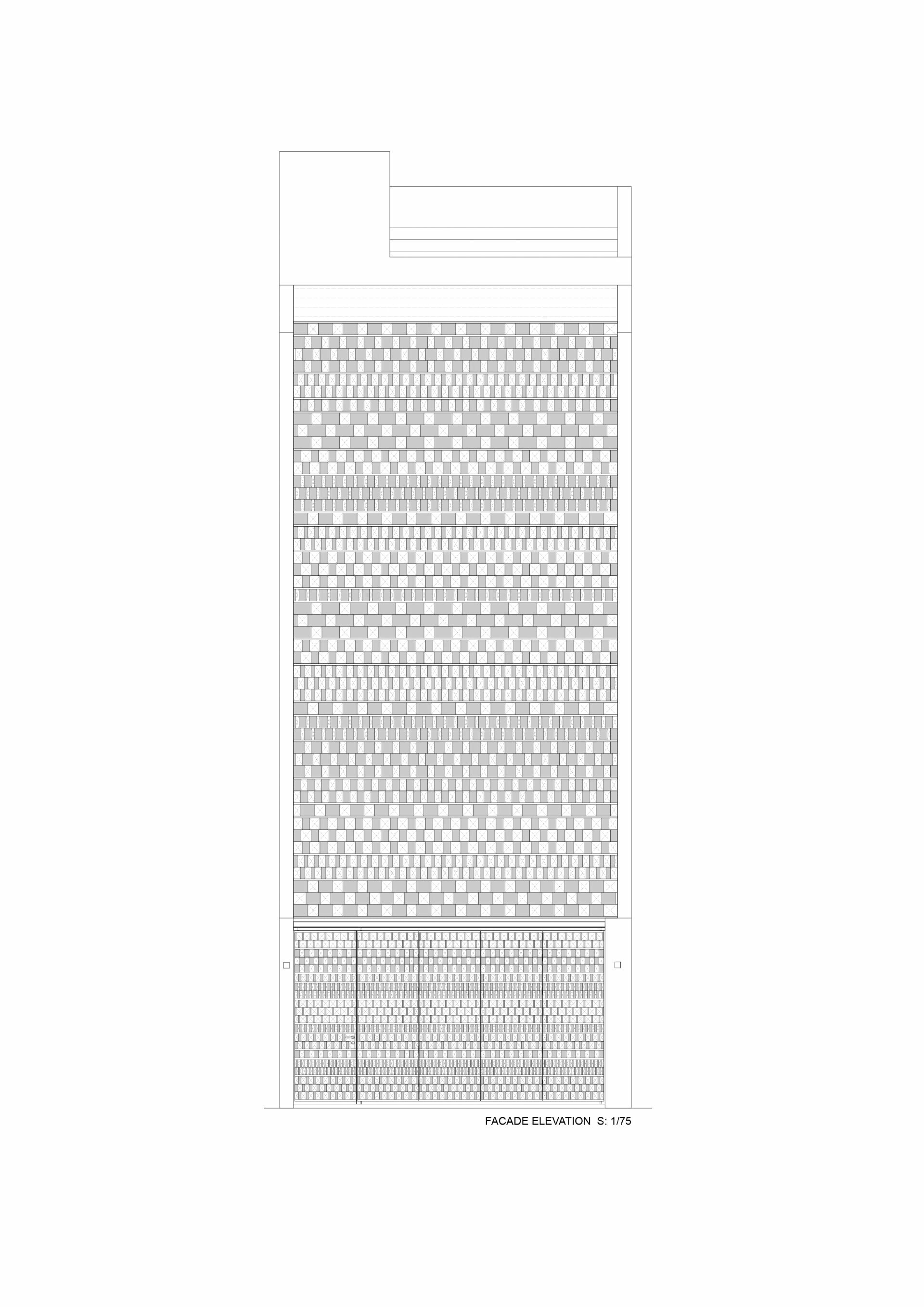
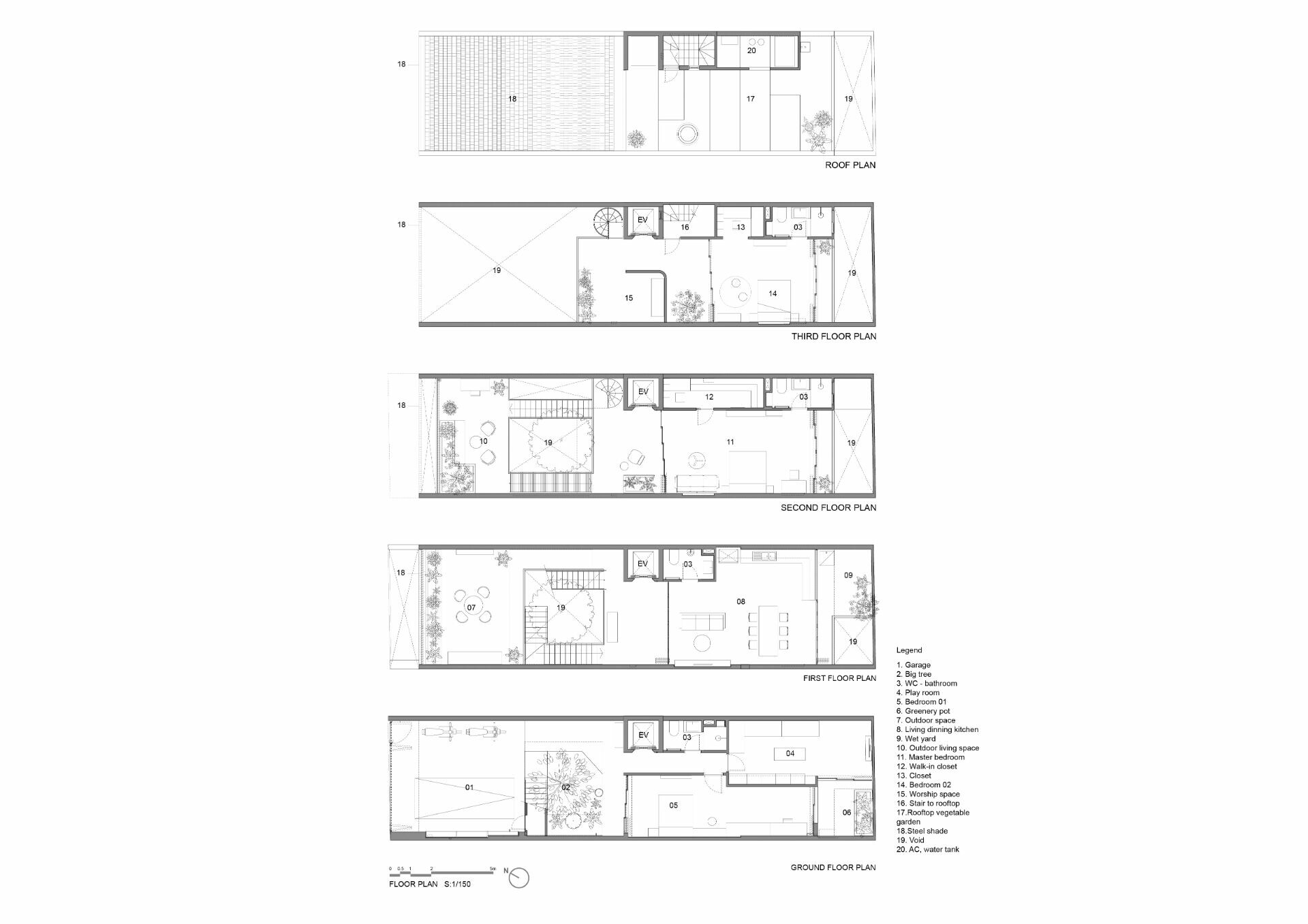
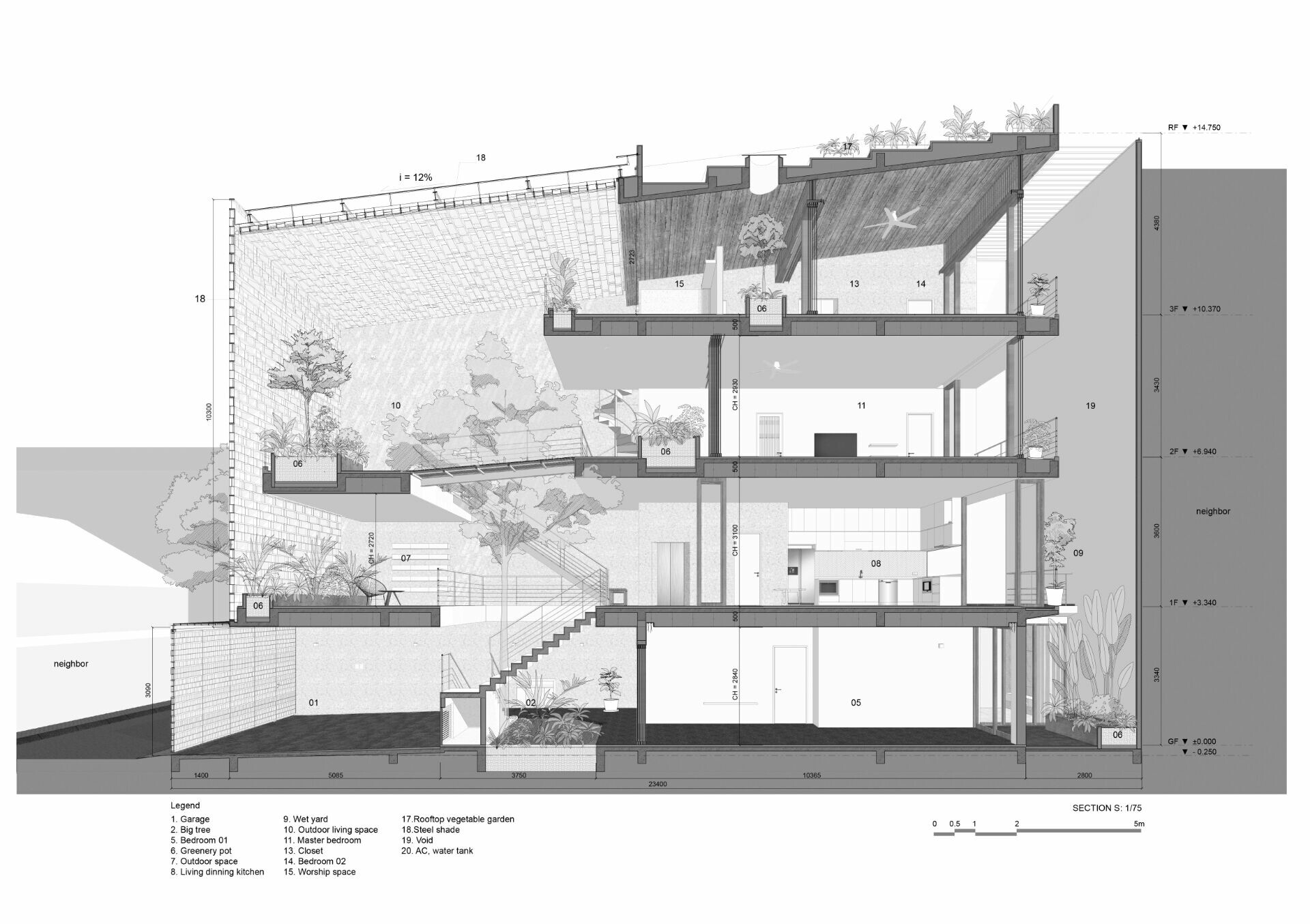
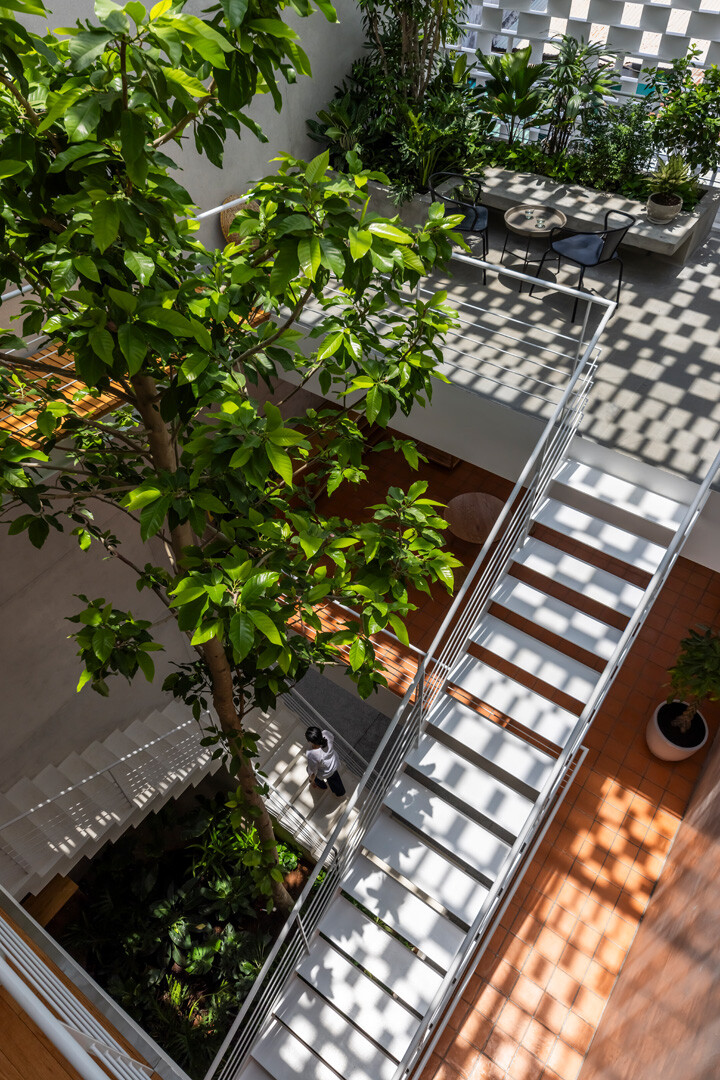
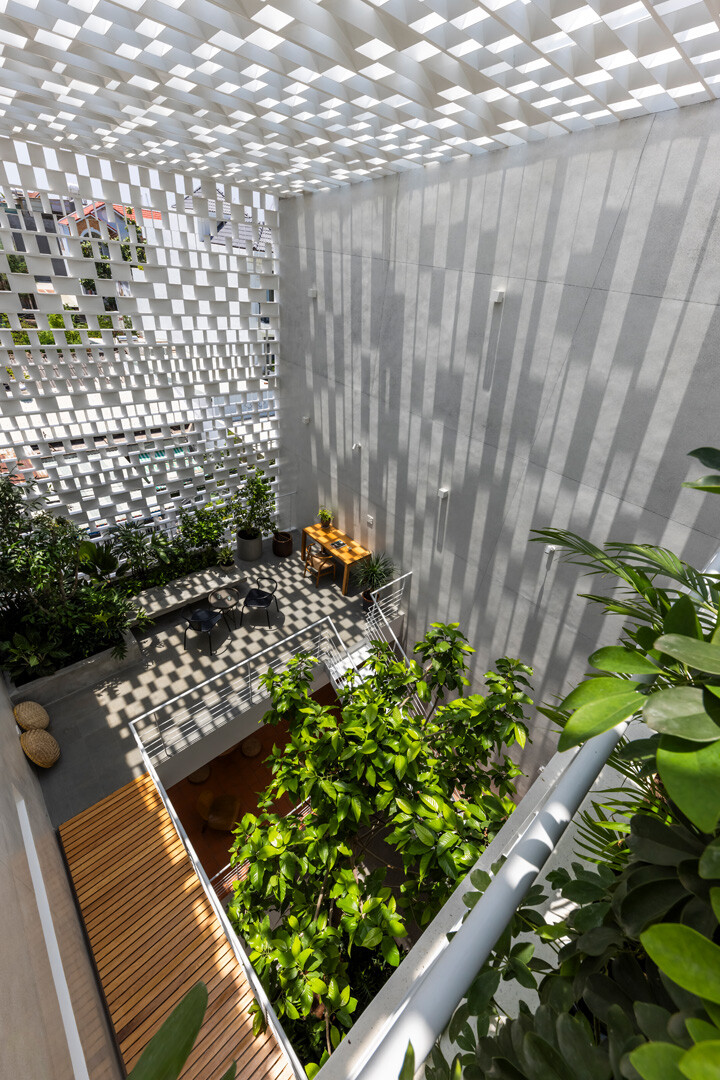
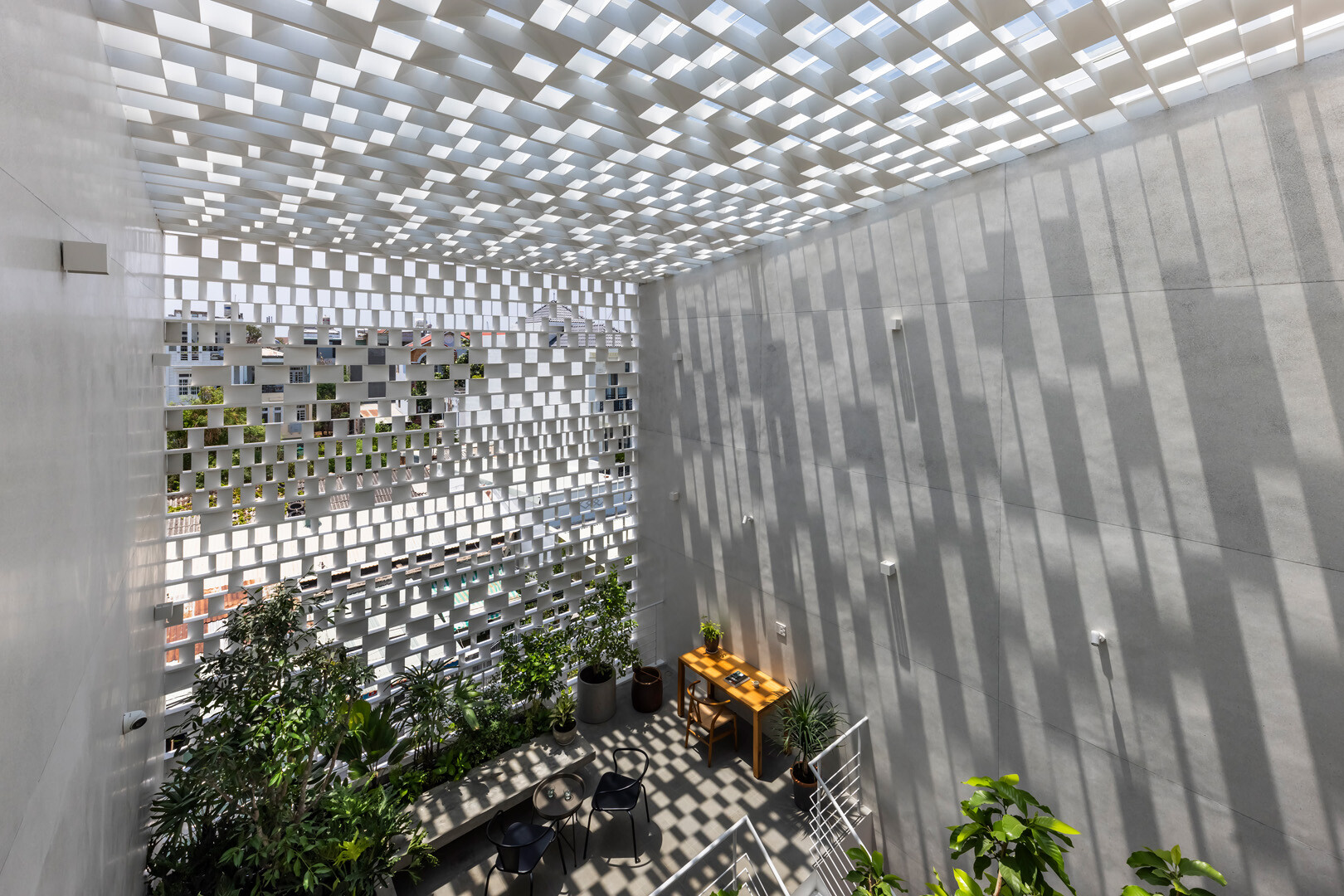
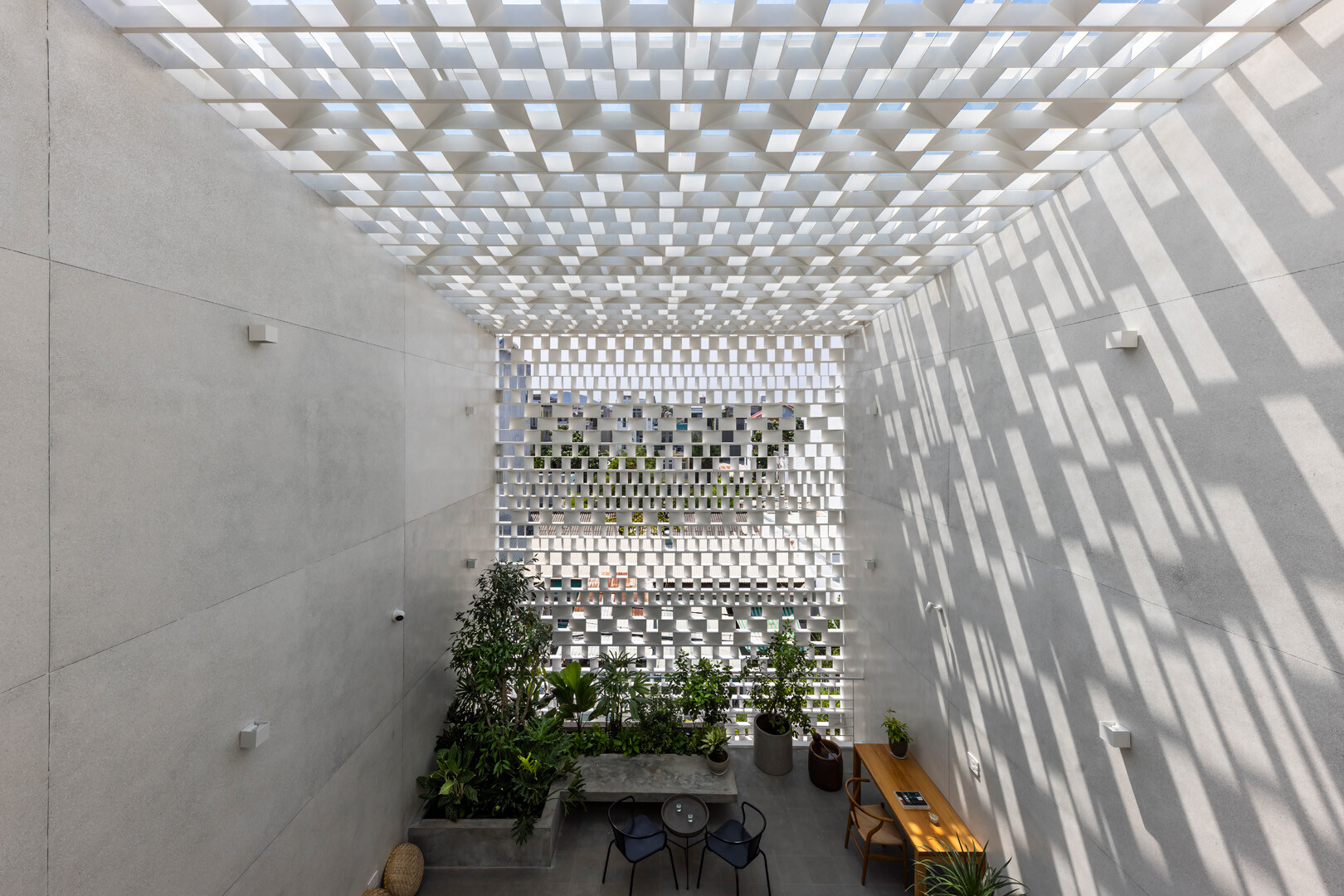
Facing west, the home endures the full force of the tropical afternoon sun. But instead of resisting the site’s harsh conditions with brute force, the architects chose humility. They stepped back. They left space. And in doing so, they allowed the forgotten void to re-enter the city. From this deliberate absence, a new architectural language emerges—one where slabs and surfaces no longer divide, but invite; where the interlacing of levels and openings allows light to pass through, air to circulate, and nature to dwell.
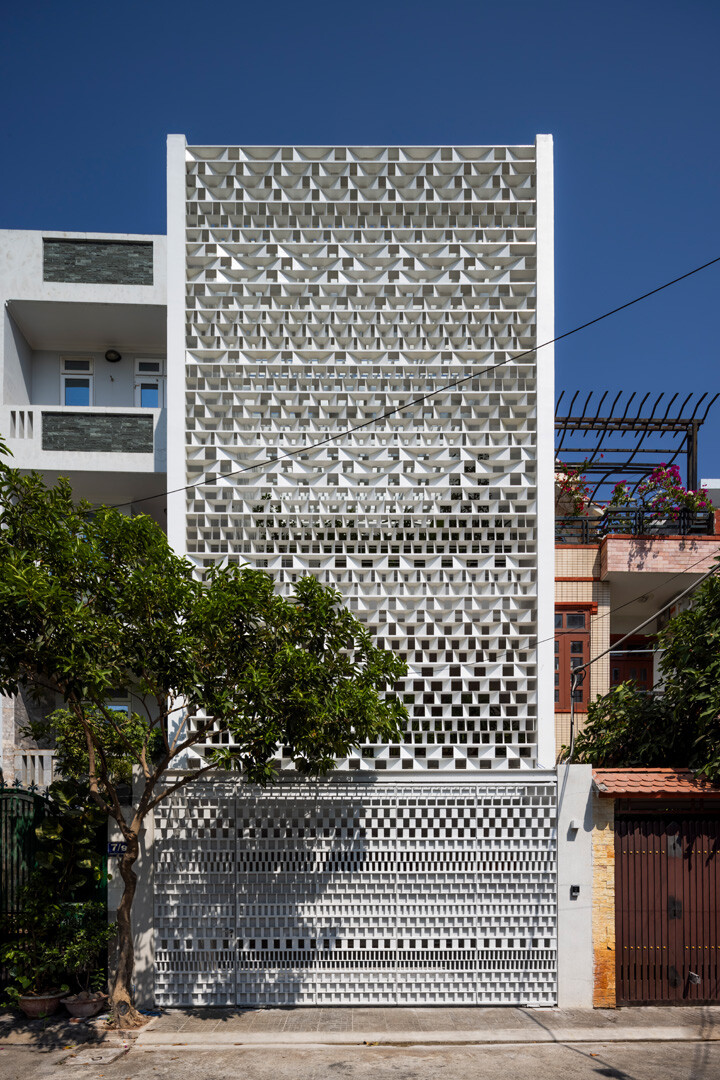
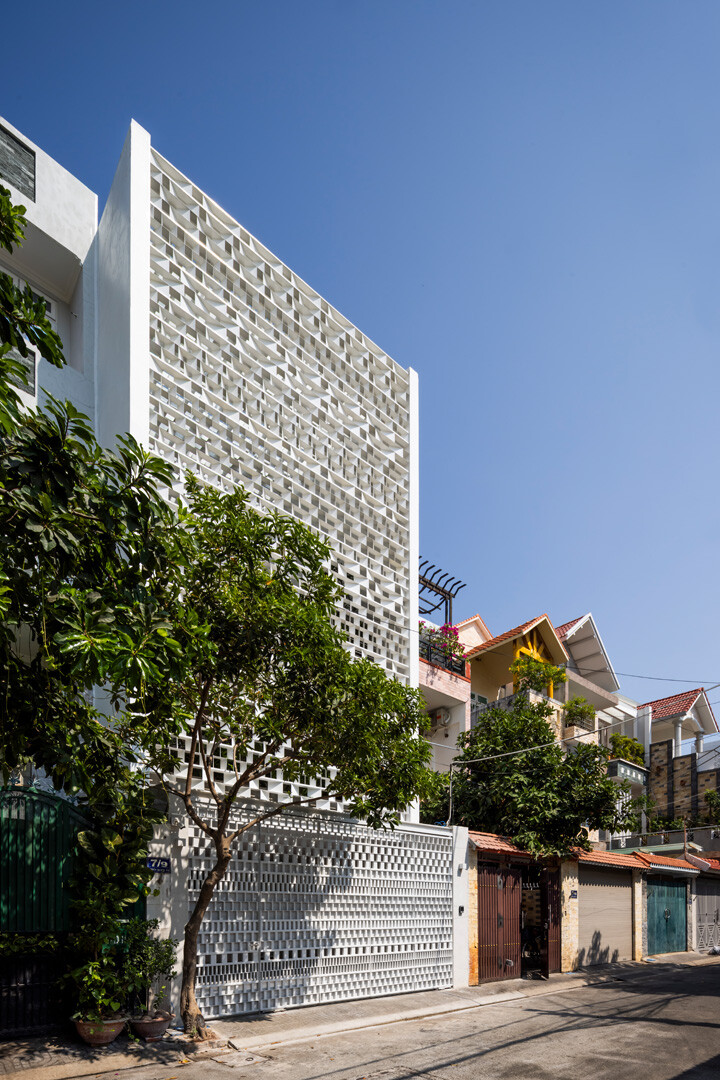
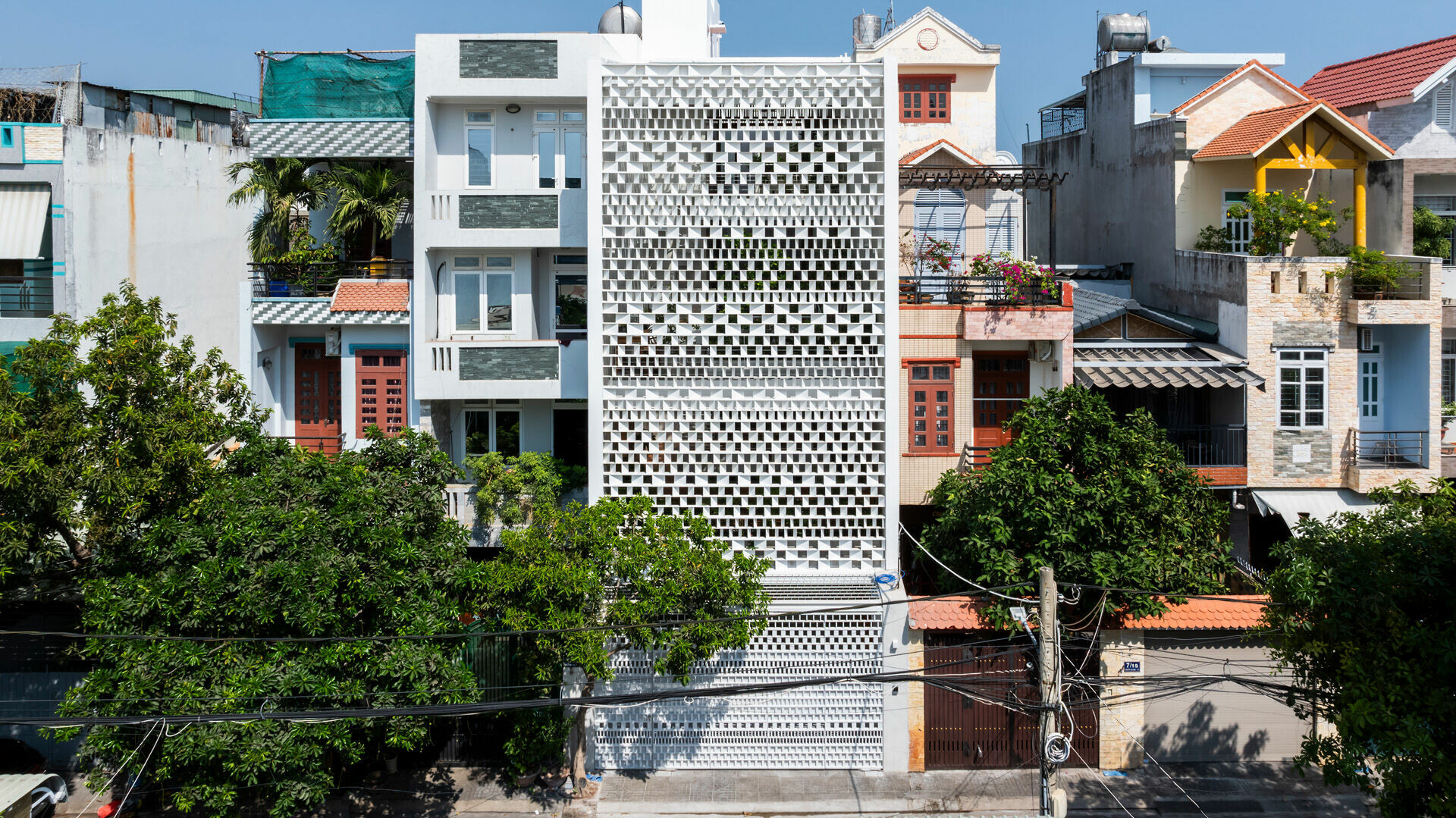
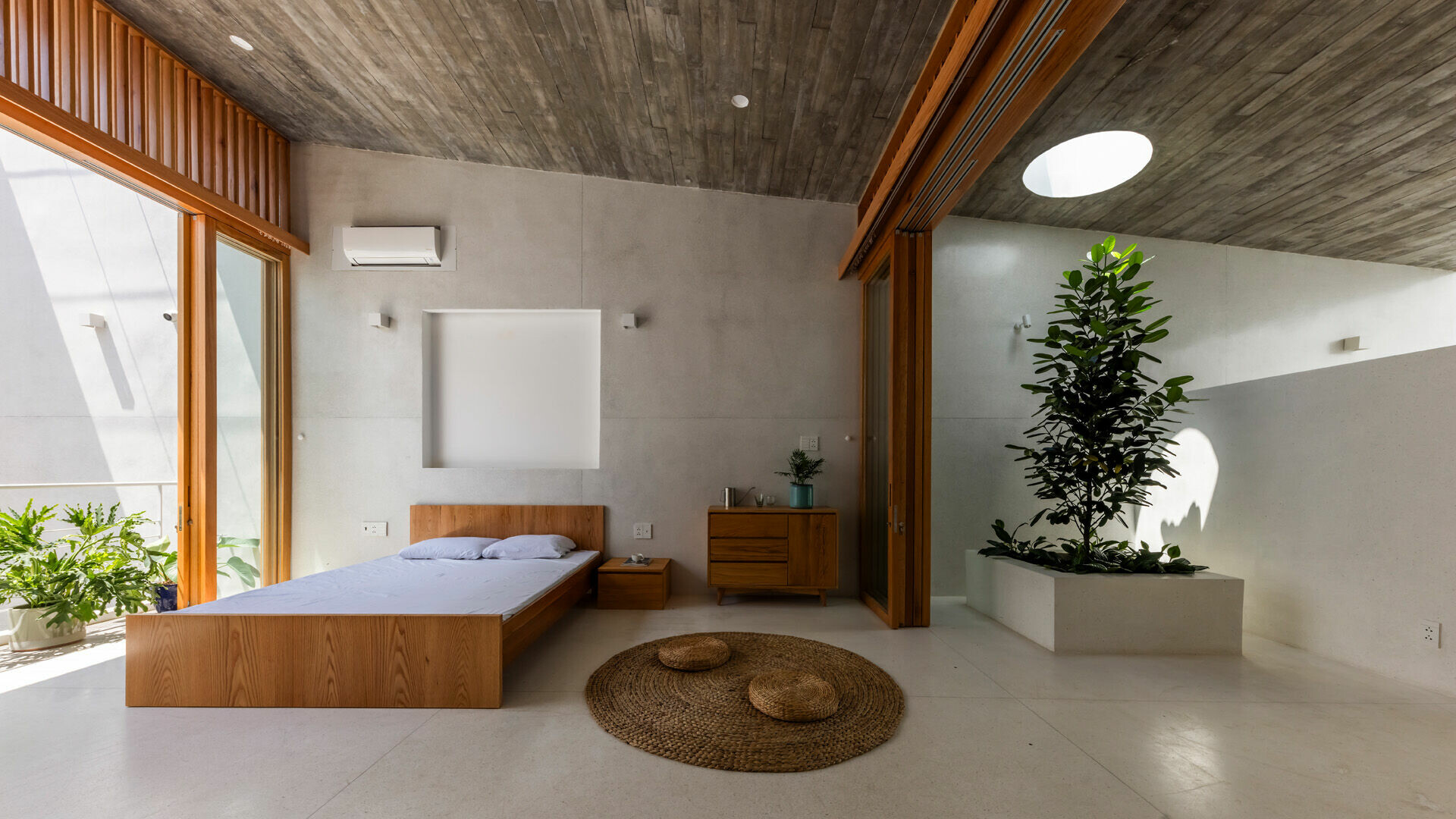
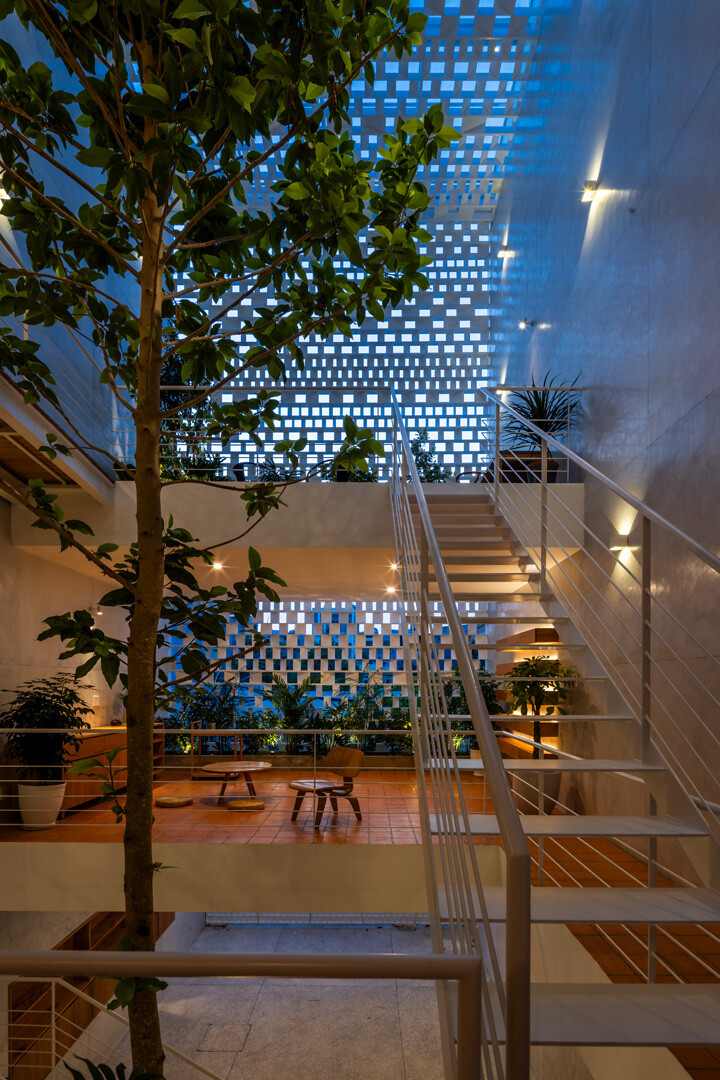
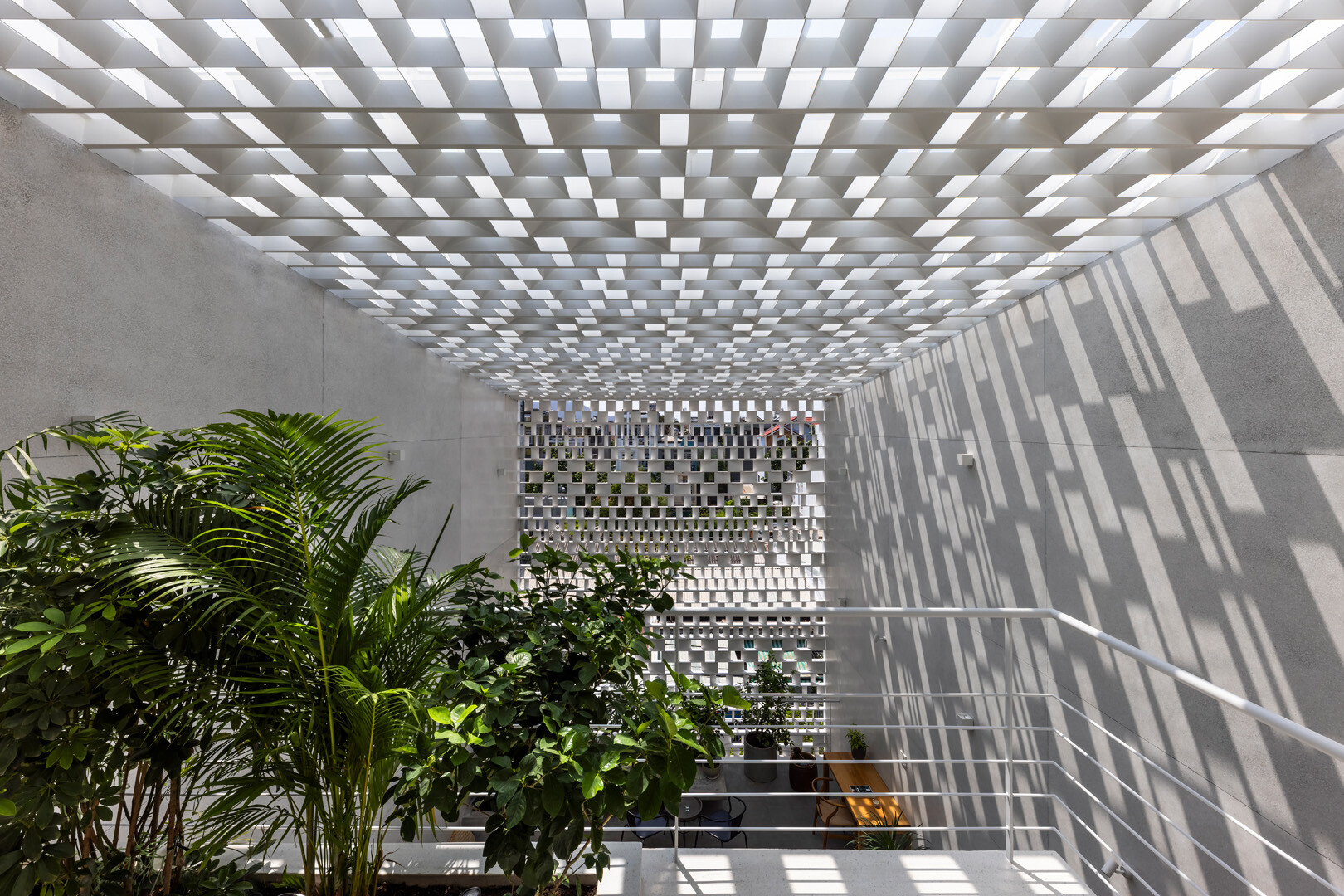
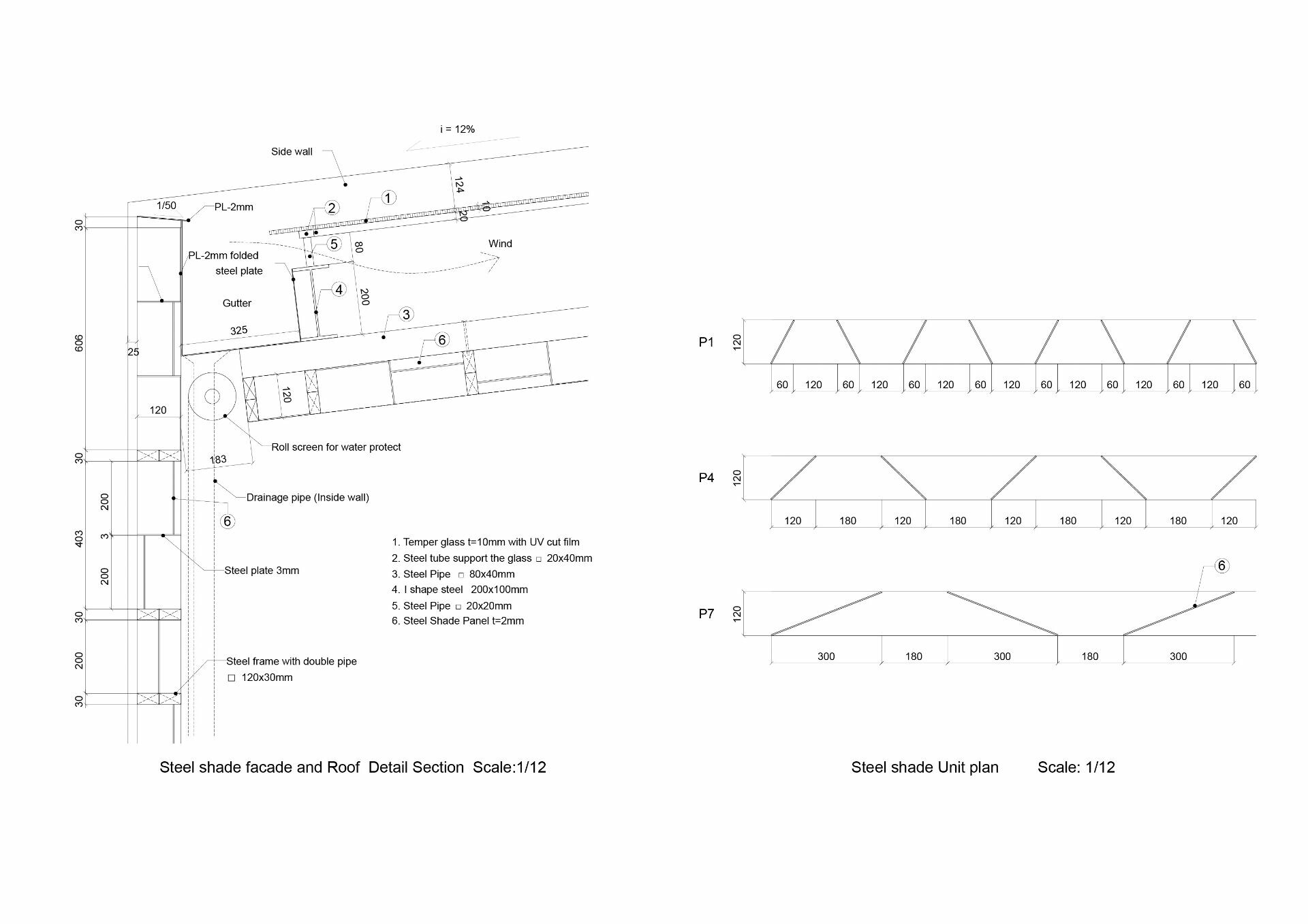
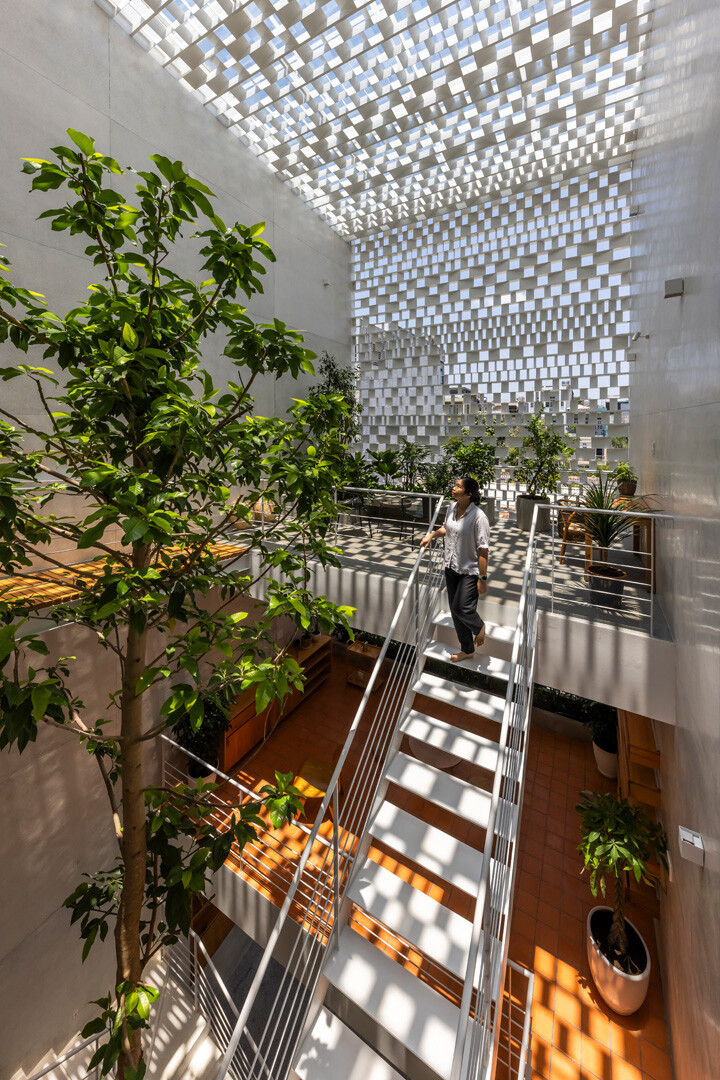
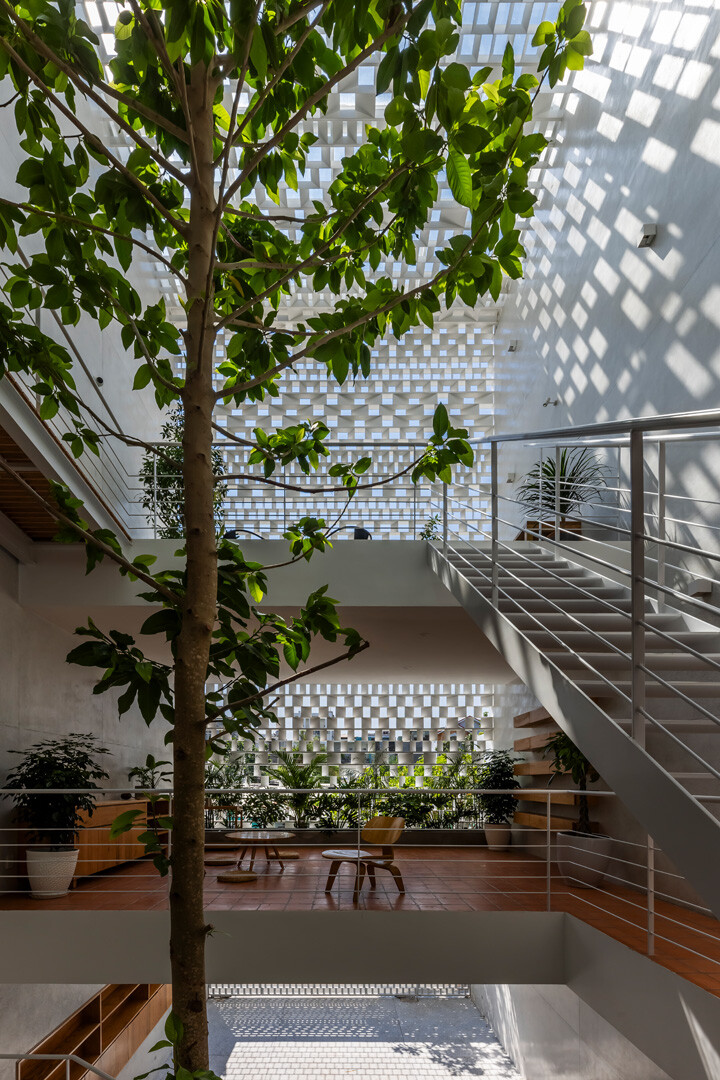
Designed to inhabit the “urban void,” the house transforms what might otherwise be oppressive into something contemplative. The sun is no longer an intruder, but a silent guest—its rays filtered through layers of angled steel shades that shift in pattern throughout the day. Wind flows through these apertures, and shadows move across the walls like a sundial in motion. The first floor is grounded with private rooms and recreation areas, while above, staggered floor plates interlock and open up. On the west side, the slabs recede, creating a soaring, multi-level front courtyard. Together with a rear atrium, this void forms a conduit for natural ventilation, channeling cooling sea breezes deep into the house.
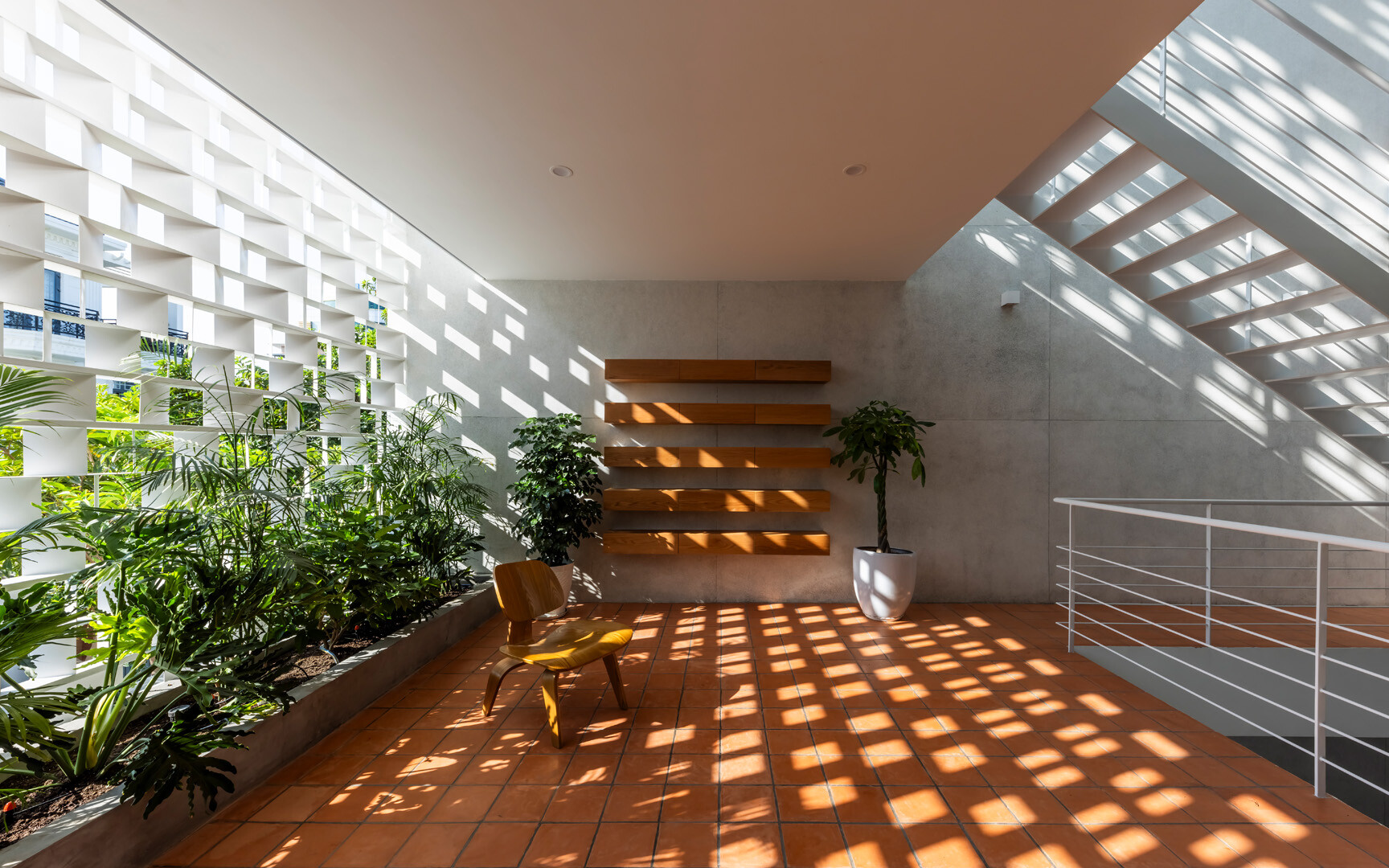
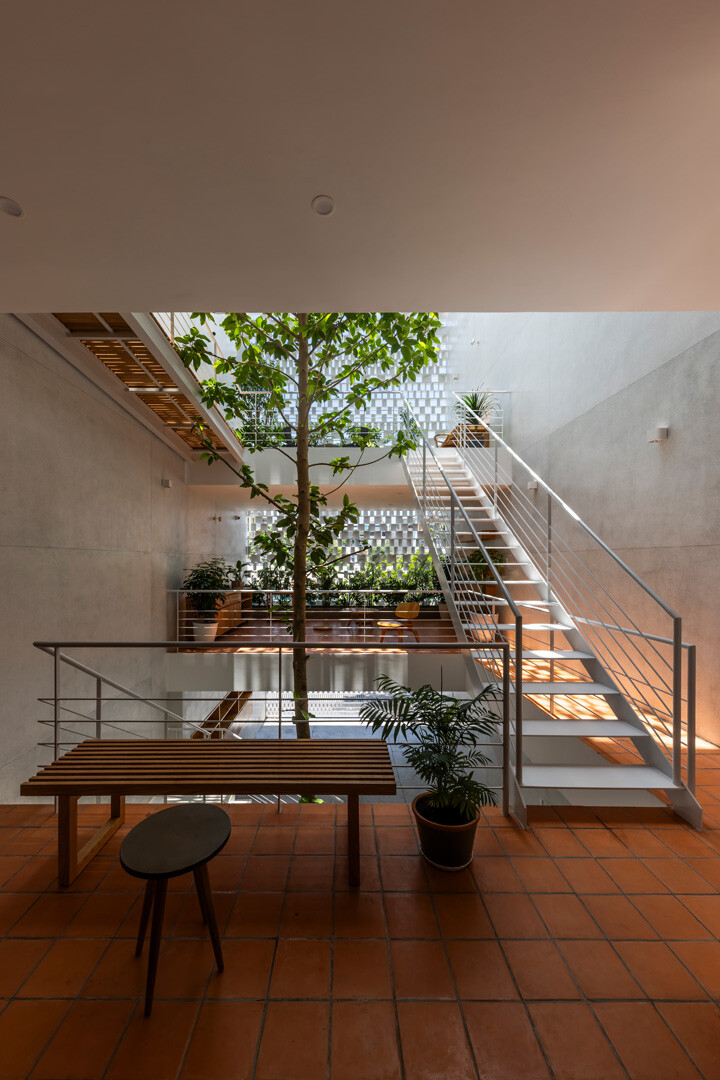
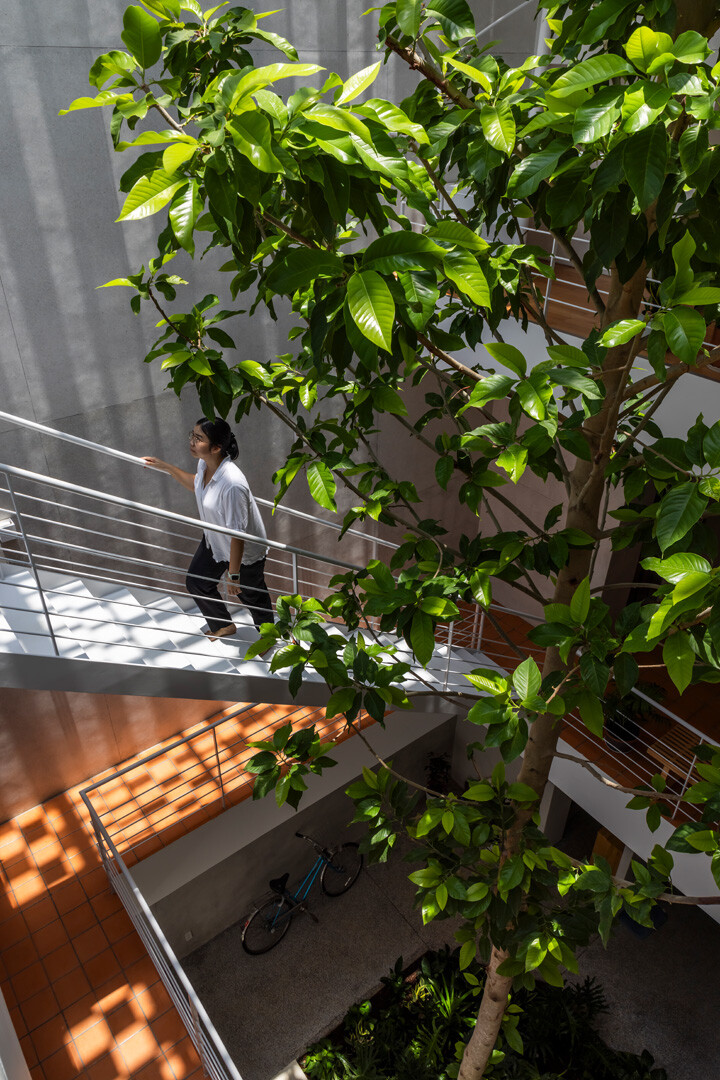
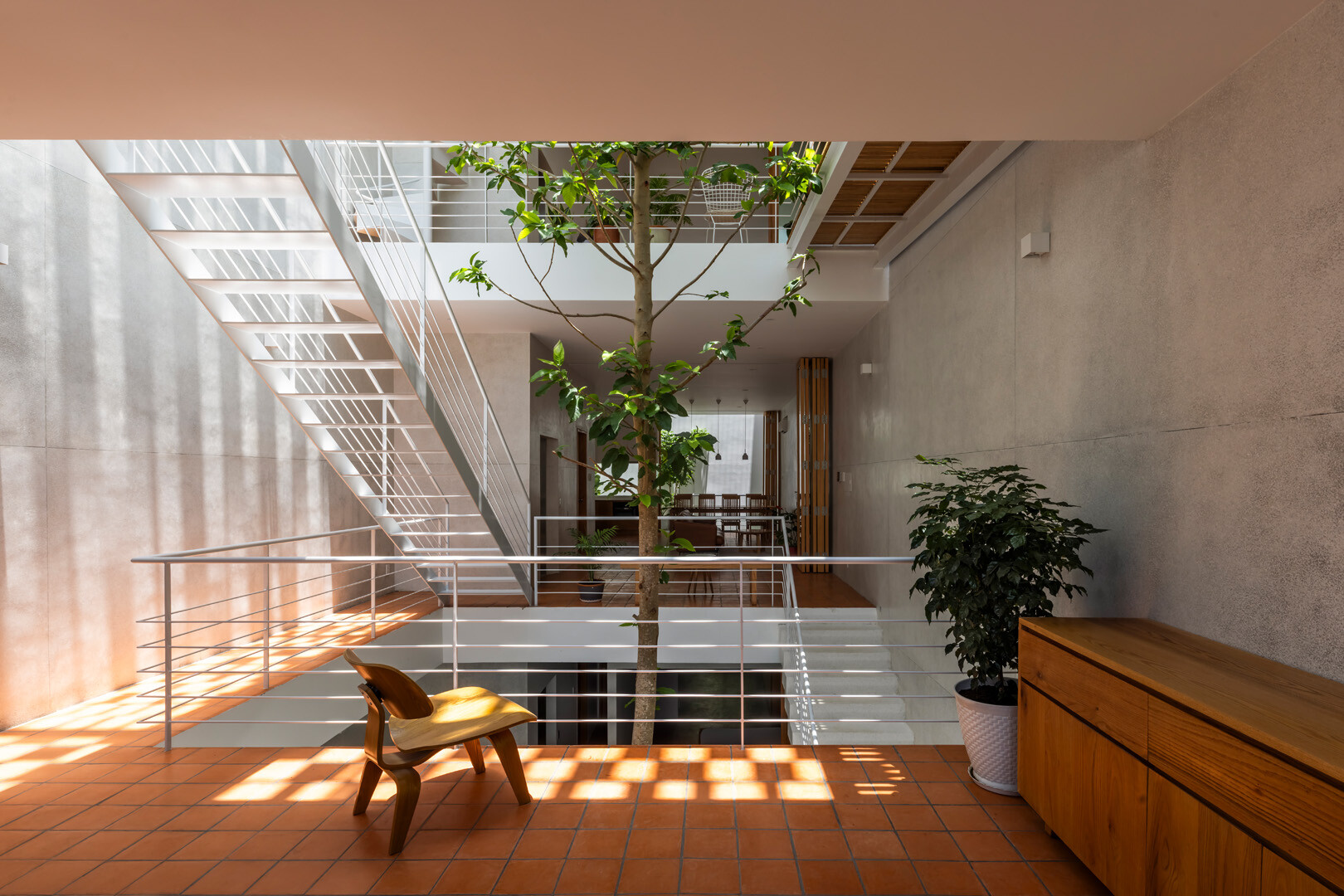
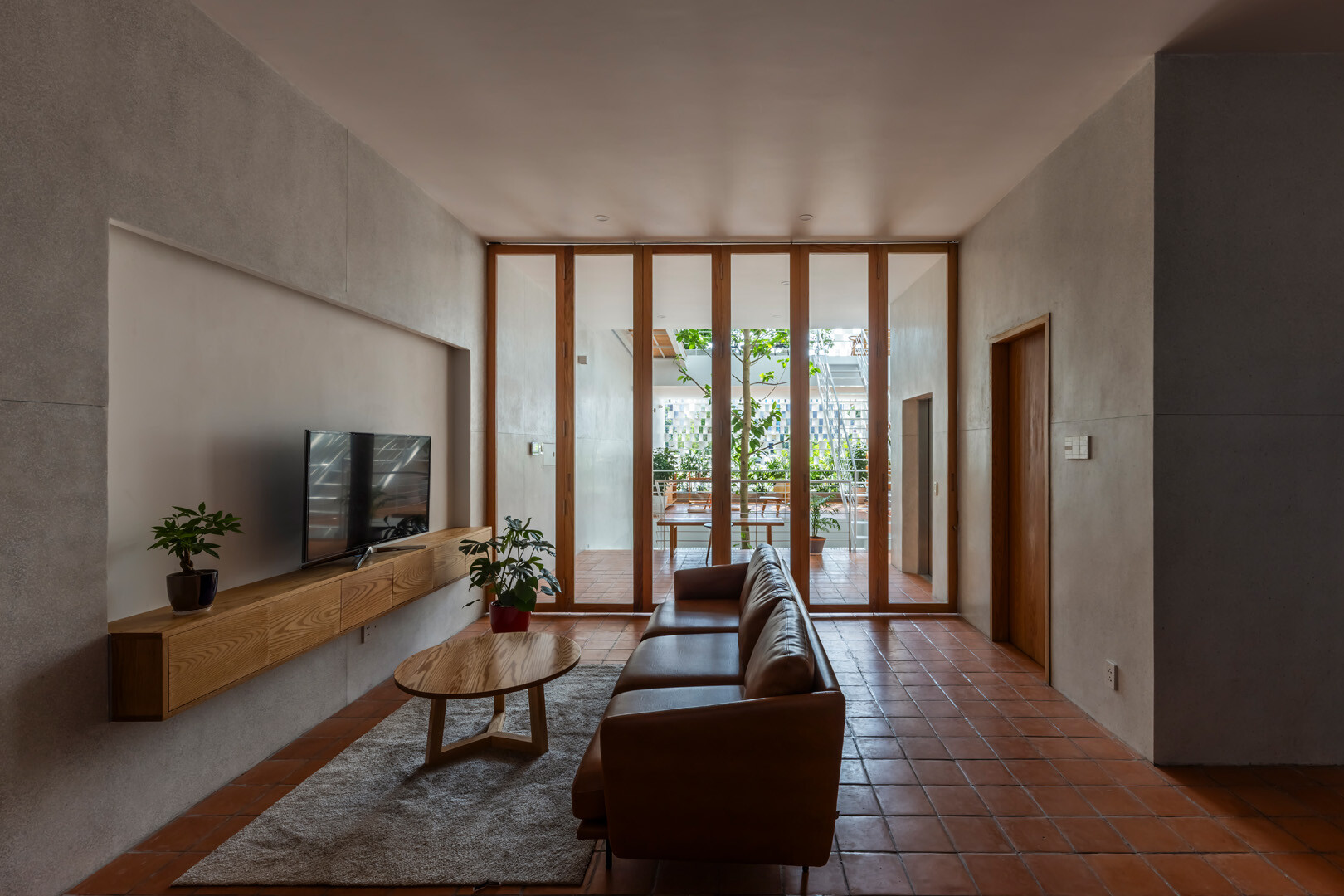
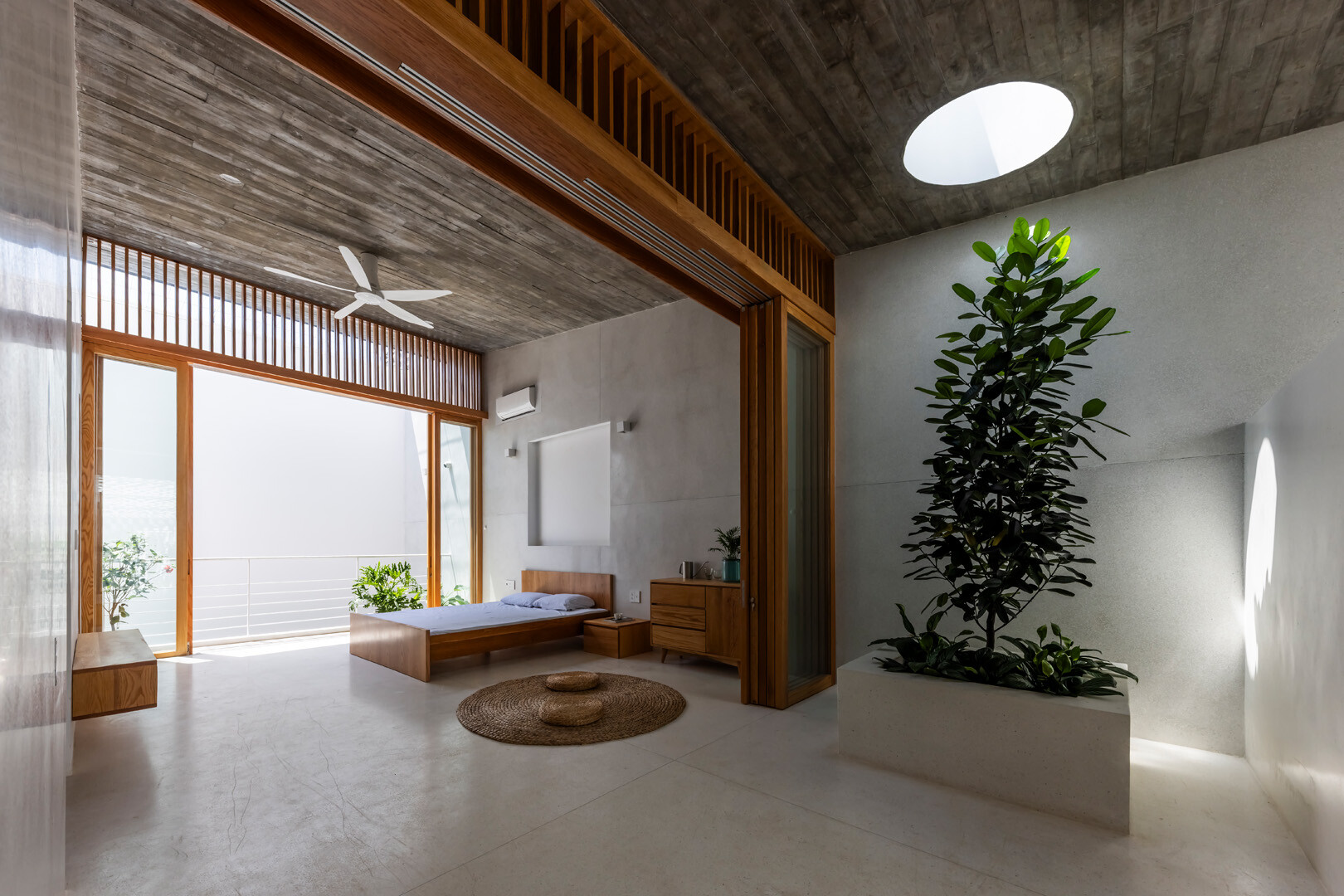
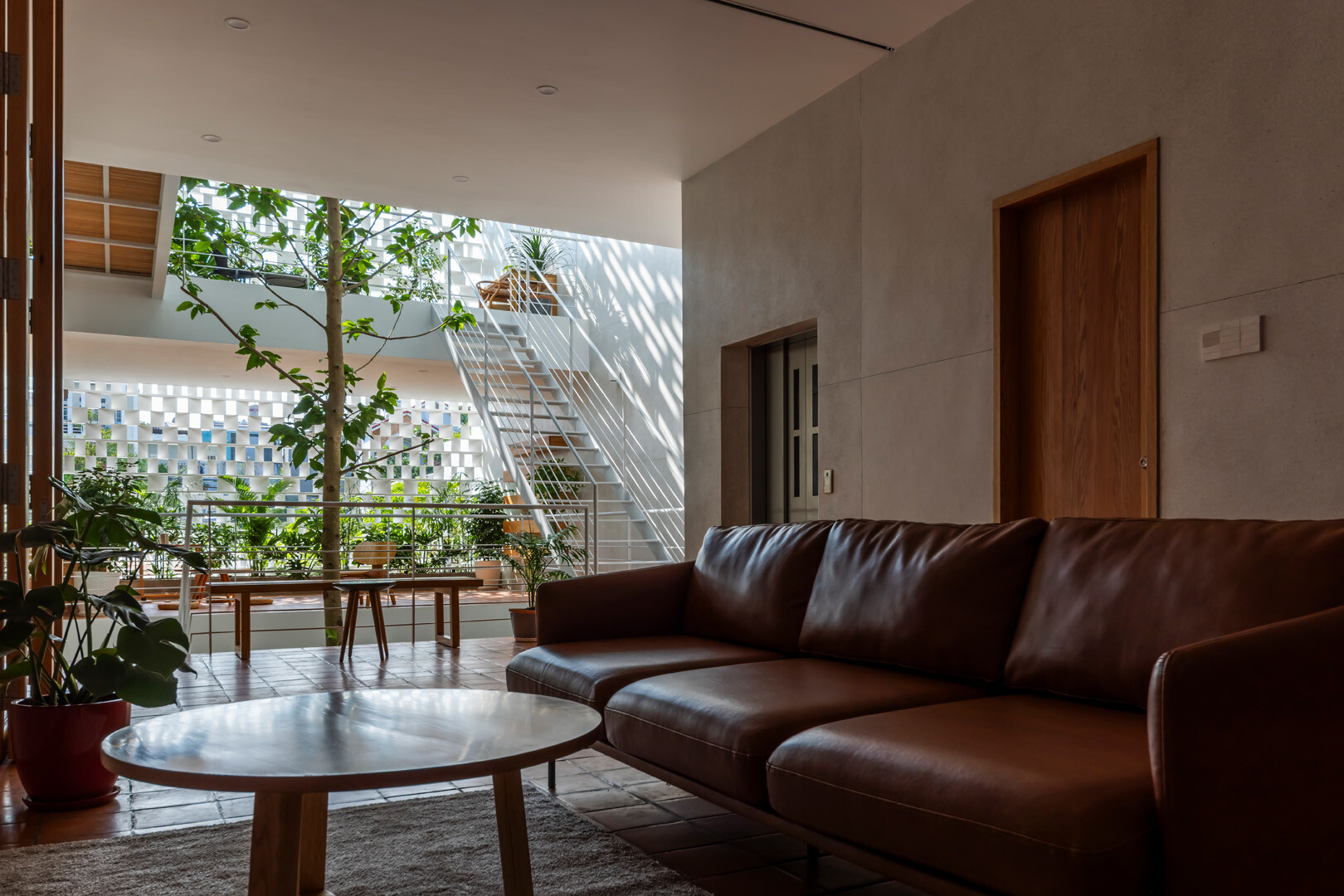
At the center of the front courtyard, a ten-meter-tall White Champak tree rises, its foliage brushing each level of the home. Wrapped by a spiraling path of stairs and bridges, the tree becomes a living axis around which daily life unfolds. Whether in the living room, dining area, or bedroom, the tree remains within view—a constant, grounding presence. Sliding and folding partitions blur the boundary between architecture and vegetation, so the home no longer merely contains a garden; it becomes one. Children roam beneath dappled light that seeps through the layered screens. Their steps echo the rhythms of growing leaves and passing breezes. The structure doesn’t assert itself—it calibrates. It balances enclosure and openness, introspection and exposure. In doing so, Vung Tau House offers more than shelter; it becomes a vessel for wind, for light, for slow and attentive living. Amid the rigid density of the city, it proposes a softer counterpoint—a space where trees grow tall, air flows freely, and time lingers, gently, in the space between.
Principal Designer | Sanuki Daisuke
Collaborator | Dinh Hue Dung
Building Type | Individual House
Gross Floor Area | 490㎡
Building Area | 125㎡
Site Area | 139.2㎡
Structure | RC
Materials | Terrazzo Wall, Steel shade
Location | Vung Tau, Vietnam