WABISABI
  • Projects
    • Worldwide
    • Interiors
    • Features
  • Contemporary
    • Exhibitions
  • Record
  • Lifestyle
  • City Explore
  • News
  • Issue
  • Account
  • Search
  • Language
Mobile nav


White Cassette

白色卡帶

Maxim Kashin Architects proudly present White Cassette, an apartment design project based on principles inspired by 1970s experiments by Japanese architects to create modular structures, or microcells, for housing. A striking example of this type of architectural direction can be seen in the Nakagin Capsule Tower in Tokyo, designed by Kurokawa.
 

馬克西姆·卡辛建築師事務所自豪地展現名為“白色卡帶“(White Cassette)的公寓設計項目,其靈感來自於1970年代日本建築師所進行的實驗,實驗目的是為住宅建立模組化結構或微型單位。此類建築的最佳範例可以在東京由黑川(Kurokawa)設計的中銀膠囊大樓(Nakagin Capsule Tower)中所見。
 
 
An illusion box
 
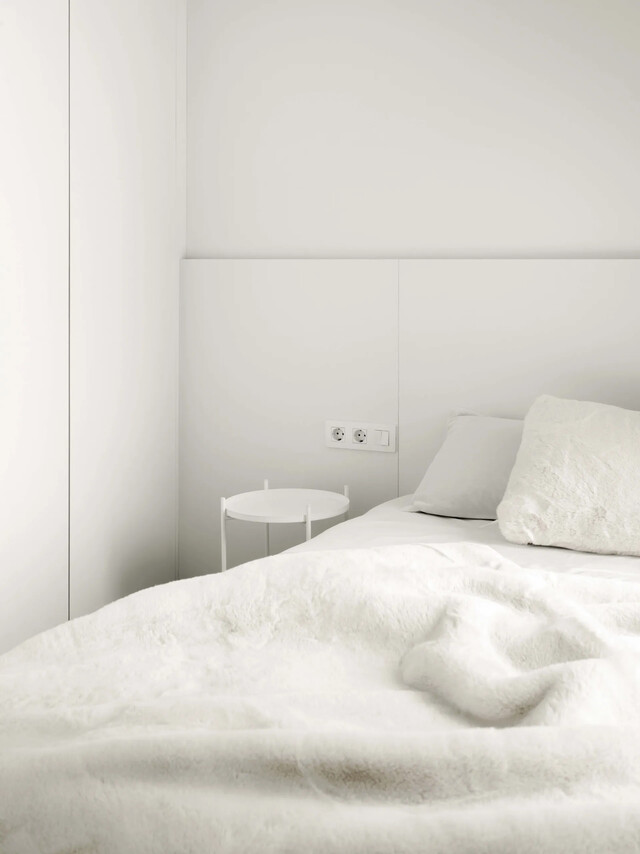
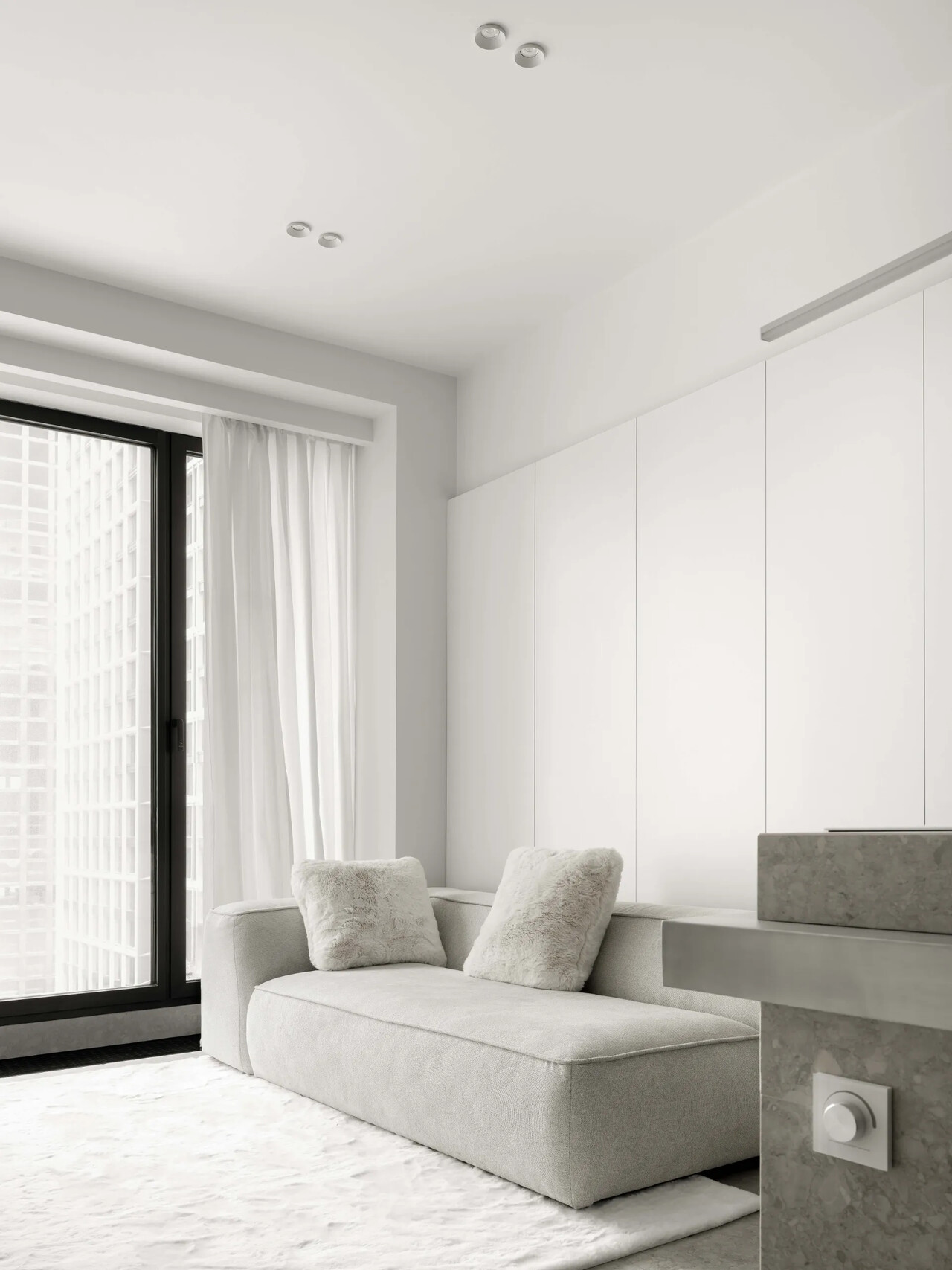
The interior of White Cassette is designed as a special box-transformer, which opens according to necessity in relation to the various functional tasks of the residents. The color white was selected as a symbol of purity, lightness, and airiness, while creating feelings of calmness and rejuvenation. Additionally, white serves not only as an aesthetic component, but also a practical one that appears to expand the boundaries and increase the geometry of the space.
 
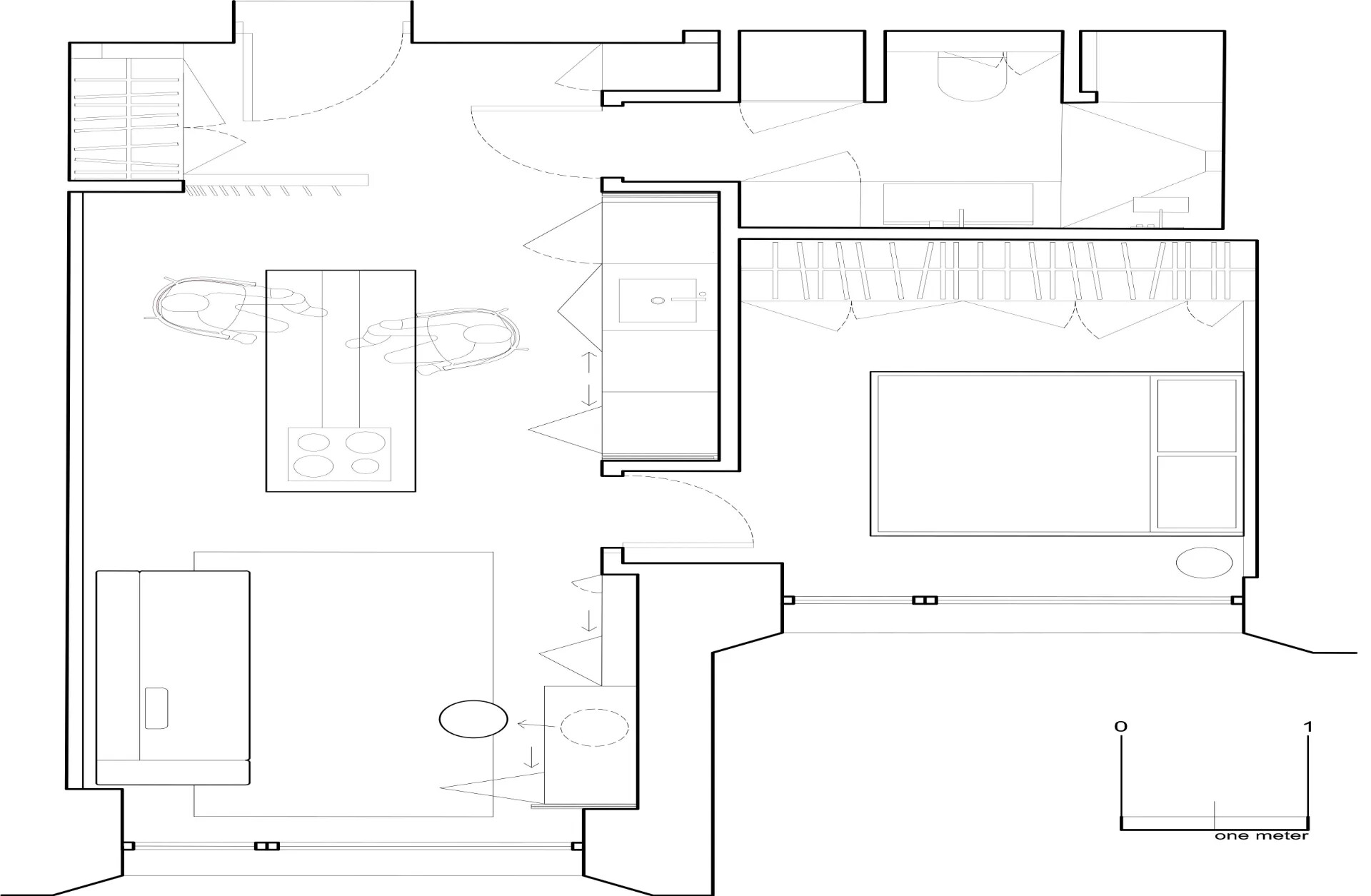
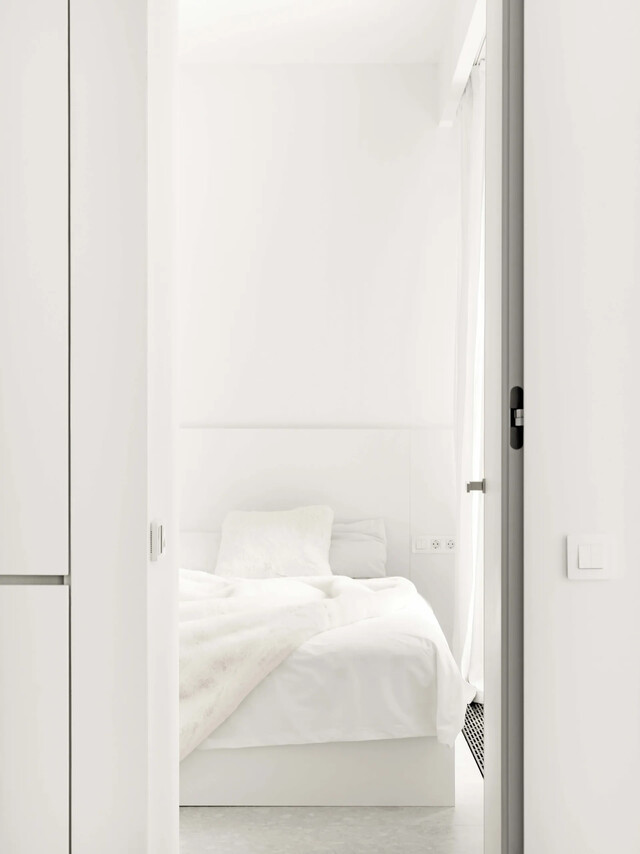
In order to create a multifunctional interior, it was necessary to fit a living room, a kitchen with a dining room, a cabinet, a separate bedroom with wardrobe, a bathroom with a shower, a storage area, and a laundry room into the constraints of the 42 sq.m. apartment space, with two panoramic windows overlooking the city.
 
In endeavoring to avoid cutting the space into multiple separate spaces, Maxim Kashin Architects began by extracting the design from the classical interpretation of zoning. Instead, the firm embraced the principle of constructing Nakagin capsules to transform rooms to accommodate the immediate needs of residents, while completely concealing other functions that are not relevant to the moment, or the immediate task at hand.


幻覺之盒


”白色卡帶“的室內空間被設計成特殊的變形盒子,根據使用者的不同需求功能進行開啟。白色被選為純潔、輕盈和通透的象徵,同時傳遞洗滌與平靜的感受。此外,白色不僅是美學元素,還據有在視覺上擴大空間感,描繪空間的幾何結構與細節。


為了打造一個多功能的室內空間,需要在這個約12.7坪的空間內配置一個客廳、廚房包含用餐區、書房、獨立臥室內含一個衣櫃、含淋浴間的浴室、儲藏區以及一個洗衣房,並有兩扇俯瞰城市的全景窗。


避免將空間切割成多個獨立區域,首先摒棄了對分區的定義。相反地,嘗試打破傳統思維採納建造中銀膠囊的原則,轉化空間以居住者的使用需求,同時完全隱藏與當下不相關活動的其他功能或區域。
Functional detailing
 
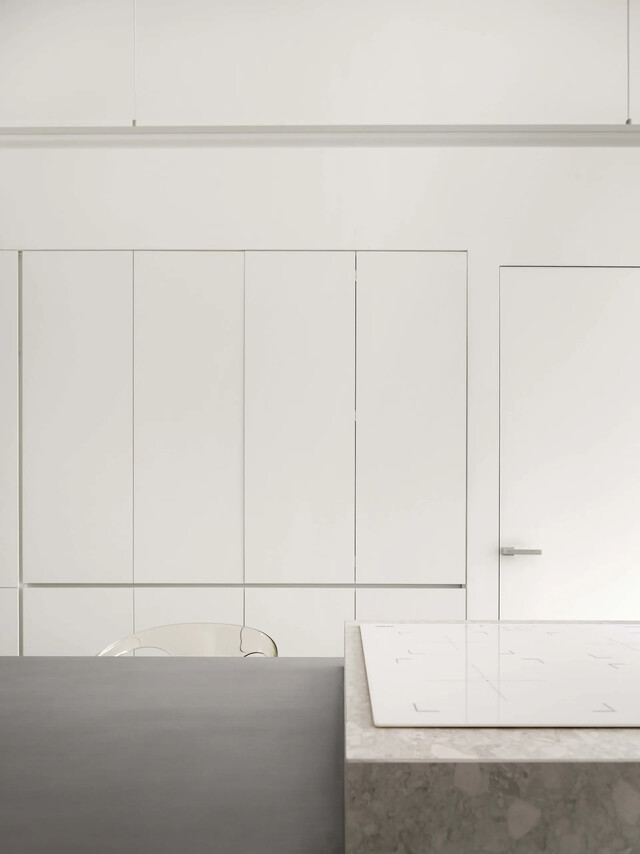
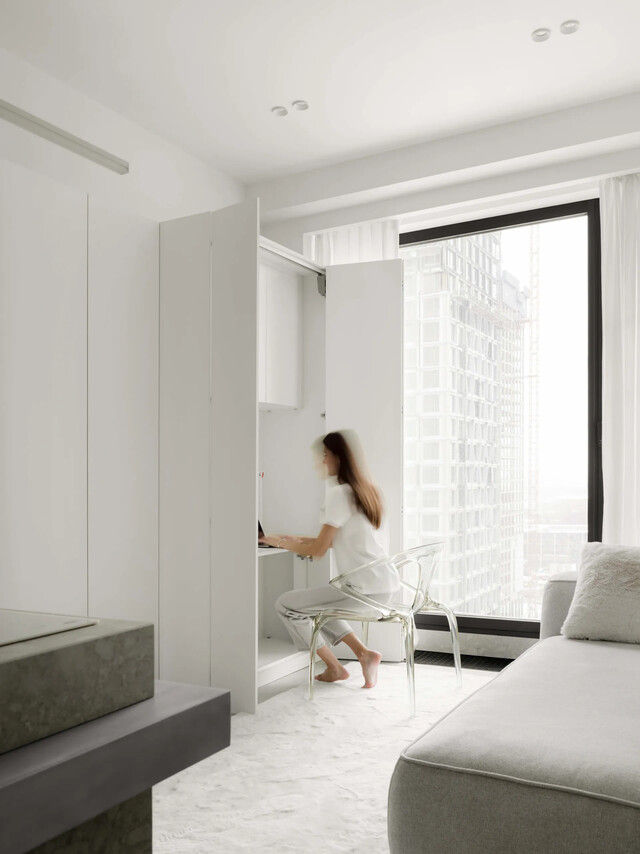
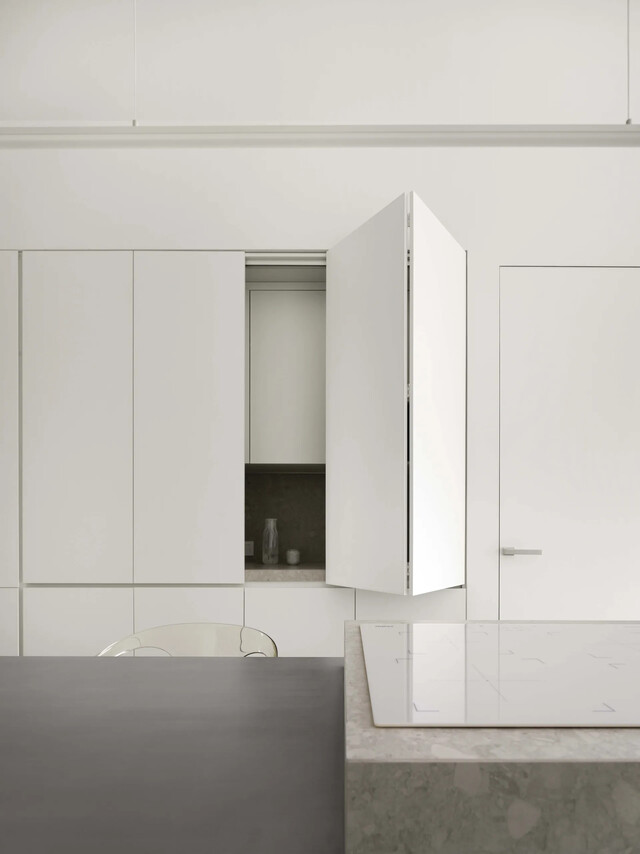
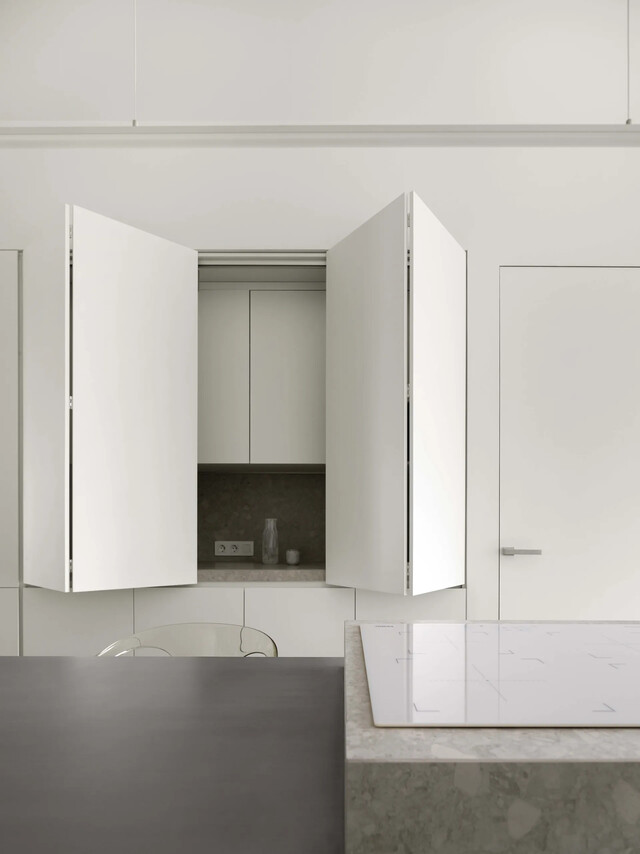
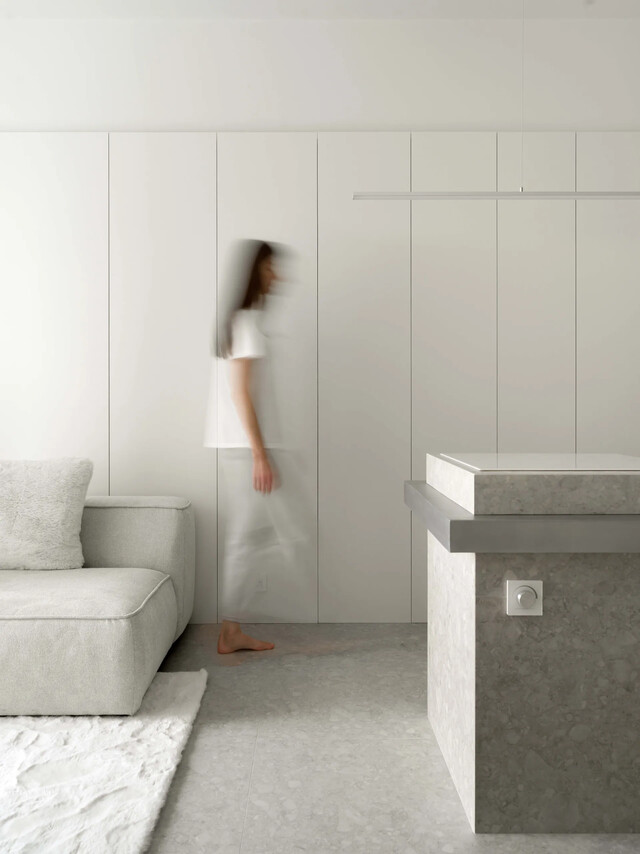
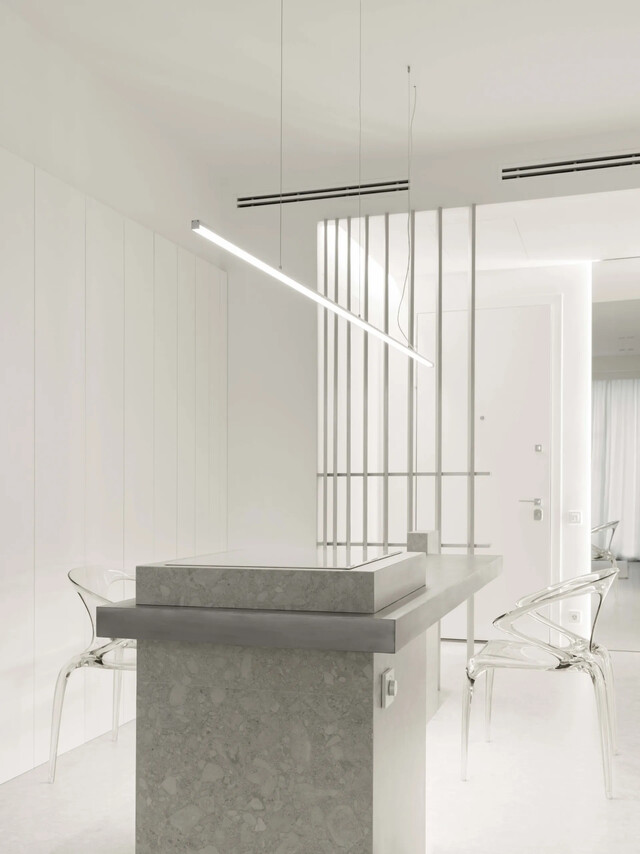
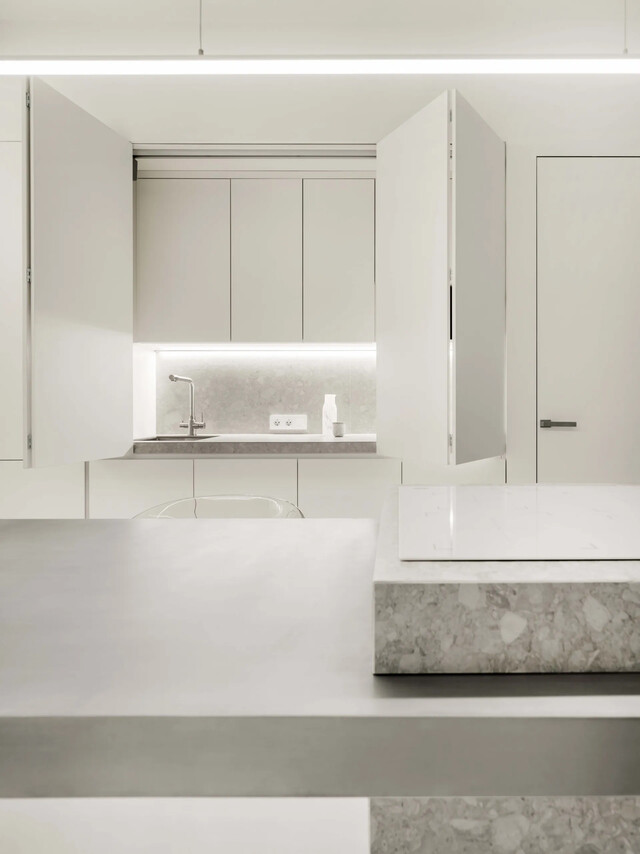
The main space comprises an entrance hall with a built-in storage area, as well as a dining room with a kitchen island, a kitchen, a living room, and a small office workspace. When entertaining guests, the residents can transform the majority of the space into a large dining room with a living room and kitchen, the latter which is completely hidden behind folding doors. For functional access, the fridge and the bottom of the storage boxes remain accessible. At first glance, folding doors concealing the workspace appear as wall panels in the living room, which are used as a backdrop for watching movies courtesy of a smart projector.
 
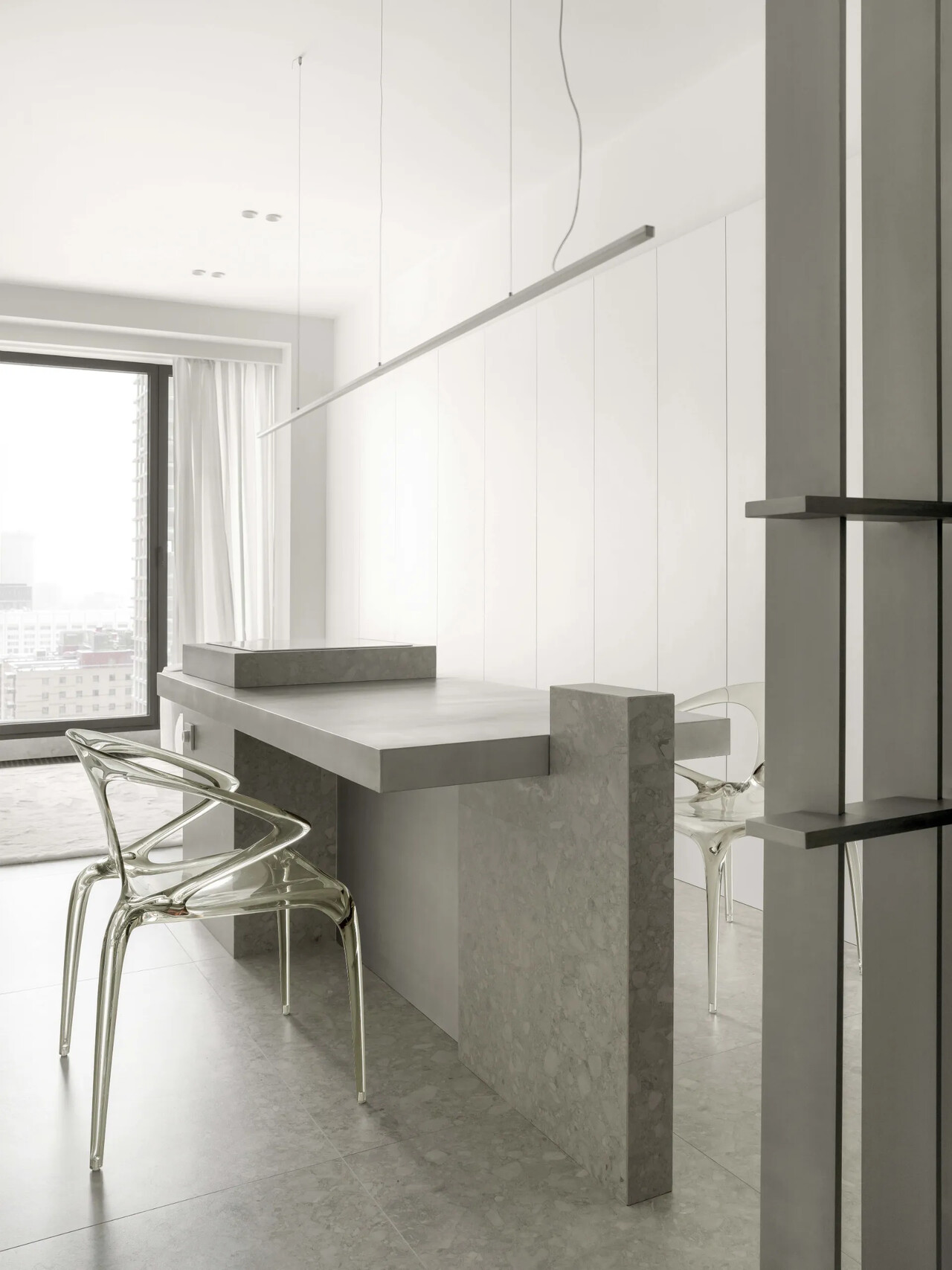
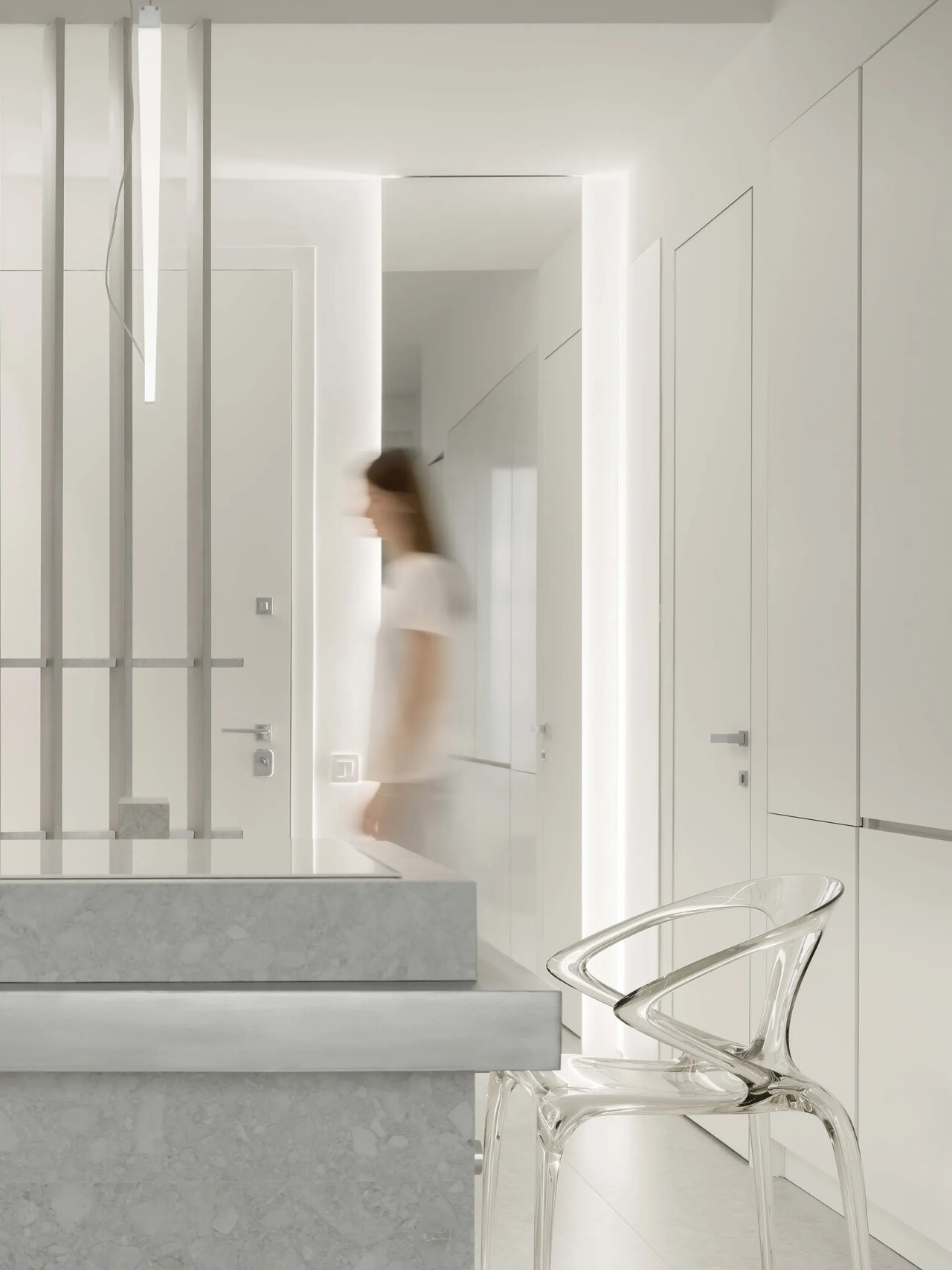
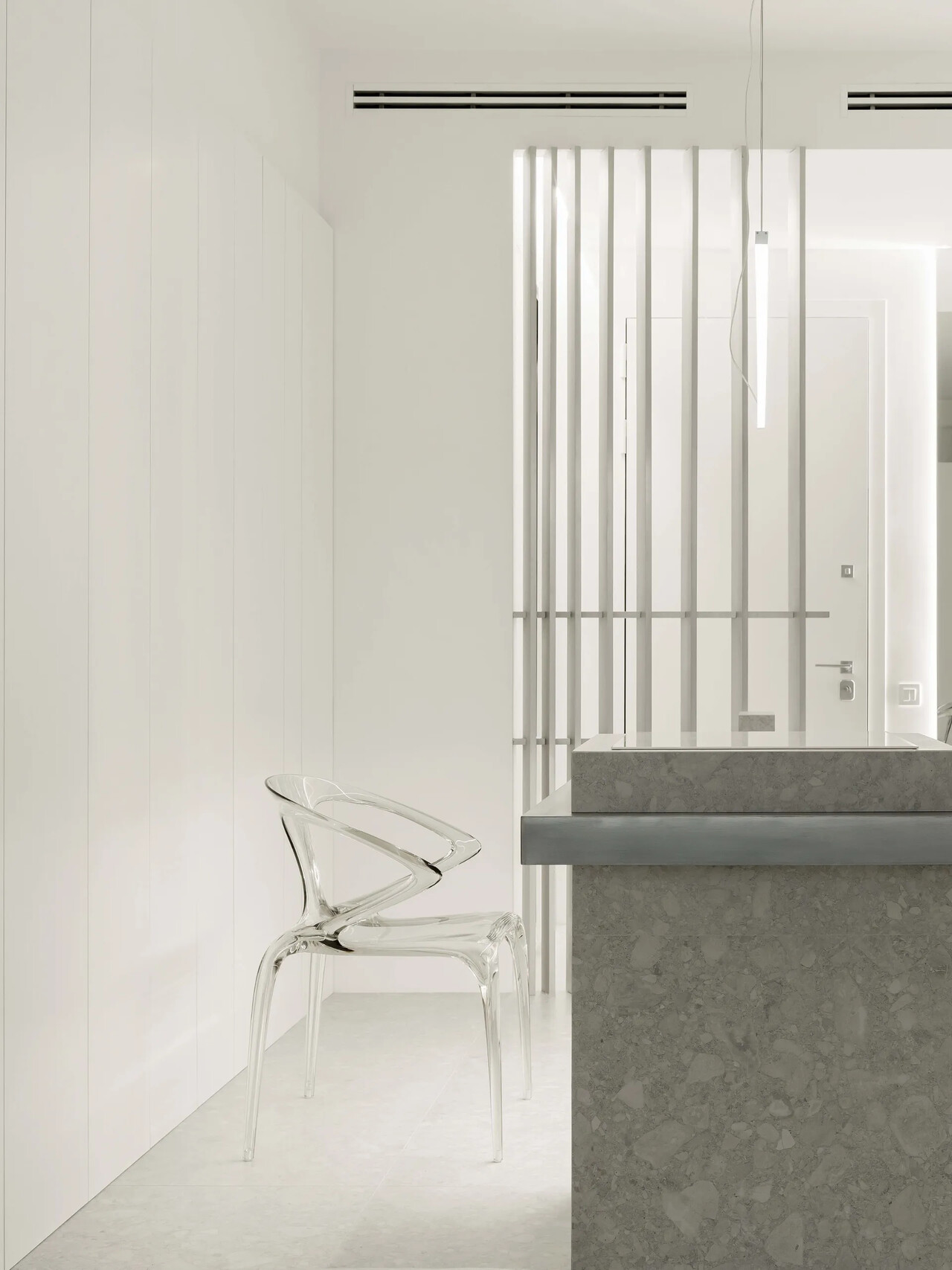
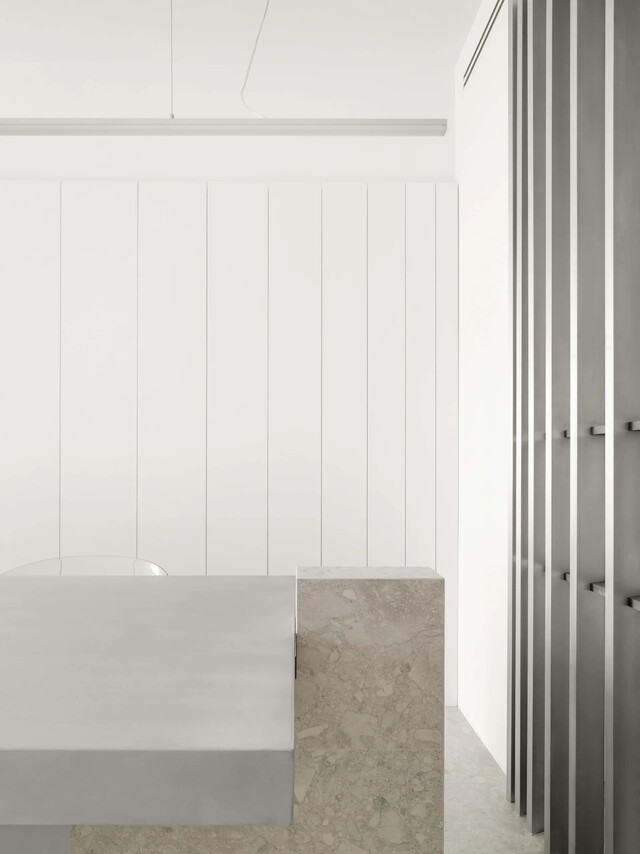
The functional purpose of the kitchen island, with a stove, is to create additional cooking space with direct access to the main kitchen. Folding doors provide wider access to the full kitchen, which offers classic operational spaces including a countertop, a sink, and a cutting table. With its clean geometric lines, the free-standing kitchen island serves as one of the main accents of the apartment, appearing as a sculptural element composed of three-dimensional shapes cutting into each other. The top surface of the island is composed of satin-finished aluminum. Its positioning exposes it to natural light entering the space, resulting in a captivating shimmer that helps set the mood on a sunny day.


功能細節


主要空間包括一個收納櫃體的入口玄關及廚房中島的用廳區、客廳和一個小型辦公工作區。招待訪客時,使用者可以將大部分空間轉換成一個大餐廳,結合客廳與廚房,後者完全隱藏在摺疊門後方。為了方便,冰箱和儲物櫃的底部仍然可以使用。乍看隱藏工作區的摺疊門化身為客廳的牆板,可充當智能投影觀看的背景。


中島檯面上規劃一個可以額外烹飪的空間,與主廚房連接。摺疊門創造更寬敞的入口進入廚房基本的備餐空間,如檯面、水槽和備料台。憑藉其簡潔幾何線條,這個獨立的中島成為空間的主要焦點之一,如同雕塑元素般呈現,由三維形狀相互切入而成。中島頂部由絲光鋁製成,由於其位置正對著進入空間的自然光,產生迷人光源與氛圍效果。
 

Innovative solutions
 
The firm’s choice of railings adds yet another dual-purpose design element. The rails not only serve as an aesthetic addition, but also a functional one. Made of solid, seamless three-meter extruded aluminum, the railings separate the main space from the hallway, while also providing narrow shelving space for storing small items.
 
Another non-standard solution is infused into the hidden workspace in the living room. Behind the sliding doors, a free space for working with a desktop computer is enabled by incorporating a table with a folding base and legs.
 
The bathroom also presents an original solution, where a luminous stretch ceiling not only brightens the space, but also serves as an accent element, combining with a mirror to visually expand the space. Additionally, it echoes the effects of natural light permeating through the window.
 
With its austere design, hidden functions, clean white aesthetic, bright illumination, and simple geometry, White Cassette is Maxim Kashin Architects' interpretation of a modern and functional interior, designed for the needs of today.


創新解決方案


該公司選擇的欄杆為雙重設計元素增添了其他功能。這些欄杆不僅僅是一個美觀的補充,還具有功能性。由堅固、無接縫的三米壓縮鋁製成,這些欄杆將主空間與走廊分開,同時也提高了空間收納效能,存放小物品。


另一個創新的解決方案被融入到客廳的隱藏式工作空間中。滑動門後方,結合底座及桌腳的摺疊桌,提供可放置筆記型電腦的自由工作空間。


而浴室也以特殊的手法設計,發光的伸縮天花板不僅照亮了空間,同時還與鏡子結合成為重要的設計元素,使空間感在視覺上放大。此外,它與透過窗戶透進的自然光形成呼應效果。


以其簡樸的設計、隱藏功能、淨白美學、明亮照明及簡單的幾何形狀,“白色卡帶”是馬克西姆·卡辛建築師事務所對於現代且實用設計的詮釋,以滿足現今需求而設計。


Architects |  Maxim Kashin  Facebook  @kashinarchitect
Photographer |  Dmitry Chebanenko  Facebook  @dmitry_chebanenko
  • About
  • Privacy policy
  • Track Order
  • Customer
  • Contact
  • Join us
FACEBOOK
instagram
Language

Copyright © WABISABI ISSUE. 侘寂傳媒有限公司 統一編號:90451315

  • Projects
    • Worldwide
    • Interiors
    • Features
  • Contemporary
    • Exhibitions
  • Record
  • Lifestyle
  • City Explore
  • News
  • Issue
  • About
  • Privacy policy
  • Track Order
  • Customer
  • Contact
  • Join us
Language