


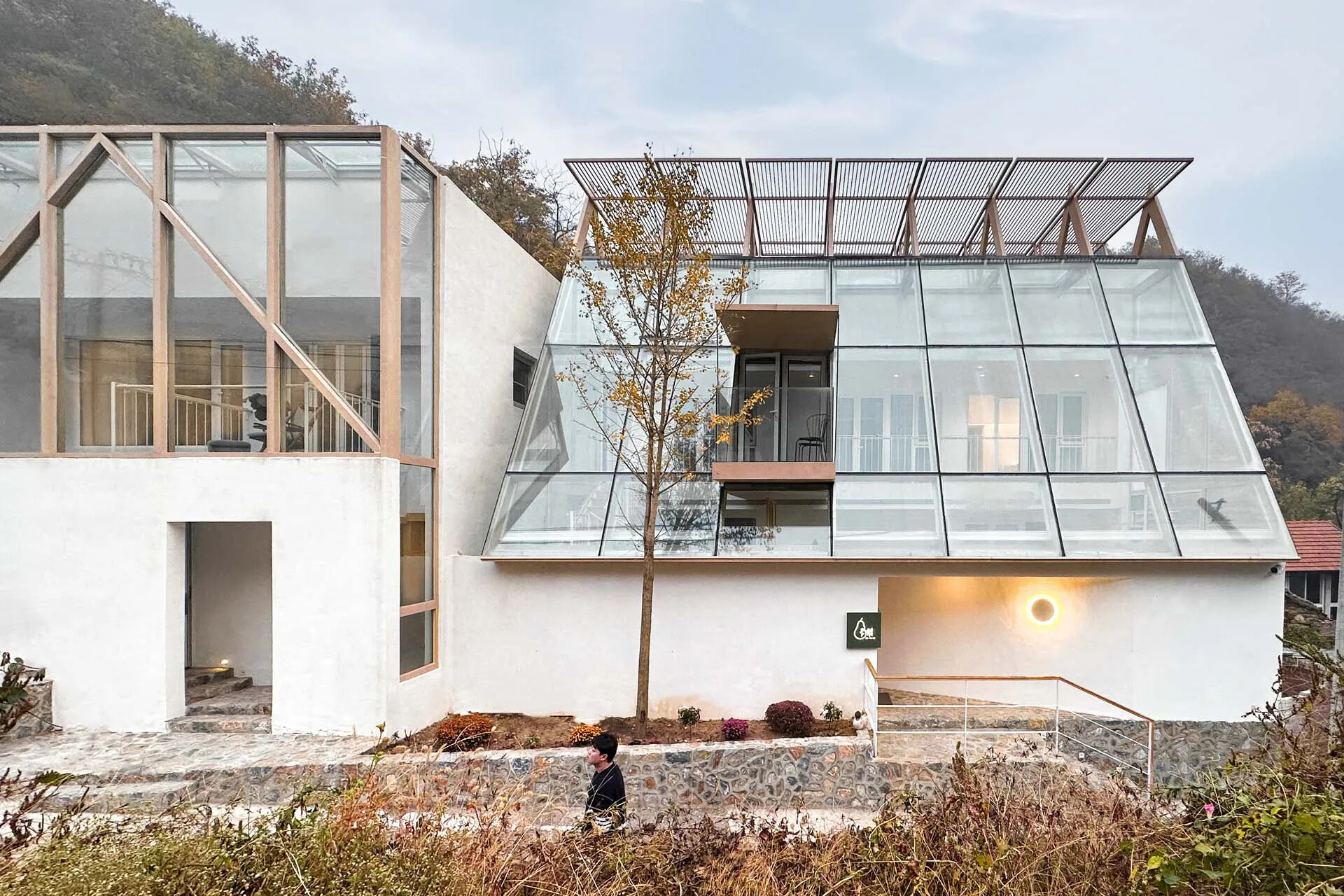
有梨民宿
業主是一對在北京城區工作的中年夫妻,2022年他們在北京遠郊平谷京東大峽谷附近租下了兩棟小房子,希望改造成一個有溫度、具有田園生活屬性的民宿。與業主的聊天中她提到的《人生果實》令我印象深刻,這是一部圍繞兩位夫妻三餐四季的日本紀錄片。雖未到現場,但通過前期的溝通我們已經對設計有了大概的想像。
The owners are a middle-aged couple working in the urban area of Beijing. In 2022, they rented two small houses near Jingdong Grand Canyon in Pinggu, a suburb of Beijing, they wanted to transform the house into a warm, pastoral home. In the conversation with the owner, I was deeply impressed by the "Fruit of Life" she mentioned, which is a Japanese documentary about the three meals and four seasons of two couples. Although we have not been to the site, we have already had a general imagination of the design through the early communication.
初到現場,被項目環繞的山體及周邊自然環境所吸引。但原有建築現狀並不理想,兩棟房子一大一小位於道路的拐角處、背靠山體,室內及庭院空間完全暴露在人們下山時的視野之中。建築為典型北方農村自建房,外觀和功能佈局過於粗野和單一。如何與周邊景觀對話、創造豐富的室內外空間以及營造舒適自然的田園空間氛圍成了此次改造設計的重點。
Arriving at the site for the first time, I was attracted by the mountain and surrounding natural environment surrounded by the project. However, the current situation of the original building is not ideal. The two houses are located at the corner of the road, backed by the mountain, and the interior and courtyard Spaces are completely exposed to the view of people when they go down the mountain. The building is a typical northern rural self-built house, and the appearance and functional layout are too rough and simple. How to communicate with the surrounding landscape, create rich Interior and outdoor Spaces, and create a comfortable and natural pastoral space atmosphere has become the focus of the renovation design.
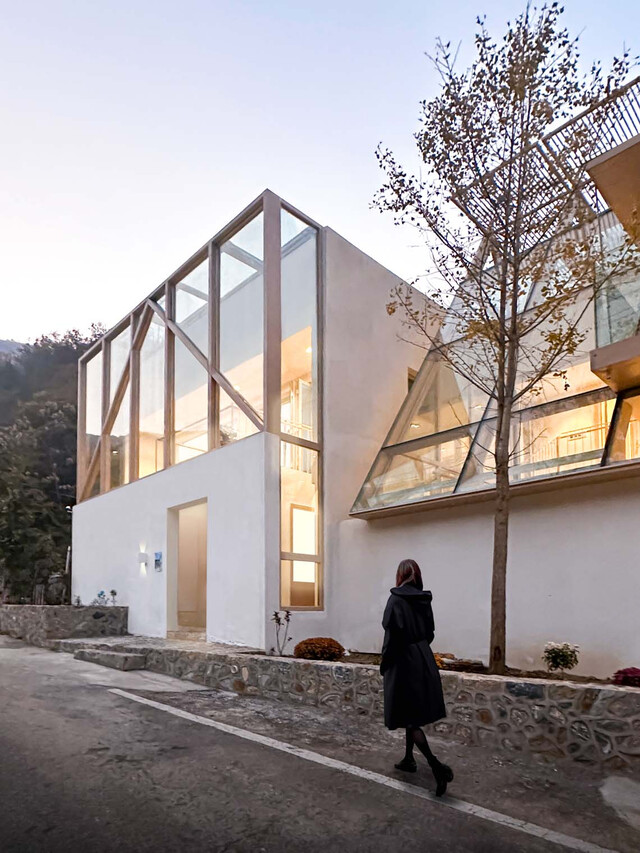
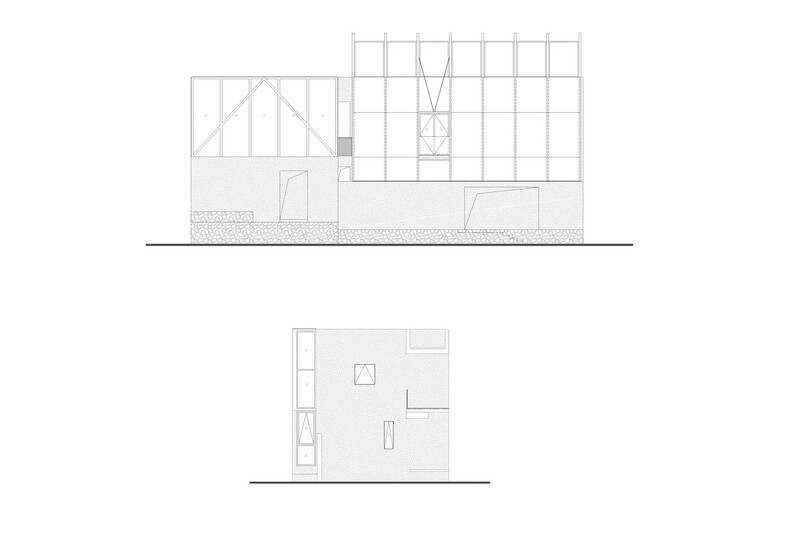
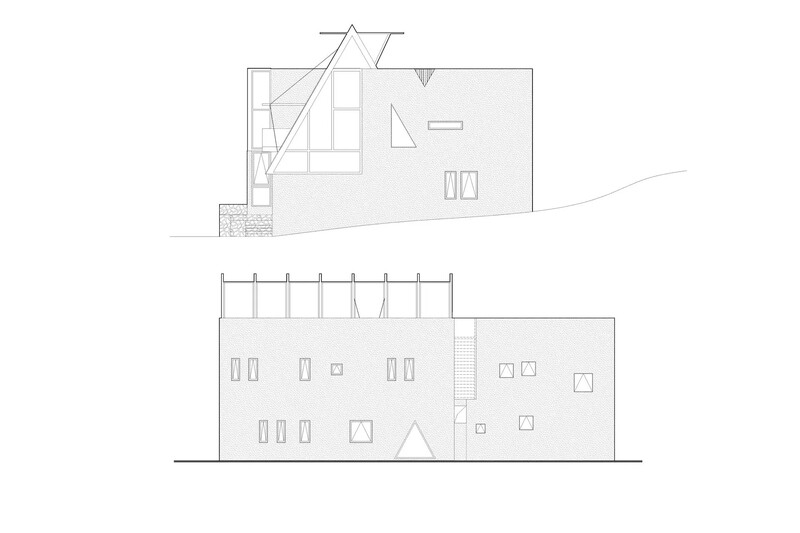
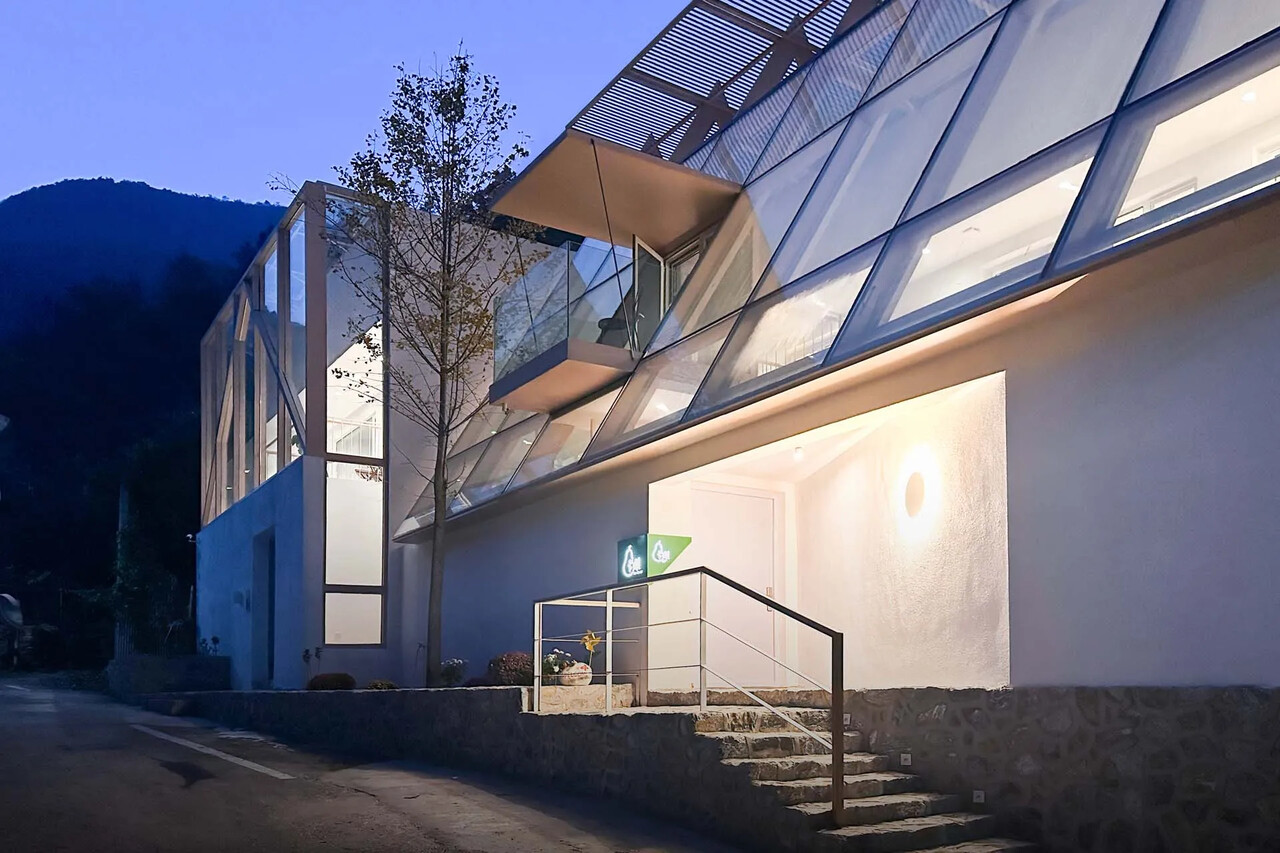
由於建築內部空間較小、北方冬季寒冷,將原有的庭院空間納入室內能很好地解決御寒、流線以及擴展室內空間的問題。大房子東側山牆是上山時被觀看的主立面,三角形在幾何圖形中易於識別,且極具視覺衝擊力。斜屋頂也比避免了因垂直體量過大造成的視覺壓迫,同時小房子的矩形體量作為背景,與斜屋頂一正一斜,互為因果。
Due to the small interior space of the building and the cold winter in the north, the original courtyard space can be incorporated into the interior to solve the problems of Keep out the cold, circulation and increase of interior space. The eastern gable of the large house is the main facade to be viewed when going up the hill, and the triangles are easily recognizable in the geometry and have great visual impact. The slanted roof also avoids the visual pressure caused by the large vertical volume, while the rectangular volume of the small house serves as the background, and the slanted roof is a positive and a diagonal, each other's cause and effect.
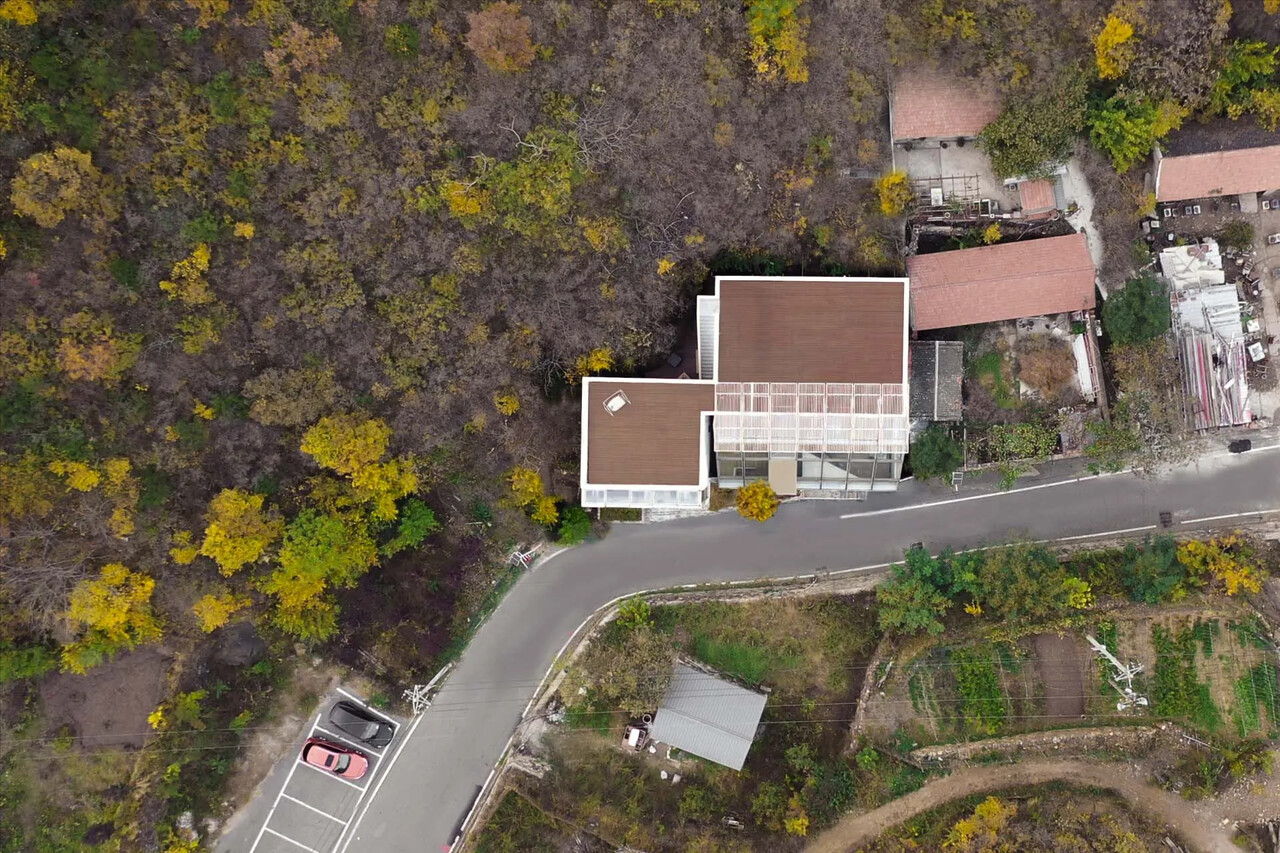
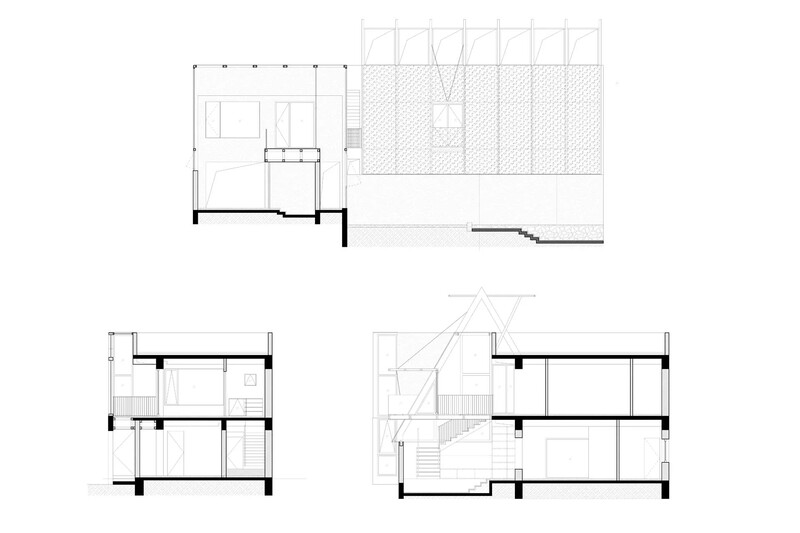
除了考慮視覺和心理因素外,我們也希望能與中國傳統建築產生對話與呼應。屋頂、牆身和台基的中國古建經典三段式構圖,同時解決了此次設計中處理入口高差、內部圍合與採光觀景的實際功能需求。原有建築大門緊鄰並正對街道,設計將出入口方向垂直扭轉並嵌入建築內部,根據建築外部形態形成了三角形和矩形的入口空間,不僅具有雨棚的實用功能,同時強調入口的空間引導性,形成了內外過渡的灰空間。即使在夏季,山裡的日落也很早,整個村子會變得暗淡。傍晚室內的燈光點亮建築和道路,發光的玻璃盒子為訪客和路人心中的「燈塔」。
In addition to considering visual and psychological factors, we also hope to create a dialogue and echo with traditional Chinese architecture. The classical three-stage composition of the roof, the wall and the base of the ancient Chinese architecture also solves the practical functional needs of the design to deal with the height difference of the entrance, the internal enclosure and the lighting and viewing. The original building gate is directly adjacent to and facing the street, and the design turns the direction of the entrance vertically and inserts it into the interior of the building, forming a triangular and rectangular entrance space according to the external form of the building, which not only has the practical function of the canopy, but also strengthens the spatial guidance of the entrance, forming an excessive gray space inside and outside. Even in the summer, the sun sets early in the mountains, and the whole village turns dark. In the evening, the interior lights up the buildings and roads, and the illuminated glass boxes serve as "beacons" for visitors and passers-by.
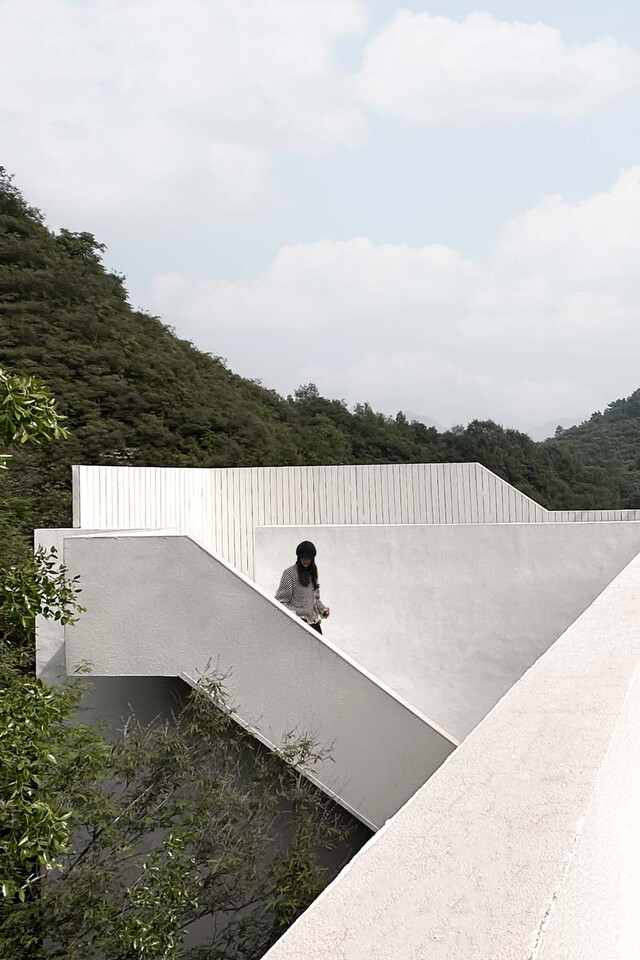
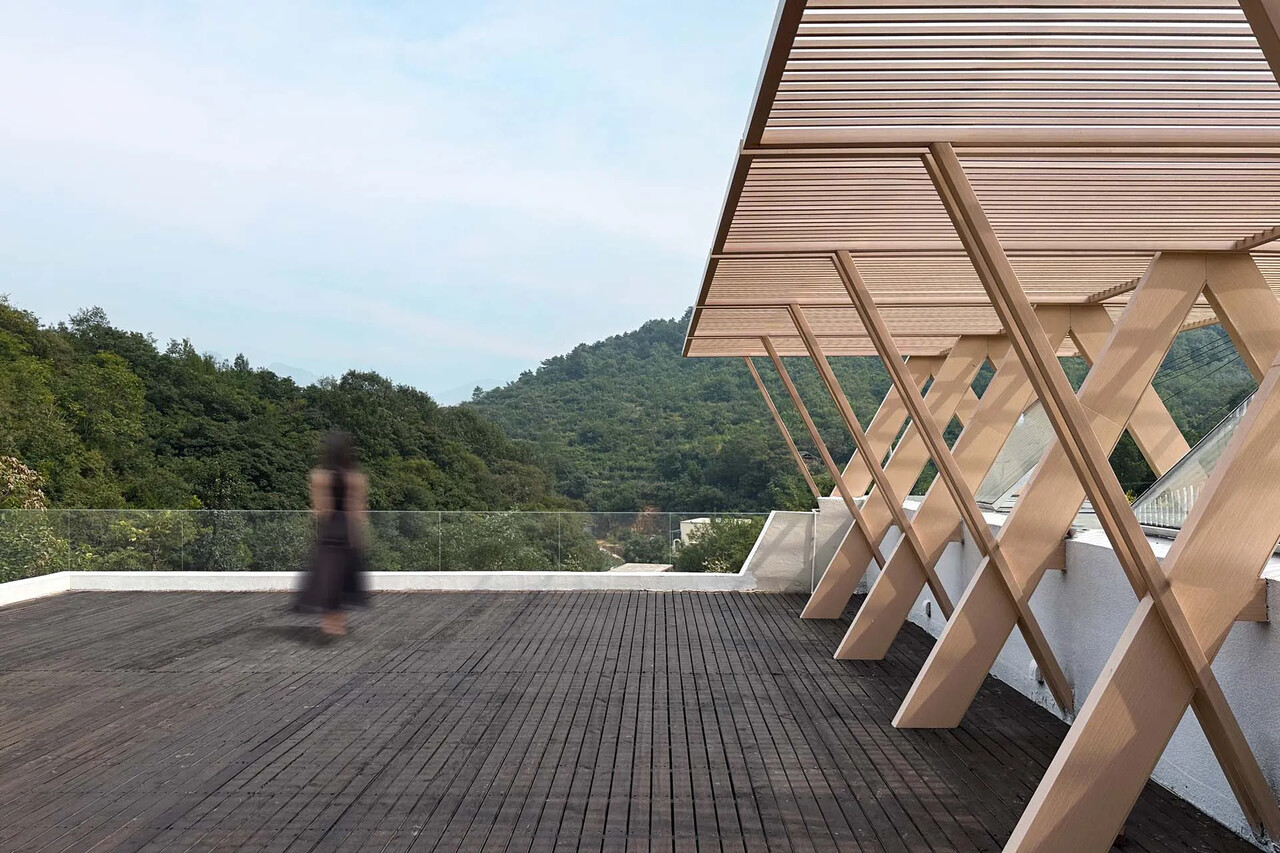
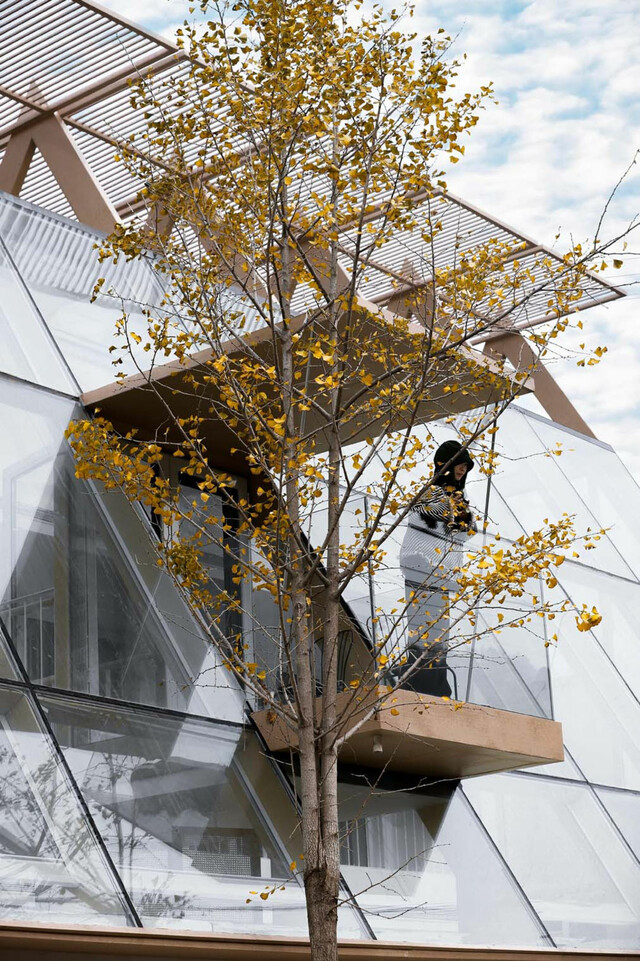
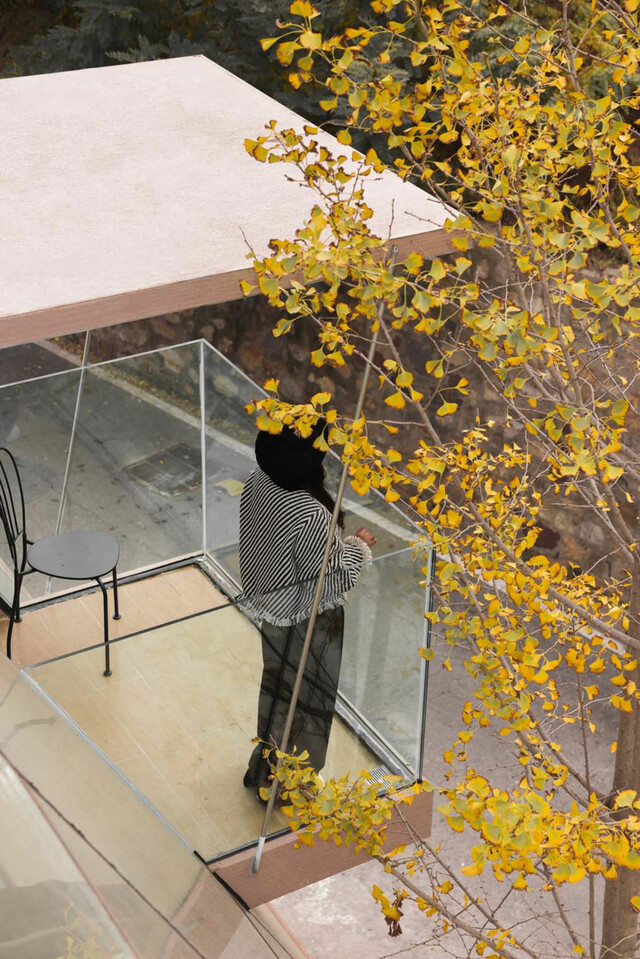
場地道路南側有一片不大的園子,業主希望後期改造成為民宿的服務配套。斜屋面伸出的挑台拉近了對面山體的觀看距離,也成為日後與對面場地對話的平台。改造前原有建築屋頂無法上人,我們在兩棟房子間的縫隙設置了外掛樓梯,從而避免樓梯佔用過多的室內空間,同時也能為訪客提供不同觀賞山景的視角和空間感受。
There is a small garden on the south side of the site road, and the owner hopes to transform it into a supporting service for homestays in the later stage. The protruding platform of the inclined roof shortens the viewing distance of the opposite mountain, and also becomes a platform for dialogue with the opposite site in the future. Before the renovation, the roof of the original building could not be filled, so we set an external staircase in the gap between the two houses to avoid the stairs taking up too much interior space, but also to provide visitors with different perspectives and spatial feelings of the mountain view.
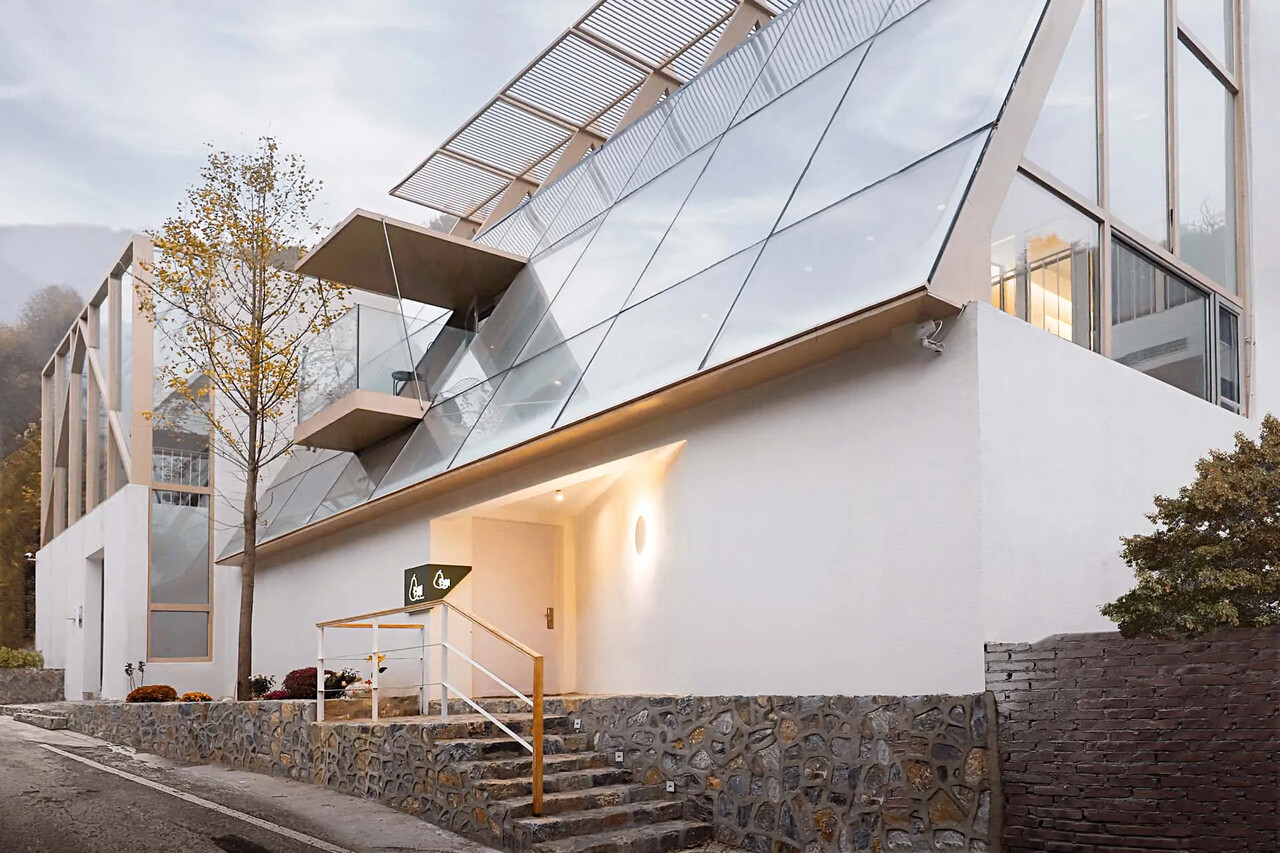
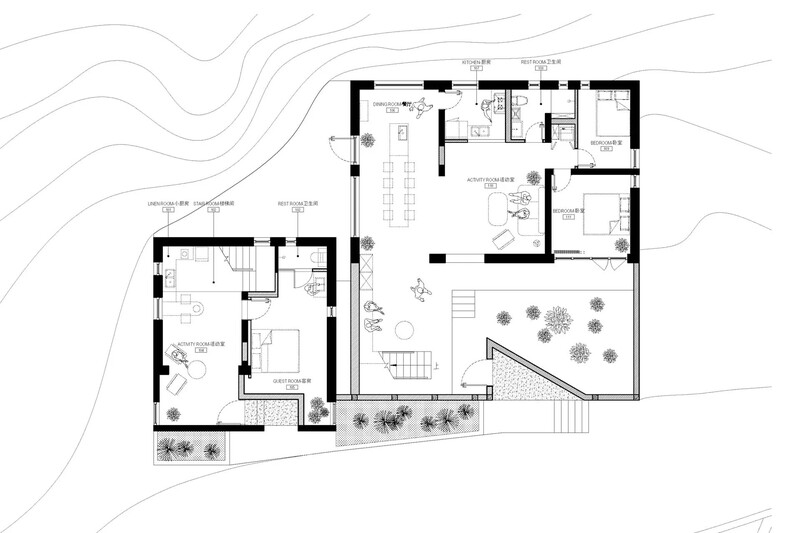
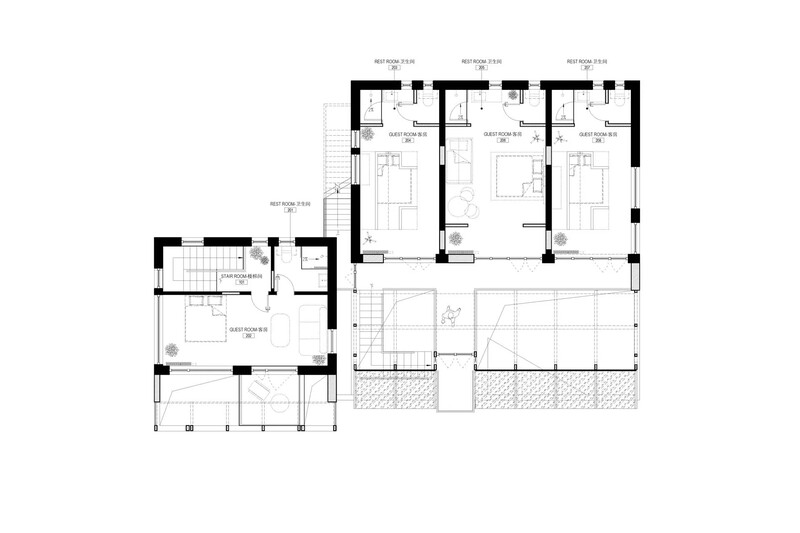
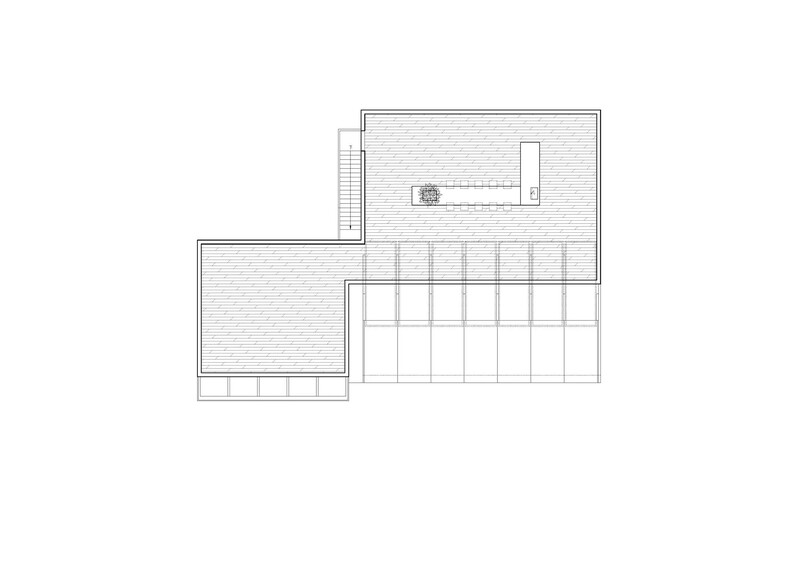
斜屋面伸出的挑台拉近了對面山體的觀看距離,也成為日後與對面場地對話的平台。改造前原有建築屋頂無法上人,我們在兩棟房子間的縫隙設置了外掛樓梯,從而避免樓梯佔用過多的室內空間,同時也能為訪客提供不同觀賞山景的視角和空間感受。
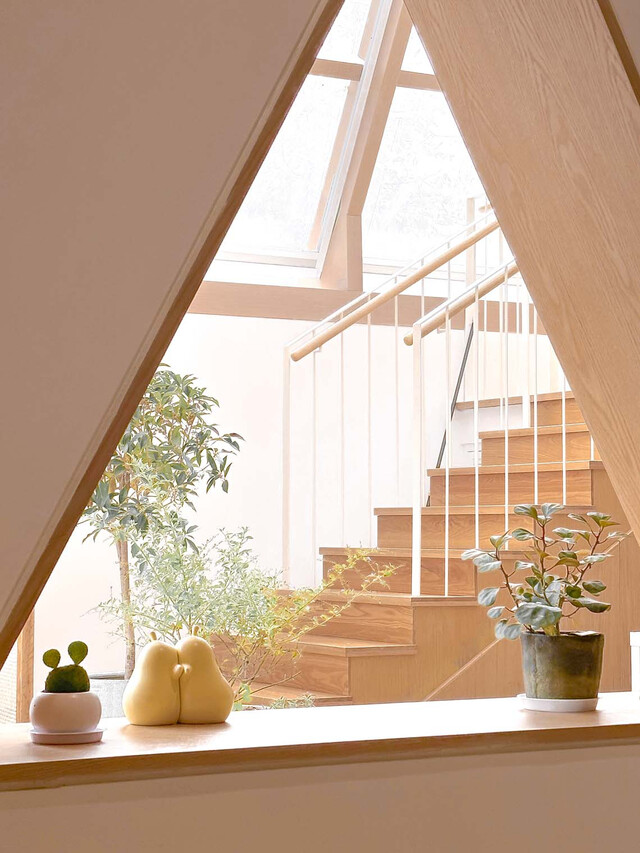
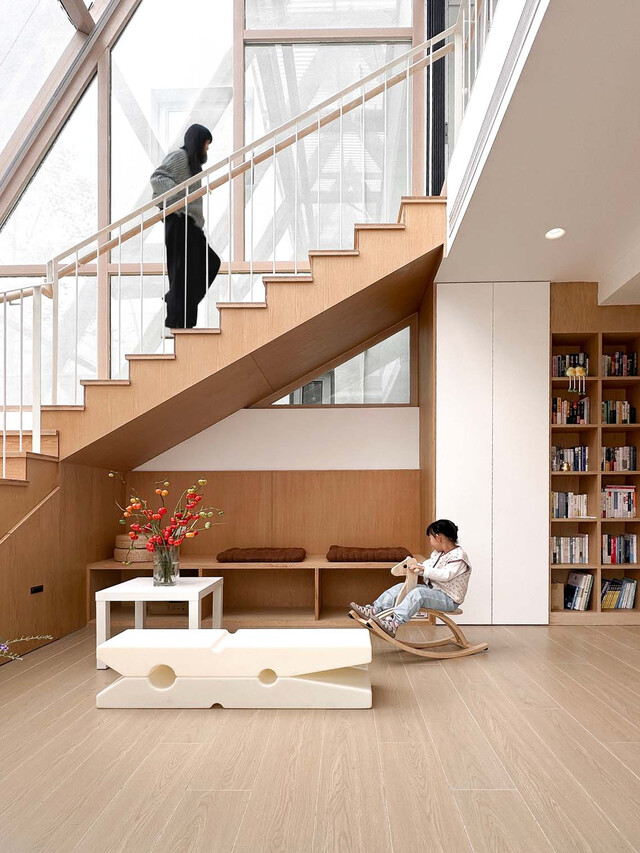
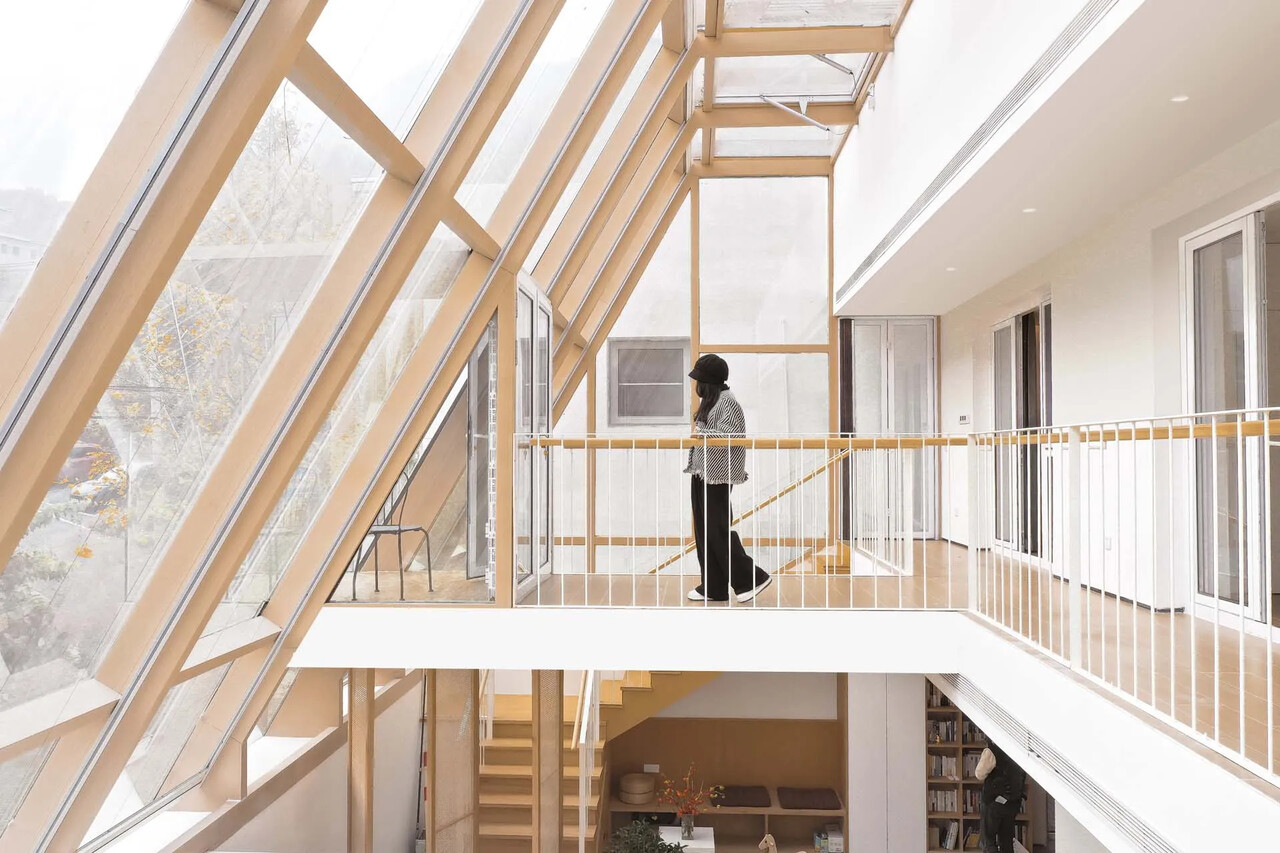
The space covered by the inclined roof has more possibilities for living scenes. Through the redesign of the elevation and the organization of the flow line, the original staircase was preserved, and the lower part of the staircase formed a rich activity space. We want to redefine the service space of stairs and corridors, which are transportation attributes, and make them the protagonists of spatial modeling elements. The corridor is not only a channel connecting the interior and exterior, but also plays a key role in the space division and external modeling of the building. Staircases, corridors, and ever-changing elevations all appear in one scene, reminiscent of Escher's work where different Spaces and perspectives converge.
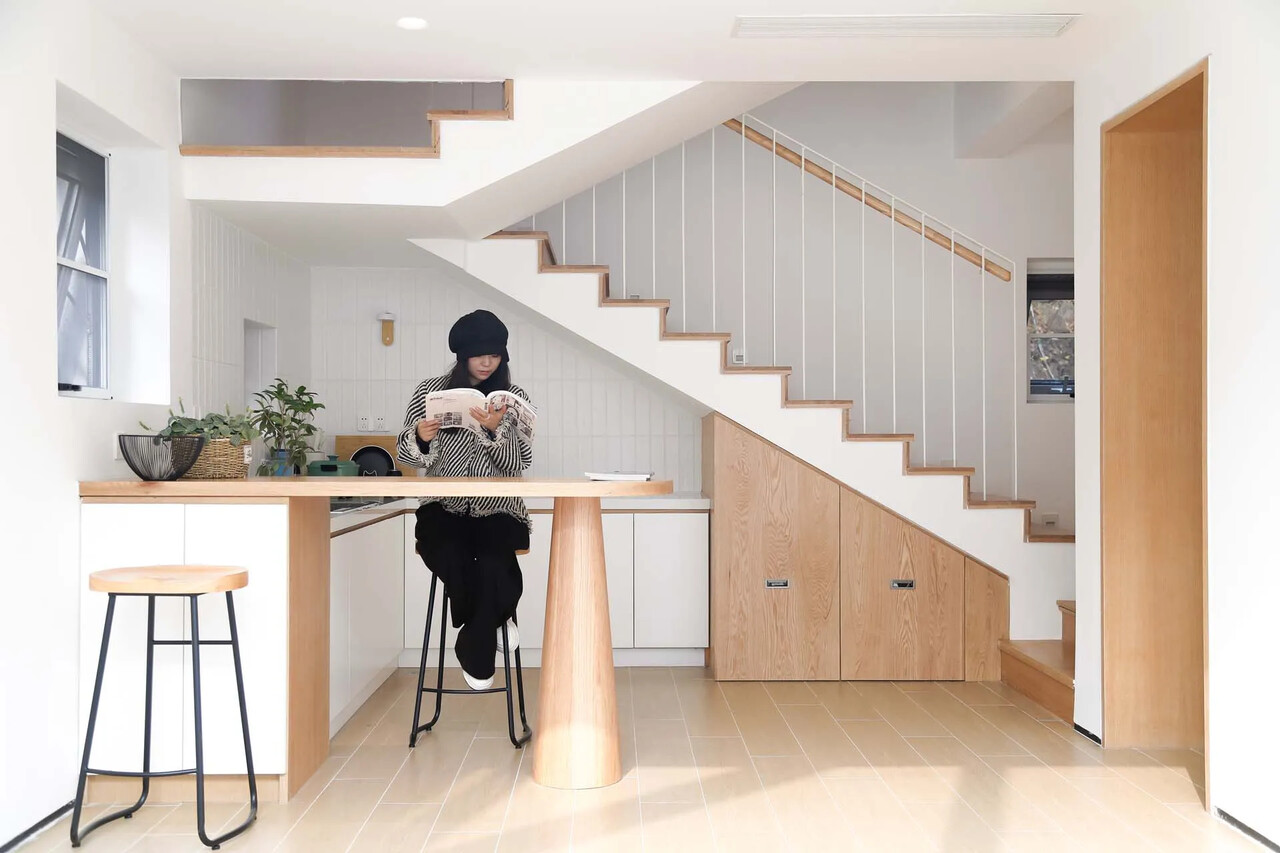
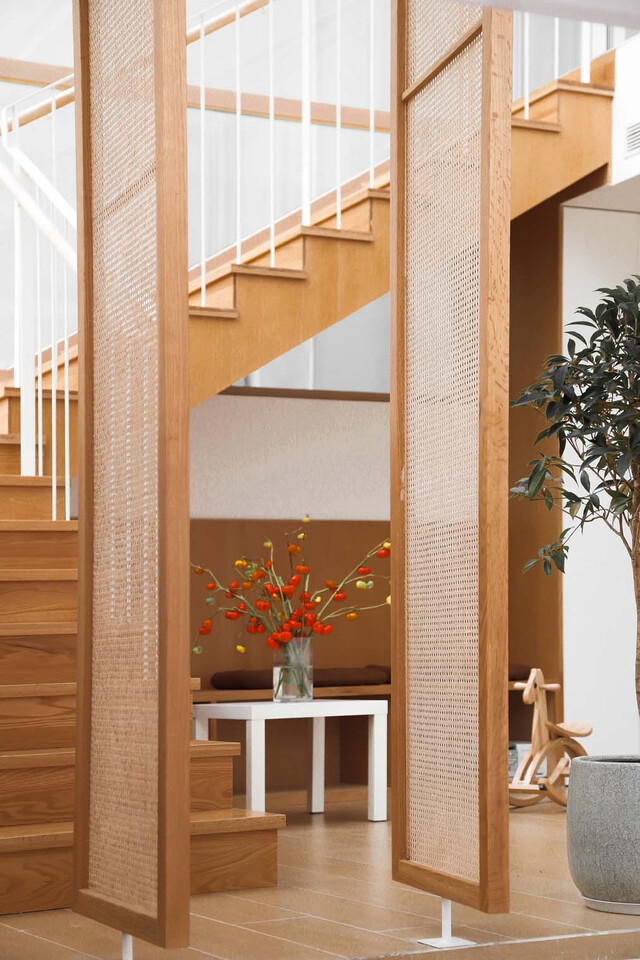
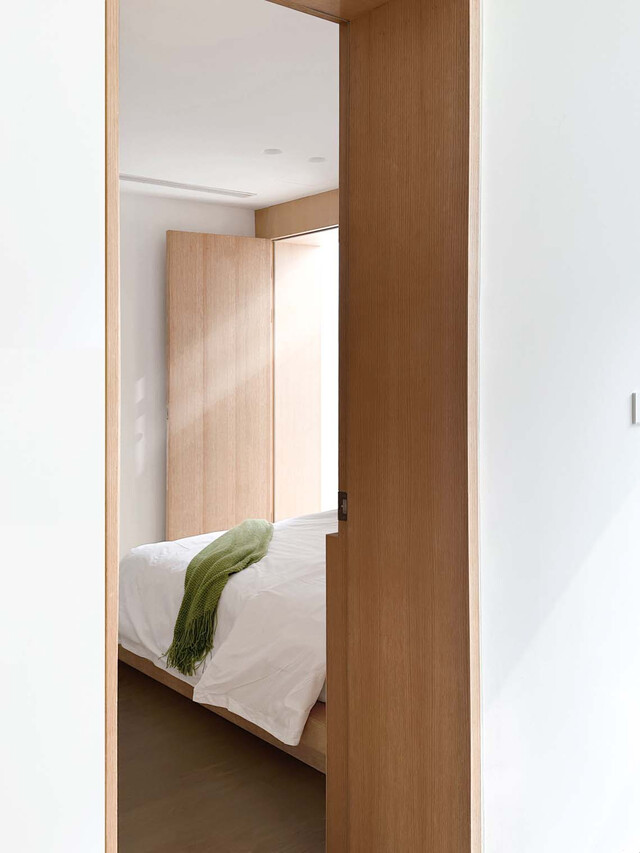
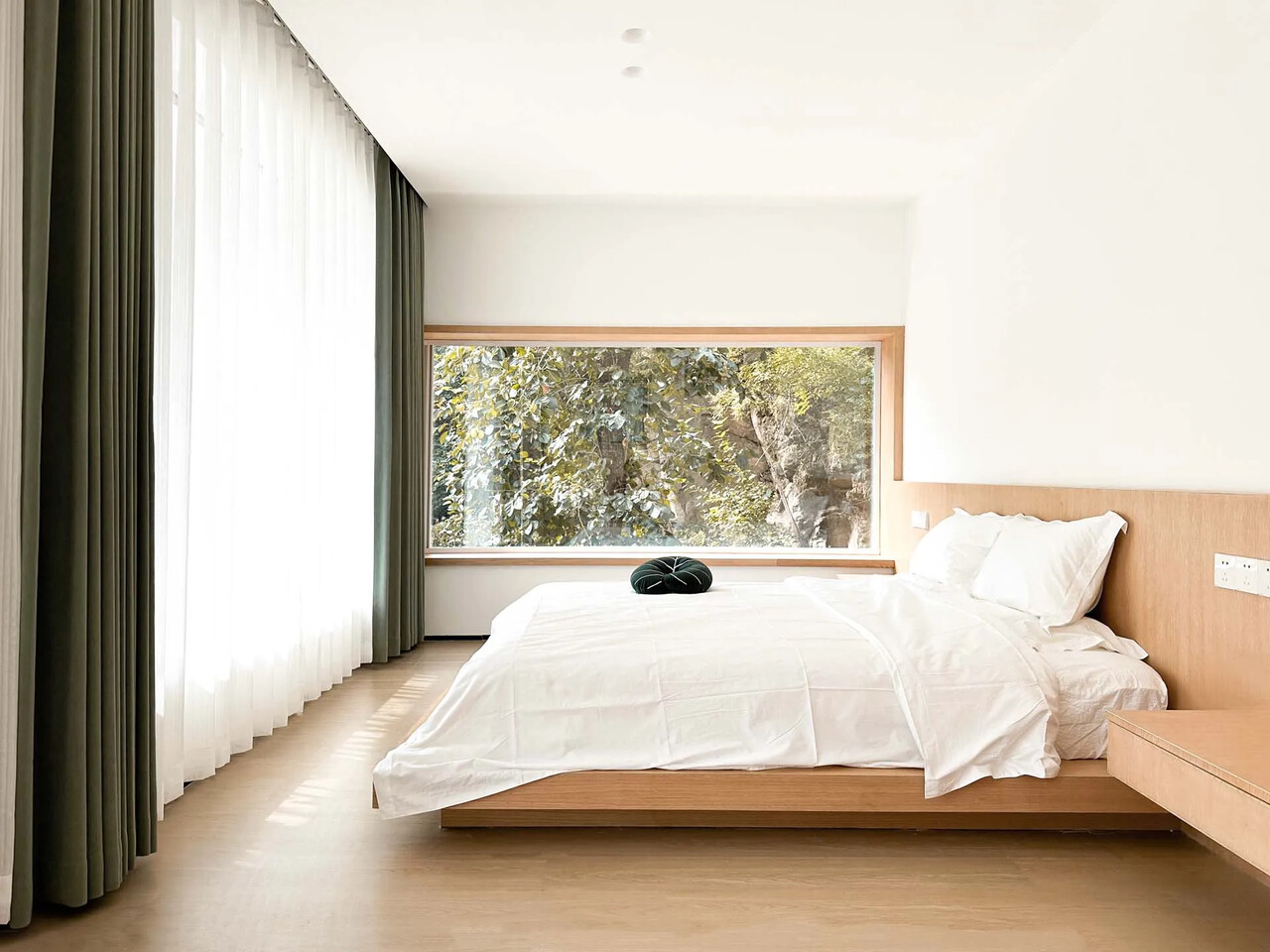
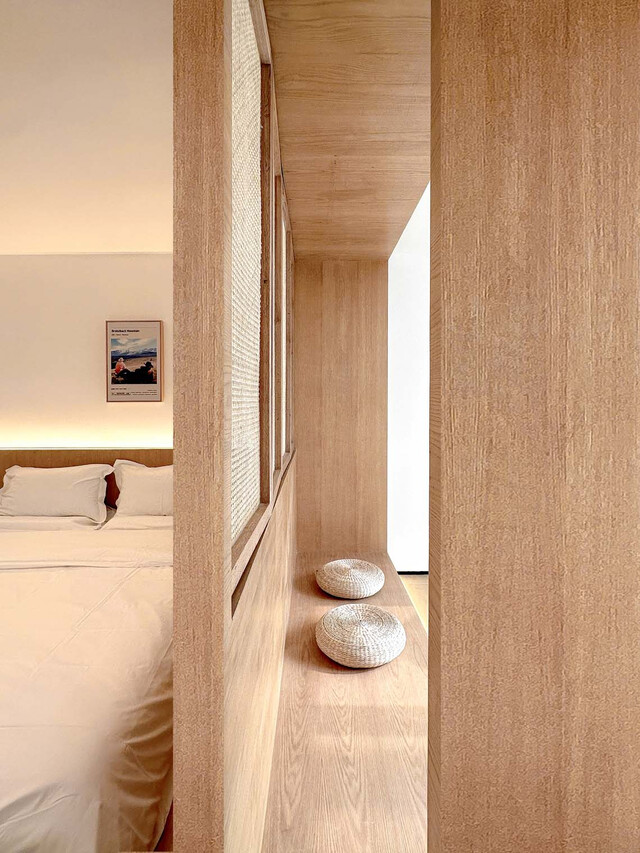
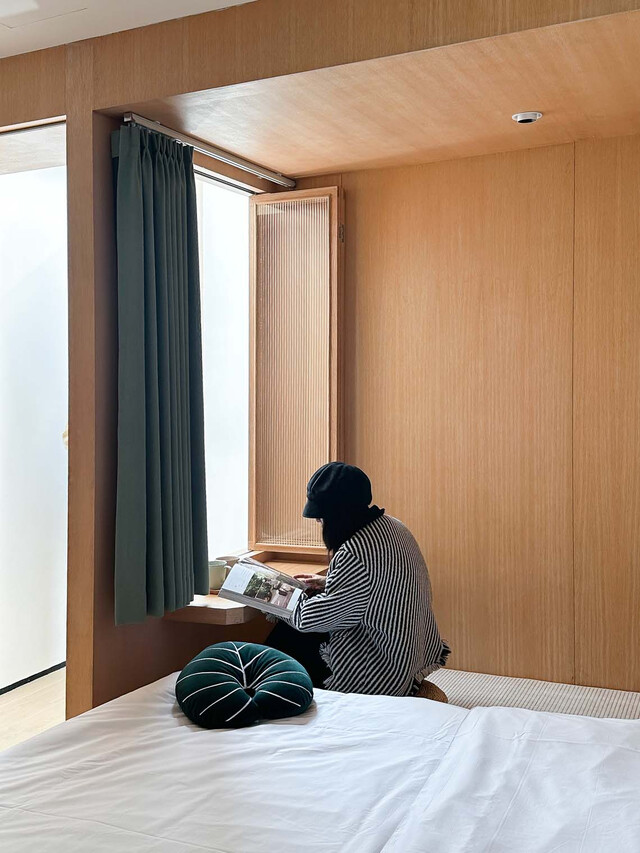
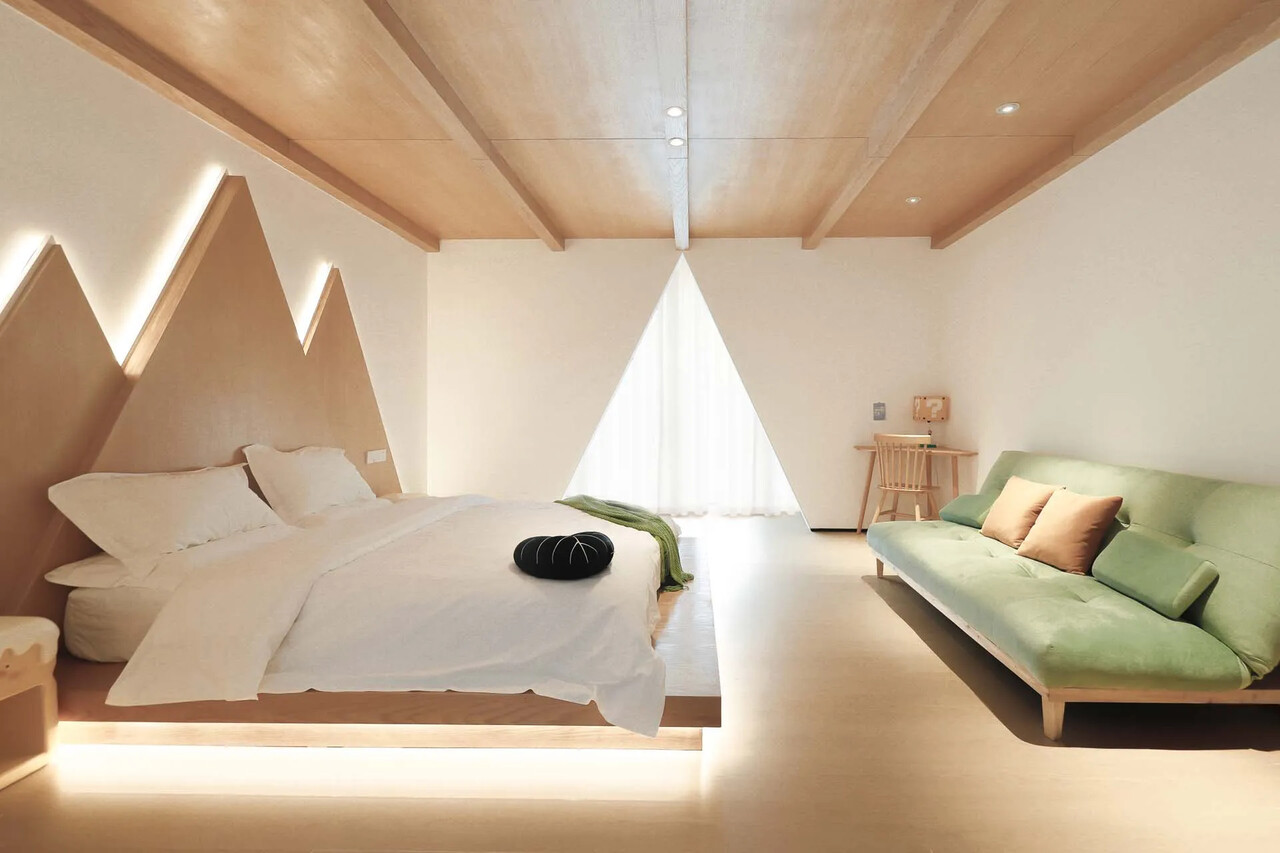
設計室內空間時,我們沒有使用或挑選任何特殊的材料。設計基調是使用木材這種天然材料,希望通過使用普通但優質的木材來體現放鬆、舒適和某種程度的品質感。結構、玻璃、欄杆這些建築語彙成了室內元素的一部分,改造後室內空間具有更多建築的意義,模糊了室內和室外的界限。客房空間沒有刻意做過多裝飾性設計,而是根據原有房屋現狀將起居、休閒、觀景等功能要素融入。同時結合經營需要呈現出建構、本質和獨特的空間形態。
When designing the interior Spaces, we did not use or select any special materials. The base of the design is the use of wood, a natural material, and the hope is to reflect relaxation, comfort and a certain sense of quality through the use of ordinary but high-quality wood. The architectural vocabulary of structure, glass and balustrade becomes part of the interior elements, and the interior space has more architectural significance after the transformation, blurring the boundary between indoor and outdoor. The guest room space does not deliberately do too much decorative design, but according to the status quo of the original house will be living, leisure, view and other functional elements into the integration. At the same time, combined with the management needs, it presents the construction, essence and unique space form.
Design Studio · Images | Brick & Cube Architects