


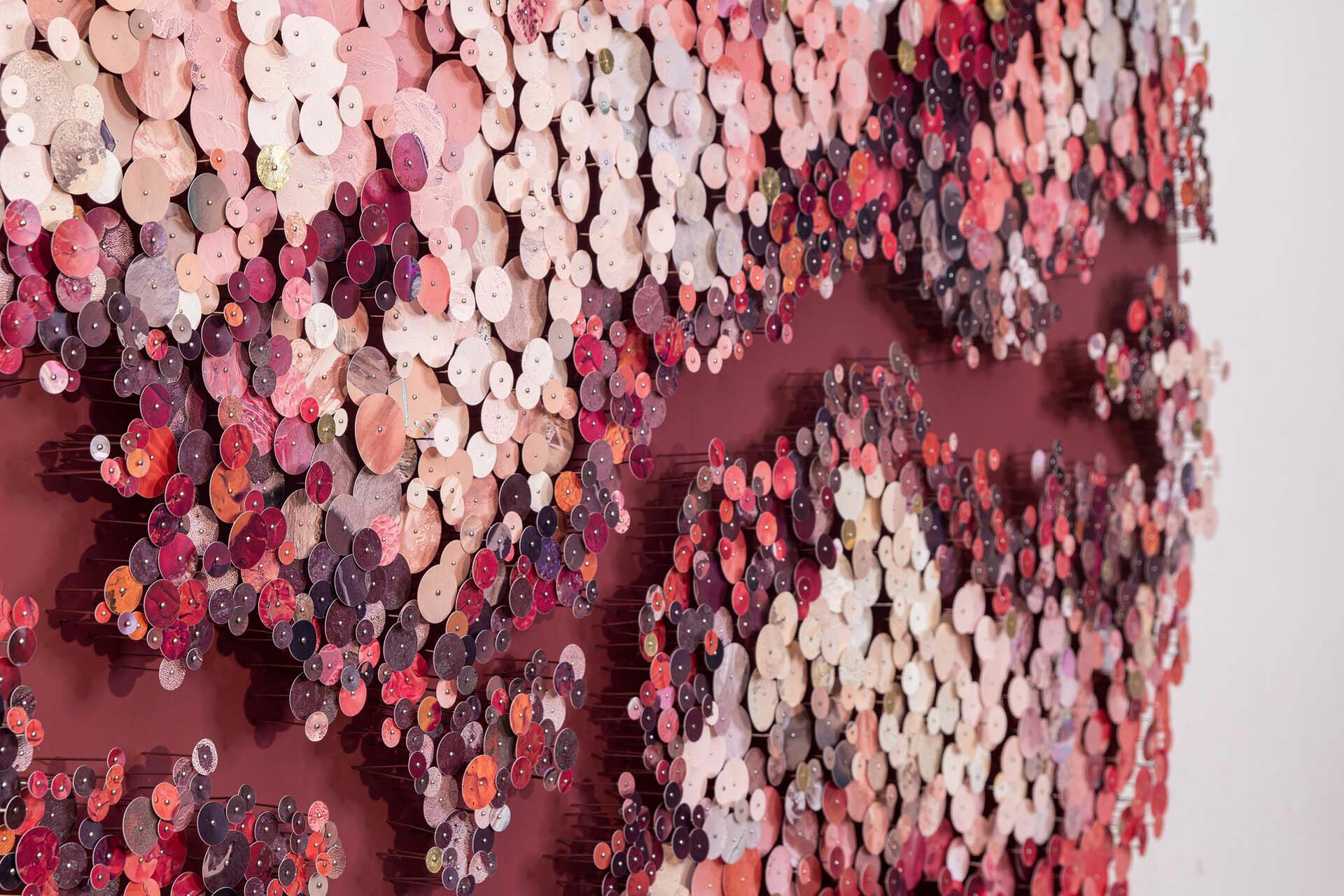
➤ 作品局部細節 Nuovi Mondi, Detail
分子星座:從碎片中,長出新的自己
A Constellation of Molecules: A New Self Takes Shape from Fragments
「我們由星辰物質構成。」天文學家 Carl Sagan 在經典紀錄片《宇宙:個人遊記》留下這個觀點,引導觀者反思人與宇宙的關係。從科學的角度來看,嬰兒自出生起,便隨著成長不斷透過感官摸索自己與環境的邊界,逐漸建立自我意識。當人們確立主體與客體的區分後,學會用第三者的角度審視自己、在乎他人眼光,卻忘了構成自身肉體的許多元素,本存在於世界與廣大的宇宙之中。本質上,個體與整體、自我與他者間從未真正分離;而「身分與肉體即固定形式」的守舊思想,正是義大利藝術家 Micaela Lattanzio 透過如動態馬賽克般的創作,試圖破解的框架。
“We are made of star stuff.” With this line in the landmark documentary series Cosmos: A Personal Voyage, astronomer Carl Sagan invited viewers to reconsider humanity’s relationship with the universe. From birth, infants use sensory experience to explore the boundary between themselves and their surroundings, gradually developing self-awareness as they grow. Once the distinction between self and other becomes established, we learn to see ourselves through other people’s eyes and to care about how we are perceived. Yet we often forget that many of the elements that make up our bodies are also present throughout the natural world and the wider cosmos. For Italian artist Micaela Lattanzio, the boundaries between the individual and the whole, and between self and other, are never absolute. Through dynamic, mosaic-like works, she challenges the entrenched assumption that the body and identity are fixed forms.
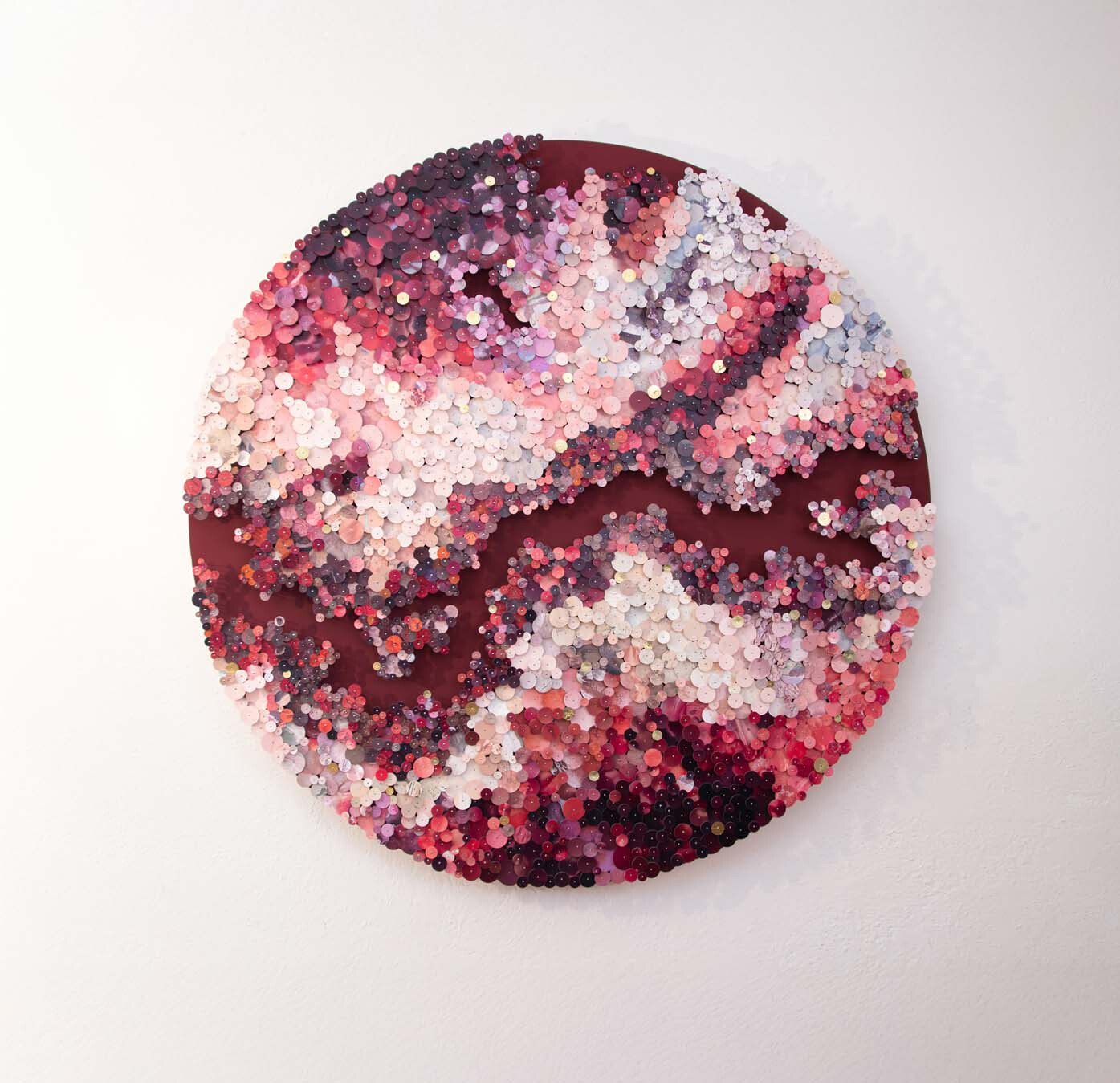
➤ Nuovi Mondi, 2025, 108 cm
解構外在表象,讓身體分子化
Beyond the Surface: The Body in Molecular Form
回看周遭,在當代社群媒體的發展下,人們身處於標籤化、審美規訓與數位社交彼此纏繞的環境,不可避免地須透過外在形象來傳達「我是誰」,或回應「他人如何定義我」。然而,臉孔與身形僅是承載社會辨識與認同投射的表層,無法完全吻合內在真實感受。對 Micaela Lattanzio 而言,碎片化是必要的過渡階段。換言之,對身體形象進行切割,意味著對其封閉形態、既定輪廓及表象穩定性提出質疑;同時,這種解構也蘊含重構的可能。當身體被分解為碎片,便開始擴張、轉化,並與空間、光線或動態建立連結,進而重組成更為開放、動態的全新形態。這也是為何她選擇將身體視為持續轉化的「分子星座」,使其超越物理界限去擁抱生命流動,並重新發現自己與世界的深層聯繫。
With social media woven into daily life, we inhabit a culture shaped by labels, aesthetic norms and digitally mediated relationships. Outward appearance has become an almost unavoidable way of communicating who we are and responding to how others define us. Yet the face and body are only the surfaces through which we are socially recognised and onto which ideas of identity are projected. They do not always correspond to our inner sense of self. For Lattanzio, fragmentation is a necessary transition. Cutting into the photographic image of the body calls its closed form, fixed contours and apparent stability into question. At the same time, deconstruction creates the possibility of reconstruction. Once the image is broken into fragments, it does not disappear. The pieces acquire a spatial presence, catch the light and change with movement. Reassembly does not restore the original image. It creates a new configuration that is more open, more dynamic and less bound to a fixed idea of identity.
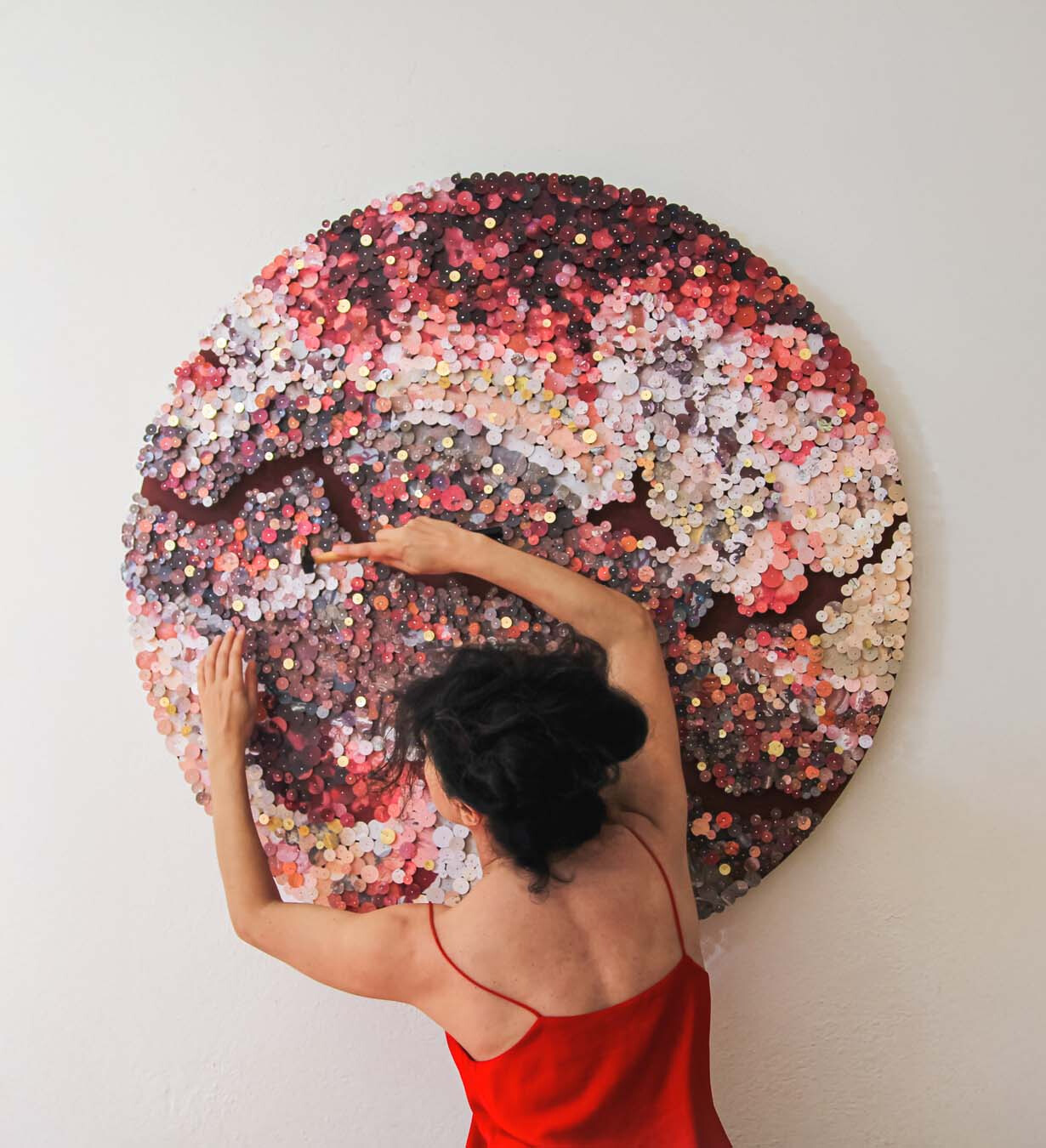
➤ 製作過程 Production Process
當然,Micaela 的「分子式碎片化」藝術語言,深植於故鄉羅馬的雕塑、壁畫與馬賽克文化滋養,也集結了她自幼以攝影為視覺日記、深研繪畫與馬賽克技法的經驗。2008 年,她首次構想並嘗試將攝影影像手工裁切、碎片化,再重組為三維物質感的存在,就此成為她日後創作的探索核心,而碎片的分布、尺度與色彩皆源自直覺且具繪畫性的構思。她透過色彩引導觀者視線,在密集處凝聚視覺張力,疏朗的留白處則賦予畫面呼吸感。以《Nuovi Mondi》系列為例,其構圖由地球衛星照片的碎片建構而成;近看能辨識道路、城市等地理細節,退後遠觀,則幻化為顯微鏡下的細胞、黴菌或地衣。這種游移於宏觀與微觀間的多義性令她著迷,使創作既屬於這顆星球,又似源於微觀生物或宇宙深處。
Lattanzio therefore imagines the body as an ever-changing “constellation of molecules”, capable of extending beyond its physical limits, embracing the flow of life and renewing its connection with the world. Lattanzio’s language of “molecular fragmentation” draws on the traditions of sculpture, fresco and mosaic in her native Rome. It also brings together photography, which has served as a visual diary since childhood, with her study of painting and mosaic techniques. In 2008, she first conceived and tested a process of cutting photographs by hand into fragments and reassembling them so that the flat image acquired three-dimensional form and material presence. The process later became central to her practice. The placement, scale and colour of the fragments are guided by intuition and a painter’s eye. Colour directs the viewer’s gaze. Dense clusters build visual tension, while open areas give the composition room to breathe. In the Nuovi Mondi series, compositions are assembled from fragments of satellite imagery of Earth. Up close, roads, cities and other geographical details remain legible. From a distance, the same forms resemble cells, moulds or lichens under a microscope. Lattanzio is drawn to this ambiguity between planetary and microscopic scales. The source material is unmistakably terrestrial, yet the resulting forms evoke both microscopic life and deep space.
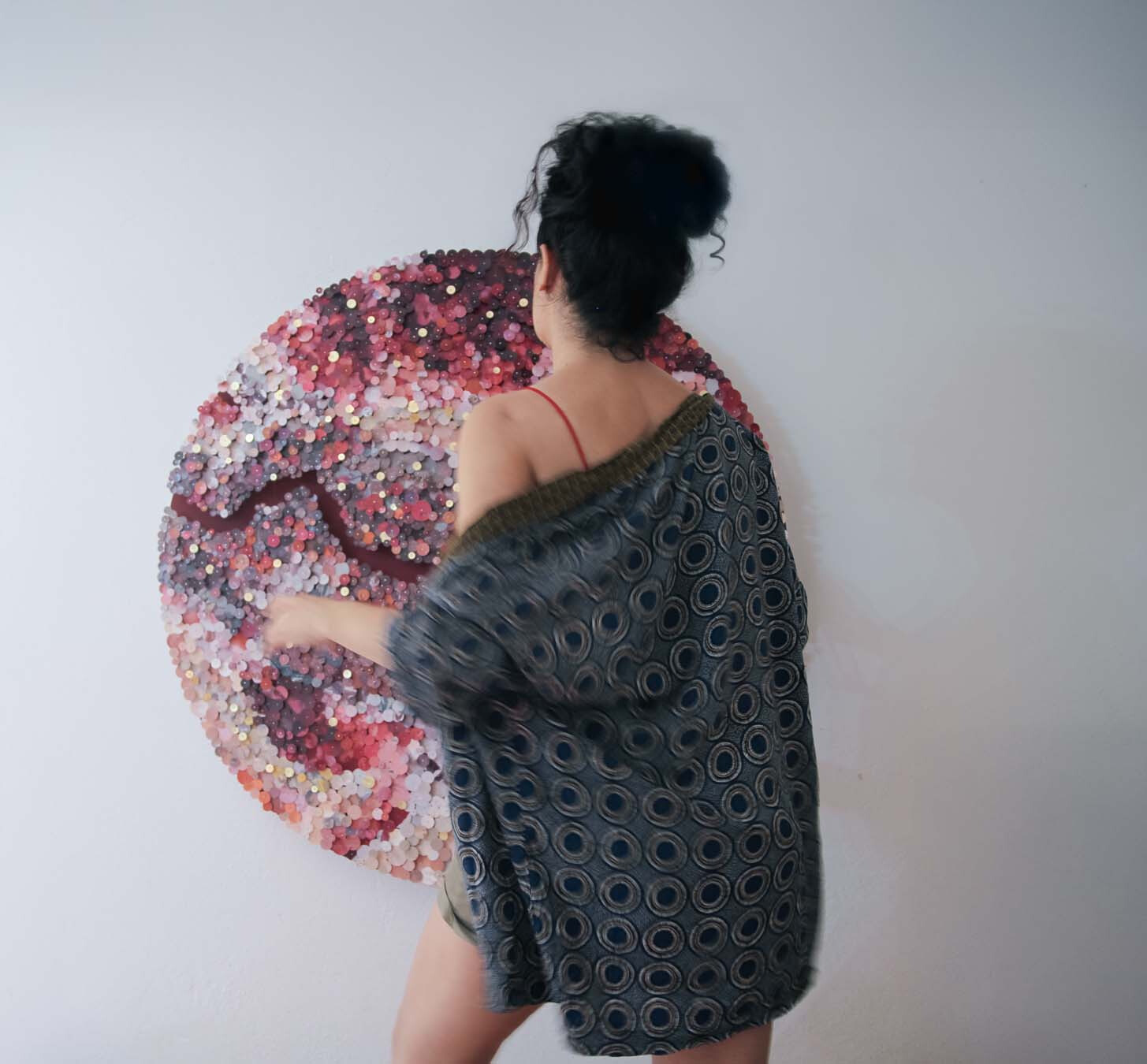
➤ 藝術家 · Artis|Micaela Lattanzio
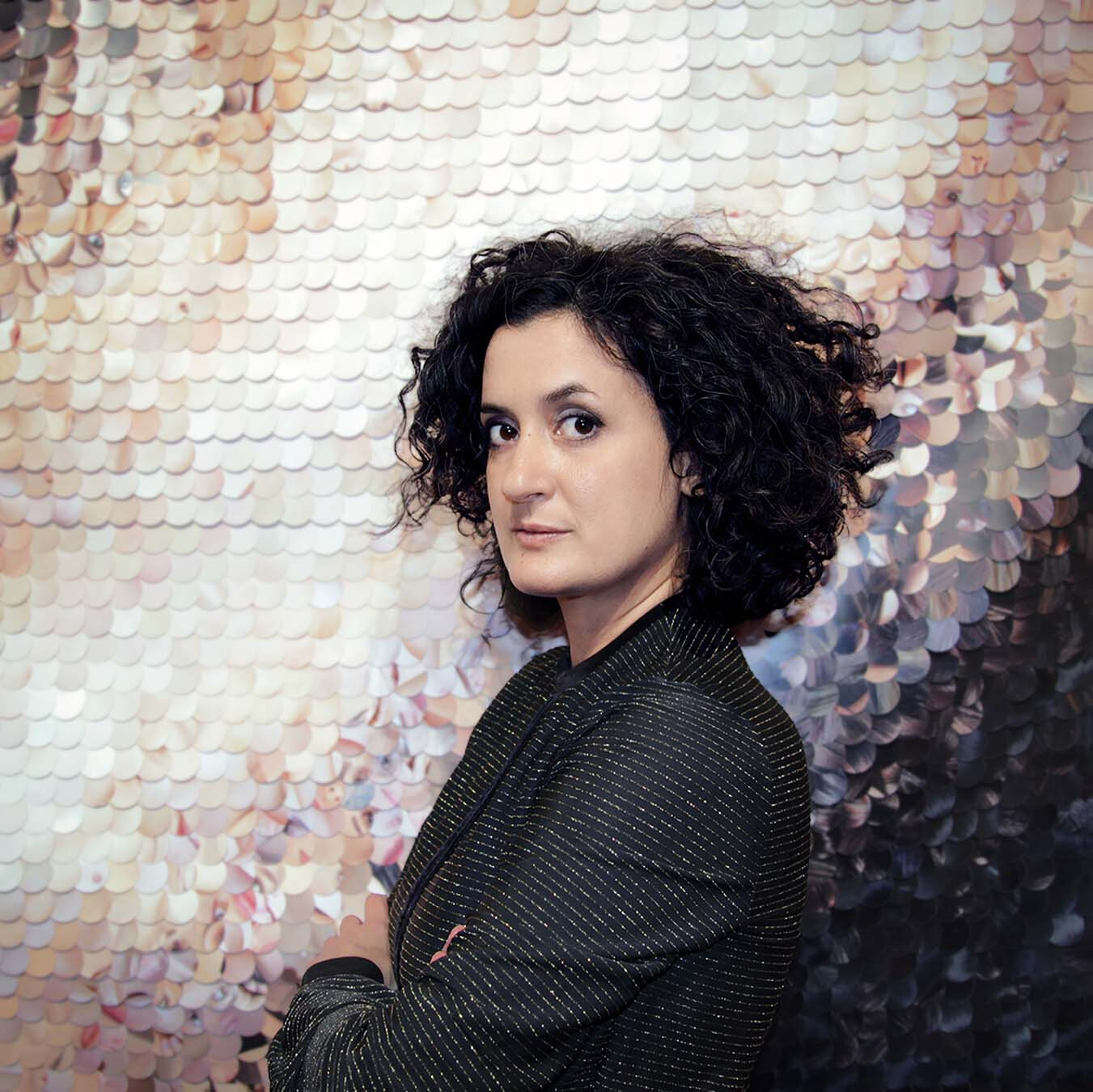
➤ 藝術家 · Artis|Micaela Lattanzio
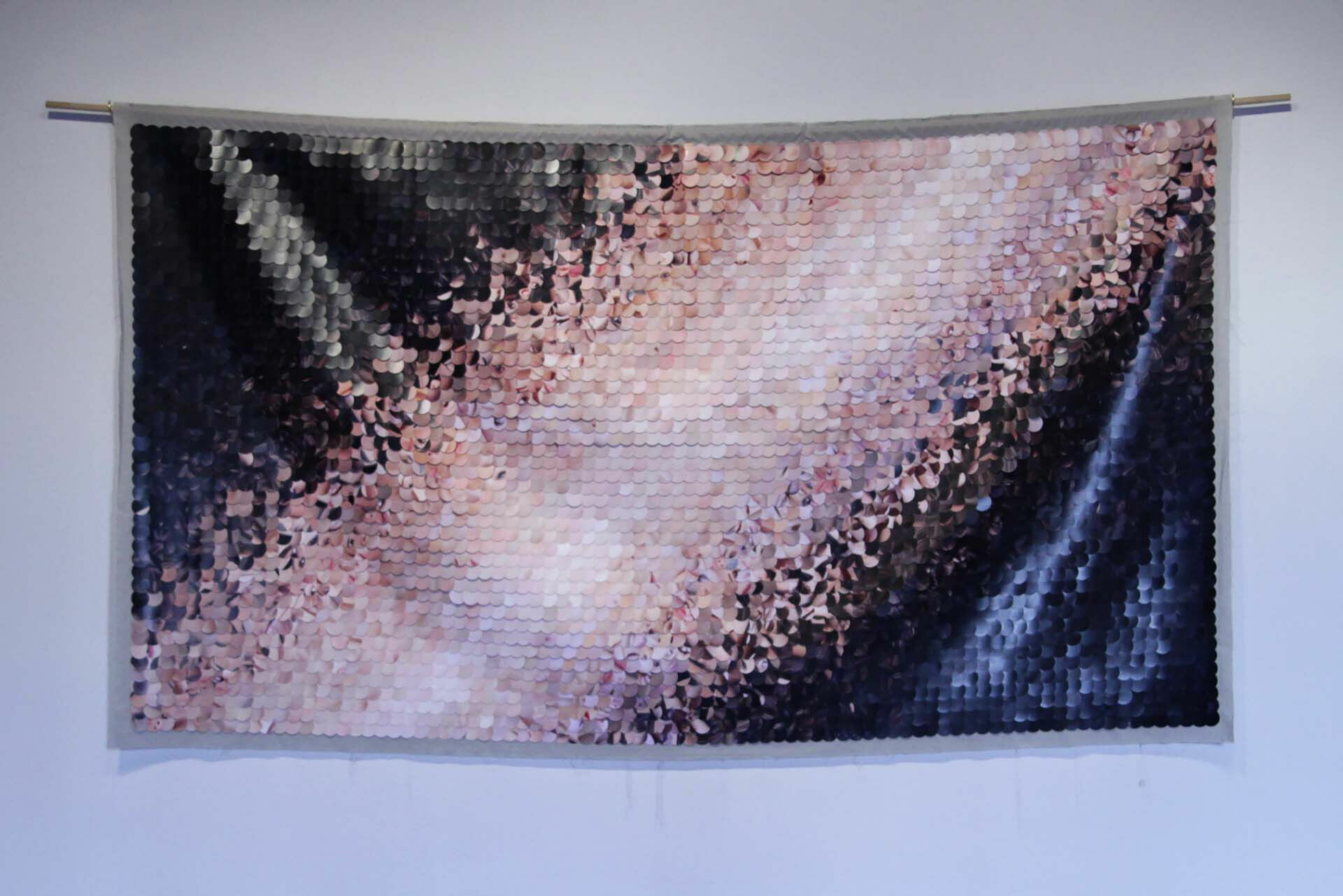
➤ Lattanzio, Cosmogonia, 2019
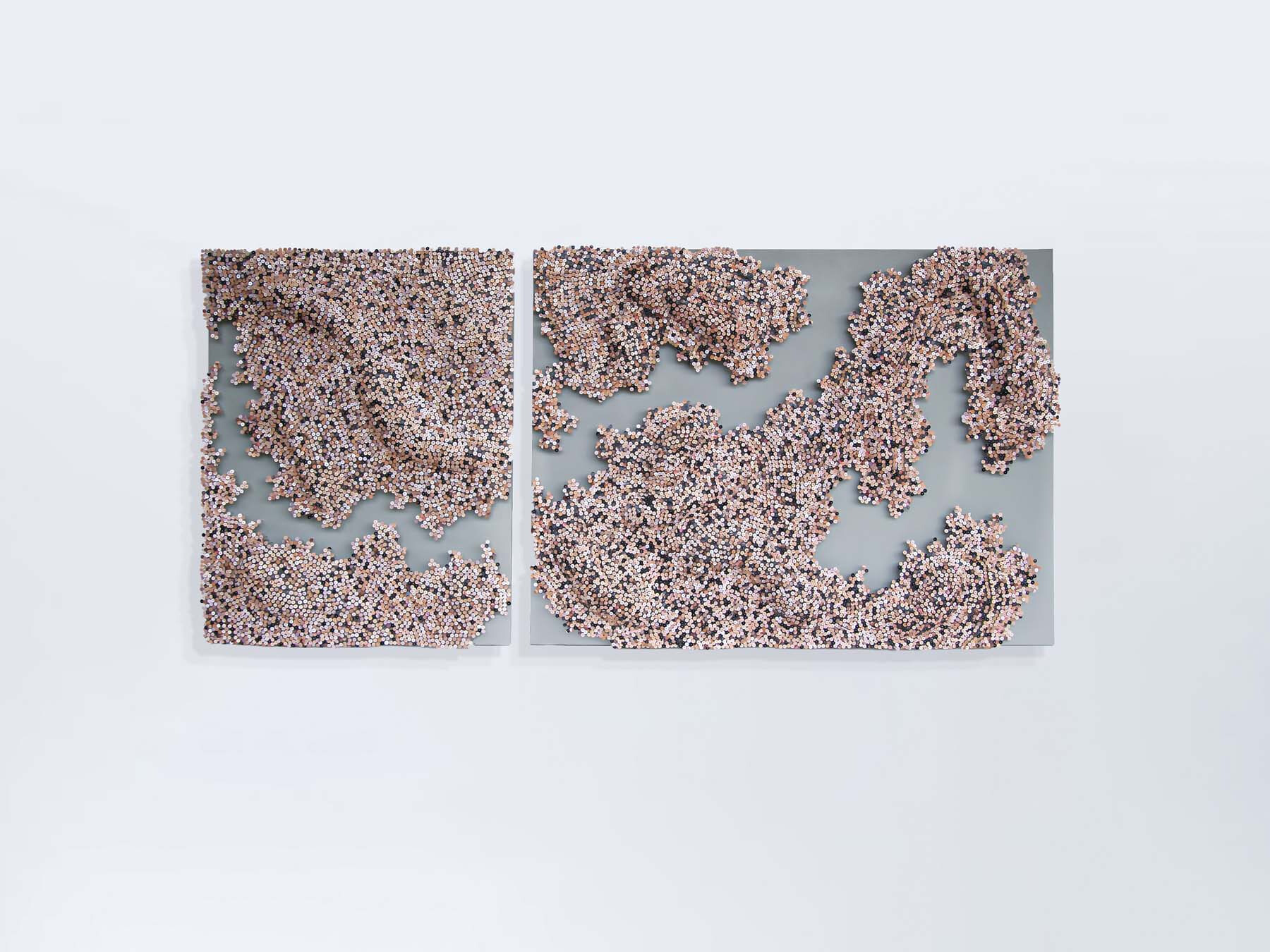
➤ Biophilia, Dittico, 2020
鏡頭的慢書寫,用攝影感知世界
Through the Lens: Photography as Slow Writing
在這個圖像時代,人們雖能快速汲取圖像資訊,卻未必能將其消化、留存或轉化為思想。當代敘事彷彿是由記憶、印象及零散圖像構成的「碎片化視覺字母表」,重塑了人對現實的感知。不願留於盲目的圖像洪流,熱愛攝影的 Micaela 將鏡頭視為書寫、講述、蒐集與記錄世界的方式。這份熱情源自兒時父親送給她的底片相機,從此攝影成為她的表達語言,引領她學會觀察,並在按下快門之前,先構思與尋找畫面。
In an image-saturated age, we take in visual information faster than we can properly absorb it. We do not always process or retain what we see, let alone turn it into thought. The result is a “fragmented visual alphabet” made up of memories, impressions and scattered images, one that reshapes how we perceive reality. Photography offers Lattanzio a different rhythm. She uses the camera as a form of writing, a way to narrate, collect and archive the world. Her relationship with the medium began in childhood, when her father gave her an analogue camera. Photography became a personal language, teaching her to observe, compose and find the image before pressing the shutter.
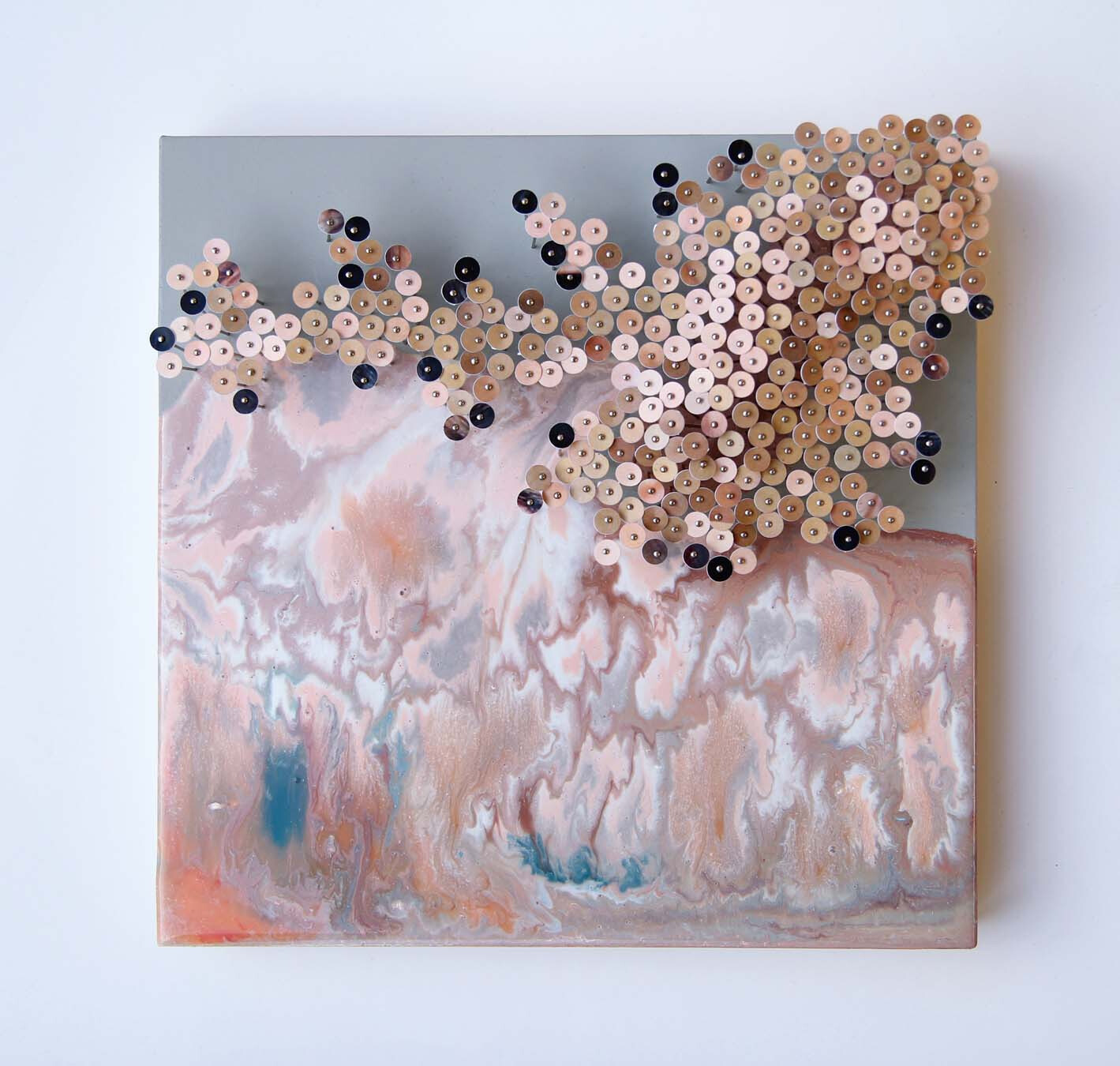
➤ La Natura Inquieta, 2021
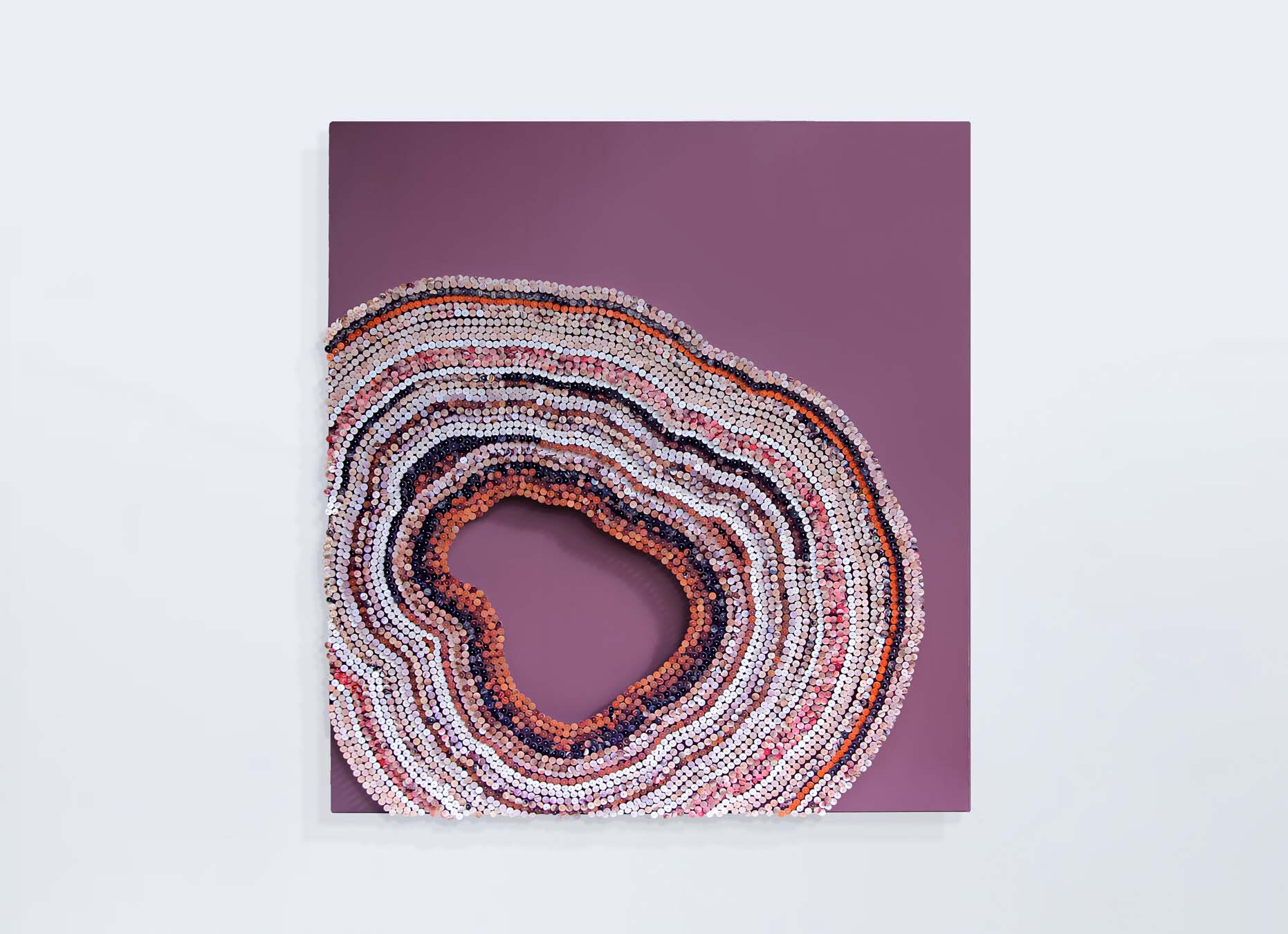
➤ La Natura Inquieta, Nucleo, 2024 110 x 120
Micaela 相信生活在幻變不拘的地方,同時觀察世界在看似靜止的狀態下仍不停蛻變,最能激發靈感。因此,她選擇住在羅馬近郊,讓自己親近海岸、綠地與鄉野,於廣闊環境中沉澱心境,找回內在寧靜。多數時候,Micaela 會隨身攜帶相機、沉浸於自然,在靜謐聆聽中與萬物共處,以緩慢、近乎「懸置」的狀態捕捉光影、色彩、形態與生命川流不息的律動;若心中已有特定構想,則會帶著明確意圖拍攝創作。例如,《SandCloud》便是由她在不同地點與季節拍攝天空,並將影像經碎片化再重組而成的地面裝置作品。她花了約一年時間蒐集素材、觀察天空的瞬息萬變,因她對攝影的直覺感悟總先於作品的完整構思而誕生。攝影便在這種緩慢時光中悄然演化──那一刻,我們不再只是用目光掃視世界,而是用心真正感知它。
Lattanzio is most inspired by places in constant flux, where the world continues to change beneath an appearance of stillness. She has chosen to live near Rome, with the coast, green spaces and countryside close by. The openness of the landscape helps her thoughts settle and restores a sense of inner quiet. Most often, she takes her camera outdoors and works in silence, listening to what surrounds her. She moves slowly, in a state of suspended attention, observing light, colour, form and the ceaseless rhythms of life. When a project begins with a specific idea, she photographs with clear intent. SandCloud, for example, is a floor installation made from photographs of the sky taken in different places and seasons, then cut into fragments and reassembled. Lattanzio spent about a year gathering material and observing the sky’s constant changes. For this work, her photographic intuition came before the concept had fully formed. For Lattanzio, photography begins with this slower form of attention, when the world is no longer merely observed but fully experienced.
從個人感知到萬物共生
From the Self to the Living World
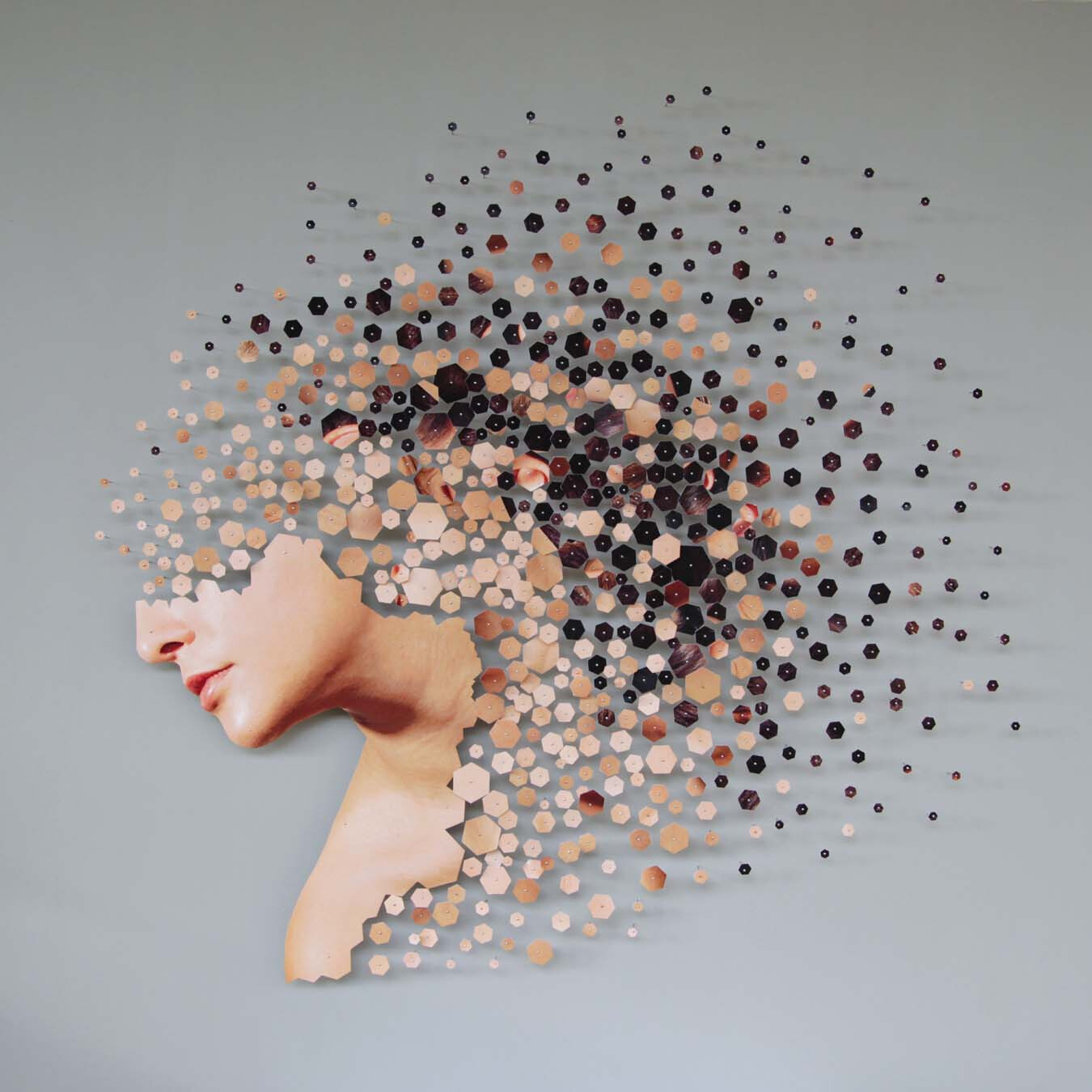
「真正的覺醒,始於意識到自己置身於世界之中。」Micaela 認為接觸自然,能磨練自己對時空的感知、身體知覺與靈活性,也能鍛鍊傾聽與觀察力,並培養對周圍事物的關懷。如同她在《Fragmenta》系列中,融入自身與未分化結締組織病共處的私密感知,藉由六角形碎片延展身體邊界,寄託著對自我療癒與釋放的想像。多年來她未曾提及這段經歷,而是將詮釋權留給觀者,邀請人們在保持批判性思考之餘,擁有內省式的觀看體驗。在這個身分認同與數位維度緊密相連的時代,Micaela 不排斥科技輔助研究,卻仍堅持手工裁切、挑選與排列影像,以探尋內在本質。她盼望這種緩慢創作過程,讓人在享受科技便捷時,重新意識到:健康社會不止於生產,也取決於我們懂得與周遭一切和諧共生。
“Awareness begins when we truly start to perceive ourselves within the world, not separate from it,” says Lattanzio. Contact with nature, she believes, sharpens our sense of time and our awareness of the body in space. It develops physical agility, strengthens our capacity to listen and observe, and cultivates care for what surrounds us. The same concern with the relationship between body and world runs through Fragmenta. Drawing on her private experience of living with undifferentiated connective tissue disease, Lattanzio uses hexagonal fragments to extend the body’s apparent boundaries and give form to a hope for healing and release. For years, she chose not to speak publicly about this experience, preferring to leave the work open to interpretation. In doing so, she invites viewers to remain critically engaged while entering a more introspective mode of looking. At a time when identity is closely intertwined with digital life, Lattanzio remains open to technology as a research tool, yet continues to cut, select and arrange images by hand. The slow, physical process becomes a way of looking beyond outward appearance towards a deeper sense of self. She hopes this slower way of making can remind us that a healthy society is more than a productive one. It also depends on the relationships we sustain with the world around us.
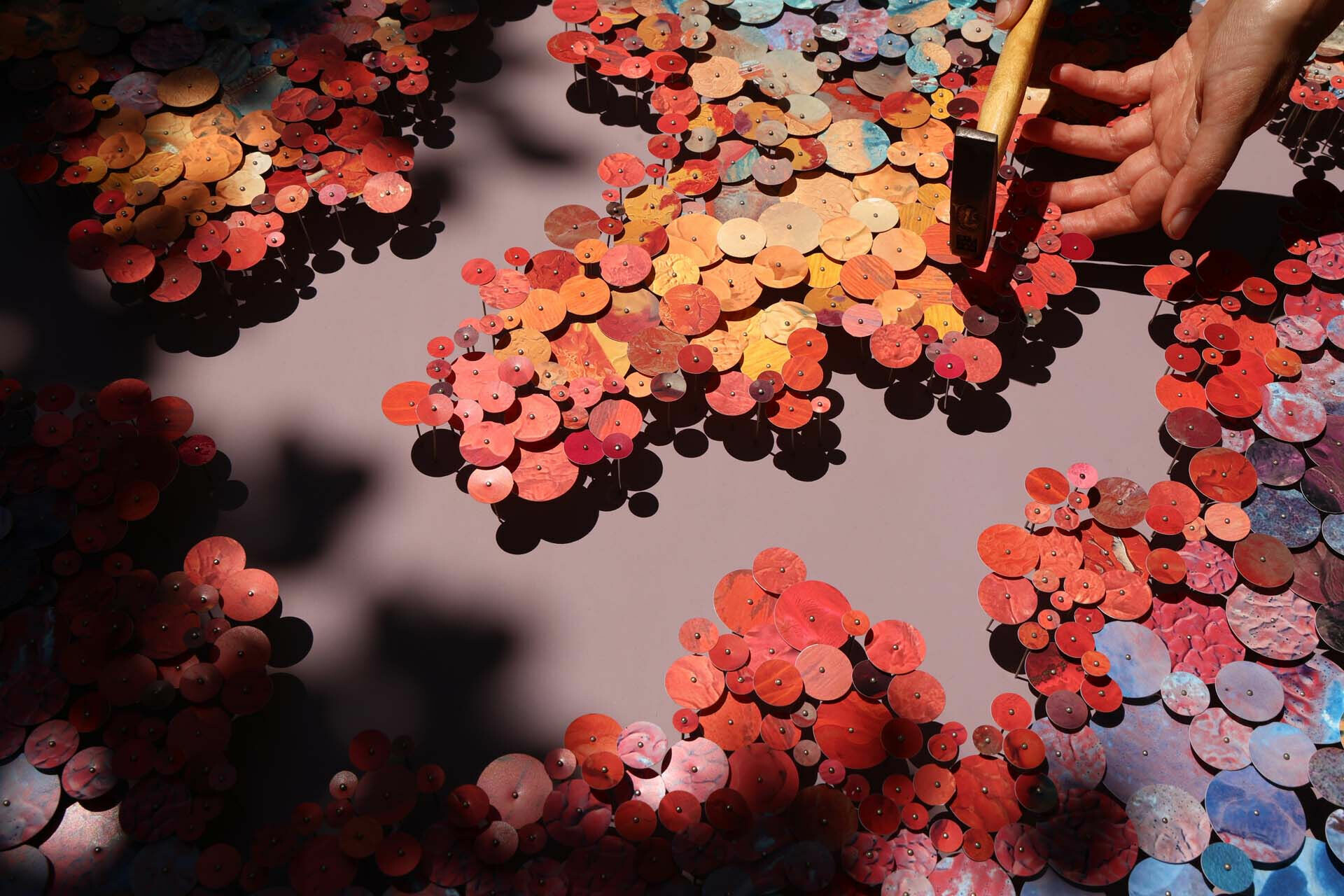
➤ 製作過程 Production Process