


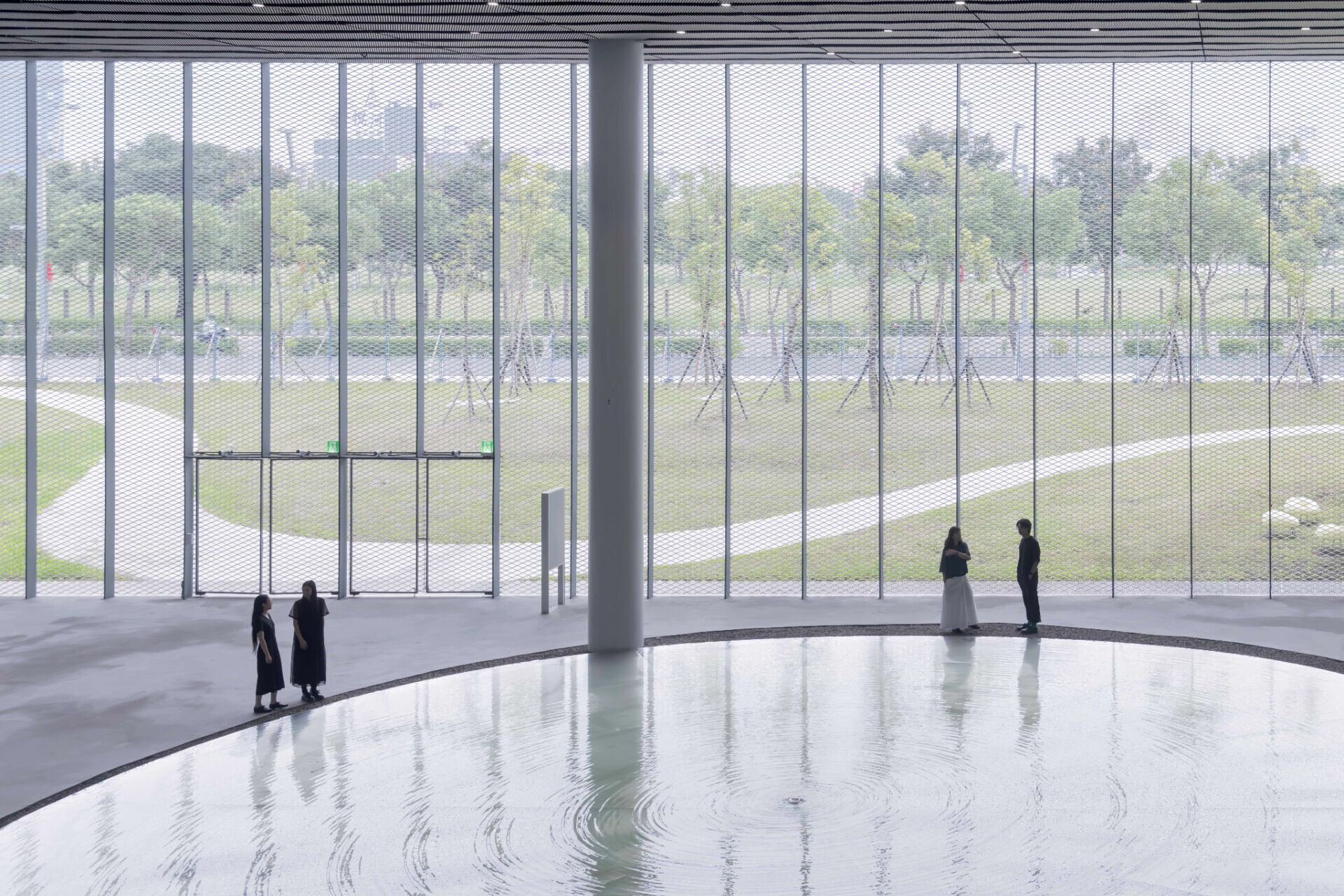
➤ 綠美圖入口大廳。攝影|Iwan Baan
萬物的邀約
A Call of All Beings
綠美圖作為全臺首座美術館與圖書館共構的全新藝文場館,憑藉著開放且流動的空間型態,似有若無的邊界,豐富的地景歷史脈絡,以及與自然共生的環境氣質,不只為藝術家們帶來創作靈感,也為策展帶來前所未見的可能性。臺中市立美術館(以下簡稱中美館)開館首展「萬物的邀約」於 12 月 13 日正式揭幕。由中美館策展團隊攜手臺灣策展人周伶芝、美國策展人艾蕾娜.克萊爾.費爾德曼(Alaina Claire Feldman),以及羅馬尼亞旅居南韓策展人安卡.繆雷.金(Anca Mihuleţ-Kim)四方共同策劃,透過多元視角的交會反映場館相互融合的特質。
As Taiwan’s first cultural complex to integrate an art museum with a public library, the Taichung Green Museumbrary draws its character from an open, fluid spatial disposition, thresholds that feel present one moment and dissolve the next, a richly layered landscape history, and an atmosphere shaped by close coexistence with nature. These conditions offer artists a different kind of stimulus, while opening curatorial possibilities that feel newly imaginable. Taichung Art Museum (TcAM) inaugurates the venue with "A Call of All Beings," officially unveiled on December 13. The exhibition is jointly curated by the TcAM curatorial team, Taiwanese curator Ling-Chih Chow, American curator Alaina Claire Feldman, and Romanian–Korean curator Anca Mihuleţ-Kim, bringing multiple viewpoints into contact as a way of reflecting the building’s own interwoven nature.
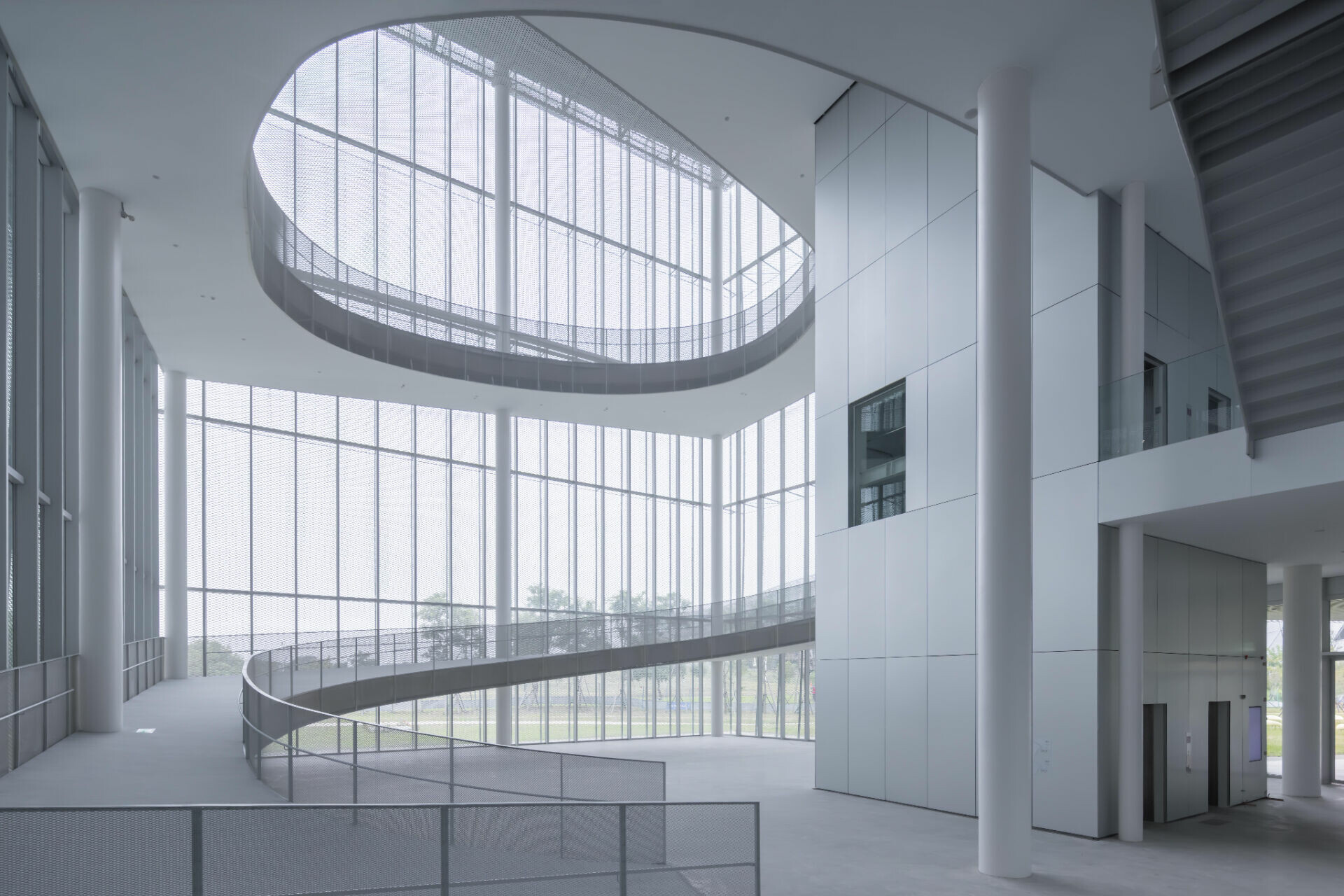
➤ 中美館大廳一樓。攝影|Iwan Baan
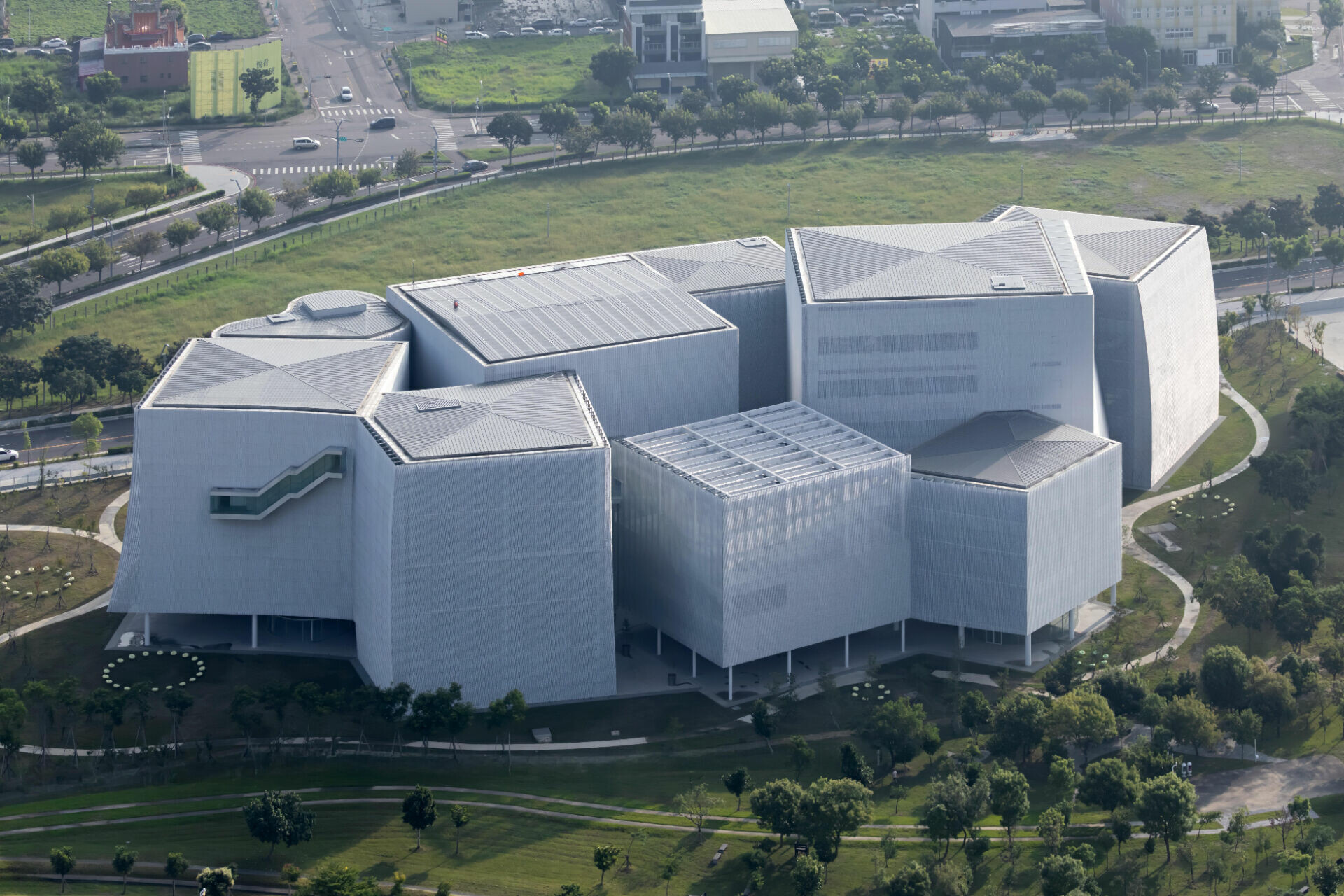
➤ 臺中綠美圖建築外觀空景。攝影|Iwan Baan
從前身為臺中水湳機場的中央公園地景脈絡出發,延伸至人與自然、城市與記憶、跨物種與未來的多重關係。展覽匯聚來自全球 20 國超過 70 組藝術家的作品,透過錄像、繪畫、雕塑、裝置、檔案、藝術家書籍等多樣媒材,呈現關於這片土地的人文敘事,開啟一場跨時代、跨文化、跨地域,為萬物發聲的精彩對話。
Beginning from the landscape context of Central Park—once Taichung’s Shuinan Airport—the exhibition extends outward to multiple relationships: between humans and nature, city and memory, interspecies life and the idea of a future yet to be written. It gathers work by more than 70 artists from 20 countries, spanning video, painting, sculpture, installation, archives, and artists’ books, to unfold humanistic narratives rooted in this land and to open a dialogue that moves across eras, cultures, and geographies—speaking on behalf of all beings.
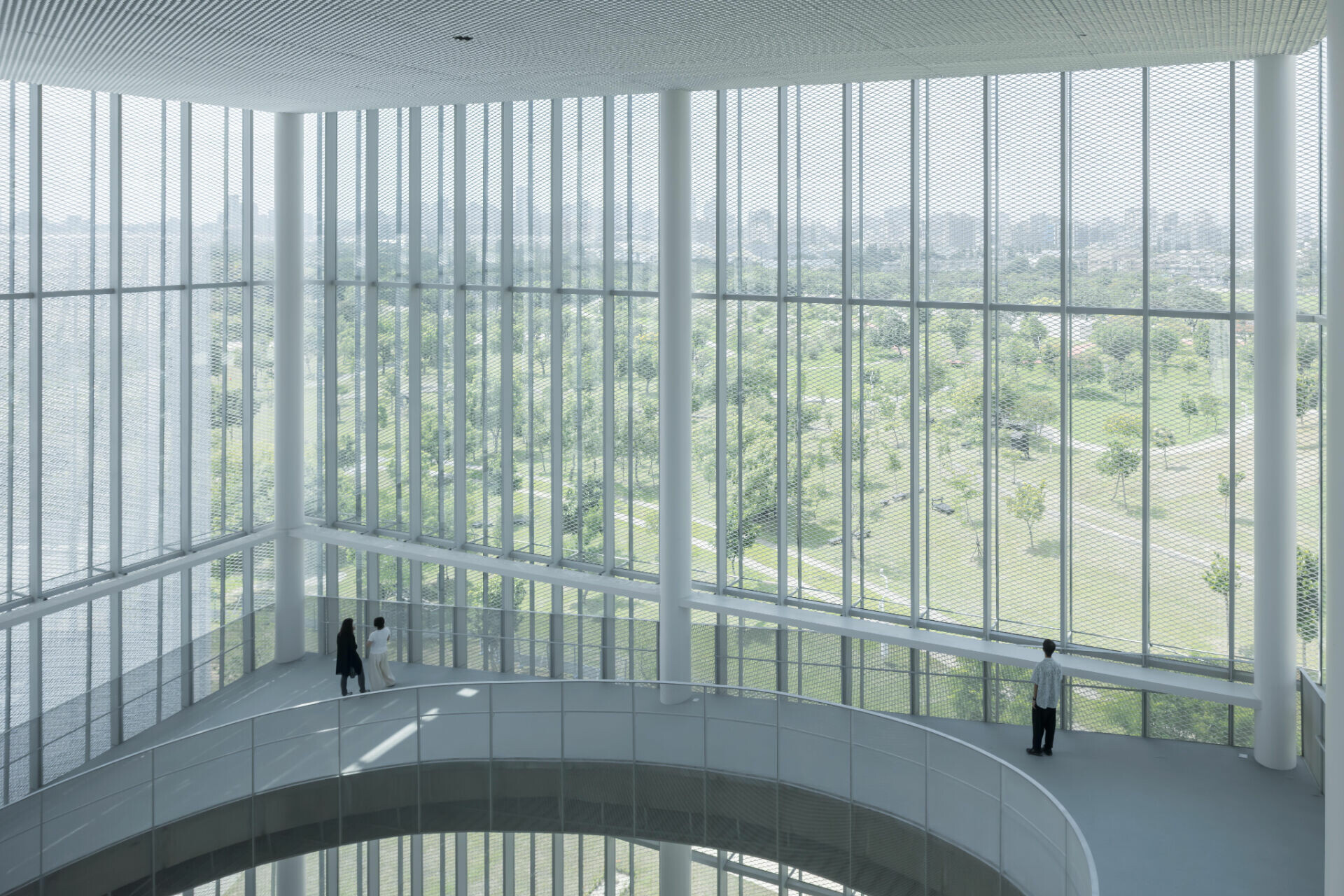
➤ 中美館大廳五樓。攝影|Iwan Baan
在建築之中,藝術如何被經驗
The Inhabitation of Art: Experiencing Creative Expression Within the Architectural Grain
走進中美館,觀展經驗更接近在公園中行走——有綠意相伴、陽光穿梭。這並非只是浪漫的想像,而是在中美館裡化做真實的體驗。挑高 27 公尺的大廳中,由中美館委託韓國藝術家梁慧圭(Haegue Yang)創作的作品《流動奉獻—樹蔭三合》懸置於空間中央。作品源於對一棵漂浮巨樹的想像,以及亞洲社區中常有守護樹木的民間信仰,希冀創造出一個庇佑美術館空間的神聖存在。
Entering TcAM, the viewing experience feels closer to walking through a park—greenery at your side, sunlight slipping through. This is not a romantic projection; it becomes a concrete, bodily reality inside the museum. In the 27-metre-high atrium, TcAM’s commissioned work by Korean artist Haegue Yang, Liquid Votive – Tree Shade Triad, is suspended at the spatial core. The piece grows from an imagination of a floating giant tree, alongside the folk beliefs found across many Asian communities that protect and venerate trees, seeking to conjure a sacred presence that shelters the museum’s interior.
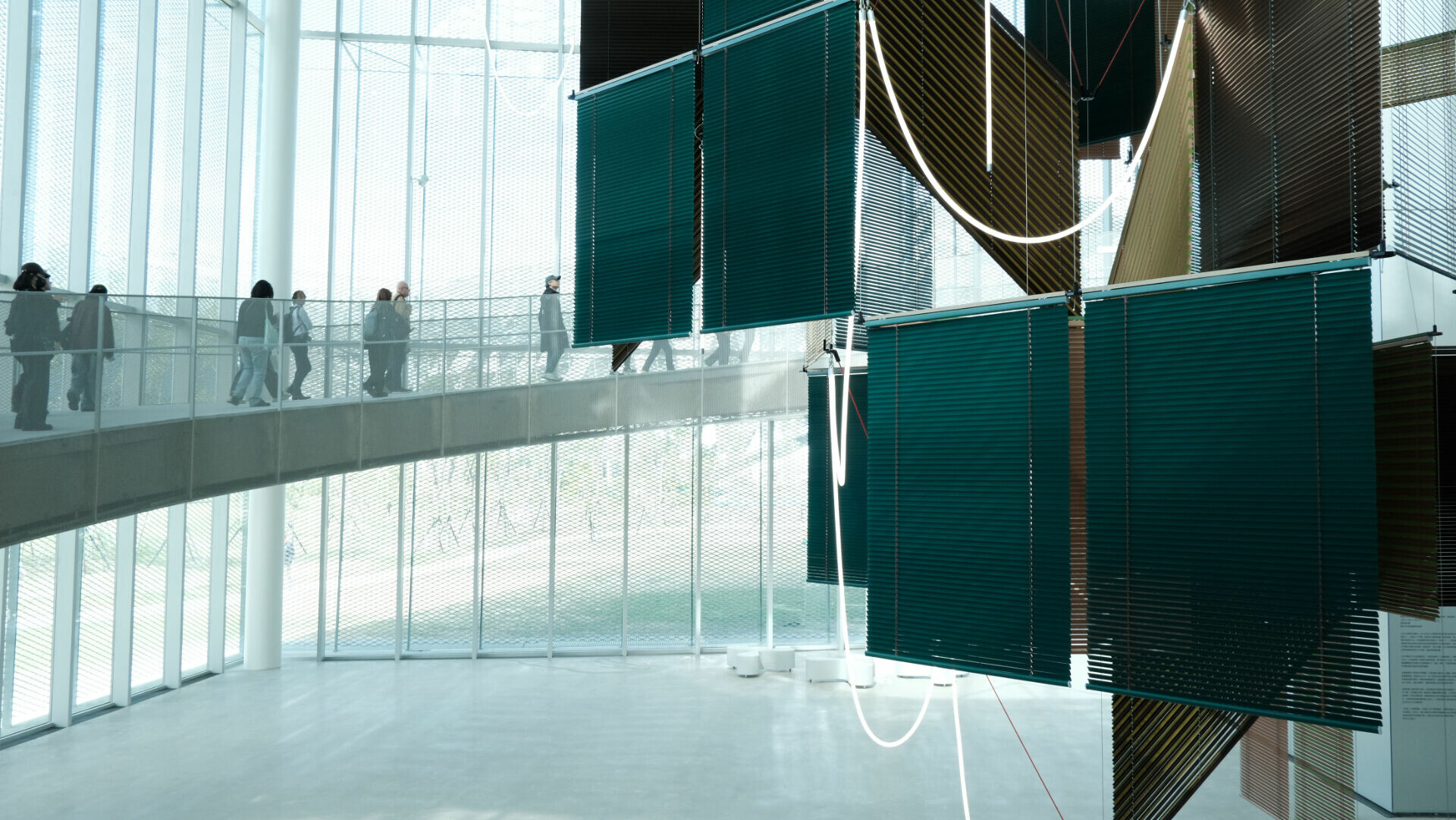
➤ 梁慧圭 ( Haegue Yang ),《流動奉獻-樹蔭三合》。攝影|Jean Yang
創作媒材使用金屬百葉窗,其過濾光線與風能穿透的特質與擴張網格互相呼應,在一天中不同時序的日光下,深綠、磚紅、芥黃與褐色的簾片交織投射出不斷變化的光影;夜晚,白色 LED 燈條的明暗變化彷彿樹的呼吸,穿插象徵螢火蟲的綠色光點,勾勒出一棵巨樹與萬物同在的生命形象。
Made from metal Venetian blinds, the work filters light while allowing wind to pass through; its permeability resonates with the expanded metal mesh language of the architecture. Across the day, slats in deep green, brick red, mustard yellow, and brown weave into shifting projections of light and shadow. At night, the pulse of white LED bars reads like a tree’s breathing, punctuated by green points of light that evoke fireflies, sketching a living image of a vast tree in company with all beings.
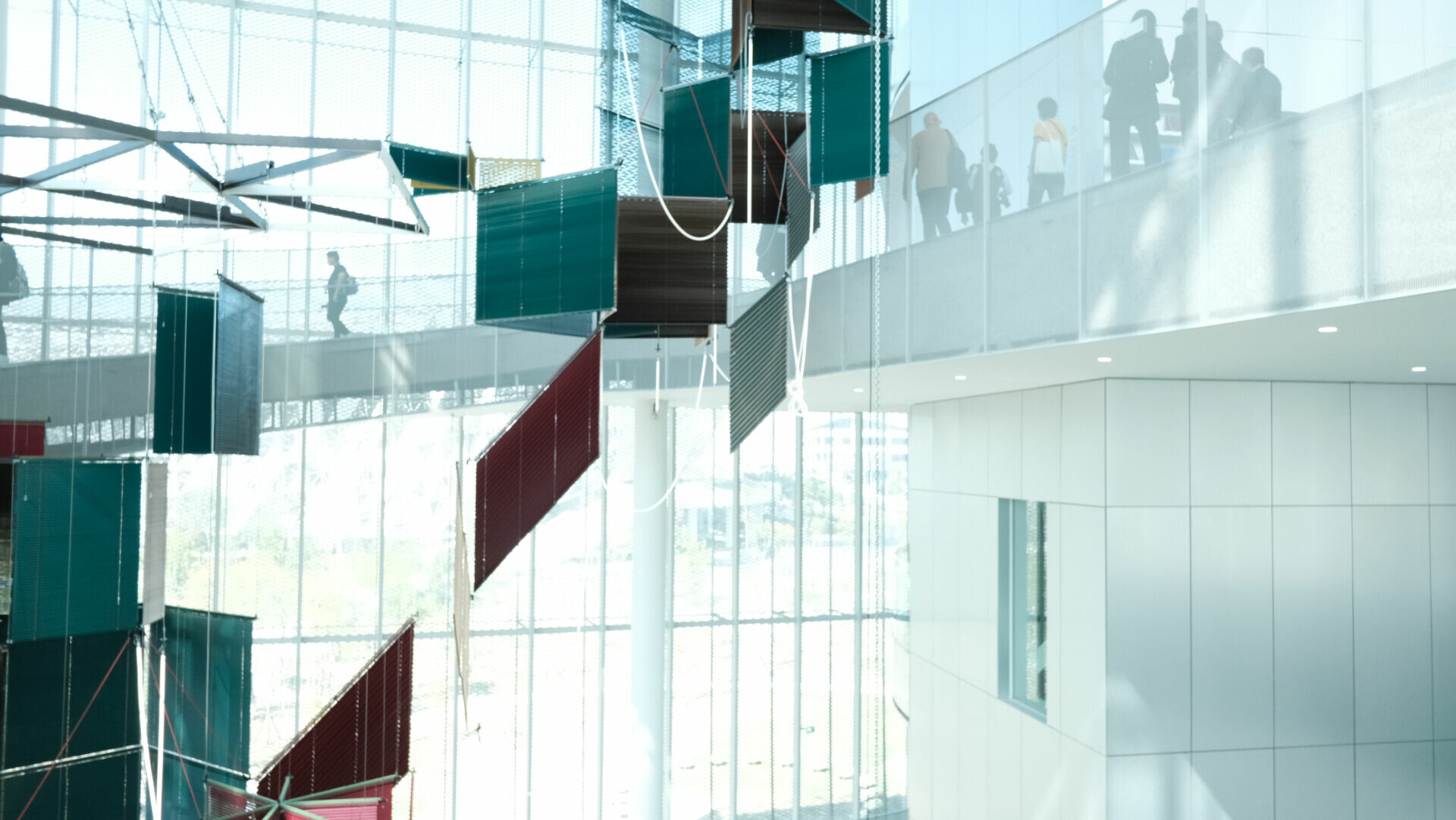
➤ 梁慧圭 ( Haegue Yang ),《流動奉獻-樹蔭三合》。攝影|Jean Yang
另一件由林明弘打造的大型繪畫裝置《再製》,被精巧地嵌入大廳兩側玻璃屋的圓頂之上,僅能在二樓空橋上望見,帶來迥異的觀看角度與在空間中偶遇的驚喜。空橋在視覺上連結兩幅繪畫,將步行方向與觀看順序融入作品解讀的脈絡裡,讓身體參與成為作品的一部分。
A second, large-scale painting installation by Michael Lin, Processed, is deftly embedded into the domes of the glasshouses flanking the atrium. It can be seen only from the second-floor skybridge, offering an oblique vantage and the surprise of a chance encounter within the building. Visually linking the two paintings, the bridge folds one’s direction of movement and order of looking into the work’s interpretive logic, turning bodily participation into part of the piece itself.
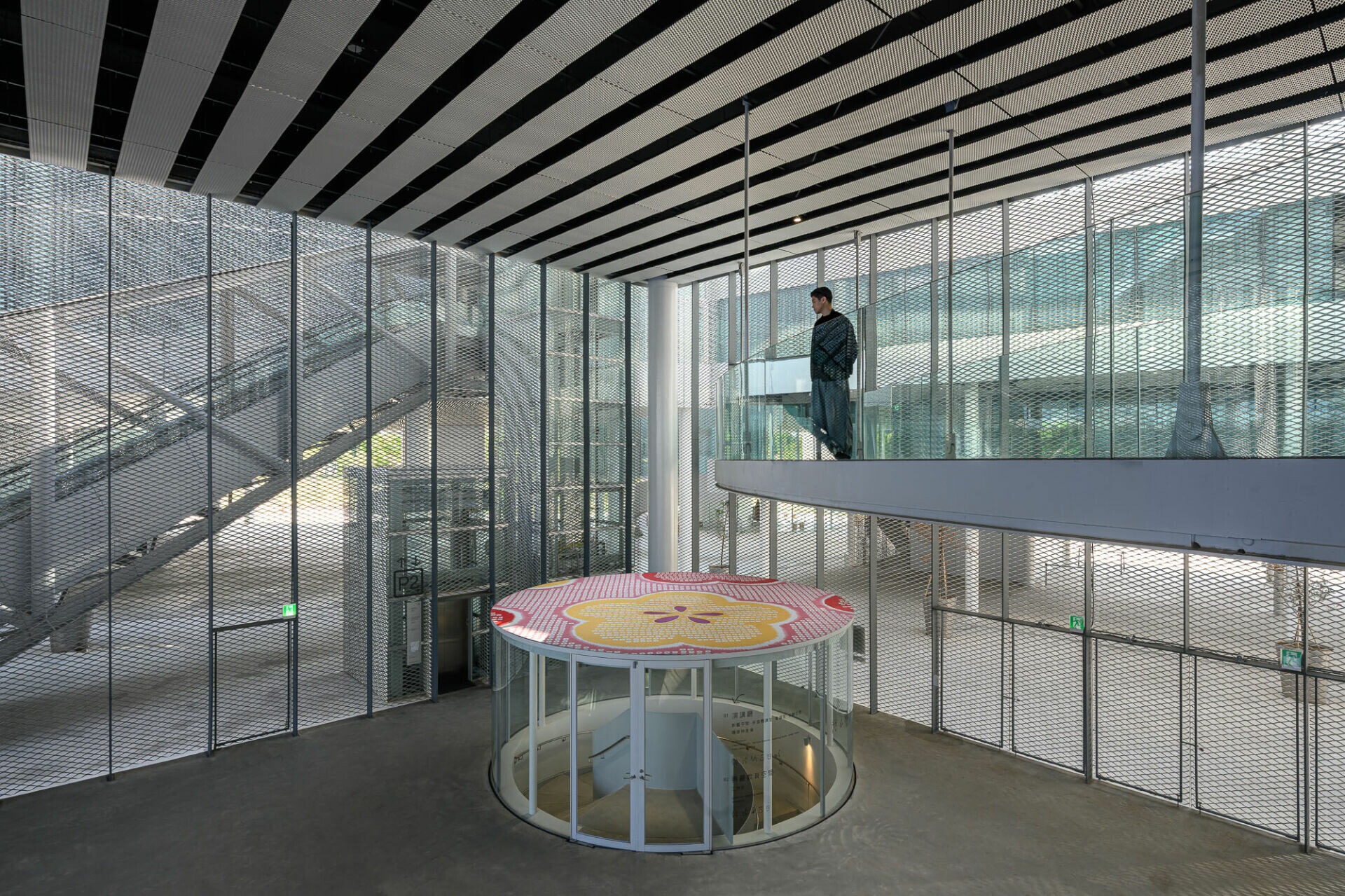
➤ 林明弘 ( Michael Lin ),作品《再製》。攝影|ANPIS FOTO 王世邦
作品靈感源自機械印刷經常出現的污點與錯置,風格化梅花圖案出現在兩座玻璃屋上,一者錯位模糊,另一者對位清晰,如同人們的觀點經常隨著觀看角度的不同而變化,是一個互相辯證與補足的過程。作品巧妙呼應空間的開放性,賦予觀者額外的思考樂趣。
The work draws on the stains and misregistrations that often accompany mechanical printing. A stylised plum blossom motif appears across the two glasshouses: one rendered out of register and blurred, the other aligned and crisp. The pairing mirrors how a viewpoint shifts with a change in angle—an ongoing process of argument, correction, and completion. In that sense, the piece echoes the building’s openness and grants the viewer an additional, quieter pleasure of thought.
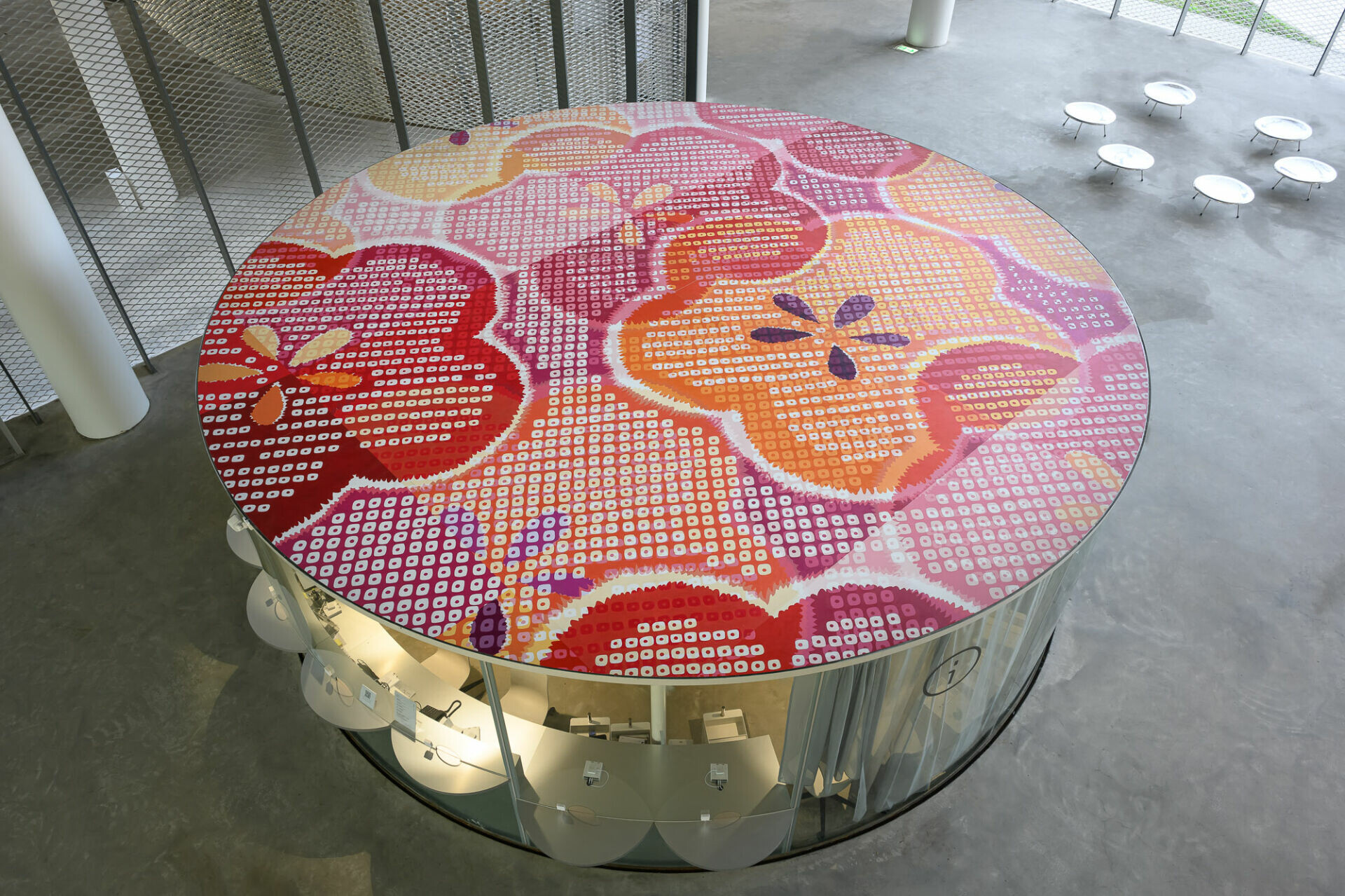
➤ 林明弘 ( Michael Lin ),作品《再製》。攝影|ANPIS FOTO 王世邦
於在地創作者生命中,照見城市的過去與未來
Through local creators’ lives, the city’s past and future come into view
臺灣中部美術的發展由來已久,策展從本地創作者的生命經驗出發,呈現不同時代的代表性作品,梳理百年以來的地景紀錄與創作表達。諸如林之助,帶動中部膠彩創作的蓬勃發展,有臺灣膠彩畫之父的美譽;葉火城擅長以油畫描繪故鄉風景,在中部發展「豐原班」積極培育美術子弟;陳夏雨與陳幸婉父女,父親是臺灣美術史上最具代表性的雕塑家之一,女兒的作品《大地之歌 No.1》30 年後首次公開展出;王清霜的漆藝創作,則見證了臺灣百年漆藝的技術與美學演進。經由作品追溯時光記憶,探討人與萬物,自然與城市的共生關係。
Central Taiwan has a long-standing artistic lineage. The curatorial approach begins Art in central Taiwan has a long lineage. Beginning from the life experience of local creators, the curatorial approach presents representative works from different eras, tracing a century of landscape record and artistic expression. Figures such as Lin Chih-Chu—celebrated for energising Nihonga practice in central Taiwan—are widely regarded as pivotal to its development; YEH Huo Cheng is known for oil paintings of hometown landscapes and for cultivating younger generations through the “Fengyuan group”; the father–daughter pairing of Chen Hsia-Yu and Chen Hsin Wan brings together a sculptor recognised as one of the most representative in Taiwan’s art history and a daughter whose work Song of the Earth No. 1 is publicly shown again for the first time in thirty years; and Wang Ching-Shuang’s lacquer practice bears witness to the technical and aesthetic evolution of Taiwanese lacquer art over the past century. Through these works, time and memory are retraced, and the symbiotic relationship between humans and all beings—between nature and the city—is explored.
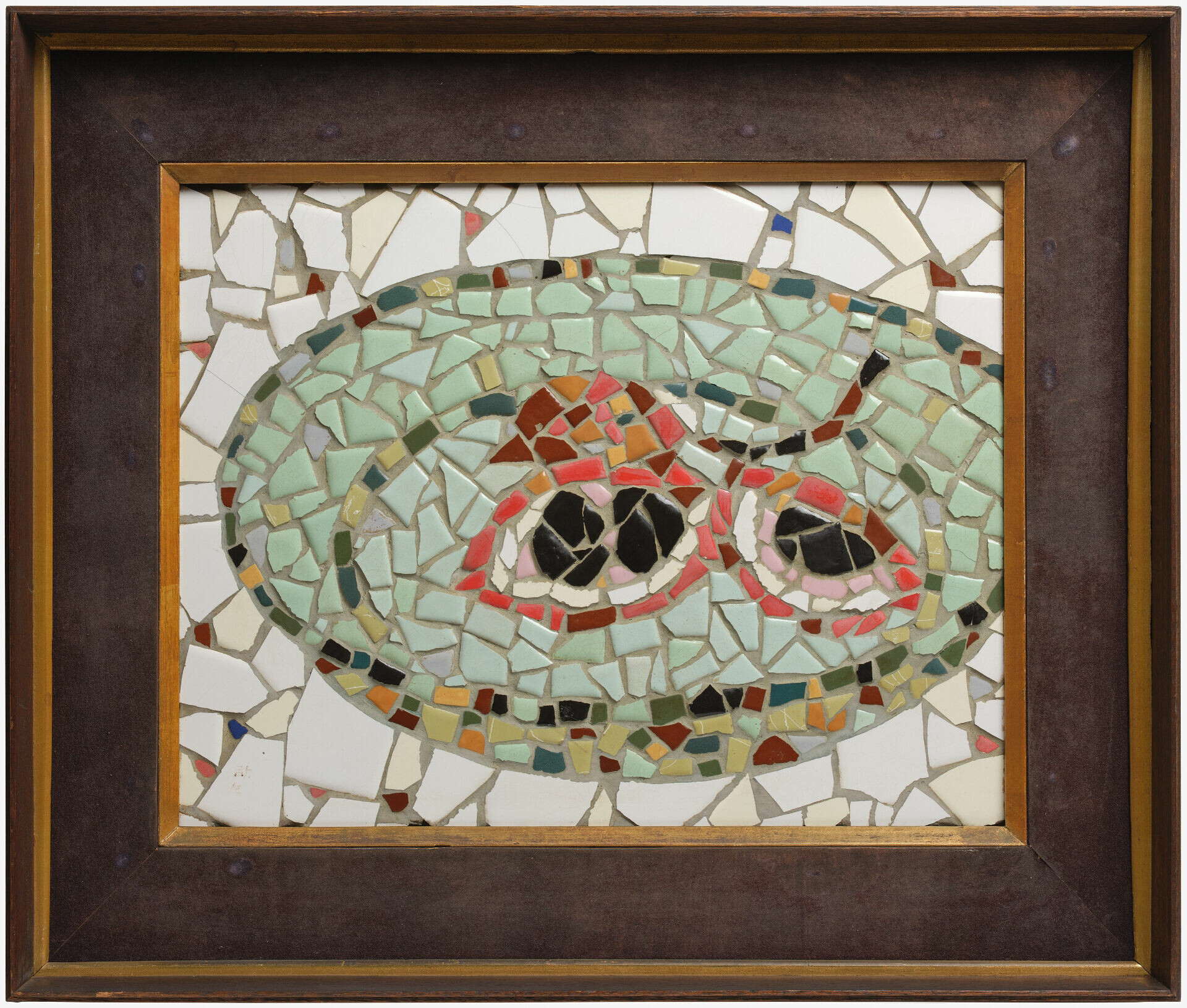
➤ 林之助《秋果》攝影|ANPIS FOTO
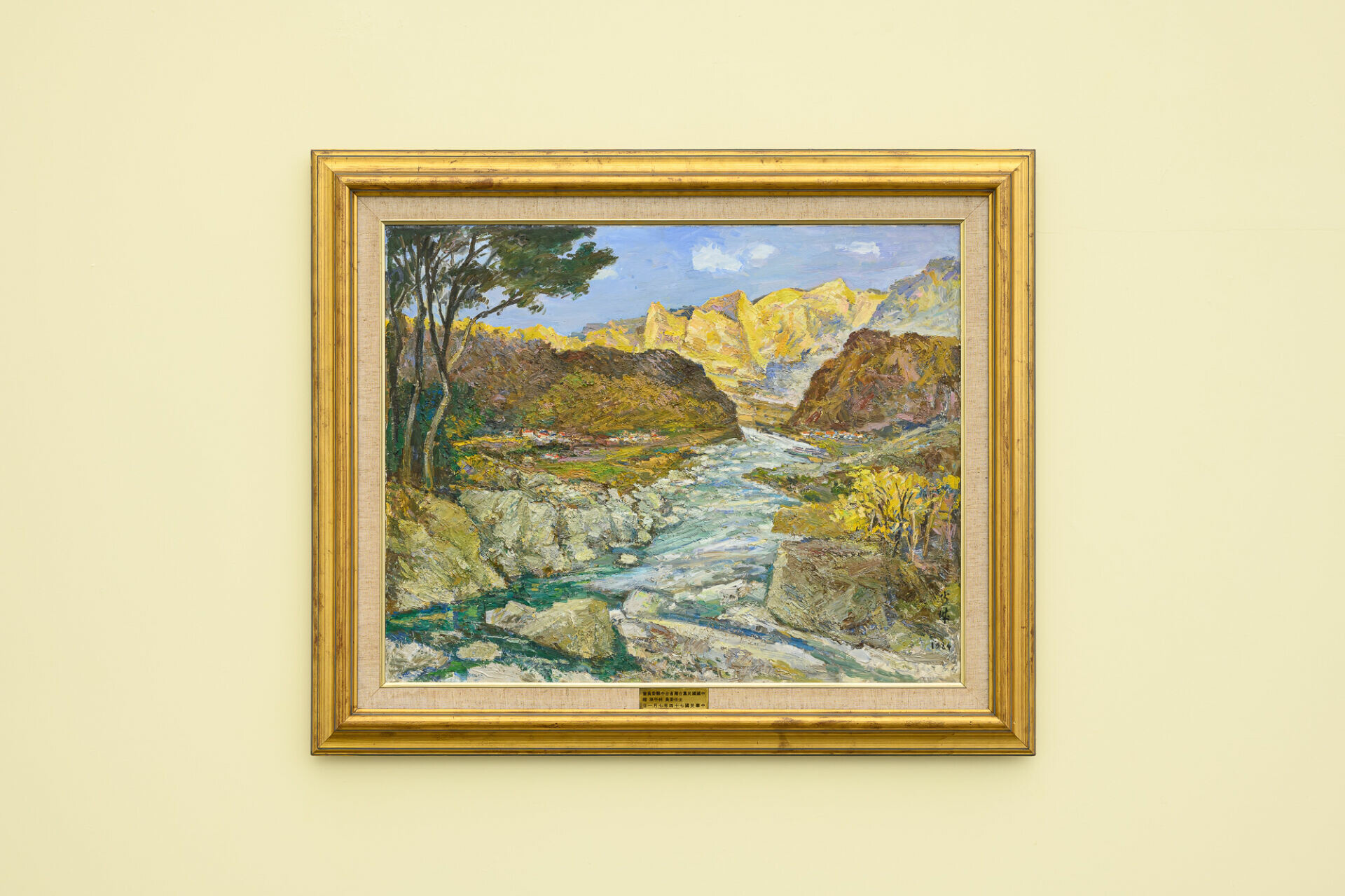
➤ 葉火城 《火炎山下》攝影|ANPIS FOTO
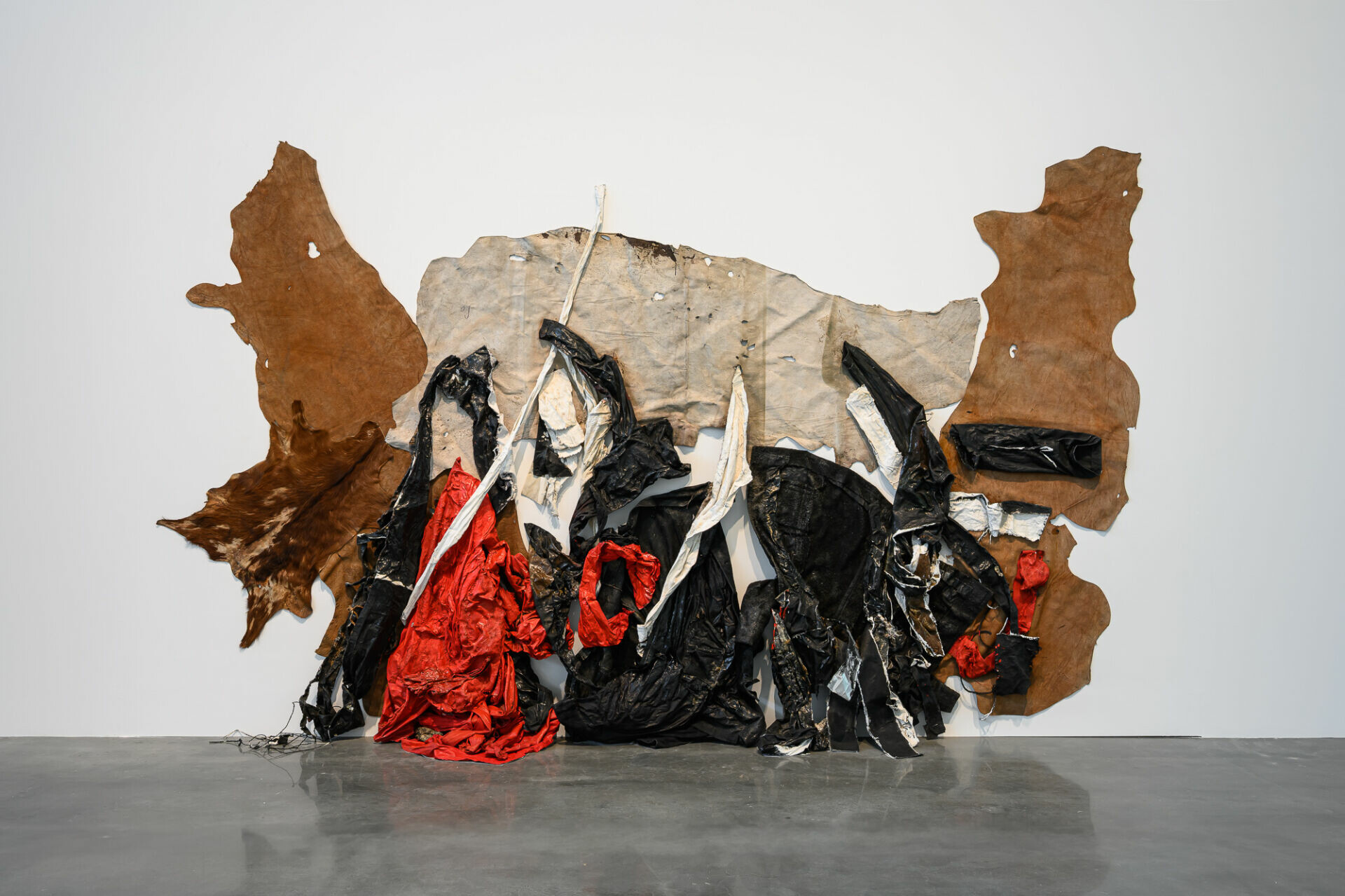
➤ 陳幸婉《大地之歌 No.1》攝影|ANPIS FOTO
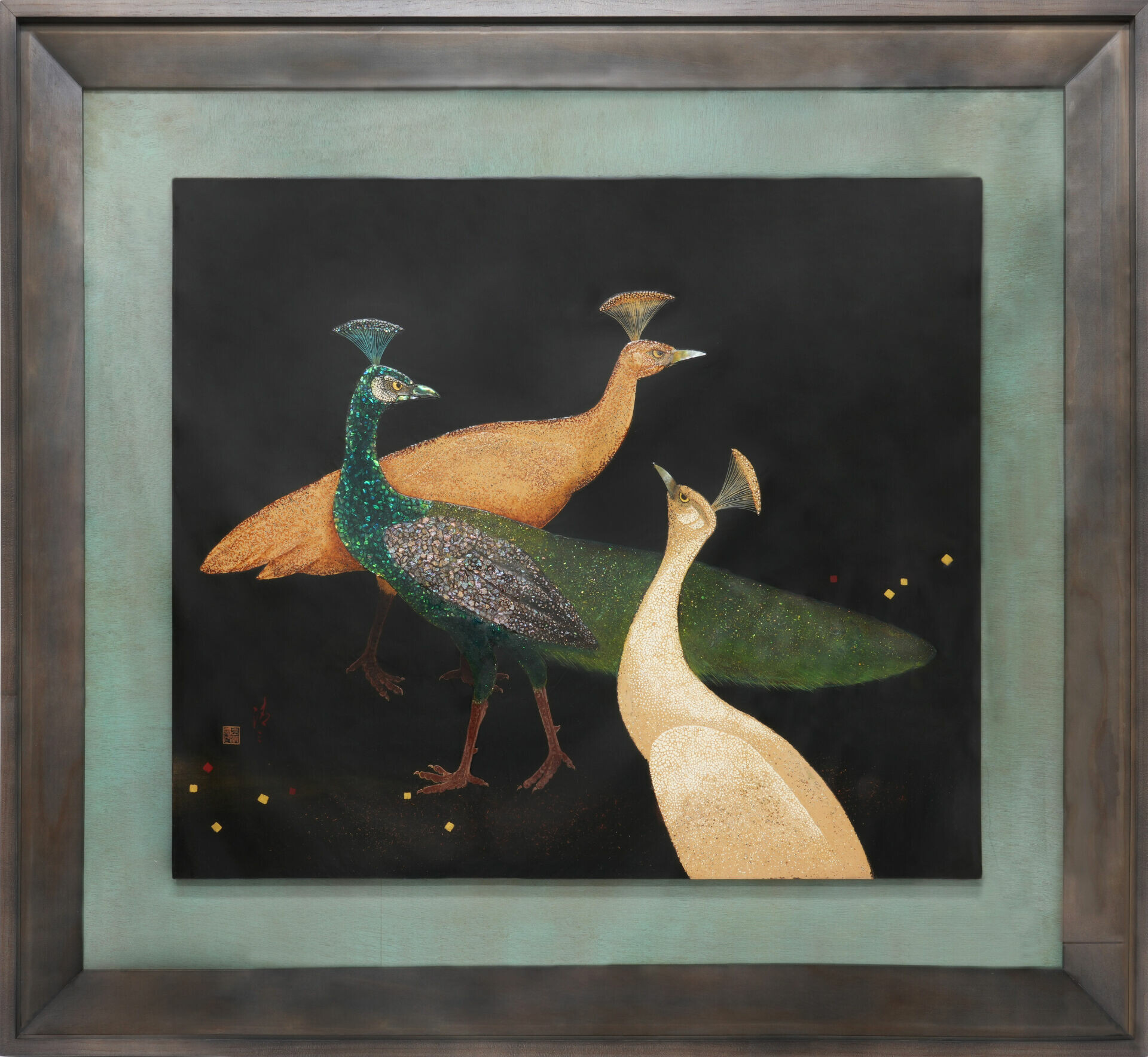
➤ 王清霜 《佇聆孔雀》圖片|臺中市立美術館
五大策展子題,啟發人們觀看的方式
Five curatorial subthemes, shaping ways of looking
五個展間各有不同子題,可以看到策展人試圖從各自文化視角,帶來關於公共、文化、歷史、自然的多面向思考,以及女性創作者在長期男性敘事下被消音的觀點。在《畫一道海岸線》展題下,明亮的展廳內展出藝術家們各自對自然的描繪,與地理邊界的想像。透過人們如何觀看自然,反觀自身與自然的關係。一方面對生命本質進行思索,一方面引導觀眾以不同角度感受萬物存在的狀態。
Each of the five galleries carries a distinct subtheme. One can see how the curators attempt, from their respective cultural vantage points, to open multi-angled reflections on the public, culture, history, and nature, while bringing forward perspectives by women creators long muted within male-dominant narratives. Under the theme "How to Draw a Coastline?" a bright gallery presents artists’ depictions of nature alongside imaginings of geographic boundaries. By reflecting on how people look at nature, it turns the gaze back onto our relationship with the natural world—prompting thought on the essence of life while guiding visitors to sense the states of being around them from shifting angles.
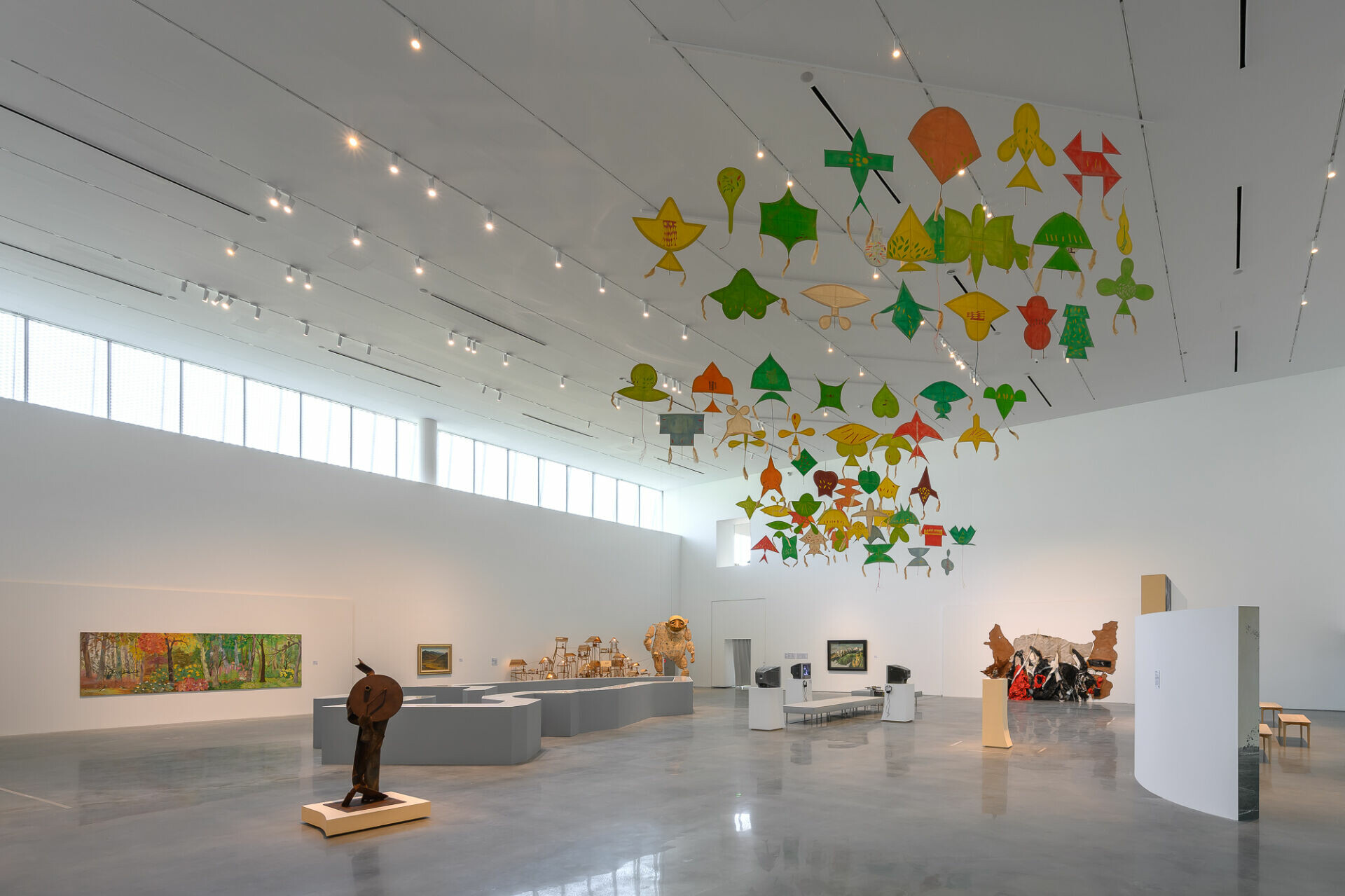
➤ 畫一道海岸線。攝影|ANPIS FOTO 王世邦
而在《幻生的寓言》裡,則瀰漫著截然不同的神秘氛圍。藝術家或是從傳說、神話、寓言出發,摸索理解世界的路徑;抑或是從植物、動物的角度發聲,試圖反駁人類敘事,深入探尋與重新建構人與萬物相互依存的關係。
In ''Recalling Fables,'' an entirely different, mysterious atmosphere takes hold. Artists begin from legends, myths, and fables to feel their way toward paths of understanding the world; or they speak from the perspectives of plants and animals, pushing back against human-centred narratives, probing and reconstructing relationships of interdependence between people and all beings.
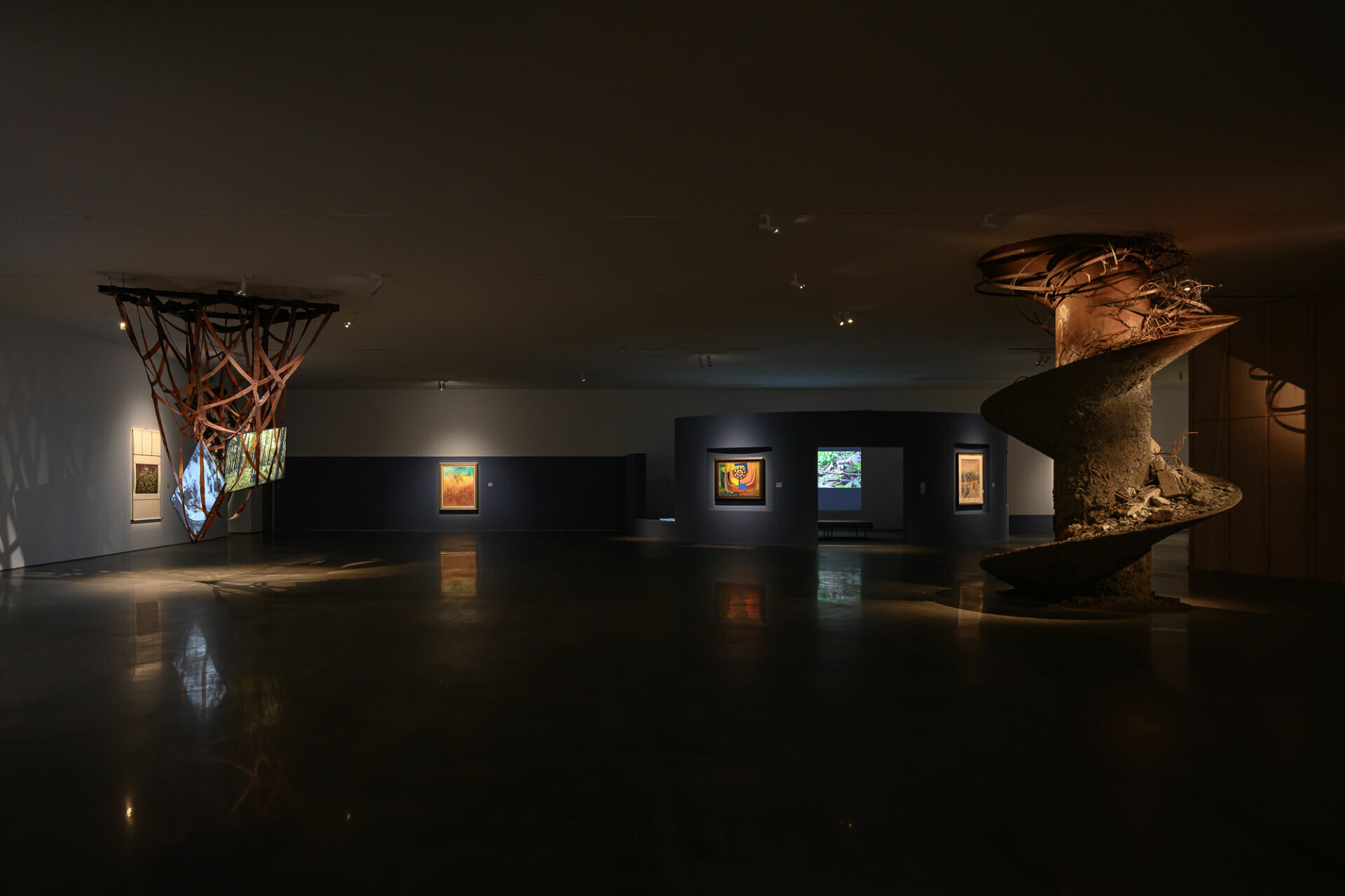
➤ 幻生的寓言。攝影|ANPIS FOTO 王世邦
在「摺疊的風景」中,時間跨度以凝縮的方式呈現人與土地百年之間的變遷。生活樣貌亦是一個不斷變化中的命題,所有當下的地景、身份與記憶,在時空的摺疊與流動中,都有被全新解讀與詮釋的可能。
In ''Folds and Flows,'' a century of change between people and land is condensed. Ways of living remain a question in motion; landscapes, identities, and memories of the present, within the folding and flow of time and space, hold the possibility of being read and interpreted anew.
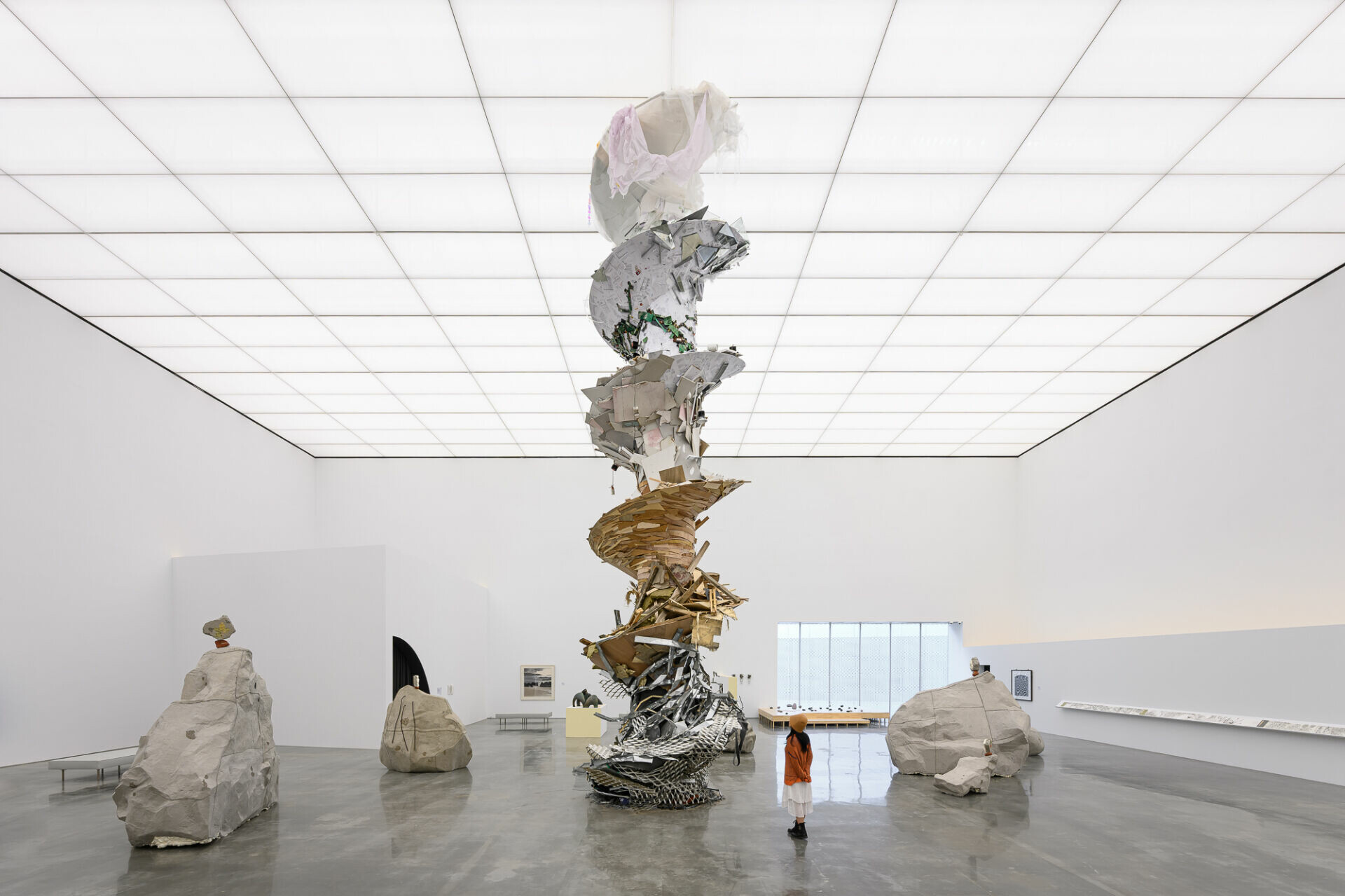
➤ 折疊的風景。攝影|ANPIS FOTO 王世邦
「擾動的記憶」聚焦於探索人與非人的關係。如同自然不會稱呼自己為「自然」,我們對世界的認知都是由人類的語言所界定。透過重新顛覆這些文明的「擾動」,尋找人與自然更為開放的感知連結,擺脫被馴化的知識體系,不再受限於單一歷史論述。
''The Troubling of Natural Histories'' focuses on relationships between the human and the non-human. Just as nature does not call itself “nature,” our understanding of the world is bounded by human language. By overturning these civilisational “disturbances,” the section seeks a more open perceptual linkage between people and the natural world, loosening domesticated knowledge systems and stepping out from the limits of a single historical narrative.
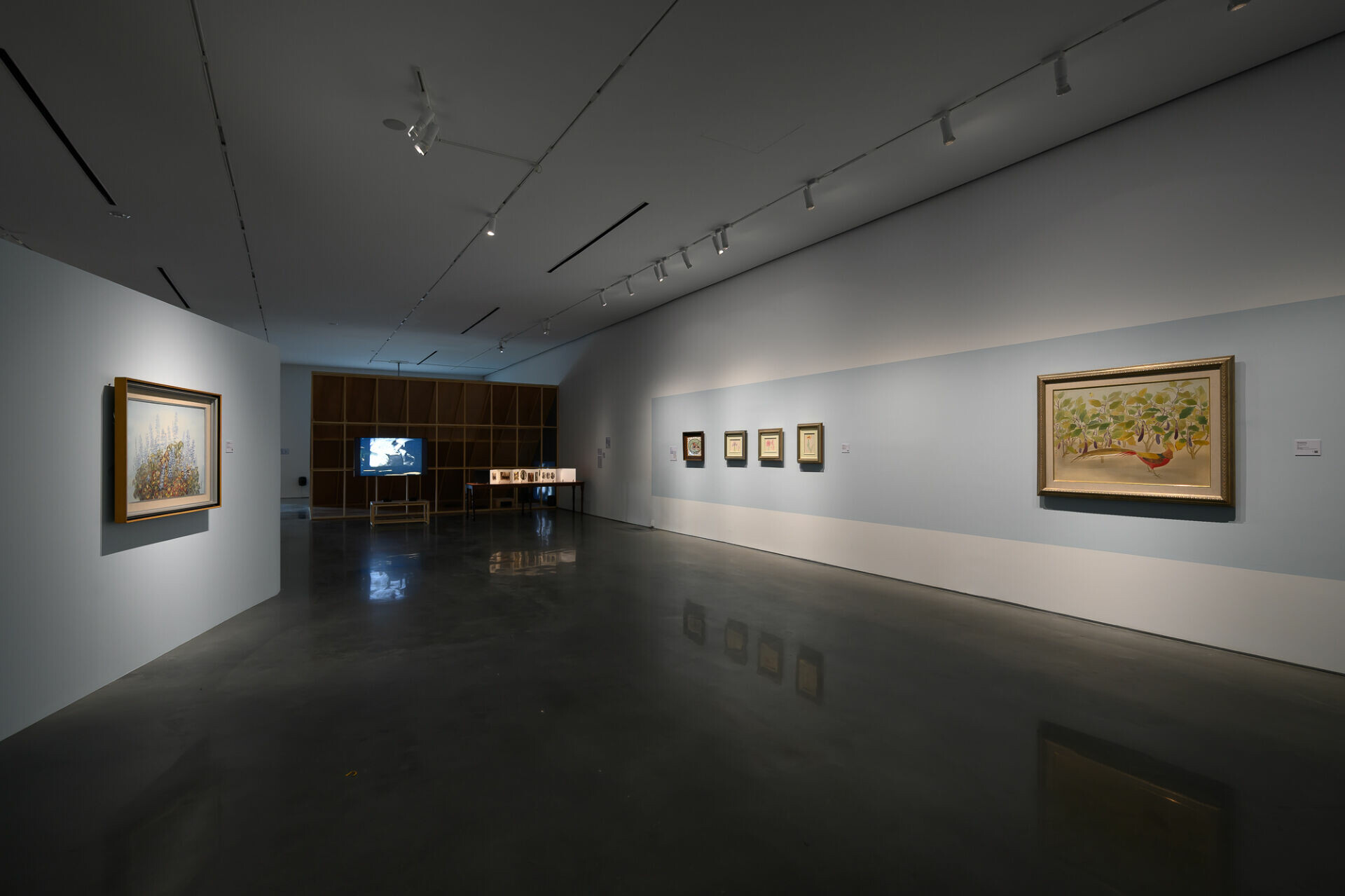
➤ 擾動的記憶。攝影|ANPIS FOTO 王世邦
「萬物初聲」邀請人們以「聆聽」作為回應世界的方法。思考誰有資格說話?誰又被迫沉默?透過感知來自個人與集體的敘事:受傷的身體、流亡的記憶、壓抑的情感,經由「聆聽」搭起通往「理解」的橋樑,才有進一步共存與修復的可能。
''When the World Begins to Speak'' invites us to “listen” as a way of responding to the world. Who is granted the right to speak? Who is forced into silence? By sensing narratives from the personal and the collective—wounded bodies, memories of exile, repressed emotions—listening builds a bridge toward understanding, where coexistence and repair may become possible.
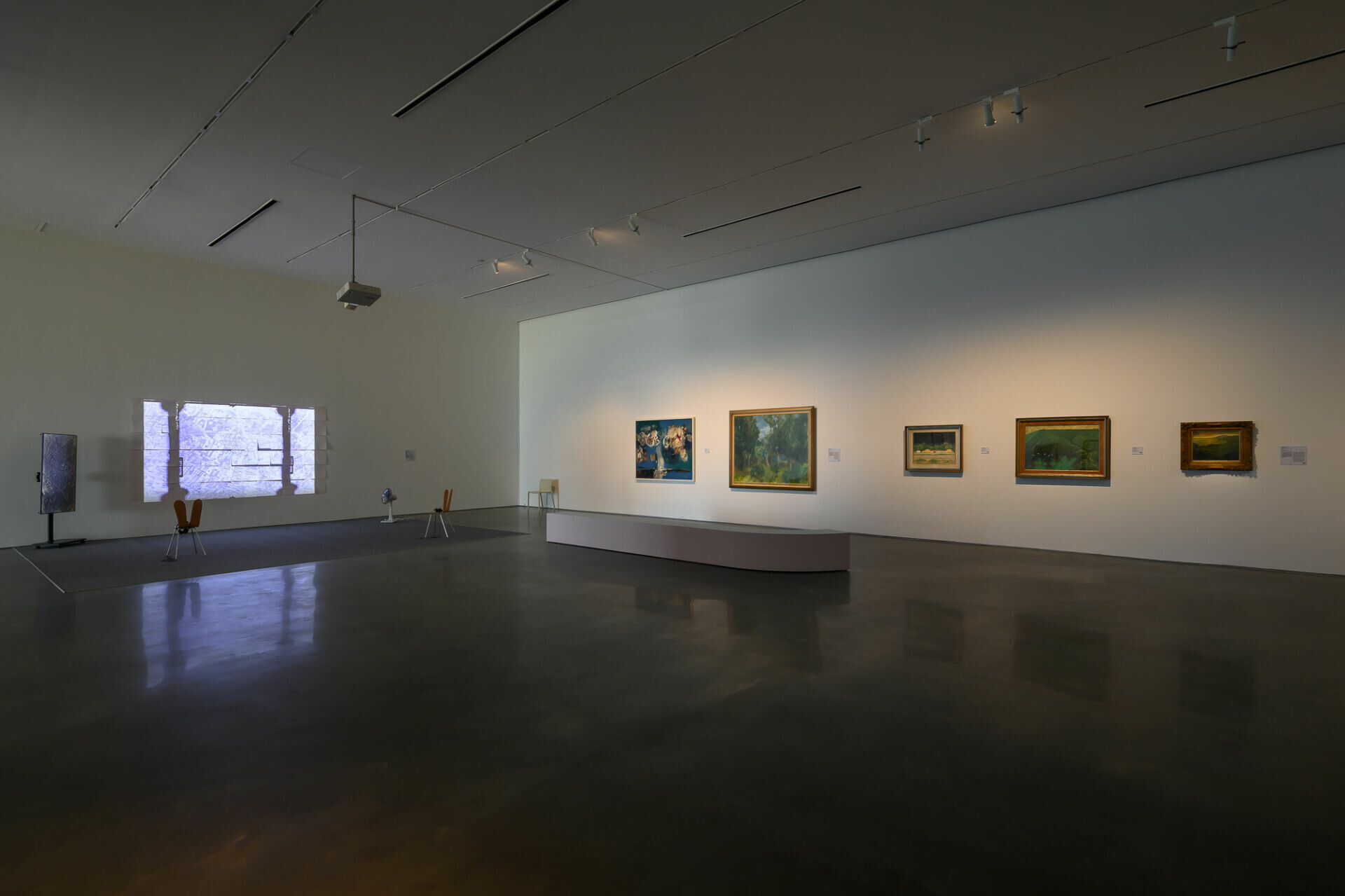
➤ 萬物初聲。攝影|ANPIS FOTO 王世邦
連結更多生命經驗,與萬物發生對話
Extending lived experience, entering into dialogue with all beings
步出場館之後,展覽並未結束。走在藍天綠地之間,仍能隨機與轉角處的藝術創作相遇。「我們期望能跟民眾的生活產生連結,基於與圖書館共構的特色激發多元觀看的可能,跨越藝術場館作為白盒子的邊界。」中美館館長賴依欣如此說道。
After leaving the venue, the exhibition does not end. Walking between blue sky and green ground, one may still encounter artworks—randomly, at a corner. “We hope to connect with people’s everyday lives. Building on the museum’s co-constitution with the library, we want to ignite multiple ways of looking and move beyond the boundary of the art venue as a white cube,” said TcAM Director Yi-Hsin Lai.
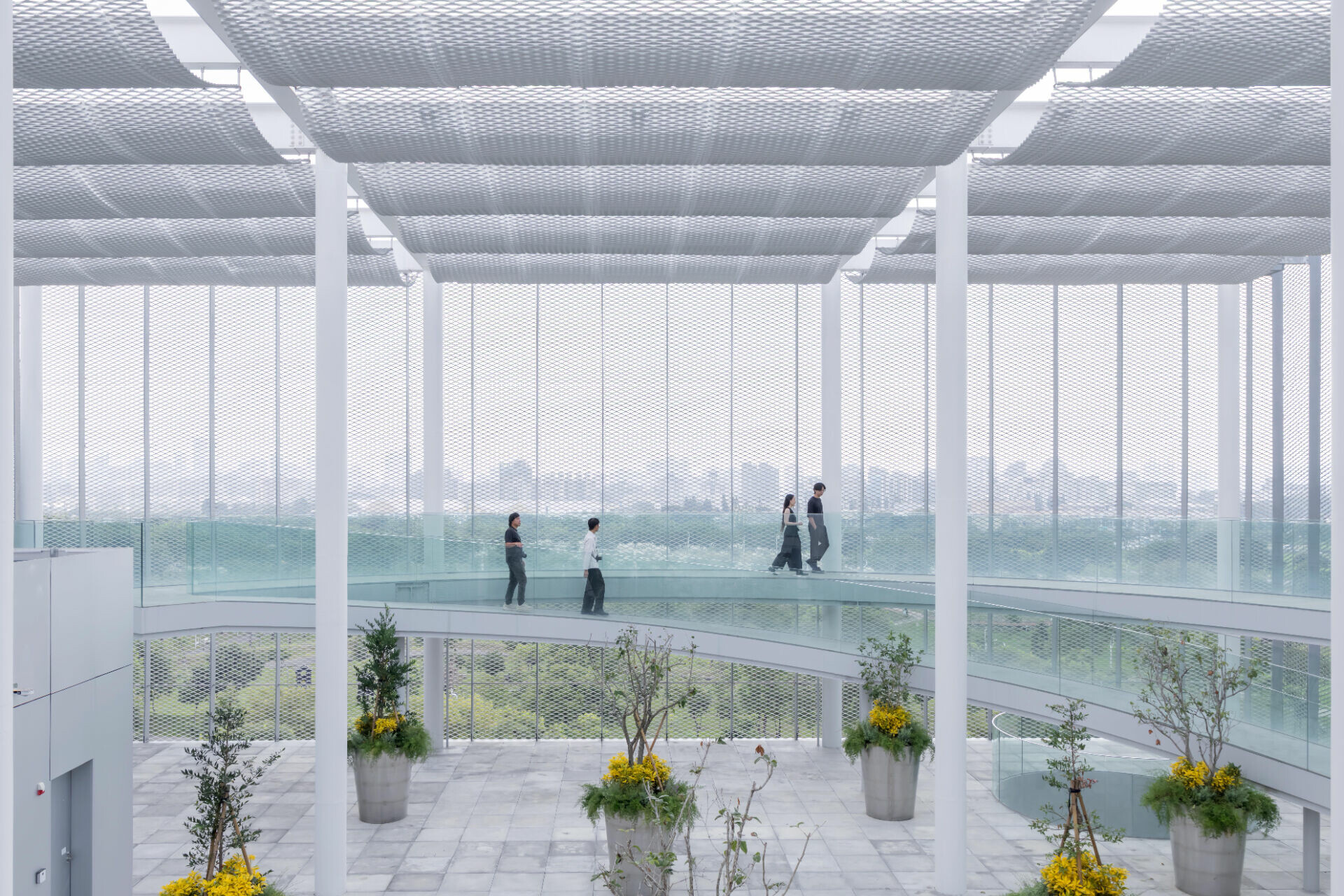
➤ 綠美圖文化之森。攝影|Iwan Baan
中美館不只是呈現觀點的美術館,更是一座能連結市民生活的文化中樞,她對展館懷抱的期許,正如展覽副標「See you tomorrow, same time, same place.」所述,是一份靜觀萬物與時空交織、人們在此不期而遇的美好期待。
TcAM is not only a museum that presents viewpoints; it also seeks to be a cultural hub that connects with civic life. Her expectation for the institution aligns with the exhibition’s subtitle, “See you tomorrow, same time, same place.”—a quiet anticipation of watching all beings and the interweaving of time and space, of people meeting here without prior arrangement.
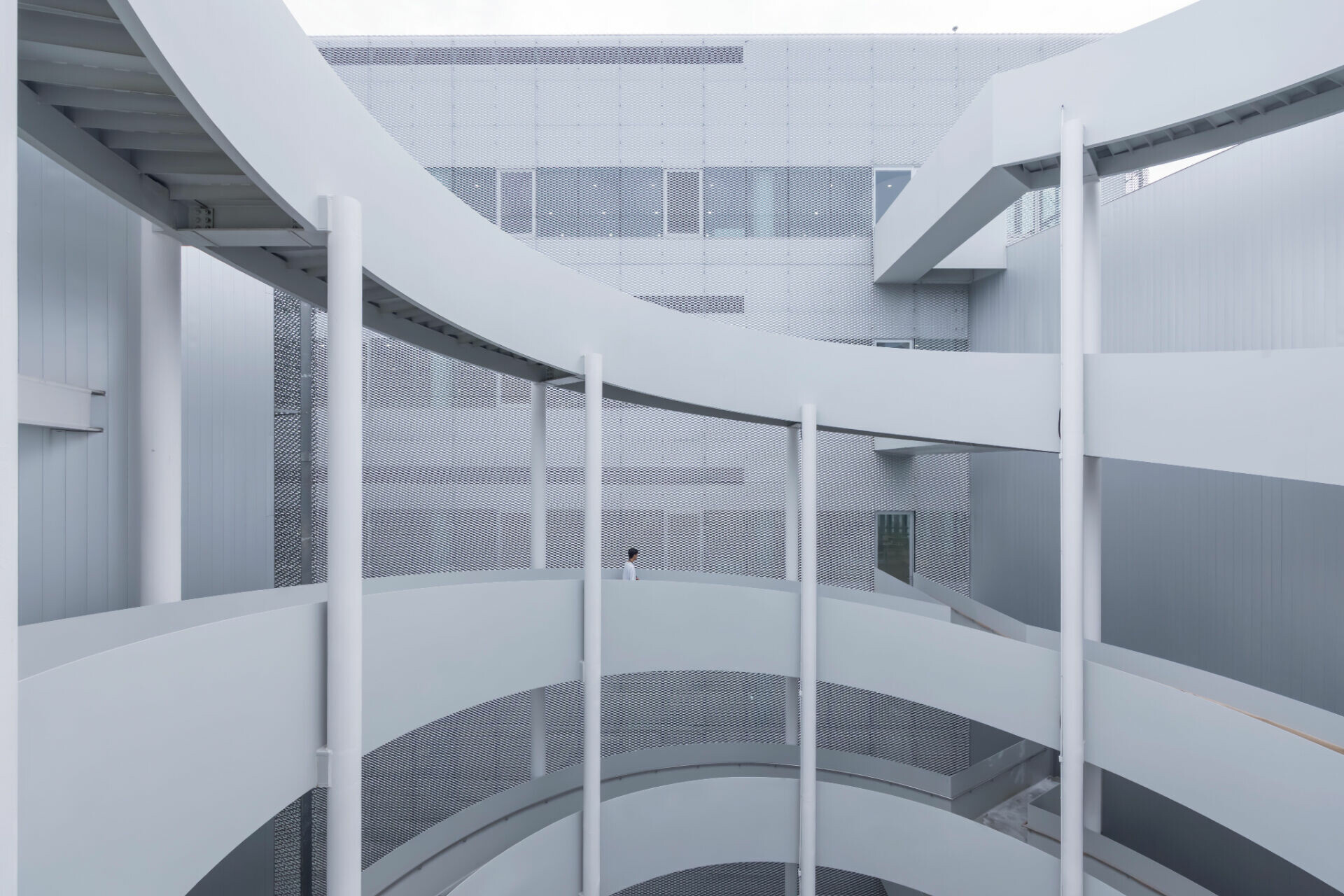
➤ 綠美圖逃生梯。攝影|Iwan Baan