Lucas Arruda個展——漫步在精神上的風景
Lucas Arruda——Deserto-Modelo
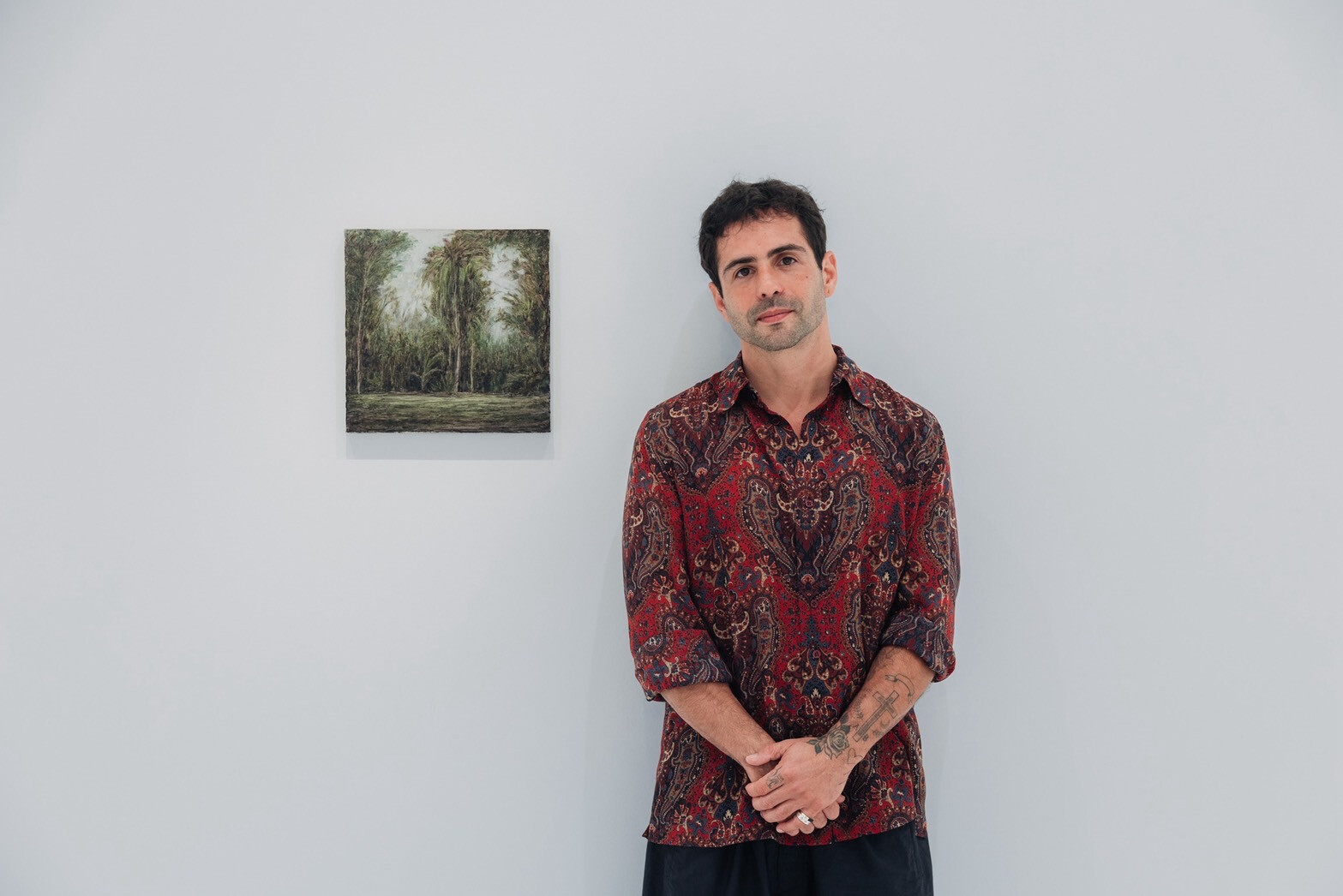
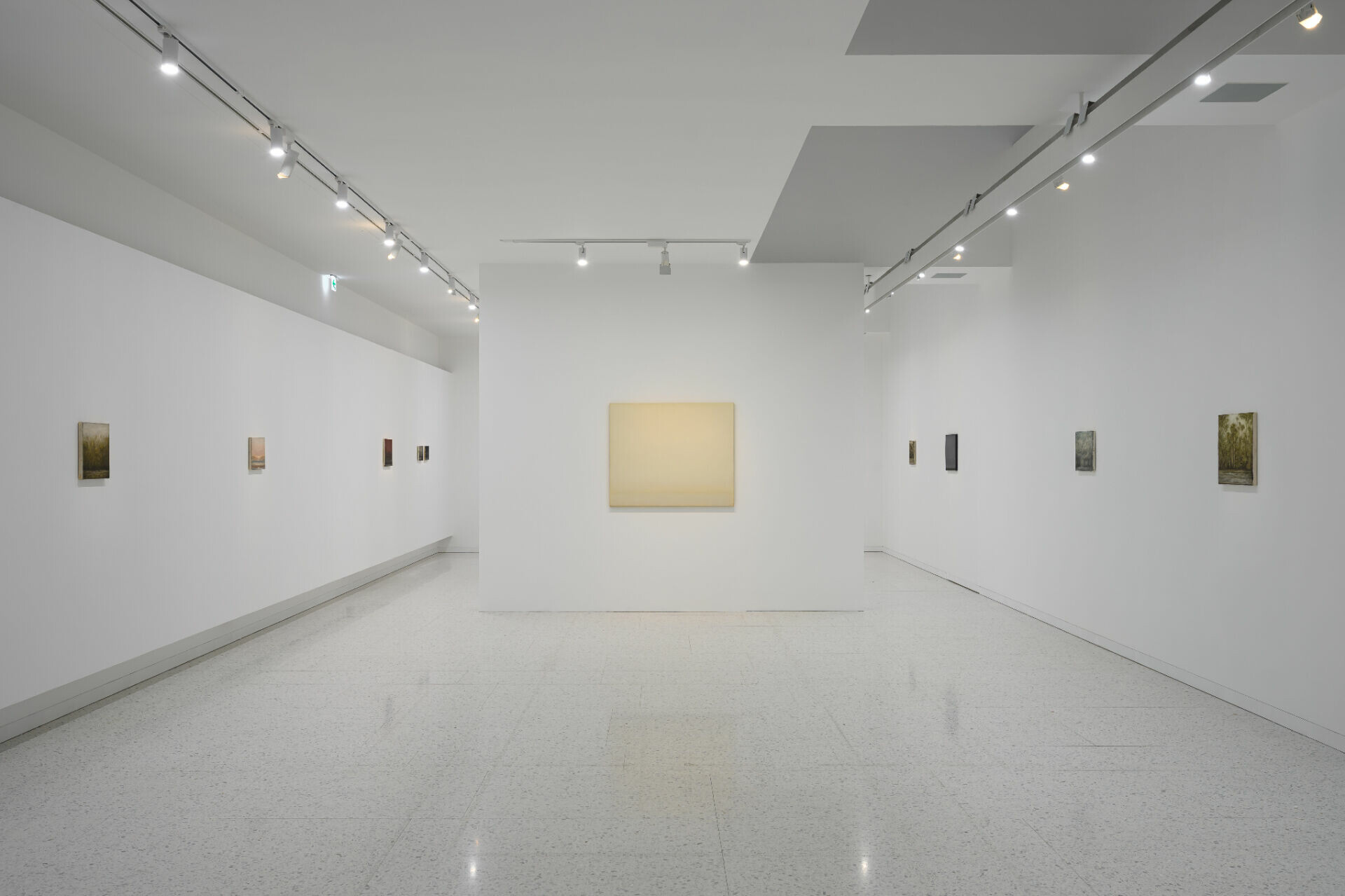
Déjà vu——那是人們在面對似曾相識的景象時,所發出的低聲喟嘆。走進文心藝所,漫步於一幅幅遙遠疏淡的畫作之間,風景恍然成為一種神秘的心流體驗。不存在於現實世界上的任何一個角落,卻仍能輕易地觸動某段記憶裡的深刻情感。對 Lucas Arruda 而言,風景並不指向單一明確的場所,而是一種畫面結構,一種感知與思考的形式。
Déjà vu—the hushed sigh that arises when we encounter a scene that feels uncannily familiar. Entering Winsing Art Place and moving slowly among Lucas Arruda’s distant, pared-down paintings, landscape suddenly becomes a mysterious experience of mental flow. These images exist nowhere in the physical world, yet they are able to stir deeply rooted emotions embedded in memory. For Lucas Arruda, landscape does not point to a single, identifiable place; rather, it functions as a pictorial structure—a form through which perception and thought take shape.
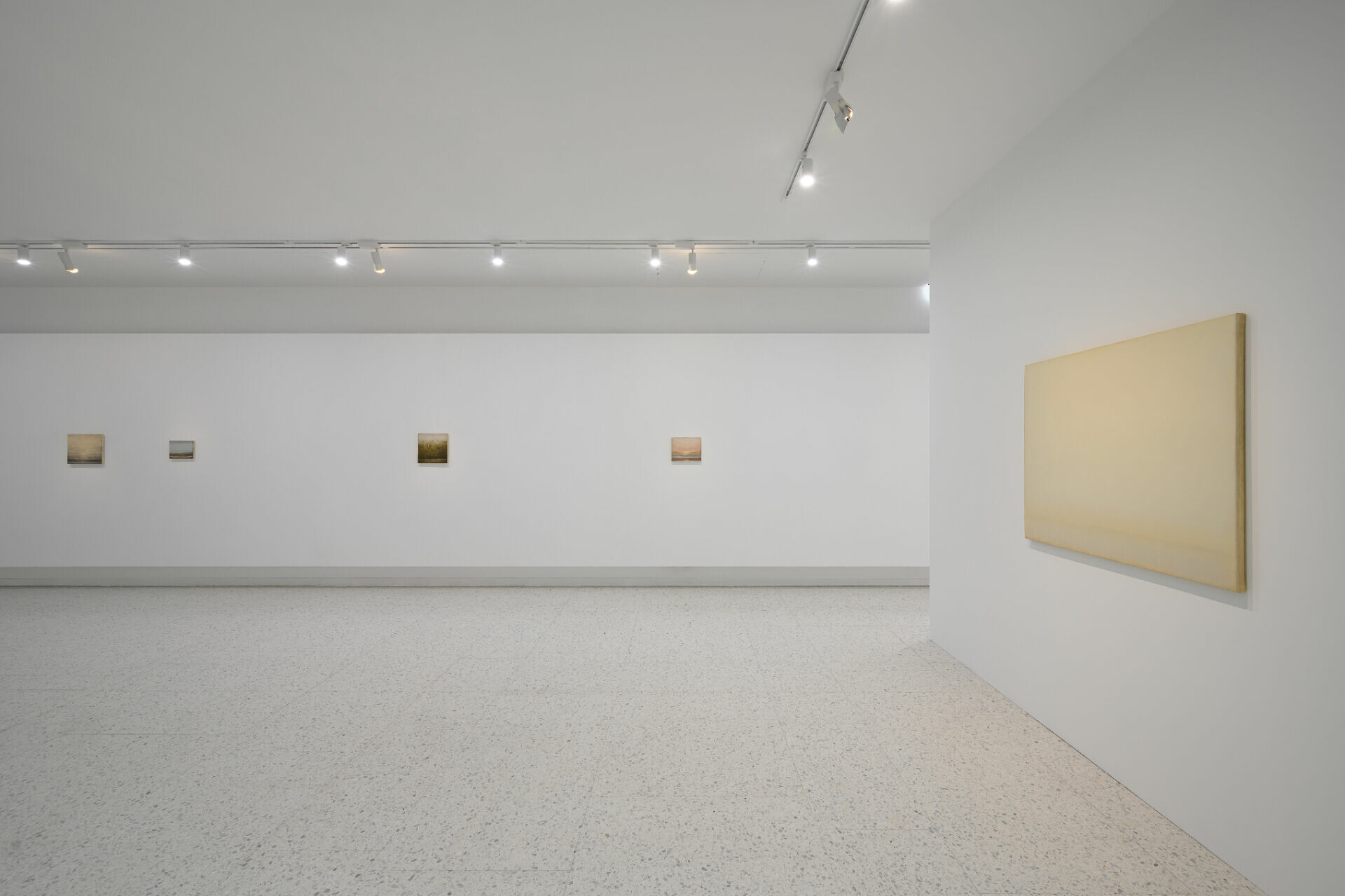
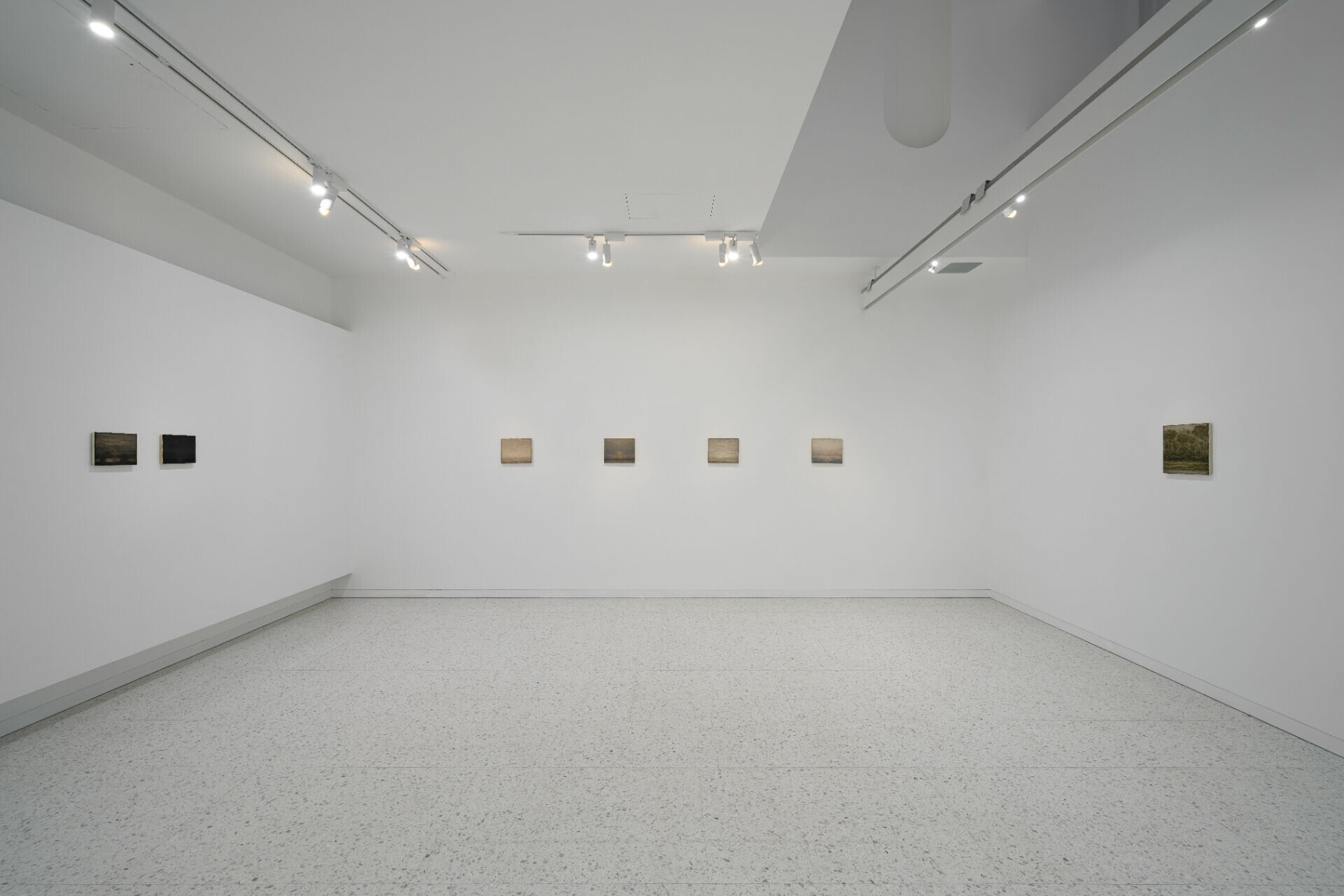
本次展覽以 Arruda 長期發展的系列「模型沙漠」(Deserto-Modelo)為核心。概念來自巴西詩人 João Cabral de Melo Neto 的語句,在其作品中,沙漠是超乎語言範疇的永恆之地。而在 Arruda 的筆下,「模型沙漠」亦非真實存在的地景,而是一種想像中的風景狀態。沙漠中缺乏生命、事件、甚至喪失時間感的無機樣貌,十分接近藝術家內在的心境投射。這種近乎空無的條件,不斷在 Arruda 重複相似構圖,長期研究的創作方式中體現。
This exhibition centres on Arruda’s long-developed series Deserto-Modelo (Models of Desert). The title echoes a phrase by the Brazilian poet João Cabral de Melo Neto, for whom the desert signifies an eternal realm that lies beyond language. In Arruda’s work, however, the “Model of Desert” does not refer to any real place, but to an imagined state of landscape. Marked by the absence of life, events, and even a sense of time, this inorganic condition closely approaches a projection of the artist’s inner state. Such near-emptiness is repeatedly articulated through Arruda’s sustained practice of revisiting similar compositions and pursuing the same inquiry over an extended period.
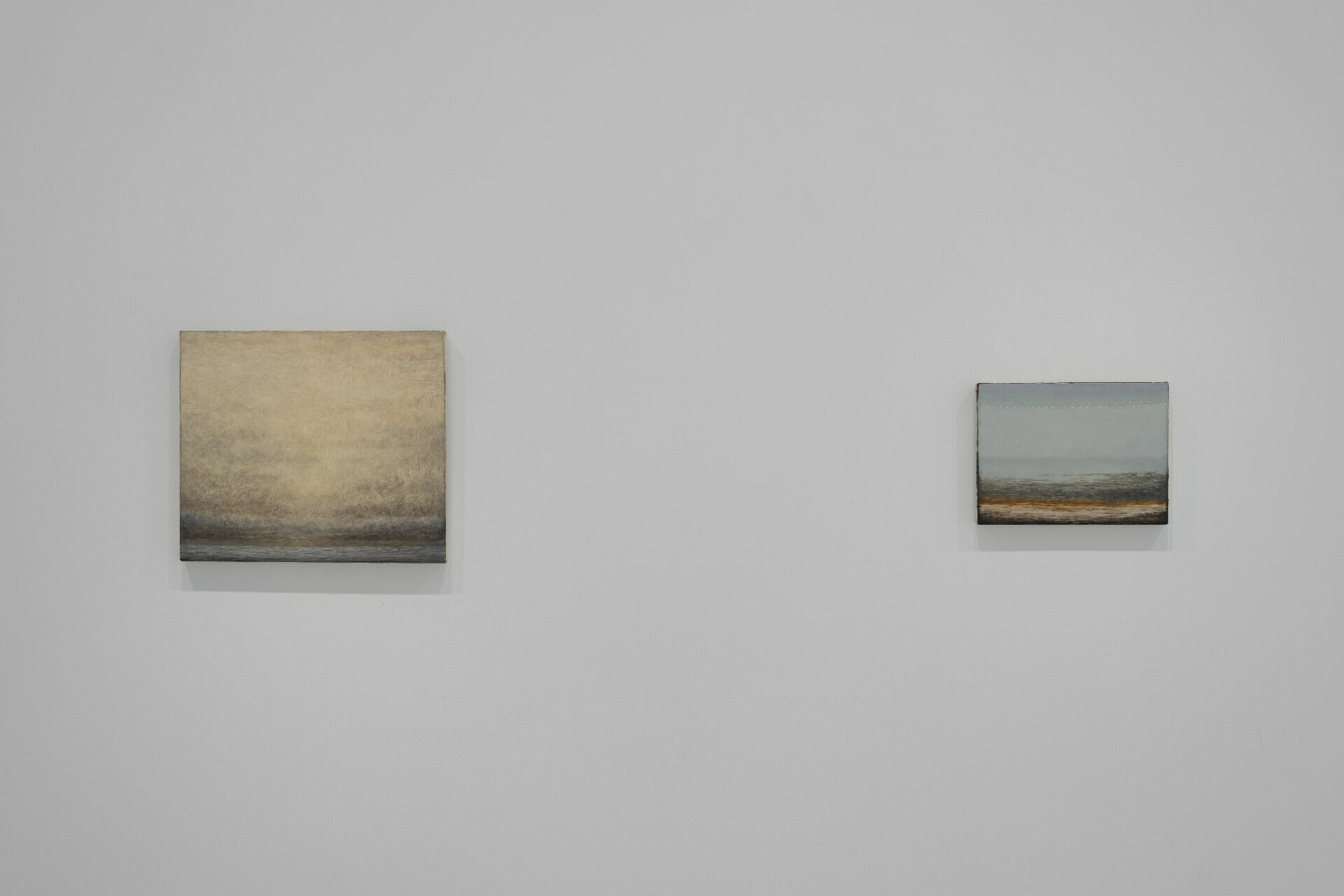
若細看每幅畫面,經常可見幽暗的天空,偶爾出現一道極細的地平線,或是被壓縮成剪影的森林輪廓。這些元素不構成敘事,也不指向特定地點,而是作為一種結構性的線索,使畫面停留在一種曖昧不明的情境下。雖然他的作品經常被視為風景畫,但 Arruda 認為,畫面因其構圖方式而被辨識為風景,更多是一種文化上的理解。他的創作多在畫室中完成,僅憑藉時間沈澱過後留下的視覺印象建構畫面——這種類似冥想的觀看方式,並非基於再現現實的企圖。
A closer look at the paintings reveals dim, brooding skies, occasionally interrupted by an extremely thin horizon line, or forests reduced to compressed silhouettes. These elements do not form a narrative, nor do they indicate a specific location. Instead, they operate as structural cues, holding the image in a state of indeterminacy. Although Arruda’s works are often perceived as landscapes, he has noted that this recognition stems largely from cultural conventions tied to compositional format. Created primarily in the studio, his paintings are constructed from visual impressions that have settled over time—an approach closer to a meditative mode of seeing than to any intention of representing reality.
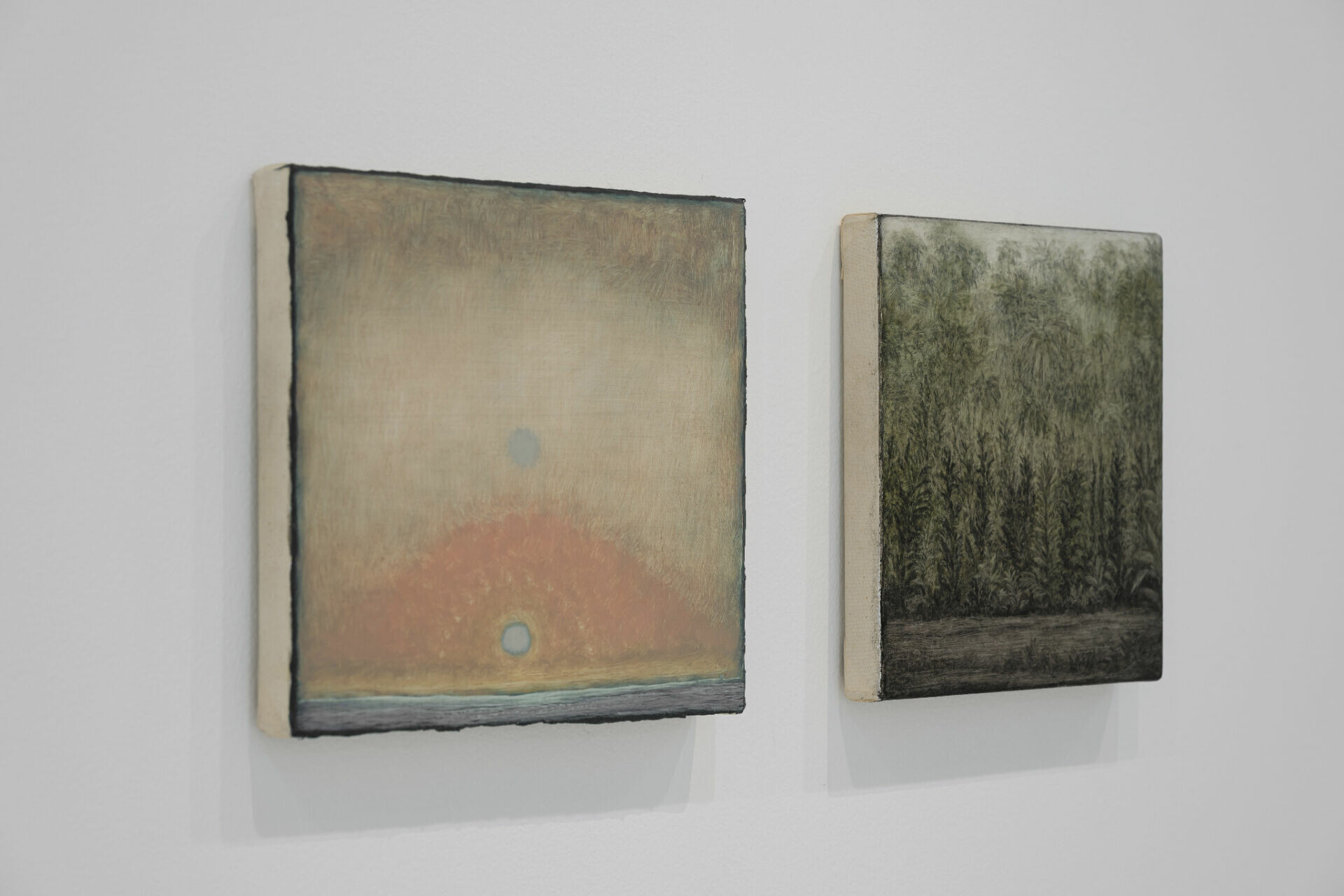
在他的作品中,「光」以一種穿針引線的姿態存在。並非一開始便確認用來描繪場景,而是隨著顏料的堆疊、擦除與修正,一筆一筆於畫布上逐漸浮現。藝術家曾形容,光是流動本身,它賦予畫面張力,最終開啟一個介於抽象與具象之間的空間狀態。透過有意識選擇小尺幅創作,顏料的物質性會被放大,每一道筆觸與刮除必須更加細緻,才能使光的變化更為集中且密集,在有限畫面中形成飽滿的戲劇張力。
Light plays a central, connective role in Arruda’s practice. It is not predetermined as a means of describing a scene; rather, it gradually emerges through the accumulation, erasure, and revision of paint, stroke by stroke across the canvas. As the artist has described, light is movement itself—it generates intensity and ultimately opens a spatial condition that exists between abstraction and figuration. Through a conscious choice to work on a small scale, the materiality of paint is amplified: every brushstroke and scraping becomes essential, allowing variations of light to grow more concentrated and denser, producing a heightened sense of tension within the limited pictorial field.
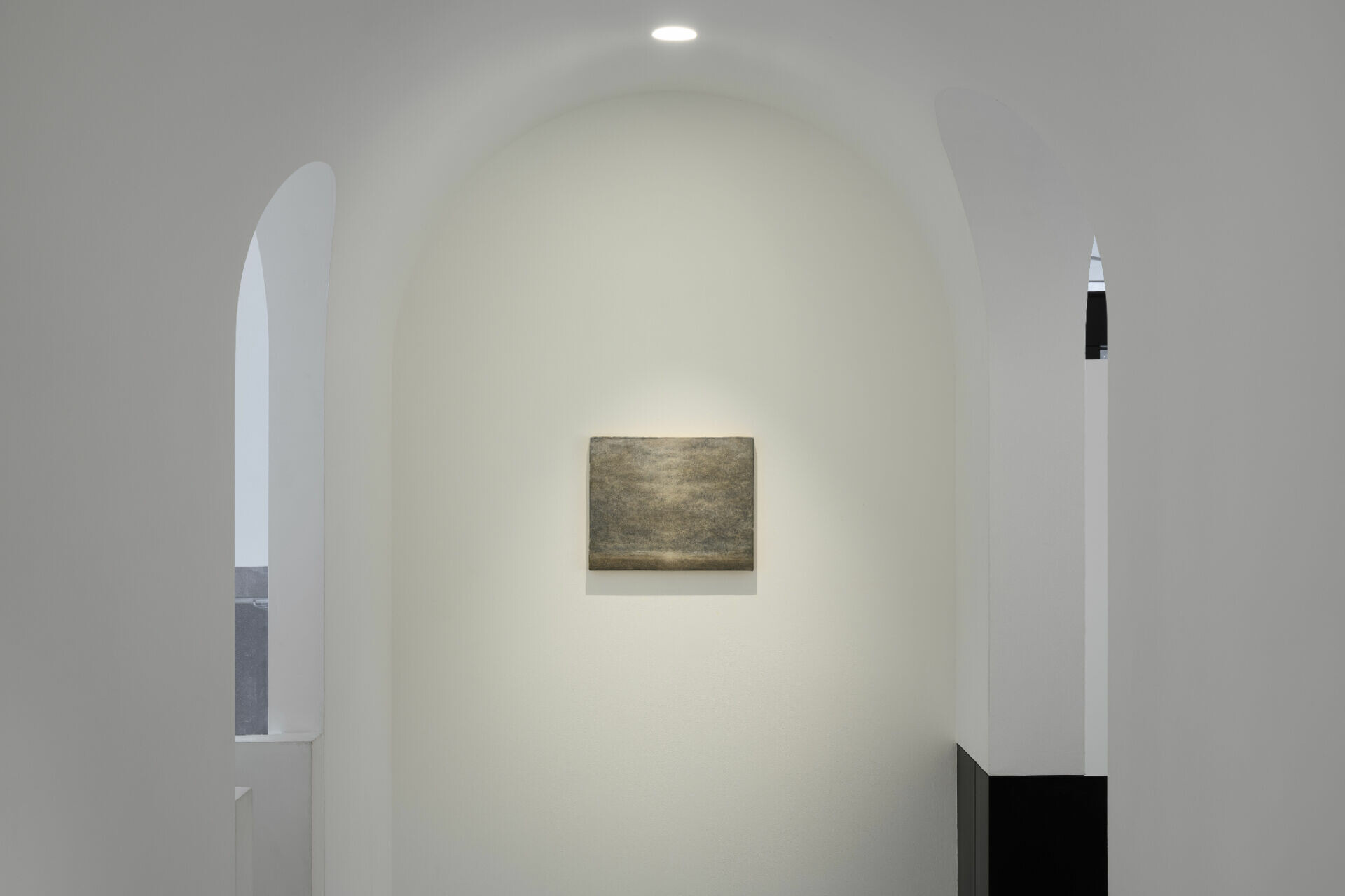
透過對結構、尺度、光與顏料之間的反覆梳理,這位來自巴西聖保羅的藝術家,將風景轉化為關於時間、重複與內在經驗的抽象體驗。當人們站在畫作前,彷彿正漫步在他所建構的精神風景之中——在虛實交錯的邊境,得以暫時抽離現實生活、緩步悠然的呼吸。
Through the repeated refinement of structure, scale, light, and material, this artist from São Paulo transforms landscape into an abstract experience shaped by time, repetition, and inner perception. Standing before these works, viewers may feel as though they are wandering through a mental landscape constructed by the artist—at the threshold between the real and the imagined, momentarily stepping away from everyday life and breathing at a slower, more contemplative pace.