


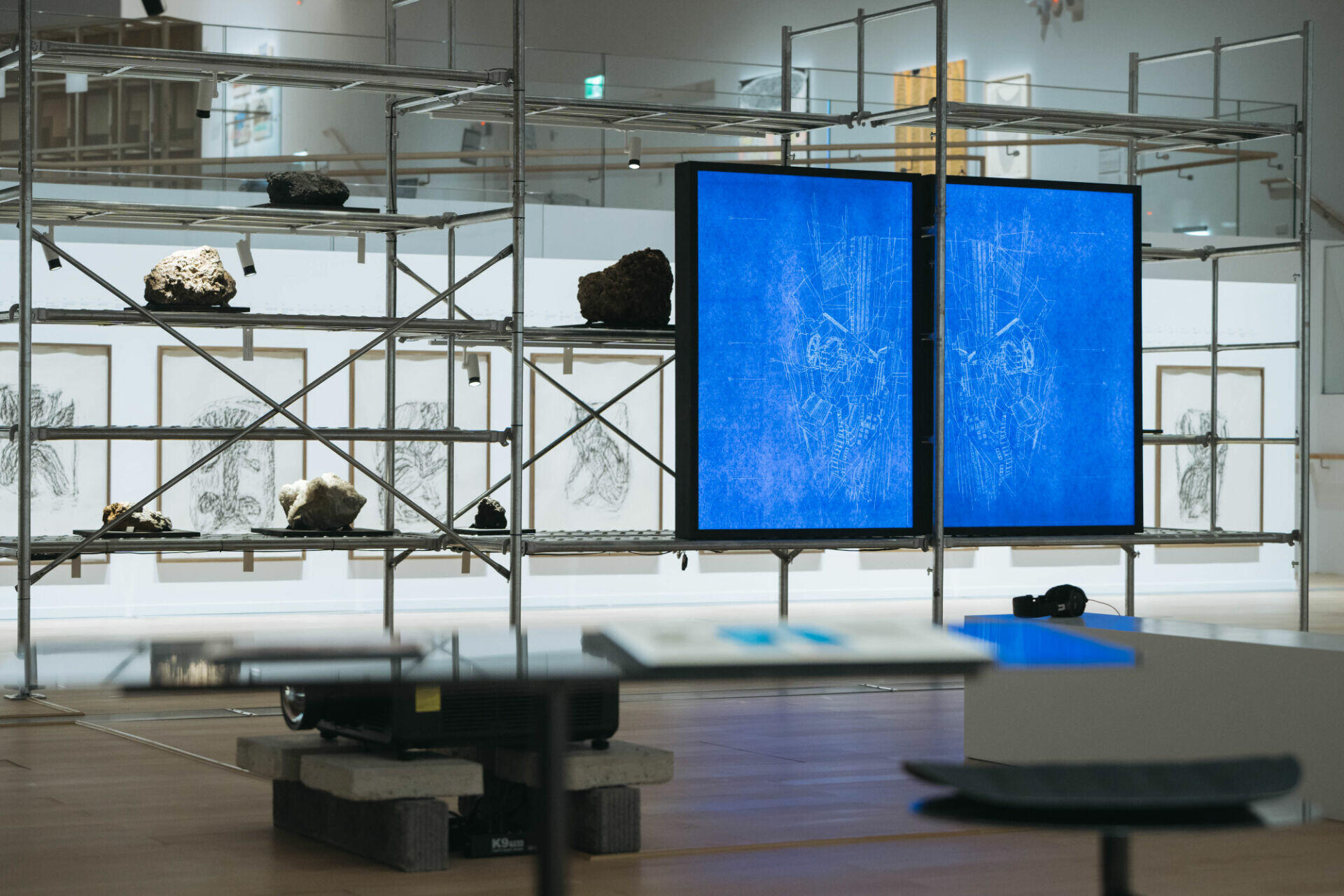
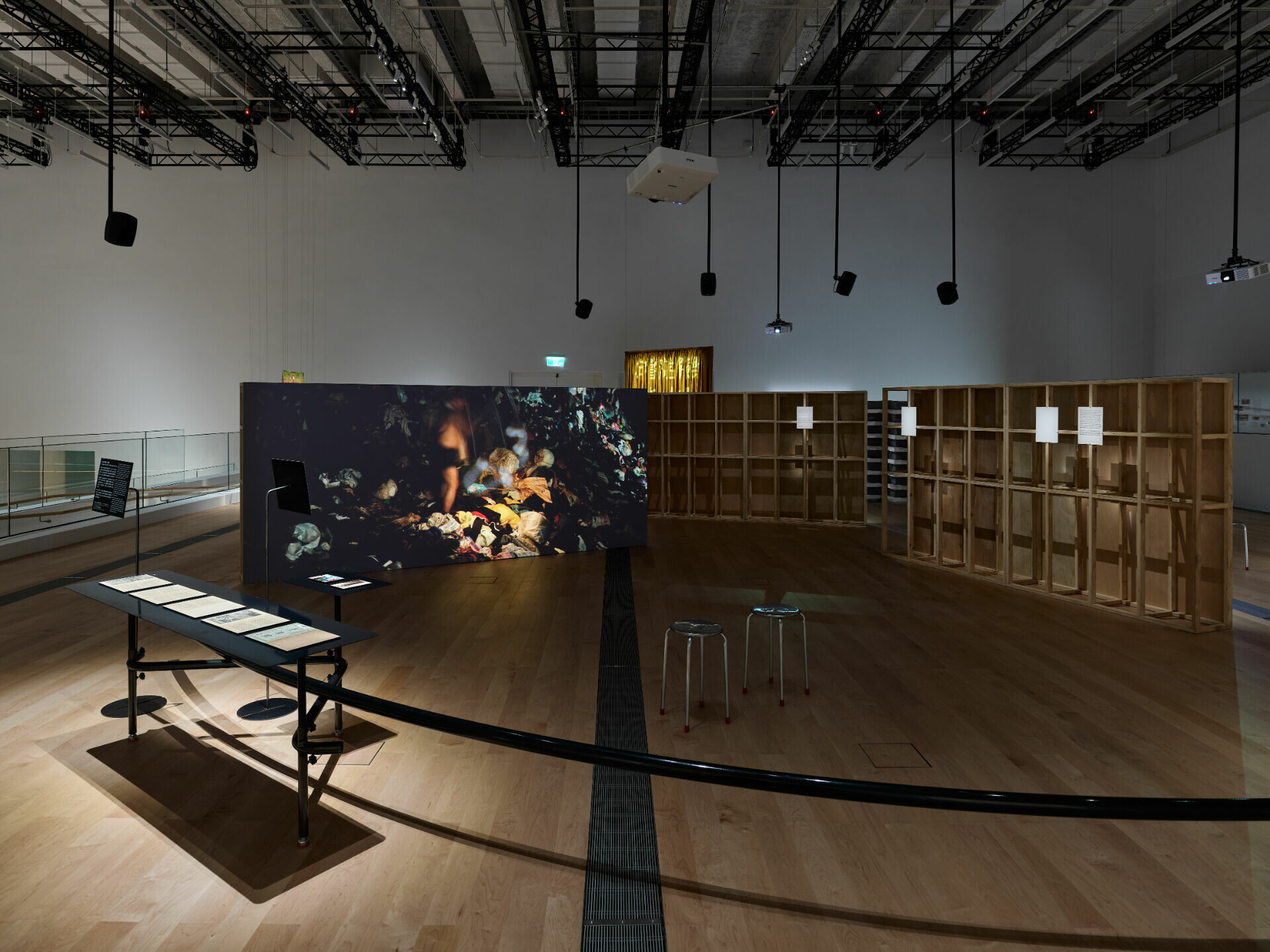
➤ jiandyin,〈魔山:失落的金瓜石〉,2025-2026。(新北市美術館提供,攝影:林軒朗)jiandyin, Magic Mountain_ The Lost of Golden Pumpkin, 2025-2026. (Courtesy of NTCAM, Photo_ Hsuan Lang Lin)
棉線與石頭
Of Thread and Stone
當你走進博物館,是否會覺得眼前陳列事物離現在很遠?試試看,拾起一縷棉線,它能否引發你對紡織歲月抽絲剝繭的好奇?又或是,觀察散落的石塊,能否勾起某些來自礦坑中至暗時刻的回憶?跟著新北市產業發展史的腳步,依循「棉線」與「石頭」埋下的兩條看似平行卻不斷交錯的線索走進展場,便能逐步體會策展人試圖回溯在礦坑與工廠、地下與地面、男性與女性的勞動經驗之間,所交織的城市紋理與文化記憶。
When you step into the museum, do the objects on display feel distant from the present? Pick up a strand of thread—can it spark your curiosity about the unfolding layers of textile history? Pause before a scattered stone—does it evoke memories from the darkest moments of the mines? Following New Taipei City’s industrial history, the two seemingly parallel lines traced by “thread” and “stone” weave through the exhibition. They gradually reveal the urban fabric and cultural memory embedded in the labor of men and women, underground and aboveground, in mines and factories.
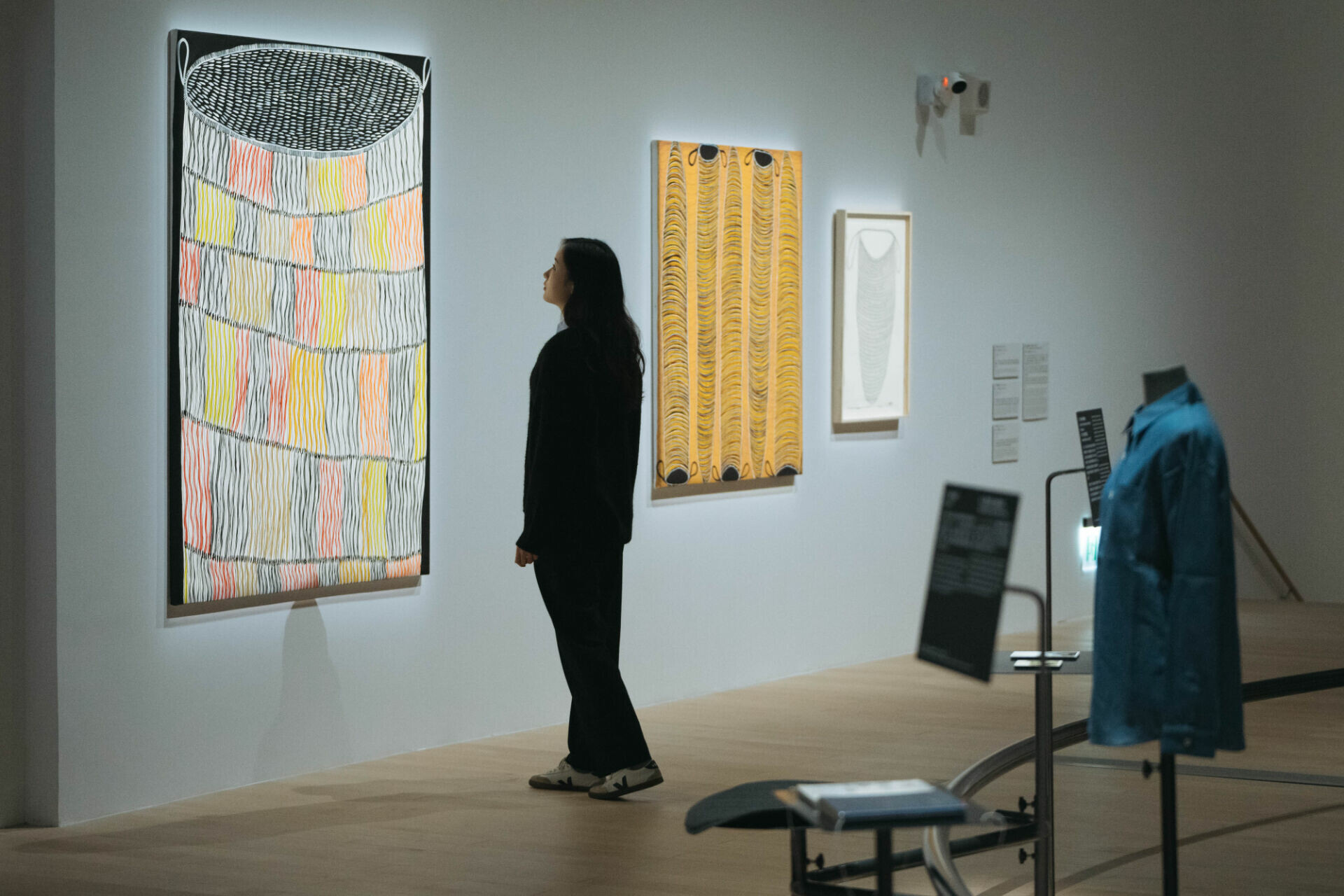
➤ 奇倫·卡里普爾,〈五個魚陷阱〉、〈大提袋〉、〈小提袋〉,2025。(新北市美術館提供,攝影:林軒朗)Kieren Karritpul, Five Fish Traps, Big Dilly Bag and Yerrkerre Syew, 2025. (Courtesy of NTCAM, Photo_ Hsuan Lang Lin)
愛德華.薩依德曾說:「在可見的未來,某物的部分勝於全部。破碎優於單一。」於是本場展覽藉由「物的考古」,讓人們透過關注當代生活的表徵,思索生命經驗的變化歷程,以涵蓋矛盾與差異的複數視角,呈現歷史與記憶的多重可能。
Edward W. Said once wrote:“A part of something is for the foreseeable future going to be better than all of it. Fragments over wholes.”Through an archaeology of objects, the exhibition invites reflection on lived experience, embracing contradiction and difference, and revealing the many possibilities of history and memory.
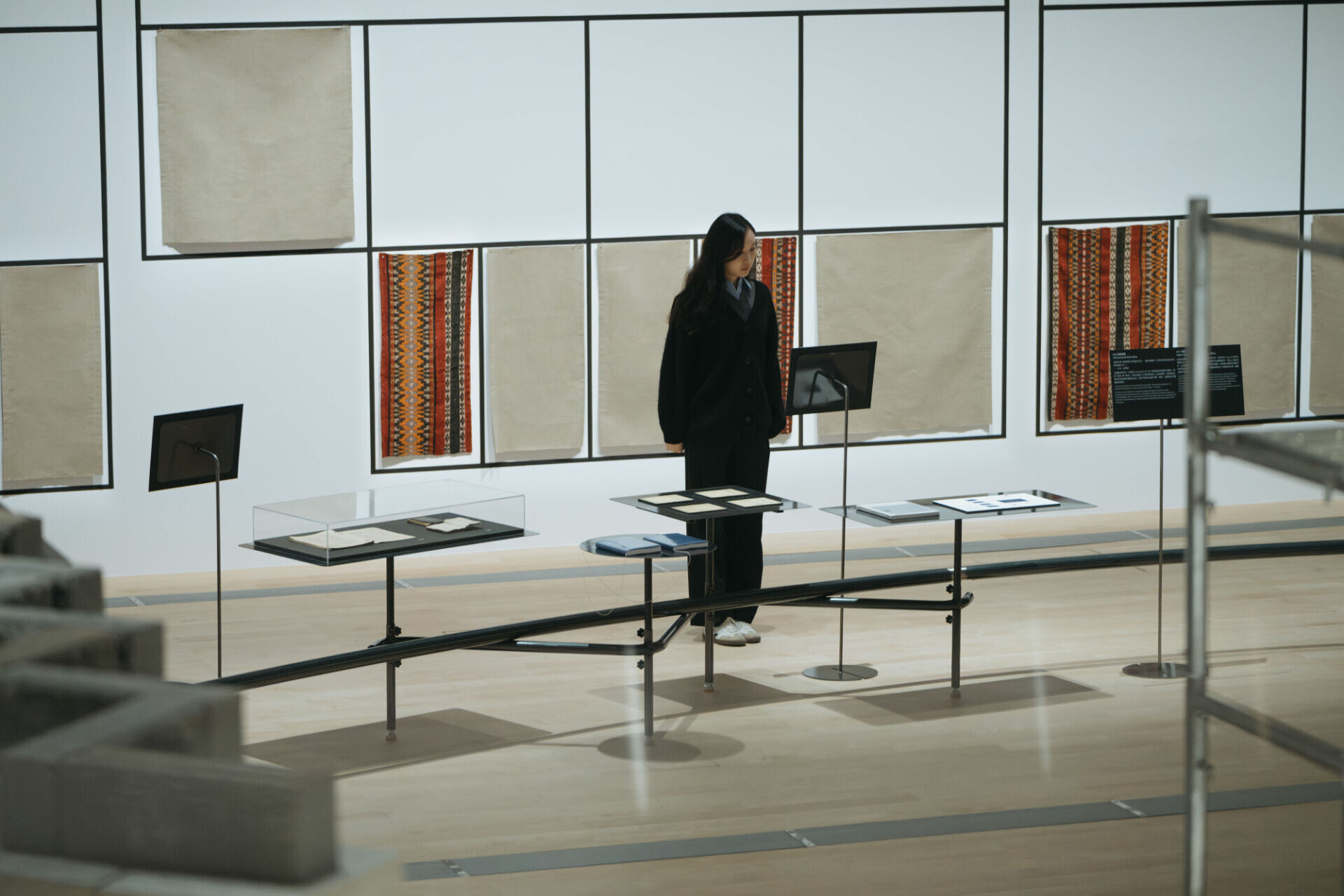
➤ 展覽「棉線與石頭」整合了歷史文物、研究檔案、影像紀錄、傳統工藝與當代藝術裝置等多元形式。(新北市美術館提供,攝影:林軒朗)Fusing traditional craft and contemporary art, “Of Thread and Stone” traverses imagery, literature, objects, archives, crafts, and artworks. (Courtesy of NTCAM, Photo_ Hsuan Lang Lin)
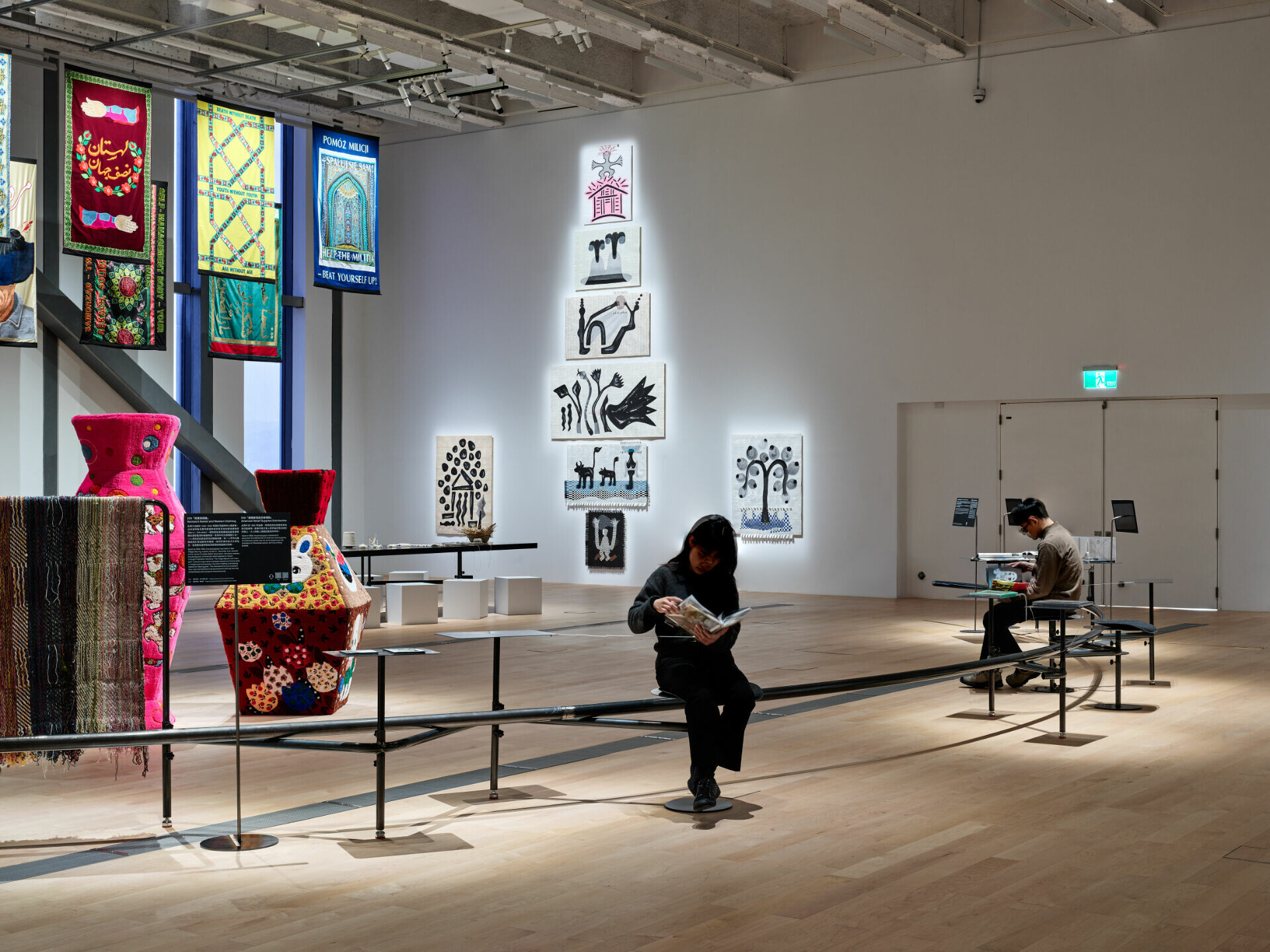
➤ 「棉線與石頭」展場一隅。(新北市美術館提供,攝影:揅空間工作室)A corner of the exhibition (Courtesy of NTCAM, Photo_ Studio Millspace)
新美館策展人鄒婷與獨立策展人王韓芳藉由策劃一場「進行中的博物館」,讓人們看見「棉線與石頭」在不同時間軸線與多元文化語境下扮演的角色:從新石器時代的紡輪、南島語族的手撚苧麻,到殖民工業的鳳梨纖維與紡織廠的牛仔布衣,揭示技藝如何演變,與時代變遷中勞動秩序的流轉。再到臺灣東海岸的拼裝礦車、阿美族的手編藤蓆,對比敘利亞邊境古城的碎石與貝都因人的傳家毛毯,這些由相似元素發展出的相異文化地理脈絡,呈現世界文明彼此呼應的痕跡。
Curators Zou Ting and independent curator Wang Hanfang present a “museum in progress,” showing how thread and stone traverse time and culture: From Neolithic spindle whorls and Austronesian hand-twisted ramie, to pineapple leaf fibers of the colonial industrial era and denim garments from textile factories; From improvised mine carts along Taiwan’s east coast and handwoven rattan mats of the Amis, to rubble from a Syrian border city and Bedouin heirloom rugs—these analogous elements develop into divergent cultural and geographic narratives, offering traces of resonance across civilizations.
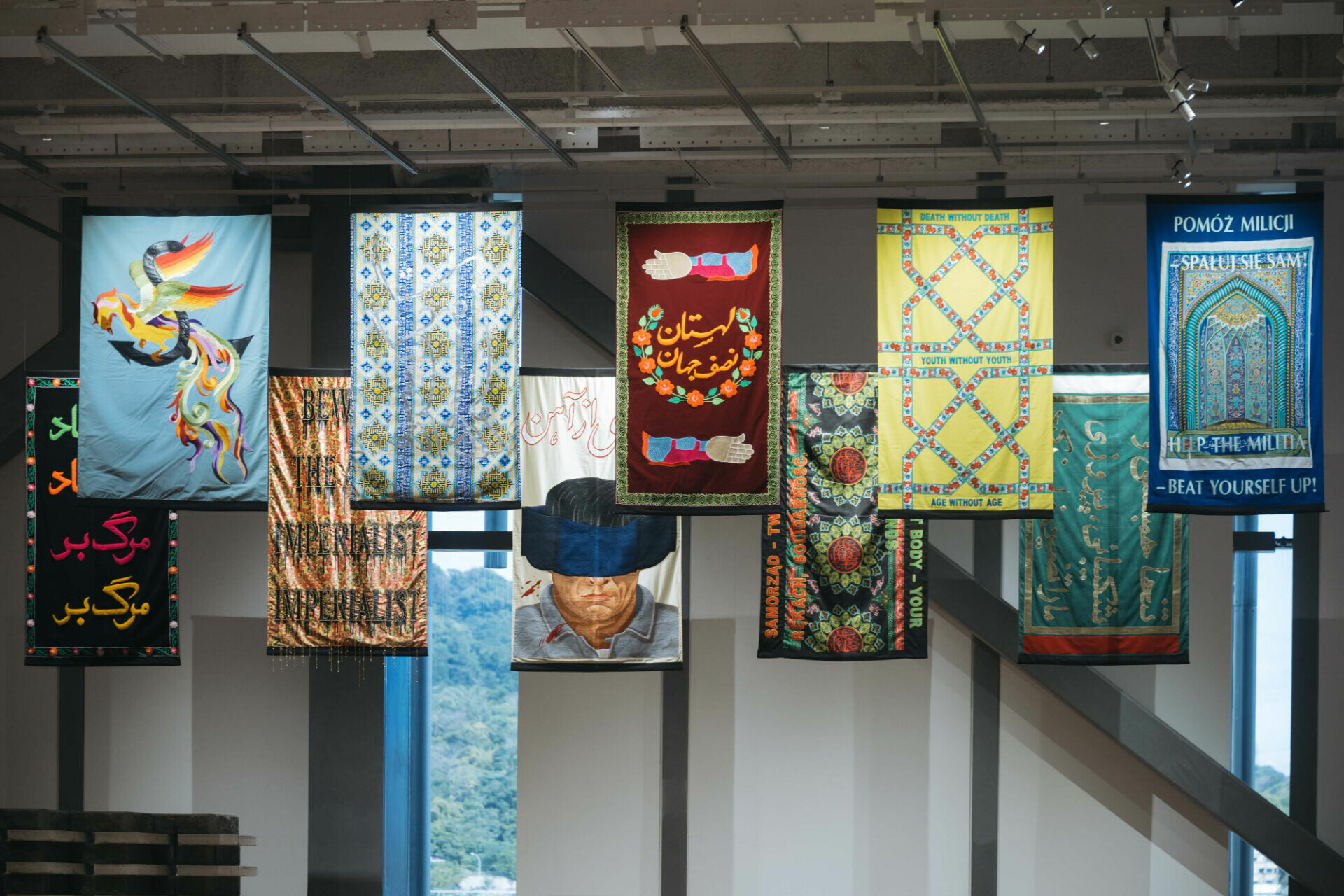
➤ 斯拉夫人與韃靼人,〈民族友誼:波蘭什葉派娛樂業〉,2011。(新北市美術館提供,攝影:林軒朗)Slavs and Tatars, Friendship of Nations_ Polish Shi_ite Showbiz, 2011. (Courtesy of NTCAM, Photo_ Hsuan Lang Lin)
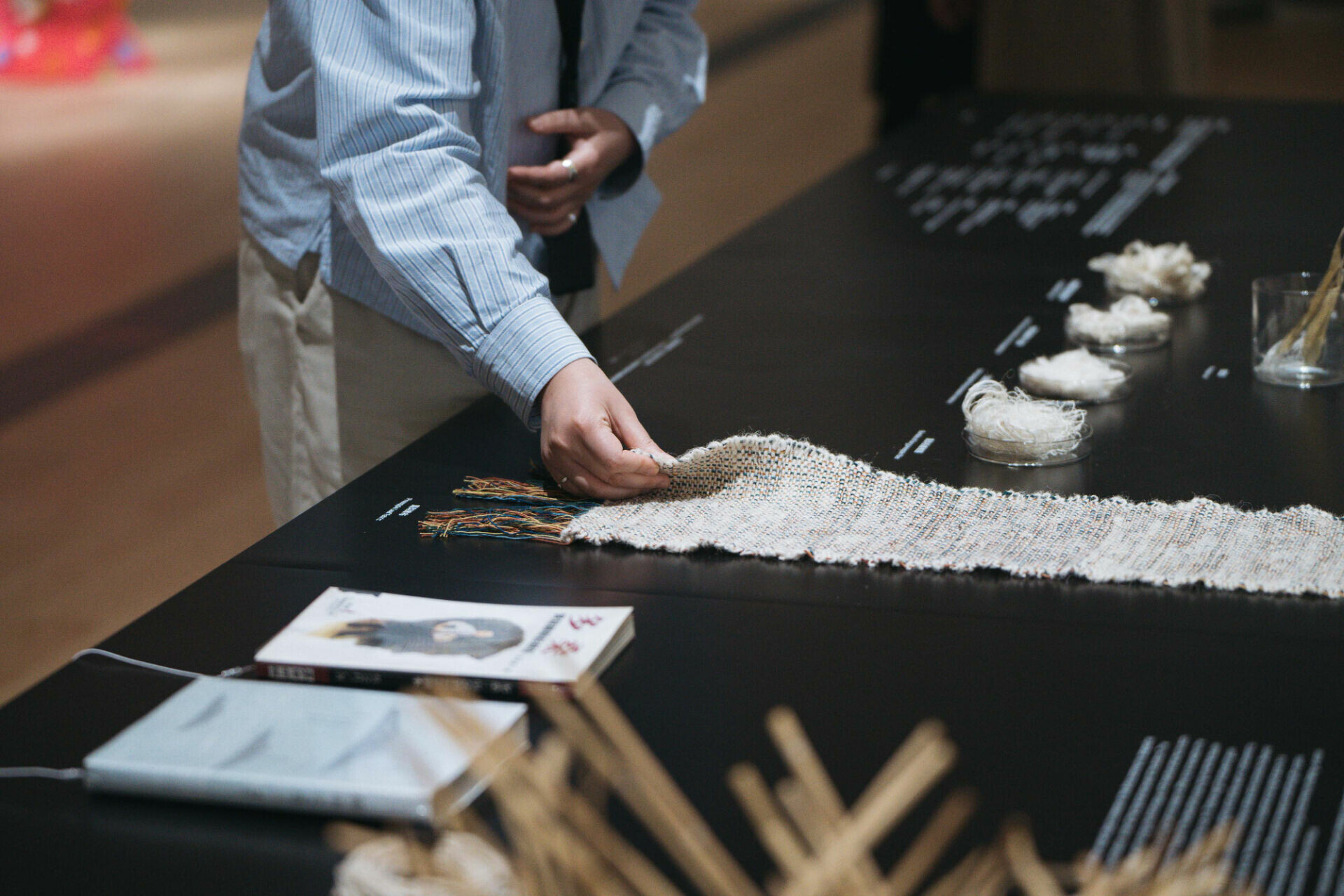
➤ 展覽作品涵蓋紡織工具與天然纖維的運用、礦業相關器具與地方技藝。(新北市美術館提供,攝影:林軒朗)The exhibition showcases textile tools, natural fibers, mining implements, and local crafts. ((Courtesy of NTCAM, Photo_ Hsuan Lang Lin))
「棉線與石頭」近看是平凡無奇的自然材料。然而,當國內外藝術家團隊以各自創作角度詮釋材料、技藝與社會記憶之間的關係,我們會看見:在巴基斯坦引燃紡織工廠大火的棉布捆、在黎巴嫩擲向以軍邊境軍營的碎石子、在臺灣凱道上寫下訊息的東海岸石塊,以及在波蘭與伊朗街頭飄蕩的社運旗幟,透過繪畫、雕塑、裝置與研究型計畫等形式,織就時空中的複雜經緯,使人們得以從碎片中構築自己對歷史與當代生活的理解。如果記憶/技藝有形狀,那麼這些形式與故事將會不斷交錯,梳理時代的光面與暗面。展覽從貼近日常的角度切入,呈現微觀的歷史切面,試圖讓每一次駐足,都成為開啟思辨的起點。
Up close, “thread and stone” may appear ordinary. Yet as domestic and international artists interpret the relationship between materials, craftsmanship, and social memory through their own creative lenses, we encounter: Cotton bundles from a fire at a Pakistani textile factory, stones hurled at Israeli border camps from Lebanon, inscribed stones along Taiwan’s Ketagalan Boulevard, flags from social movements in Poland and Iran. Through painting, sculpture, installation, and research projects, these fragments weave the complex threads of time and space, allowing visitors to construct their own understanding of history and contemporary life. If memory and technique had a shape, these forms and stories would intersect endlessly, tracing light and shadow across eras. Approached through the everyday, the exhibition offers a microscopic cross-section of history, where each pause becomes a starting point for reflection.
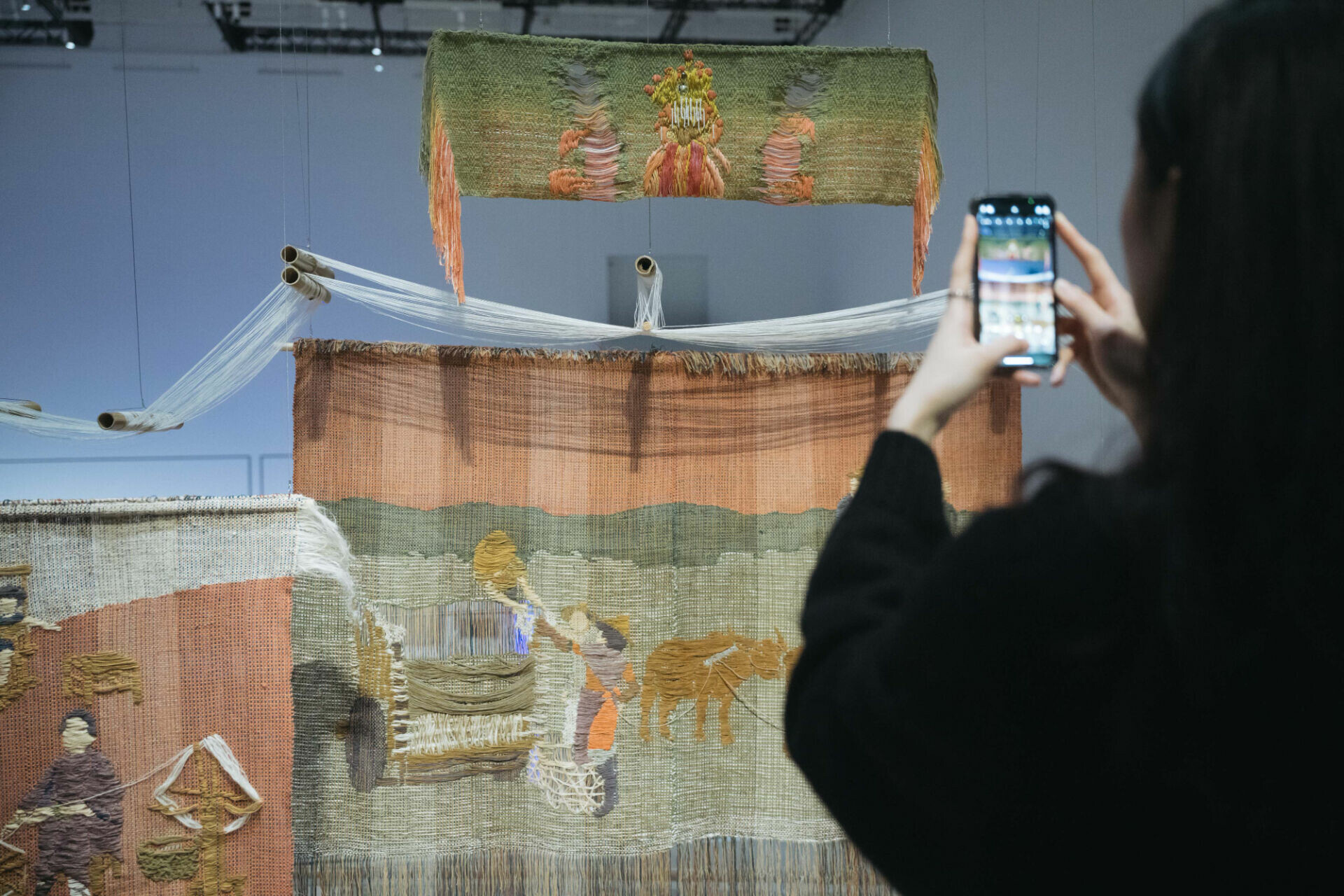
➤ 張思敏,〈失落的織物:旺來絲〉,2025。(新北市美術館提供,攝影:林軒朗)Cheong See-min, A Lost Textile_ Ong Lai Si (Pineapple Fiber), 2025. (Courtesy of NTCAM, Photo_ Hsuan Lang Lin)
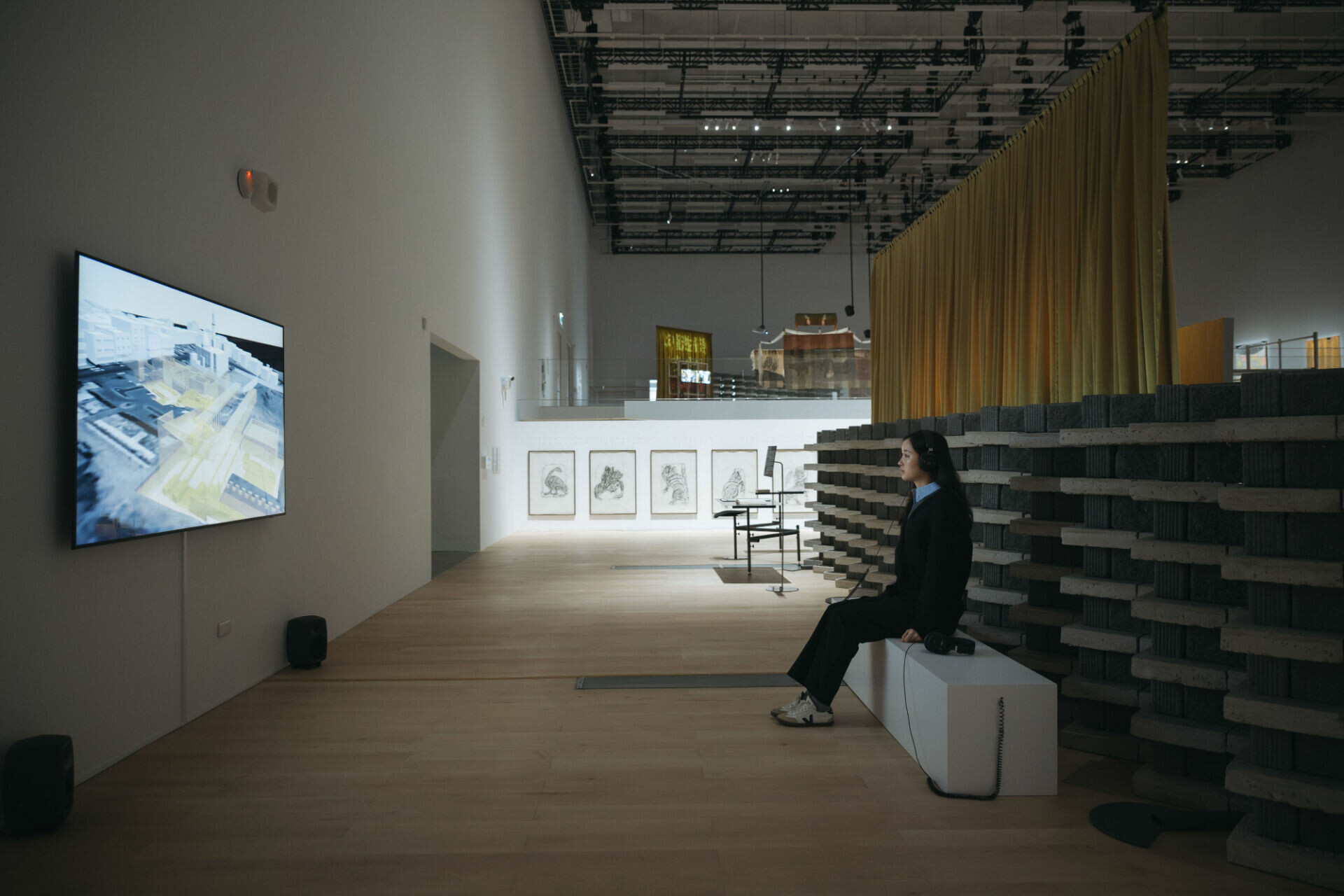
➤ 法醫建築,〈加薩的活態考古〉,2022。(新北市美術館提供,攝影:林軒朗)Forensic Architecture, Living Archaeology in Gaza, 2022. (Courtesy of NTCAM, Photo_ Hsuan Lang Lin)
➤ 黃博志,〈七個在海上的人〉,2019-2026。(新北市美術館提供,攝影:揅空間工作室)Huang Po-chih, Seven People Crossing the Sea, 2019-2026. (Courtesy of NTCAM, Photo_ Studio Millspace)_