WABISABI
  • Projects
    • Worldwide
    • Interiors
    • Features
  • Contemporary
    • Exhibitions
  • Record
  • Lifestyle
  • City Explore
  • News
  • Issue
  • Account
  • Search
  • Language
Mobile nav

北美館的邊界,不只停在牆內!

TFAM’s Boundary Extends Beyond Its Walls


公共裝置最難得的狀態,便是能夠被日常理解,也被專業討論著。北美館 X-site 計畫長期以戶外廣場作為年度實驗基地,今年由做白工作室提出的《鏡・亭・山:相看兩不厭》則讓建築、藝術、身體與城市生活在這片入口前場短暫交會,開展後,現場便吸引人群於作品之中停留、觸碰和互動,恰恰呼應了國際美術館近年共同關心的命題:美術館不再止於收藏與展示藝術的建築,也逐漸成為孕育城市公共生活的場地;北美館也以臺北語境回應這個國際命題。


A public installation reaches its most persuasive state when it can be understood through everyday experience while still inviting serious professional discussion. At the Taipei Fine Arts Museum, Program X-site has long used the museum’s outdoor plaza as an annual ground for experimentation. For its 2026 edition, Program X-site 2026: The Jade: Plaza Calls to Plaza, conceived by Shape Blank Atelier, brings architecture, art, the body and urban life into a brief encounter at the museum’s forecourt. Since its opening, the work has drawn visitors to linger, touch and interact within it. This response speaks directly to a question increasingly shared by museums around the world: a museum is no longer defined only as a building for collecting and exhibiting art. It is also becoming a place where urban public life can gather and take form. TFAM responds to this international conversation through the particular context of Taipei.


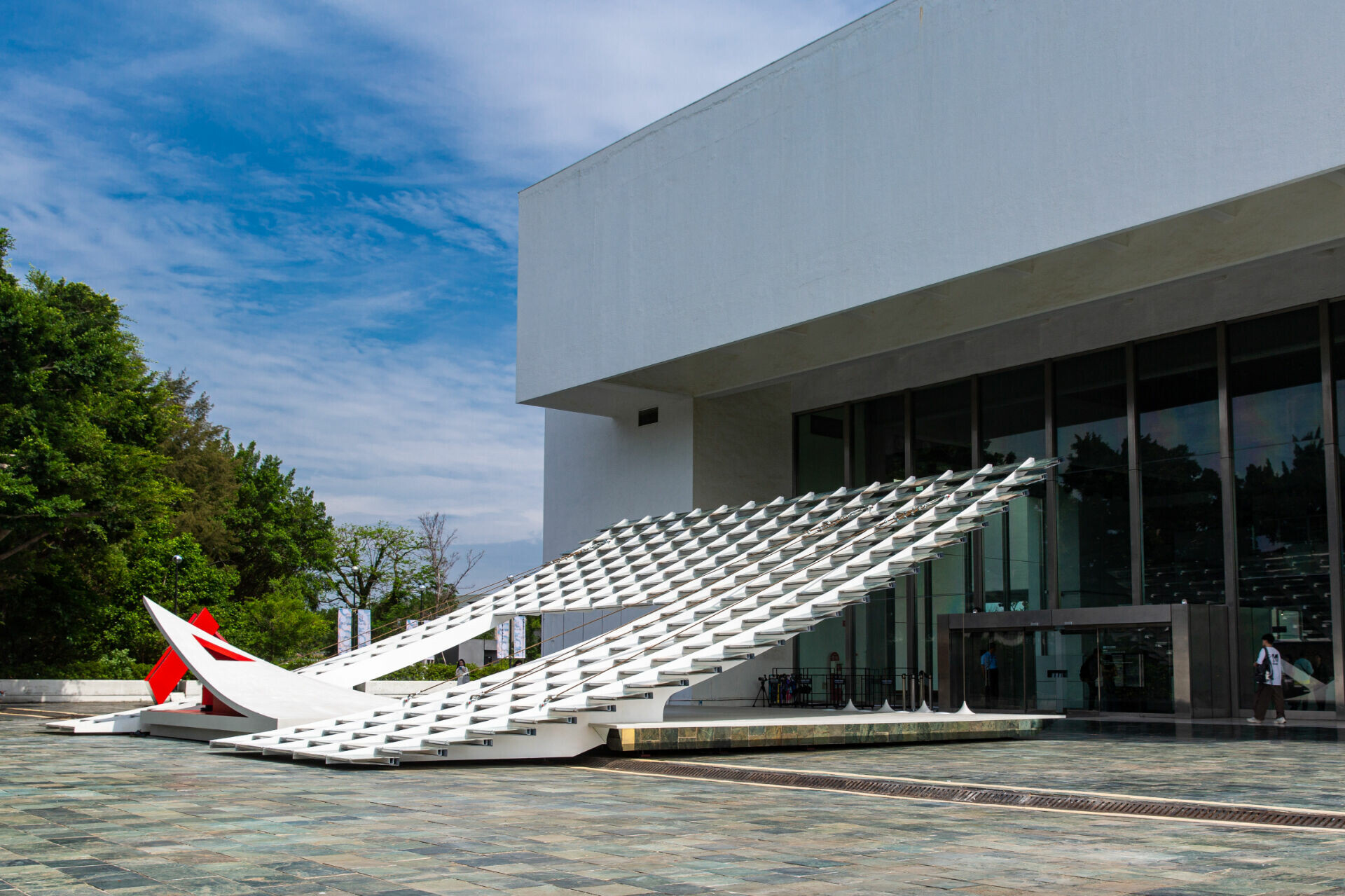
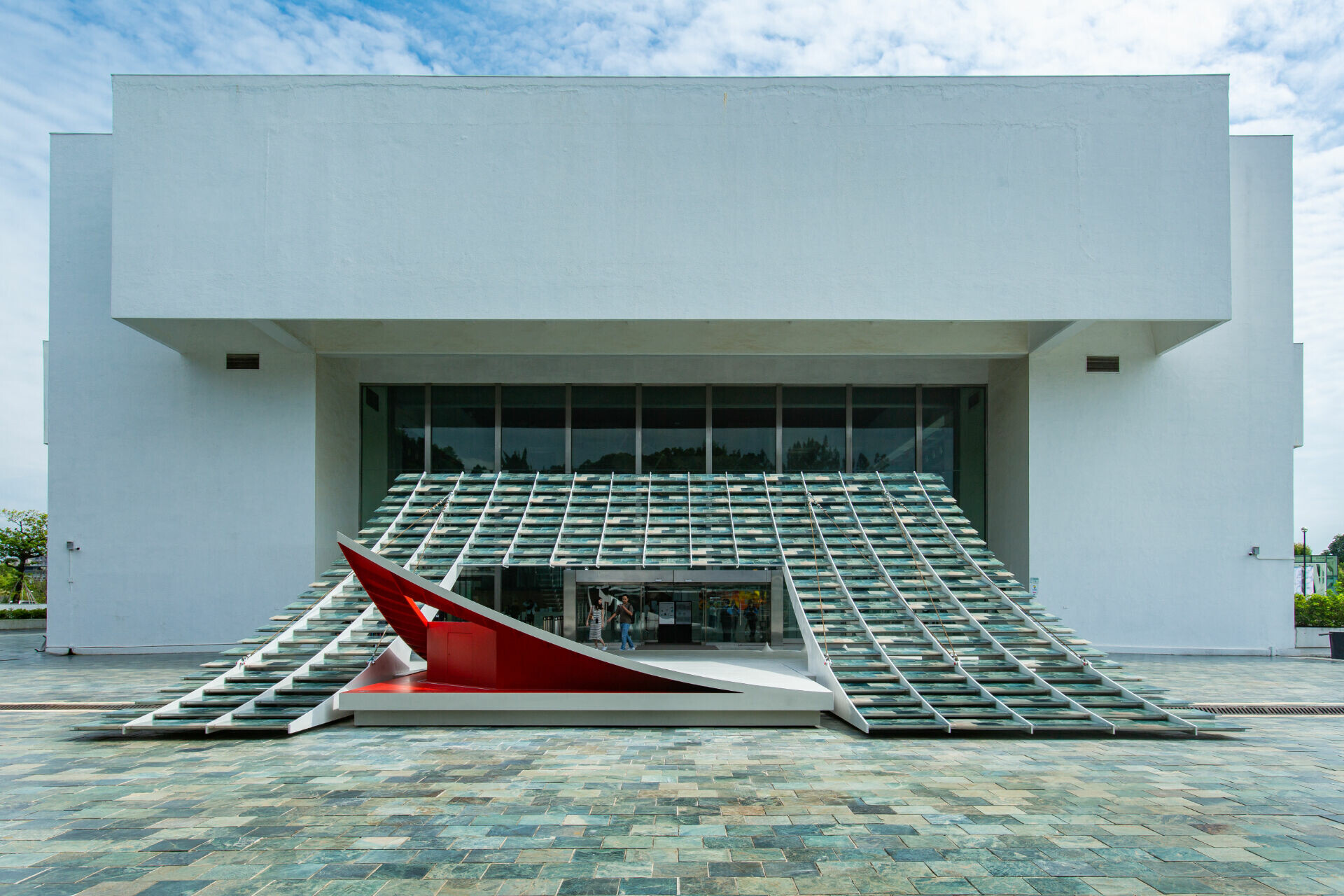
➤「做白工作室」,《鏡・亭・山:相看兩不厭》外觀圖。

《鏡・亭・山》中的「鏡」、「亭」、「山」,可以被視為三種重新開啟美術館的邊界方式。「鏡」讓美術館與城市互相映照,它不只是反射影像,也讓人意識到自己並非站在作品之外,而與建築、天空、樹影與人群一起被納入畫面;鏡面讓觀看折返,也使觀眾成為場域的一部分。


The work’s Chinese title is built around three images: mirror, pavilion and mountain. Together, they suggest three ways of reopening the boundary between the museum and the city. The mirror allows TFAM and its surroundings to reflect one another. It does more than return an image. It draws the museum architecture, the sky, the trees and the moving crowd into the same field of perception, making visitors aware that they are not standing outside the work, looking in. They are already part of the scene. Reflection becomes less a visual effect than a spatial condition.


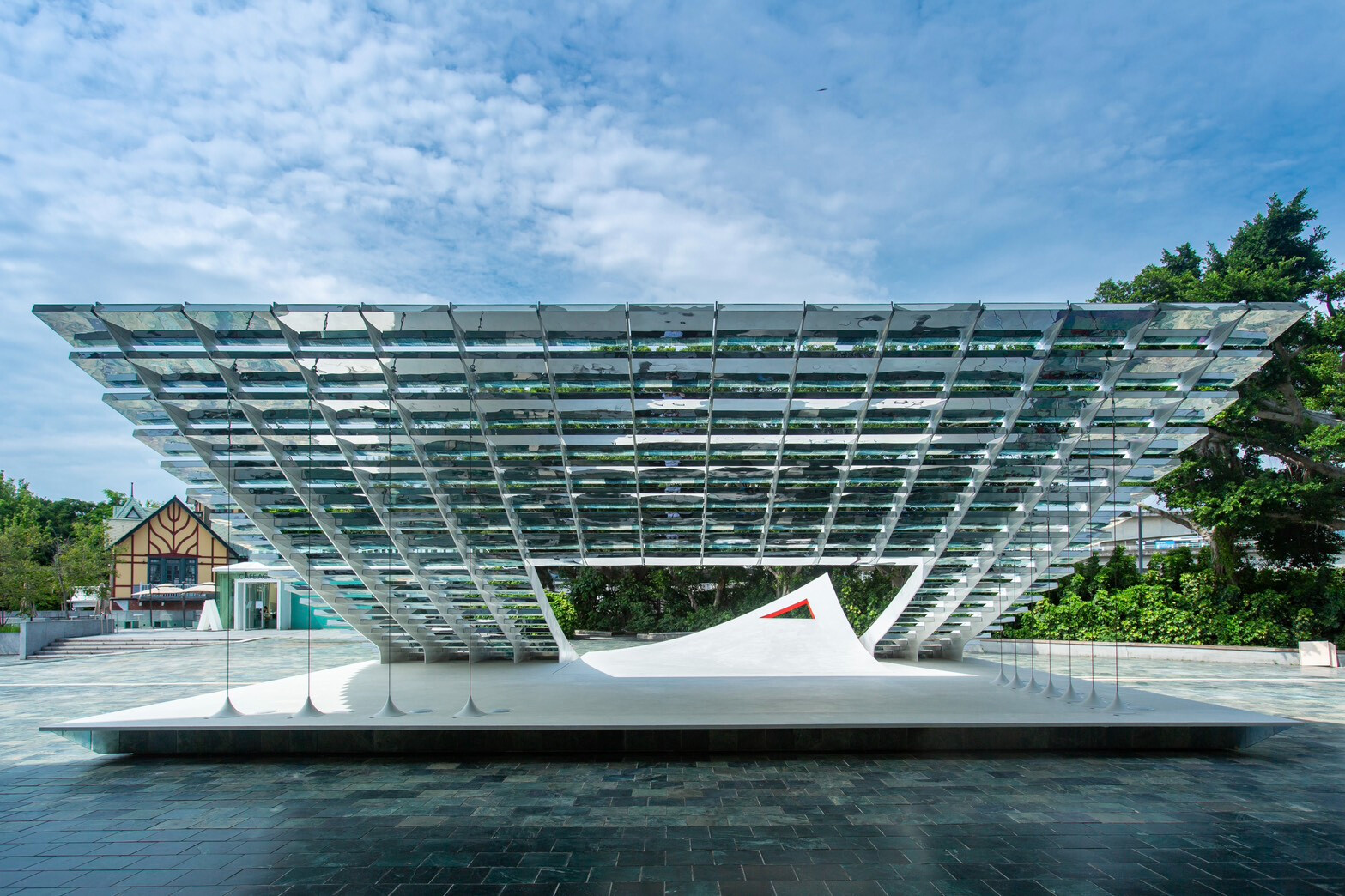
➤「做白工作室」,《鏡・亭・山:相看兩不厭》外觀圖。

「亭」讓美術館的入口變得可停留。亭是一種介於建築與風景之間的狀態,提供陰影、等待、休息與相遇,讓人不必急著進入展廳,也能在館外先與藝術發生關係;「山」則讓廣場產生想像的高度,讓地面有了起伏、距離與凝視的可能,人與作品彼此觀看,正如題名「相看兩不厭」所暗示的,並非單向觀看,這是一場人與場所之間持續來回的關係。


The pavilion turns the museum entrance into a place one can inhabit. A pavilion is a condition between architecture and landscape, offering shade, waiting, rest and encounter. Here, it allows visitors to slow down before entering the galleries and to begin a relationship with art while still outside the museum. The mountain, in turn, gives the plaza an imagined elevation. It does not introduce a landscape into the forecourt in any literal sense. Rather, it gives the ground plane a sense of contour, distance and contemplation. As the Chinese subtitle suggests, looking is not a one-way act. The visitor and the work look back at each other, forming a continuing exchange between body and place.


➤「做白工作室」,《鏡・亭・山:相看兩不厭》外觀圖。

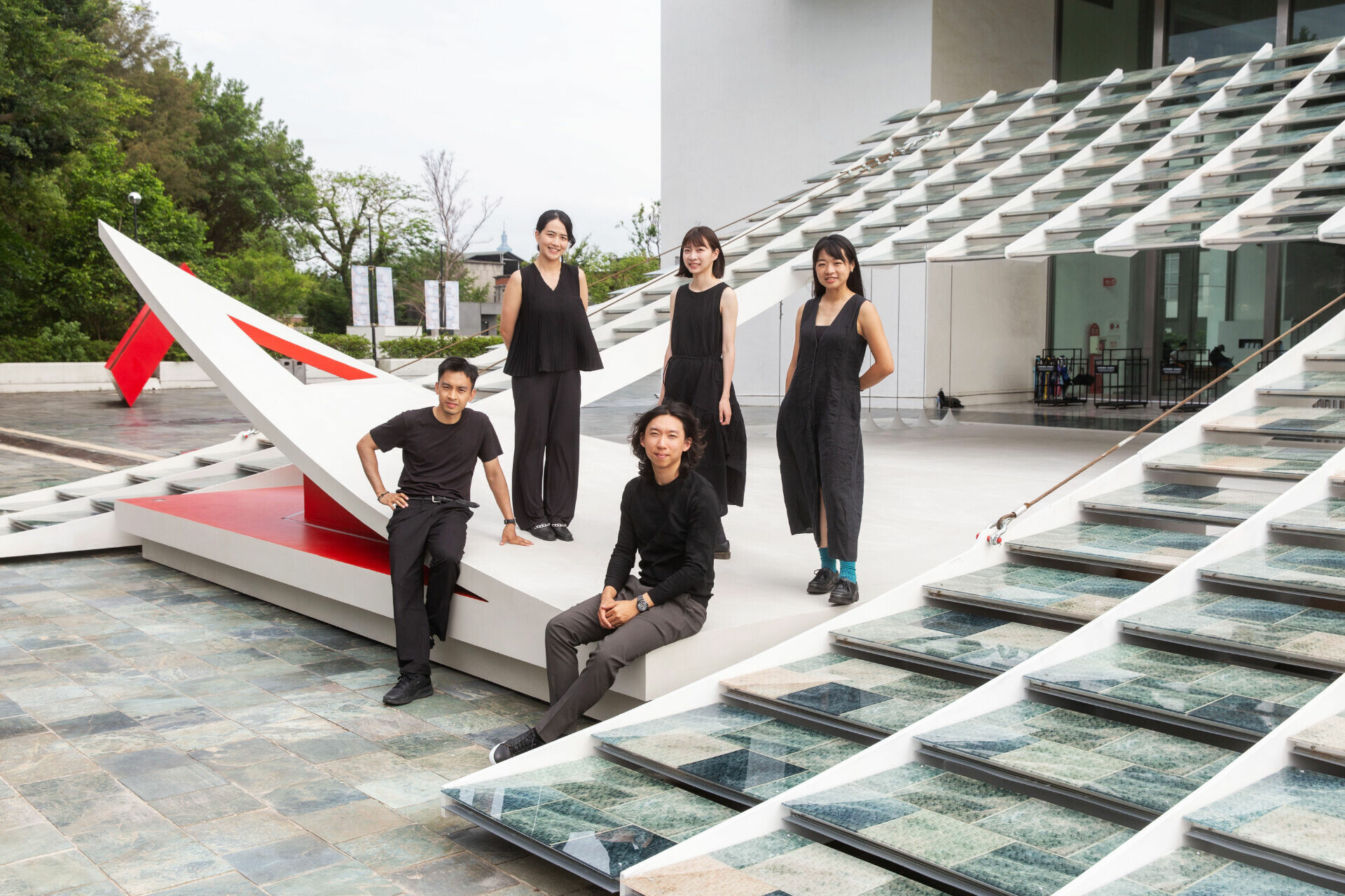
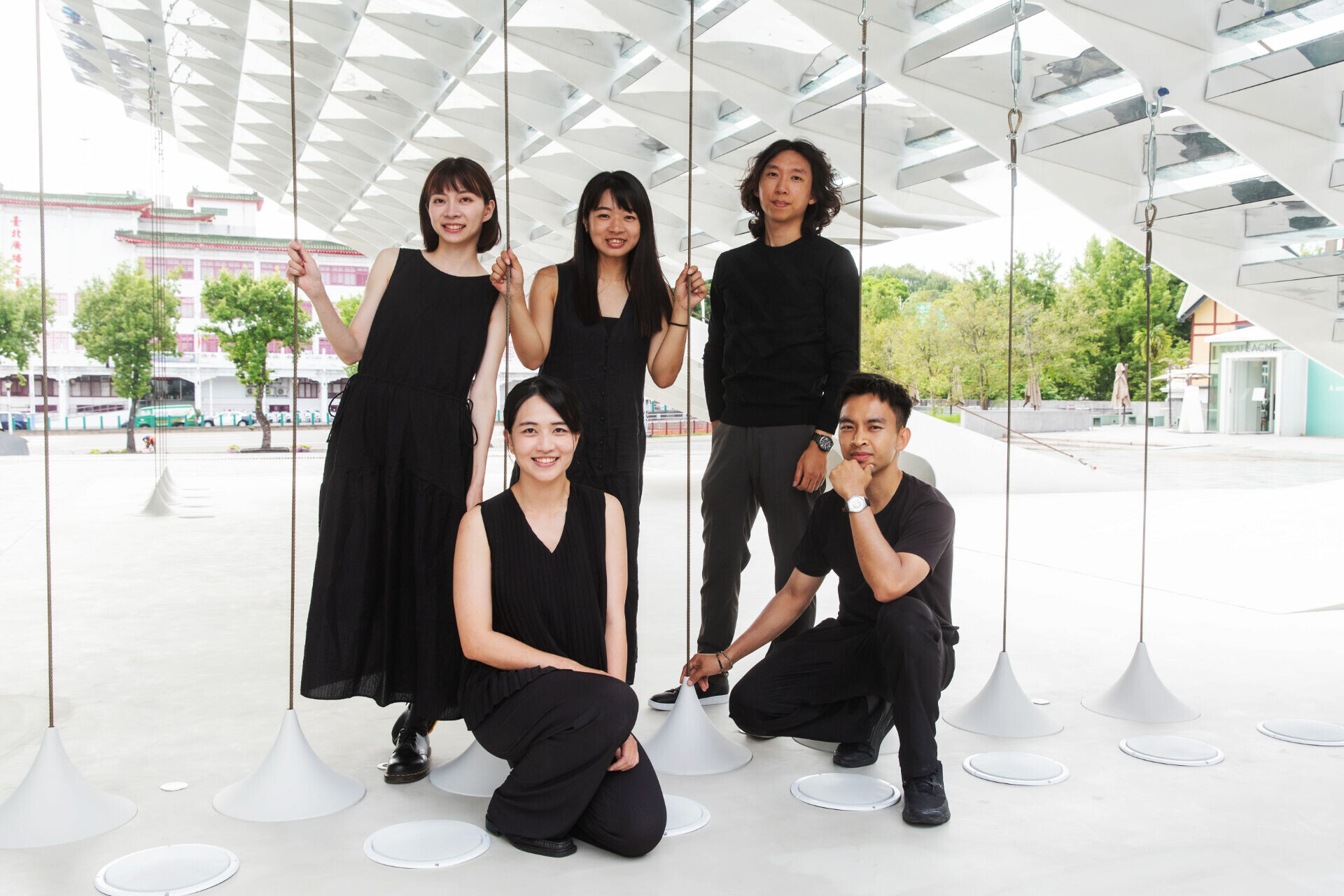
➤「做白工作室」團隊合影,團隊成員(左至右下):溫子慶、梁立白、陳冠文、鄭詠心、蔡君陽。


它向外延伸到廣場,延伸到陰影,延伸到一條被觸碰後發聲的鋼纜,延伸到觀者的笑語,也延伸到每一個願意停下來的人身上。當一片廣場不再只是入口前的空地,它便成為展廳牆外第一個感知現場。那麼,當生活願意在其中發生,藝術除了被觀看也與觀者共同經驗,「做白工作室」所談的「創造有意義的空白」,在這裡也不僅僅是設計理念,轉而為公共空間梳理出一片能讓人、環境、聲音、光影與偶然相遇的餘地。


The work extends outward into the plaza, into shade, into steel cables that release sound when touched, into visitors’ conversations and laughter, and into the presence of anyone willing to stop for a moment. Once the plaza is no longer simply the open ground before an entrance, it becomes the first place where the museum is felt before the galleries are entered. Here, art is experienced with its visitors, through the bodies of those who pause, touch and stay. What Shape Blank Atelier calls “shaping significant blank” is therefore more than a design idea. In this project, it becomes a way of holding space open within the public realm, allowing people, environment, sound, light and chance to meet.

➤「做白工作室」團隊合影,團隊成員(上排左至右):陳冠文、鄭詠心、蔡君陽,(下排左至右):梁立白、溫子慶。


放眼國際,紐約 MoMA PS1 的戶外庭院、倫敦 Serpentine Pavilion 的年度臨時亭、金澤 21 世紀美術館如城市廣場般的開放性、巴塞隆納 MACBA 與 Plaça dels Àngels 的共生關係、巴黎龐畢度中心前方 Piazza 所承載的城市活動,都指向同一件事:展覽不一定只在牆面之內發生,公共性也不是購票後才開始存在。


Seen in an international context, similar questions appear across a number of museum sites: MoMA PS1’s courtyard in New York, London’s annual Serpentine Pavilion, the civic openness of the 21st Century Museum of Contemporary Art, Kanazawa, the relationship between MACBA and Plaça dels Àngels in Barcelona, and the urban life gathered on the piazza outside Centre Pompidou in Paris. Each points to a shared understanding: exhibition experience need not begin within walls, and publicness does not wait for a ticket.

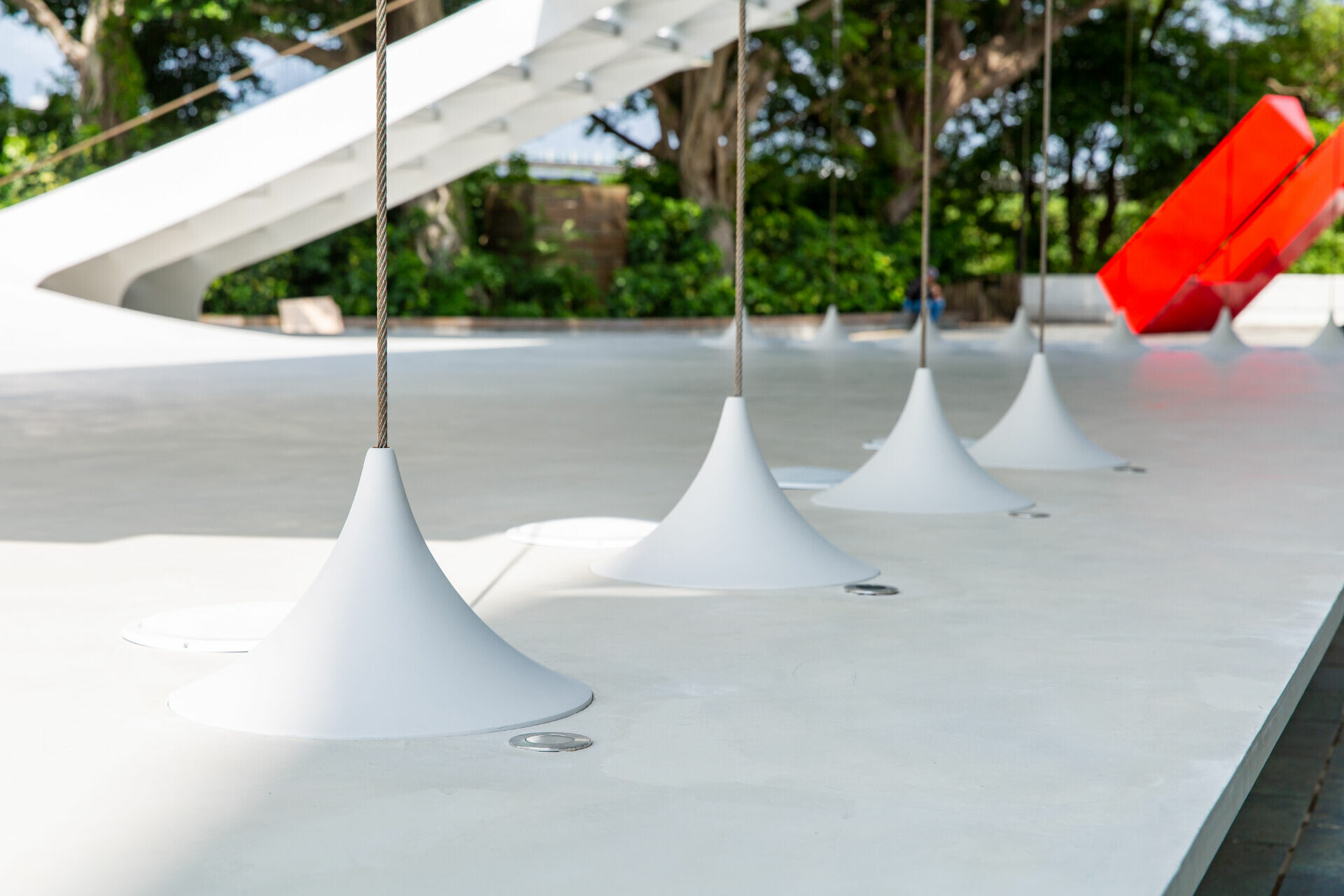
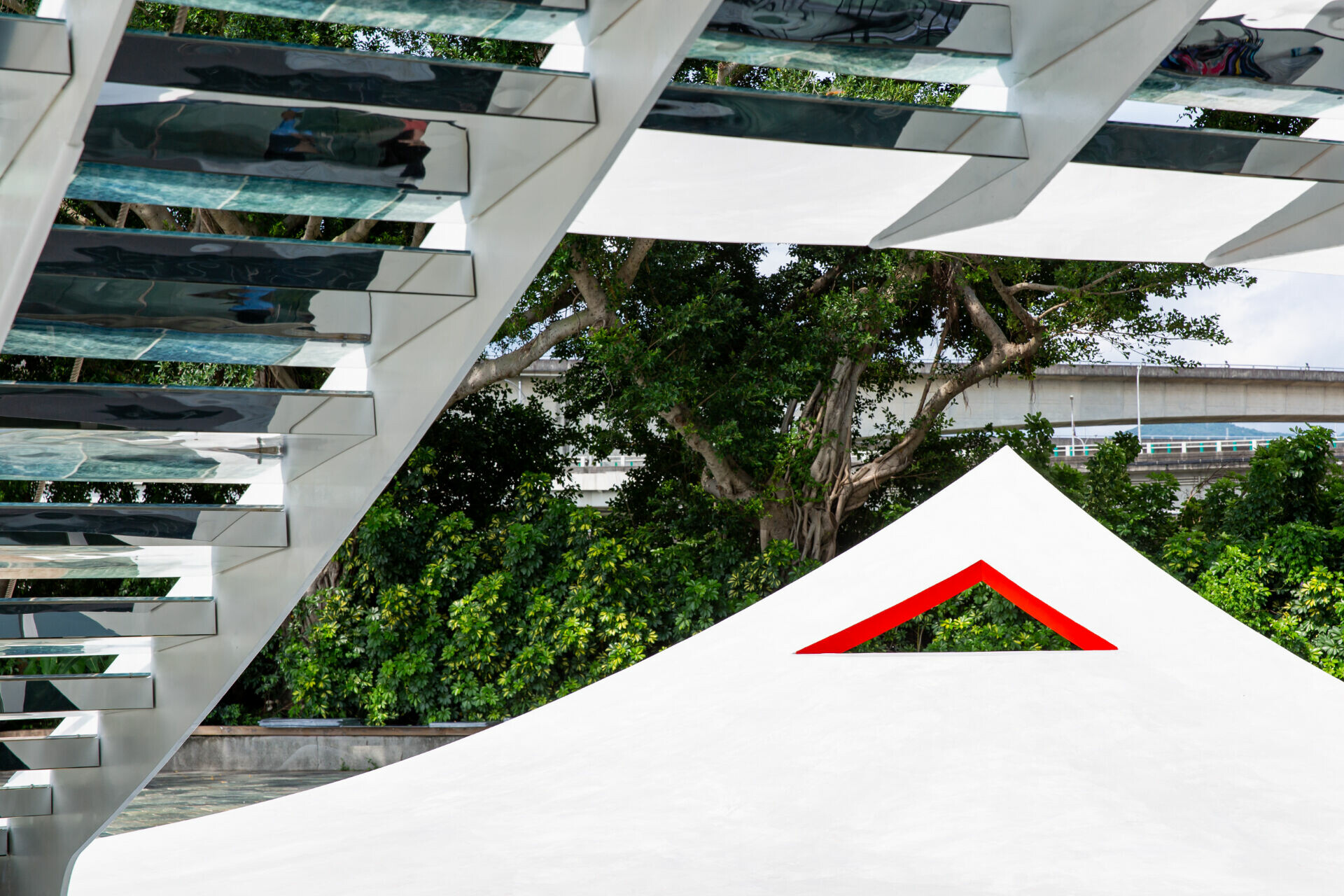
➤「做白工作室」,《鏡・亭・山:相看兩不厭》細節圖。

2026 X-site 計畫《鏡・亭・山:相看兩不厭》將廣場本身轉化為作品的一部分,空白廣場的地面被「做白工作室」微微揚起一層層空間層次,成為一處可停留、映射和觸碰,也提供了人群以直覺探索的公共空間,這對一個設計團隊而言,便無疑是最實質的肯定。


With Program X-site 2026: The Jade: Plaza Calls to Plaza, TFAM turns the plaza itself into part of the work. A forecourt that might otherwise be read as blank or transitional gains layers of spatial depth, becoming a place to linger, encounter reflection, touch and explore intuitively. For a design team, there may be no more concrete affirmation. The work is not only understood as an idea; it is felt through touch, inhabited through pause, and brought to life by the people who gather around it.

➤「做白工作室」,《鏡・亭・山:相看兩不厭》細節圖。圖像由臺北市立美術館提供

May 16 – July 26, 2026
 
TFAM Outdoor Plaza, Taipei Fine Arts Museum
  • About
  • Privacy policy
  • Track Order
  • Customer
  • Contact
  • Join us
FACEBOOK
instagram
Language

Copyright © WABISABI ISSUE. 侘寂傳媒有限公司 統一編號:90451315

  • Projects
    • Worldwide
    • Interiors
    • Features
  • Contemporary
    • Exhibitions
  • Record
  • Lifestyle
  • City Explore
  • News
  • Issue
  • About
  • Privacy policy
  • Track Order
  • Customer
  • Contact
  • Join us
Language