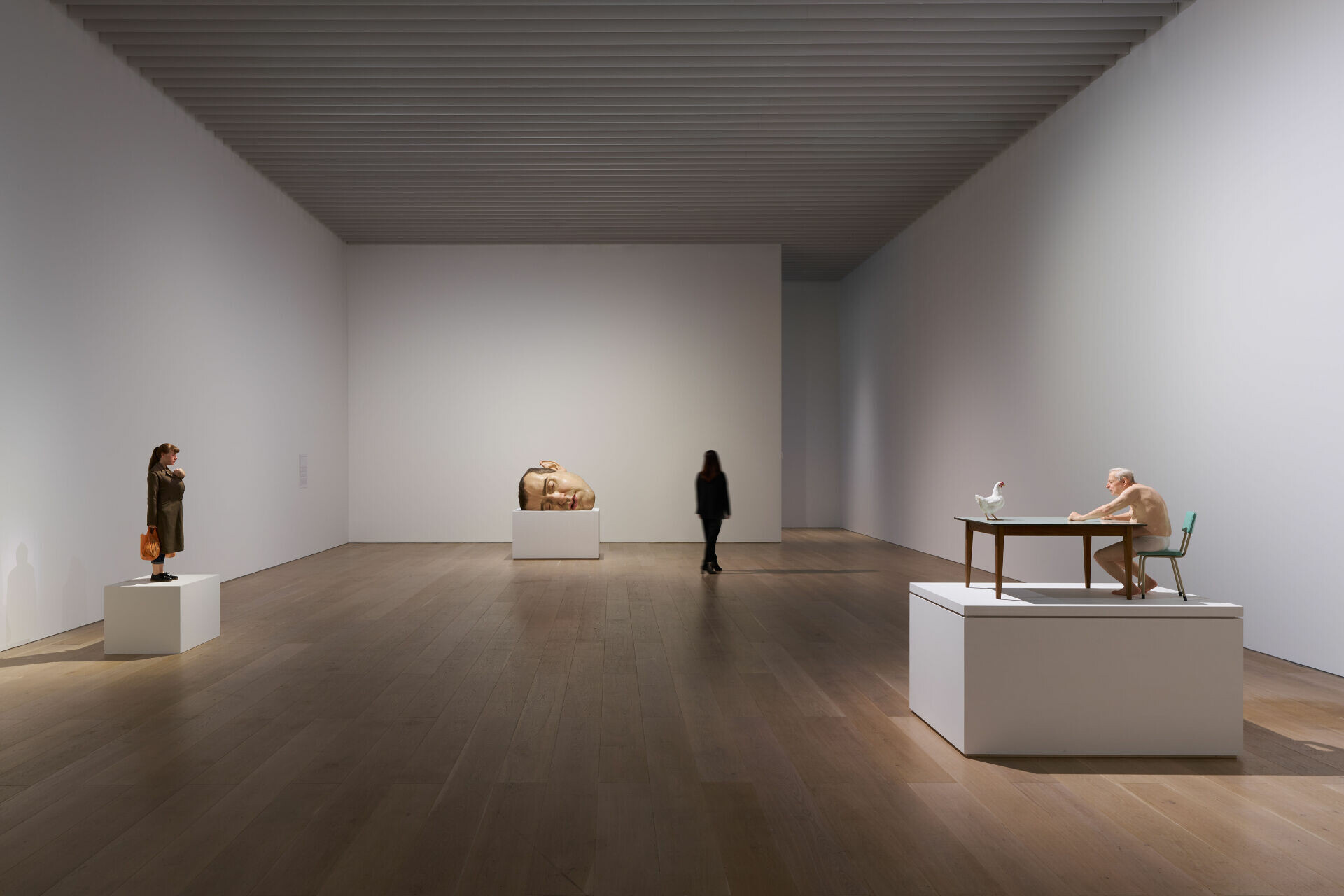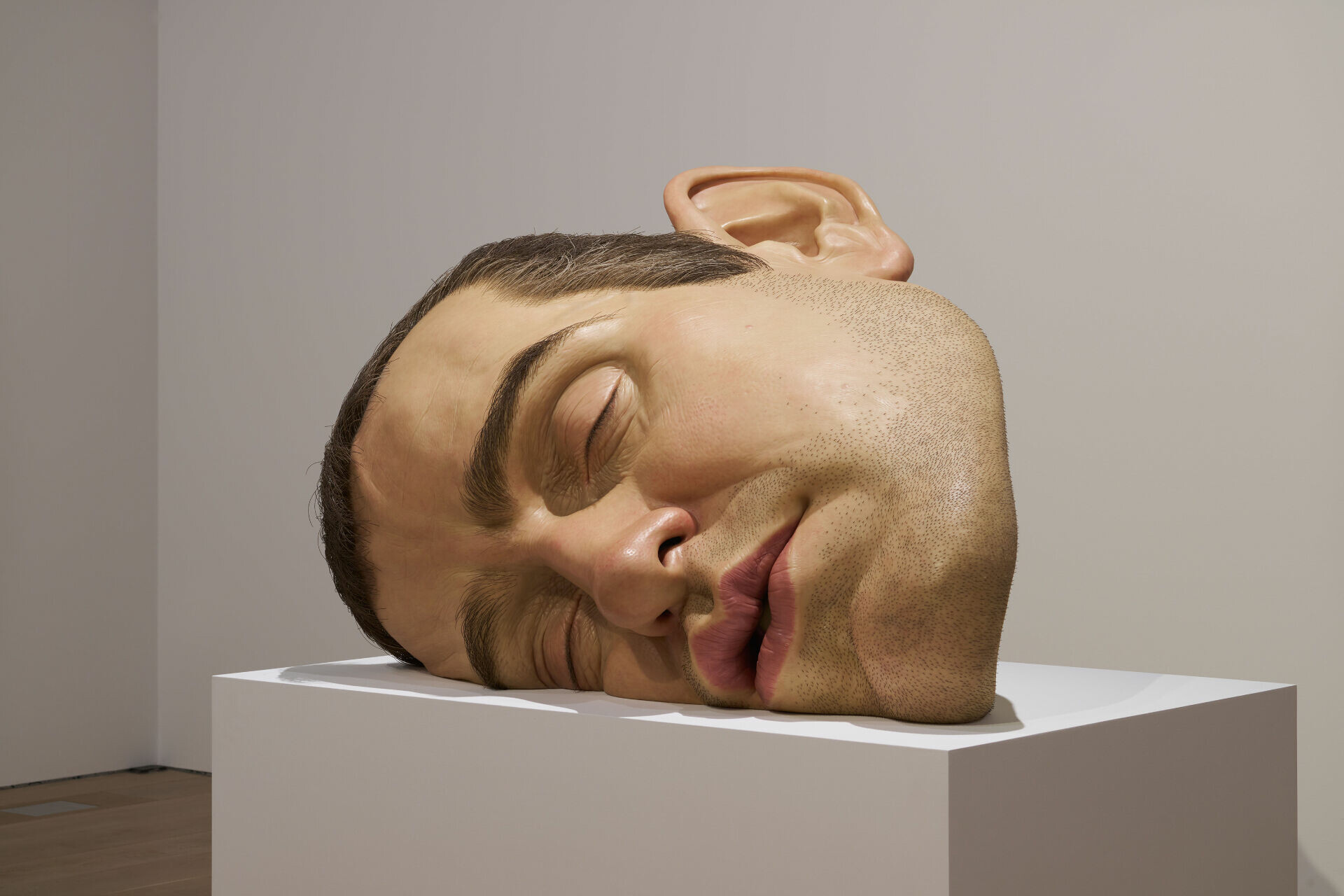
➤ Ron Mueck, Mask II, 2002. Installation view: Ron Mueck, Mori Art Museum, Tokyo, 2026. Photo: Masaya Yoshimura. Photo courtesy: Fondation Cartier pour l’art contemporain.
Ron Mueck Solo Exhibition
「即使我花了很多時間在外表上,我想捕捉的始終是內在的生命。」——Ron Mueck
“Although I spend a lot of time on the surface, it's the life inside I want to capture.” ——Ron Mueck
近距離觀看尺度放大數倍,肌膚表情卻精細一如真人的雕塑時,內心不免戰慄。這些栩栩如生的人物,或孤獨、或憂慮,彷彿是某個藝術家保存下來的時空切片,被放進美術館裡,勾起人們內心深處的共鳴。強烈的情感波動或許來自於,縱使人物姿態不盡完整,但我們還是能輕易召喚出相似的記憶:某個失眠的夜晚、青春期的敏感不安、身陷黑暗的痛苦……
Encountering these sculptures up close—whether enlarged many times beyond life-size or reduced to an intimate scale, yet rendered with skin and expressions of astonishing realism—one cannot help but feel unsettled. These remarkably lifelike figures, lonely or anxious, seem like fragments of time preserved by the artist and placed within the museum, awakening something deeply familiar within us. Perhaps this emotional intensity arises because, even when the figures' gestures or situations remain incomplete, they readily evoke similar memories of our own: a sleepless night, the heightened sensitivity of adolescence, or the pain of finding oneself immersed in darkness.
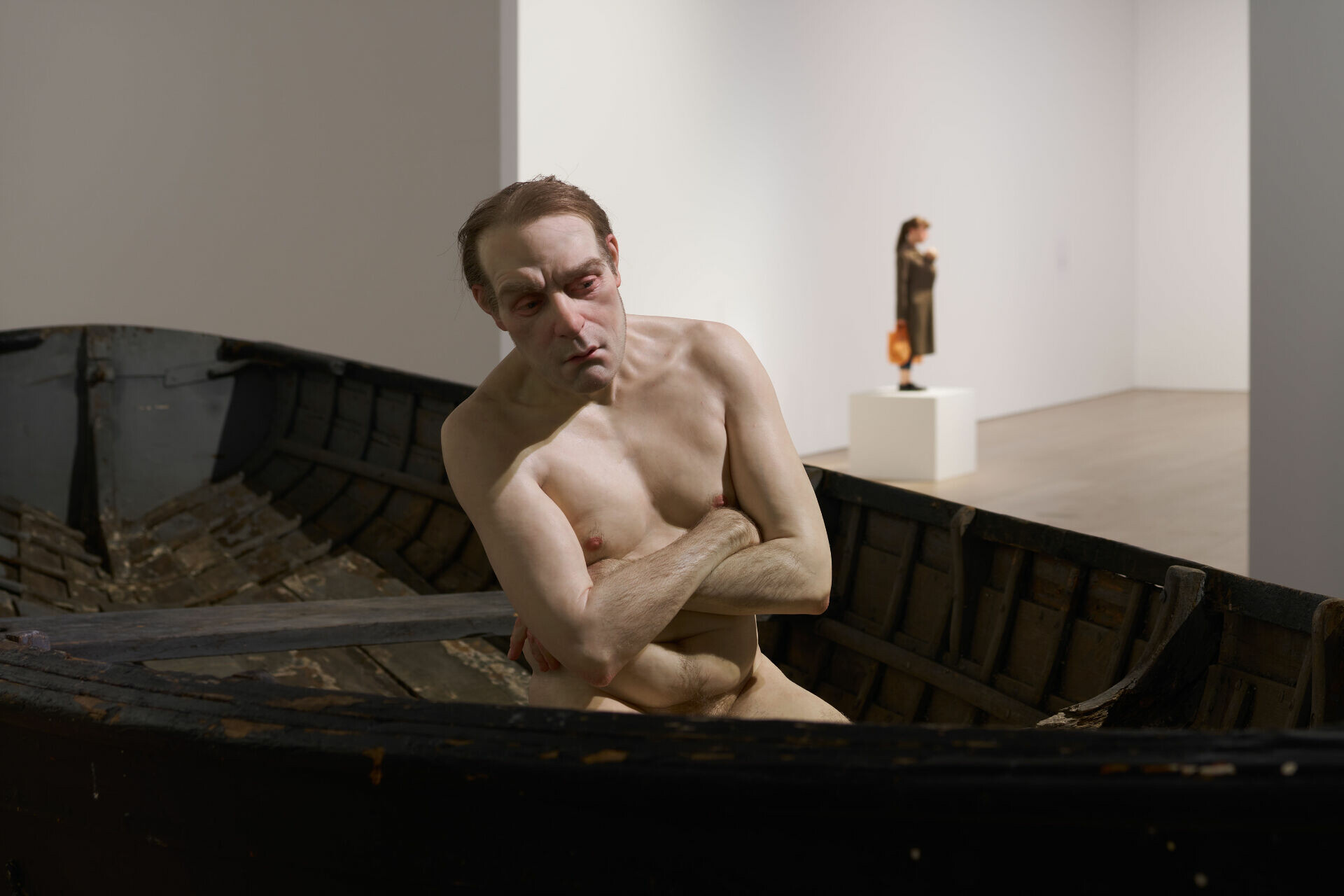
➤ Installation view: Ron Mueck, Mori Art Museum, Tokyo, 2026. Photo: Masaya Yoshimura. Photo courtesy: Fondation Cartier pour l’art contemporain.
早年在影視產業製作道具與特效的經驗,使 Ron Mueck 善於使用矽膠、樹脂、玻璃纖維等現代材料,再現出毛孔、皺紋、血管、汗毛的真實狀態。然而他的作品不只是創造出逼真的人體雕塑,更試圖捕捉人類私密的內在情感世界,透過作品驚人的寫實性,引導觀者以同理心觀看共同人性所面臨的處境。
Mueck's early experience creating props and special effects for film and television enabled him to master modern materials such as silicone, resin, and fiberglass, reproducing pores, wrinkles, veins, and fine body hair with extraordinary precision. Yet his work extends far beyond the creation of realistic human figures. Rather, it seeks to capture the private inner emotional world of human experience, using its startling realism to invite viewers to engage empathetically with the conditions that shape our shared humanity.
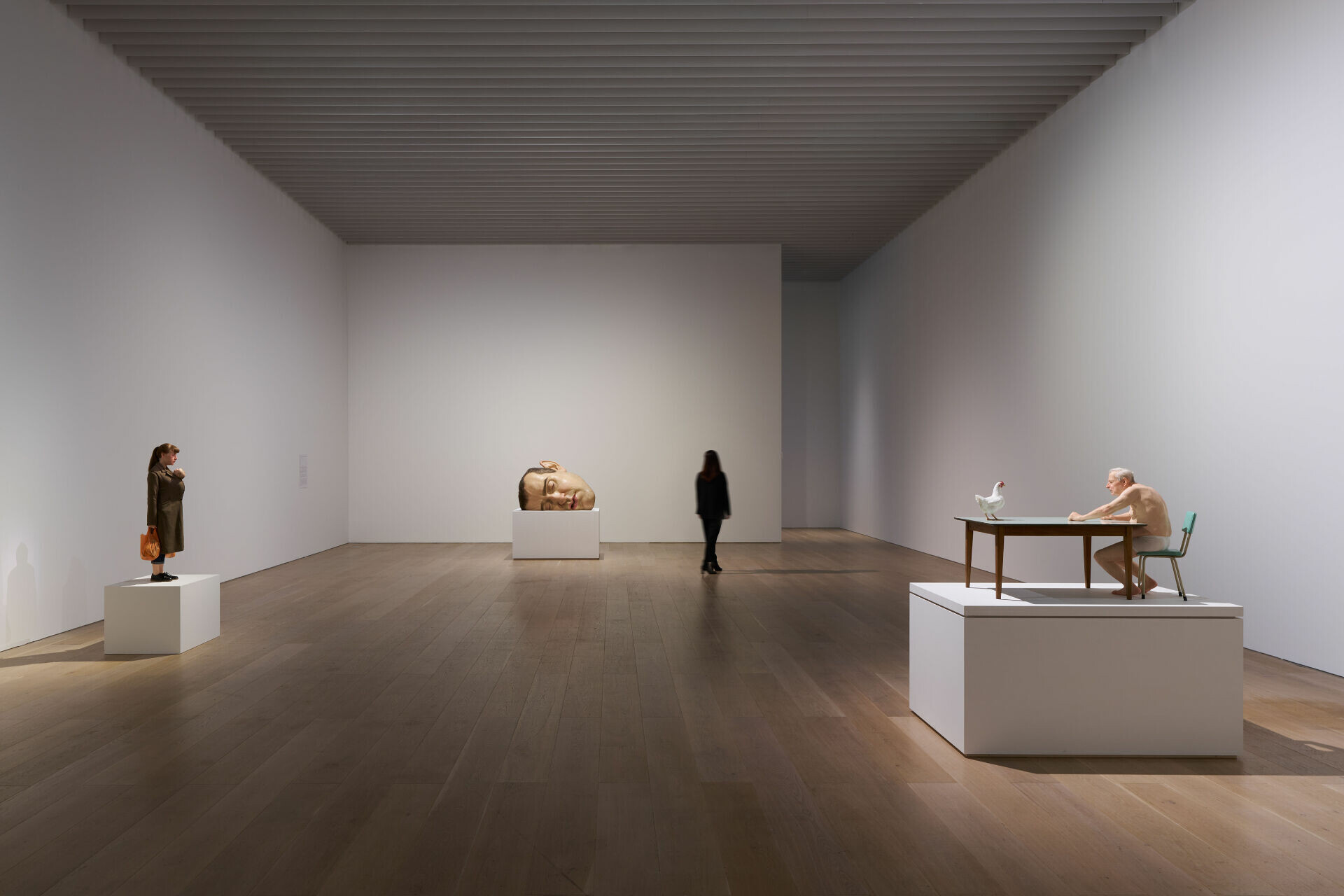
➤ Installation view: Ron Mueck, Mori Art Museum, Tokyo, 2026. Photo: Masaya Yoshimura. Photo courtesy: Fondation Cartier pour l’art contemporain.
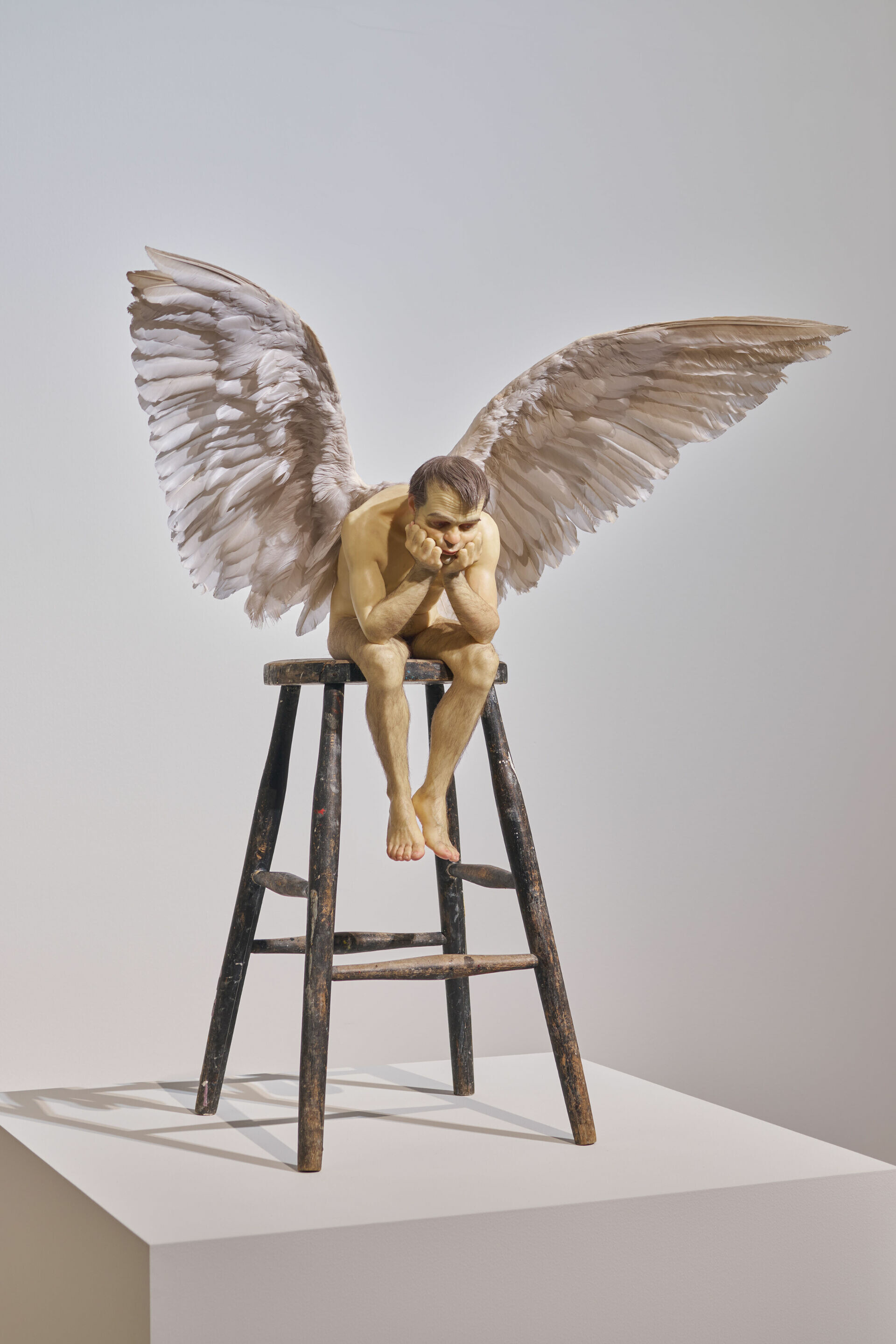
➤ Ron Mueck, Angel, 1997. Installation view: Ron Mueck, Mori Art Museum, Tokyo, 2026. Photo: Masaya Yoshimura. Photo courtesy: Fondation Cartier pour l’art contemporain.
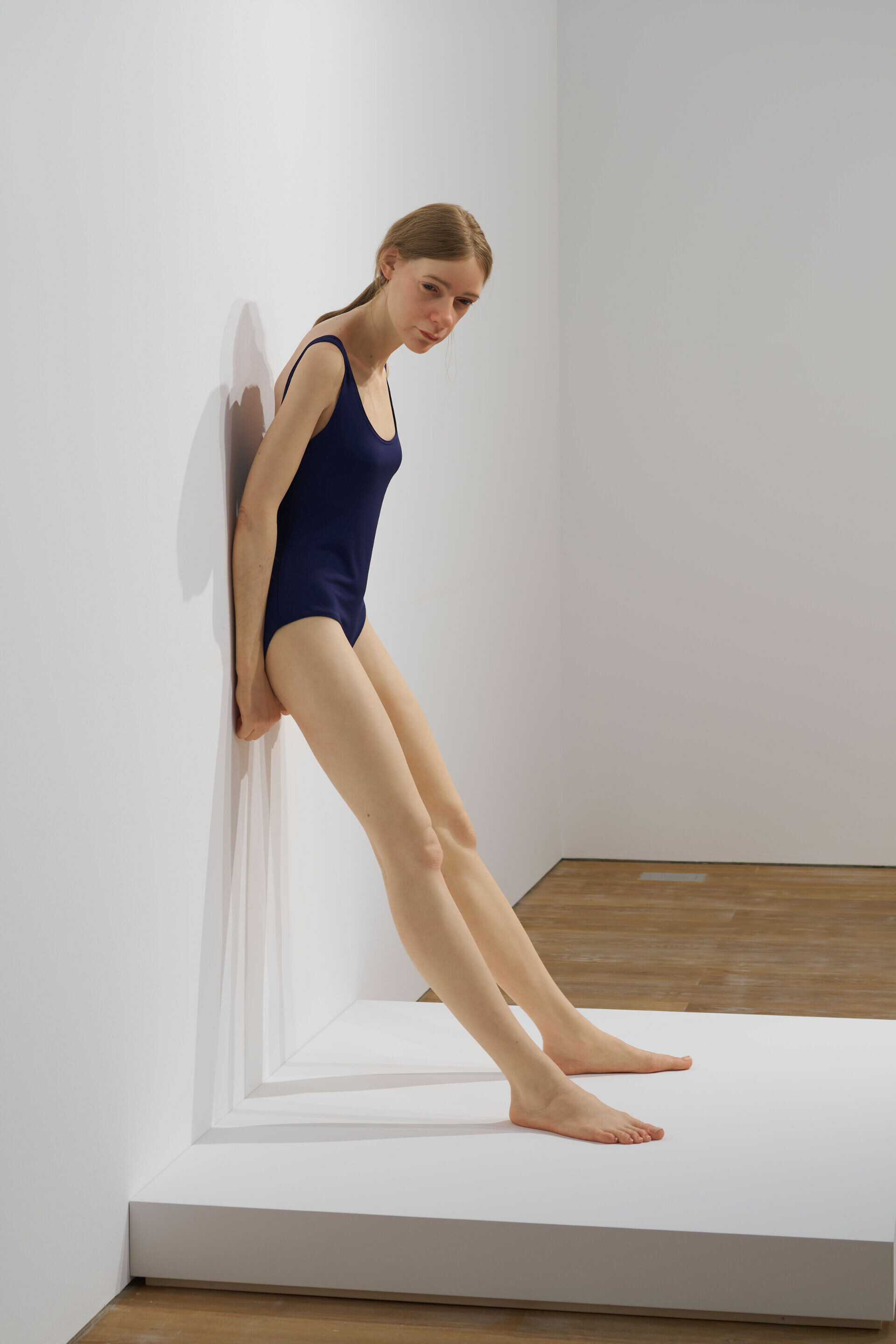
➤ Ron Mueck, Ghost, 1998/2014. Installation view: Ron Mueck, Mori Art Museum, Tokyo, 2026. Photo: Masaya Yoshimura. Photo courtesy: Fondation Cartier pour l’art contemporain.
關於生與死、虛與實的永恆辯證
An Eternal Dialogue Between Life and Death, Reality and Illusion
「人,是什麼呢?」在觀看他的作品時,疑問不時會浮現。由 100 顆巨型人類頭骨雕塑所構成的裝置作品《Mass》,逼人直視死亡的必然性。展出作品由藝術家依照每座美術館的空間特性重新排列,猶如一座迷宮,直到走入其中後才意識到:人們如此畏懼、避諱的陰影,卻是每個人終須面對的宿命。
"What does it mean to be human?" The question repeatedly arises when viewing Mueck's work. Mass, an installation composed of one hundred giant human skull sculptures, compels viewers to confront the inevitability of death. Reconfigured by the artist in response to the spatial characteristics of each museum, the work takes on the form of a labyrinth. Only by entering it does one begin to realize that the shadow we fear and instinctively avoid is, in fact, a destiny that awaits us all.
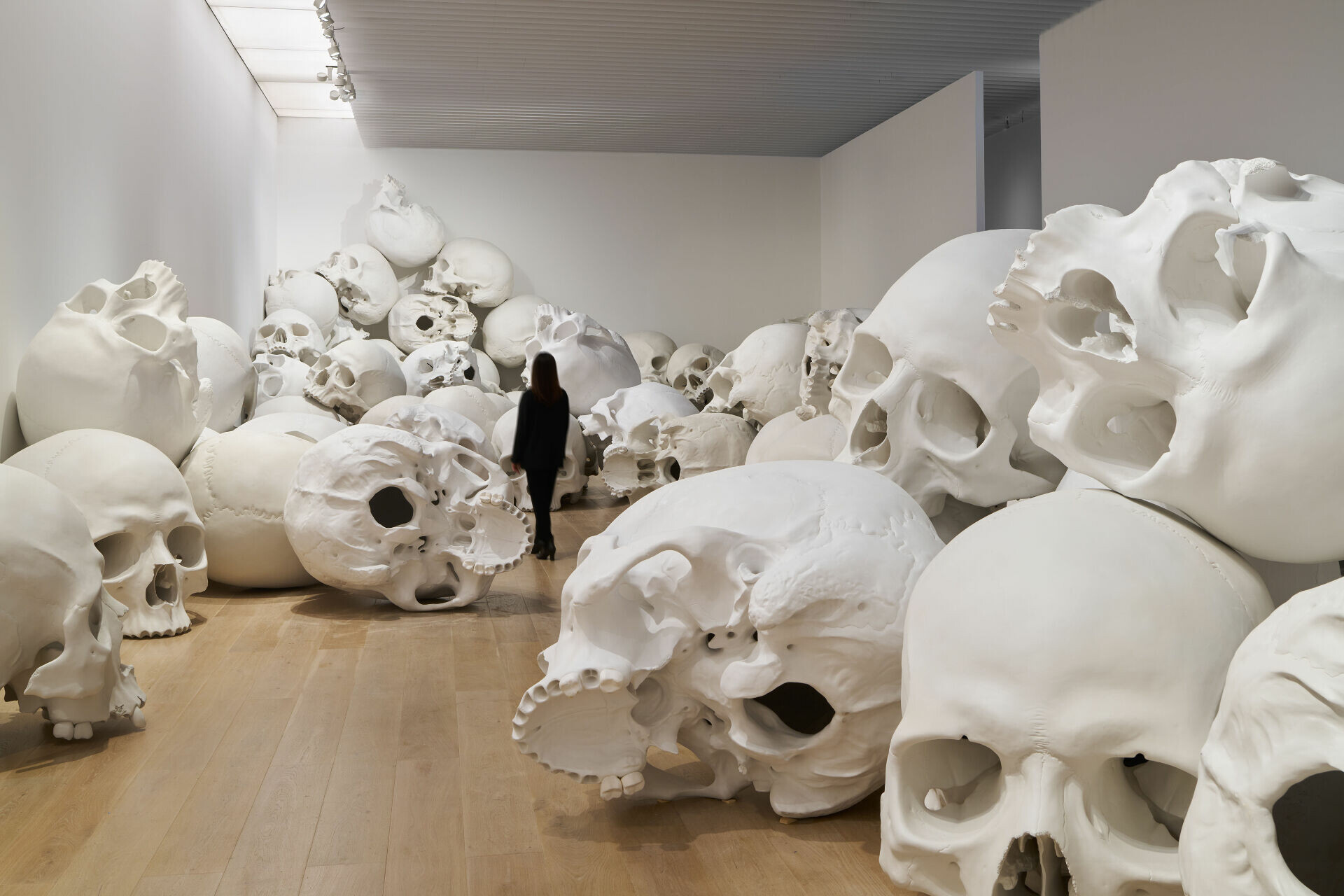
➤ Ron Mueck, Mass, 2016–2017. Installation view: Ron Mueck, Mori Art Museum, Tokyo, 2026. Photo: Masaya Yoshimura. Photo courtesy: Fondation Cartier pour l’art contemporain.
再走到將藝術家本人熟睡的巨型臉龐前,彷彿他正在輕柔的呼吸與做夢。《Mask II》呈現一個將約四倍於真實比例、鉅細彌遺的人像表情,令人聯想起那句法國俗諺:「睡眠是小小的死亡」。那是一個意識退居幕後,個體介於生與死之間的曖昧狀態。加之標題似乎是在暗示:這張薄薄的臉皮能代表真實的自己嗎?還是只是張面具?
Moving on, one encounters a monumental representation of the artist's own sleeping face, as though he were gently breathing and dreaming. Mask II presents an exquisitely detailed likeness enlarged to approximately four times life-size, bringing to mind the old French saying: "Sleep is a little death." It suggests an ambiguous state in which consciousness retreats and the individual exists somewhere between life and death. The title, moreover, seems to ask a further question: can this thin layer of skin truly represent the self, or is it merely a mask?
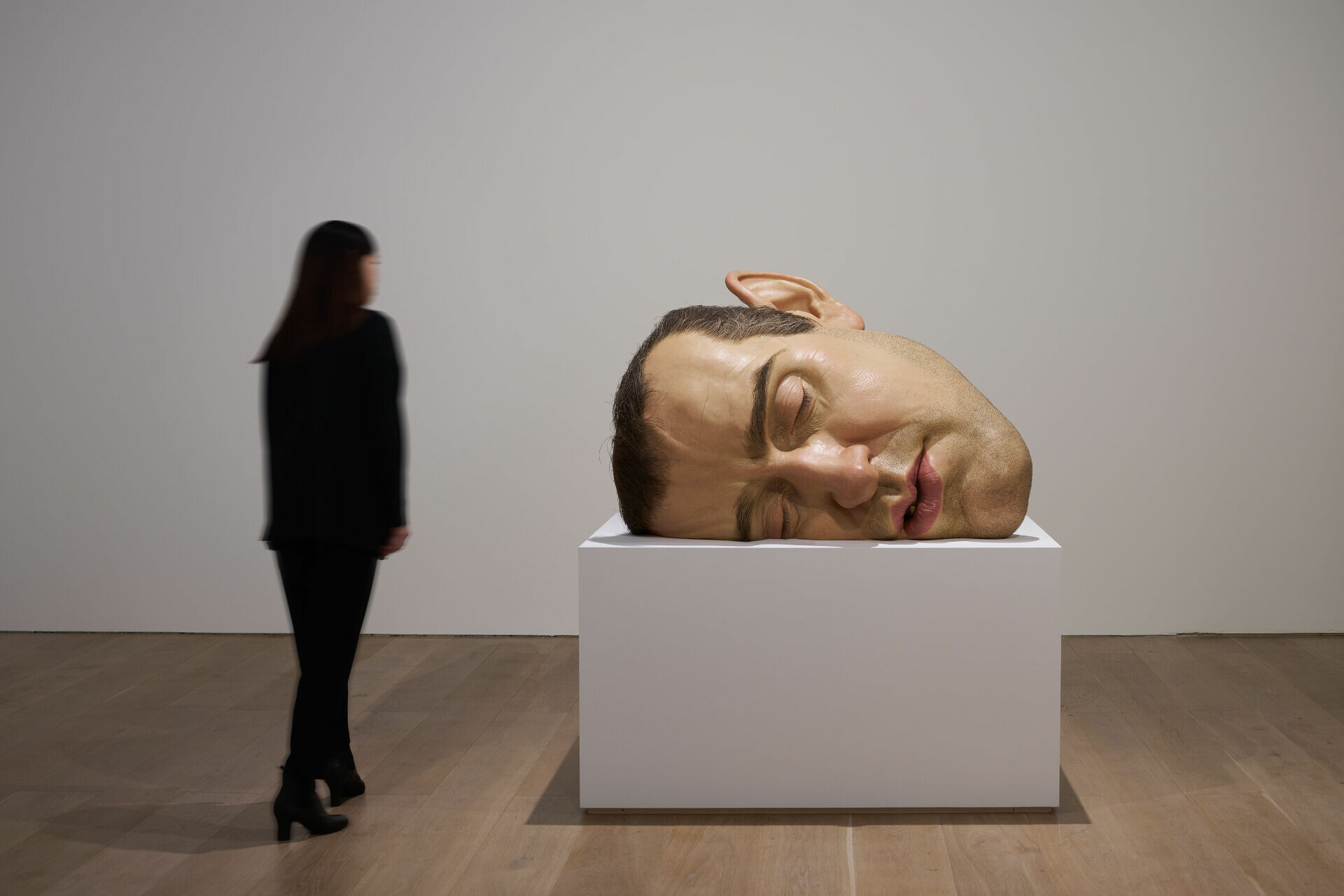
➤ Ron Mueck, Mask II, 2002. Installation view: Ron Mueck, Mori Art Museum, Tokyo, 2026. Photo: Masaya Yoshimura. Photo courtesy: Fondation Cartier pour l’art contemporain.
通過身體凝視探索人類共同情感
Exploring Shared Human Emotions Through the Gaze of the Body
1997 年的早期代表作《Angel》,呈現一名長翅膀男人的落寞身影,迥異於一般大眾熟知的光輝聖潔形象,瘦小的身體坐在高大椅凳上,凸顯出主體的憂傷沉思。雖無其他背景線索支撐,但經由豐滿的人物塑造,使作品流露出濃厚的敘事性。《Ghost》是 1998 年作品,由倫敦泰特美術館收藏,本次展出 2014 年的藝術家自留版。Mueck 重新雕刻了這個敏感羞怯的少女形象,透過拉長的雙腿和過大的雙腳呈現出身體比例的不協調感,高達2公尺的高度更加放大了手足無措的情緒張力。
Created in 1997, the early masterpiece Angel depicts a winged man in a state of quiet melancholy, markedly different from the radiant and sacred image of angels familiar to most people. His small body, perched upon a tall stool, accentuates a mood of sadness and contemplation. Although the work provides few contextual clues, the richness of its characterization gives rise to a strong sense of narrative. Ghost, originally created in 1998 and held in the collection of Tate, London, is presented here in the form of a 2014 Artist's Proof. Mueck re-sculpted this sensitive and self-conscious adolescent figure, giving her elongated legs and oversized feet that create a deliberate sense of bodily disproportion. Standing approximately two metres tall, the work further intensifies her palpable awkwardness and emotional vulnerability.
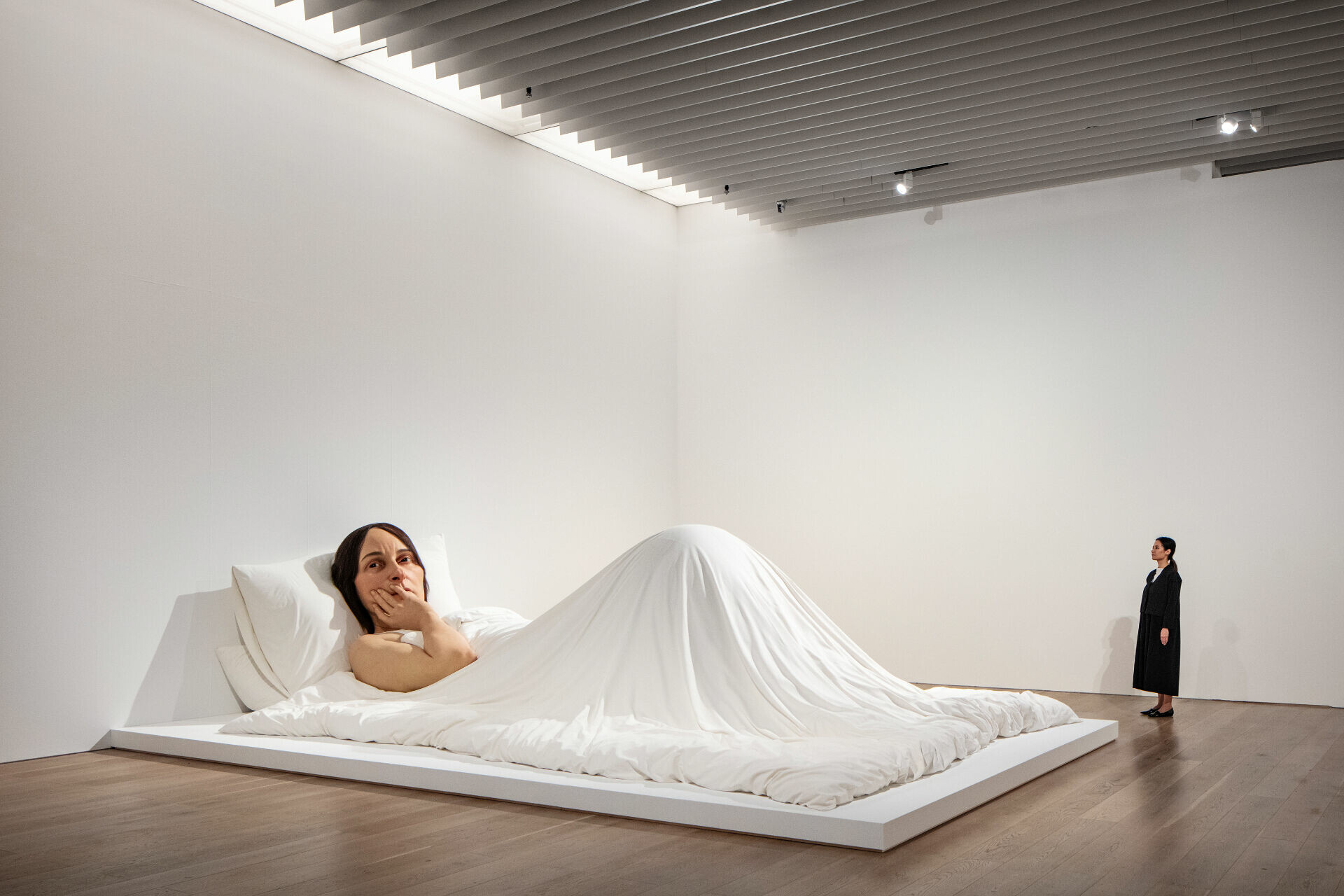
➤ Ron Mueck, In Bed, 2005. Installation view: Ron Mueck, Mori Art Museum, Tokyo, 2026. Photo: Hasegawa Kenta. Photo courtesy: Mori Art Museum, Tokyo.
而後《Man in a Boat》(2002)、《In Bed》(2005)、《Woman with Sticks》(2009)等作品,皆生動描繪了某個寫實而又令人不安的情境,引人禁不住思考:船上的男子為何赤身露體、又將要前往何方?躺在床上的女子在想些什麼?表情為何如此憂慮?那名女人又為何要獨自撿拾柴火?懸而未決的畫面促使著人們尋找答案,作品藉由觸及人類共同的情感與經驗,將思考推向形而上的哲學層次。
Subsequent works, including Man in a Boat (2002), In Bed (2005), and Woman with Sticks (2009), likewise depict situations that are at once realistic and unsettling. They prompt a series of questions: Why is the man in the boat naked, and where is he going? What occupies the thoughts of the woman lying in bed, and why does her expression appear so troubled? Why is the woman gathering firewood alone? These unresolved scenes encourage viewers to seek their own answers. By touching upon shared emotions and experiences, the works ultimately lead our reflections toward broader philosophical questions.
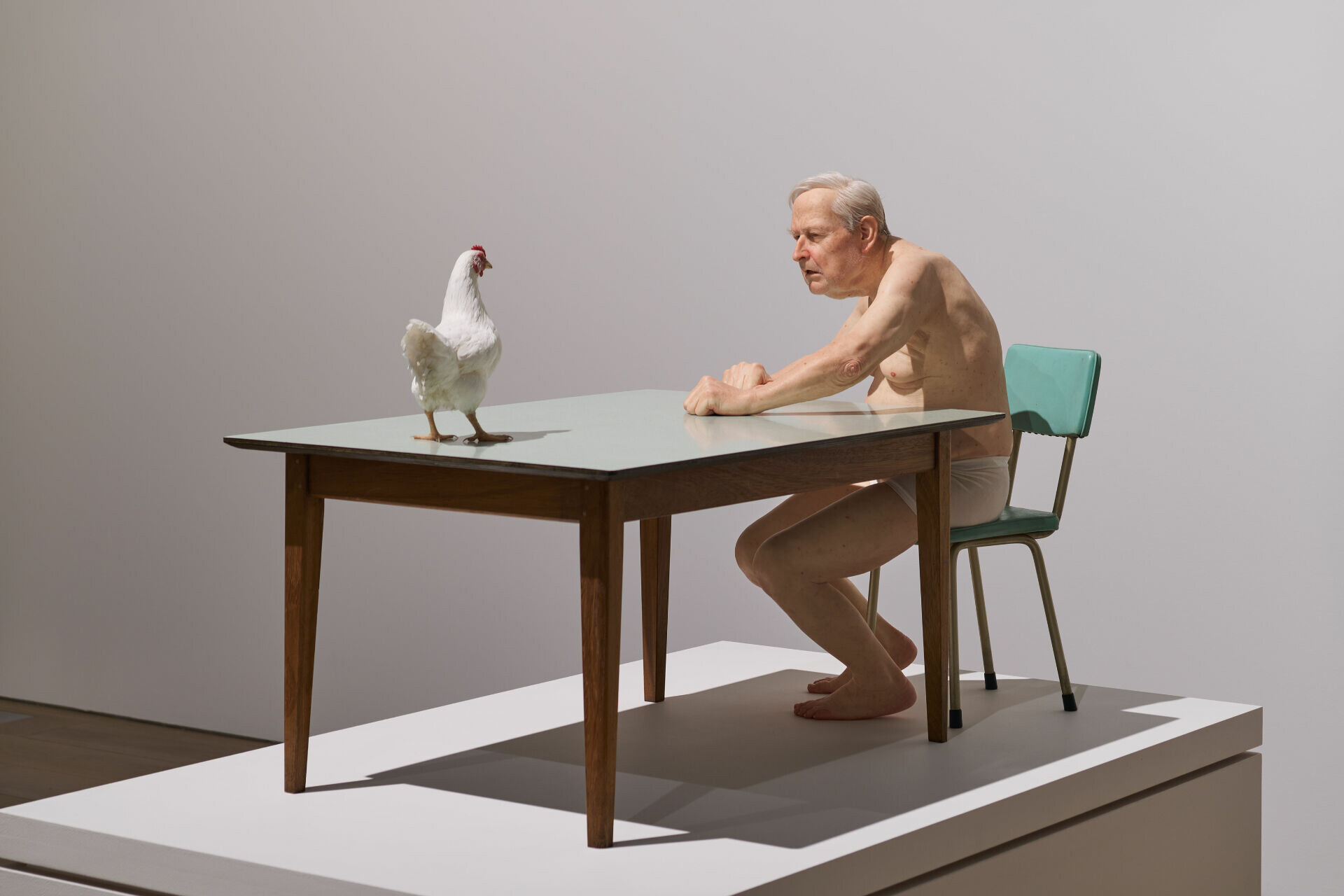
➤ Ron Mueck, chicken / man, 2019. Installation view: Ron Mueck, Mori Art Museum, Tokyo, 2026. Photo: Masaya Yoshimura. Photo courtesy: Fondation Cartier pour l’art contemporain.
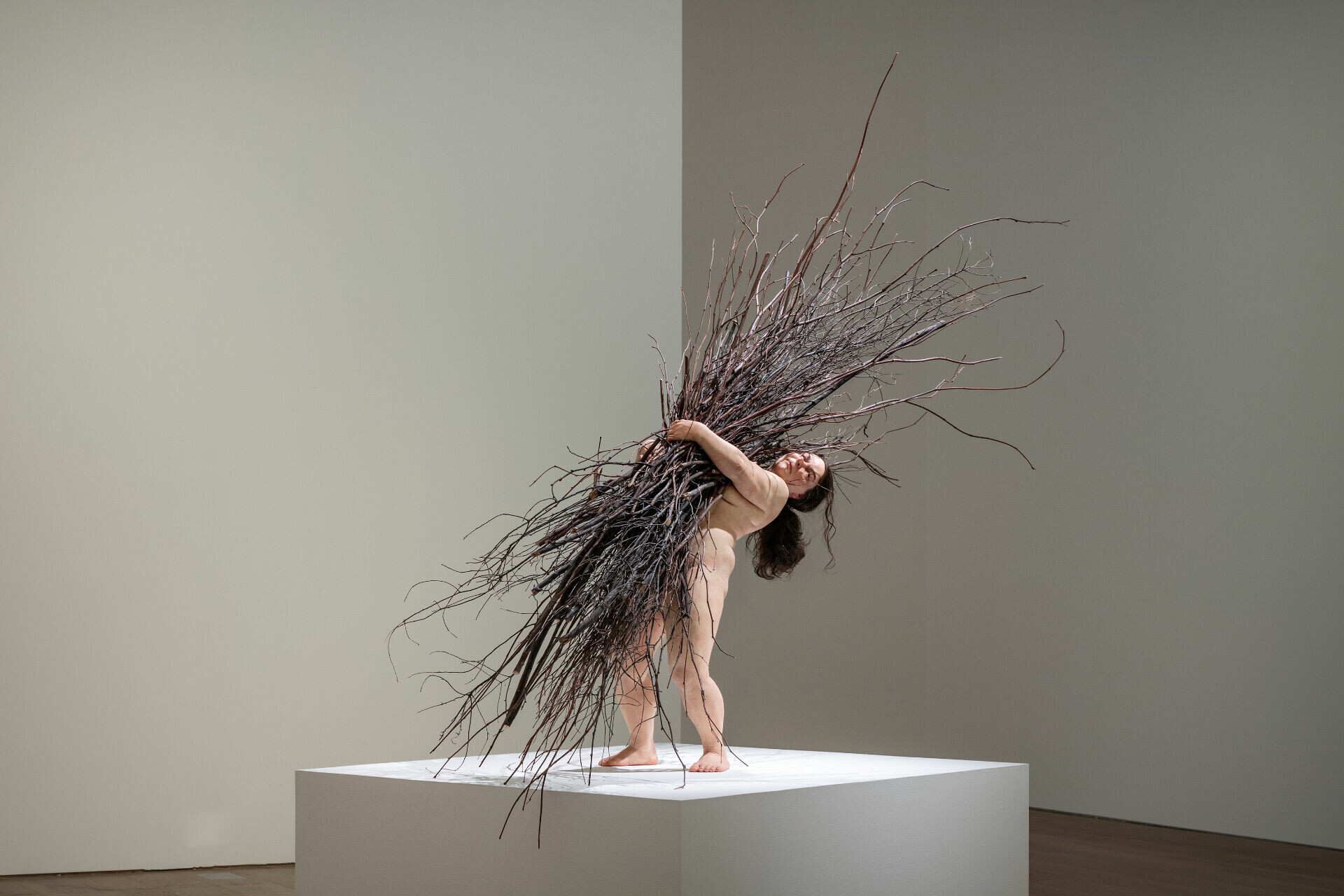
➤ Ron Mueck, Woman with Sticks, 2009. Installation view: Ron Mueck, Mori Art Museum, Tokyo, 2026. Photo: Hasegawa Kenta. Photo courtesy: Mori Art Museum, Tokyo.
從個體的孤獨到集體存在的尺度
From Individual Solitude to Collective Existence
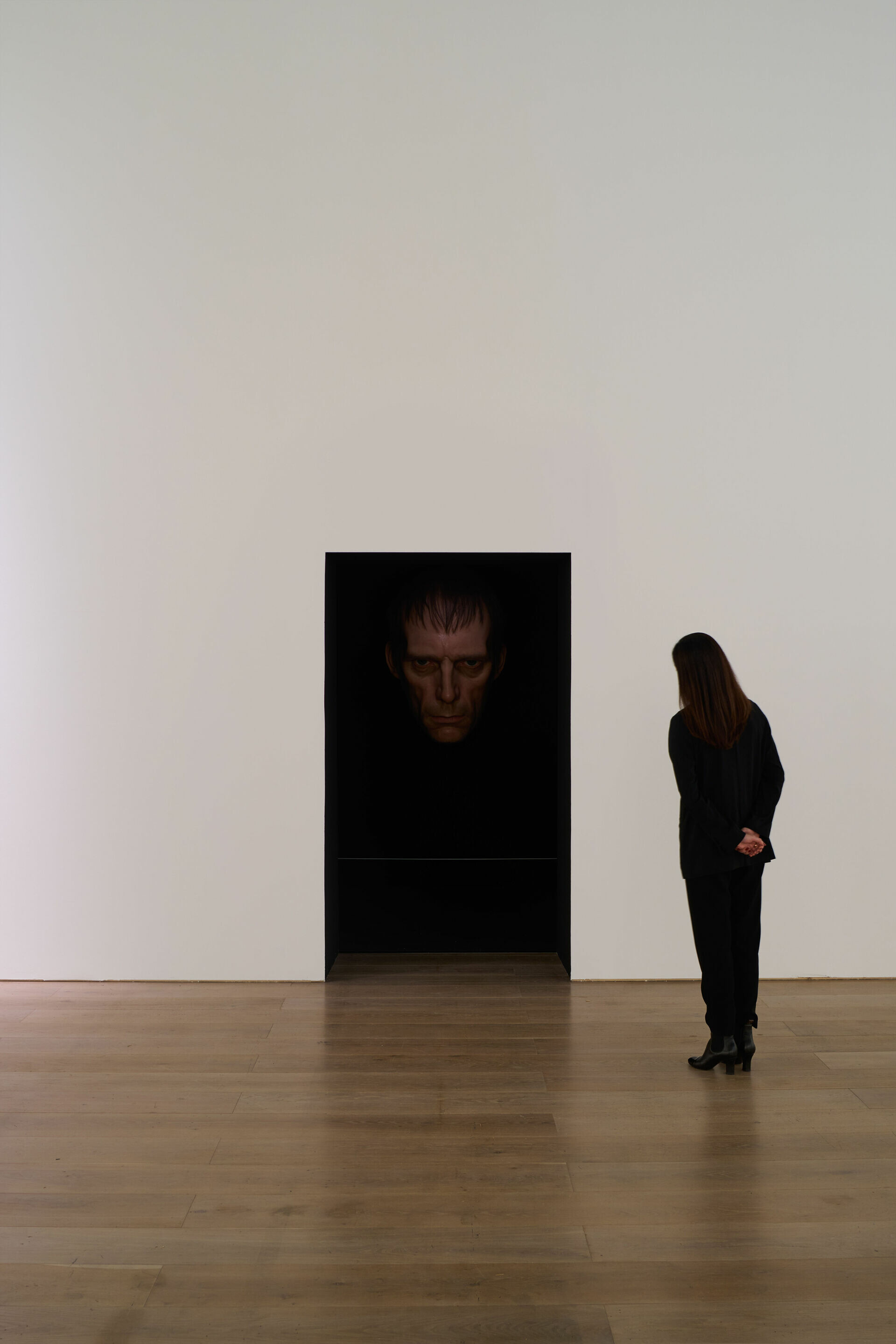
較晚期於日本首展的作品中:《Woman with Shopping》(2013)、《Dark Place》(2018)、《Chicken / Man》(2019)尺度相對較小,改變了兩者之間的互動距離。彷彿被帶入一場三方動態關係,視角從旁觀者轉變為參與者:購物的女人正如人們身邊可見的疲憊母親,走訪的觀眾也彷彿正在被黑暗中的男子窺視,男子與雞的平衡即將在下一秒被打破——這使 Mueck 的作品進入一種由觀者經驗所完成的開放狀態,藉由對身體雕塑的凝視,回過頭來省思自身身體、乃至集體存在。本次展覽延續了藝術家與卡地亞當代藝術基金會之間長期的合作關係,這是睽違 18 年第二次在日本舉辦大型個展,共展出 11 件作品,有 6 件是日本首展,呈現他從早期到近年的完整創作歷程。展覽同時包含由法國攝影師兼電影導演高提耶 · 德布隆德(Gautier Deblonde)拍攝的紀錄片,幫助人們更深入理解 Ron Mueck 的創作世界。
Among the later works making their Japanese debut, Woman with Shopping (2013), Dark Place (2018), and Chicken / Man (2019) are comparatively smaller in scale, altering the relationship between viewer and sculpture. One feels drawn into a shifting triangular relationship, in which the perspective changes from that of an observer to that of a participant. The woman in Woman with Shopping recalls the exhausted mothers encountered in everyday life; visitors approaching Dark Place may feel as though they are being watched by the man concealed in darkness; and the precarious balance between the man and the chicken seems as if it could collapse at any moment. In this way, Mueck's works remain open to completion through the experiences of their viewers, encouraging us, through our gaze upon these sculpted bodies, to reflect in turn upon our own bodies and, ultimately, upon collective existence. This exhibition continues the artist's long-standing collaboration with the Fondation Cartier pour l'art contemporain. Marking Mueck's second major solo exhibition in Japan and his first in eighteen years, it brings together eleven works spanning his career from early pieces to recent creations, six of which are being shown in Japan for the first time. The exhibition also includes documentary films by the French photographer and filmmaker Gautier Deblonde, offering visitors a deeper understanding of Ron Mueck's creative world.
展期|Apr 29, 2026 – Sep 23, 2026
地點|森美術館 @moriartmuseum
主辦單位|森美術館 @moriartmuseum · 卡地亞當代藝術基金會 @fondationcartier
Date | Apr 29, 2026 – Sep 23, 2026
Gallery | Mori Art Museum @moriartmuseum
Organizers | Mori Art Museum @moriartmuseum · Fondation Cartier pour l'art contemporain @fondationcartier