嵌於街廓之中的日常風景
An Everyday Landscape Taking Root in the Streetscape—— Fuglen Kyoto
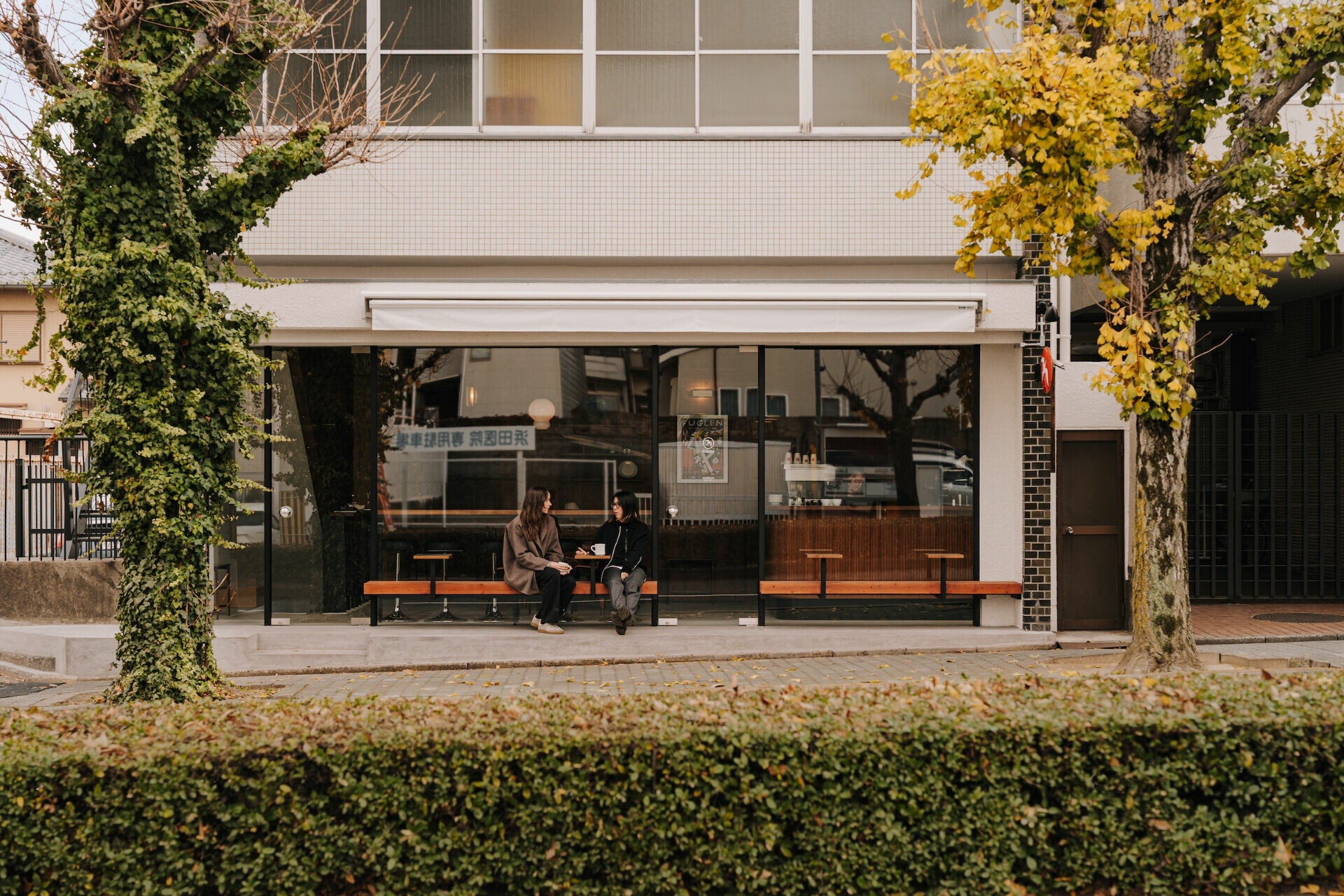
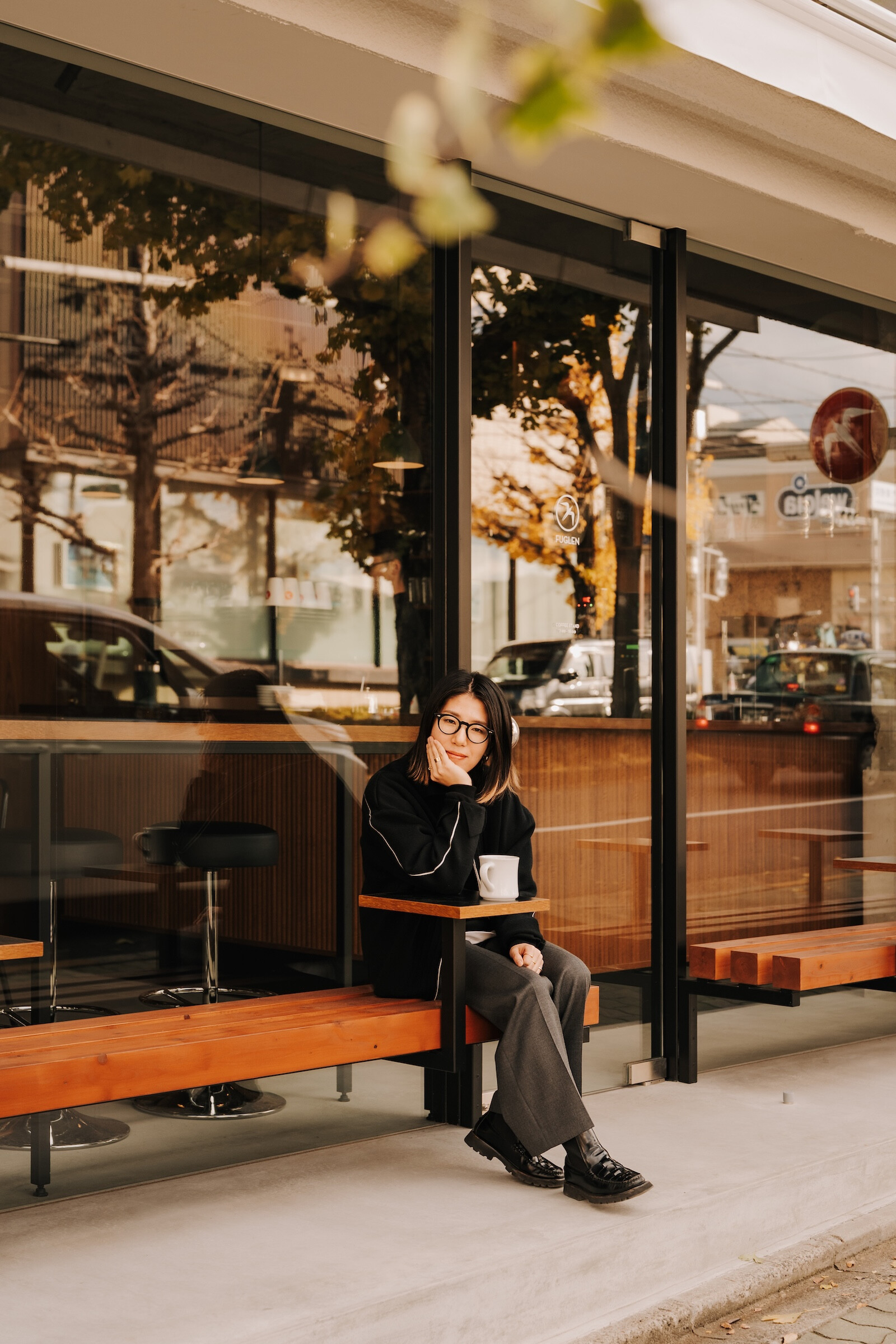
一座城市的肌理,反映著當地的文化底蘊與人文表情。走在京都街頭,運行節奏是現代的,然而內心卻是靜慢的,彷彿有兩條時間線在悄然並置運行。從北山通的設計街廓,一路漫步至靜謐的紫竹住宅區,綠蔭夾道、鳥語輕輕,眼前一棟白色簡樸建築,如同一處嵌入街區日常的停靠站,一只紅底識別的白色鳥兒懸於牆面一隅,輕巧得幾乎不驚擾街道,靜靜等待人們在某個平凡而晴朗的日子推門而入。這裡曾是一間後方有小型工坊的在地和菓子店,如今被改造為一間精巧的 Coffee Stand,不時傳出磨豆機轉動的聲響,像是啟動一天儀式的齒輪,人們在時間萃取出的香氣中,慢慢深呼吸;在 Fuglen Kyoto 喝咖啡,是這個街道的日常開始,也是一段可以被暫時停放的時間。
The fabric of a city carries the depth of its culture and the character of its people. Kyoto moves at a modern pace, yet its inner tempo remains calm and measured, as if different registers of time were unfolding in parallel. From the design-conscious stretch of Kitayama Dori towards Shichiku, a residential neighbourhood in Kita Ward, the city gives way to tree-lined streets, birdsong and the understated presence of a modest white building. More pause than destination, it sits within the neighbourhood’s daily life. A red sign bearing Fuglen’s white bird emblem hangs at one corner of the façade, discreet enough to leave the rhythm of the street intact. Once a local Japanese confectionery shop with a small workshop at the rear, the building has been reworked as a compact coffee stand organised around the counter. From time to time, the grinder begins to hum, like a small ritual setting the day in motion. The air fills with the scent of brewing coffee, and people slow down, breathe and settle. Coffee at Fuglen Kyoto marks the beginning of the street’s day, while offering a moment set apart from it.
融入都市脈絡的街區咖啡店
A Neighbourhood Coffee Stand Woven into the Urban Fabric
從 2012 年東京富谷店,到 2025 年 12 月在京都北區紫竹開幕的 Fuglen Kyoto,花了十三年才將版圖延伸至關西,也讓它與京都這座文化古都一樣,蘊含著不疾不徐的氣質。現任Fuglen Japan 總監高橋圭也(Keiya Takahashi)自東京首店開幕時,便以咖啡師身分加入團隊,此後一路參與烘豆、店舖營運與展店開發,且於 2024 年接任現職。對高橋而言,這十三年並非刻意等待,而是品牌在日本播種、耕耘直至萌芽所需的時間,亦是Fuglen長出在地化樣貌的必要過程。直到走入寧靜街區,遇見現今屋主既合作夥伴 Mononobe 一家時,他便知曉:讓品牌咖啡文化於此地落地深根的時刻已經到來。
From the opening of Fuglen Tokyo in Tomigaya in 2012 to the arrival of Fuglen Kyoto in Shichiku, Kita Ward, in December 2025, it took thirteen years for the brand to extend its presence to the Kansai region. That measured pace gives Fuglen Kyoto a temperament closely attuned to the city itself: unhurried, attentive and assured. Keiya Takahashi, Director of Fuglen Japan, joined the team as a barista when the first Tokyo location opened. He has since worked across roasting, shop operations and store development, before taking on his current role in 2024. For Takahashi, those thirteen years were not a deliberate delay. They were a period of cultivation, through which Fuglen gradually developed its own local expression in Japan. Like a seed, the brand needed time, care and the right conditions before it could take hold. That sense of timing became clear only after the team spent time in Shichiku and met the Mononobe family, the building’s owners and local partners. It was then that the idea of establishing Fuglen’s coffee culture in this place began to feel natural.
最初,設想京都店的氛圍與營運模式時,他並未想著原樣復刻北歐的生活方式,而是觀察著鄰近上班上學的規律作息、人們往來寺院與住宅區之間的節奏,以及住宅街區居民日常的生活步調,進而思索:空間形式該如何回應街道尺度和地方日常?對高橋而言,與其套用固定模式,反而讓品牌元素能隨每個地方的時間、環境與人際關係逐漸浮現,更接近 Fuglen 的生活方式;於是,基於對住宅區特質的考量,京都店目前暫未採用 Fuglen 部分據點常見的「日間咖啡、夜間雞尾酒吧」模式,這反而凸顯了品牌在地化的精神。
When considering the atmosphere and operating model of the Kyoto shop, Takahashi did not approach the project as an exercise in reproducing a Nordic lifestyle. Instead, he paid attention to the everyday rhythms around the site: people commuting to work and school, the movement between nearby temples and residential streets, and the ordinary tempo of local life. The aim was less to import a finished concept than to understand how the space could respond to the scale of the street and the routines around it. For Takahashi, Fuglen is strongest when its core elements are allowed to surface gradually, in response to the time, setting and relationships of each place. For this reason, Fuglen Kyoto has not adopted the coffee by day, cocktails by night format found in some of the brand’s other locations. Far from weakening the brand identity, the decision reflects a more sensitive form of localisation, shaped by the character of a residential neighbourhood.
在推廣淺焙咖啡時,他也觀察到:京都擁有以茶與高湯為代表的深厚味覺文化,這使得人們並不一味追求濃度與明確性,這種能被層層提取、展現時間變化的風味,也以很自然的方式被欣賞與接受了。在這裡,咖啡並不呈現為某種「新的事物」,而是這座城市既有文化延伸出來的另一種表達。在高橋的期望中,人們可以自然地反覆回訪,讓這個空間與他們的生活產生迴響。除了杯中的咖啡風味外,在這裡反覆發生、微小而真實的日常片刻所累積的情感與時間重量,才是一間咖啡店被記住的真正價值。
Introducing Fuglen’s light-roast coffee culture to Kyoto also revealed a natural affinity. The city has a deeply rooted sensory culture, shaped by tea and dashi. Here, flavour is not understood only through intensity or clarity, but through aroma, finish and the subtle changes that unfold over time. In this context, a light-roast coffee that reveals its layers gradually can be appreciated quite naturally. At Fuglen Kyoto, coffee is not framed as something entirely new. It becomes another expression of the city’s existing sensory culture. Takahashi hopes that people will return not for novelty, but because the place has begun to belong to their lives. For him, the value lies in the accumulation of small, ordinary moments that allow a coffee shop to become part of a community.
北歐生活與陰翳美學的深刻共鳴
Nordic Design and the Aesthetics of Shadow
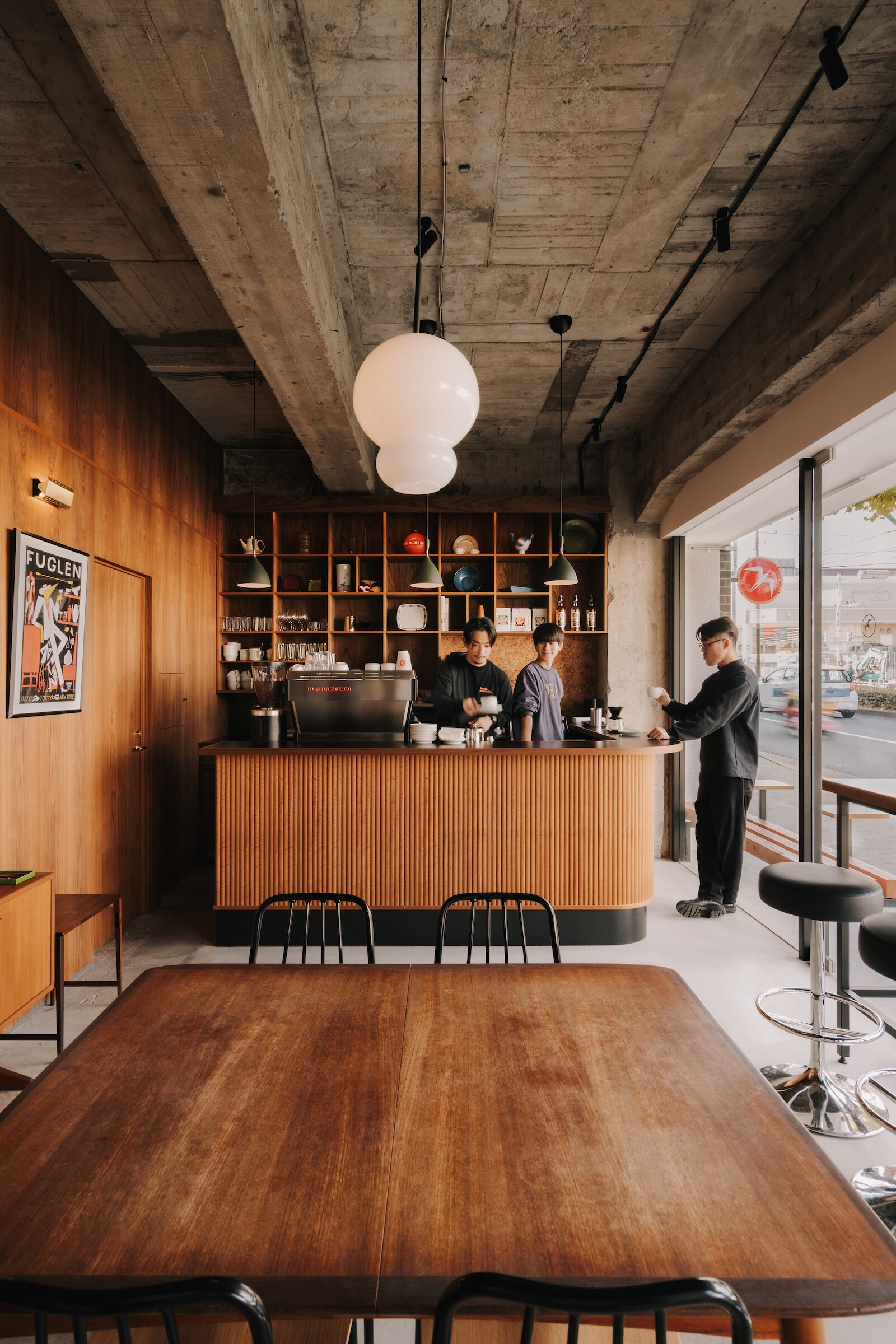
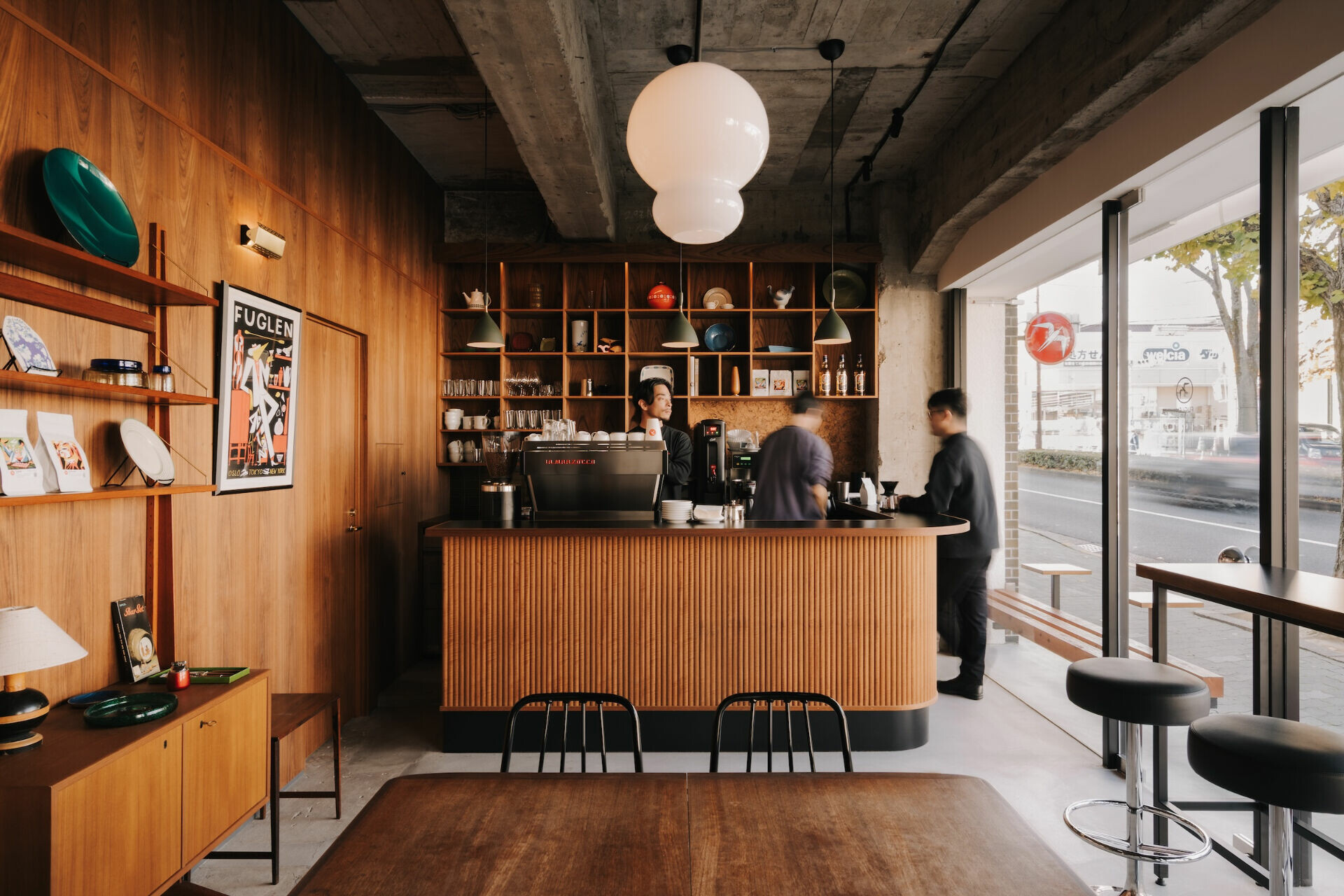
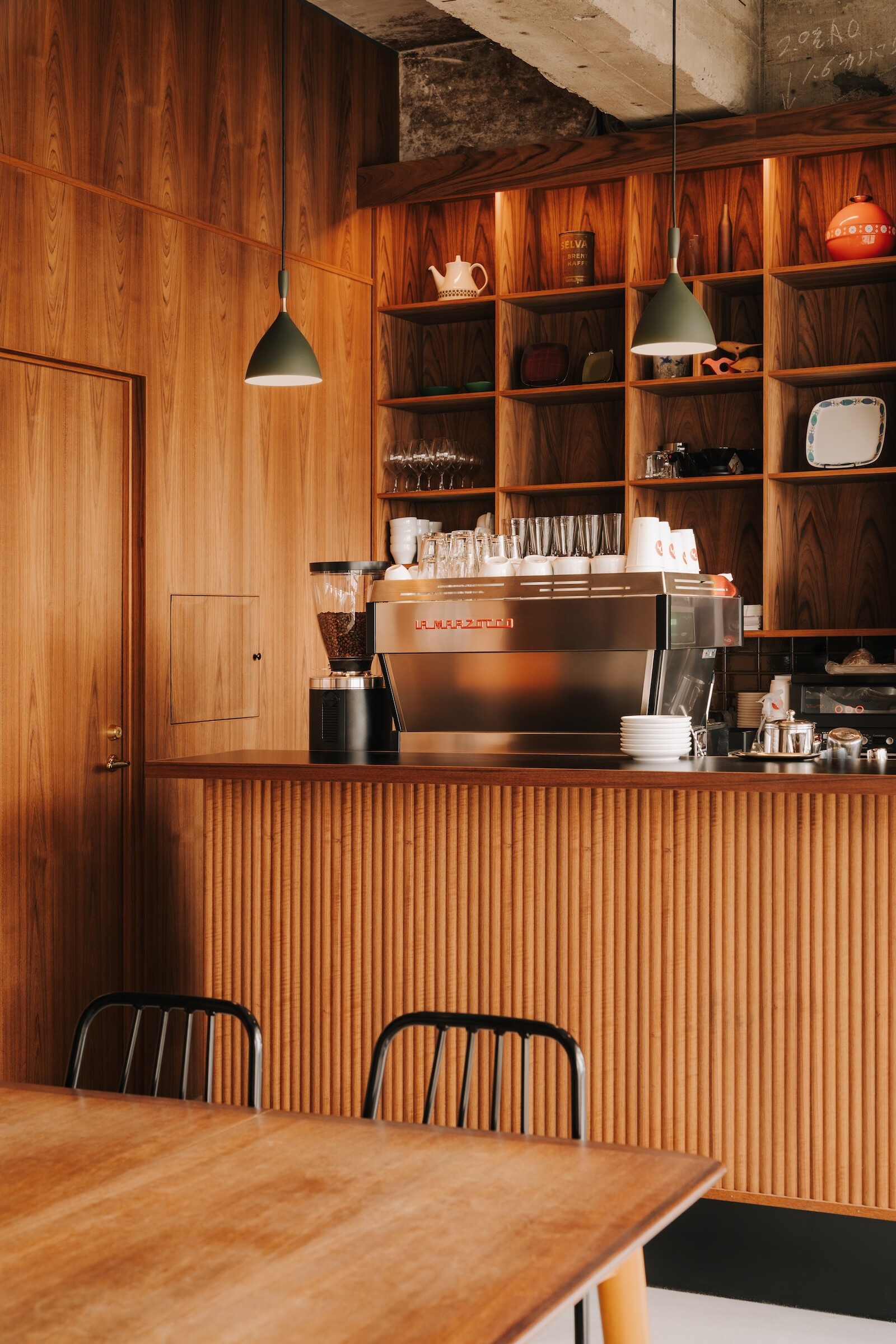
落座於通透的落地玻璃前,能透過眼前開闊寧靜的街景感知季節。空間設計 Studio Vandrer 主理人 WAKIKO FUKUDA 在既有建築的性格、街區尺度與 Fuglen 挪威中世紀設計語彙之間,尋找安靜的平衡。精緻的空間設計以吧檯、少量座席與戶外長椅組成緊湊而靈活的動線形式。倚在吧檯旁,客人與咖啡師之間的距離被自然拉近,可以輕鬆的彼此交談;門口設下的長椅則成為人們短暫休憩、彼此招呼的社區節點,將室內的親密感引渡至戶外,催生出短暫交流的中介地帶。這讓 Fuglen 作為一種生活方式的內涵更為深刻:它是開放且包容的,也是構成日常流動風景的一部分。
Designed by Studio Vandrer, with Wakiko Fukuda leading the project, the interior seeks a balance between the character of the existing building, the scale of the neighbourhood and Fuglen’s Norwegian mid-century design language. Rather than translating Kyoto into overtly Japanese motifs, Fukuda allows the space to find its own expression between local everyday life and Fuglen’s design sensibility. The space is not centred on a large seating area. Instead, it unfolds around a coffee counter, limited seating and outdoor benches. Seated beside the glazed frontage, guests can take in the seasons through the calm, open view of the street. Close to the counter, guests and baristas meet at close range, allowing conversation to happen with ease. At the entrance, the bench becomes more than a place to rest. It works as a small neighbourhood node, where people pause, greet one another and linger briefly. It draws the intimacy of the interior towards the street, creating a threshold space for small, unplanned encounters.
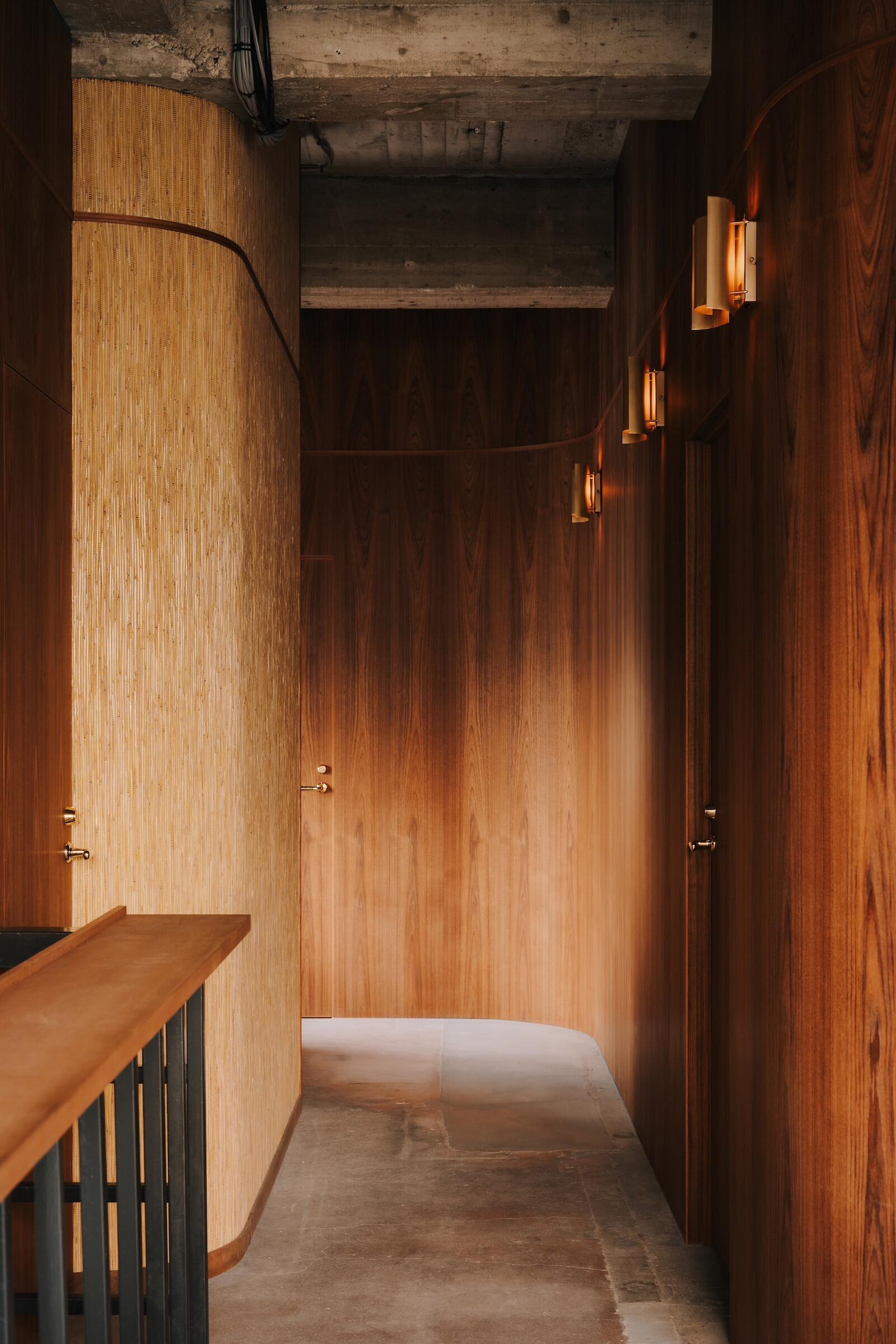
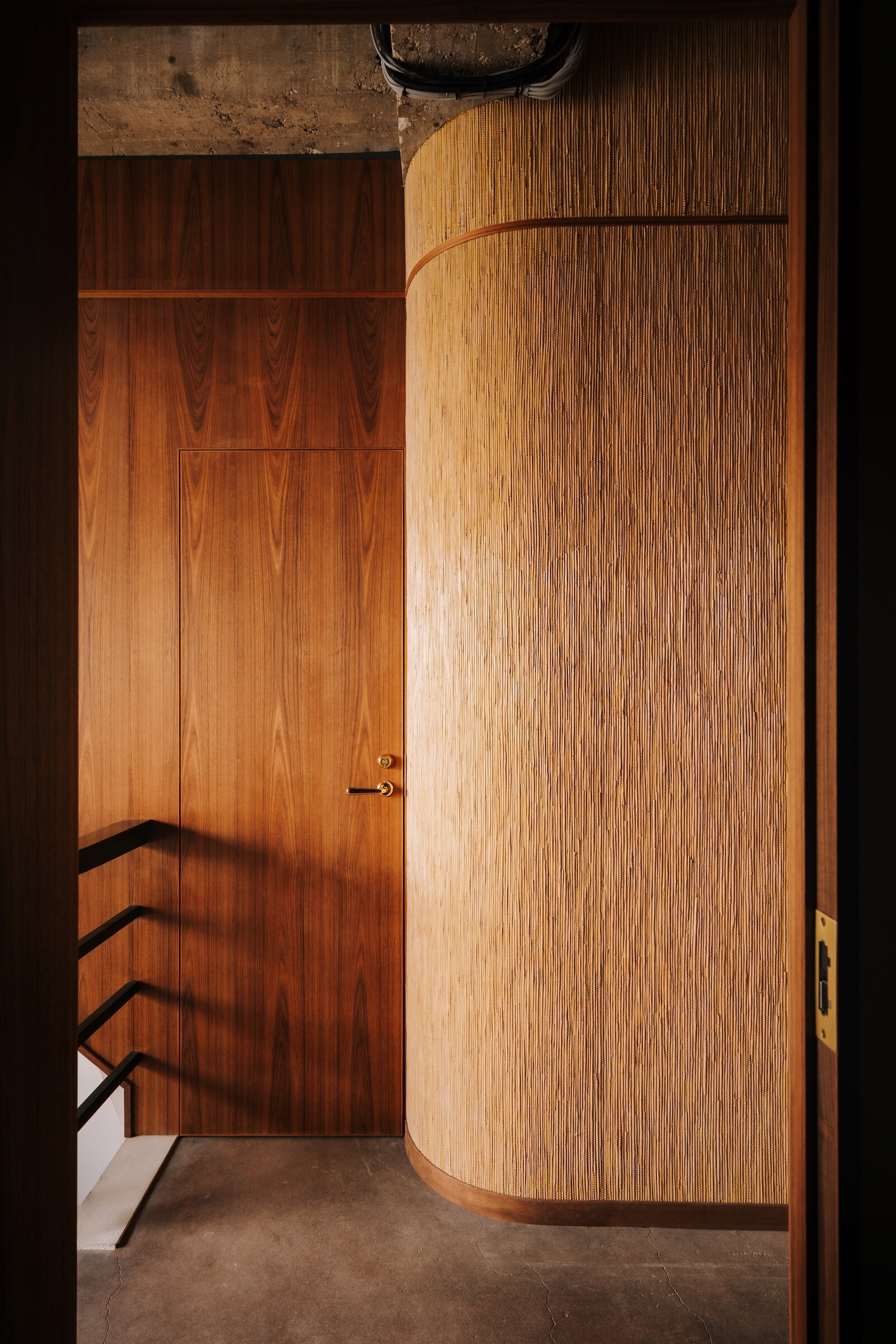
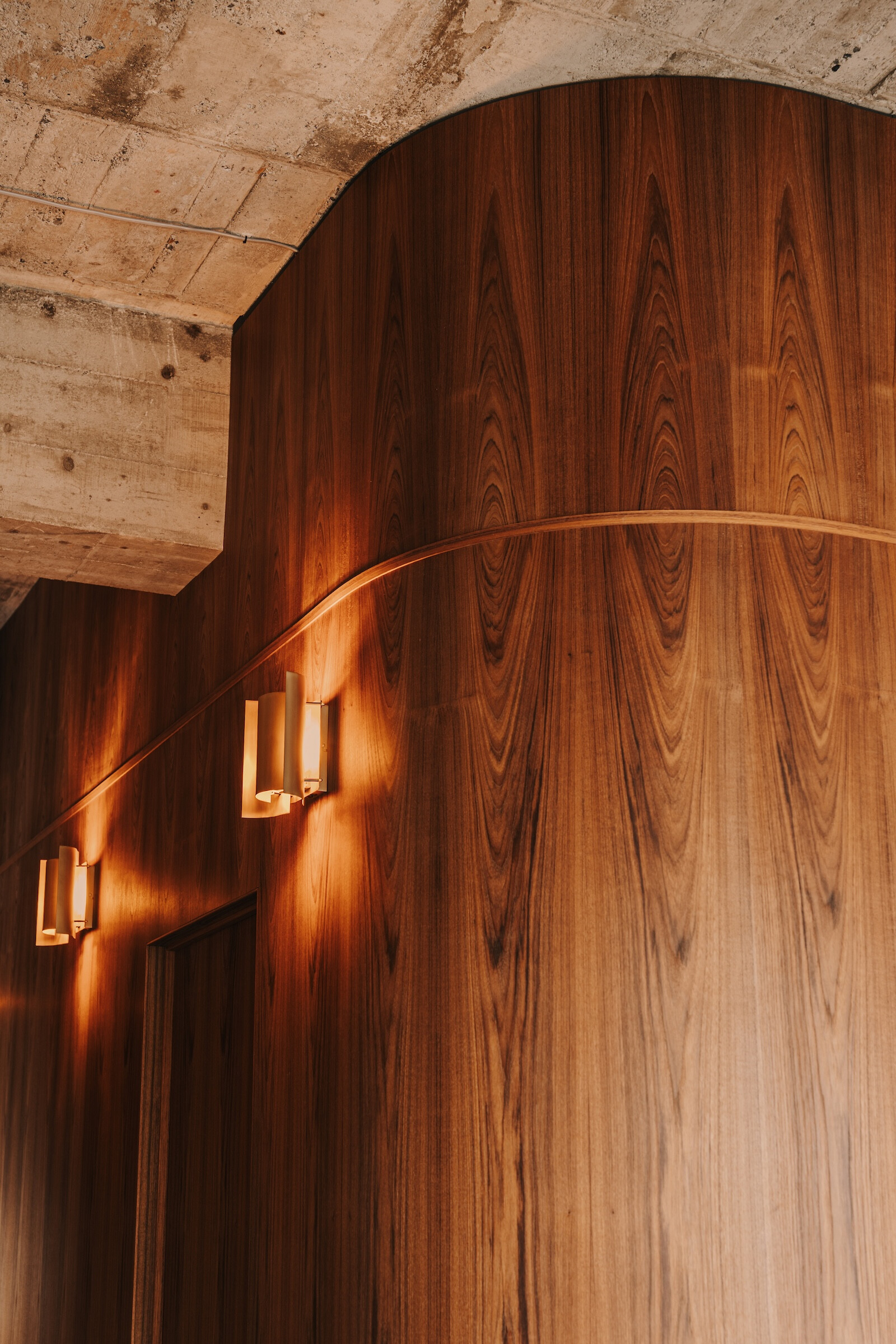
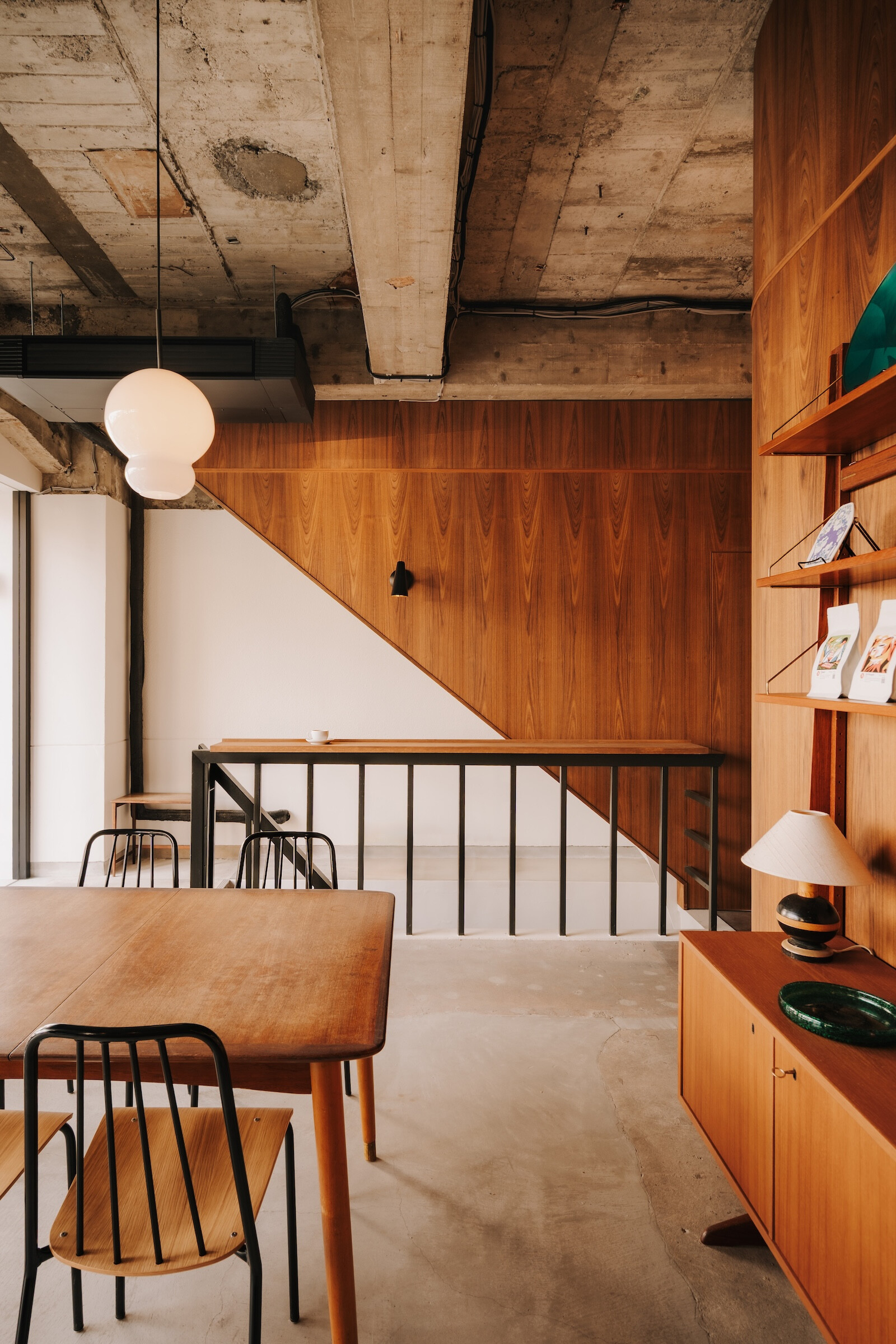
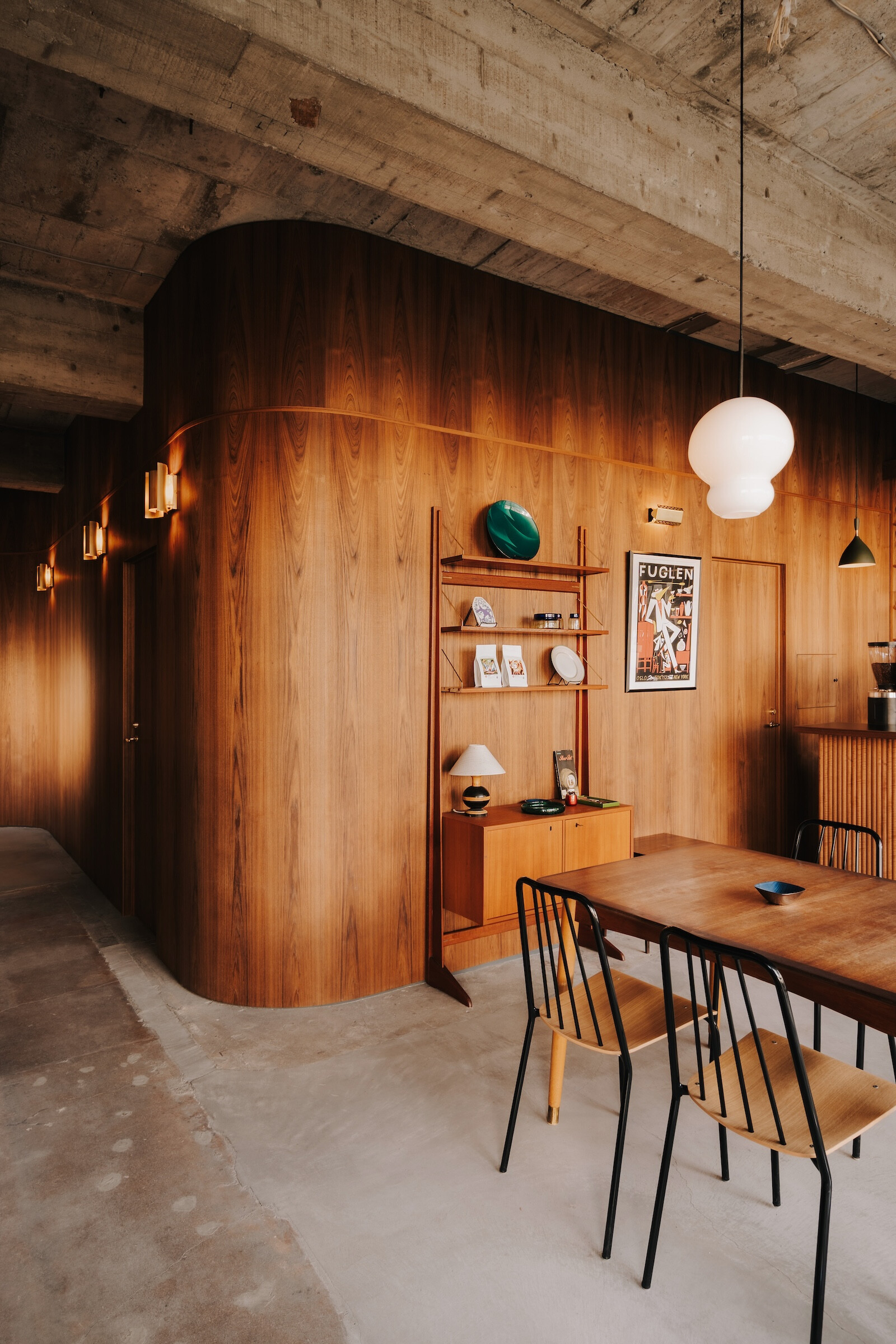
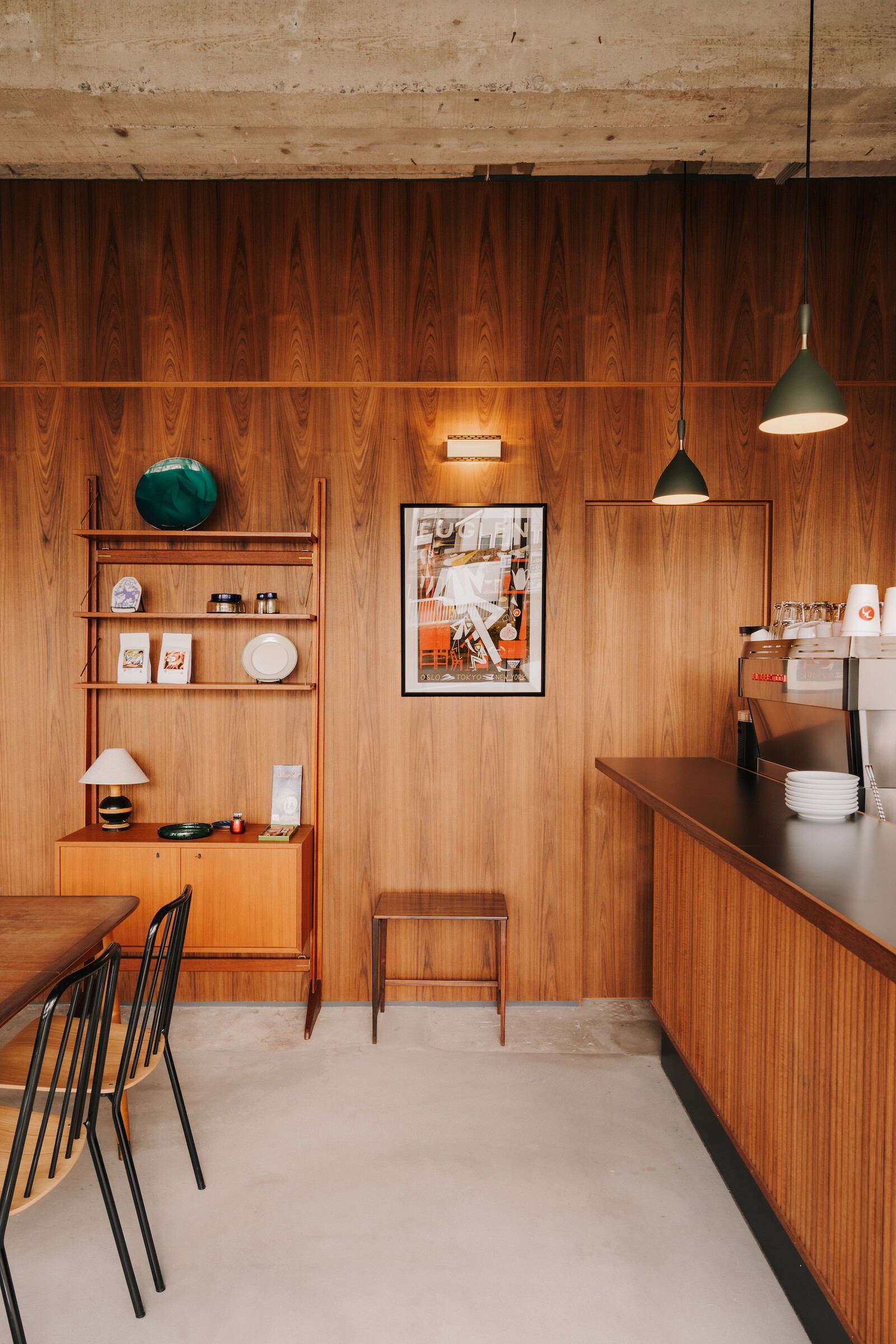
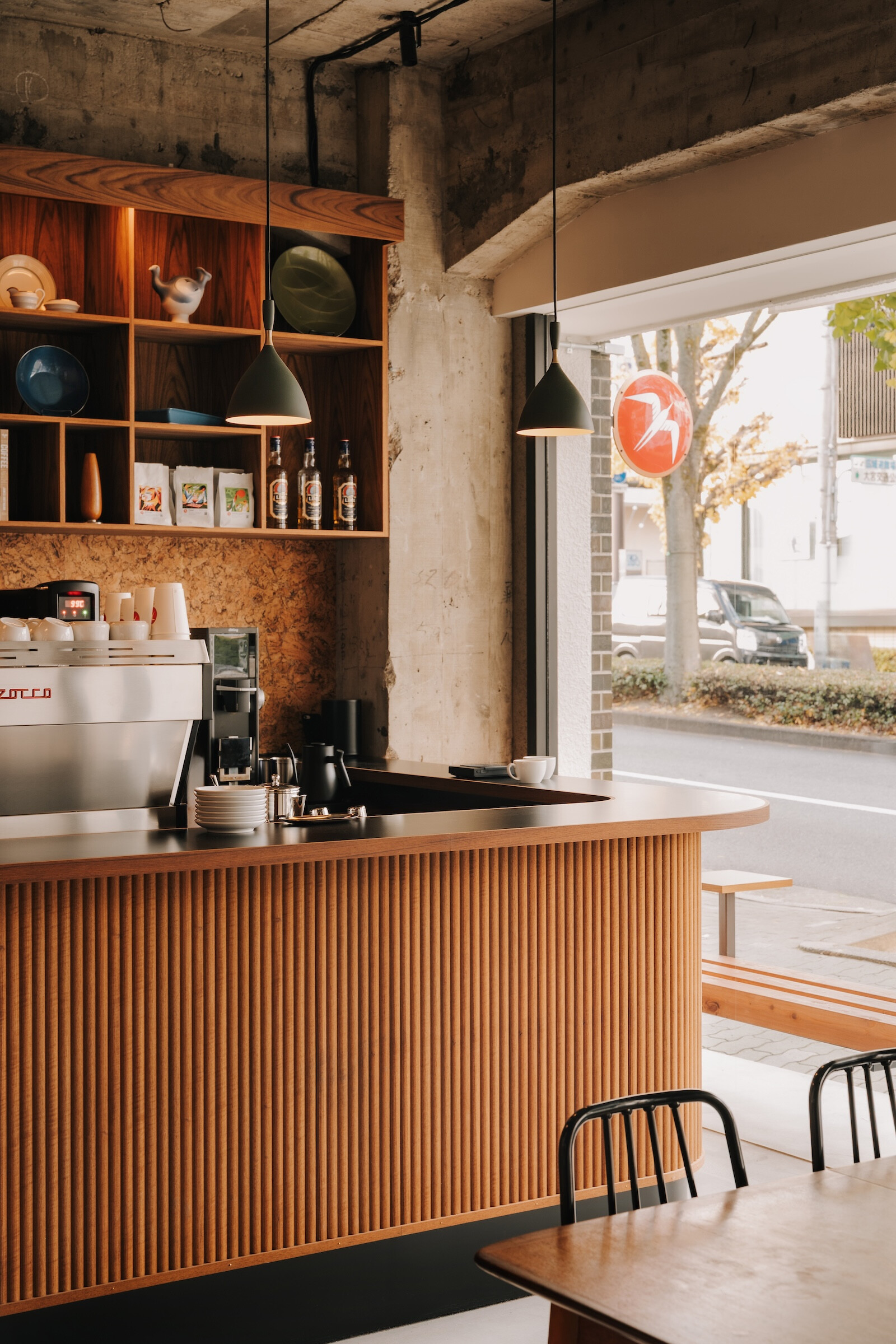
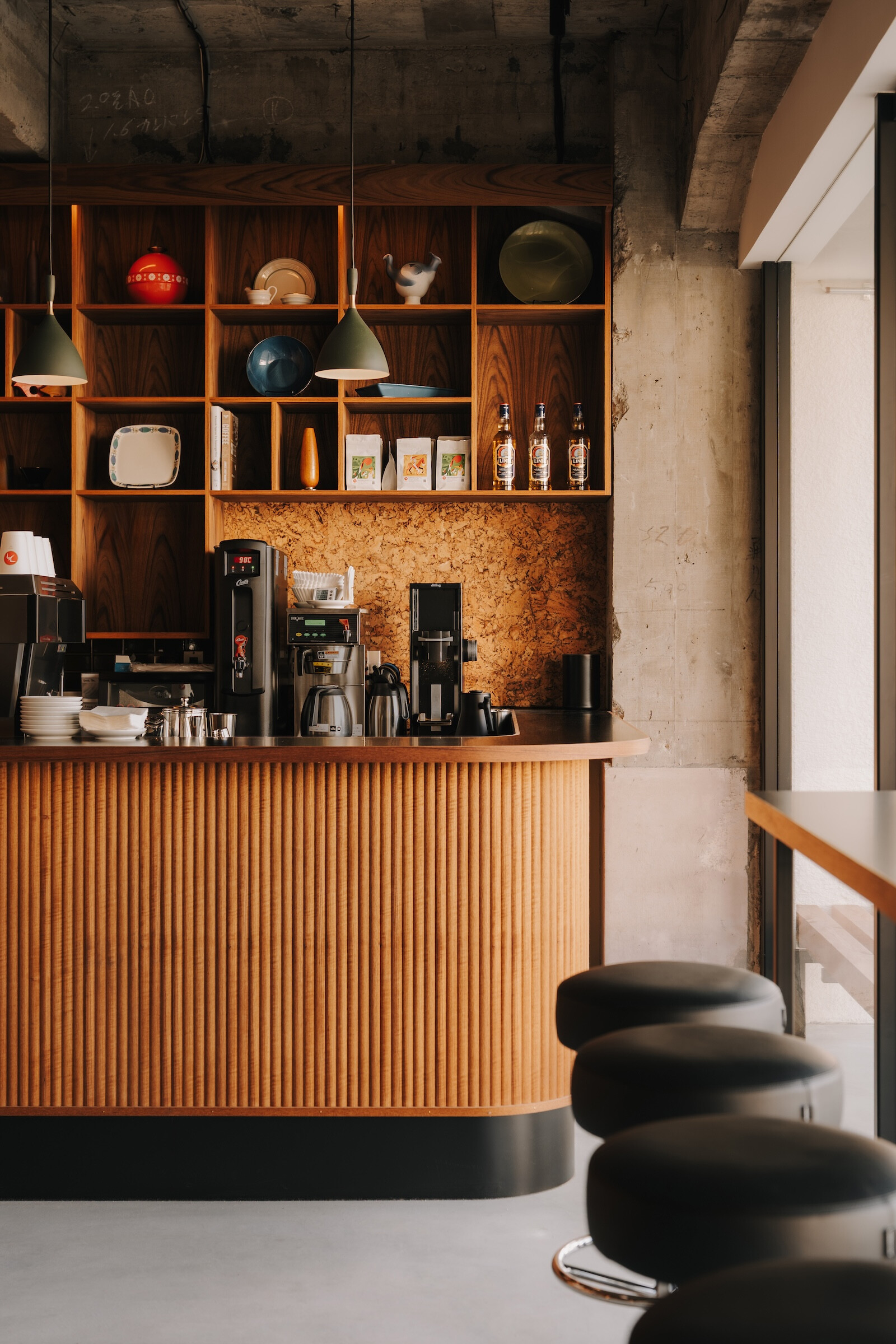
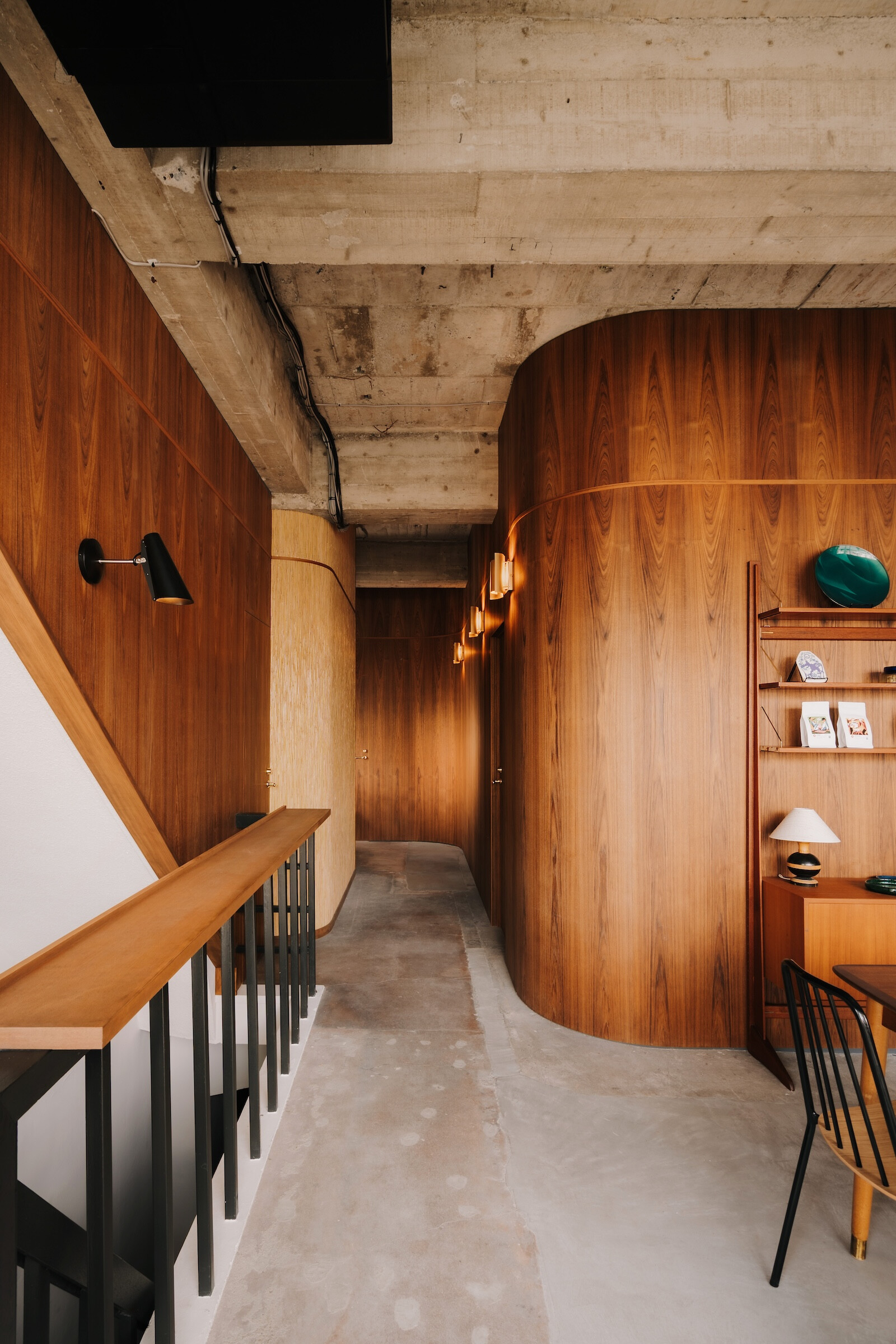
在 Studio Vandrer 的設計中,室內承襲著 Fuglen 標誌性的暖棕色木質調,整體氣息舒緩而寧靜。既有混凝土結構被刻意保留下來,和乾淨細緻的柚木表面形成對比。新與舊,粗獷與溫潤,強化了整體空間的結構與時間感。與牆面齊平的門片設計、以及隱藏式開關等等工藝細節,展現出在地工匠細膩的施工品質,與講究穩固耐用的材料真實性產生本質上的呼應。安排於牆上的壁燈,引導著人們朝通往內部的昏暗通道走去,由明轉暗的空間層次,無形中使陰翳之美與以 Vintage Design 形塑的低彩度氛圍,自然而然達成一致。
In Studio Vandrer’s design, the interior carries Fuglen’s signature palette of warm brown wood tones, giving the space a calm and composed atmosphere. The existing concrete structure has been deliberately retained, its raw texture set against refined teak surfaces. Old and new, rough and warm, are held together within the same compact interior, strengthening its sense of structure and time. Details such as flush door panels and concealed switches reveal the precision of local craftsmanship. They also resonate with the principles of mid-century modern design, particularly its emphasis on durability, material honesty and the traces left by use over time. Light is handled with similar restraint. Wall sconces guide visitors towards the dimmer passage leading further inside. This gradual shift from brightness to shadow allows the aesthetics of shadow to meet the muted atmosphere shaped by vintage design. Rather than staging a contrast between Nordic and Japanese sensibilities, the space lets them settle into a shared tone.
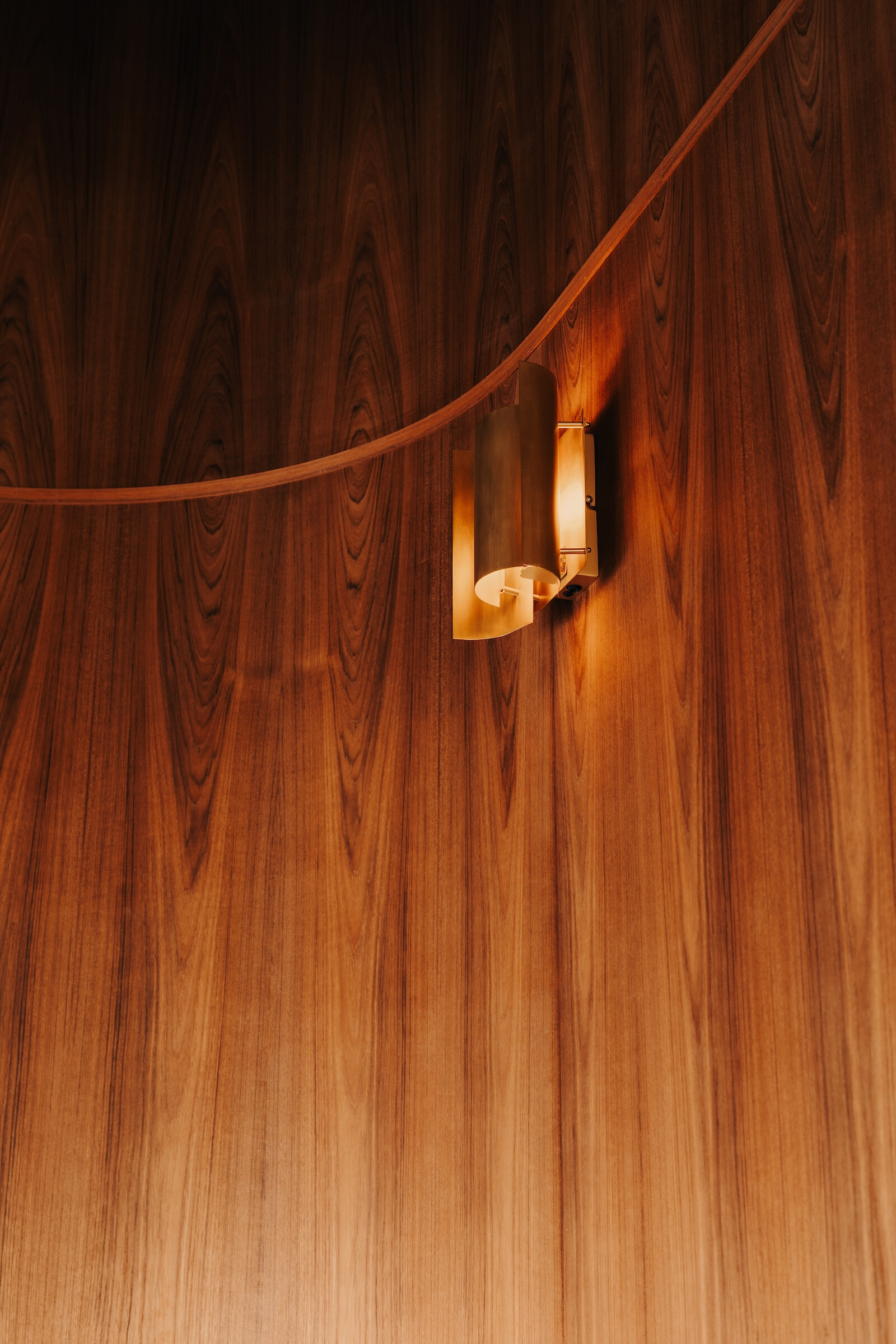
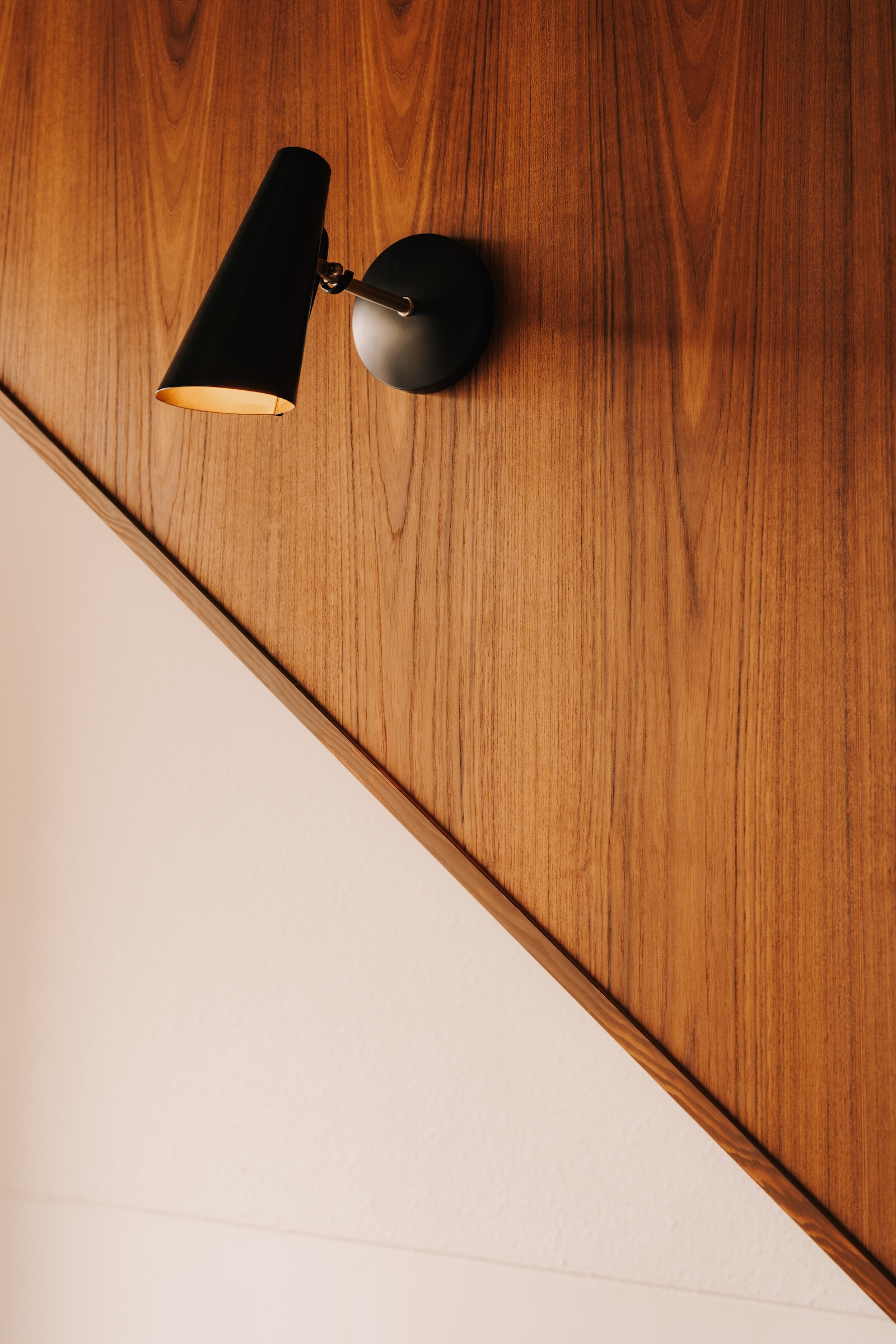
當雙手捧起咖啡,感受木色在陽光下泛著蜂蜜色的溫潤光澤,此種讓時間慢下來的生活感與溫度,令人感到發自內心的踏實。作為在京都的第一間店,Fuglen Kyoto 並未以某種傳統日本意象來詮釋自己,反而更像是在試圖建立一段關係,使人們能在咖啡香氣中,靠近一種輕盈自在的生活嚮往,也在富有風味的口感中體會屬於京都的餘韻。
Holding a cup of coffee in both hands, one notices the honeyed glow of wood as it catches the light. There is a grounded comfort in this slowing of time, a tactile calm that feels reassuring. As Fuglen’s first location in Kyoto, Fuglen Kyoto does not attempt to interpret itself through conventional images of Japanese tradition. Instead, it seeks to build a relationship. Through the scent of coffee, the touch of wood and the changing light of the street, it draws people towards a lighter, more open sense of living, leaving a finish that carries something of Kyoto’s own lingering resonance.