Cheng Family Residence in Tainan
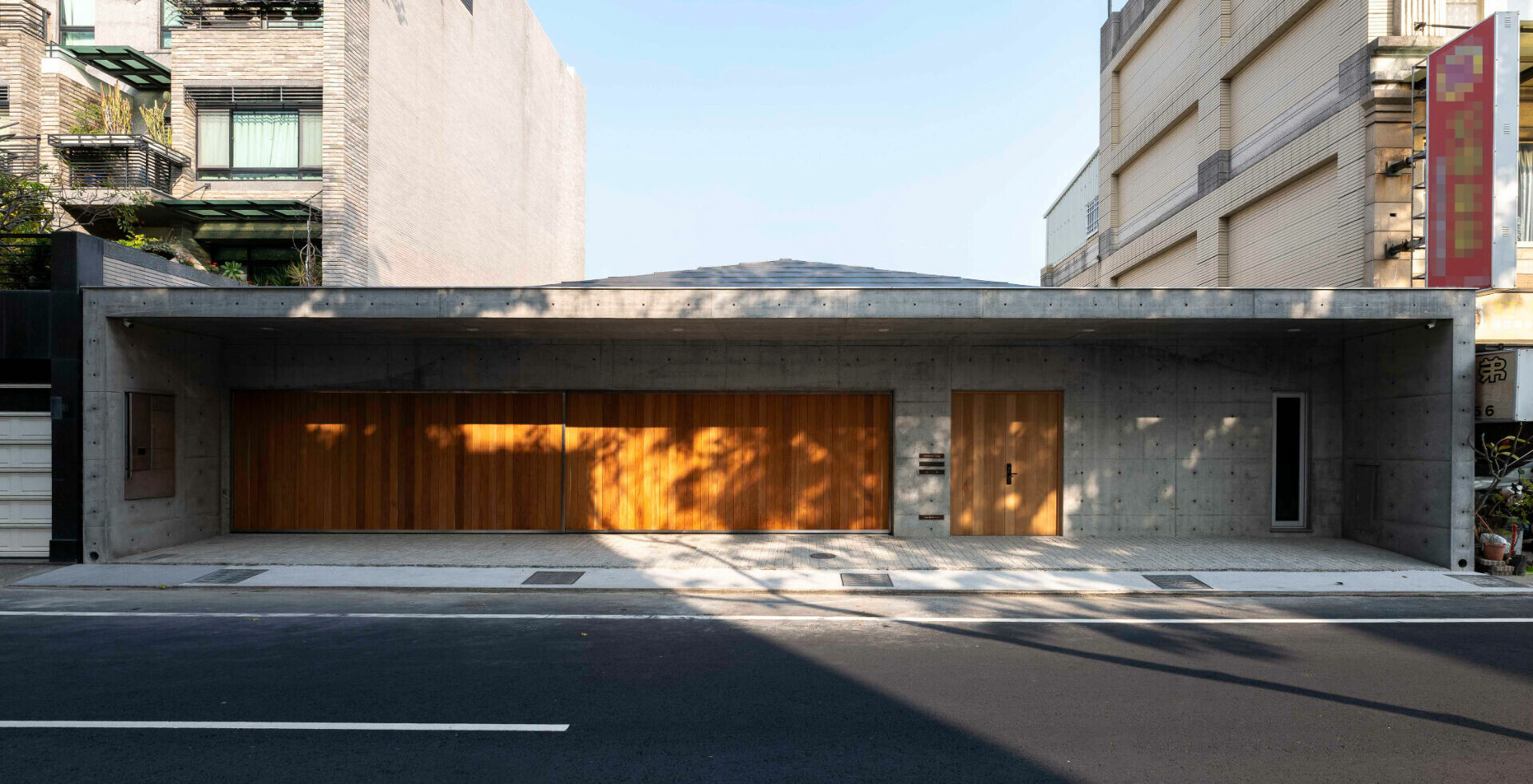
“Ritual Is Reason” — Book of Rites, Chapter The Leisure of Confucius (Li Ji · Zhong Ni Yan Ju). In Eastern philosophy, li—ritual propriety—embodies both reason and the art of measured order. True hospitality lies in that subtle equilibrium of empathy and respect between people. Much like this private guesthouse quietly embedded within the streetscape, its oak doors absorb the gentle afternoon light, exuding a calm and resolute presence. It invites passersby to slow down, and the dialogue of light, shadow, and texture reveals an unspoken grace—a humility that resonates with the fine urban fabric of Tainan’s rhythm.
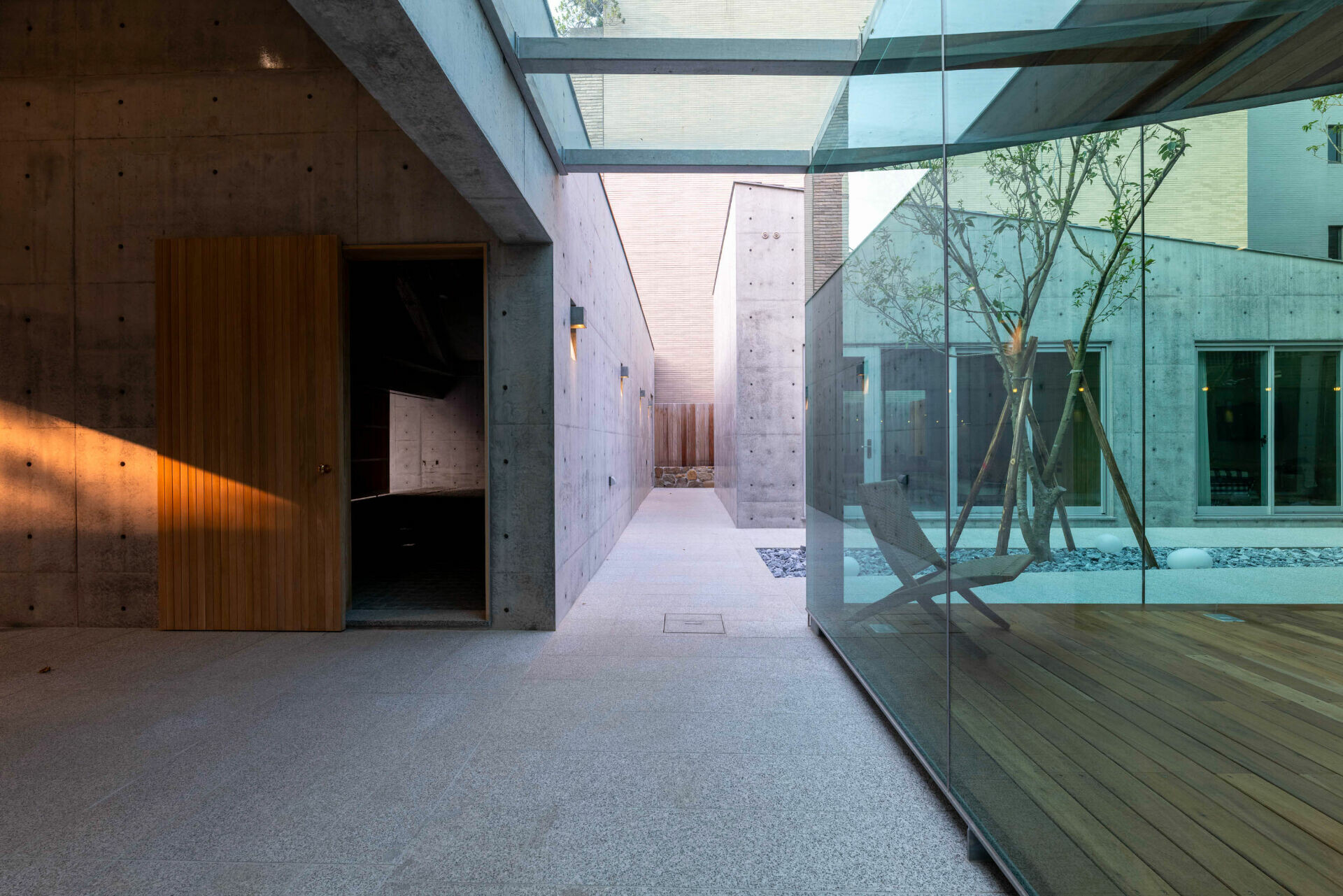
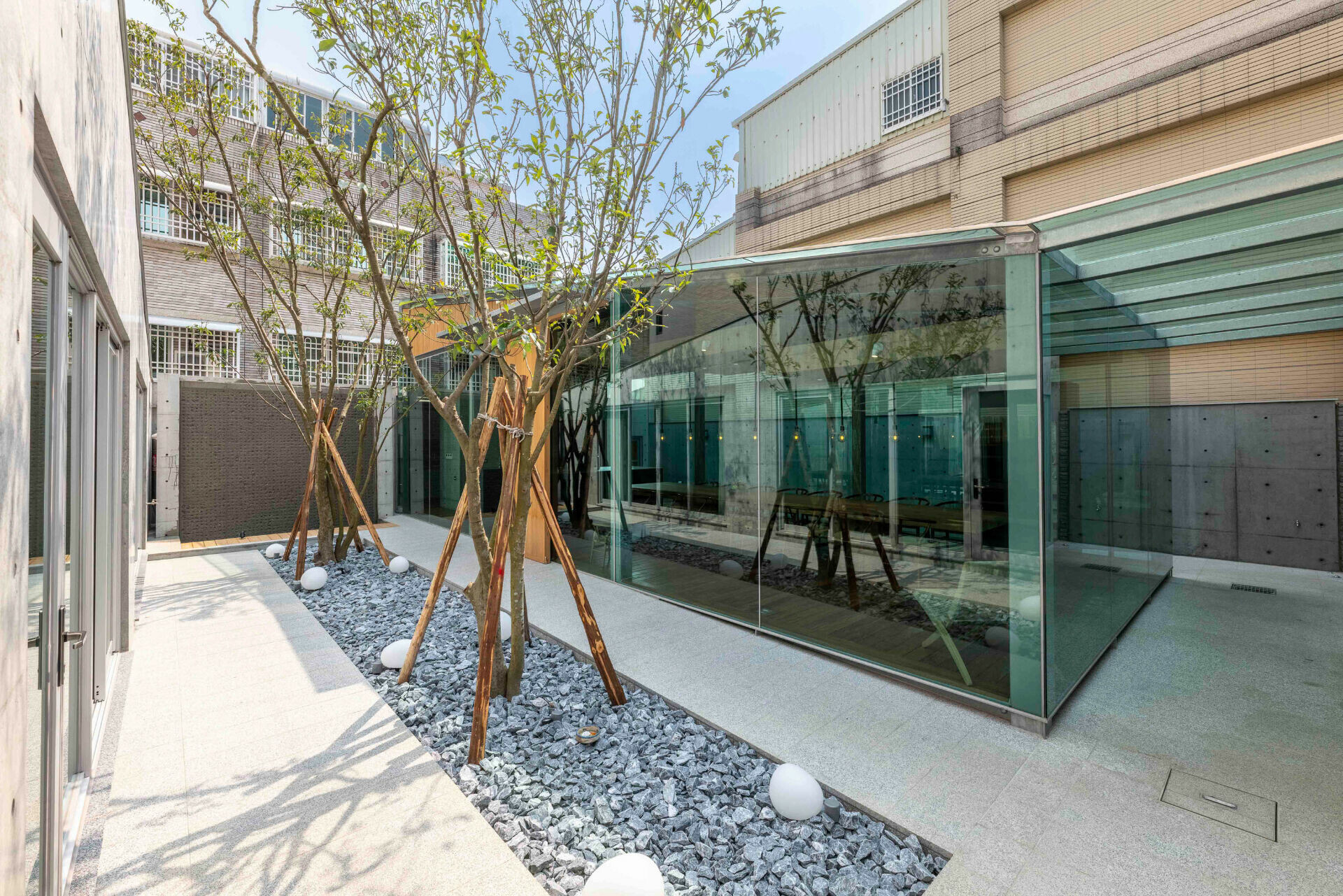
Confronted with a narrow urban plot enclosed by neighboring houses, architect Mao Sen-Chiang began, as always, from the inhabitant’s perspective—questioning how architecture could balance the scales between people, architecture, and the city. Rejecting the vertical logic common to dense infill developments, the team’s design unfolds across a single, horizontal plane. A fair-faced concrete façade, recessed from the street, defines a solemn yet tranquil profile. Its elongated frontage encloses an inward-facing courtyard, forming what Mao describes as an “open interiority”—a living frame for elders, family gatherings, and guests alike.
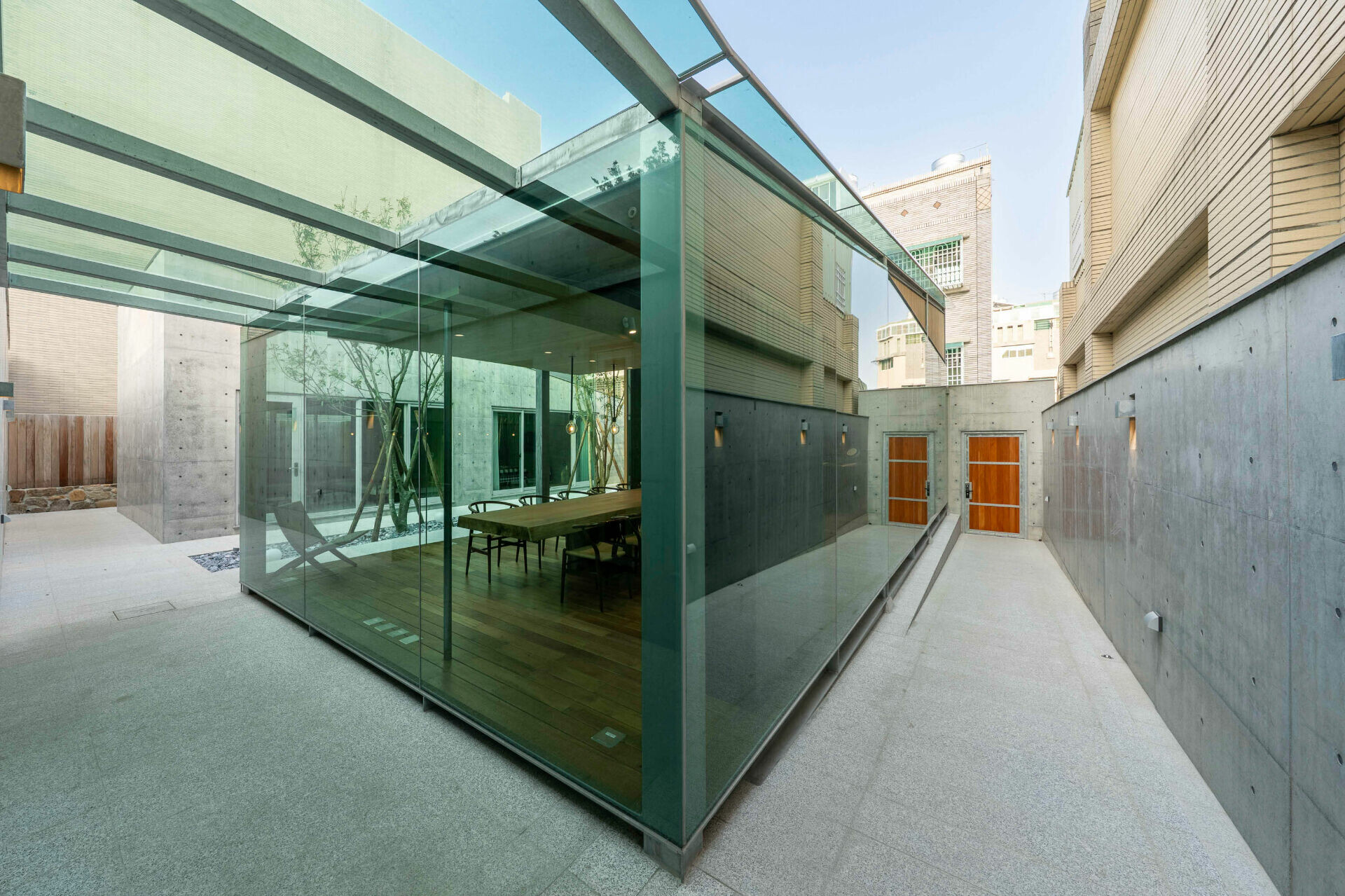
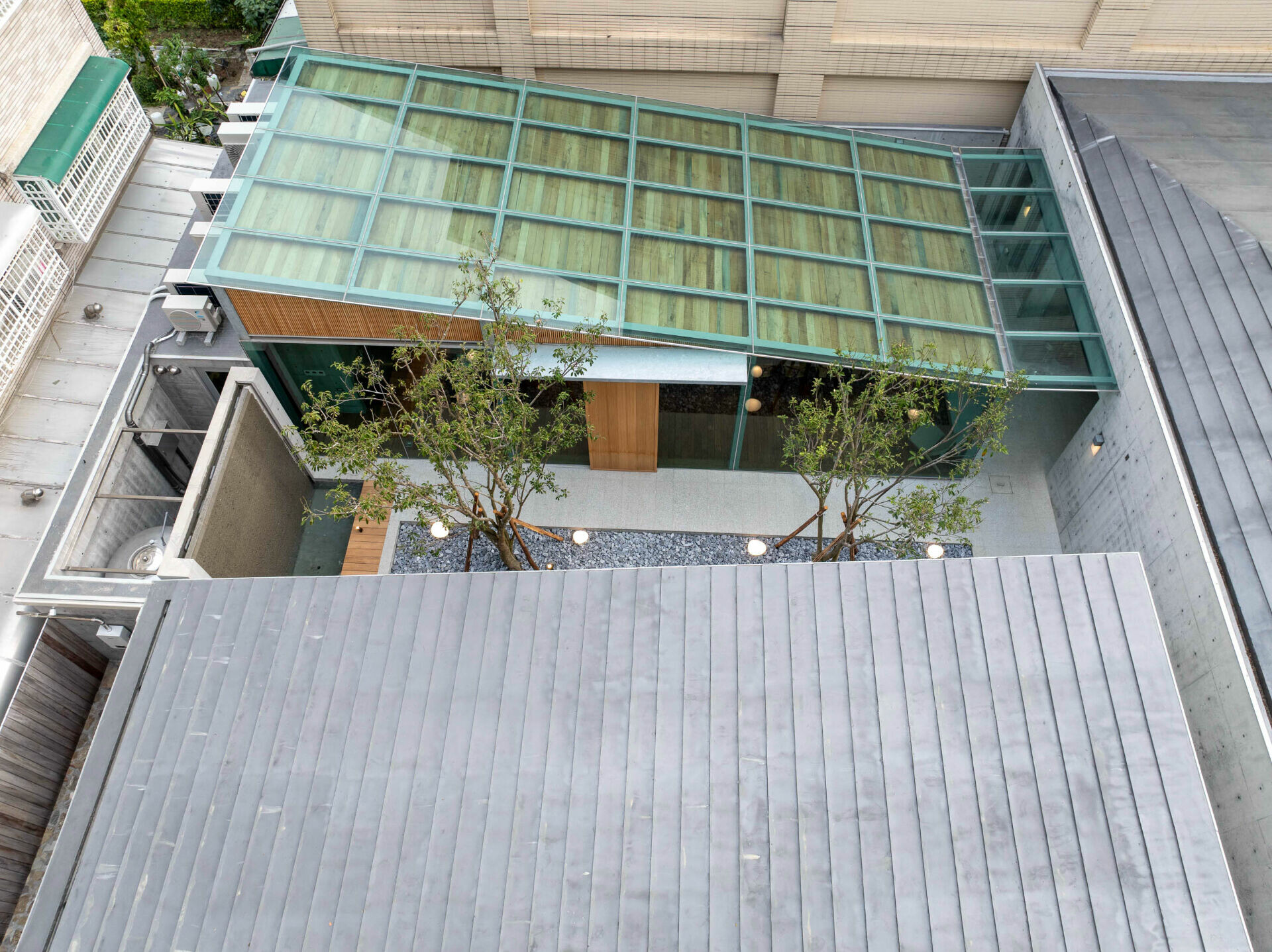
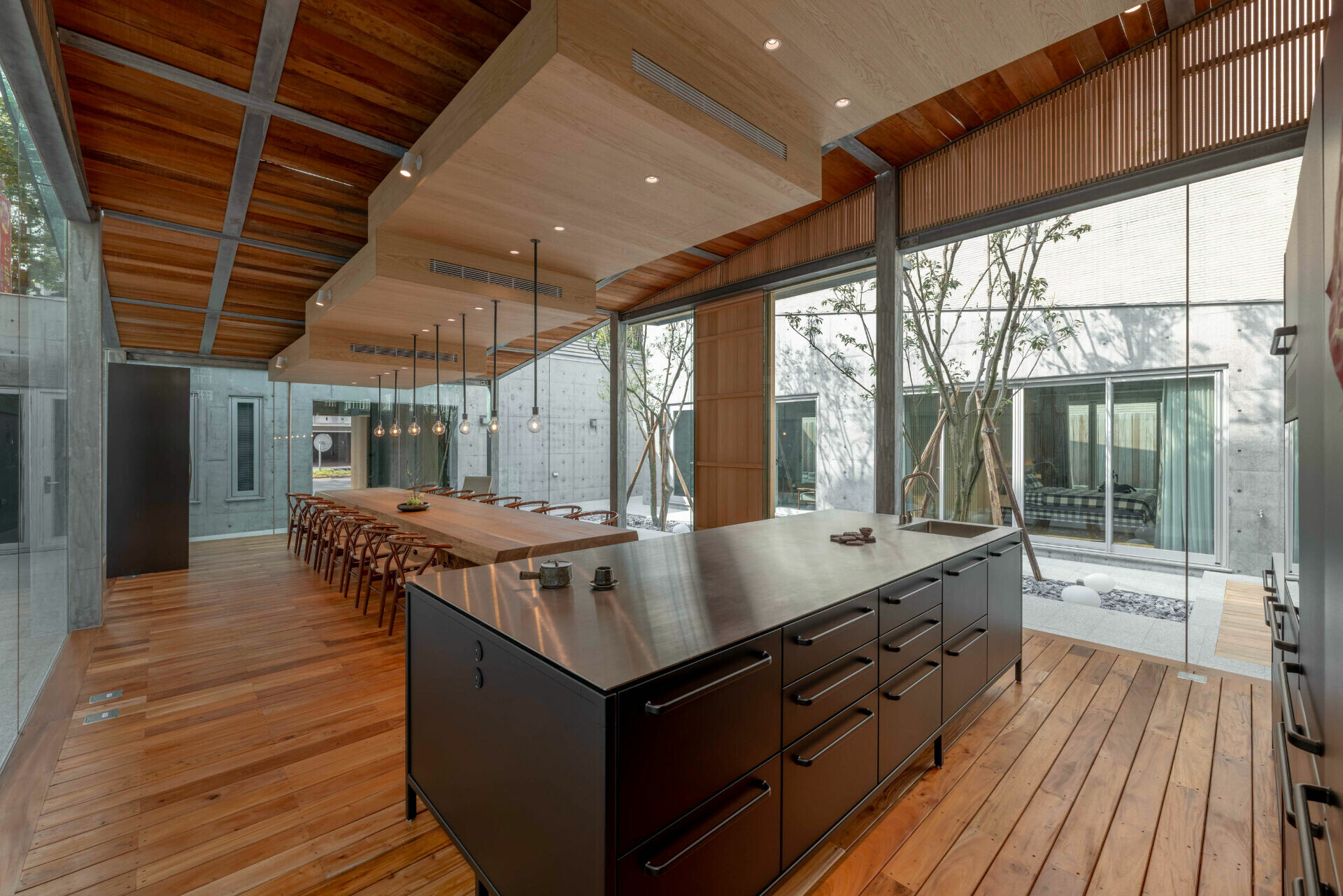
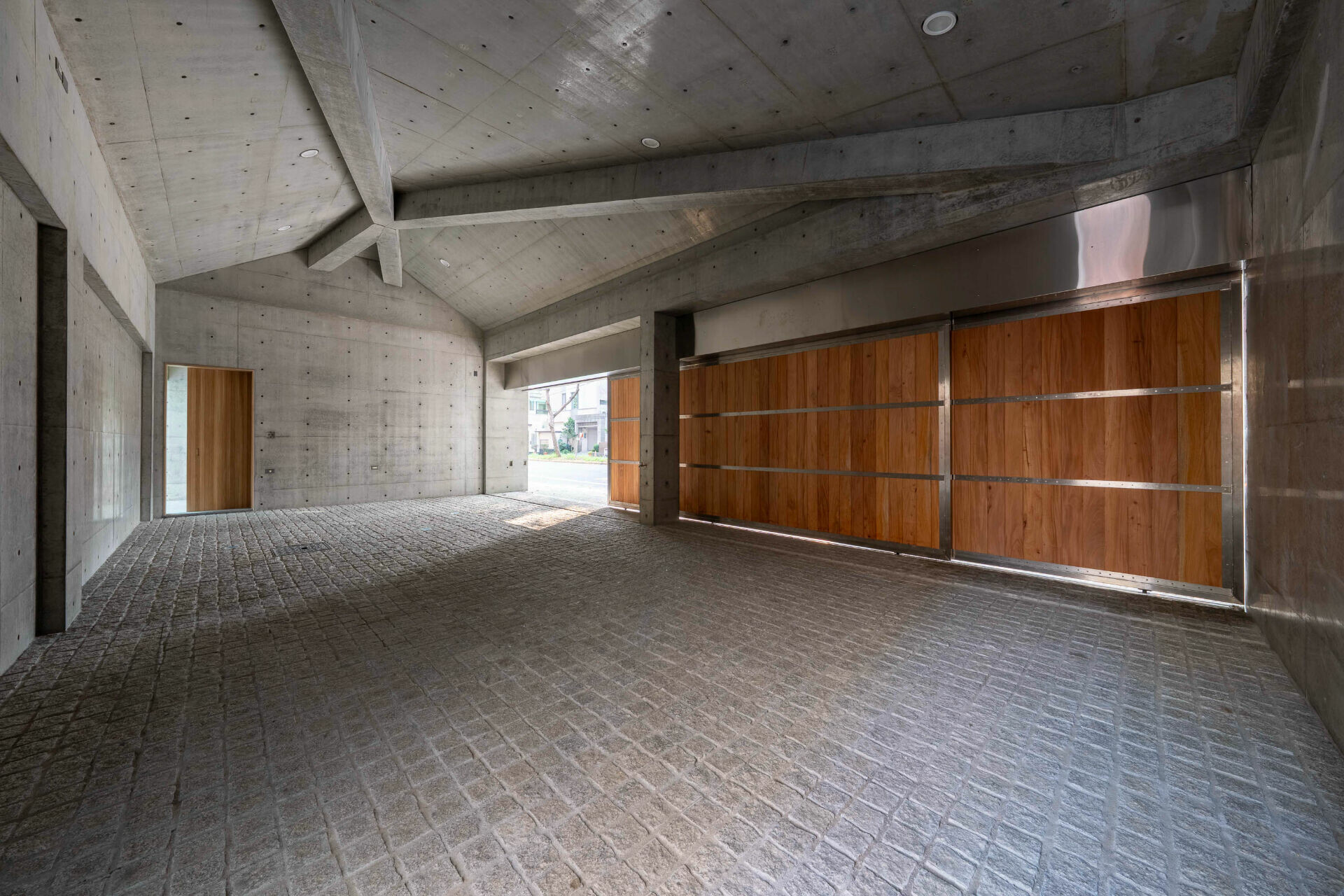
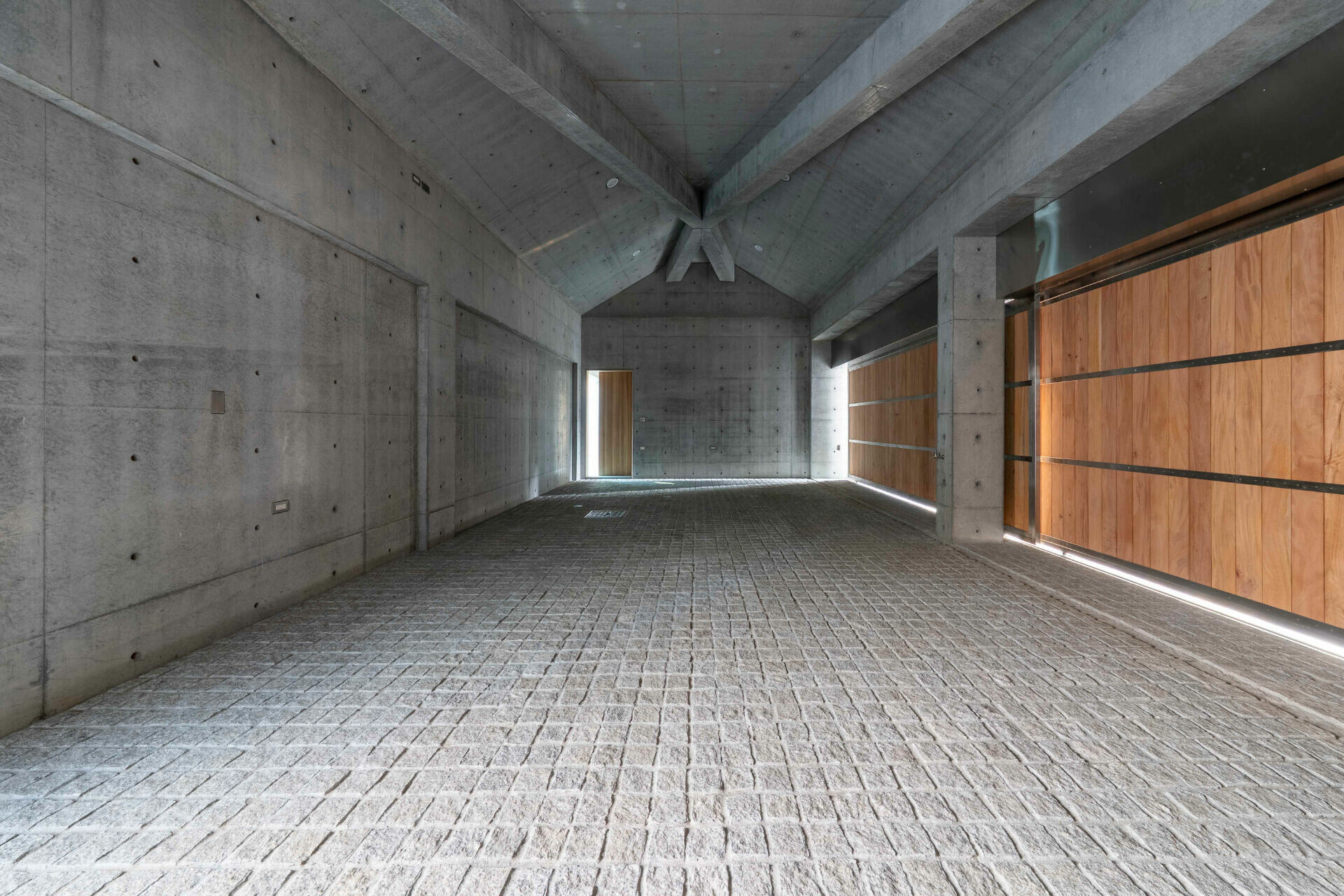
The building’s composure recalls the essence of ritual. Moving inward from the street, space transitions through layers of quiet—each threshold softening the senses. Three distinct volumes structure the plan: a garage and service wing, a communal dining area, and a private living core. Subtle shifts in roof elevation introduce rhythm and light, creating a sense of ascent and release. Here, changes in level are not mere technical solutions but a choreography of experience, mediating between privacy and gathering. Each volume stands autonomous yet interwoven, forming an independent yet unified composition.
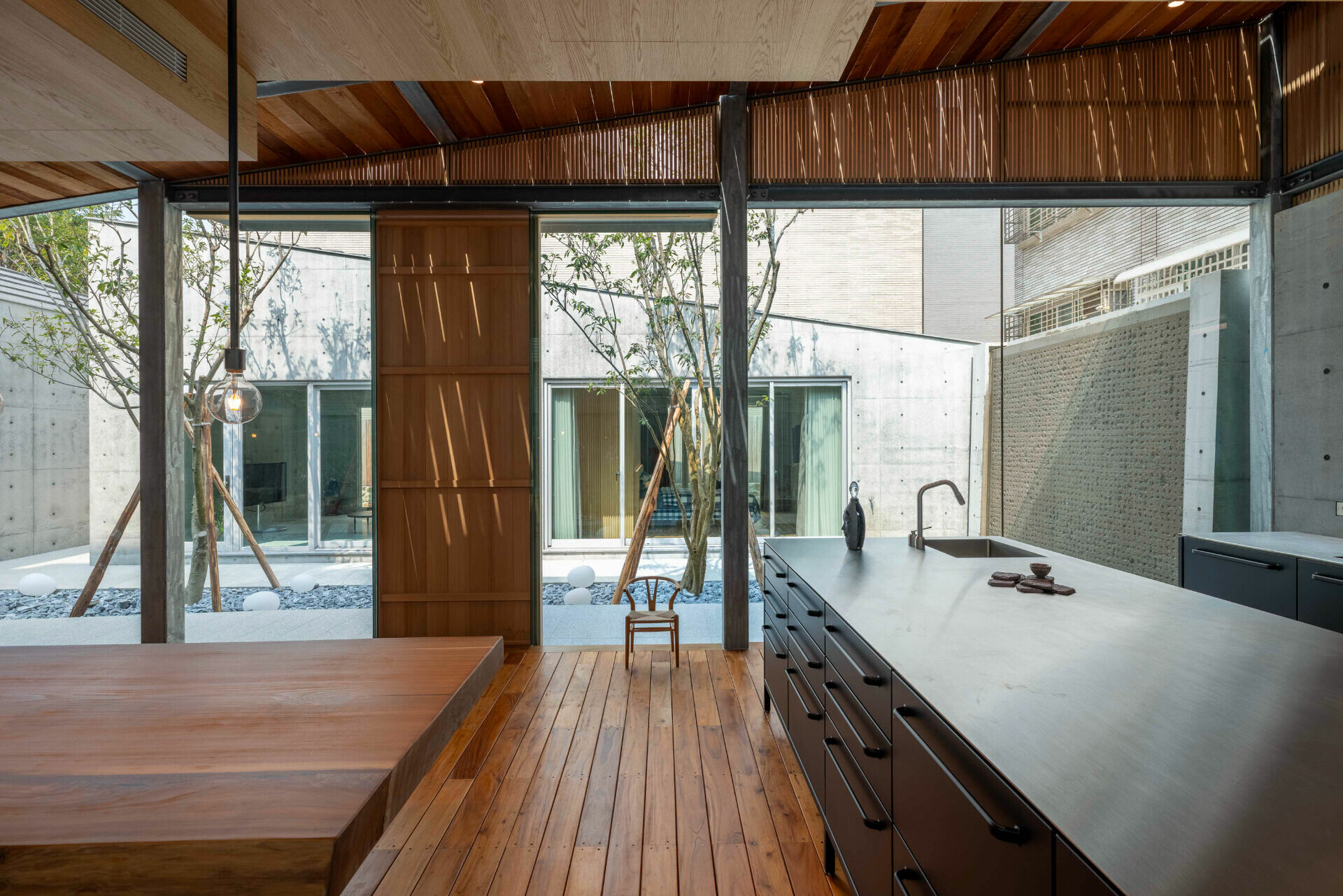
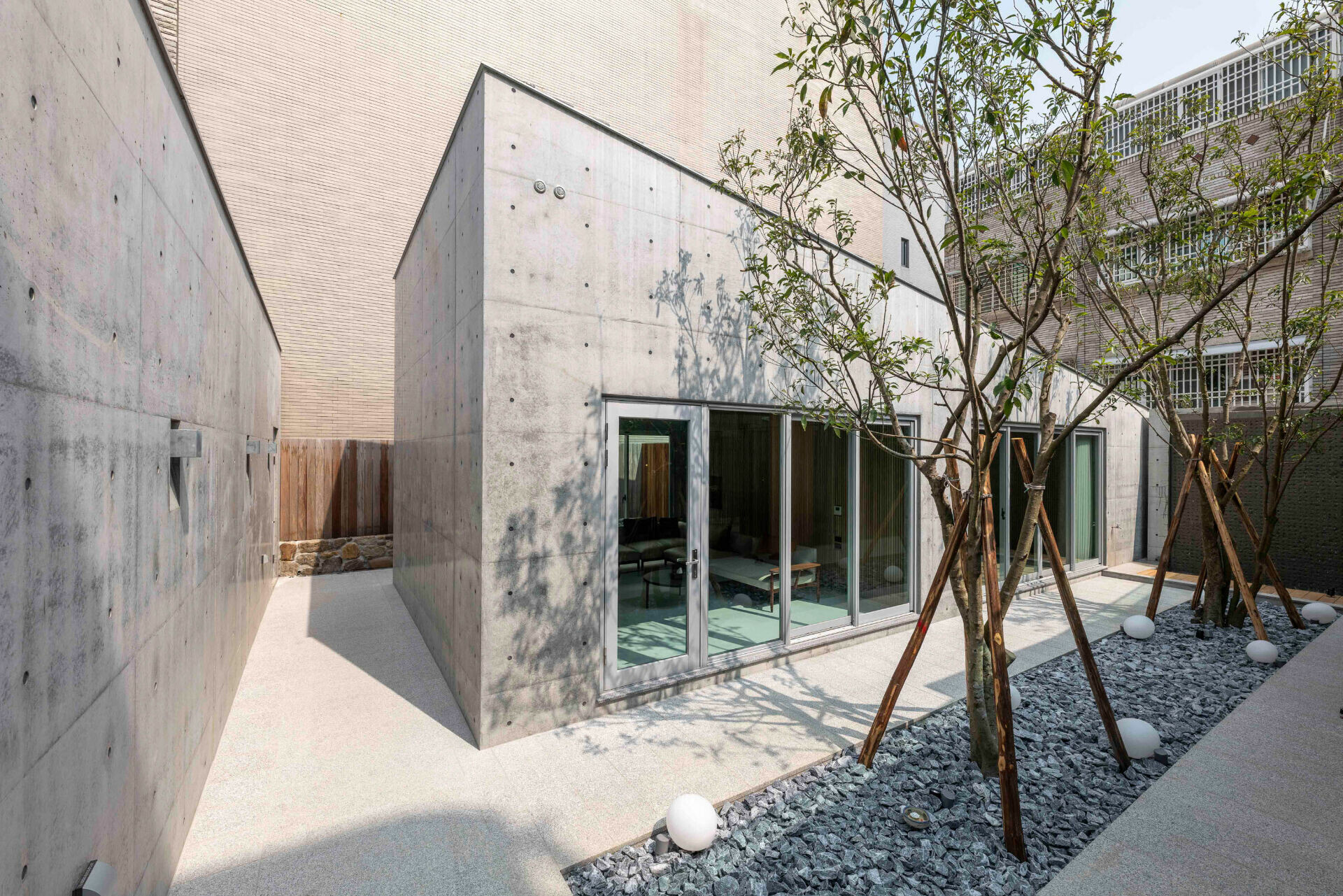
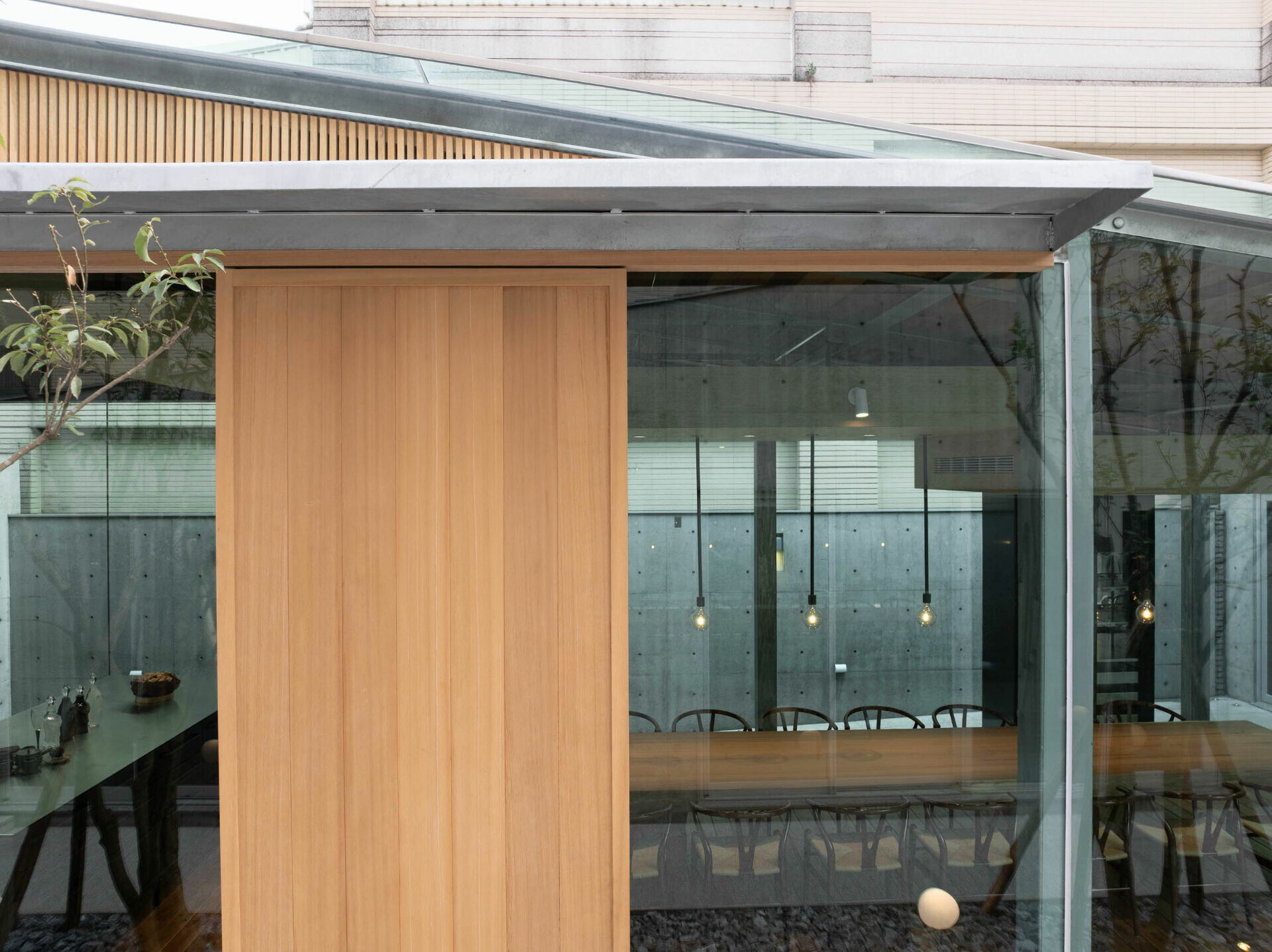
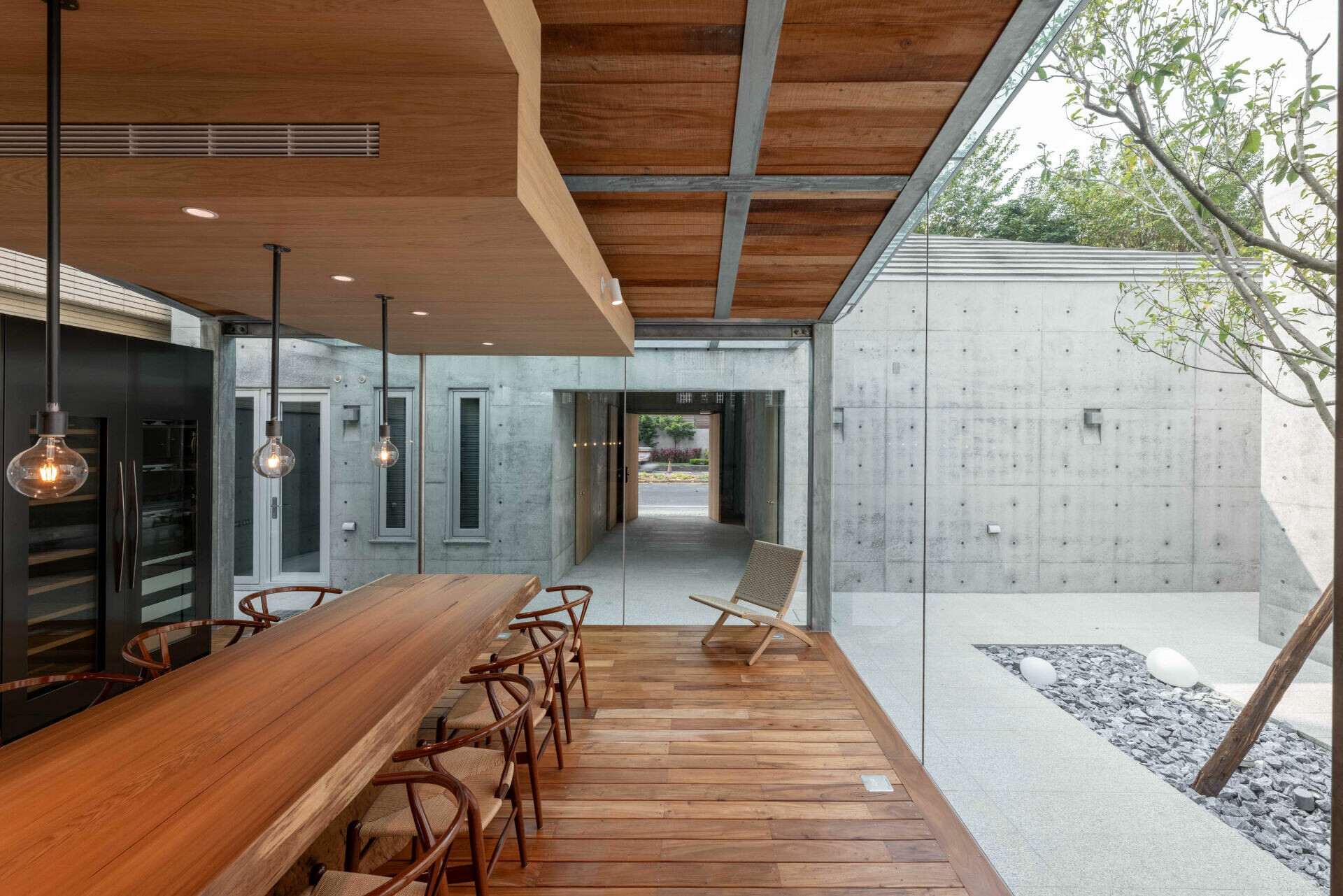
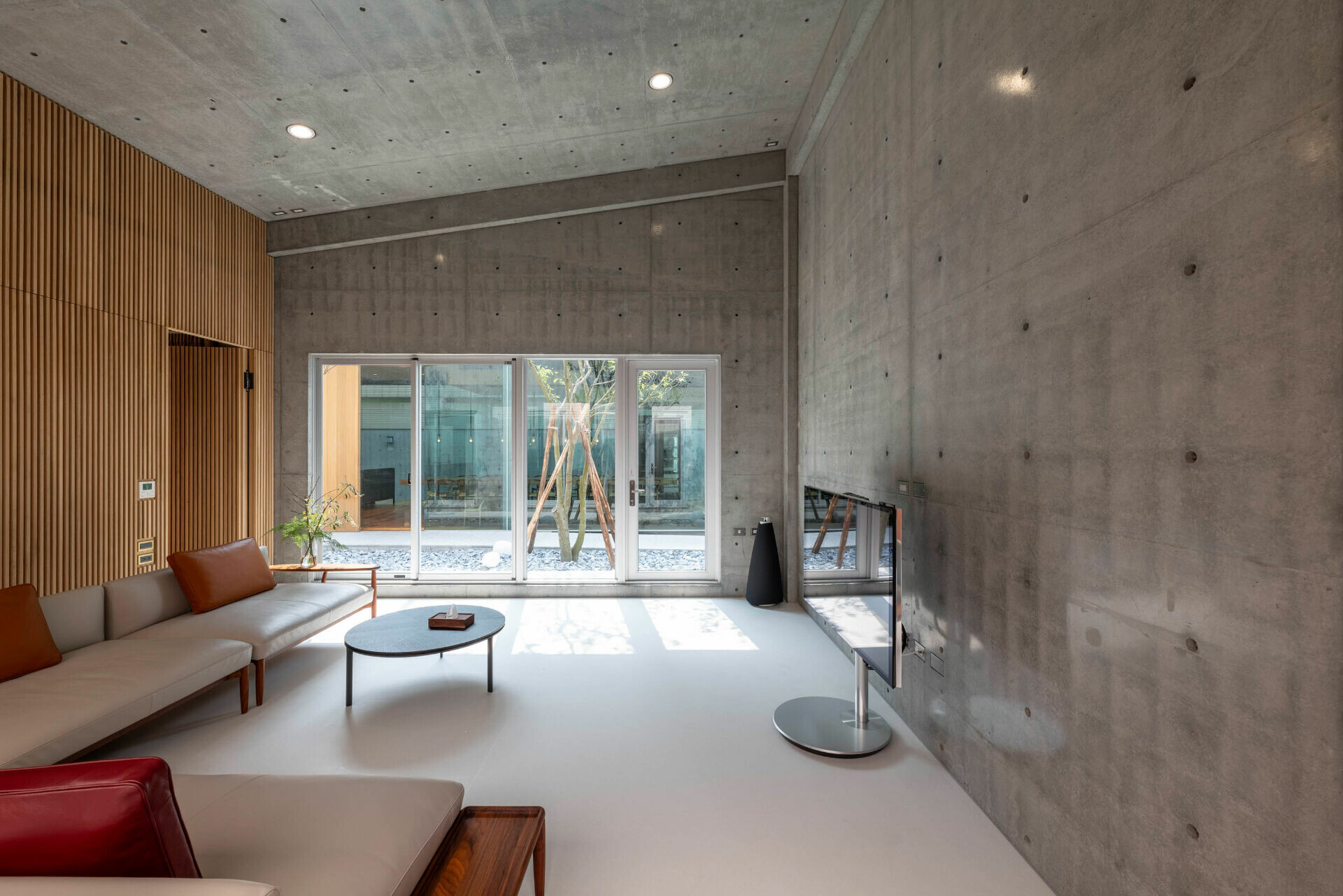
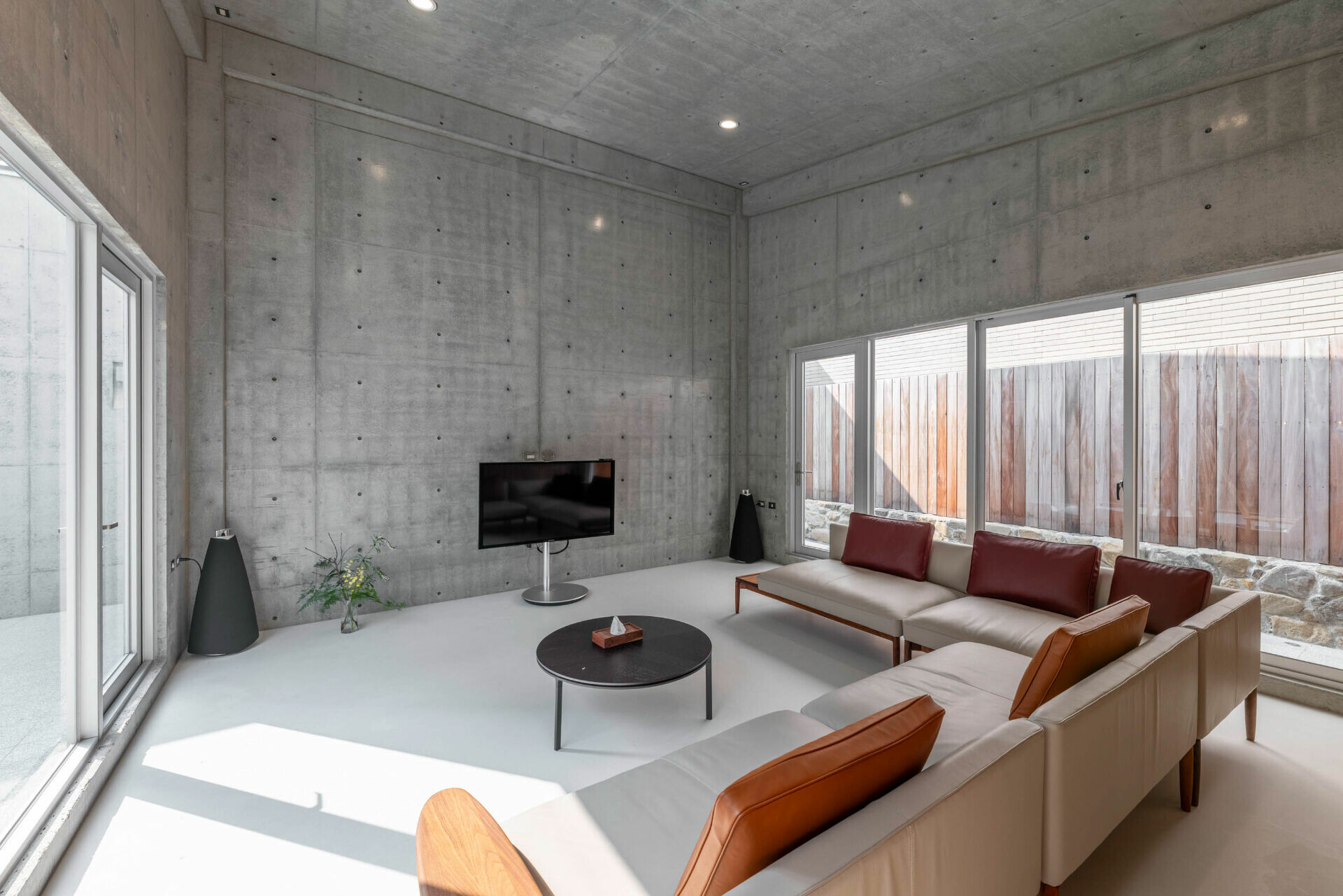
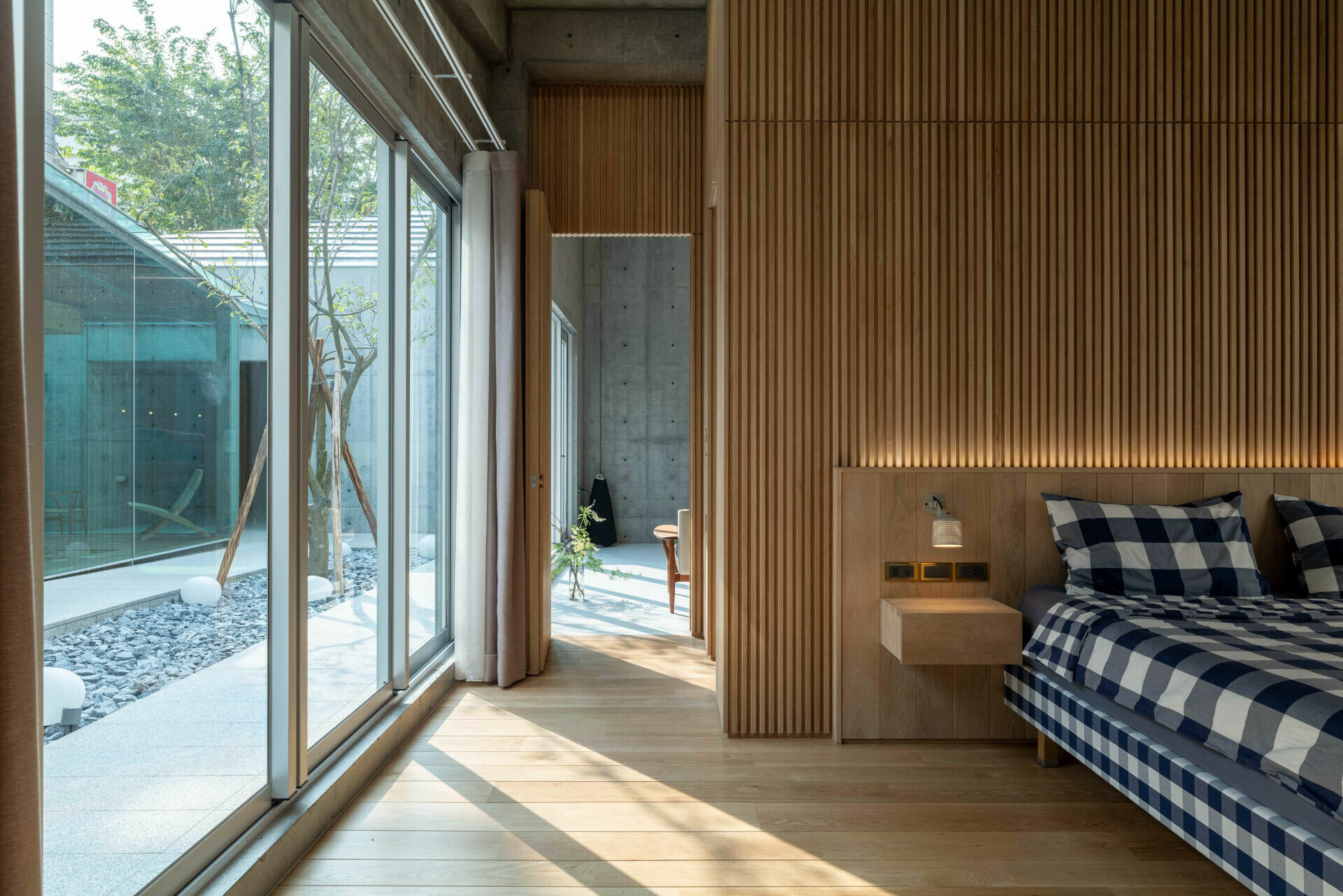
If ritual abstracts behavior, this architecture translates it into space. Building coverage constraints are reinterpreted as corridors and courtyards, allowing air and daylight to flow freely. A gentle side slope distinguishes guest and resident circulation without division. Light filters through the glazed façade and full-height openings, touching both the transparency of steel and glass and the density of concrete. Shadows move gently across surfaces, dissolving boundaries while preserving dialogue between interior and exterior. Viewed from above, the composition mirrors the order of ritual—precise, proportionate, and dignified. Through contemporary geometry and material tactility, the house expresses an enduring idea: hospitality not as display, but as balance—an architecture of grace that knows where to stand firm and where to yield.