Flow
Tucked into a narrow urban lane, this music studio began with the client’s first encounter with a house already more than three decades old. On that visit, no electric lights were used. A faint, diffused daylight was all that entered the quiet rooms. As brightness thinned into shadow, the space settled into a Zen-like stillness, as if its internal tempo had slowed. The air felt soft, almost hushed. They found themselves walking more gently, letting his senses adjust to the dimness and searching for a deeper beauty within it. Through a window, a side courtyard appeared. A swath of green moved in the breeze and, against the subdued interior, felt vividly alive, shaping an atmosphere of effortless repose. Something in that scene touched them, and they began to imagine their everyday music practice taking root here.
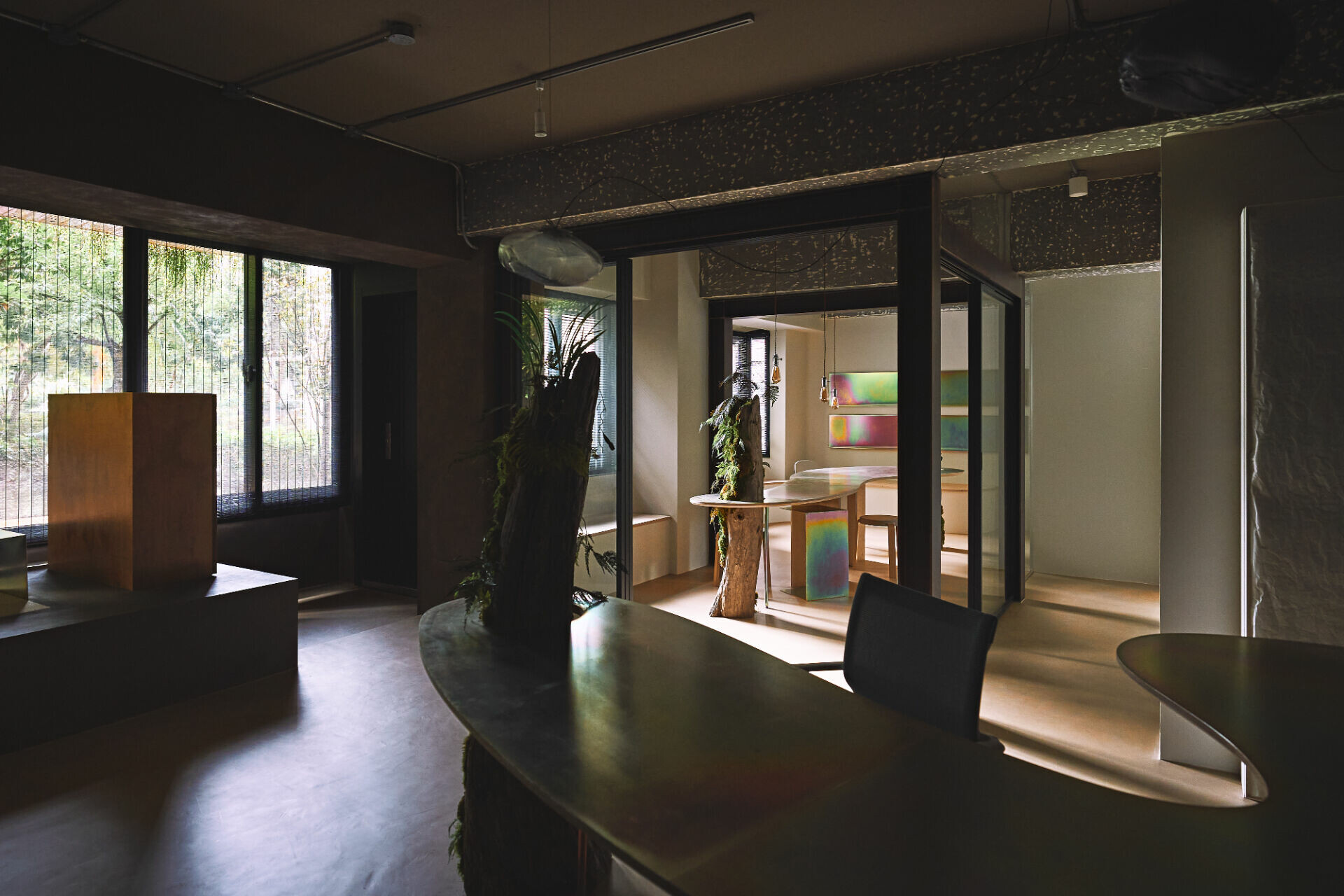
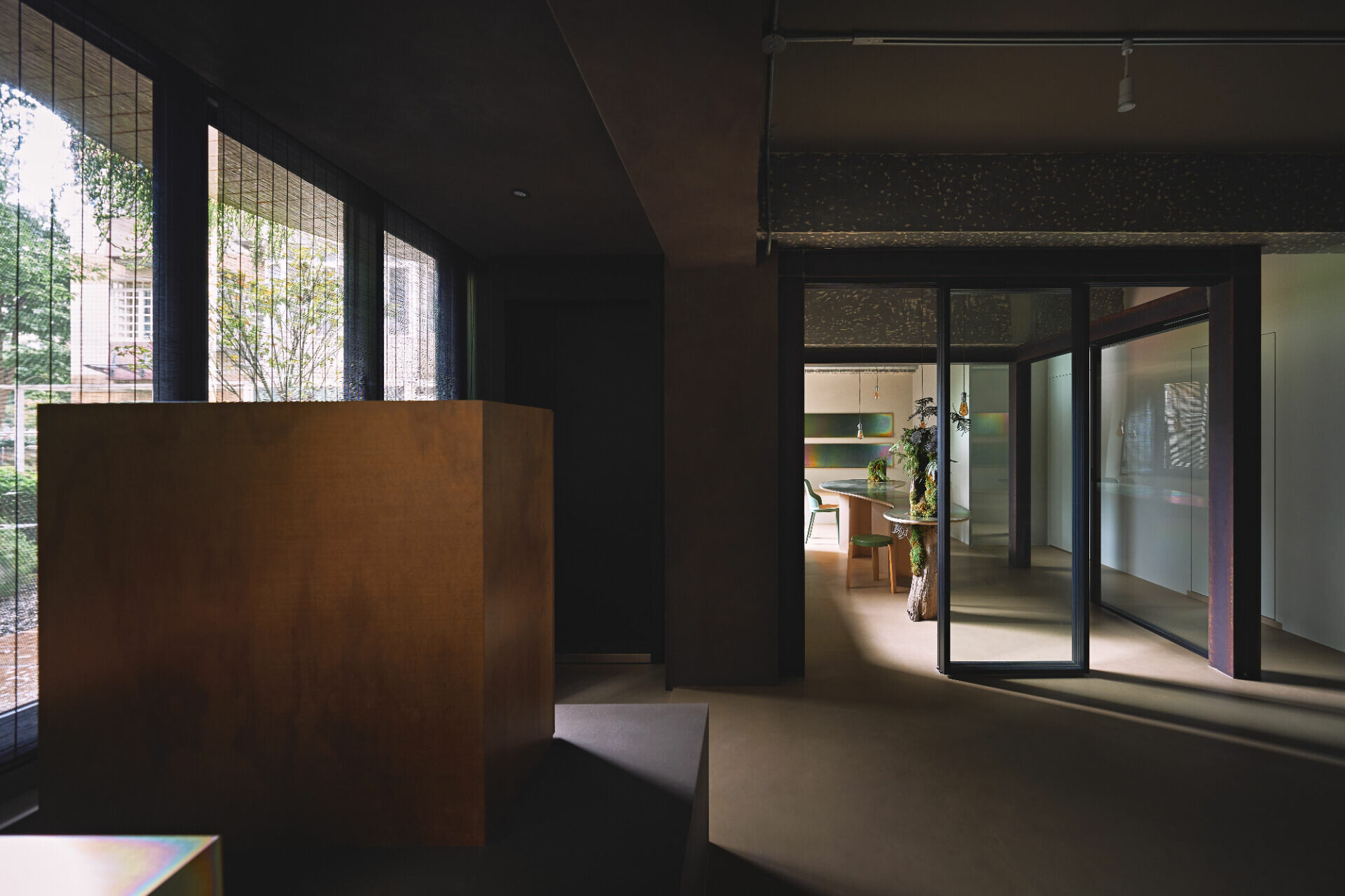
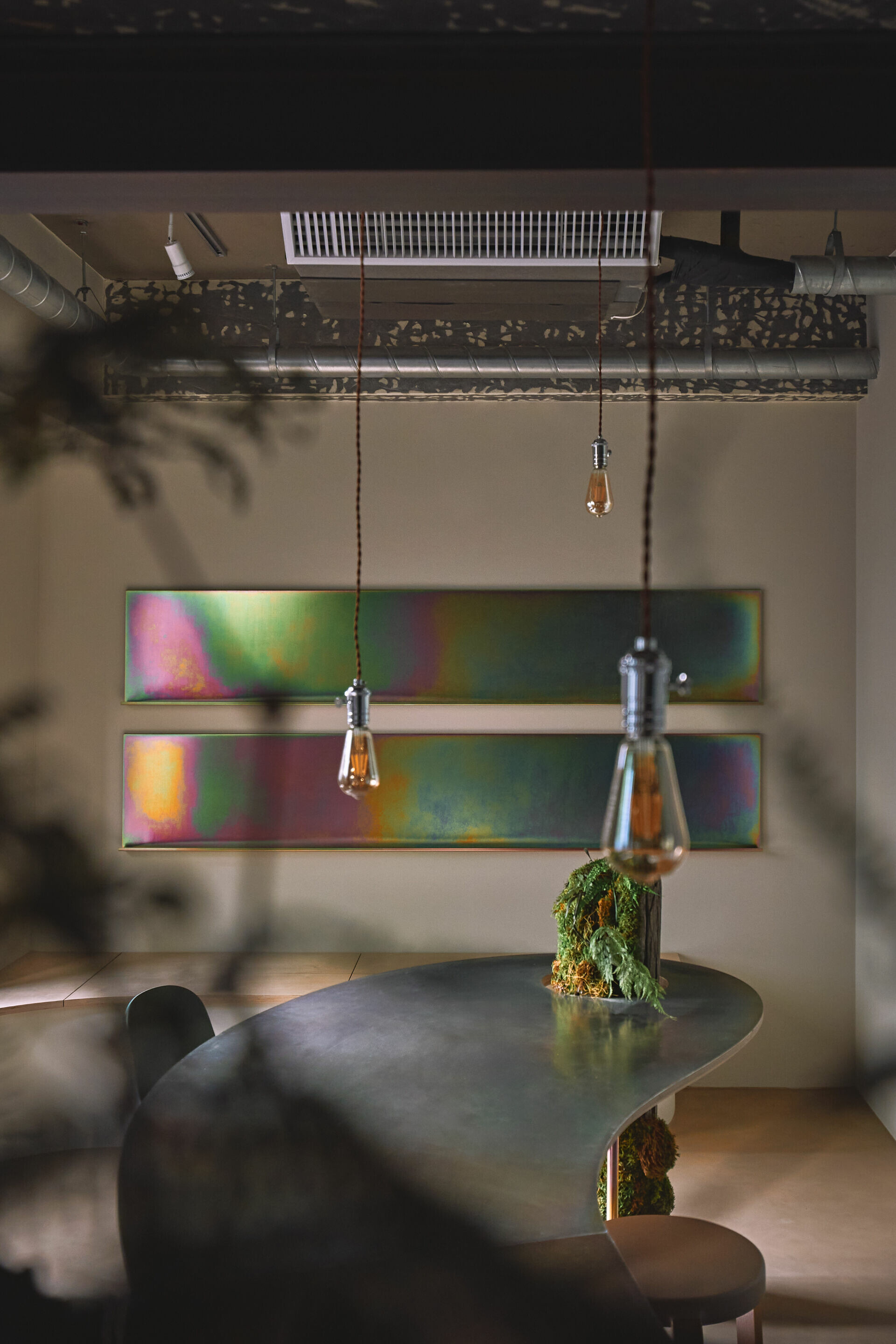
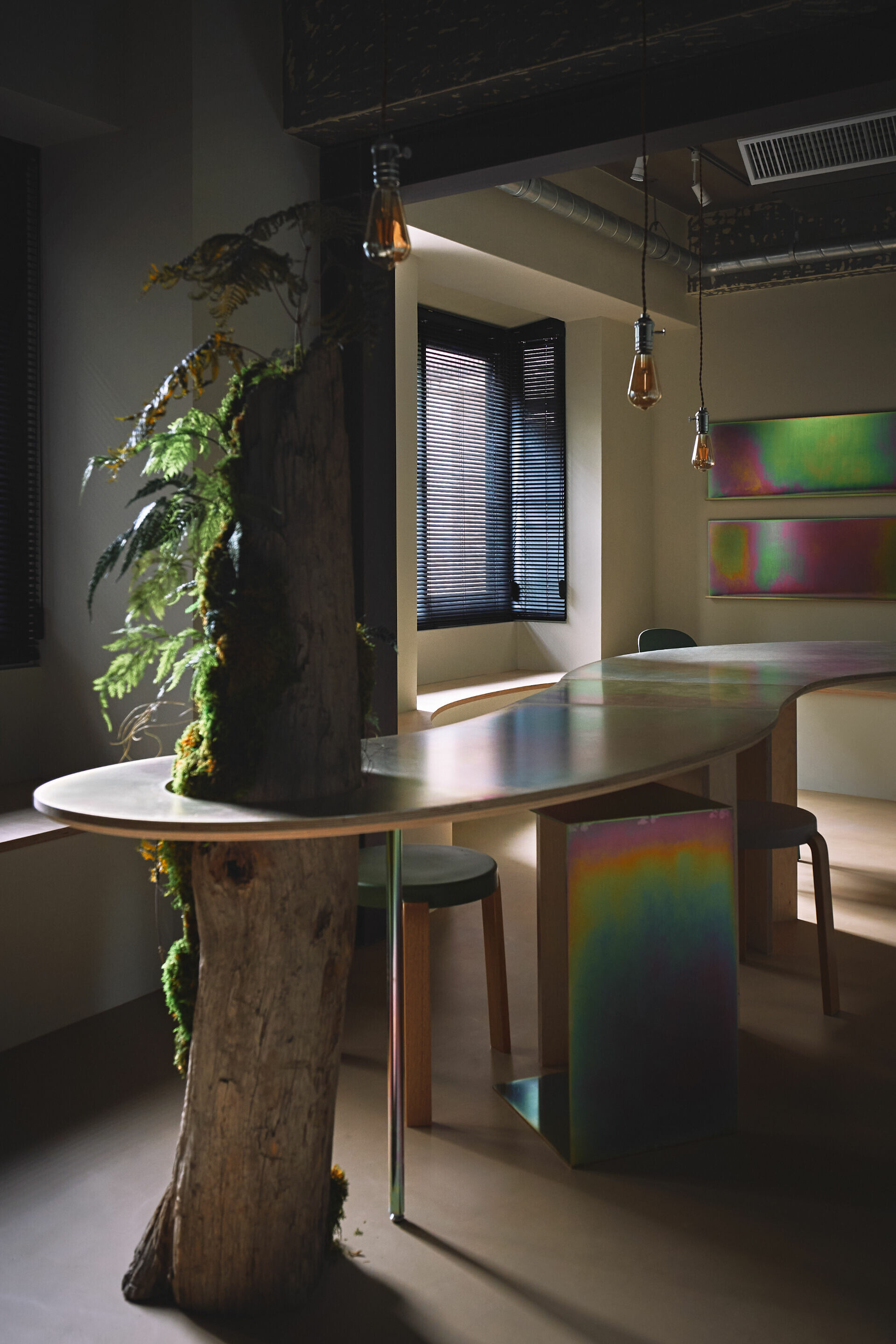
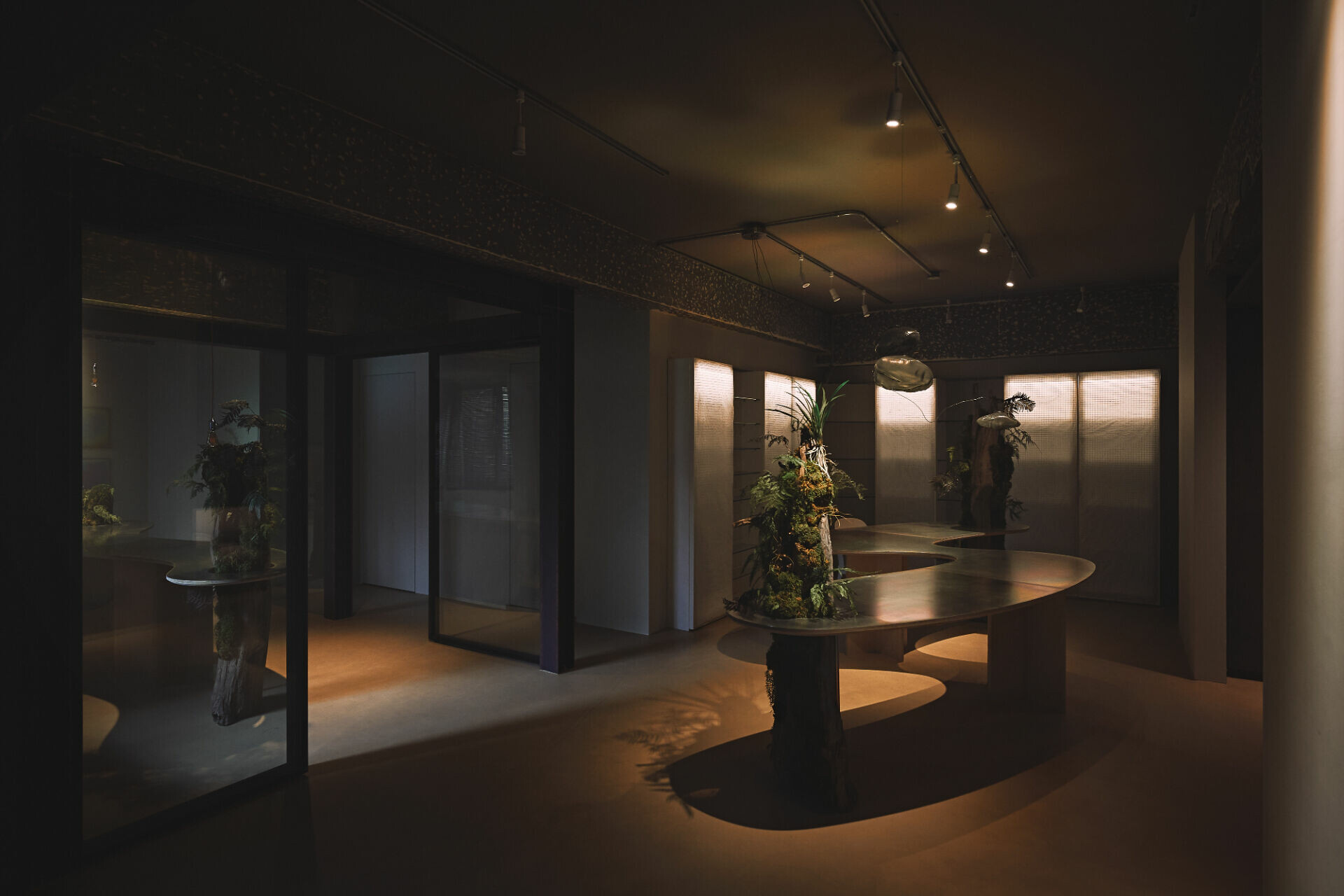
Architect Zhang, who was designing the client’s residence at the time, joined him to survey the ground-floor unit in an older building. Daylight was modest, yet the space carried a calm, unhurried temperament that felt right for creative concentration. But its previous life as a conventional home imposed limits. A studio needed greater openness to host collaborators from different disciplines, while still allowing one zone to become more discreet for meetings and discussion. He removed selected partition walls to regain a broad, open plan and allow the building’s original structure to read clearly again. Circulation was reworked, and interventions were kept to what was strictly necessary: limited steel framing and clear glass partitions. Furniture defines each zone without dictating a single mode of use, allowing people to drift between seats and settings and letting ideas expand through conversation rather than a fixed arrangement. With materials and forms deliberately restrained, soft light can travel across understated surfaces, walls, and floors. The space’s inherent airiness returns, and the mottled traces of light and age lend a quiet poetry to what remains.
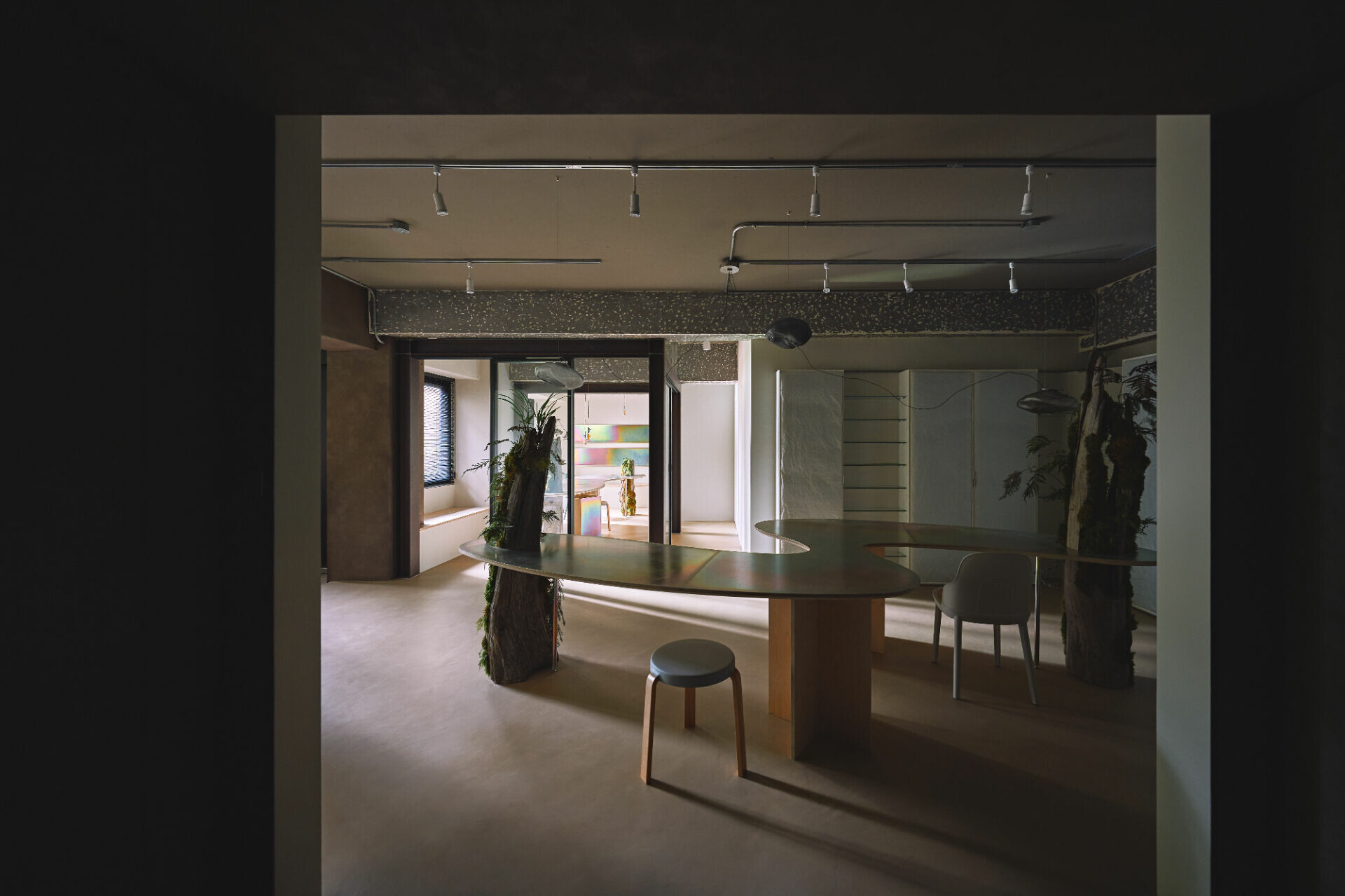
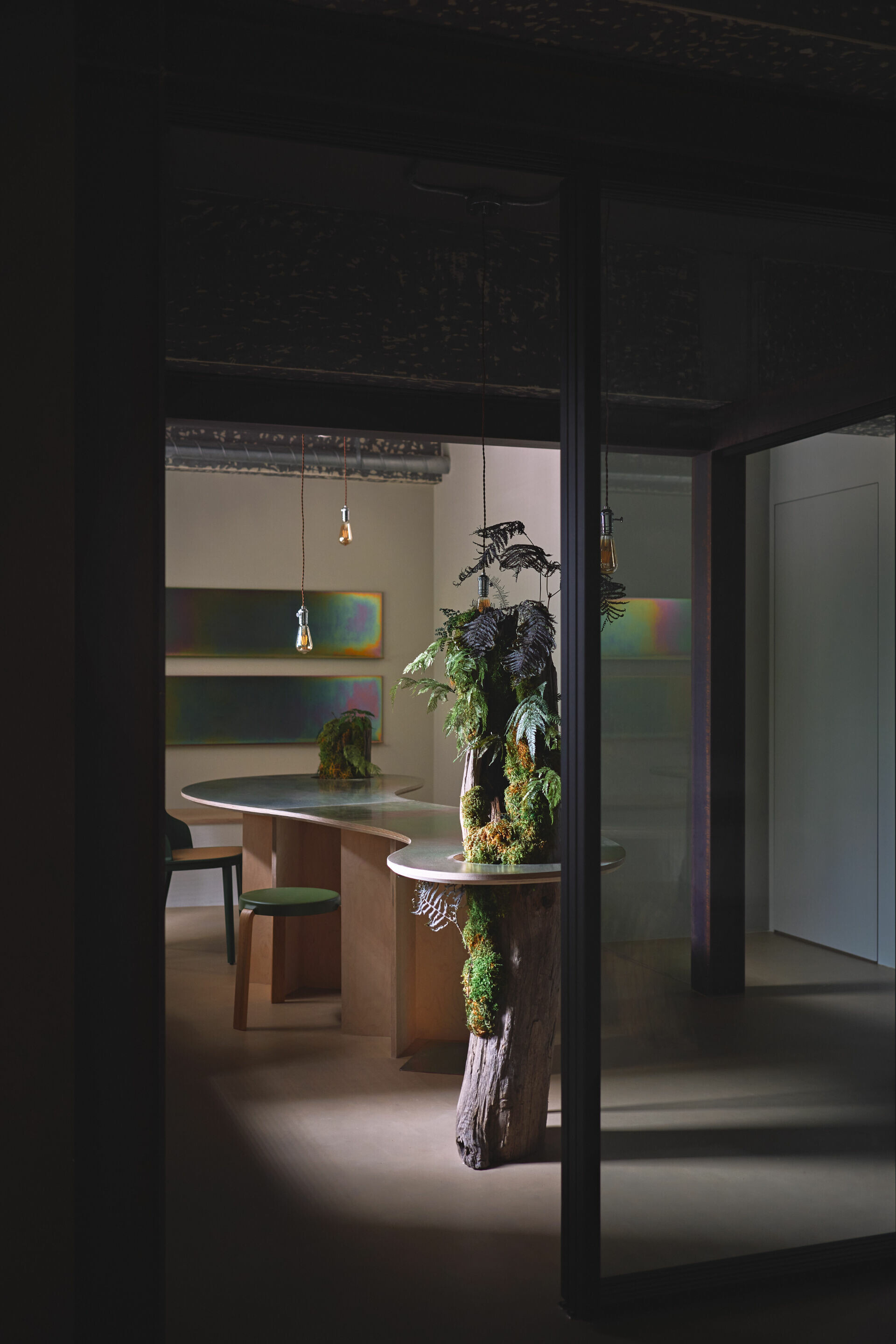
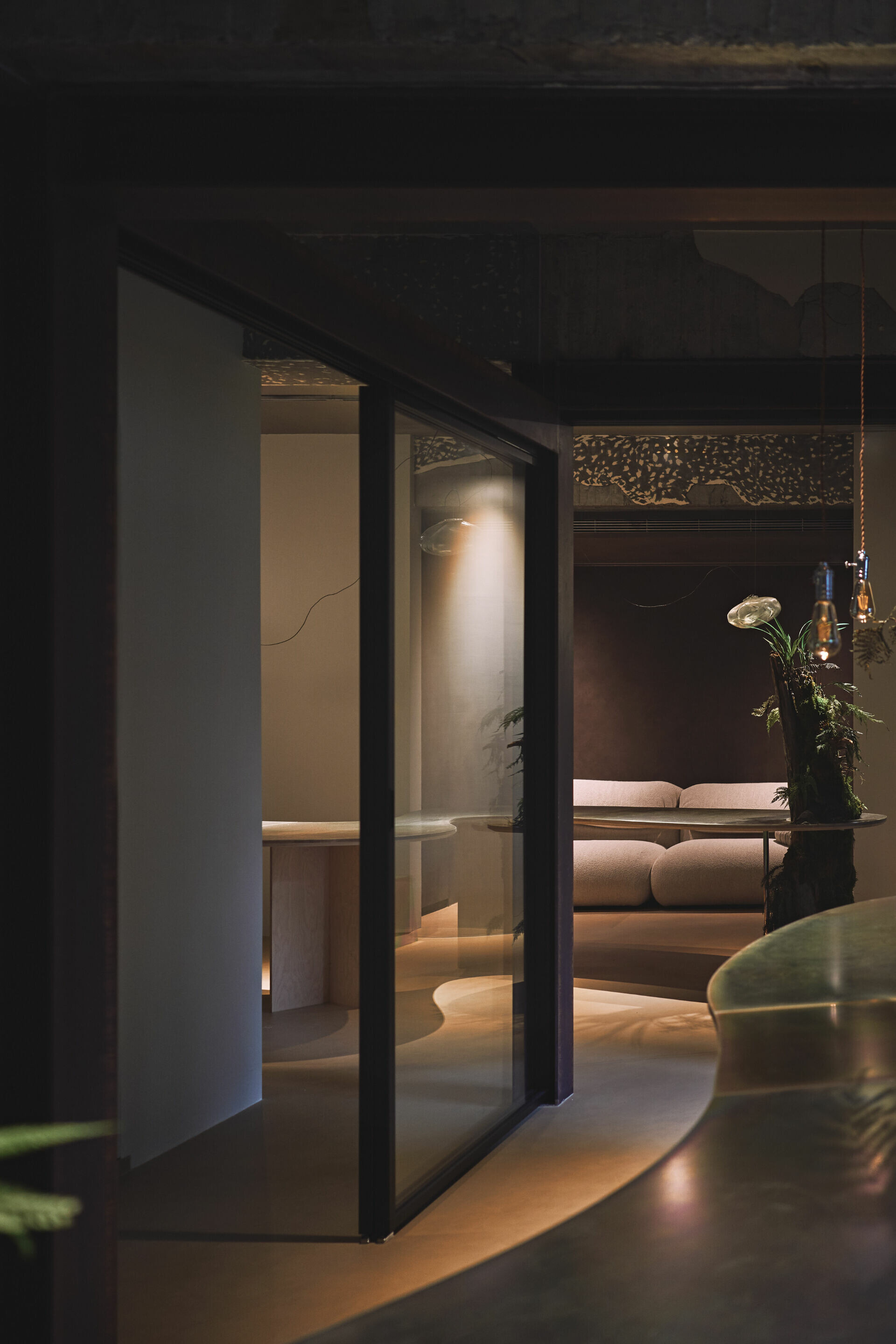
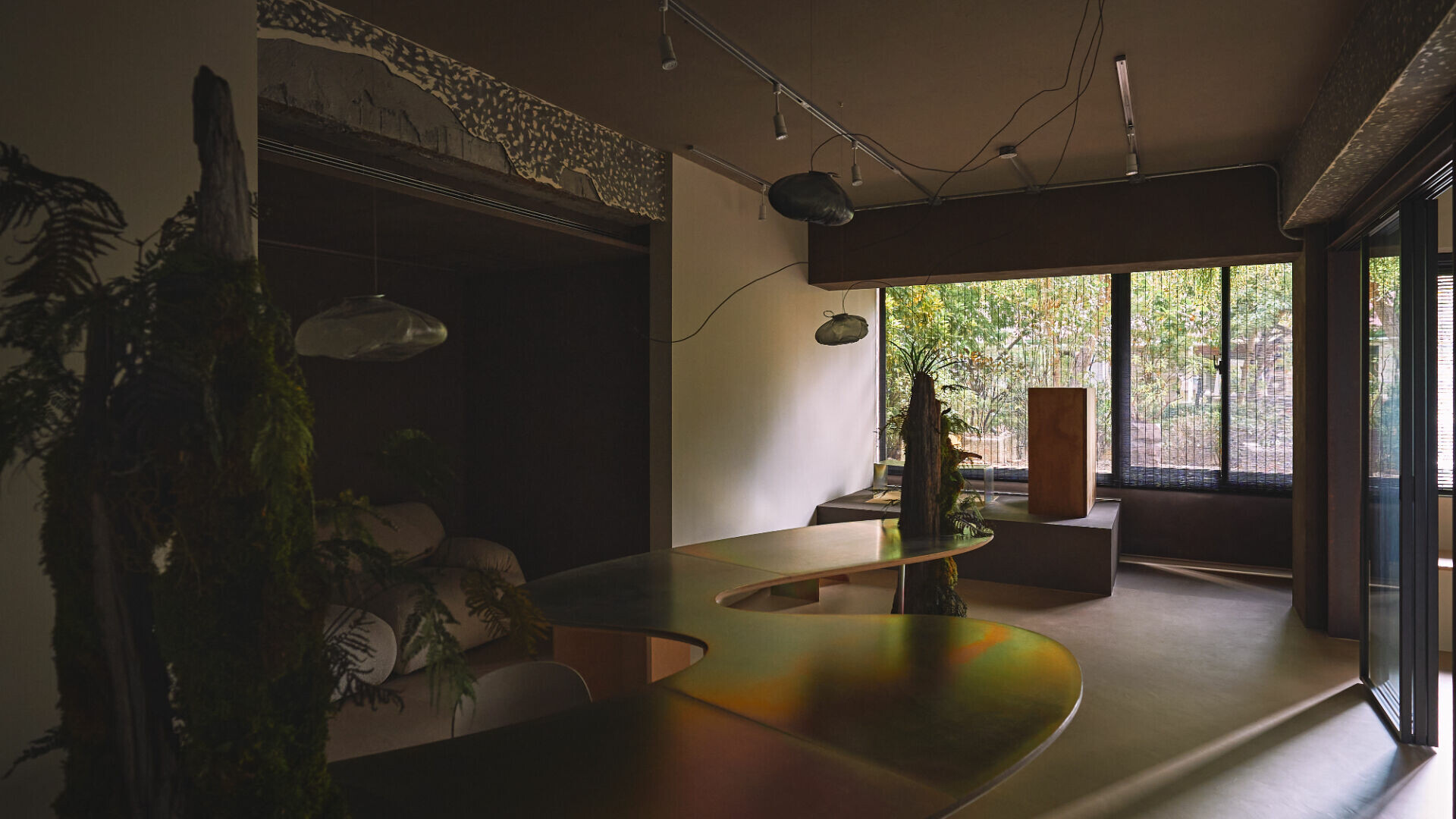
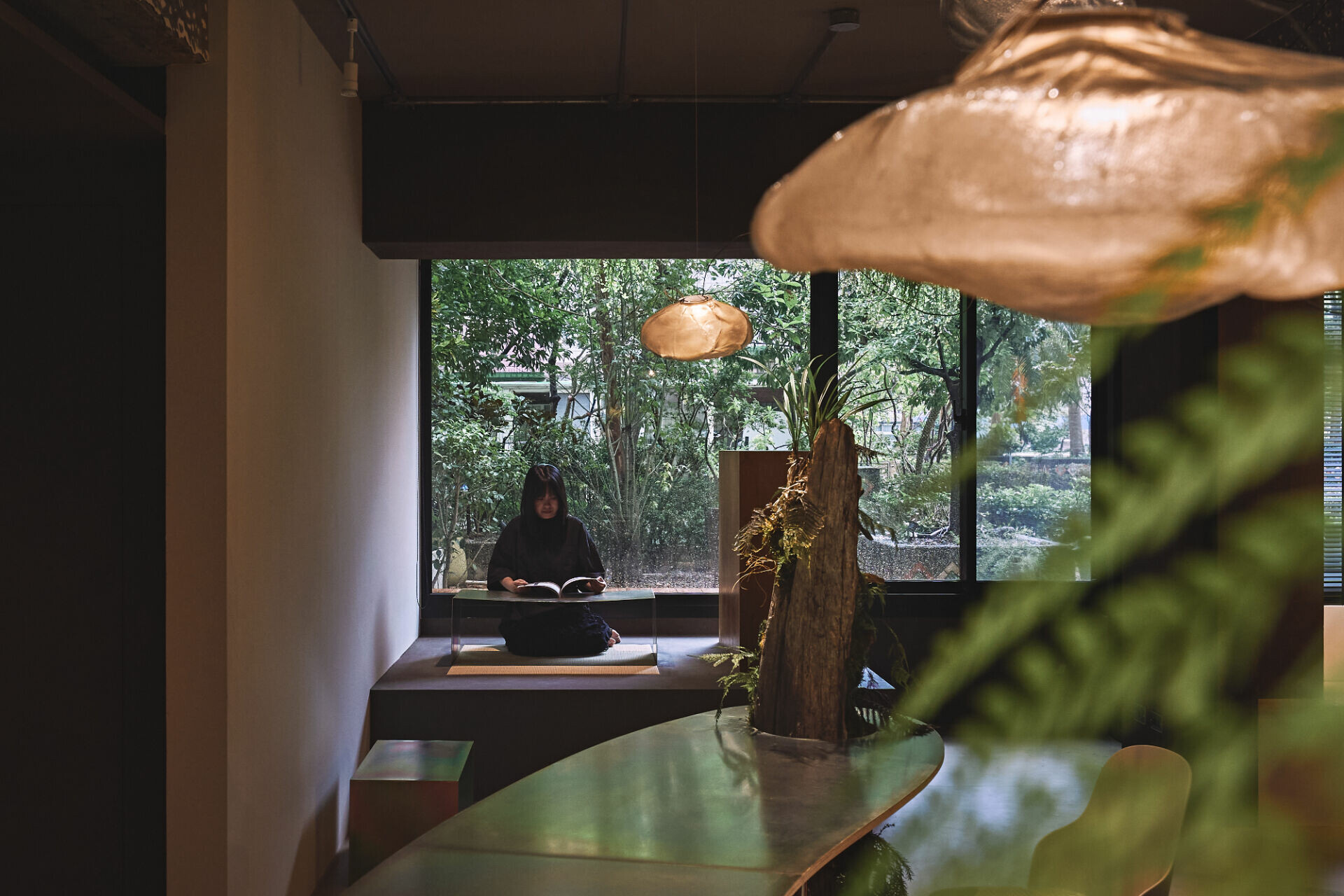
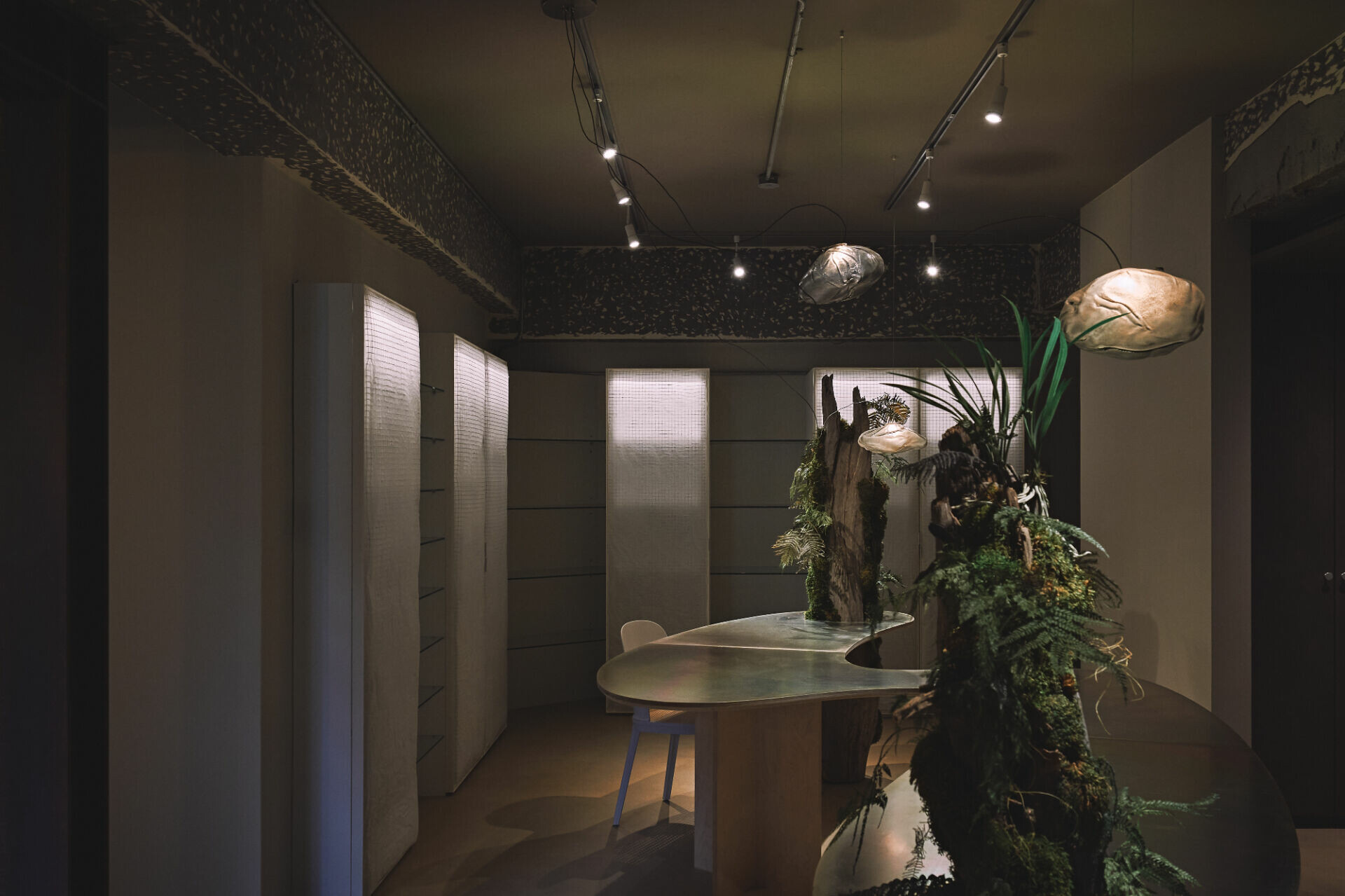
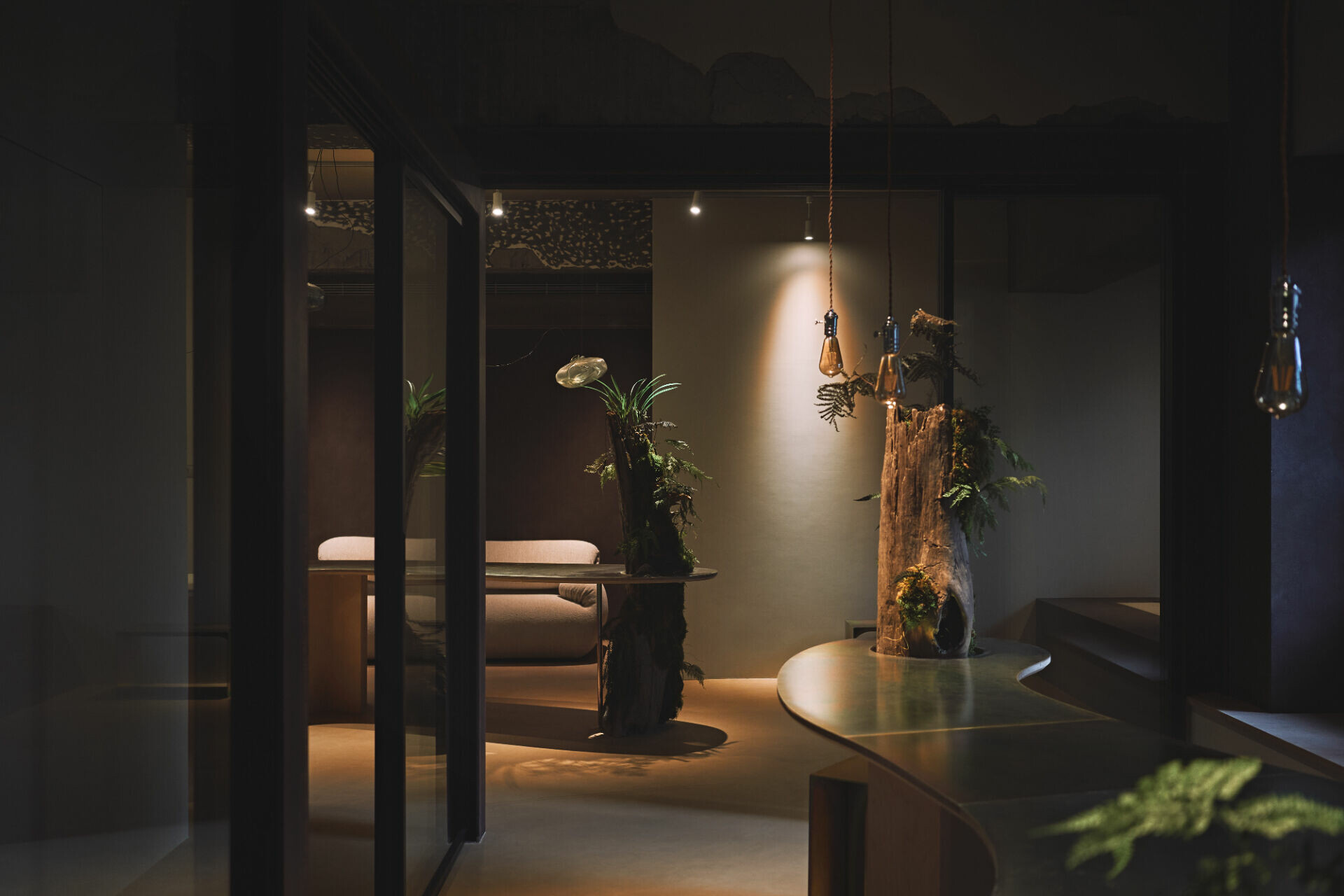
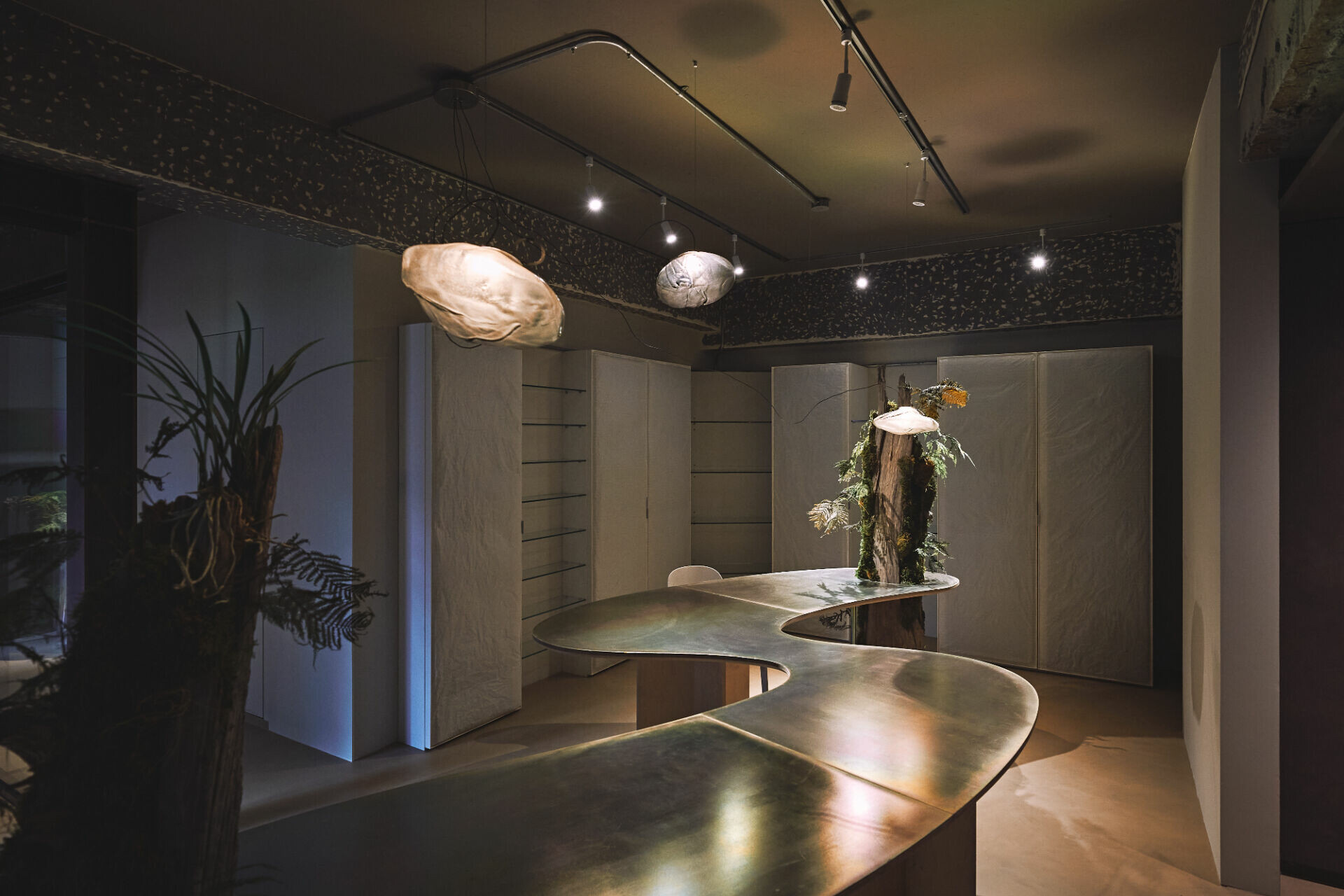
Because the rear garden was the client’s first and deepest point of connection, the entry sequence was shifted from the front door to the back. On the courtyard side, the window opening was extended slightly downward, drawing more greenery into the room. Bamboo blinds temper the light into a subdued haze, so the garden arrives like an image on canvas, quietly absorbed into the interior. Two timber worktables, drawn by hand and shaped into sinuous forms, anchor the studio. One sits in the generous communal area; the other is set within a glass-enclosed room. When daylight falls onto the electrogalvanized steel-sheet tops, the surface catches it like late sun on water, shimmering into iridescent tones. At either end, arrangements of weathered deadwood embellished by plant artist Hao-Che Liao do more than support the tables’ generous span. They read like trees along a river basin, completing the suggestion of an ink-wash landscape. Behind the work area, the storage wall introduces another register of craft. Woven metal mesh is shaped into a subtly undulating relief, then overlaid with thin, crinkled hemp paper to form the cabinet fronts. When light glows from within, the cabinets take on a lantern-like softness, emitting a warm white that echoes an Eastern sensibility of restraint and quiet grace. Between them, open display shelves present the client’s CD collection with ease.
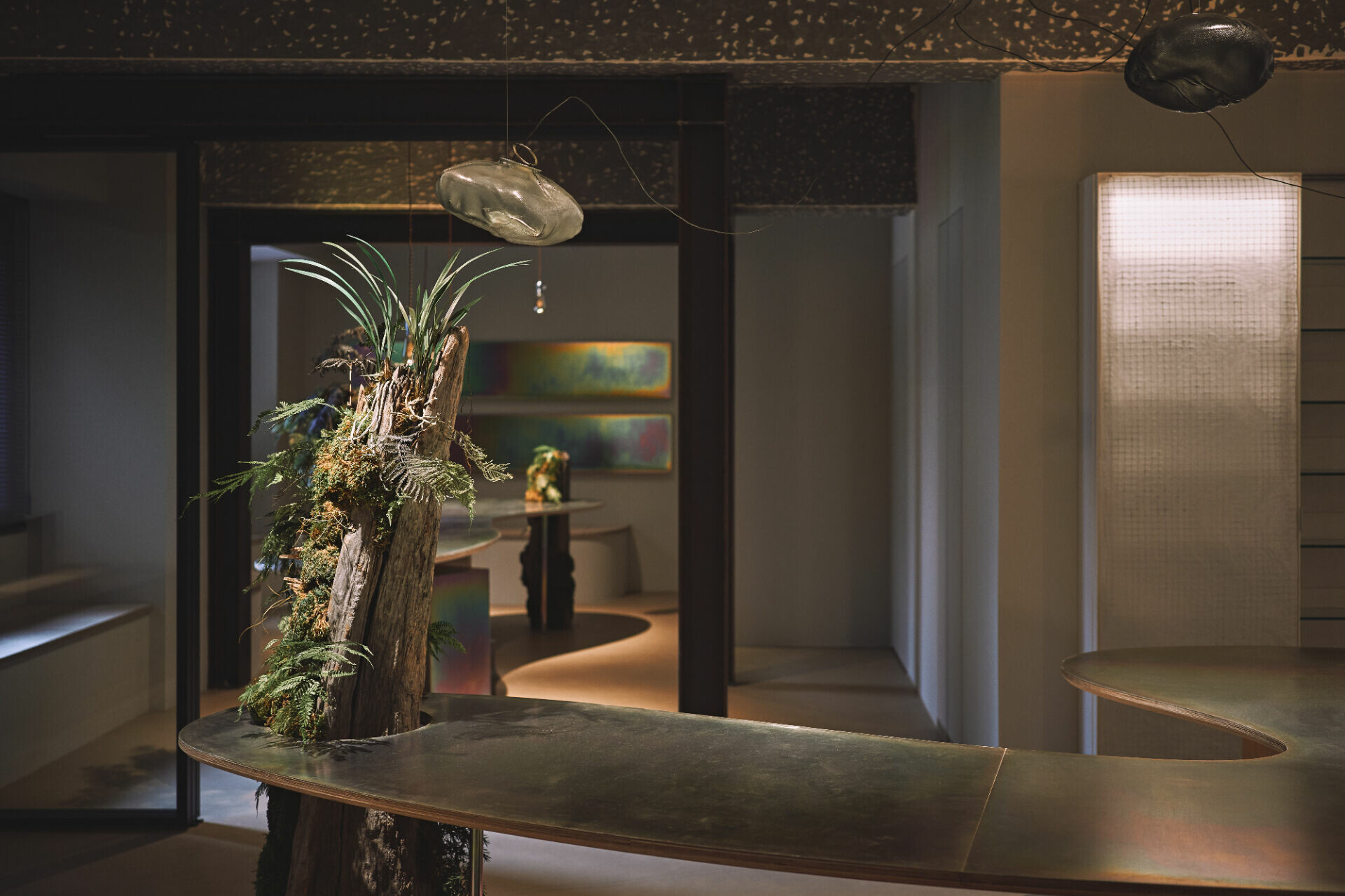
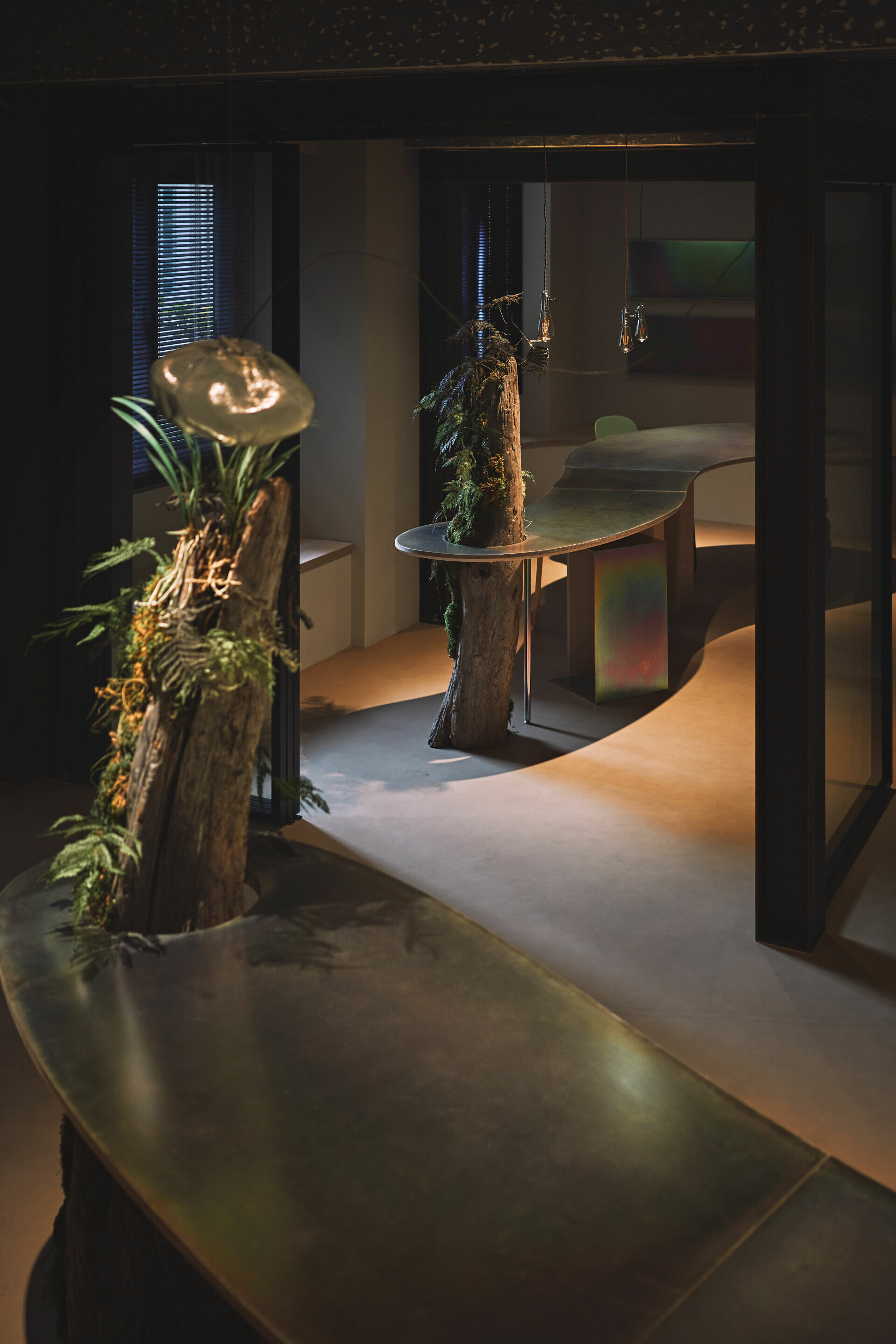
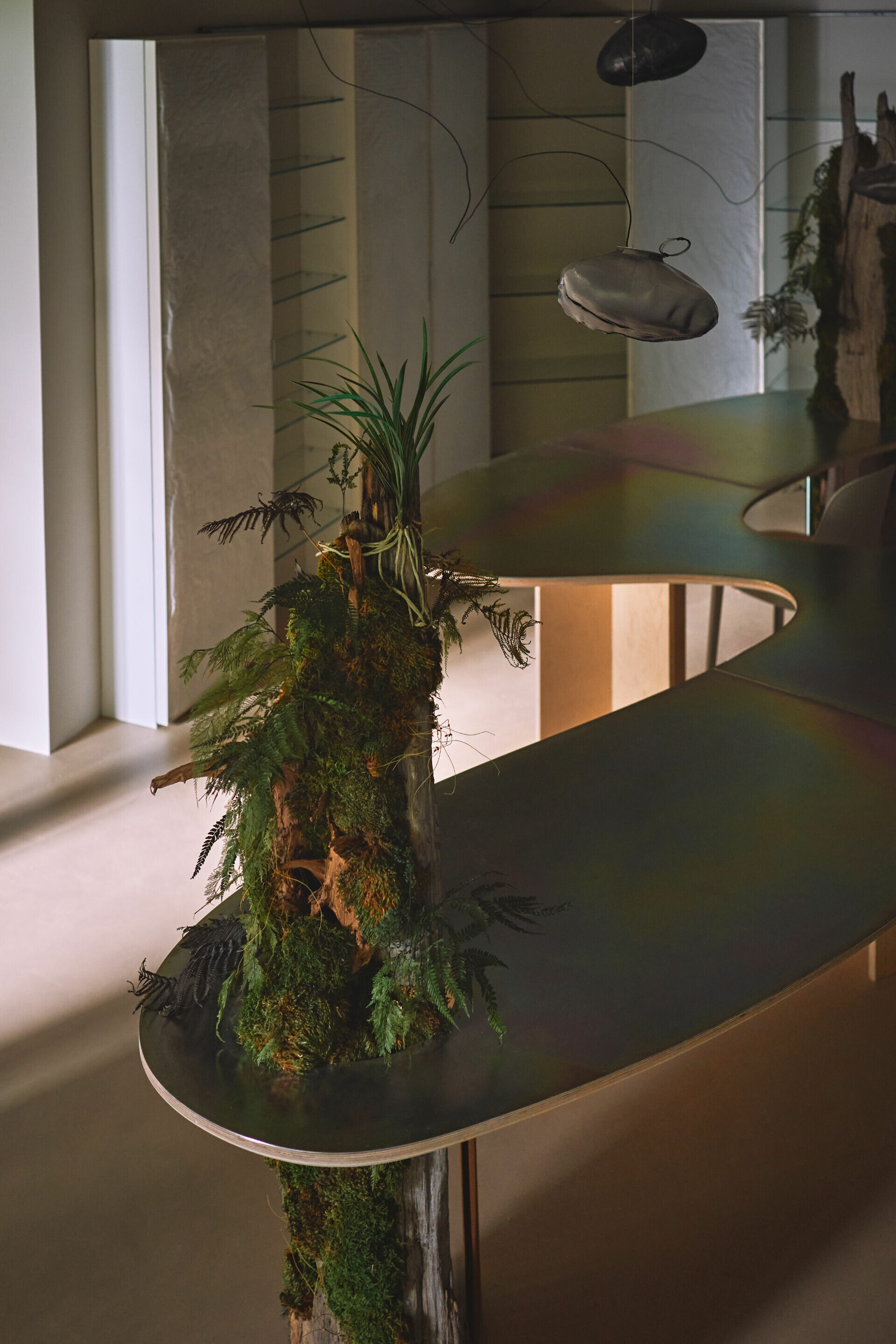
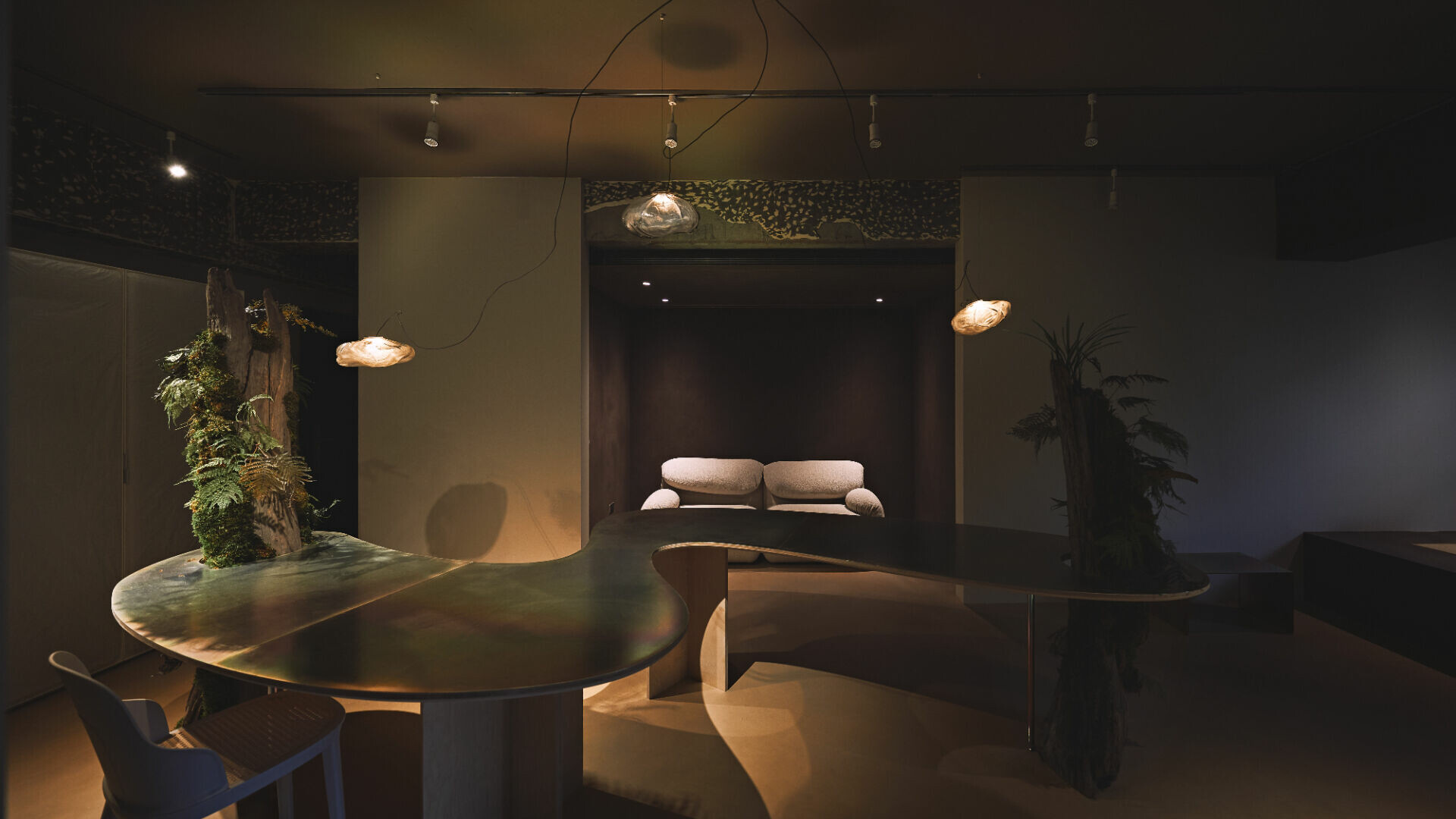
In the amber hours of afternoon, you might sit on the daybed by the entry vestibule, its surface carrying a soil-like tactility, reading through notes in hand. Every so often, you look up at the tables’ flowing lines, the shadowed sofa nook tucked into the existing kitchen, the sheer glass screens, the walls bearing time’s patina. The harmony of the scene steadies the mind. Here, Eastern references are not applied as ornament onto a Western framework. They arise naturally from an atmosphere woven of shadow and softened light, offering those immersed in daily work a rare stillness, even as the city hums just outside.