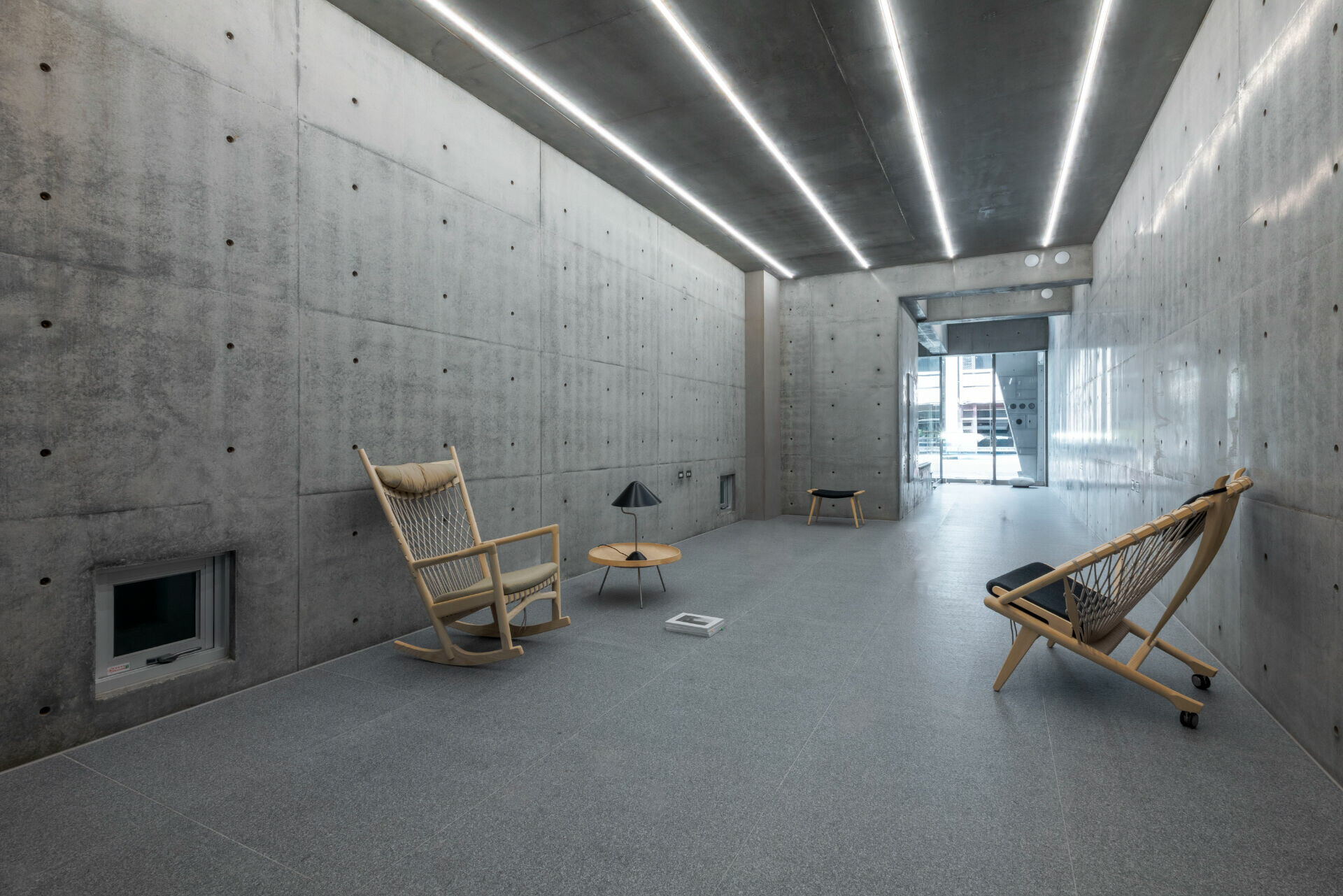
Jinhua Road Commercial Space
If architecture is the rugged emptiness of a backdrop, then the scattered fragments of human exchange—small interactions that accrue through a day—become the true protagonist. Against the backdrop of everyday life, what is it that makes you slow down—something you're willing to pause for, to study, to glance back at? During the interview, a work from Mao's own collection hung behind him: Pang Jiun's Gilded Radiance, Heaven Carved, (2020). In Pang's hands, untethered light gathers in one corner, caught between the slats of a louvred shutter, gently suggesting the weight of a curtain as it falls. Lines describe a russet tabletop; on a white plate, fruit piled high throws shadows in gold and orange. The still-life arrangement seems to answer, without a word, the idea Mao returns to in architecture: void and presence.
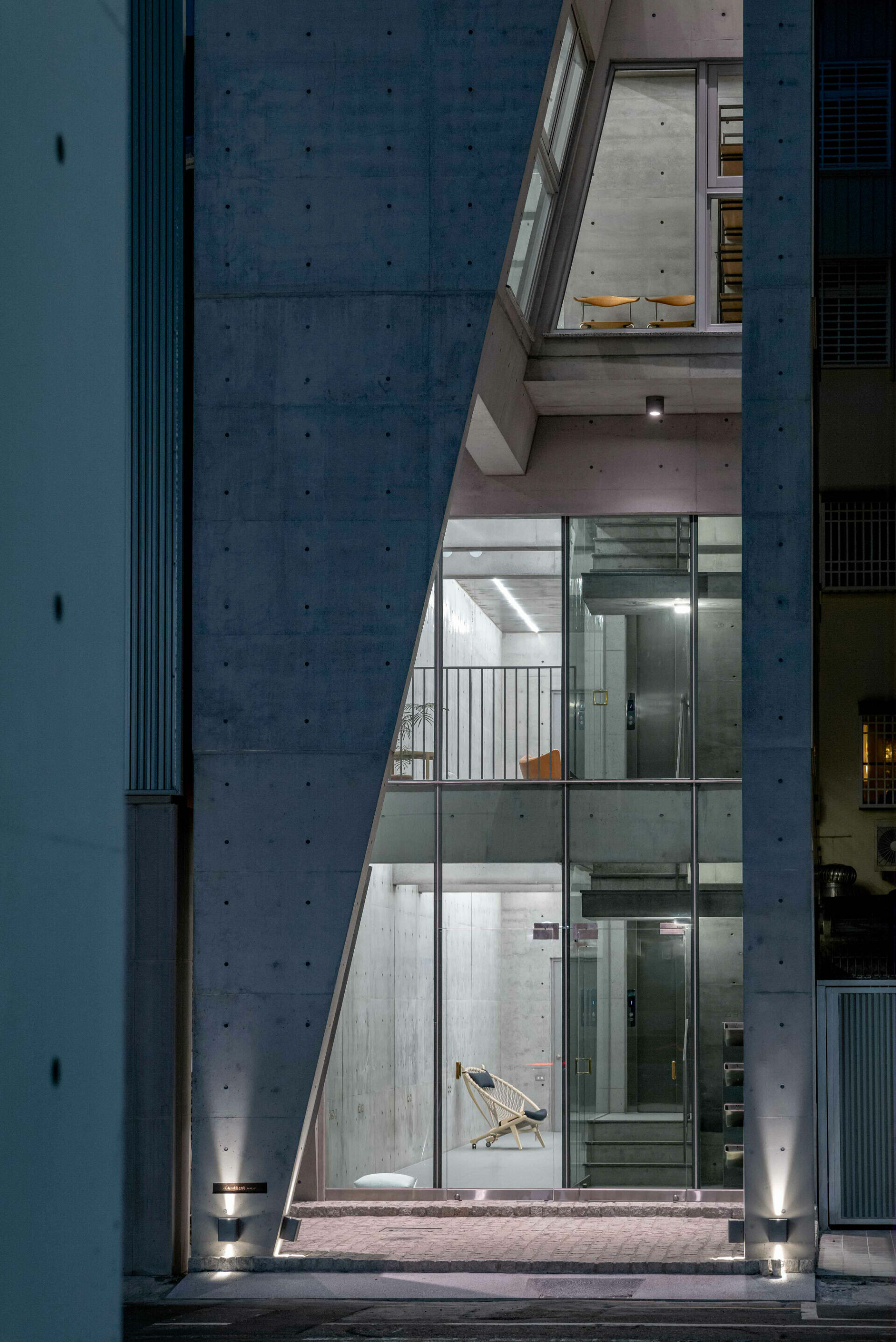
A similar sensibility is built into Mao, Shen‑Chiang Architecture Studio's own building on Jinhua Road, a major artery in Tainan. Traffic and pedestrians hurry past. The streetscape wears time in layers: patched and assembled, colours both new and old, some already fading. Against this, the four-storey volume addresses the city with restraint. Openings draw light in, while a legible internal order remains visible through the façade, signalling how the building chooses to speak with the outside world. It is difficult to miss the quiet authority of doing much with little, and that quiet force becomes the reason people glance back, slow down, and linger.
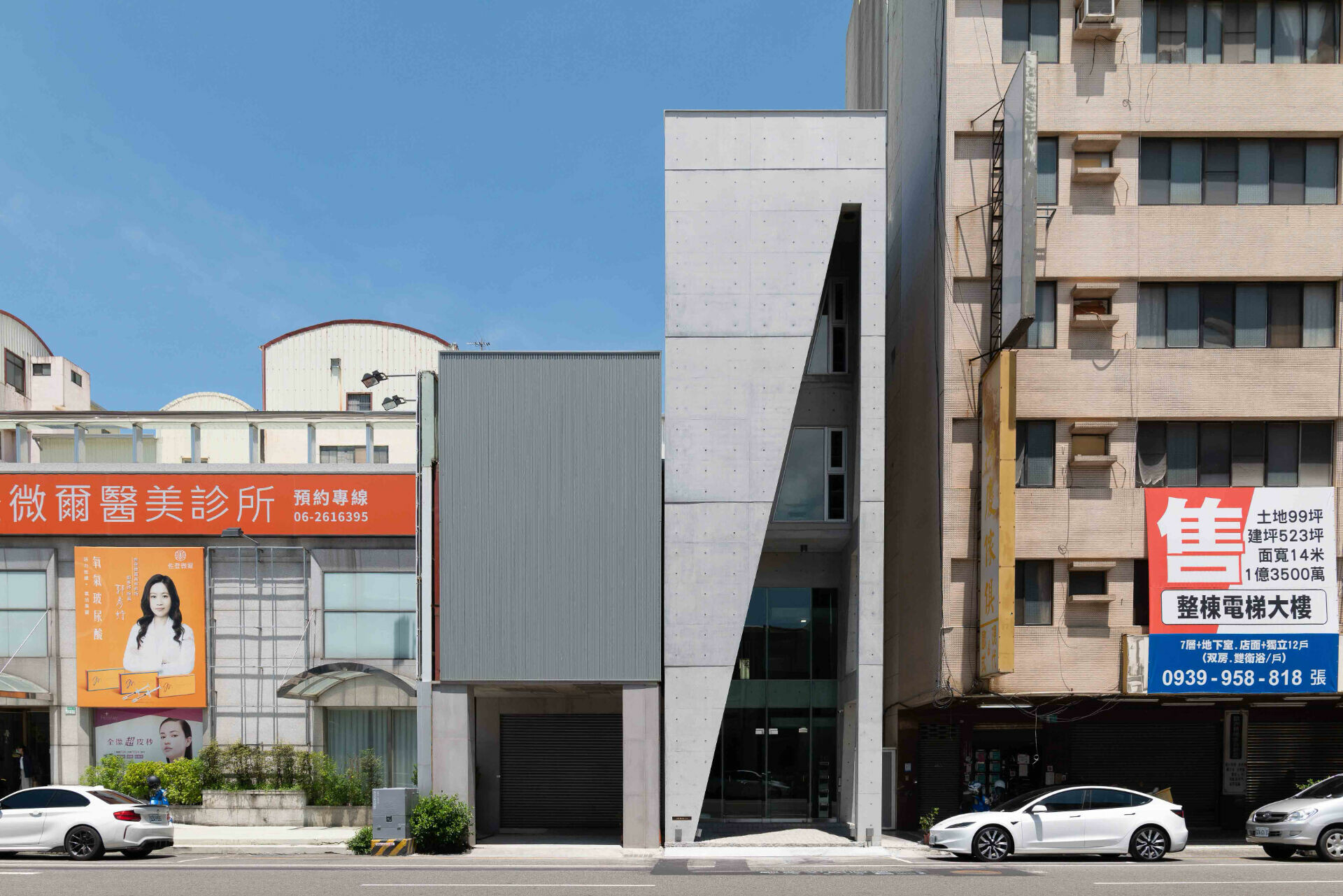
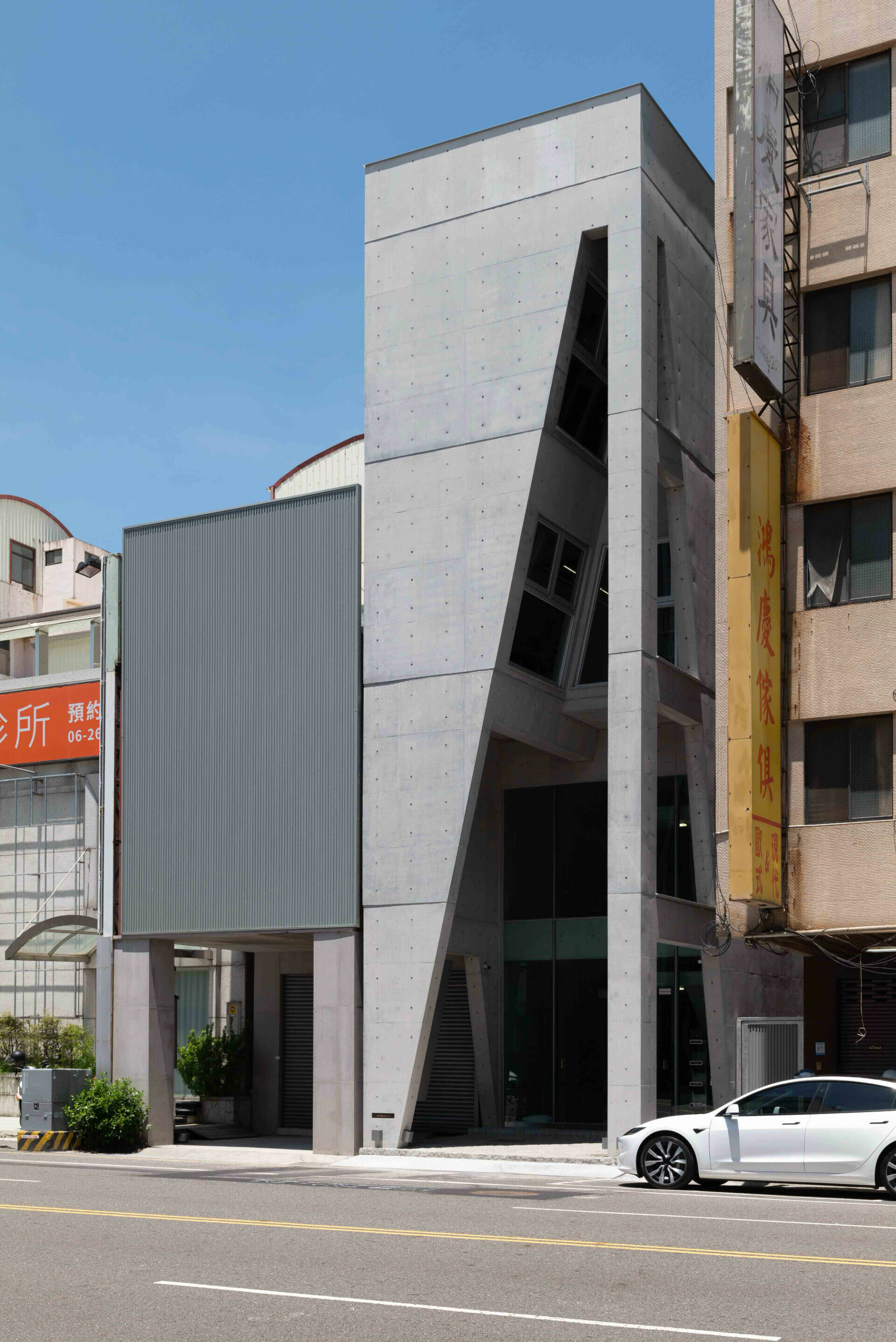
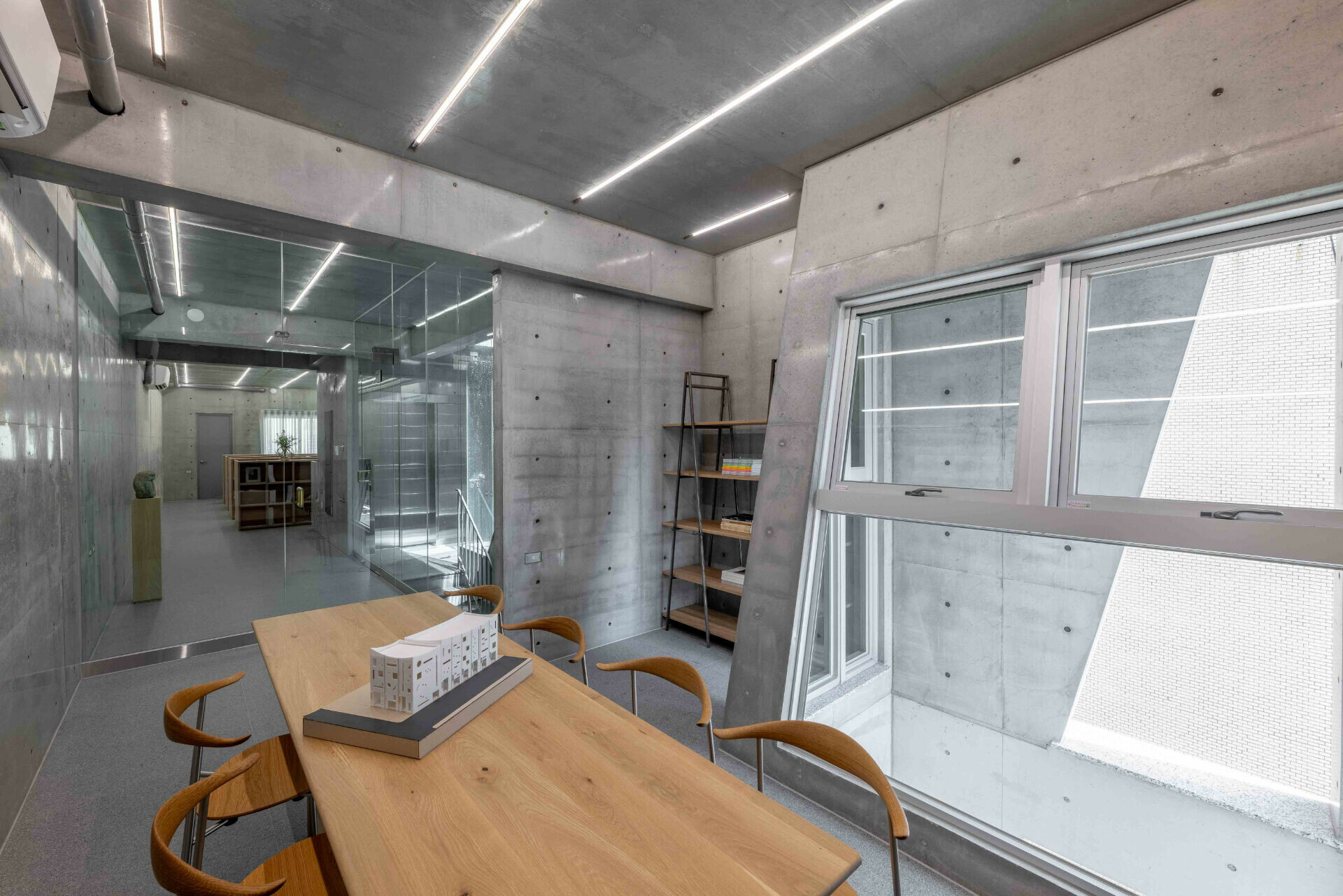
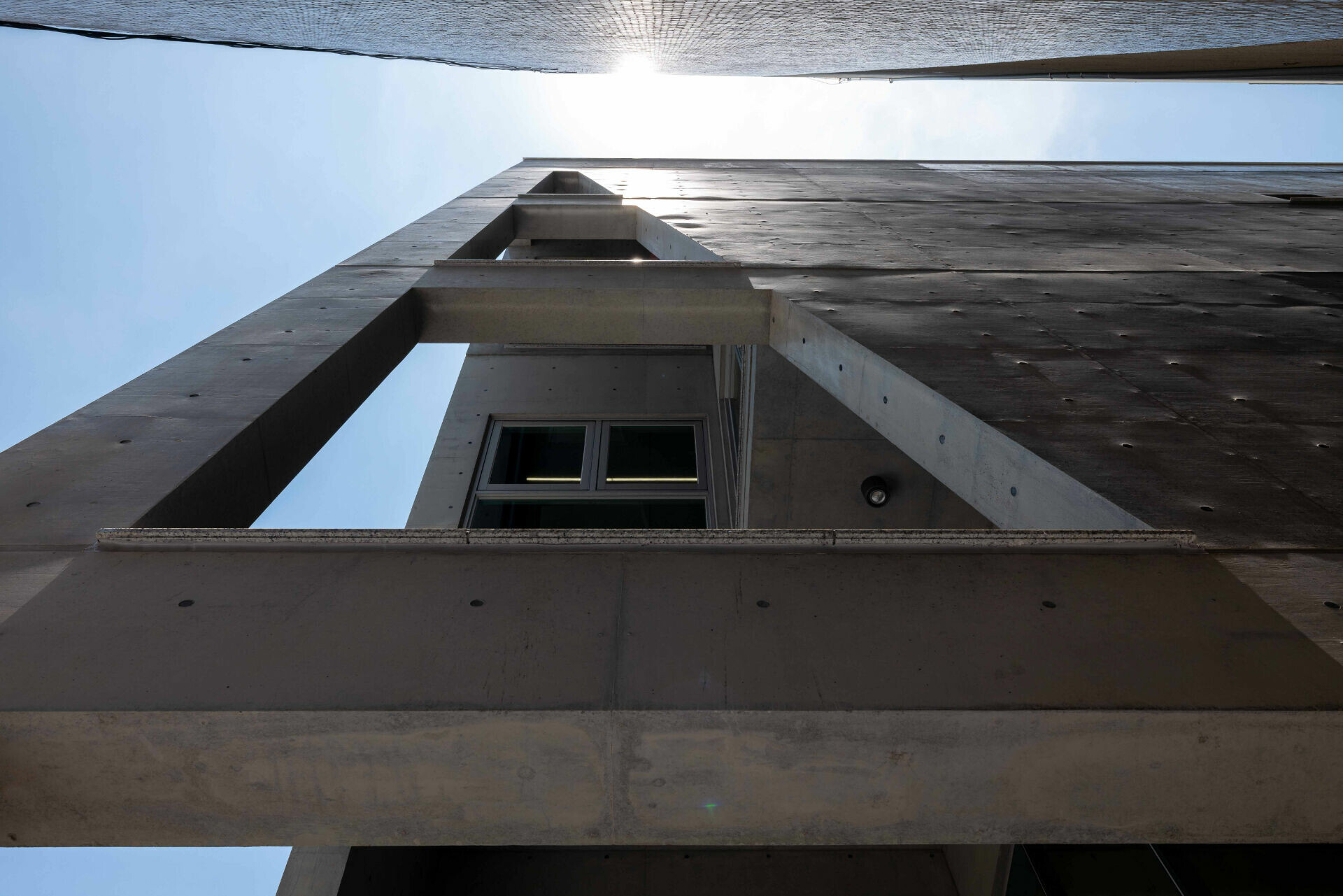
Here, Mao and his team invert the sealed logic of the traditional deep, narrow street-house typology. Even on a noisy thoroughfare, and on a plot where every inch is hard-won, they carve out a viable mix of office and commercial use. The façade begins with a circular logic, divided into 24 equal parts, producing a 15-degree chamfering rule that generates scalene triangular apertures. Daylight seeps down through these measured slits, filtering from the upper levels to the lower floors; as the sun shifts along the vertical axis between exterior and interior, each storey catches light, then shadow, then a different mood. The diagonal cuts register like controlled incisions, and the glass volumes behind them hint at movement within.
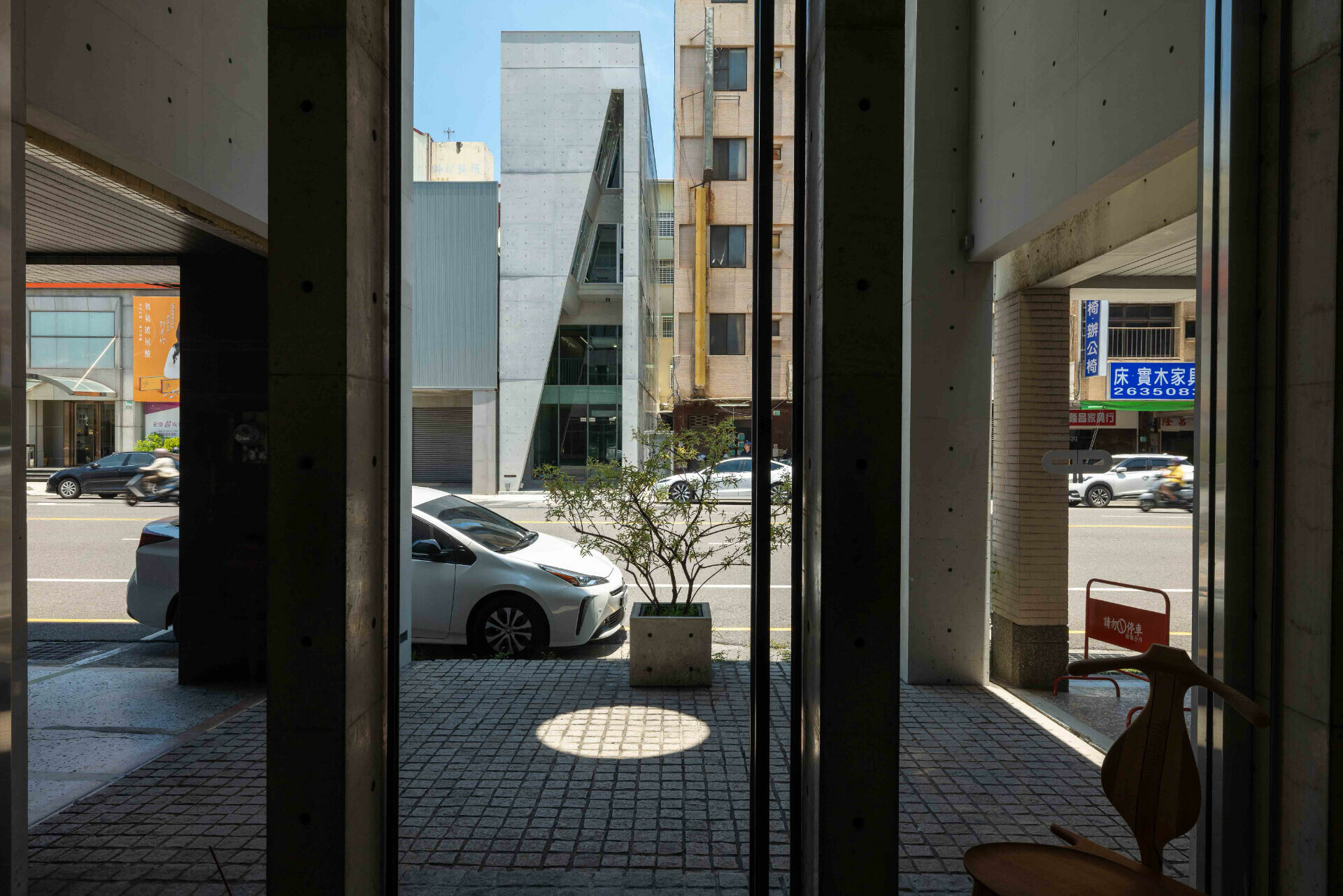
The studio's principle of "only doing difficult things" is made literal in this project. A chamfer that appears crisp and minimal on paper demands heightened precision on site. Everything depends on what the surface reveals after a single continuous pour, once the formwork is struck. That moment relies on strict control of ready‑mix slump, along with a disciplined, highly skilled sequence of work. The truth arrives as soon as the shuttering comes away; if something is wrong, the only honest remedy is to start again. With fair-faced concrete, you begin with the end in mind: the process is the finish.
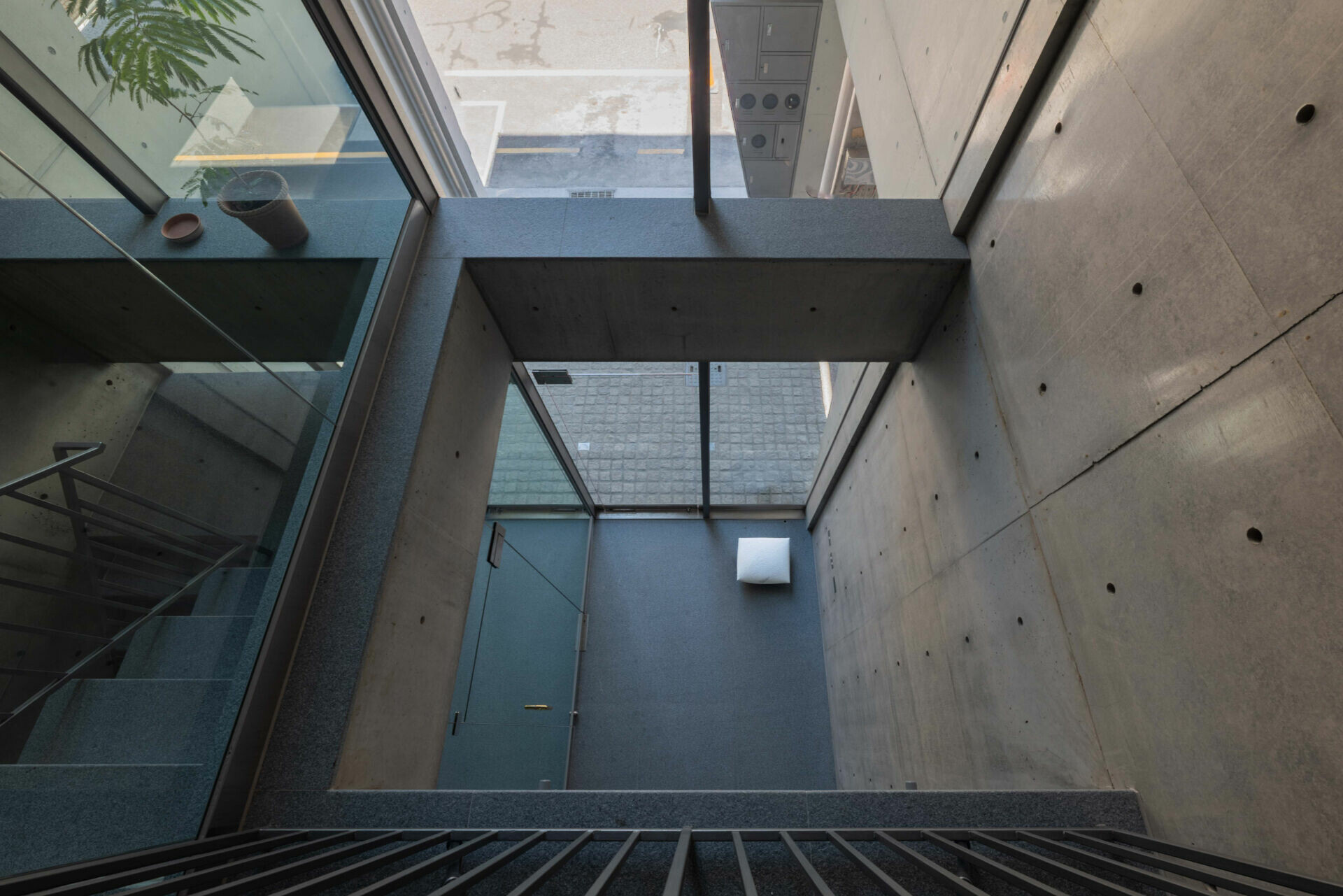
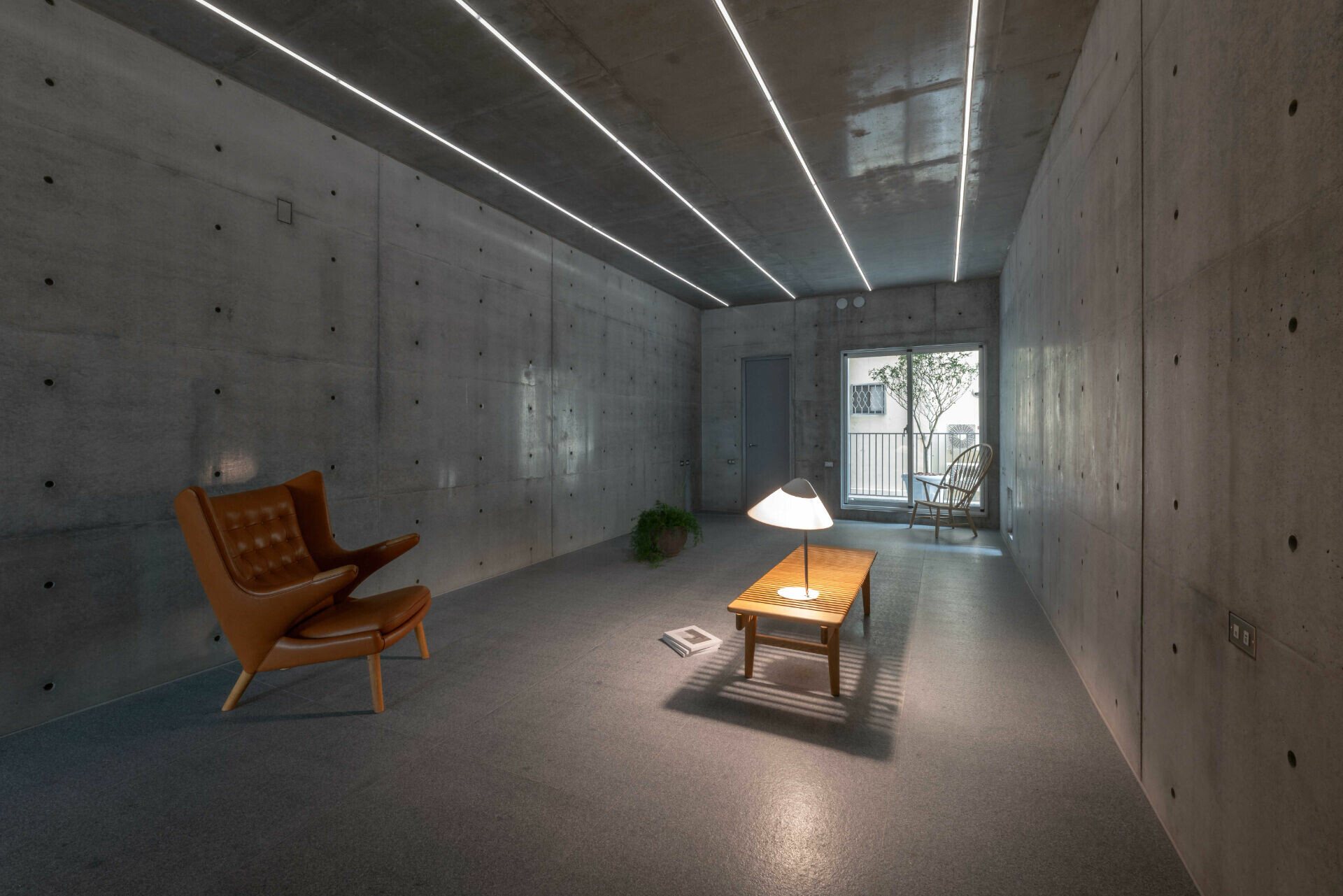
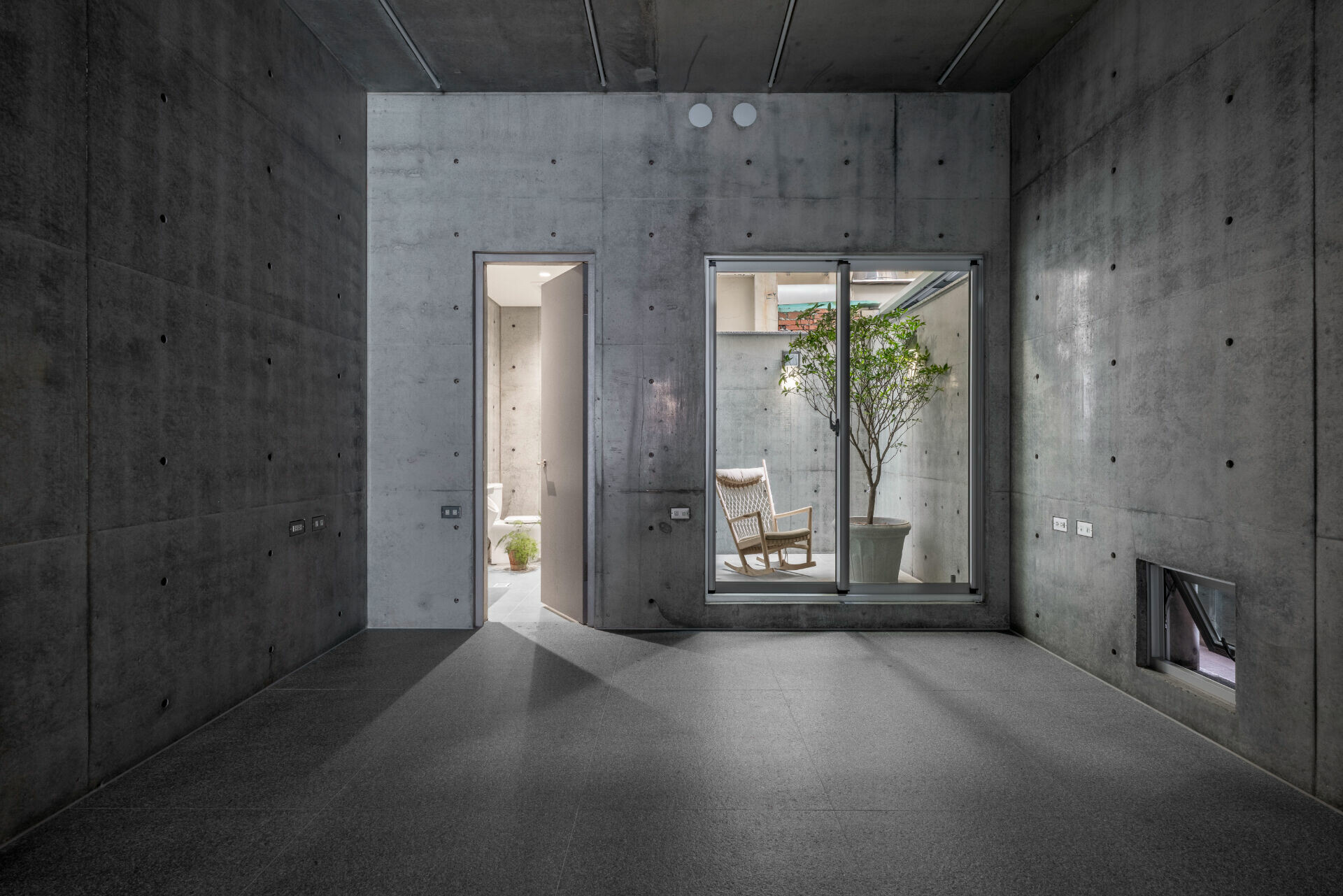
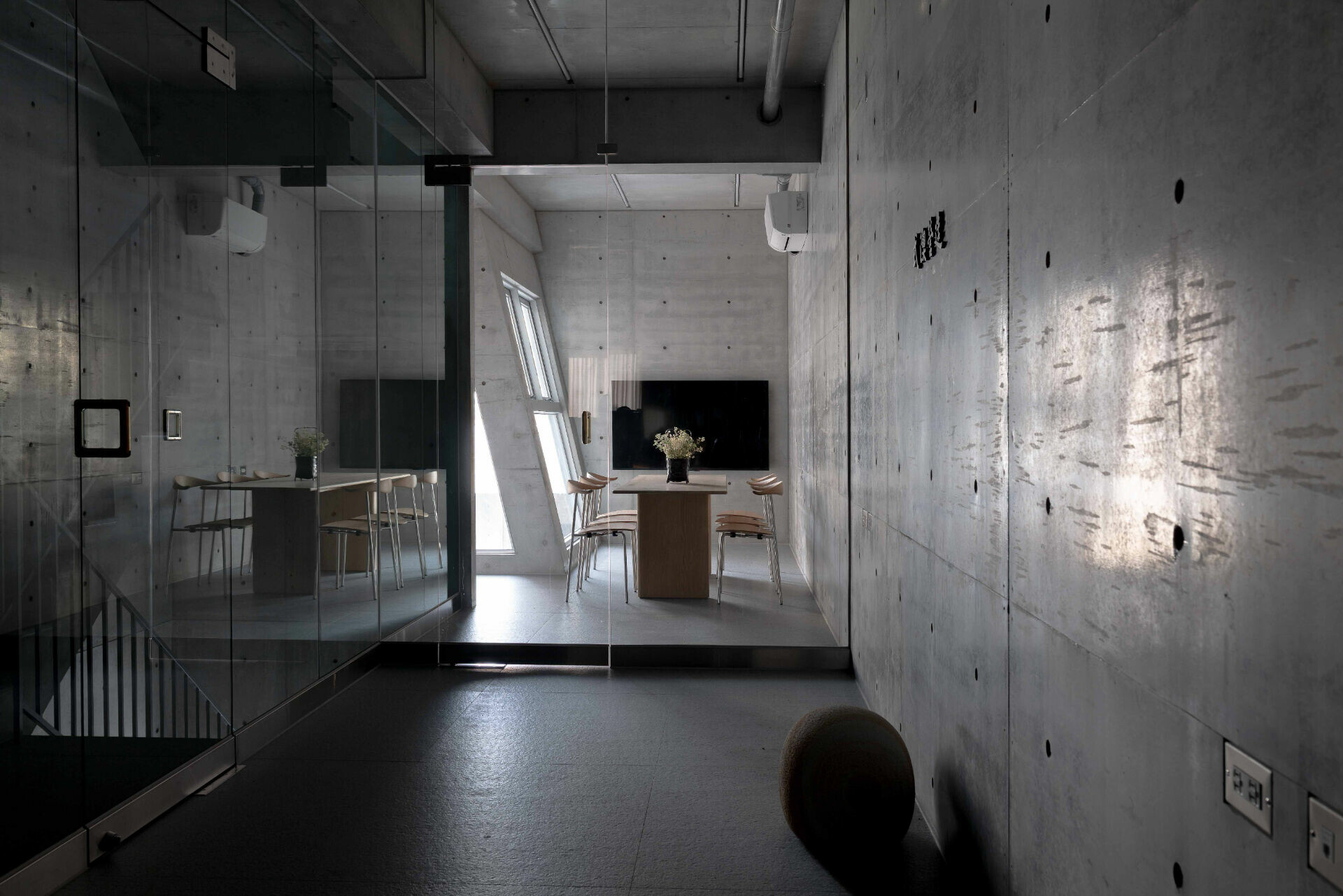
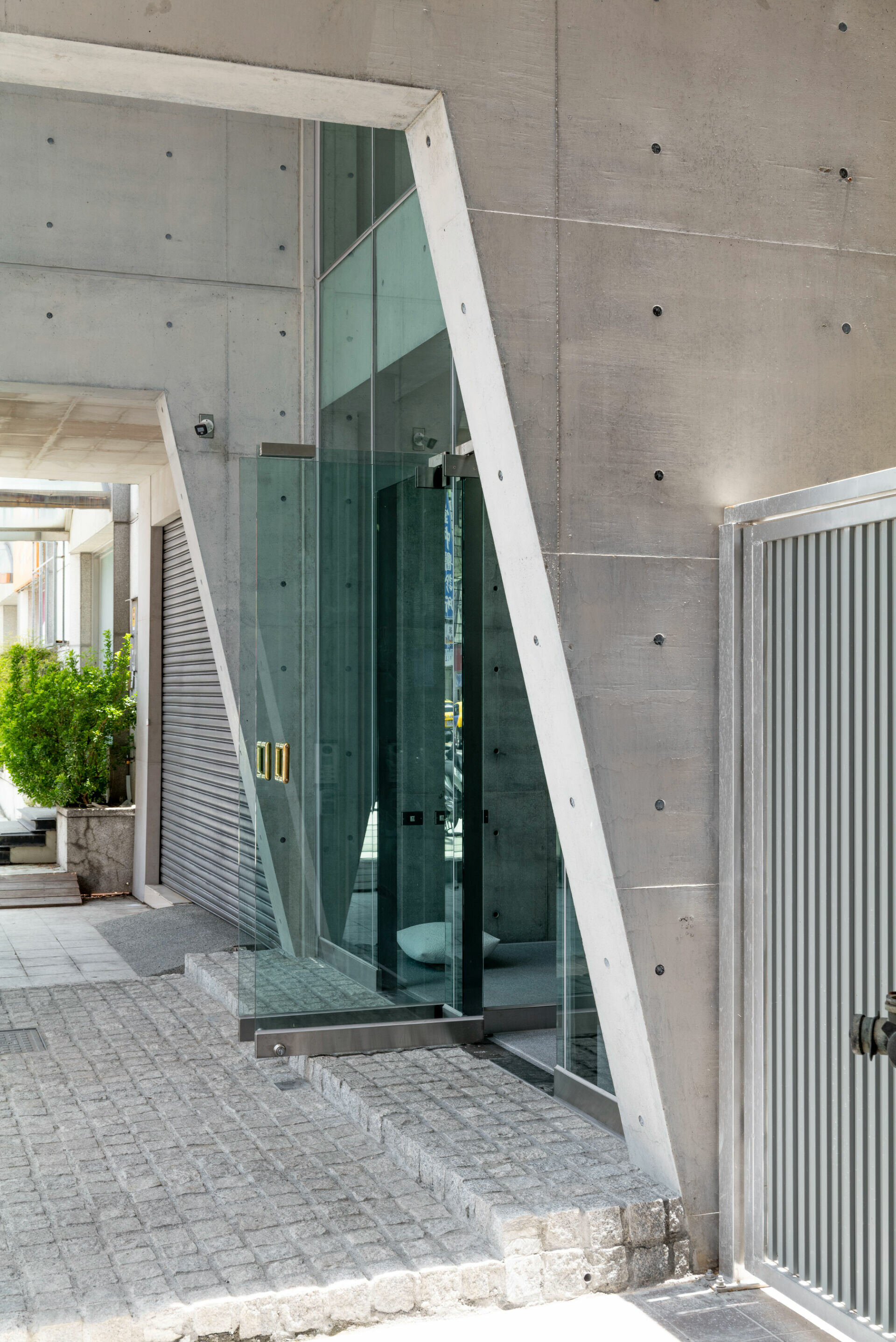
A setback from the street allows light and shadow to stretch. Sunlight sharpens the profile of the mass and the narrow gap it holds from its neighbours, giving the building a quiet, sculptural stillness while revealing the everyday inside. Yet the constraints of a tight site never become an excuse. Within a frontage of roughly 4.3 metres and a total floor area of only 247 square metres, the team divided the plan into four independent units. Glass is used for its transparency, keeping the internal order readable, while the pared-back form of a brass door handle is translated into a consistent marker at each threshold, answering the façade’s restraint.
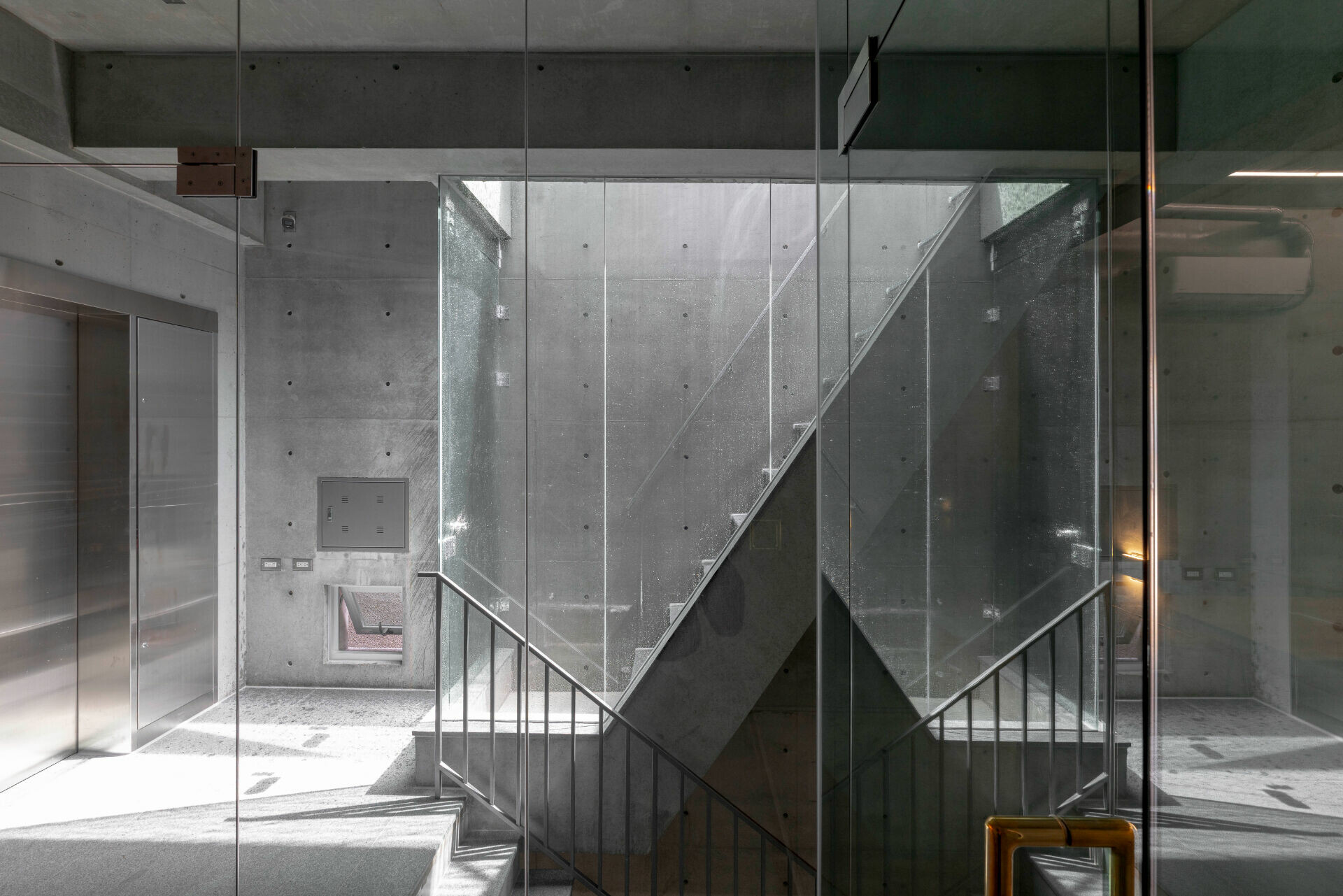
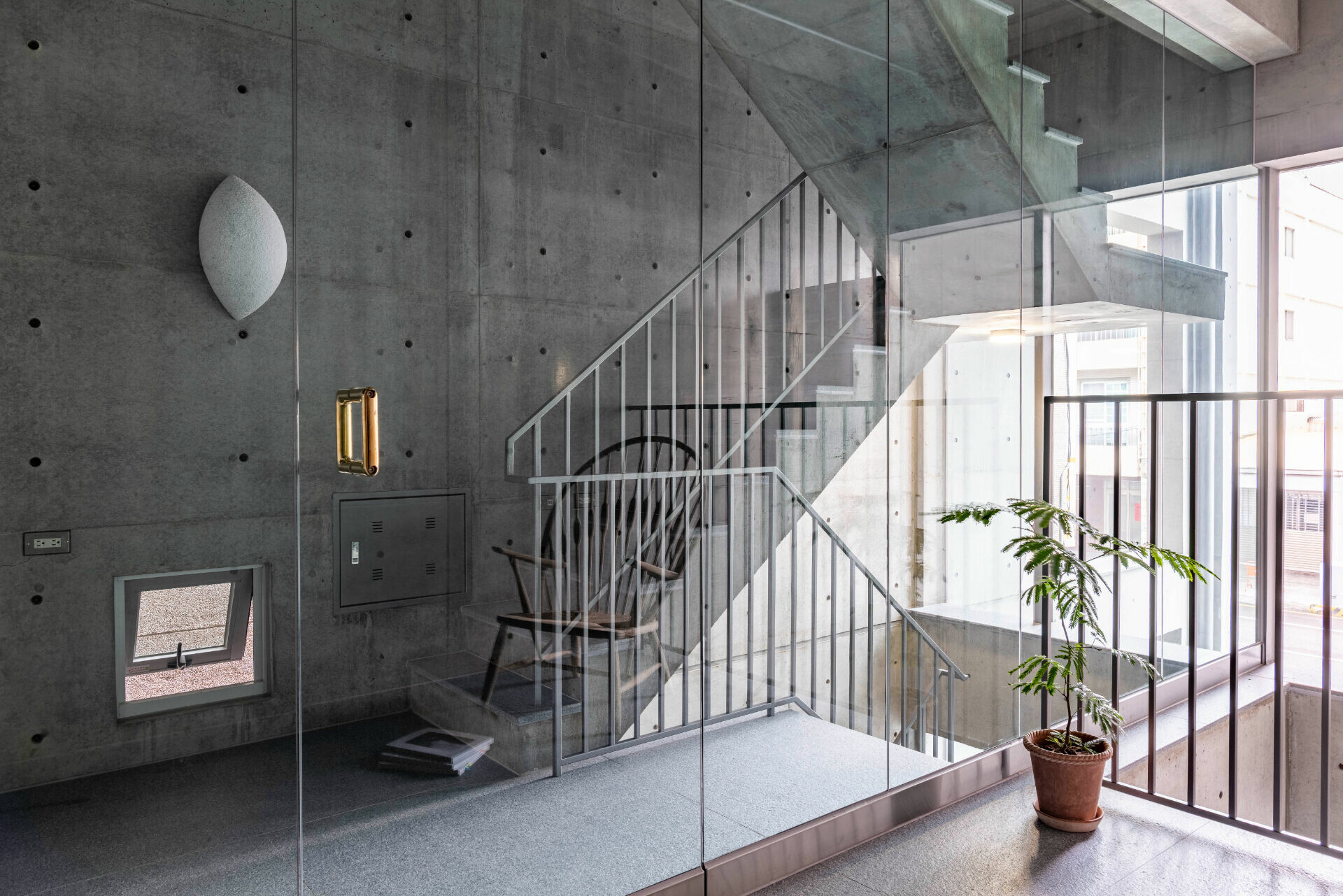
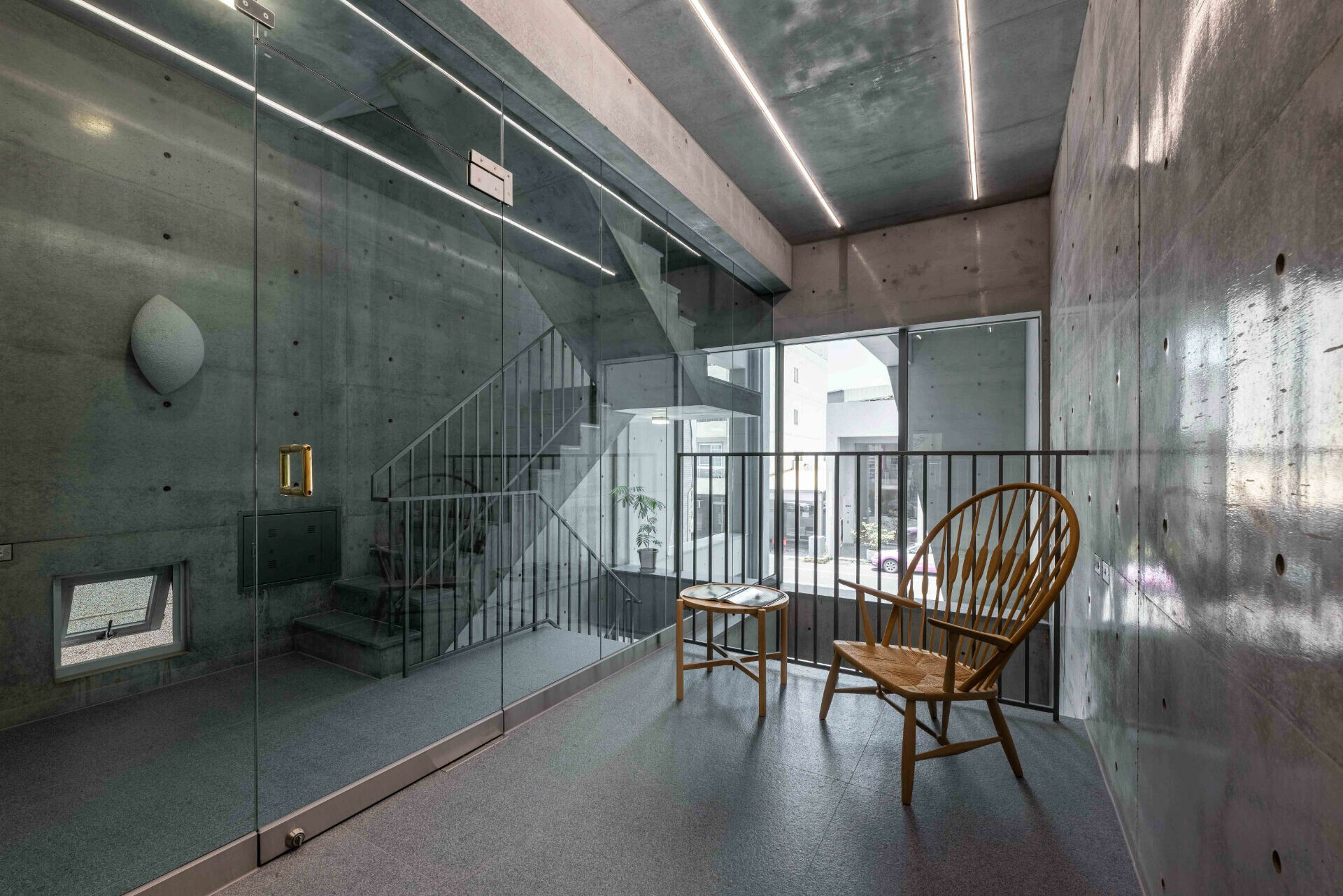
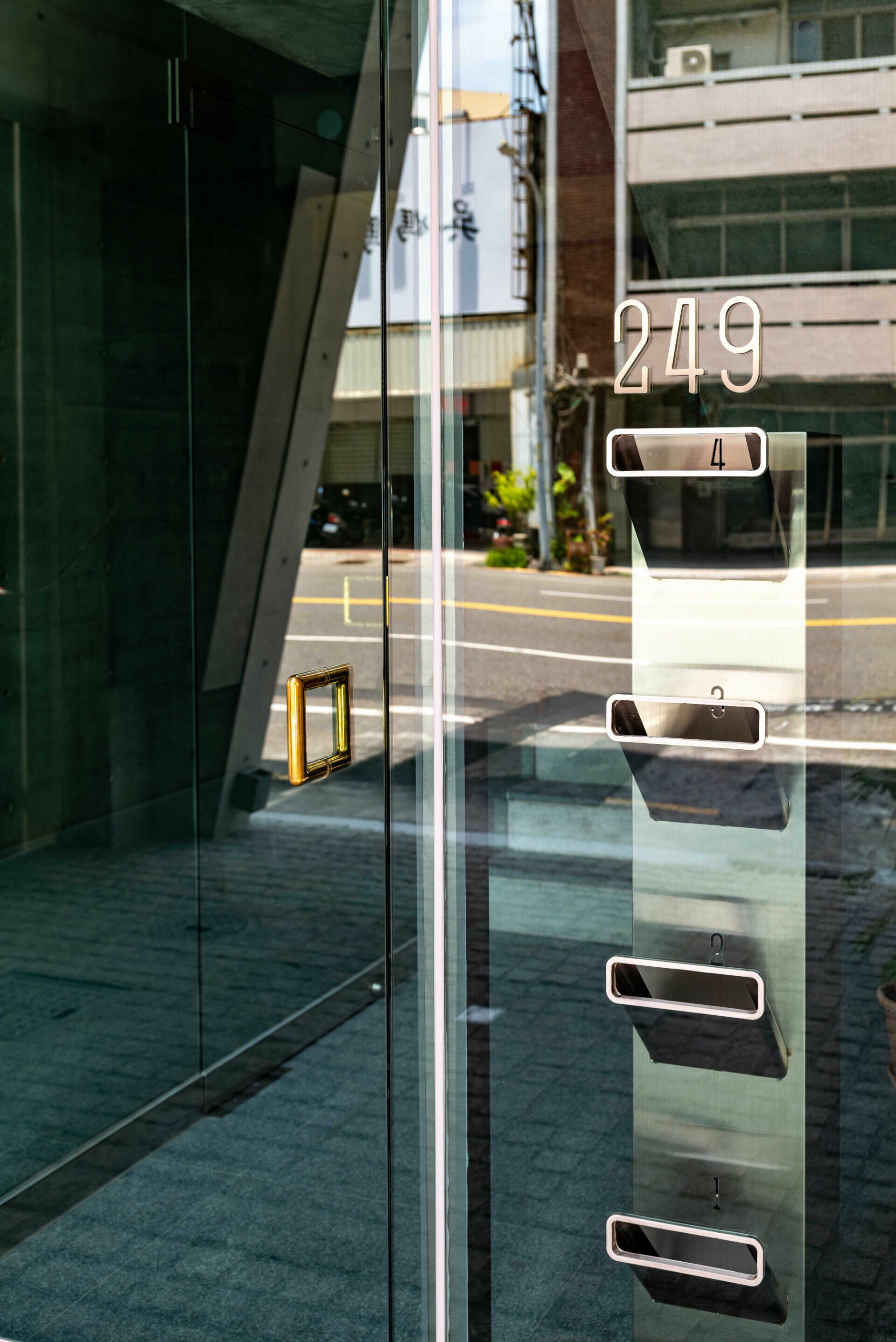
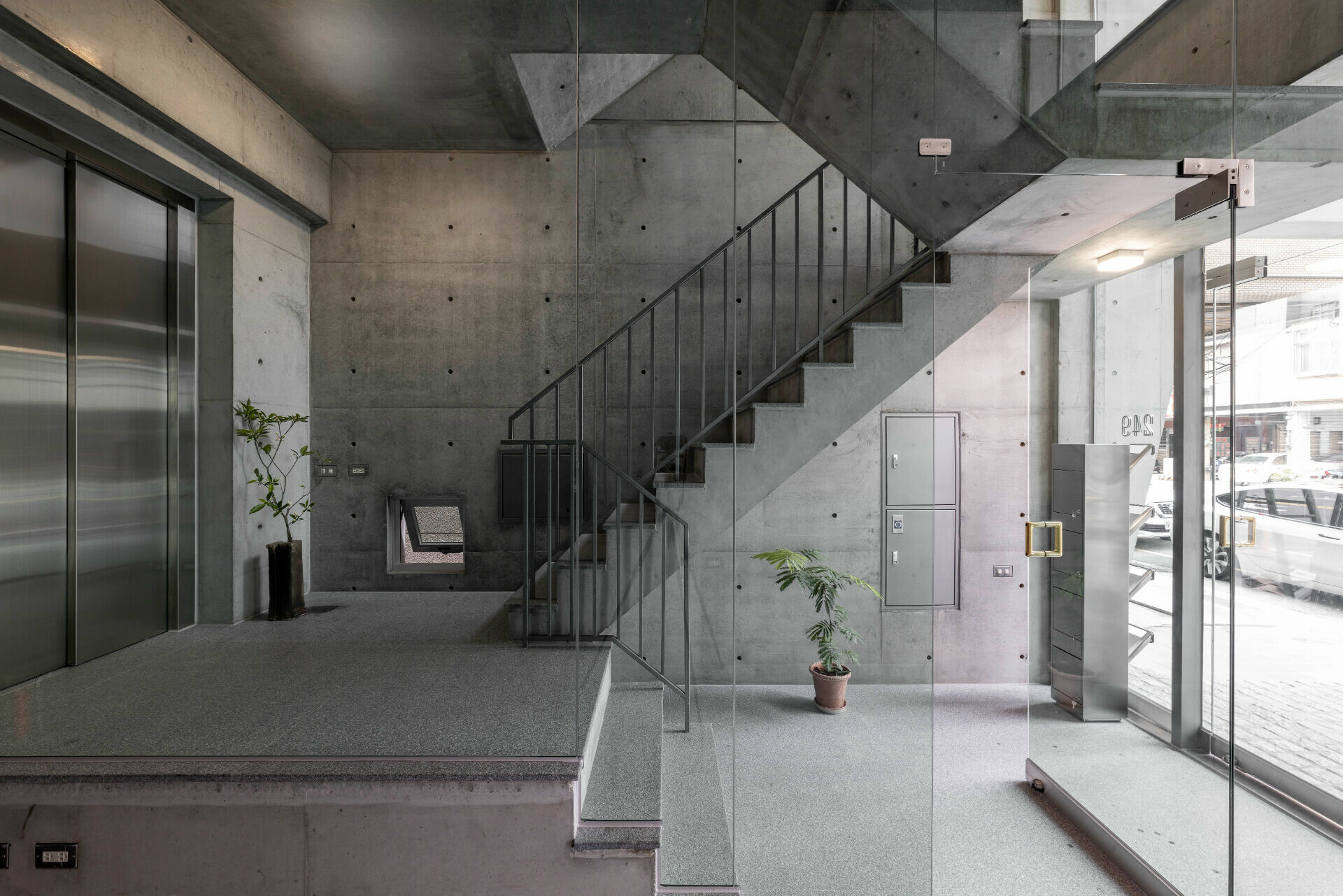
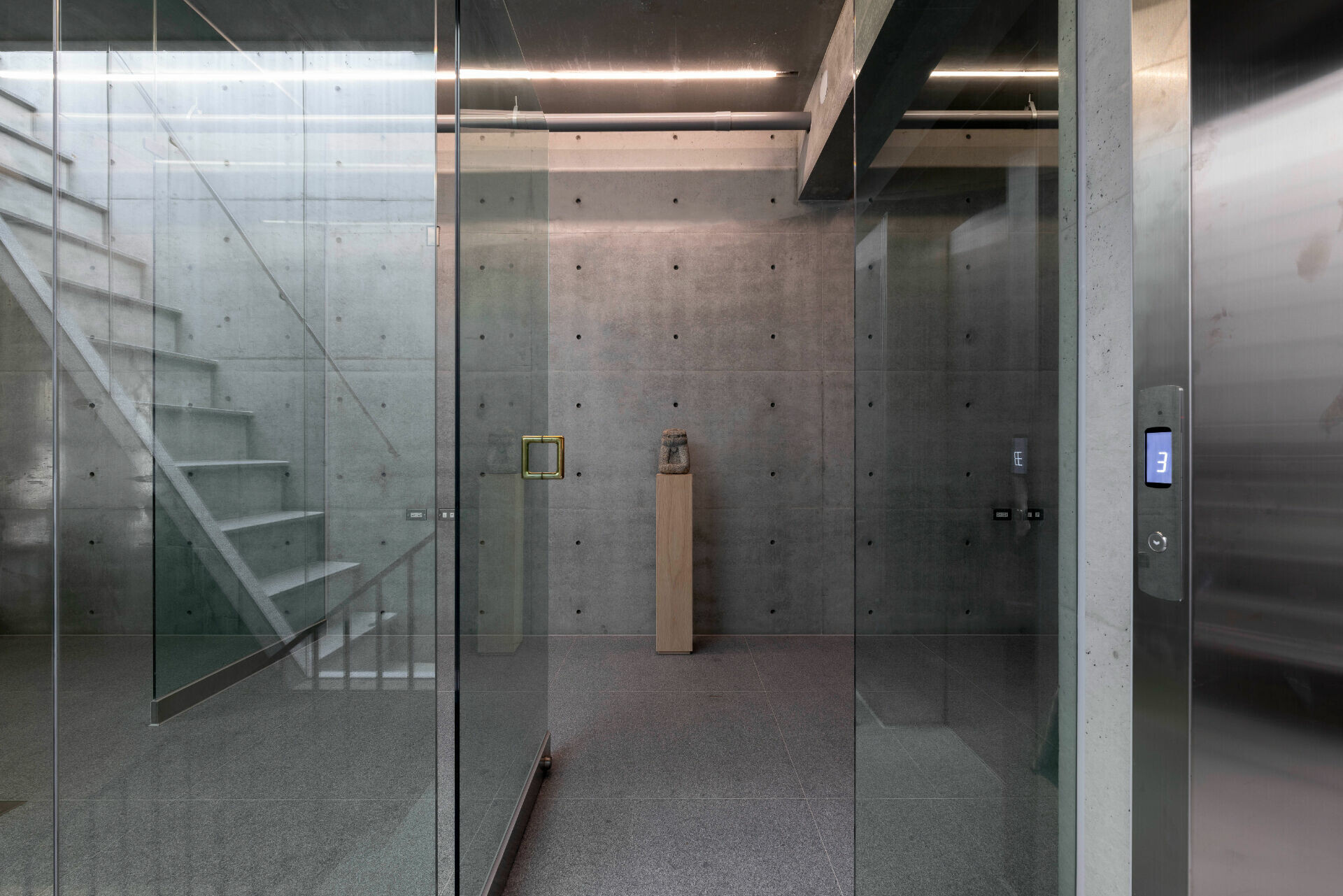
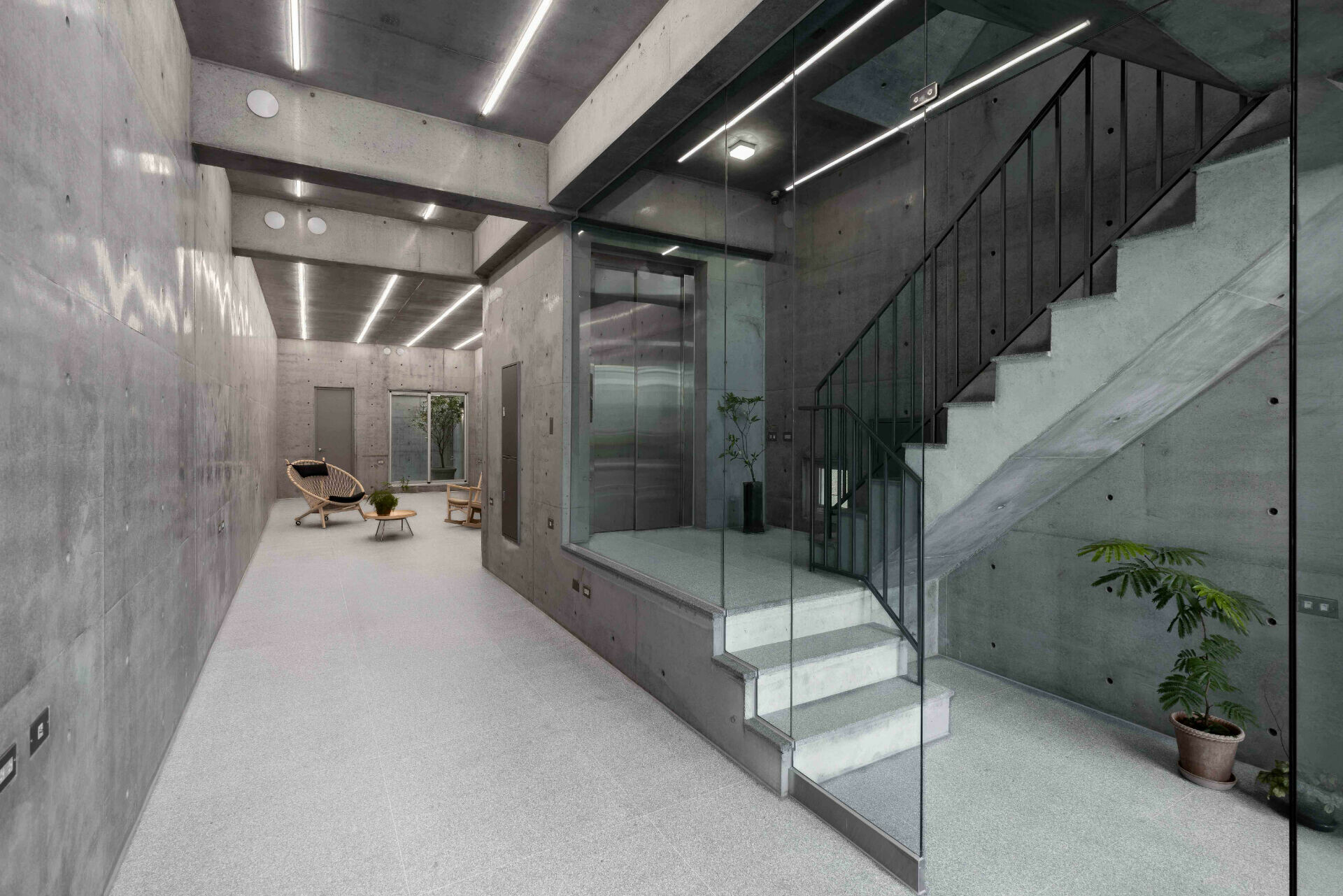
From the street, the building reads as a single, lofty whole; the entrance corner is where its true order begins to show. Behind the recessed glazing, a stainless-steel box is engraved with floor numbers. On the outside, only four rectangular letter slots remain, allowing mail to slip down a short chute into the box. Here, a shared stair and lift core links the levels. Inside, a recessed linear light extends the building's depth, guiding the eye towards the far end of the long, narrow plan, where daylight and greenery catch the gaze within an otherwise empty shell. The first and second floors currently operate as a marketing suite, soon to be subdivided according to need; the third and fourth are occupied by construction-related tenants. Across the building, a consistent language holds, and shared circulation quietly stitches together the everyday, making "void and presence" tangible—lived day by day.