Forest of Aspiration
Wandering through the streets and alleyways of Tainan, one is met by scenes steeped in cultural memory and framed by an understated natural presence—a quiet rhythm that coexists with the energy of a contemporary city. Within this landscape, the National Cheng Kung University district stands out as a place where expansive greenery, convenient mobility, and complete living amenities converge, forming one of the city’s most desirable residential environments. Against this backdrop, designing a two-storey sales pavilion near the project site posed an essential question: how could a new structure meaningfully respond to its surroundings—bordering a major academic campus, overlooking Tainan Park, and facing the future green corridor released by the city’s railway relocation? Instay Studio approached the commission by weaving these conditions into the architecture, translating traditional motifs into a contemporary spatial language. The result is a dialogue between past and present—one that mirrors the district’s evolving urban fabric and guides visitors through the “Forest of Aspiration” Sales Center, where a pared-back modern aesthetic is imbued with a refined sense of Eastern sensibility. As visitors move through the space, a vision of future living gradually unfolds.
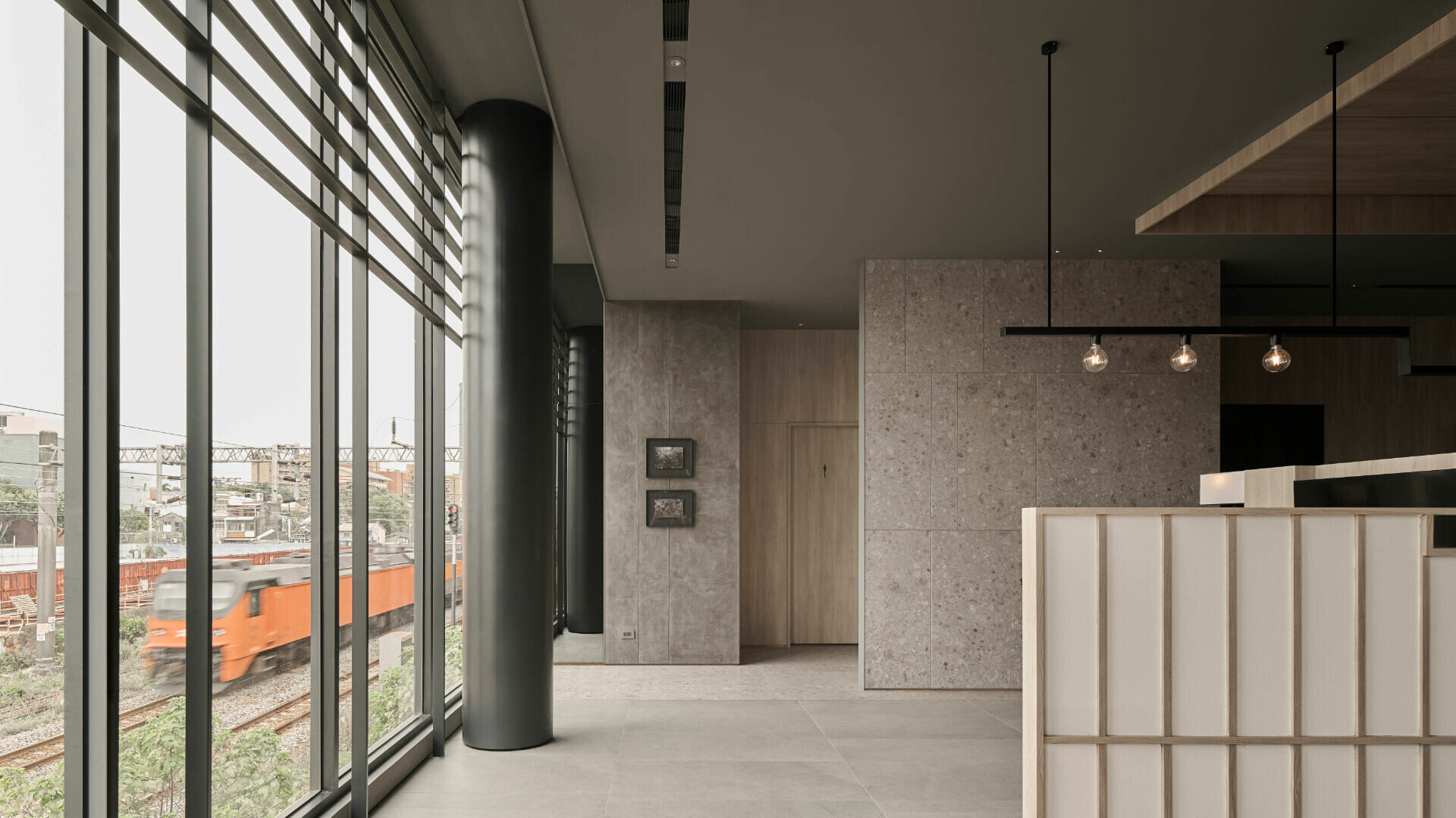
“Our intention was for visitors to understand the transformation of this city while also sensing the greenery that has shaped everyday life here,” says designer Yung Chieh Tseng. The sales center sits at a distinctive intersection—between the historical railway line, the expansive grounds of Tainan Park, and the lifestyle radius of the NCKU district. With the railway now relocated underground, this threshold is poised to become a vital node in the city’s renewed urban fabric. In response, the studio defined the ground floor as the reception and sales area, while the upper floor serves as a self-contained negotiation zone. A pair of full-height glazing surfaces to the front and rear frame contrasting views: ascending the daylight-filled staircase, visitors look east toward the project site and the remnants of the former rail alignment, and west toward the tree canopy of Tainan Park. These dual perspectives maintain an openness that captures the city’s shifting tempo.
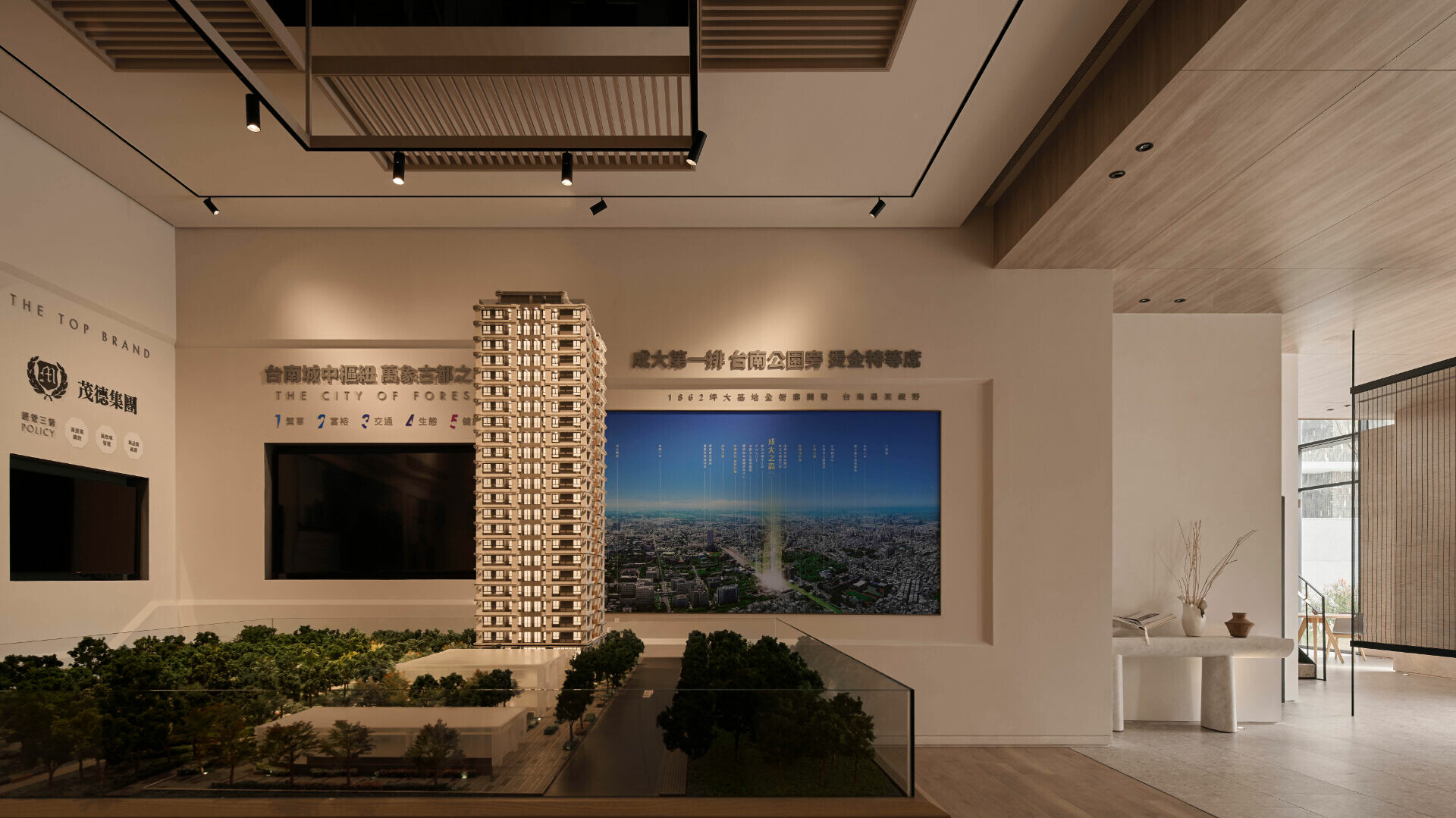
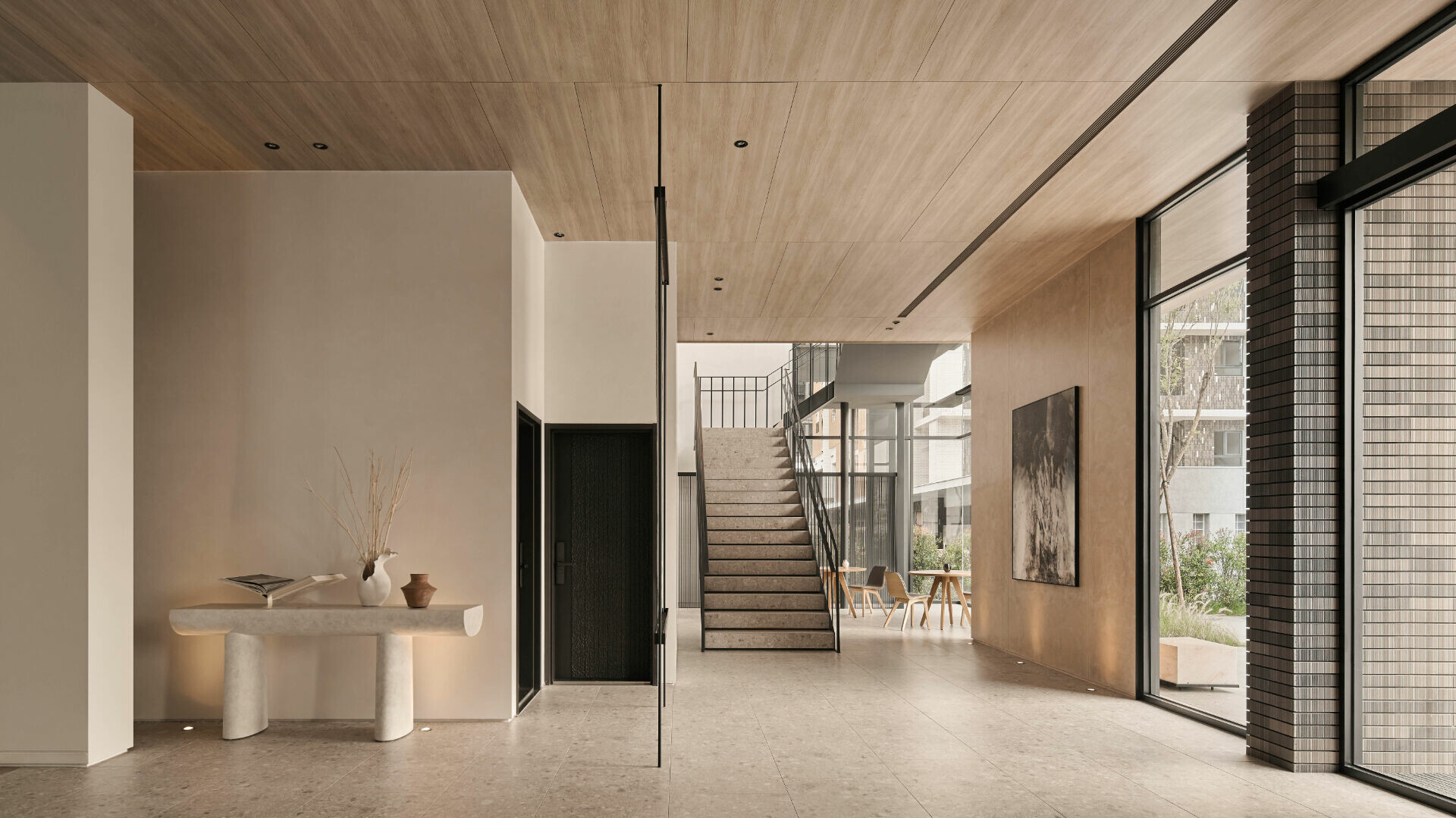
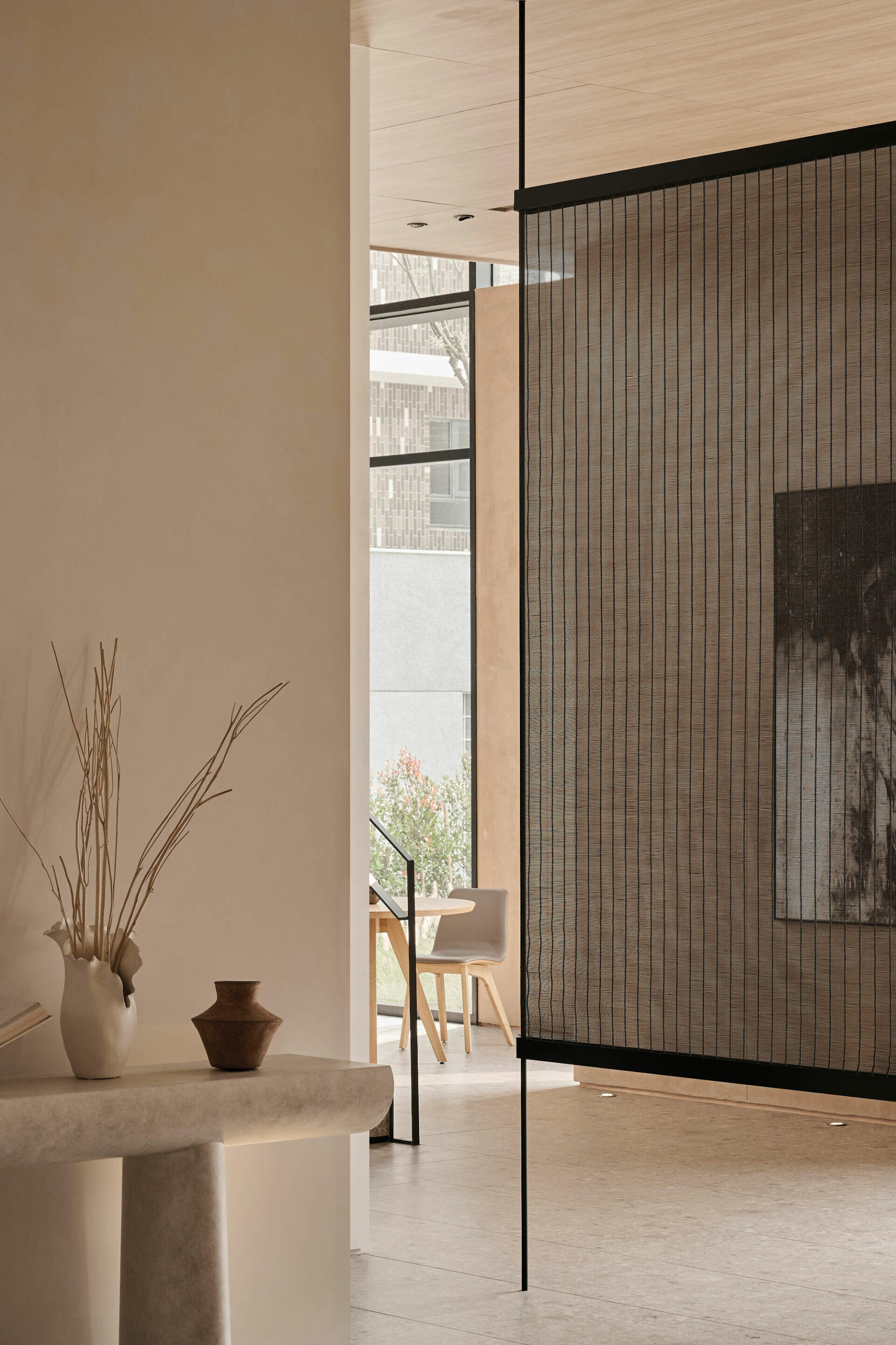
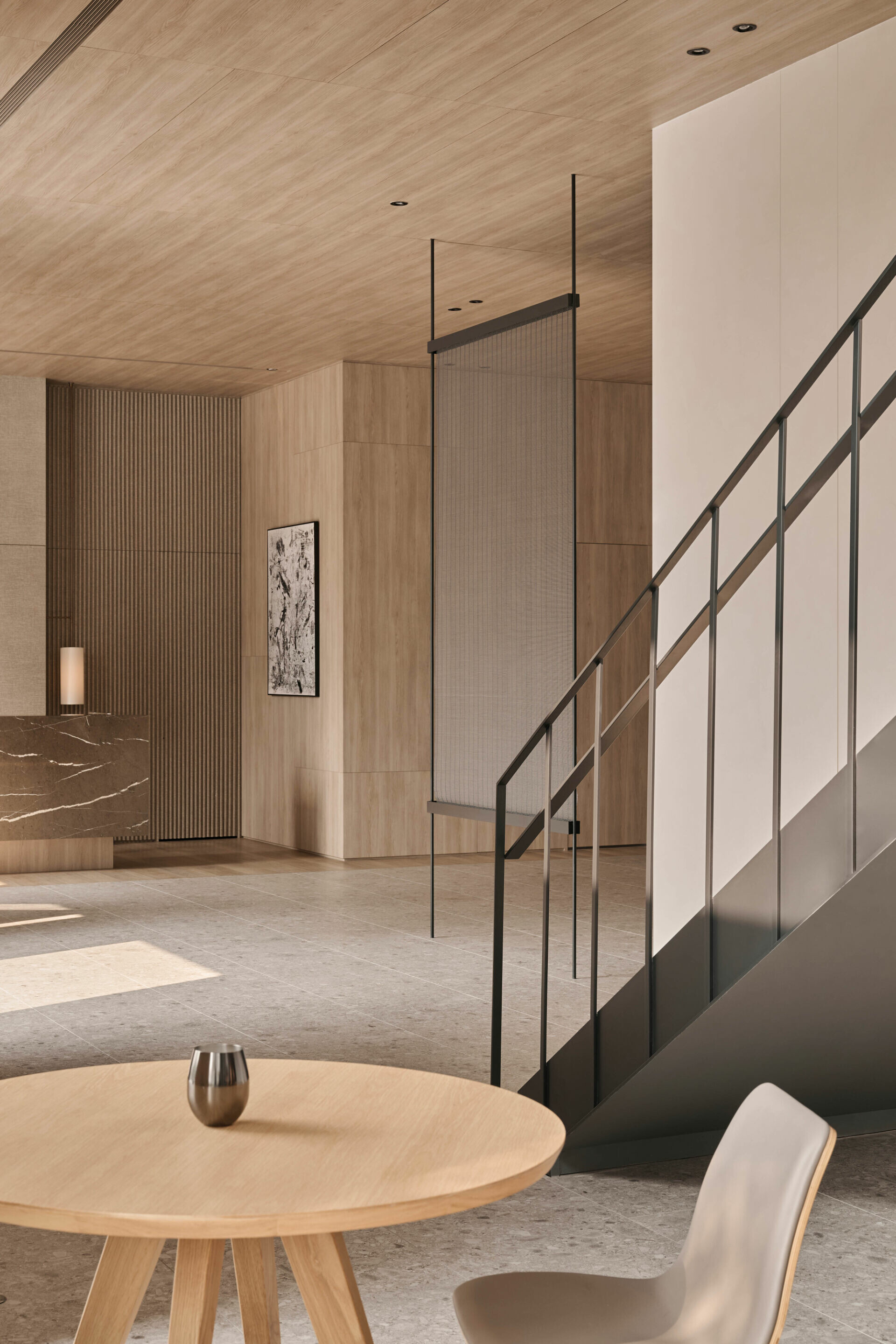
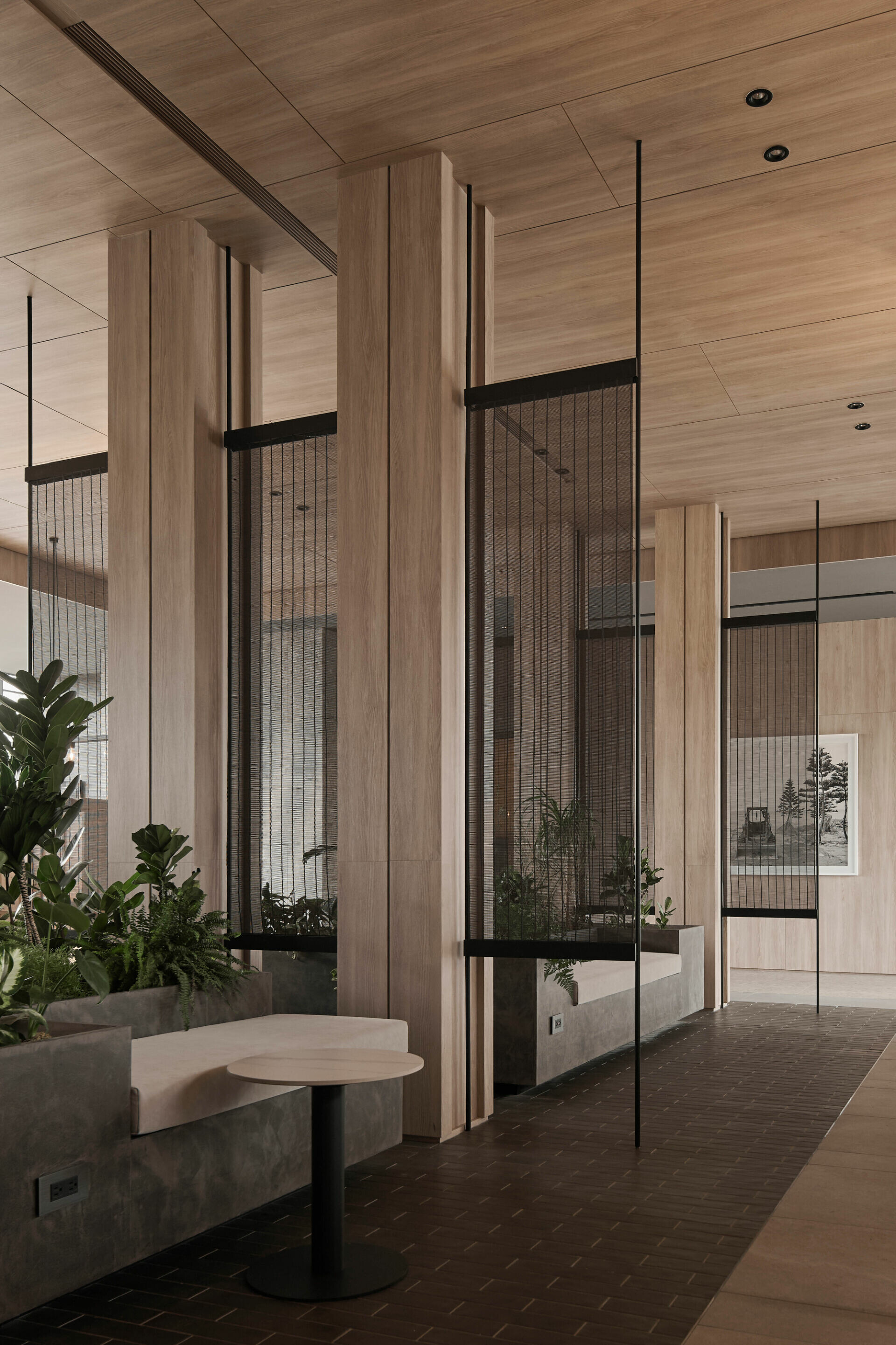
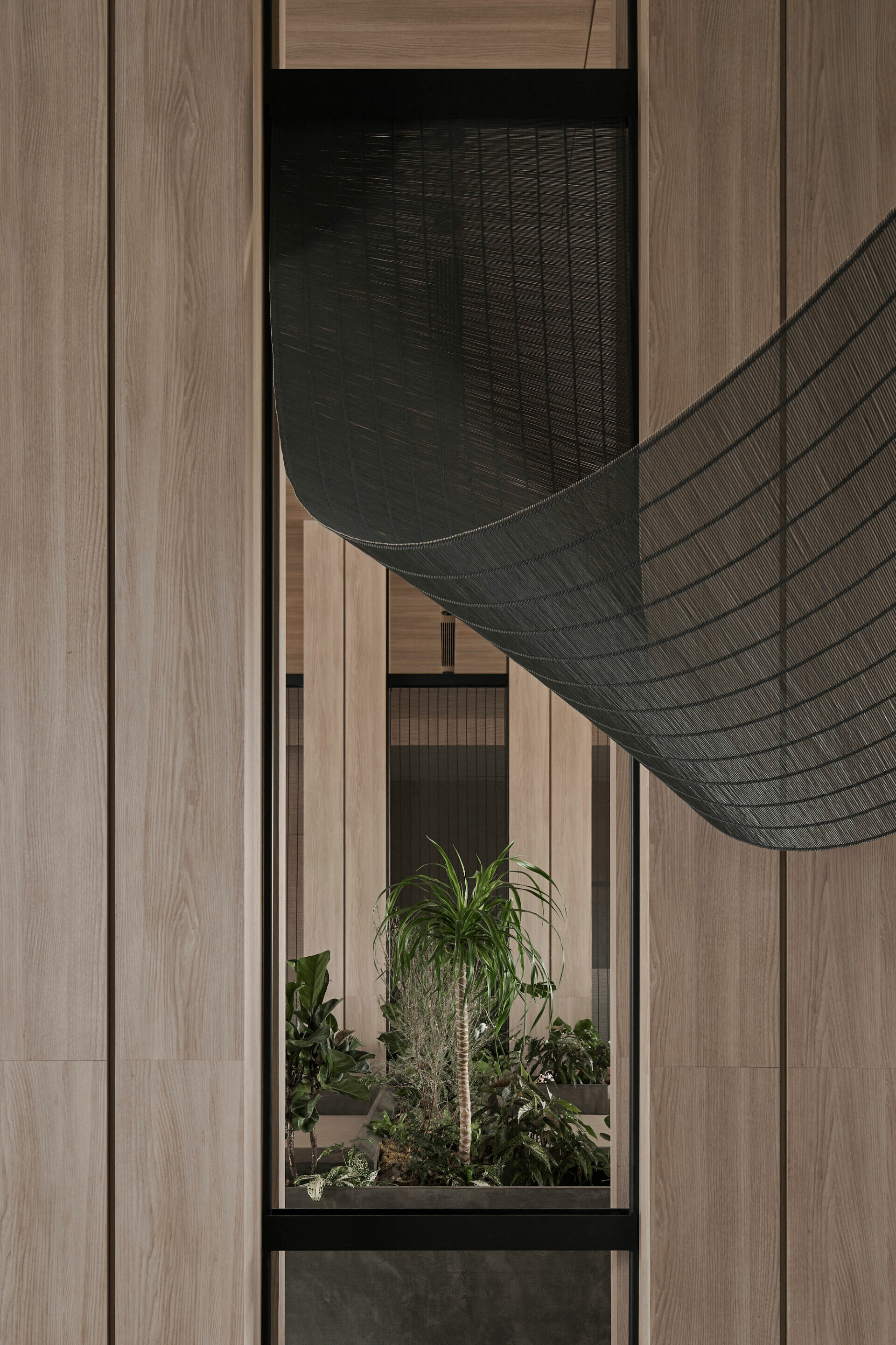
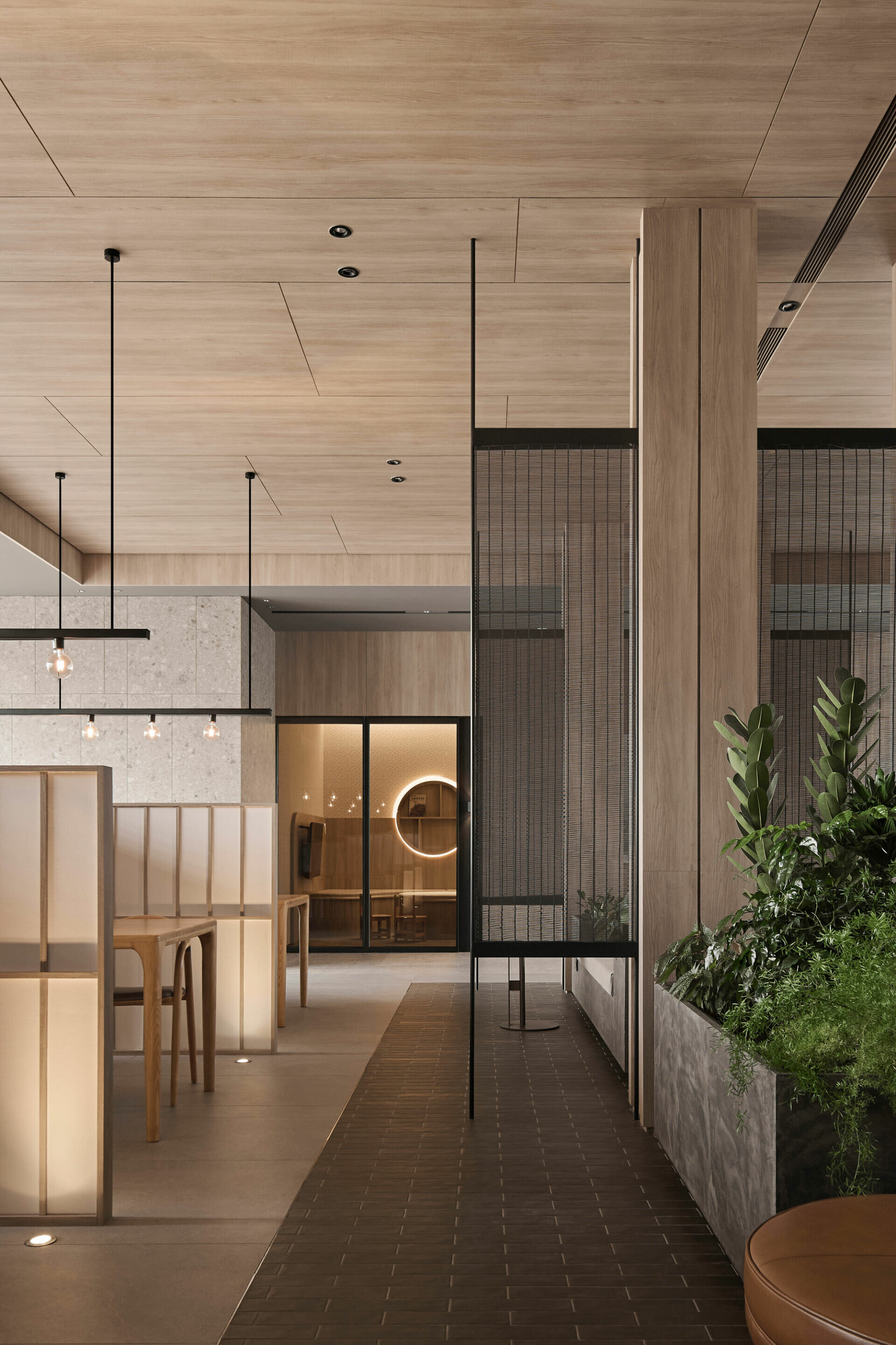
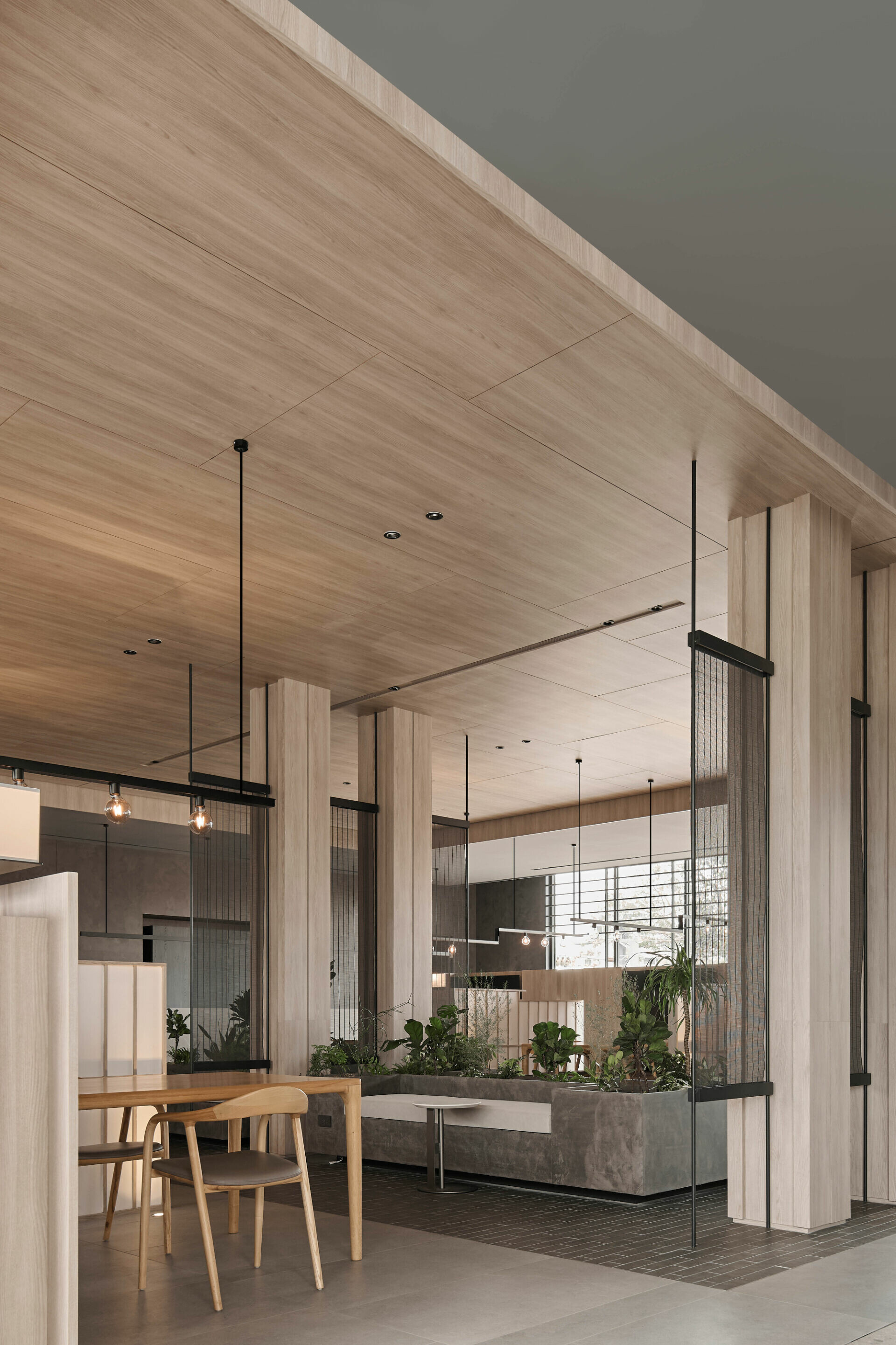
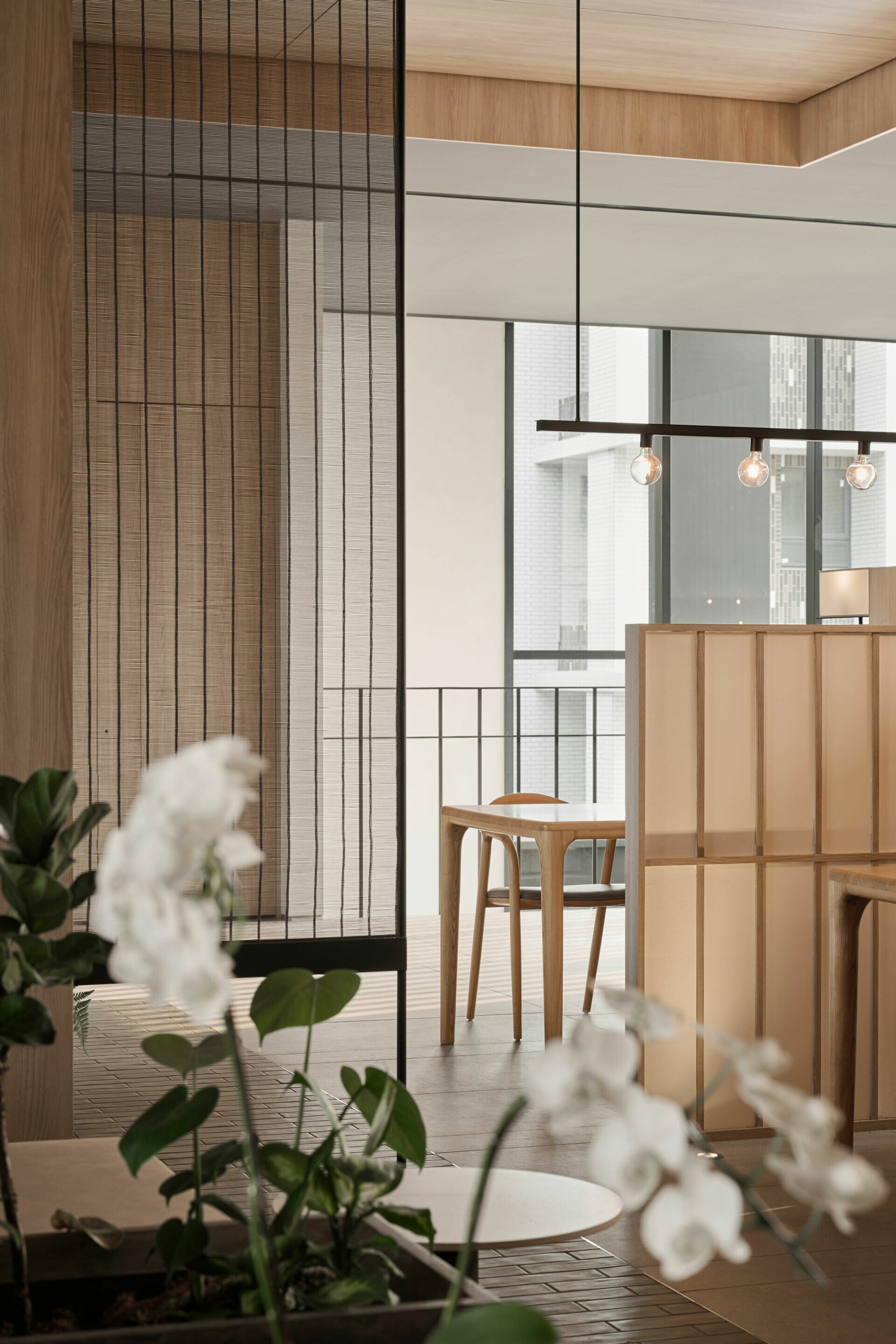
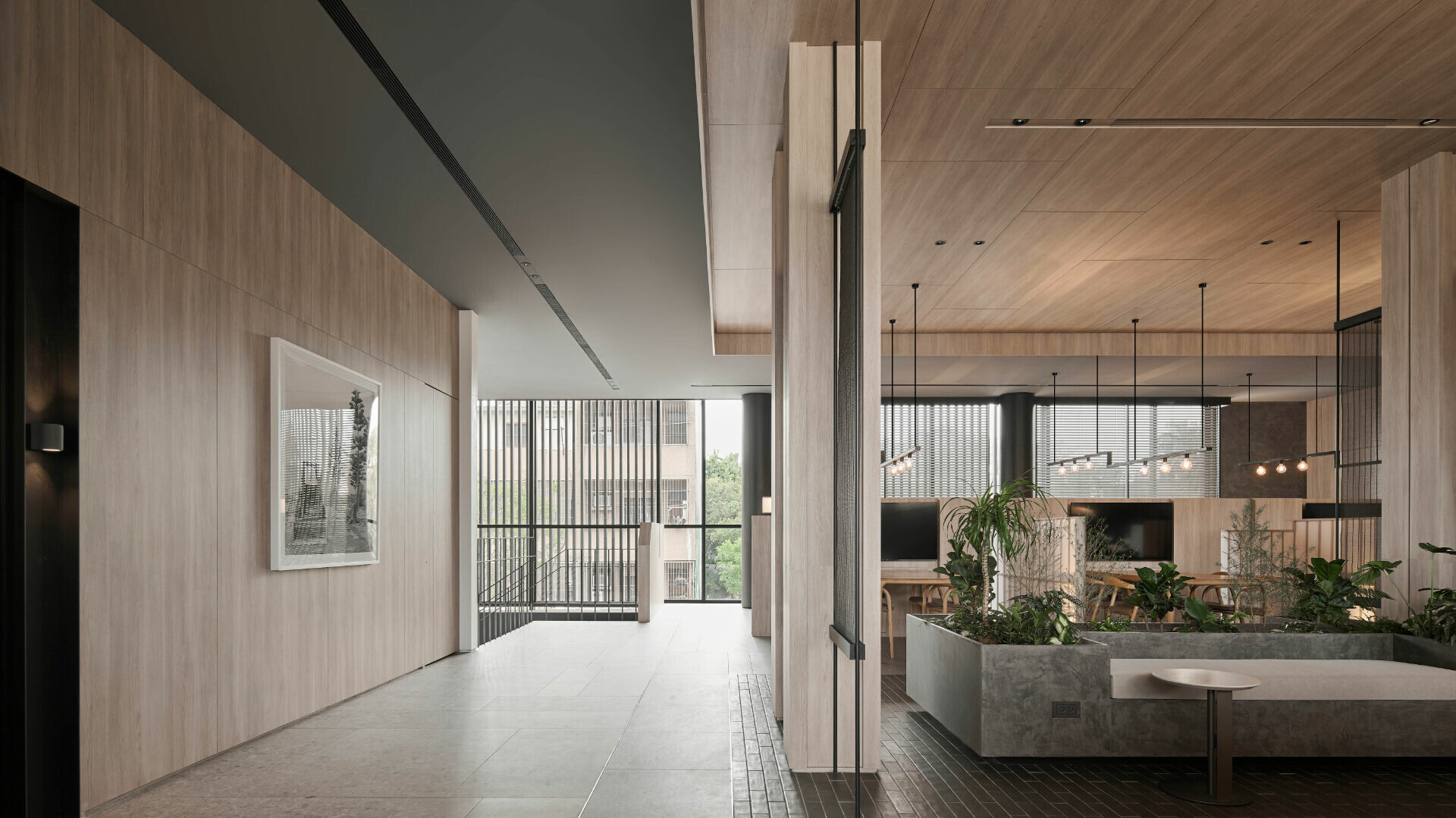
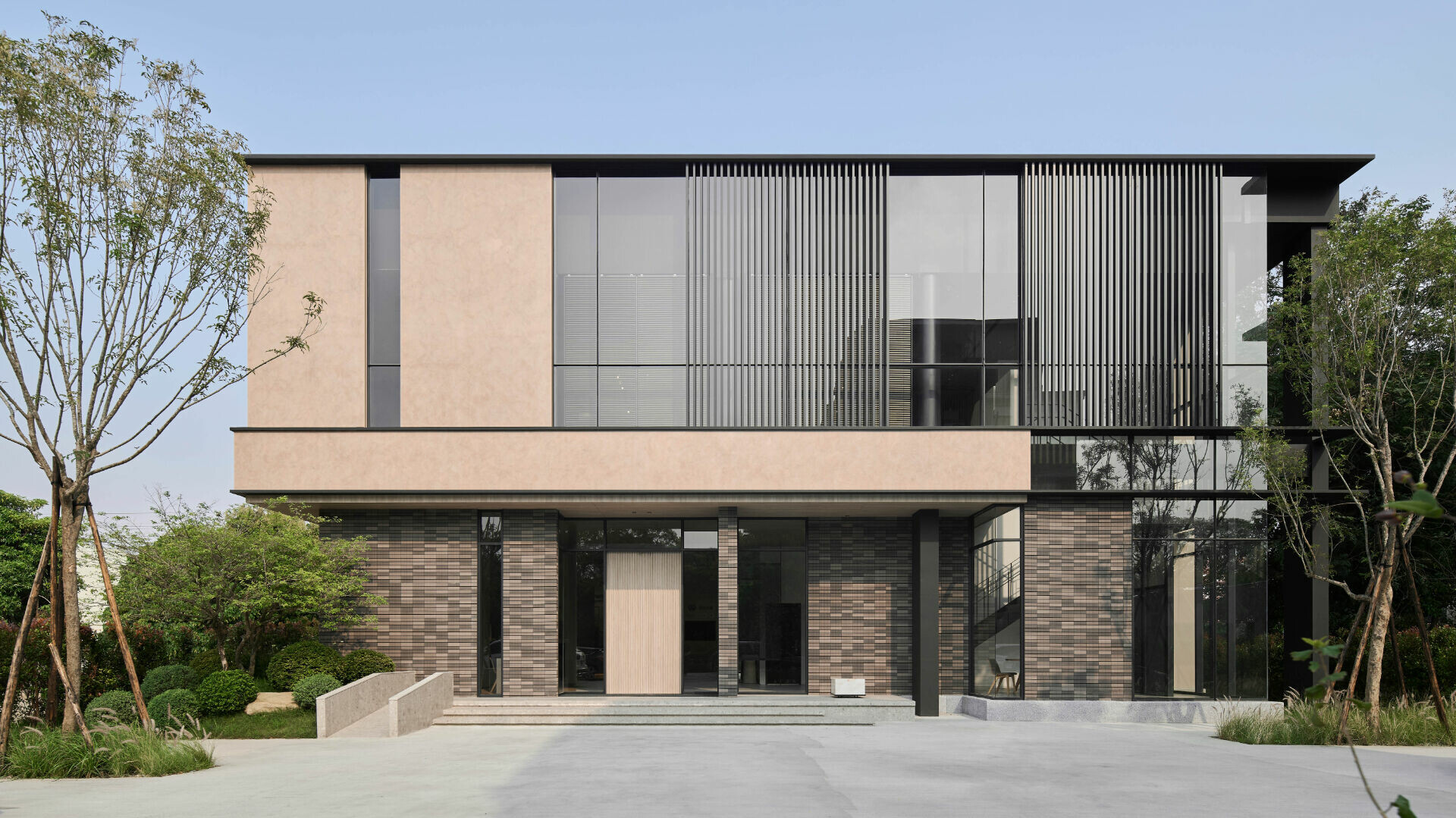
To manage the intense western sun, the second-floor façade incorporates vertical louvers, while timber blinds inside allow fine-grained control of daylight. Subtle linear expressions on the façade echo the image of the railway beyond. On the ground floor, which steps back from the street edge, kiln-fired brickwork forms walls of varying widths, while slender glazed reveals around the solid entrance door introduce the first layer of depth. Inside, the team employed a strategy of spatial separation and offsetting, allowing natural light to filter through and soften the architectural volume. Upstairs, existing structural columns are balanced by a pair of symmetrical feature columns, creating a unified axial composition. Above, bamboo-screen partitions and, below, a planted strip together temper the presence of the load-bearing elements, enabling both sightlines and daylight to flow through. The result is a layered interplay of opacity and transparency.
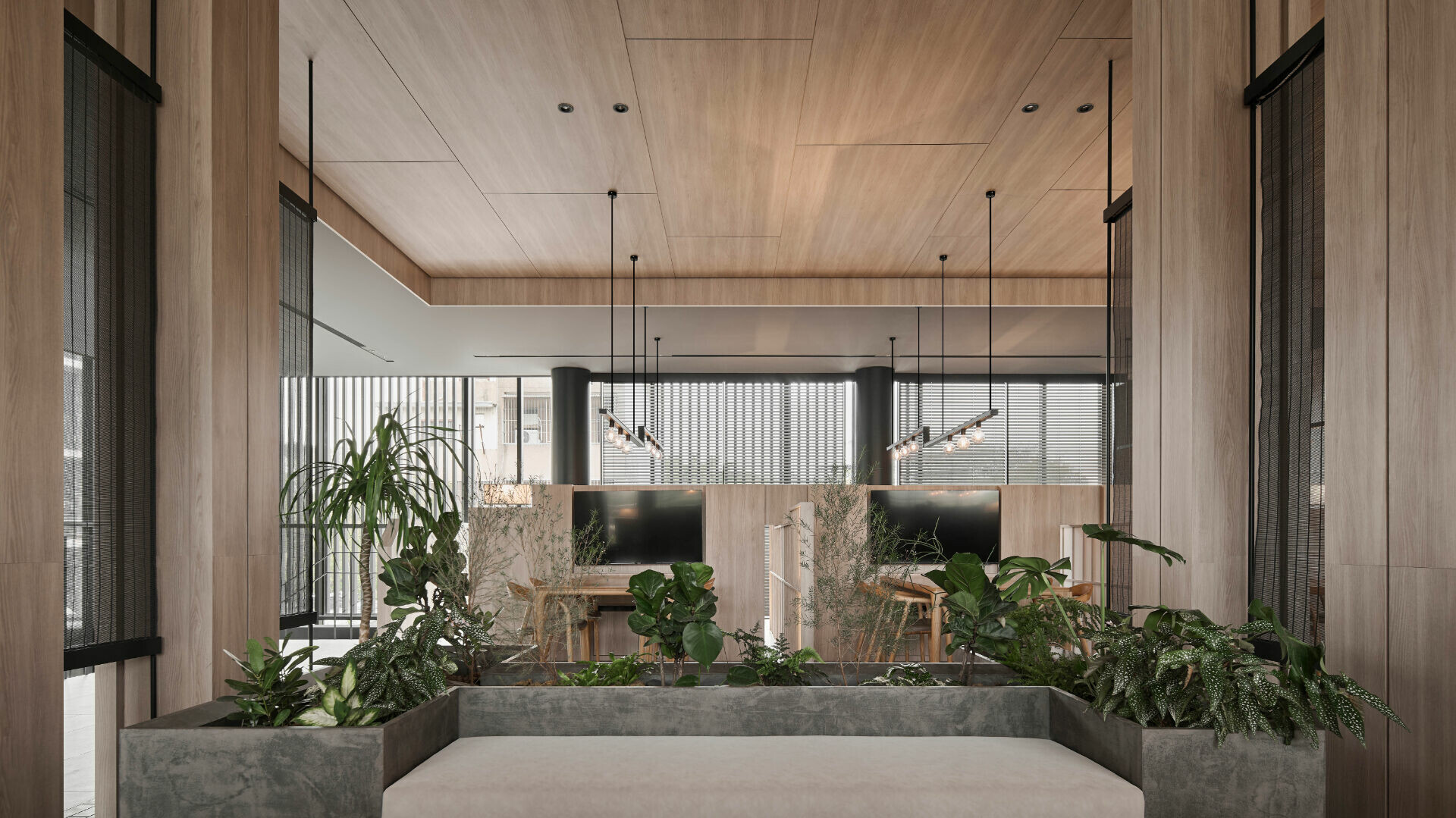
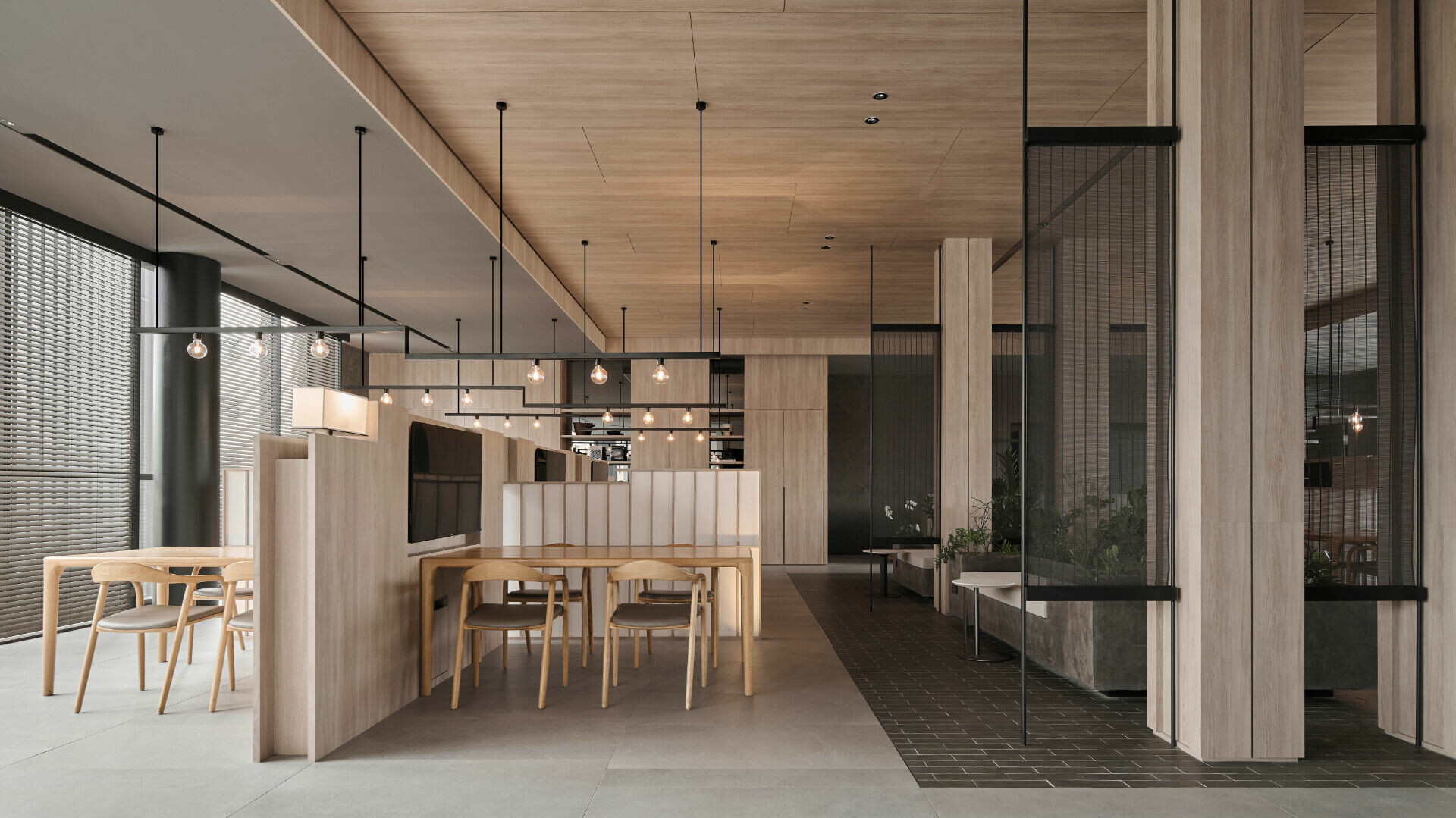
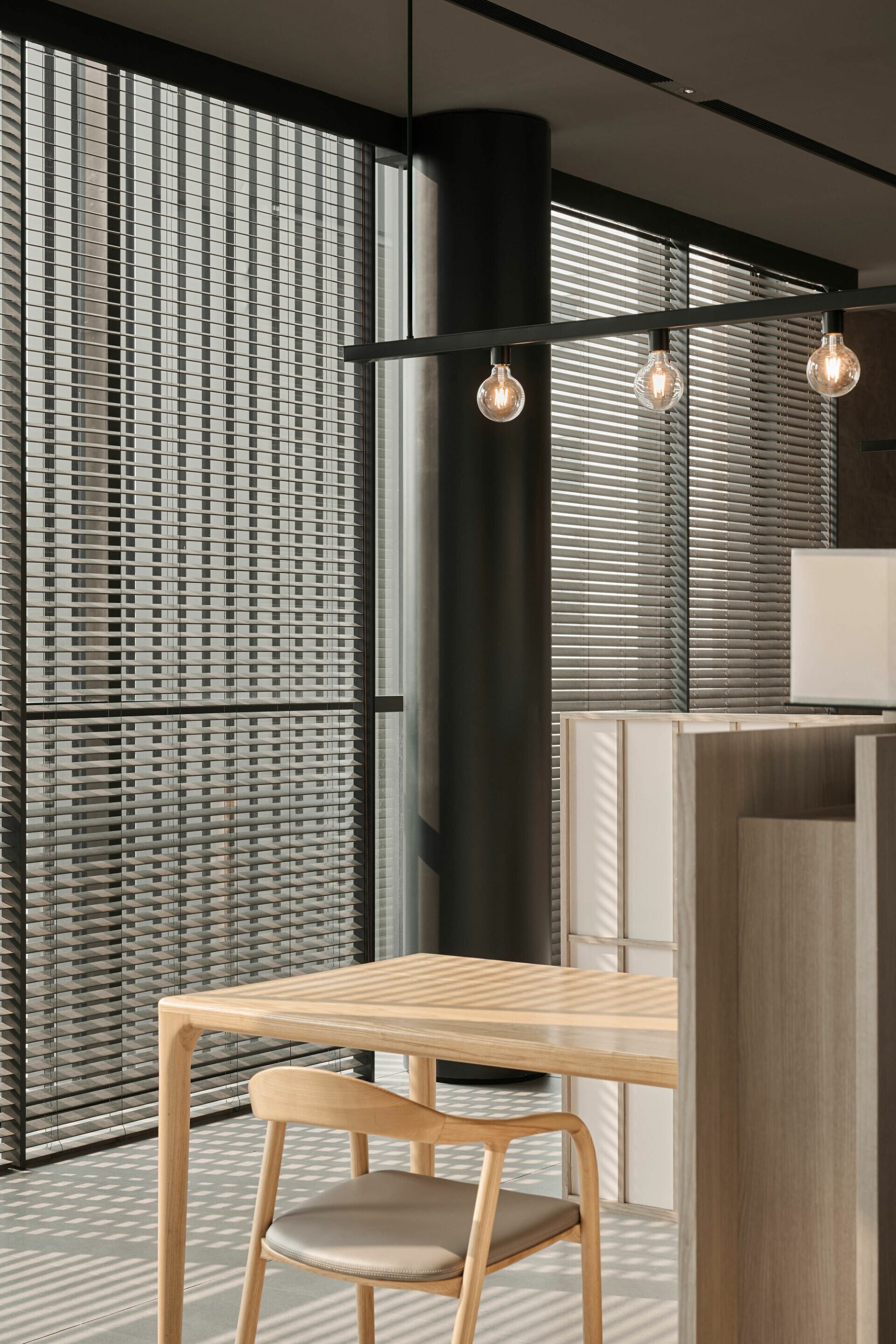
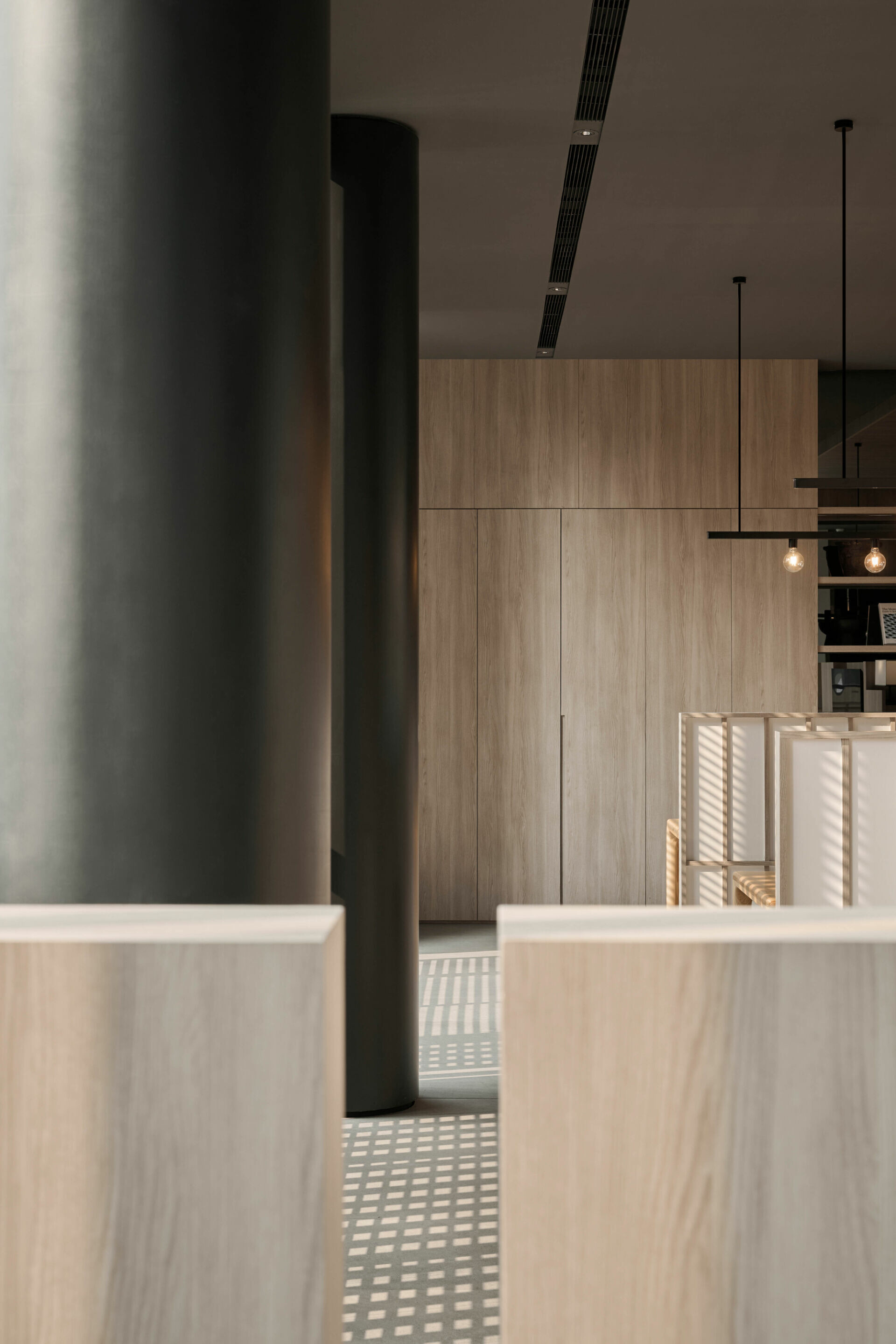
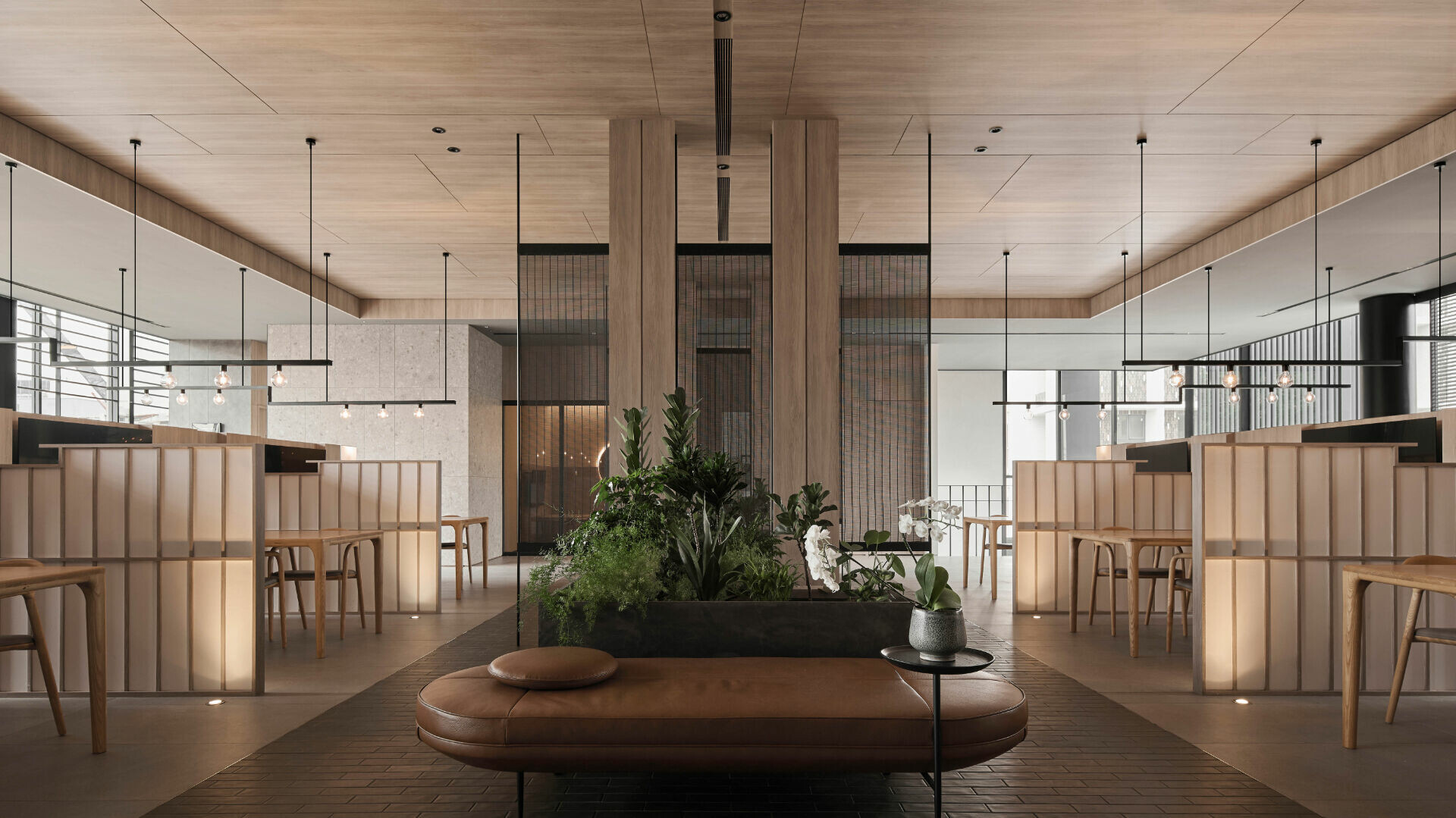
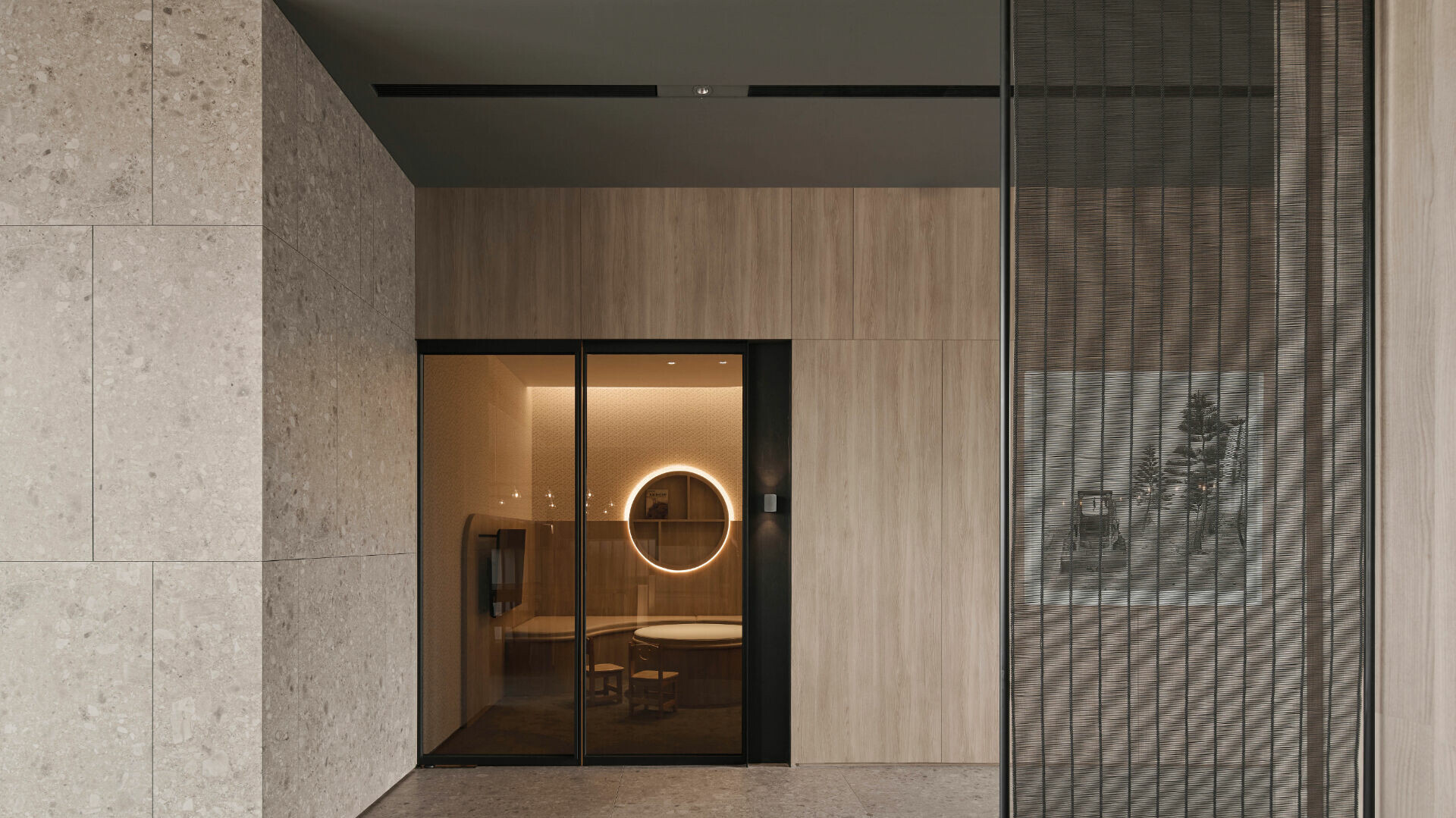
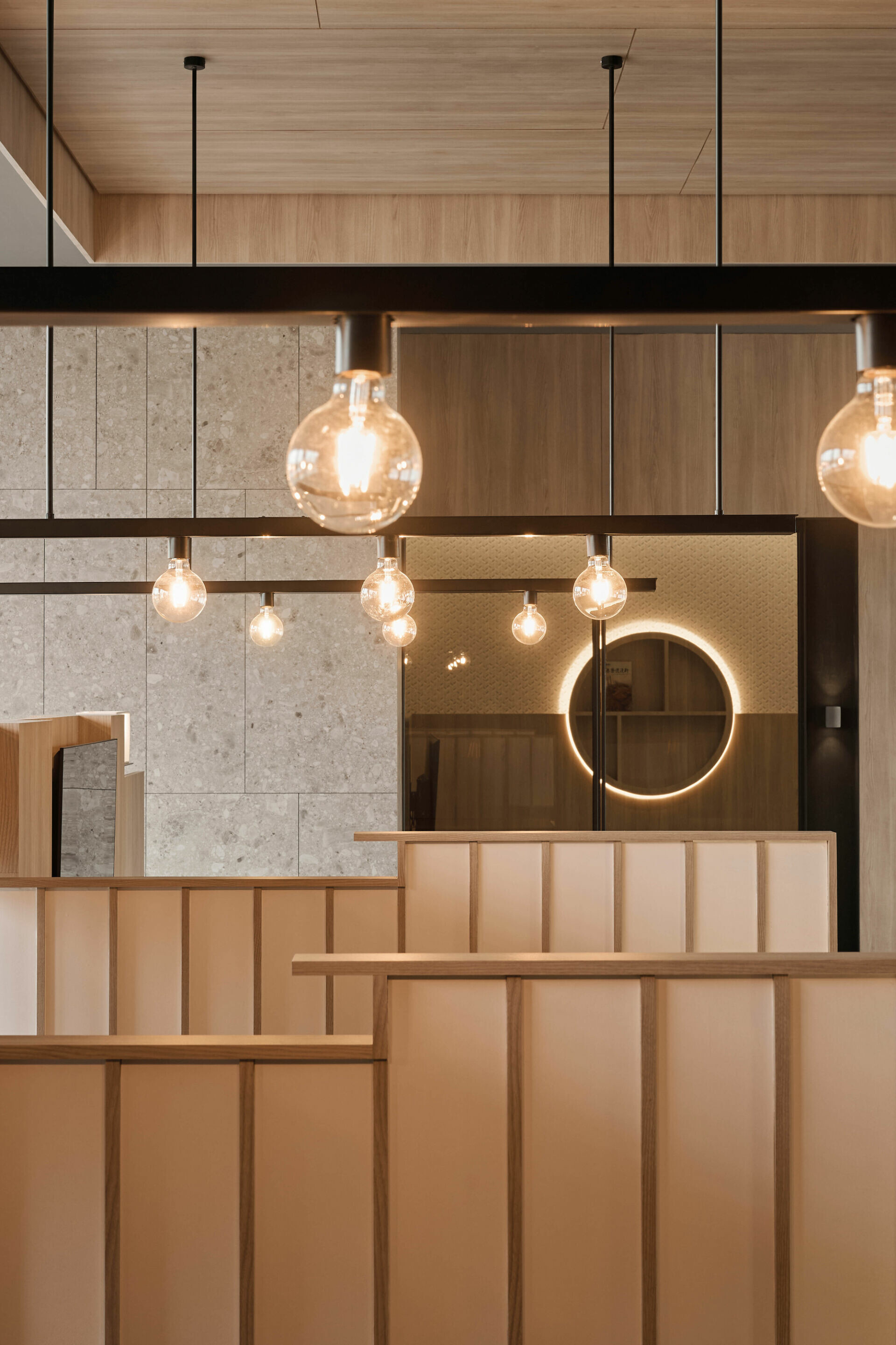
Throughout, the architecture draws on materials associated with collective memory, translating elements of traditional Japanese architecture through a contemporary lens—a reflection of the historical narratives embedded in Tainan. The interior is anchored by a palette of pale timber finishes, complemented by shoji-inspired screens, black bamboo blinds, kiln-fired brick, and tungsten-filament lighting. While subtle shifts in wall and floor materials enrich the spatial experience, the consistent brown-toned backdrop, together with measured contrasts, preserves a sense of visual equilibrium. This sensitivity—to site, history, and the subtlety of material relationships—allows Instay Studio to articulate a restrained yet expressive form of modern Eastern aesthetics. Through the careful orchestration of texture, proportion, and light, the space negotiates the distance between tradition and contemporaneity, offering a quiet, unforced sense of ease. Even a brief visit leaves a lasting impression—not only of the architecture, but of the city itself.