Mapleton House
Some houses transcend the idea of dwelling; they become vessels that carry history and culture, guides for emotion and experience, and frameworks that shape how people engage with their surroundings. Encountering this home in the rural township of Mapleton, Australia, its presence feels immediately composed and unforced—the clean outline drawn by crisp lines, the warmth of natural materials, and the geometric openings that frame the landscape. Over time, each day spent living here gradually reveals the depth concealed beneath its pared-back form, strengthening the residents’ bond with the land on which it stands.
In truth, every conversation at Mapleton House begins with the mountains. Atelier Chen Hung learned that the Blackall Range was once an important gathering ground for the Gubbi Gubbi people, where Bunya Nut Festival ceremonies of song and dance were held. According to local lore, the two peaks across from the range—Mount Ninderry and Mount Coolum—were formed from the bodies of two young Aboriginal warriors locked in a dramatic battle for a beautiful woman named Maroochy. In the end, the defeated Coolum and the angered Ninderry were transformed into mountains, the while the grief-stricken Maroochy fled into the Blackall Range; her tears flowed down the ridge to the sea and became the Maroochy River.
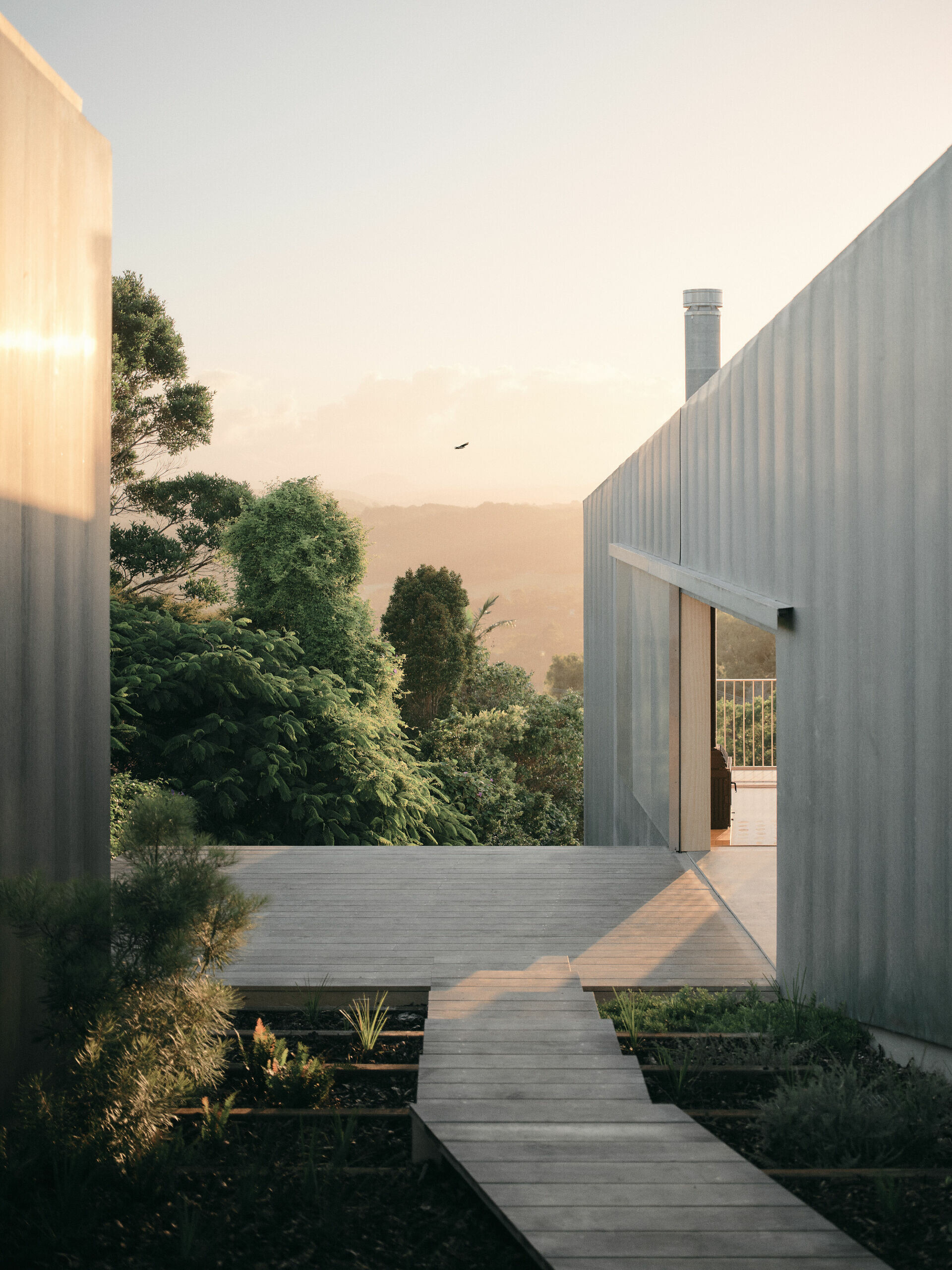
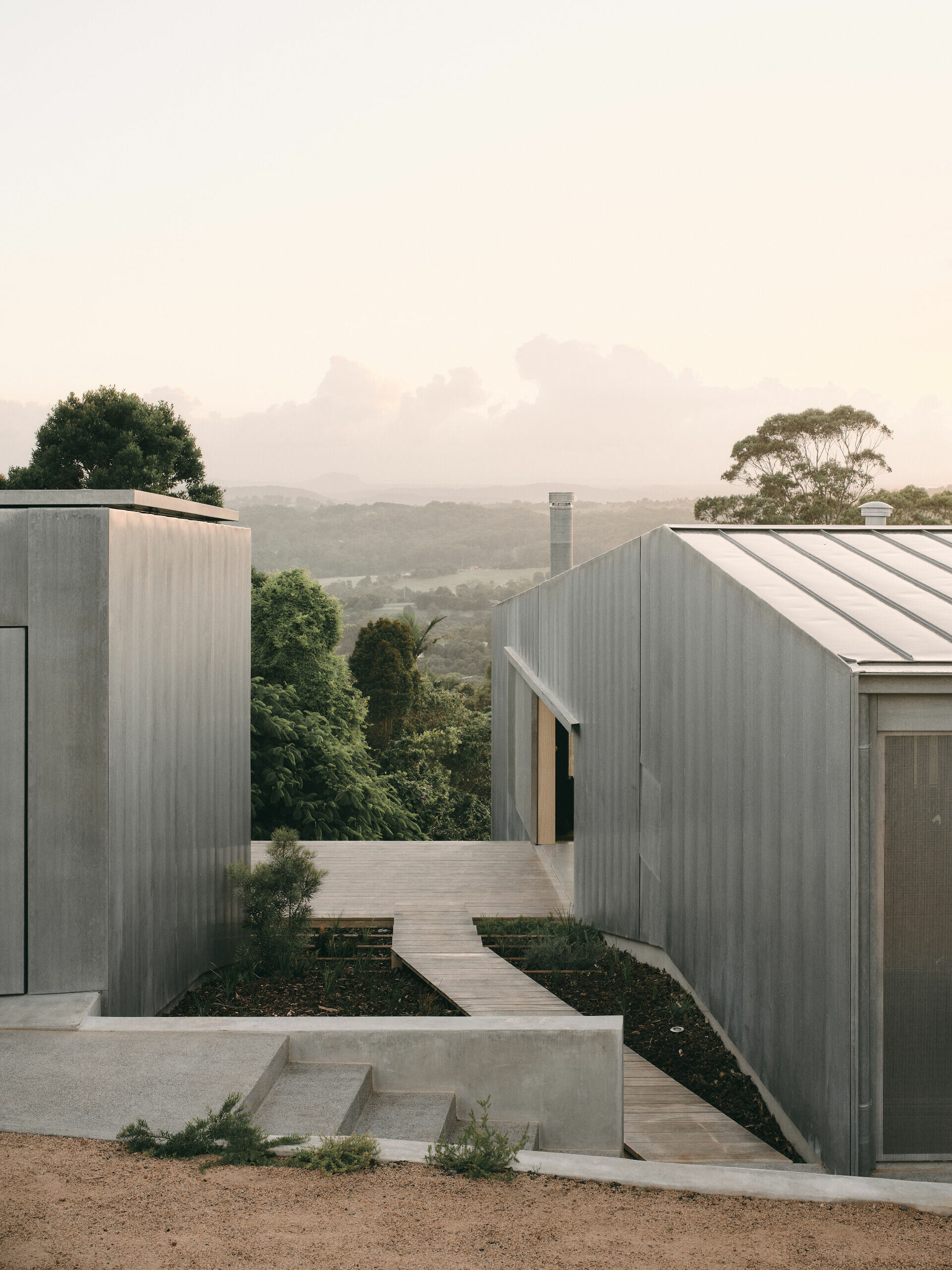
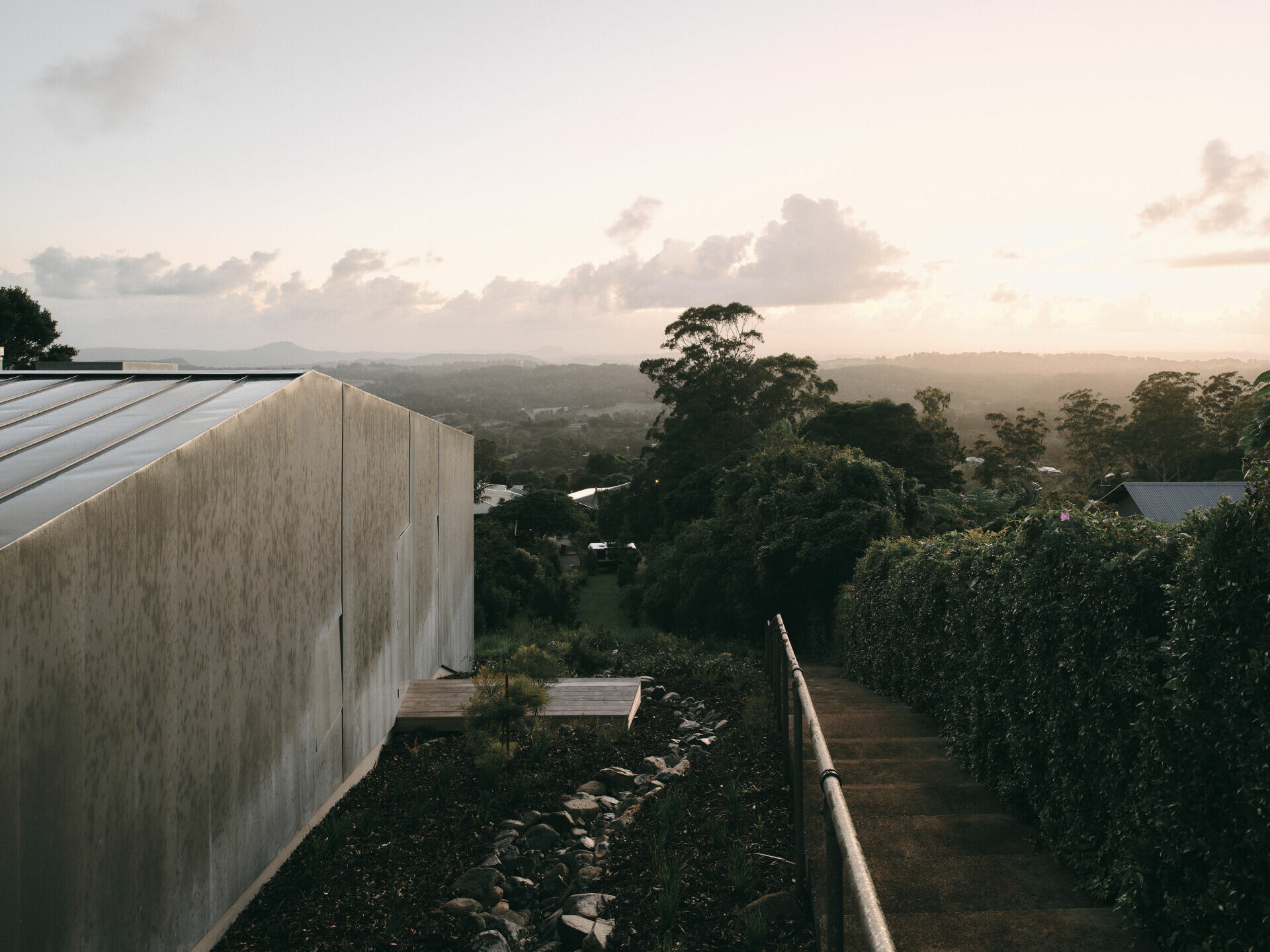
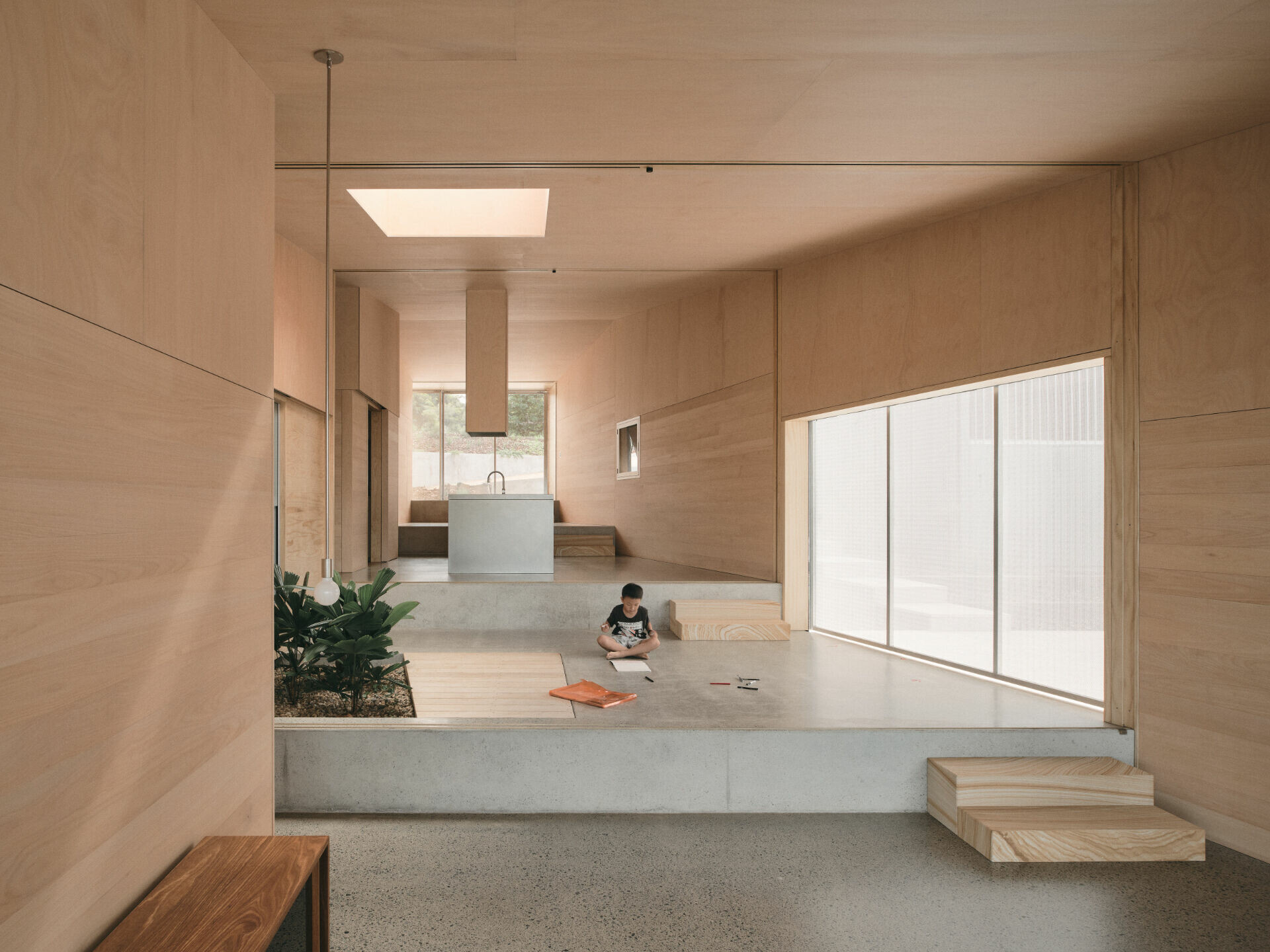
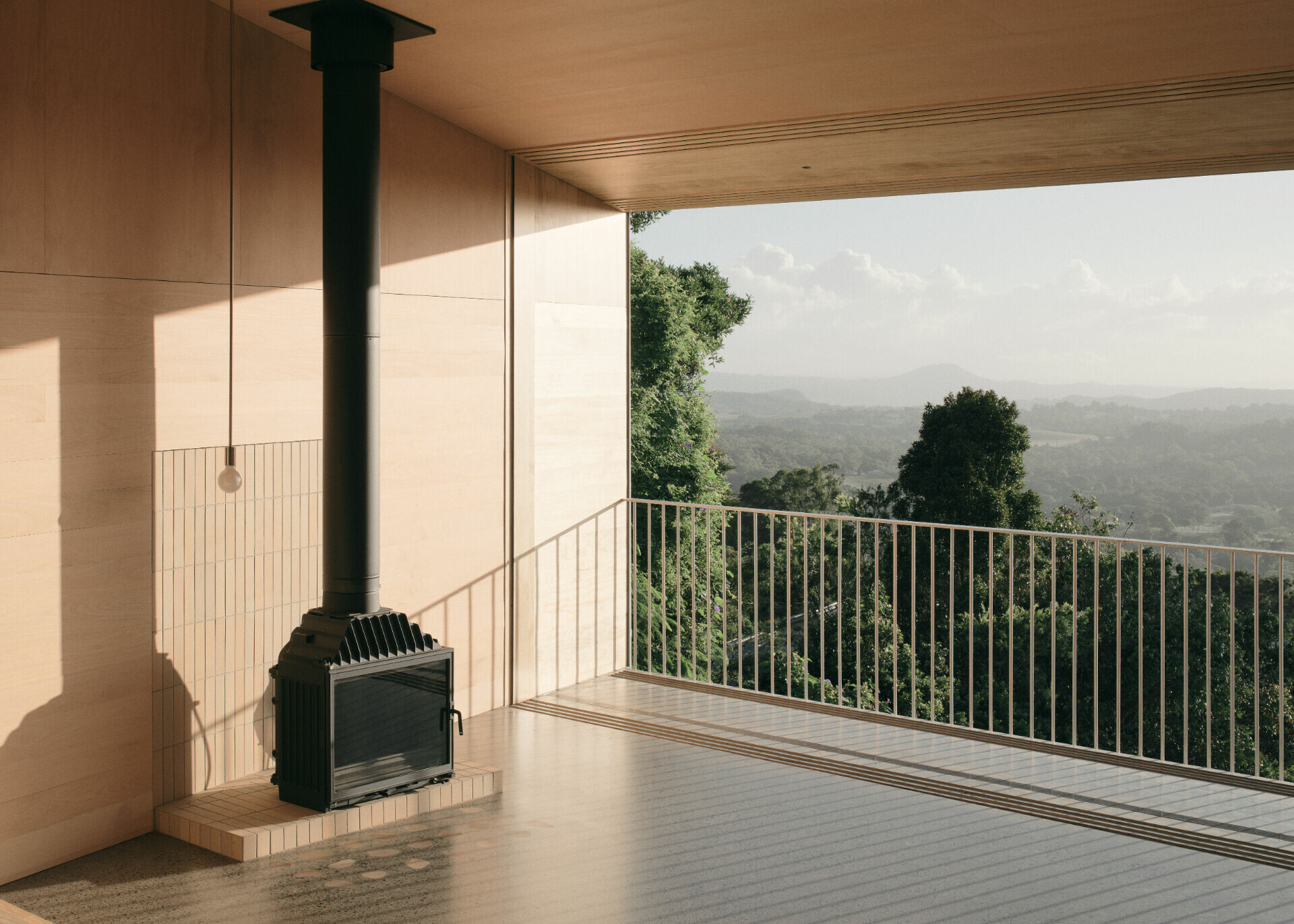
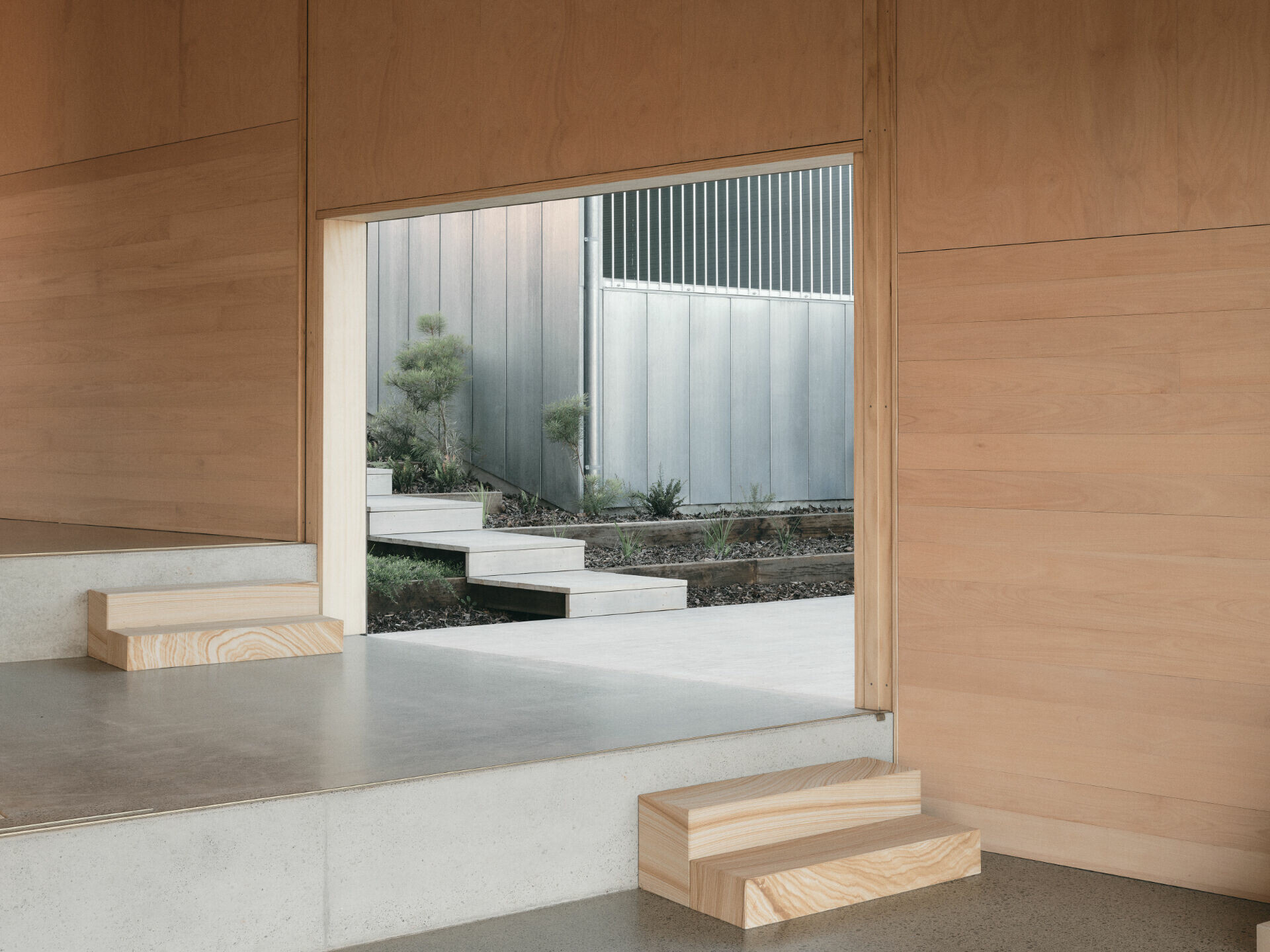
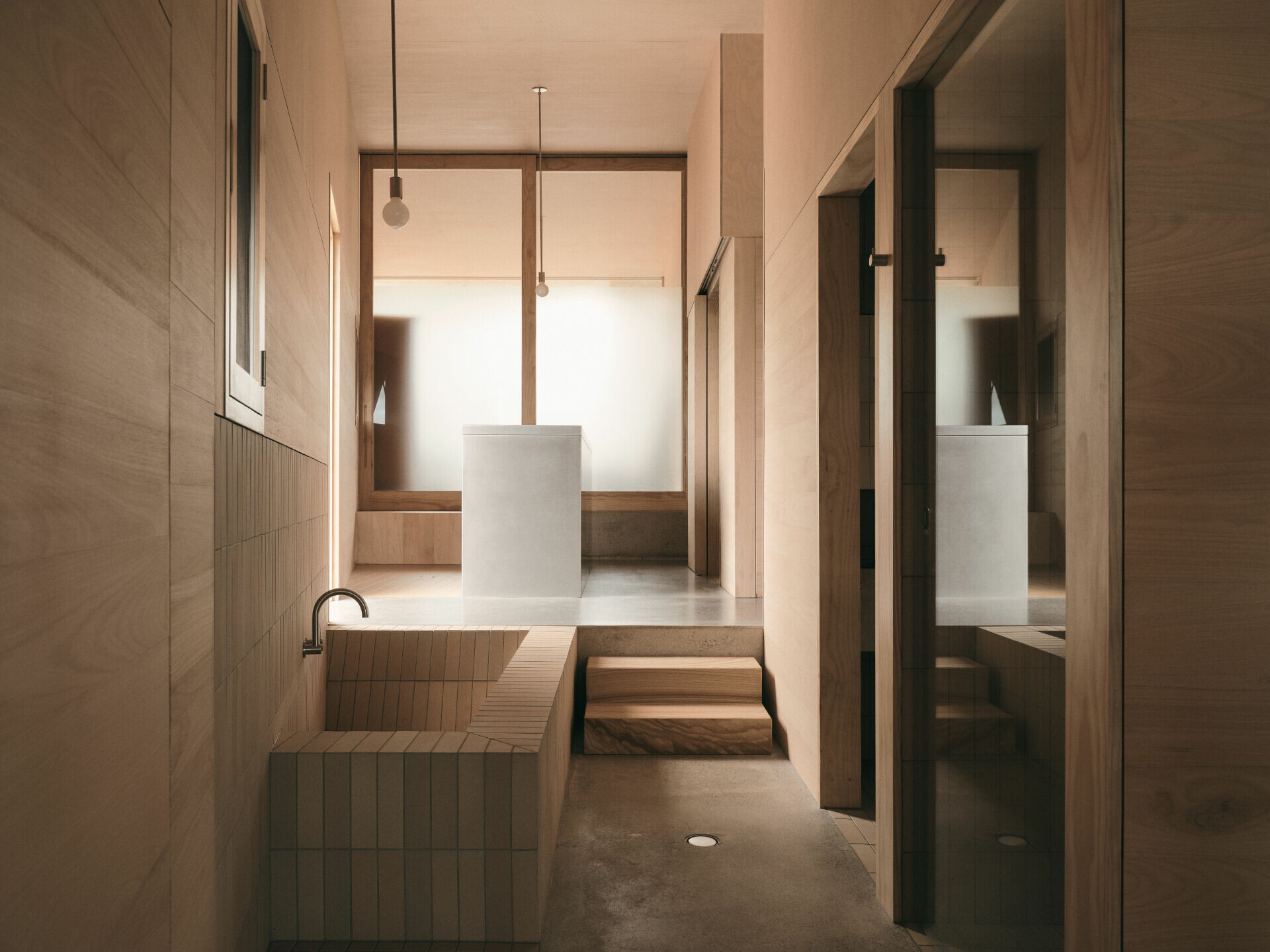
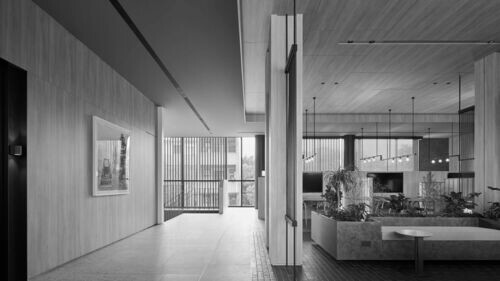
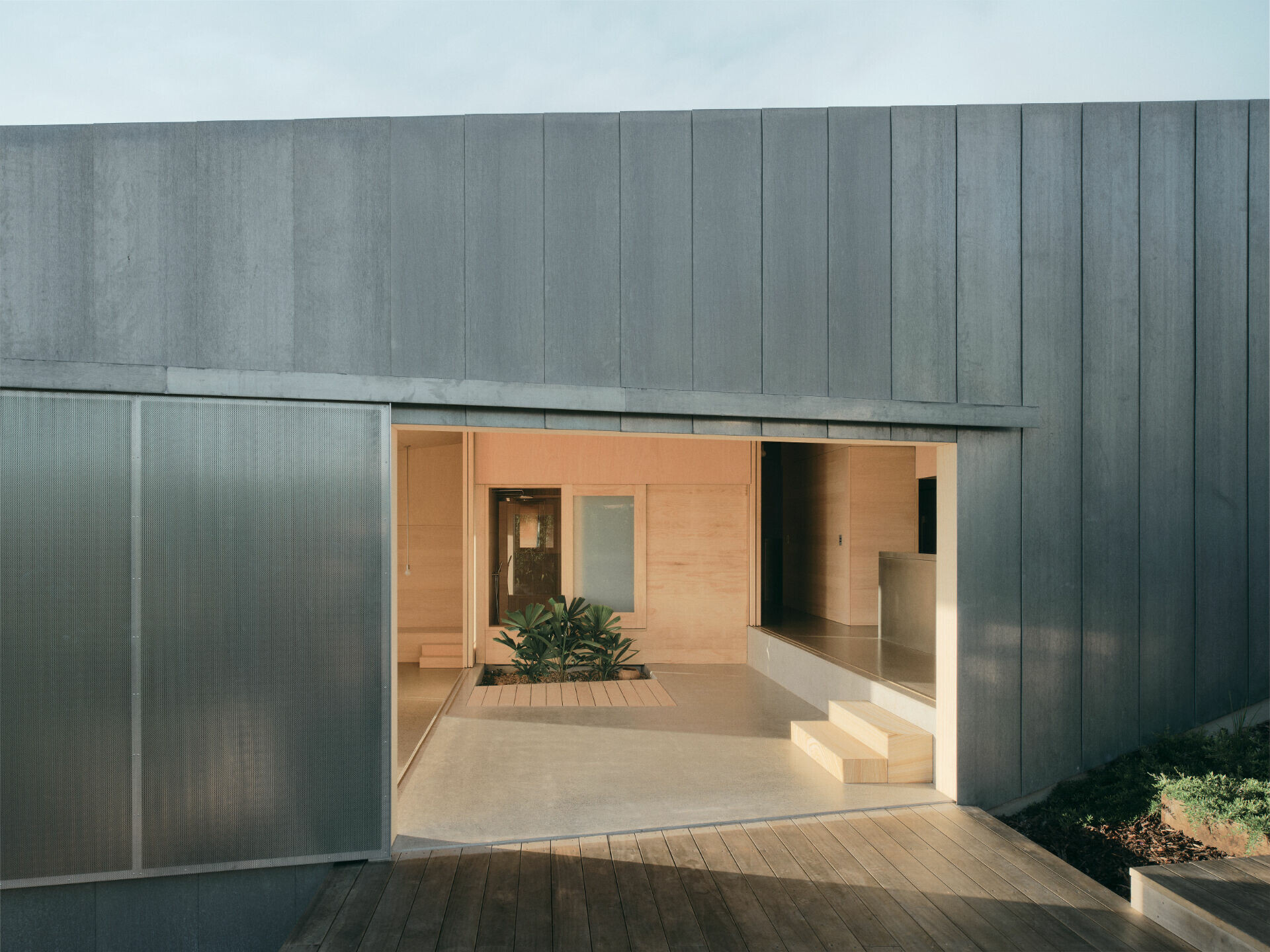
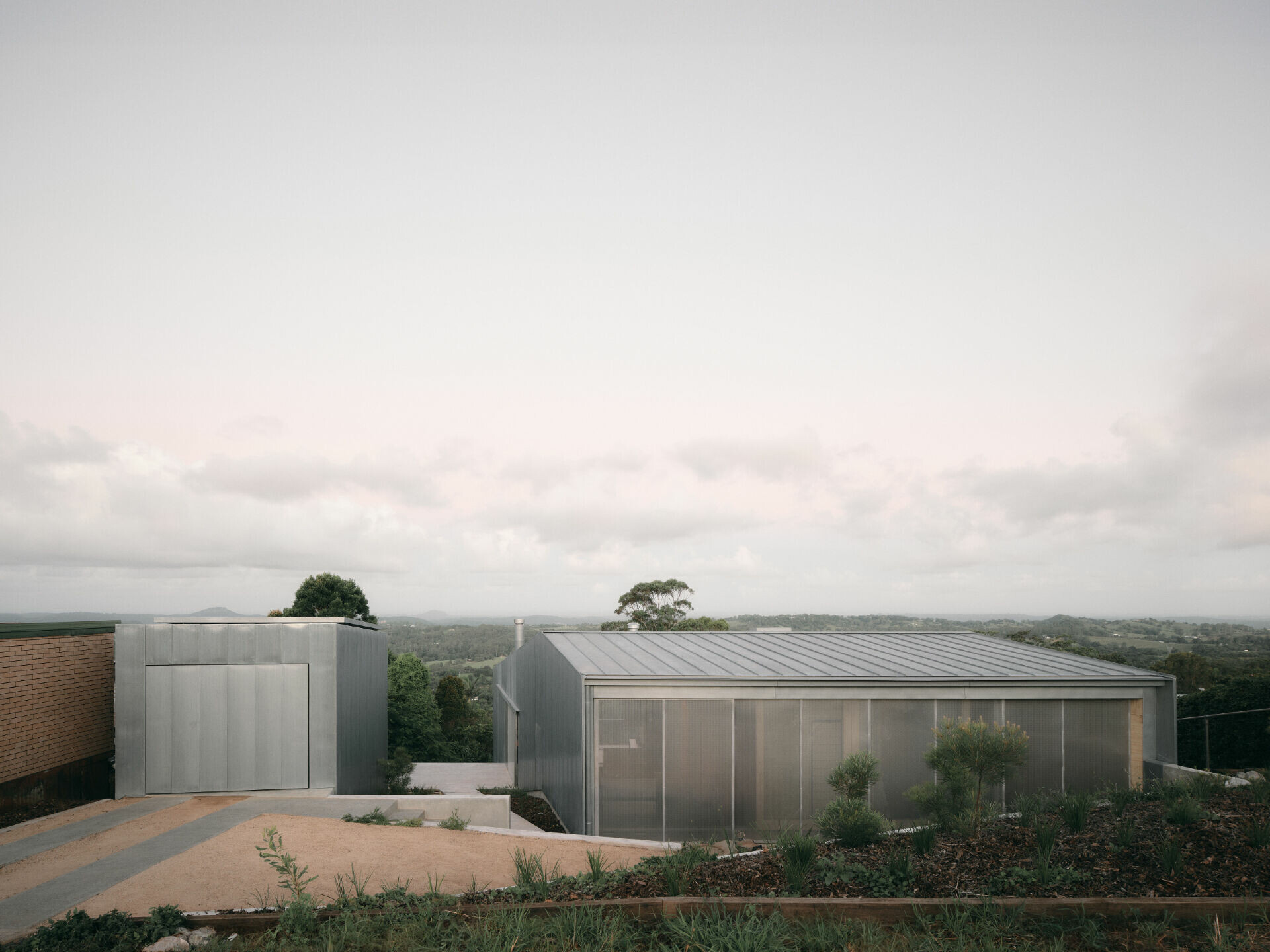
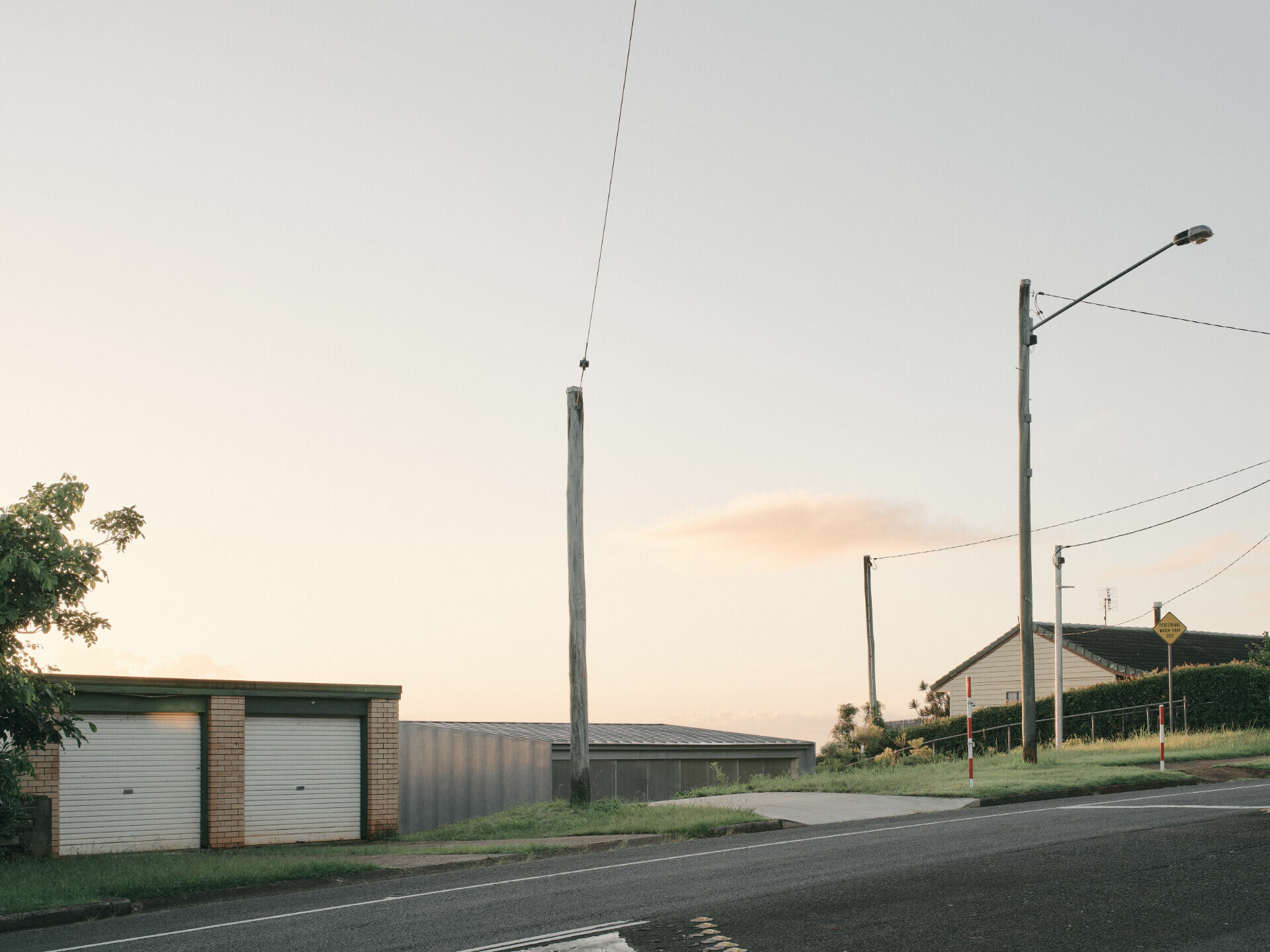
Beyond this dreamlike narrative, the architects also learned that the site sits at the center of the town’s main street, where a small church once stood before its demolition in 1970. The public staircase beside the plot, however, remains in daily use. In response, the designers set out to create a home capable of conversing with this layered landscape memory. Two volumes follow the natural slope, with the main house organized around stepped platforms that echo the neighbouring public stair. A deliberately angled façade aligns with key mountain views, so that as the owners enter from the lower side of the site and move upward through the interior, the spatial sequence evokes the sensation of walking through the landscape itself, with the surrounding scenery unfolding gradually along the way. While the bedrooms and bathrooms retreat inward to preserve privacy, the primary circulation remains open and fluid, weaving outdoor space into the architectural plan and softening the threshold between inside and out. Native planting extends subtly toward the interior, and residents can step outdoors along the covered passage linking the main house and the garage, moving between the two volumes while staying attuned to the shifting conditions of the environment. In this way, the house continues the sense of public presence long associated with the mountain range.
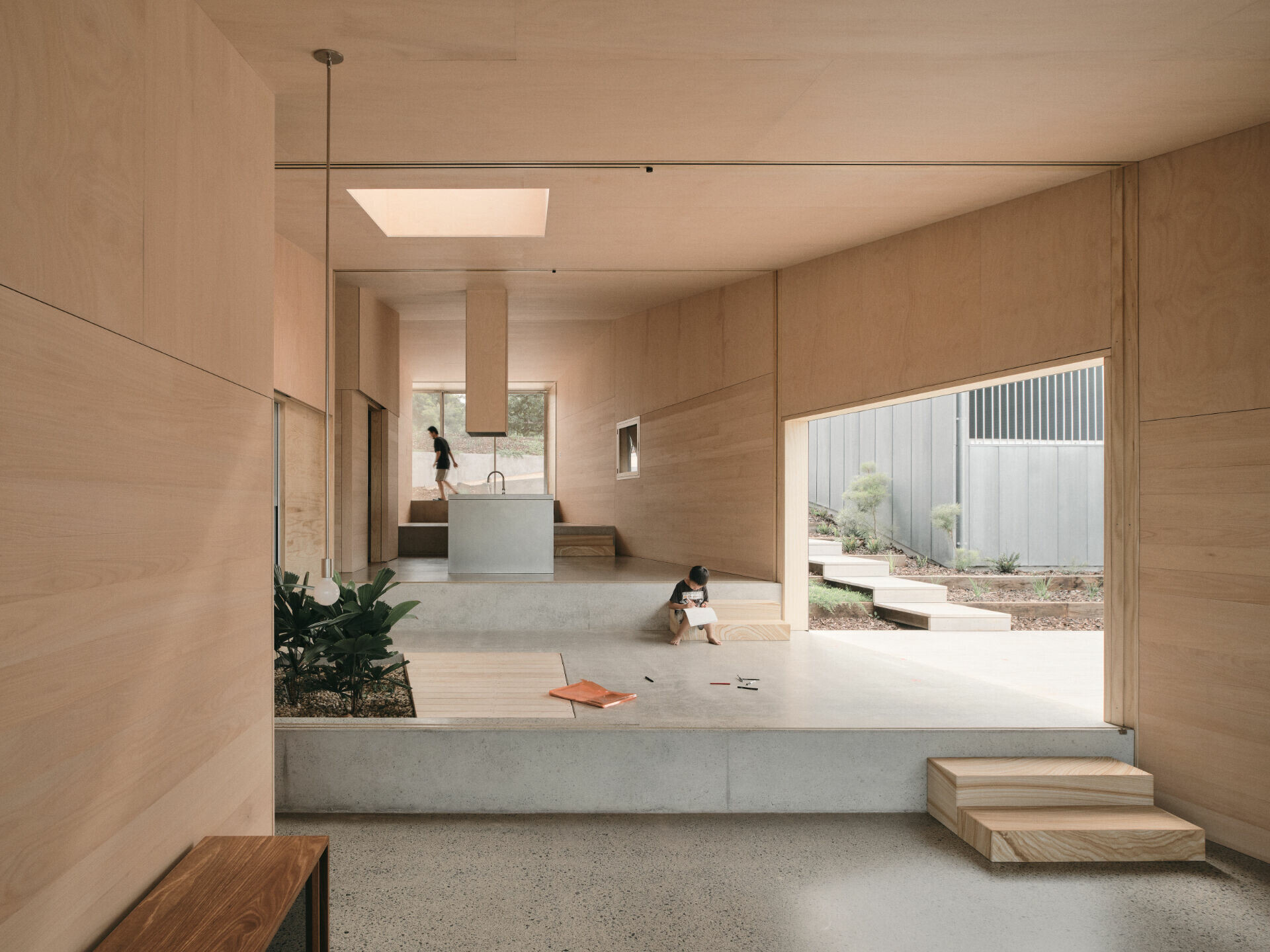
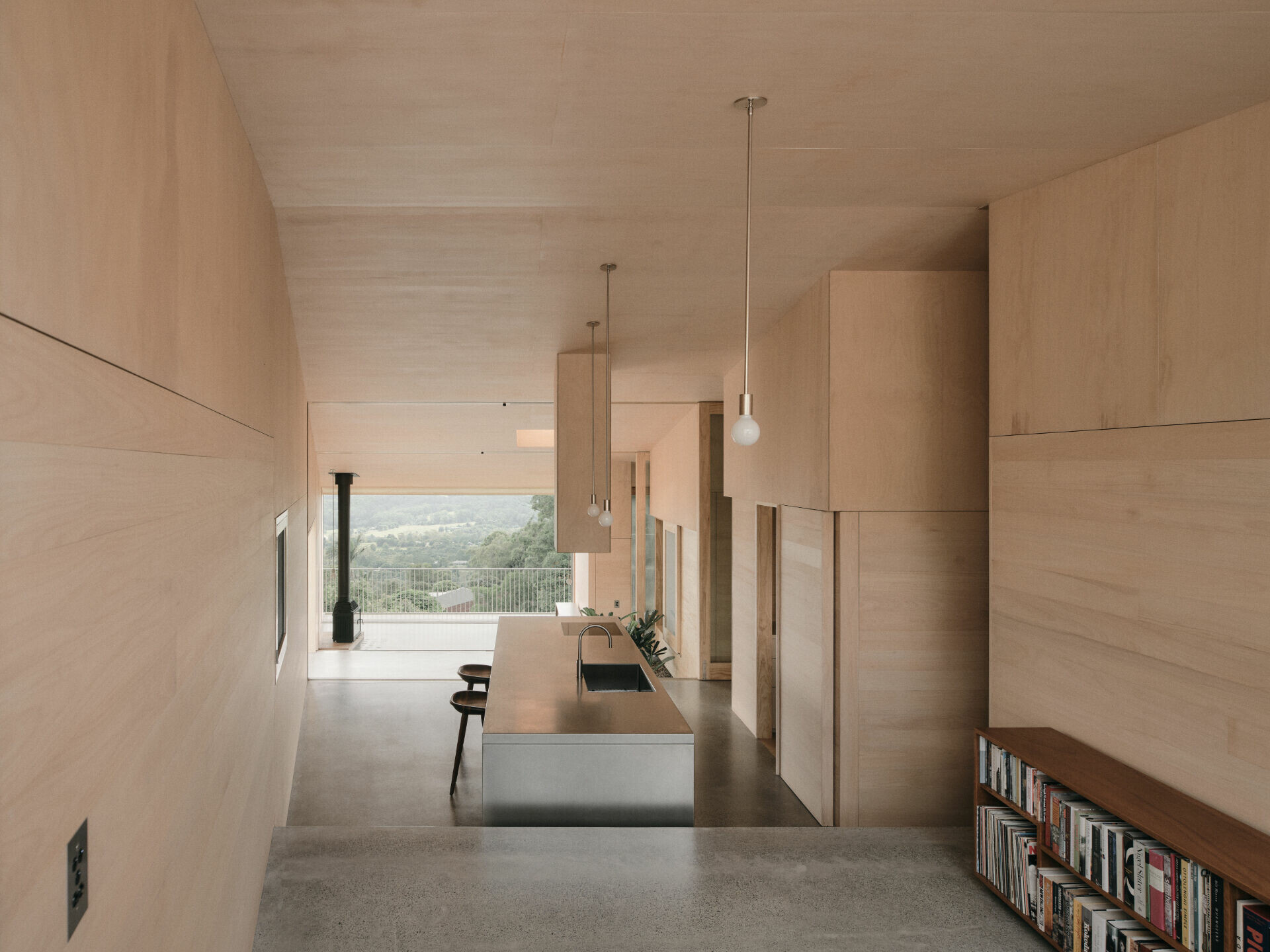
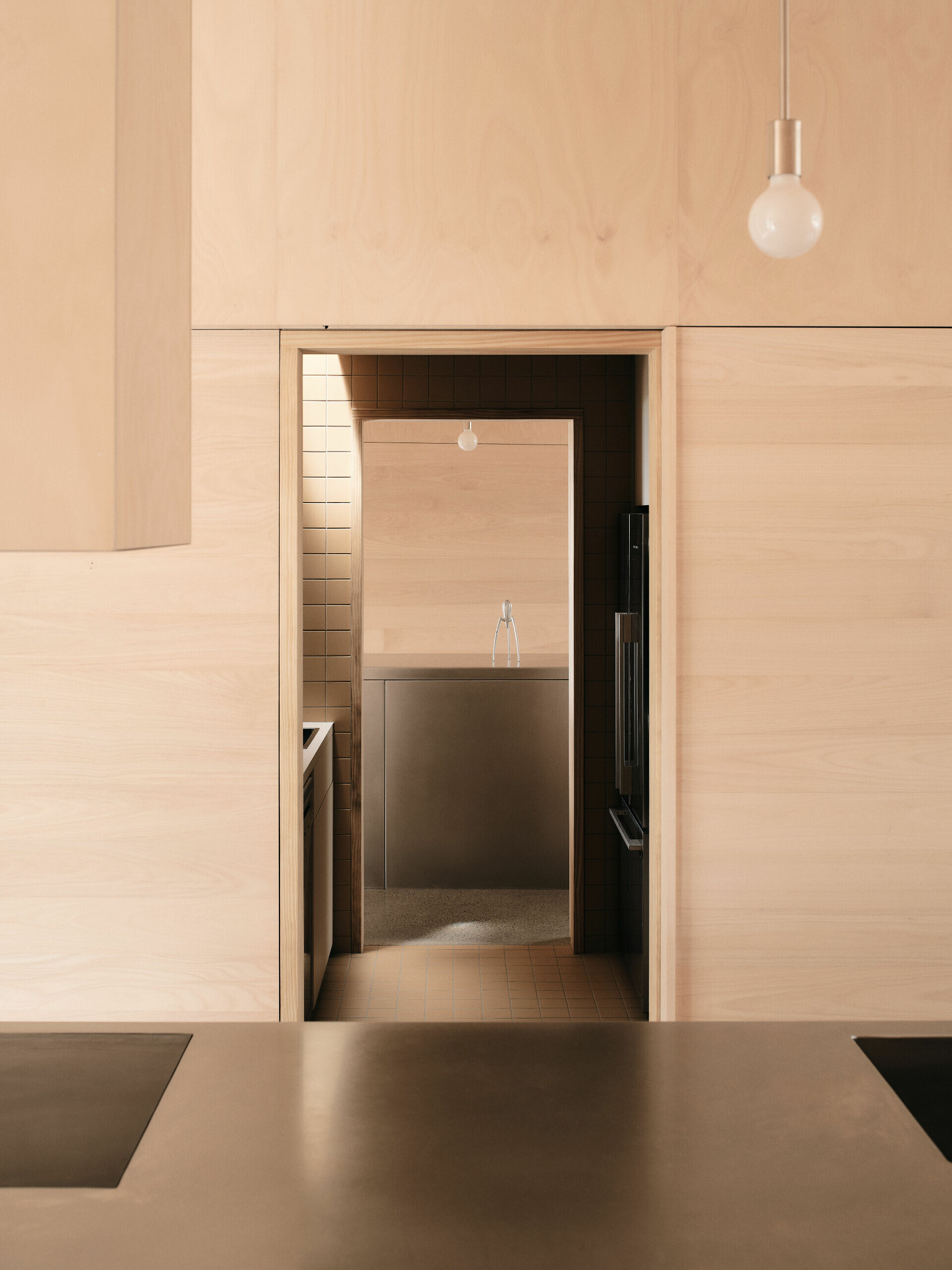
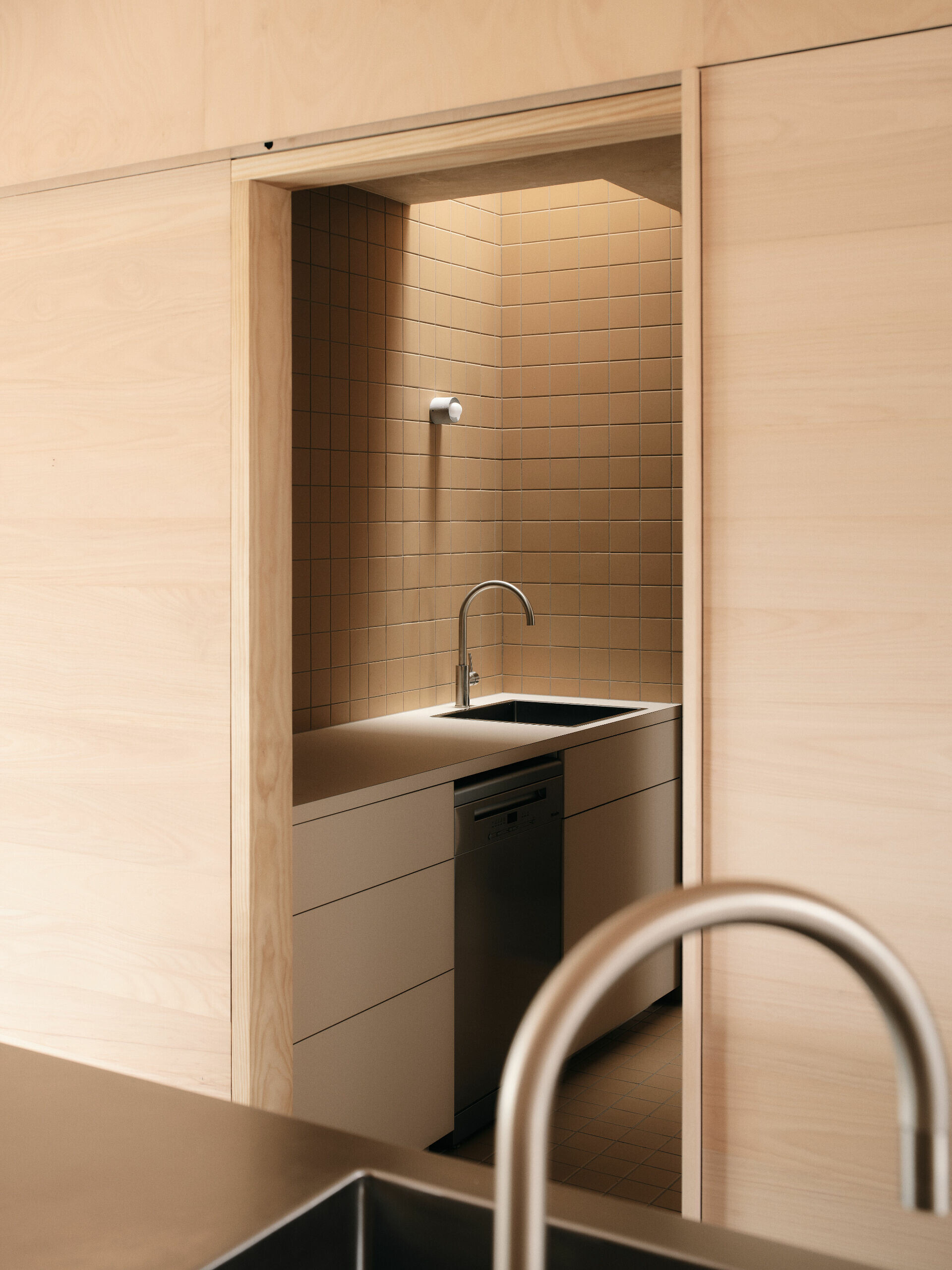
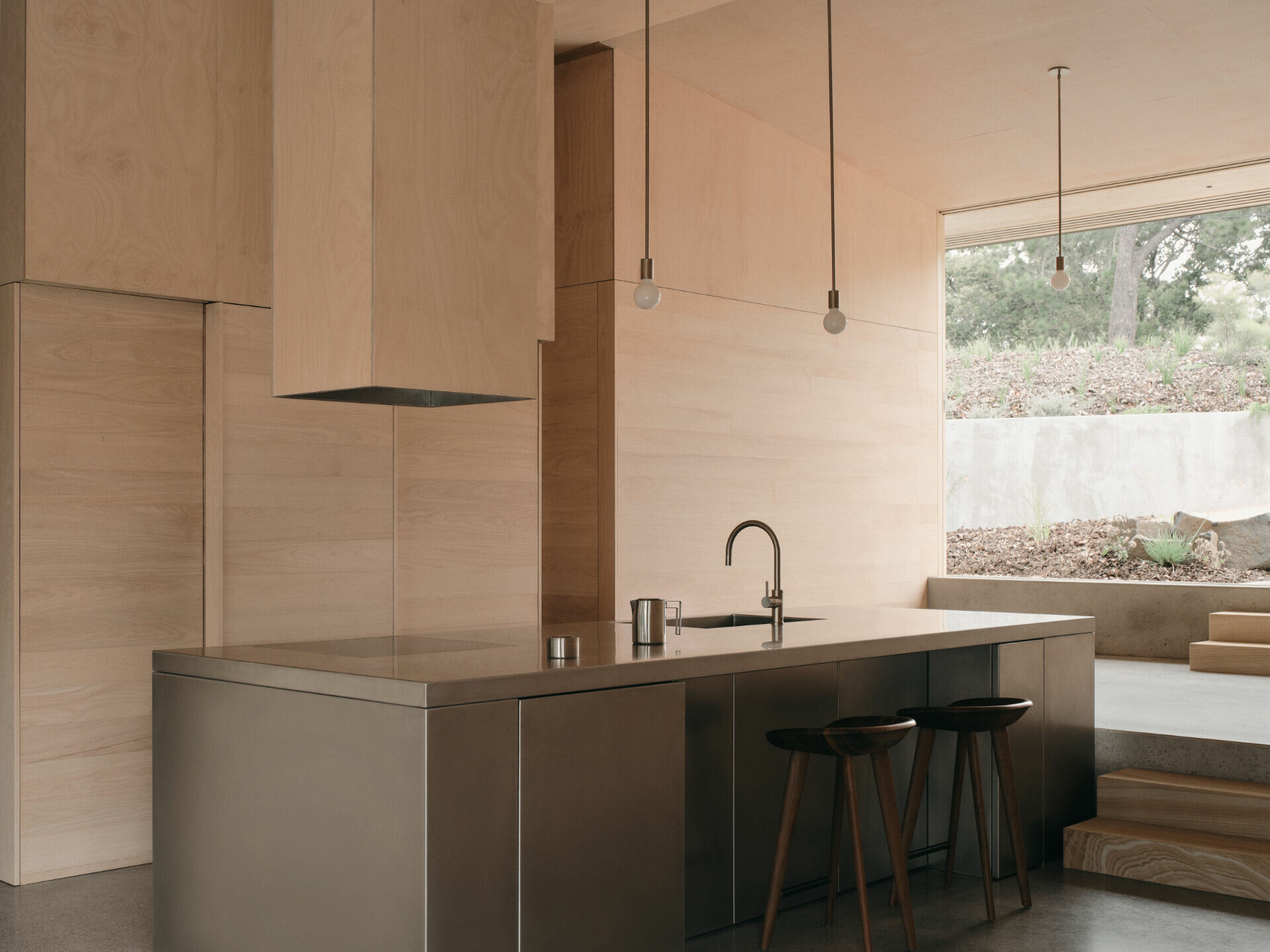
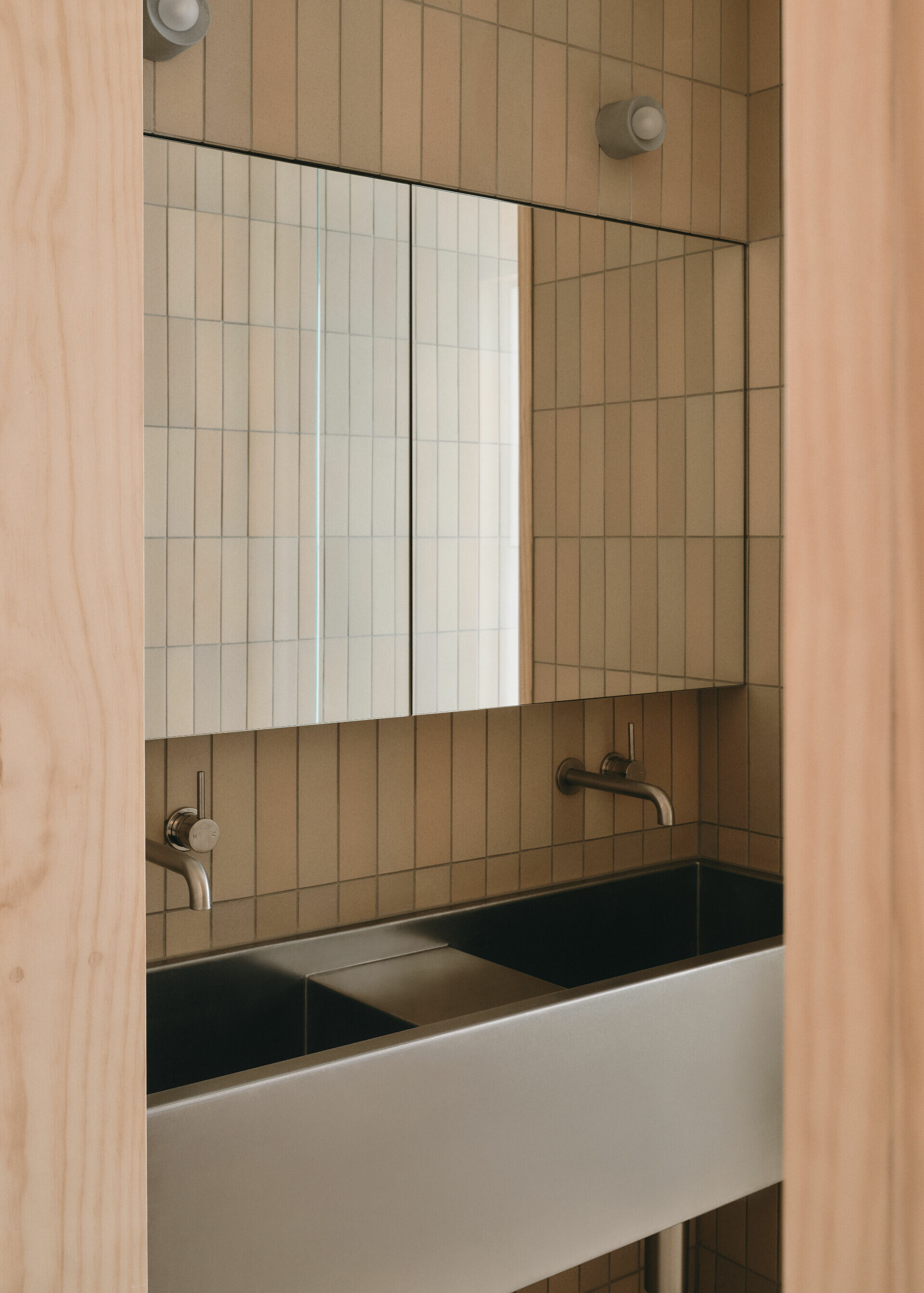
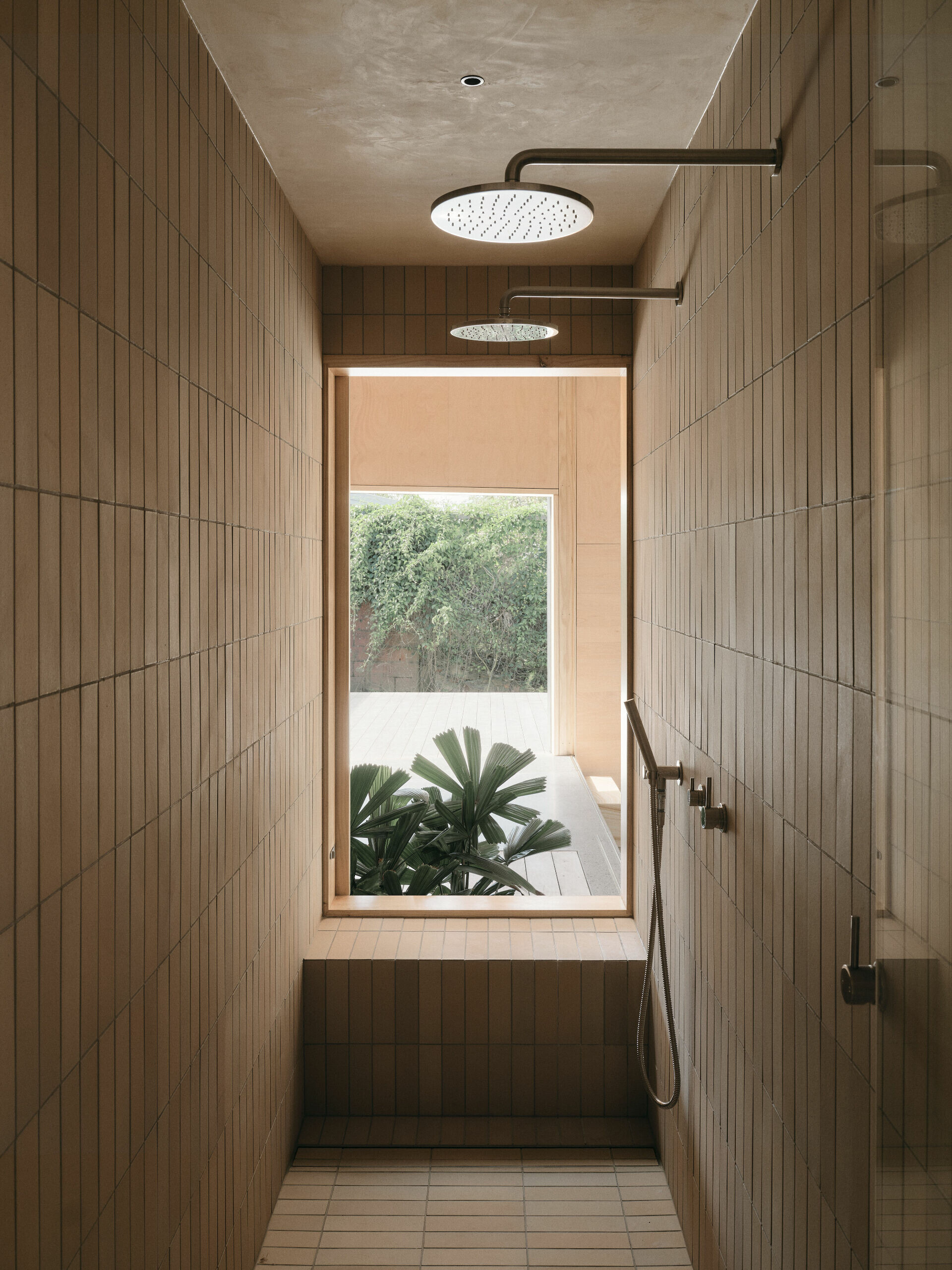
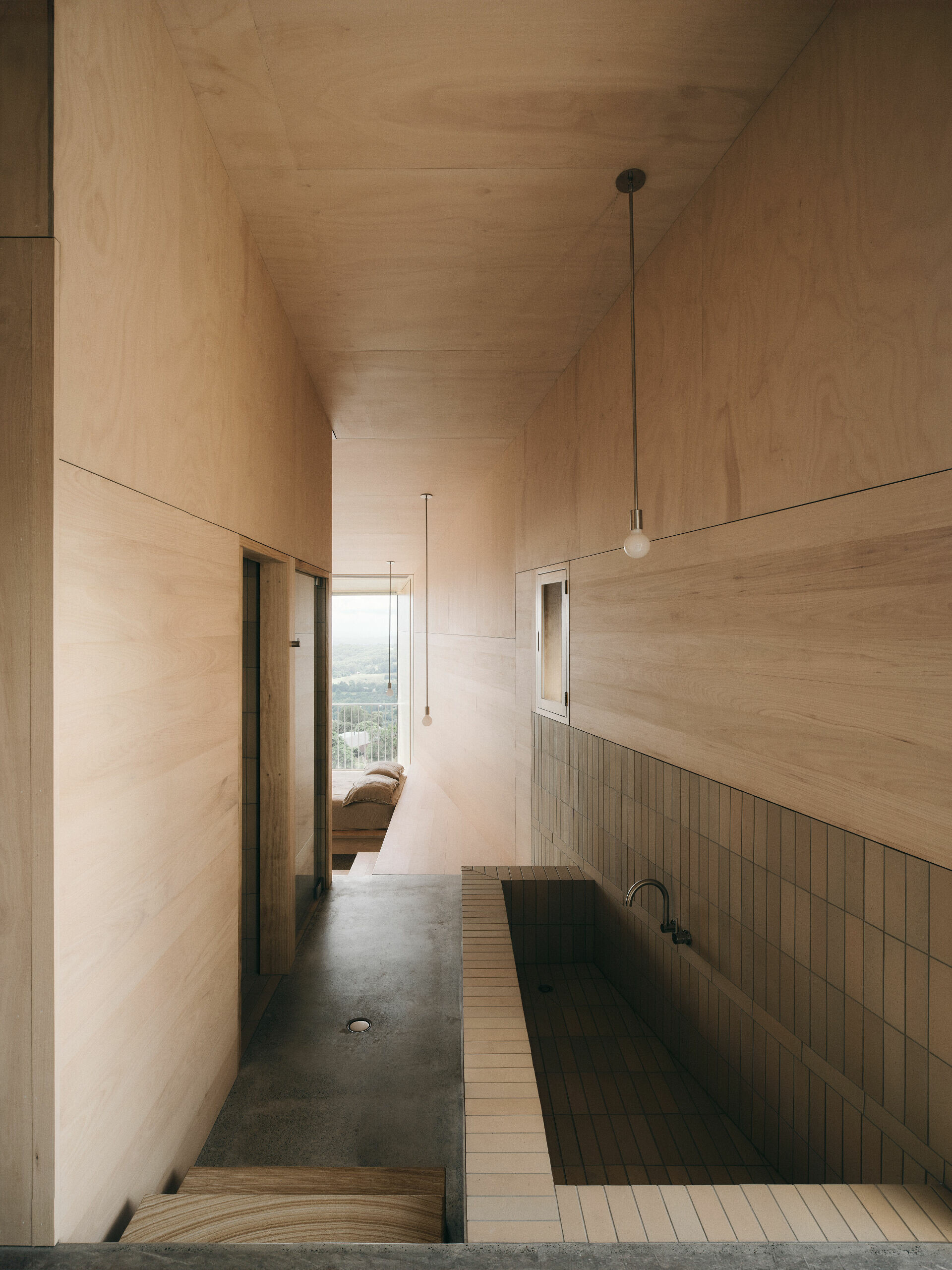
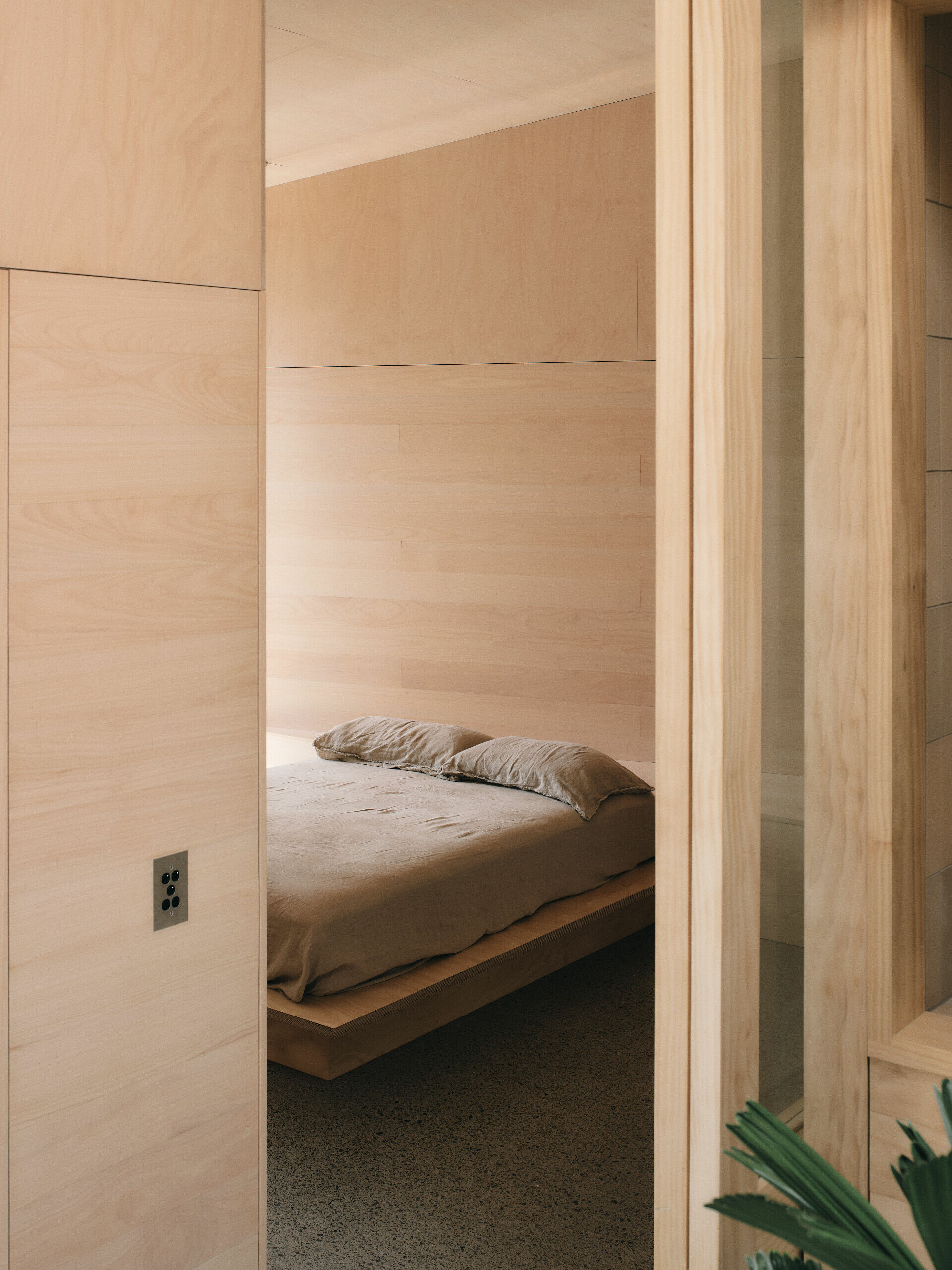
Both the spatial arrangement and the material palette reflect reflect the studio’s regard for the natural environment. Set within lush greenery, Mapleton House appears with an unadorned, almost untouched form. The exterior is clad in natural zinc, accentuating the traditional pitched-roof profile; as the metal weathers, it will visually settle into the surroundings and echo the tones of the distant mountains. Inside, locally sourced Queensland Silver Ash, Hoop Pine plywood, and yellow sandstone shape a harmonious, expansive atmosphere that captures the spirit of the place. To support the owners’ commitment to sustainable living, the building is oriented due east to take advantage of summer breezes rising from the slope. Openings along the side of the outdoor terrace enhance natural ventilation and daylight, while the heat-retaining concrete floor slab helps keep the interiors warm during winter. Aluminium sliding screens offer adjustable control over airflow, shading, and privacy, ensuring that comfort and seclusion never sever the residents’ sensory connection to the outdoors. Notably, the home is equipped with a compact 3.5-kilowatt solar power system whose surplus energy can be fed back into the grid, resulting in carbon-negative operational energy use. A 40,000-litre twin water-tank system supplies all household drinking and washing water, further enabling a mode of living grounded in coexistence with the natural environment.