GRAND URBAN Reception Center
After an intense session of brainstorming and physical exhaustion from prolonged focus, one lifts their gaze toward the city’s varied skyline. In that moment, the mind drifts to a daydream—grasping the long-sought key to an ideal home, eager to unlock a new chapter in life. It’s a feeling many can relate to: the quiet anticipation of a future imagined, now seemingly within reach. Stepping into the Sweeten Real Estate Group’s pre-sale center, that distant dream takes tangible shape. But what prompts one to walk through its doors? As visitors move through the space, experience the surrounding environment, and explore the mock-up units, the once-blurry contours of a personal future gradually sharpen, quietly igniting a sense of possibility for what lies ahead.
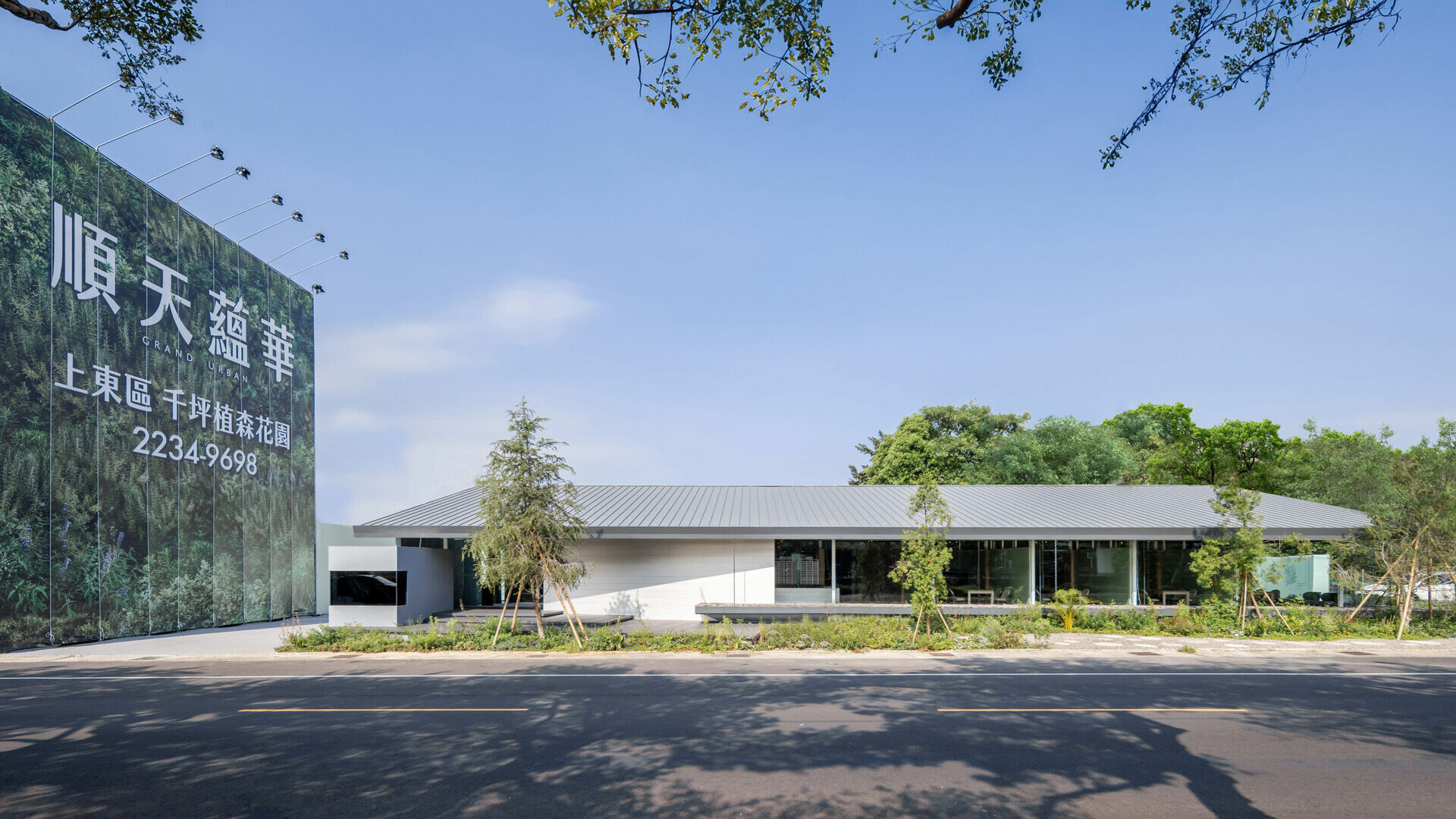
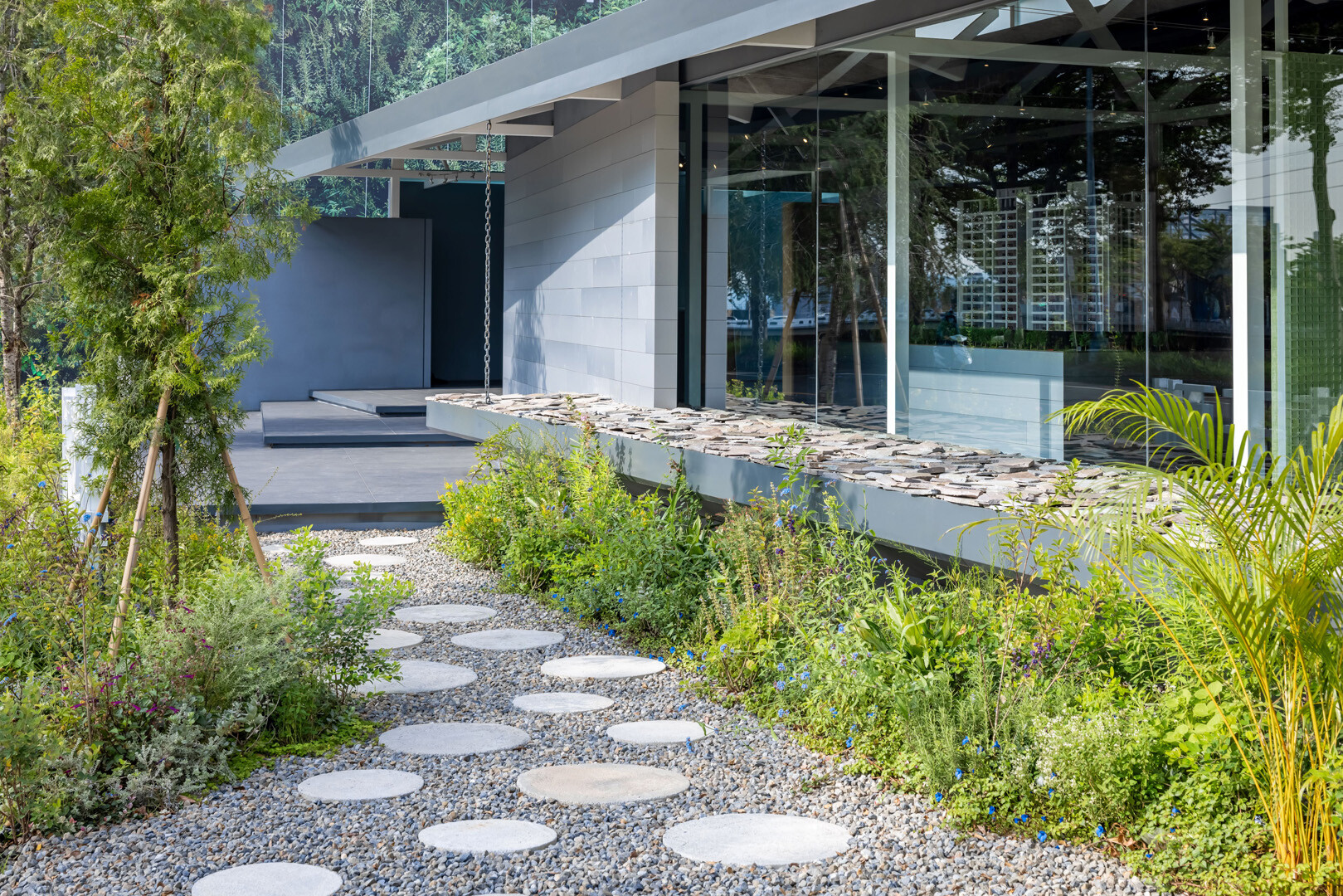
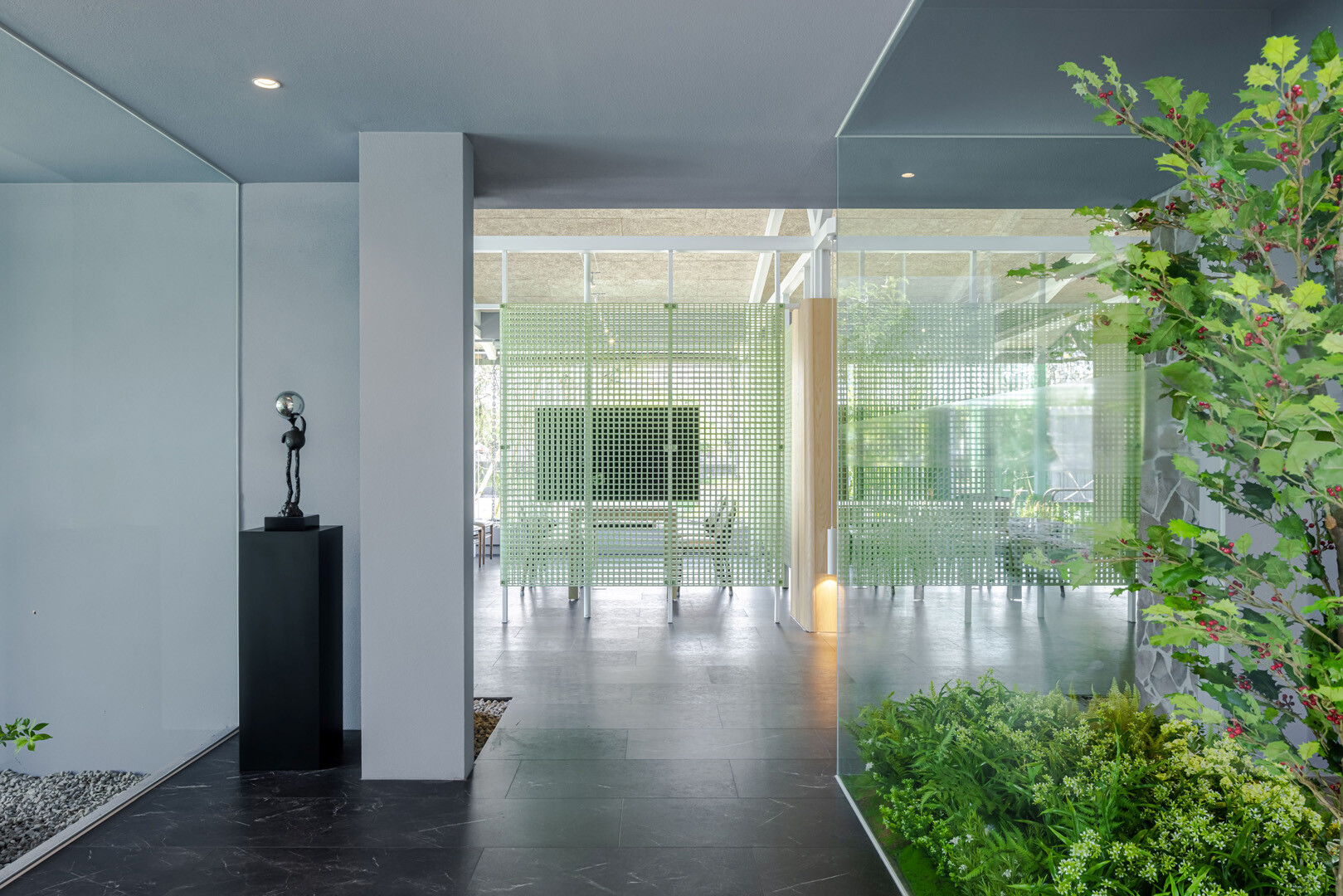
“A pre-sale center is like a bridge—it welcomes people into the city,” notes the design team, who have collaborated with Sweeten on several projects. Their goal was to mediate between the urban landscape and the building’s interior, crafting a space that filters out the surrounding noise and allows potential homeowners to focus inward. Here, architectural cues are not simply aesthetic but humanistic—offering moments to pause, reflect, and visualize. Located in a newly developing district of Taichung, the site is surrounded by green corridors, creeks, and stone embankments. The design embraces these qualities by integrating slate pavers, natural stone, and planting into the spatial language of the sales center. These materials extend from the landscape into the architecture, forming a gentle threshold that responds with humility to its urban context. Rather than assertive design gestures, the team focused on softening the transition—helping visitors shift their mindset before engaging with details of their potential future home.
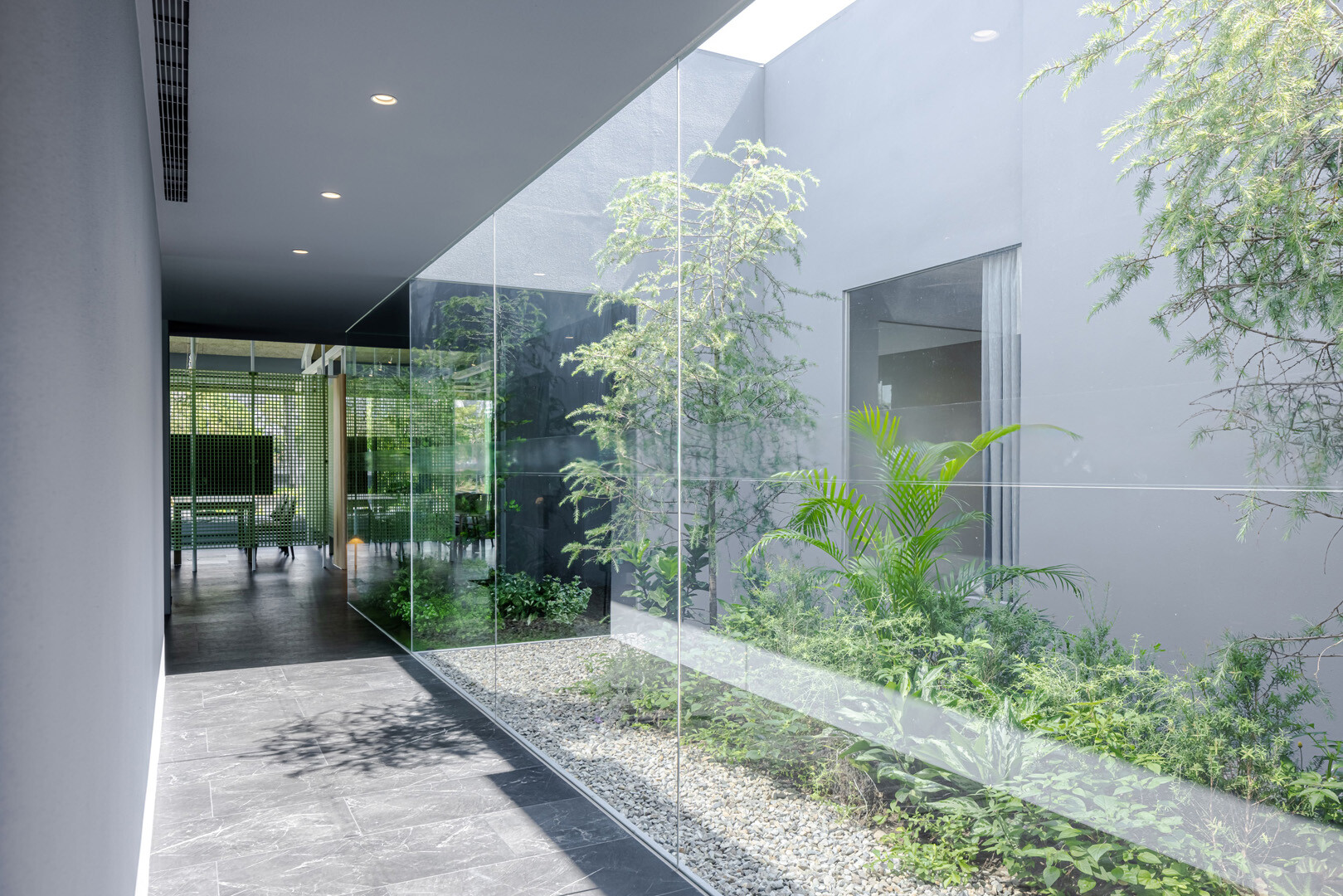
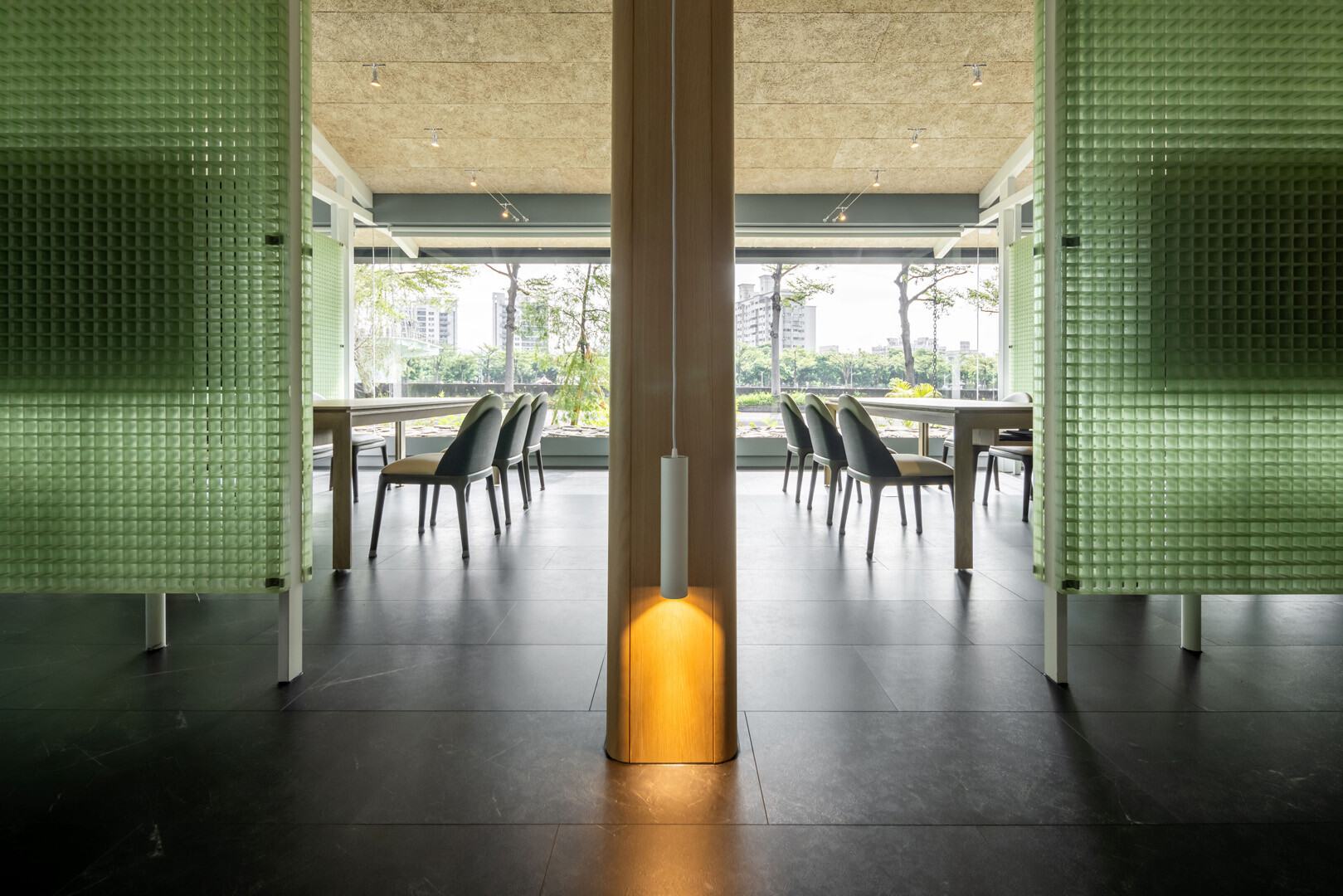
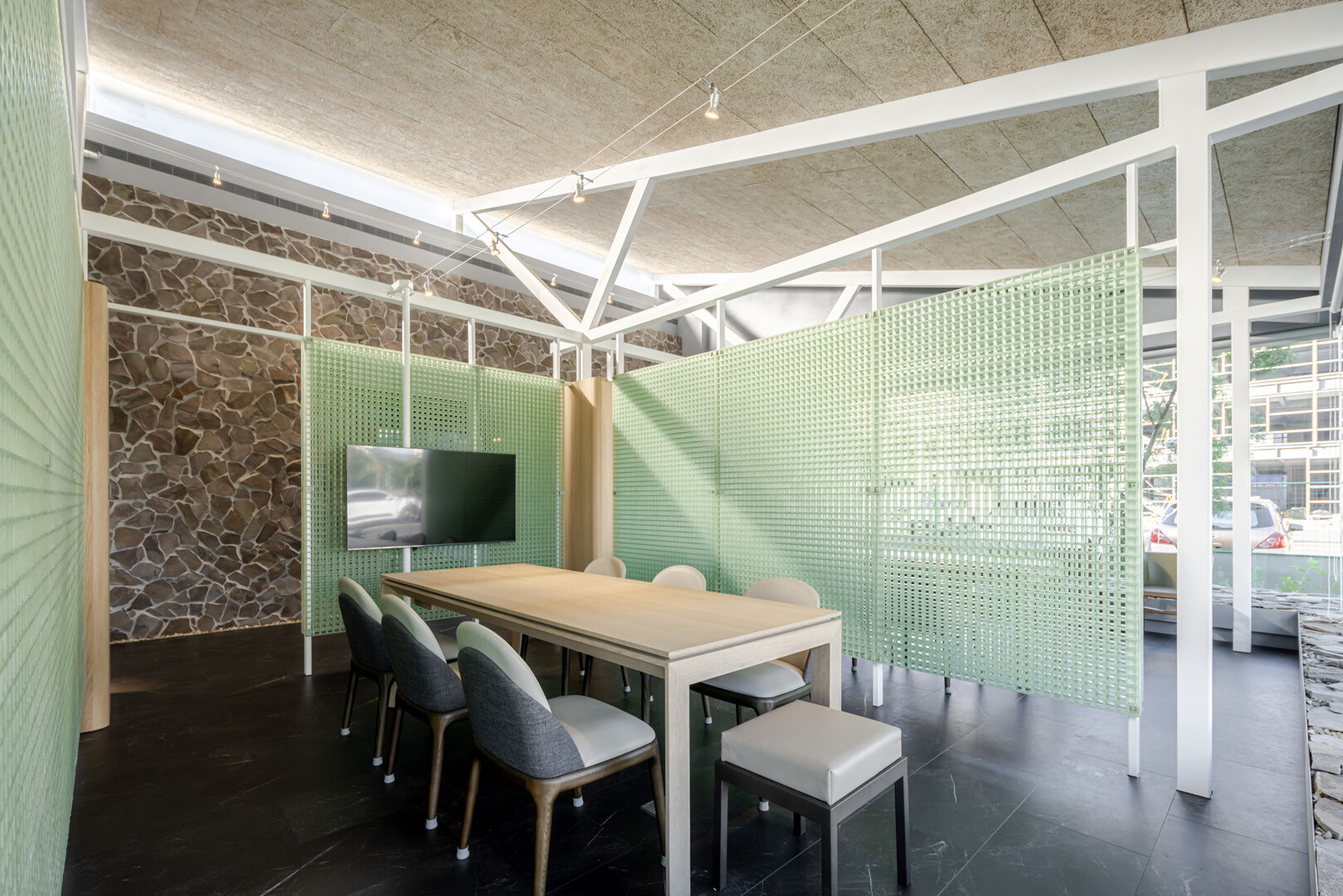
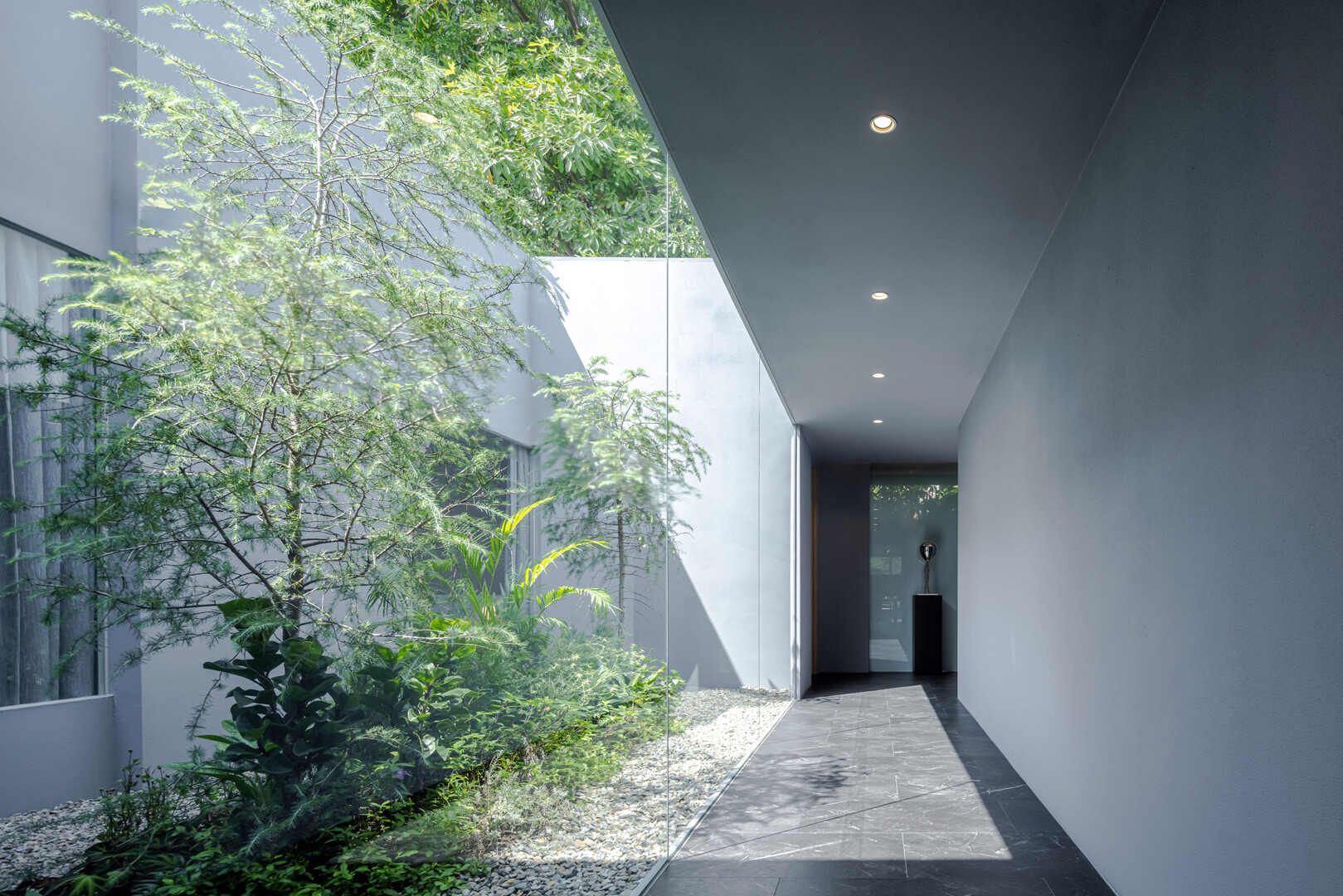
The building’s façade avoids ostentation, opting instead for a calm and composed presence. Visitors approach along a stone path framed by curated greenery. Elements commonly found along riverbanks—such as slate slabs—are laid evenly beneath a slightly elevated veranda, forming a corridor reminiscent of a stone embankment. Entering further along the guided circulation, a masonry wall emerges, echoing the site’s natural vocabulary. This transitional space offers a psychological buffer, allowing guests to recalibrate before reaching the architectural model display. The team intentionally selected raw, unpolished materials that break away from conventional showroom expectations while maintaining a grounded sense of authenticity. Like a daydream rendered in tactile form, the design uses everyday materials to craft a space that feels imaginative yet familiar. Ceilings are composed of long wood wool cement boards, supported by white-painted steel. Exposed trusses create a visible spatial rhythm, establishing an architectural order. Vertically spaced columns are wrapped in wood-textured finishes, while FRP (fiberglass-reinforced plastic) grating—commonly used in industrial settings—is recontextualized as a semi-transparent green screen, subtly enclosing the consultation area. This spatial division forms a semi-private enclave that feels both intimate and open, a quiet pocket within the larger structure. Though the materials appear in their raw state, they offer a surprising sense of renewal—as if reimagined through the lens of a vivid dream.
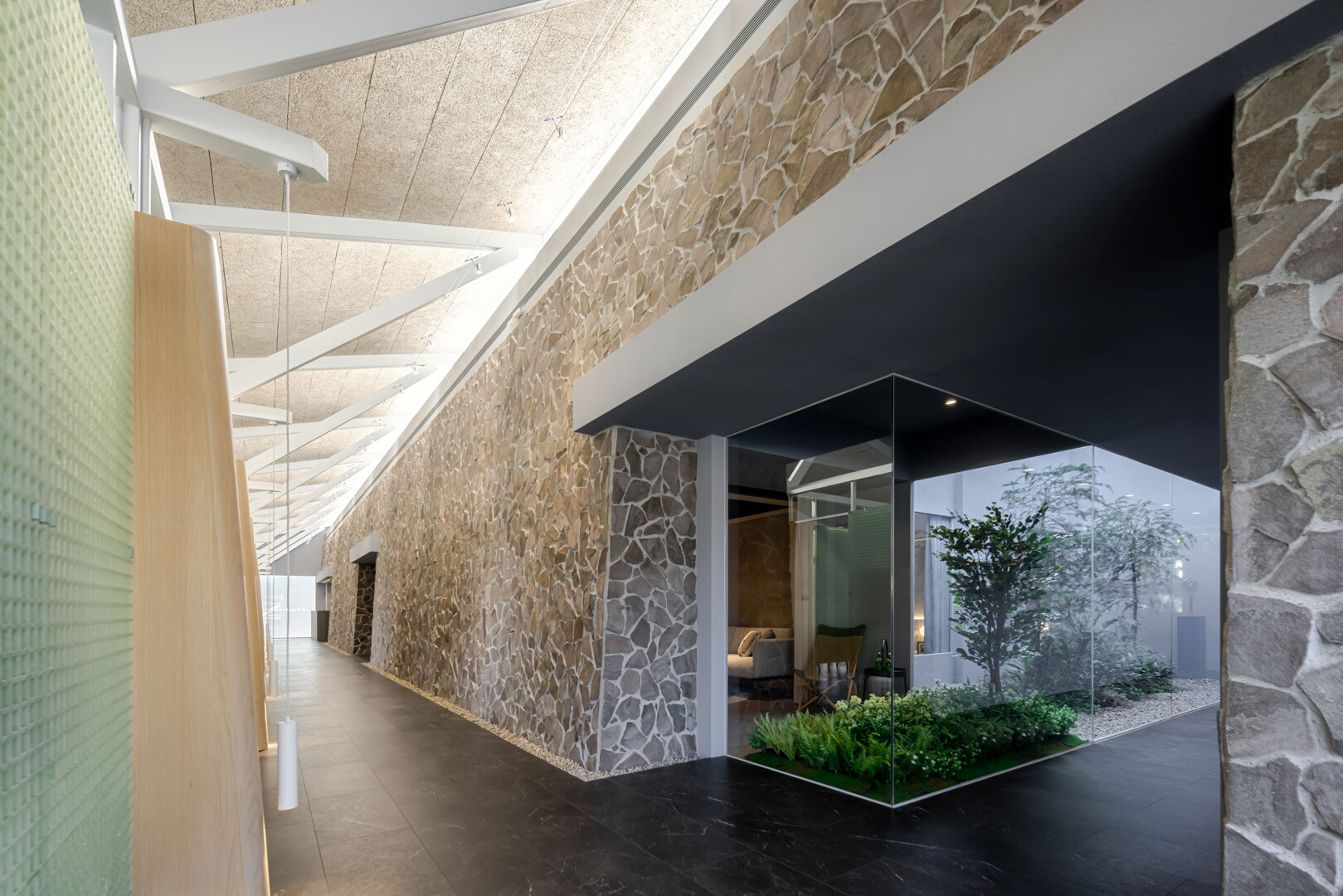
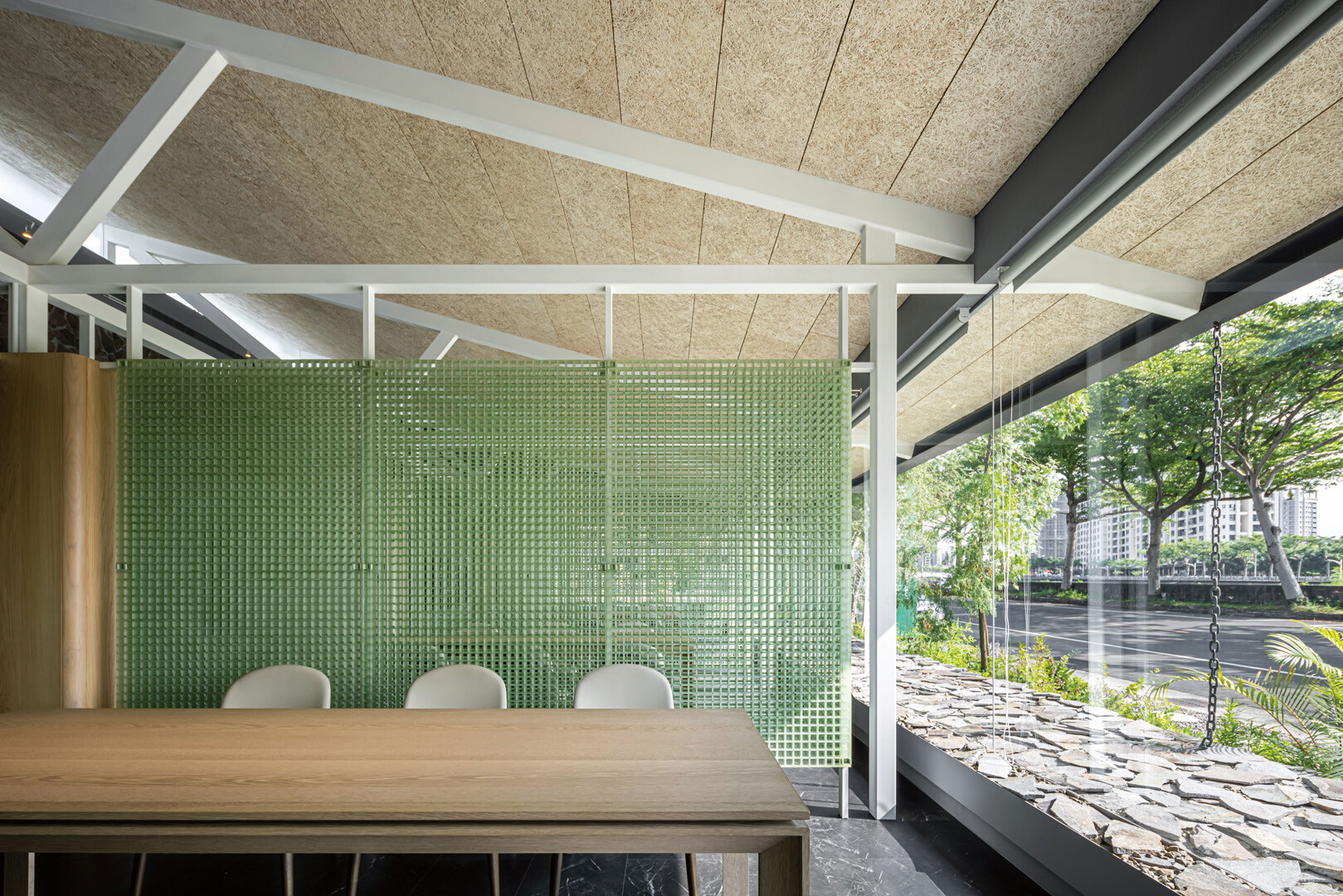
Natural daylight provides generous illumination throughout the interior, while the lighting scheme incorporates cable-mounted track lights and cylindrical pendant fixtures installed at each column. These act as ambient highlights at night, contributing to the space’s layered atmosphere. For designer Ching-Ju Chen, known for his exploration of industrial materials, the process of envisioning this project began with observing the natural surroundings—the embankments and waterways around the site—and then drawing from his mental catalogue of materials. Within the space, these elements form an autonomous yet harmonious language. By refining circulation and deploying available materials with thoughtful coordination, the space gains a sense of clarity and ease. Unnecessary distractions are stripped away, giving rise to a comfortable and focused environment. Under the team’s careful orchestration, the act of visiting the sales center becomes less of a transactional step and more like reading a novel—each moment unfolding with an unexpected and meaningful turn.