Measured House in Ink
Urban development patterns and shifts in population structure have quietly changed how extended families live together. In earlier decades, multi-generational households lived in low, horizontal courtyard homes, where different generations gathered in the open yard to talk and moved through the day in a shared rhythm. In today’s cities, that tempo has largely faded from everyday life. The prosperity of the urban environment has altered outward behaviour and, more subtly, reshaped the way people think about home. As land becomes scarce and housing grows increasingly vertical, multi-generational living has turned into a deliberate way of life, with new domestic typologies emerging to hold families together and draw relationships closer.
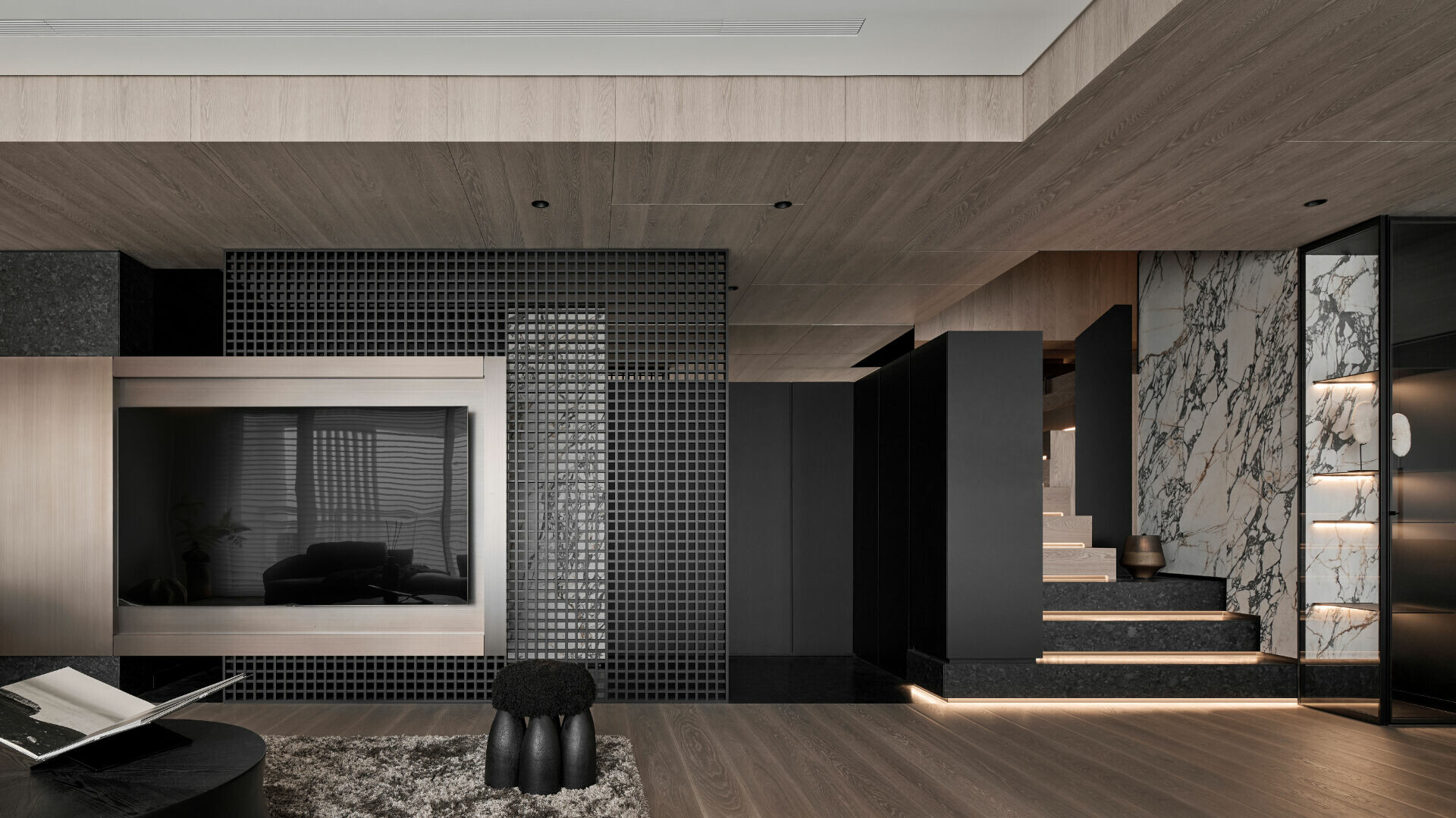
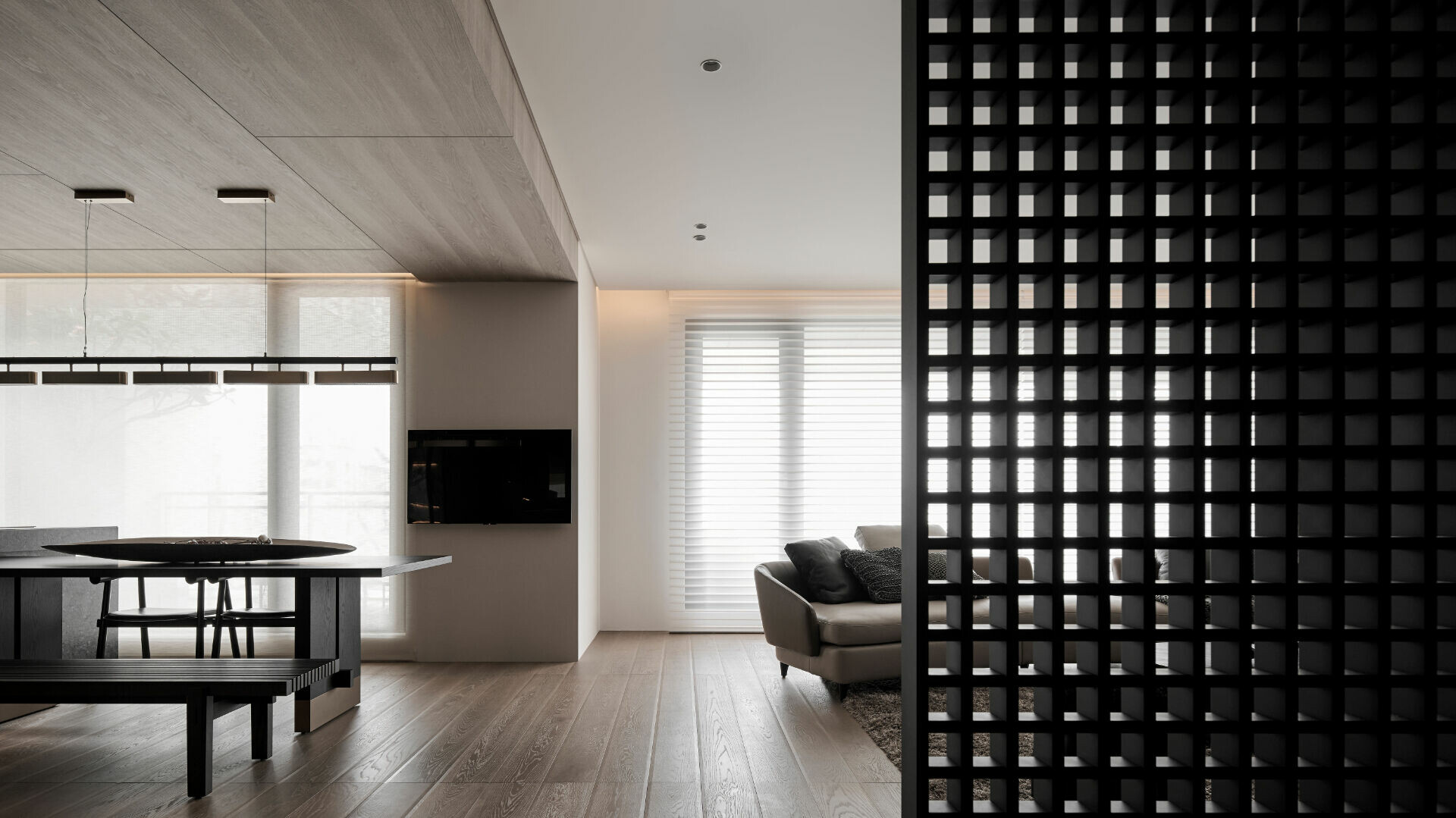
In this high-rise duplex in metropolitan Taipei, generous natural light provided the starting point for a three-generation residence. The clients, intent on living together across three generations, grounded their dialogue with Design Apartment in the studio’s extensive experience and realised projects, and ultimately entrusted the finer aspects of the spatial layout to the practice. “Choosing to trust, and allowing the designer to lead, is essential,” says Design Director Chung-Han Tang. That trust removed unnecessary constraints, allowing the design to respond directly to contemporary conditions and guiding each member of the family toward an everyday life that exceeded expectation. In this setting, a quiet narrative of multi-generational living in the present day begins to form.
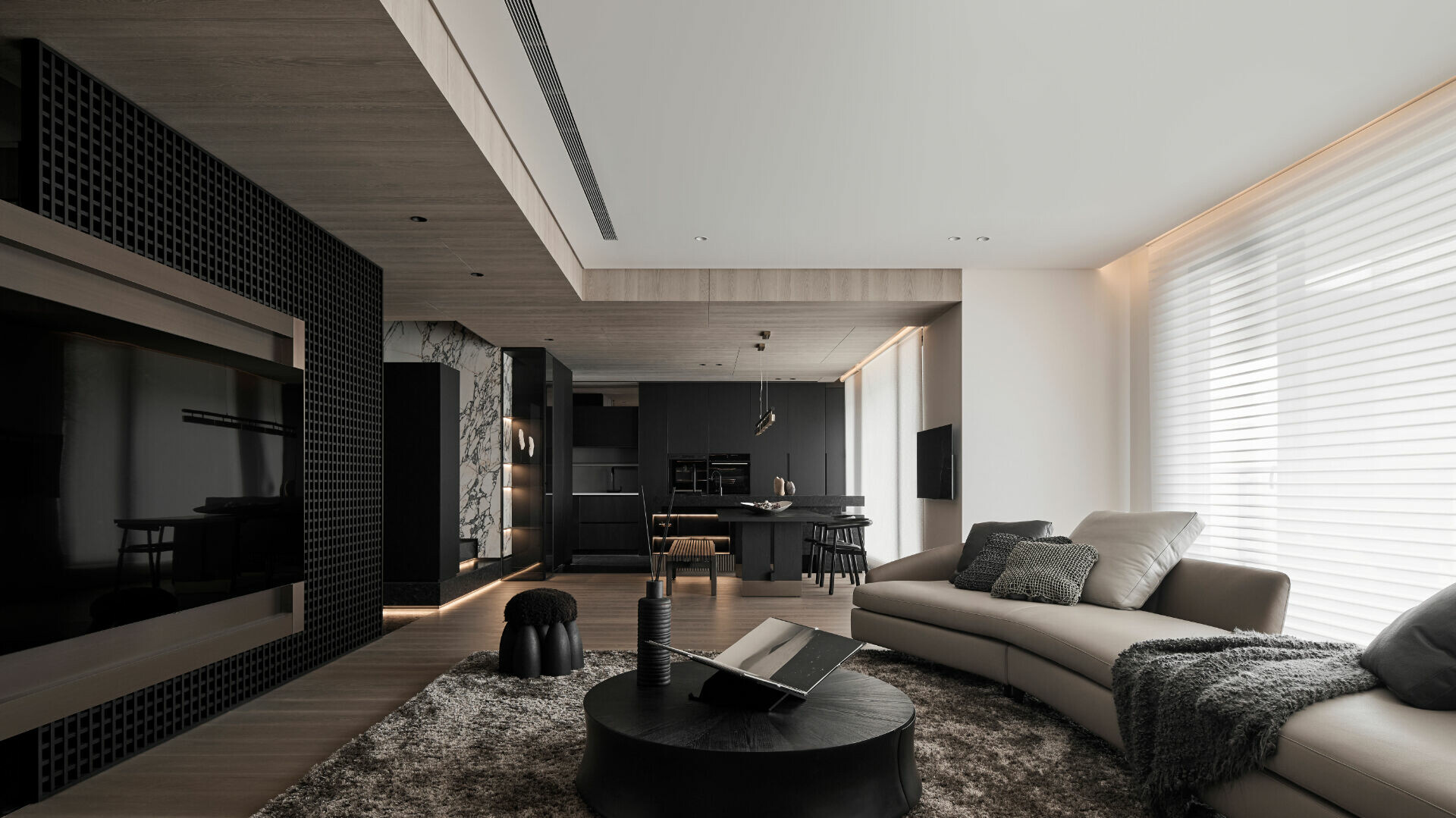
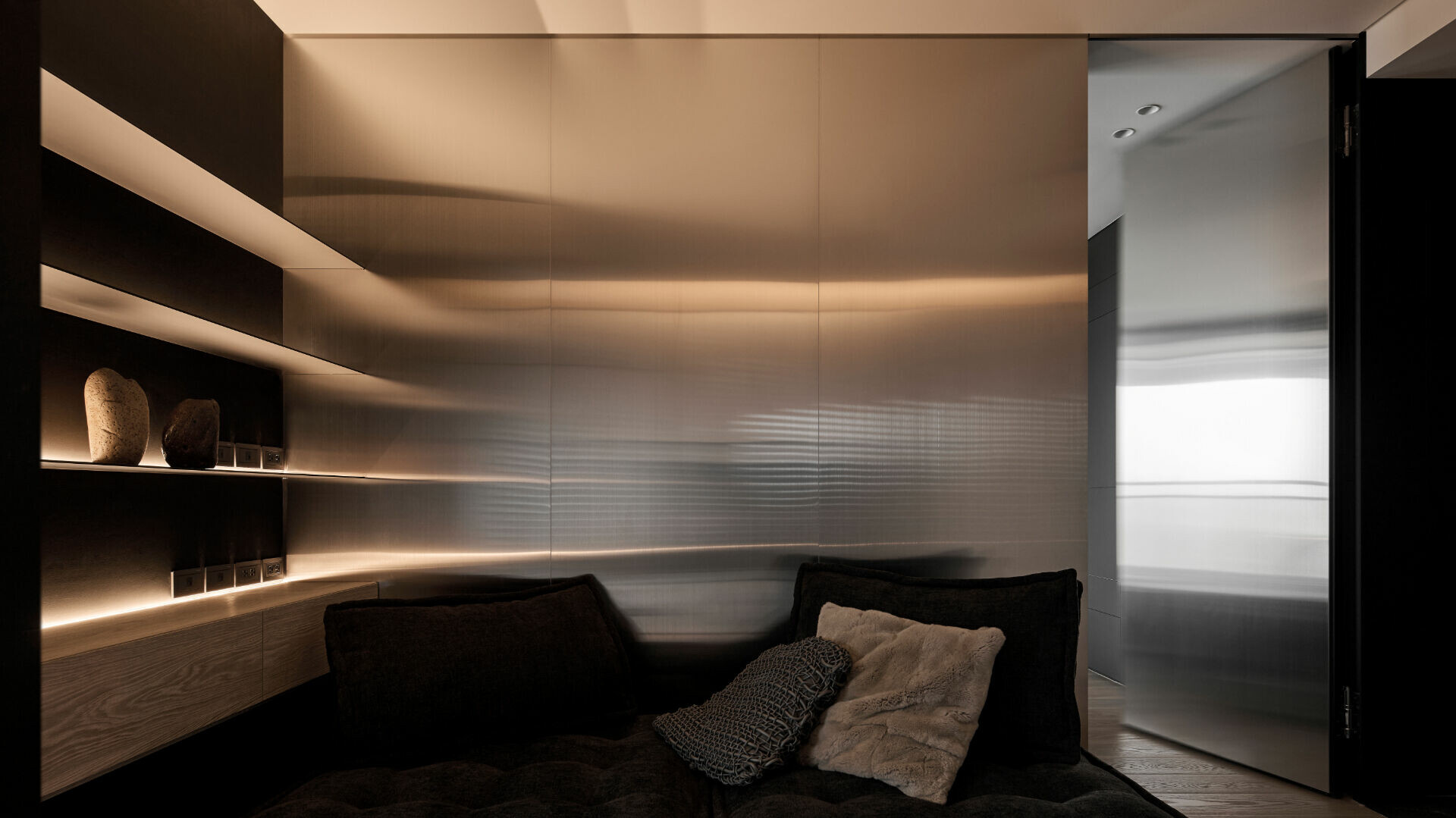
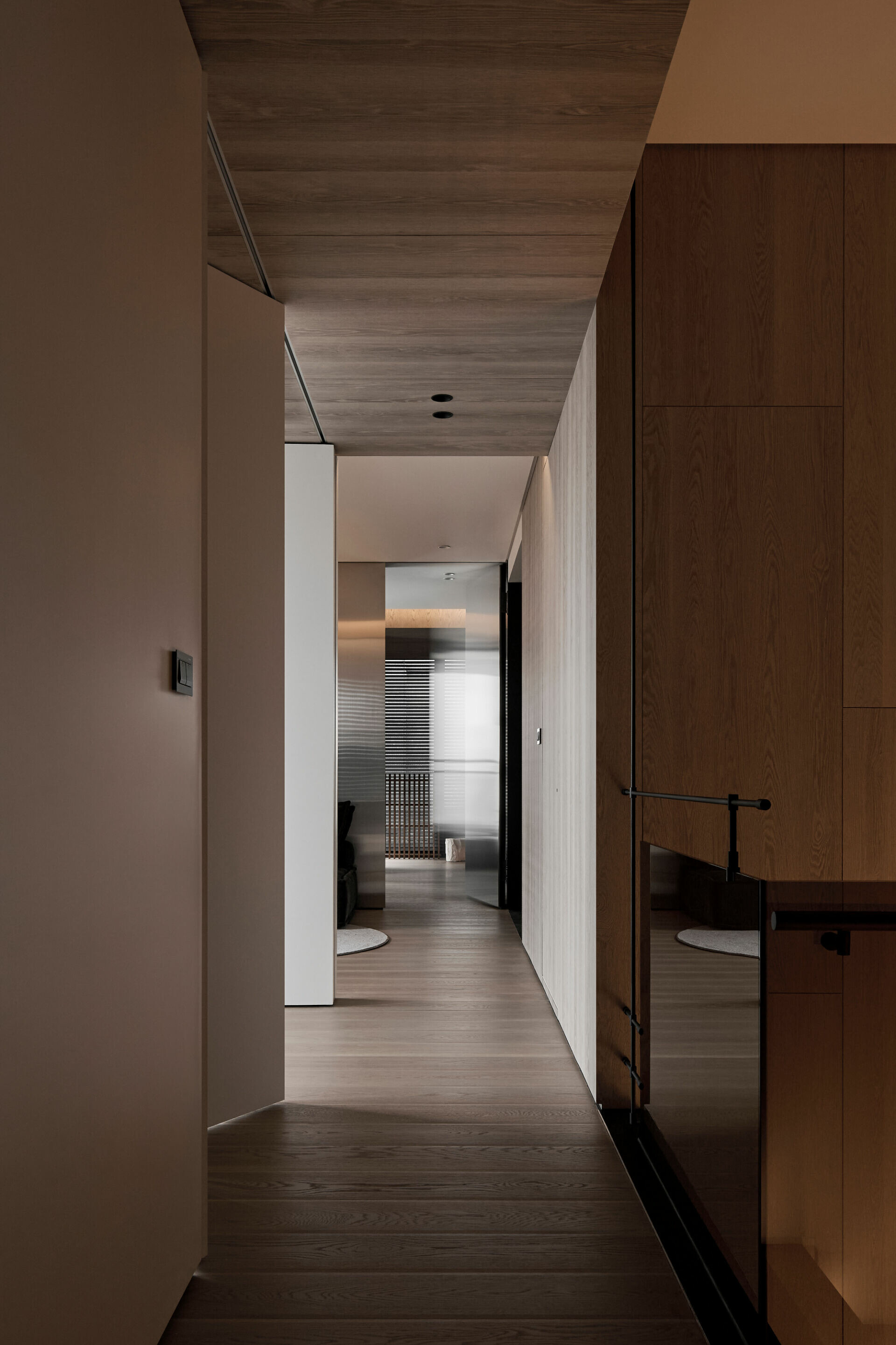
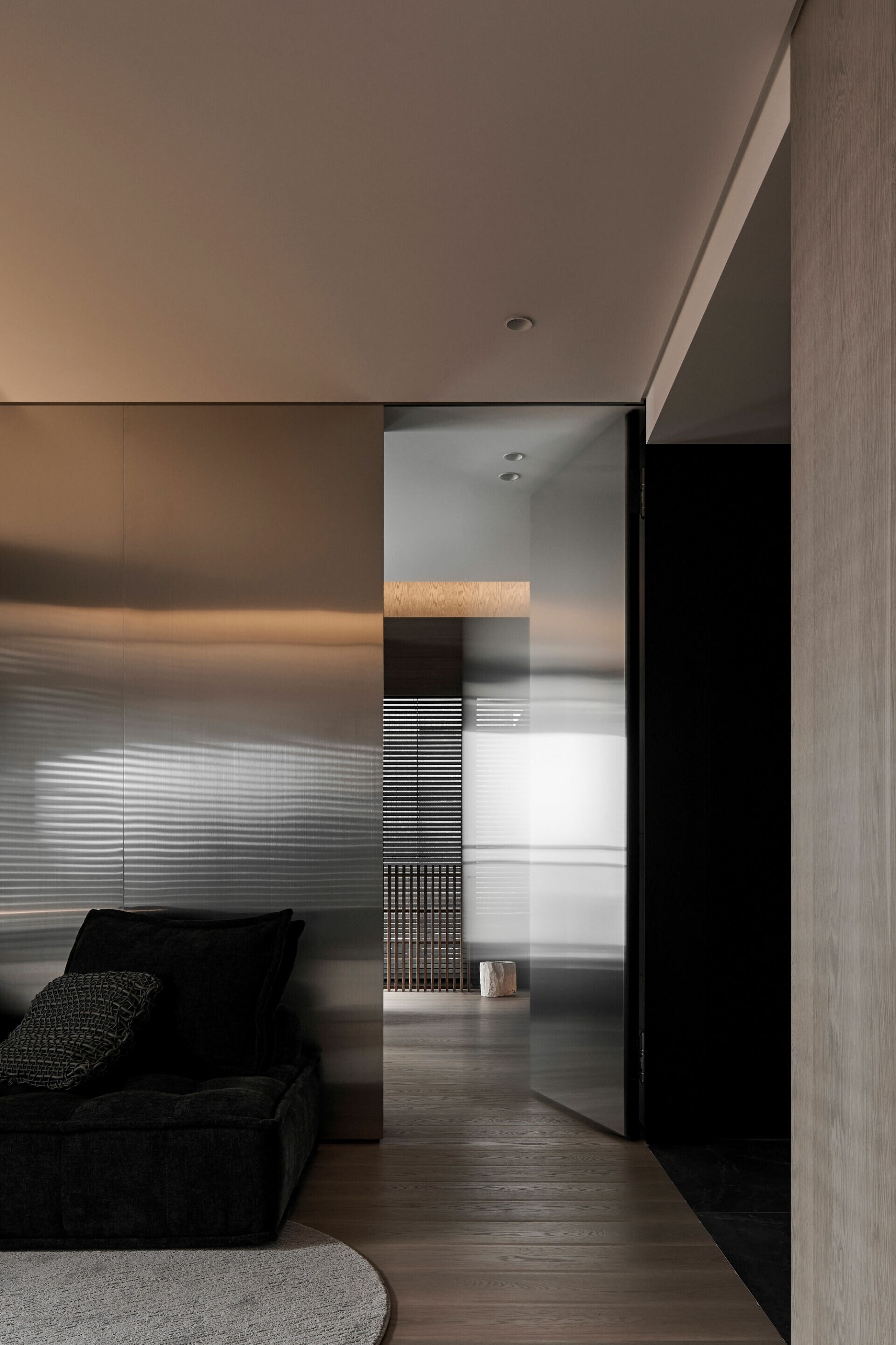
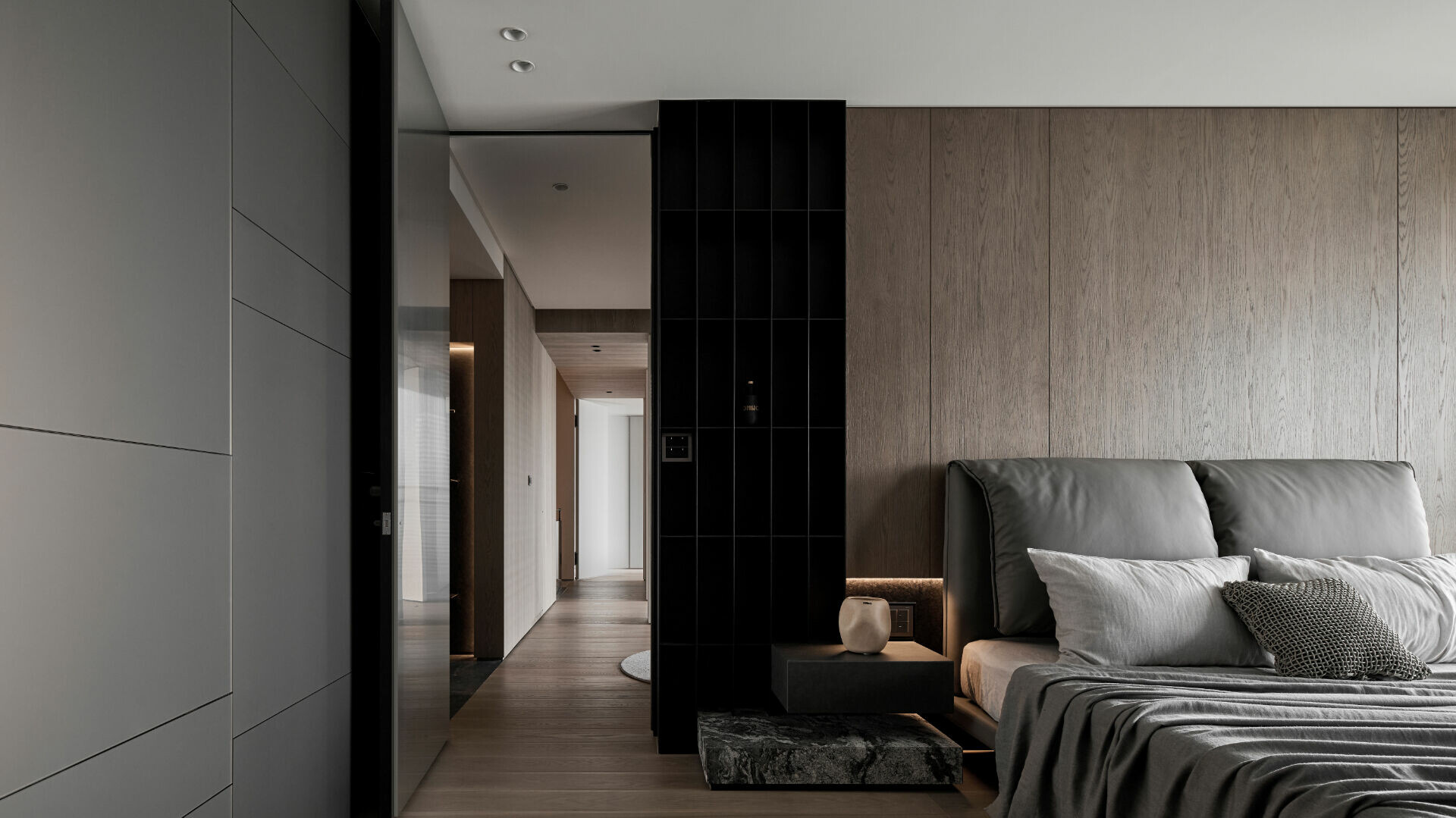
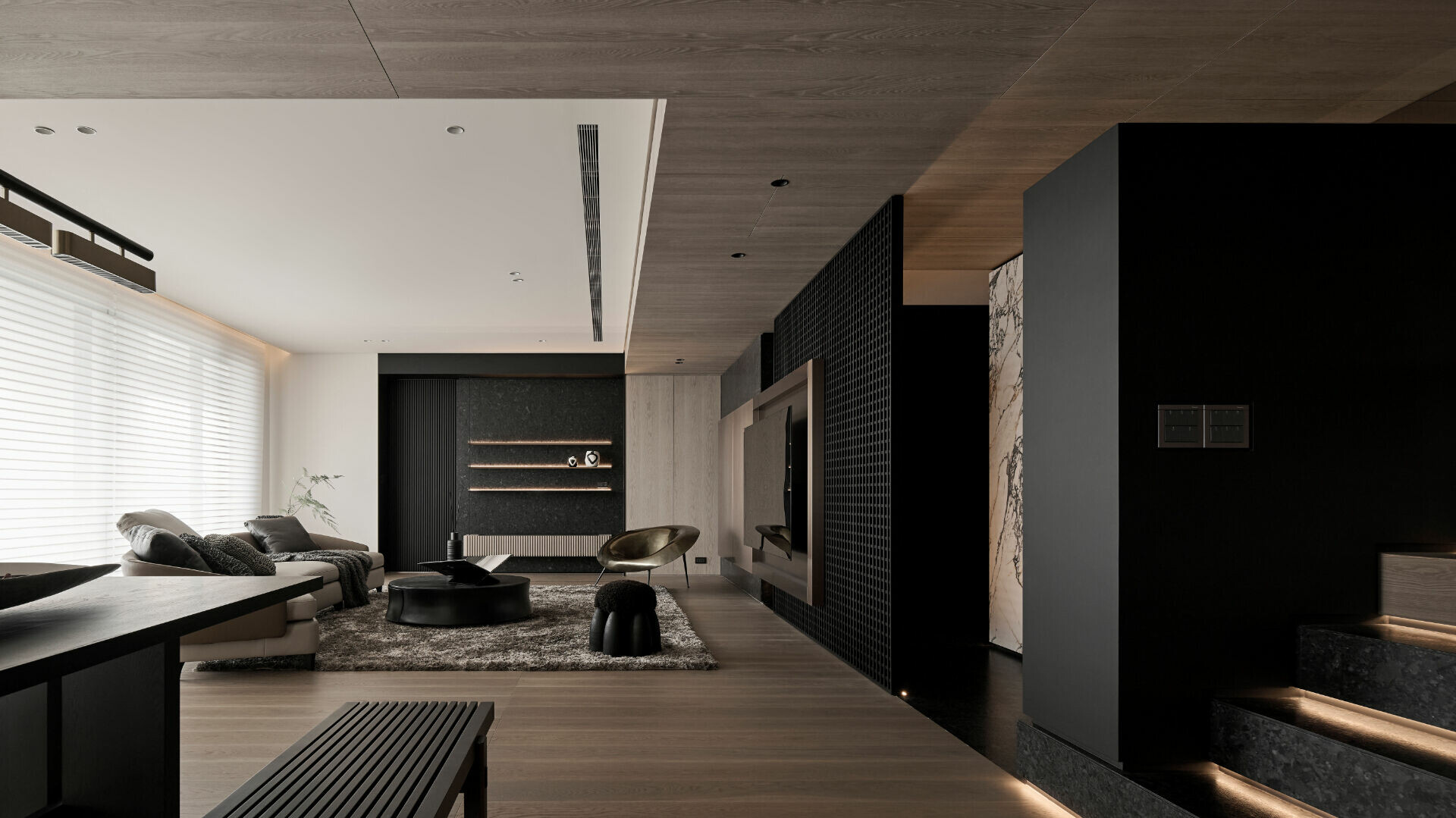
For Tang, whose work is rooted in the precise control and application of materials, organising the space is akin to Michelin-level molecular cuisine: flavours are first deconstructed and then recomposed to create unexpected results, just as familiar materials are edited and reassembled here. The two floor plates become like serving platters, carrying a considered palette of wood veneer, natural stone, hand-brushed metal with a copper finish, and leather upholstery, along with their corresponding colours and atmospheres. Within these contrasts, natural light acts as a spectrum that moderates intensity and sustains the warmth of daily life. With circulation comfort for the elderly as a priority, the grandparent suite and the living–dining–kitchen (LDK) public zone are located on the lower level, while a carefully handled stair connection allows the upper floor to function as a fully independent living area.
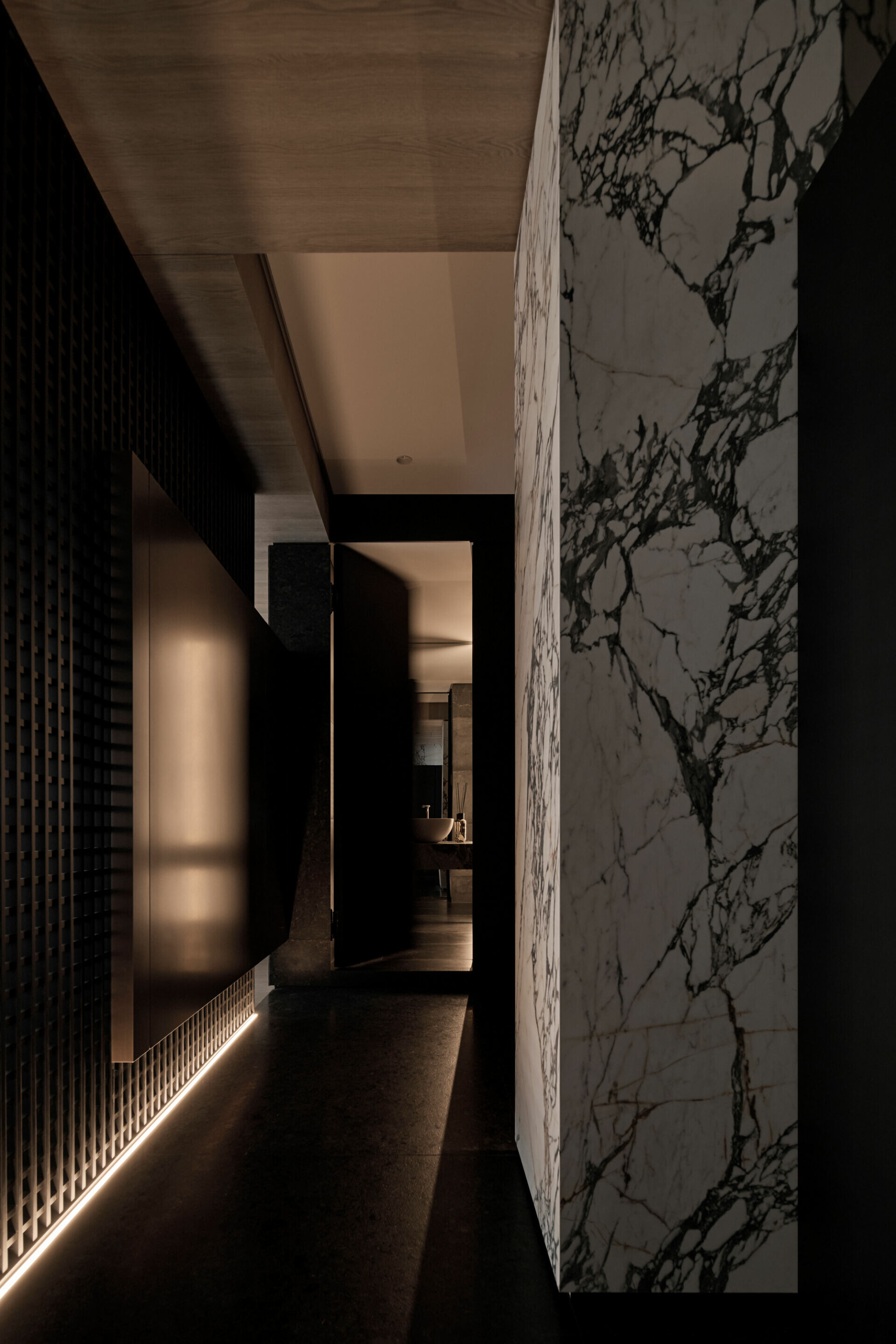
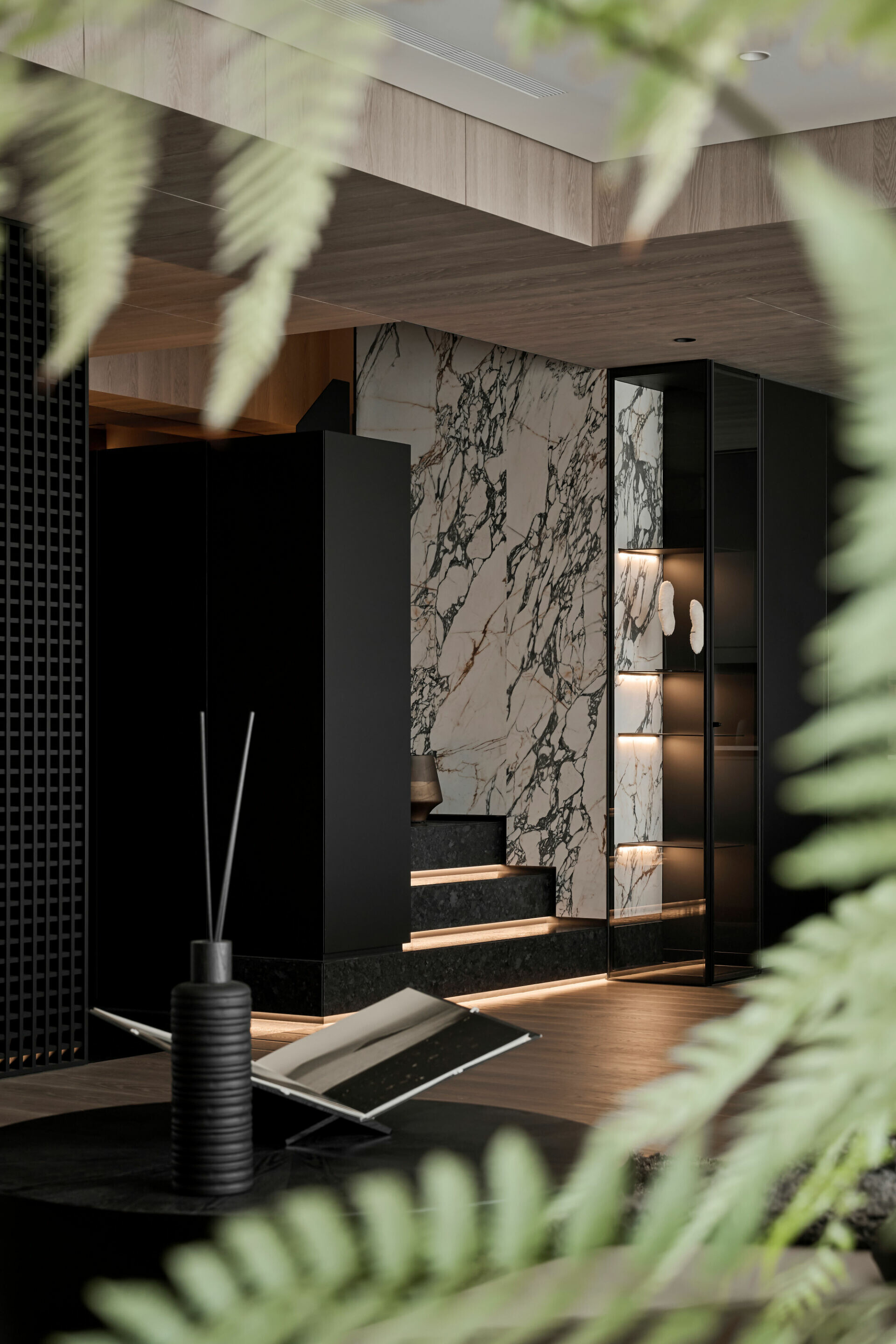
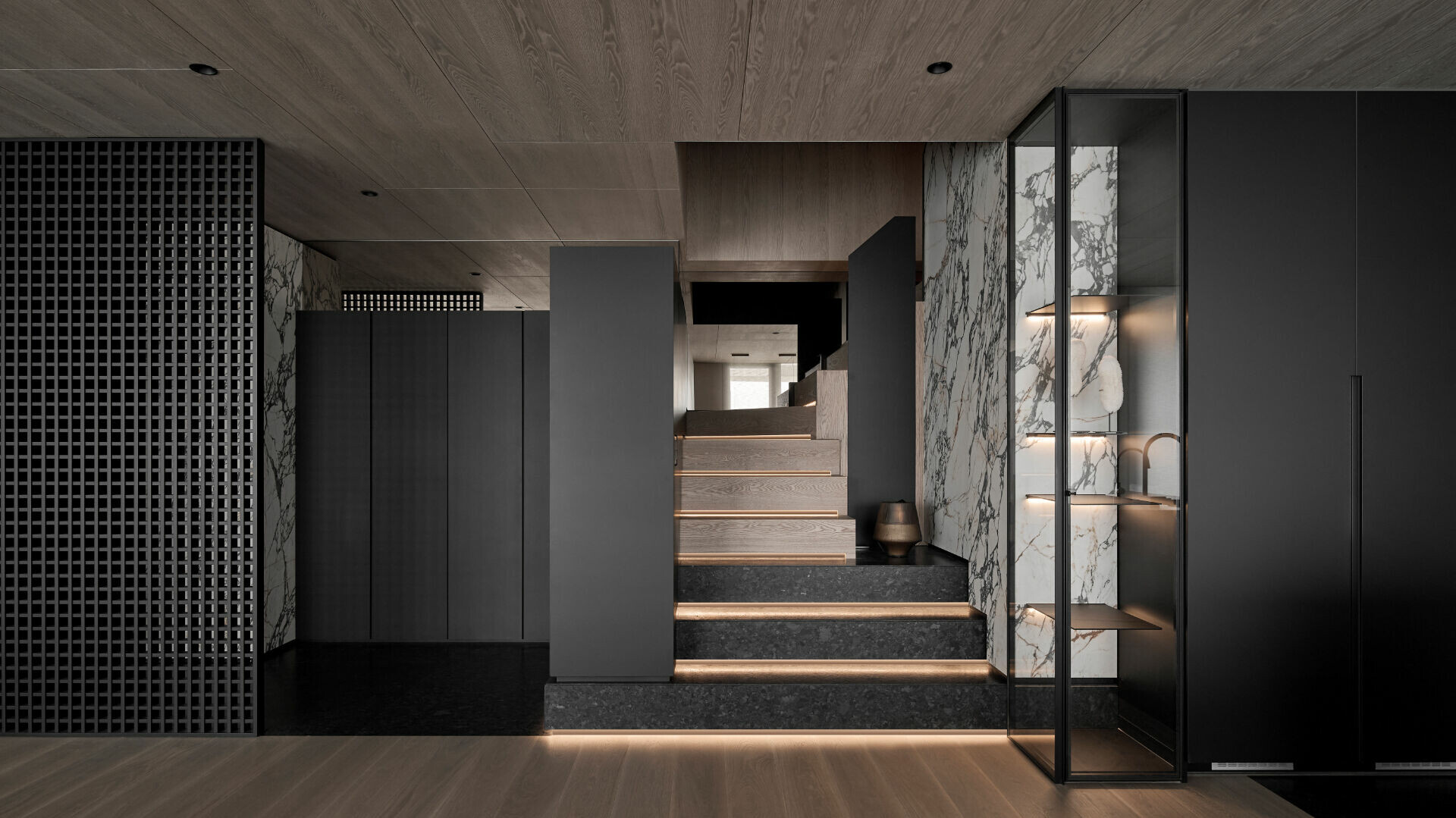
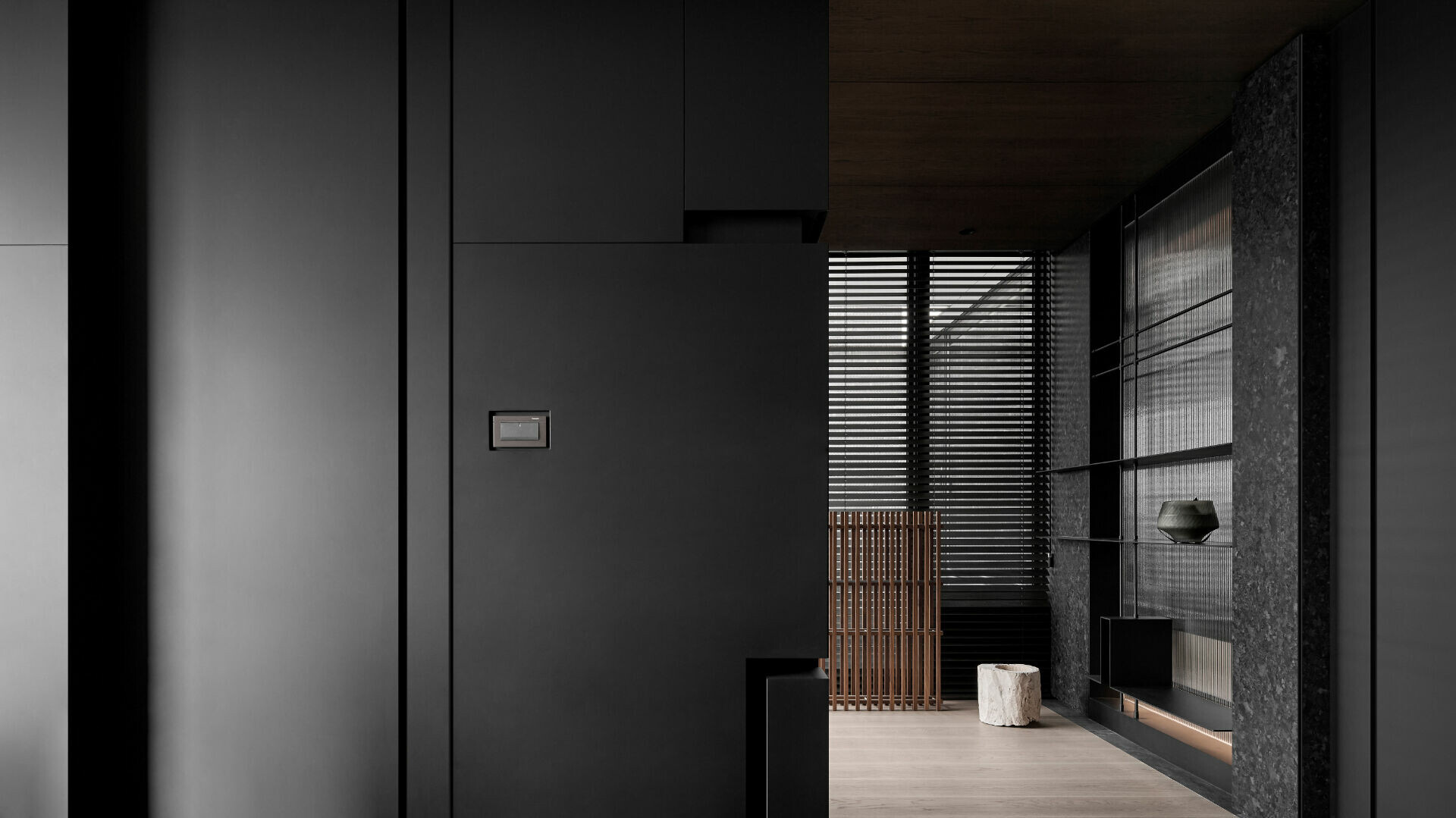
A calm, ink-dark black sets the primary tone of the residence. At the lower-level entrance, a vertical lattice screen filters soft, warm light, giving returning occupants a brief moment to pause and let their guard down. As the route extends inward, the light gradually increases. Structural beams and the kitchen–dining ceiling are wrapped in neutral wood veneer, subtly distinguishing their respective functions, while abundant daylight and the arrangement of furniture cast shifting shadows that lend the space a quiet composure. At the turn of the circulation, deep black volumetric forms link to hand-brushed copper elements and the continued run of the lattice screen, while a slightly pulled-back side wall carries the eye forward. Under the glow of linear lighting, with local natural stone accents and contrasting stair treads, the junctions between differing materials become more apparent. The interplay of these surfaces produces a measured, contemporary sense of style, clarifying each transition and allowing the character of the home to emerge gradually.
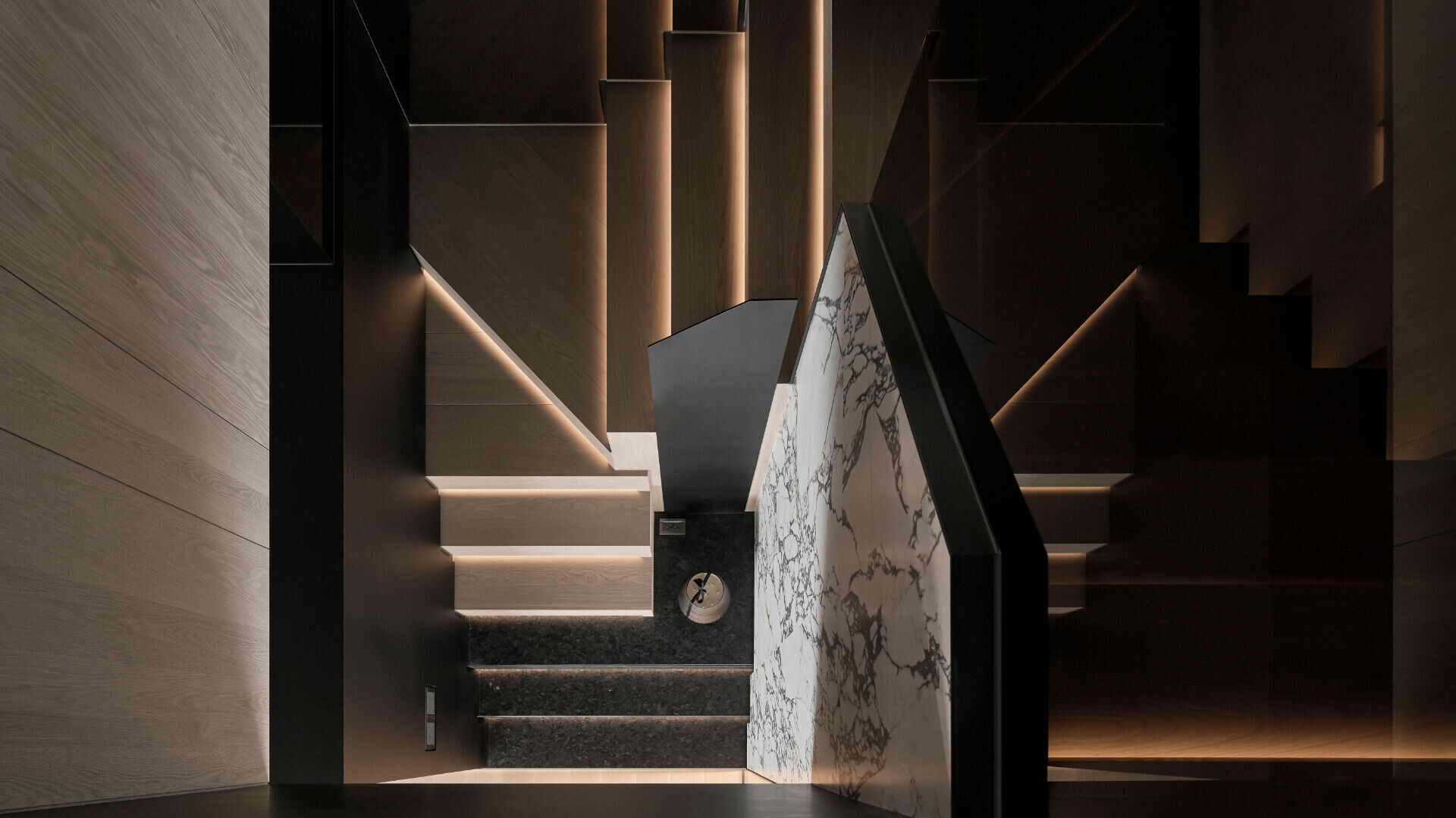
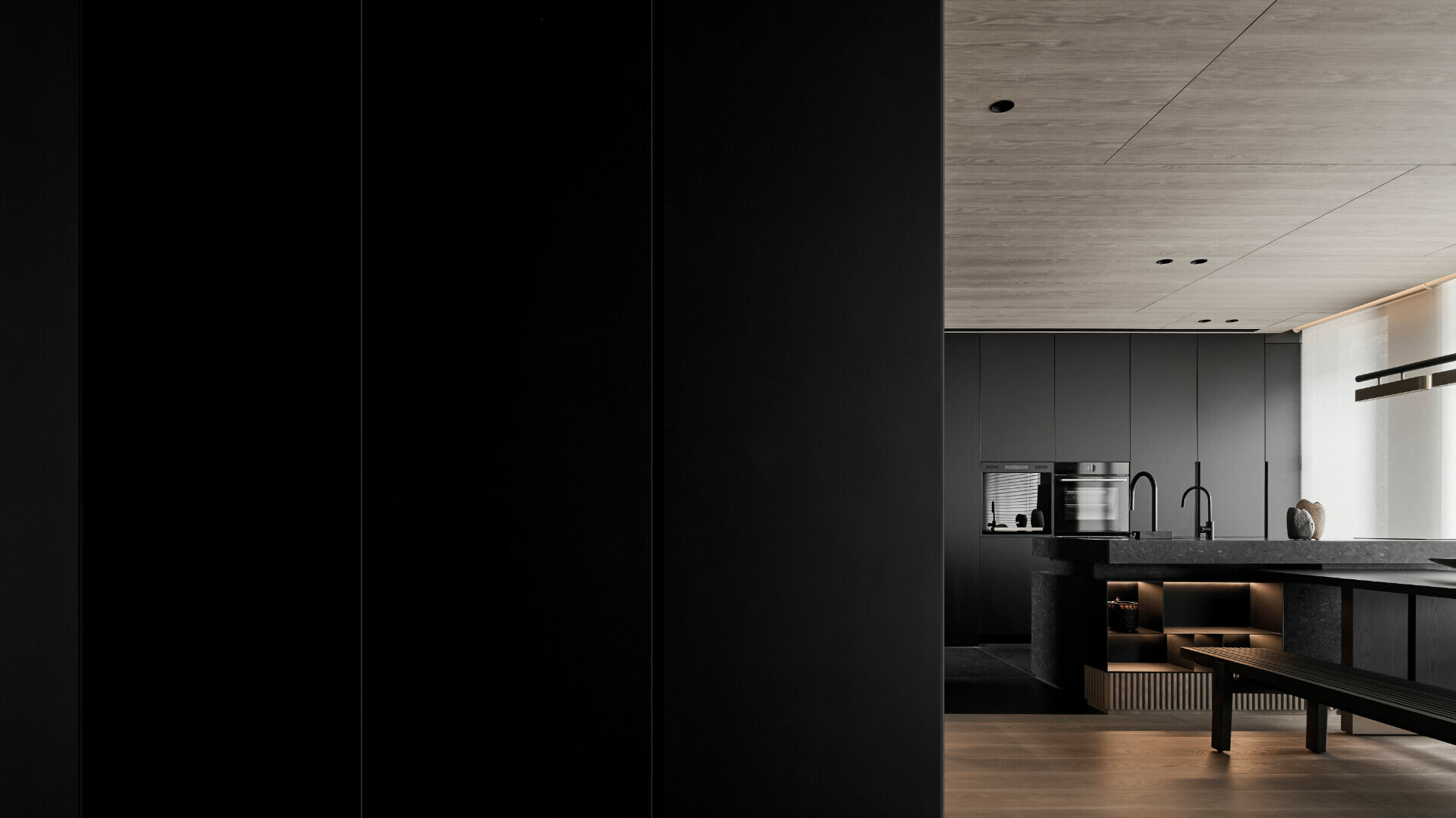
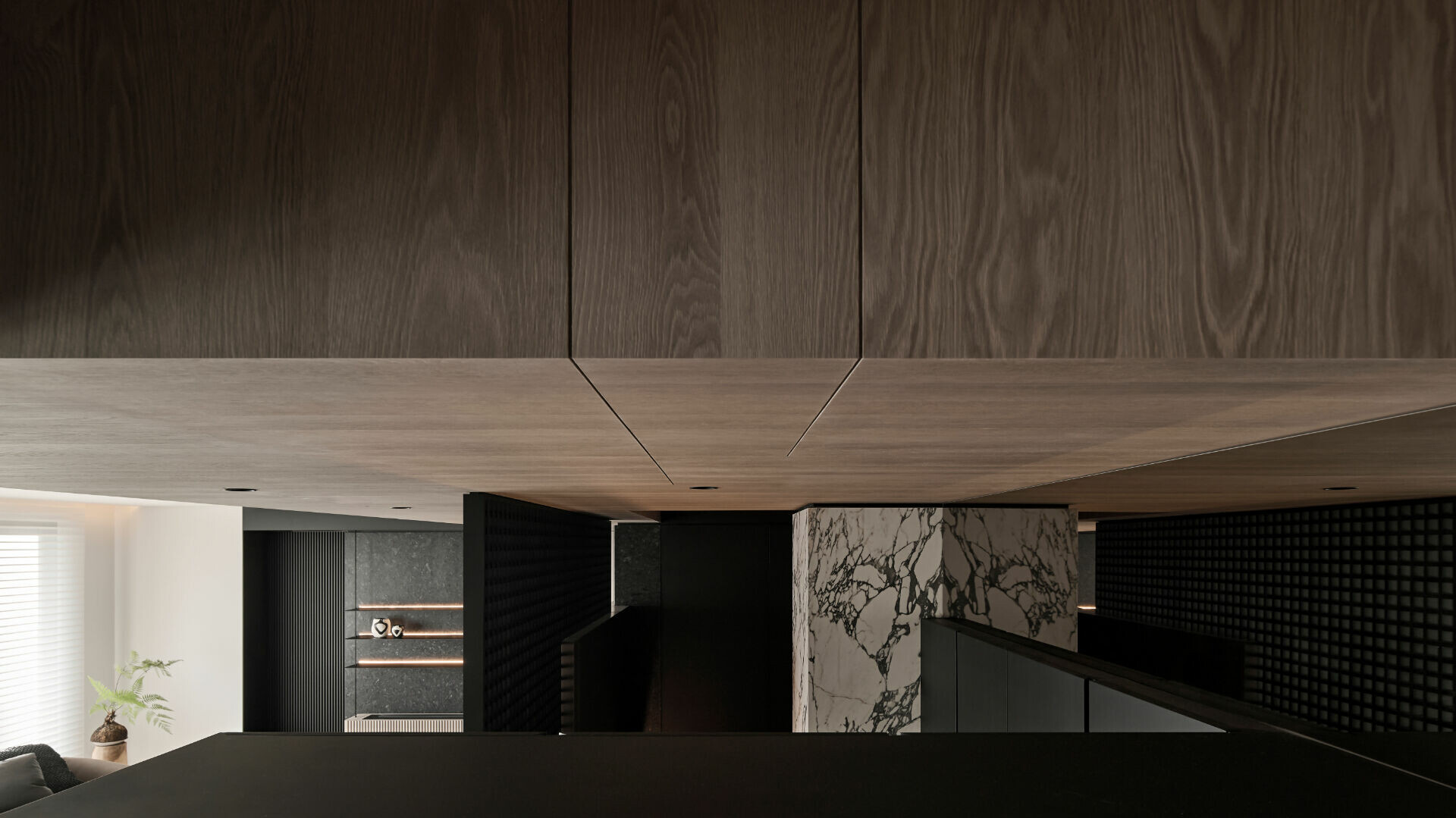
The vertical circulation gently separates the living realms of the three generations. The upper floor is planned as an independent level for the couple and their child, organised around a semi-open tea room, a sitting area equipped with a mini bar, and additional flexible space. Circulation here does not feel cramped or pressured: lines of sight remain open, and light and air move freely through the floor. This configuration improves spatial efficiency and enhances privacy for both the secondary bedroom and the main suite. Drawing on the living habits and expectations of each family member, Tang devises flexible spatial arrangements that support being together while still preserving a corner for solitude and privacy. In the end, the realised design recalls the experience of molecular cuisine: familiar elements transformed, layered and precisely composed, catching and holding each emotion as it settles over time.