sōzai by LayLow
“In the works of Carlo Scarpa, beauty is the first intuitive sensation; art, the first word that comes to mind; and what follows is a feeling of wonder.” Louis Kahn once described his encounter with Scarpa’s architecture in these words, recognizing in it a quiet reverence for nature. For Scarpa, material and detail were a way of perceiving the world. Jack Chang, founder of studio cereal, shares this sensitivity and extends it in the design of sōzai by LayLow, a project conceived as an homage to the architectural poet.
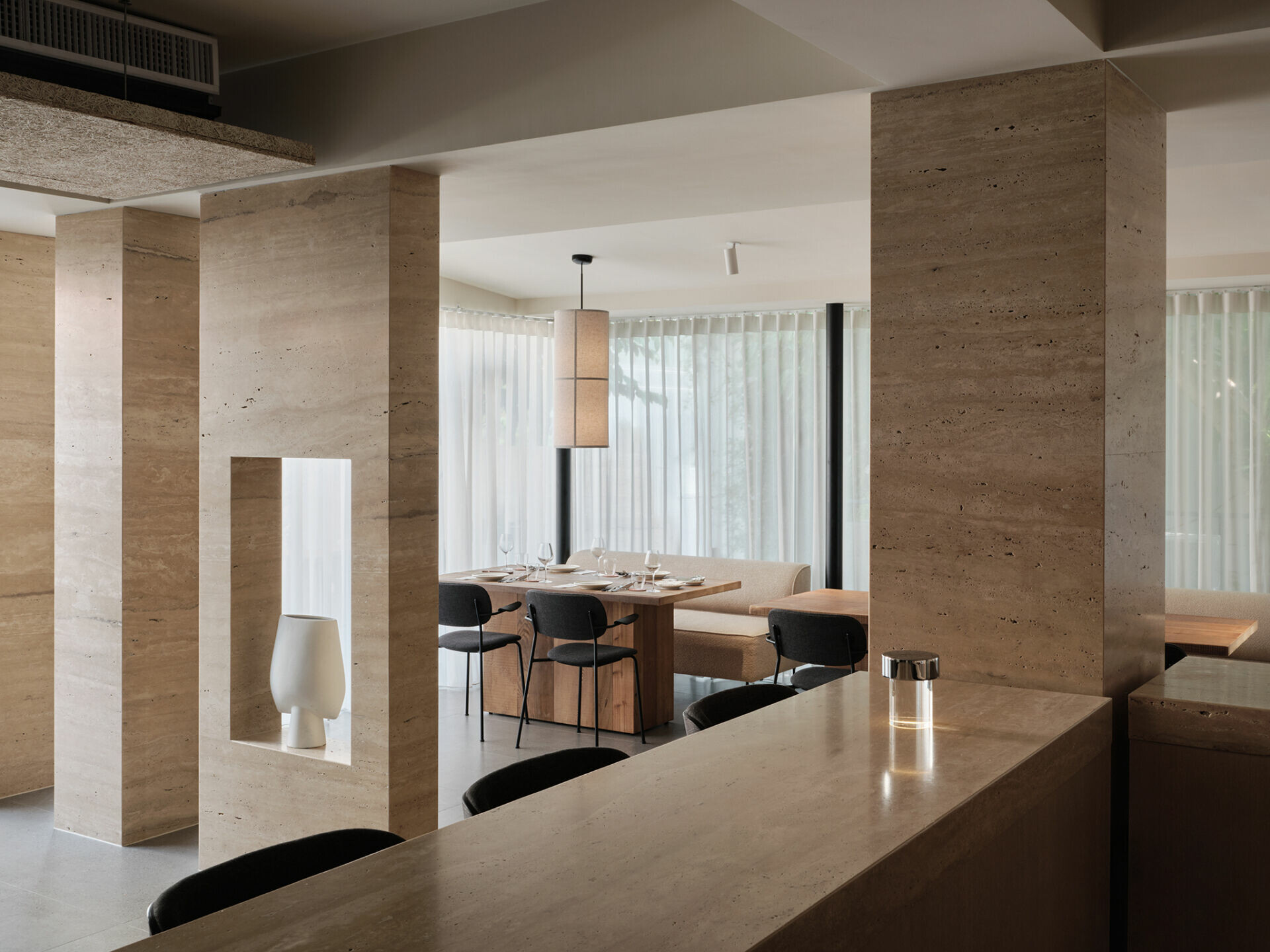
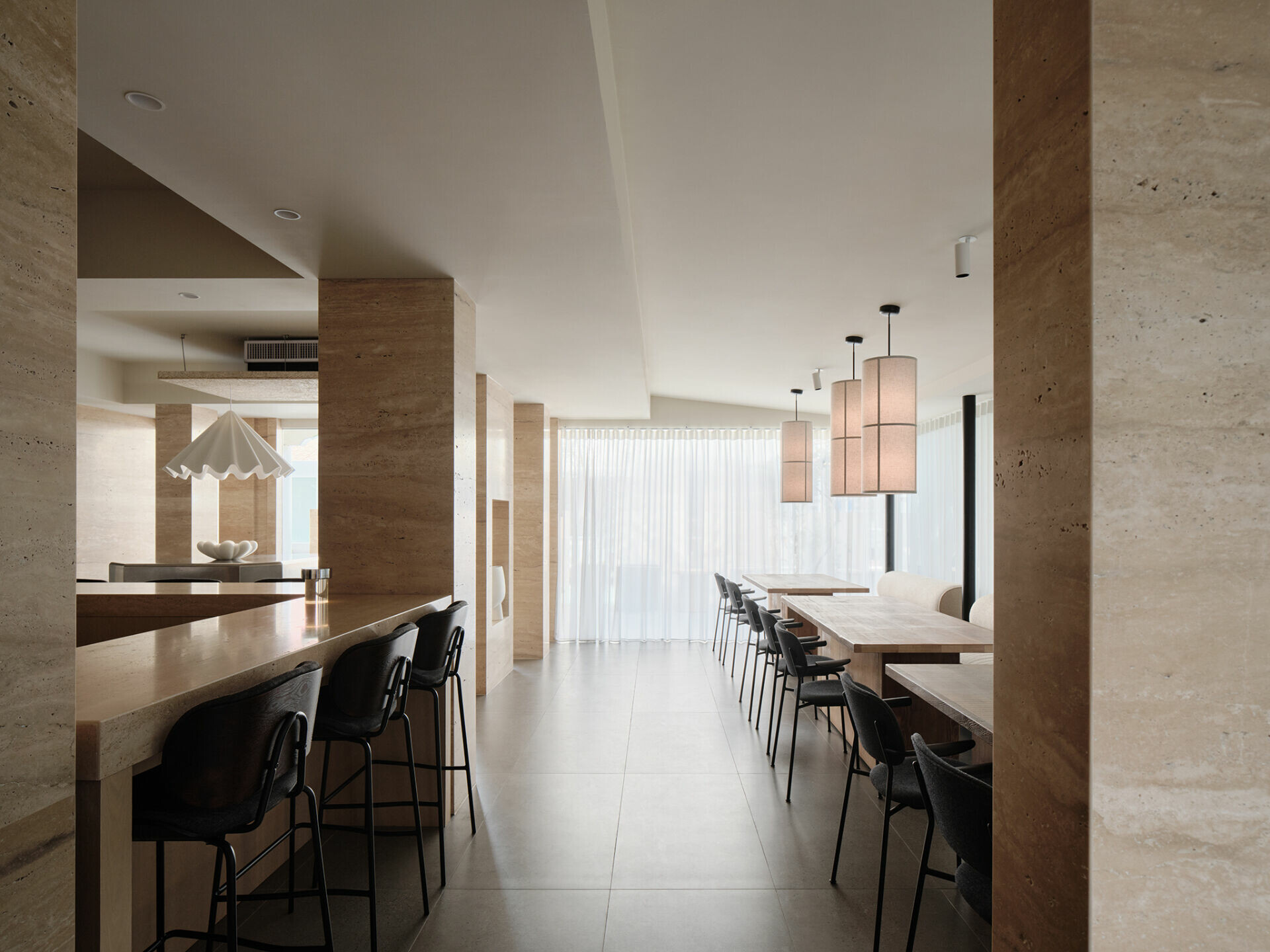
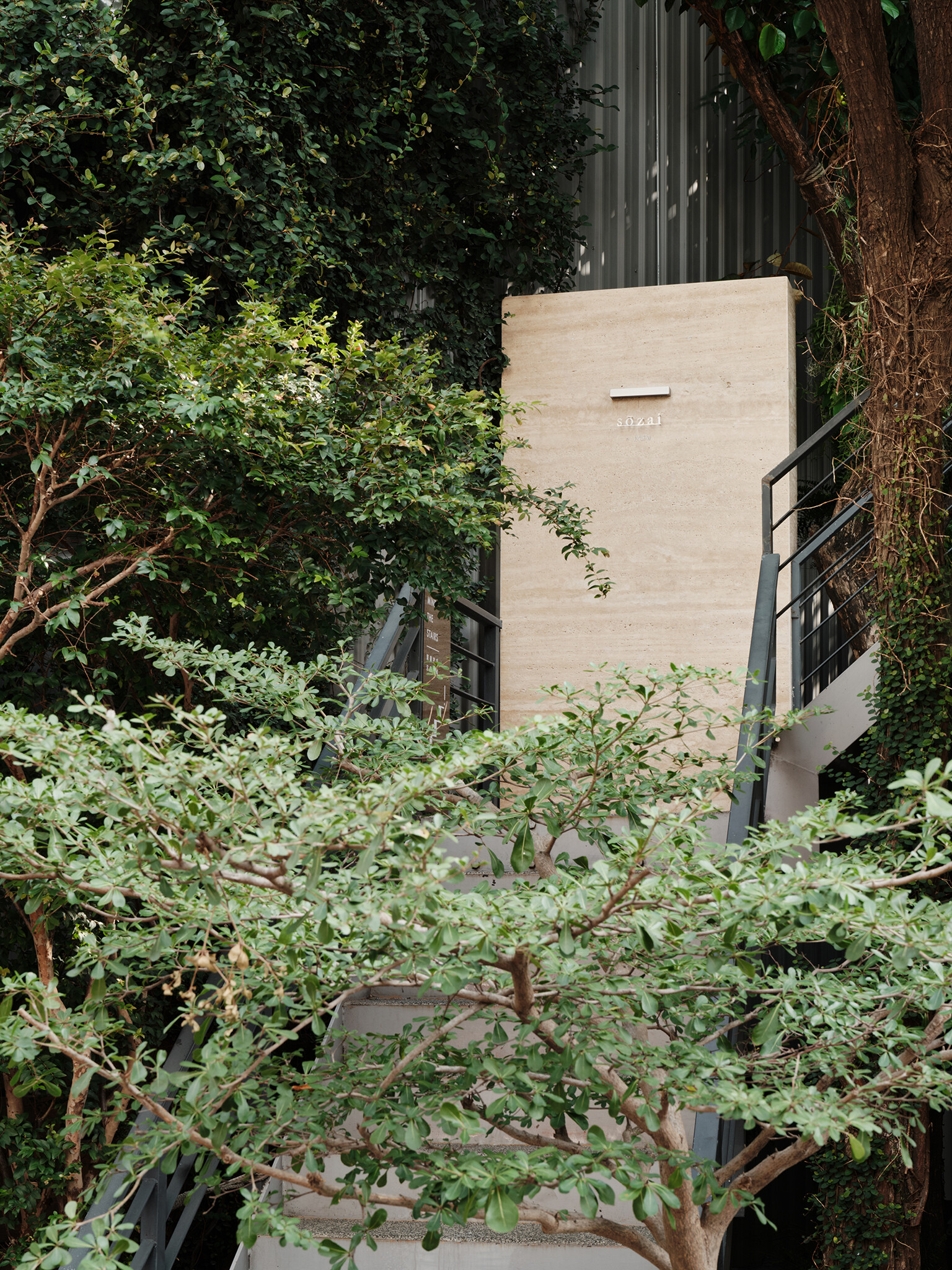
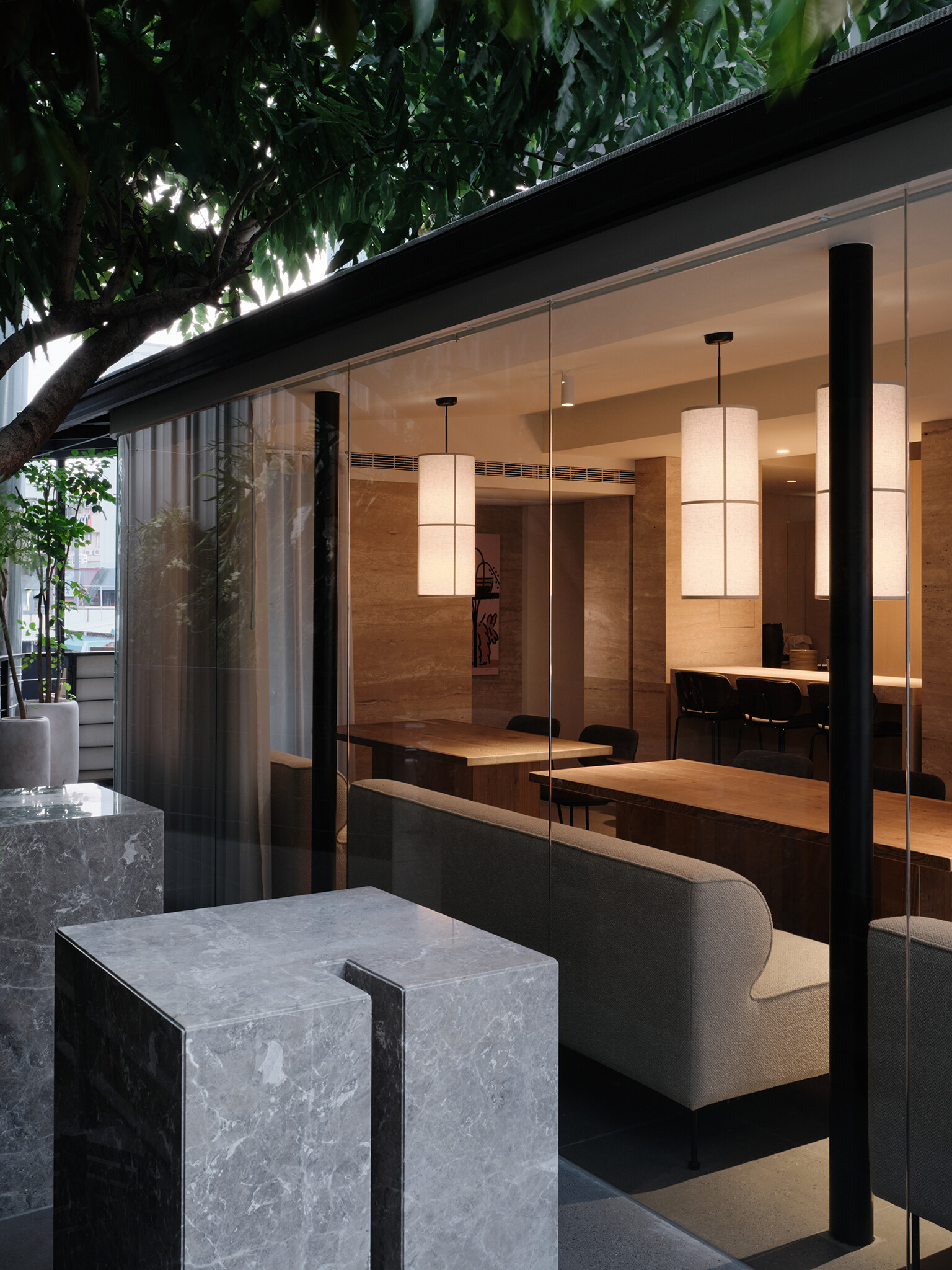
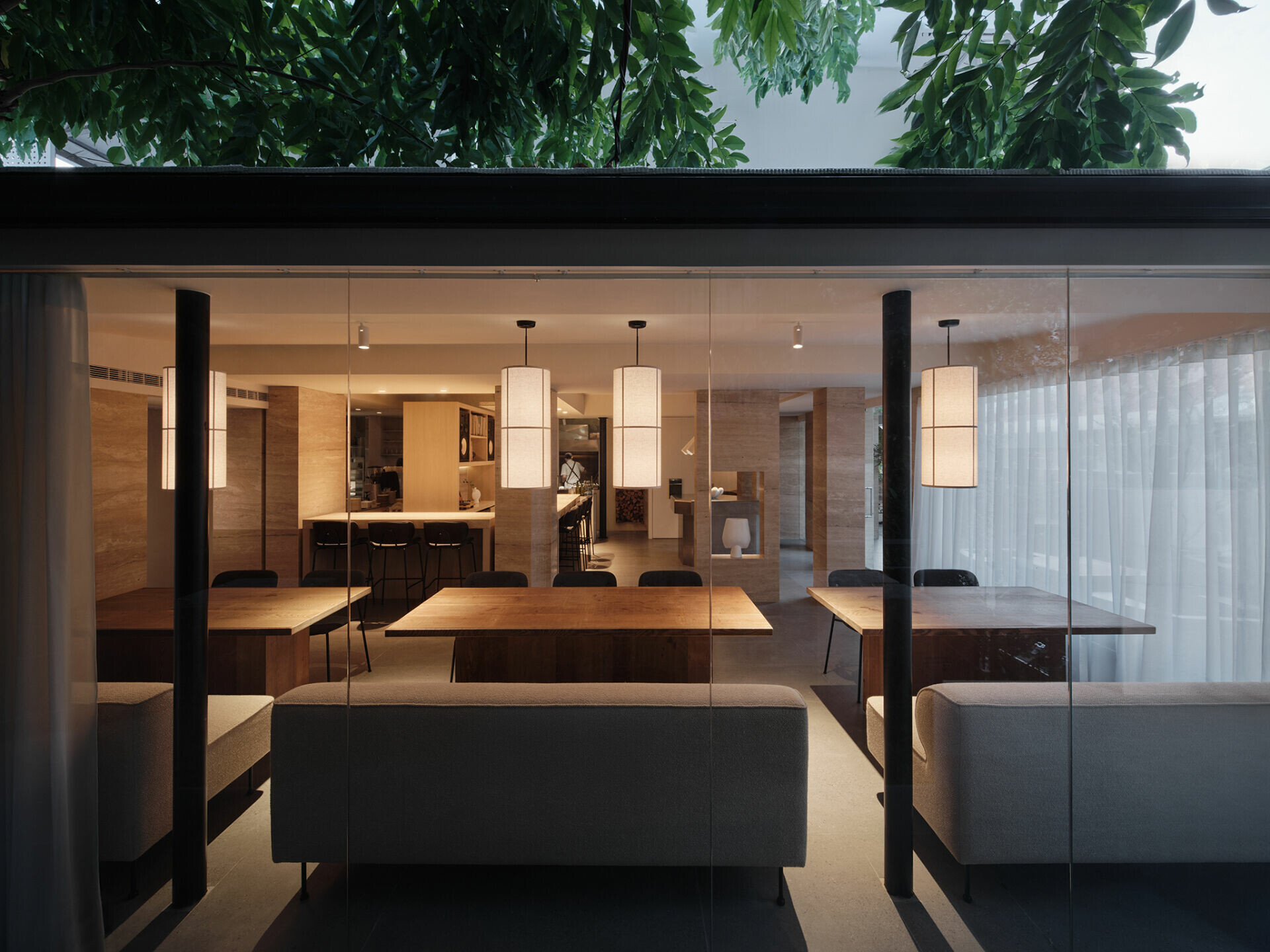
Tucked within a narrow alley in Taichung, sōzai by LayLow occupies the second floor above a courtyard wrapped in greenery. Large panes of glass dissolve the line between interior and exterior, allowing daylight to wash across the travertine flooring. Shadows and leaves shift together, and nature becomes not a scene beyond the window but the very essence from which the space is built.
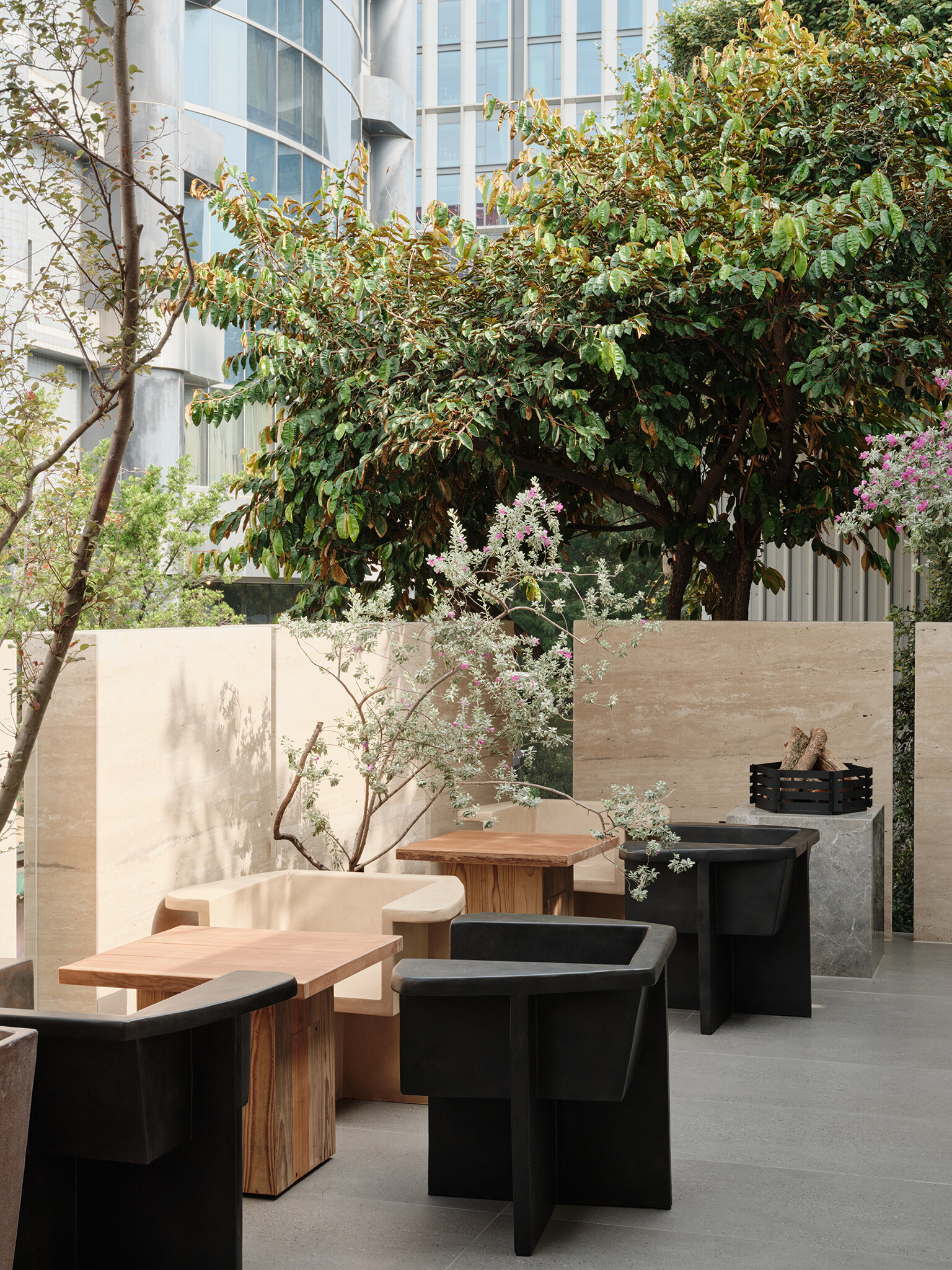
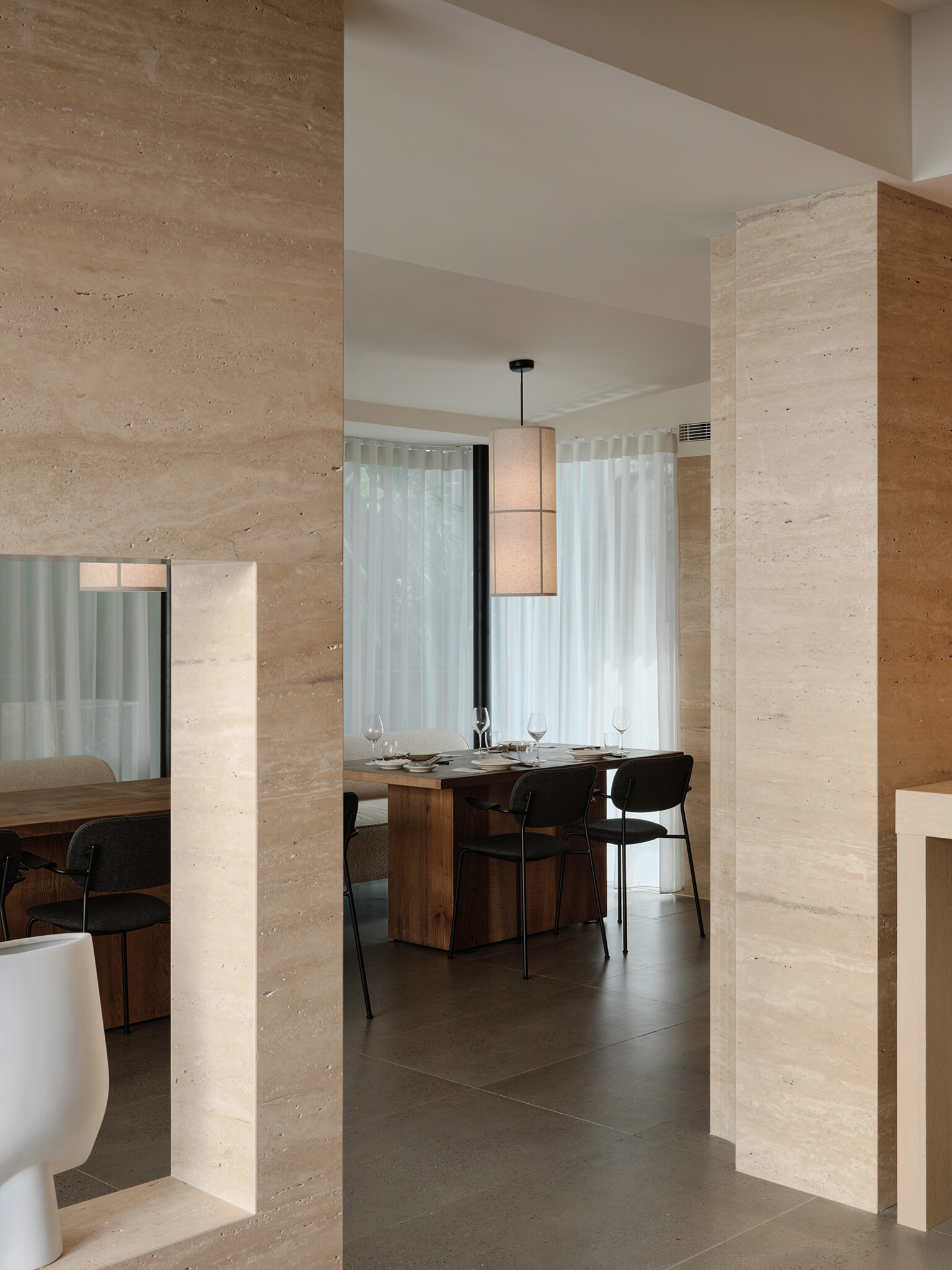
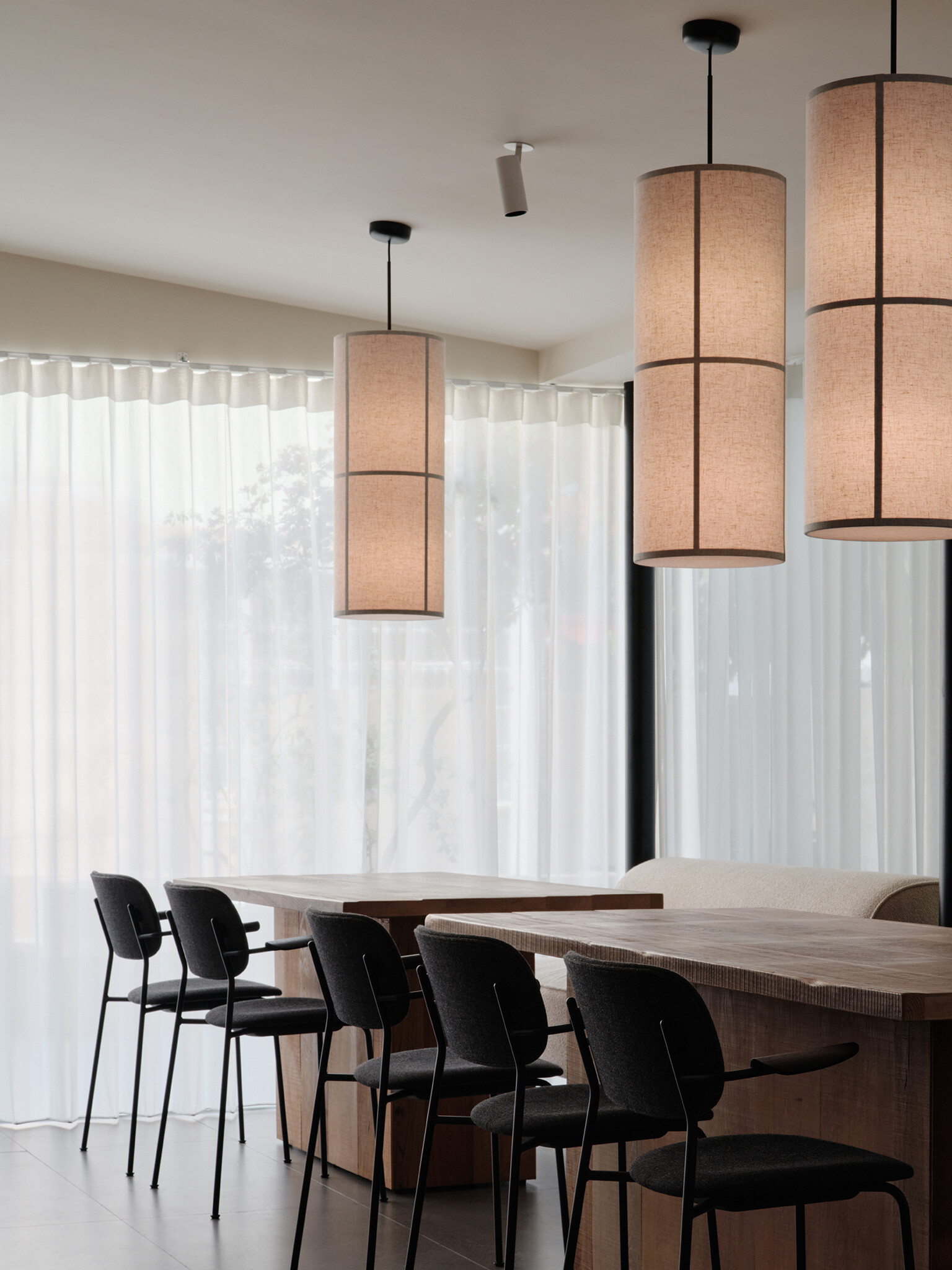
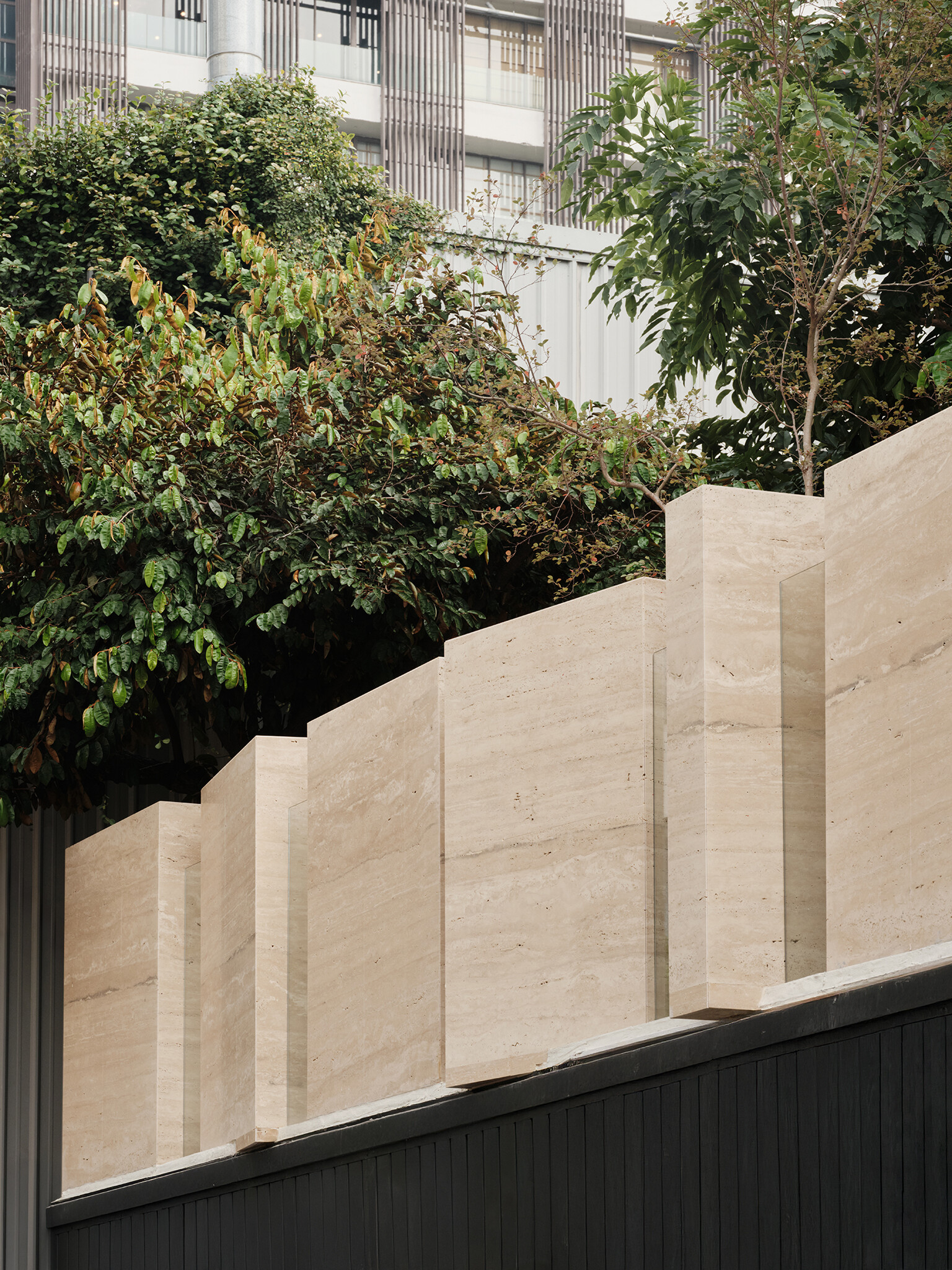
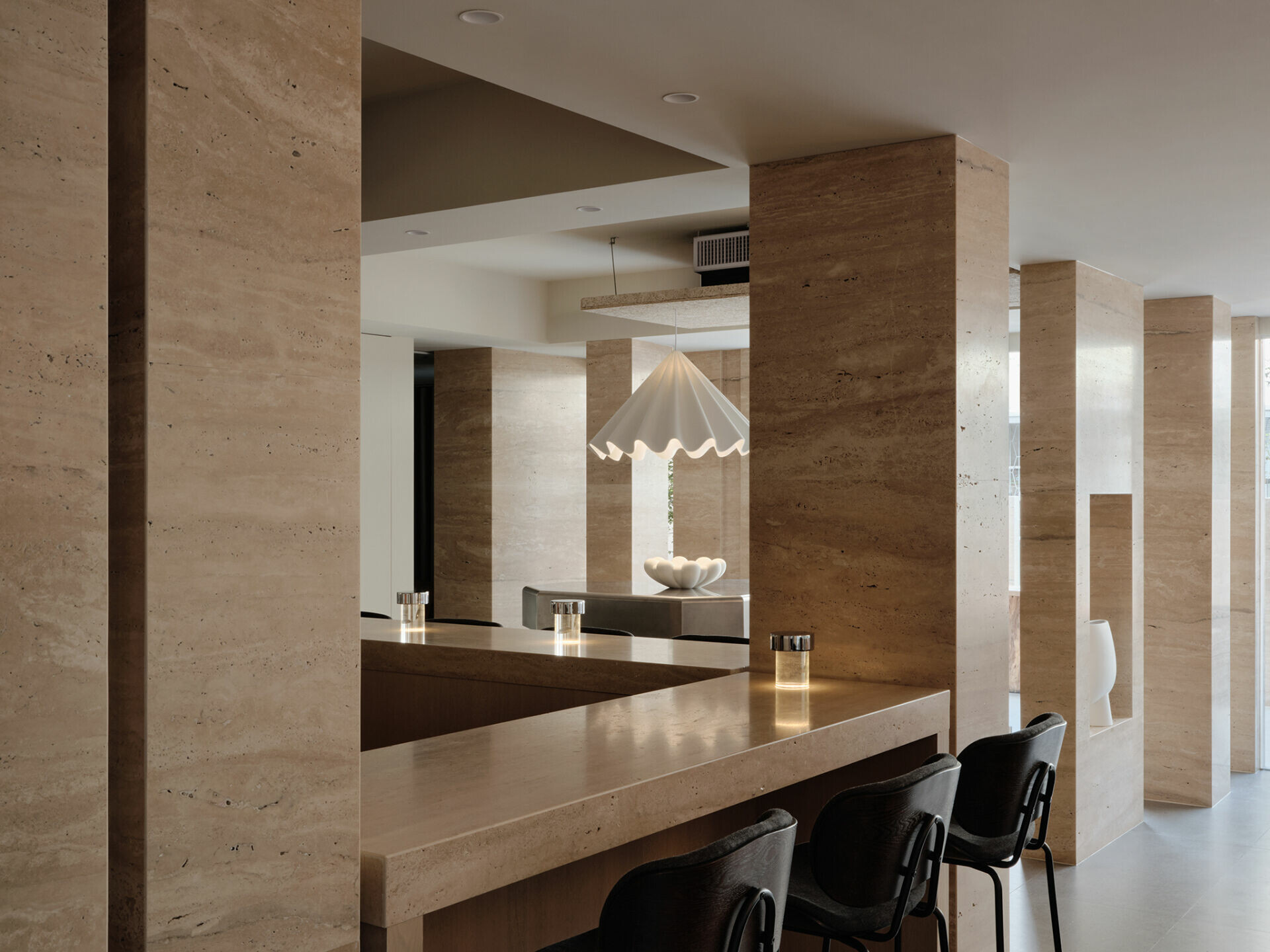
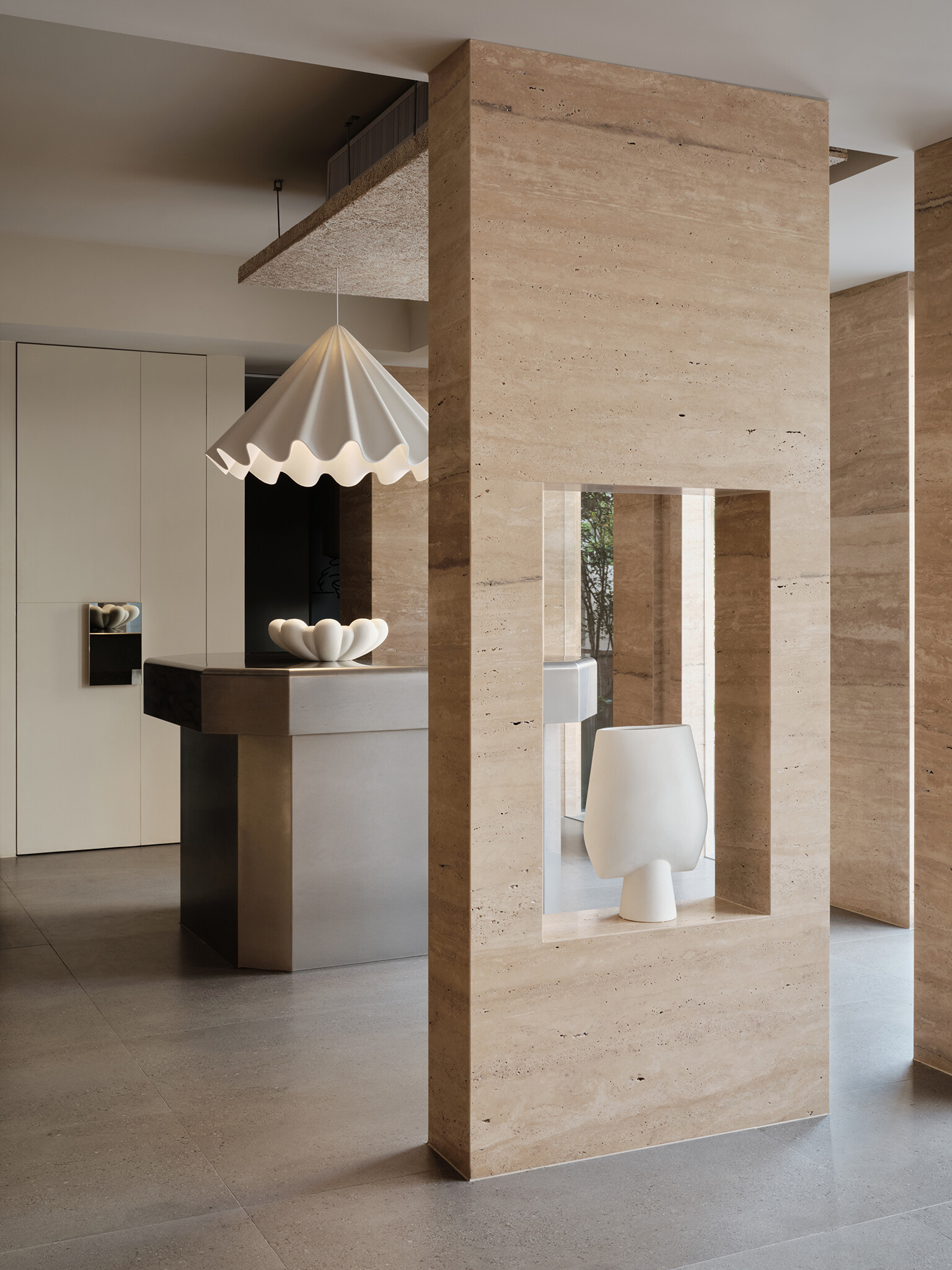
As Baudelaire once wrote of “bringing the universe into one’s room,” the design draws the natural world inward and lets it take form. Travertine anchors the composition, balanced by solid wood and stainless steel—materials chosen for their clarity and grain. Along the courtyard edge, a wall of travertine blocks extends the restaurant’s architectural rhythm while maintaining privacy on the upper floor. Outside, the standing-dining area, built from fiber-cement blocks, carries an order that feels calm, almost sacred. Every texture, from stone to wood, softens the boundary between structure and landscape.
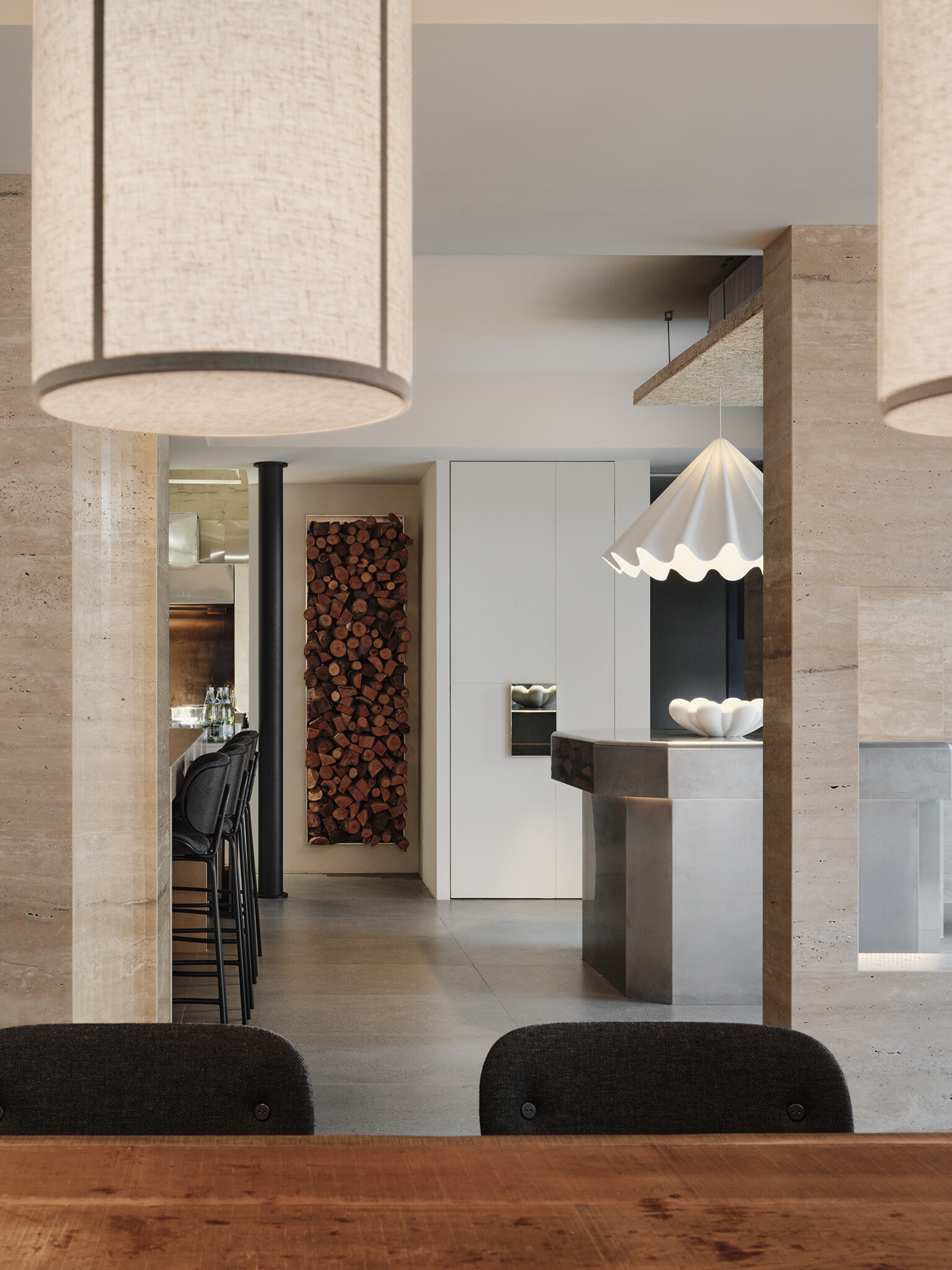
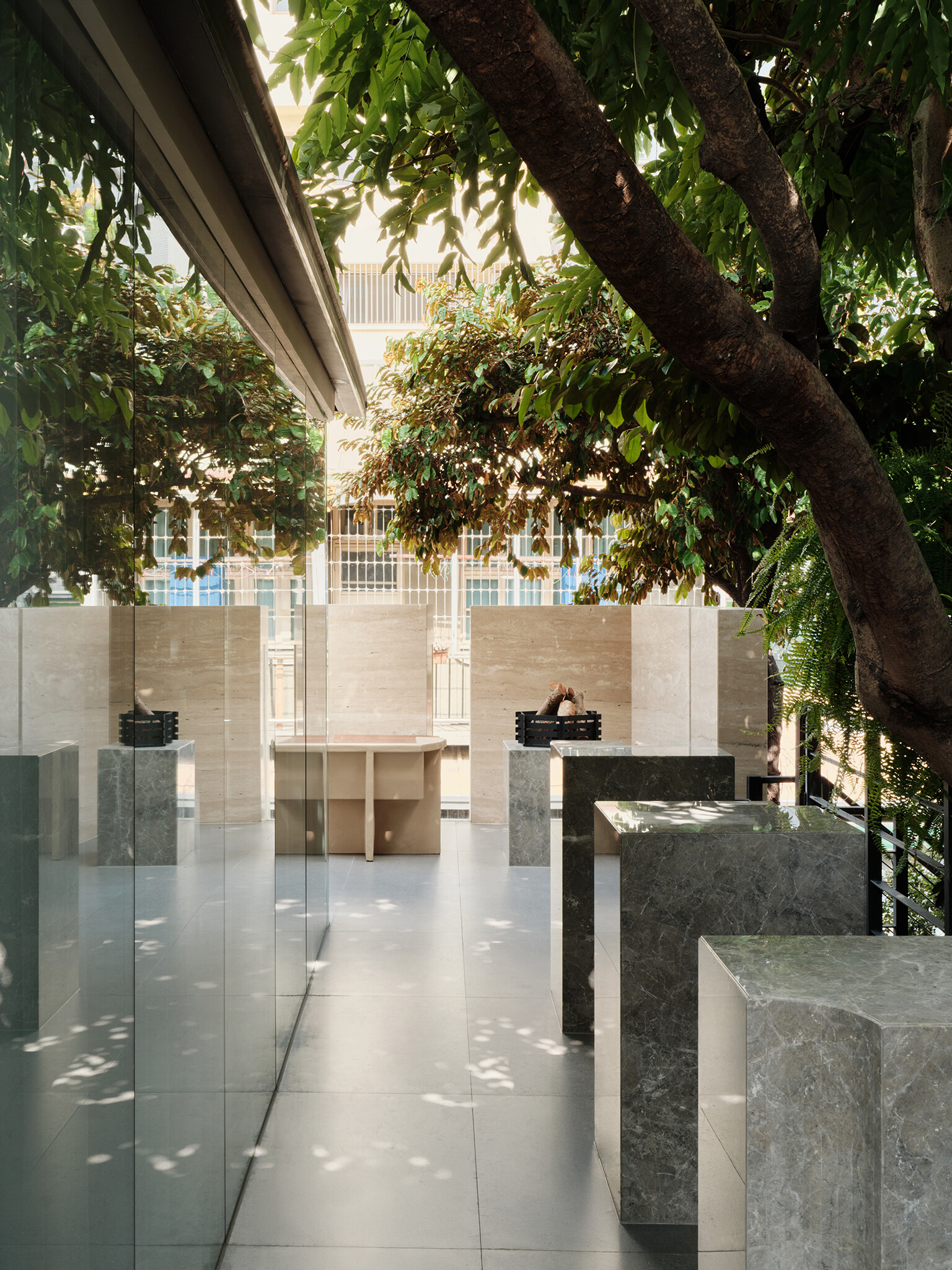
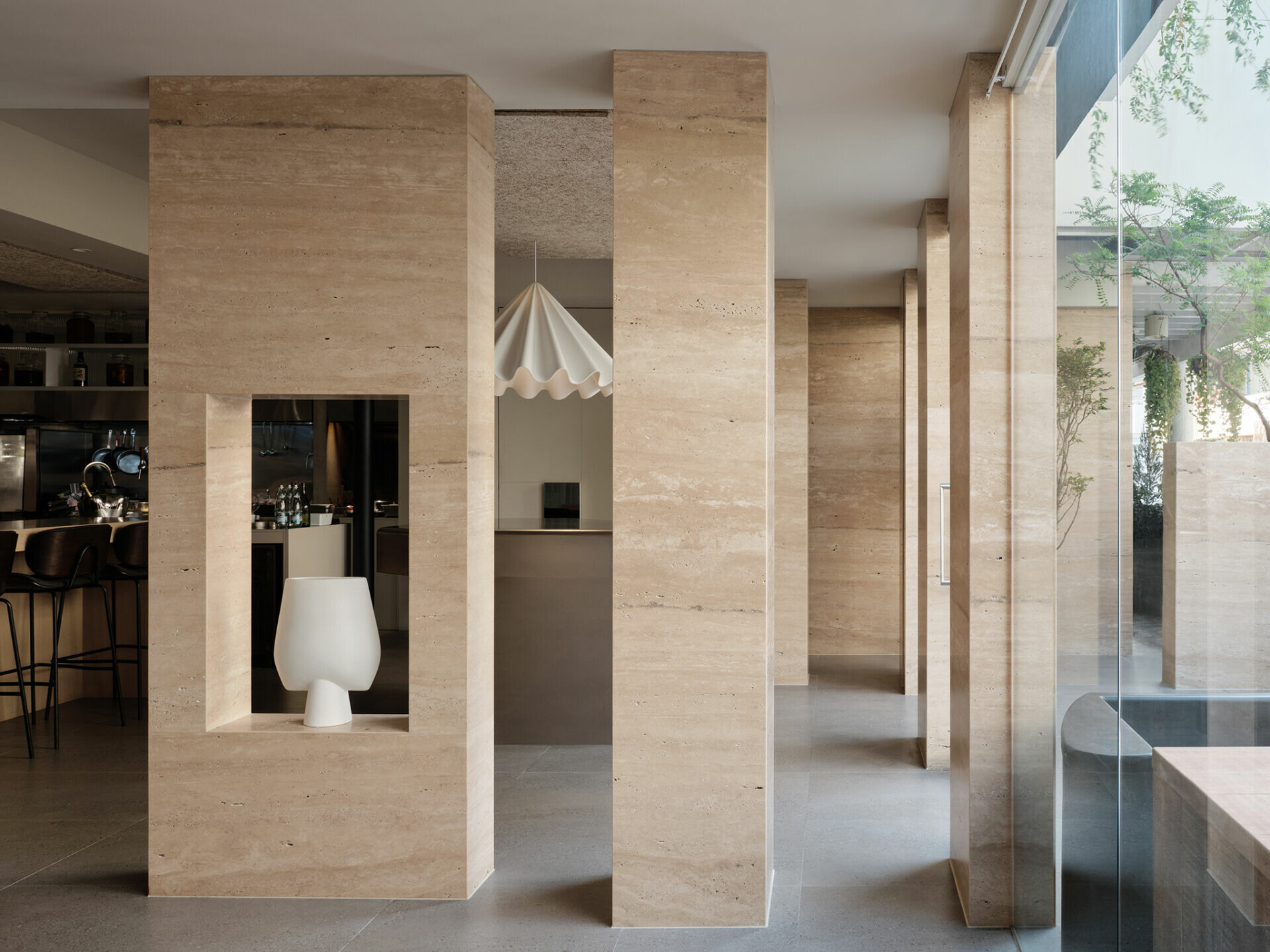
Instead of dividing or decorating, the design rethinks the space through architectural logic. Restraint in materials and precision in proportion turn this fine-dining restaurant into a quiet canvas. It does not seek attention; it frames light, sight, and the gestures of cooking, allowing cuisine to speak for itself.
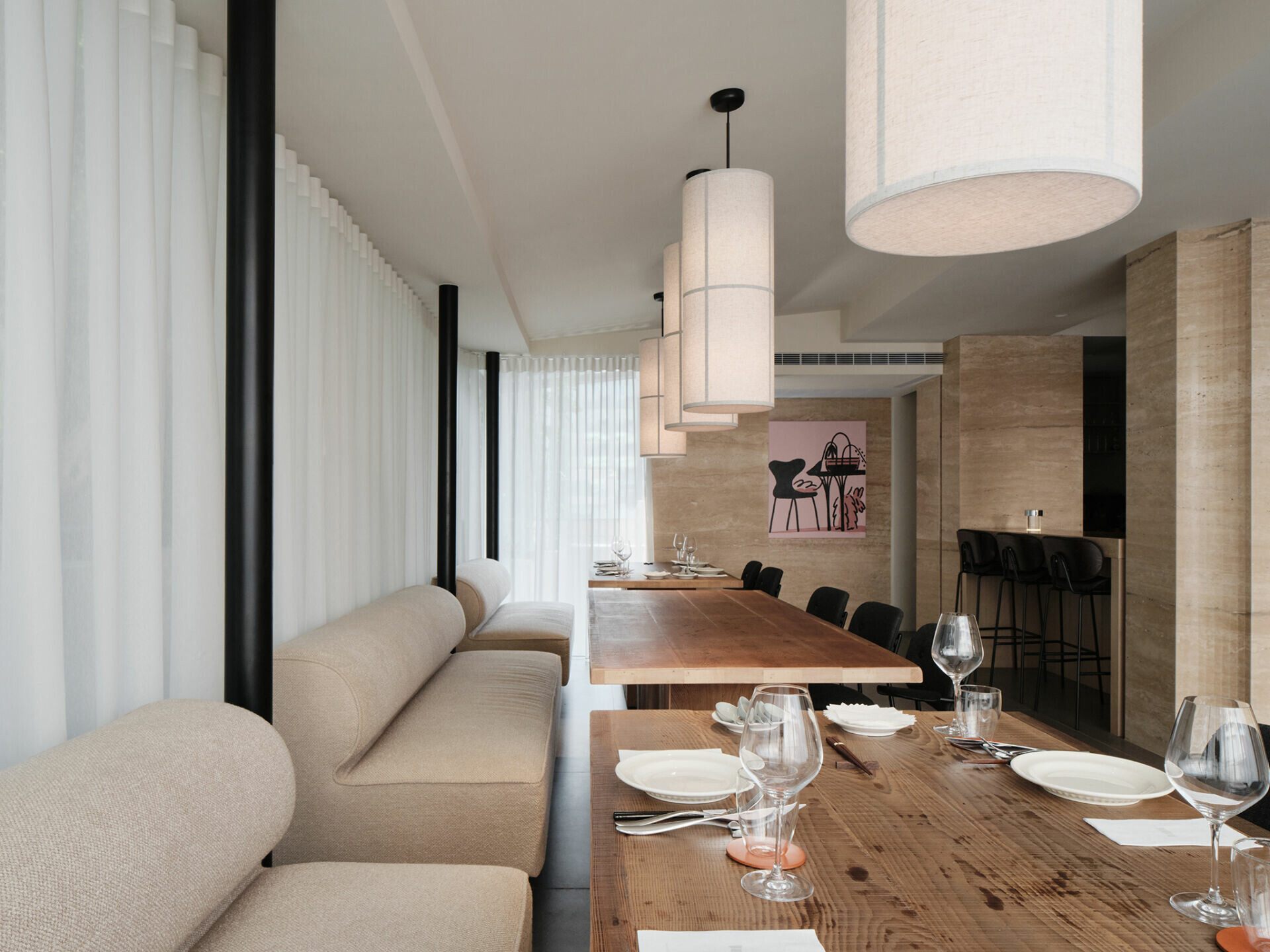
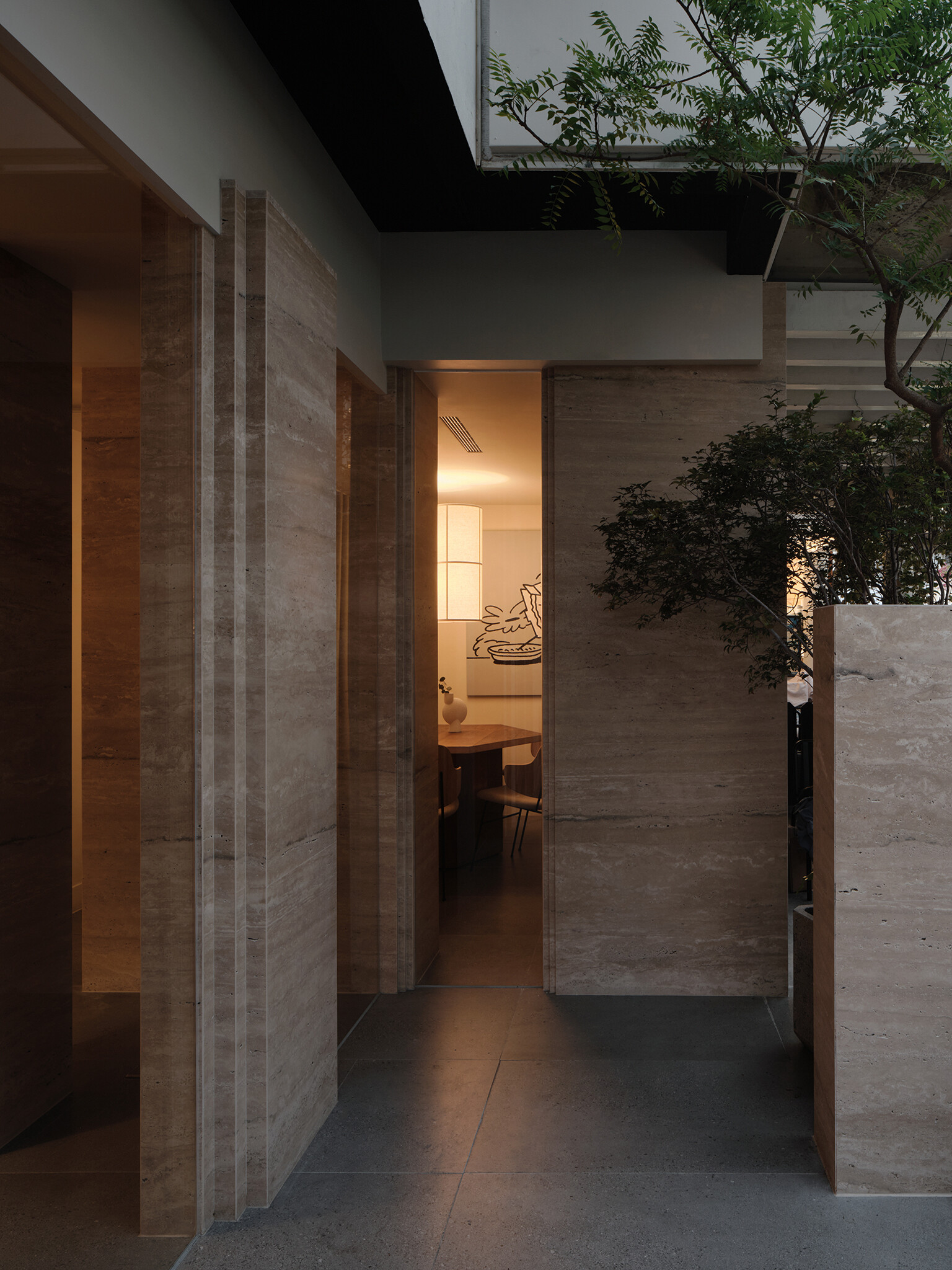
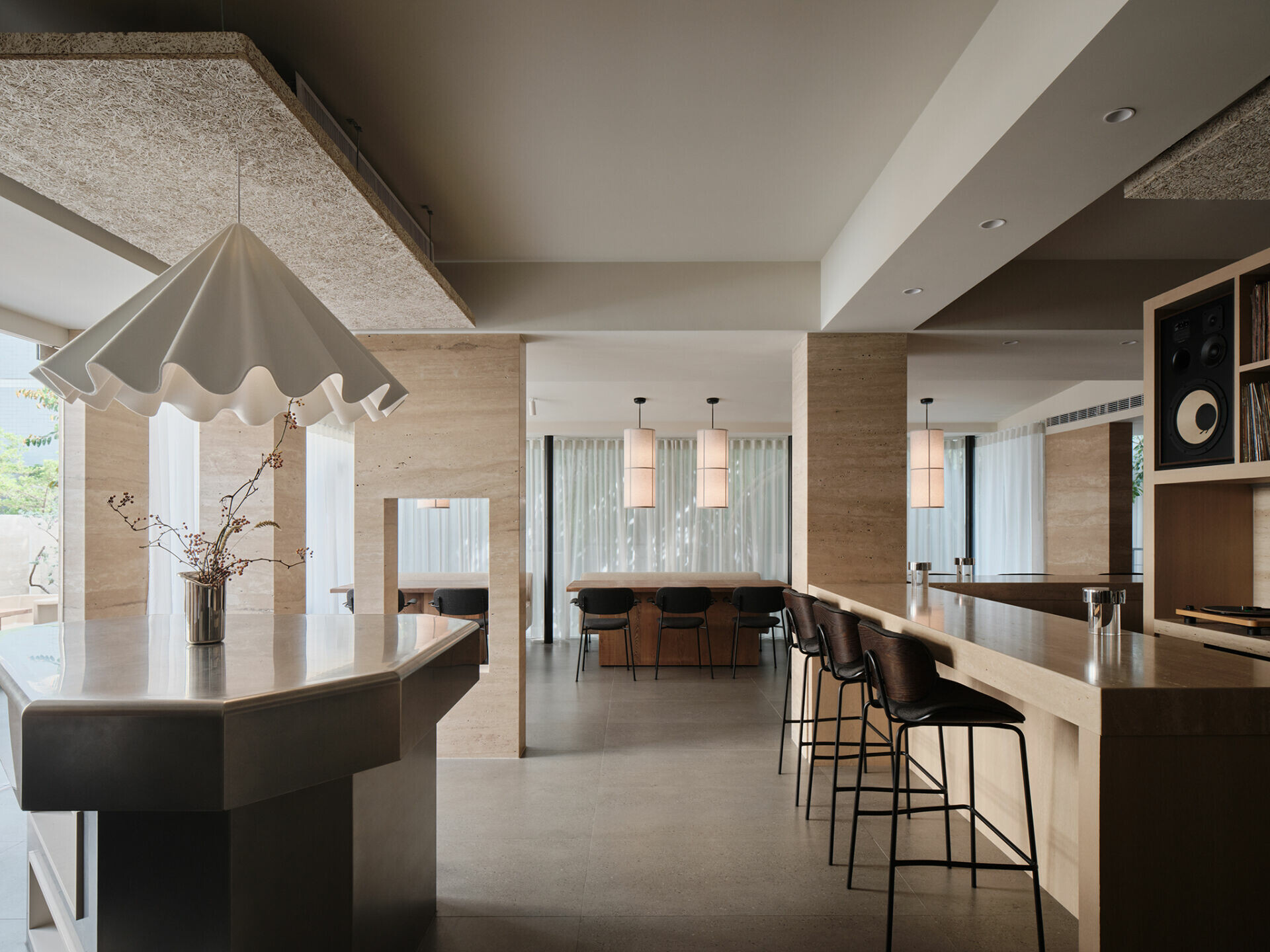
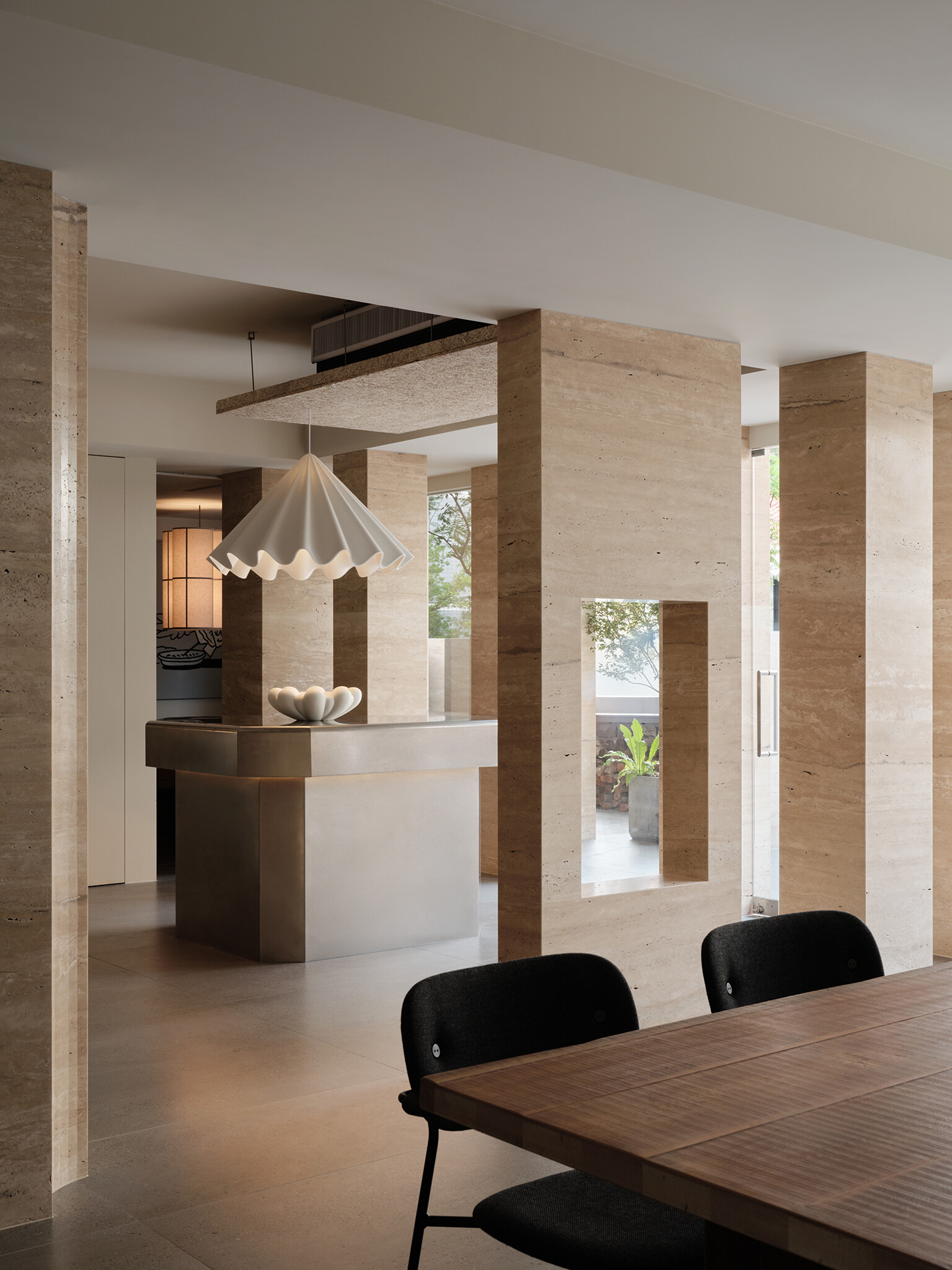
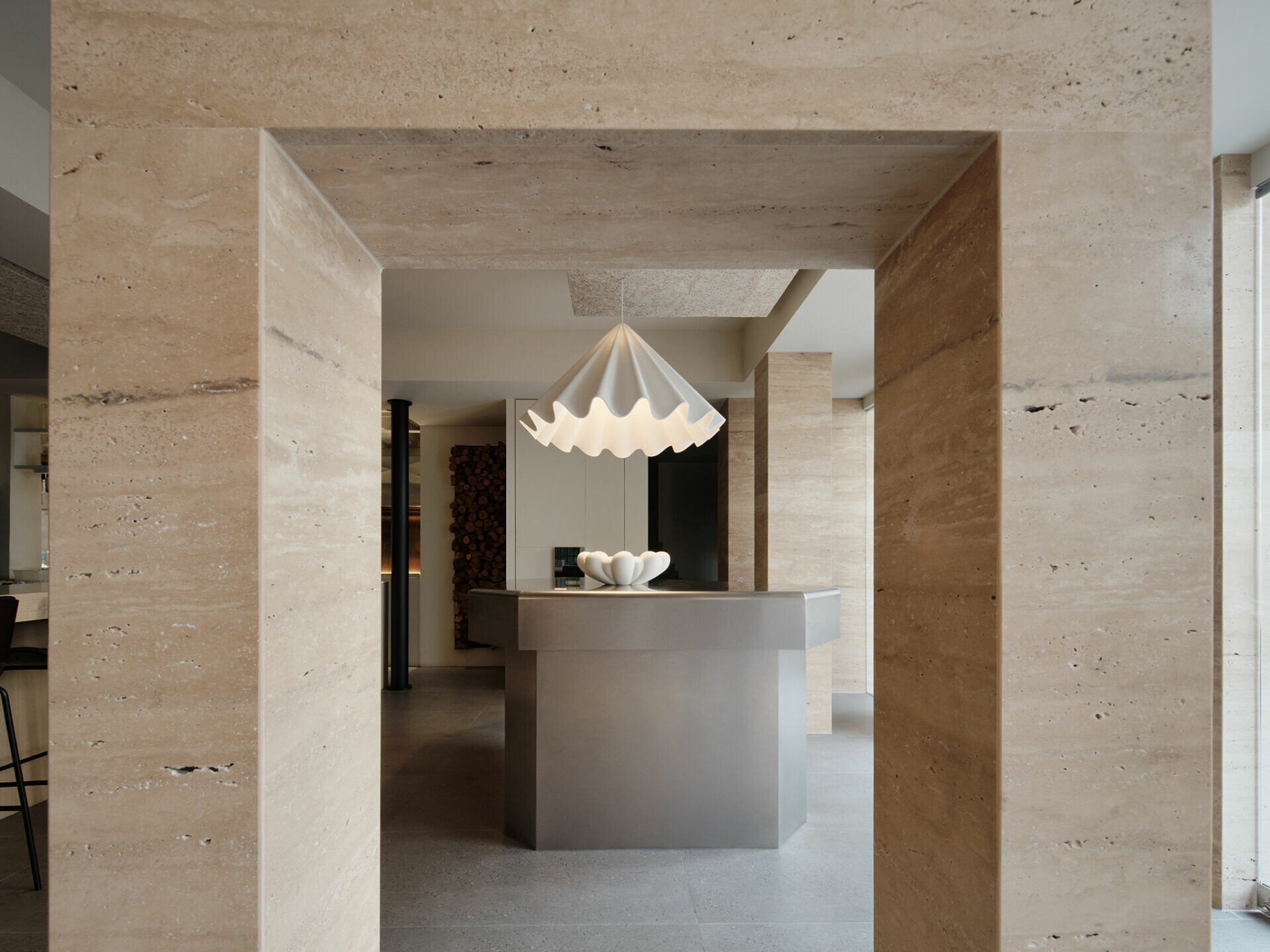
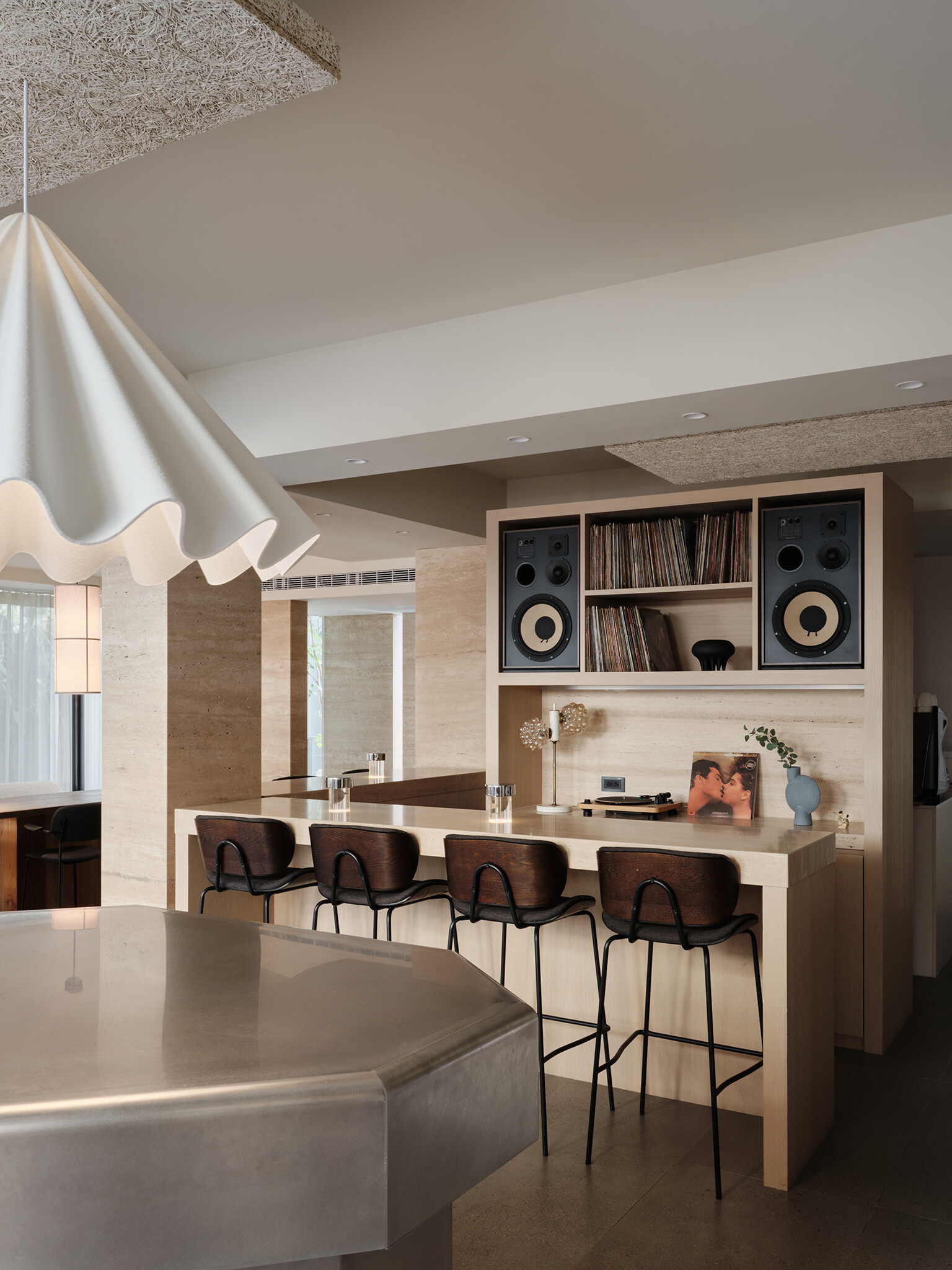
Within this quiet order lies intention. The subdued tone of travertine, the warmth of timber, and the cool reflection of metal create a poised tension. Soft pendant lights, paper-fiber and fabric shades, hand-thrown vases, and paintings with traces of graffiti lend warmth to the structure. Scarpa’s spirit lingers in the details—from the gentle curve where wall meets column to the gradated stone walls of the private dining room—each a subtle echo of his language of craft and precision.
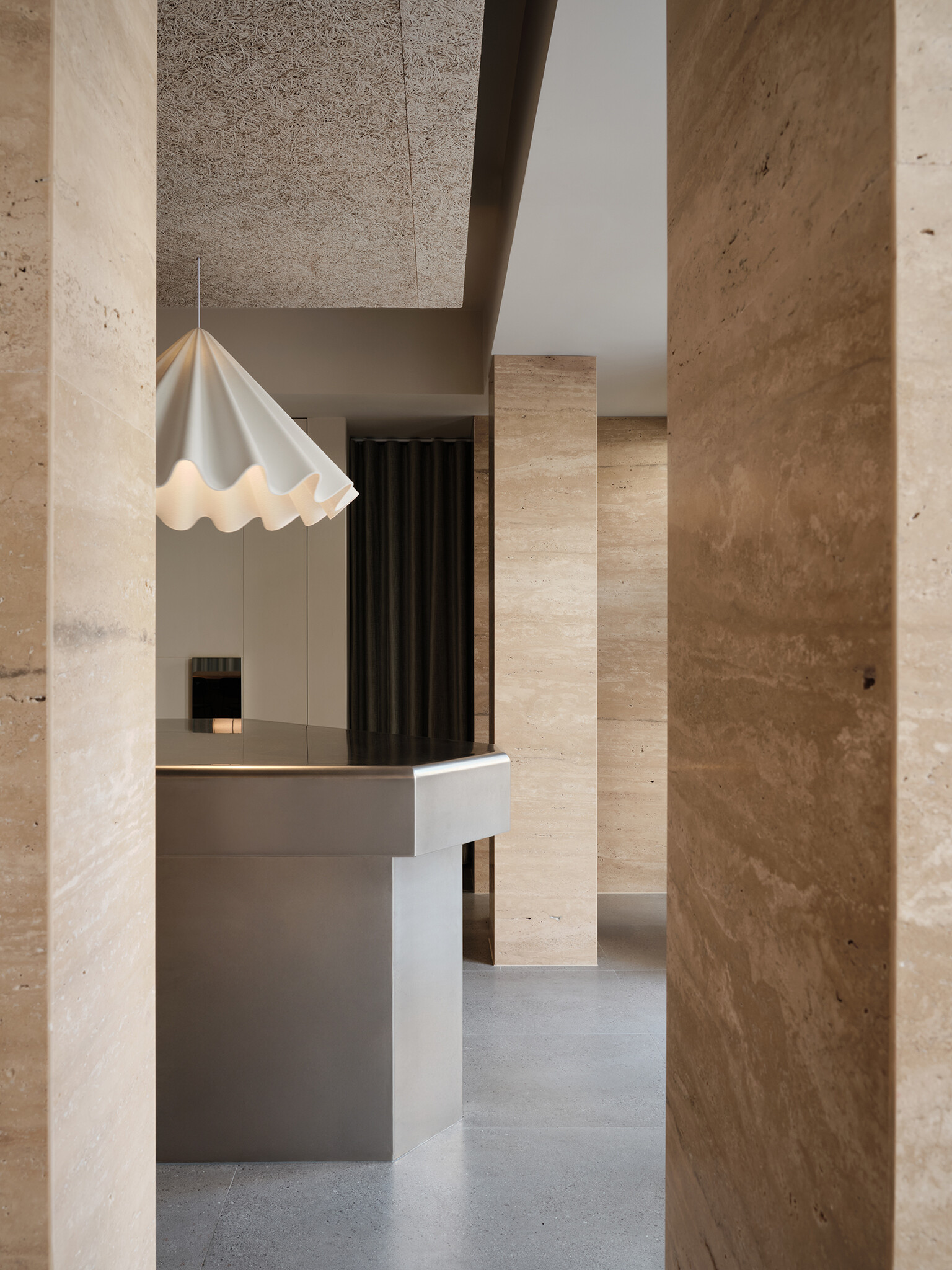
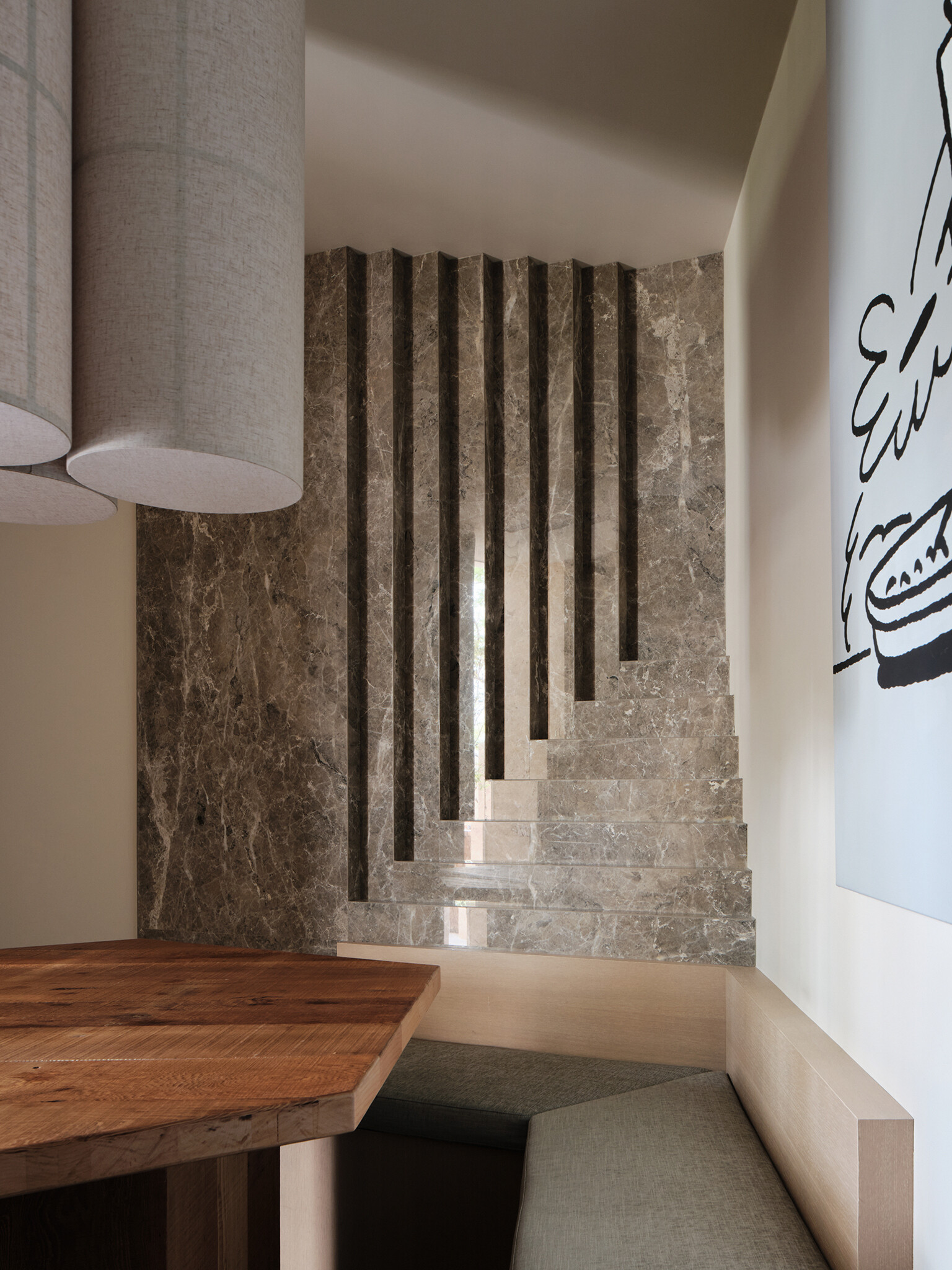
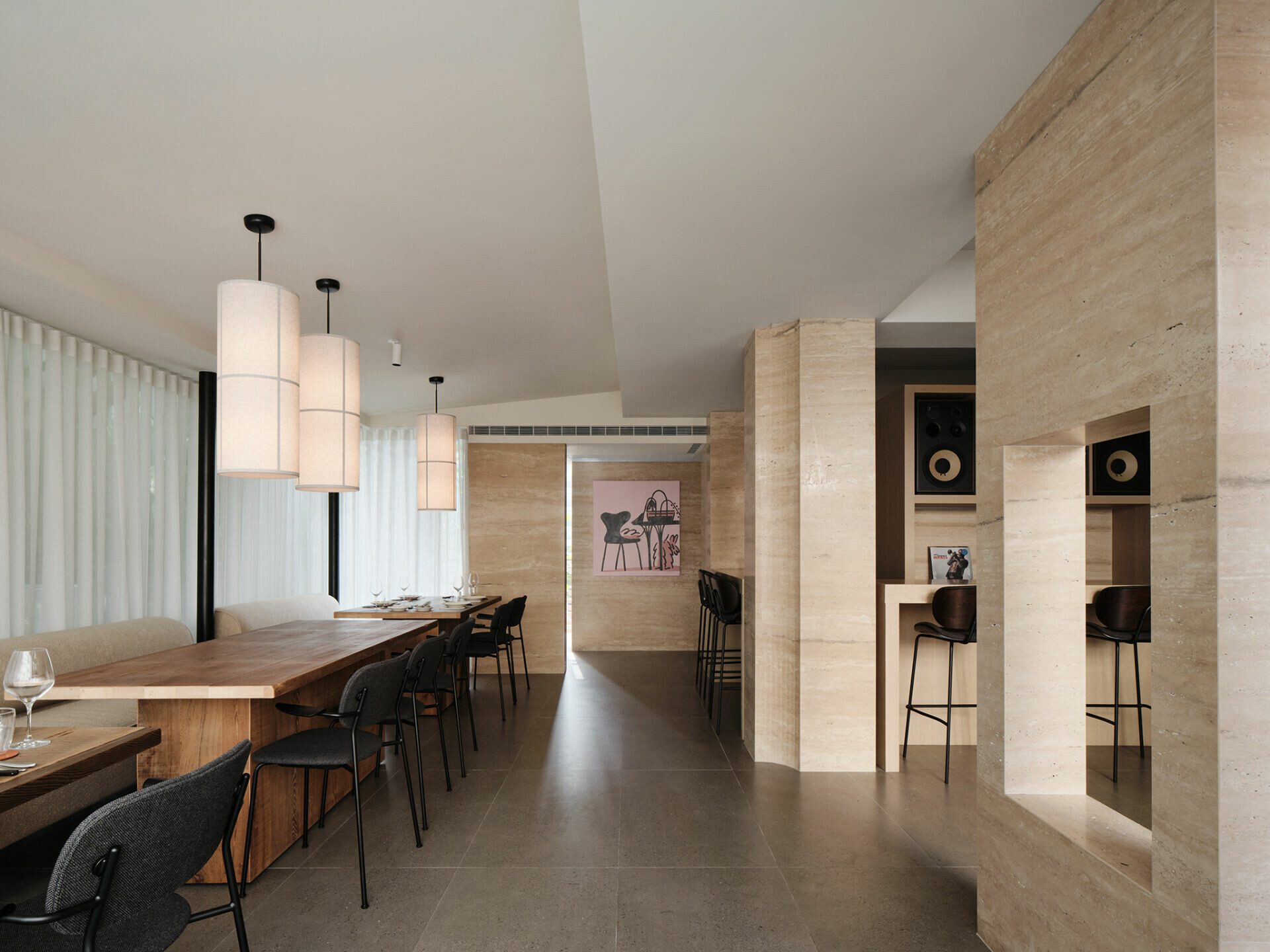
Because the venue hosts both dining and performance, the spatial sequence begins at the entrance. A stainless-steel island occupies the center: a reception counter by day and a DJ table by night, reflecting its surroundings yet dissolving into them. The visual axis extends toward the travertine bar, opening the depth of the space; behind it, the open kitchen becomes a stage where cooking unfolds as a quiet ritual.
Ascending the stairs beneath a discreet laser-engraved sign, guests enter sōzai—not merely a restaurant, but a poem composed of light, texture, and restraint. It invites every sense to rediscover the calm, enduring beauty of nature.