Mono Aware
The ability to perceive "mono no aware," the "heart that knows the thing," is a unique human instinct. Mono no aware is the emotional response that arises from understanding the human heart and being moved by scenes and moments, presenting such emotions in a way that others can empathize deeply.
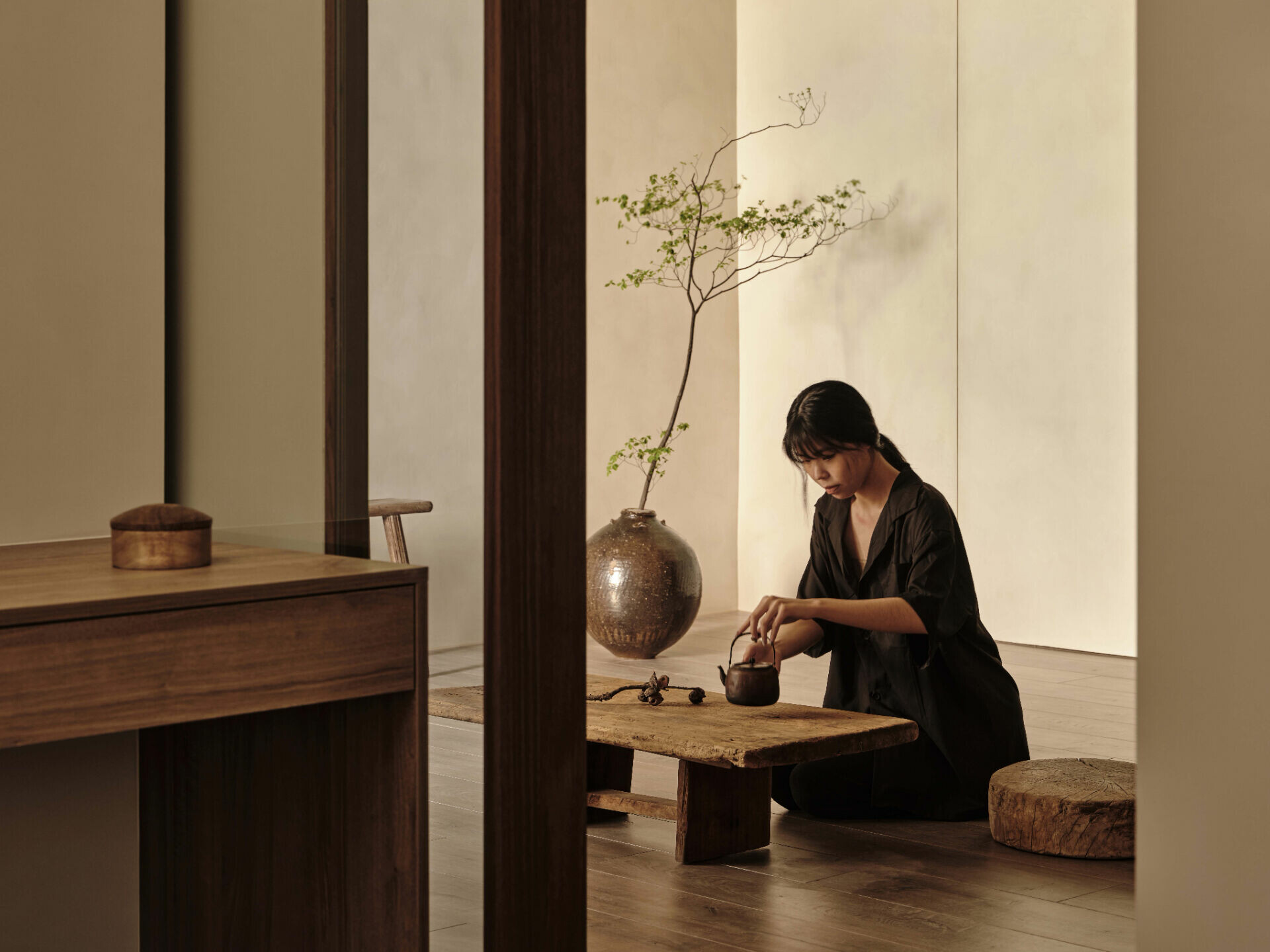
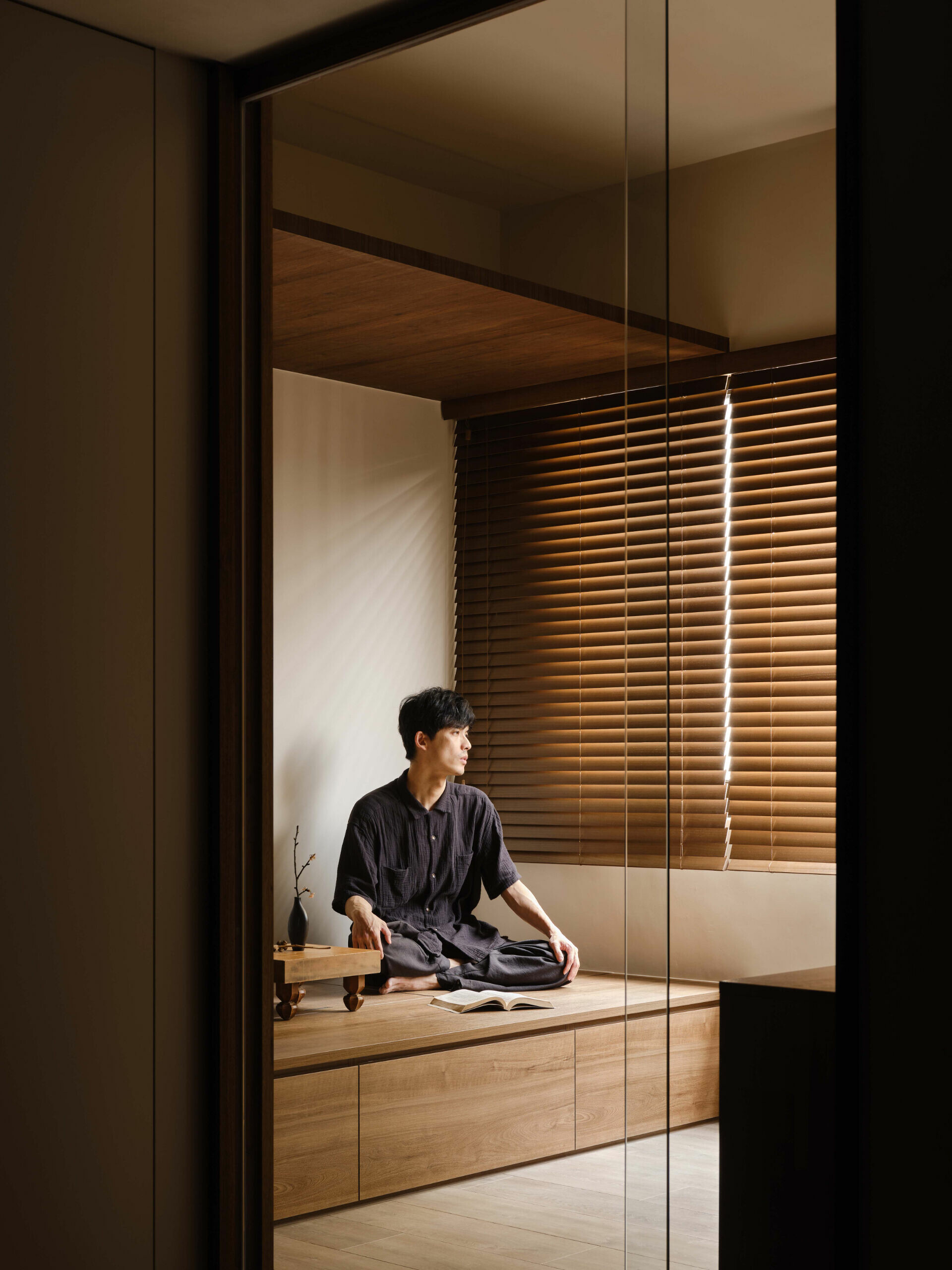
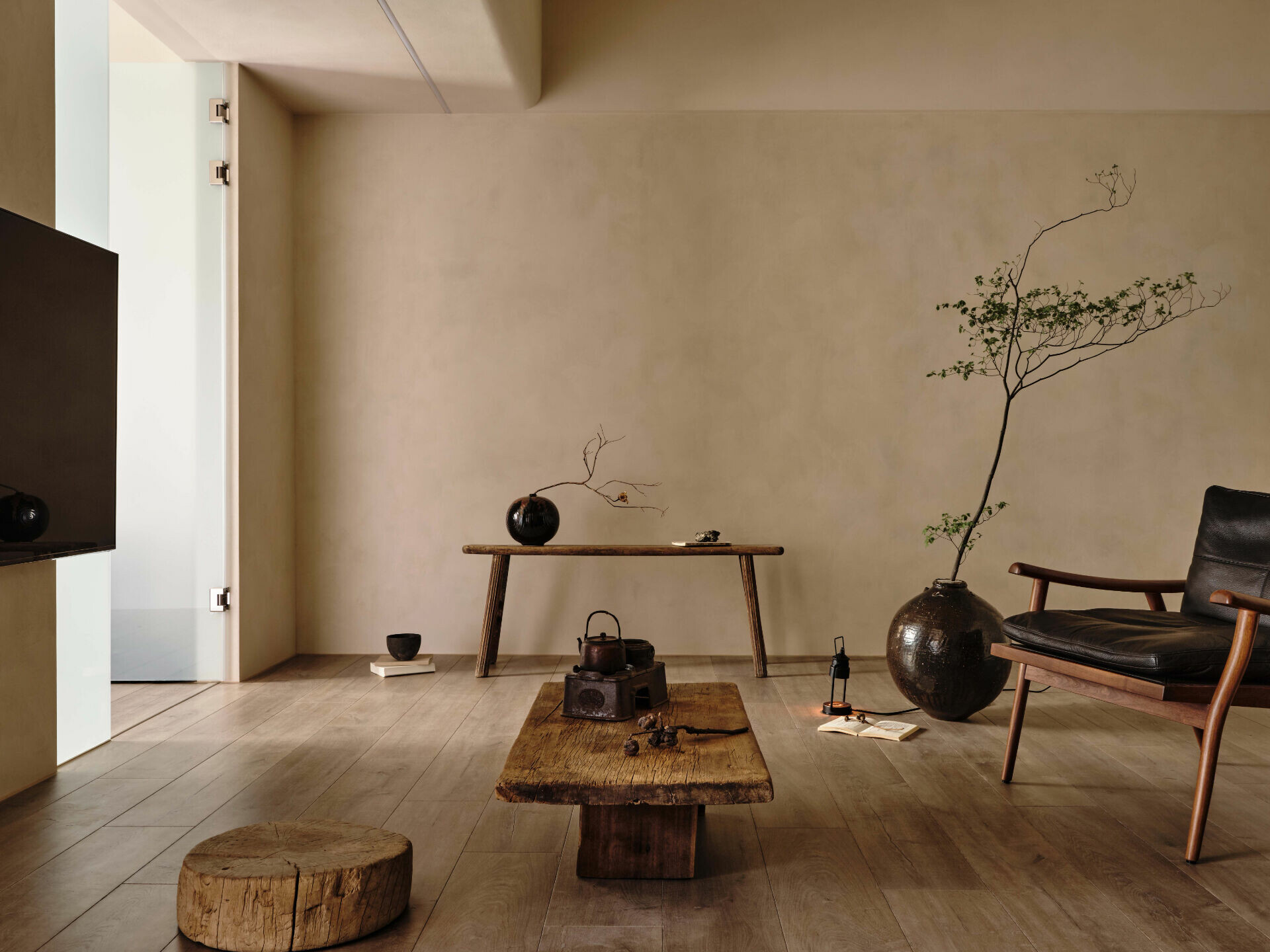
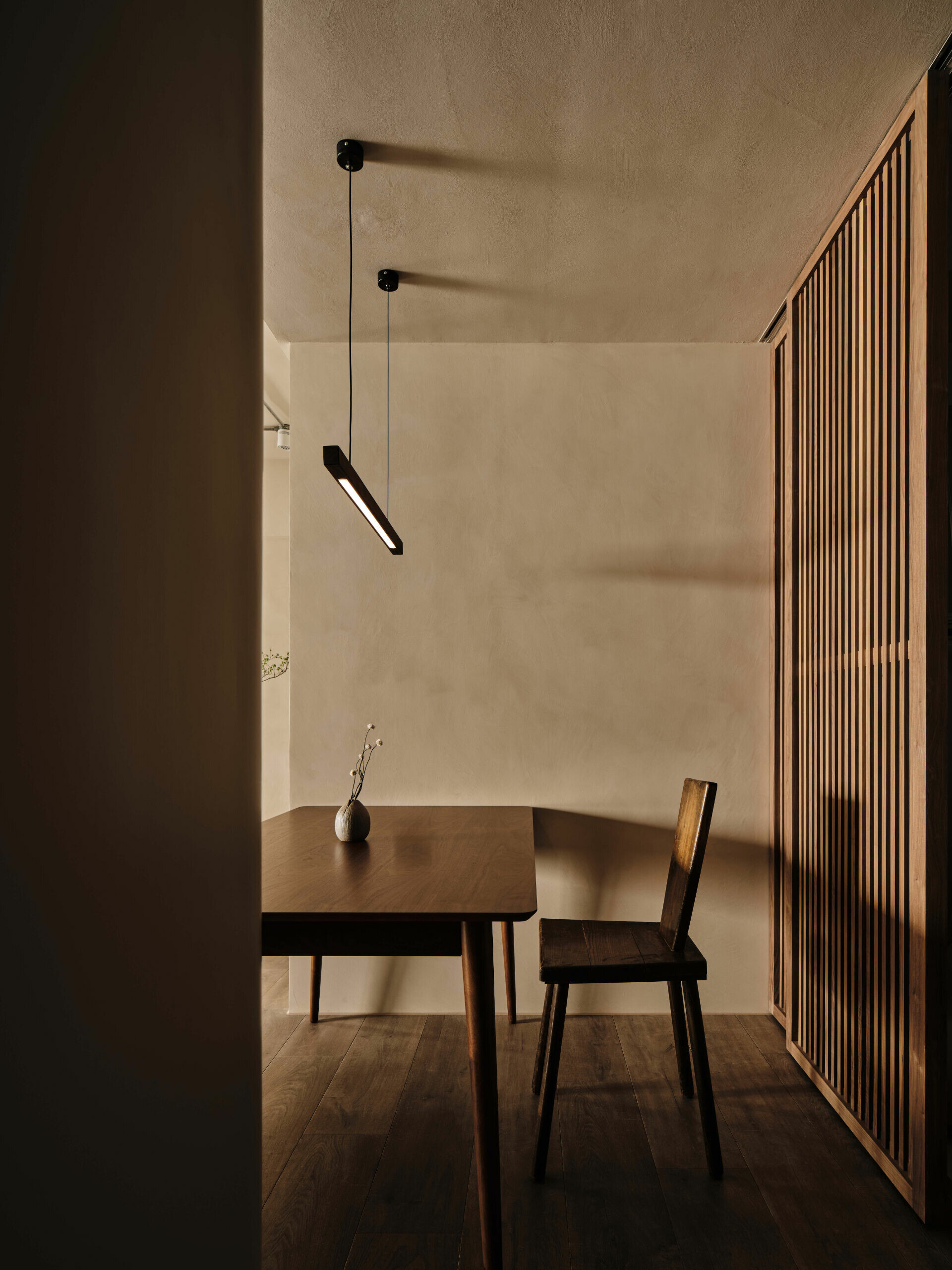
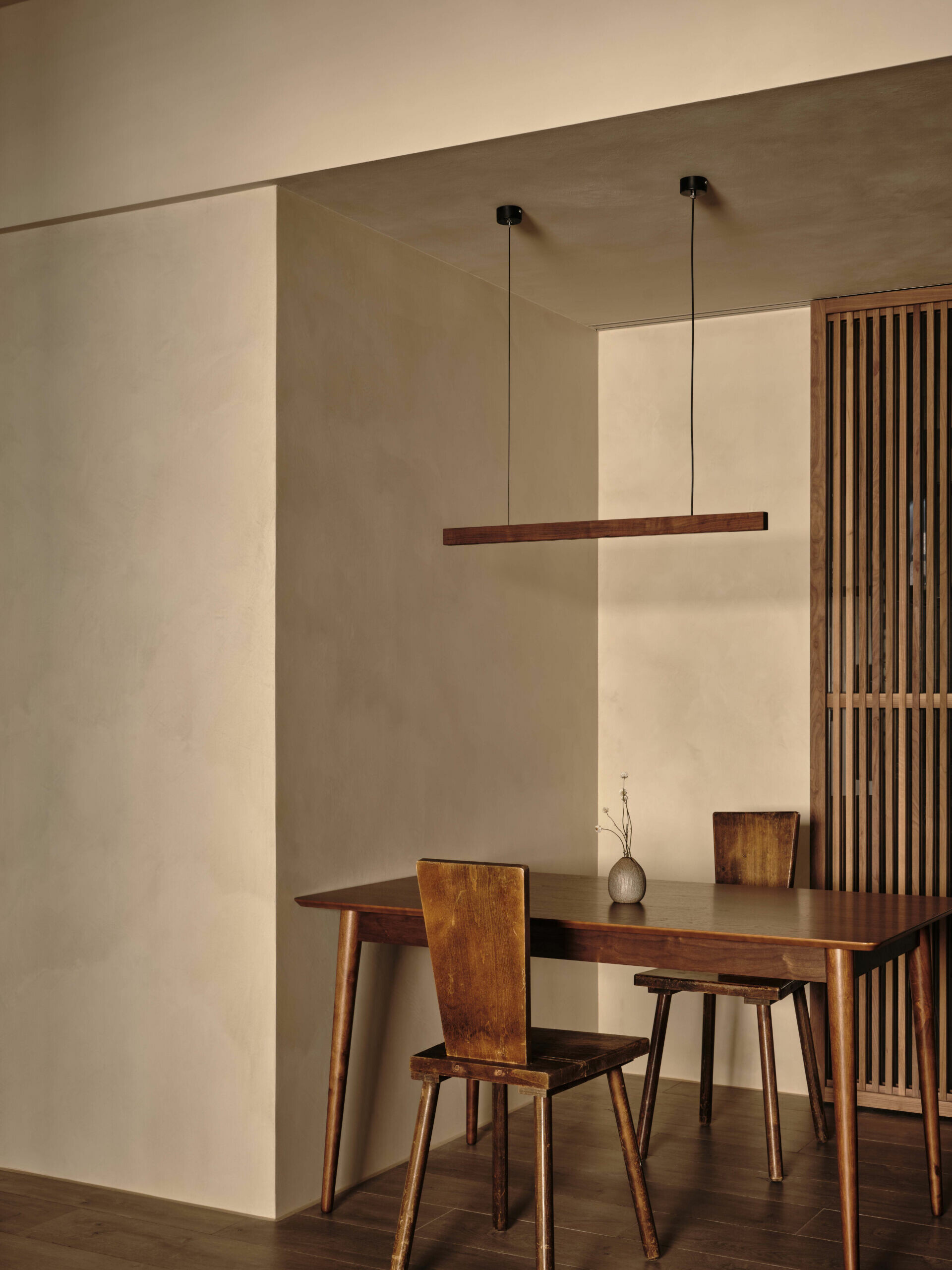
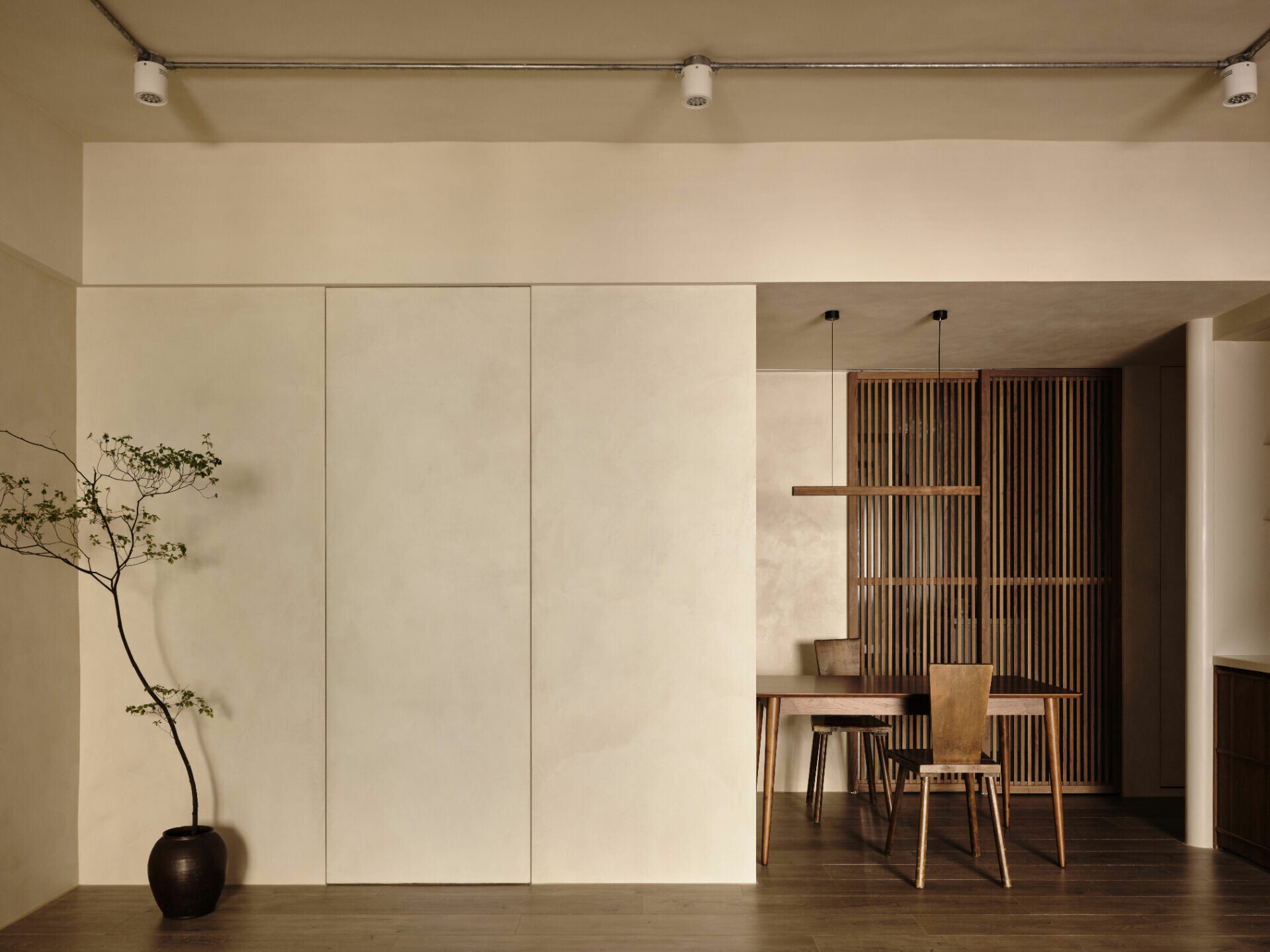
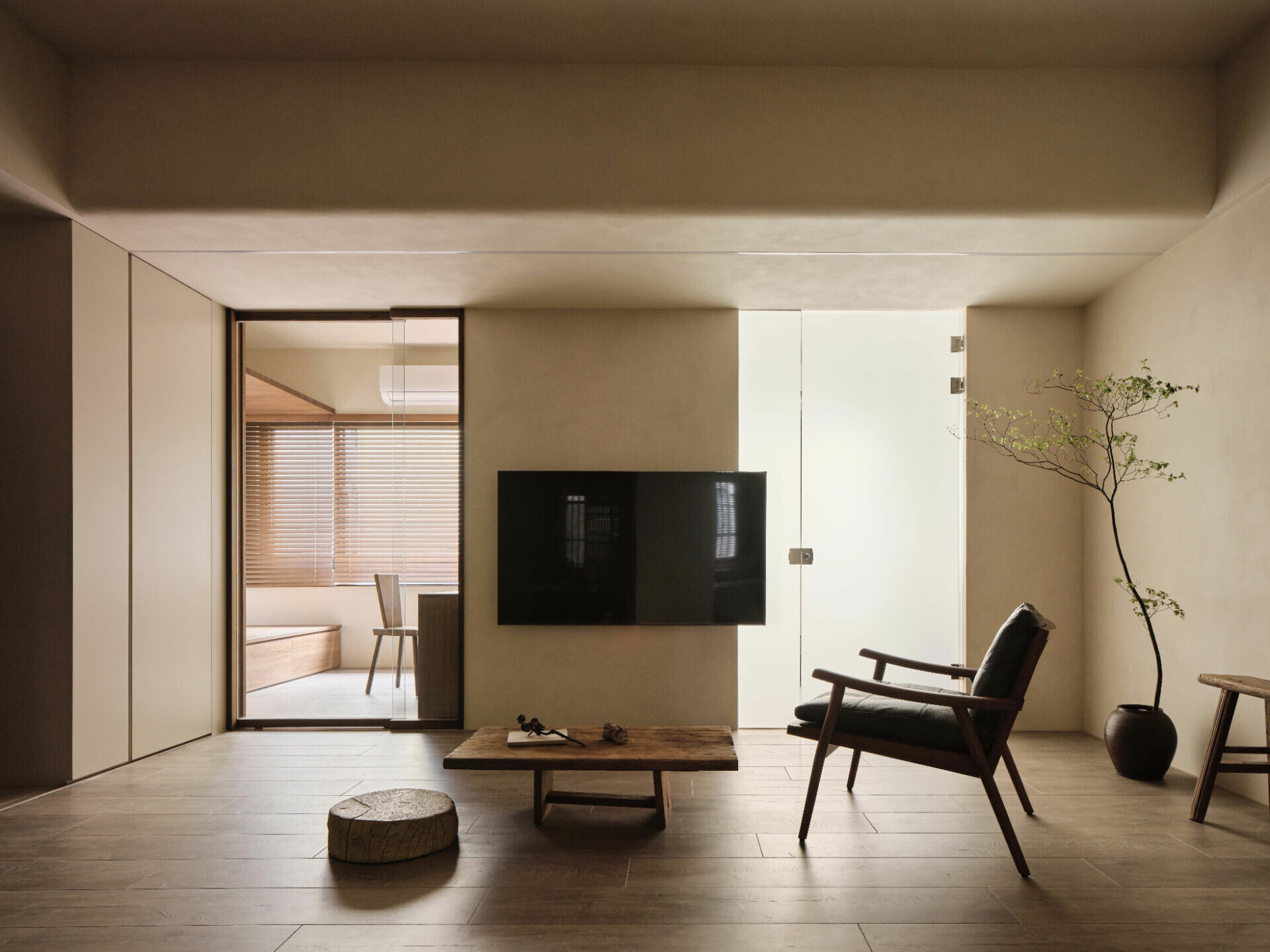
As the home of the owner and his fiancée, and the starting point for a new life in the future, the layout of this long house is designed with natural lighting in mind. Through two sliding doors on one side— one clear and the other frosted—the design brings natural light into the living and dining areas in two distinct color temperatures. This variable interplay of light and shadow subtly enhances the atmosphere around the owner's cherished vintage furniture.
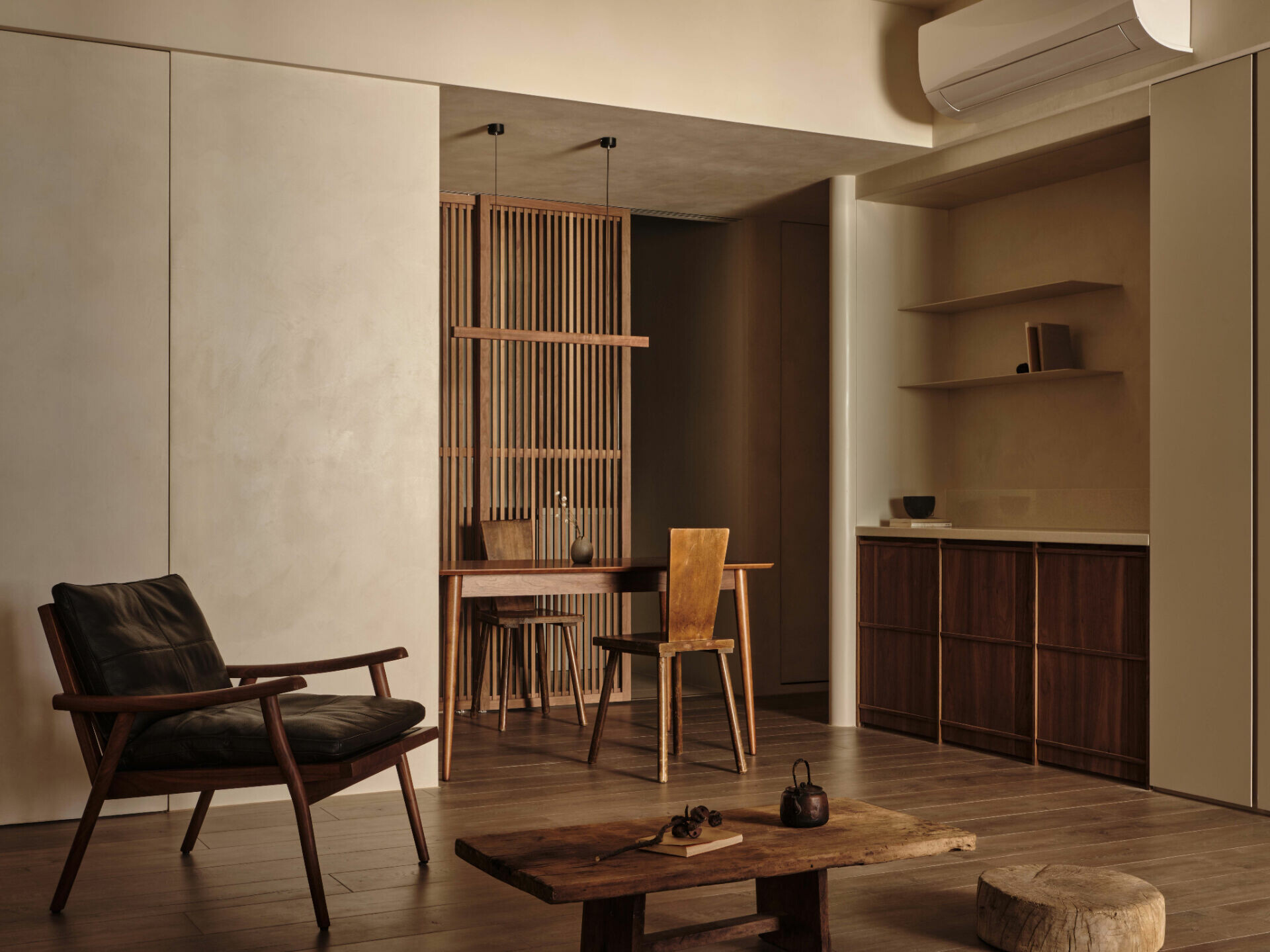
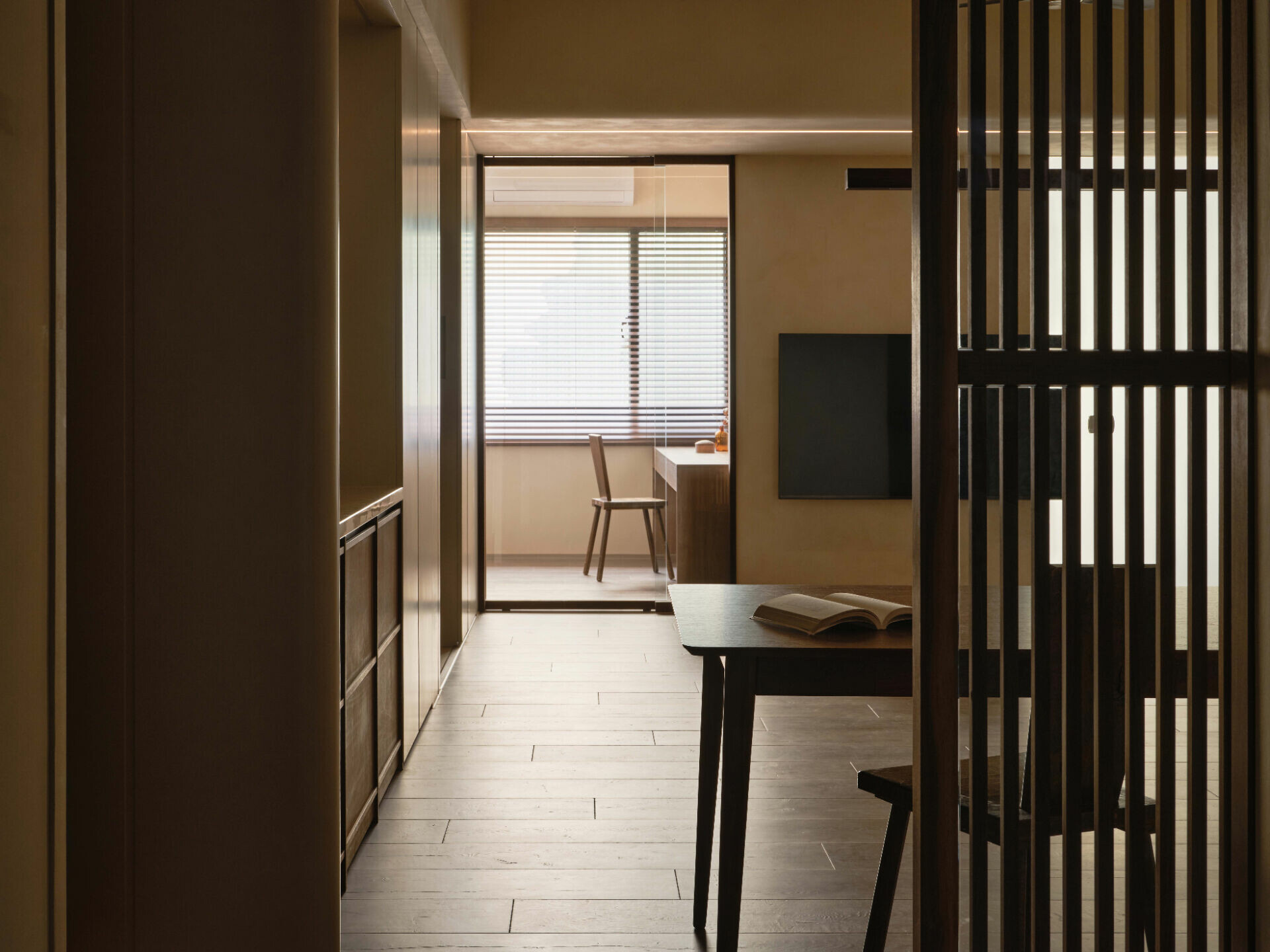
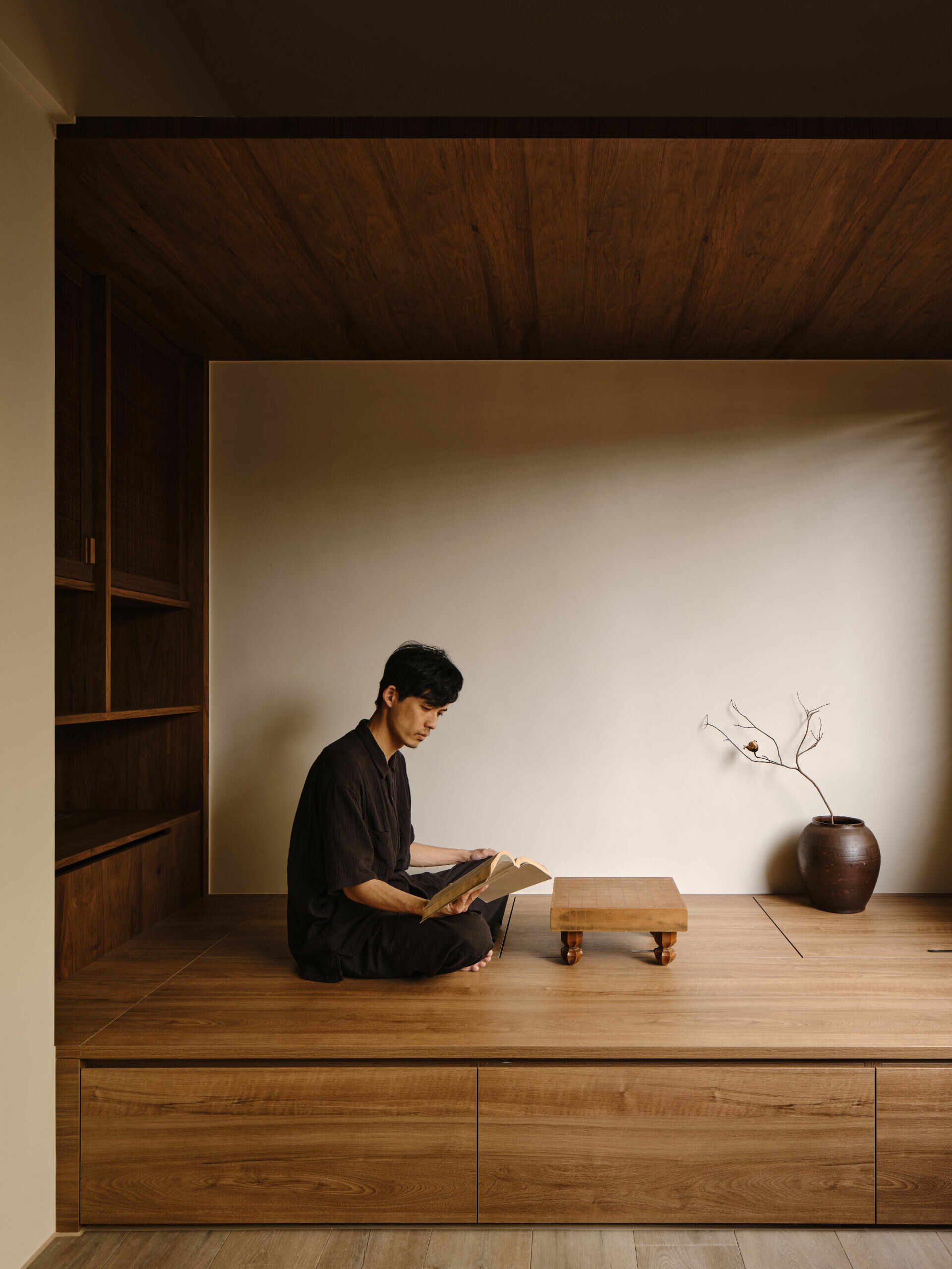
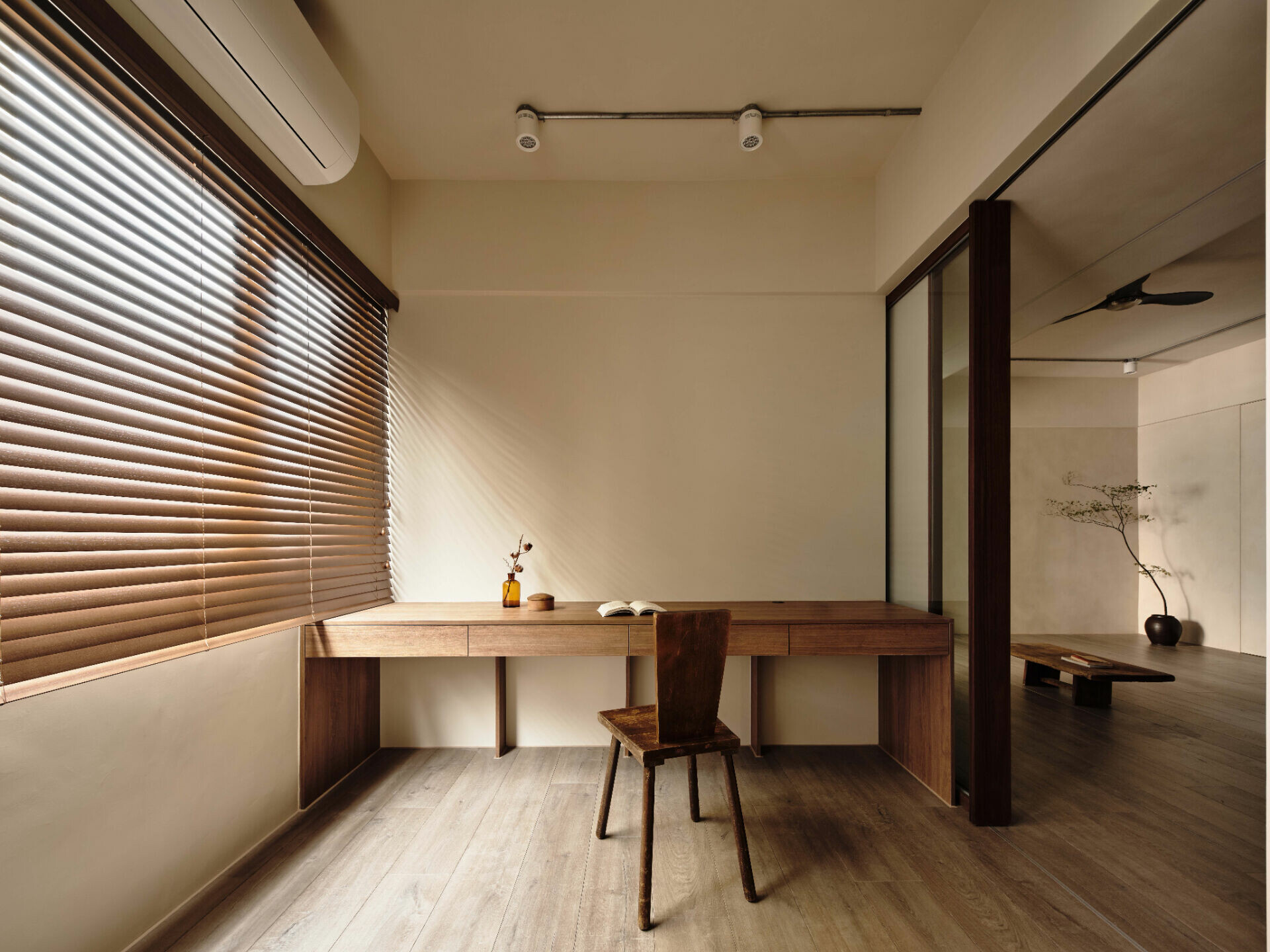
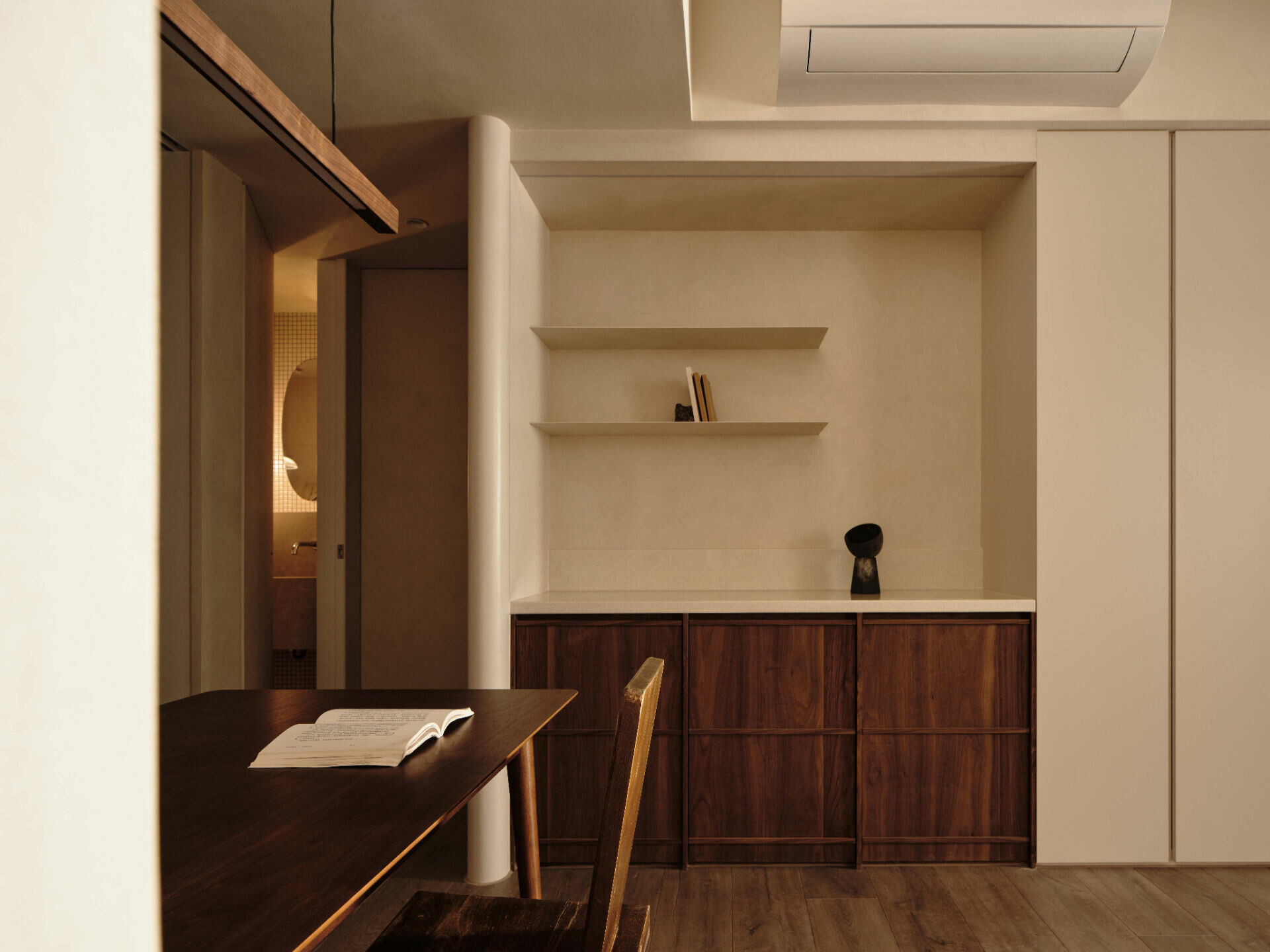
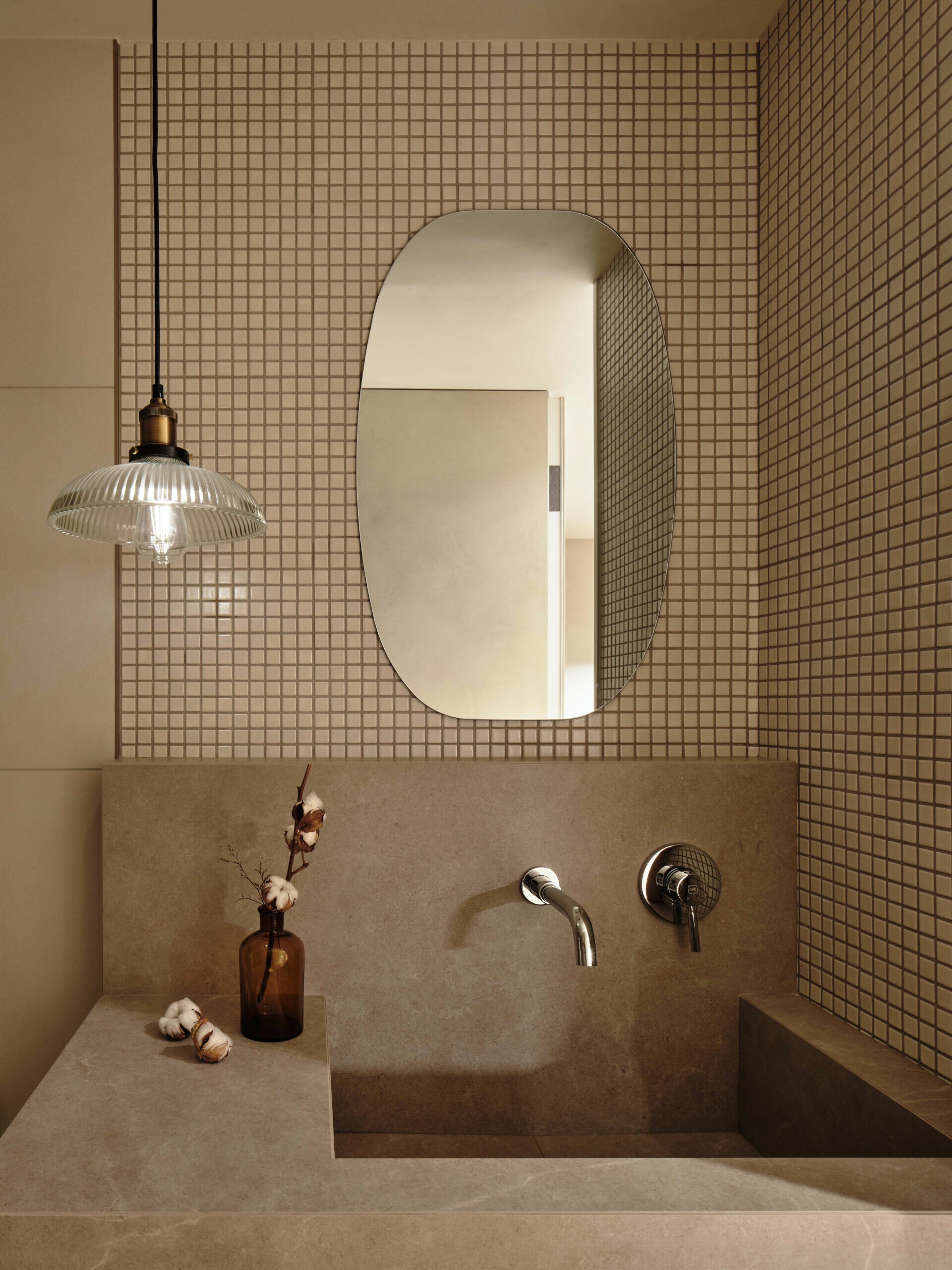
The designer has extended the overall ambiance using mineral paint throughout the room, with its unadorned and uneven textures that echo a raw, unpretentious appeal. Key areas are seamlessly integrated using a low-profile, steady interface with a gridded pattern, gently delineating the master bedroom walls from the dining area. The space between the study and the secondary bedroom serves as an alternative to a traditional TV wall. Inside the study, the seating area is designed to recreate the environment of Jin Dynasty scholars playing chess and chatting—a space for meeting with friends over tea and engaging in lively discussions, with flexible seating that can also be converted into a temporary guest bed as needed.
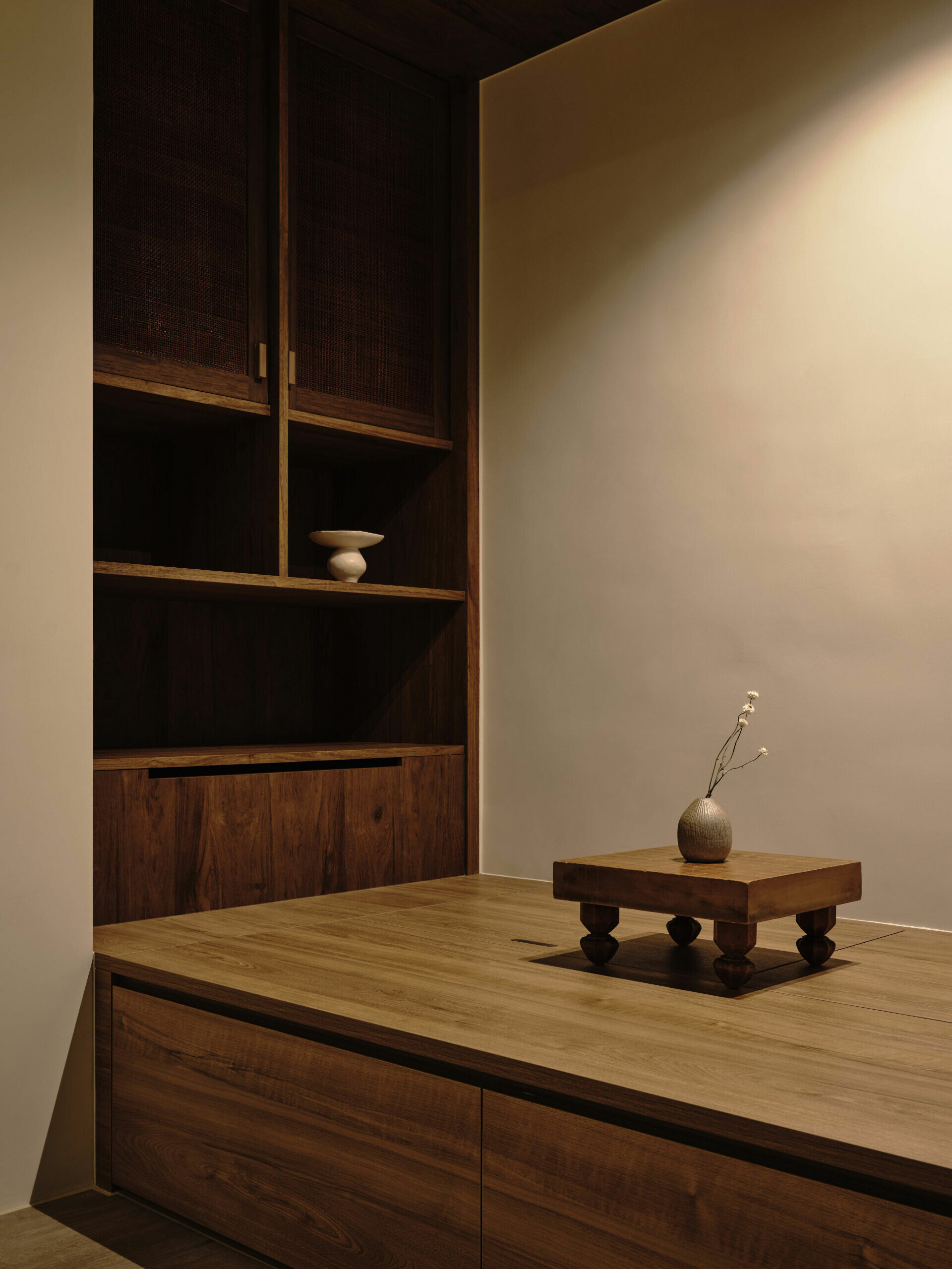
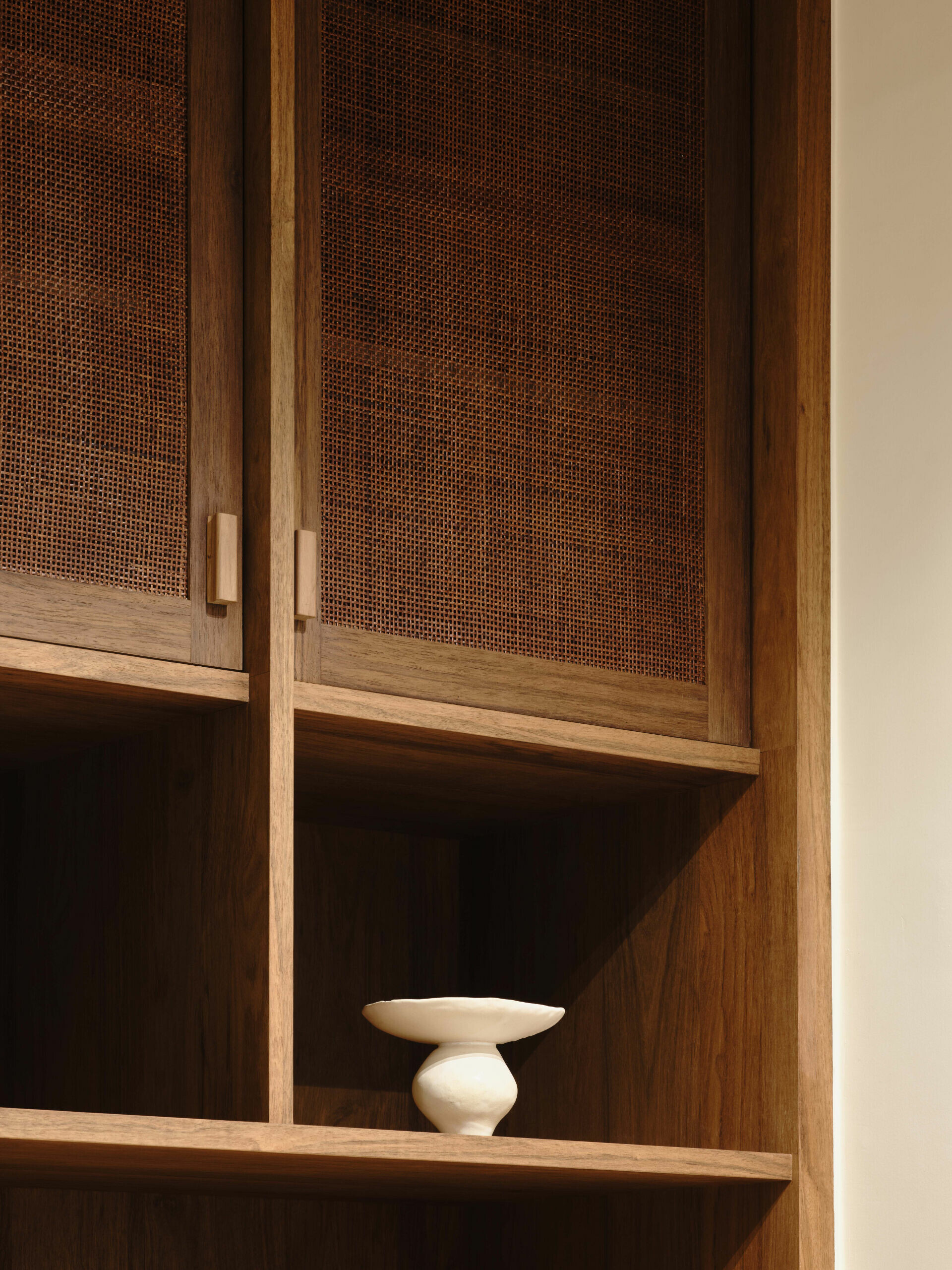
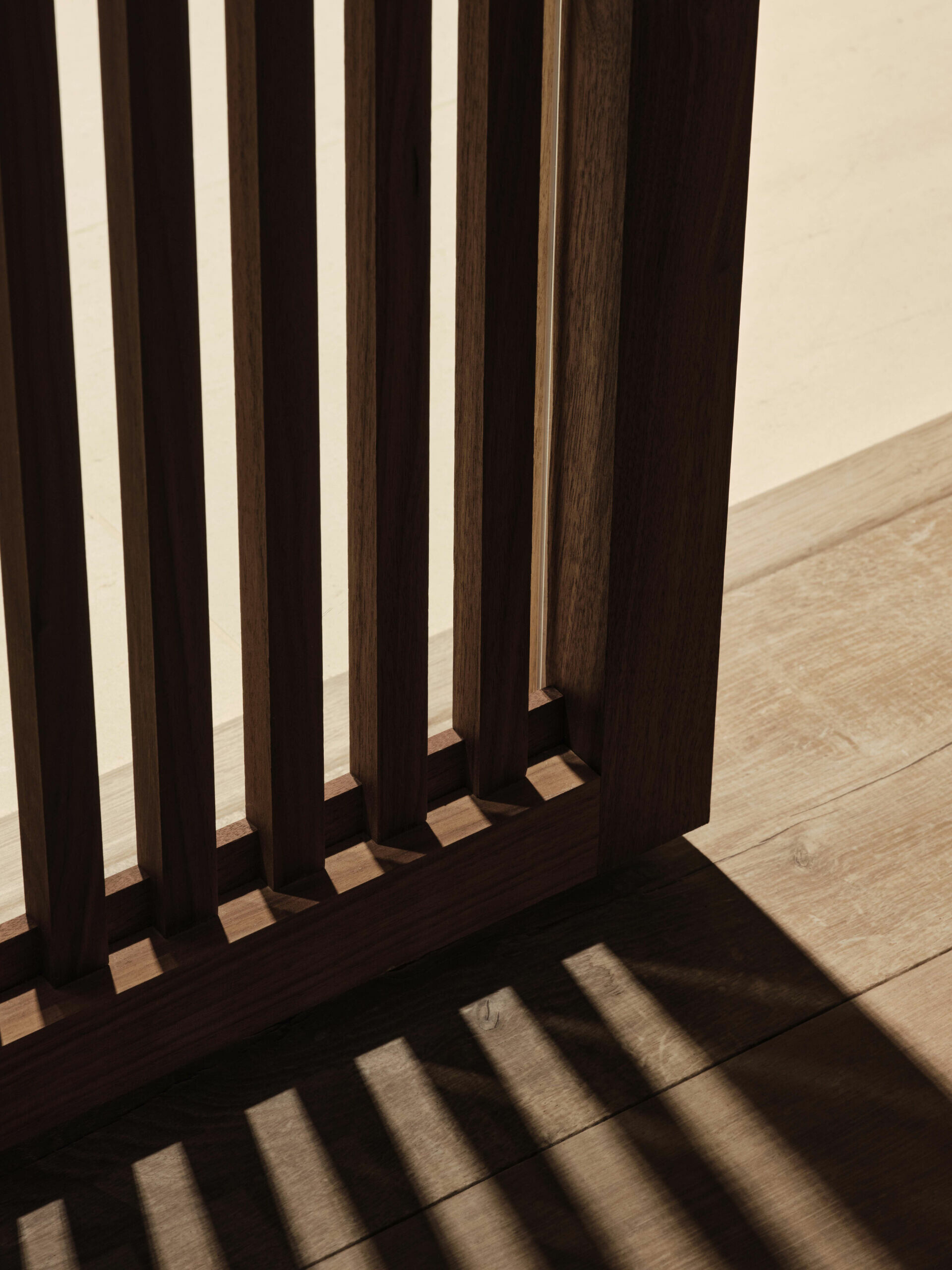
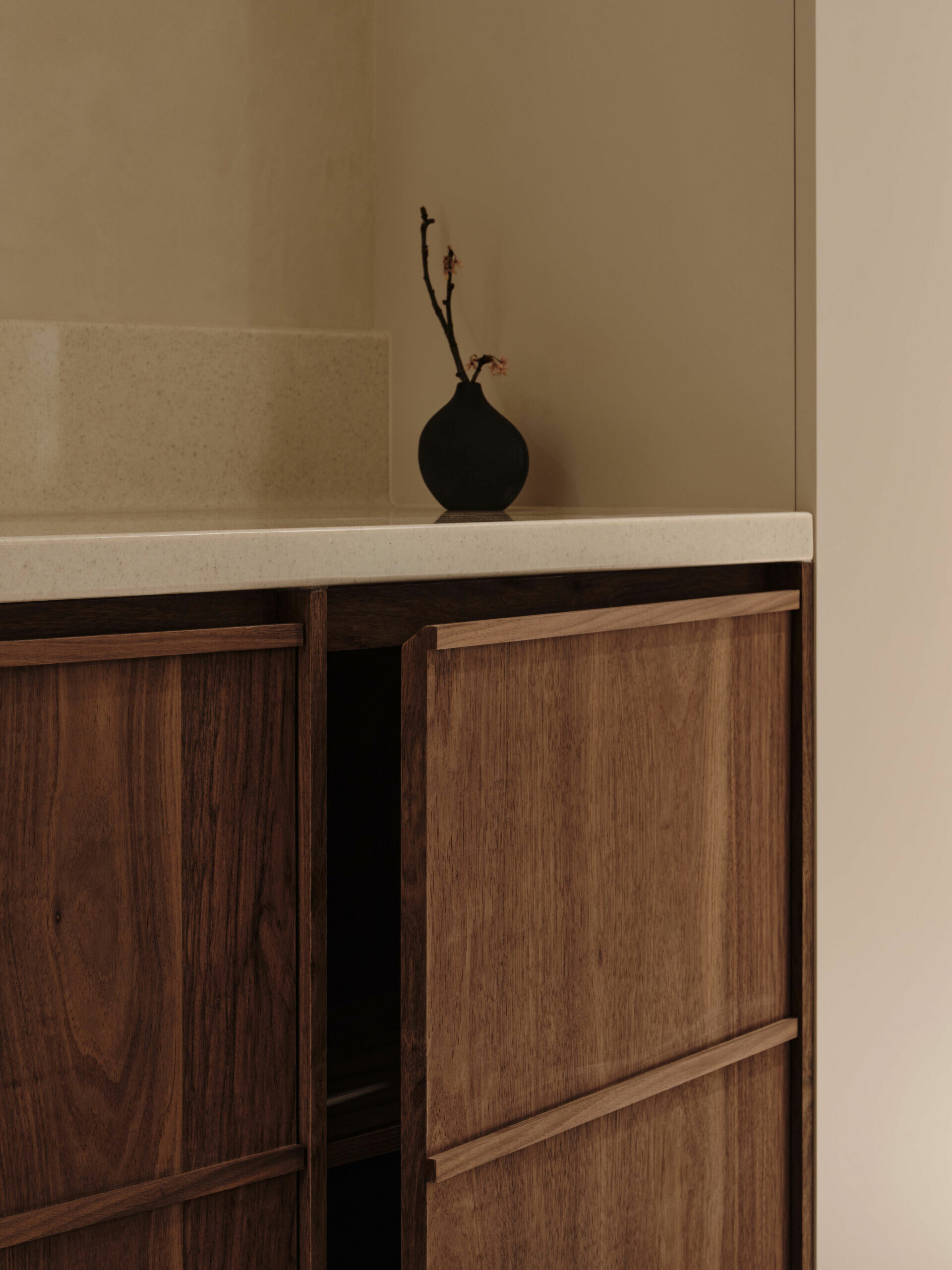
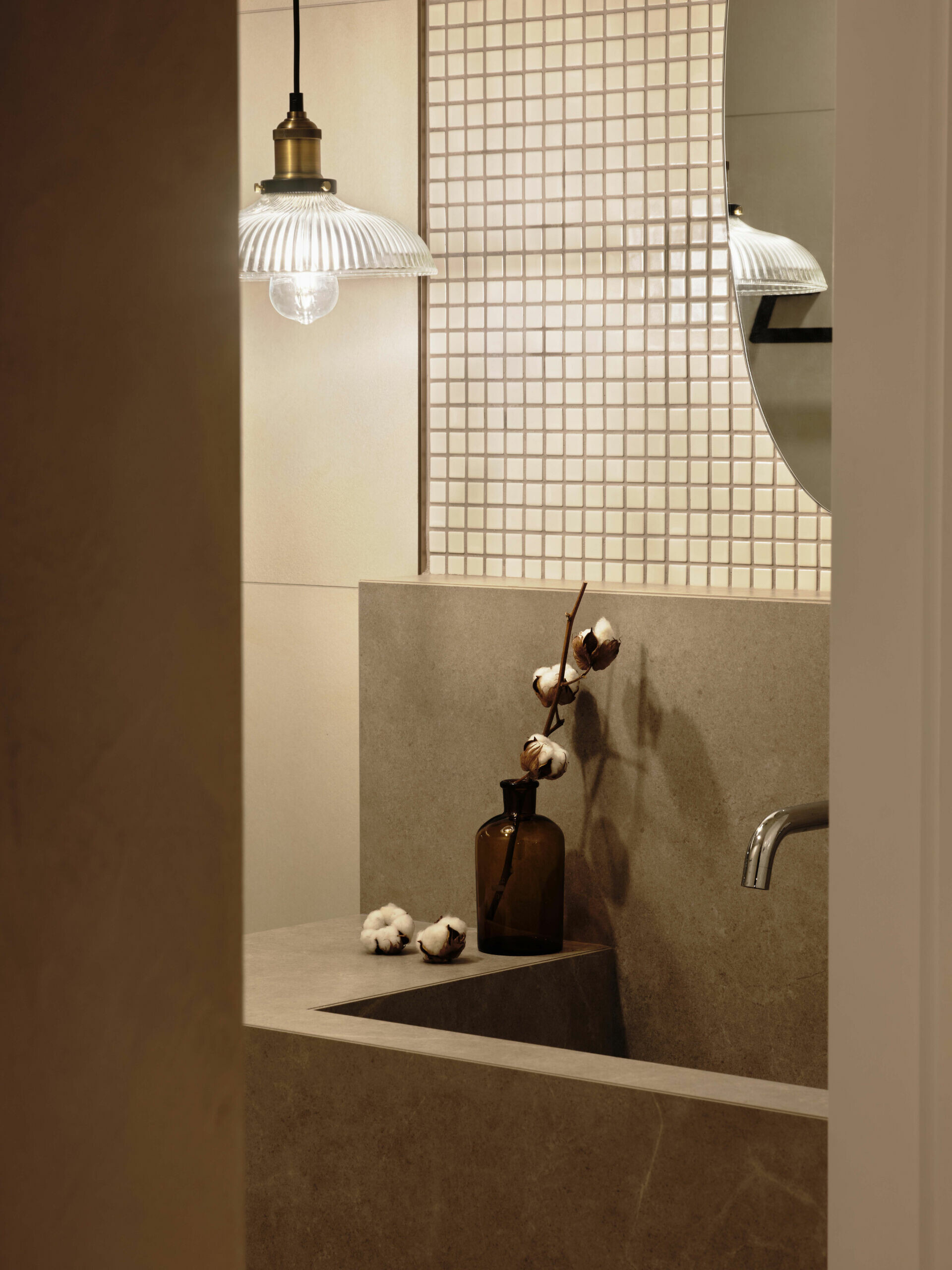
Starting from the perspective of close bodily interaction and daily use, the construction details are meticulously maintained. Solid wood and engineered materials are applied appropriately, eliminating unnecessary frames and subtly integrating the sliding door handles into the door panels, emphasizing the transparency of the glass doors. In the bathroom fittings, the designer opts against modern industrial products and instead personally integrates woodworking, grouting, and carefully adjusts the drainage, adhering to the principle of 'minimalist treatment is sufficient.' This approach brings us back to the essence of living, where space, beyond its materiality, offers spiritual care to its inhabitants.
The process also helps the owner understand their own usage habits and find the right attitude towards life. Often, the issue is not a real lack of storage space, but not having found a storage solution that fits their needs and conditions. The principle of 'just enough' is incredibly valuable. After properly and delicately sorting out the needs, precise design can often define the greatest possibilities, providing just the right amount of help at crucial moments in life.
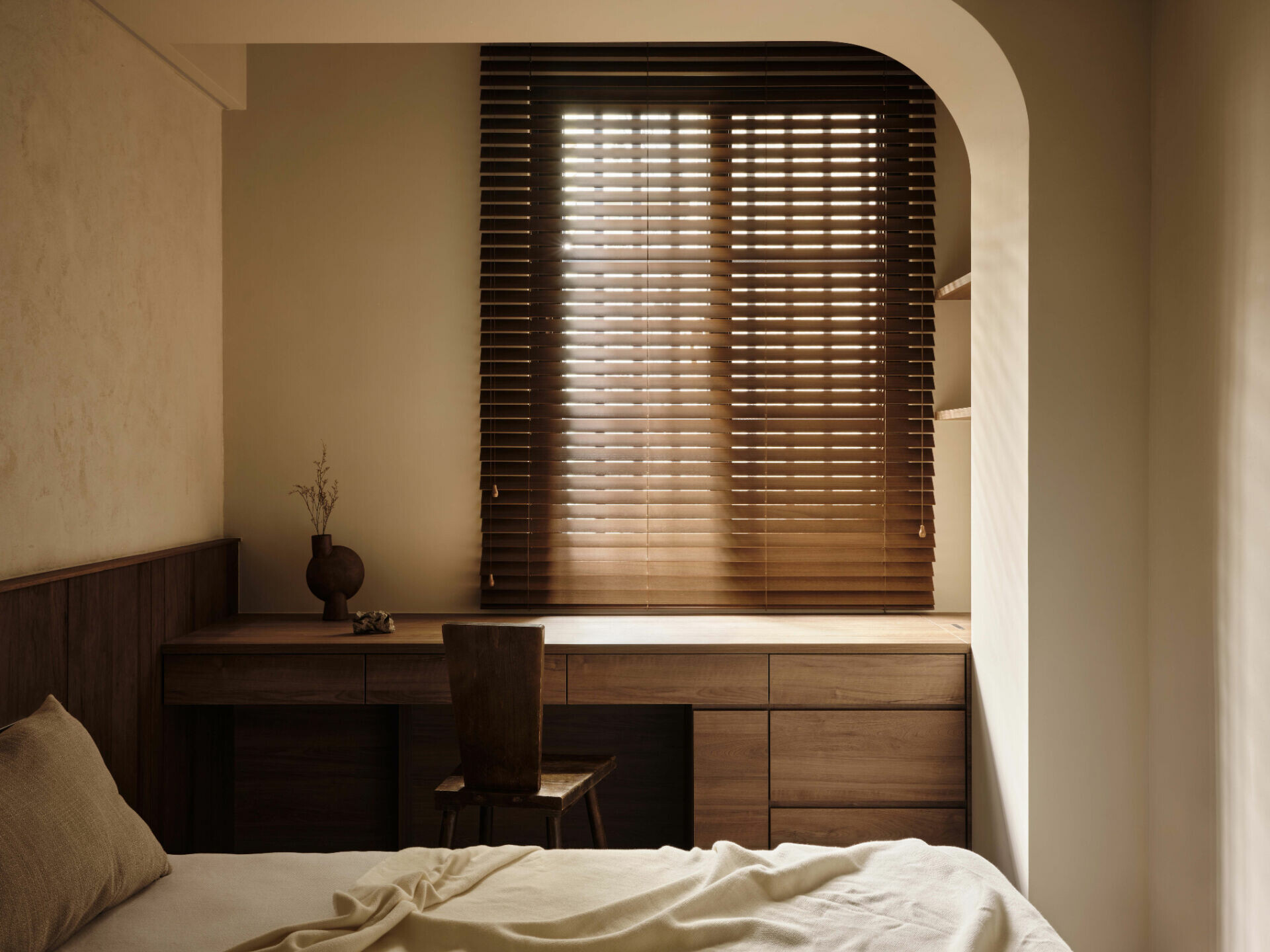
The designer and the owner jointly believe that minimalist planning can accommodate the various possibilities of future life. "Mono no aware" is the designer's final definition of the space, stemming from an understanding developed through the process with the owner. Starting from the owner's personal style preferences and attitudes towards life, a genuine longing for nostalgic items and a fondness for faded tones, they gradually refine and explore the essence of beauty.