Office in Hashima
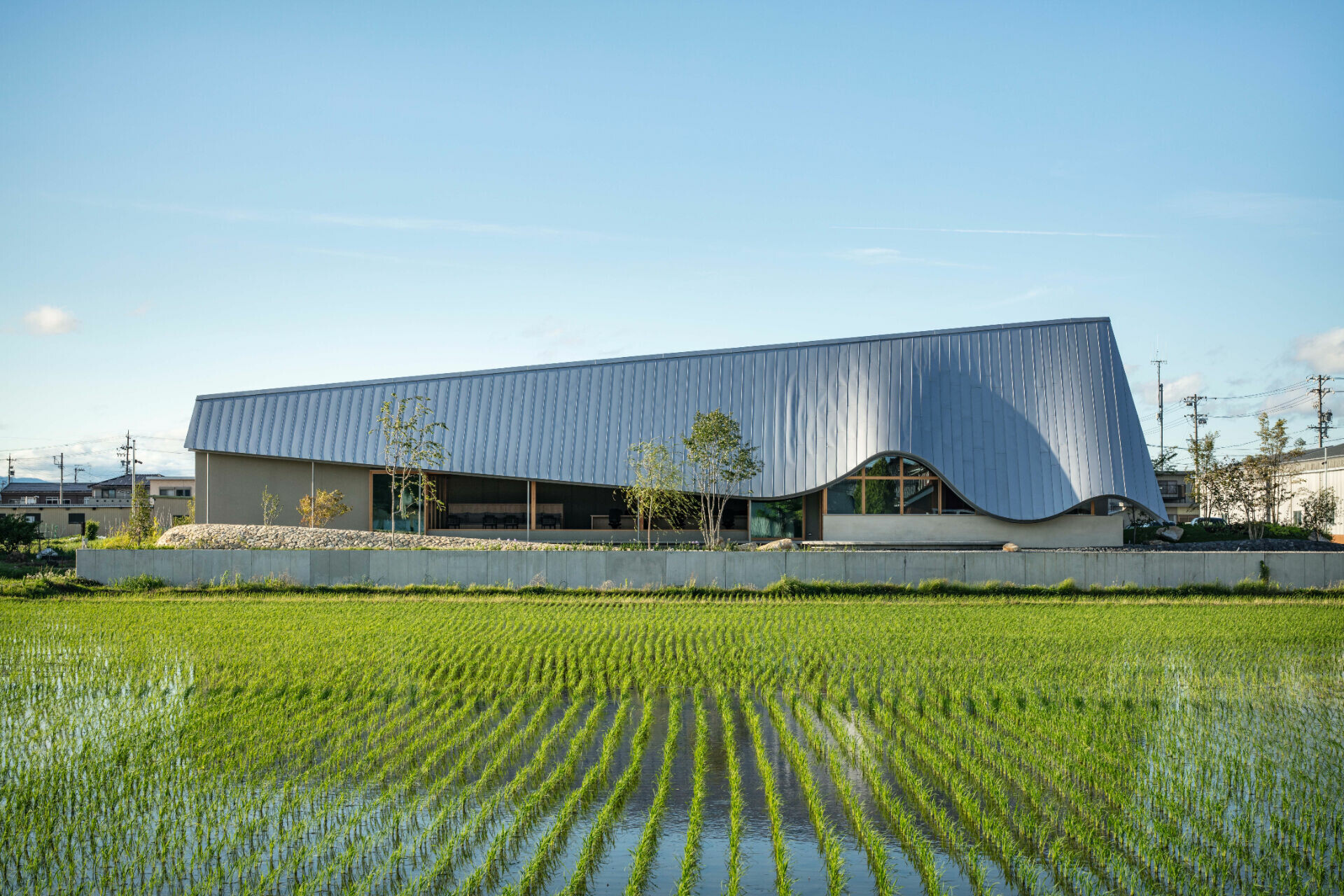
In Hashima City, Gifu Prefecture, the Nobi Plain extends in a wide, continuous sweep, shaped by the alluvial deposits of the Kiso, Nagara, and Ibi rivers. As the seasons turn, daily life is renewed by shifts in sheen and sound. Along a stretch of rice paddies, a breeze moves through swaying heads of rice, and a building comes into clear view. The line of its eaves rises and falls in a fluid curve, like a skirt hem lifted lightly, drawing the eye and letting you “see” the wind.
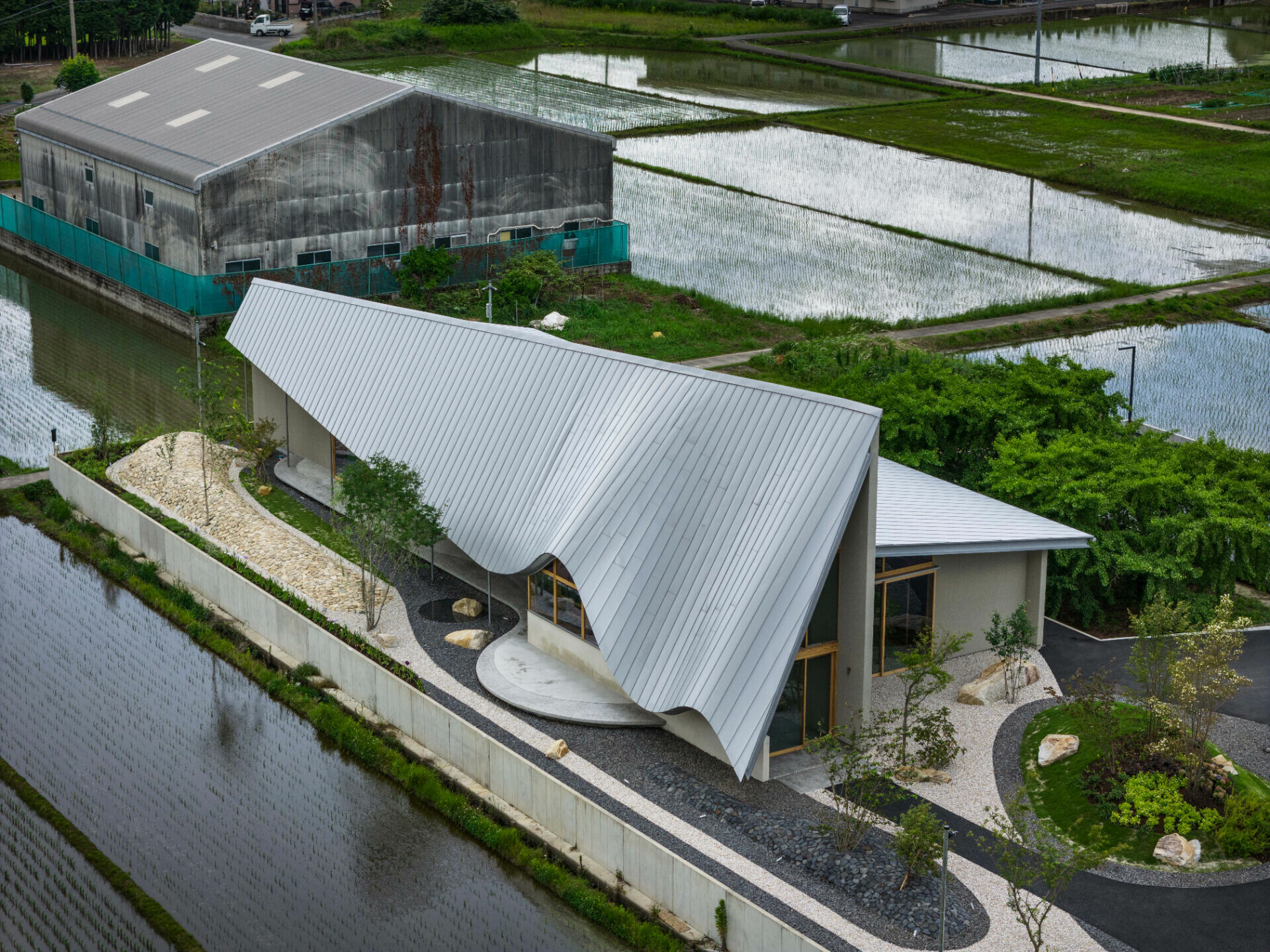
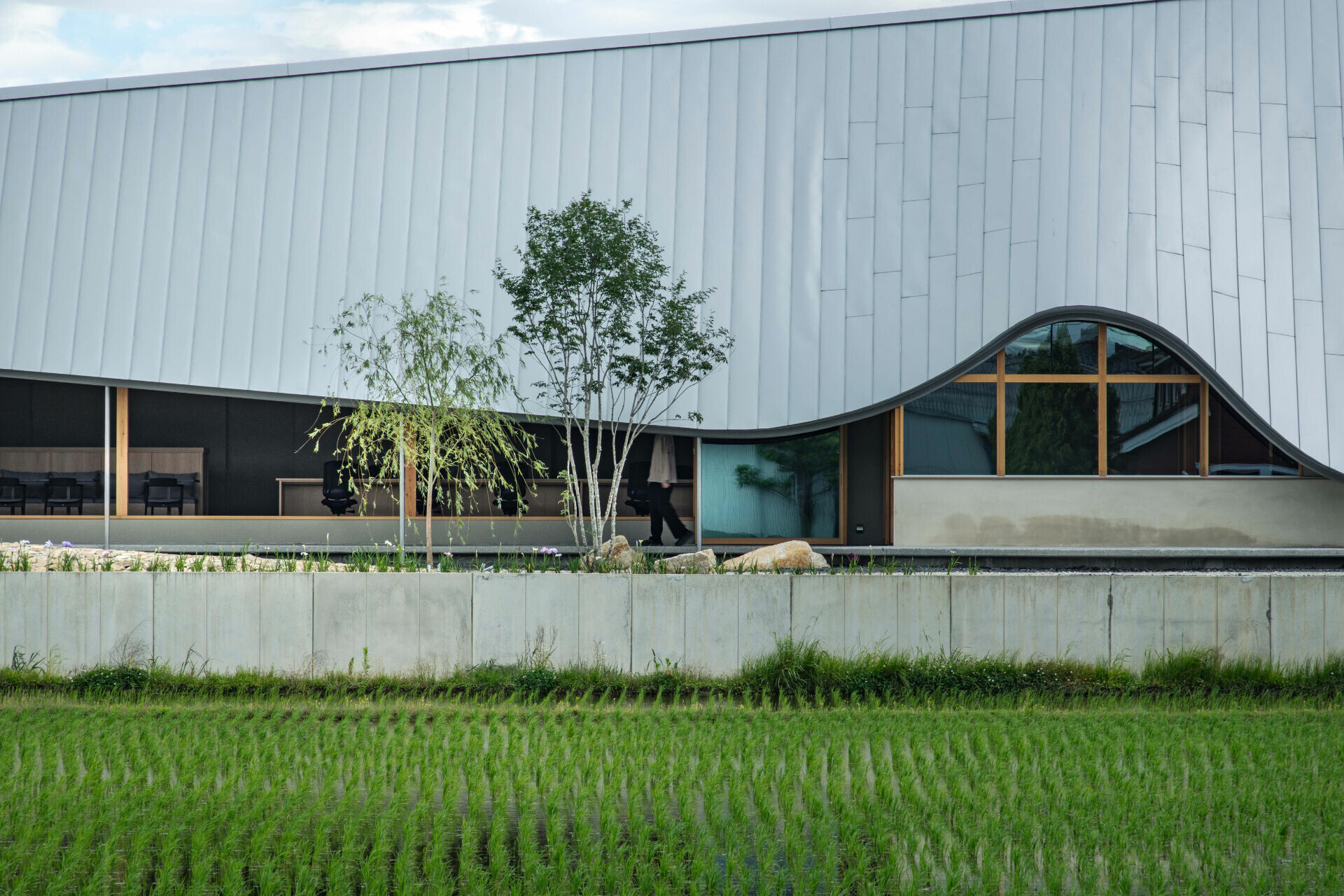
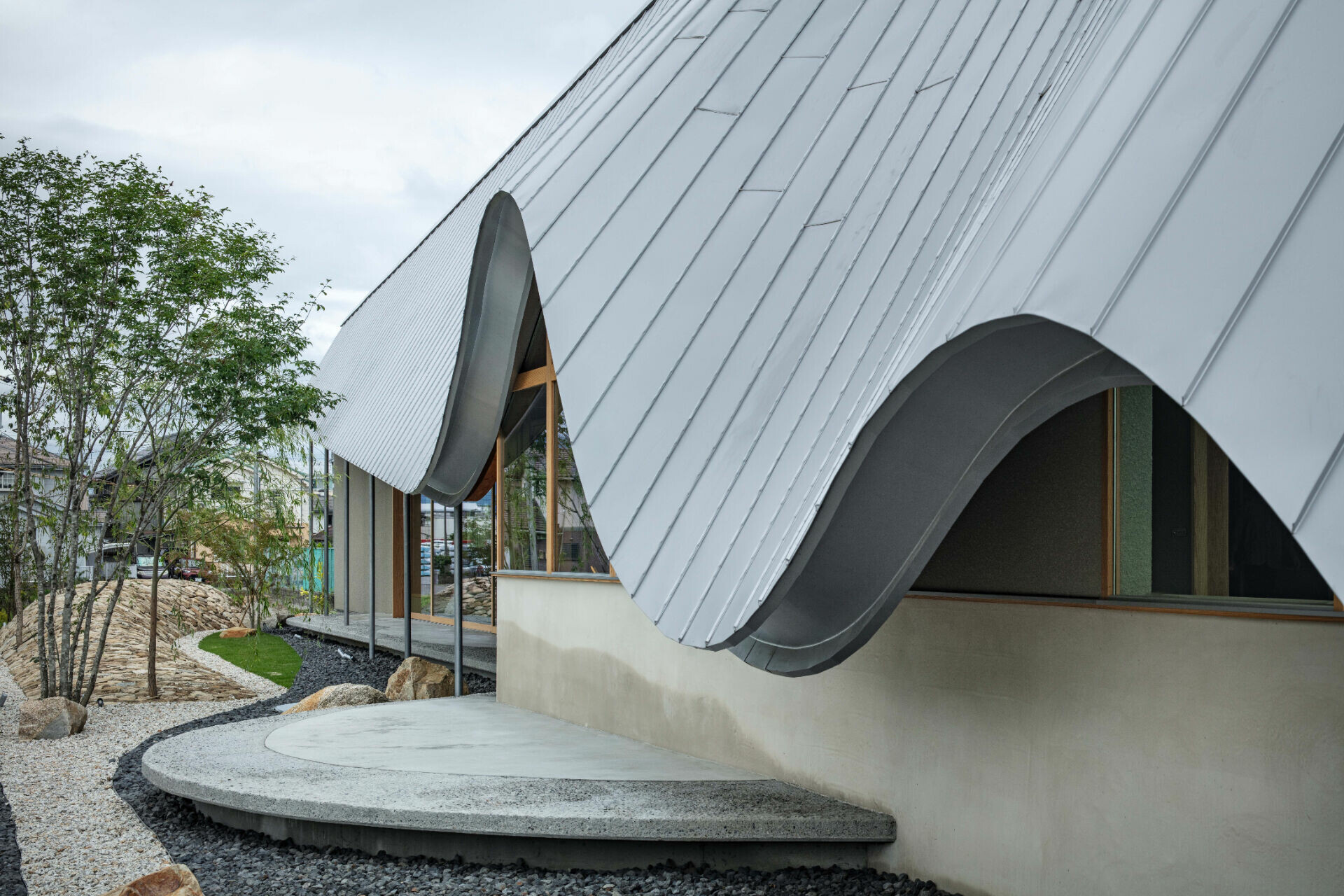
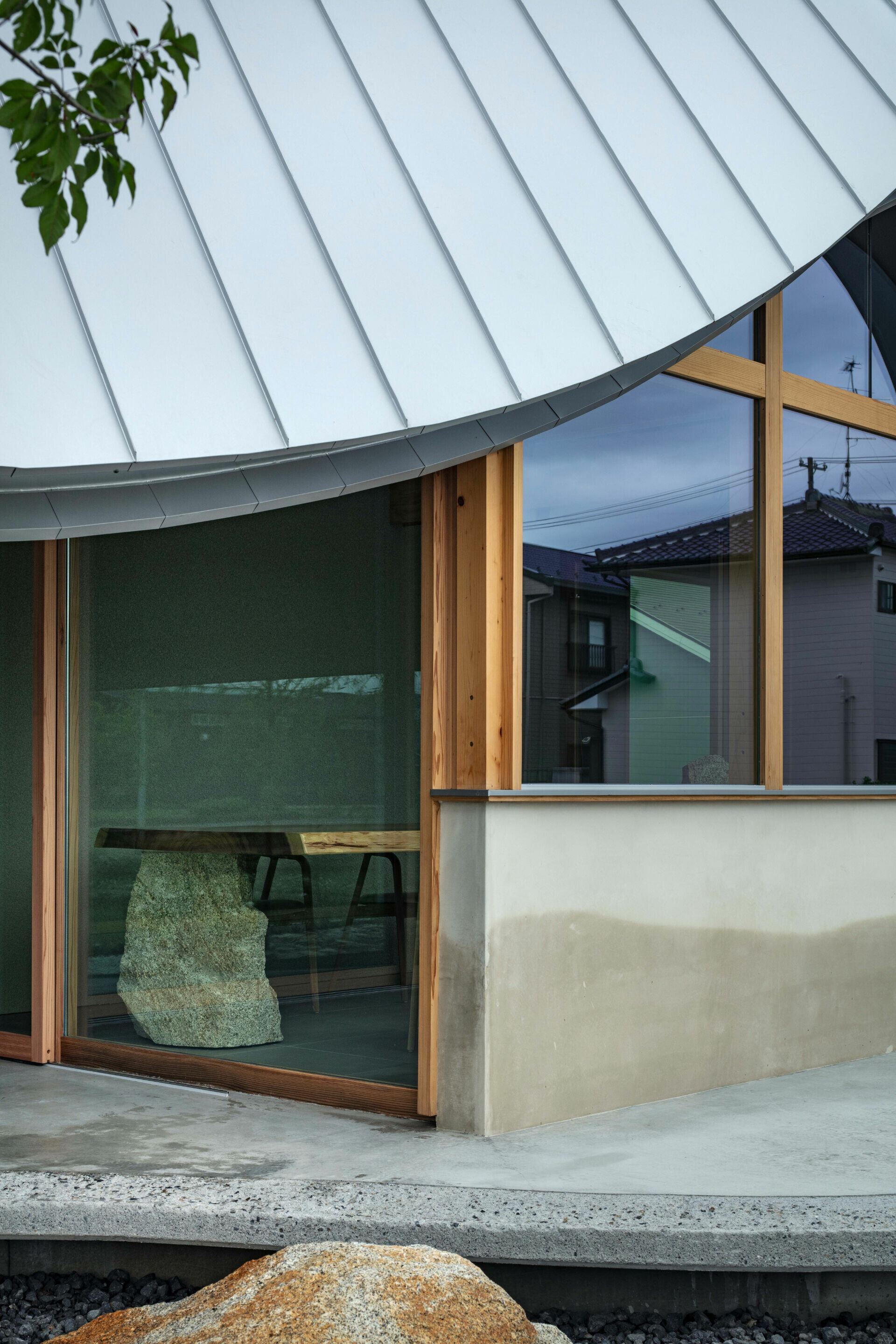
The building does not set out to compete with its surroundings. To the west, the roofline stays close to the height of neighboring houses and extends along an axis. Toward the east, the roof ridge lifts, while the folded eaves ease down from their high point, as if the wind had left its expression there. In that shift, the view opens at once. Against an unassuming everyday backdrop, the silhouette separates itself just enough to spark the urge to step closer and see what the spaces are for. Designed by Atelier Nagara in collaboration with PERMANENT, the project provides headquarters for a client rooted locally in civil engineering and real estate. The design is grounded in attentiveness to small elements in the environment, and in an awareness of how time, quietly and incrementally, shapes landform and the lives lived upon it. The architecture seeks the same kind of presence, gentle and unobtrusive. It gives form to what lingered in memory from the first encounter with the site, the image that moved the designers at the outset.
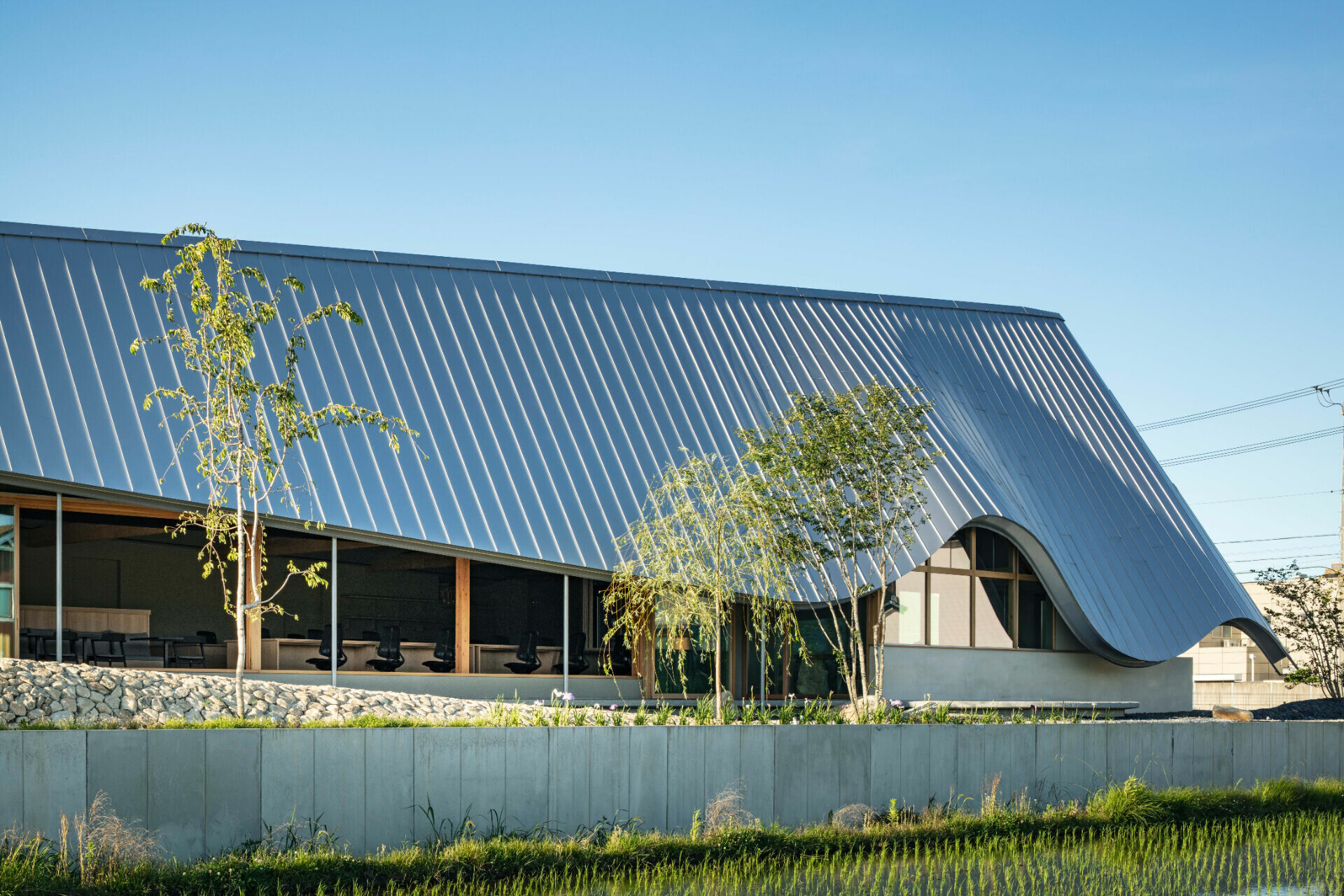
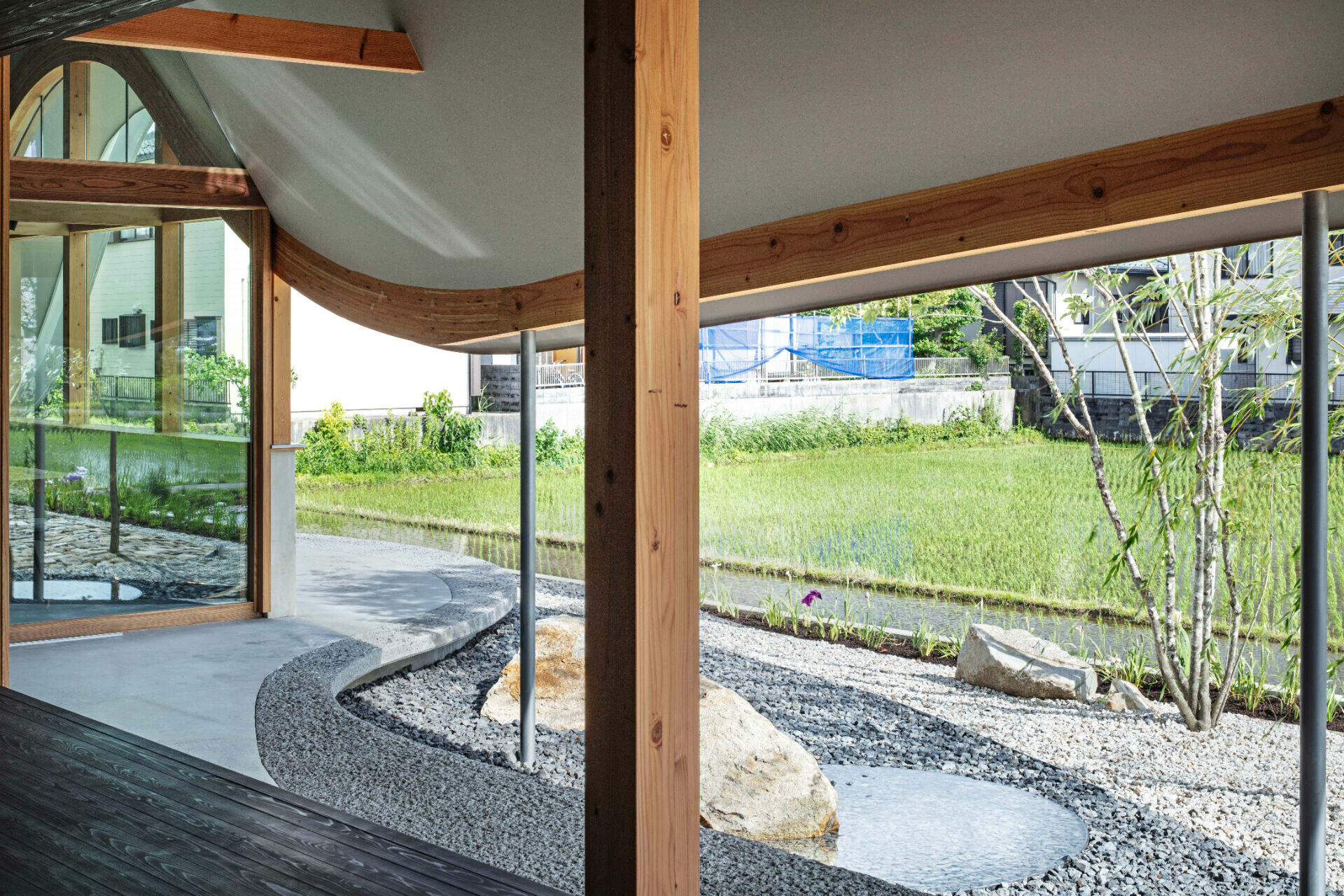
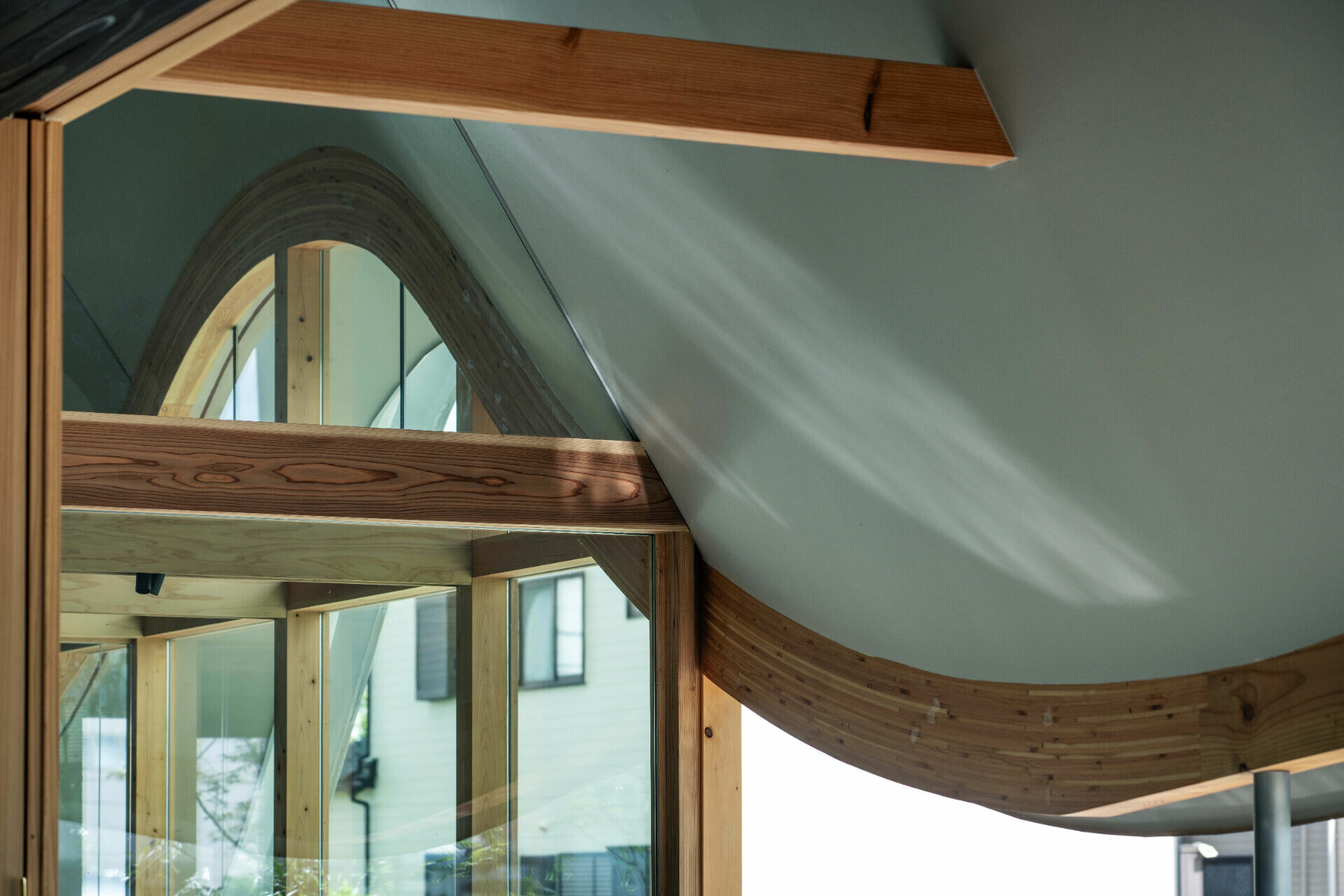
The roof makes the wind legible. In places, the eaves drop low, close to the ground, allowing seasonal rainwater to slip away along the edge. The undulating surface catches and reflects sunlight throughout the year, answering the rhythm of light and shadow. What is normally absorbed as background is reframed by the softness of the line. The weight of watered earth feels almost tangible, and with it comes a renewed awareness of the everyday and its plain beauty.
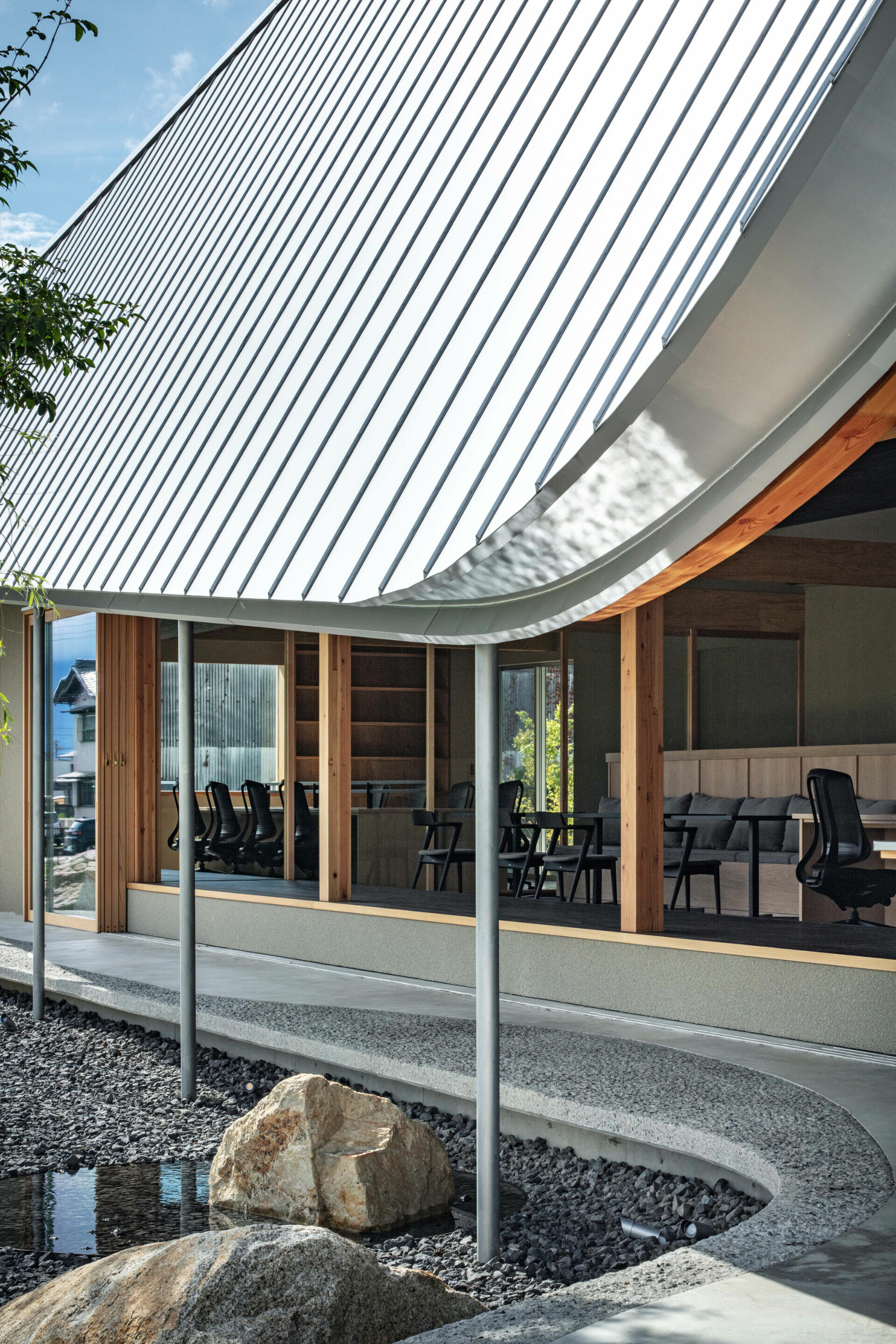
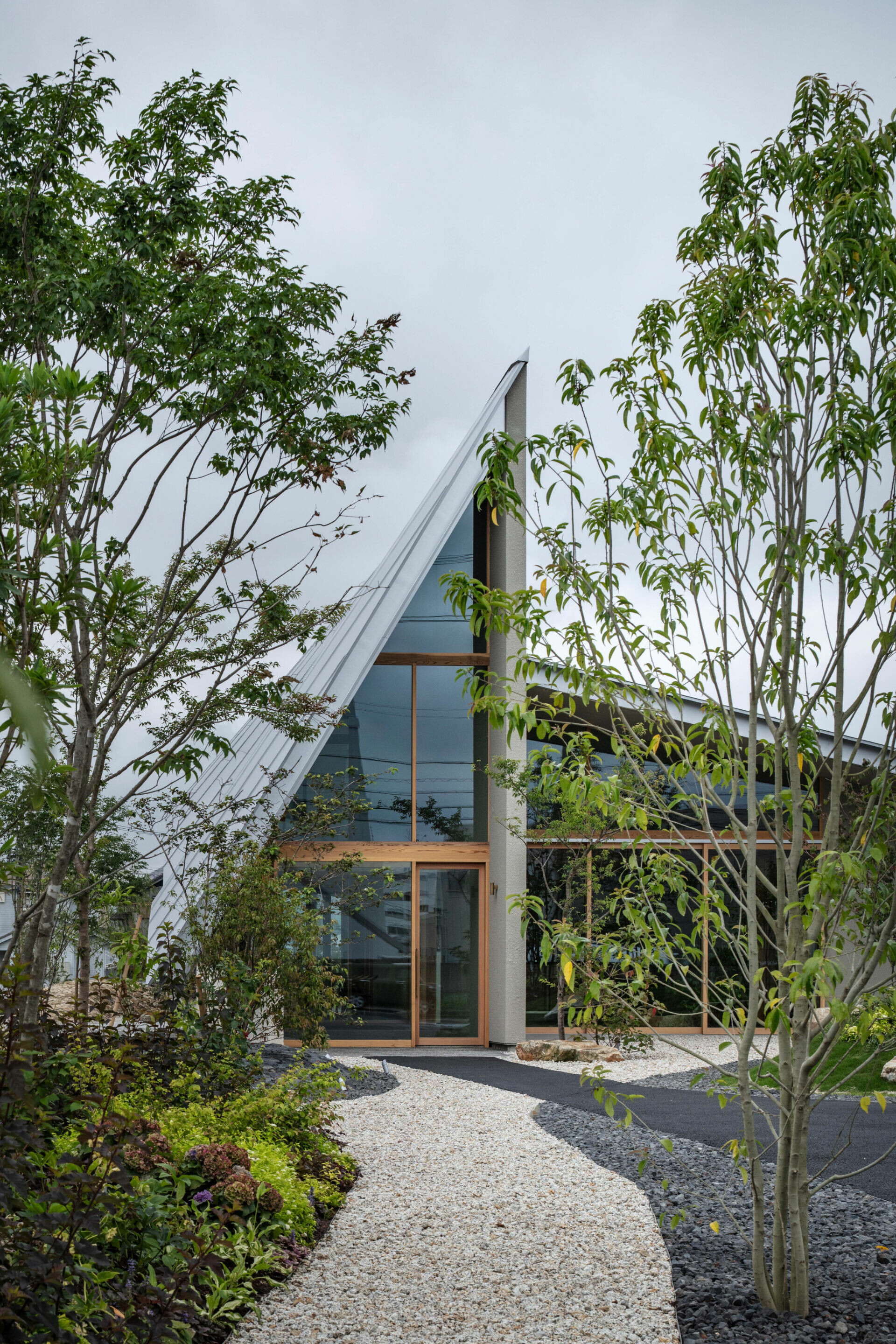
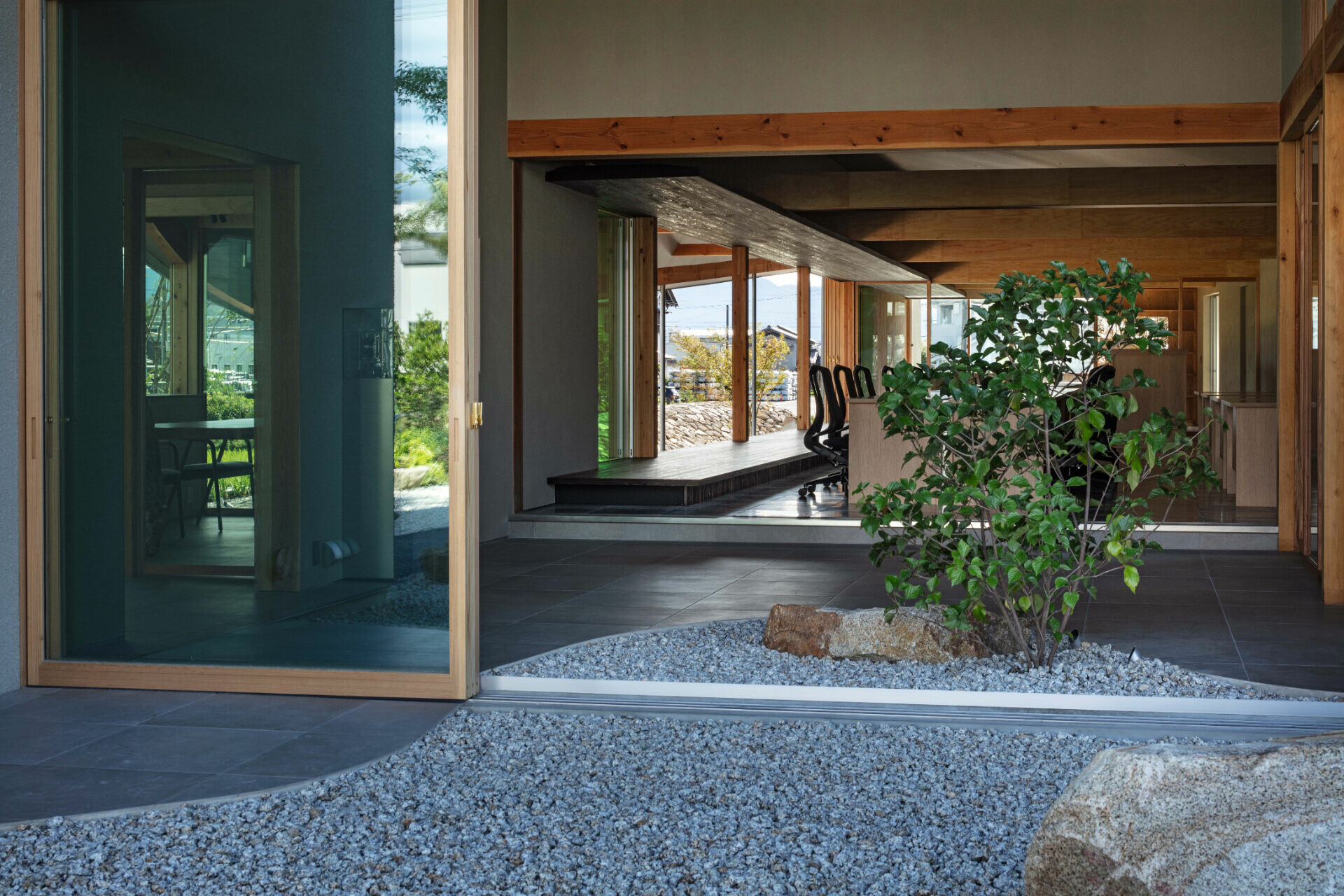
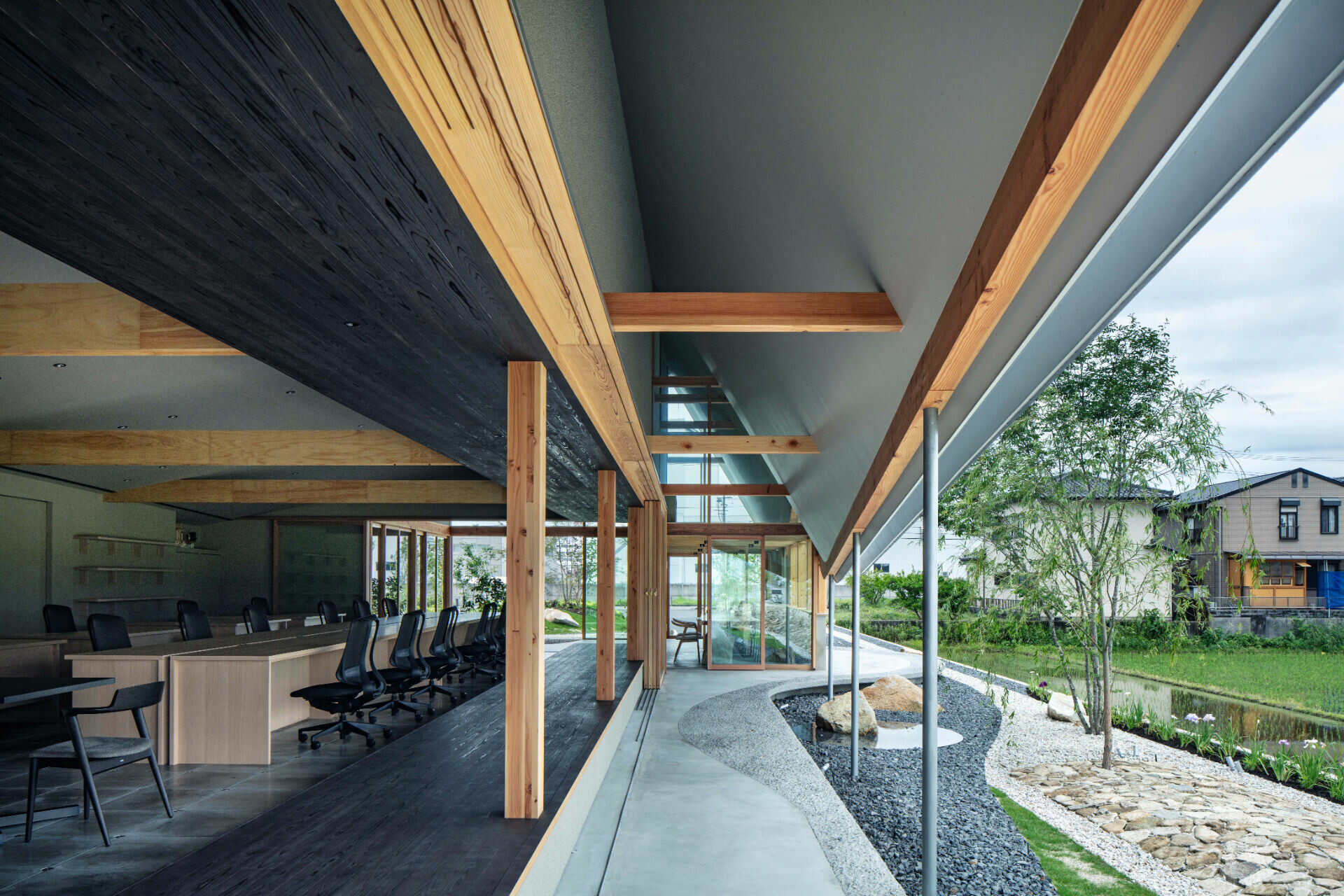
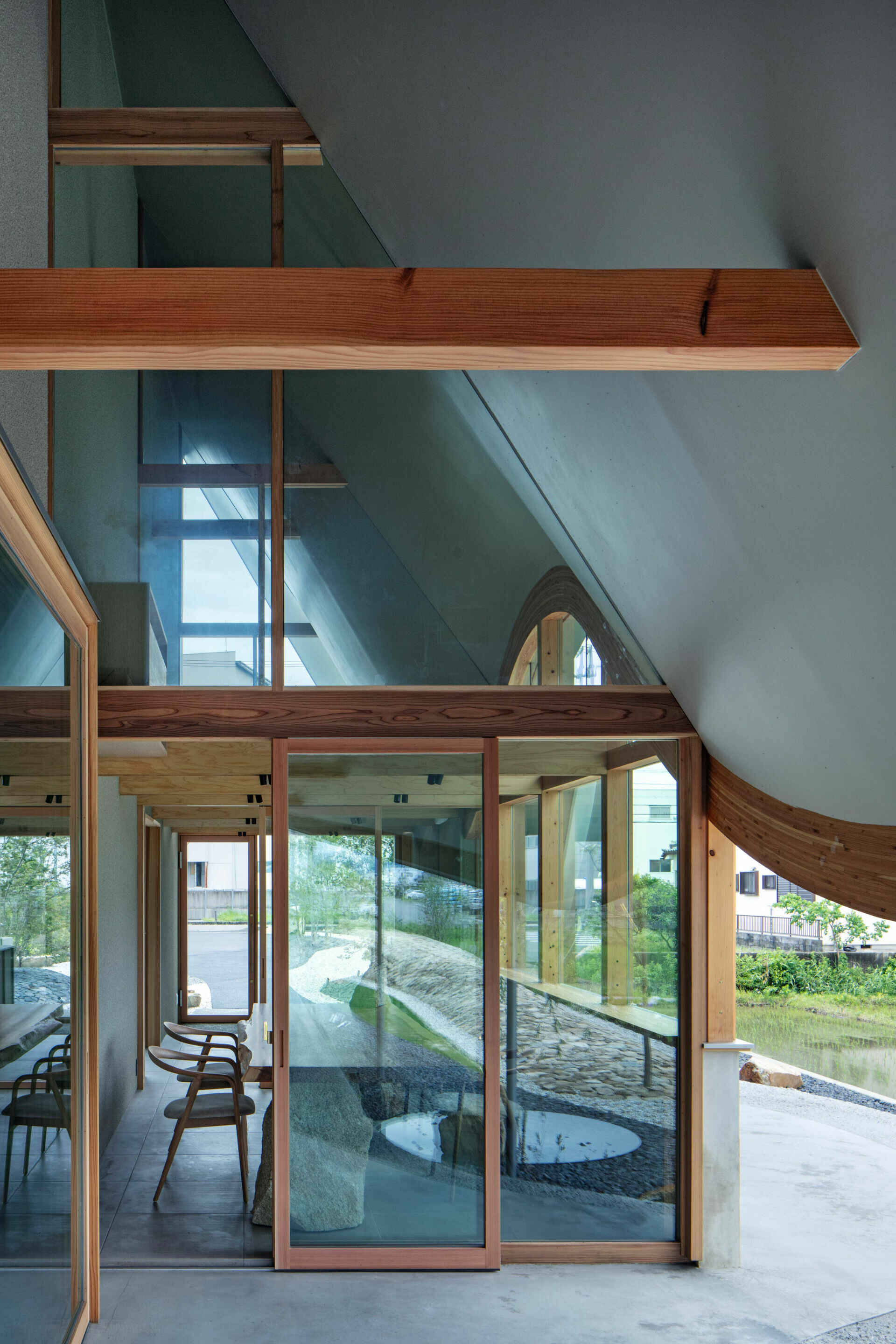
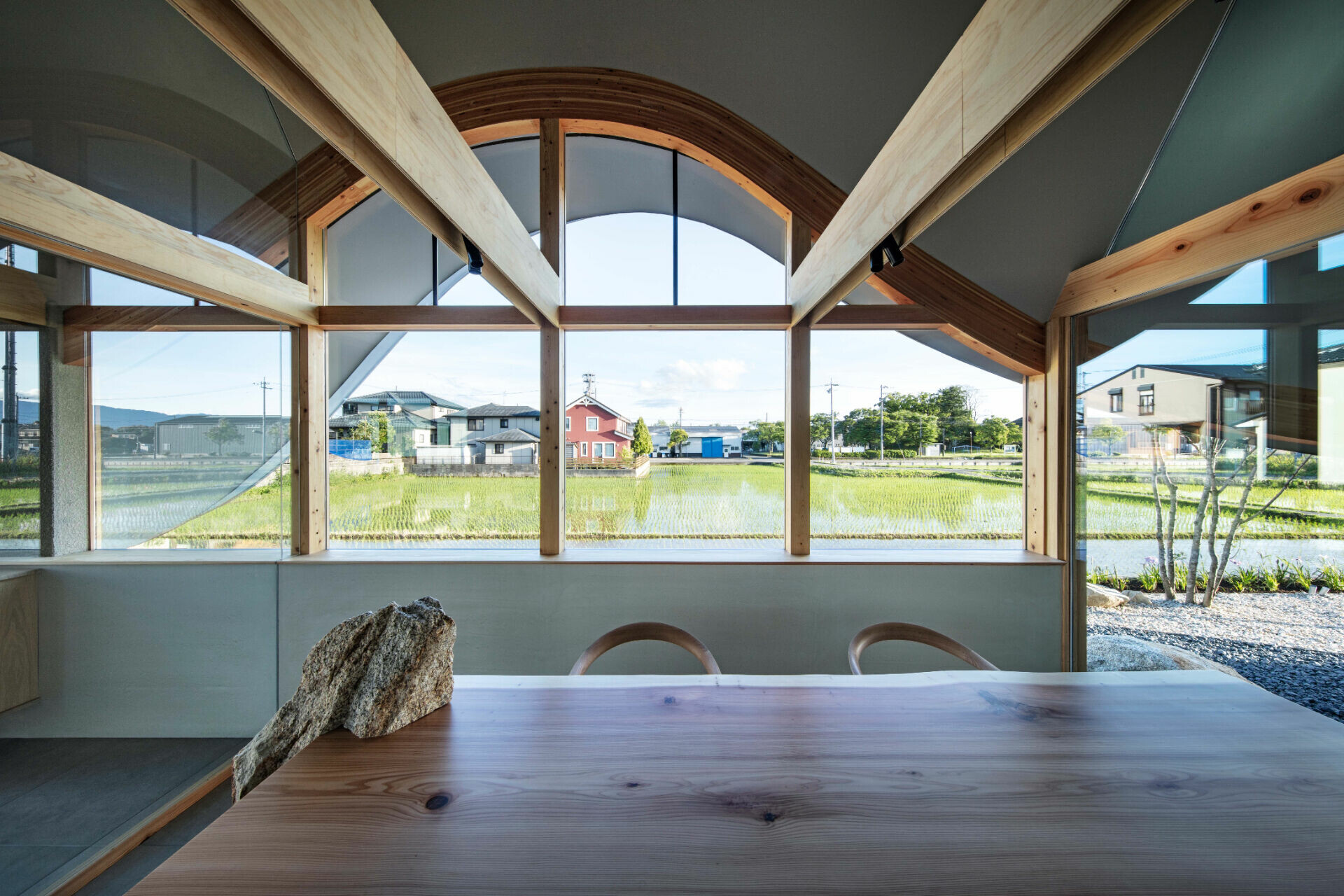
Beyond the double-height entrance hall, another scene opens. Large glazed panels give the interior visual permeability, and bright daylight makes the meeting area feel nearly without boundary. The eaves soften the light indoors while maintaining a steady connection to the fields beyond. Circulation progresses in sequence, arranging work areas, a kitchenette, restroom and meeting rooms. Along the southern perimeter, an engawa forms beside an exterior gravel path, allowing the working mind to pause in the band between interior and paddy and look for inspiration as a gift from the ground.
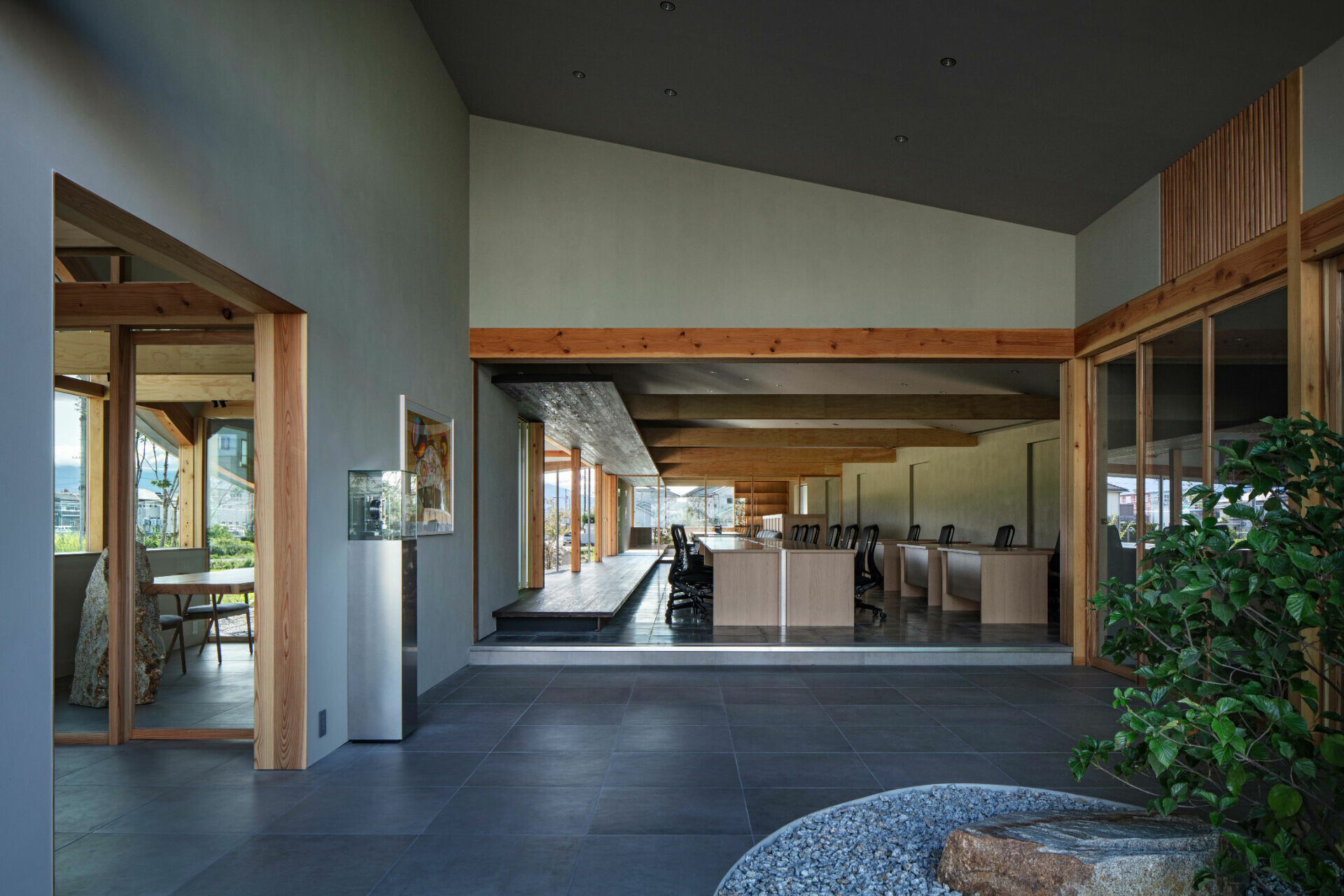
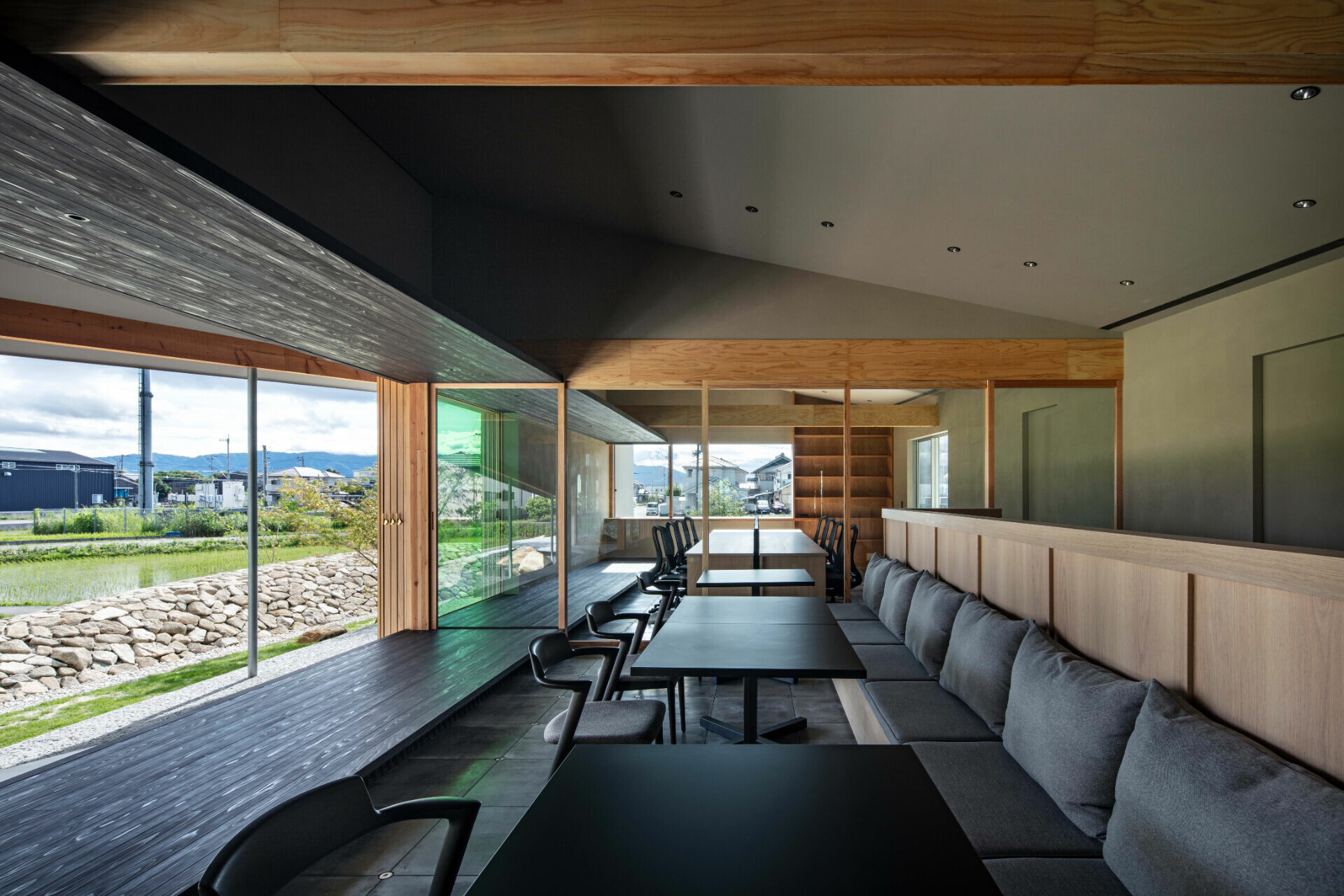
Here, even seated at a desk, the seasons remain present in the rice fields. Office in Hashima operates like an environmental device, intended to awaken aesthetic perception of the everyday landscape. In the ordinary motions of work, as hands brush the tabletop and footsteps shift through the rooms, routine and surroundings interlock and compose a new scene unique to this place. It speaks to an unadorned value: beauty need not be rare or extraordinary; it may lie in details we have simply not learned to notice.