project ll
In the increasingly dense urban landscape, natural light and greenery have become precious resources within the living environment. This two-story renovated residence, endowed with these rare qualities, naturally became the core element to be preserved and extended throughout the design. Guided by the concept of “framing one view at a time,” the architect deconstructed the residents’ everyday routines and reassembled their distinct needs and preferences. Within the horizontal and vertical axes of the space, a playful circulation loop was devised, allowing the couple and their three cats to encounter moments of delight at every turn. Daily life unfolds like a sequence of cinematic frames, embodying the idea that “art is life, and life is art.”
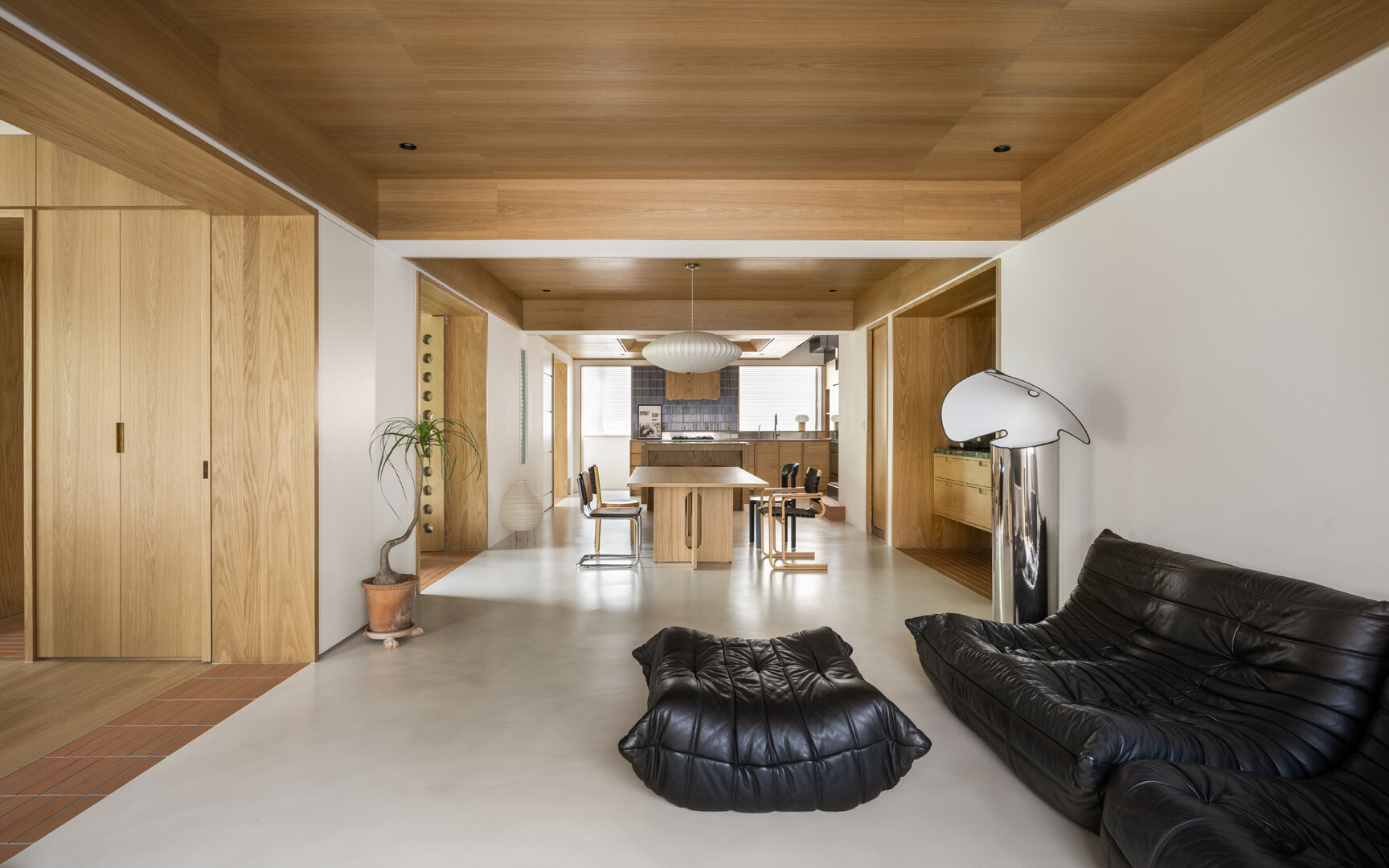
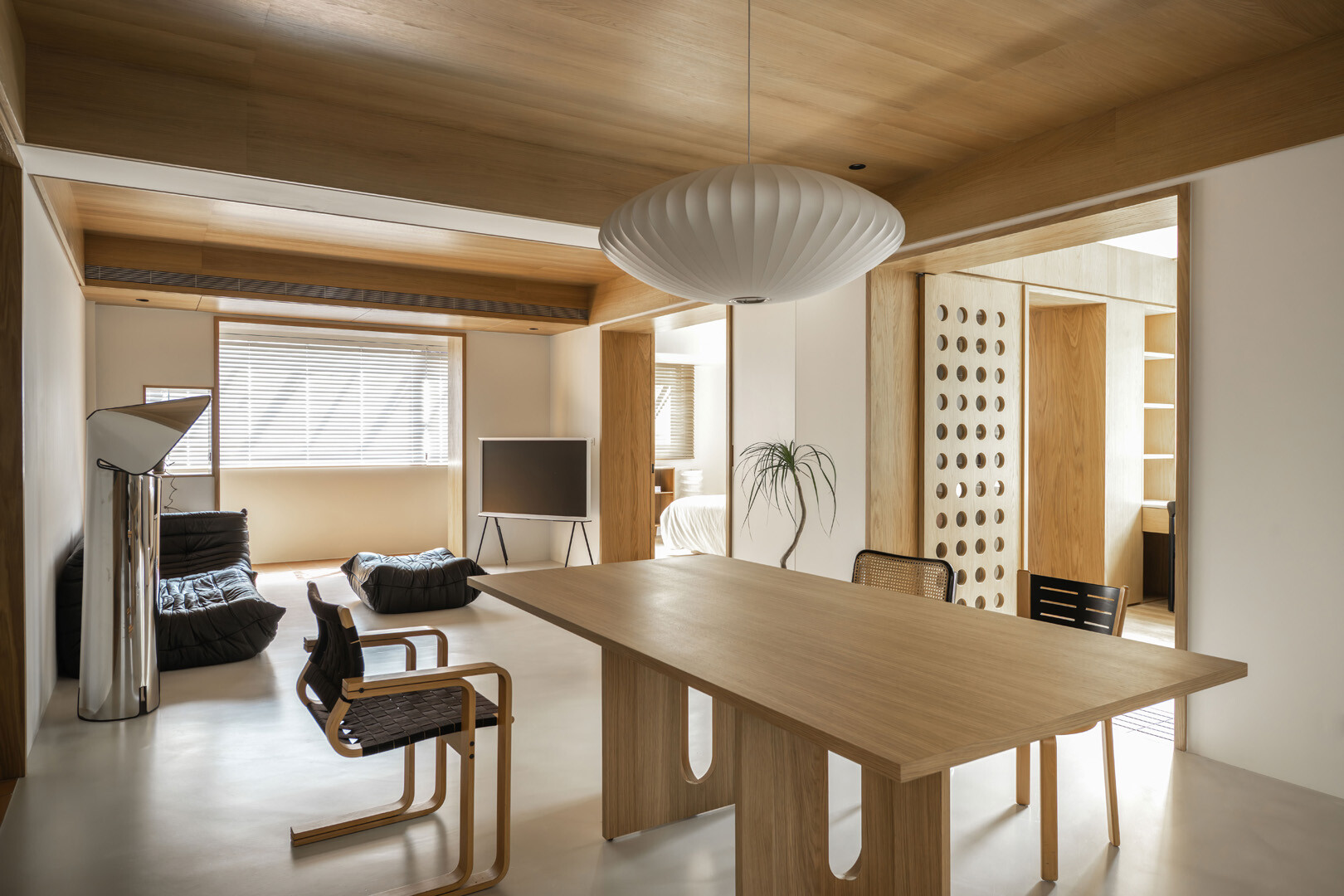
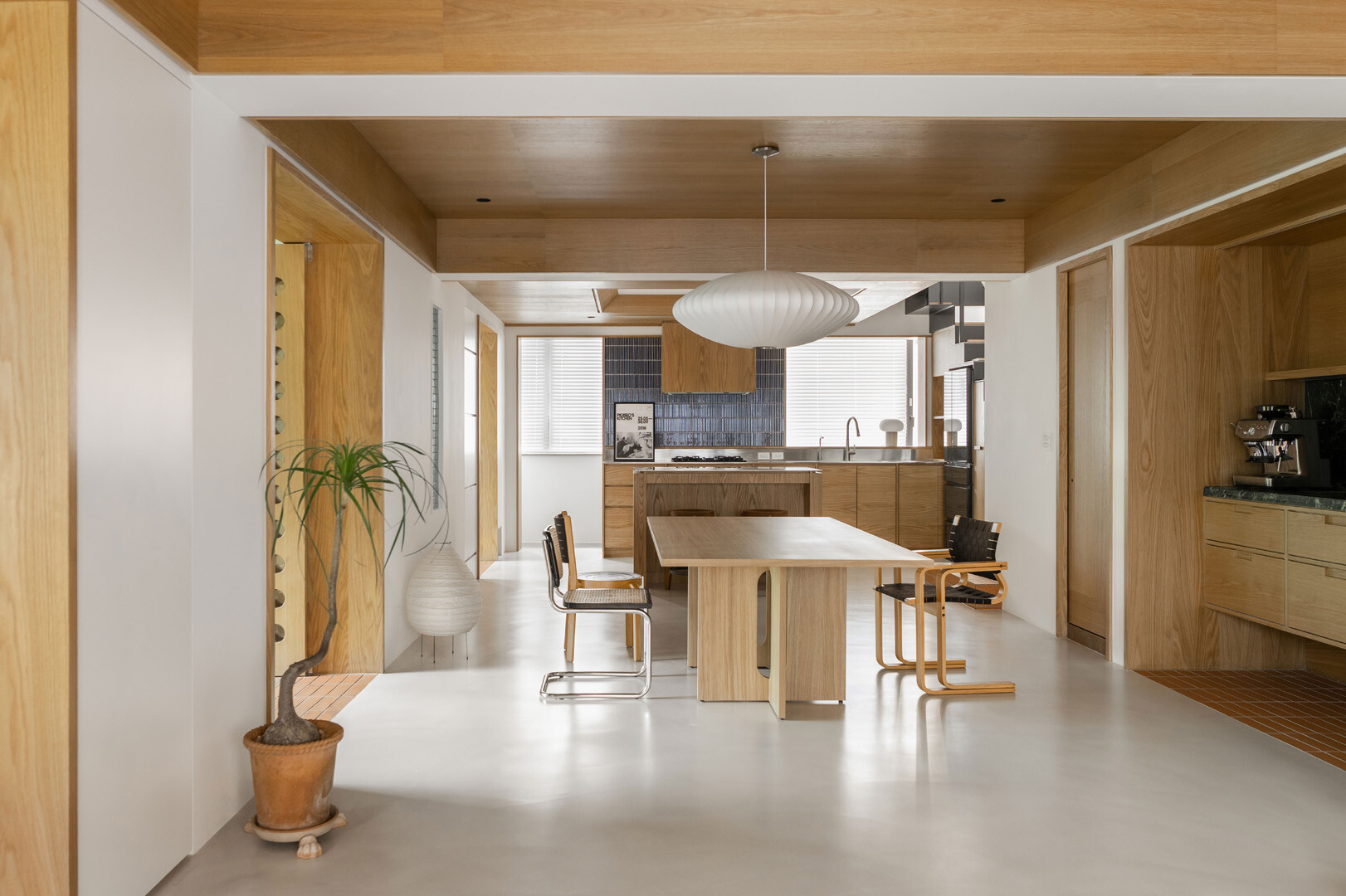
Approaching from the former balcony entrance, the architectural language of framed views is immediately apparent. A small recessed niche near the corner accommodates a potted plant, offering a soothing glimpse of green upon entry. Natural light filters through a narrow opening, directing the gaze toward the classic TOGO sofa in the living room, illuminating its sculptural curves and pleated textures—the point at which the spatial choreography begins. In the public area, the ceiling and beams are wrapped in white oak, creating a layered and recessed spatial rhythm. The flooring, finished in polished terrazzo, maintains continuity across the main surfaces, while white-painted walls provide a neutral canvas, allowing shifting light and shadows to animate the space. Between the kitchen and dining area, a partition wall clad in glass blocks diffuses a soft, glowing light, evoking subtle shifts of tone between brightness and shadow.
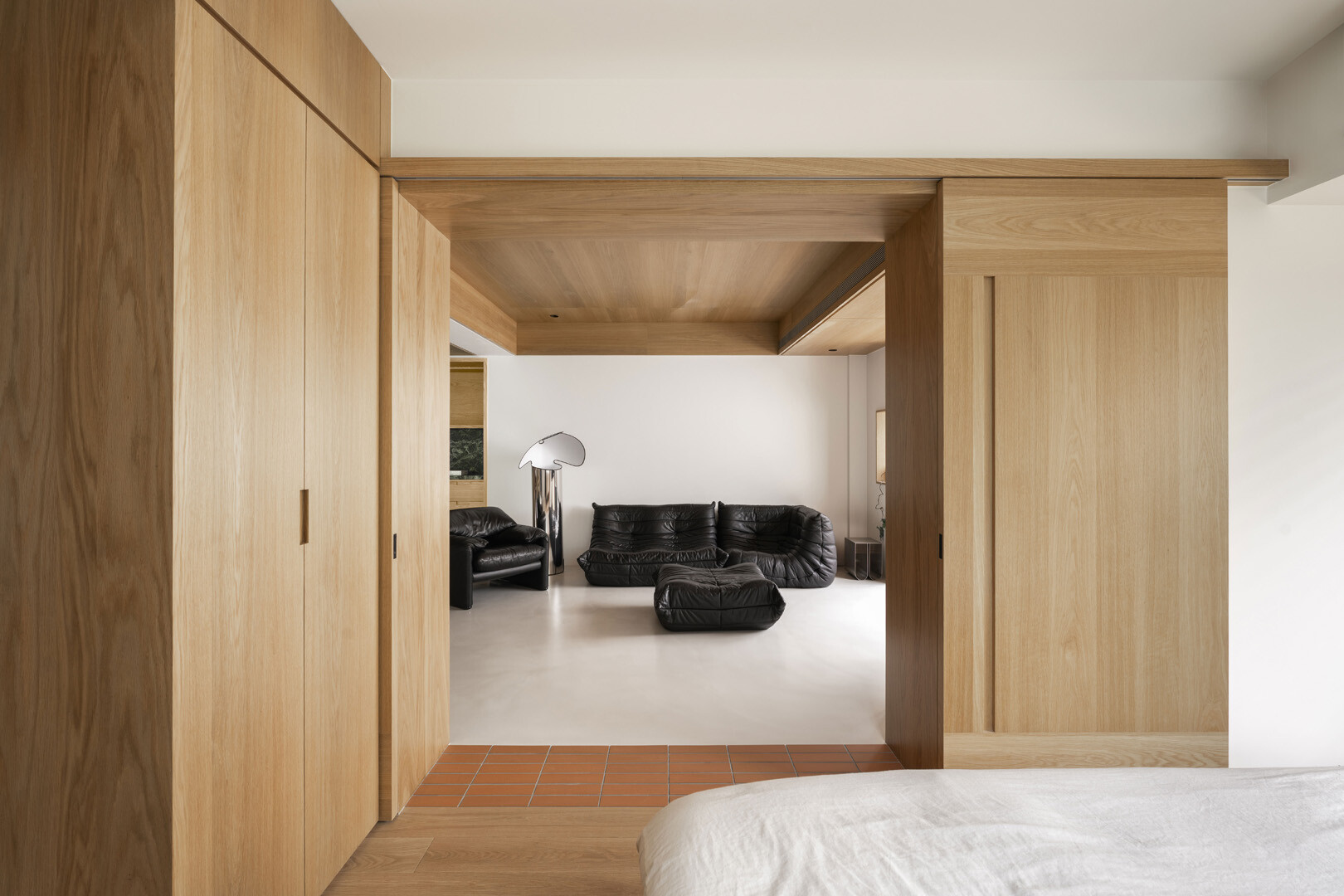
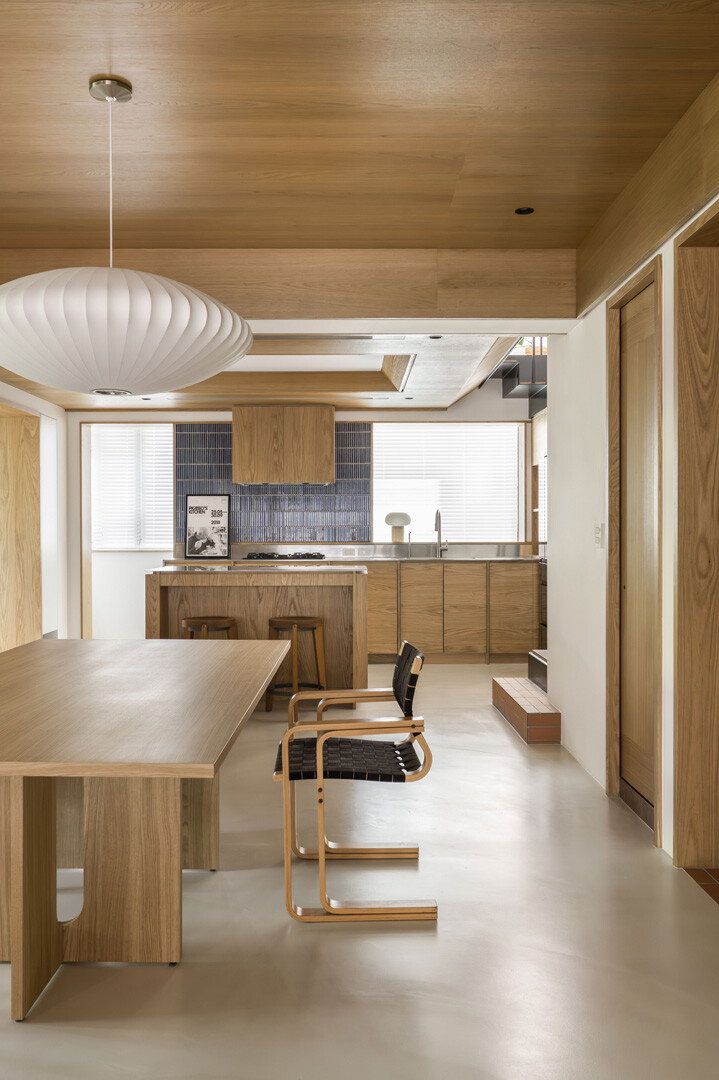
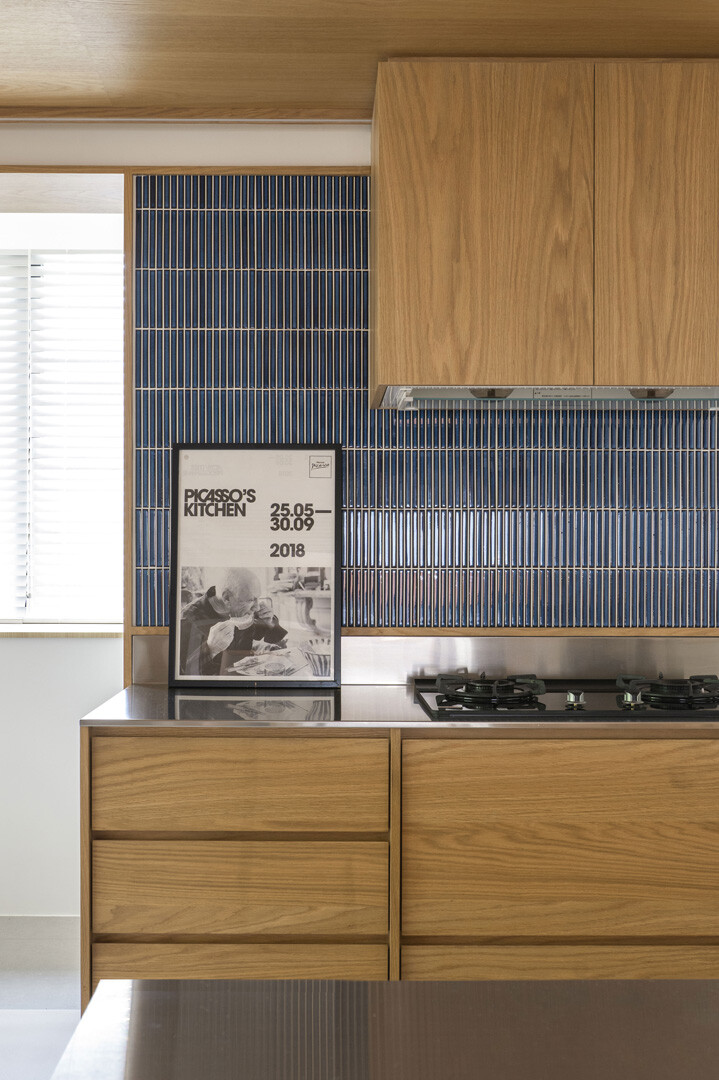
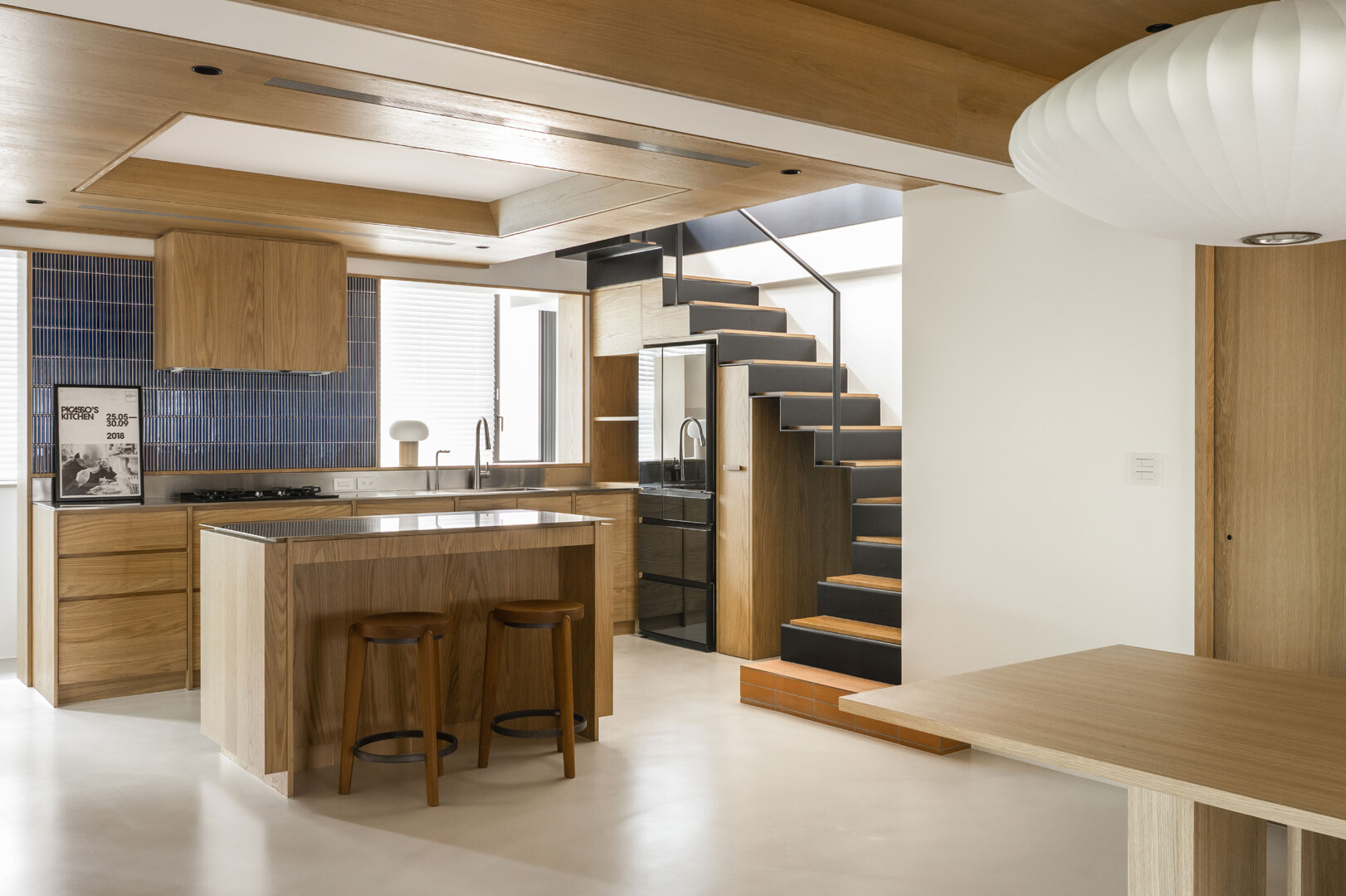
According to the spatial concept, dynamic lighting serves as the foundation for the framed compositions. On one side of the dining area, ceramic tiles on the floor respond to the inset depth of the wall; wood veneer cabinetry and serpentinite surfaces echo the greenery outside, while the interplay of light deepens the poetic stillness of the scene. If the view is broken down into multiple planes—much like a Cubist painting presenting simultaneous perspectives—then the fluid movements of the residents and their cats across the open kitchen island are likewise captured as part of this spatial montage, expressing a freedom of circulation and lived intimacy. Rectangular and square openings on both sides of the kitchen introduce abundant daylight from the adjacent terrace, emphasizing the subtle depth of the cobalt-blue elongated wall tiles. These elements correspond with the art posters on the prep counter, projecting traces of Picasso’s creative lineage into the space.
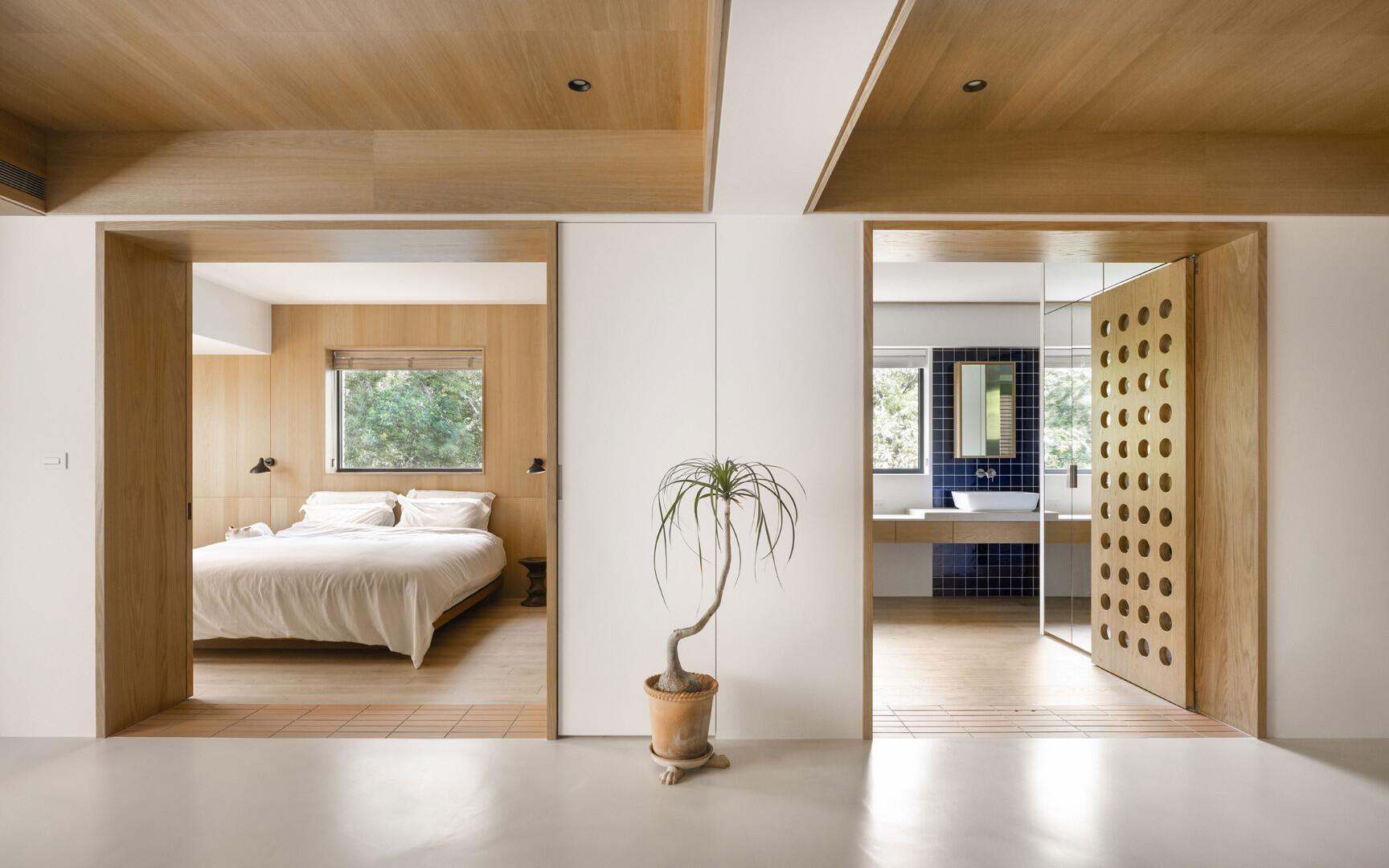
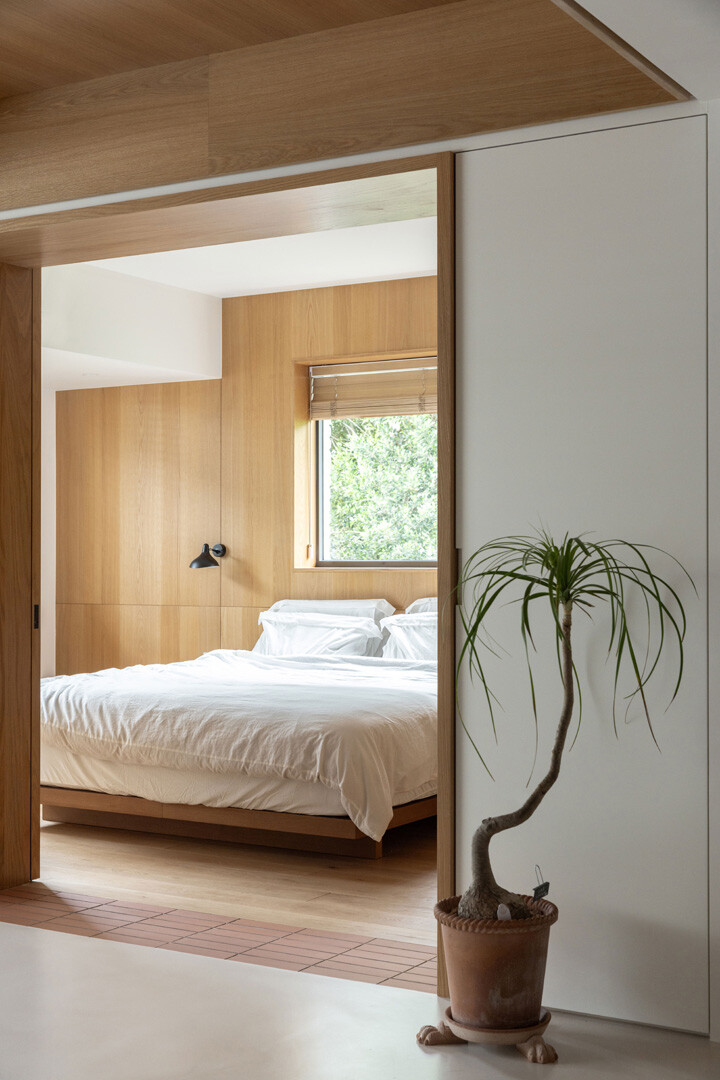
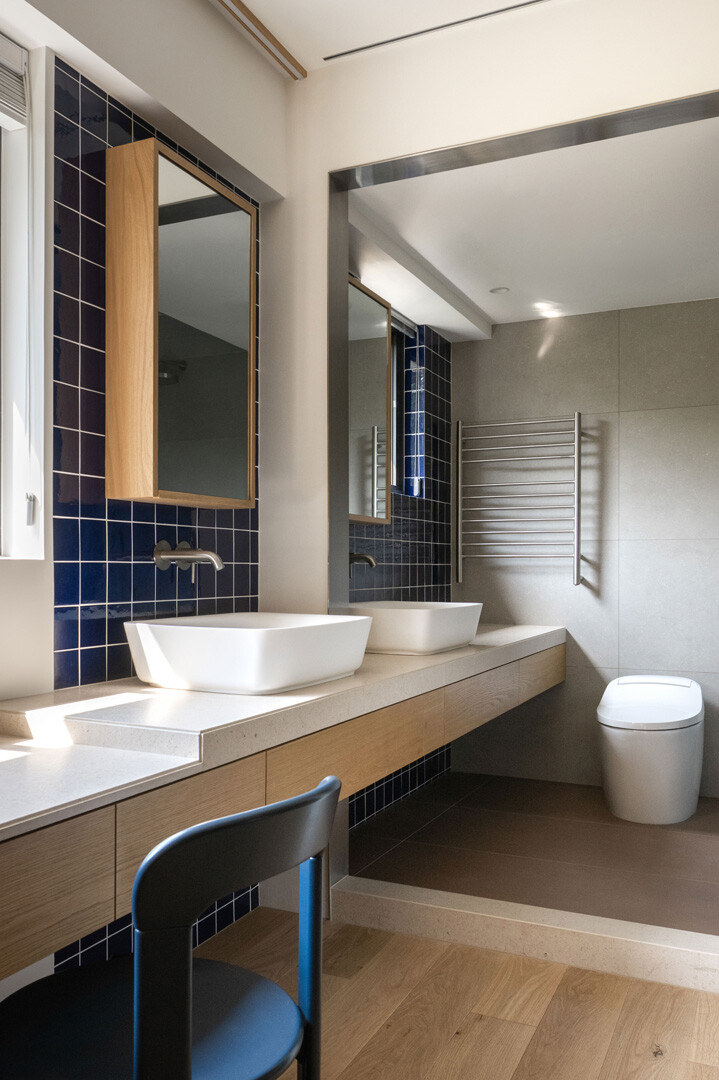
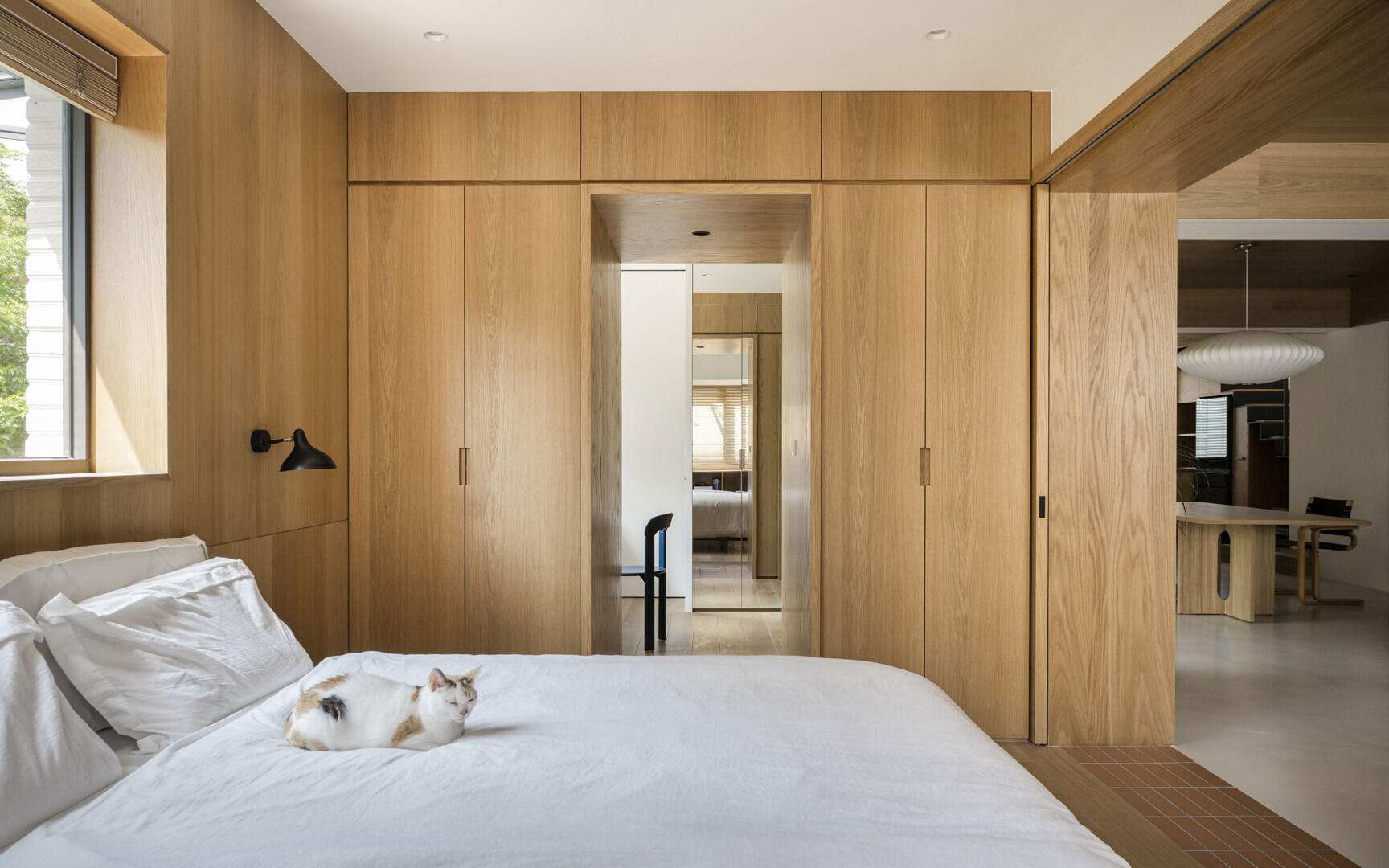
Upon entering the bedroom, oak-framed structural elements are visually complemented by a juxtaposition of wood flooring and ceramic tile. The contrast in materials and tones delineates a tactile and perceptual transition. The adjacent walk-in closet is accessed through a circular perforated wooden door and mirrored paneling, allowing daylight to pass without obstruction. A unified vanity counter extends into the main bathroom, its gently elevated levels subtly delineating function, with dual basins separated by a crisp stainless steel frame. In the wet area, the walls continue in a series of cobalt-glazed square tiles, their irregular sheen reminiscent of dappled foliage, imbuing the space with a distinctive chromatic character.
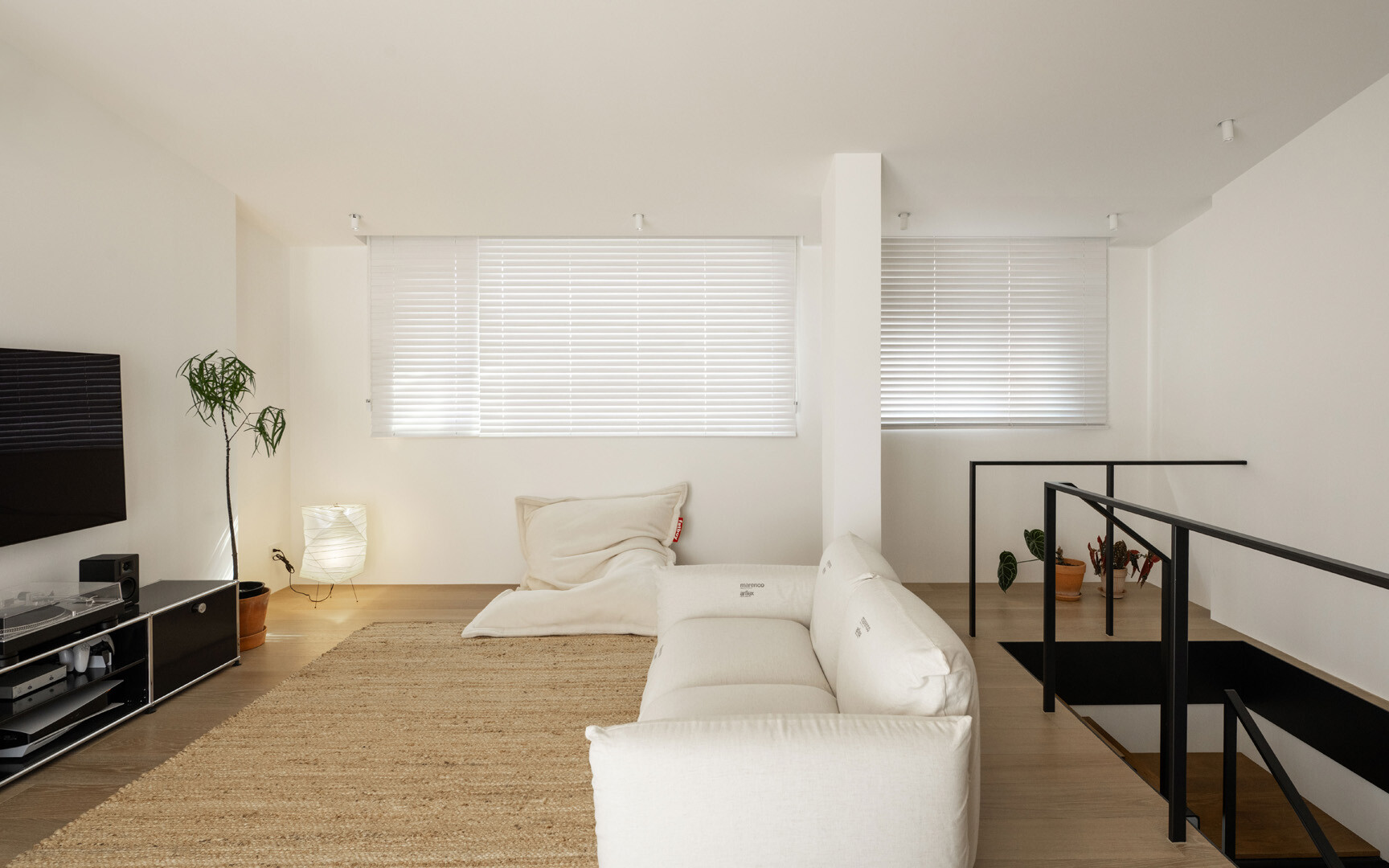
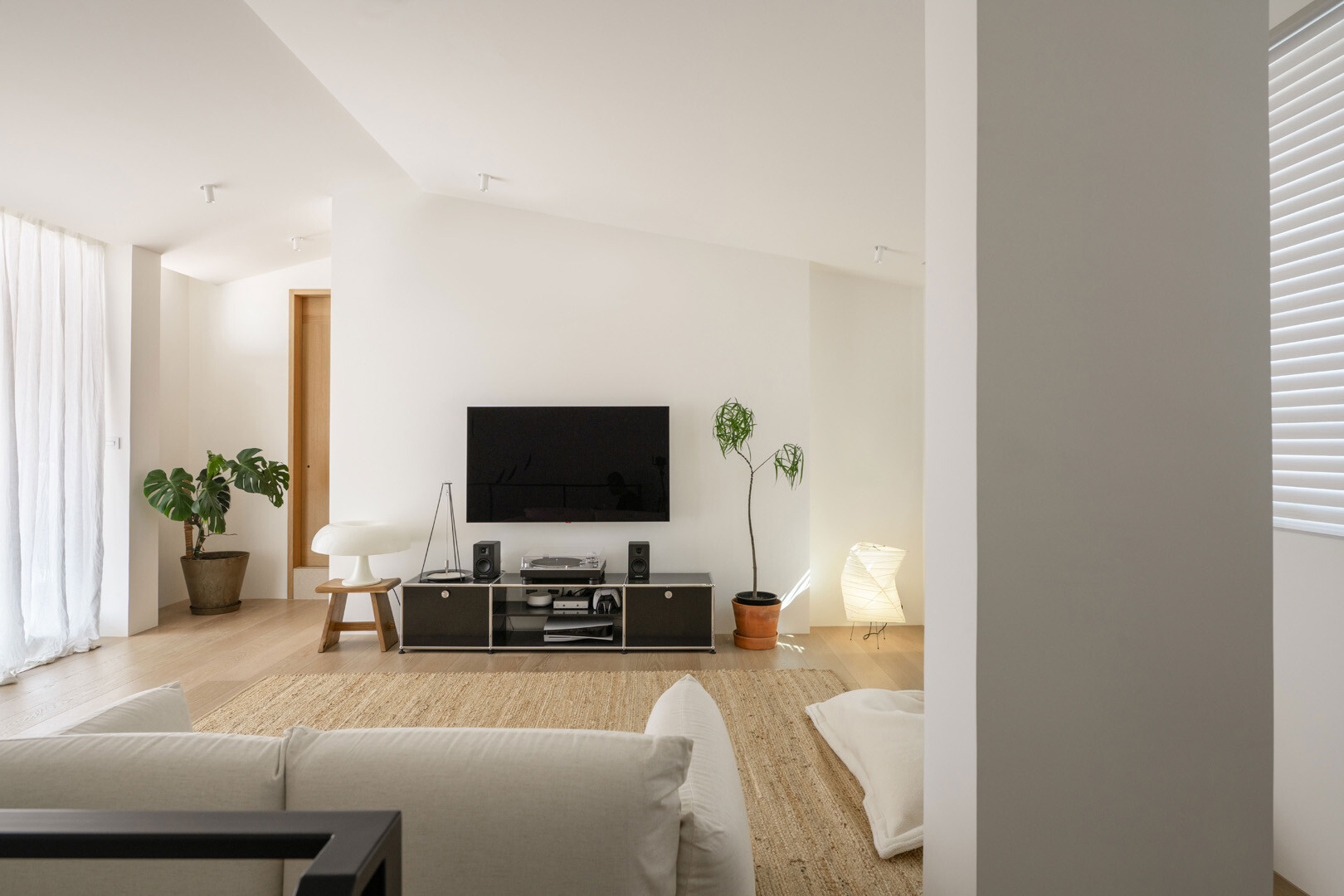
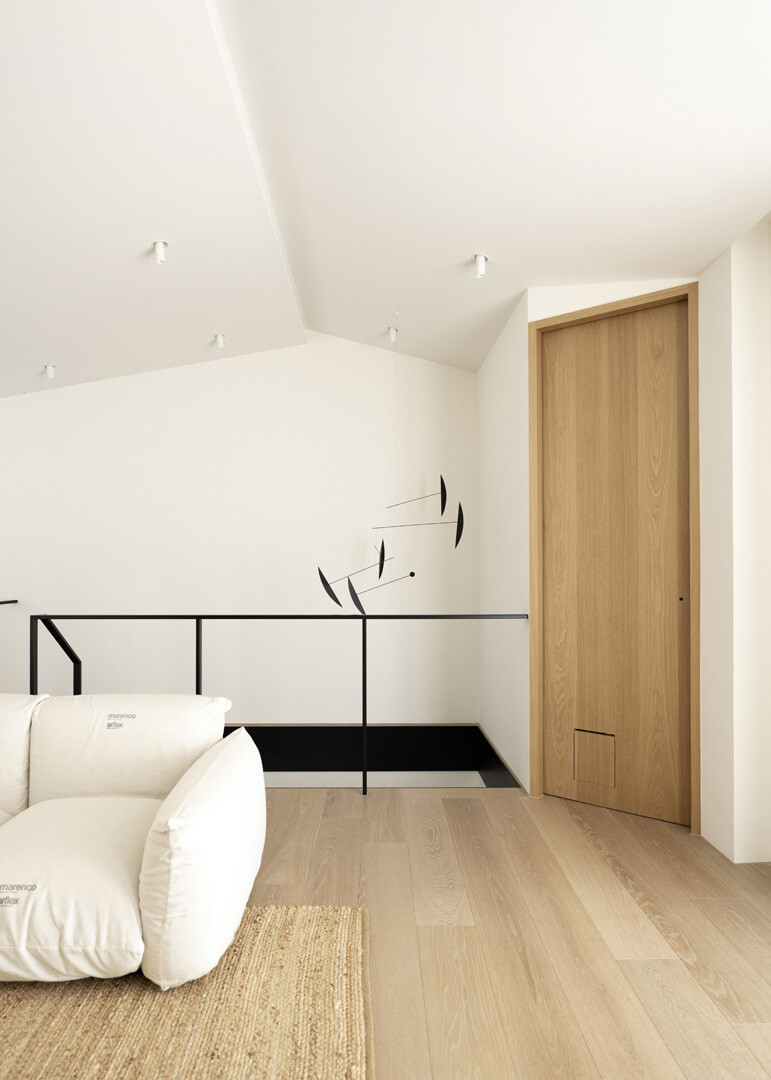
Ascending the staircase to the second floor, the atmosphere transitions through a palette of pure white, defining the space as one for leisure and recharging—an emotional landscape unburdened by pressure. With each upward step, the weight of daily life gradually lifts, transforming the ascent into a quiet ritual of retreat. Within the renovated home, light and materiality resonate deeply with the human experience, while color subtly reveals the residents’ latent artistic sensibilities. Through design, space becomes more than an orchestration of scale and function—it unfolds as a layered sensory experience of everyday life. Here, art takes shape through the rhythms of the renovated home, while the life framed within becomes, in itself, a living expression of art.