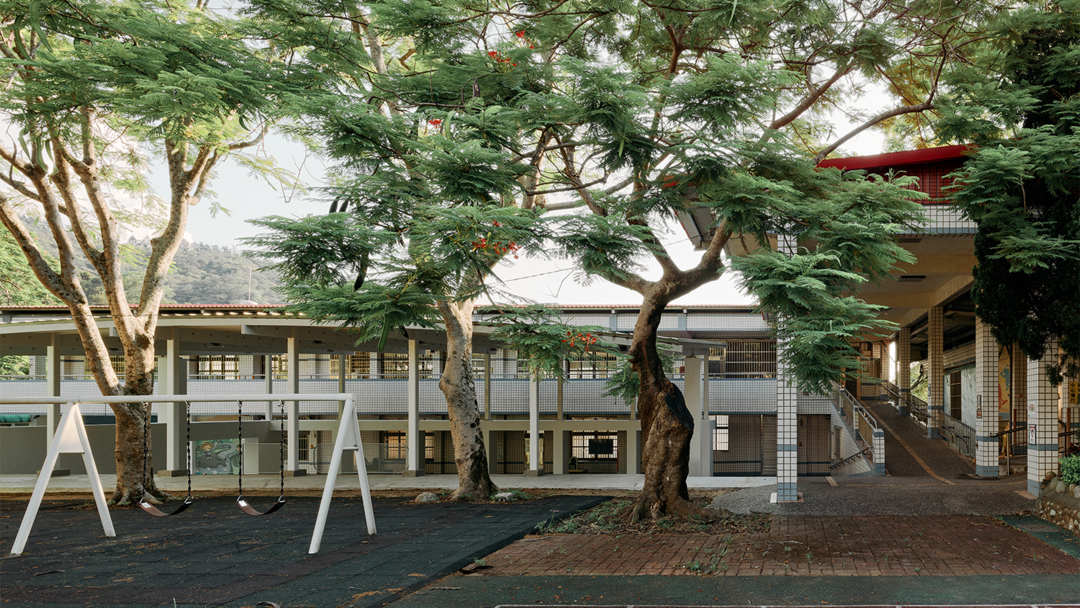
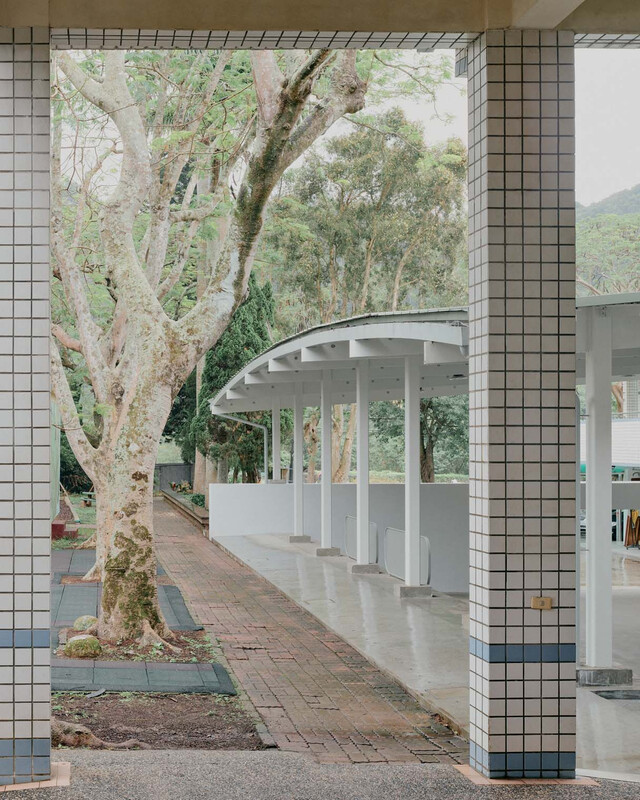
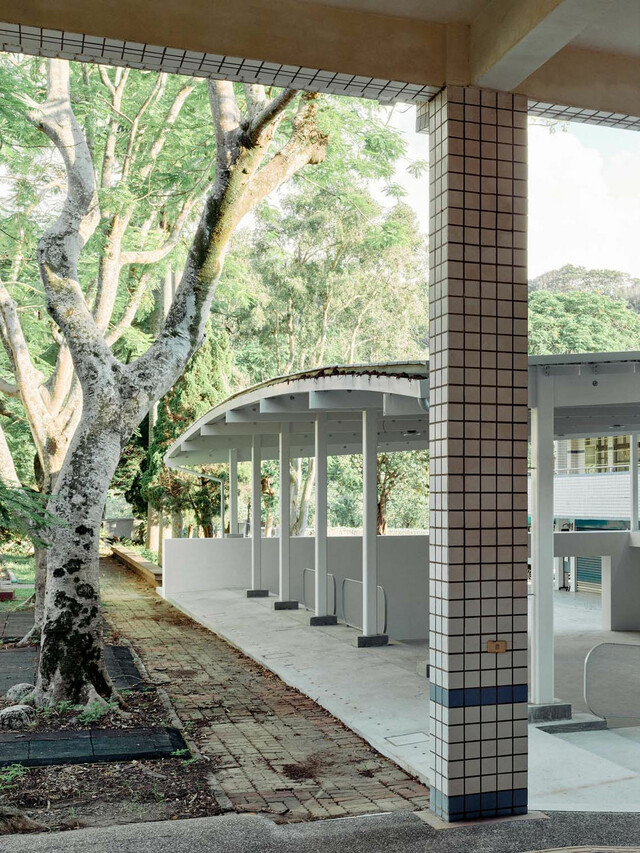
At first, Shen Ting-Tseng visited the public works project in the Longtan Mountain area of Taoyuan with a sense of exploration but was attracted and by the unique environment after arriving. The surrounding area is surrounded by dense green trees and rolling mountains, presenting a peaceful and beautiful scenery that is isolated from the world. The swings and playgrounds under the phoenix trees on the side became the gathering place for students to flock to during the ten-minute break. It was because of seeing the innocence and vitality of the children and the natural environment that the architect decided to take on the semi-outdoor activity space project.
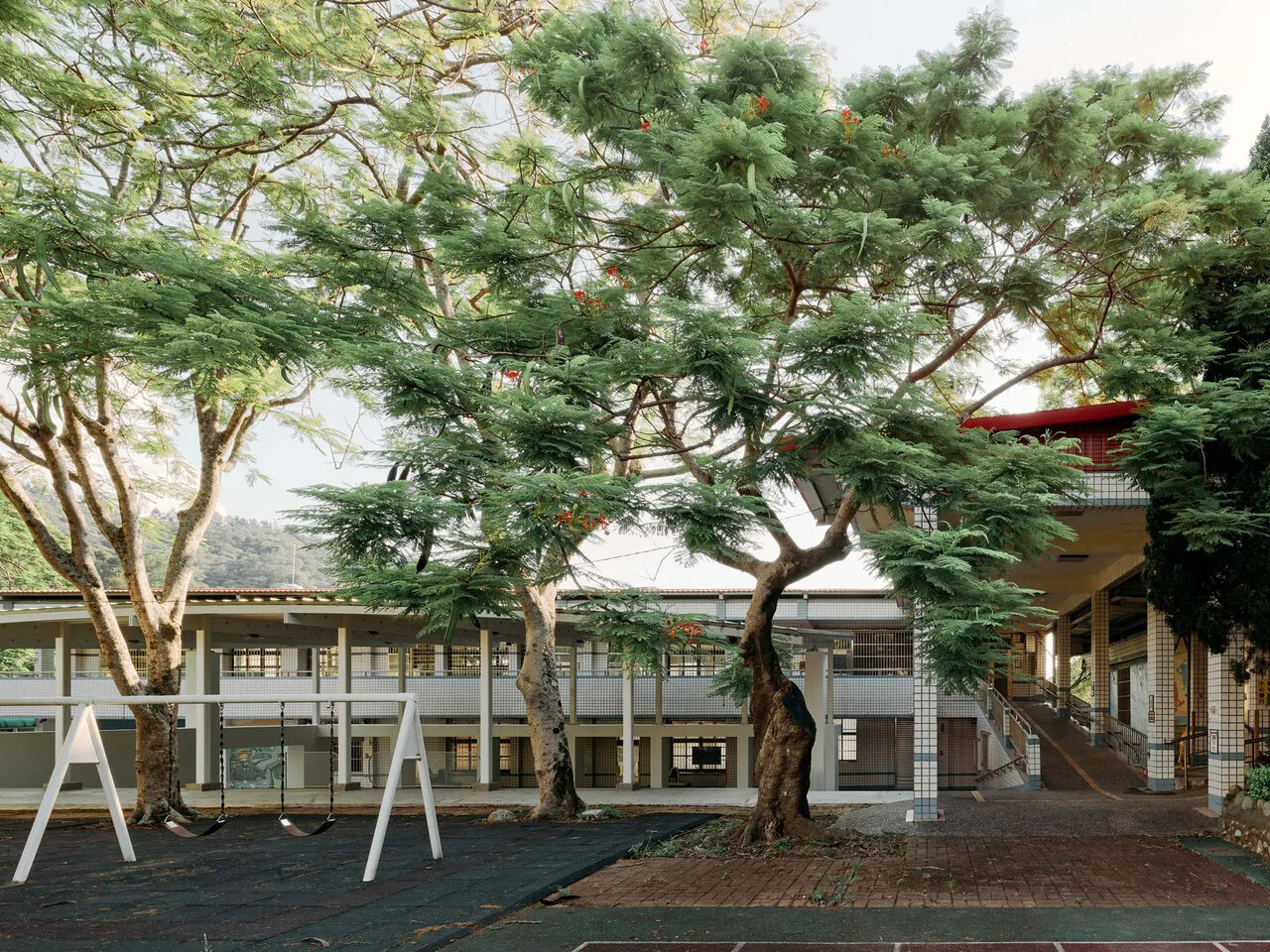
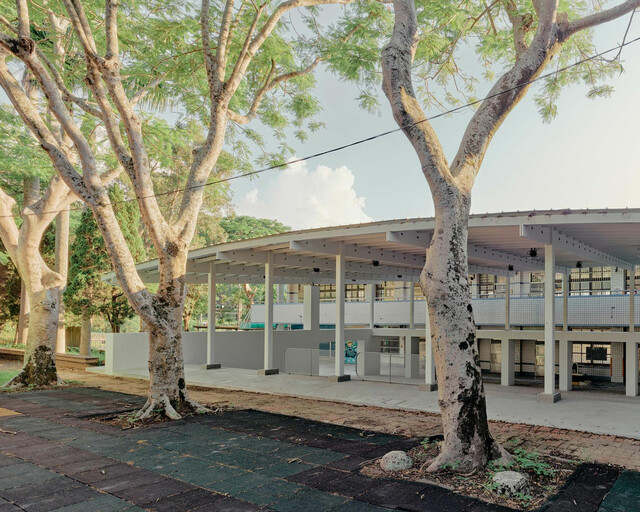
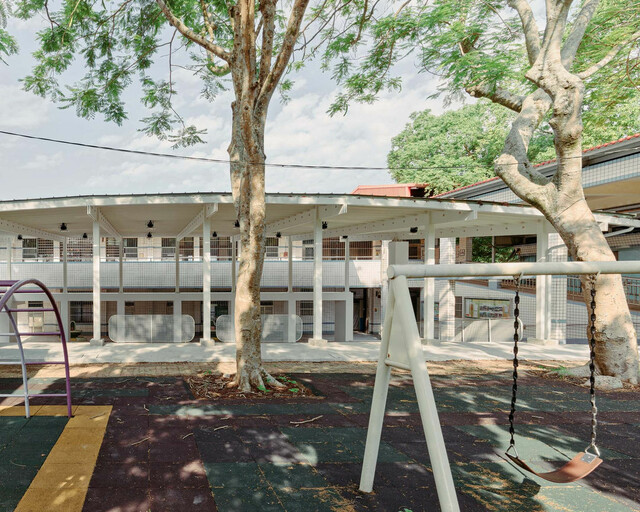
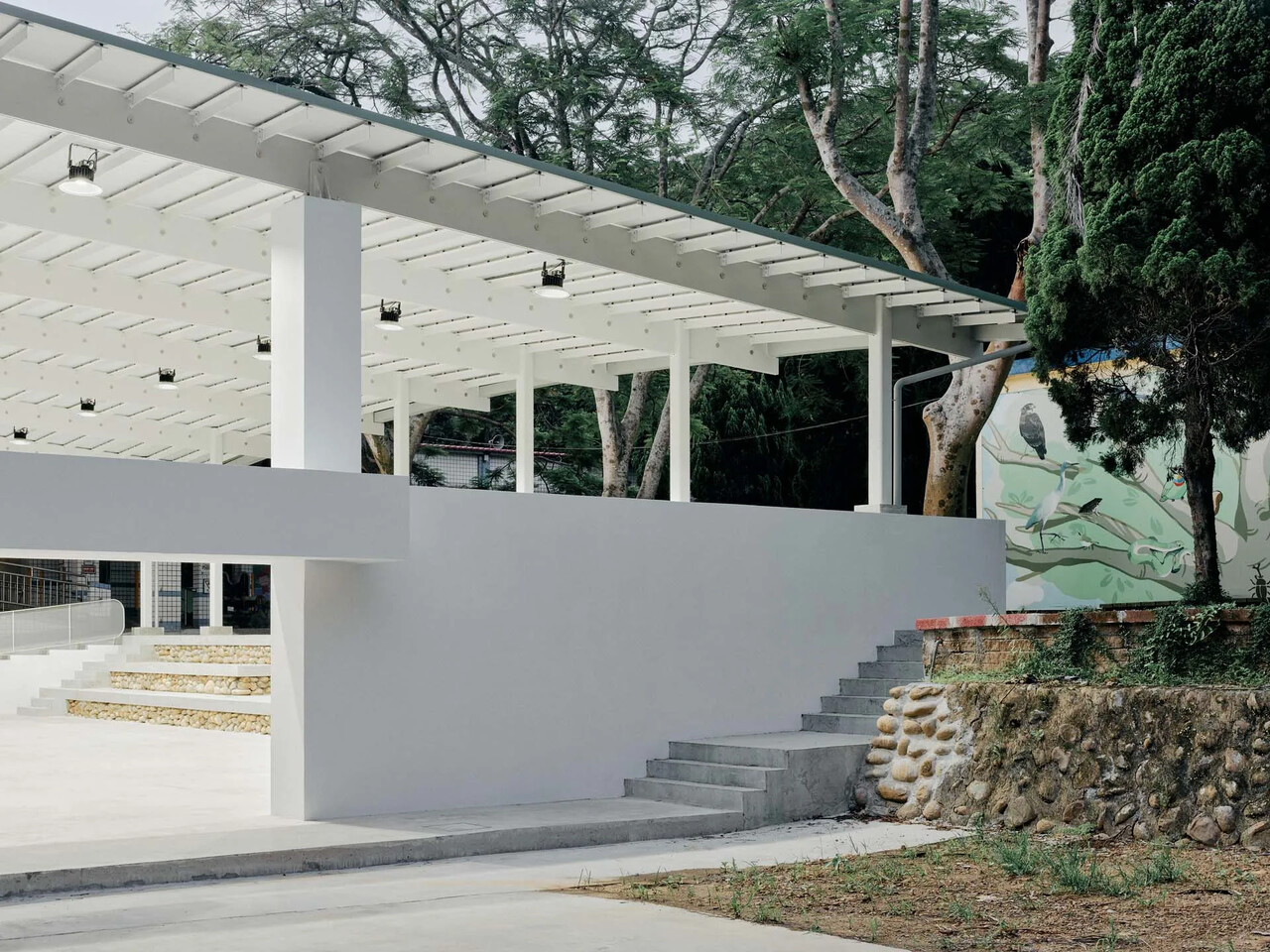
However, due to the poor conditions of the site, not only was it located in the darkest area of the campus, but its low-lying terrain was disconnected from the main body of the campus, creating a fragmentation issue between the east and west sides of the school. This prompted the architect, who values the organic integration of architecture and environment as well as future usability, to start by addressing the current state of the site and the surrounding elevation difference of 1.6 meters. Following the terrain, a framework approximately 5 meters high was constructed, with the east side set at a height of 2.4 meters. The canopy forms a slightly sloped line, creating a layered contrast with the original school building height of 3.5 meters. This arrangement allows people on different floors to view the scenery on the east side and the vibrant vitality under the phoenix trees. As they walk, their vision connects and zooms, making the semi-outdoor activity space the heart of the campus, linking the east and west districts, and reshaping the overall continuity of the campus.
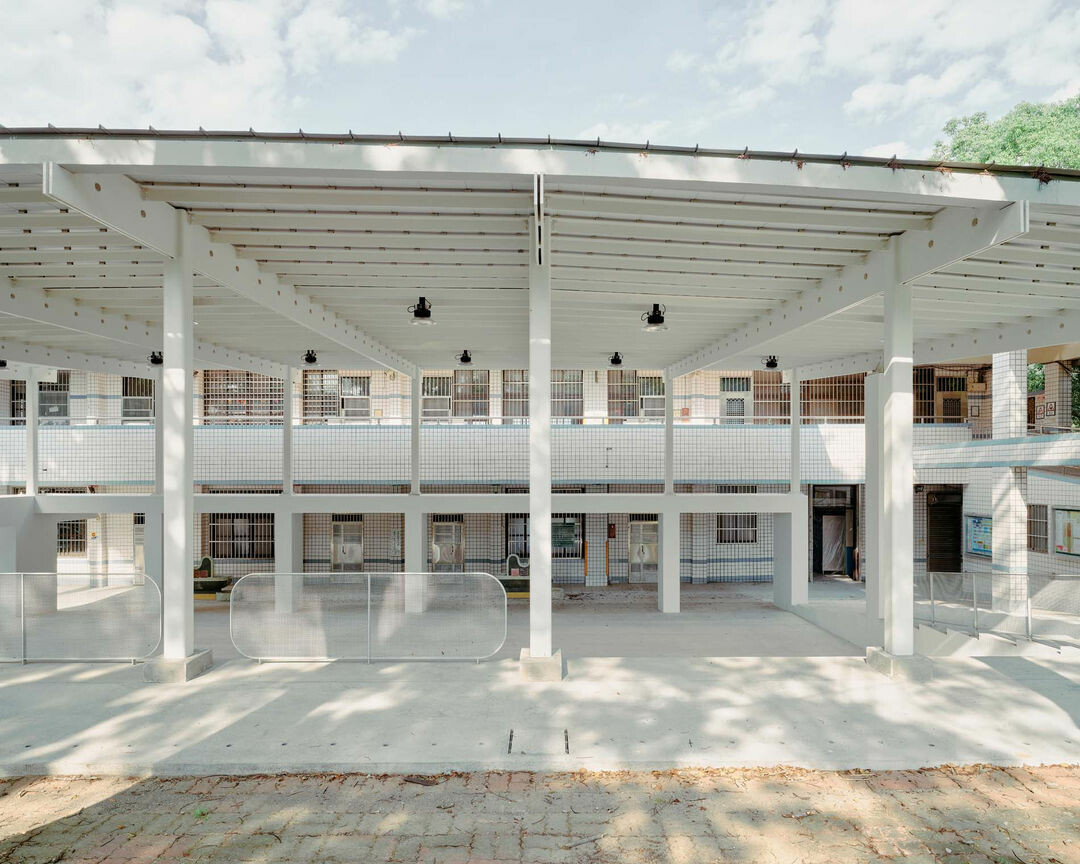
Here, the staircase becomes a highlight. The grand staircase, with a depth of approximately 80 centimeters and a height of about 50 centimeters, features a deliberately carved-out platform in the middle that serves both as the auditorium's stage and the spectators' seating for competitions. It not only creates an interesting experience for classroom activities but also introduces versatility and flexibility to the use of the staircase. Initially, the difference in dimensions of the staircase raised concerns among teachers and parents about the children's safety. However, as time passed and the children became accustomed to it, these worries gradually faded. The small steps at both ends of the grand staircase offer a child-friendly pathway for movement. The architect transformed the stone retaining walls of the campus's external environment into the facade design of the grand staircase, echoing the natural terraced landscape of the local area. This not only provides children with more opportunities to observe life but also creates a visually harmonious experience that integrates with the local environment.
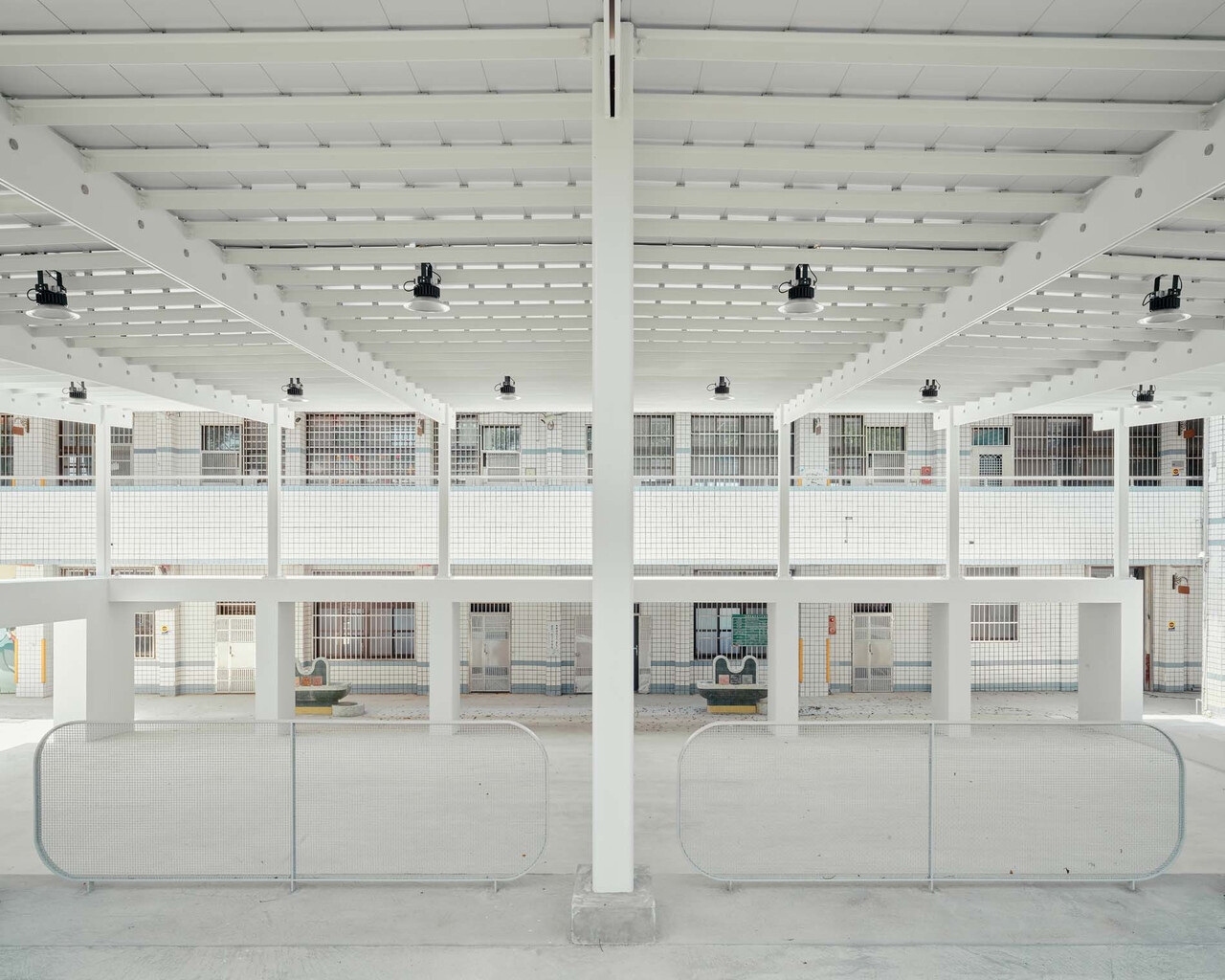
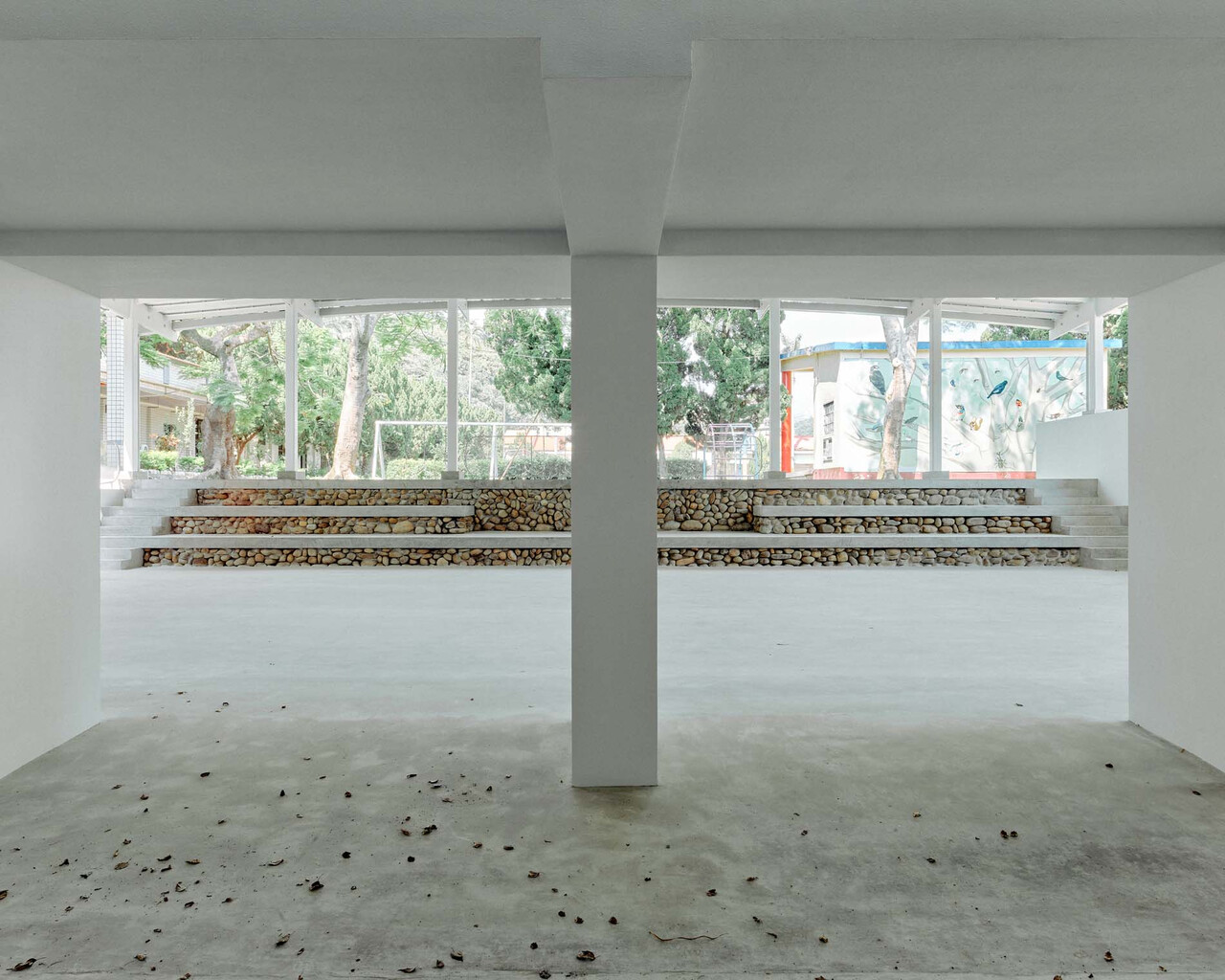
To integrate the new building into the existing campus, the design creates new gently sloping stairs on the north side following the original landform slope and continues the same lower form on the west side next to the overhanging eaves of the existing classrooms. Through "imitation", the new building communicates with the existing buildings. On the east side, the large staircase breaks the boundary of the retaining wall and uses a stone facade to echo the environment. On the south side, a wall is used to define the spatial boundary with the parking lot. Openings and ground steps guide people to "enter" this space. After the wall is appropriately lowered, people can still look up and enjoy the beautiful mountains and waters behind the wall, making the overall space more natural and smoother.
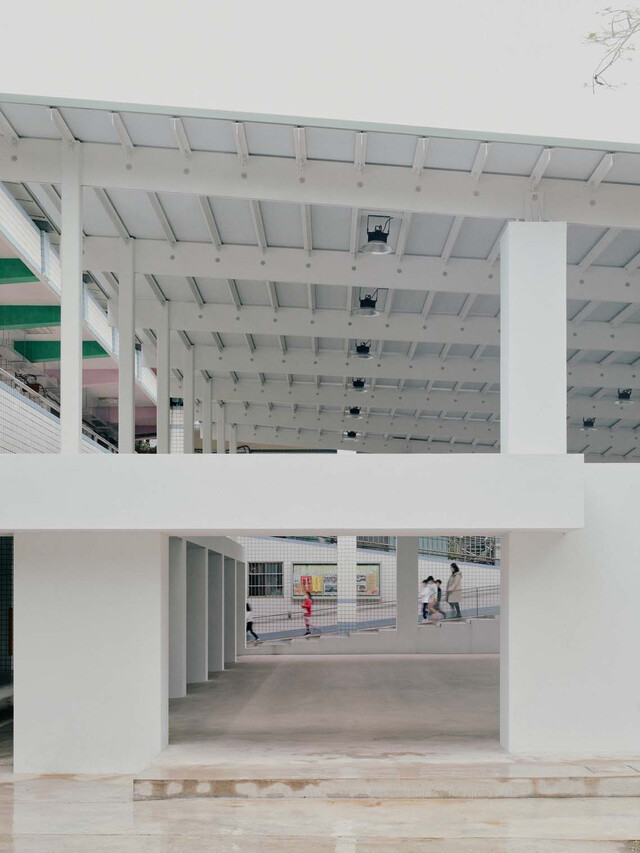
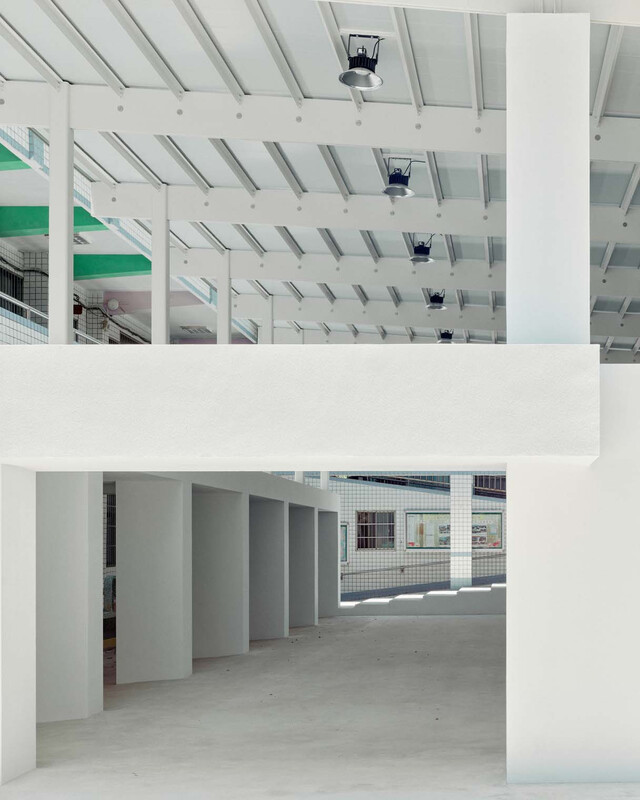
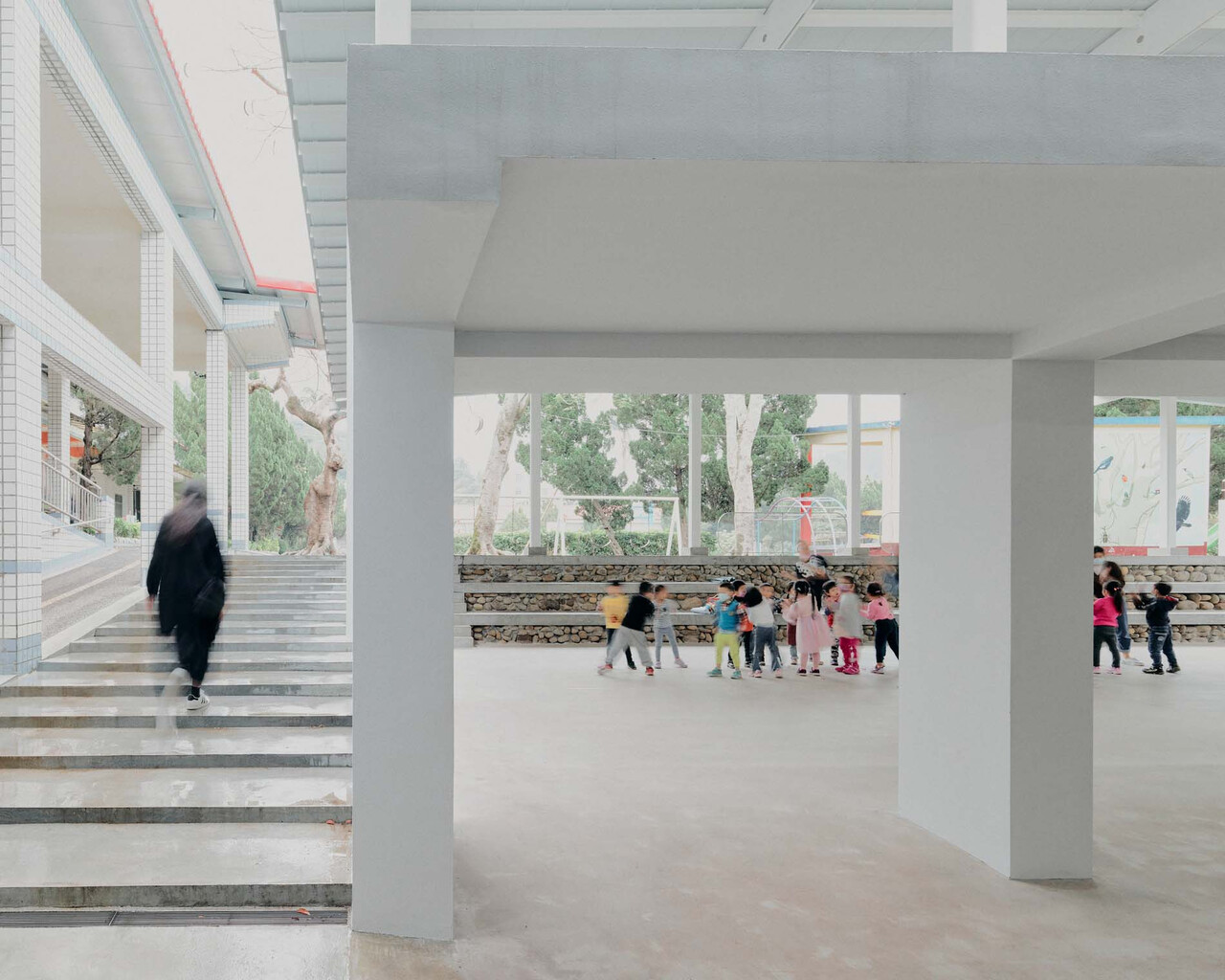
The usability of the semi-outdoor activity space is not only reflected in its diverse functions, but also in its interaction and care for the campus and the children. The newly added building does not bring a sense of distance but has become a part of the daily life of teachers and students in the school. Children can freely move in this space, not just limited to a few gatherings. During class, between classes, and after school, the activity space becomes their playground, closely connected to school life, witnessing the wonderful moments of Sanhe Elementary School again and again.