The Rails of Memory
Past wounds may never fully heal. Yet with time, they can take on another form of existence. Through what we can touch and what we can only sense, we are brought back to scabs left exposed, waiting for someone willing to notice them, to listen, and to understand. Even as generations change, they persist as signs woven into everyday life, calling up our deepest capacity for empathy and wisdom. At Place Carnot in Lyon, France, people sit at ease beneath the trees, watching the market come and go, pausing to listen to the fountain’s gentle, continuous flow. In such a moment, do we ever consider that the peace we feel is built on the sacrifices and struggles of countless lives, of those who fought and those who suffered? And when we pass a memorial constructed from reclaimed railway components, does it leave no trace within us?
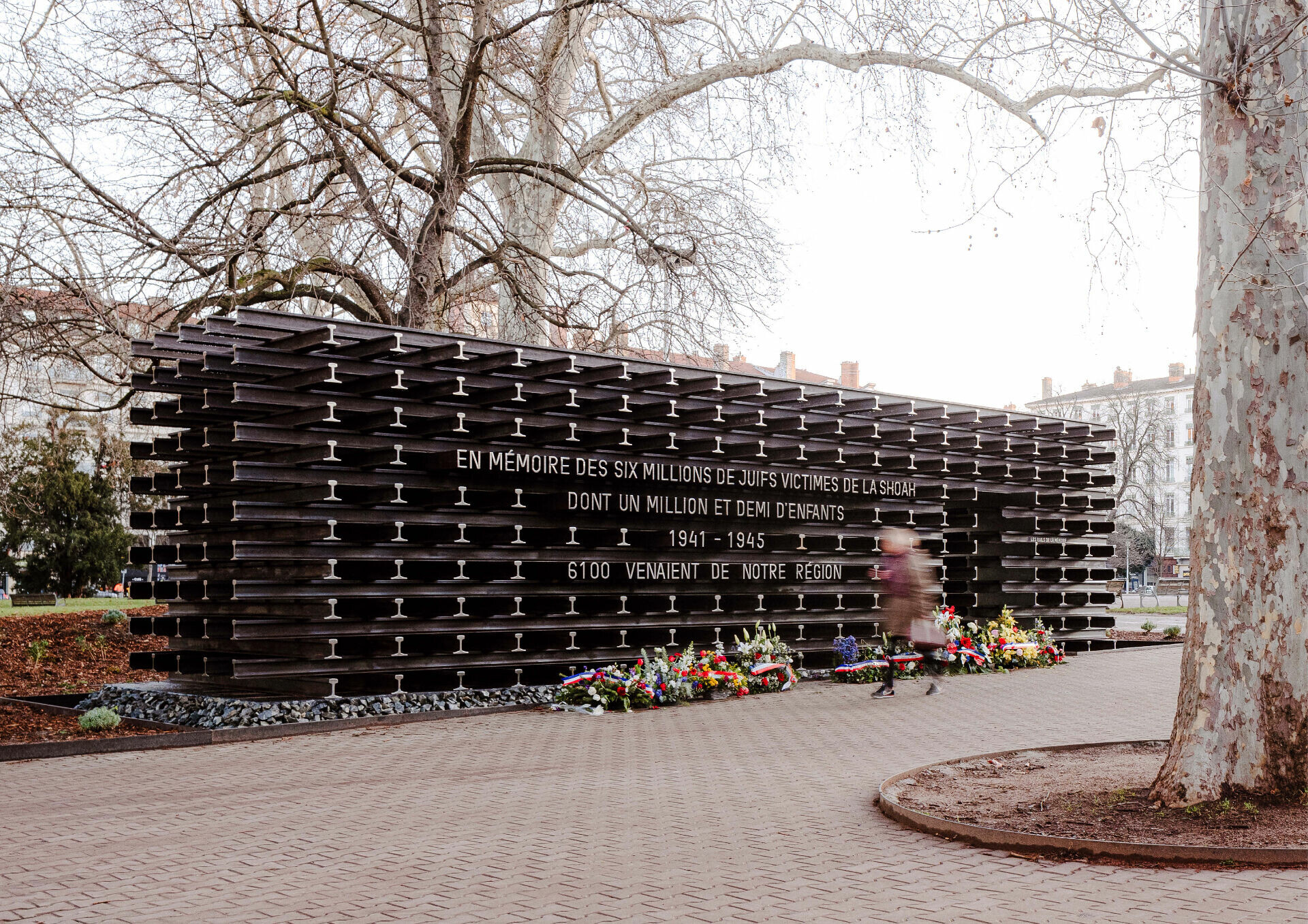
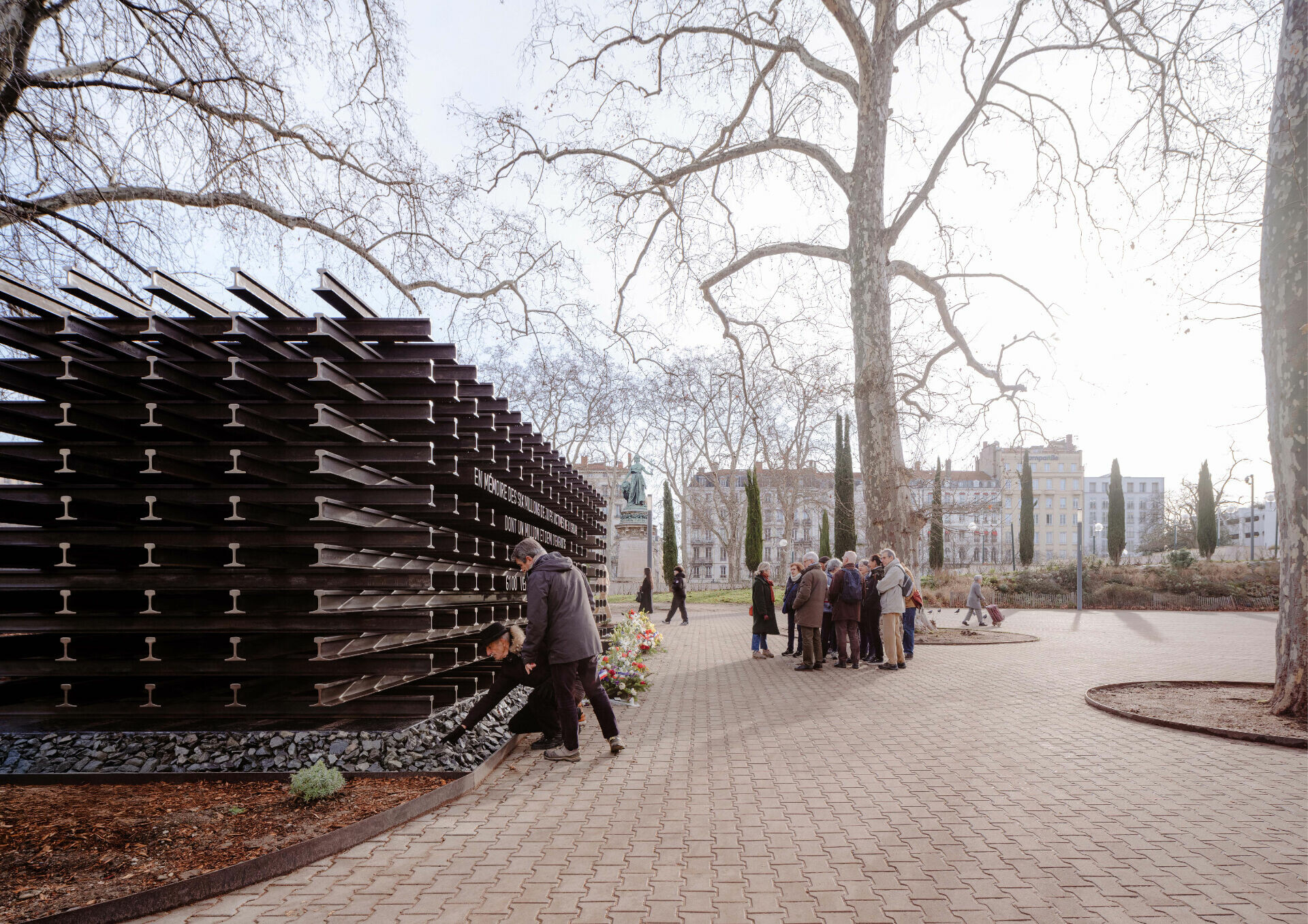
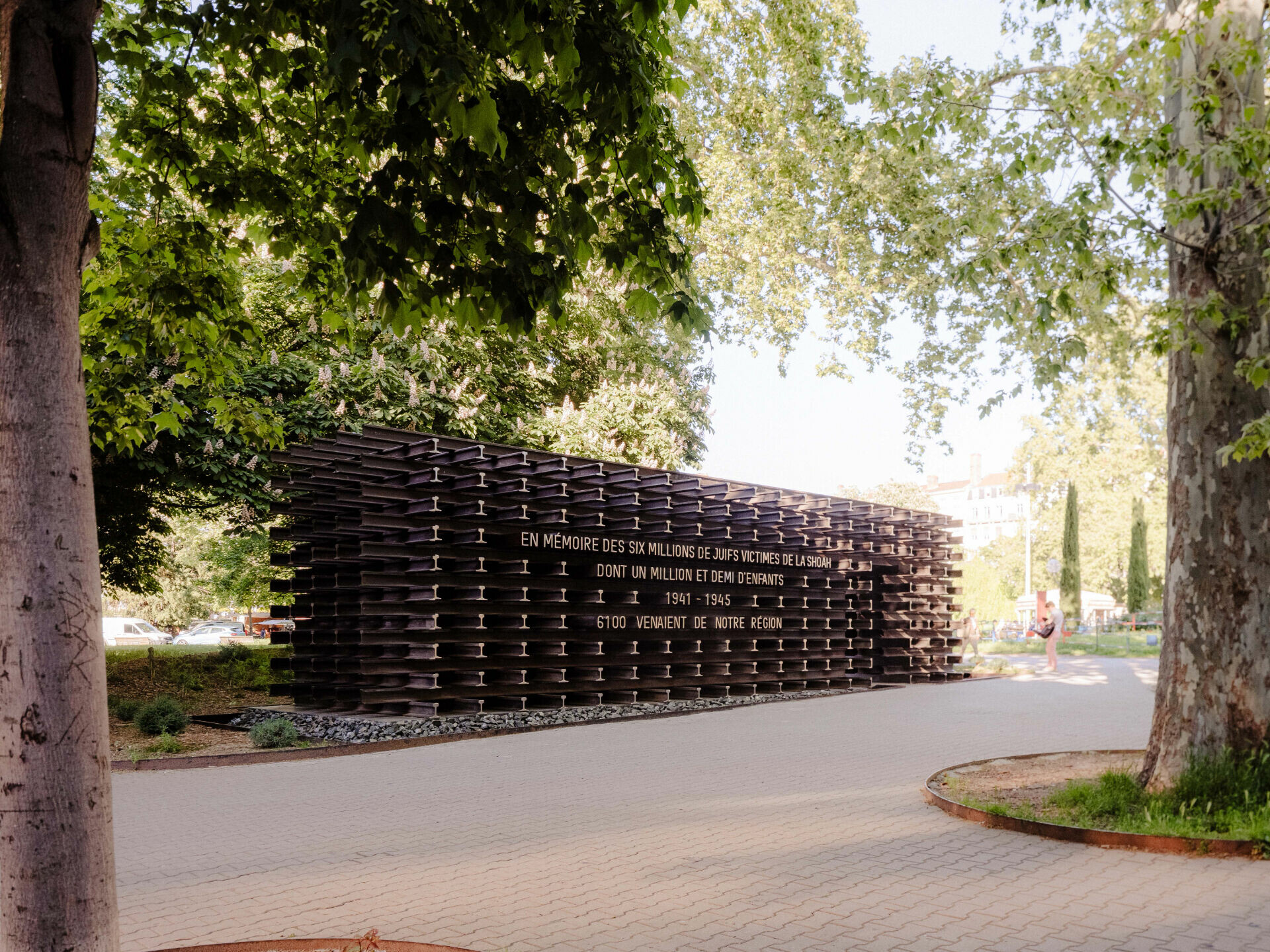
The first encounter is with form. Interlaced steel rails, monumental in scale and repetitive in rhythm, gather into a dense commemorative presence. Then the inscription comes into view: “In memory of the six million Jewish victims, including one and a half million children, 6,100 of whom were from our region.” A complicated emotion rises. Before turning to the design concept behind the memorial, begin with its location. Set around one hundred metres from Lyon-Perrache station (Gare de Lyon-Perrache), its siting is anything but accidental. Blaising Borchardt Studio understood that during the Second World War, an immense rail network shaped countless Jewish departures and destinies, leaving behind a red web of lines that remains difficult to face. This station was once the point of departure for deportation convoys heading towards a tragic journey. For that reason, trailway elements were chosen to create a memorial as a witness to the past history of this square, granting reclaimed materials new meaning by returning them to daily life. Those who pass through are confronted with traces within reach, meeting a blood-and-tears history that was once meant to be erased. In that closeness, empathy becomes possible, along with an understanding of what can endure after violence: resilience, and the will to rebuild.
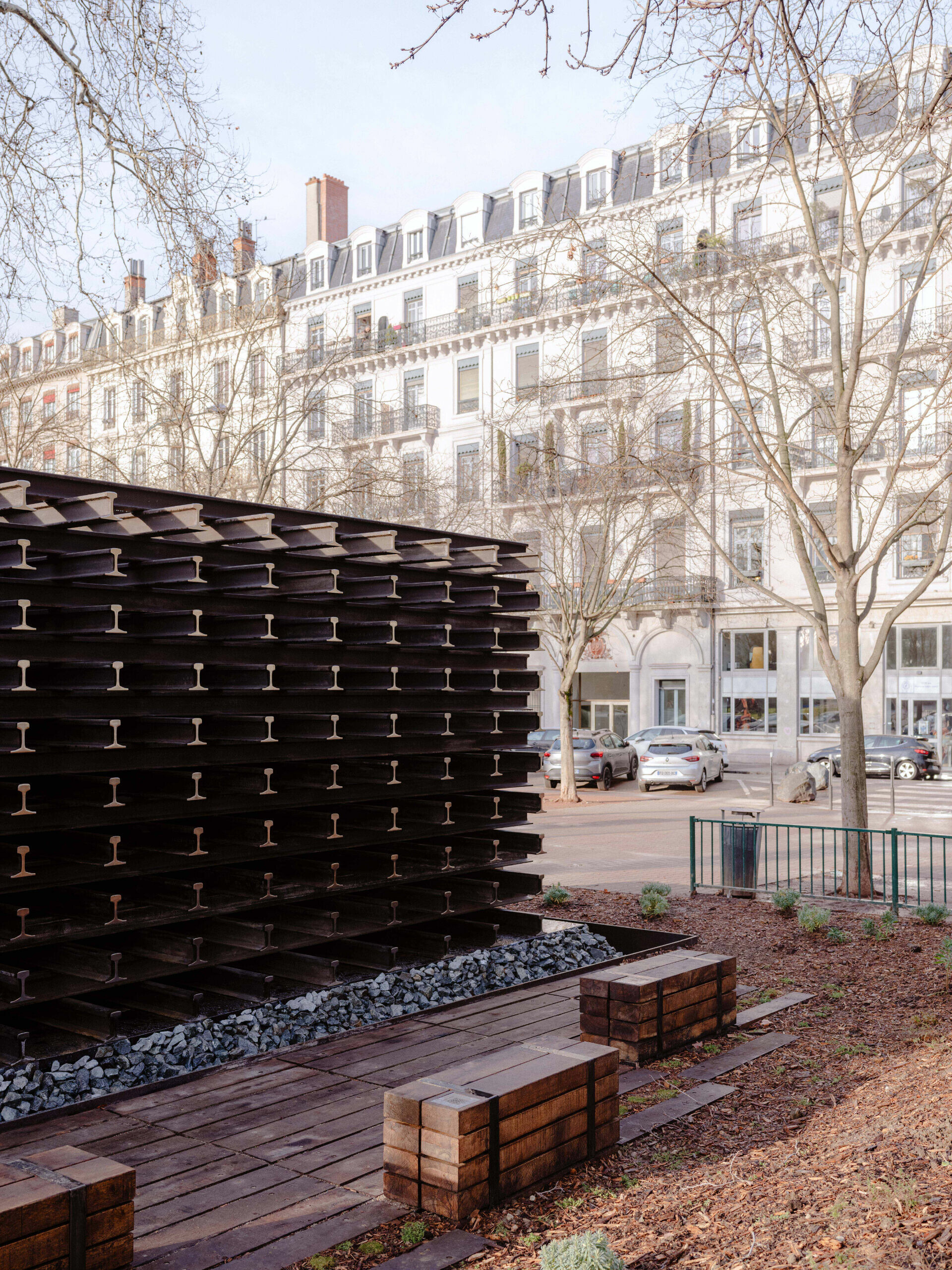
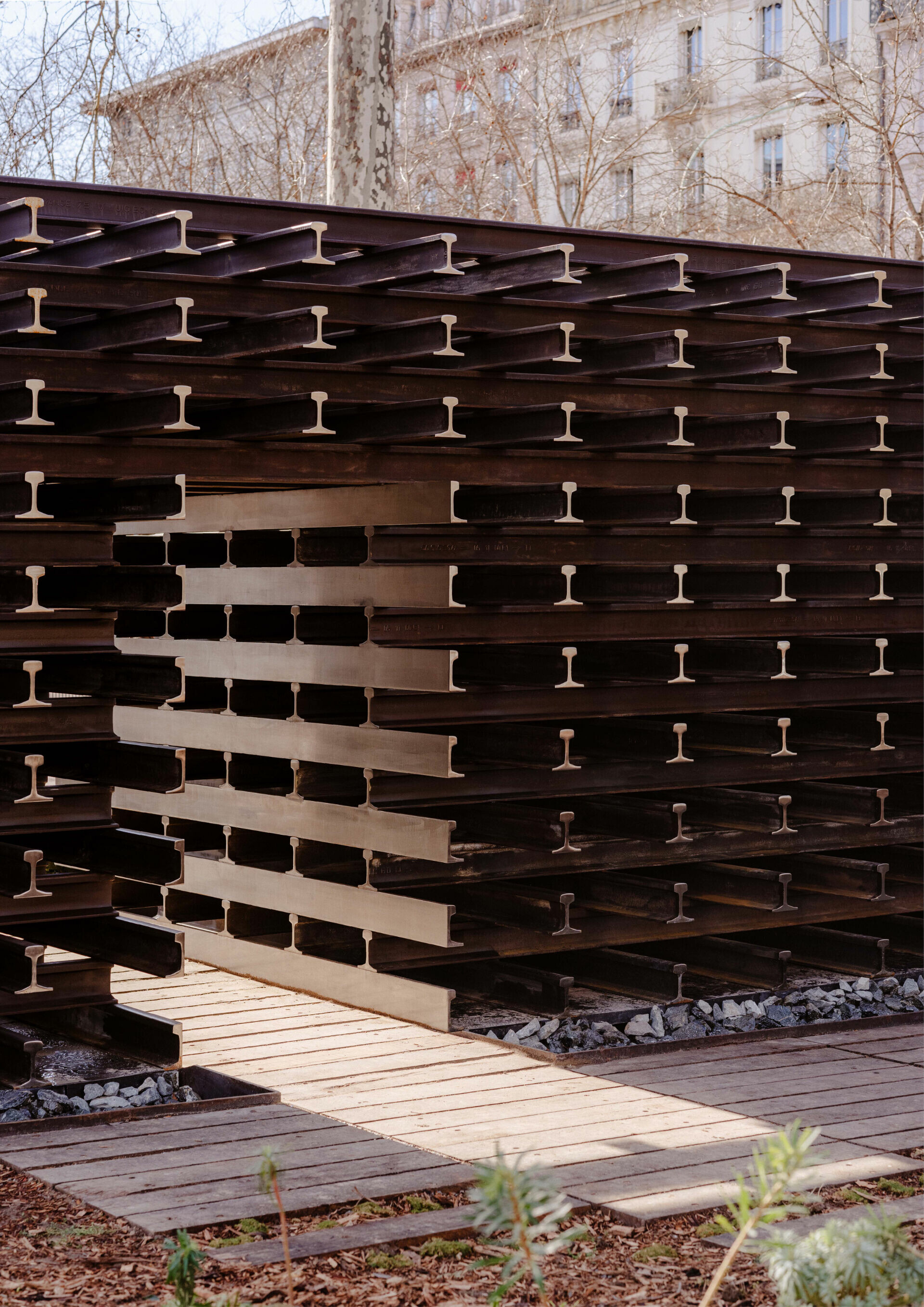
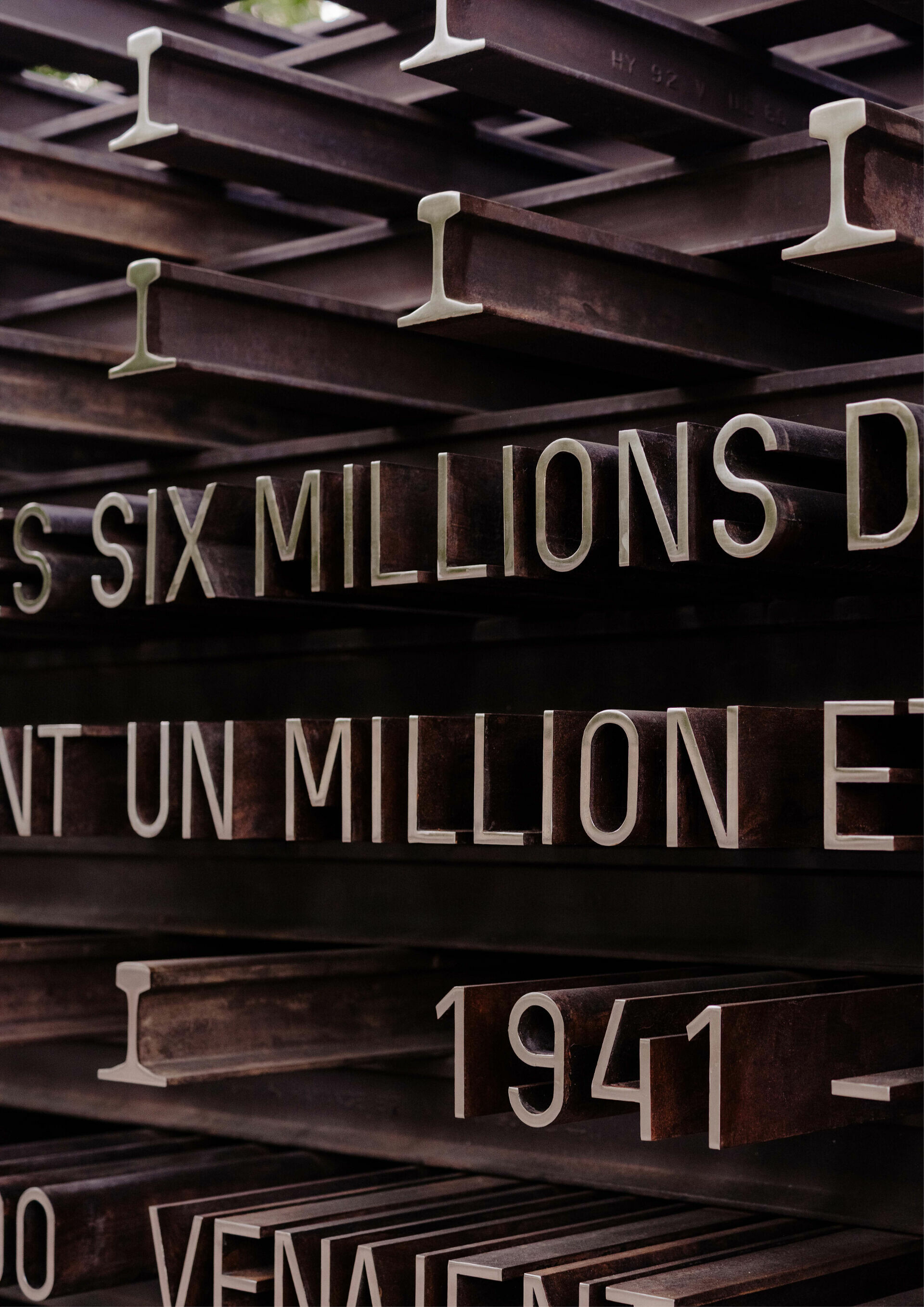
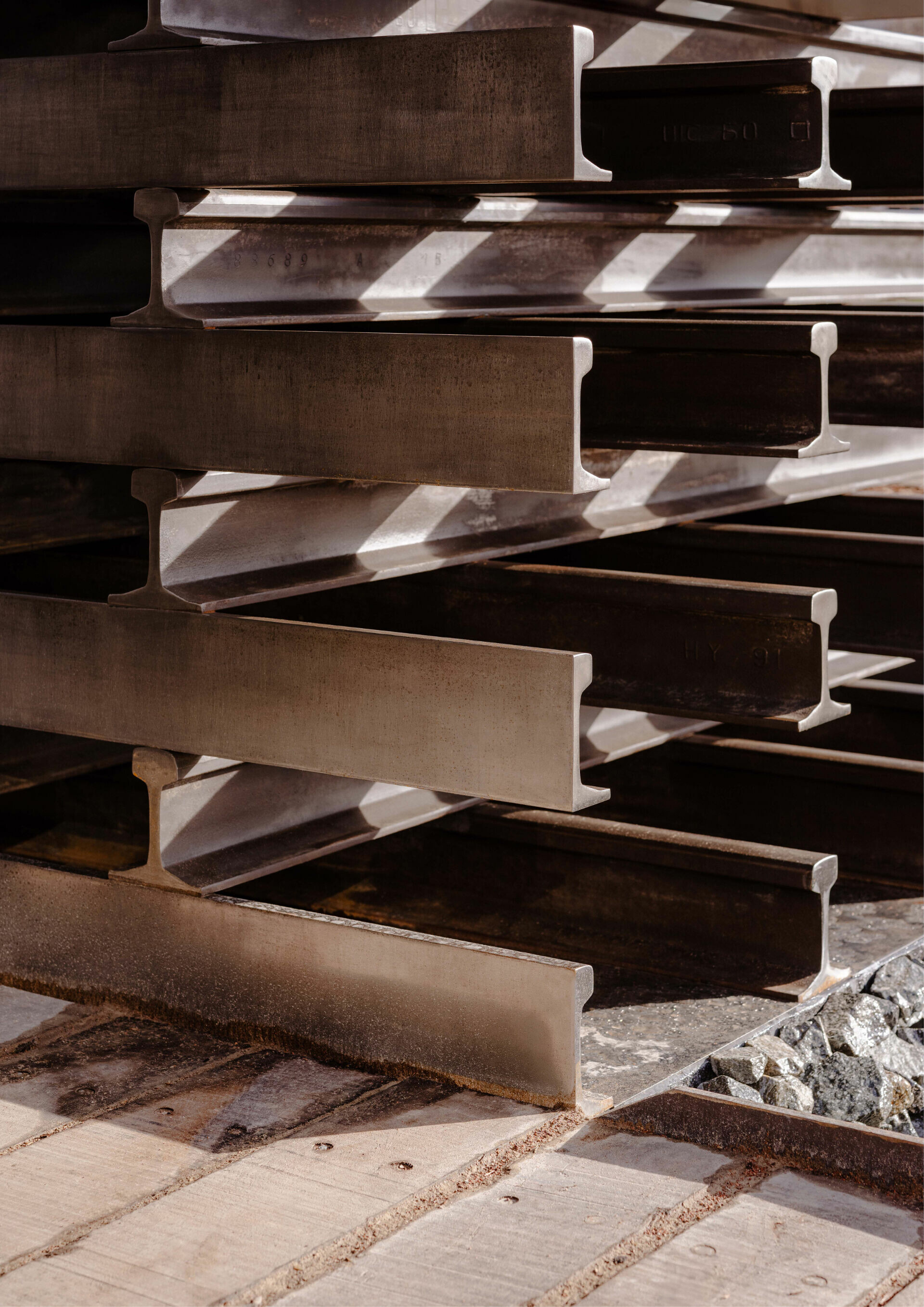
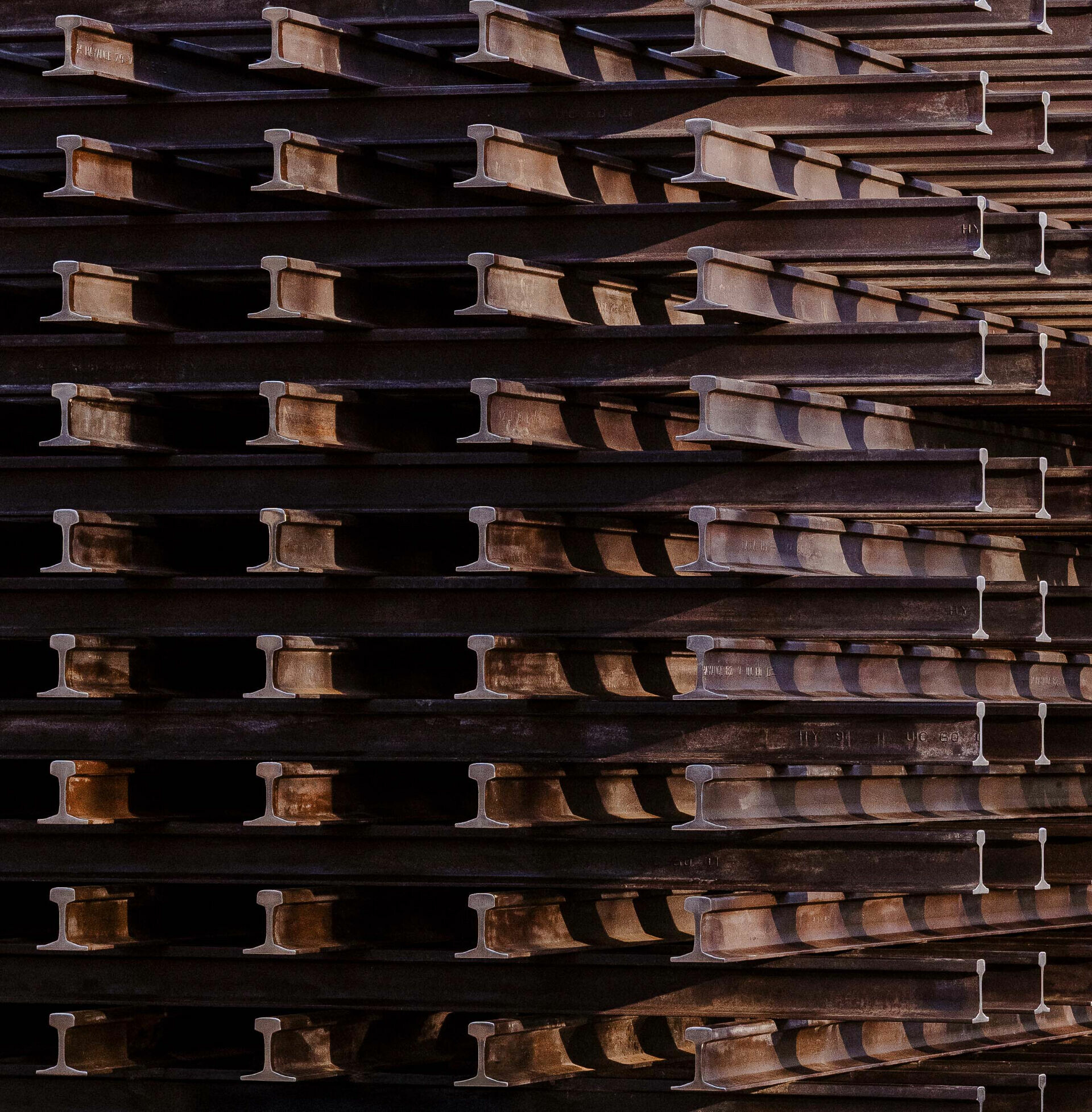
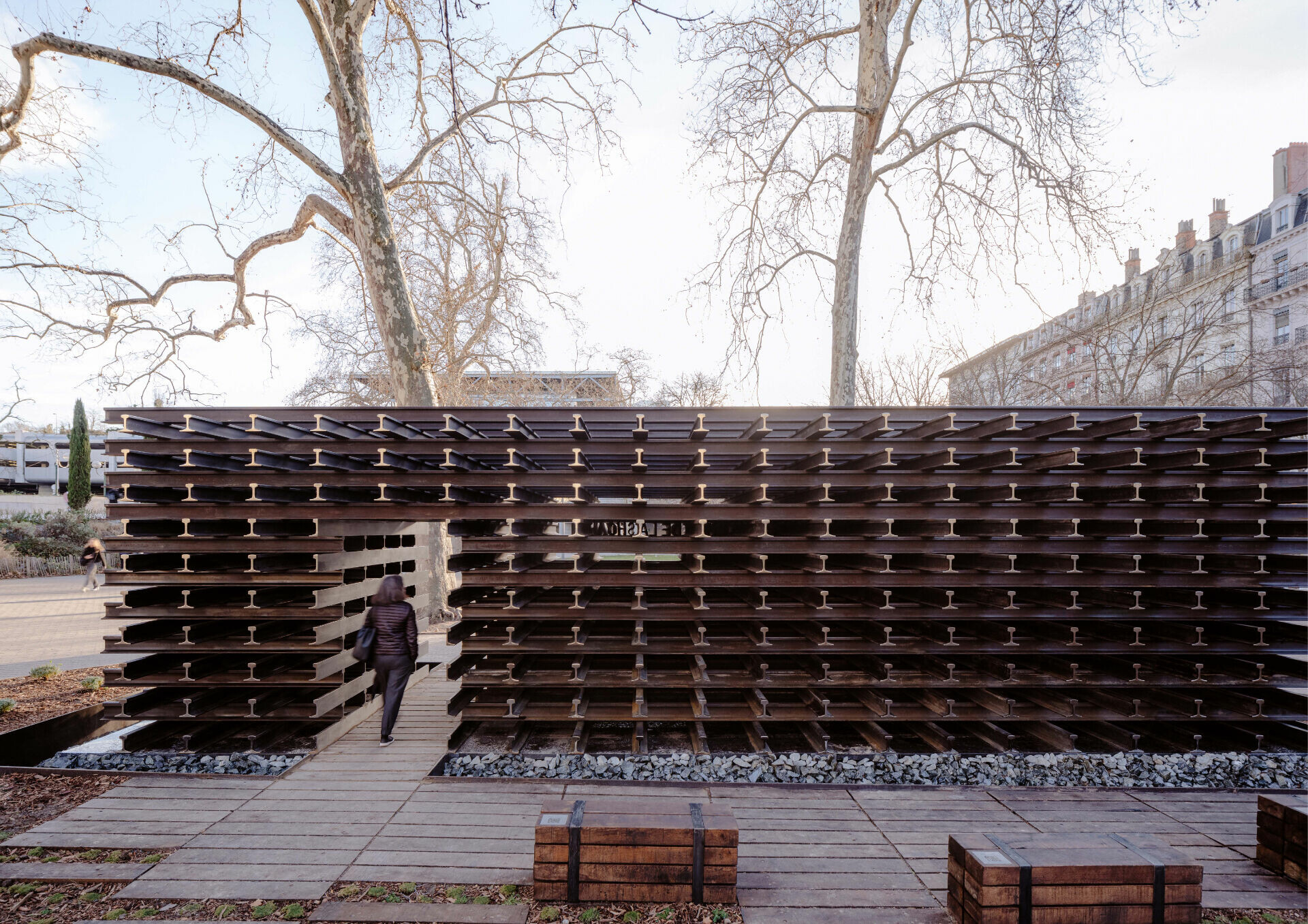
“From the beginning, reuse became the core of our design philosophy.” To take rails that once bore the weight of countless trains and a collective memory and reshape them into a point of connection between past and future, the designers contacted SNCF (France’s national railway company) and visited rail depots in person. They selected elements for the memorial with care, judging each rail by its deformation, patina, degree of wear, and colour. Rails associated with routes that led to concentration camps are transformed into a criss-crossed, stacked framework. Through repeated accumulation, the work moves beyond the flat plane and becomes volume, allowing light and shadow to travel through the structure and hint, obliquely, at the silhouettes of deportation convoys. Sleepers are reimagined as flooring, guiding visitors from the public square into a memorial ground laid with ballast. Up close, the flaws and scars on each rail become legible. In an atmosphere that is quiet and solemn, the material seems to hold a strength tempered by time. Look more carefully and the proportions recall a train carriage. In total, 1,173 metres of rail are used, their total linear length serving as a scale translation, echoing the tragic distance of approximately 1,173 kilometres between Lyon and the Auschwitz-Birkenau camp.
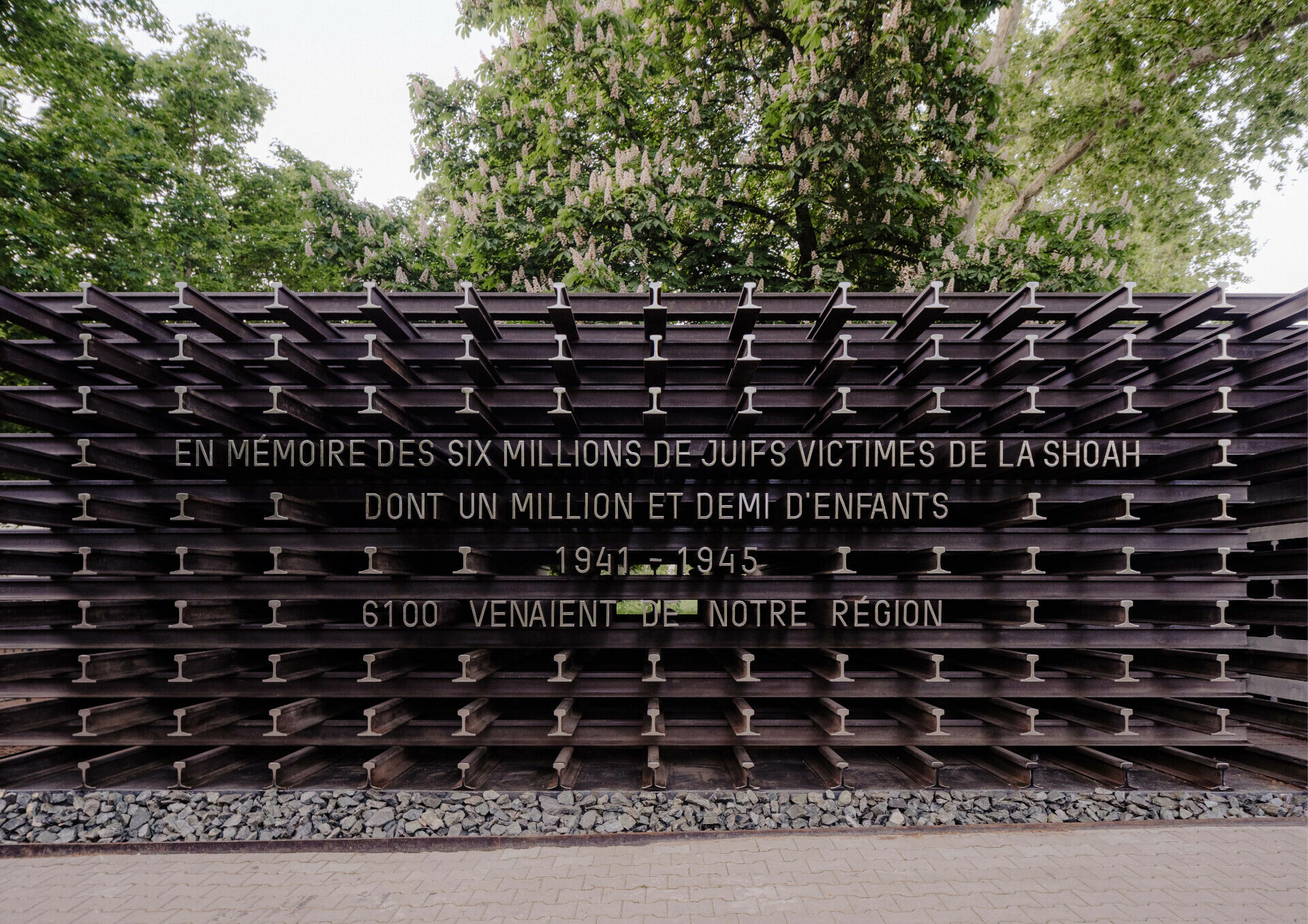
Which is better: to live on bravely with painful memories, or to erase sorrow and carry on as if nothing happened? The Binding explores the theme of “forgetting”, and it brings one recognition into sharp focus: only by facing what was unbearable can body and mind truly find release. Rails of Memory is not simply a monument. In a simpler, more direct way, it keeps the lessons of the past in view. Through an open form that invites interaction, it encourages the public to seek out the story of this place for themselves, and to work towards a process of remembrance that is both clear-eyed and inclusive.