WABISABI
  • Projects
    • Worldwide
    • Interiors
    • Features
  • Contemporary
    • Exhibitions
  • Record
  • Lifestyle
  • City Explore
  • News
  • Issue
  • Account
  • Search
  • Language
Mobile nav


海邊長亭

The Seaside Pavilion on Chaishan Island


➤ 攝影 Photography|田方方  Tian Fang Fang


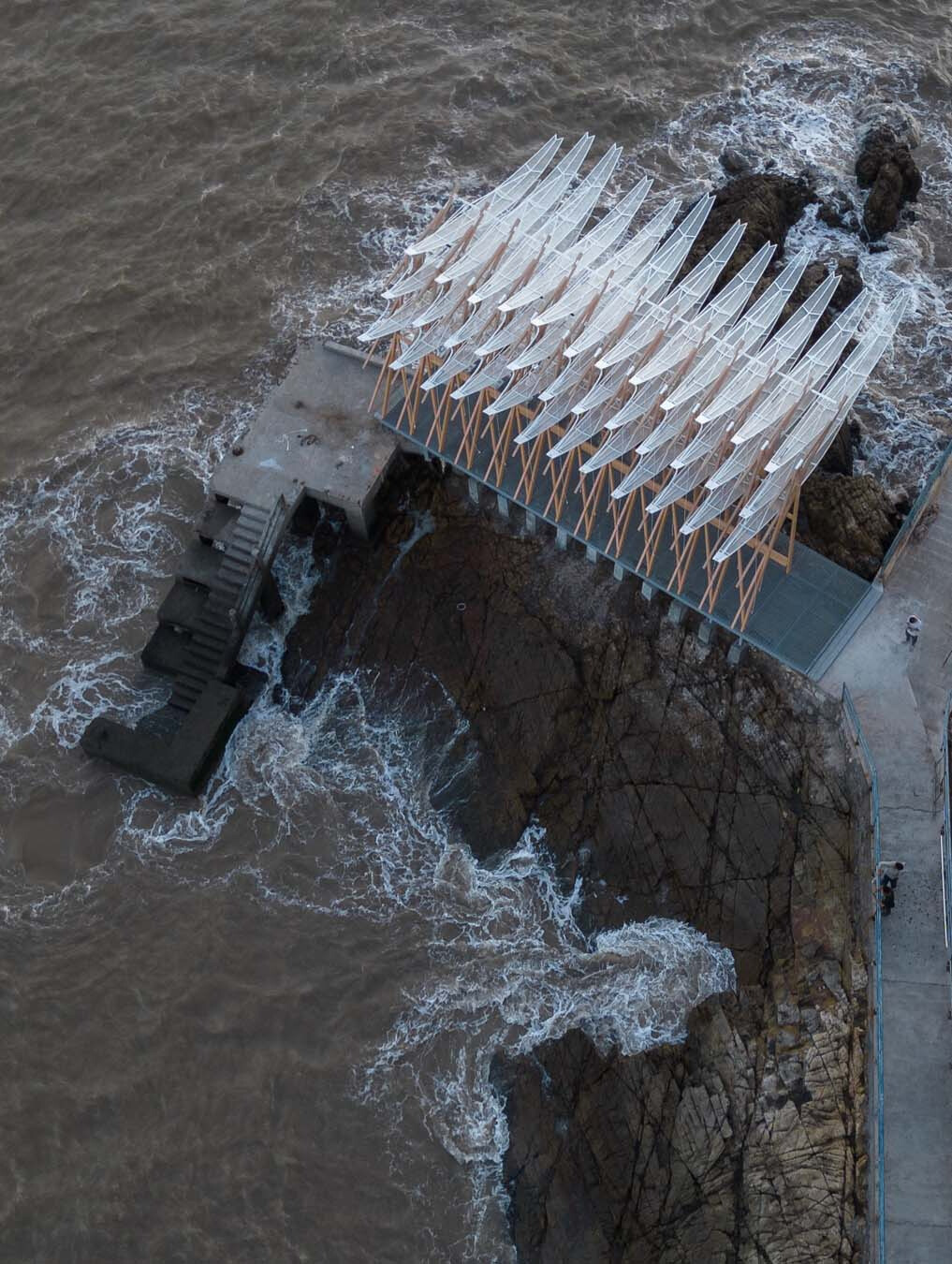
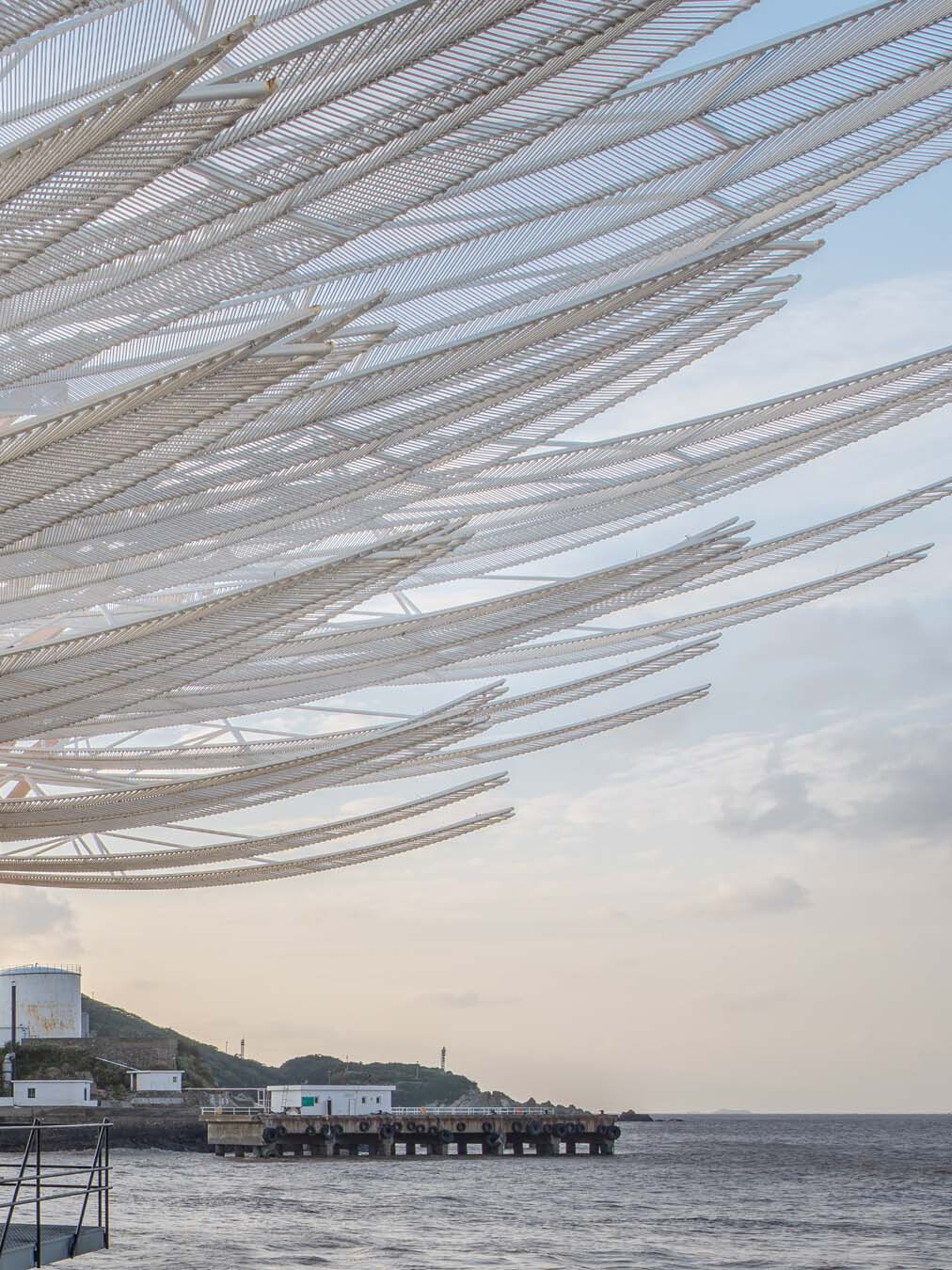
當人們置身於自然之中,四周被壯闊山巒環繞、眼前即是波濤大海,那種震撼與渺小,難免讓人一時恍如失去邊界感,對大自然產生敬而遠之的距離感。這時,廣闊地景中若以藝術裝置作為知覺媒介,拾起周圍元素,將無形現象轉化為有形軌跡,內心朦朧的感受便有了依歸,感官得以依循裝置的引導,與天地展開無聲對話。如同 GN栖城設計為舟山柴山島打造的海邊長亭,當旅人乘船前往白沙島,或駛近柴山島碼頭,遠在一公里外即可望見這座風動裝置。看著其細長鋼構上懸掛的纖長葉片宛如白翼,隨海風緩慢搖曳、與海浪起伏擺動,人們便悄然與海風同呼吸、與島嶼共鳴。
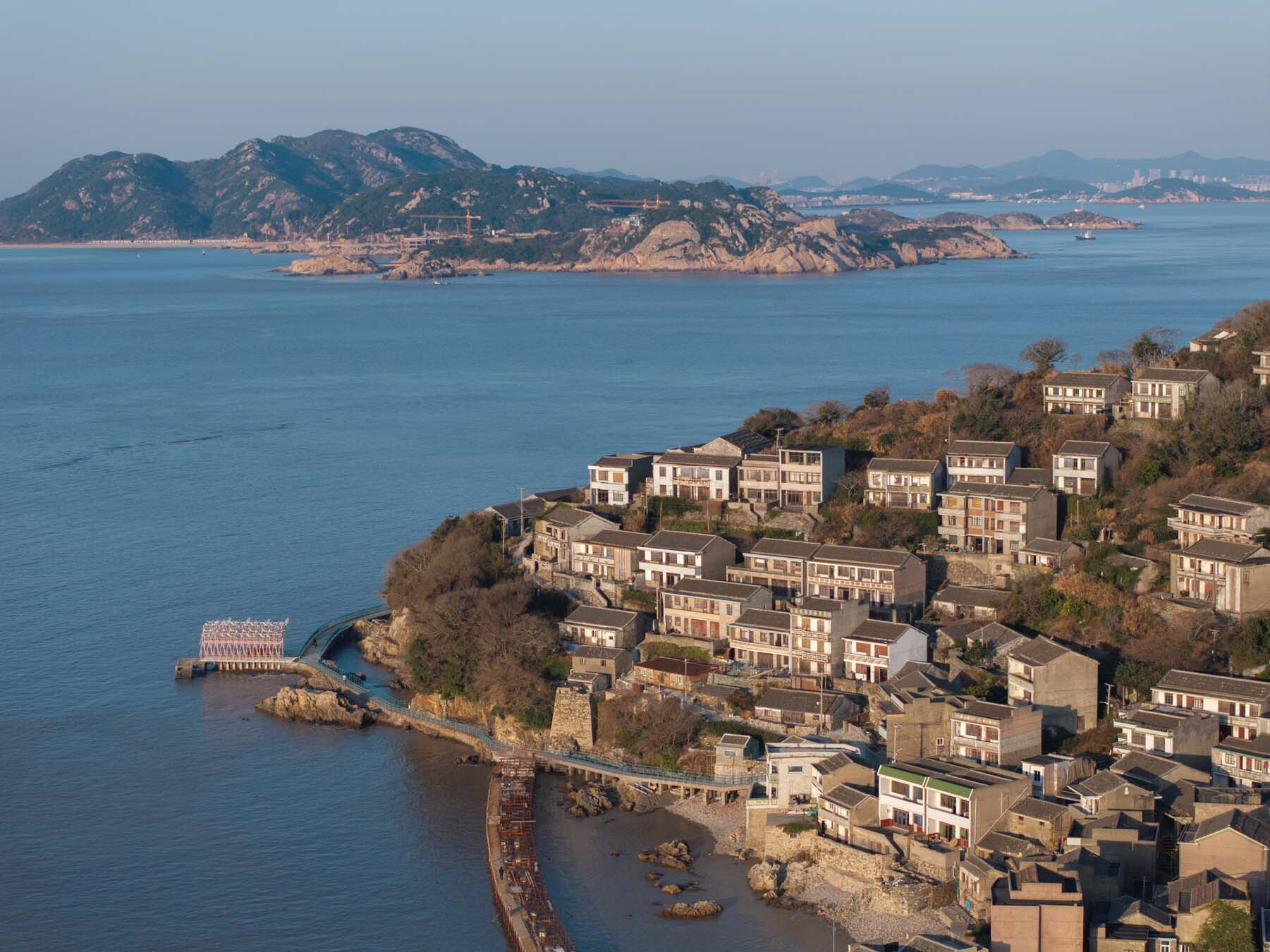


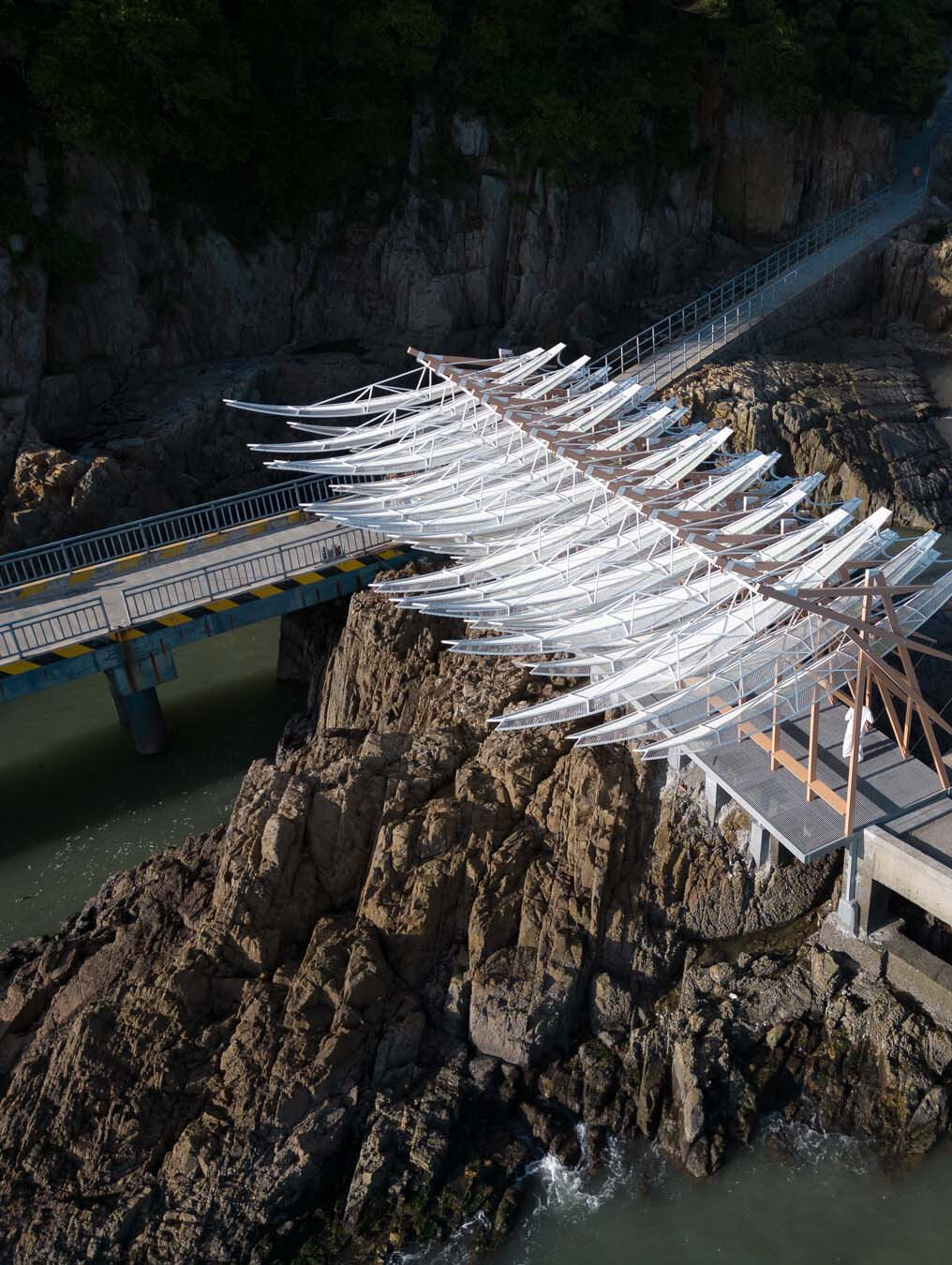
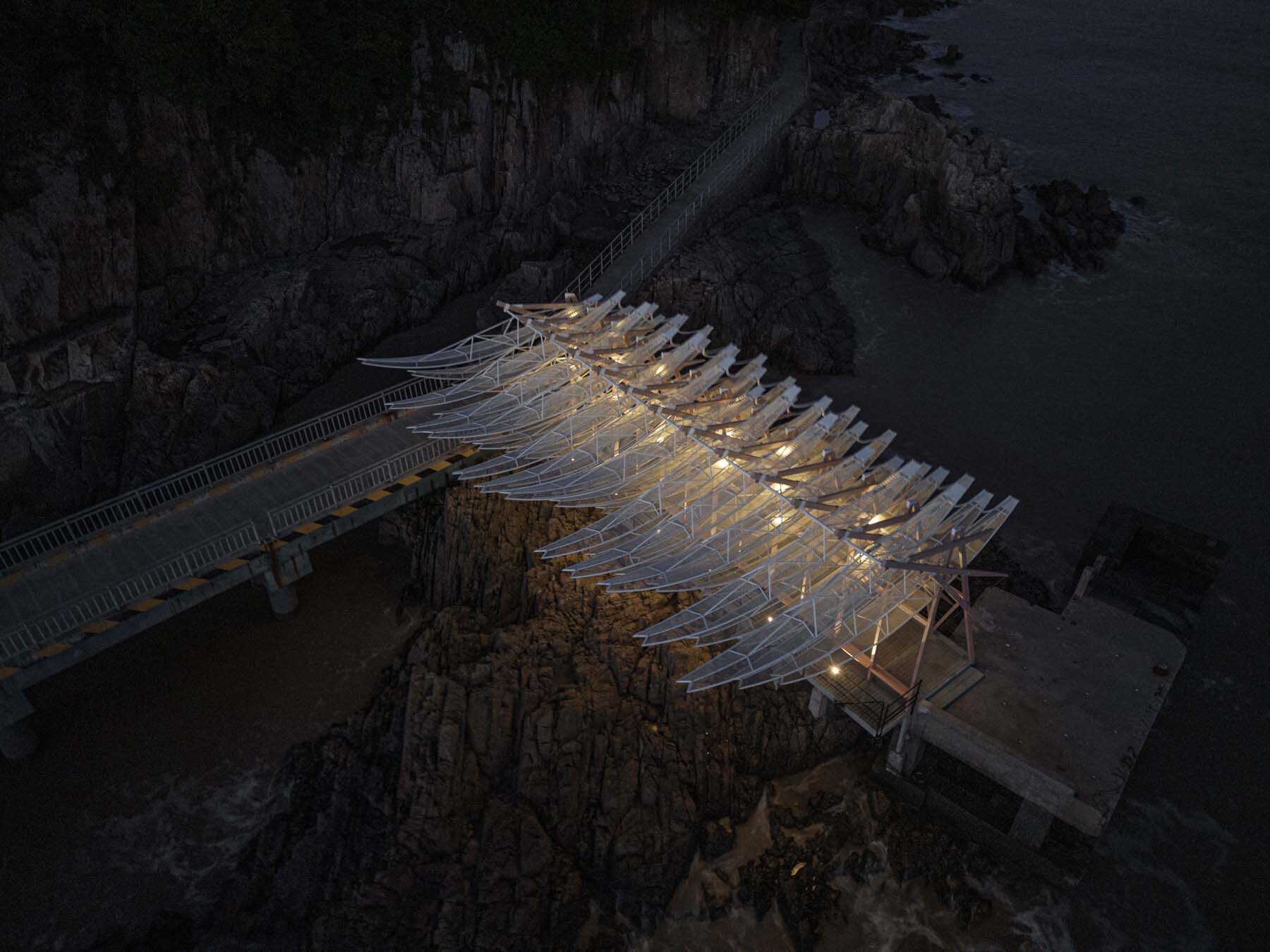
To stand amid towering mountains with a surging sea ahead is both awe-inspiring and humbling. The scale of the landscape can momentarily blur the boundaries of the self, inspiring reverence yet also a sense of distance from the natural world. In a landscape of this scale, an art installation can mediate perception by drawing on elements of its surroundings and translating invisible phenomena into visible traces. It gives otherwise indistinct feelings a point of reference and guides the senses into a silent dialogue with earth and sky. GN Architects’ Seaside Pavilion on Chaishan Island in Zhoushan comes into view from a kilometre away as travellers sail towards Baisha Island or approach Chaishan Island’s pier. Slender blades hang like white wings from its elongated steel frame, swaying slowly in the sea breeze, their motion echoing the rise and fall of the waves. Watching them, visitors may find themselves breathing with the wind, quietly attuned to the island.


➤ 攝影 Photography|田方方  Tian Fang Fang

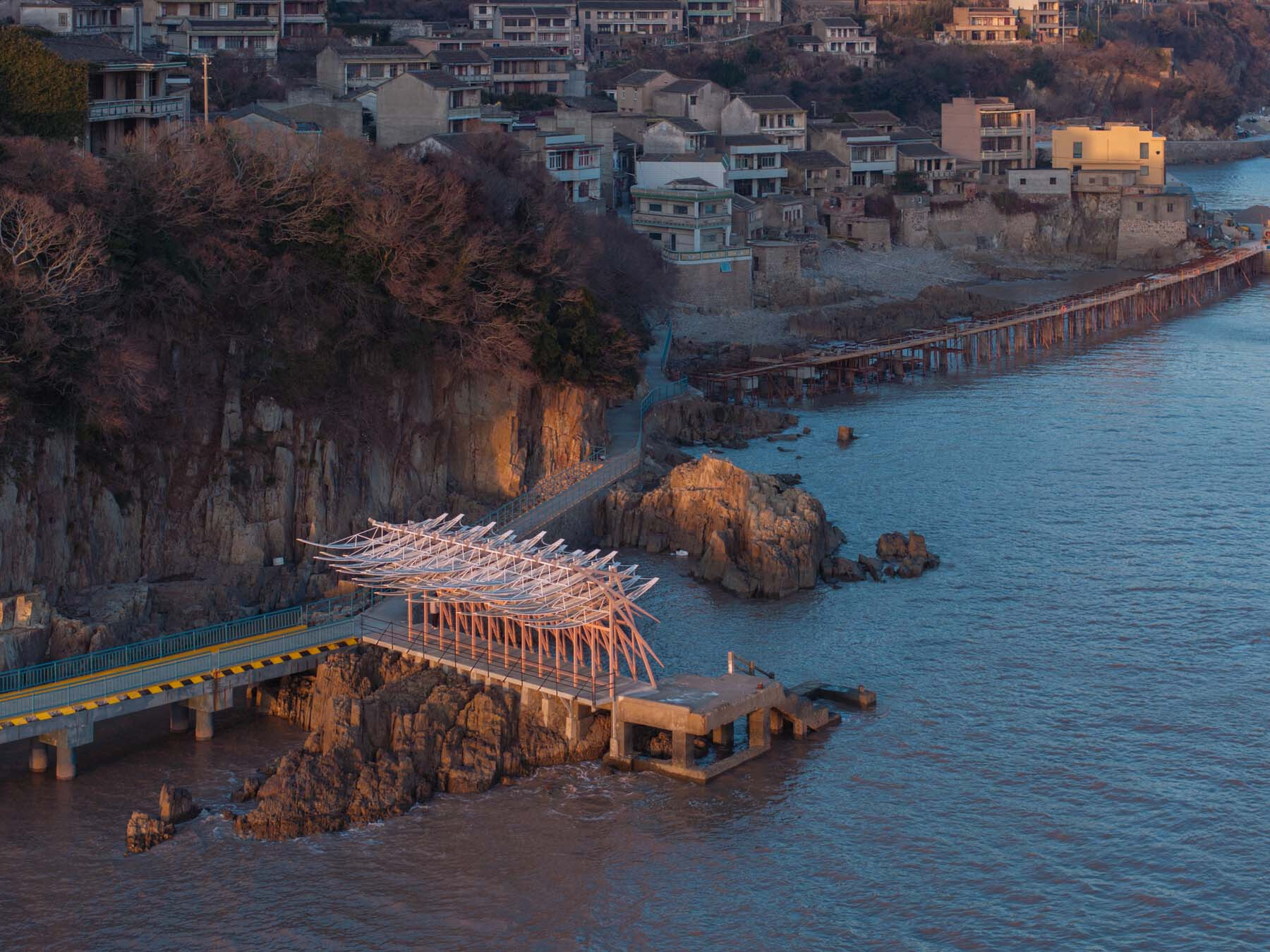
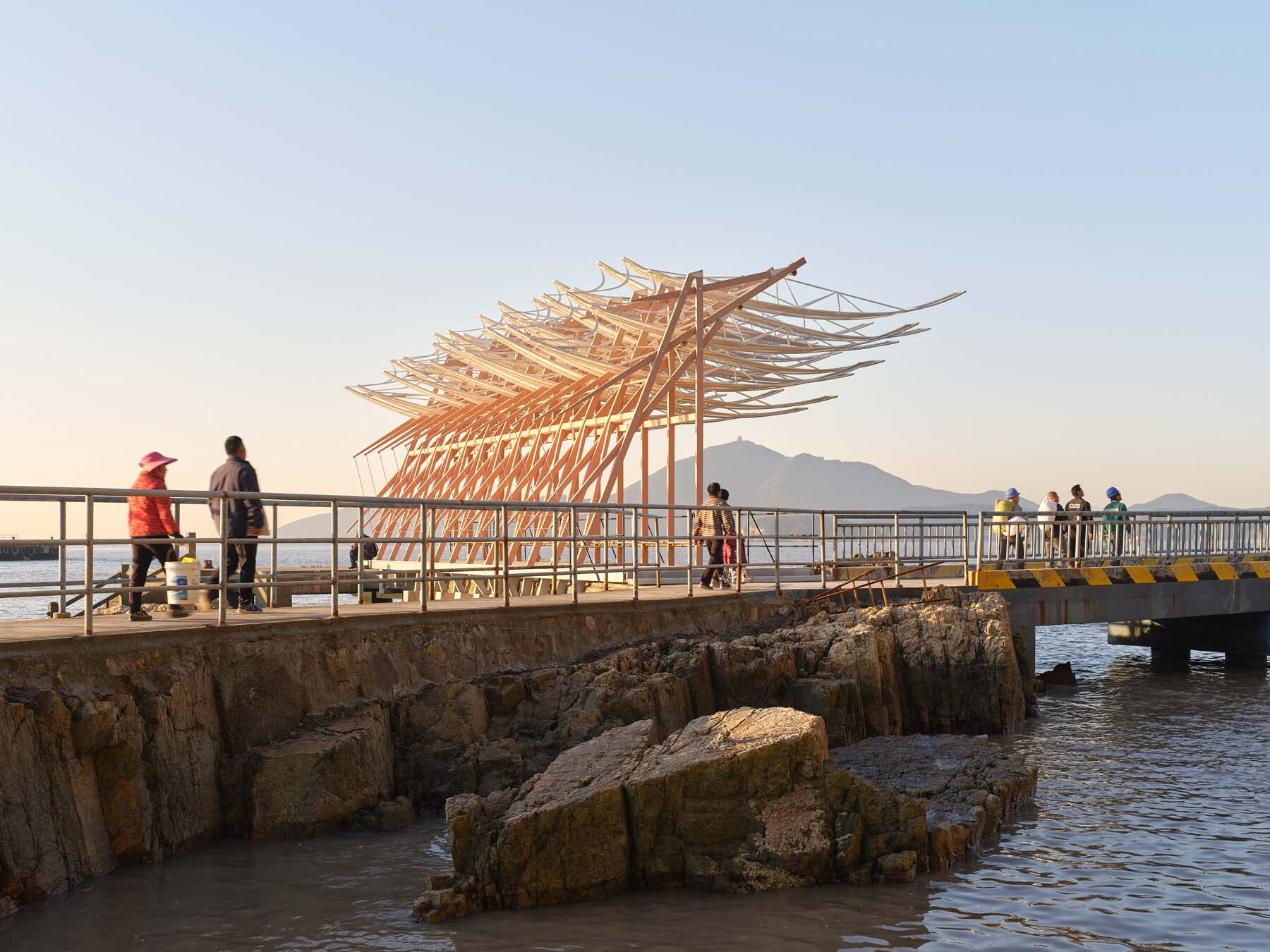
時間流逝與空間轉變,總讓人不勝唏噓。柴山島過去林木茂盛,隨著漁業繁榮而興盛,後因資源衰退與青壯年外移,僅剩不到百名老人長住。為此,近年舟山市啟動「小島你好」海島共富計畫,以推動漁業觀光、生態修復。尤以藝術的介入,拉近人與島嶼的距離。而 GN栖城設計經多次環島踏勘後,選定一處 1960 年代的廢棄貨運碼頭進行創作,最終由其團隊設計的作品「海邊長亭」奪得該競賽第一名並正式落地。這正回應《卜算子》中「今古短長亭,送往迎來處。老盡東西南北人,亭下潮如故」的意境,讓這座藝術裝置在嶙峋礁石與藍天山海間,迎送來往人流,為遲暮小島掀開重生新篇章。


Time passes and places change, often leaving a lingering sense of melancholy. Once densely wooded, Chaishan Island later prospered as fishing flourished. Following the decline of local resources and the departure of younger, working-age residents, fewer than 100 older residents now live on the island year-round. In recent years, the city of Zhoushan has launched the “Hello, Island” common prosperity initiative to promote fisheries-based tourism and ecological restoration. Art, in particular, has helped bring people closer to the island. After surveying the island several times, GN Architects selected a disused cargo pier dating from the 1960s as the site for their creative intervention. Their proposal, “Seaside Pavilion,” ultimately won first place in the competition and was subsequently brought to realization. The project evokes the mood of the Chinese lyric Bu Suan Zi: “Through the ages, wayside pavilions near and far have marked places of farewell and welcome. People from east, west, north and south have grown old; beneath the pavilion, the tide remains as ever.” Set amid jagged rocks, blue sky, mountains and sea, the installation welcomes those arriving and sees off those leaving, opening a new chapter in the revival of an ageing island.


➤ 攝影 Photography|梁文軍 Liang Wen Jun

➤ 攝影 Photography|梁文軍 Liang Wen Jun
➤ 攝影 Photography|梁文軍 Liang Wen Jun
➤ 攝影 Photography|章勇 Zhang Yong


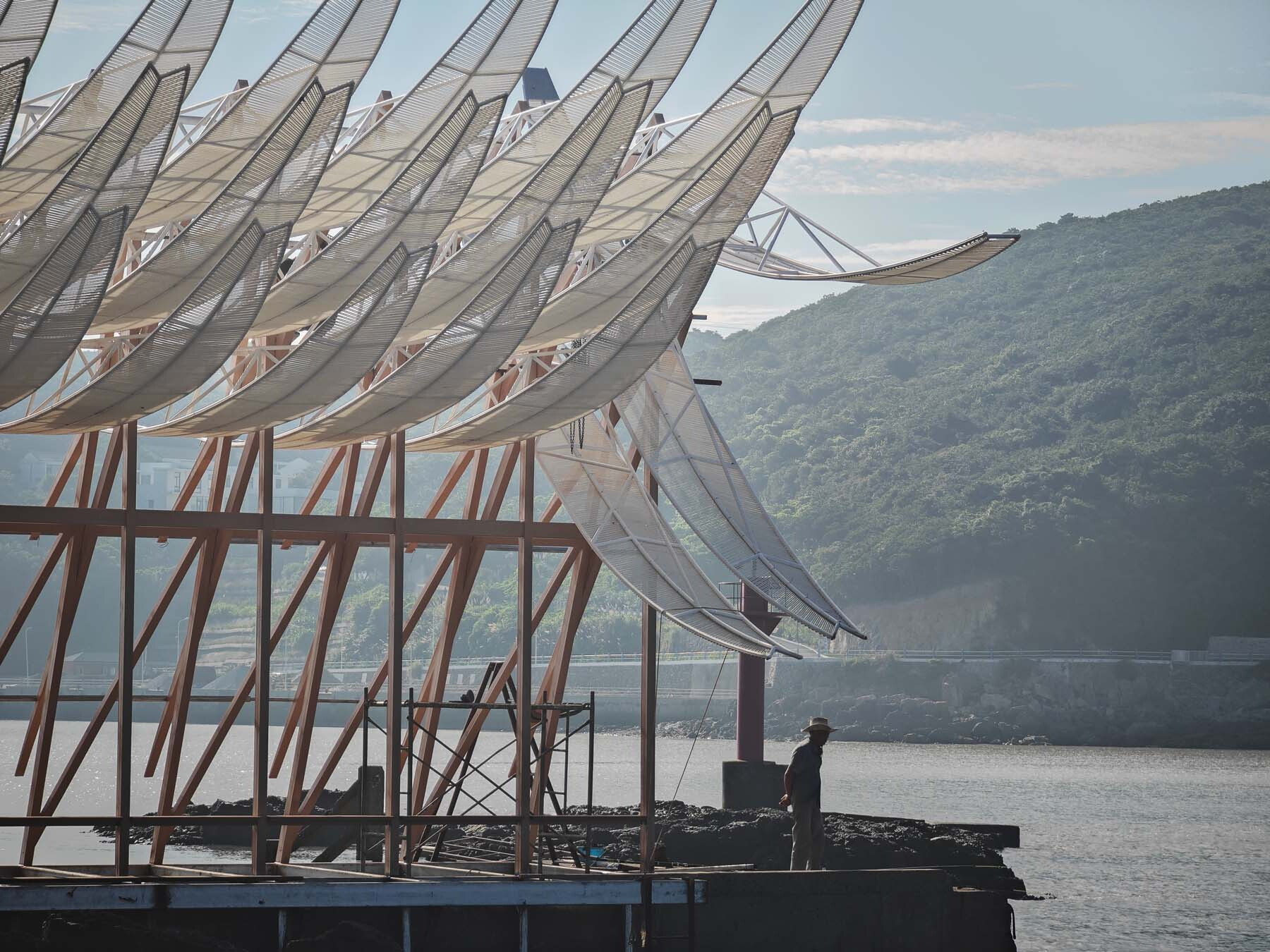
考量登島旅客停留時間短暫,為了讓作為小島入口視覺座標的海邊長亭,能與來去匆匆的旅人即時互動,設計團隊一改最初利用潮汐帶動浮力球,以拉索、滑輪推動頂端葉片隨之起伏的構想,轉而運用島上長年吹拂的海風作為動力。如此,克服原本需等待數小時的潮汐週期,帶來瞬時的視覺效應,其裝置型態隨之調整為較輕盈而透空率高且以經防蝕塗裝鋼構為結構、纏繞高強度漁繩的風動羽翼,融入海島的自然律動之中。別看眼前長亭正輕巧地隨風擺動,其背後的運輸、搭建過程皆相當耗時,且團隊必須在現場不斷因應氣候狀態進行細部調整。
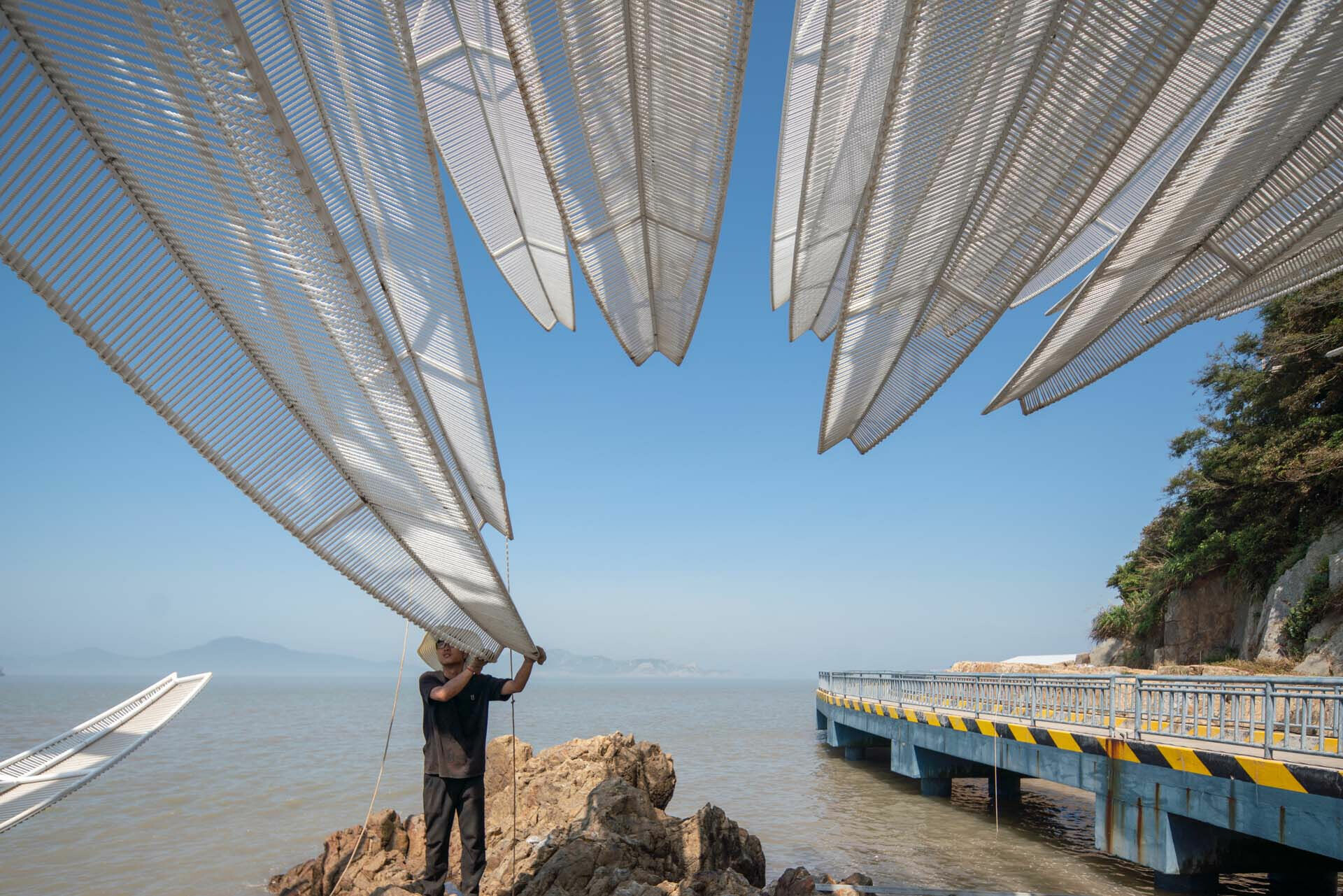


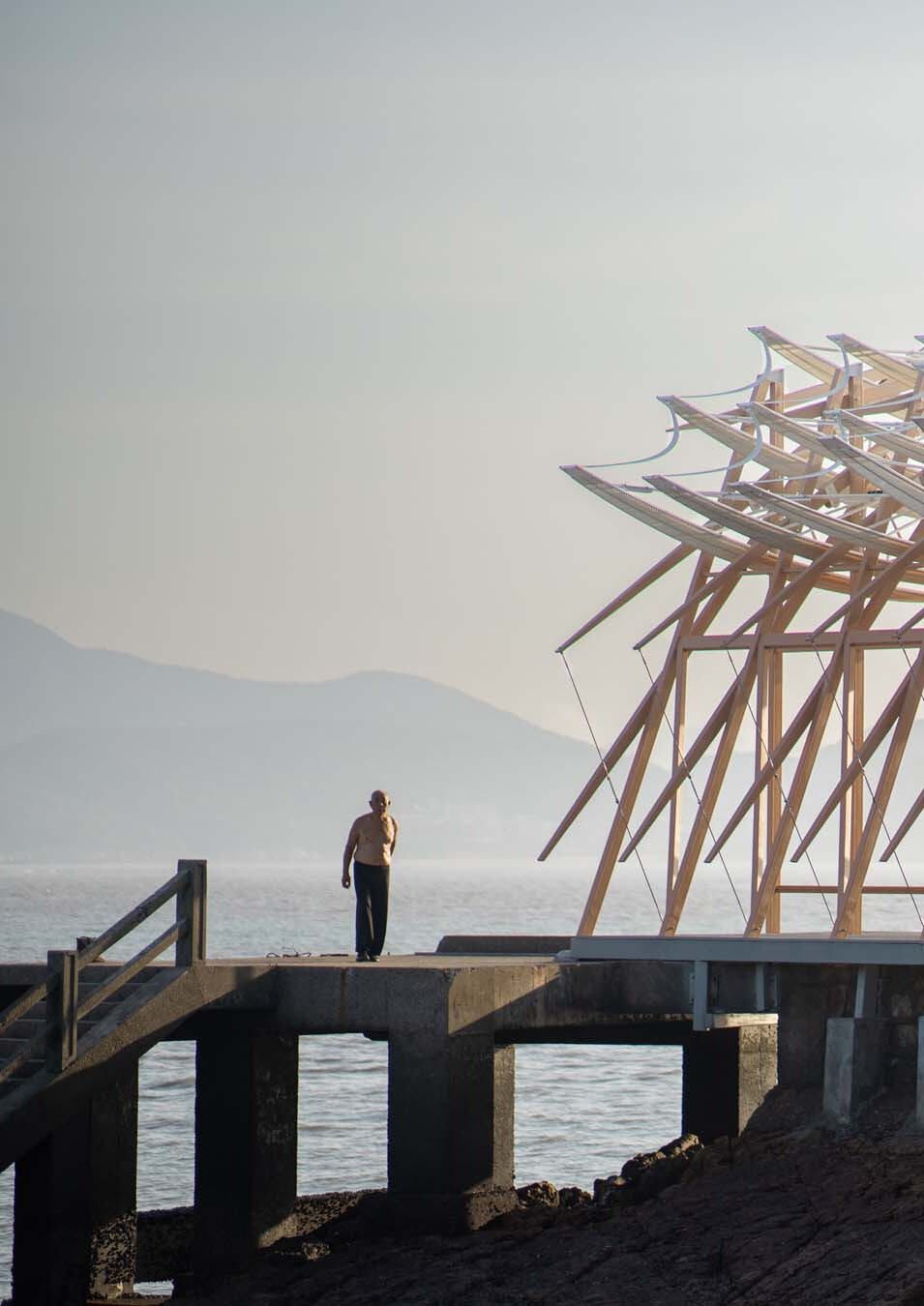
Because most visitors remain on Chaishan Island only briefly, the pavilion was conceived as a visual marker at the island’s entrance that could engage them immediately. The original proposal would have used the rise and fall of the tide to move a series of floats, which in turn would have operated the overhead blades through cables and pulleys. The team eventually replaced this system with one driven by the sea winds that blow across the island year-round. This removed the several-hour delay imposed by the tidal cycle and allowed the installation to respond immediately. Its form was consequently revised into a lighter, highly porous array of wind-driven wings, each comprising a steel frame finished with a corrosion-protective coating and wrapped in high-strength fishing rope. As they move, the wings become part of the island’s natural rhythm. The pavilion may appear to move effortlessly in the wind, but its transport and assembly were time-consuming, and the team had to make continual fine adjustments on site as weather conditions changed.


➤ 攝影 Photography|梁文軍 Liang Wen Jun

若非 GN栖城設計分享,很難想像這個裝置光是將工廠裡製成的半成品送達柴山島,得大費周章跨海運送才能順利組裝。長亭由 36 片長達 7 米的半透明葉片構成,每 3 片為一組,單片以軸承連接主支架,擺幅經 Grasshopper 軟體動態模擬後設定;其尾端主、次配重,分別平衡前端懸挑產生的力矩、微調無風時的靜止姿態,即使在三級風下羽翼也能輕微擺動,連桿與橡膠限位器則限制最大擺幅,避免碰撞受損;颱風來臨前,也能綁固主體抵禦風雨造成的損壞。這件藝術裝置正悄然為島嶼挹注新生,如港里人日復一日與海共生,在微風中迎接每批登島的旅人。
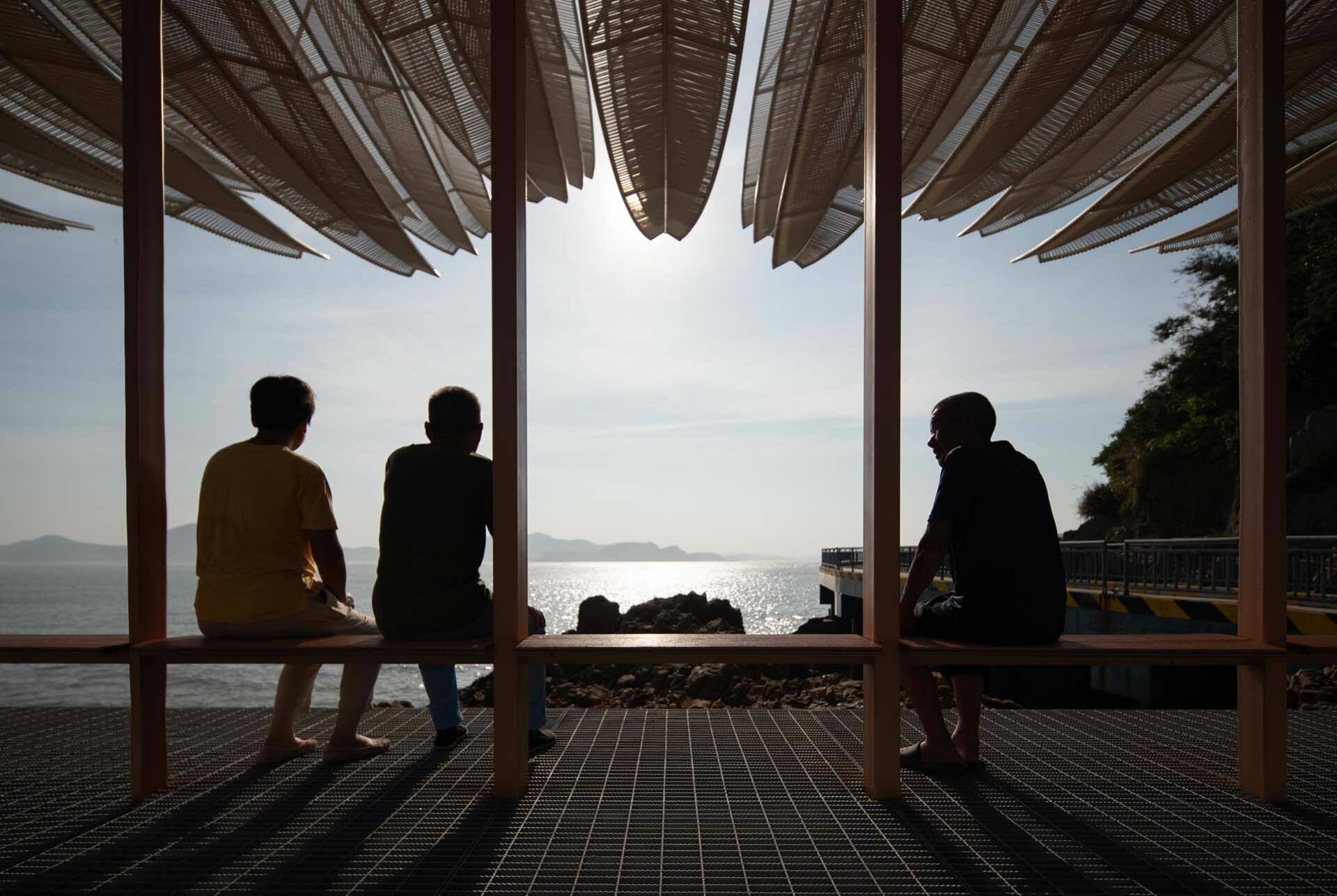


As GN Architects recounts, transporting the prefabricated components from the factory across the sea to Chaishan Island for assembly was a considerable undertaking in itself. The pavilion comprises 36 semi-transparent blades, each seven metres long and arranged in groups of three. Each blade is connected to the main structural frame by a bearing. Dynamic simulations in Grasshopper were used to determine its range of motion. At the tail of each blade, a primary counterweight balances the moment generated by the cantilevered front section, while a secondary counterweight fine-tunes its resting angle in still air. The blades move gently even in Beaufort Force 3 winds. Linkages and rubber limit stops restrict their maximum travel, preventing collisions and damage. Before a typhoon, the blades can be secured to the main structure to reduce the risk of storm damage. Like the people of Gangli, the installation lives with the sea day after day, greeting each group of visitors in the breeze and quietly bringing new life to the island.


➤ 攝影 Photography|梁文軍 Liang Wen Jun


➤ 攝影 Photography|梁文軍 Liang Wen Jun
➤ 攝影 Photography|梁文軍 Liang Wen Jun
➤ 攝影 Photography|梁文軍 Liang Wen Jun
Design Studio | GN Architects
 
Photography | Liang Wenjun, Tian Fang Fang, Zhang Yong, Jiang Meng
  • About
  • Privacy policy
  • Track Order
  • Customer
  • Contact
  • Join us
FACEBOOK
instagram
Language

Copyright © WABISABI ISSUE. 侘寂傳媒有限公司 統一編號:90451315

  • Projects
    • Worldwide
    • Interiors
    • Features
  • Contemporary
    • Exhibitions
  • Record
  • Lifestyle
  • City Explore
  • News
  • Issue
  • About
  • Privacy policy
  • Track Order
  • Customer
  • Contact
  • Join us
Language