吳宅
Wu Residence
「原來生活的面貌並非只有一種樣子,其實它有很多面貌!」也許正如兩册空間制作所在為這間住宅設計完工後的體悟,很多時候,事情的發展不會照著腦海中預排的劇情走;物品也不一定要放在「預設」的位置。但,這並不代表著計畫失策或生活失序。當事情脫離了預期的軌道,你選擇用坦然的態度去面對、放下對「正確答案」的執著, 反而能發現那些原本被忽略的新可能性,意想不到的驚喜始得悄然展開。正因翁總監不受限於固定套路,反透過彈性心態來應對設計過程中的不確定性,這個城市中的居家風景才有如今猶若遠離世俗的鬆弛感。
“Life, it turns out, does not take a single form. It takes many.” That may well have been the realization 2books space design came to after completing this residence. More often than not, things do not unfold according to the script we have already written in our minds, and objects do not necessarily belong in their prescribed places. Yet that does not mean the plan has failed or life has slipped into disorder. When events move off their expected track and are met with composure, when the insistence on a single right answer is allowed to loosen, possibilities once overlooked begin to surface, and quiet surprises begin to unfold. It is precisely because design director Jeff Weng refuses fixed formulas and chooses instead to meet uncertainty with flexibility that this city apartment now carries an unforced ease, as though slightly removed from the everyday.
就如前言所述,生活彷如一齣可隨時修改的劇本。翁總監分享到,其實屋主原先選擇的是同棟低層樓的房型。出乎意料的是,有日原宅邸還在客變過程中,屋主帶著他一同參觀高樓層的住房,雙方竟被眼前空間寬敞且採光良好的畫面所吸引,故毅然決定由低升高、由小換大,在這個自然光照充足的場域重新構想未來的生活場景。設計師聽著屋主片段式的談到傳統的客廳和餐廳不是必要,倒是希望有個地方可以讓他插花、有個角落可擺放香氛,亦期待住家能化作自身瑜珈練習和家人朋友聚會的愜意居所。這些看似瑣碎的畫面對屋主而言卻十分重要,翁總監與對方的言談之間能感受得到,他渴望的,莫過於在自然光照下盡情做自己想做的事。於是,回字型配置就在光線漫進屋內的範圍考量下,油然而生!
As suggested at the outset, life is a script open to revision at any moment. Weng recalls that the homeowner had originally chosen a smaller unit on a lower floor of the same building. Unexpectedly, while that first apartment was still being customized prior to handover, the owner took him to see a unit higher up. Both were immediately drawn to its openness and abundant daylight, and the decision was made without hesitation: to move from a lower floor to a higher one, from a smaller unit to a larger home, and to reimagine the life ahead in a setting filled with natural light. As the homeowner spoke, often in fragments, it became clear that a conventional living room and dining room were not essential. What mattered more was a place to arrange flowers, a corner for fragrance, and a home that could accommodate both yoga practice and gatherings with family and friends. These may have sounded like minor details, but Weng understood how much they mattered. More than anything, the homeowner wanted the freedom to do what he loved in natural light. From that understanding emerged a looped circulation plan, shaped by the reach of daylight through the interior.
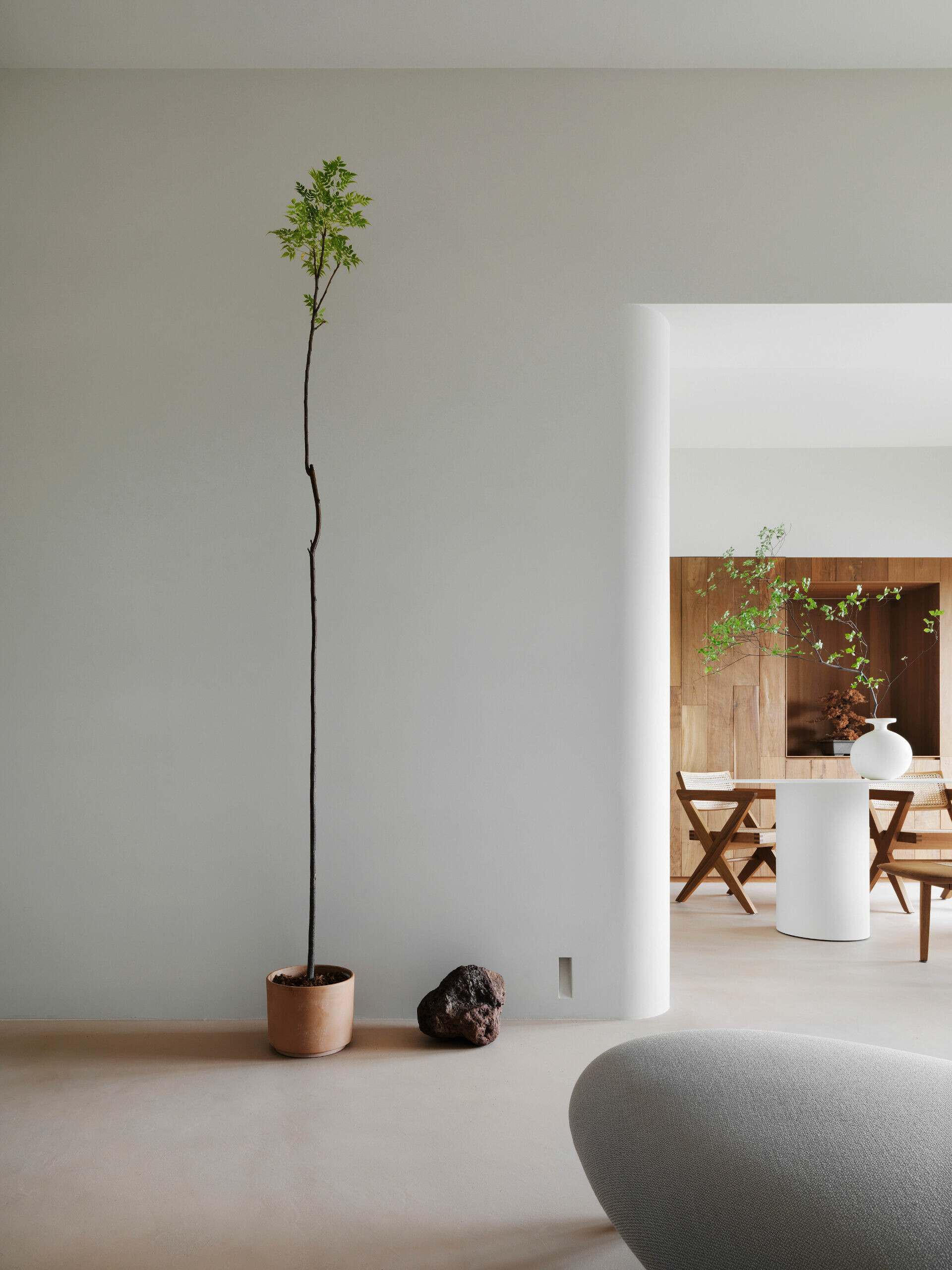
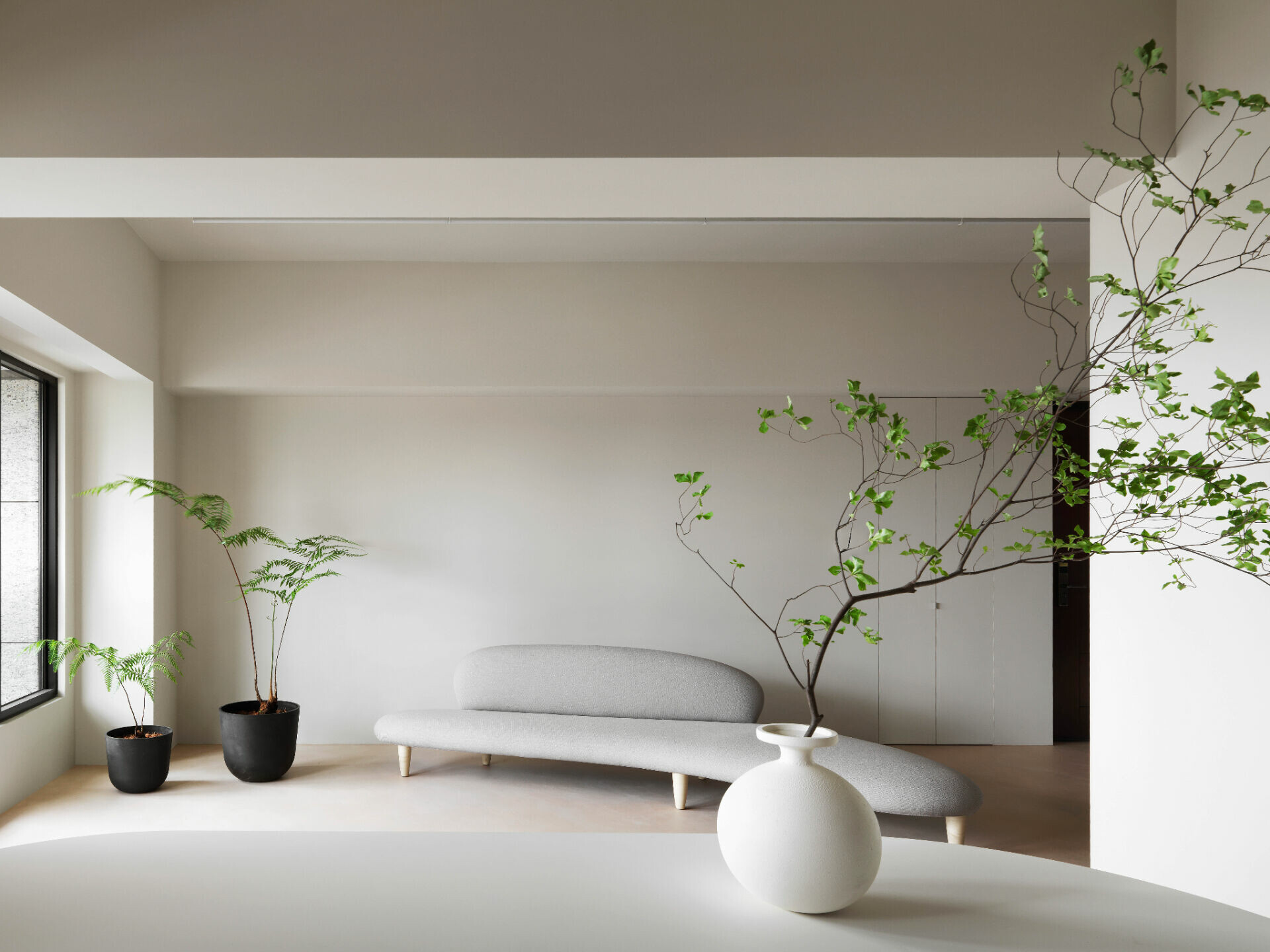
透過如此動線規劃,光線得以無拘束地滲透到各區角落,而沒有明確起迄點的流動式場域,一方面模糊了空間界線,卻又在開放中保有私密的休憩環境。配合介於客餐廳與客浴之間的一道圓弧轉角牆,自然將私領域收整於一道鄰近橢圓桌的廊道;同時營造出放鬆氛圍,讓居者在可輕鬆搬移的弧形沙發前練瑜珈時,感受到空間彷彿正輕柔的包覆自己。即使少了傳統客廳以電視為中心的配置,對於追求身心靈平和的屋主而言,簡單幾件家具圍塑出的交誼區,恰好給予他一個回歸內心且能專注與人交流的療癒之地。
This circulation allows light to travel freely into every corner of the home. With no fixed beginning or end, the flowing layout softens the boundaries between spaces while preserving the privacy needed for rest within an open plan. A curved partition wall, set between the living-dining area and the guest bathroom, quietly gathers the private quarters along the corridor beside the oval table. At the same time, it lends the interior a more relaxed atmosphere. When the resident practices yoga in front of the curved sofa, which can be moved with ease, the space seems to wrap gently around him. Even without a conventional living room arranged around a television, the seating area defined by only a few pieces of furniture becomes, for a homeowner seeking equilibrium of body, mind and spirit, a restorative place where he can turn inward and engage more attentively with others.
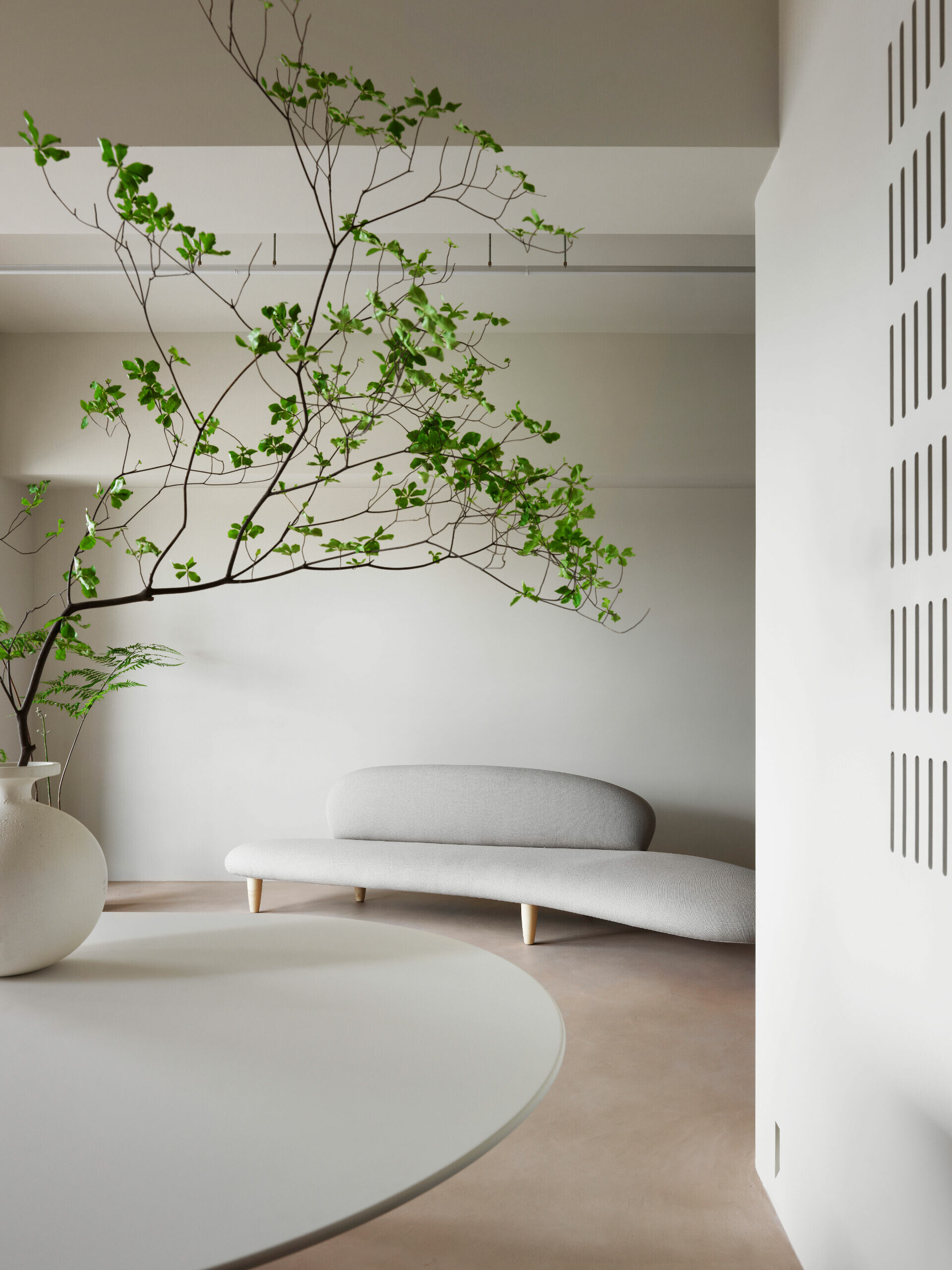
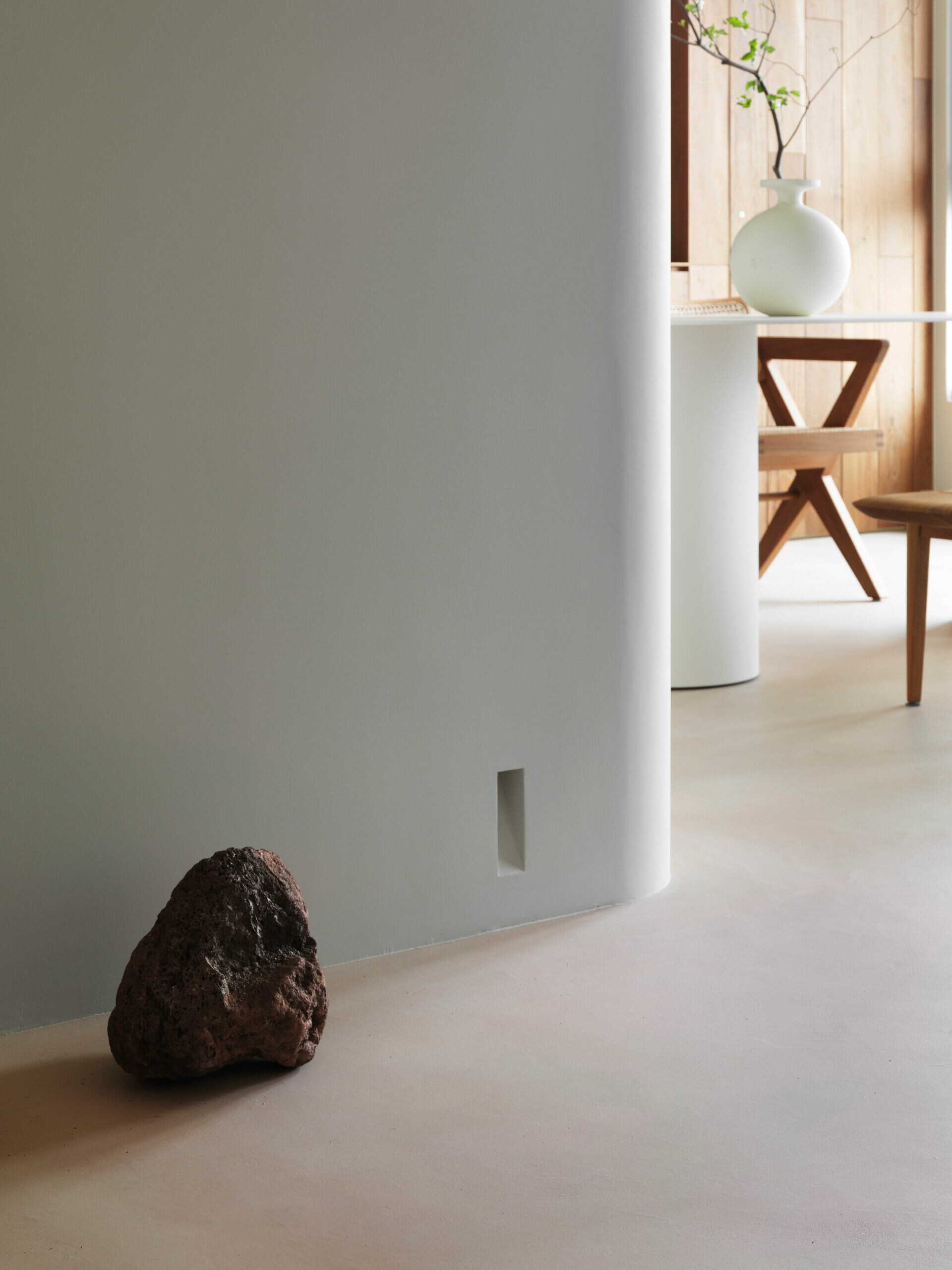
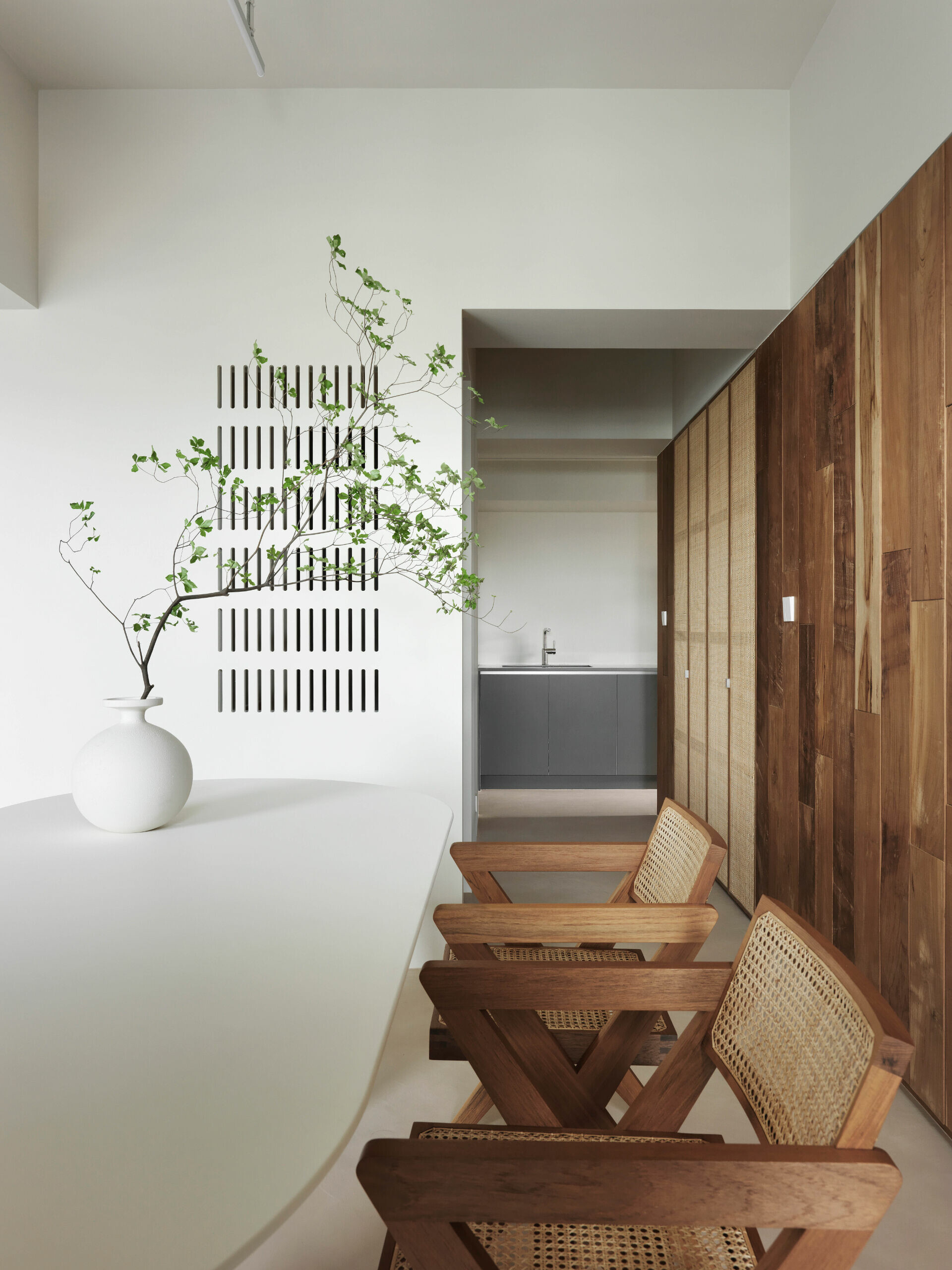
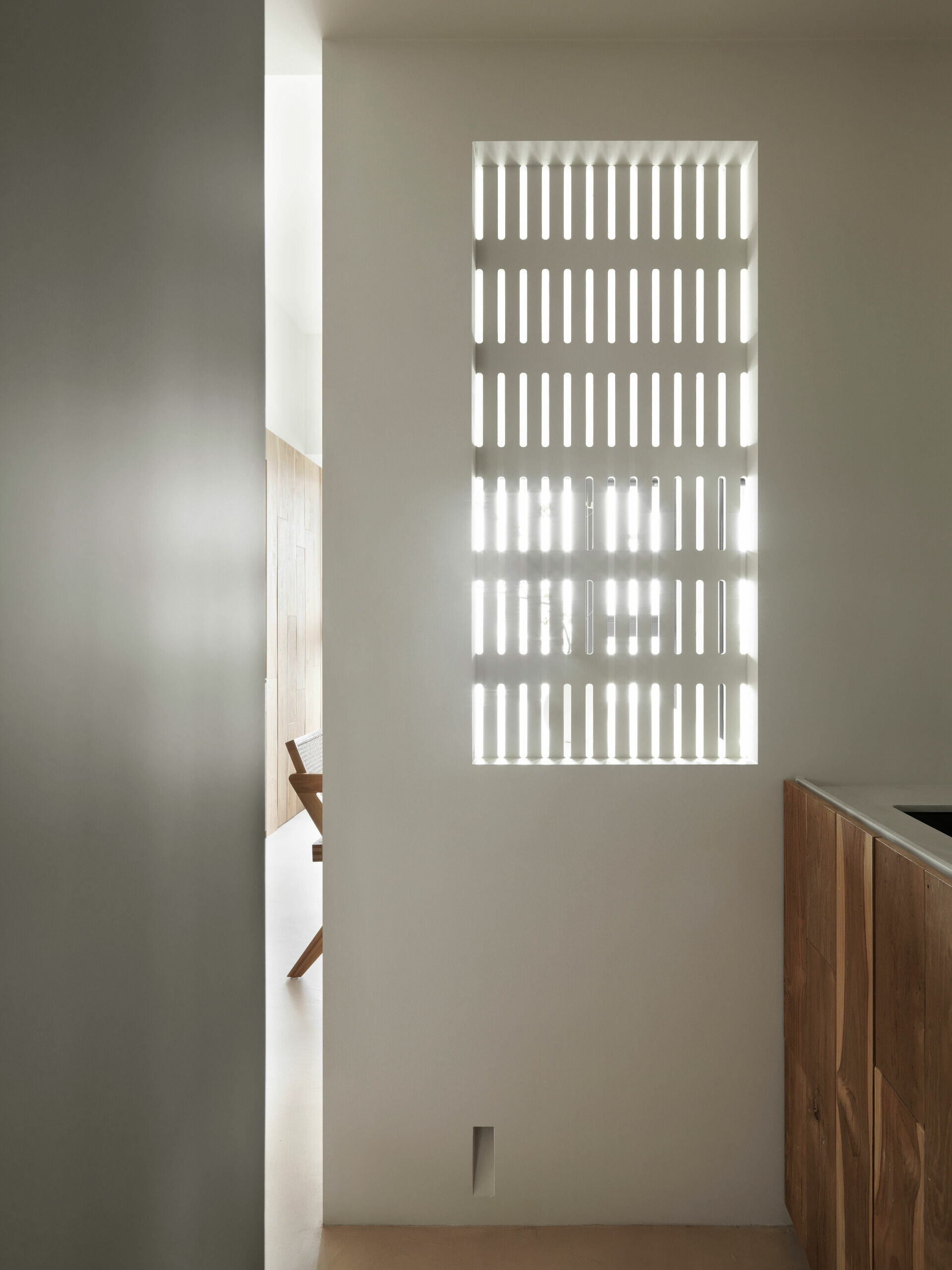
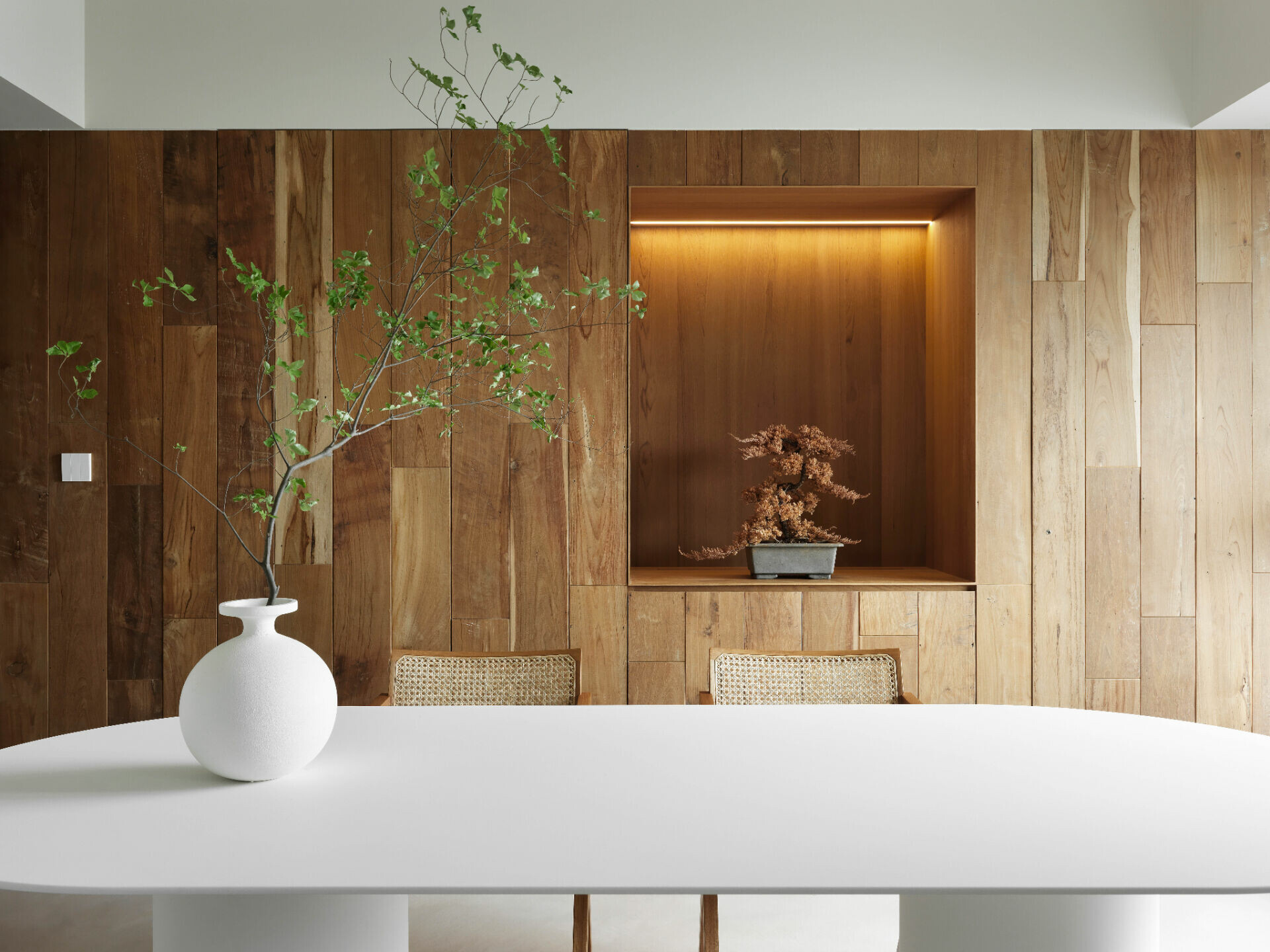
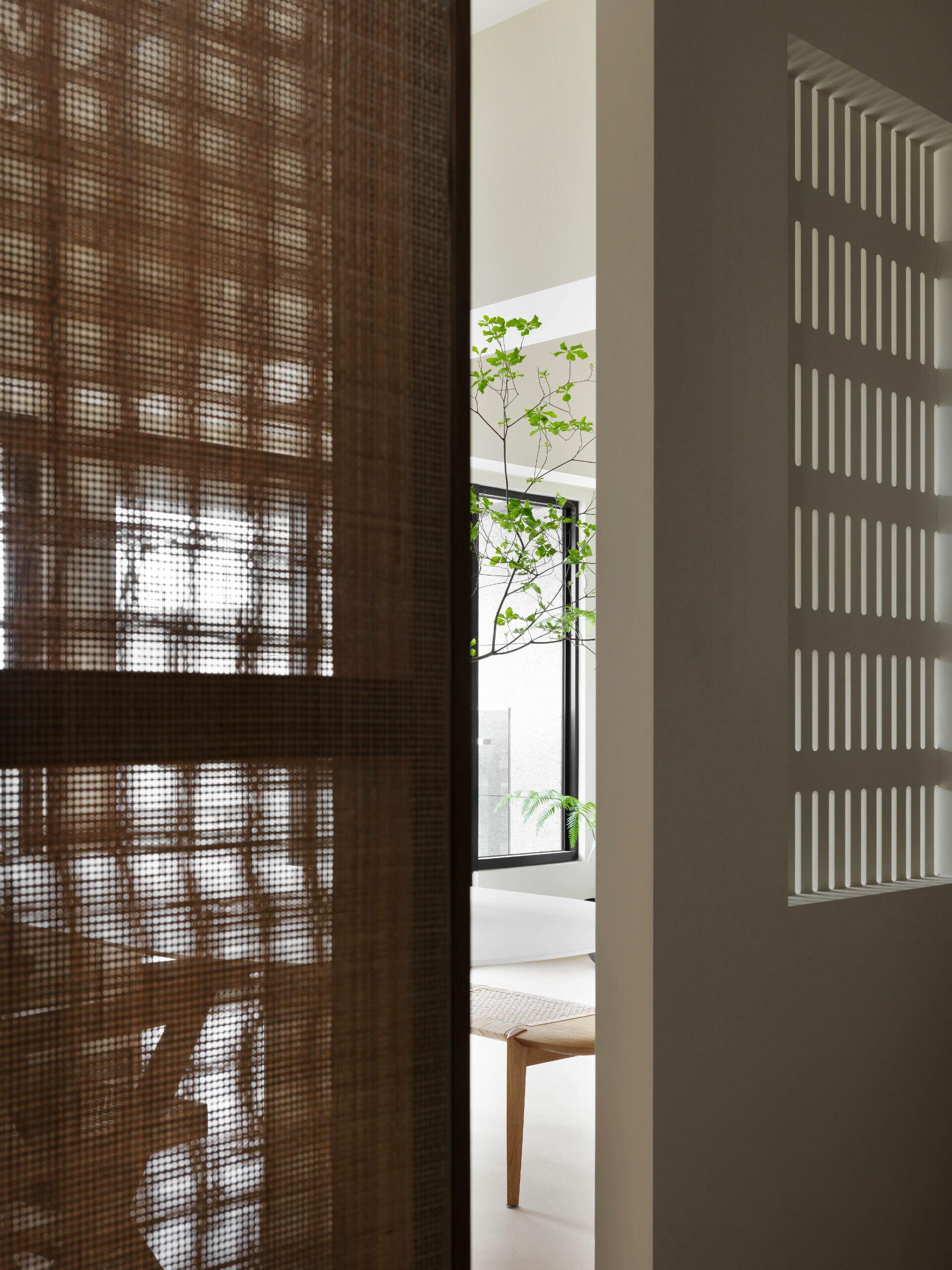
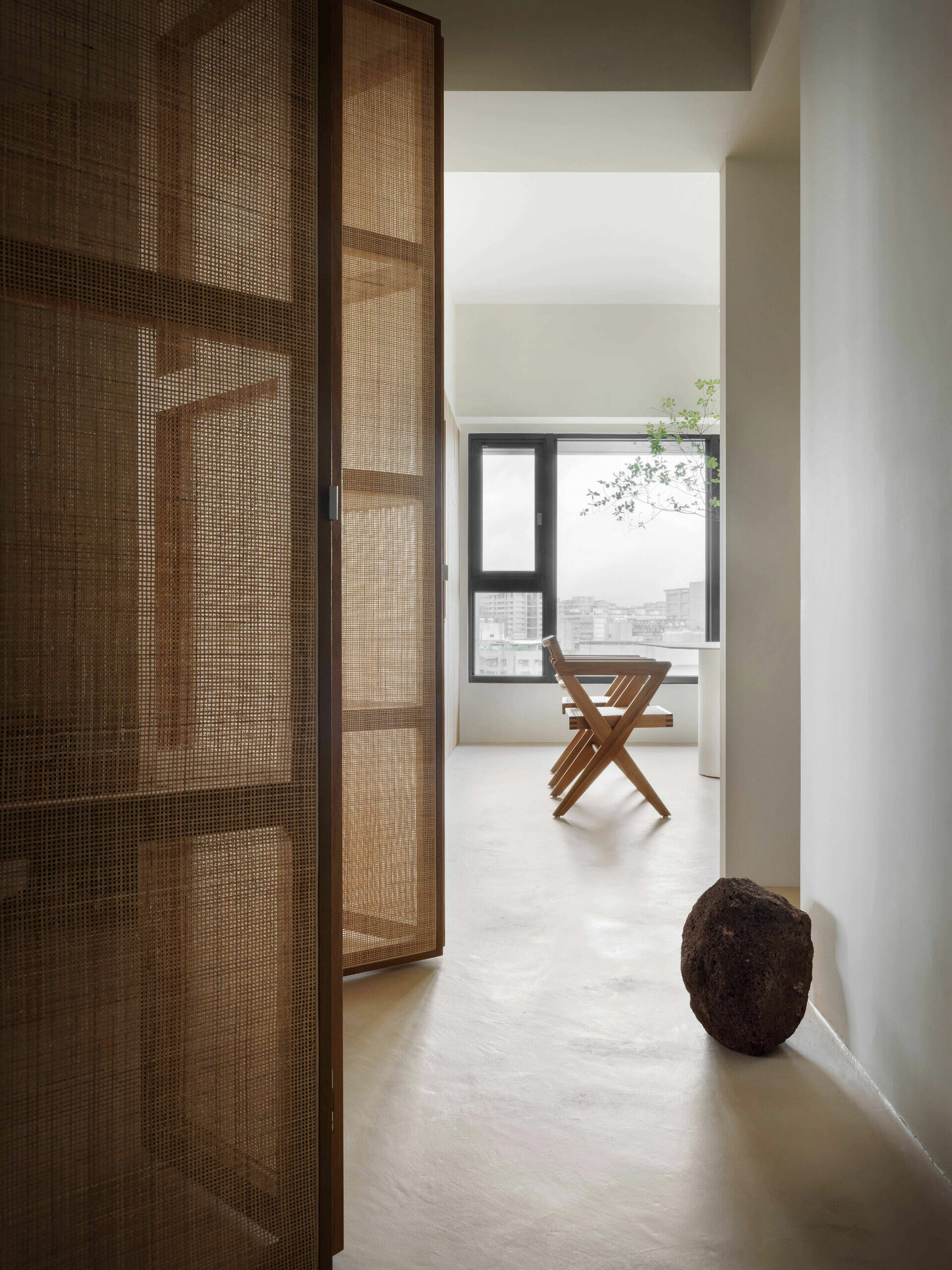
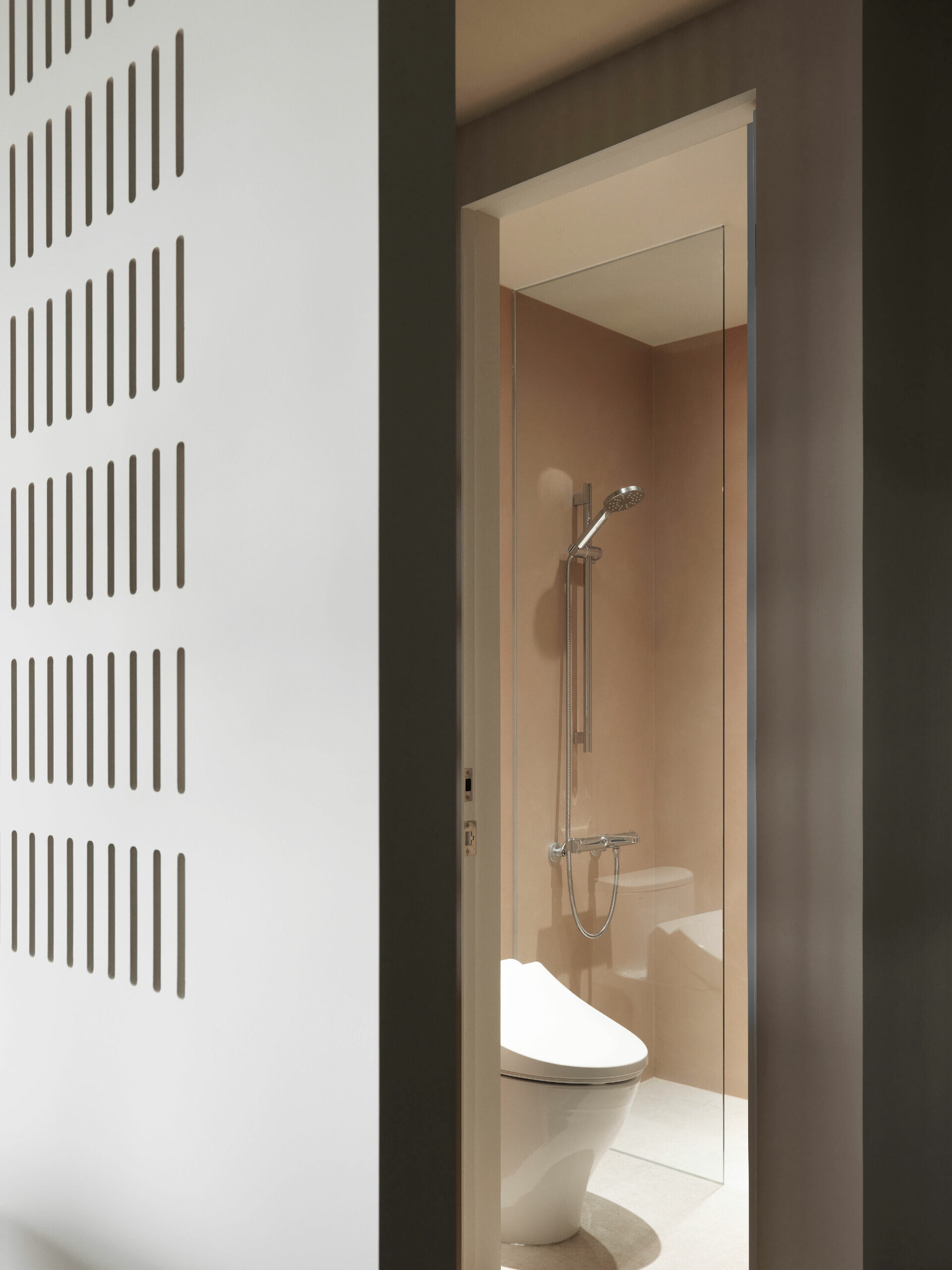
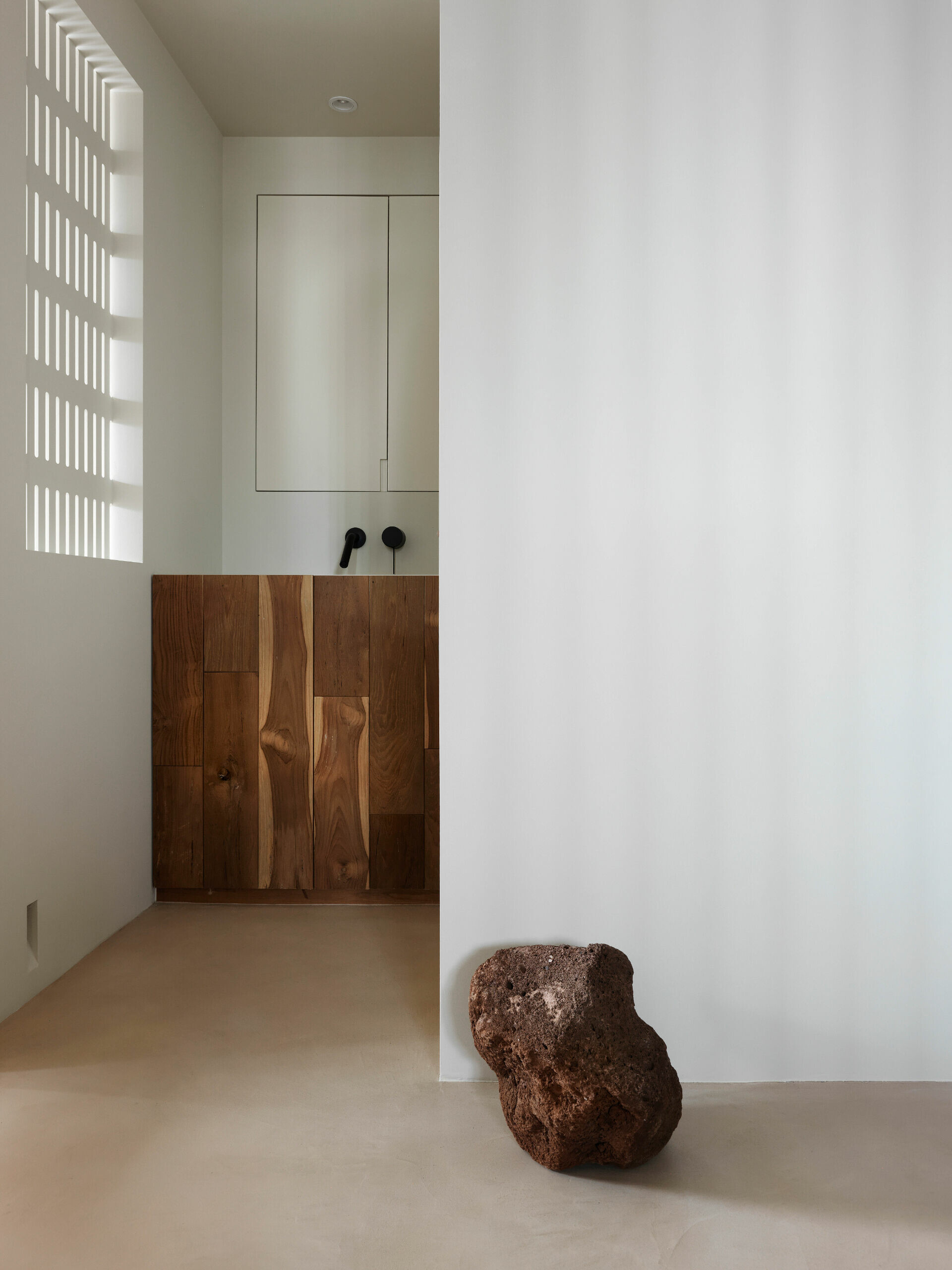
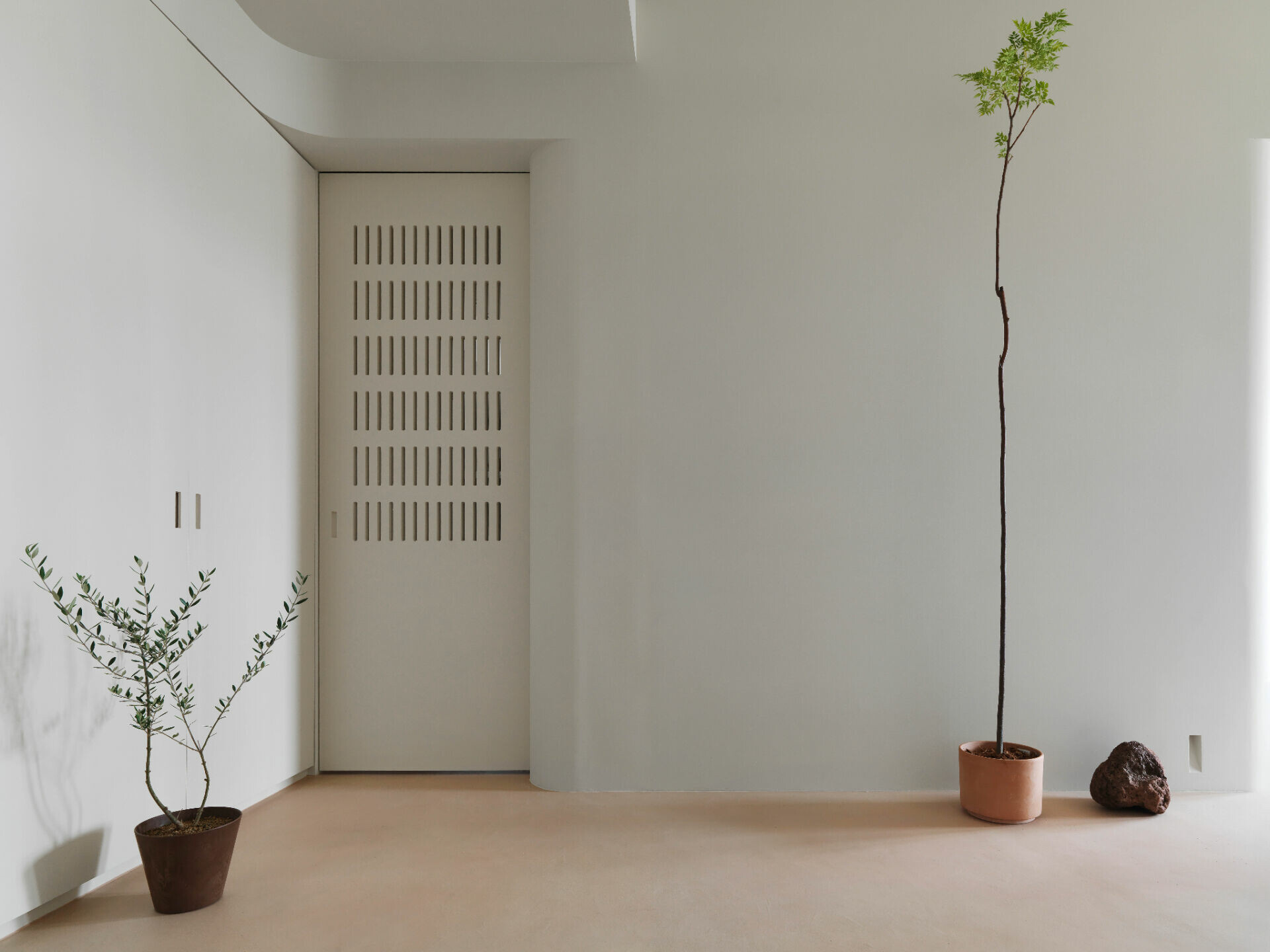
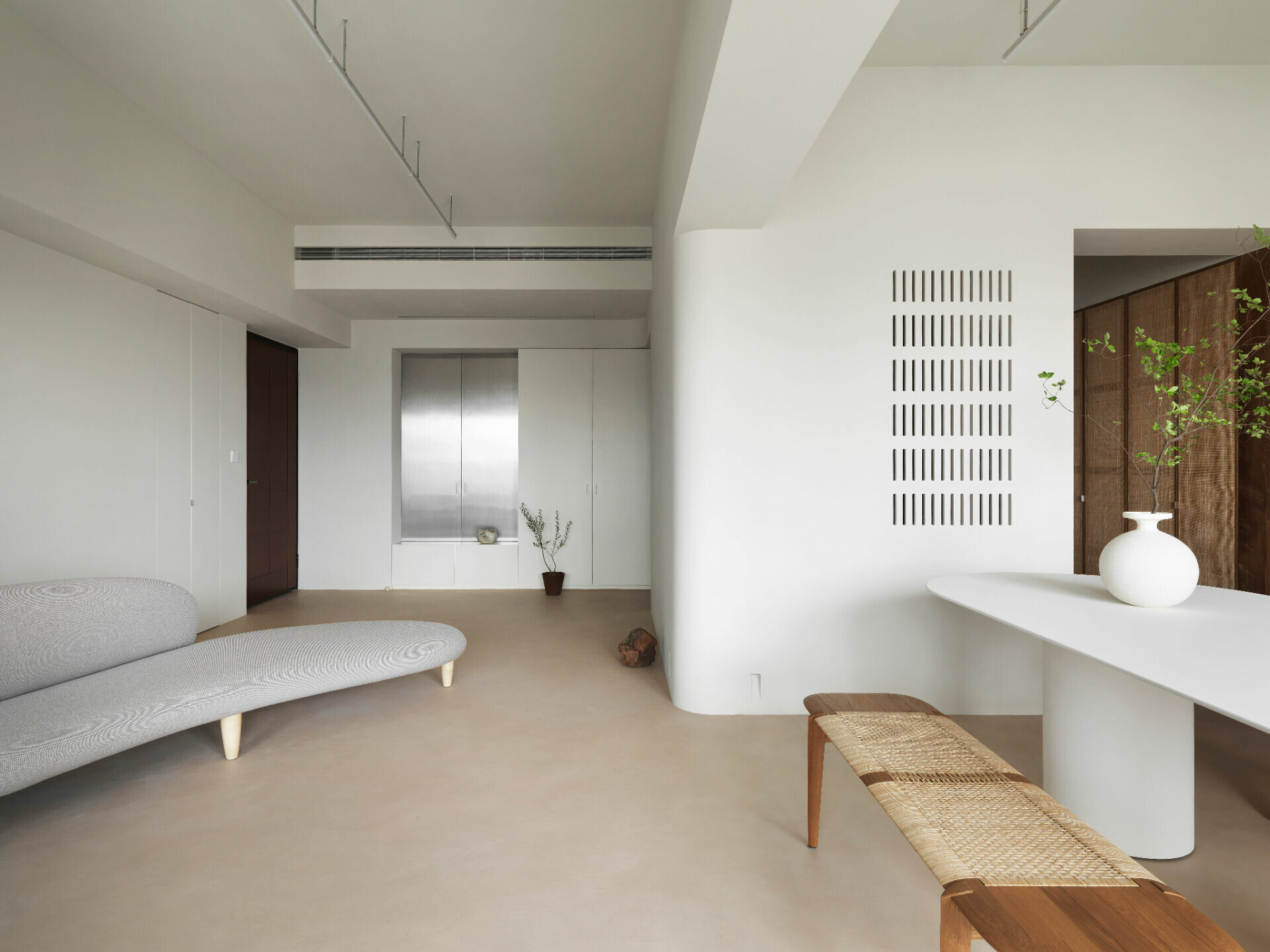
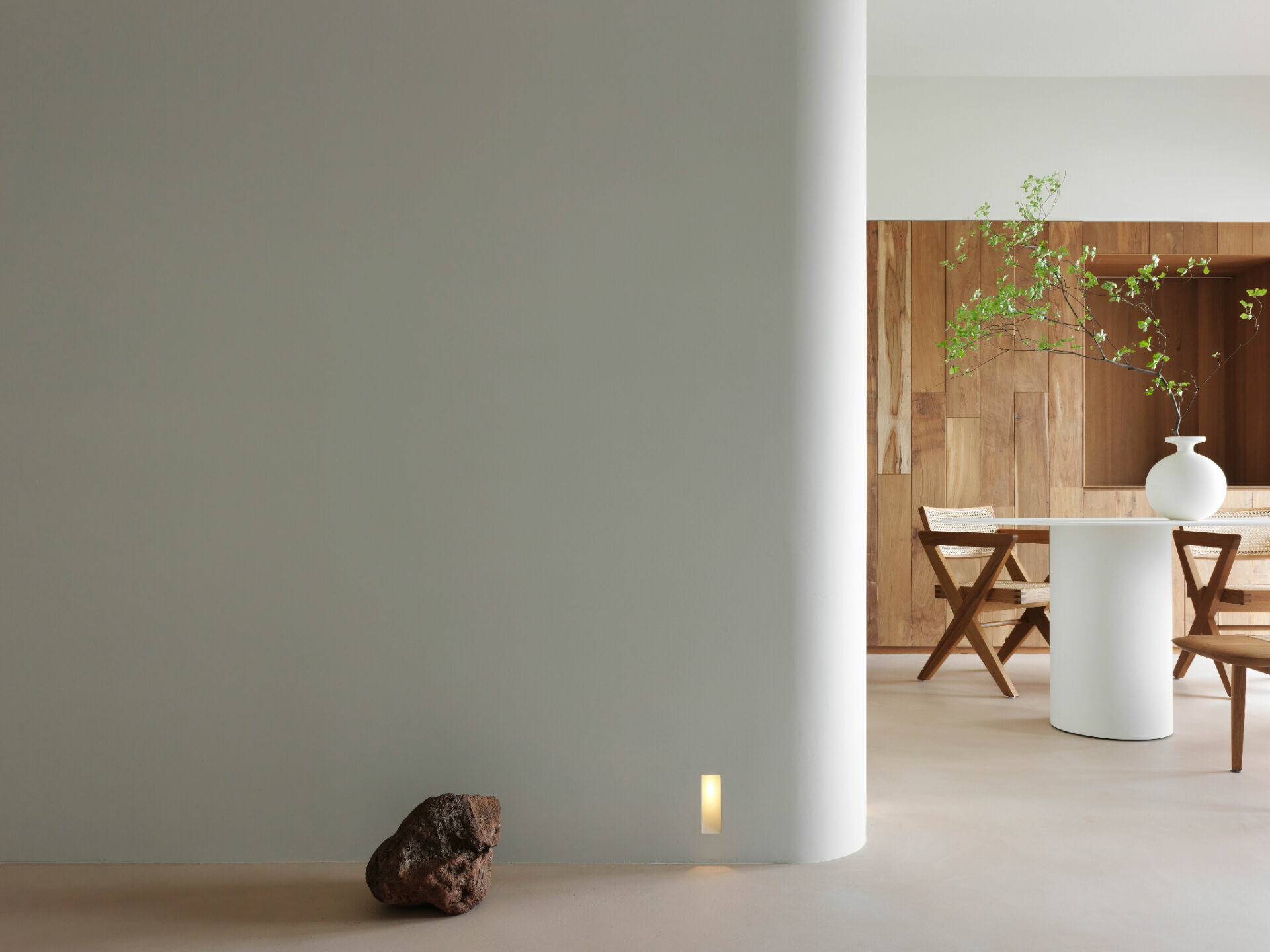
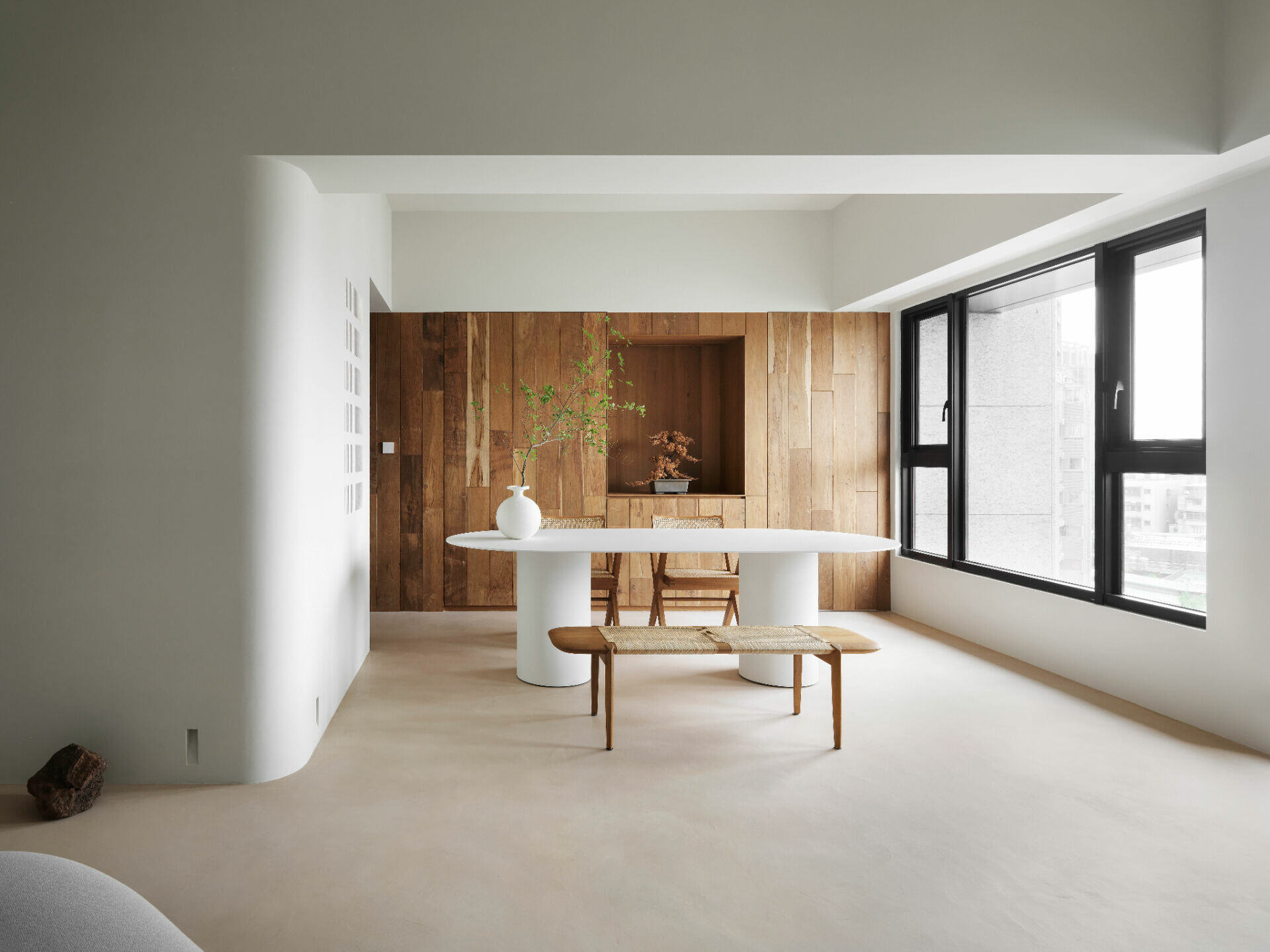
宅內的材料選擇、造型設計皆以「瑜珈」為核心延展。最初搜索這個關鍵字與空間的相關連結,最終停留在被譽為全球瑜珈聖地的峇里島,並決定以島上本土建築元素為靈感,就如一道從餐廳延伸到底端客房的牆體,特意選用回收柚木拼接成的牆面,不僅在餐桌前的位置設置壁龕,讓屋主能隨心擺放花藝,鄰窗處也悄然隱藏起主臥的門板,維持畫面的完整性;搭配客臥以藤編製成的拉門,亦為日常風景增添如同身在大自然般的古樸氛圍。甚至連客浴對外牆體與廚房門上排列工整的縫隙都是窗花經轉譯後的再現,讓光線流洩孔隙之間,卻不失現代簡約的美感。這些意料之外的發展,恰好體現了瑜珈修練那份隨遇而安的豁達。
Yoga serves as the point of departure for both the apartment’s material palette and its formal language. In searching for an architectural reference that might connect this practice to space, the design process eventually settled on Bali, long associated with yoga culture, and drew from the island’s vernacular architecture. One expression of that influence is the wall that extends from the dining area to the guest room at the far end of the apartment. Clad in reclaimed teak planks, it incorporates a recessed niche beside the dining table for floral arrangements, while near the window a concealed door to the primary bedroom disappears into the same plane, preserving the visual continuity of the composition. Together with the guest room’s woven-rattan sliding door, these elements lend daily life a rustic atmosphere that feels close to nature. Even the evenly spaced slotted openings in the guest bathroom’s exterior wall and in the kitchen door reinterpret traditional window grilles, allowing light to filter through while retaining a clean, contemporary restraint. In the end, these unexpected developments reflect the openness cultivated through yoga: the ease of accepting circumstances as they come.