➤ Photograghy by ©DONGimage
肖峰藝術館
Xiao Feng Art Museum
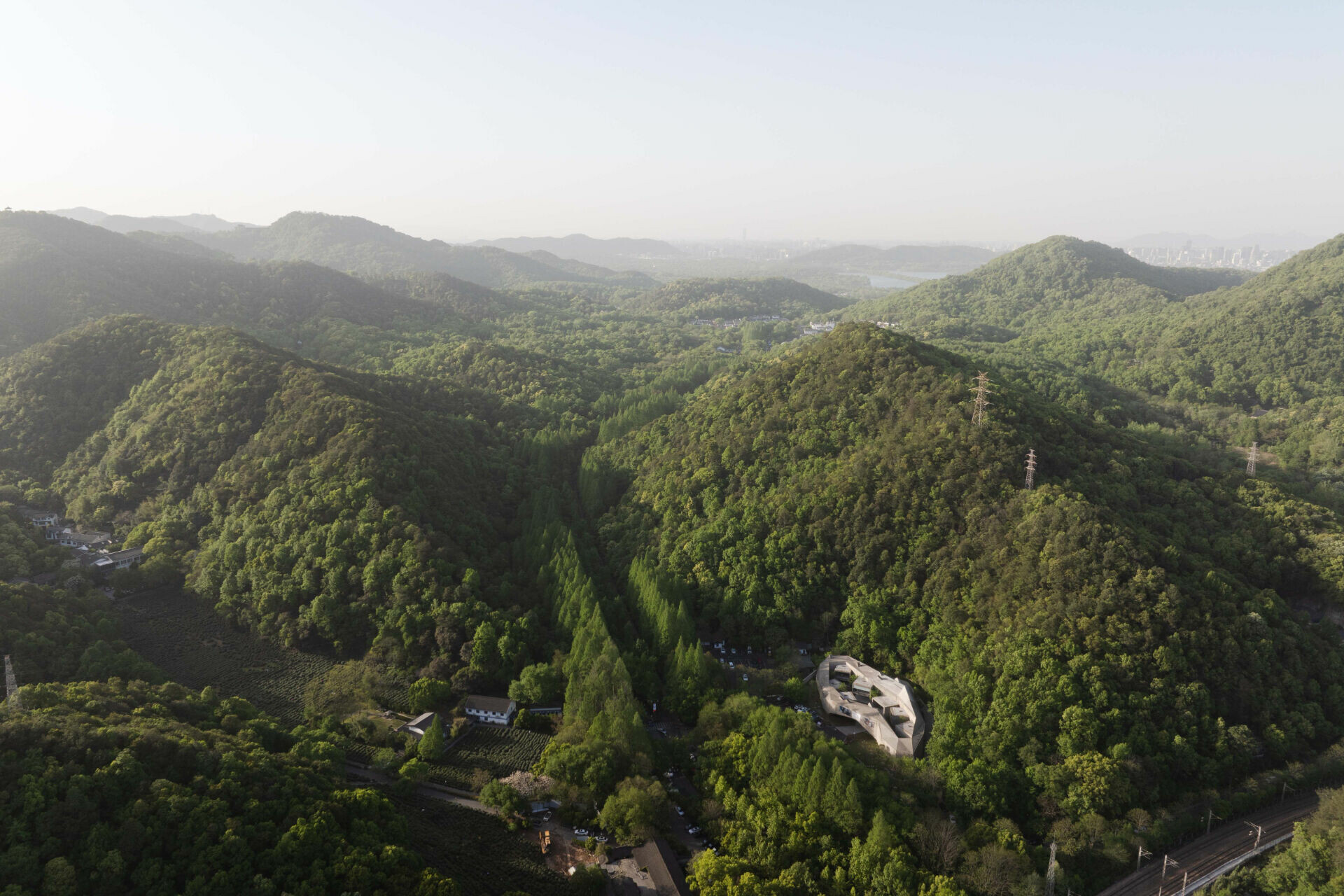
有時,內心想著赴往博物館參觀的剎那,腦海總不禁浮現穿梭於館內廊道間,就為領略各文化、時代背景樣貌,從而來趟跨時空之旅的畫面。卻未意識到,其實自駐足於博物館前開始,仰頭觀望建築形貌之時,早已在閱讀一篇蘊含歷史文化與地域精神的故事開端。就在不辭千里來到杭州西湖以南數公里的大慈山腳下,親臨融入山巒綠意間的肖峰藝術館欣賞油畫家肖峰與其妻子宋韌捐贈 80 年藝術生涯的 503 件核心館藏作品時,眼前稜角分明的混凝土量體以有機型態環繞著中央庭院,順著場地邊界形成線性蜿蜒的展覽空間,讓來訪者在步入掩映於樹木與竹林後的主入口前,領略現代園林景觀中交融的傳統人文素養,以及天人合一的精神追求。
The prospect of visiting a museum often conjures an image of moving through its corridors, tracing the contours of different cultures and historical moments as though embarking on a journey across time. Yet the experience begins earlier than that. The moment one pauses before a museum and looks up at its form, the opening lines of another narrative are already unfolding—one shaped by history, culture, and the spirit of place. A few kilometres south of West Lake in Hangzhou, at the foot of Daci Mountain, the Xiao Feng Art Museum sits amid verdant slopes. Before entering a museum whose collection is centred on 503 core works donated by the oil painter Xiao Feng and his wife, Song Ren—works spanning eight decades of artistic practice—visitors first encounter a sharply faceted concrete form that winds organically around a central courtyard. Tracing the site’s perimeter, it unfolds into a linear sequence of meandering galleries, so that even before reaching the main entrance, partly screened by trees and bamboo, visitors begin to register the convergence of a contemporary garden landscape, a traditional humanistic sensibility, and the ideal of harmony between humanity and nature.
➤ Photograghy by ©DONGimage
➤ Photograghy by ©楊盛
➤ Photograghy by ©DONGimage
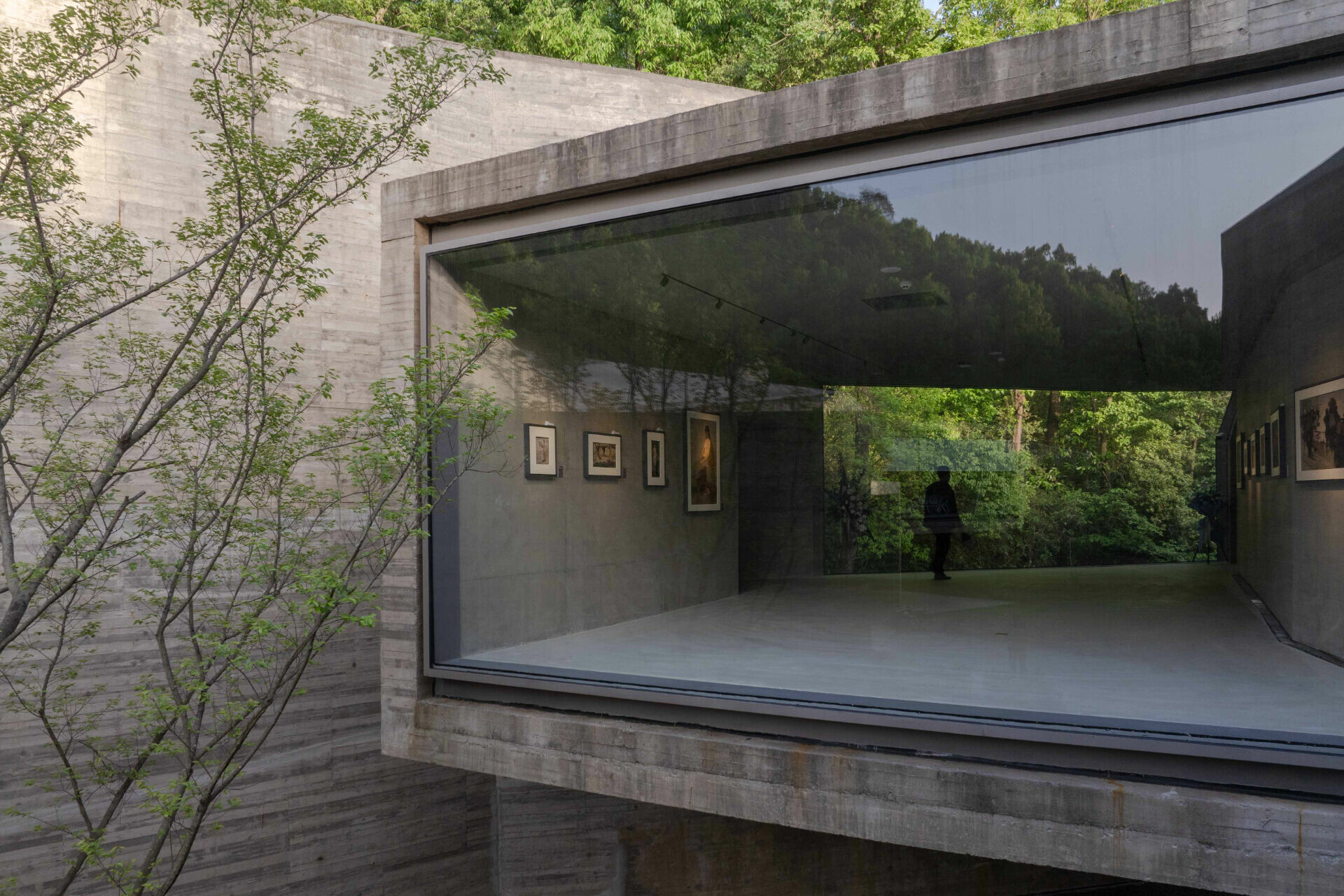
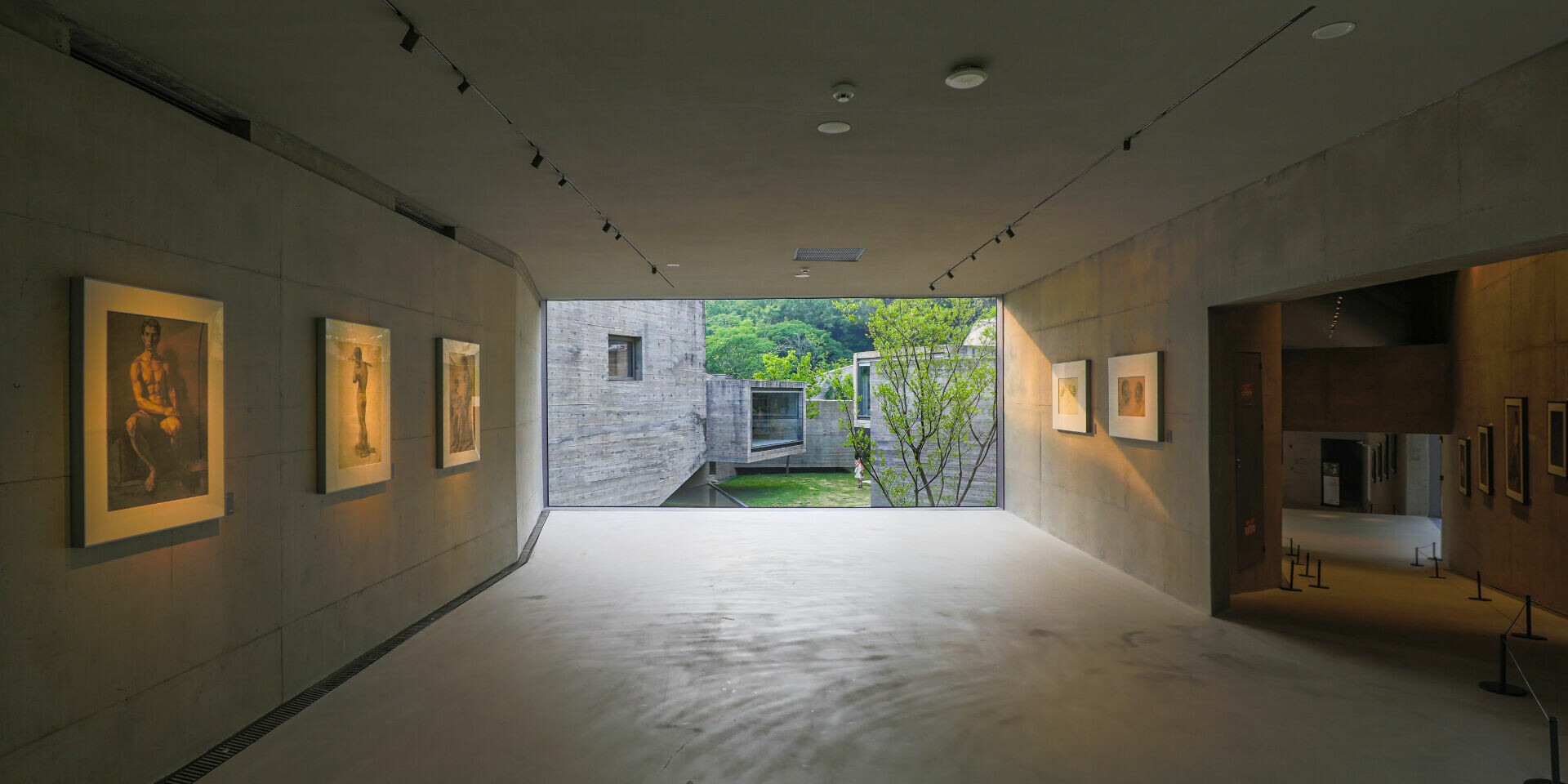
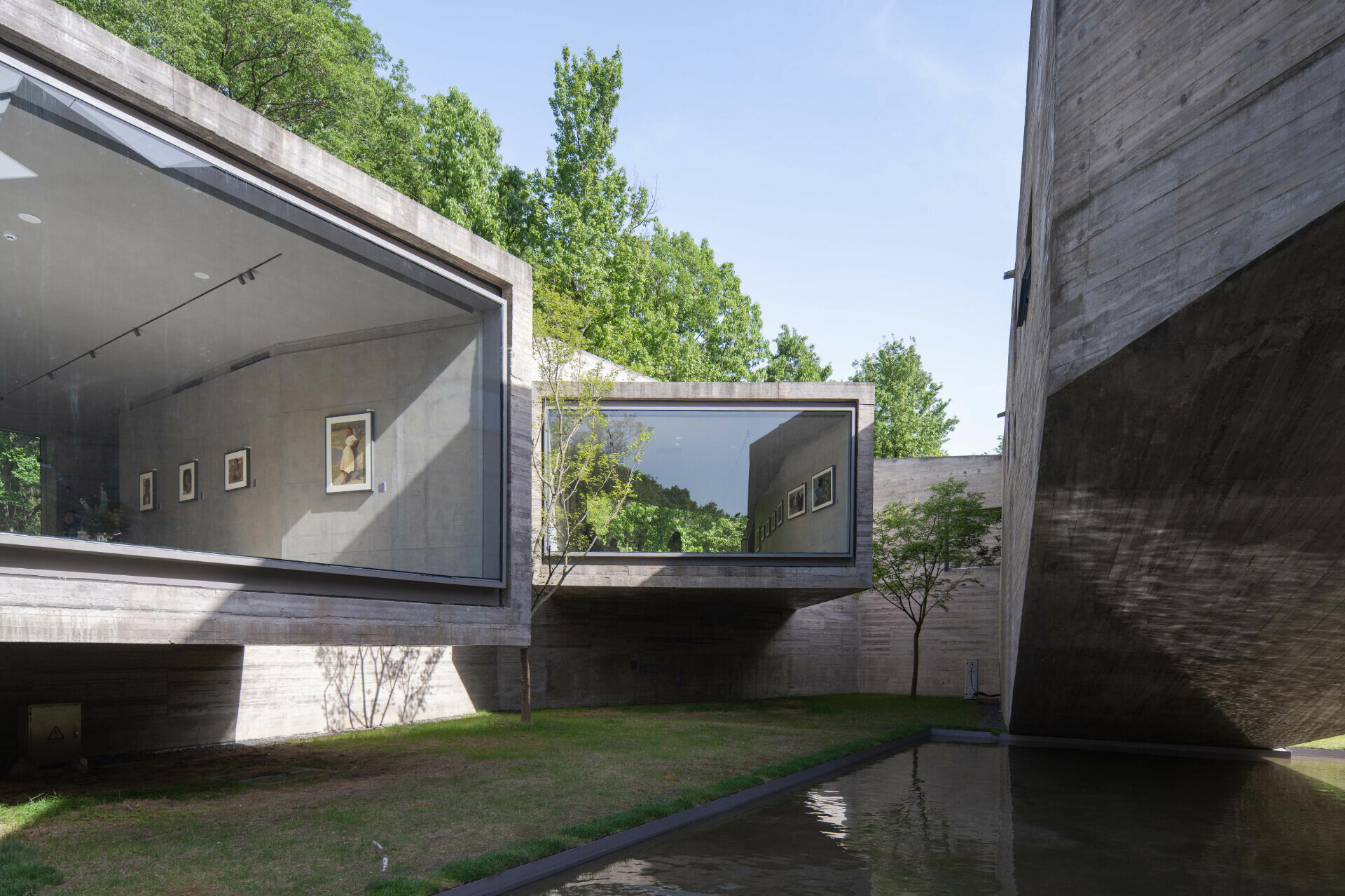
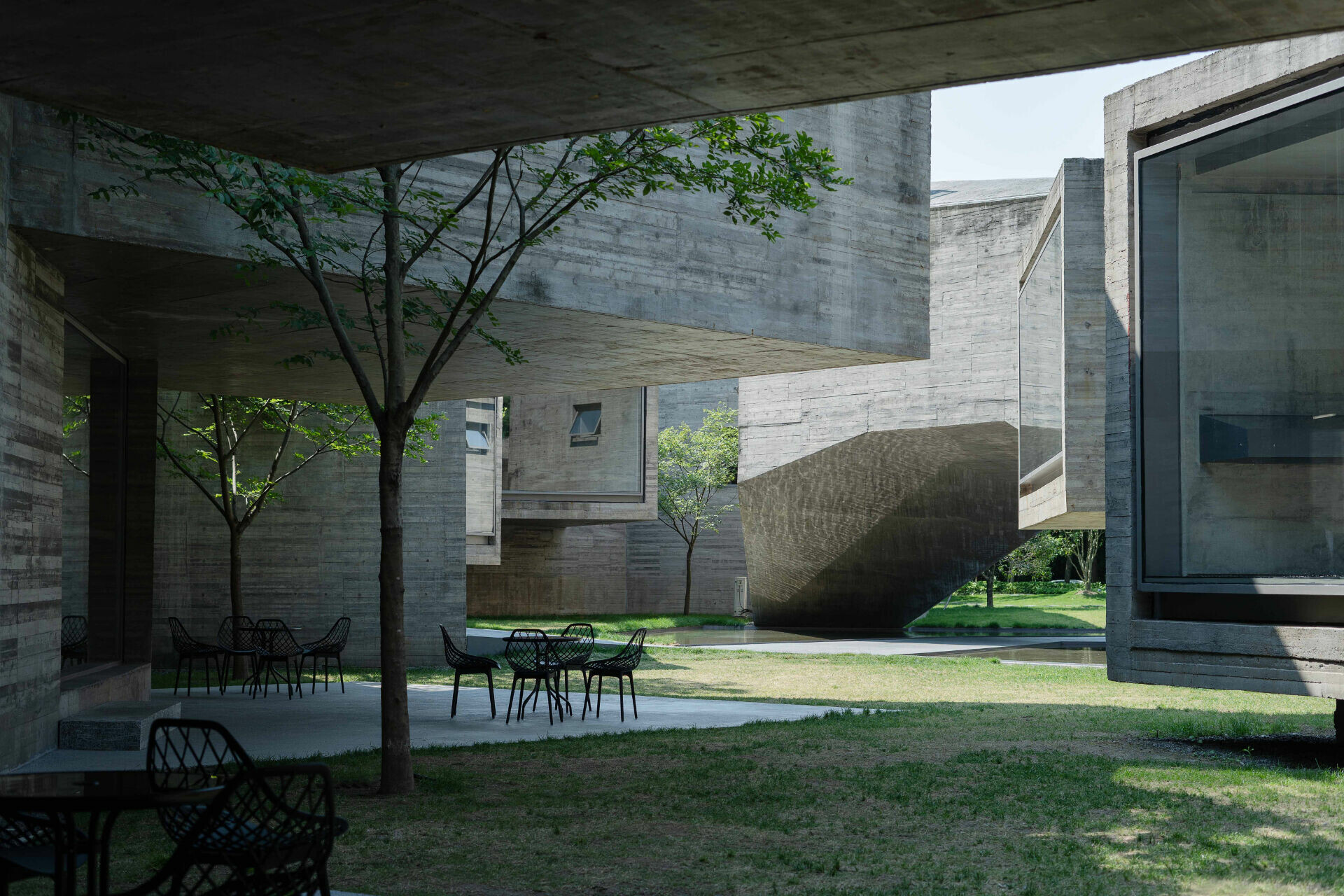
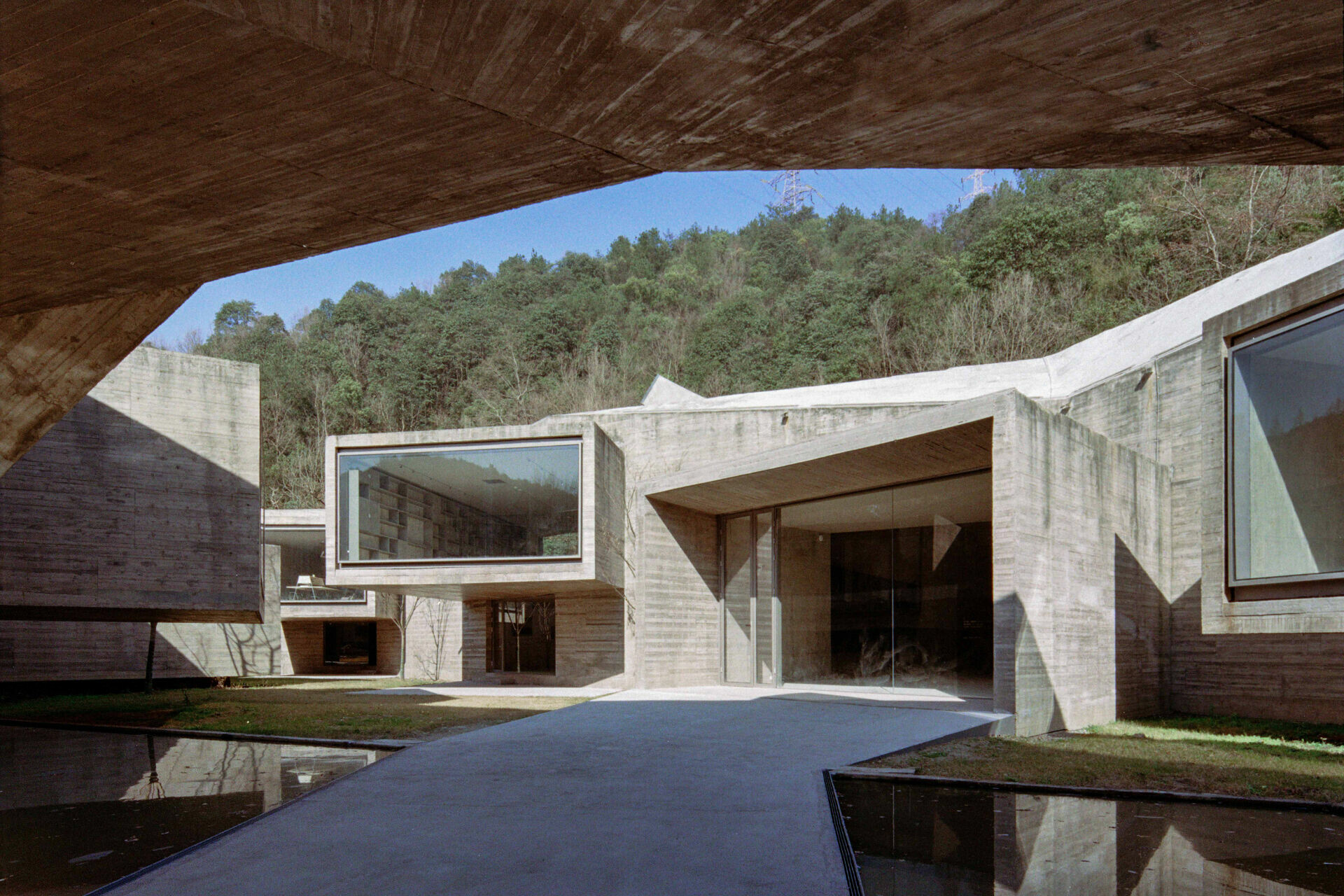
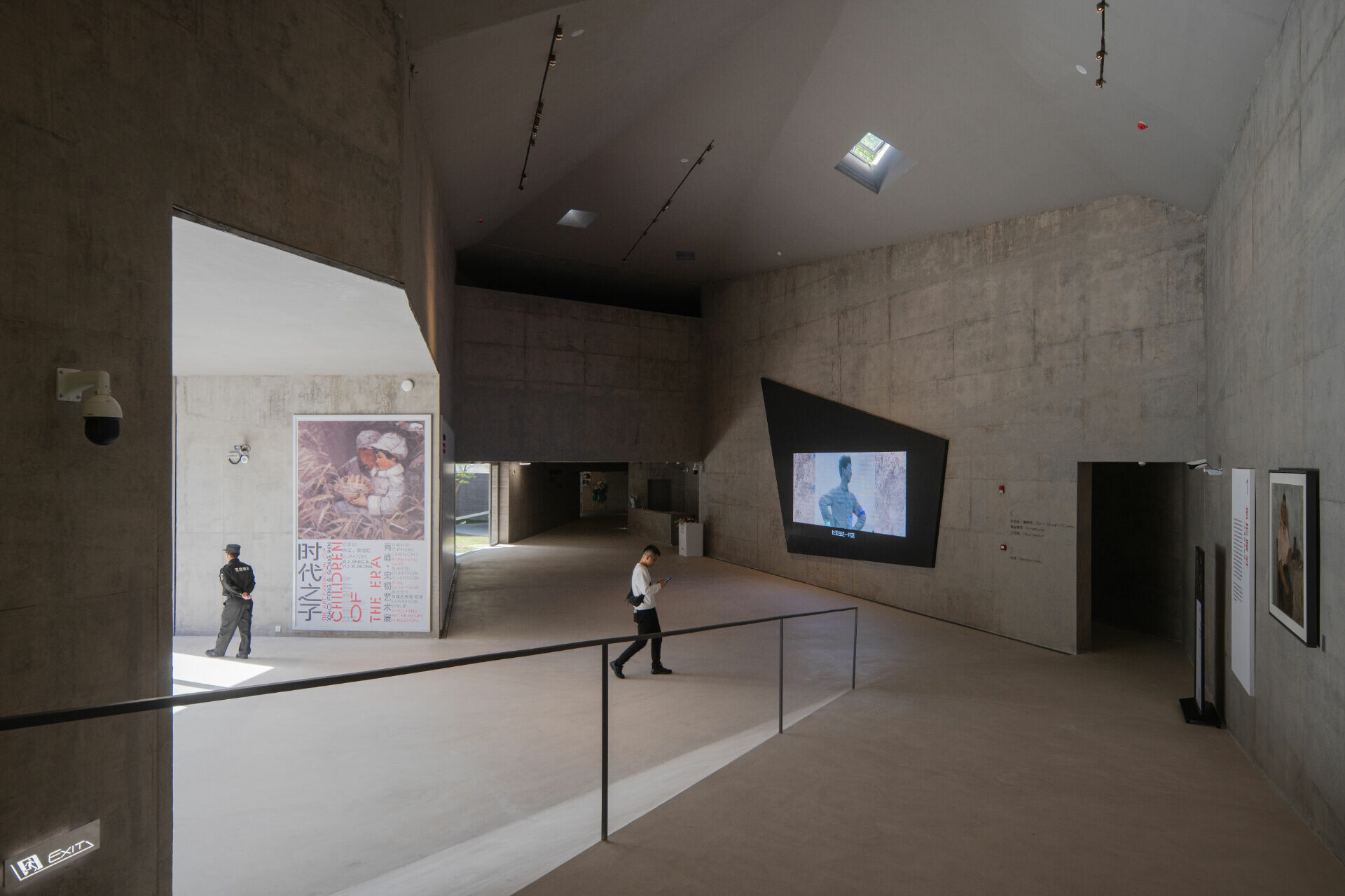
在深入探索肖峰藝術館之前,回溯這座美術館的地緣,不免憶起肖峰這位融合中式審美西畫技法的油畫家長年於浙江省的中國美術學院為文化藝術做出的傑出貢獻,而他的代表作《辭江南》常被視為肖峰探索油畫民族化的重要作品之一。如今,還看周圍一連串沿著建築外緣向園內延伸的盒狀展覽空間,在現代建築結構中,其起伏的屋頂型態在山林景觀中形成了一種動態韻律,其布局亦回應了傳統園林設計張弛有度的呼吸感,讓人在穿行於園中小徑時,流暢經過水池和植被之間,體悟到當時文人士大夫期望在氛圍靜謐的園林中尋求的精神自由,還有與自然深度融合的美學意境。即使漫步於館內猶如橋梁的廊道中,來到懸浮於空的矩形空間瀏覽壁面懸掛的幅畫作時,視線也能穿過大面玻璃開窗欣賞院內如山水畫卷般的景色,甚或眺望後方群山,始得與自然融為一體,心靈隨之恬淡清淨。
To look more closely at the museum is also to return to Xiao Feng himself: an oil painter who brought Chinese aesthetic sensibility into dialogue with Western painting techniques and who, through his long association with the China Academy of Art, made a lasting contribution to cultural life. His representative work, Farewell to Jiangnan (《辞江南》), is often regarded as one of the key works in his search for a distinctly Chinese language of oil painting. Around the museum, a sequence of box-like gallery volumes extends inward from the building’s outer edge. Their undulating roofline establishes a dynamic rhythm against the wooded landscape, while the plan echoes the measured cadence of traditional Chinese garden design. Moving along the garden paths, between ponds and planting, one senses the freedom of spirit historically sought in the seclusion of the garden, together with an aesthetic realm shaped by close communion with nature. Even within the bridge-like internal corridors, once the route reaches suspended rectilinear rooms where paintings line the walls, the gaze passes through large glazed openings to the courtyard, where the scene unfolds like a landscape handscroll, and onward to the mountains beyond. In such moments, architecture and nature seem to draw into one another, and the atmosphere settles into stillness.
➤ Photograghy by ©楊盛
➤ Photograghy by ©arch nango
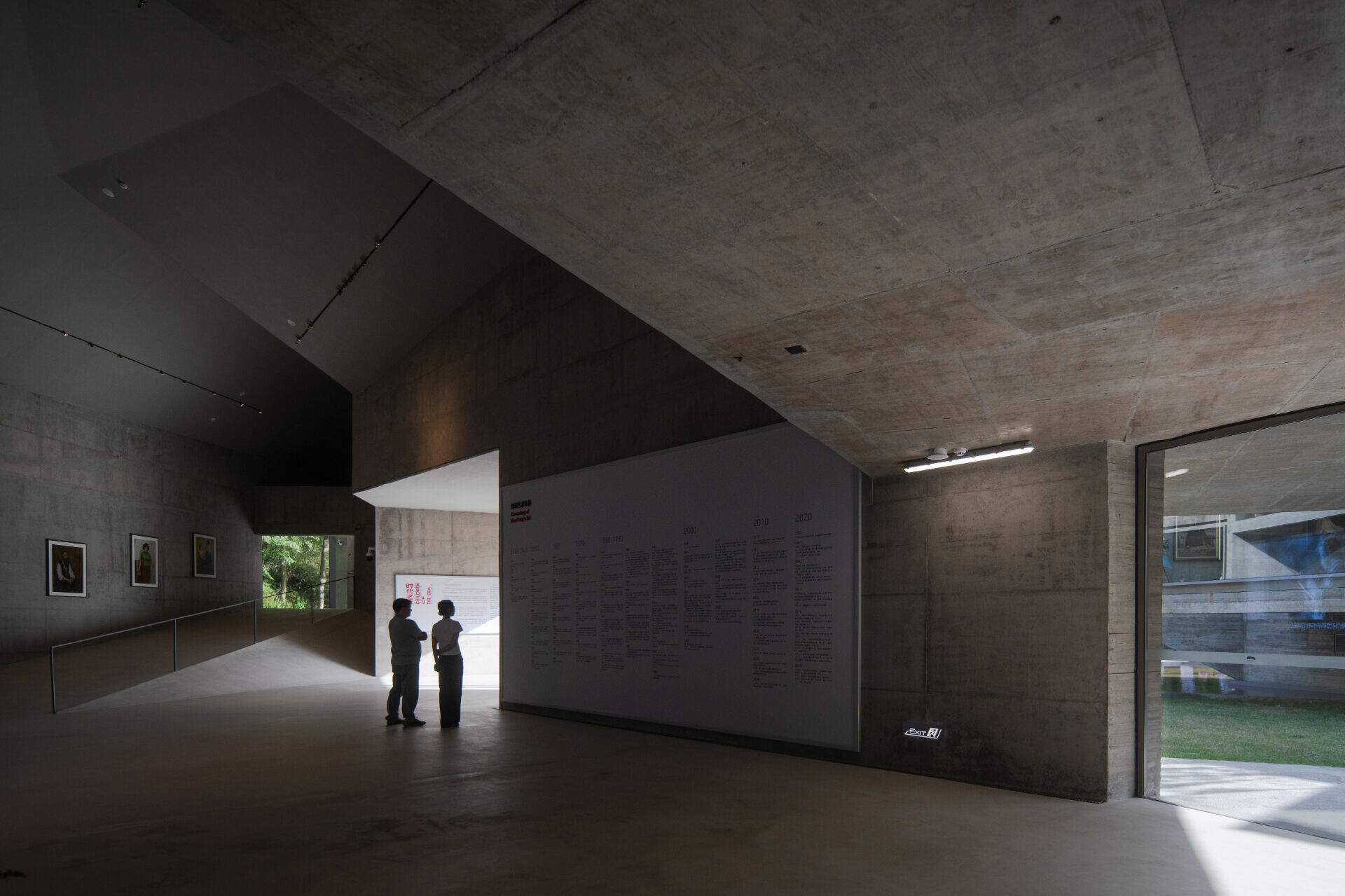
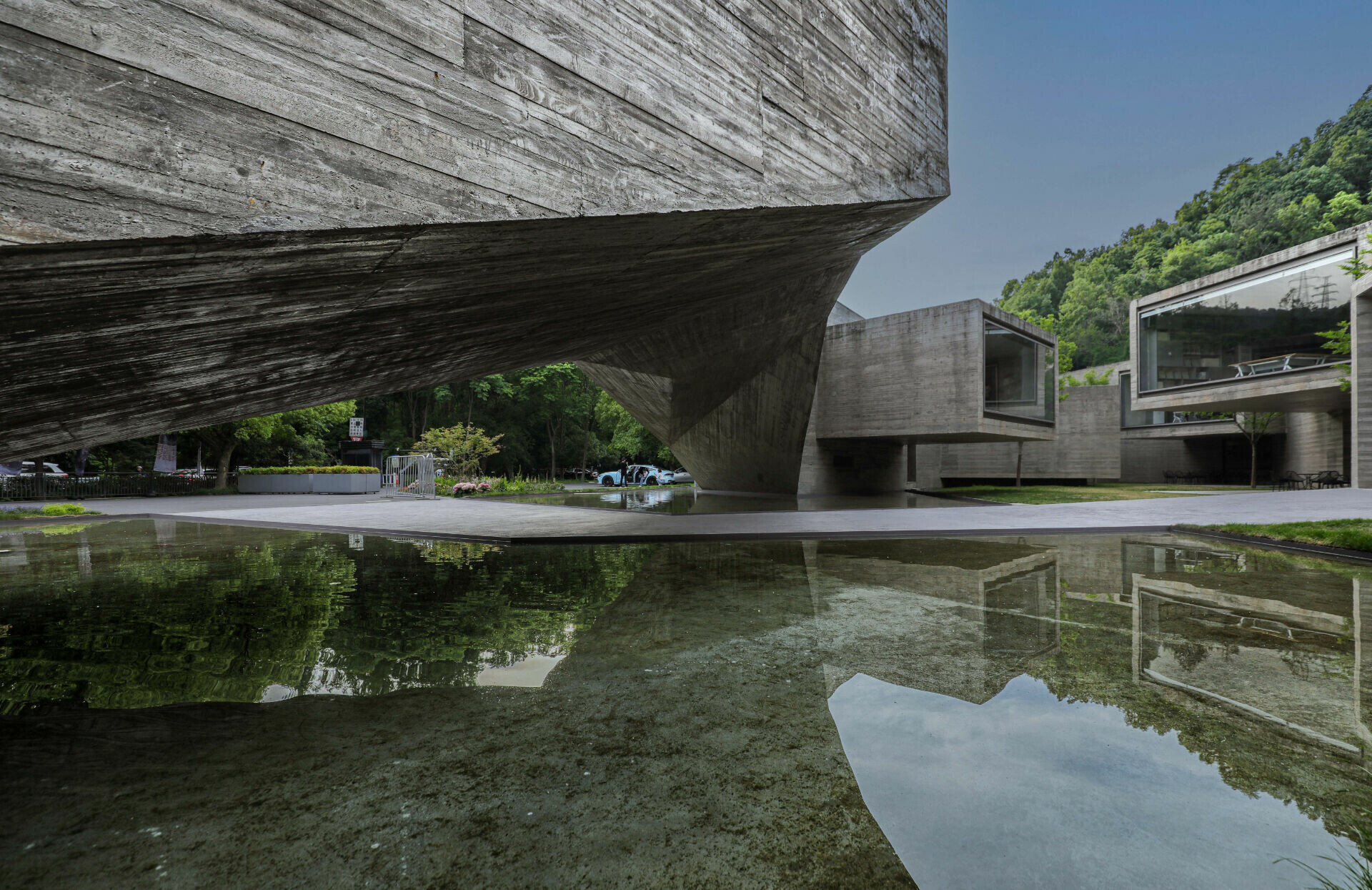
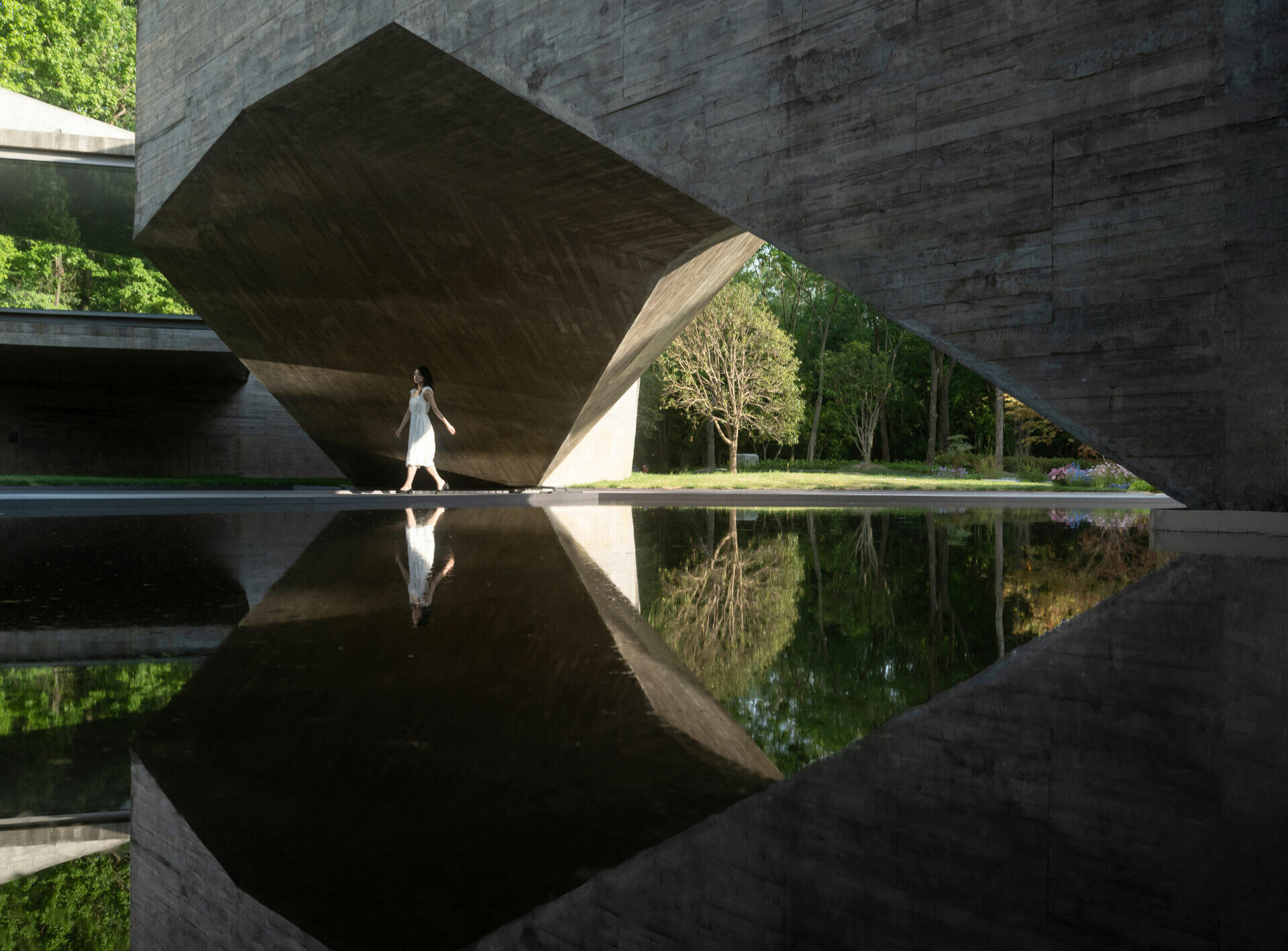
相比周圍的青翠綠意,建築由摻入黑色墨水的混凝土現場澆築而成,一致的材質使用在曲折變化下形塑出如雕塑般的形體,與自然環境形成鮮明而生動的對比,卻為有稜有角的空間渲染深沉且柔和的壁面質感,隨著不同光線條件亦會呈現或深或淺的層次變化。若仔細觀察,可發覺裸露的結構體保留了木質模板的印記,為原本冷硬質地增添一絲溫暖,平衡了粗獷與柔和的元素。在這座融於湖光山色間的藝術館,可見標準營造以現代手法對園林建築的重新詮釋,讓人在現代生活中,其內在精神也能與自然意境和諧交織,並於館內細讀兩位藝術家的傳世之作。
Set against the surrounding green, the building is realised in cast-in-place concrete pigmented with black ink. The disciplined use of a single material, folded and turned through the building’s changing geometry, gives the whole a sculptural presence and sets up a vivid counterpoint to the landscape, while lending its angular spaces a surface quality that feels at once sombre and unexpectedly gentle. As the light shifts, the walls deepen or soften in tone. A closer look reveals the imprint of timber formwork in the exposed structure, bringing a trace of warmth to an otherwise austere material palette and balancing roughness with softness. Set within Hangzhou’s landscape of lakes and mountains, the museum shows how ZAO / Zhang Ke Architecture Office reinterprets the spirit of garden architecture through contemporary means, allowing that spirit to remain in quiet accord with the natural world while creating a setting in which to encounter the enduring works of the two artists.
➤ Photograghy by ©素民
➤ Photograghy by ©曹琦
➤ Photograghy by ©DONGimage