阿雲朵倉公共藝術空間
AYDC Public Art Center
閒暇時光,趁著陽光和煦的好天氣,漫步貴陽市區觀山湖公園,沐浴於陽光下享受綠蔭步道中的芬多精,感受城市中難得的片刻寧靜。放眼望去,一片蒼翠綠意中,三座多孔建築仿若撐起的帳篷分別建於池畔、山坡和銀杏林中,讓人忍不住趨前一瞧,好奇猜測這些有著一致語言如巨型雕塑的建築究竟用途為何?面對沒有明確定義的場域,令人摸不著頭緒,卻在一天天變換情境中,漸漸引發內心的情感共鳴,不禁期待隔天又會在這些曲面結構中遇見何種新奇的人事物,想著或許自己有日也參與活動,成為轉動的小齒輪之一。
On a leisurely day beneath gentle sunshine, a walk through Guanshanhu Park in downtown Guiyang offers a rare moment of tranquility in the city. Amidst the lush greenery, three porous stone volumes rise like tents, set lightly by the waterside, on the hillside, and within a grove of ginkgo trees. Their sculptural forms, sharing a unified architectural language, invite curiosity: what purpose might these enigmatic buildings serve? Though lacking explicit definition, their shifting atmospheres from day to day gradually stir an inner resonance, leaving one to wonder what new encounters these curving forms might reveal—and perhaps to imagine becoming a participant in the events that bring them to life.
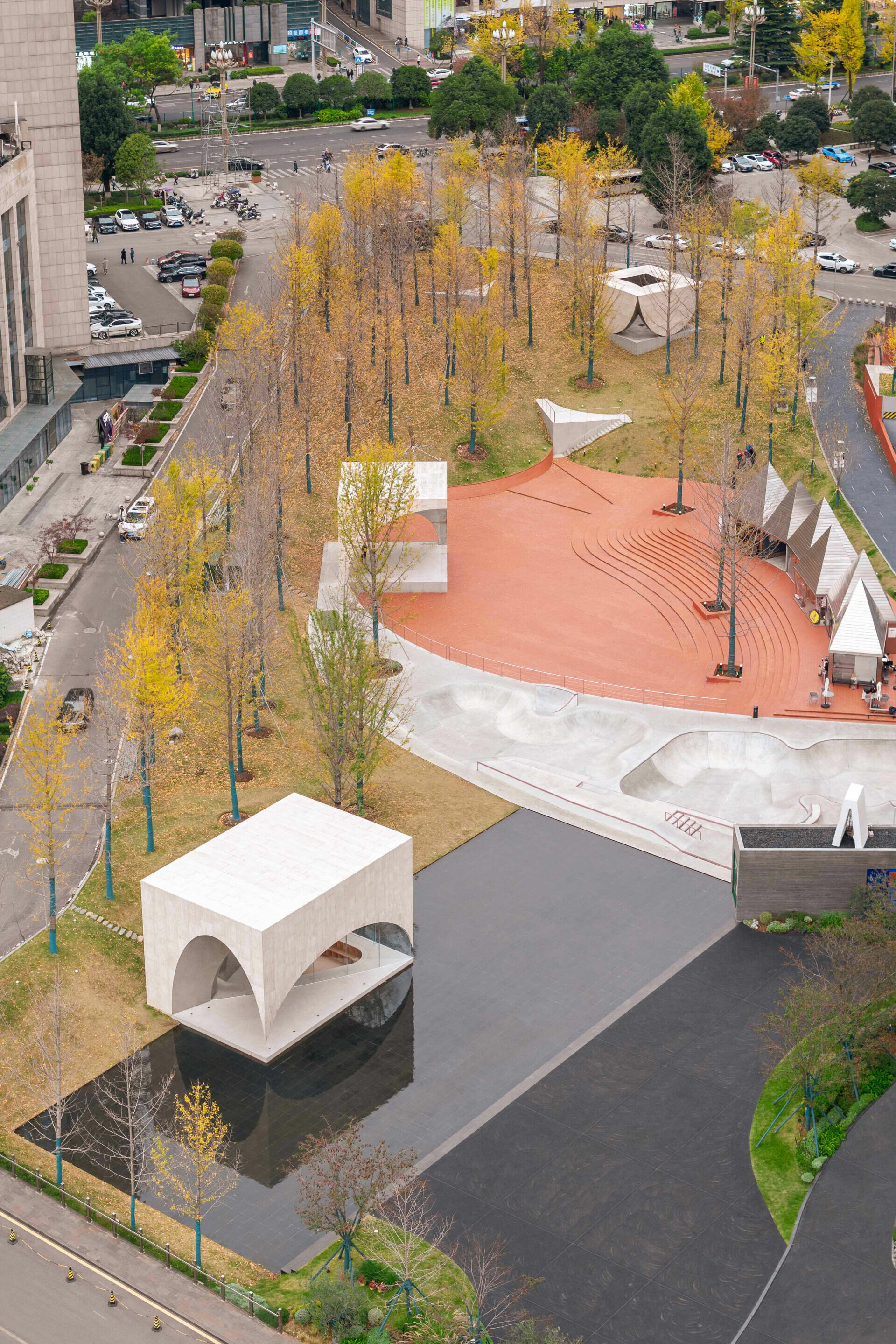
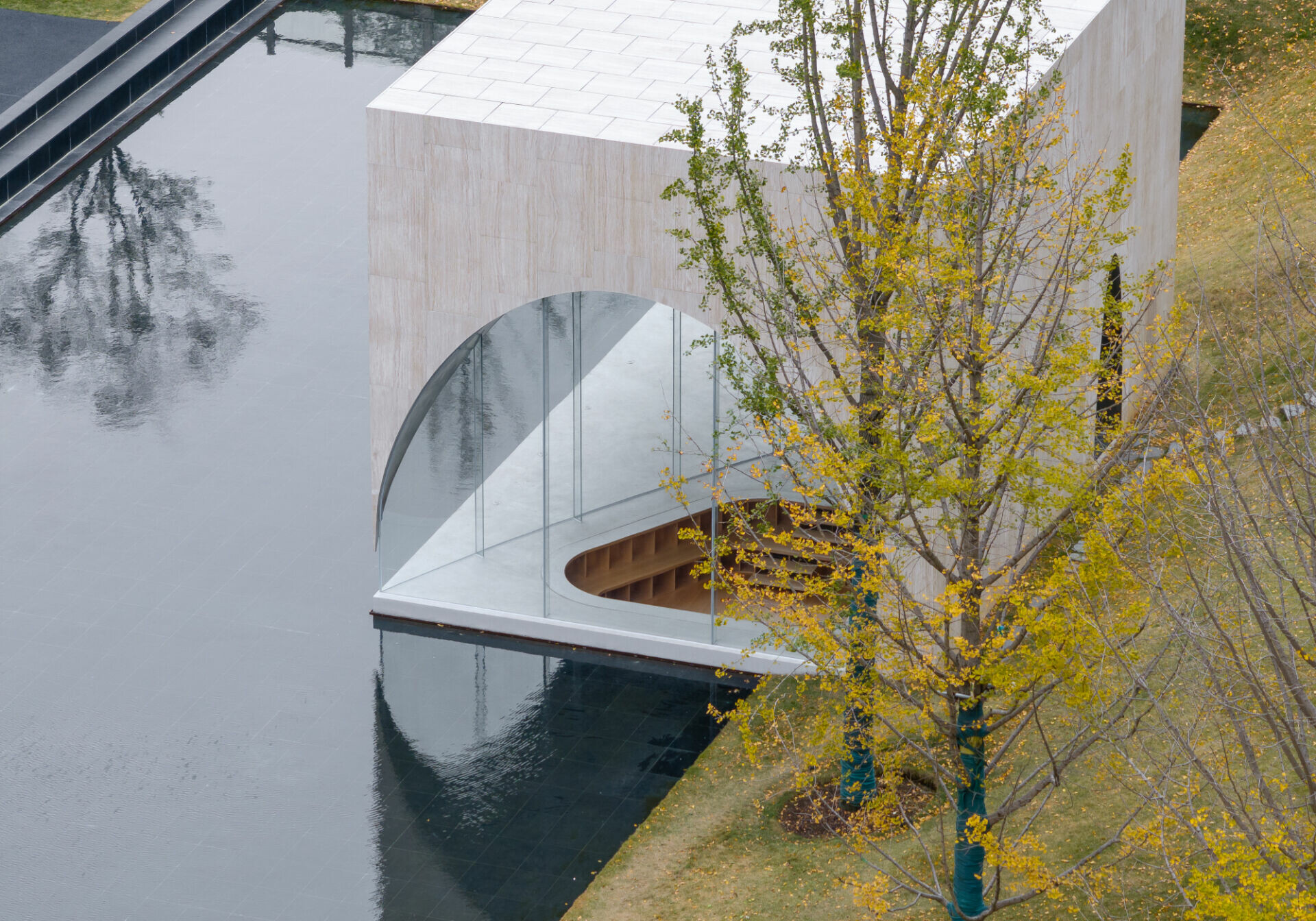
平日裡,何種景物能抓住你的目光而駐足停留?當日常熟悉風景多了一件藝術裝置昂然矗立,又會在心底掀起什麼漣漪?回看一座座分布於觀山湖區如盒子般的建物,由一樹建築工作室以貴州獨特的喀斯特山水地貌為靈感,於城市中央依循自然地勢設計的阿雲朵倉公共藝術空間。看似精巧的量體,實則以藝術雕塑的型態最大化活用景觀園區,邀請人們走進來,一同於水畔閱讀、林間冥想、星空下沉思,正如其活動項目名「阿雲朵倉」源自於貴州少數民族彝語含意的「理想之地」,形成相互關聯卻又各自獨立的存在,讓人隨時能匯聚於此自由地發想、創作與交流,拉近了藝術與生活的距離,同時呼應貴州豐富的民族文化和自然風光。
What is it that captures your gaze and compels you to pause? And when a familiar landscape is suddenly marked by a striking installation, what ripples does it stir within? The box-like pavilions dispersed across the Guanshanhu district were conceived by Atelier XI, drawing inspiration from the distinctive karst landscapes of Guizhou. Designed as the Ayunduo Cang Public Art Center, they transform the city’s central terrain into a site of cultural encounter. Modest in scale yet sculptural in form, these volumes maximize the park’s spatial potential, inviting people to read by the water, meditate among the trees, or dance beneath the stars. The name Ayunduo Cang comes from the Yi language, meaning “our ideal place,” evoking a setting where ideas, creativity, and community may freely converge, drawing art closer to daily life while resonating with Guizhou’s rich cultural and natural heritage.
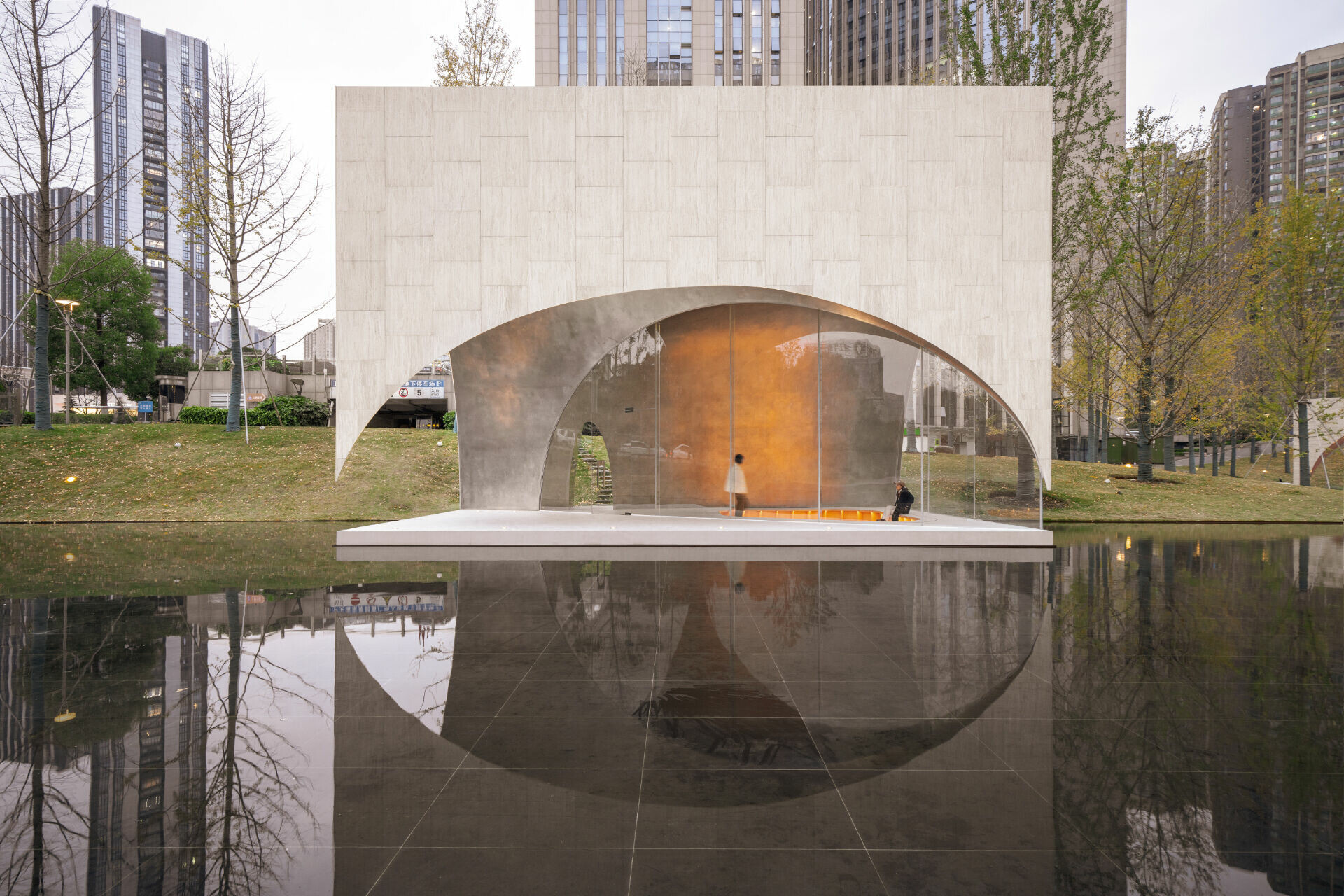
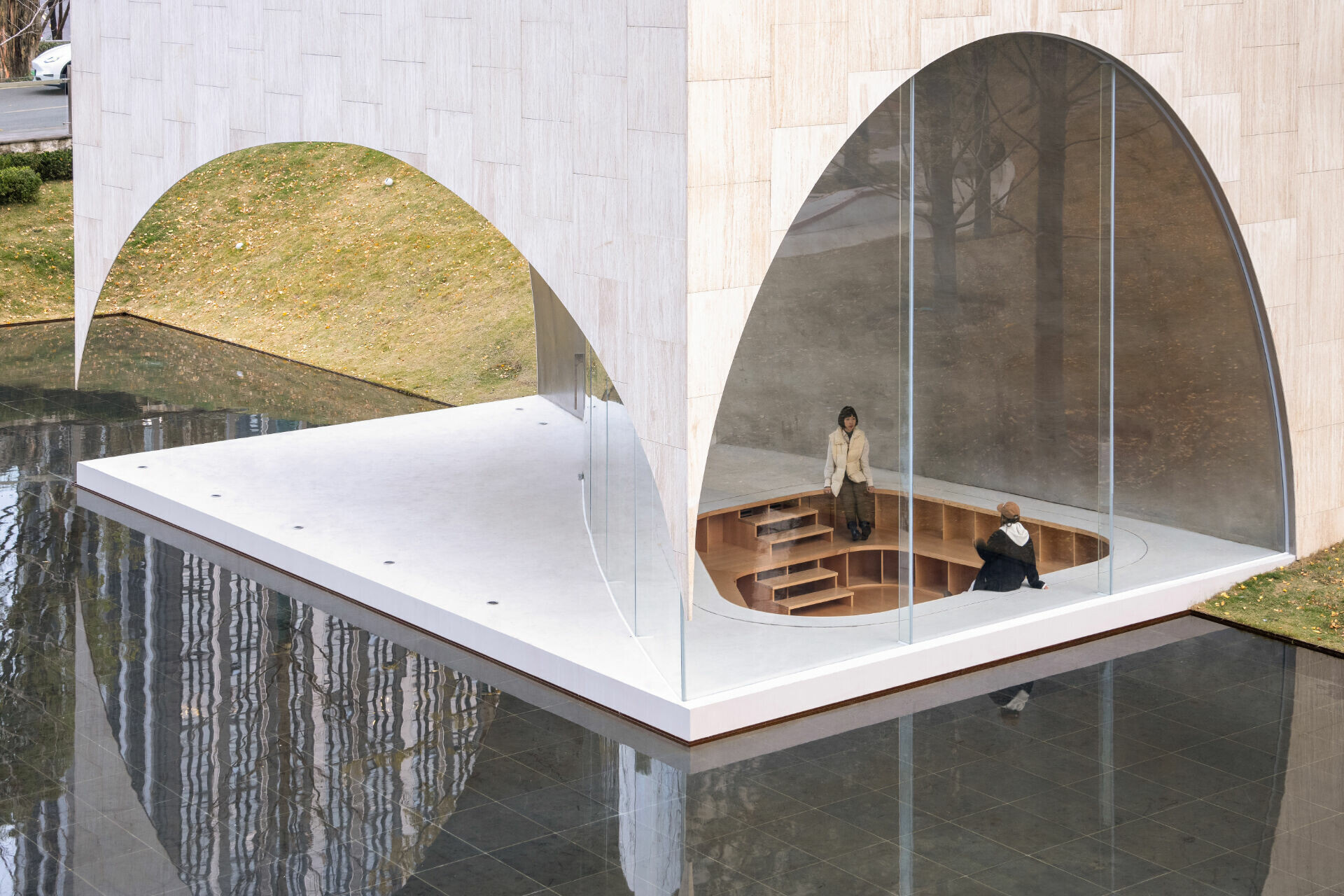
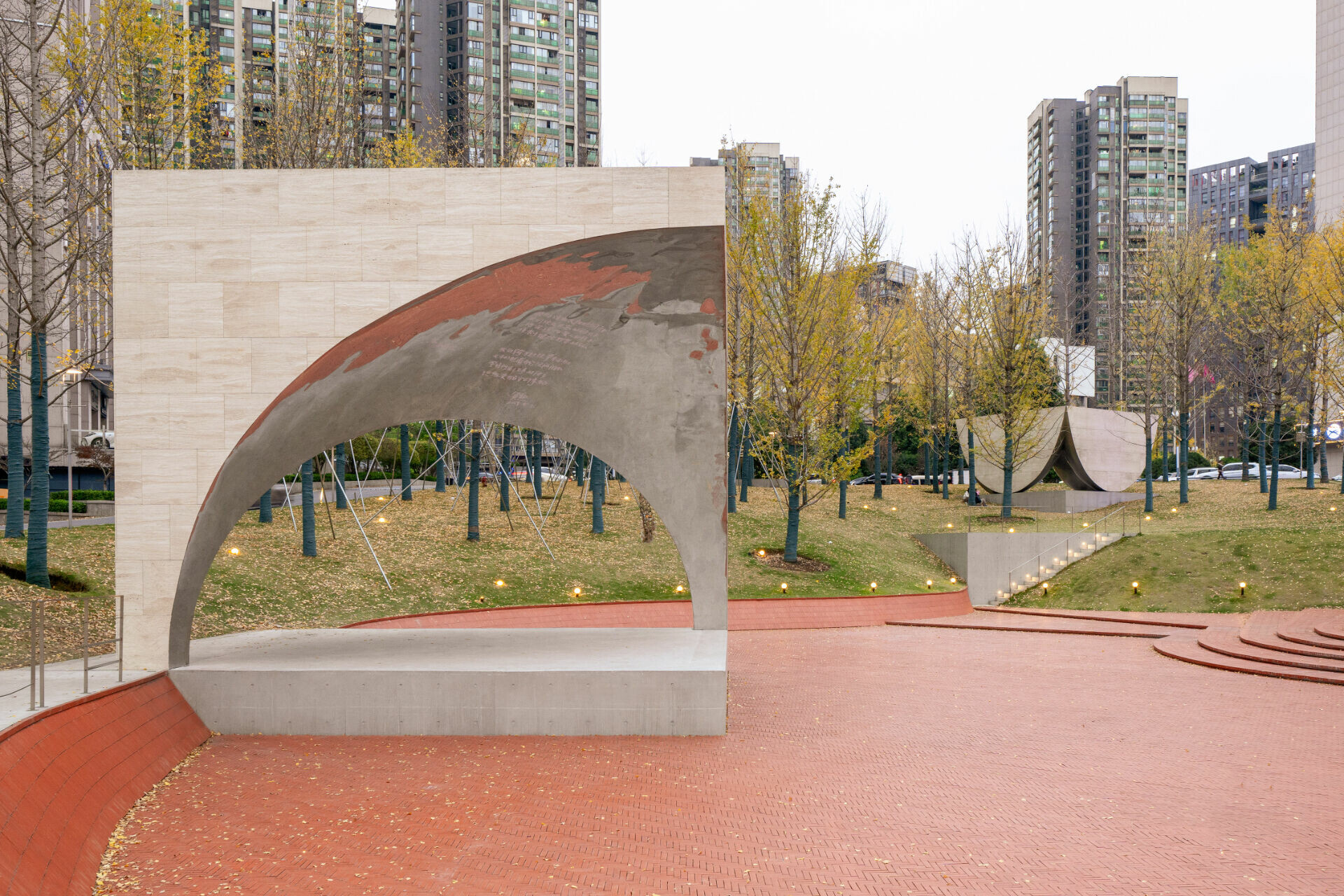
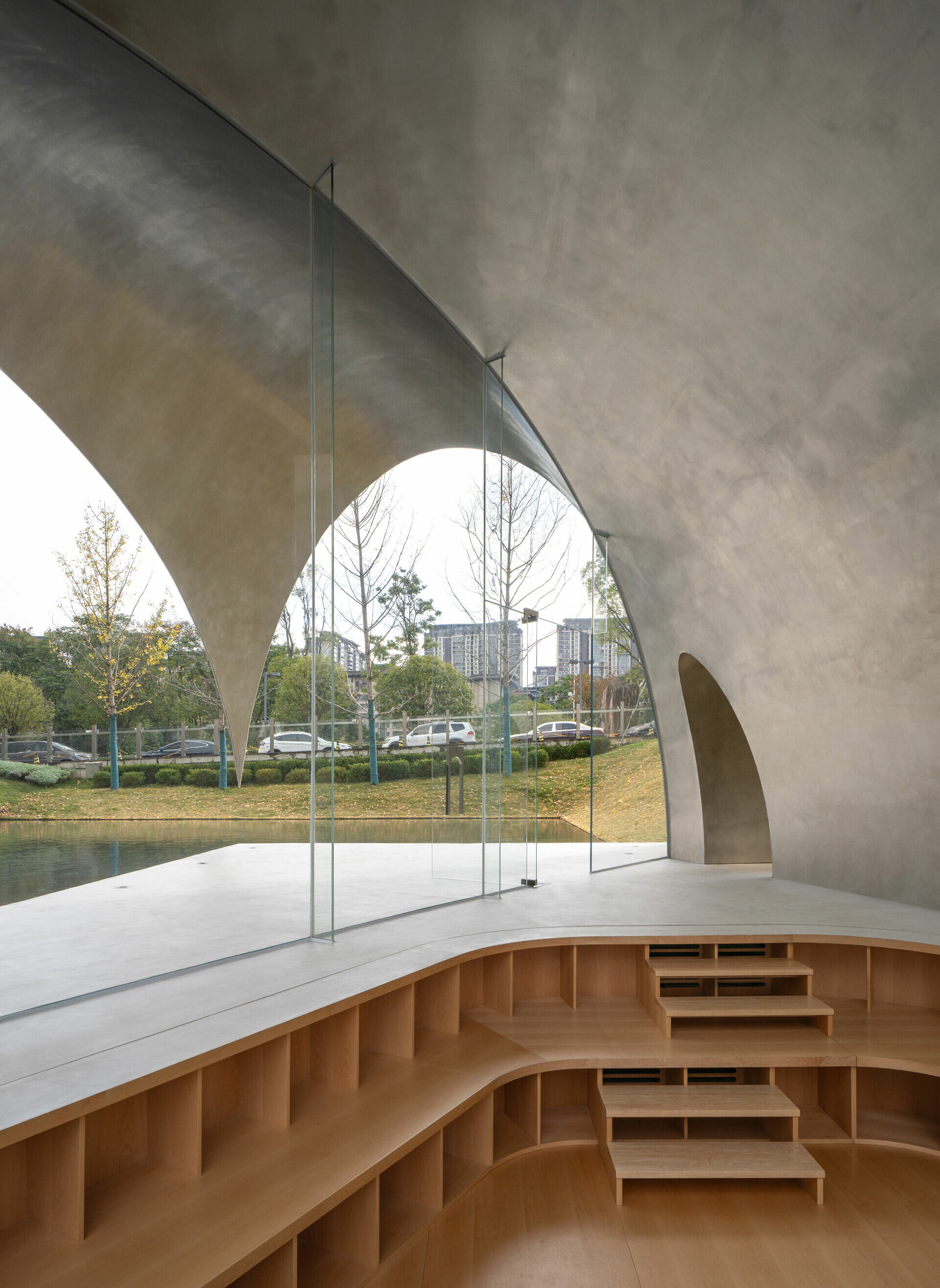
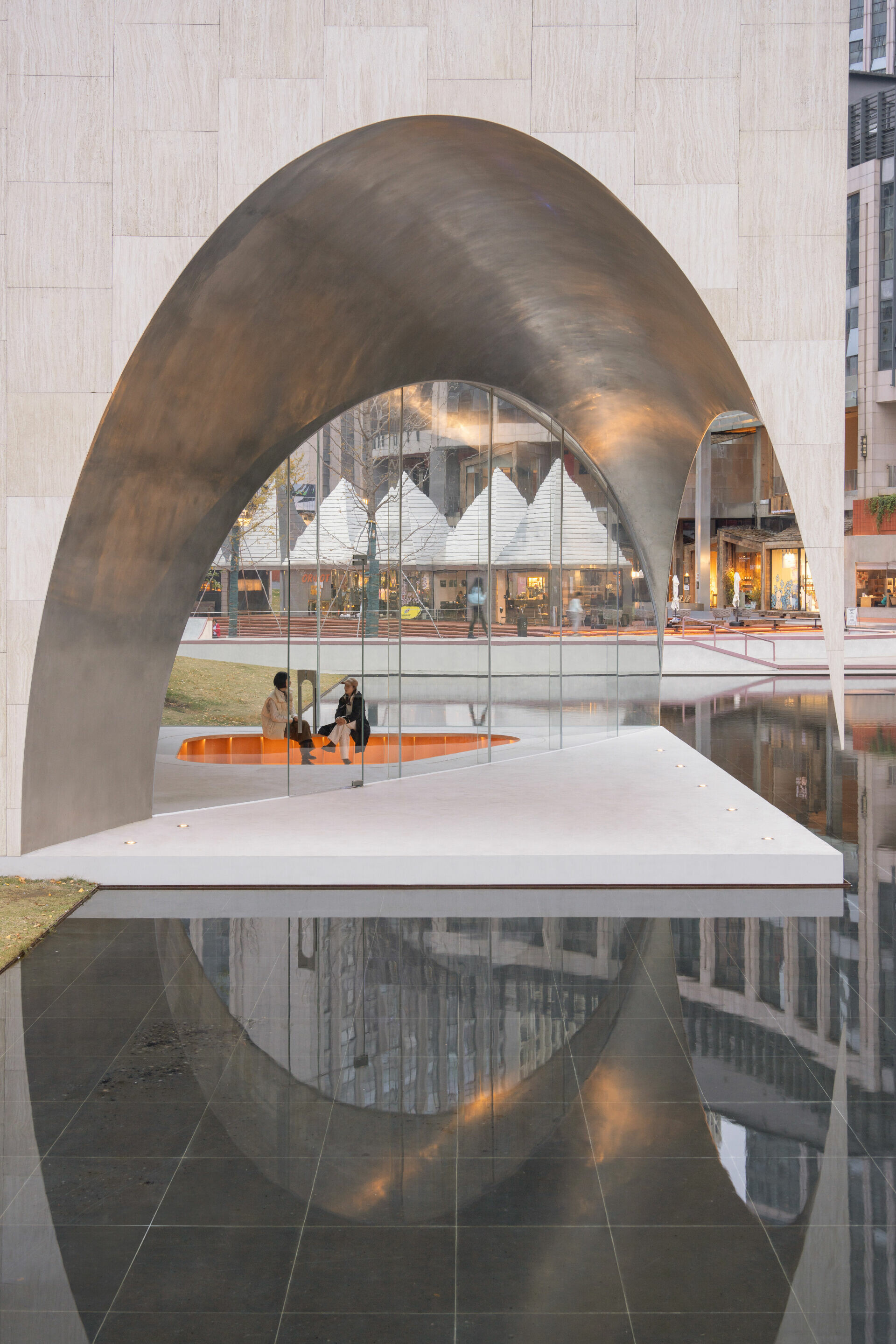
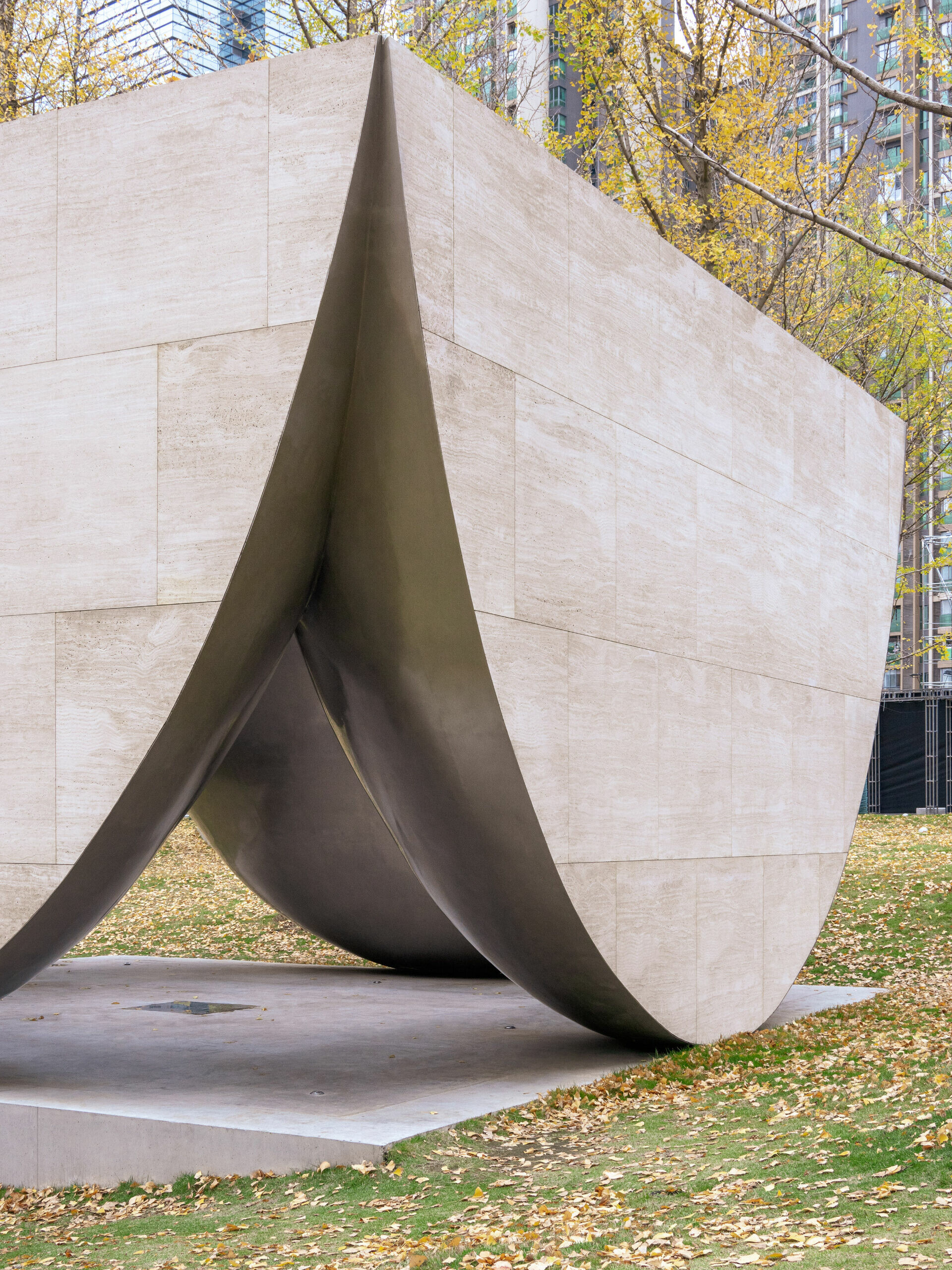
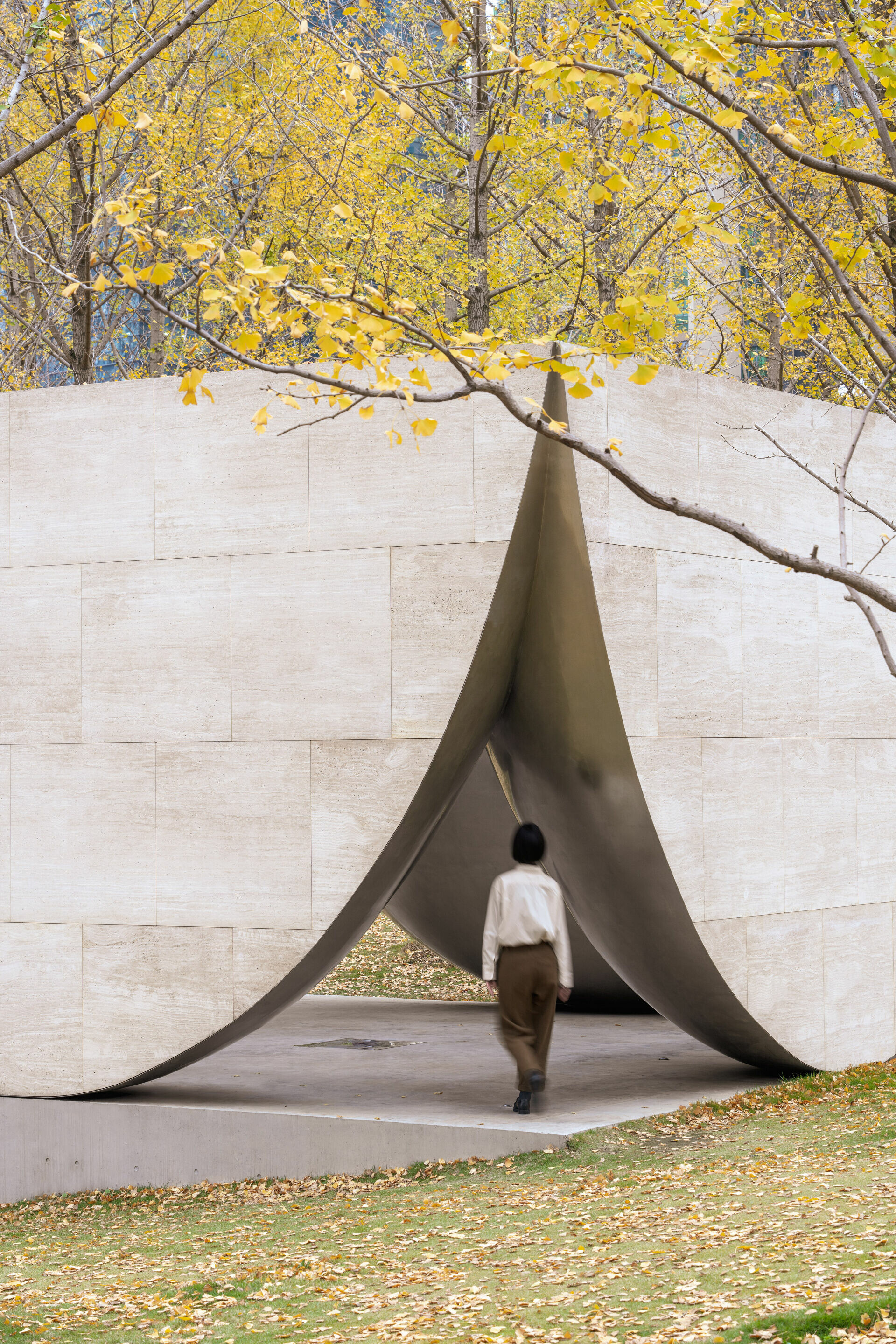
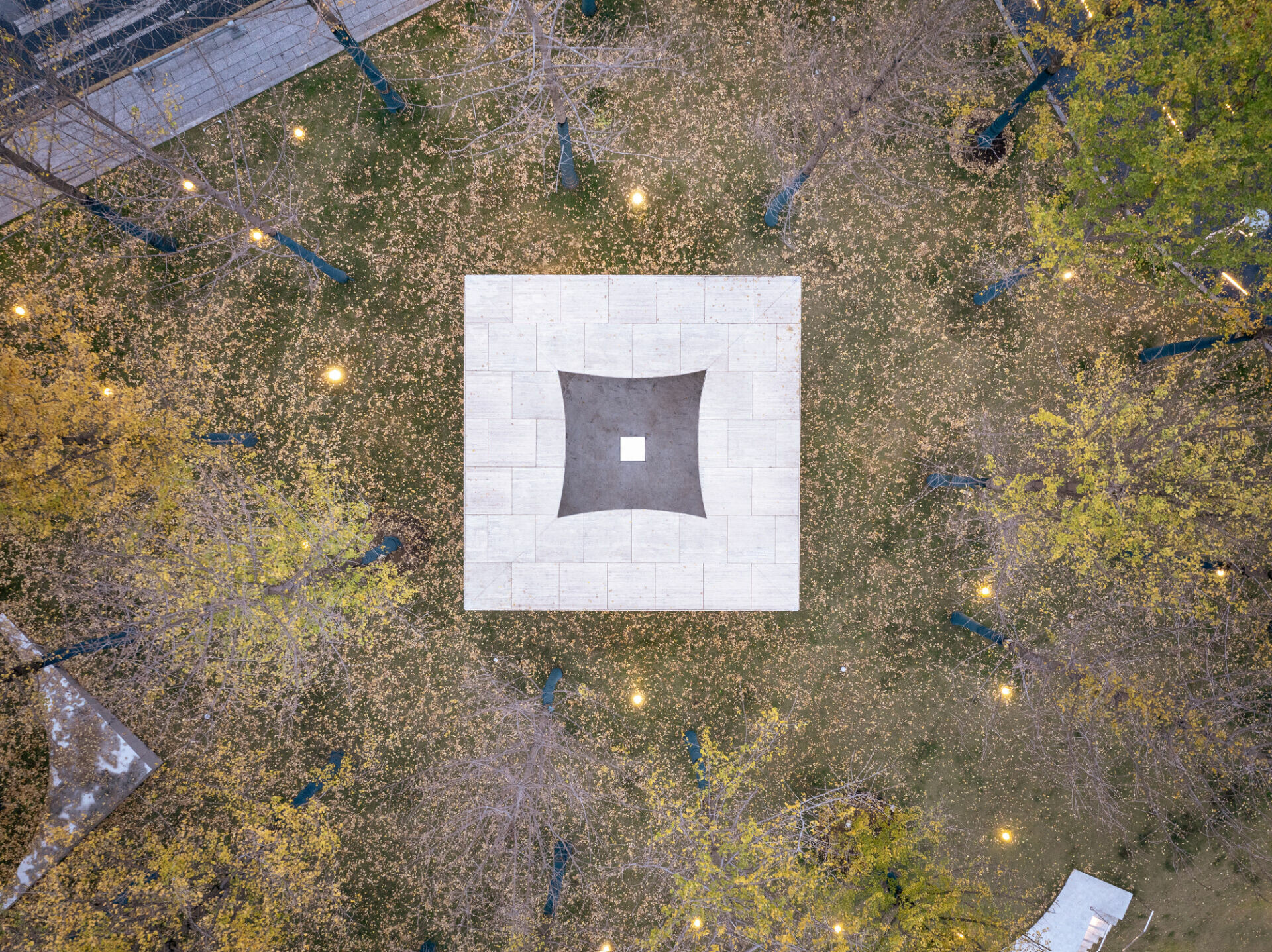
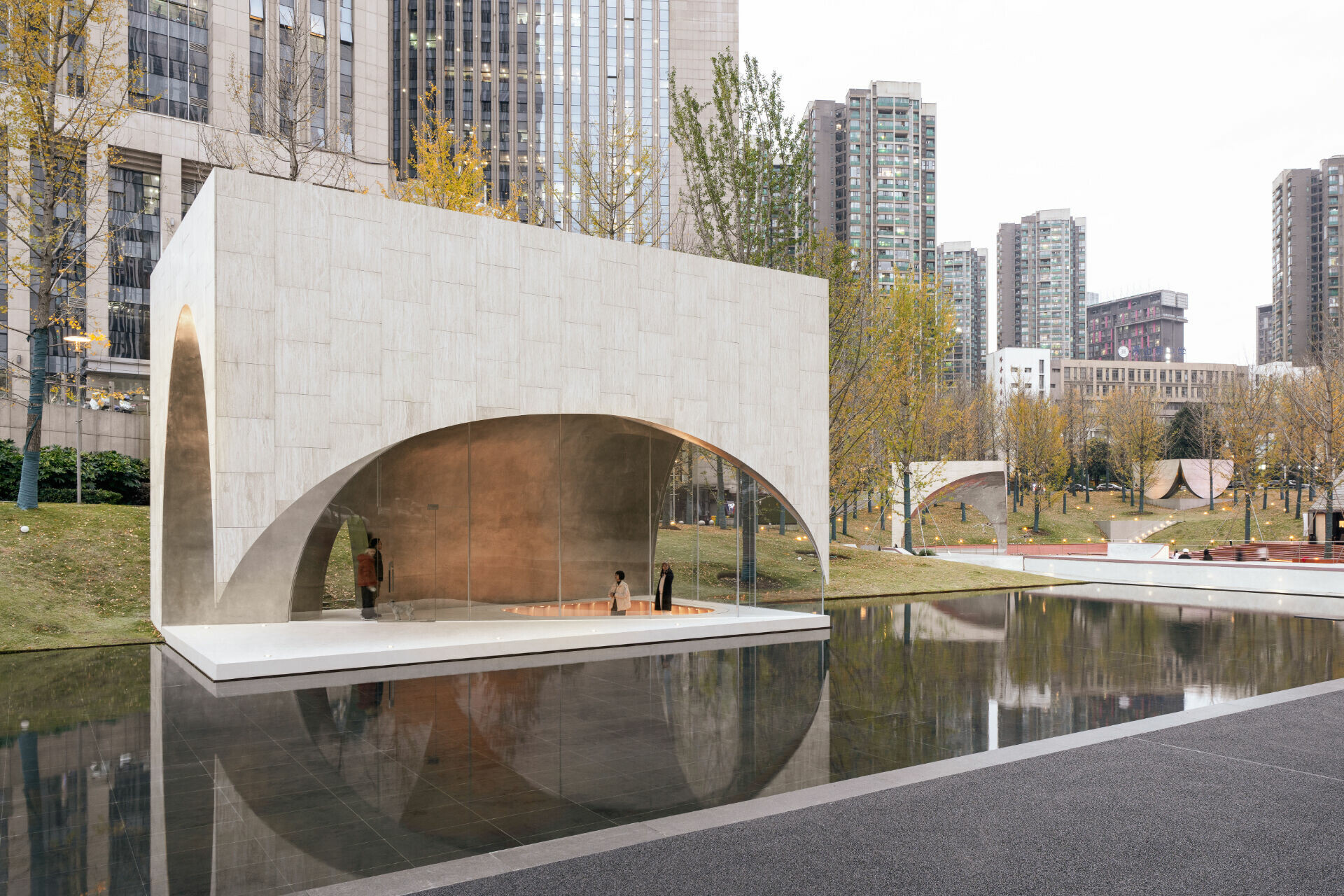
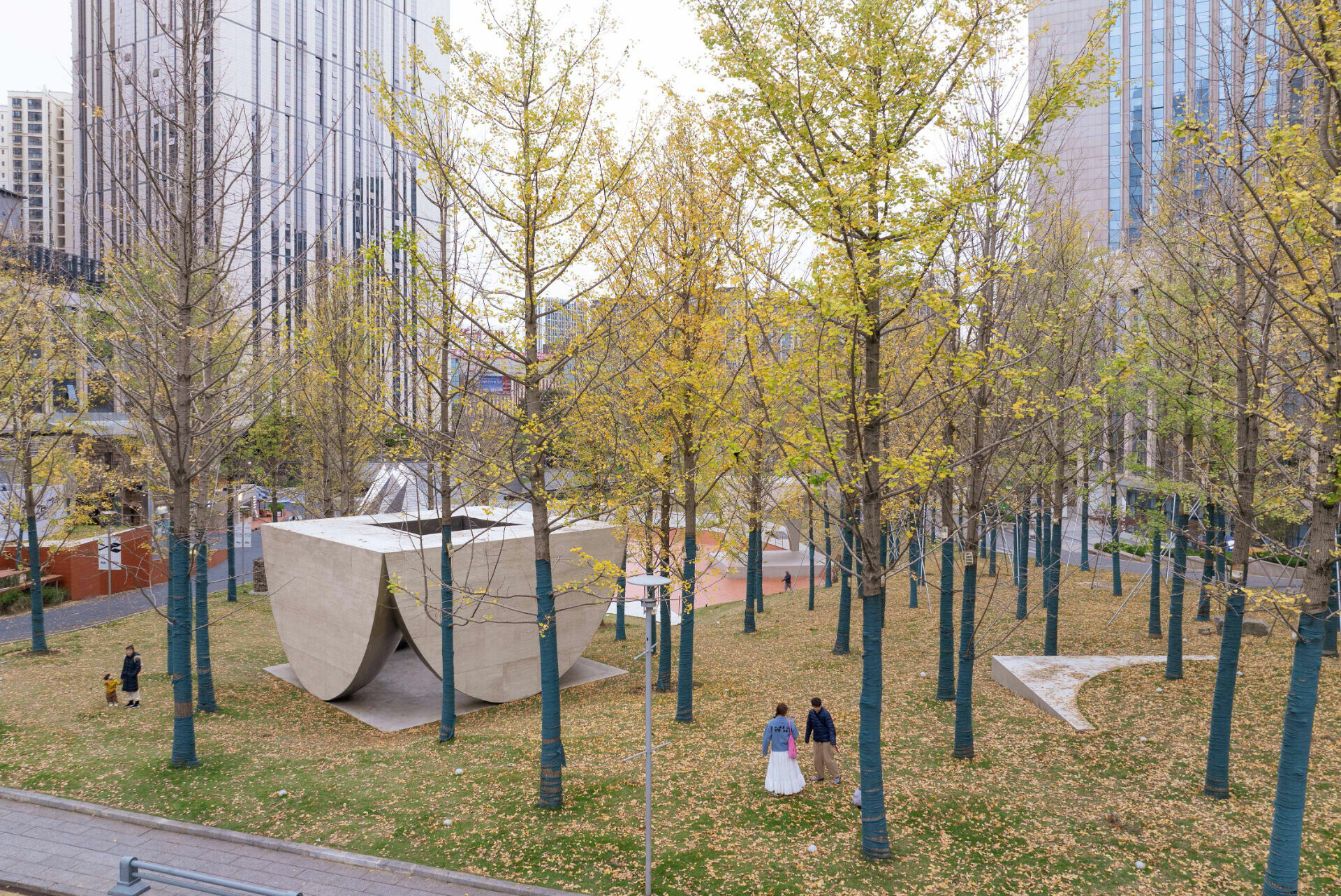
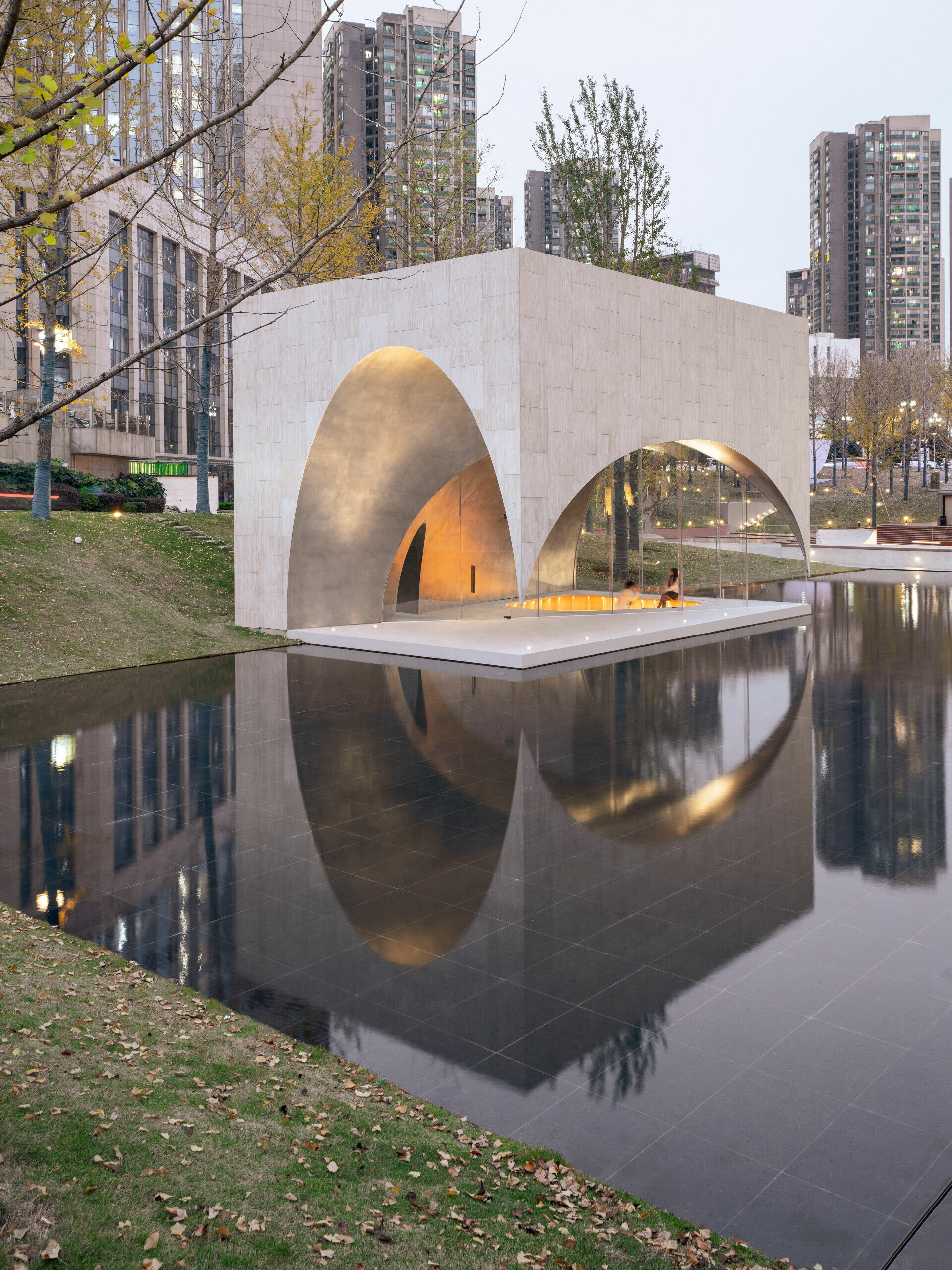
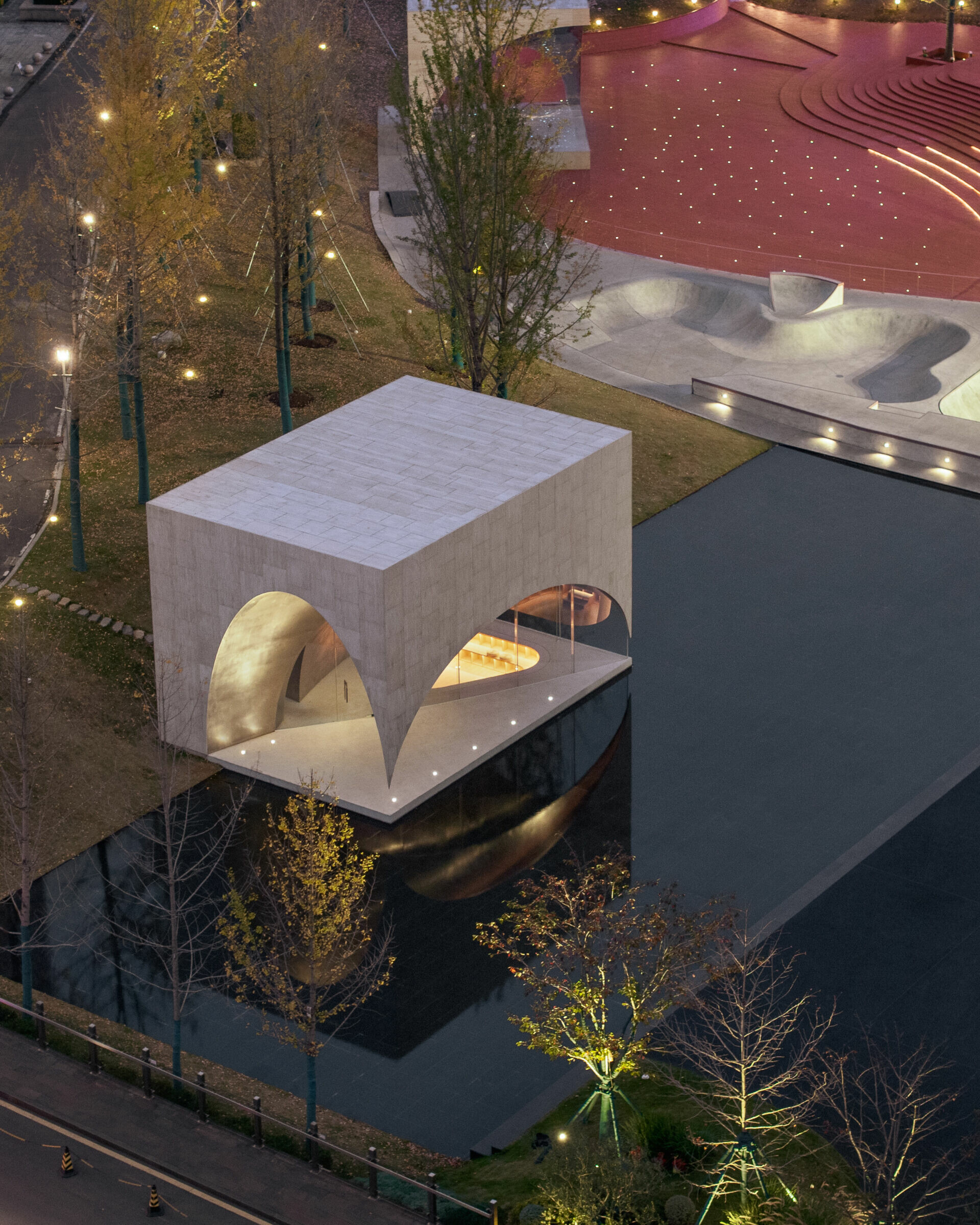
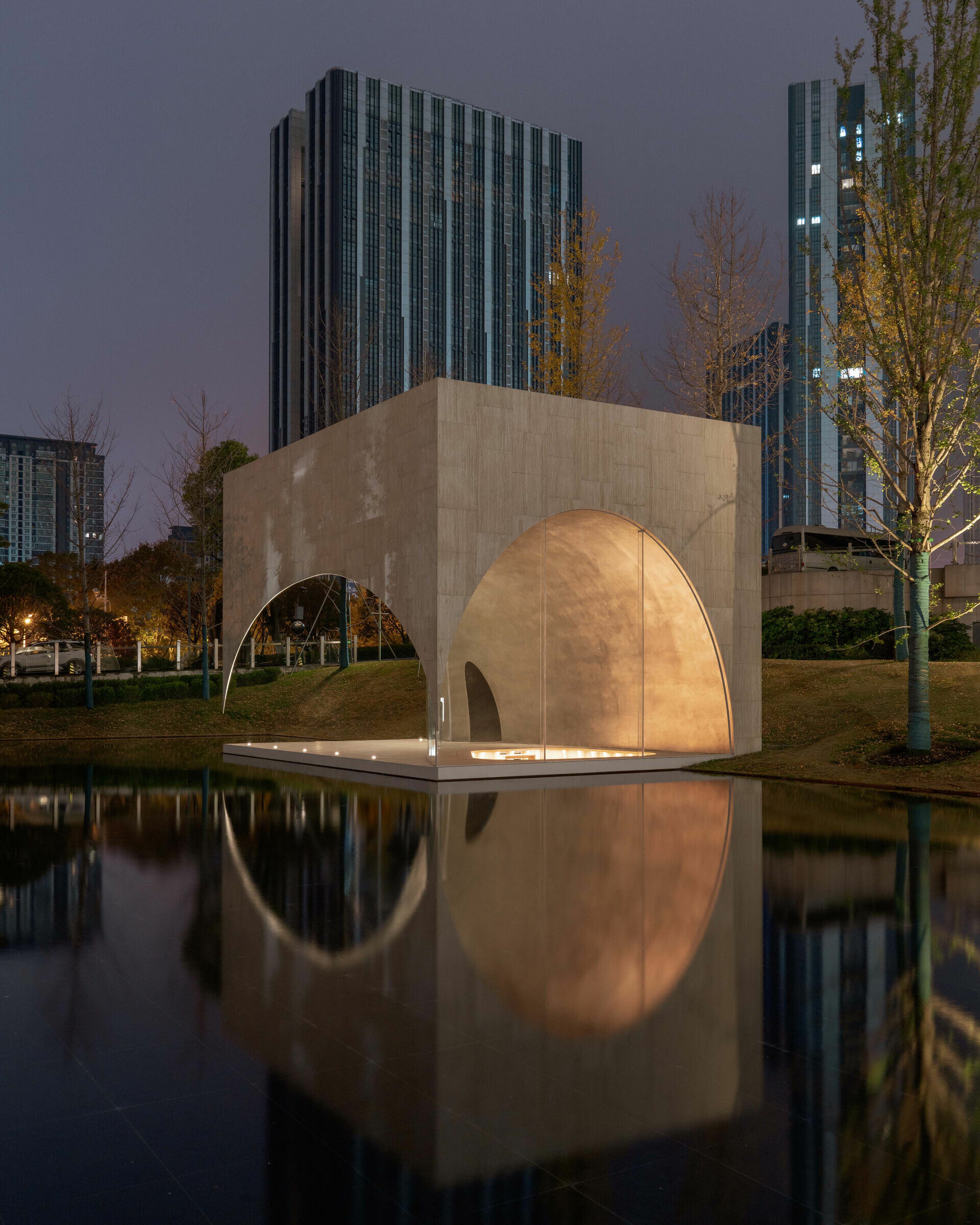
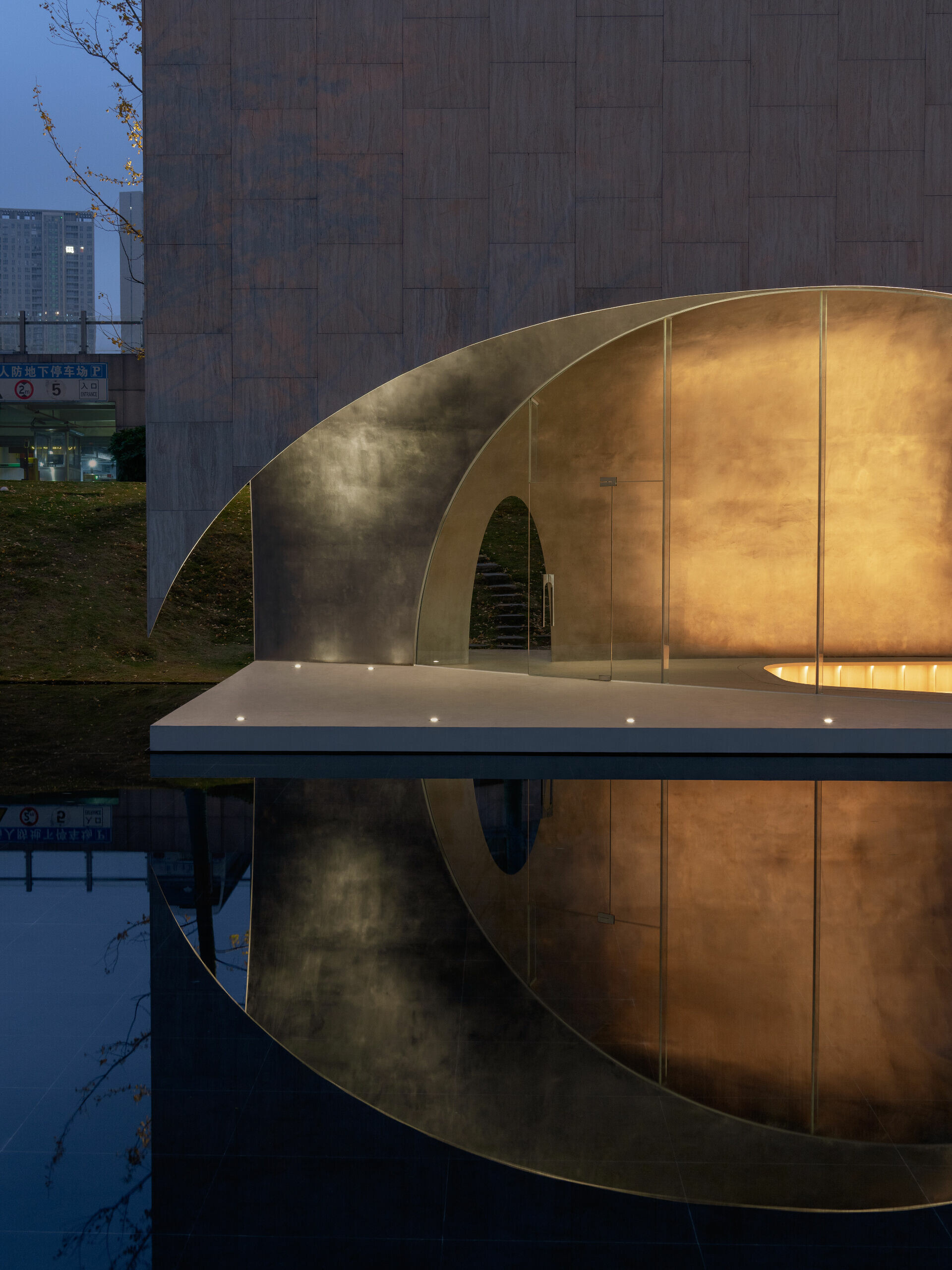
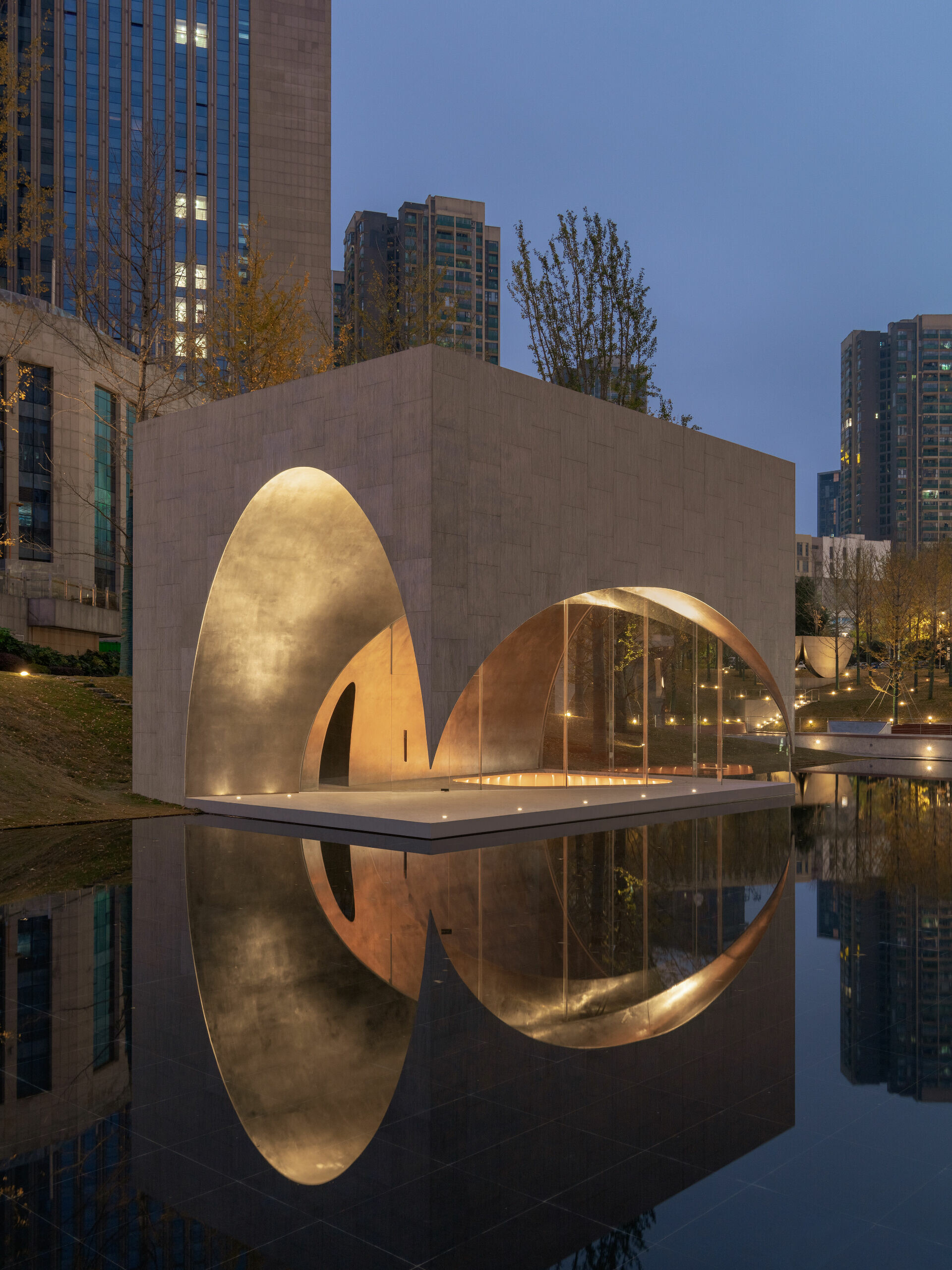
俐落弧線簡單畫下幾筆,流暢地勾勒洗馬書苑、銀杏禮堂和大利戲台三座雕塑般的展館,彷彿從內部由空間與光元素的力量雕刻而成,形成猶若當地喀斯特溶洞般垂懸的尖拱,任由風、光線和時間得以穿過多孔白洞石外牆,於弧形不銹鋼板內恣意流轉,時刻邀請人們參與其中,不忘與自然環境對話。隨著使用場景不同,三座量體分別在相似語境中展現微妙差異。從遠處眺望屹立於水面的洗馬書院,方形輪廓內的金屬拱穹閃爍著粼粼波光,與水中的倒影相連成一輪婆娑月影,恍若正在欣賞一幅詩意畫景。來到山坡銀杏林中,覓得好似由四片巨大葉片撐起的禮堂,穿過雙弧形金屬量體間的狹窄縫隙,迎來的是中央的虛無,仰頭便擁有一片天空,伴隨著颯颯風聲,思緒隨之飄揚。夜晚,面向廣場的大利戲台以敞開的姿態,歡迎人們於星空下共享表演盛會,忘情地隨嵌入地面的光纖燈沉浸當下搖擺身體。
With clean arcs and fluid outlines, the three sculptural halls—Xima Library, Ginkgo Chapel, and Dali Stage—seem carved from within by the forces of space and light, forming suspended pointed arches reminiscent of local karst caves. Air, daylight, and the passage of time flow through façades of porous white travertine, while the interiors are clad with curved stainless-steel panels that reflect and diffuse light in shifting ways. Though sharing a common architectural vocabulary, each volume reveals subtle distinctions through its function and setting. At the water’s edge, the square form of the Xima Library holds a metallic dome that glimmers across the rippling surface, its reflection merging into the image of a wavering moon. On the hillside, the Ginkgo Chapel is lifted by four immense leaf-like planes; passing through the narrow fissure between twin curved shells, visitors emerge into a central void, where sky and wind become part of the experience. Facing the plaza, the Dali Stage opens outward, its ground embedded with optical fibers that scatter points of light like a galaxy across the floor, transforming evening performances into celebrations beneath the stars.
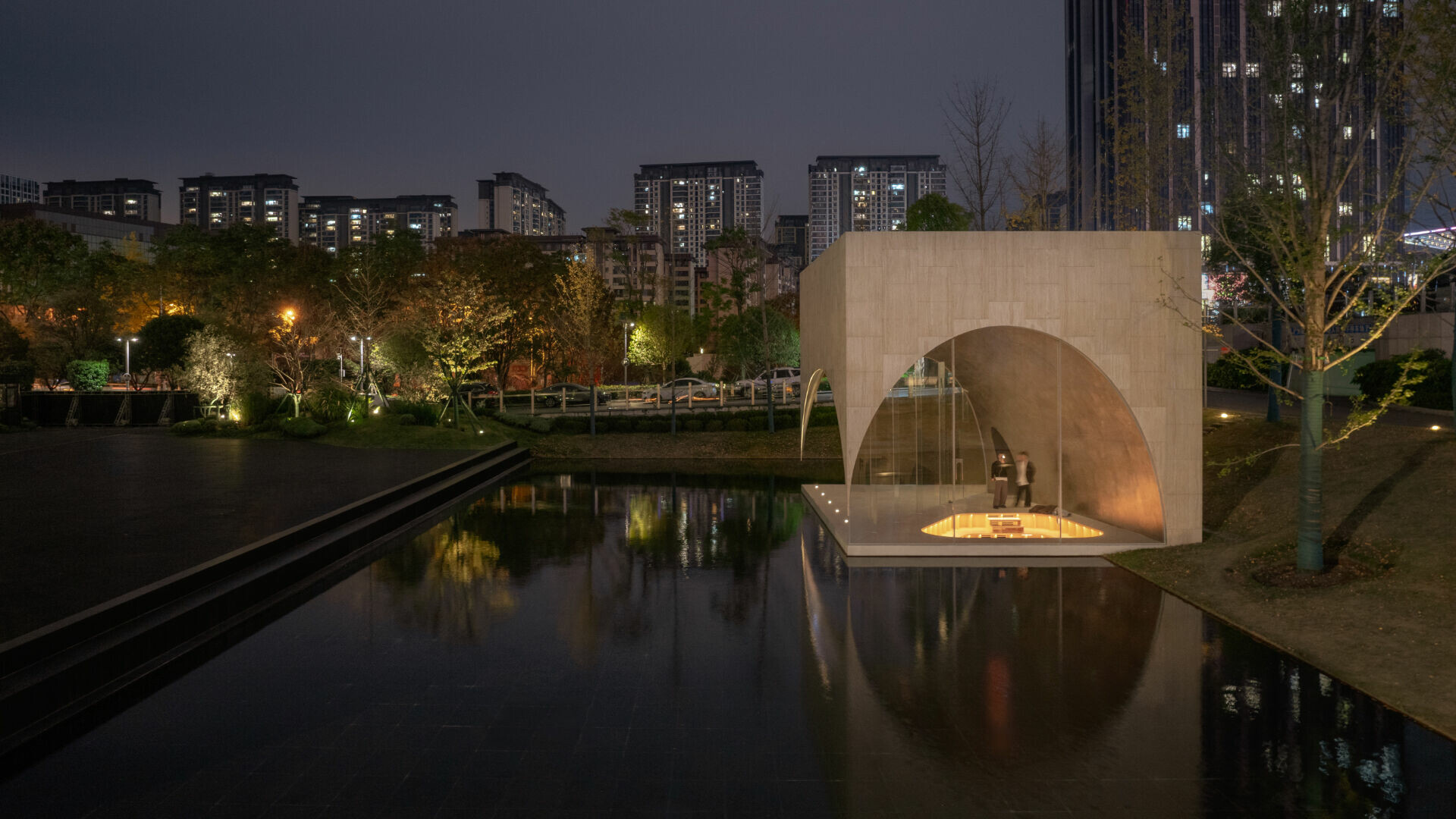
現今,藝術表達不再拘泥於傳統形式,也不再是單方面扮演創作者和欣賞者的角色,當藝術家或建築師在城市中留下一件件作品,它更像是一種載體,融合了社會思想、地域文化和生態景觀,好似在對所有人拋出開放式問題,提供一個空間邀請眾人經由實際體驗、經歷和探索,去思索這些公共藝術與自身生活環境的相互關係,從而激盪出不同解答,賦予這些裝置藝術更豐富的意義,並意識到生活美學在人、自然與環境間扮演著不可或缺的互動媒介。
Today, artistic expression no longer conforms to traditional forms, nor rests solely on the distinction between creator and spectator. When architects and artists leave their works within the city, these become more than physical objects: they are vessels that interweave social thought, regional culture, and ecological landscape. They pose open-ended questions to all who enter, offering spaces that invite experience, exploration, and reflection. In doing so, these public art structures gain richer layers of meaning and affirm the role of aesthetics as an indispensable medium of dialogue between people, nature, and the environment.