層疊的住宅
House of Layers
我們都希望能住在生活機能豐富、交通網路便利的環境,但這是否也意味著對於住宅面積的要求需要退而求其次?小坪數住宅儼然已成為市場主流,許多人也不再堅持傳統的格局劃分,轉而思考如何在有限空間內,創造一個讓自己感到舒適自在且能靈活運用的生活場域。面對這間位於台北的單人住宅,來自上海的 metrics architecture studio 繼上個「一人公寓」計畫後,接續透過小空間探索具趣味性的布局。可以看見,在這開放式場域內,不似過去熟悉的走廊形式與房間分布,反而讓生活在一開一合間層層帶來新的空間體驗,即使長時間生活其中,也不覺得單調乏味,使日常就像在探險般令人感到新奇有趣。
In cities where well-developed infrastructure and convenient public transit are prized, must we settle for less in terms of living space? Small-footprint dwellings have become a dominant typology in the urban housing market. Increasingly, people are letting go of rigid spatial divisions, choosing instead to explore how compact interiors might offer comfort, adaptability, and a sense of ease. For this single-resident home in Taipei, Shanghai-based metrics architecture studio continues its spatial experimentation following the earlier project Flat for One. The design once again probes the possibilities of small-scale living, this time through an open layout that breaks away from conventional corridors and room-based compartmentalization. The space unfolds in overlapping rhythms of expansion and enclosure. Even with prolonged use, the experience remains engaging—daily routines take on the quality of quiet exploration, offering subtle surprises through the choreography of movement and spatial thresholds.
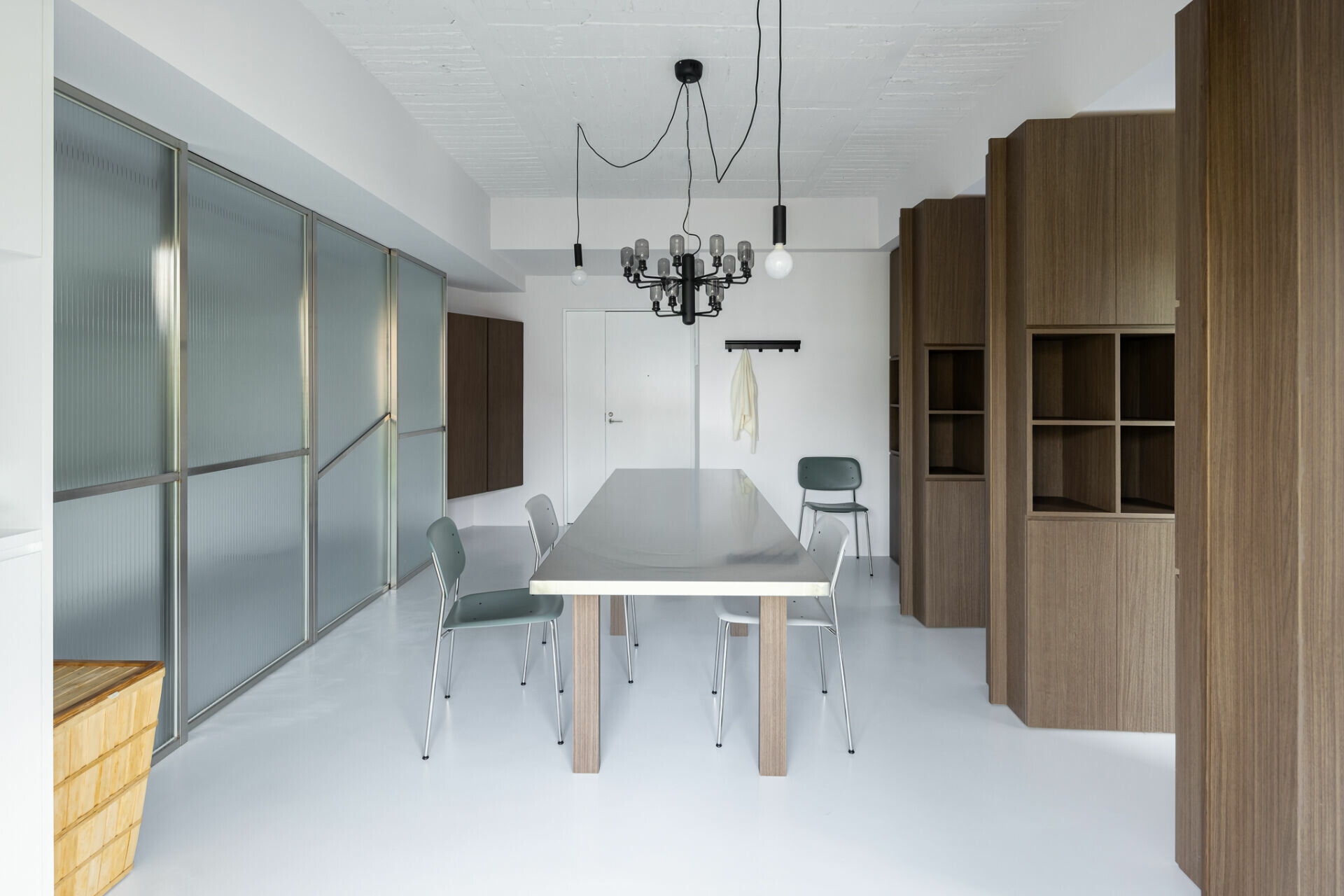
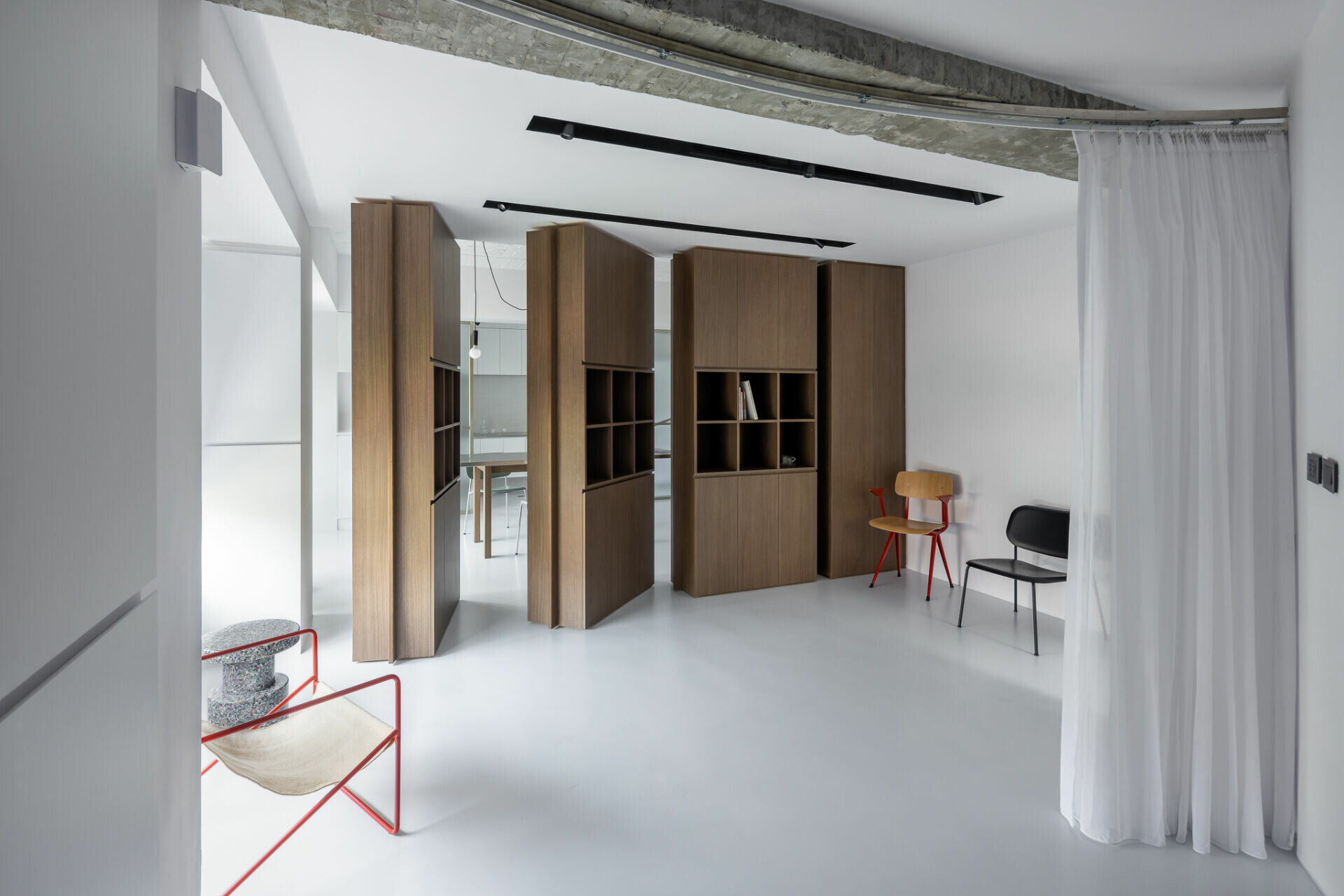
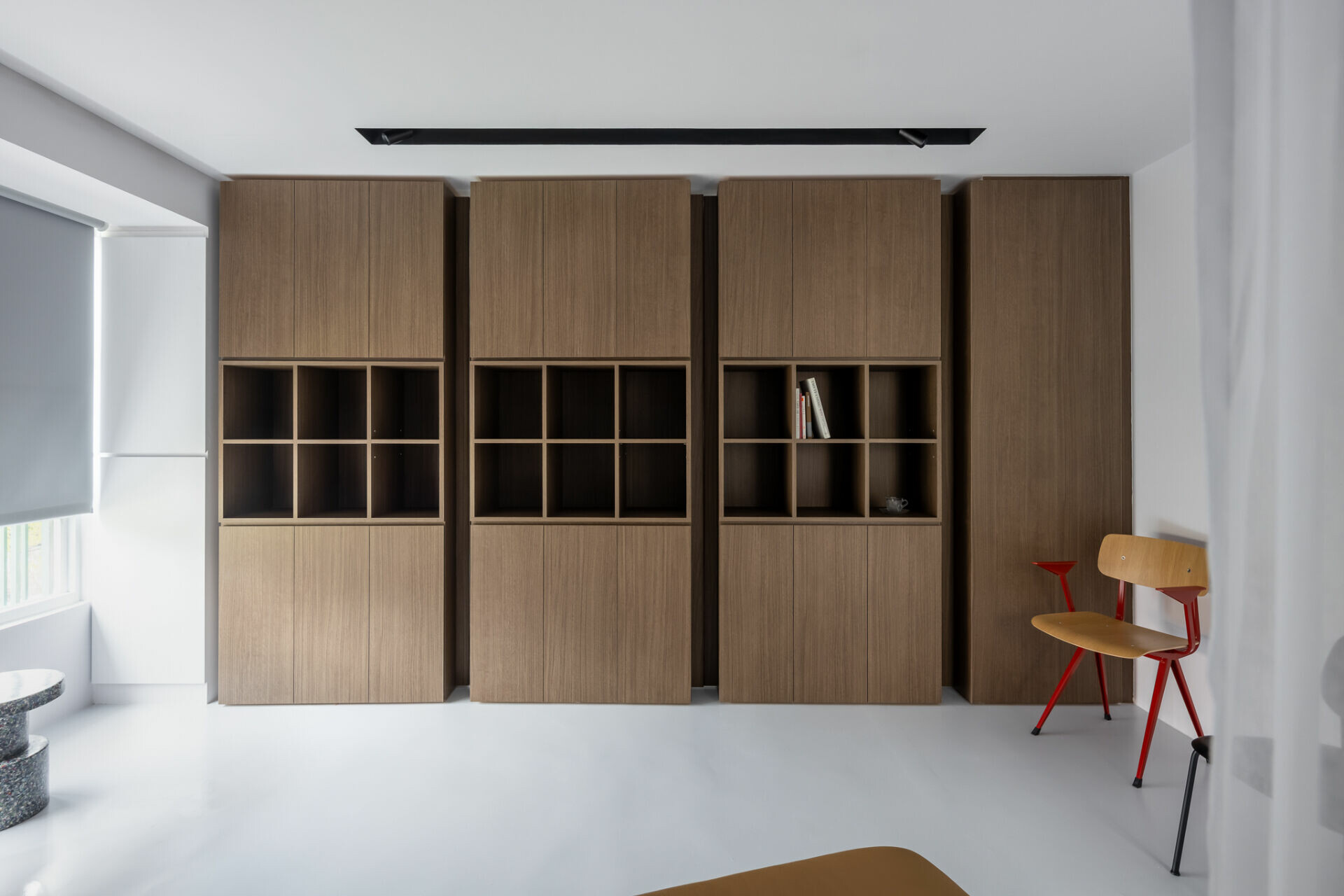
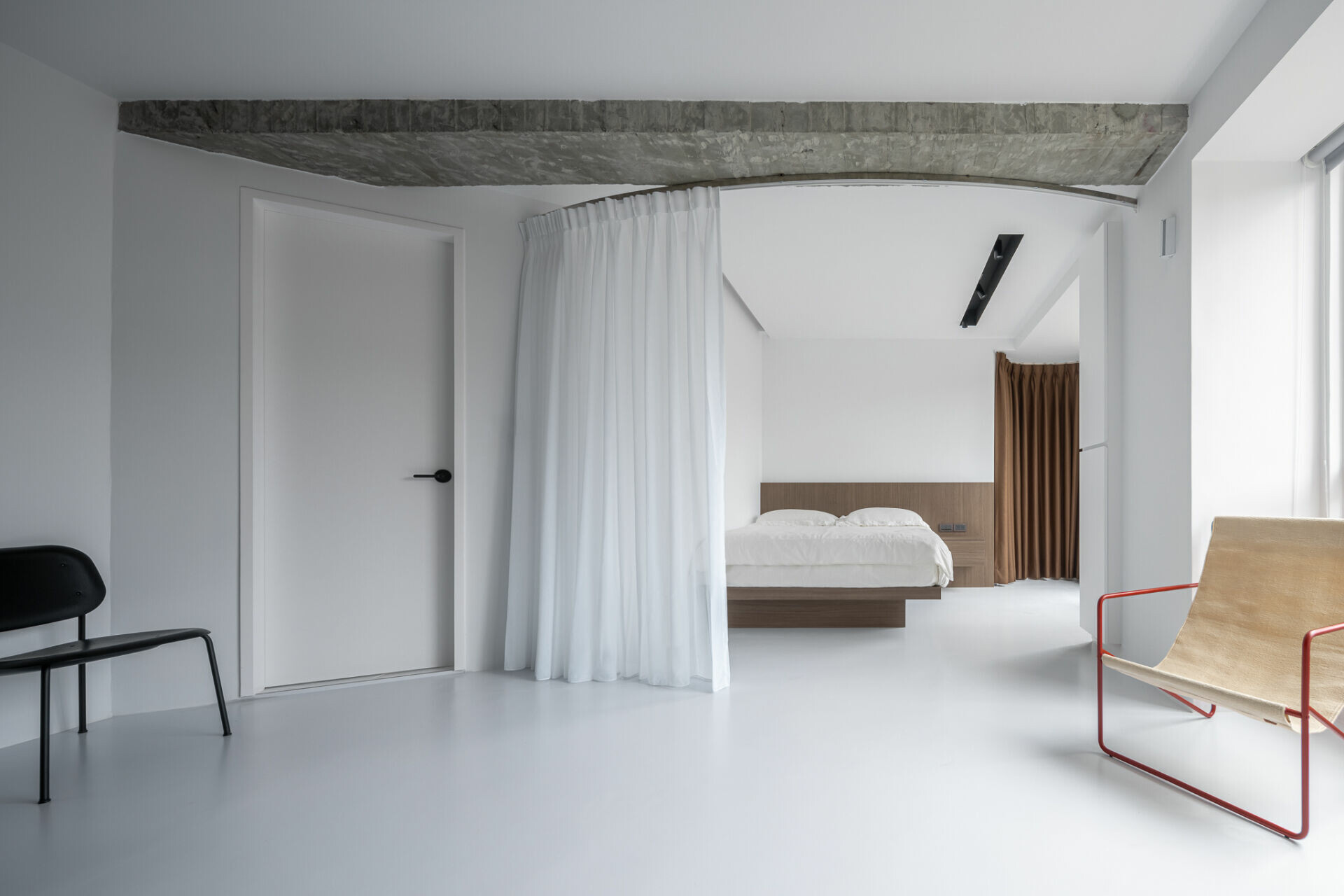
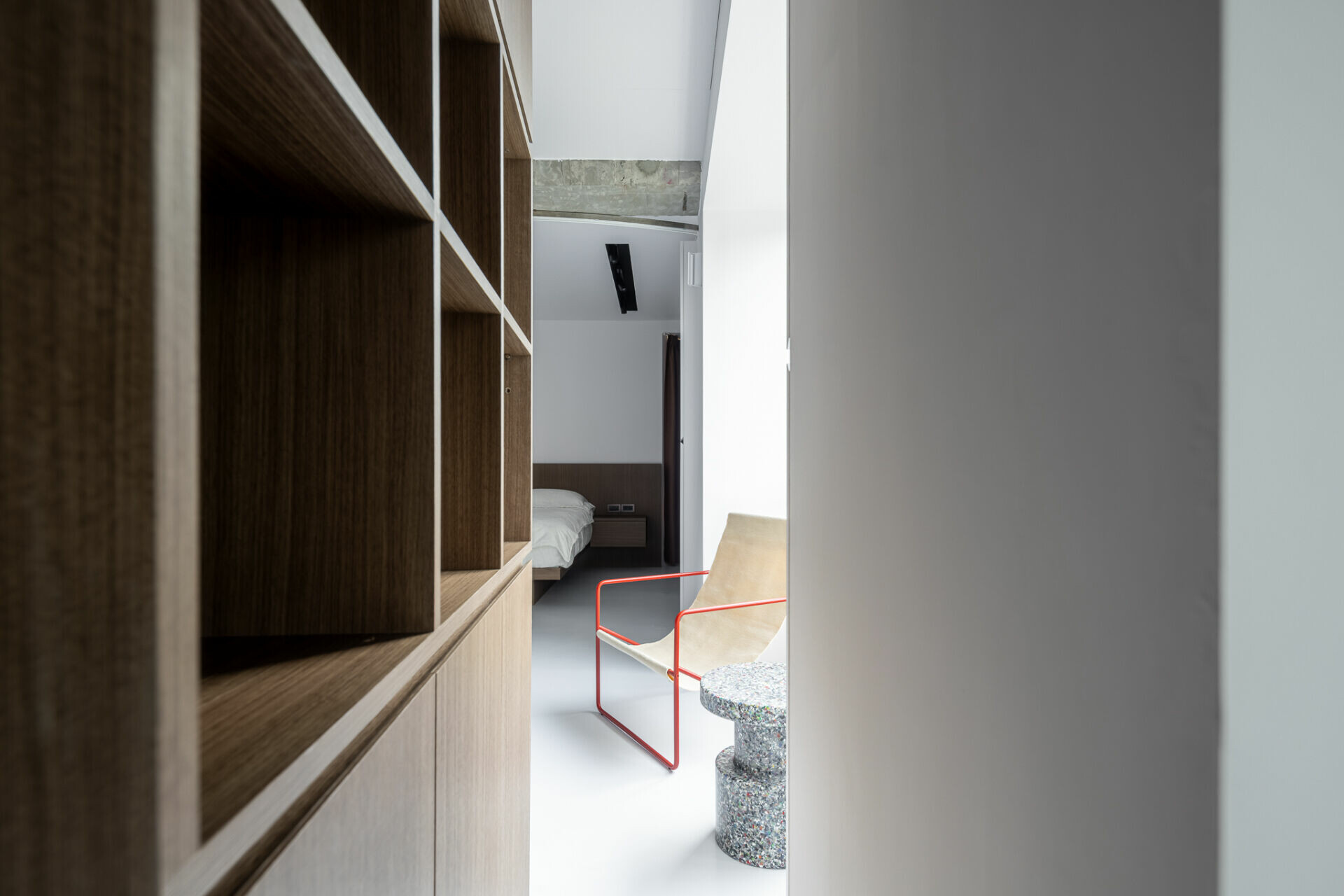
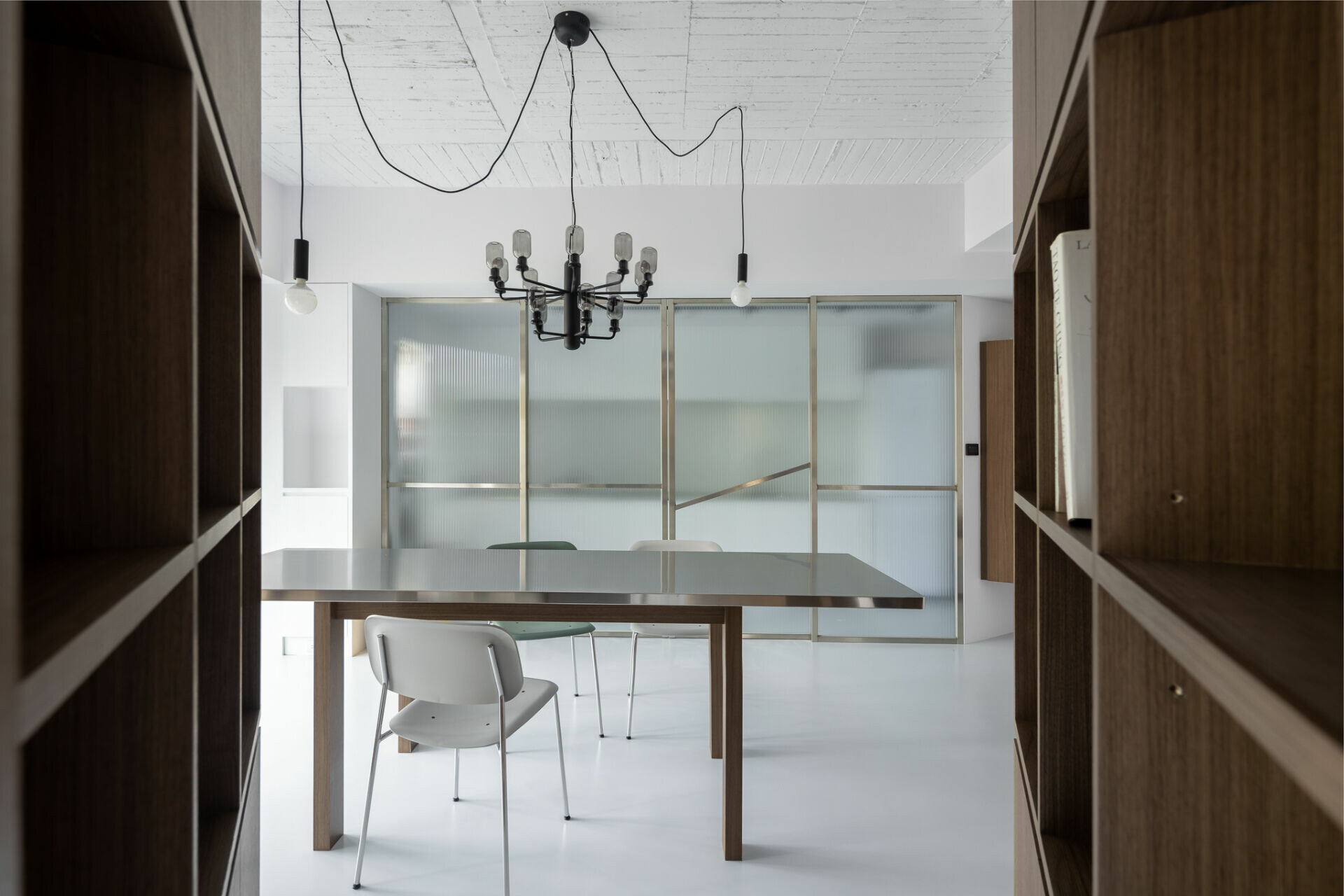
放眼望去,純白壁面由俐落線條勾清晰的空間輪廓,坐在餐桌前,仰頭可見天花從白色塗料隱隱透出的條形紋理,轉身之間,視線穿過向一側敞開的胡桃木高身櫃,客廳上方原始裸露的水泥梁格外醒目,為這純淨畫面注入一絲自然不造作的粗獷美感。在這裡,不會感到拘束,空間既不壓迫也不缺乏隱私,有別於多數規矩的單開門片,不論是巧妙遮蔽廚房的長虹玻璃摺疊門、還是正中央可自由改變方位的旋轉式木櫃,甚至是沿著弧型鐵件滑軌輕巧界定休憩區域的拉簾,皆可靈活依據當下需求轉換空間情境,營造出從公共到私密的層次感,日光亦能穿透開口與輕透材質,帶來明亮敞朗的居住視野。
Throughout the space, crisp white walls are articulated by clean lines that delineate the plan with clarity. Sitting at the dining table, one looks upward to find linear textures faintly revealed beneath a coat of matte white paint on the ceiling. A turn of the body brings the gaze across a tall walnut cabinet that stands partially open, drawing attention to a striking feature above—the exposed concrete beam over the living area. Raw and unadorned, it lends a touch of natural ruggedness to the otherwise pristine composition. Despite the compact footprint, the interior never feels constrained. On the contrary, it balances openness with a quiet sense of privacy. In place of standard single-leaf doors, the design incorporates a suite of flexible, movable elements: a reeded glass folding partition subtly conceals the kitchen; a pivoting wood cabinet at the center freely rotates to mediate between zones; and a sliding fabric curtain suspended from a curved steel track gently delineates the sleeping area. These adjustable layers allow the space to adapt fluidly to shifting needs, offering a dynamic gradation from public to private. Sunlight passes through openings and permeable materials, illuminating the interior with a soft, diffused clarity.
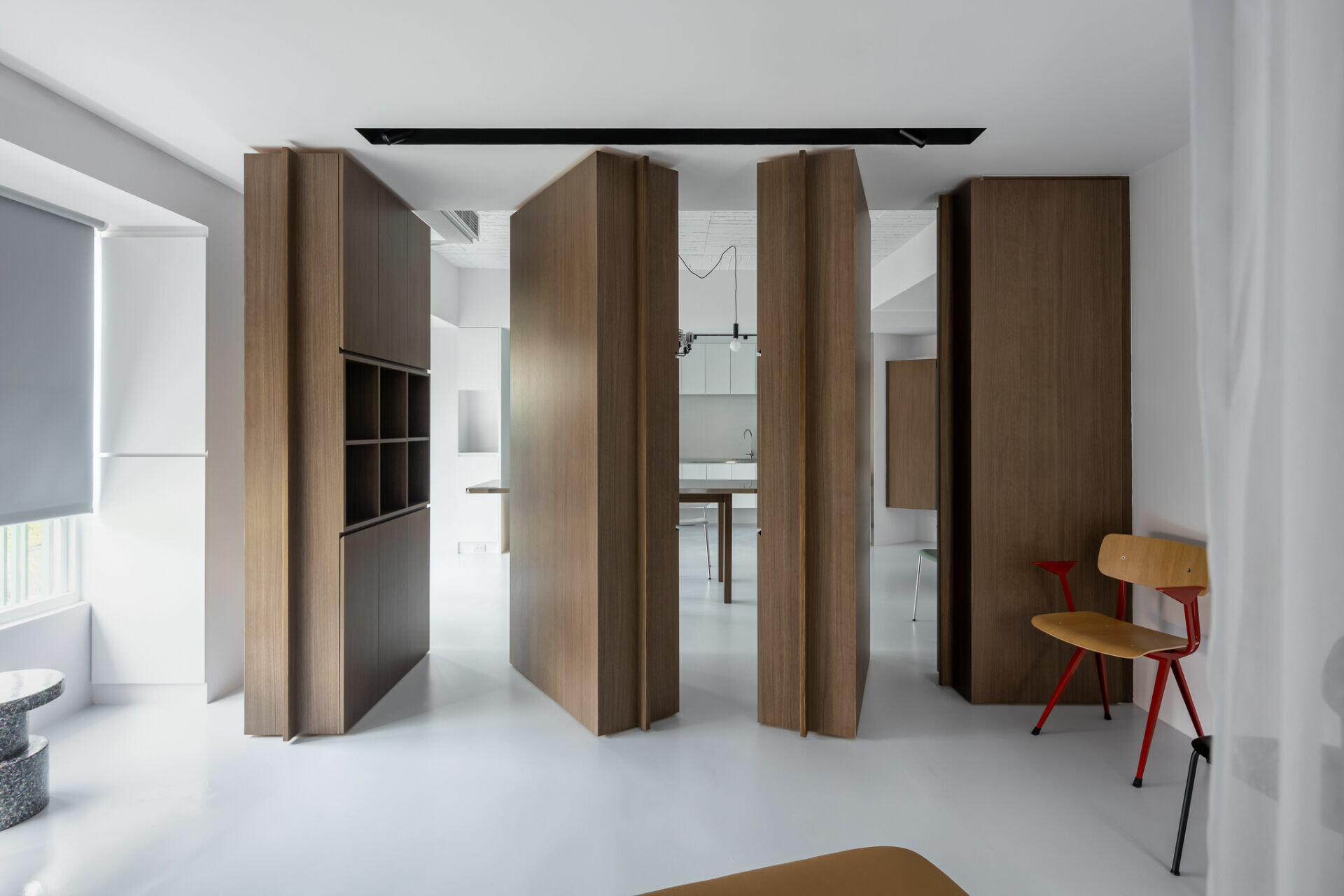
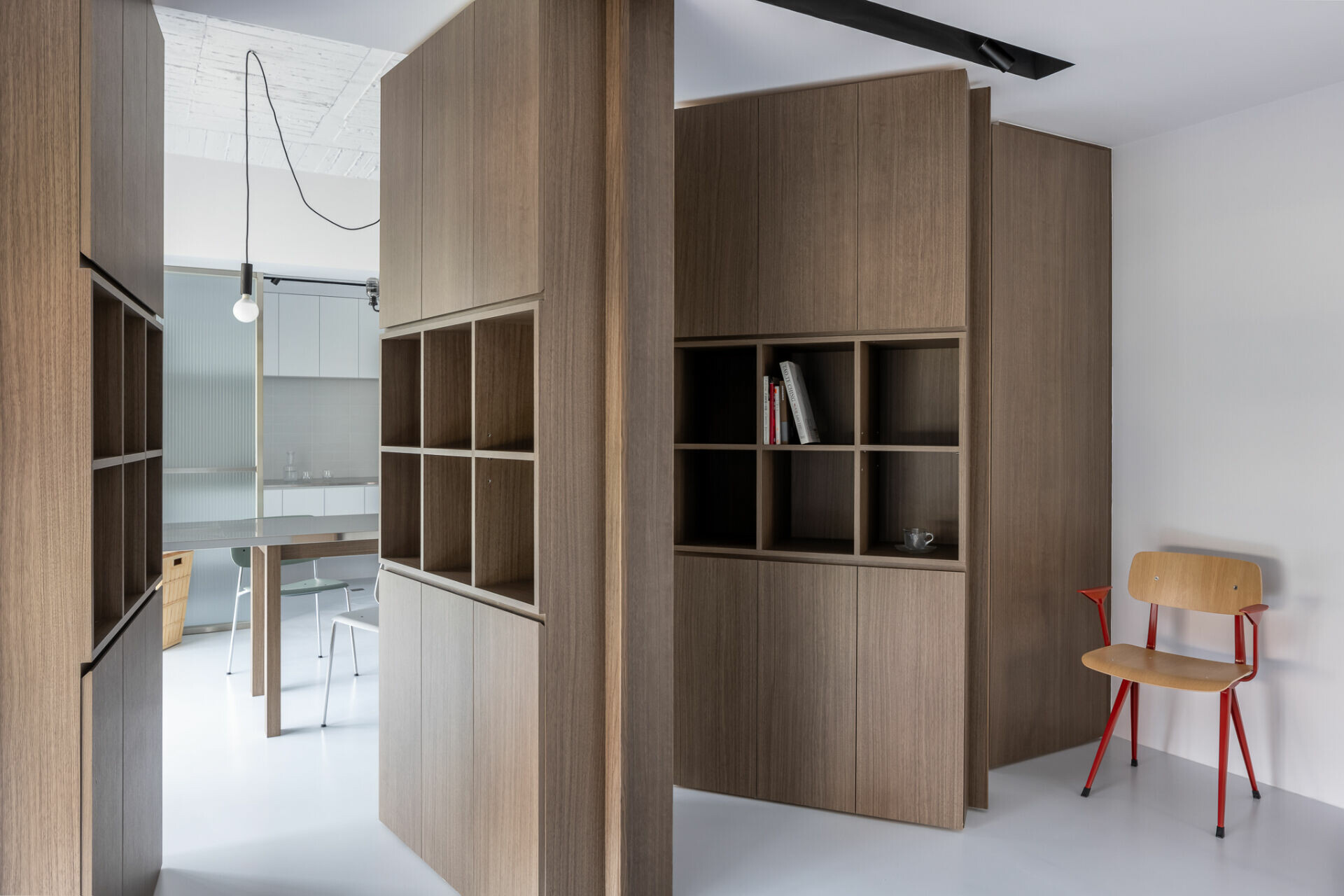
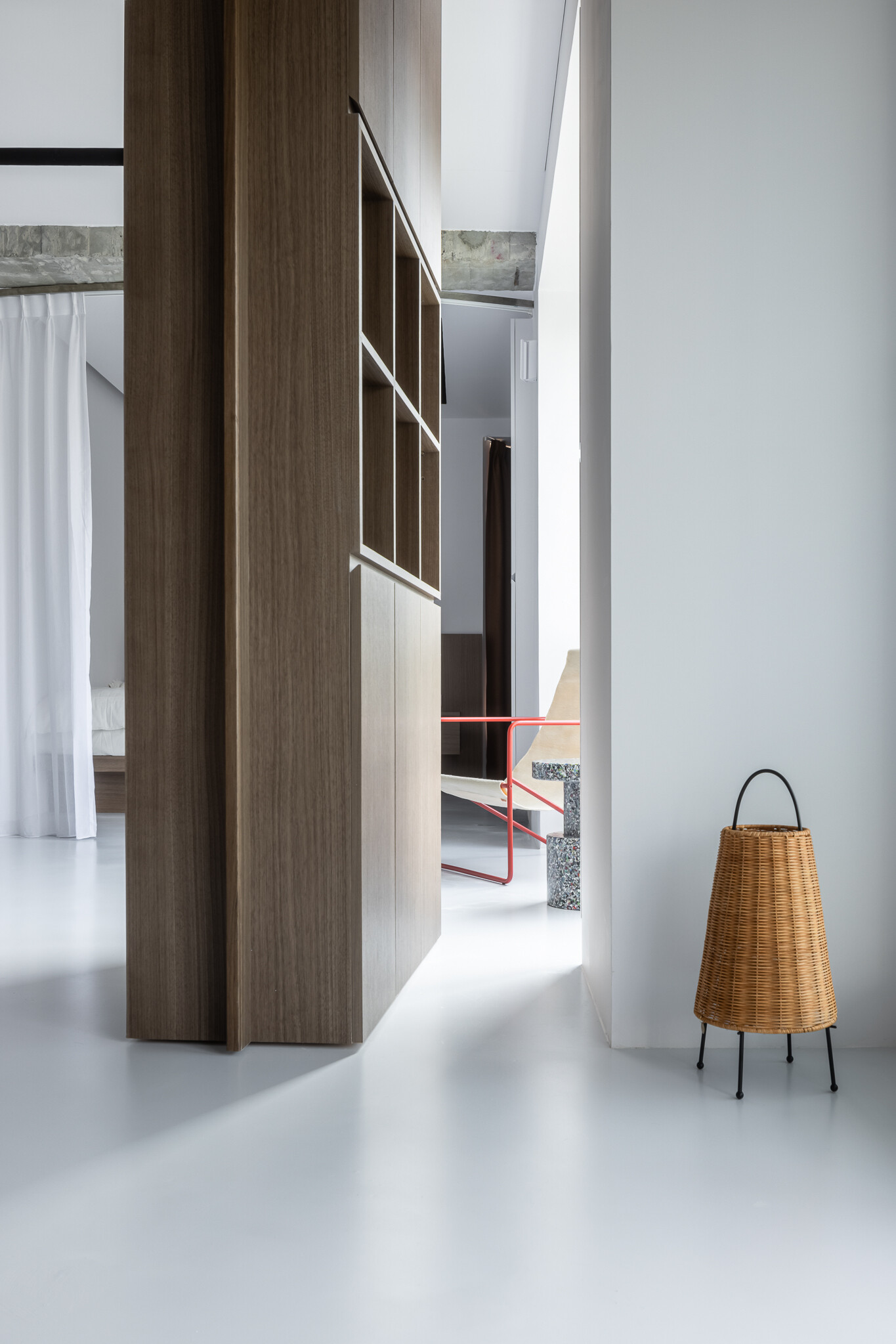
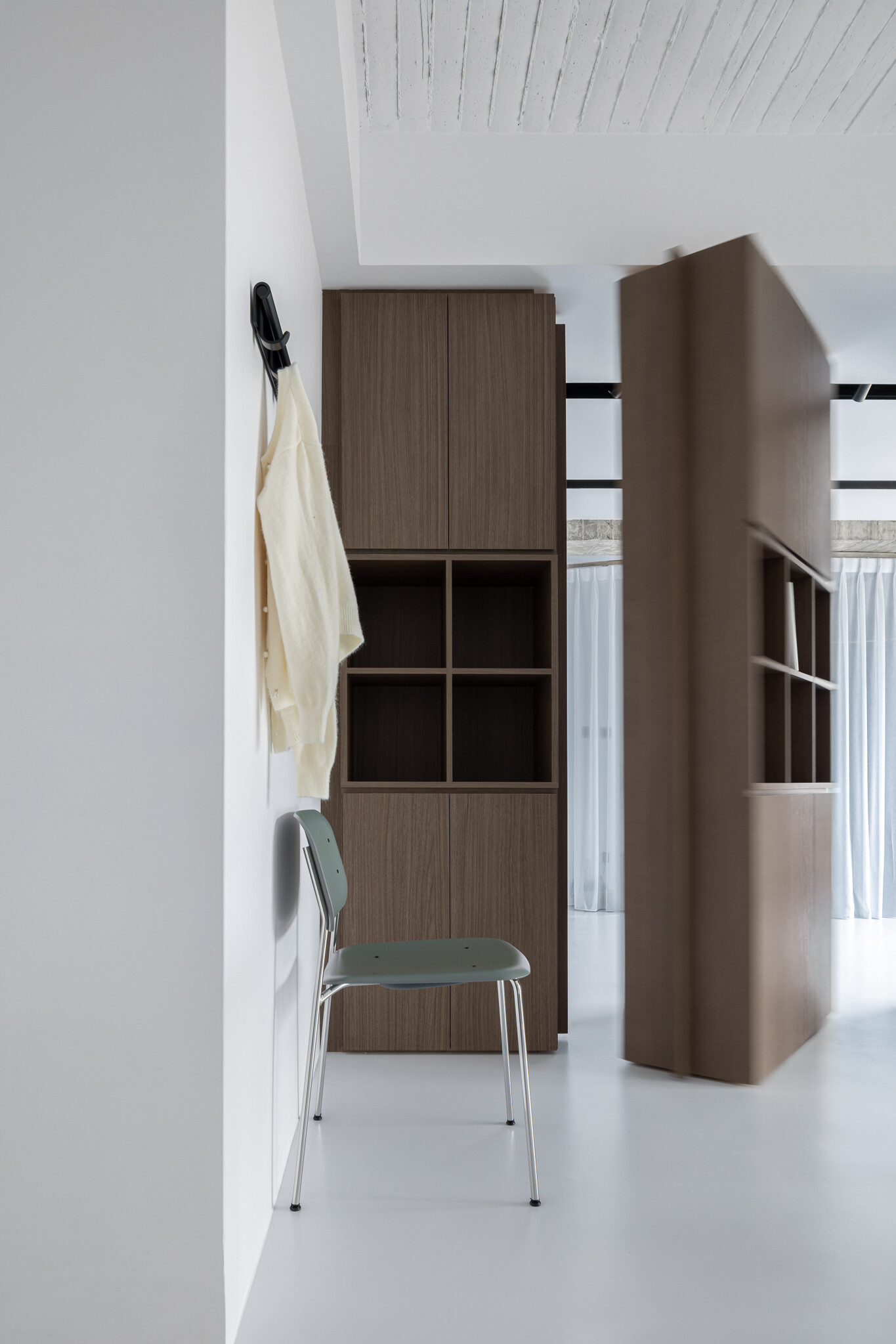
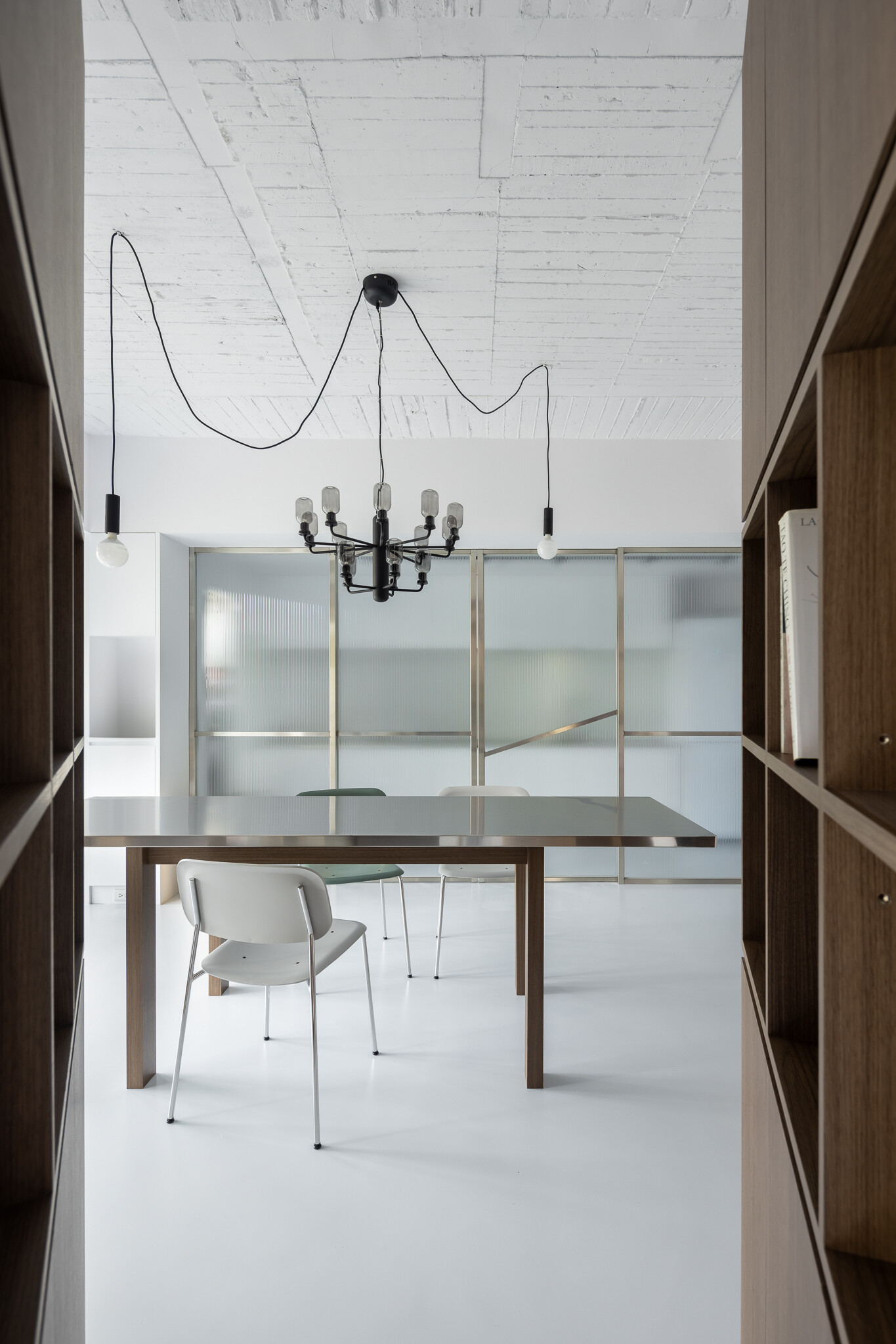
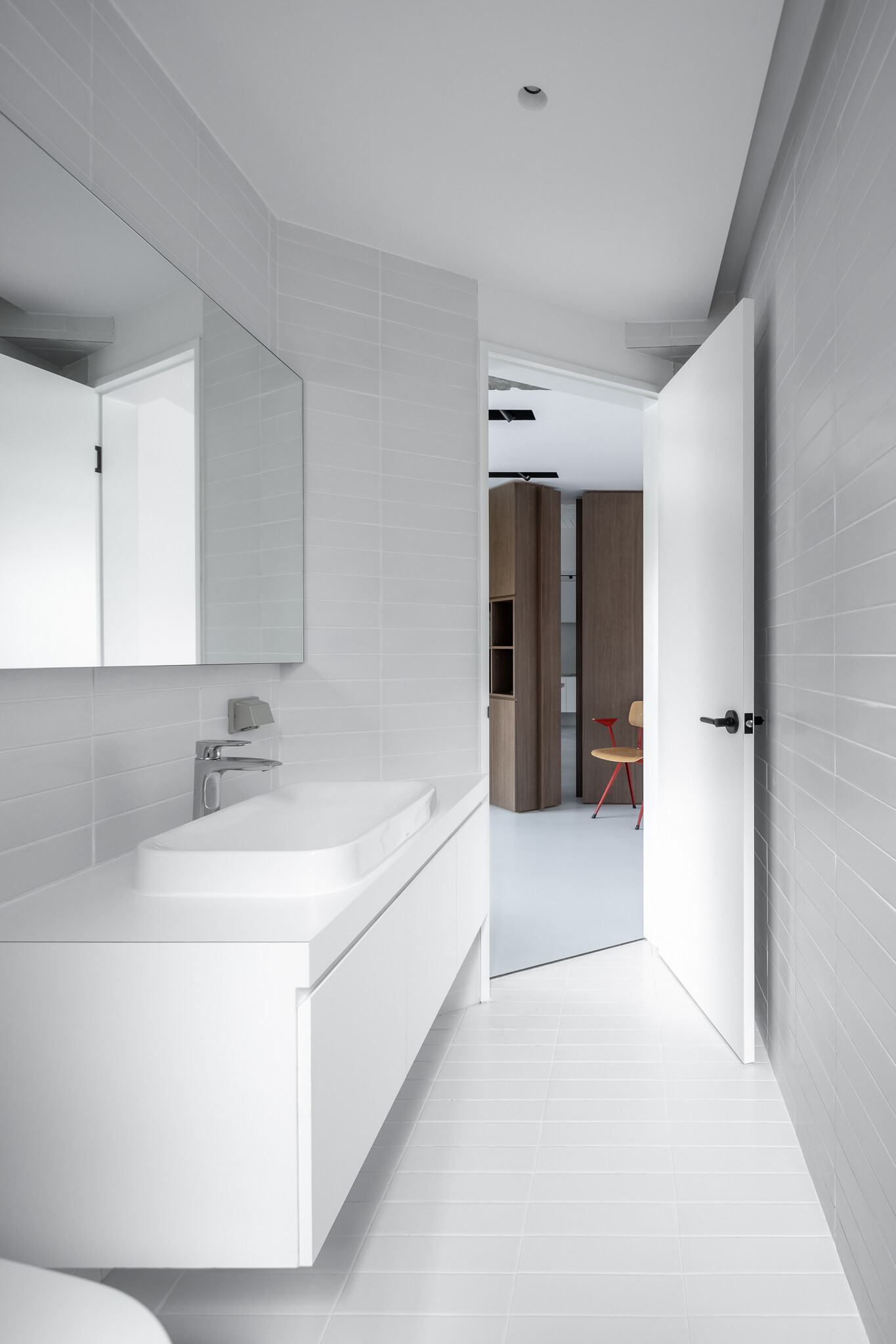
原本小巧的空間,因整合收納機能與門板功能的高大櫃體,讓出開闊的空間尺度,譜出流暢的生活動線;在這白淨的畫布中,簡單點綴的溫潤木質,搭配輕冷的金屬、玻璃元素,輕鬆讓整體空間質感清澈透明,亦不失時尚個性,乍看彷彿身處歐洲的現代極簡住宅內,設計概念實則以中國明代畫家仇英《彈箜篌圖》中的空間序列為靈感,將畫中由室外到半室外進入室內的生活意境而構成,以空間層起的高度,透過現代手法體現悠閒怡情的情景,貼合單人居住所追求的舒適度和放鬆感。
To maximize usable area, a full-height cabinet system integrates both storage and spatial partitioning, freeing up circulation and opening up the plan. Set against this white canvas, the restrained use of warm wood tones—balanced by cooler materials like brushed metal and glass—gives the space a lucid, contemporary character. At first glance, it evokes the sensibility of modern European minimalism. Yet beneath this aesthetic restraint lies a deeper cultural reference: the spatial sequence is inspired by Playing the Konghou, a painting by Ming dynasty artist Qiu Ying, which depicts domestic life as a procession from outdoor courtyard to semi-enclosed veranda, and finally into the inner sanctuary of the home. Translated into built form, that spatial rhythm is reinterpreted through subtle changes in height, layering, and enclosure. The resulting interior reflects a mood of contemplative leisure—resonating with the aspirations of a single dweller seeking calm, clarity, and a more measured way of living.