時光塔
Sun Tower
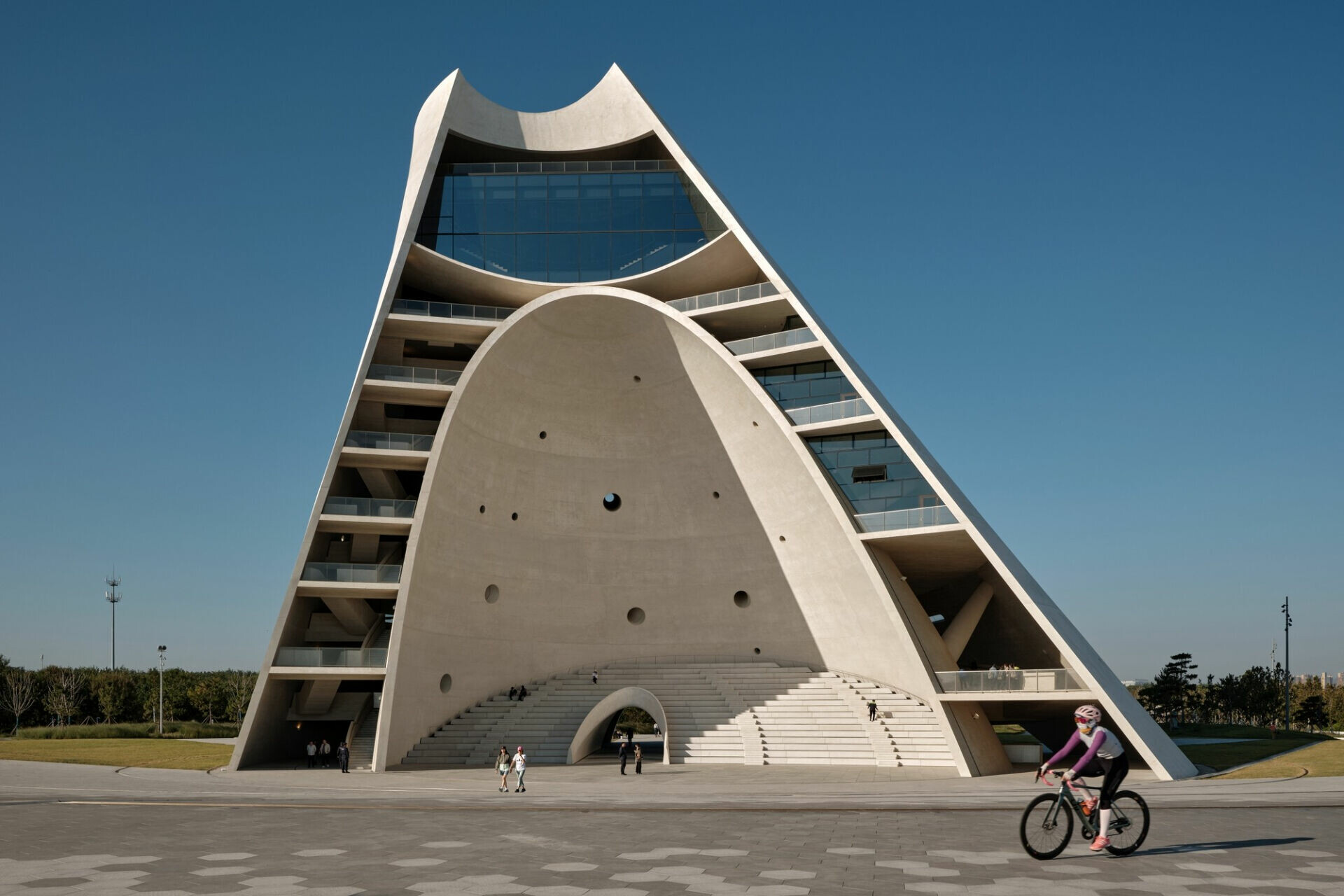
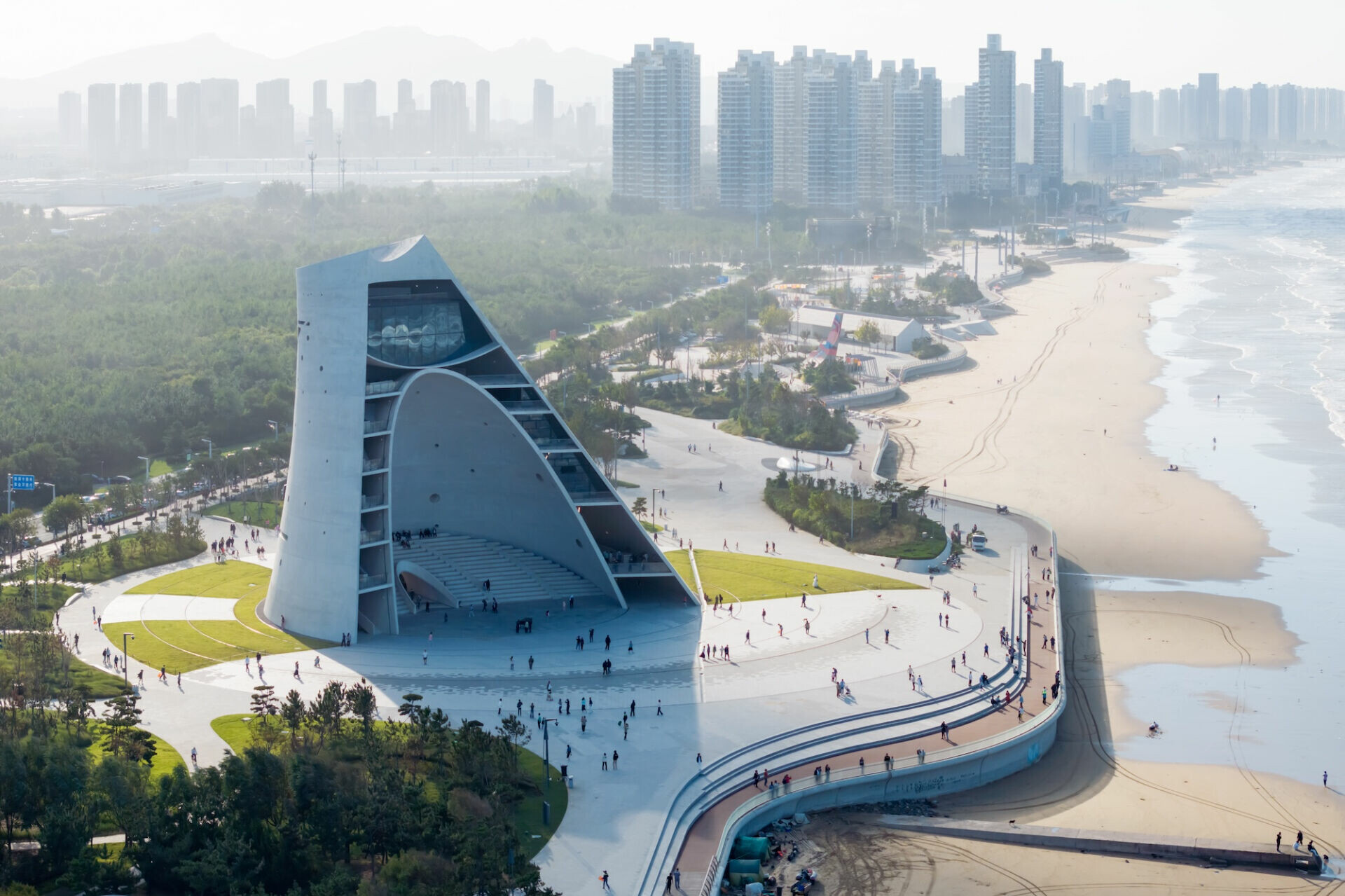
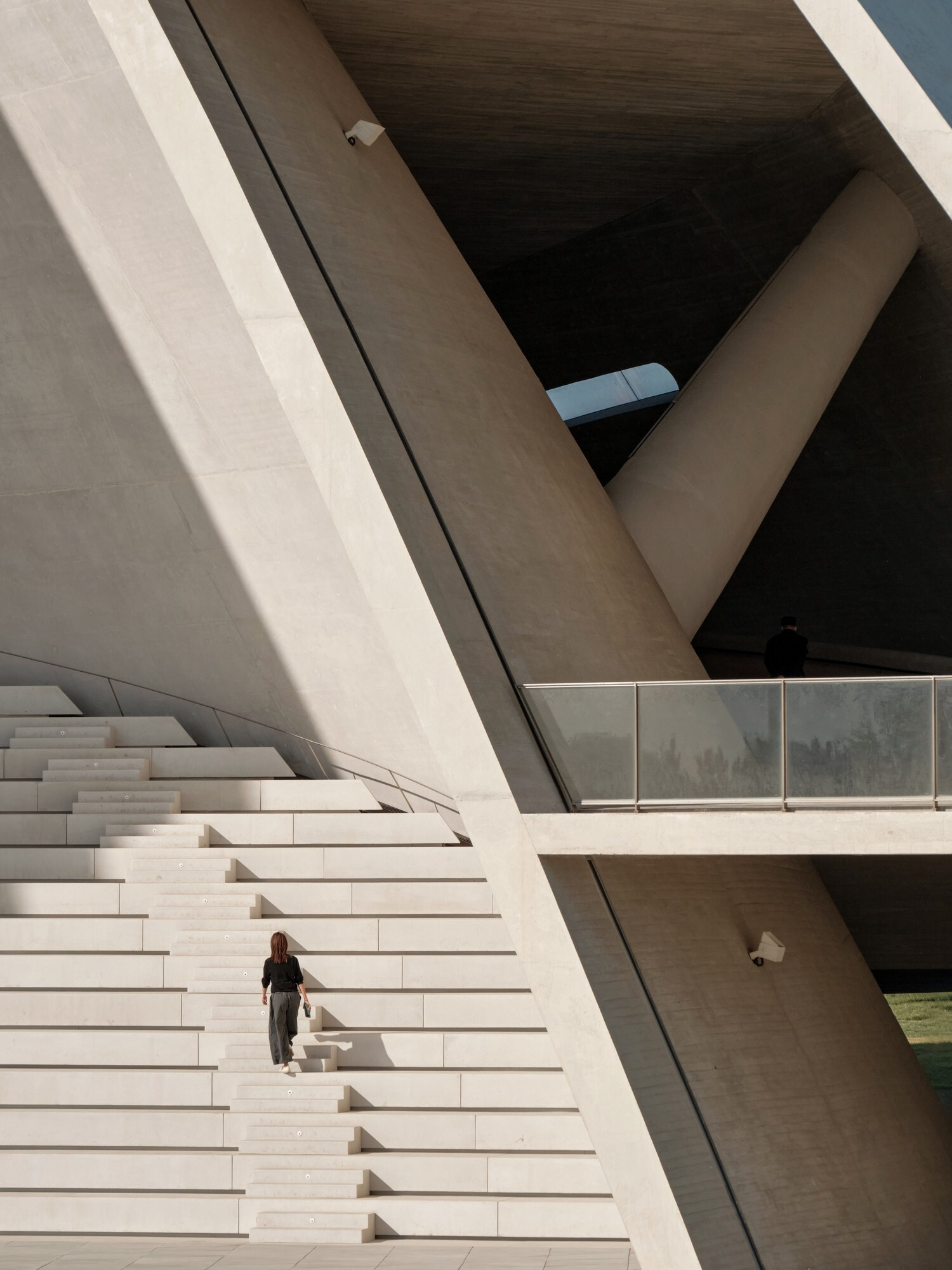
一座龐大的錐形雕塑彷彿被剖開般,毫無保留地面向大海對外展示內部結構,於山東煙台渤海新區金沙灘公園內展現不容忽視的存在感,使人們在環顧依山傍水的秀麗風景之餘,止不住內心好奇趨前一探究竟,卻留意到偌大廣場內,地面以微傾斜的建築為軸心,衍伸出一道道橢圓輪廓線,令人聯想到中國古代利用日影位置測量時間的儀器——日晷。讓人不禁思索著為何在這擁有蔚藍大海、細柔沙灘、昂然綠意的海濱風光之中,會有一座高達 50 公尺的白色清水混凝土量體以具當代風格的面龐拔地而起,其身姿則與腳下貝殼形廣場巧妙結合,暗示著古老智慧與現代技術的對遇及展望,仿若正無聲邀請人們深入其中並解開藏在這座塔樓內的謎團。
A monumental conical volume, seemingly split open and turned toward the sea, stands on the shell-shaped plaza of Golden Beach Park in Yantai’s Huang-Bohai New Area. Rising 50 meters, it is formed in white fair-faced (exposed) concrete, asserting a contemporary profile while subtly alluding to ancient cosmological wisdom. The tower draws visitors closer with its enigmatic stance, inviting them to uncover the mysteries concealed within. Around its base, elliptical contour lines radiate across the plaza, recalling the sundials once used in China to measure time through shifting shadows.
➤ Photography by Iwan Baan
➤ Photography by Iwan Baan
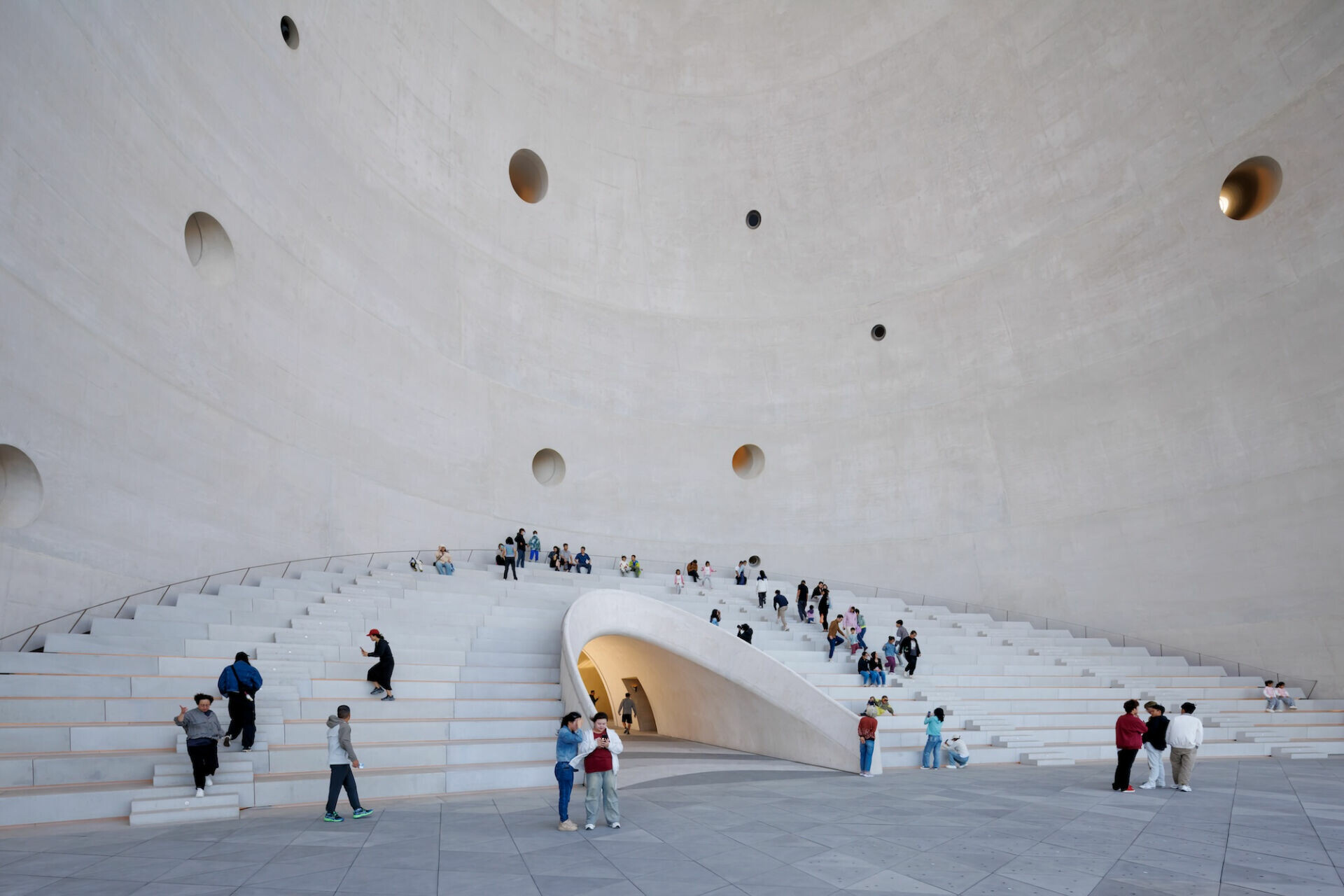
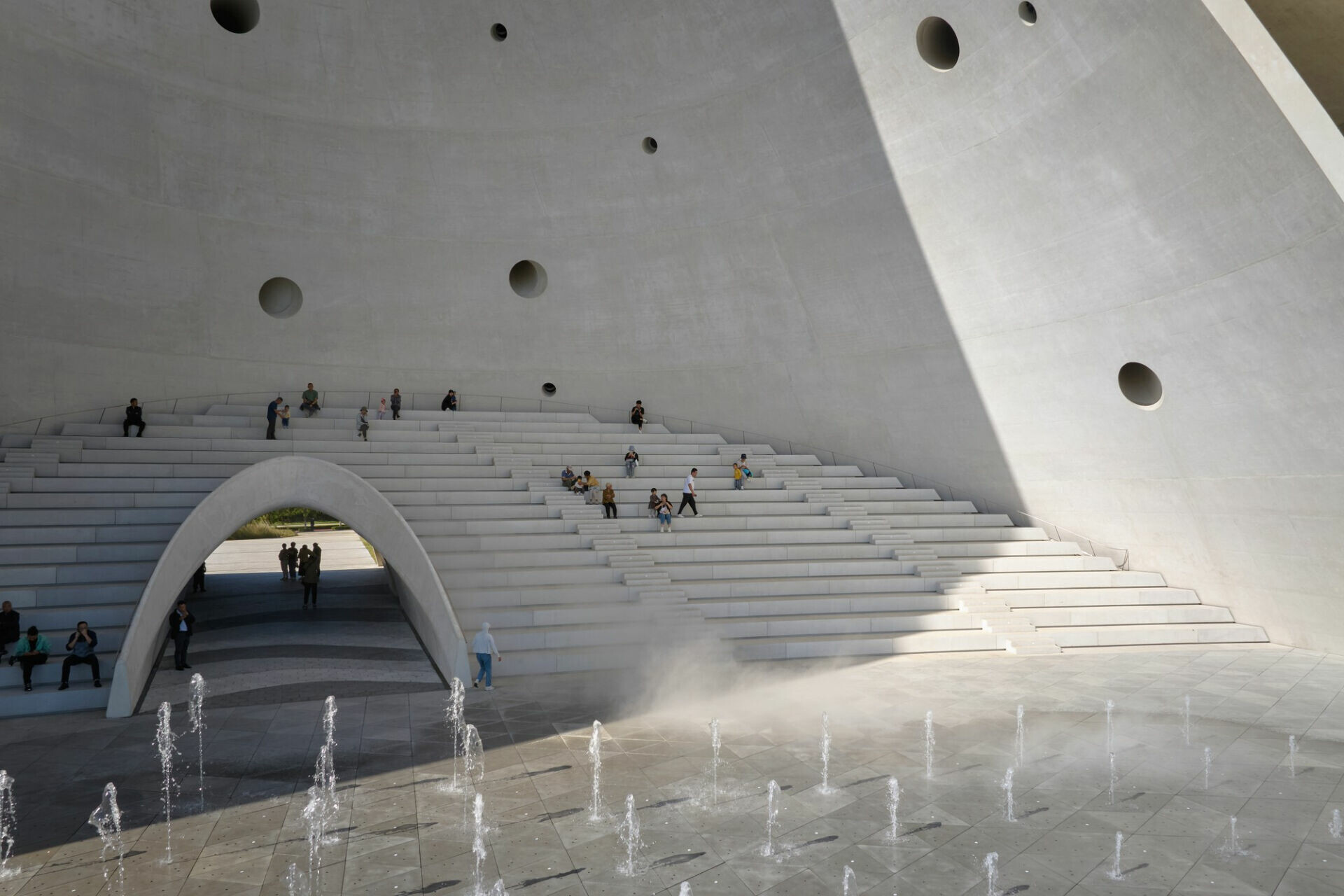
其實,若仔細推敲煙台的歷史與自然背景,意識到這座城市不僅是中國最早產生拜日文化的地區之一,明朝時期亦建造了瞭望塔以防禦倭寇,便可明白 OPEN 建築事務所決意以太陽運行軌跡為靈感,於黃海之濱將文化中心設計為現代太陽觀測站的源由。實際上,時光塔各空間、開口面朝方位皆展示了團隊對太陽位置變化的細緻研究,塔樓外牆北側與春分和秋分正午的陽光平行,主入口隧道則正對冬至的日落。站在時光廣場中仰頭望之,建築內上下兩道曲面混凝土殼體戲劇性地輕觸頂端,形成拋物線形的內凹結構如集音器般,吸收並放大海洋的聲音,迴響於底部的圓形劇場。視線向下移,留意到塔樓底面延伸出系列猶若行星軌跡的不對稱橢圓環,廣場上亦鑿出一條與建築相切的水渠。春秋分日,環與水道的交會處會投射出建築的影子,顯示整點時間的足跡。此外,一條外側環上還設有二十四節氣噴泉,藉由噴泉高度呼應節氣日帶來的喜悅。
Yantai, historically recognized as one of China’s earliest centers of sun-worship culture and later as a site for Ming-era watchtowers defending against coastal raids, provides a symbolic backdrop. Within this context, OPEN Architecture oriented the cultural tower as a contemporary solar observatory: its northern edge aligns with the midday sun at the equinoxes; the entrance tunnel faces the sunset at the winter solstice; and the outdoor theater’s axis points to the sunrise over the sea at the summer solstice. The parabolic inner shell acts as an acoustic collector, amplifying the resonance of the ocean. Beneath it, a semi-open-air amphitheatre offers stepped seating and an unobstructed horizon when no performances are taking place. Extending outward from the tower’s base, a series of asymmetrical elliptical rings suggest planetary orbits. Carved into the plaza is a water channel that traces the tower’s geometry. On the equinoxes, the shadow of the tower’s northern edge moves along this channel; at its intersections with the elliptical rings, it marks the time on the hour. Along the outer ring, a fountain sequence references the Twenty-Four Solar Terms, its heights rising and falling in rhythm with the calendar.
➤ Photography by Jonathan Leijonhufvud
➤ Photography by Jonathan Leijonhufvud
➤ Photography by Jonathan Leijonhufvud
➤ Photography by Jonathan Leijonhufvud
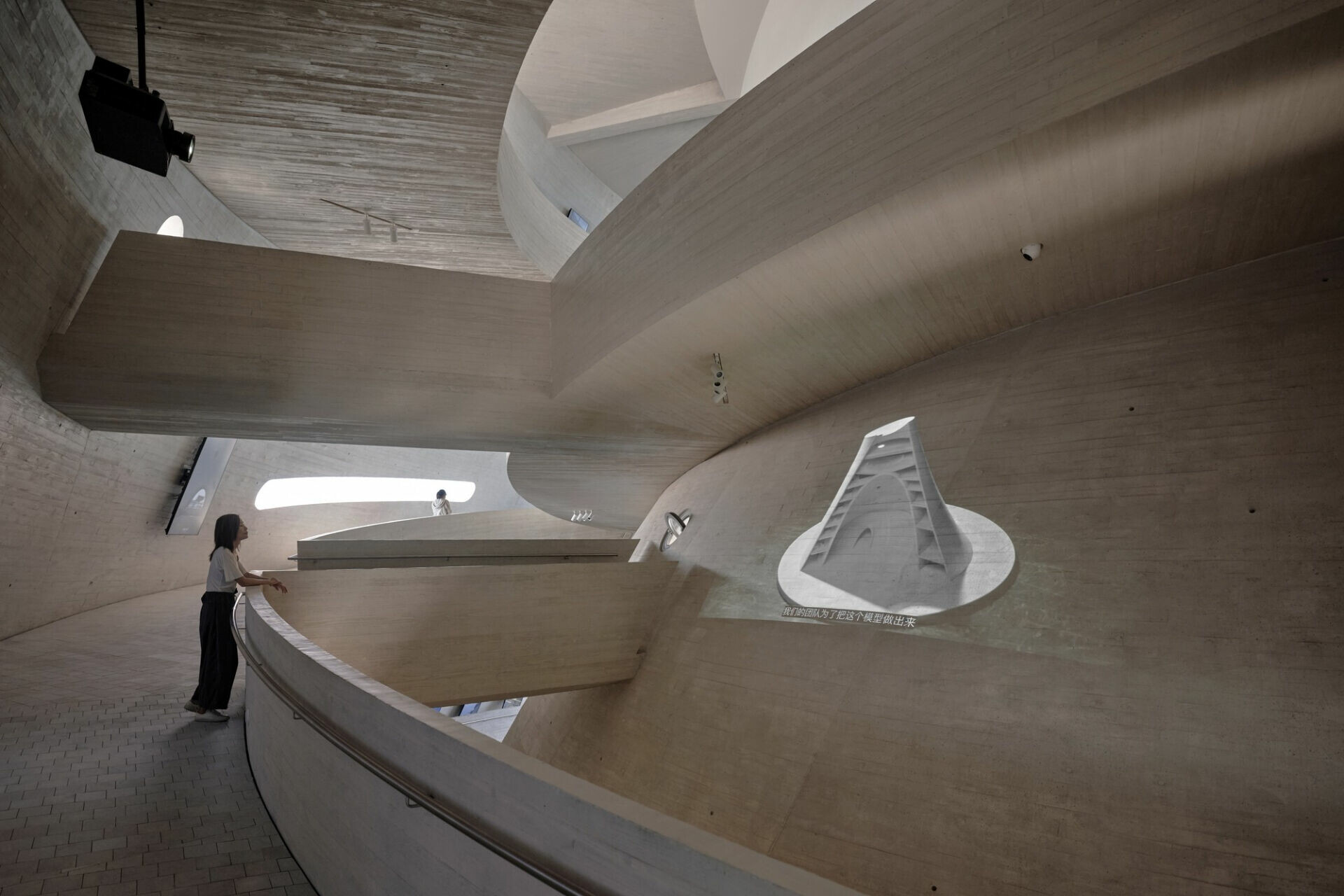
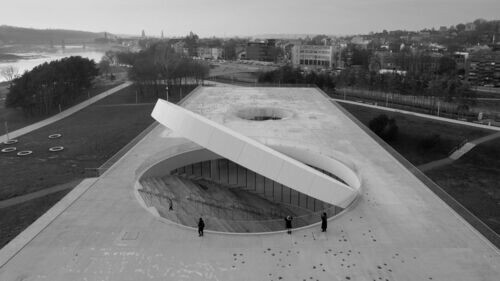
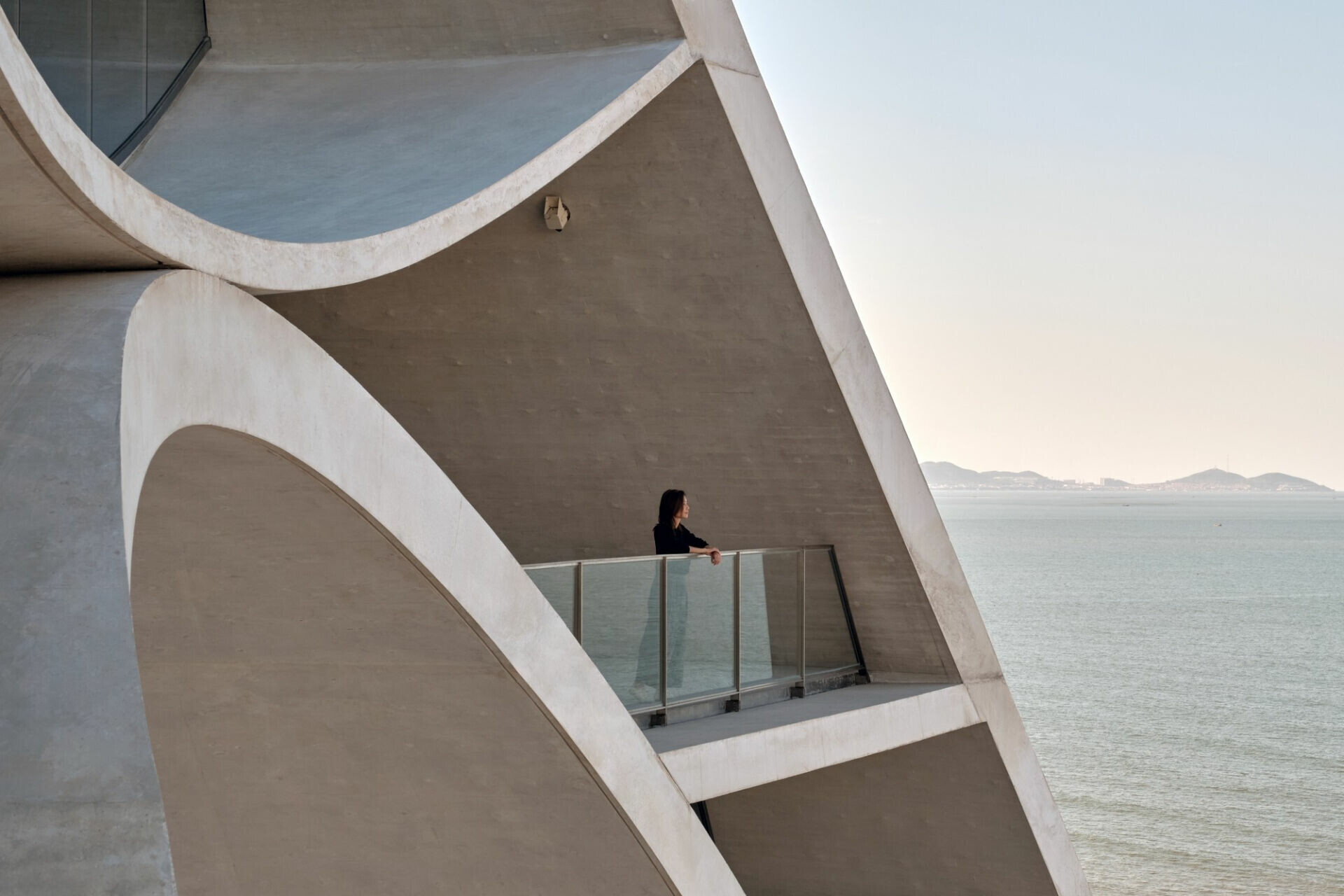
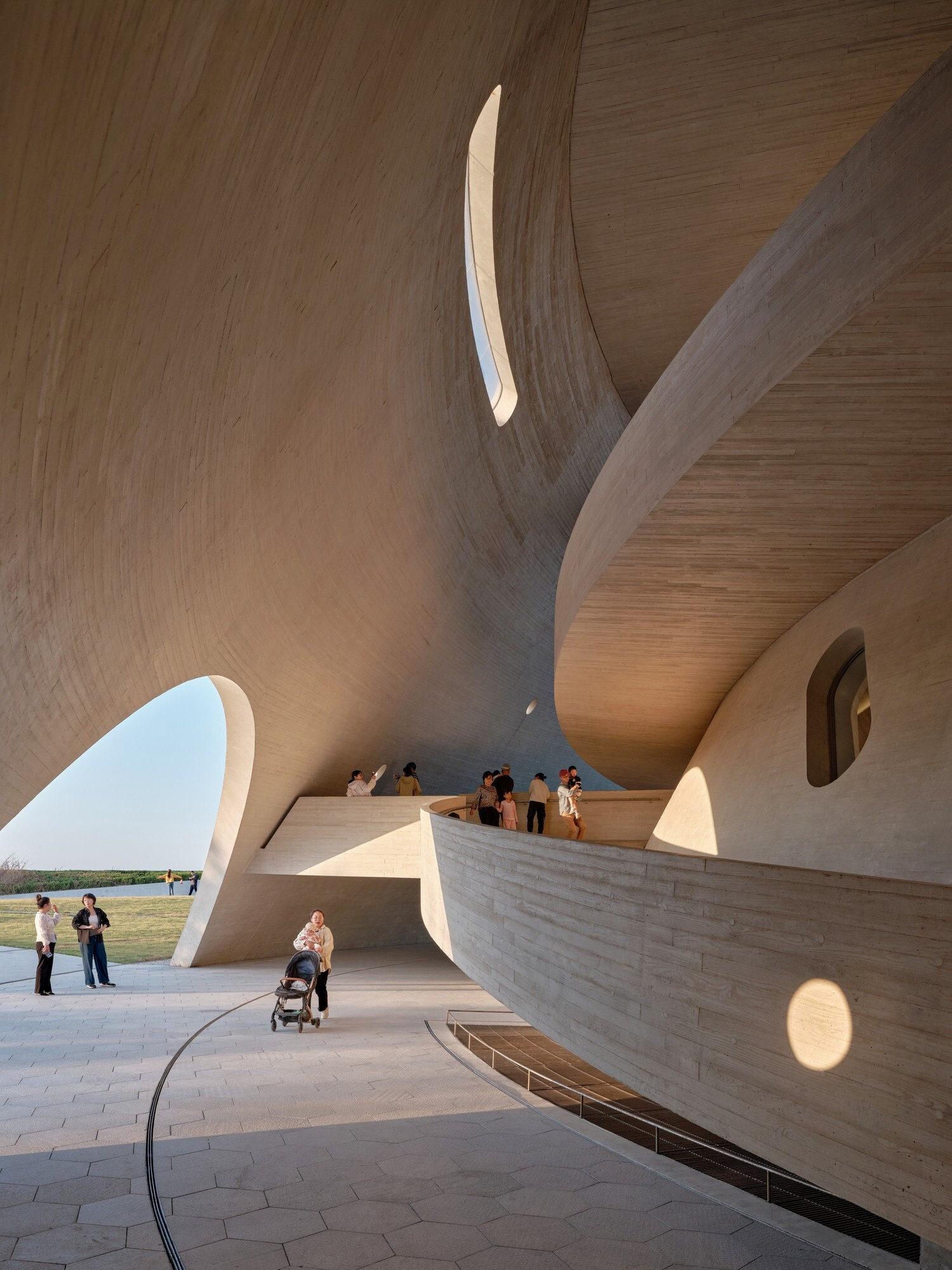
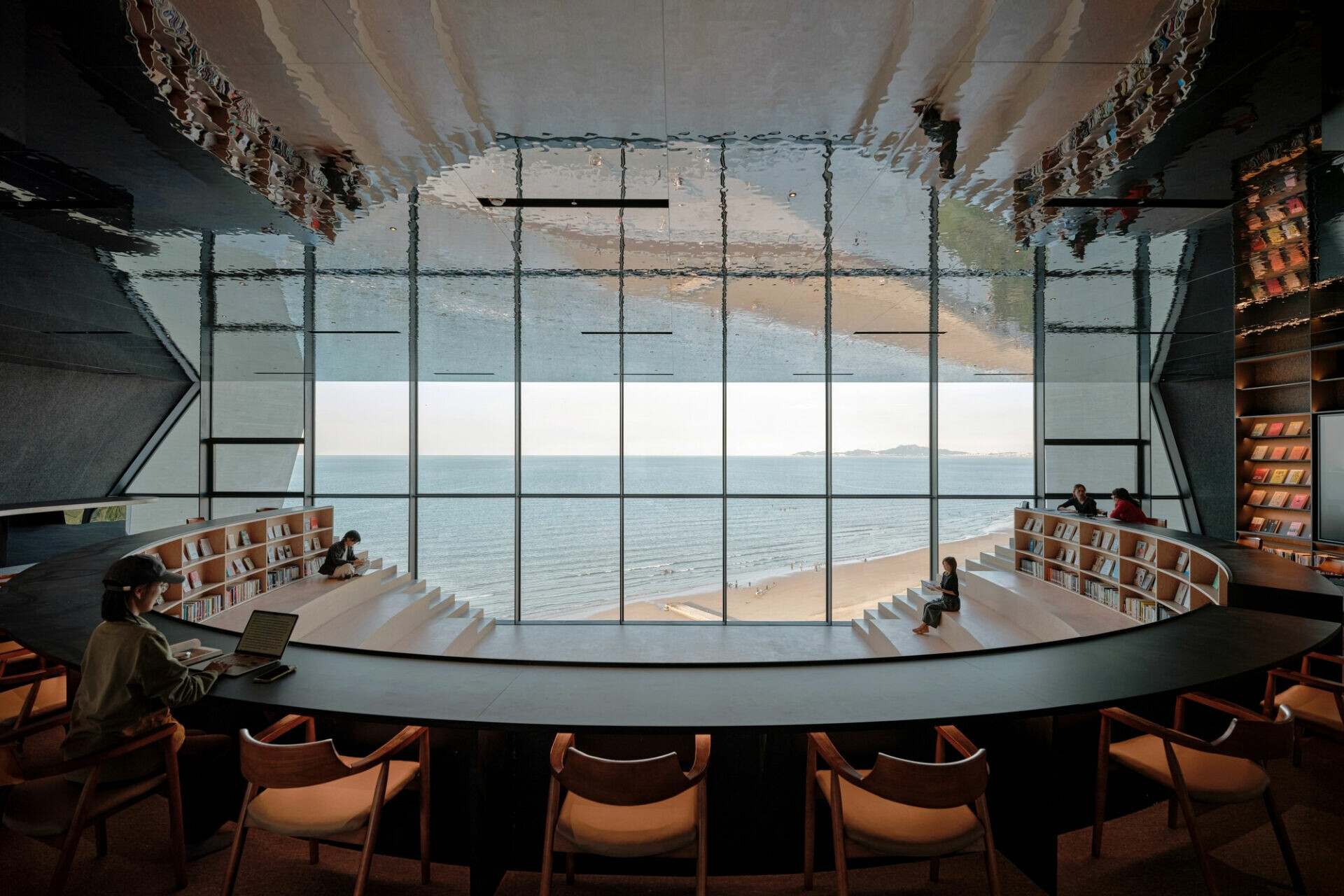
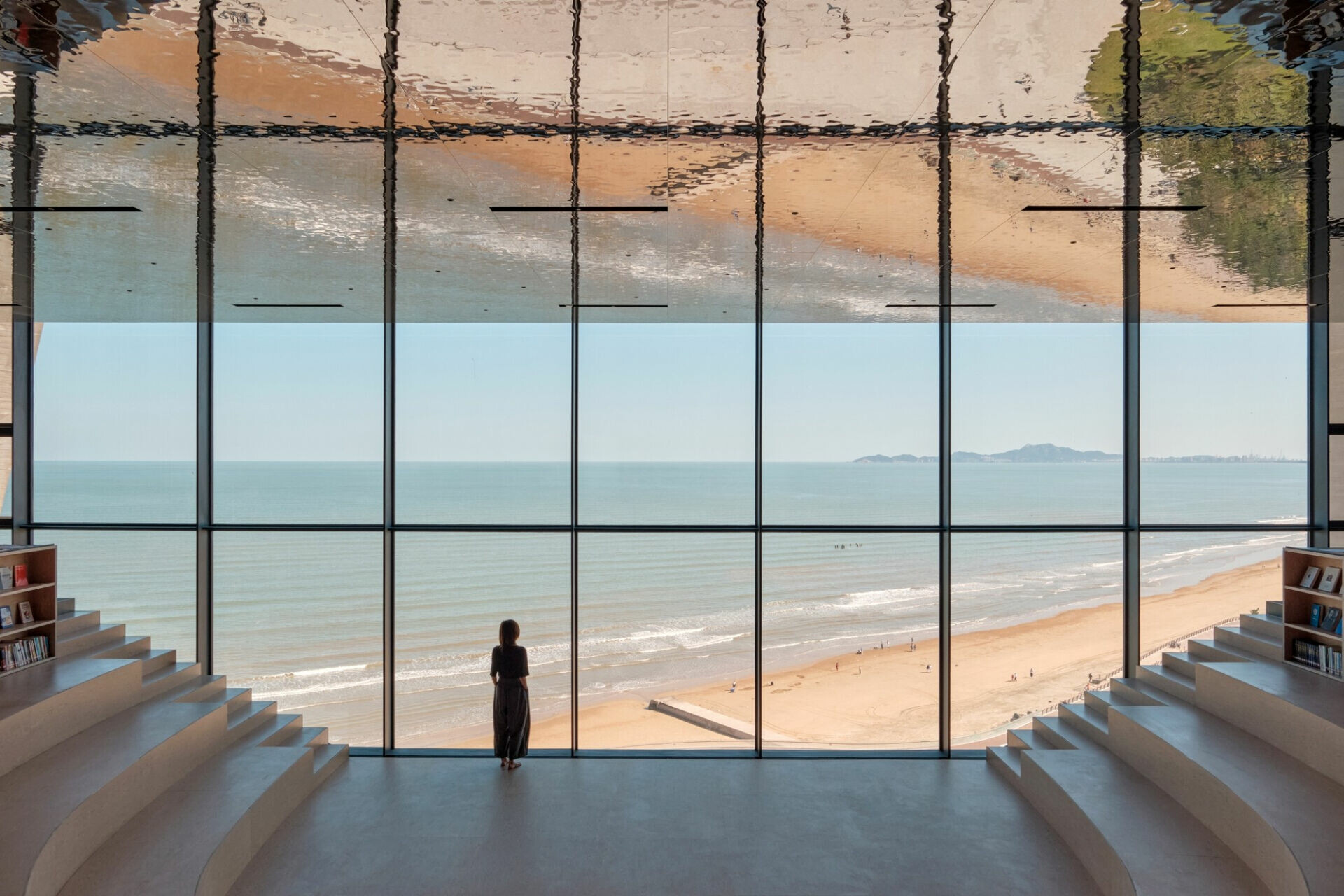
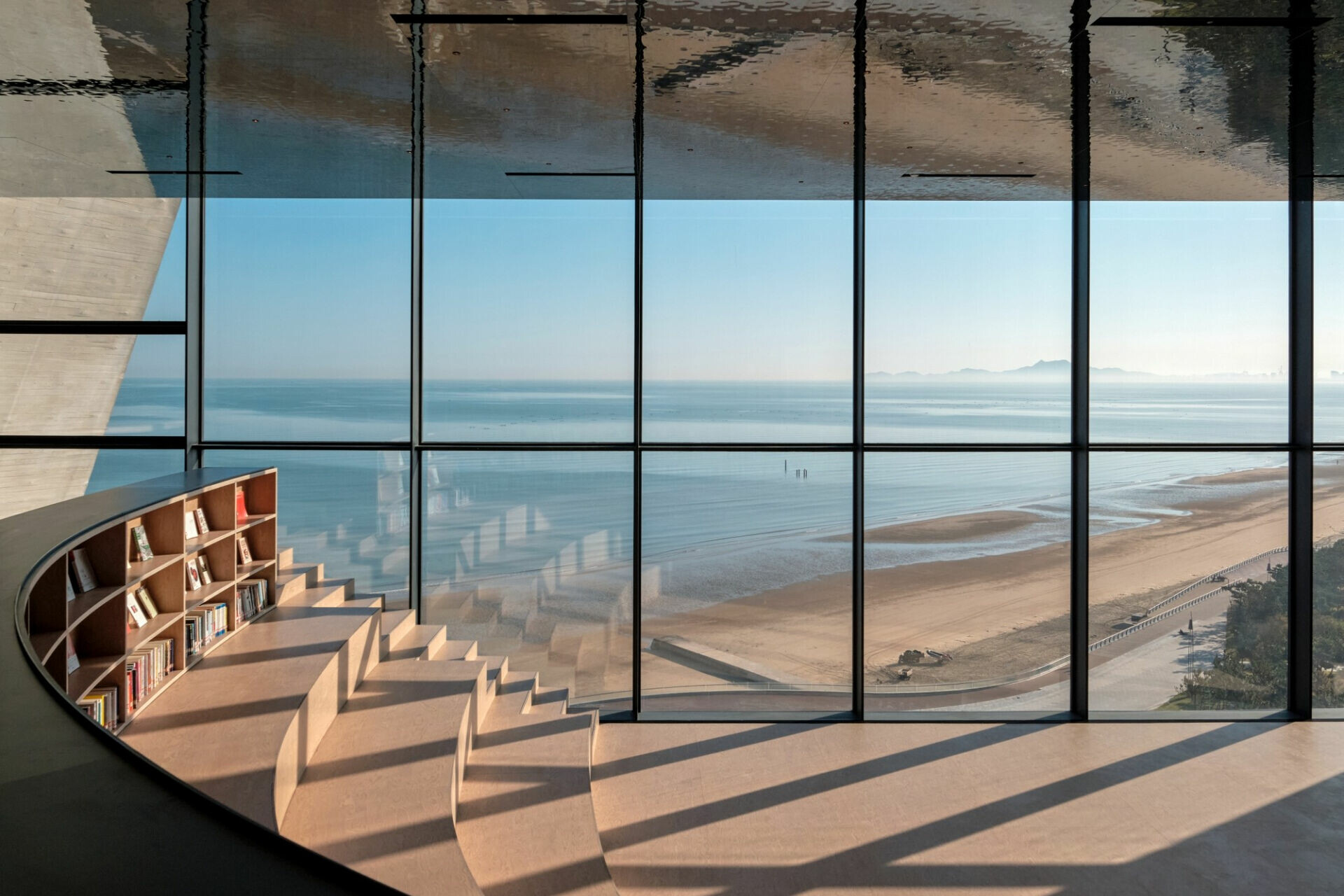
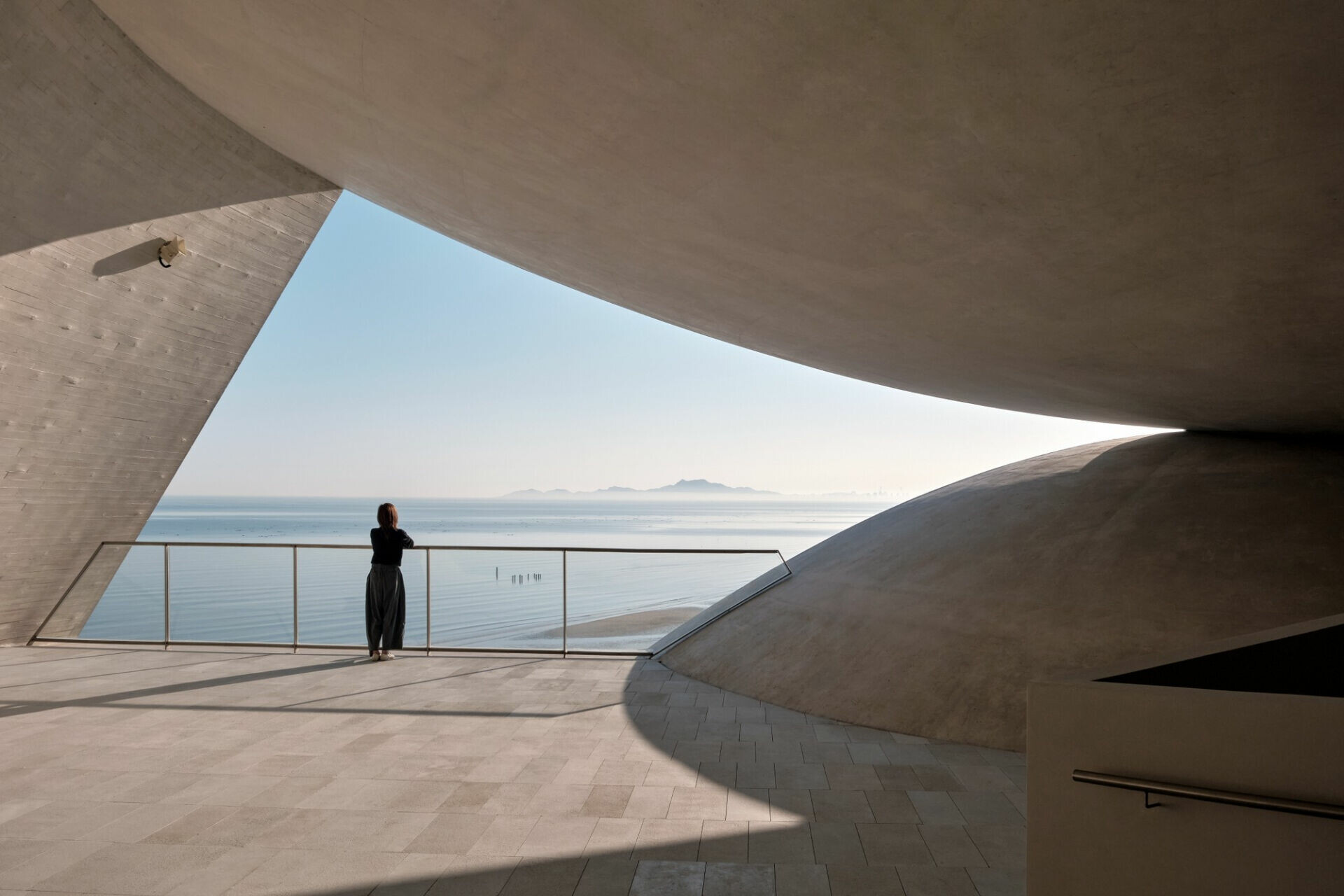
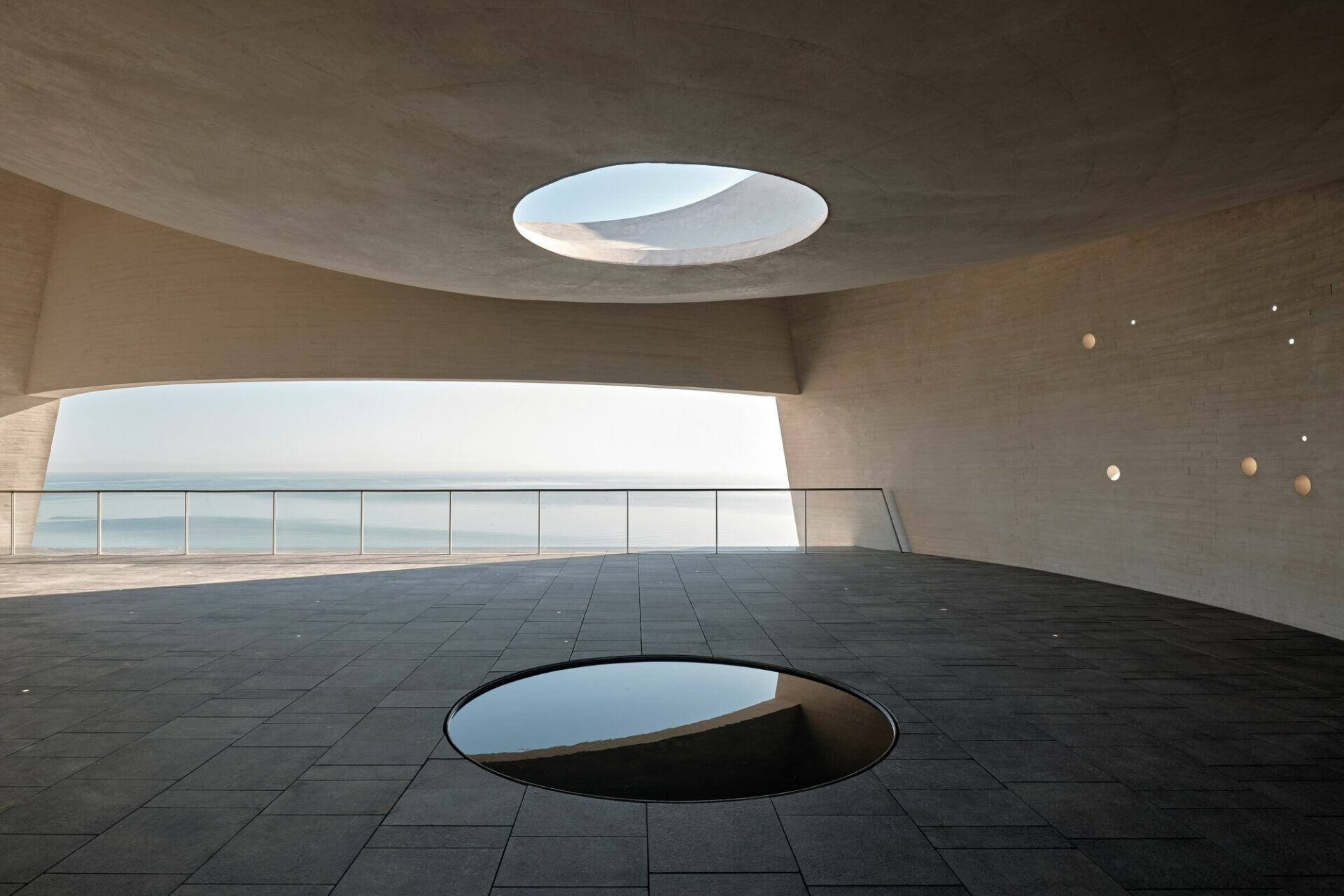
走入塔內,蜿蜒曲折的坡道形塑猶若身在洞穴內的氛圍,引領人們穿梭於配備於數位螢幕和投影的展覽空間,且刻印著木紋的混凝土牆面和天花板上嵌入了懸掛點,可彈性展示不同主題展品。而每次坡道轉折的瞬間,都是不同高度的海景體驗。接著來到位於塔頂的圖書館,臨海落地窗玻璃幕牆帶來居高臨下的俯瞰視野。最終到達名為「現象空間」的半室外景觀台感受徐徐微風、欣賞山海景致,注意到球面天花有個圓形天窗,允許雨水流入並匯集到下方的青銅水池內。這並非單純的美感安排,更再次善用自然元素形成特別的時間裝置。
Inside, a spiraling ramp ascends between two curved concrete shells, creating a cavern-like atmosphere. This path doubles as a digital exhibition hall equipped with screens and projections, adaptable to themes ranging from contemporary art and technology to history and nature. Walls and ceilings in board-formed concrete incorporate integrated hanging points, allowing flexible suspension and reconfiguration of exhibits. At every turn of the ramp, framed glimpses of the sea offer shifting perspectives. Higher up, an inverted shell encloses a library, combining traditional and electronic reading, with floor-to-ceiling curtain-wall glazing opening toward the horizon. Above it, the semi-outdoor “Phenomena Space” frames the sea: a spherical roof pierced by an oculus admits shafts of sunlight and rain, which is collected in a bronze water basin—an elemental timepiece shaped by light and weather.
➤ Photography by Jonathan Leijonhufvud
➤ Photography by Jonathan Leijonhufvud
➤ Photography by Jonathan Leijonhufvud
時光塔與時光廣場之間每處縝密規劃,皆體現了建築與自然共生的新互動模式,讓人們在厚重的混凝土結構之中隨時感知天氣與四季流轉,即使是夏季。室內仍保有舒適涼感;同時在探索藝術的過程中,重新認識尊重自然的古老智慧,意識到時間不是生硬的數字,而是存於自然的律動之中,隨著日升月落、四季遞嬗,循環往復。
The synergy between the tower and its plaza embodies a new mode of dialogue between architecture and nature. Within the weight of exposed concrete, visitors remain attuned to shifting weather and seasonal rhythms—and even in summer, the interior holds a comfortably cool register—a reminder that time is not merely numerical, but embedded in the living cadence of the natural world.
➤ Photography by Jonathan Leijonhufvud
➤ Photography by Jonathan Leijonhufvud