Bridge House
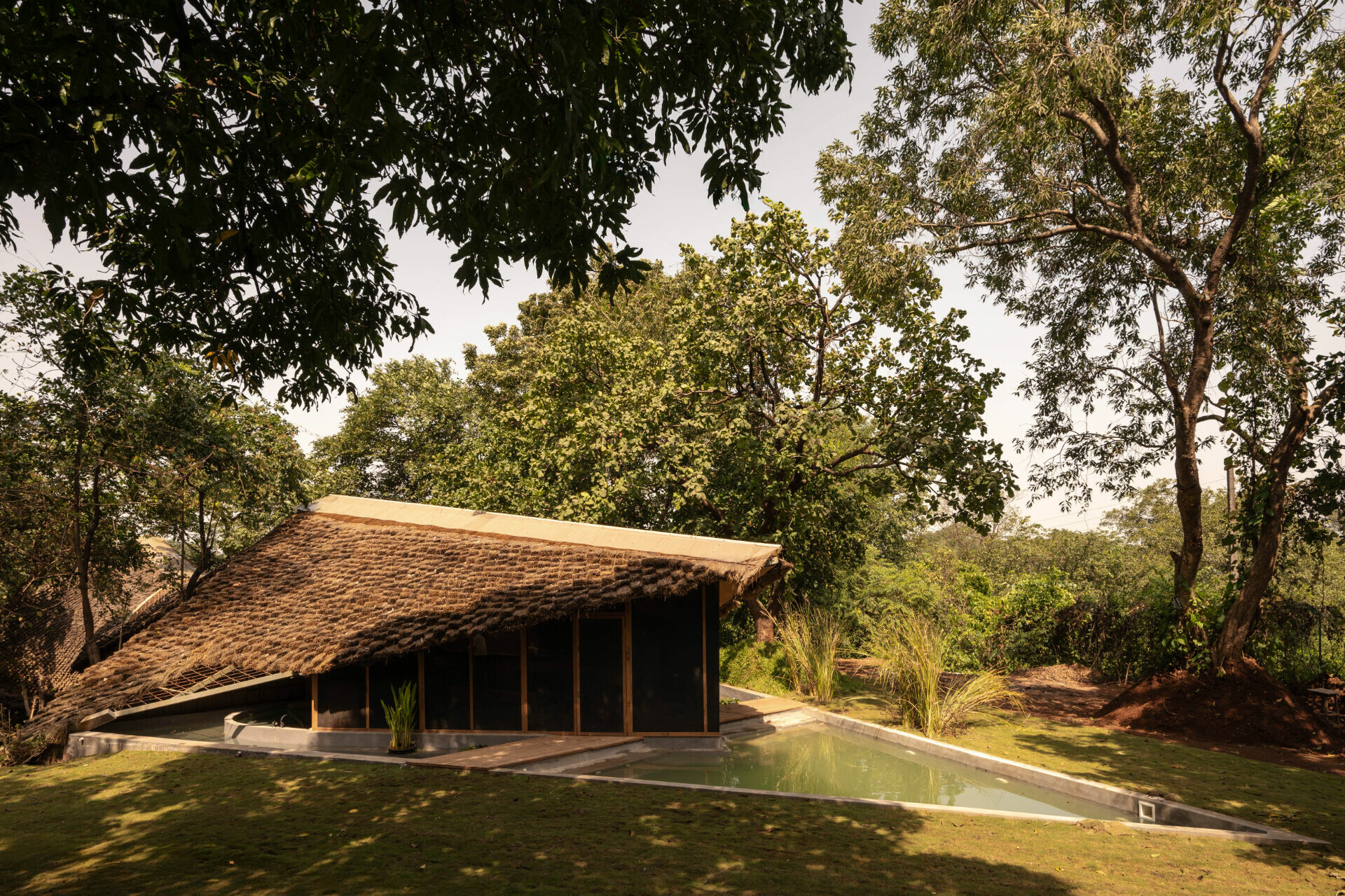
A line often attributed to Antoni Gaudí goes, “Straight lines belong to people; curves belong to God.” When architecture meets the edge of form, the phrase can feel uncannily apt. Overcoming difficulty is almost instinctive. Nature, however, rarely endures by resisting its surroundings. It survives through yielding and transformation. The tougher the constraint, the less it needs to become a standoff. Instead, it can press us toward a softer way of thinking, allowing new solutions to emerge without confrontation and find their place within the pressure. Deep in the quiet woodland of Karjat, India, the air is resinous with the scent of trees, rich with phytoncides, while birdsong threads through the canopy. Parting the leaves, a suspension-bridge entrance comes into view. Below, spillway flows have carved a gorge some seven metres deep. Above, a hushed dwelling rests on the span, cocoon-like in silhouette, as if it had grown from the forest’s own grain. Bridge House settles lightly on a suspension span of roughly 30.5 metres, slipping into the tree line with an unforced ease.
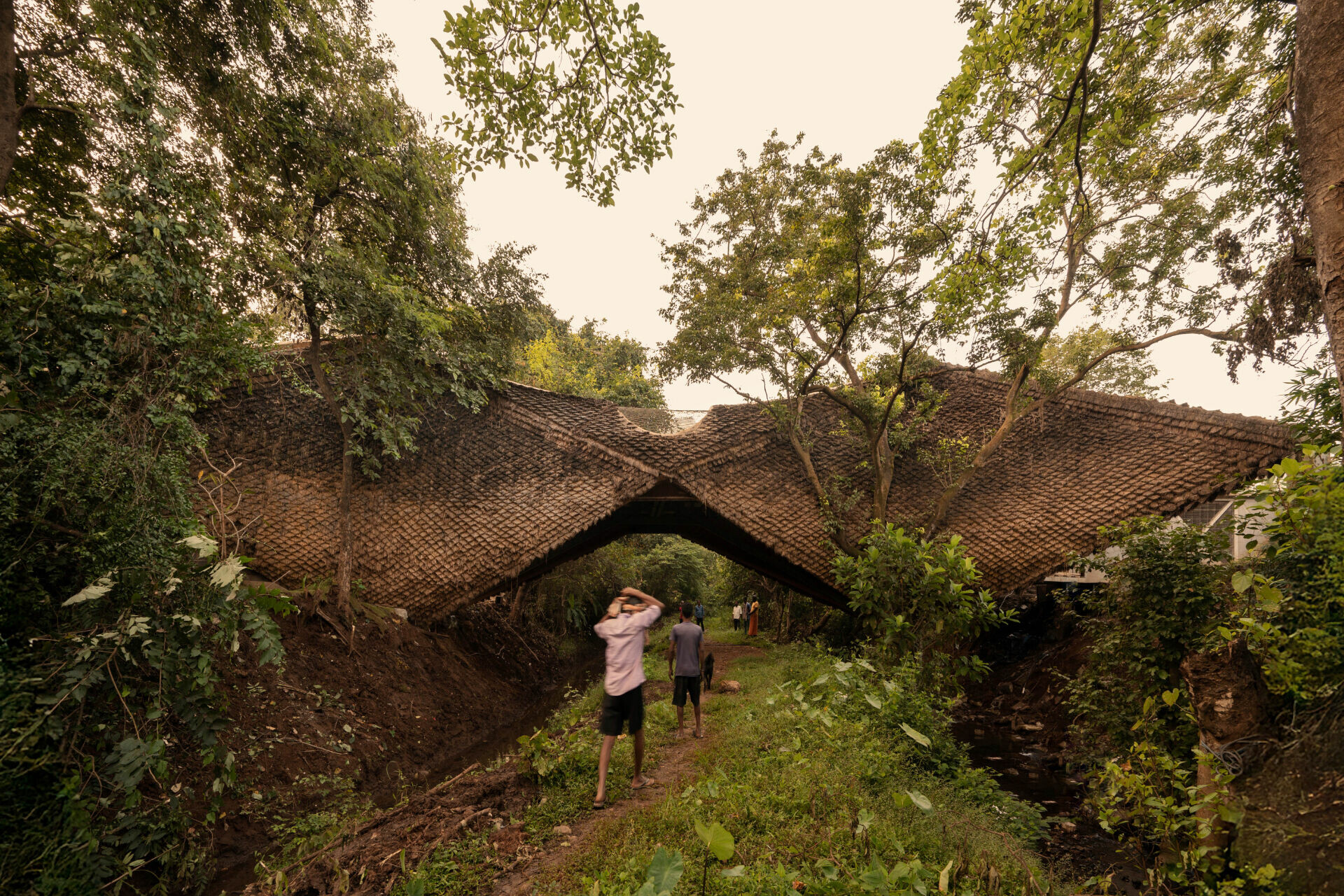
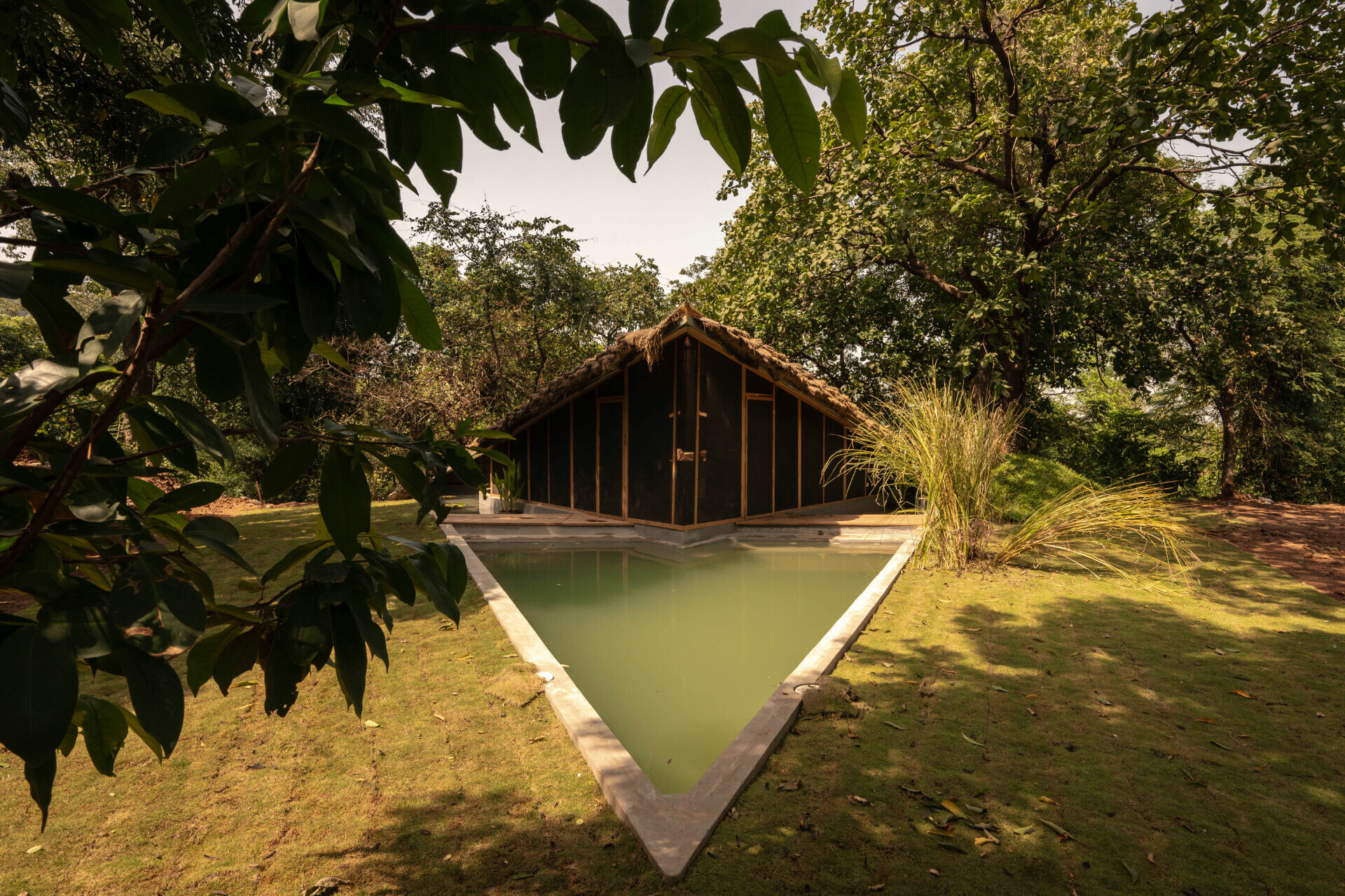
Here, the spillway corridor divides the site into two parcels, yet the volume appears to hover between them in poised balance. Wallmakers did not attempt to impose a straight, corrective logic on the terrain. Instead, they let the landscape lead, conceiving a habitable bridge that links the banks. The project is not merely a house lifted off the ground. It demonstrates how architecture can enter a landform’s logic and remain in step with its setting.
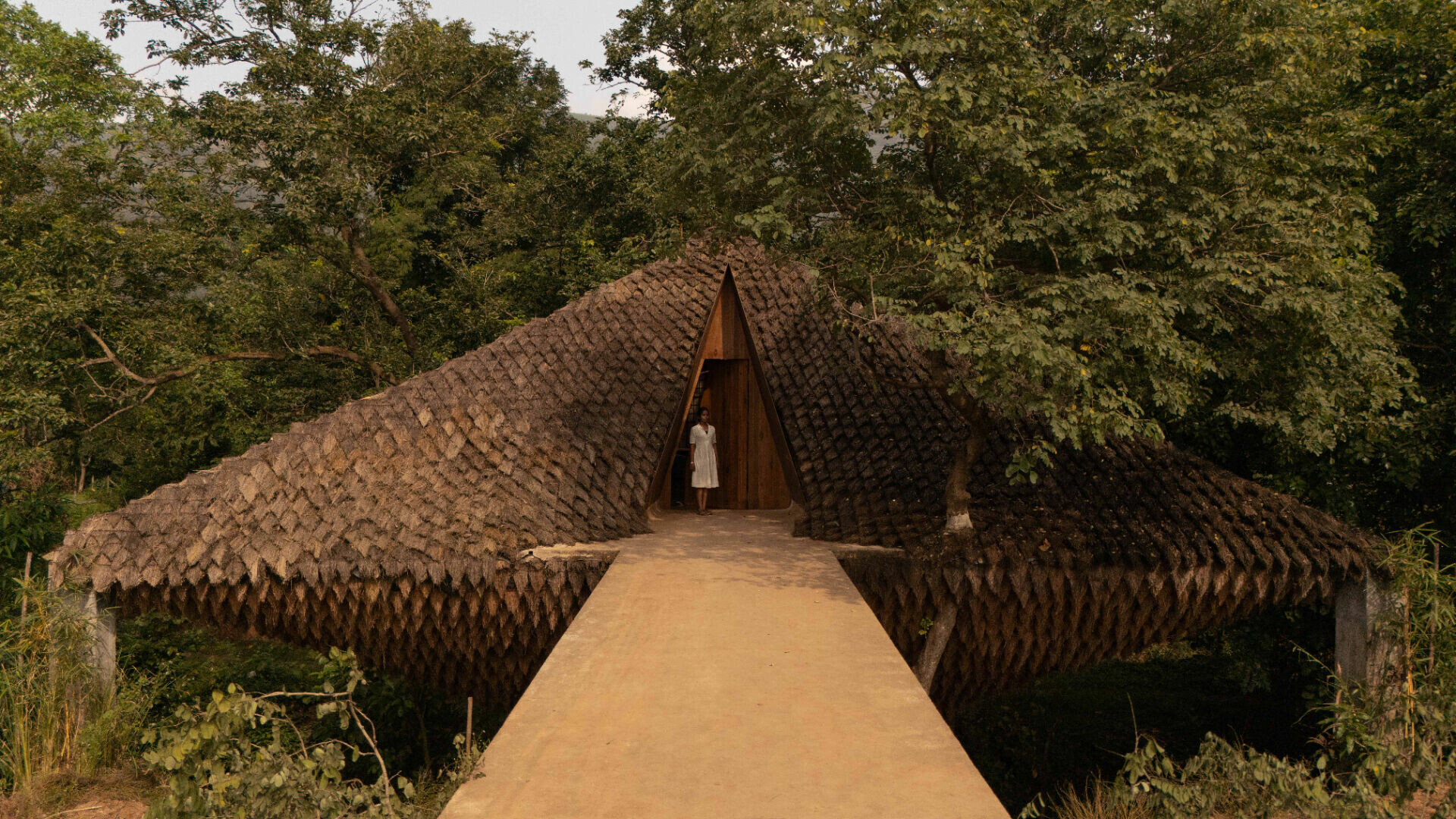
The constraints were specific. Regulations prohibited foundations within the spillway strip, approximately 30.48 metres wide. At the same time, the underside had to maintain enough clearance for a JCB to enter and clear the two watercourses below. In response, the bridge is organised as four hyperbolic paraboloid units. A minimal system of steel tubes and tension cables provides the primary tensile capacity. The exterior, built up with thatch and finished in a mud-plaster coating, contributes compressive strength and stabilises the whole. With no intermediate piers, this layered envelope becomes part of how the structure holds itself steady, turning limitation into a disciplined structural order with a quiet, natural poise.
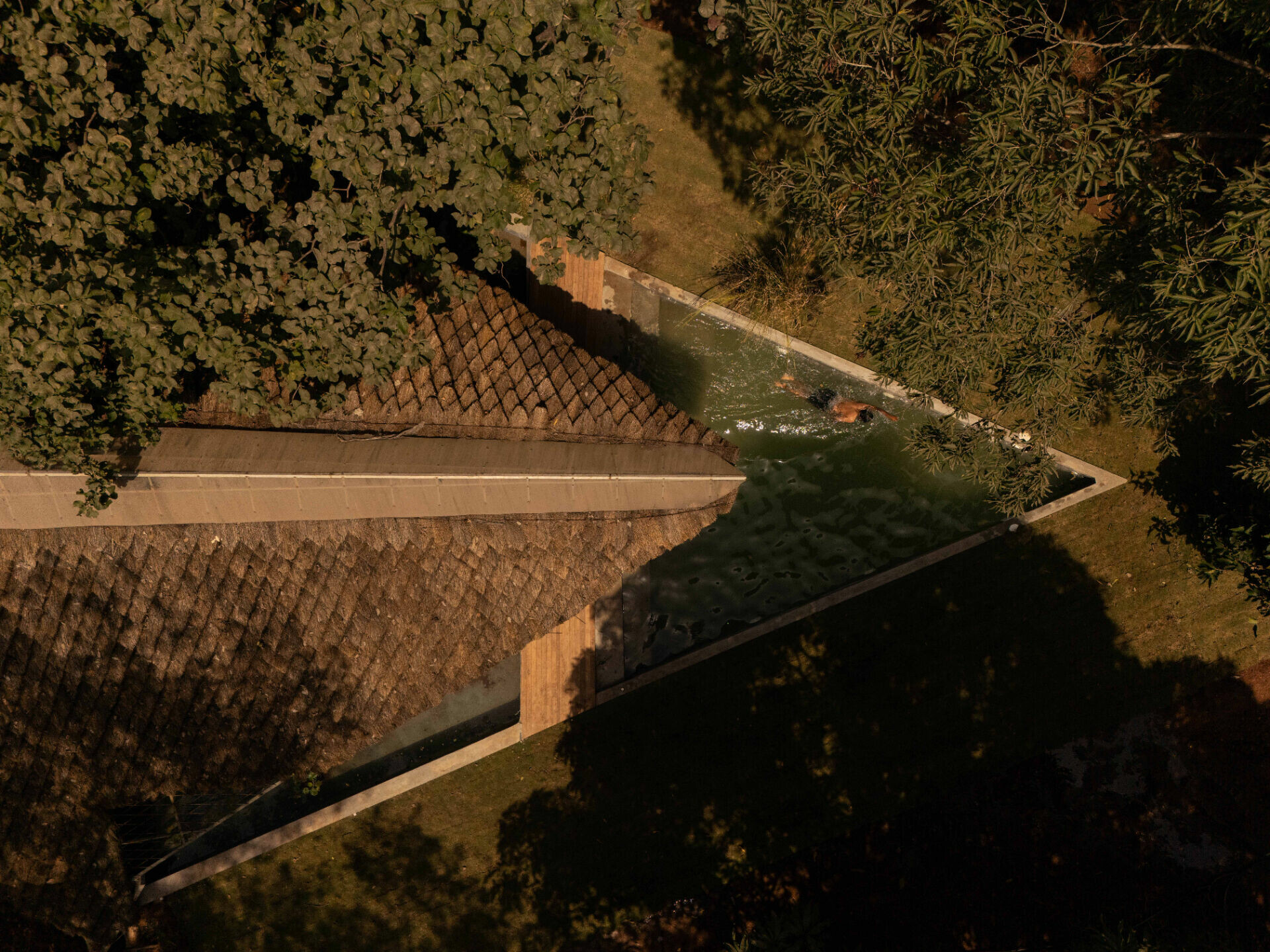
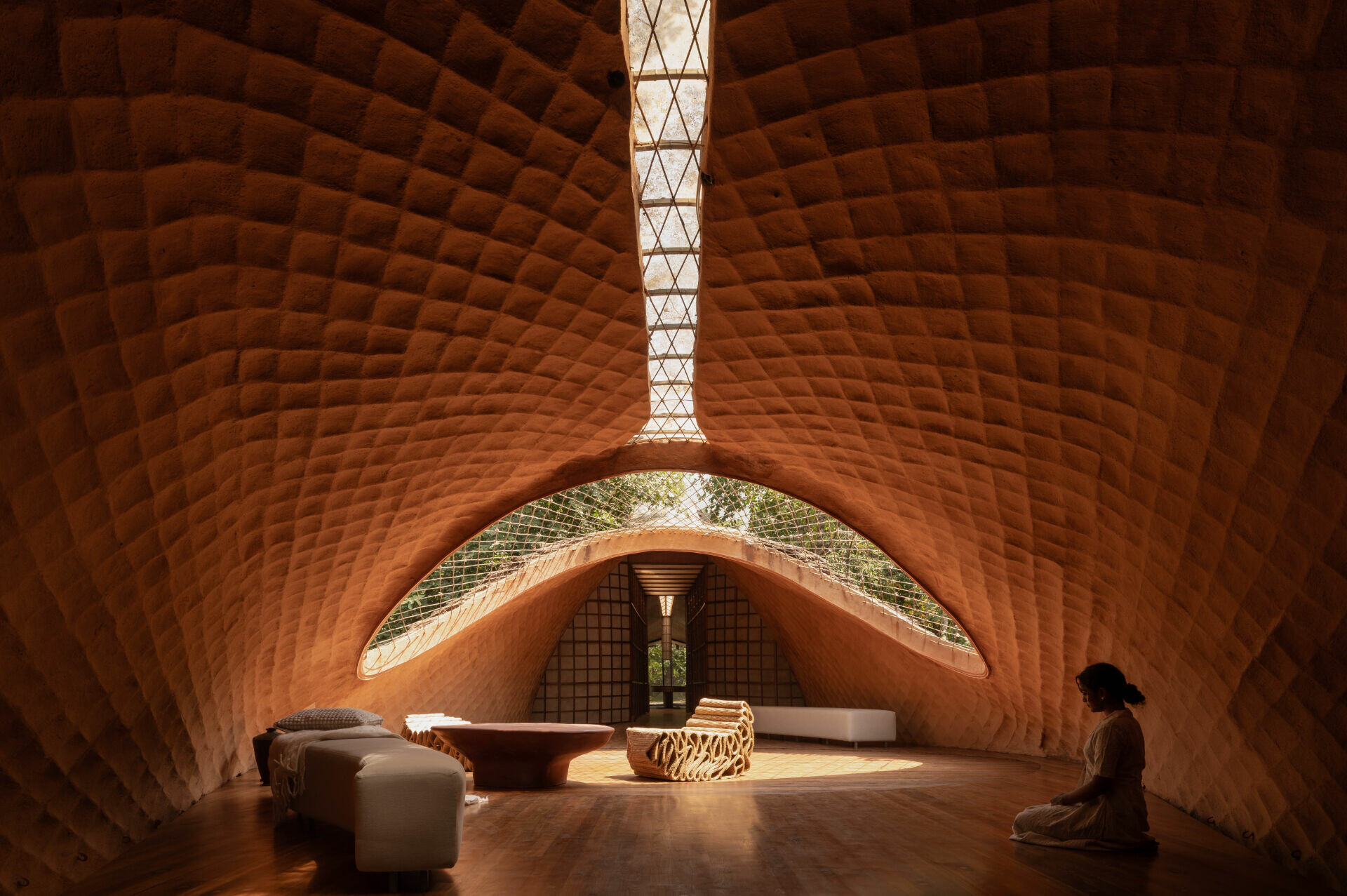
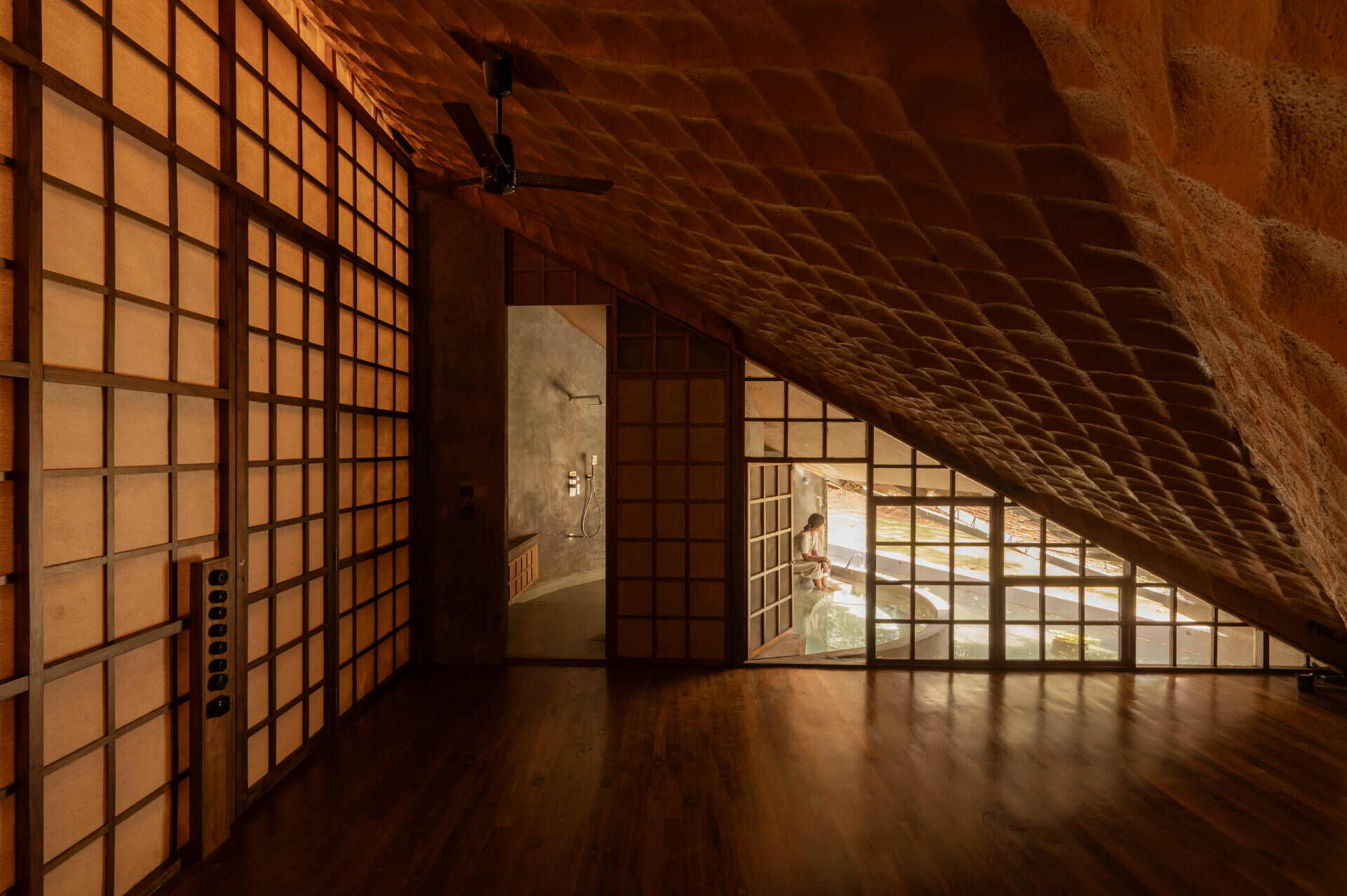
Wild grass around the site became the most suitable resource for a composite envelope. Thatch is worked into a mud slurry to form a thatch–mud composite across the exterior. Once cured, the mud-plaster coating hardens, strengthening compressive performance while acting as a thermal moderator suited to local conditions. Inside, thick thatch buffers harsh sun. Fine gaps still allow air to move through, giving the building a breathable skin. The scale-like surface recalls a pangolin: rain slips down it, cloud shadows pass over it, and the volume remains settled in the forest without disturbing its rhythm.
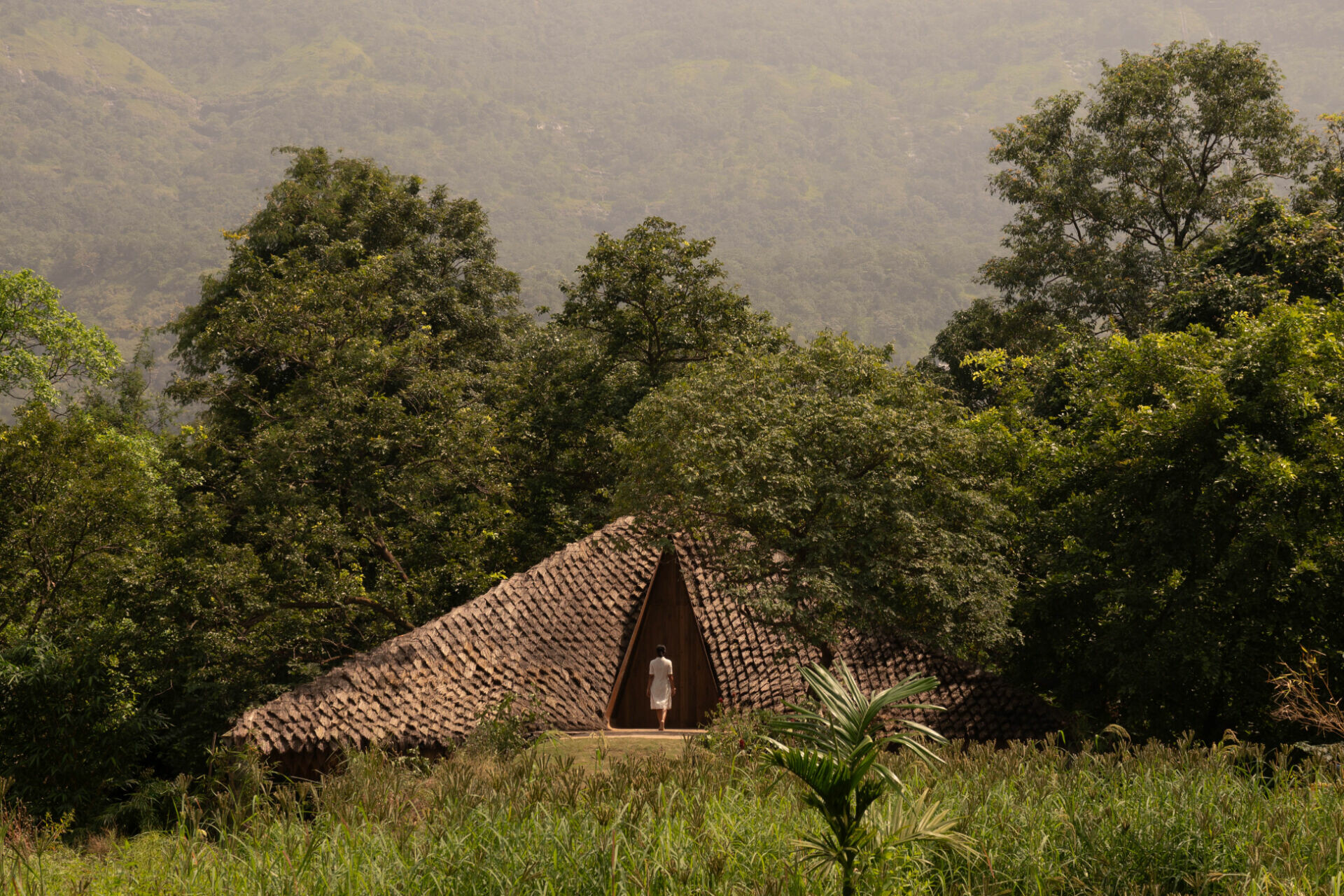
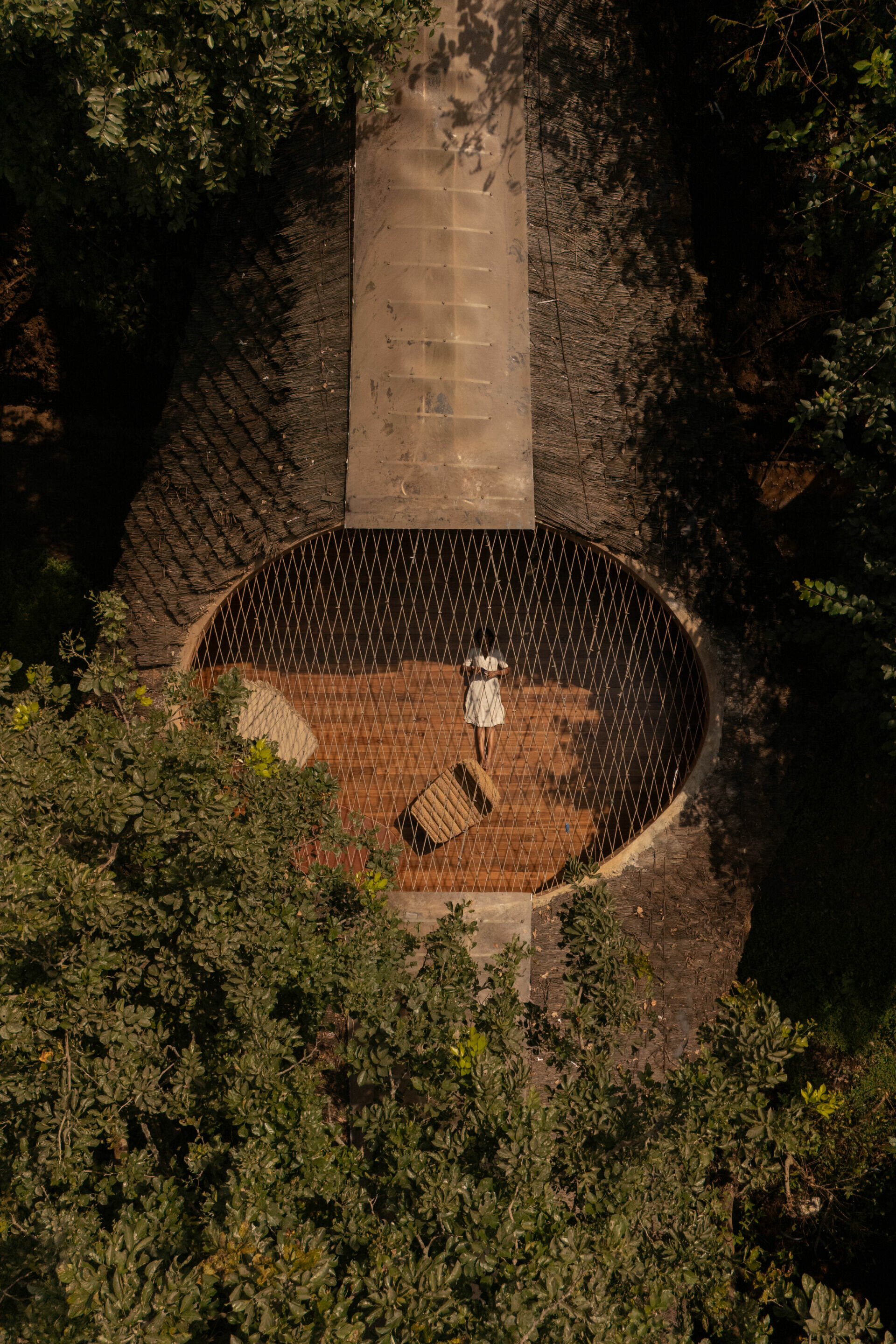
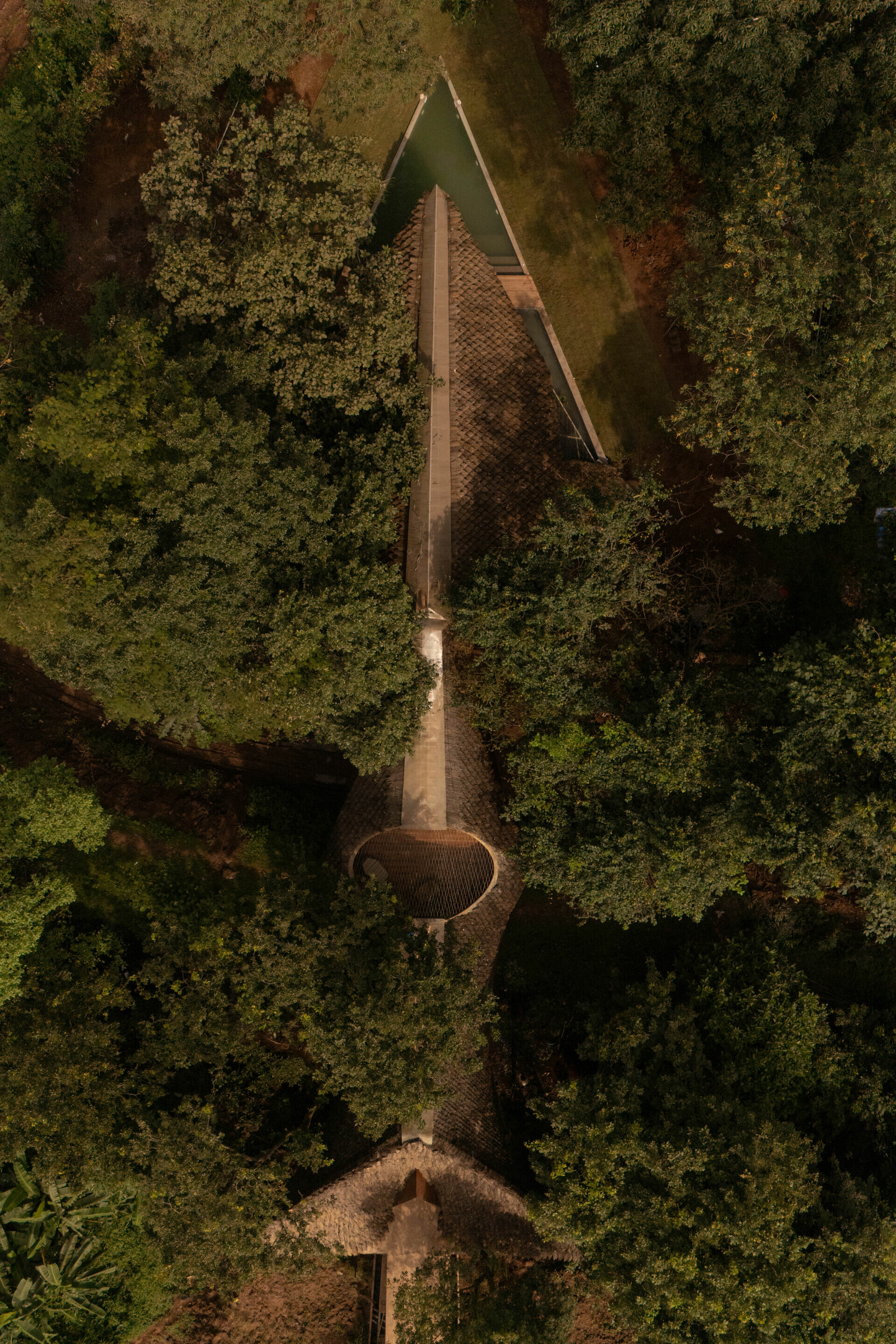
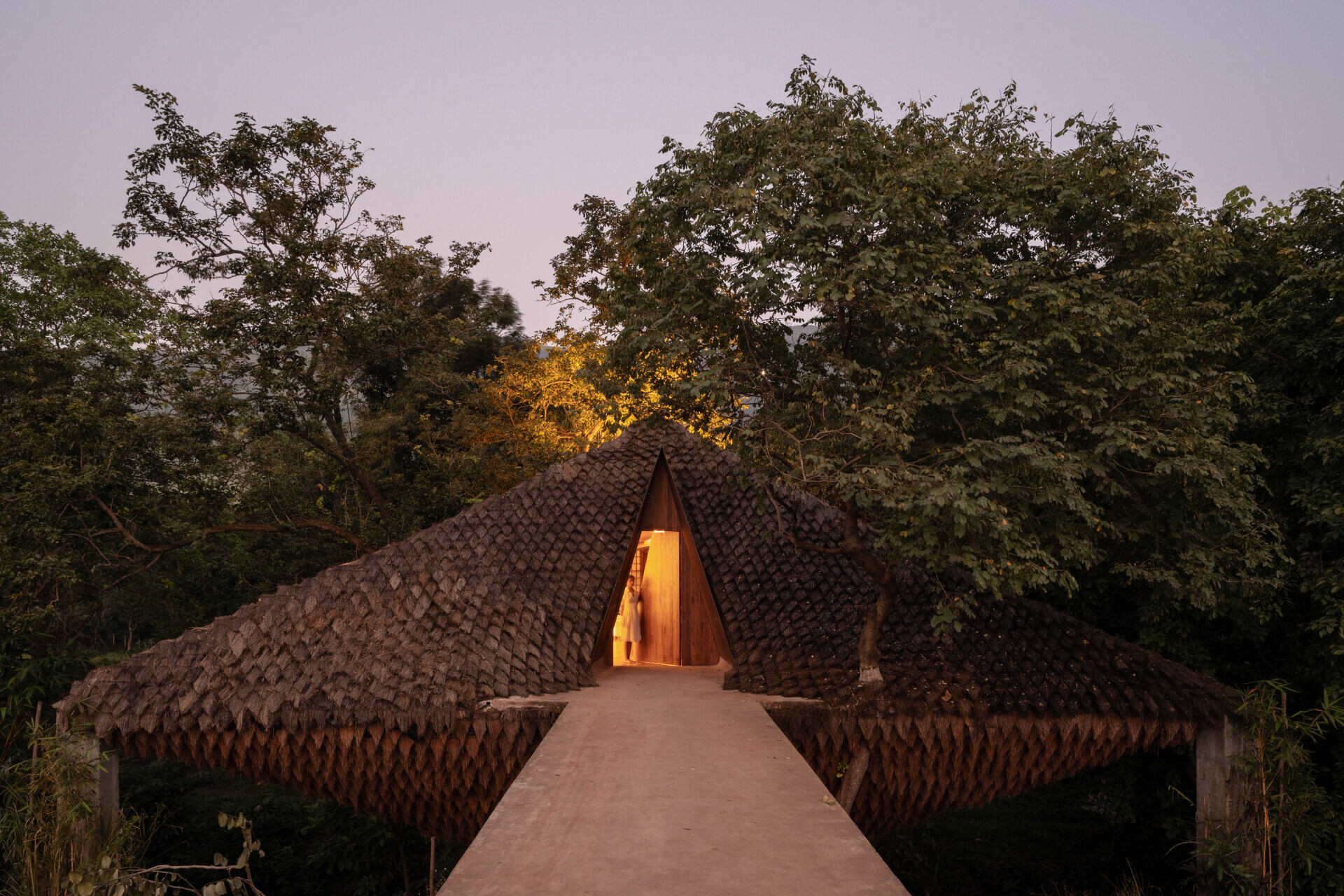
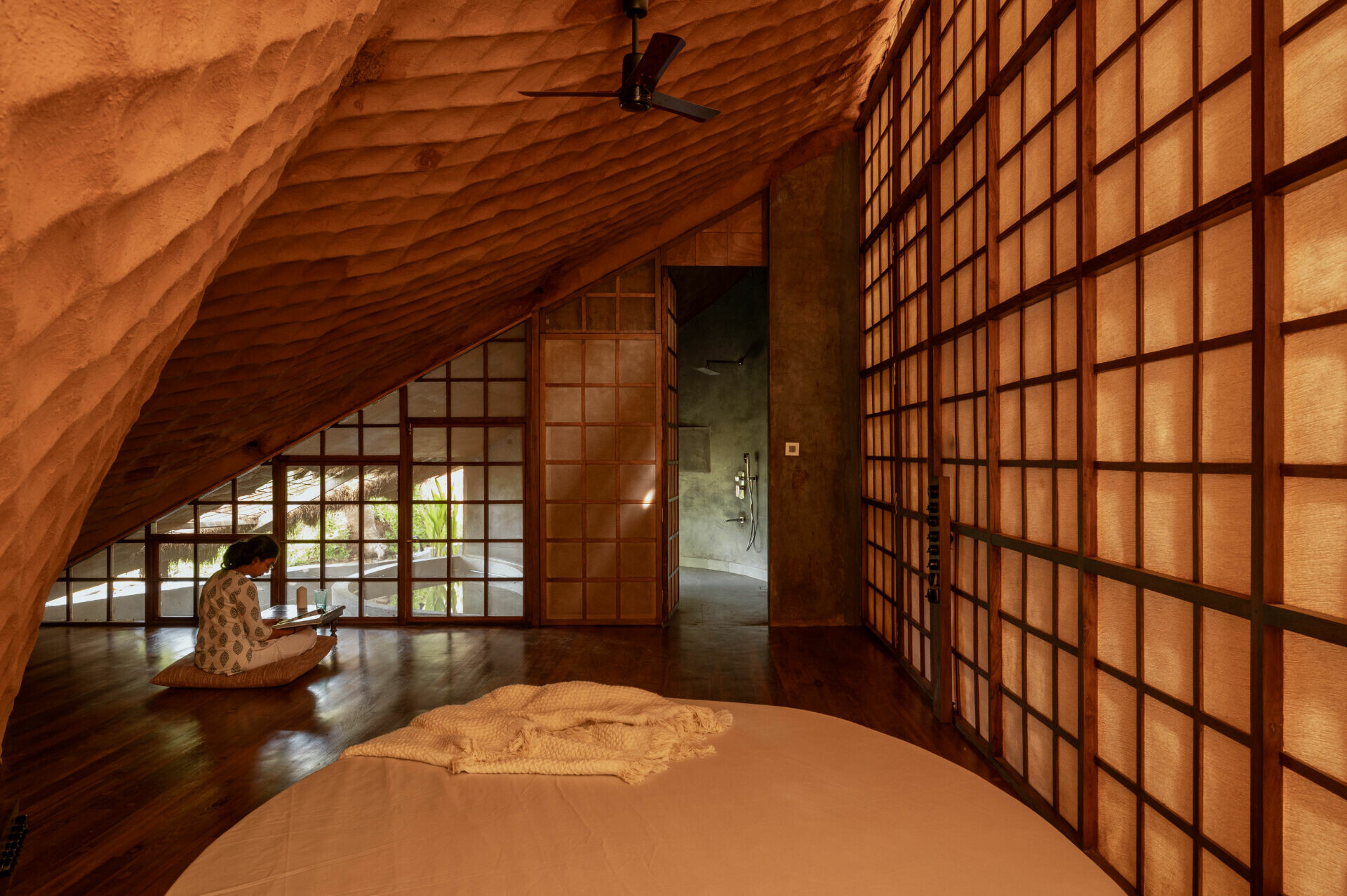
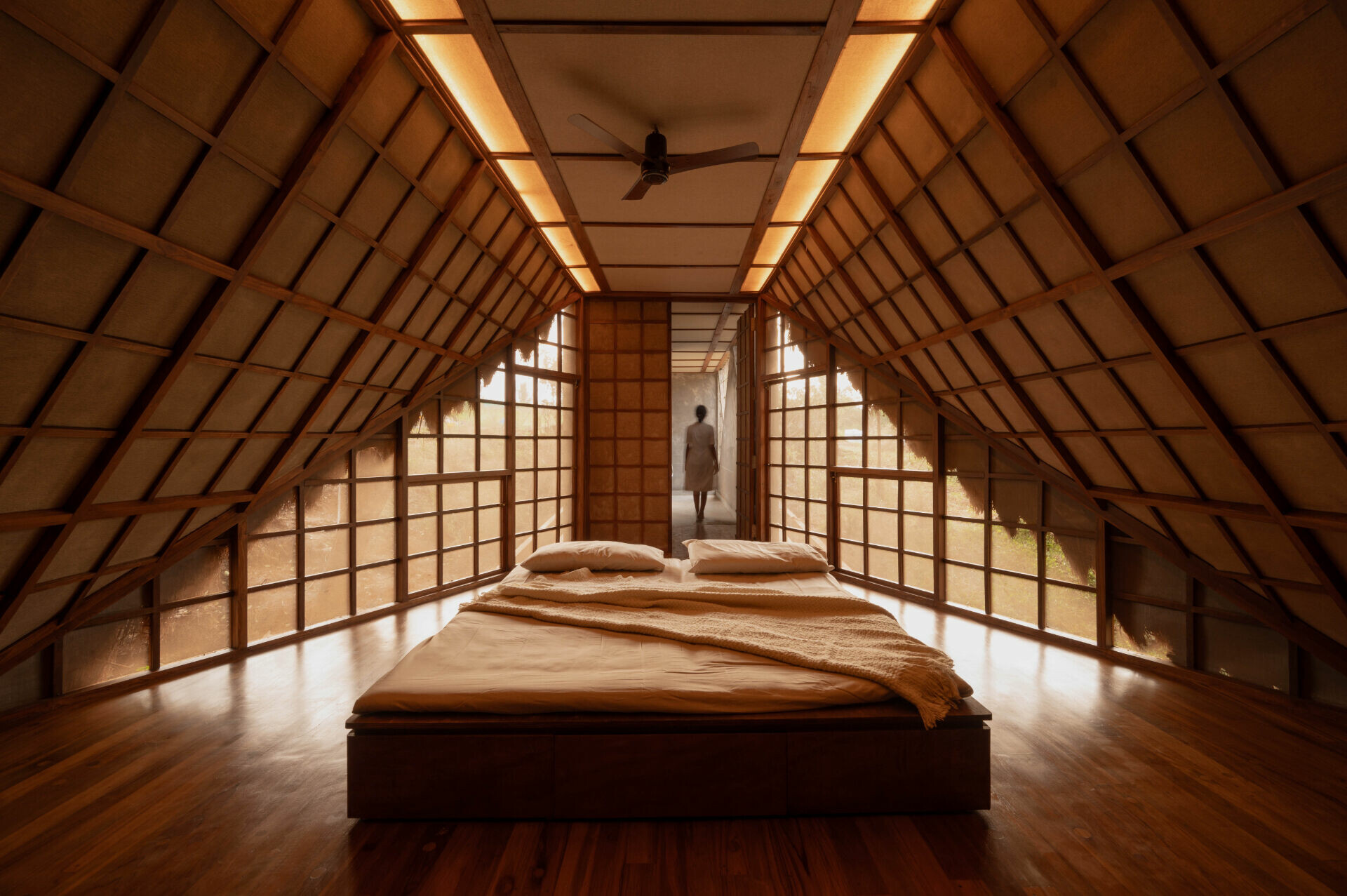
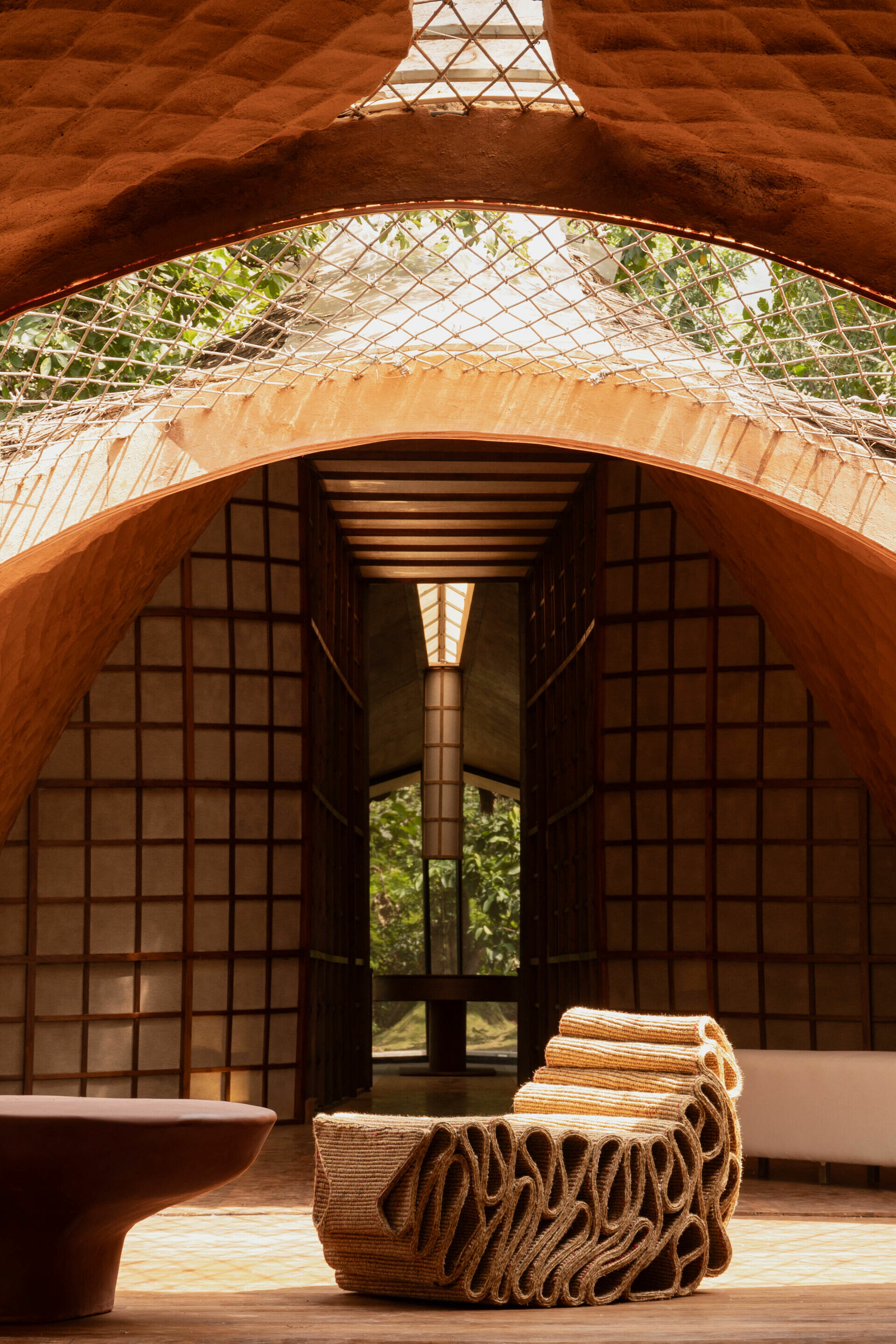
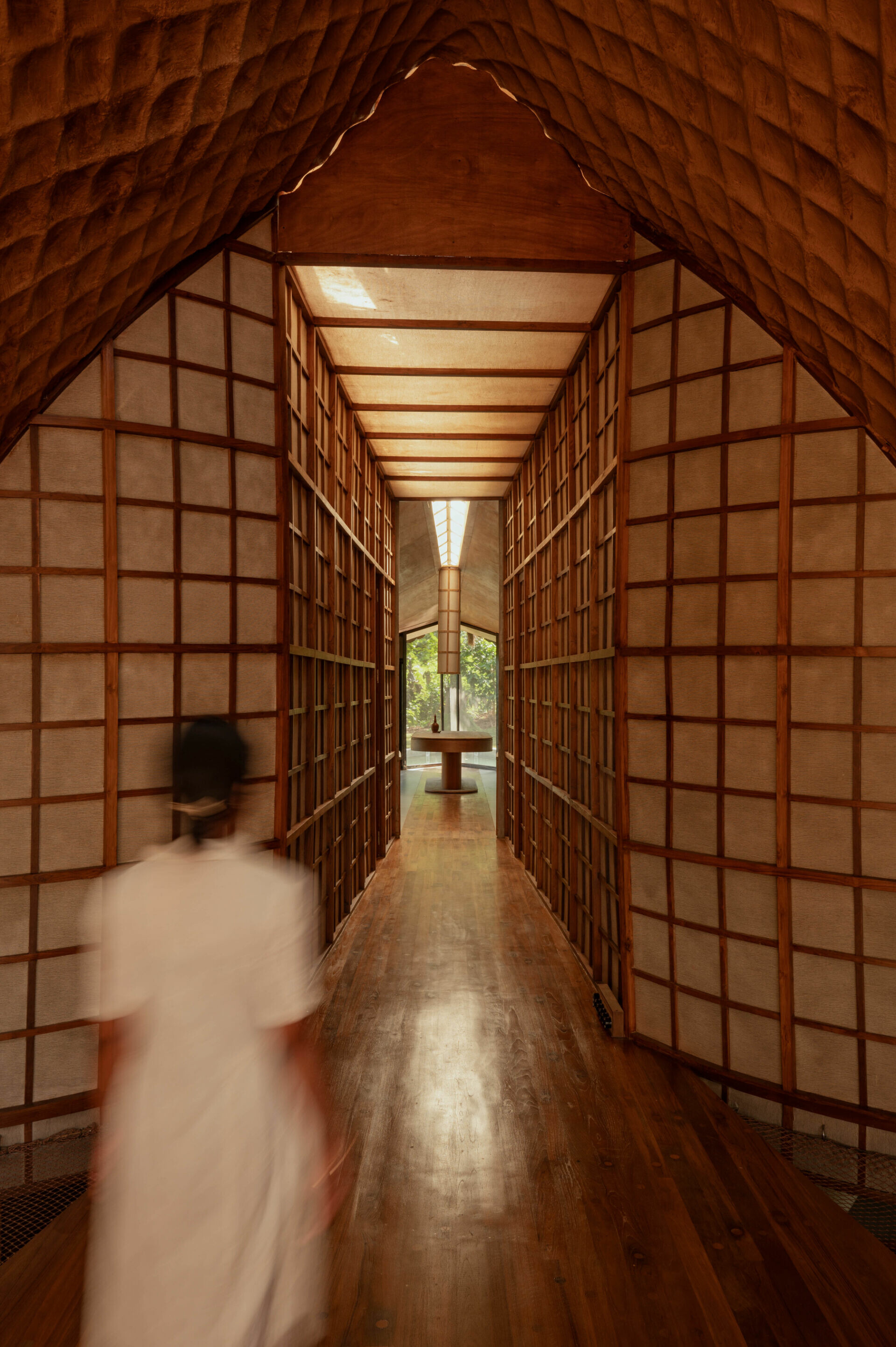
To sit inside Bridge House is to be held by filtered light. Daylight pours through the circular oculus and is softened by jute curtains and screens, leaving the interior immersed in a misted glow. As the light tilts, the passing hours become legible. Four bedrooms open outward to the landscape. The exterior mud-plaster layer is less susceptible to rodents and insects, while floorboards reclaimed from ship decks invite bare feet. With fingertips on the warm grit of plaster, the balance of softness and strength becomes tangible. The house reads as a weekend retreat for short stays, a secluded and comfortable refuge shaped by the building wisdom of its place.