➤ Photography by ATDEF team
Desert Ark
In a desert that seems to go on without end, even the smallest flame can help a traveller find their way, a beacon as vital as water in a time of drought. Faced with the impacts of increasingly extreme climatic conditions, there are still people who choose quiet, humble and patient ways of watering and tending the land, of caring for the earth itself. Their actions are small, their interventions carefully measured, yet they share a conviction grounded in respect for the ground beneath their feet, and keep asking whether such work can, in tangible terms, open up more possibilities for the environment. The Desert Ark, with its reversible, demountable and mobile way of inhabiting the desert, may be an apt answer to that question.

➤ Photography by ATDEF team
➤ Photography by ATDEF team
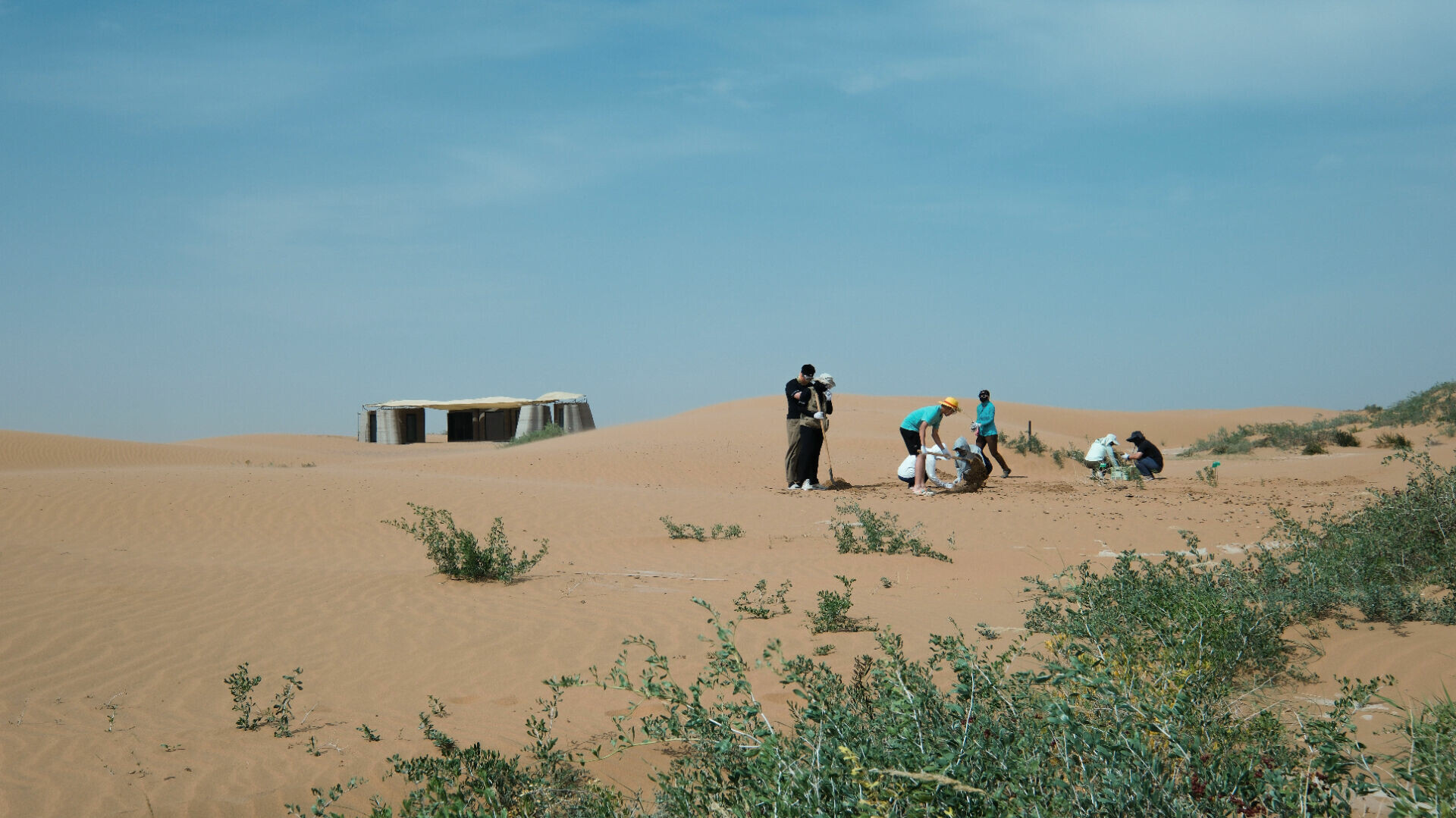
Spanning Inner Mongolia, Gansu and Ningxia, the Tengger Desert is China’s fourth-largest desert and a major source of dust storms across East Asia. In Mongolian, “Tengger” means “sky”, a name that evokes an expanse as open as the heavens. Most people know it for its desolation; far fewer notice the unnamed figures who stand year after year in the blowing sand, locked in a quiet tug-of-war with the advancing dunes as they defend the land and its fragile ecologies. In an effort to halt this deterioration, a local advocate, Mr Wu Xiangrong, established the Tengger Desert Ecological Conservation Base, guided by the idea of “planting trees to cultivate the heart” as a philosophy for combating desertification. For almost three decades, the team has continued, day after day, to plant trees along the desert’s fringe. Around fifteen million trees have gradually taken root beyond the sand, transforming over ten thousand hectares of desertified grassland, bringing back traces of greenery and life, and giving countless volunteers, herders and educators a more immediate understanding of the relationship between people and land.
➤ Photography by Huaer Lin
➤ Photography by Huaer Lin
➤ Photography by Huaer Lin
➤ Photography by ATDEF team
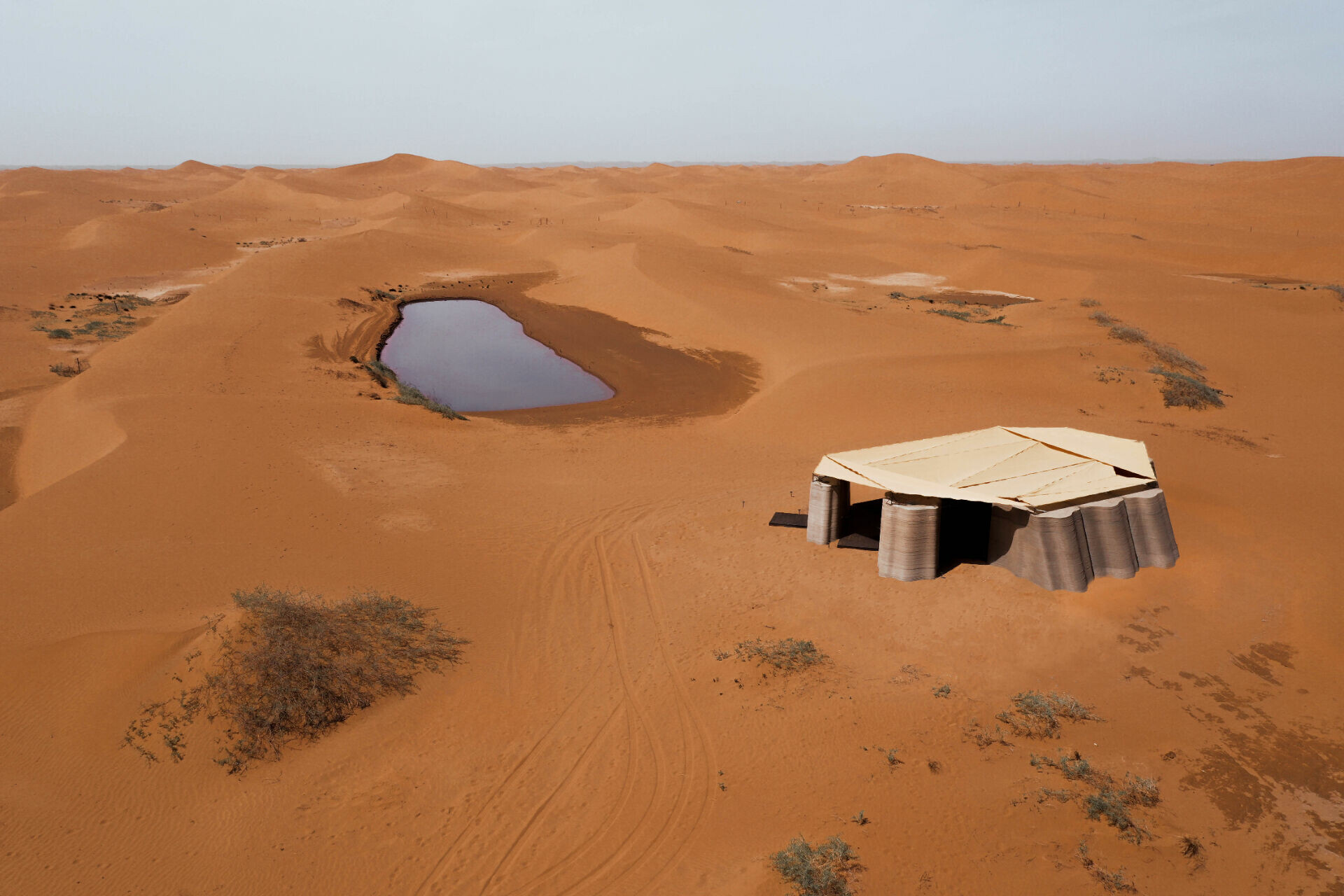
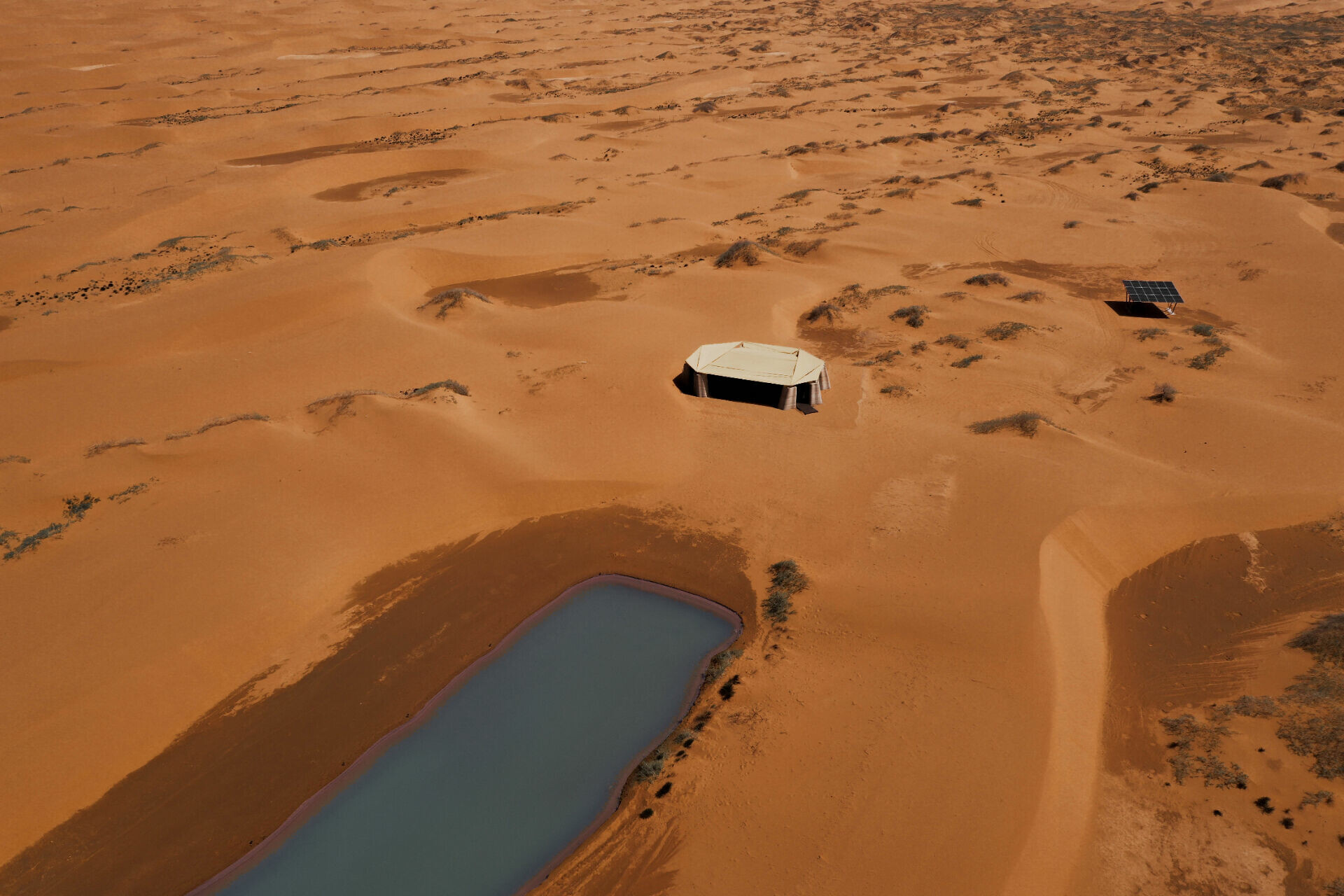
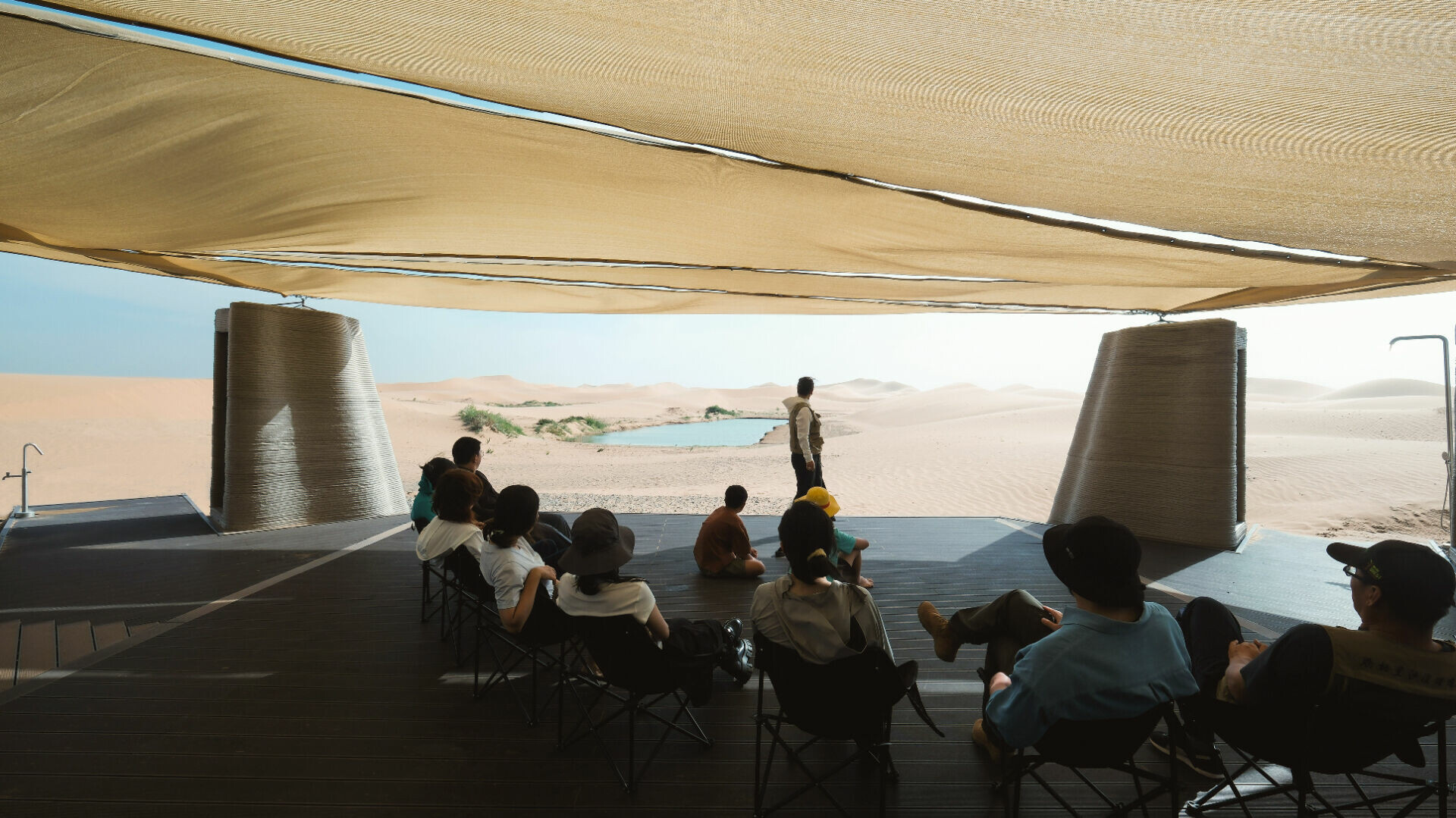
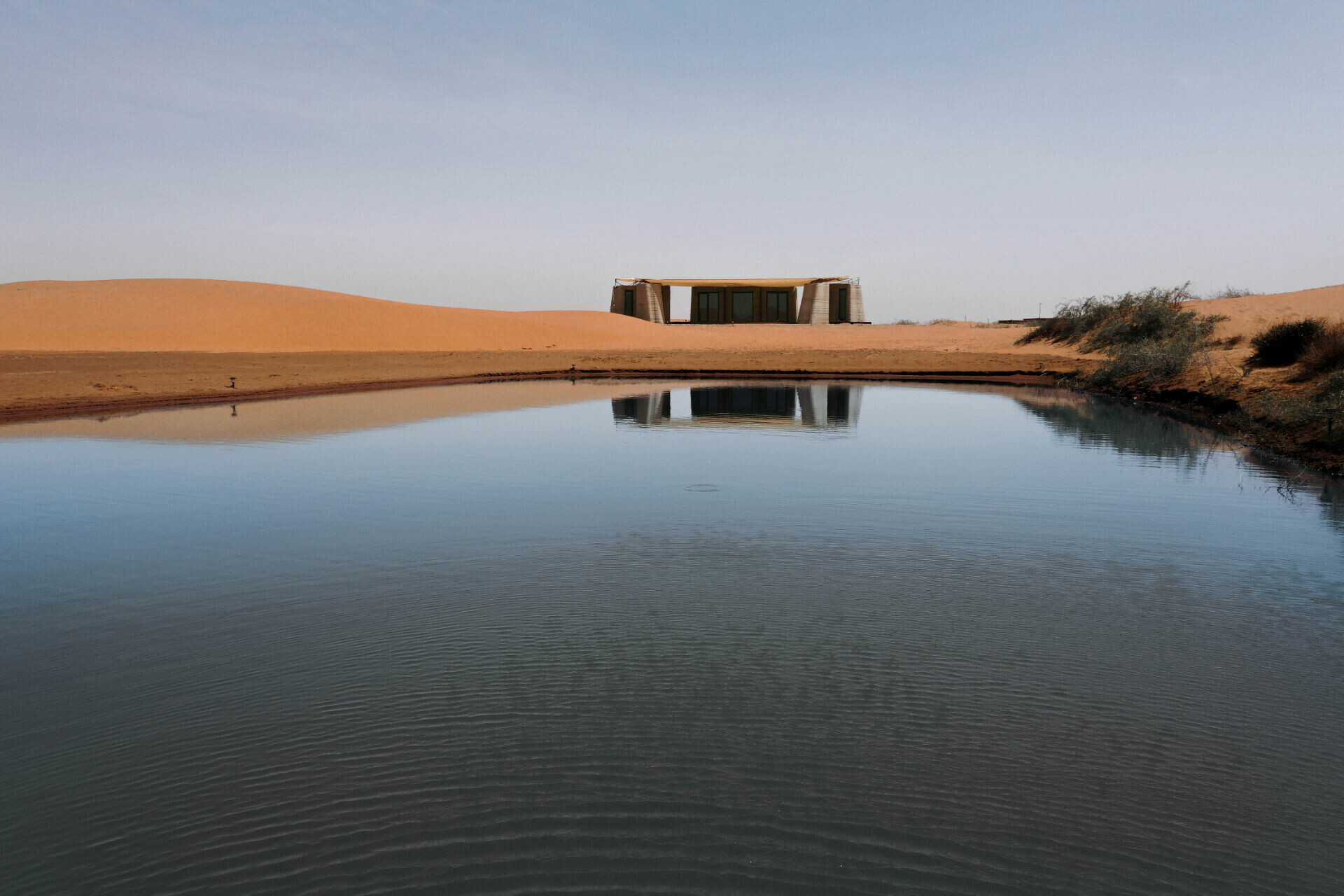
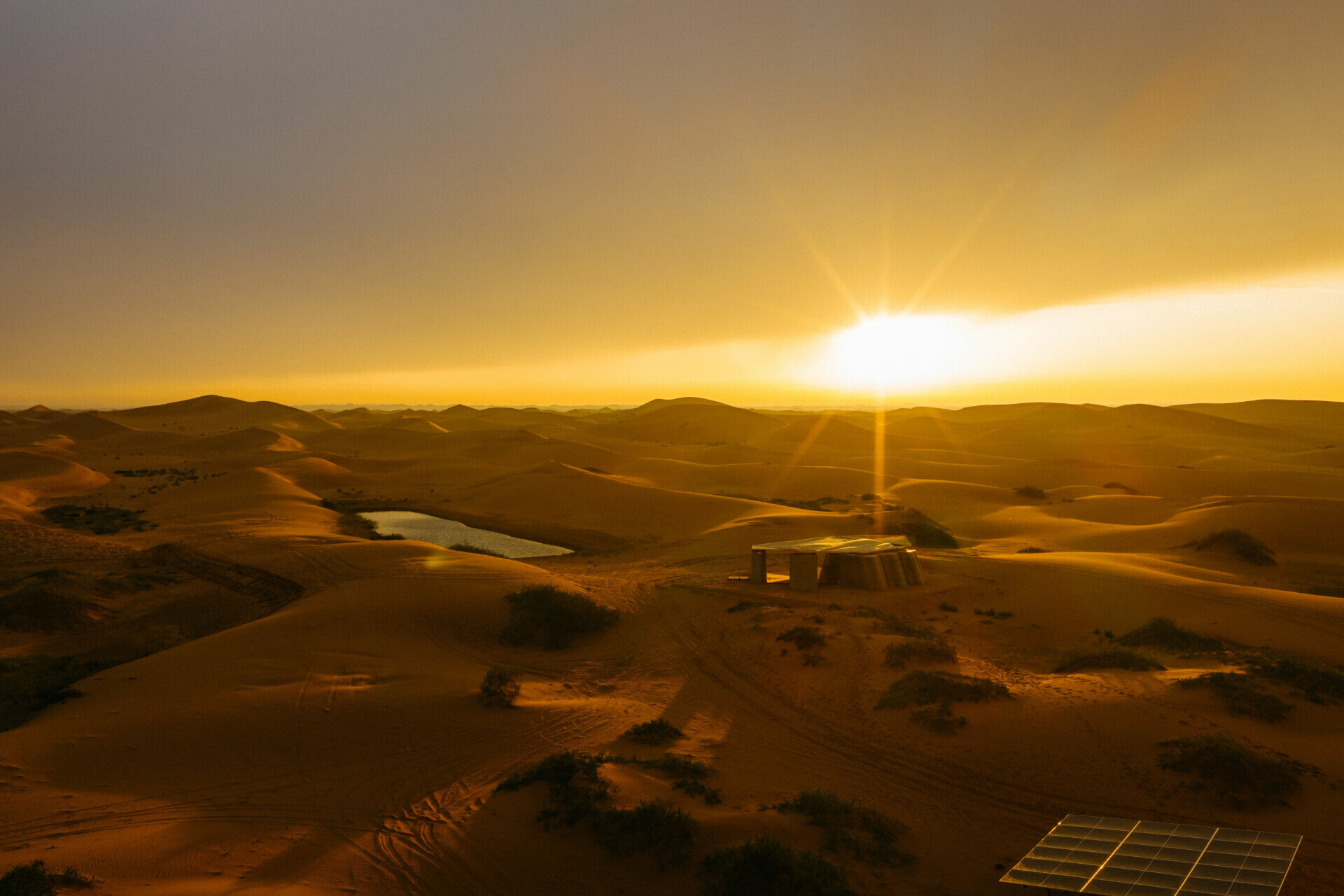
For those who remain here as long-term guardians, the desert is never just a distant, picturesque view. By day, the sun bears down until breathing becomes difficult; at night, low temperatures and strong winds cut across the body like blades. In such harsh conditions, the Desert Ark becomes a place to gather — a single light, a cup of clean water, a spot where people can change out of clothes caked with sand and rest, so that the body can regain its strength in relative comfort. This is not a luxury, but a pressing and very real need. The architects at designRESERVE therefore sited the Ark beside a naturally formed seasonal lake that intermittently appears among the dunes, in a place where any reliable source of water is an exceptionally precious resource.
➤ Photography by ATDEF team
➤ Photography by ATDEF team
➤ Photography by Yong Hu
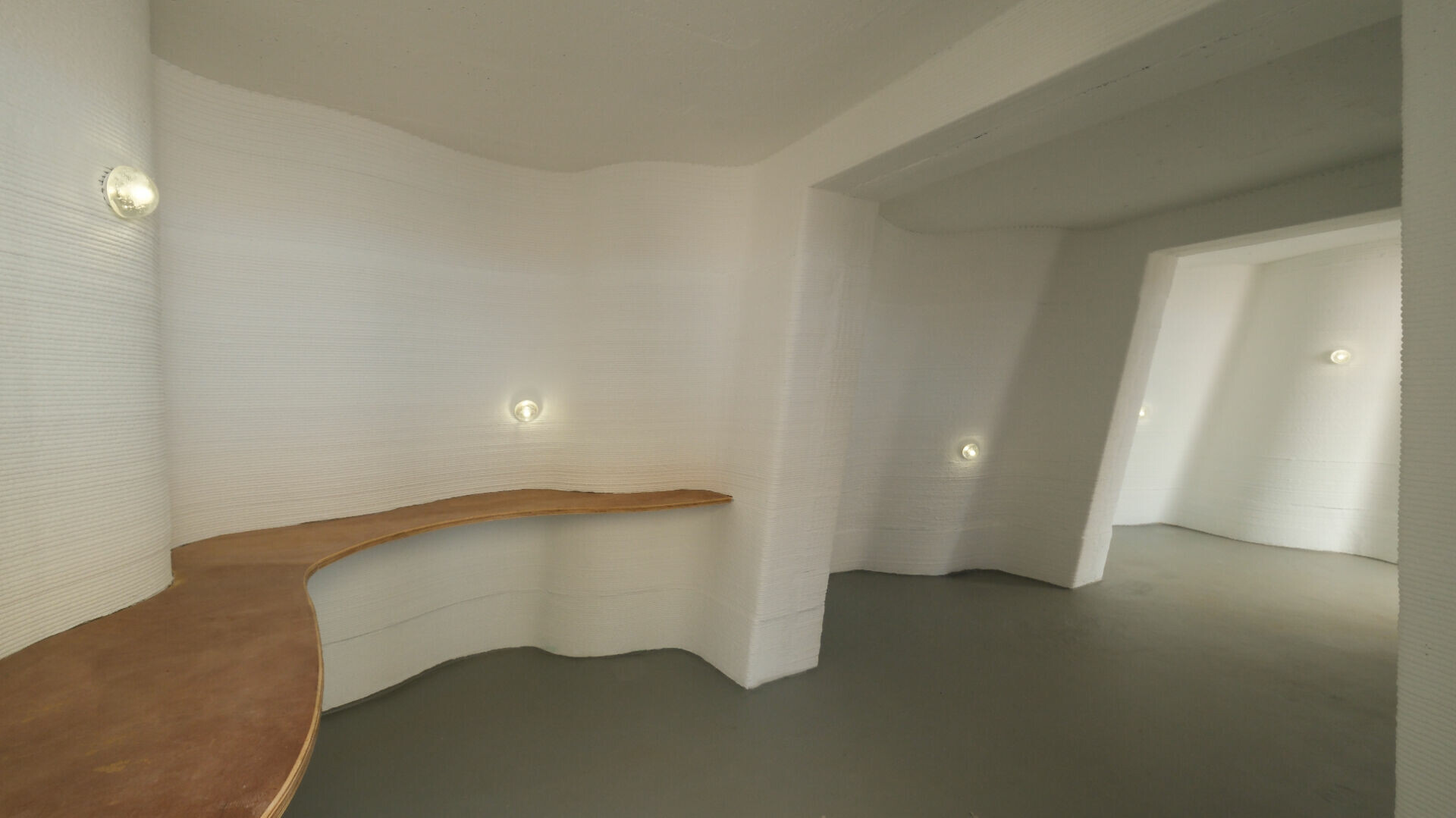
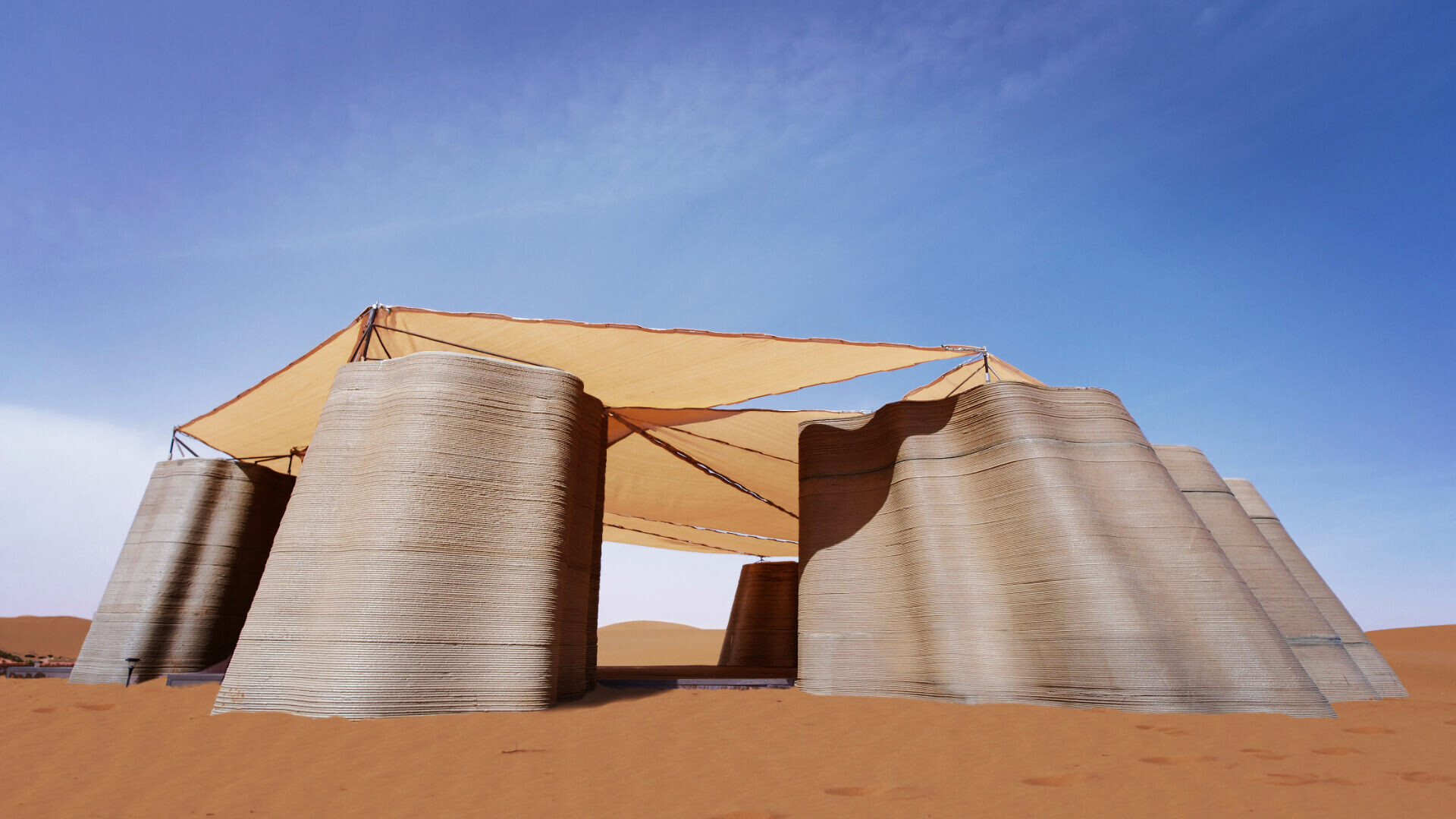
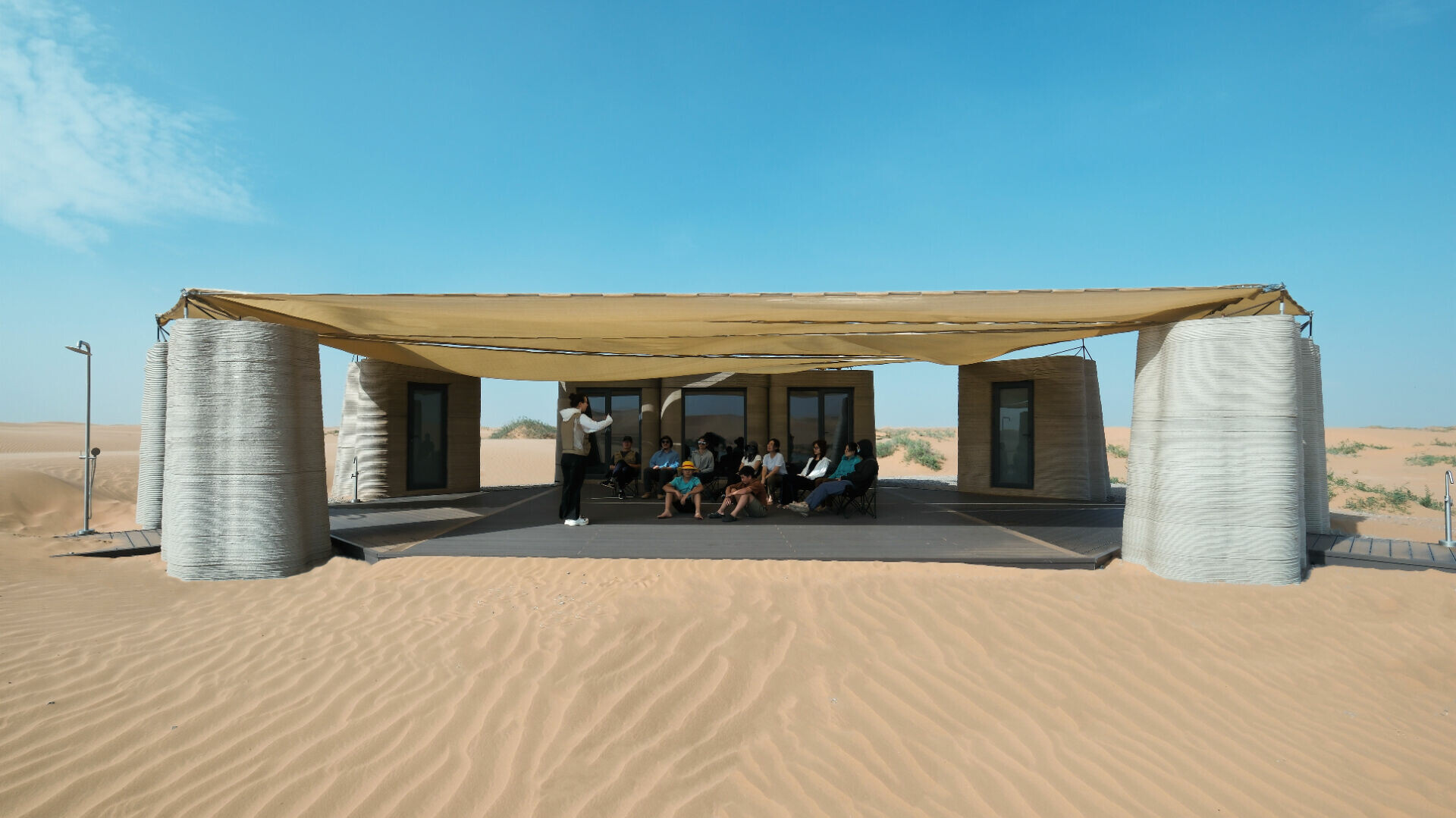
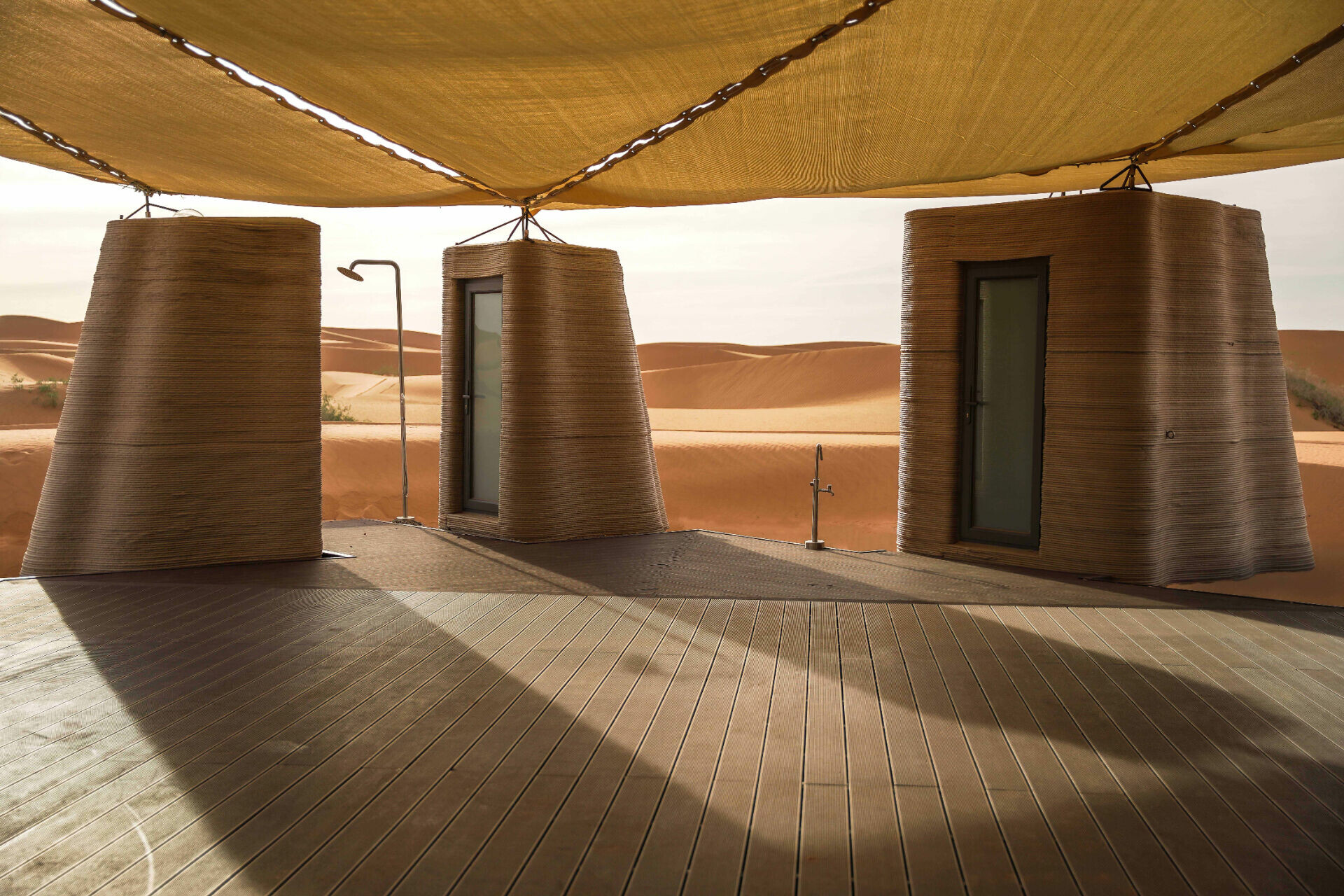
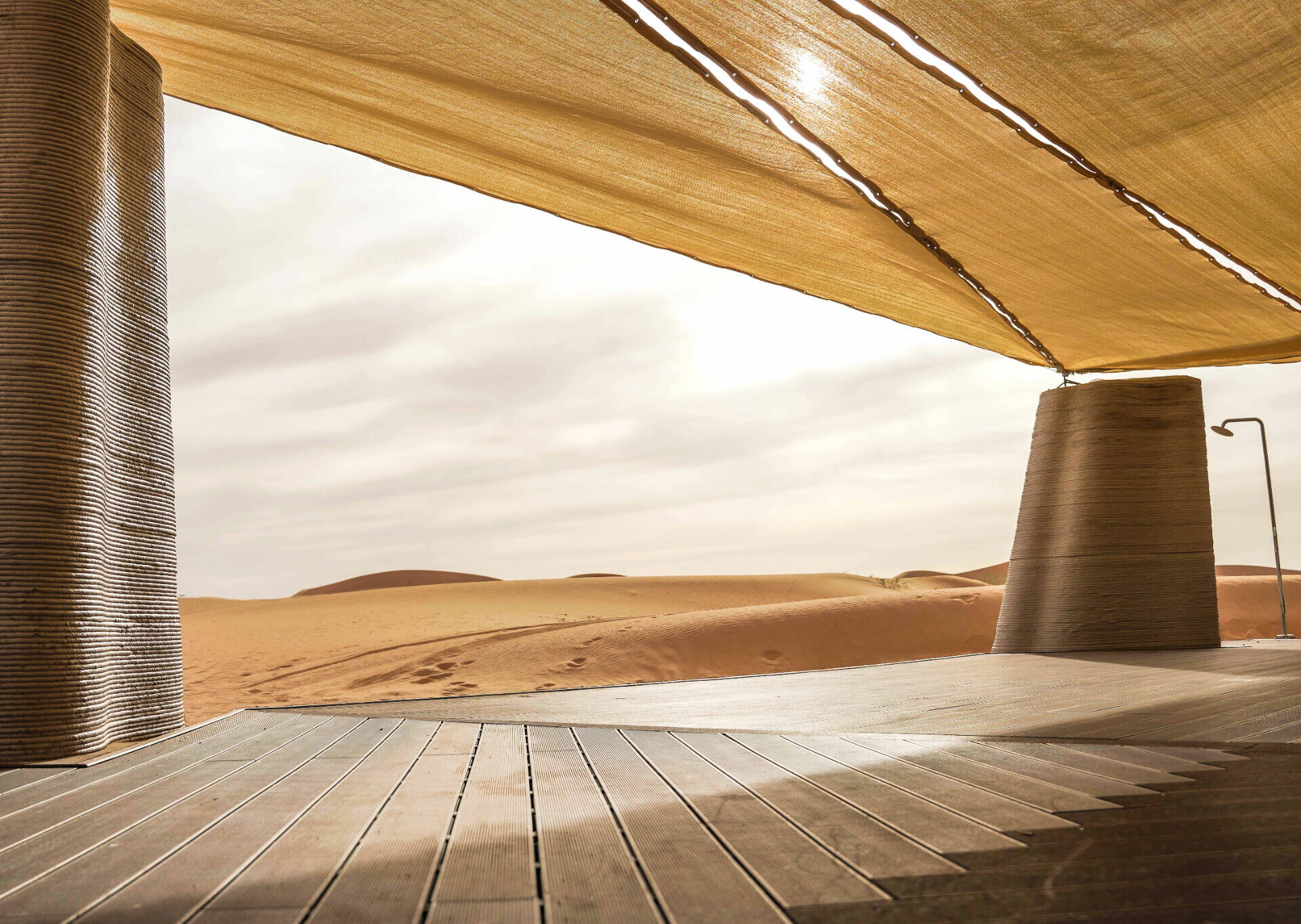
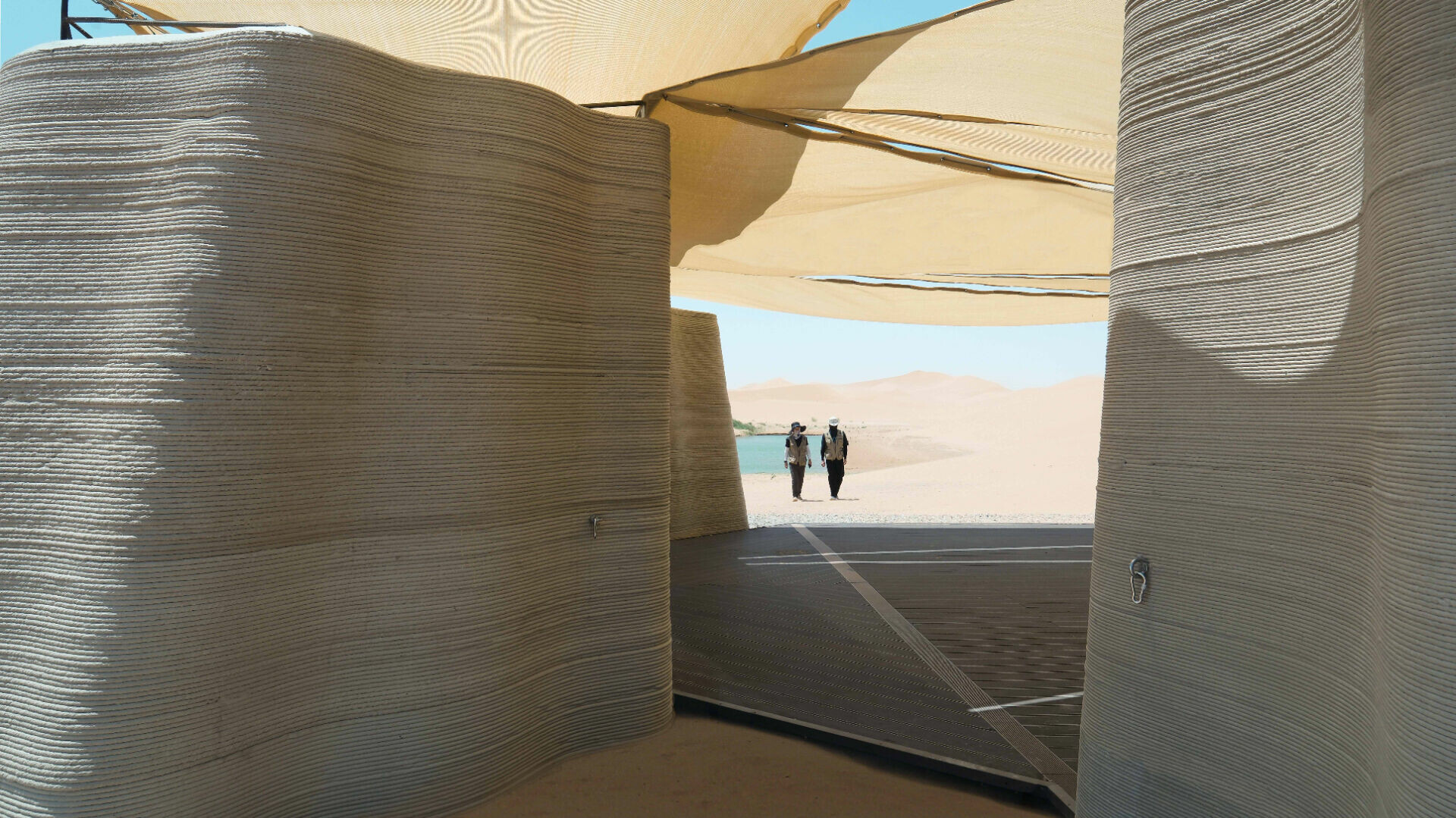
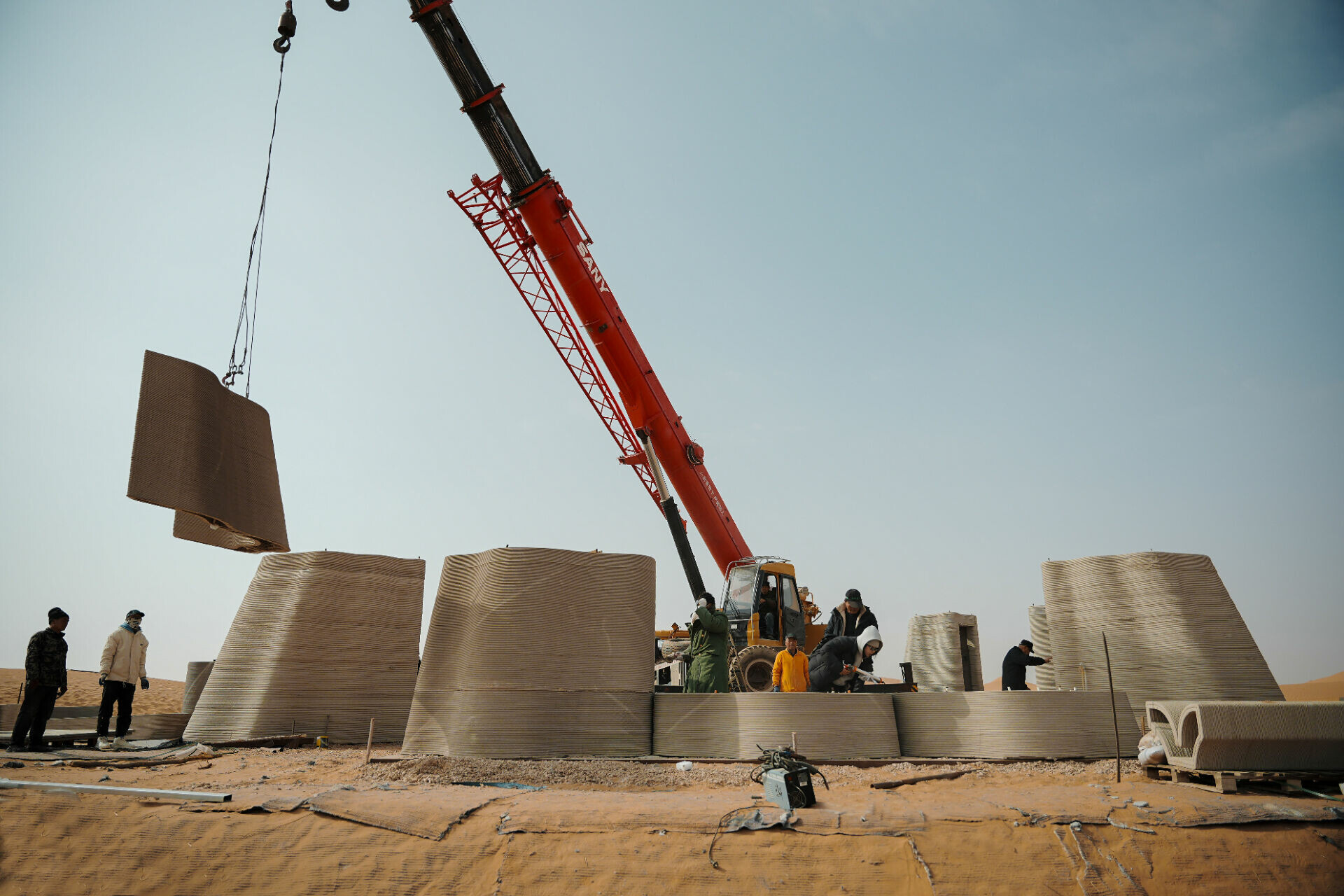
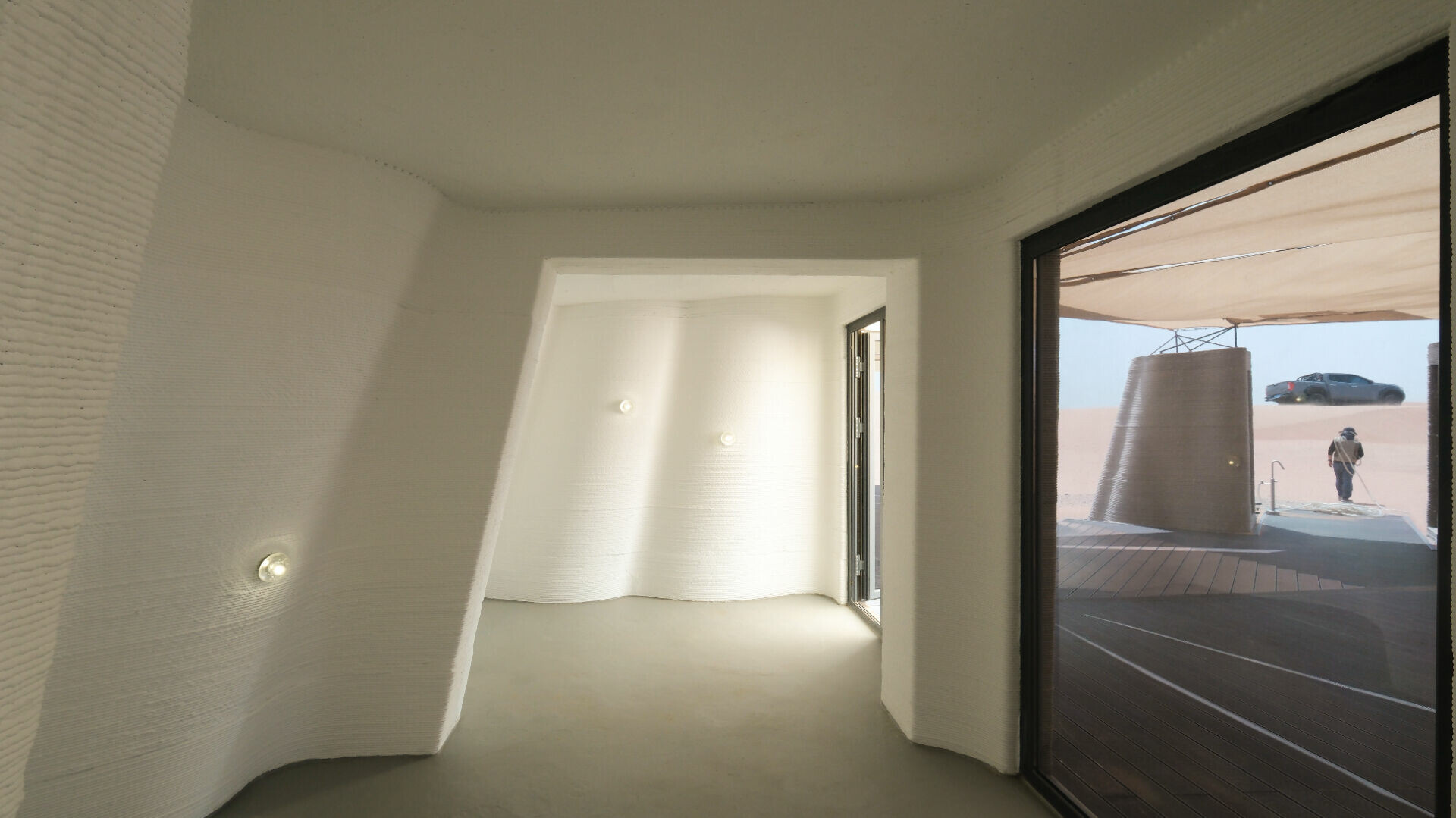
Respect for the land formed the starting point of the Ark’s design. Using 3D-printed concrete in combination with a modular prefabrication system, the team constructed nine separate volumes, accommodating a communal activity room, kitchen, toilet and shower facilities, and storage. All components were completed in the factory before being transported to the desert, where the main structure was assembled in just two days. The volumes rest on a hexagonal platform made of recyclable plastic, forming the outline of a small, settlement-like cluster. Their streamlined profiles help them shed the wind and reduce wind load. Lengths of canvas are stretched between the units to create a continuous canopy that pays homage to the vernacular ingenuity of the Mongolian ger as a mobile dwelling. When the midday sun beats down and the canopy casts a soft, diffuse shade across the ground, the Desert Ark offers those who quietly guard this landscape a place sheltered from wind and heat, standing firm even as sandstorms sweep through.
➤ Photography by Huaer Lin
➤ Photography by ATDEF team
➤ Photography Huaer Lin