The Woven Realm of Wood
In Robert Sternberg’s triangular theory of love, love is formed by three elements: intimacy, passion, and commitment. Intimacy, in particular, describes a bond that lives in the mind. For the homeowners, the kind of space capable of holding such closeness is defined by one quiet measure: whether it can make them feel accompanied.
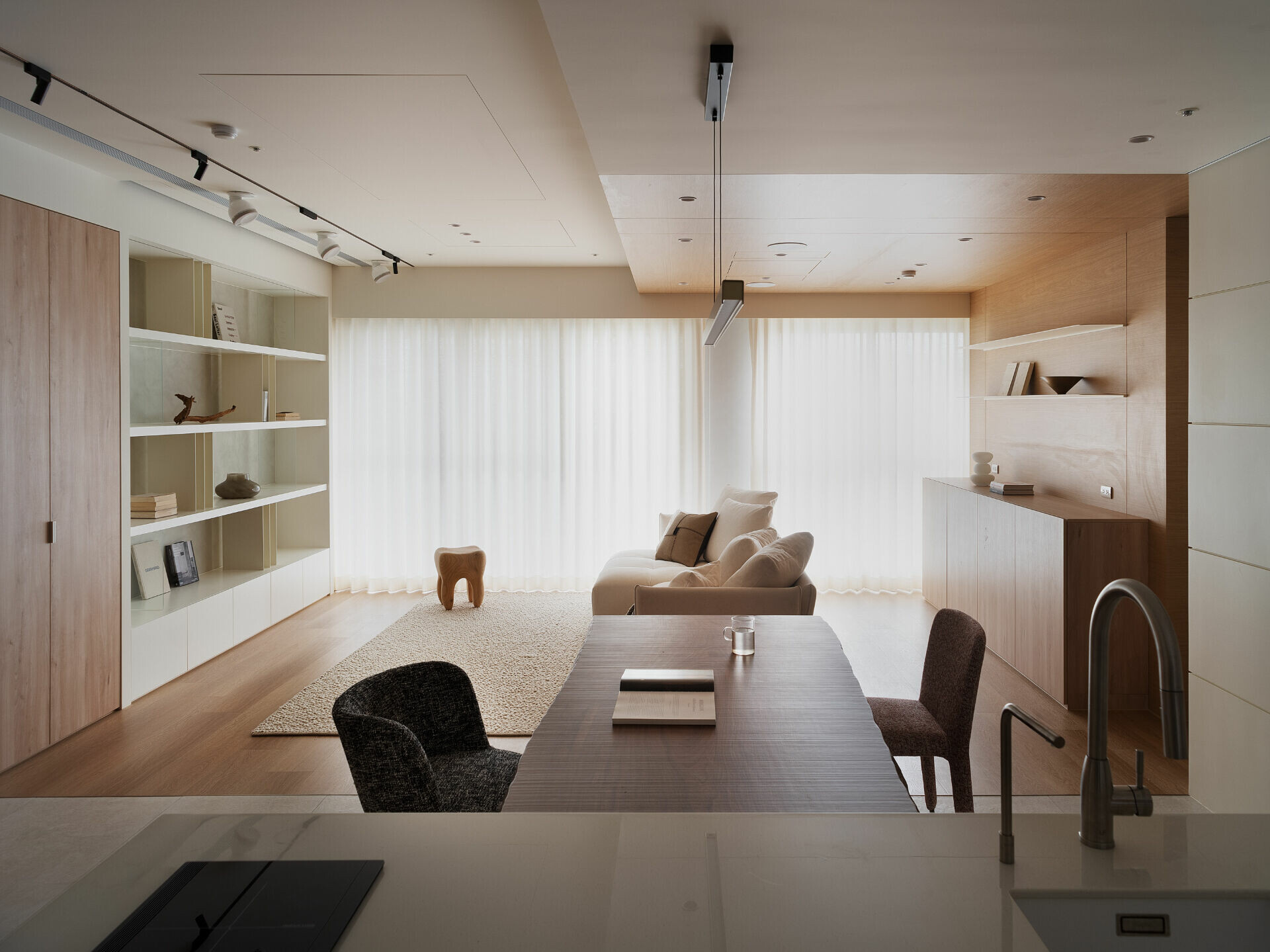
To reinforce that bond within a home conceived for two, the designer removed the kitchen’s original partitions and introduced the island the owners had been hoping for. The communal areas are now fully opened up, reading as one continuous volume. Whether one is cooking in the kitchen, the other is reading in the living room, or both are absorbed in separate pastimes, they remain within each other’s view. Conversation no longer needs to be initiated; it simply becomes part of the room’s everyday flow, allowing feelings and states of mind to be shared as they happen.
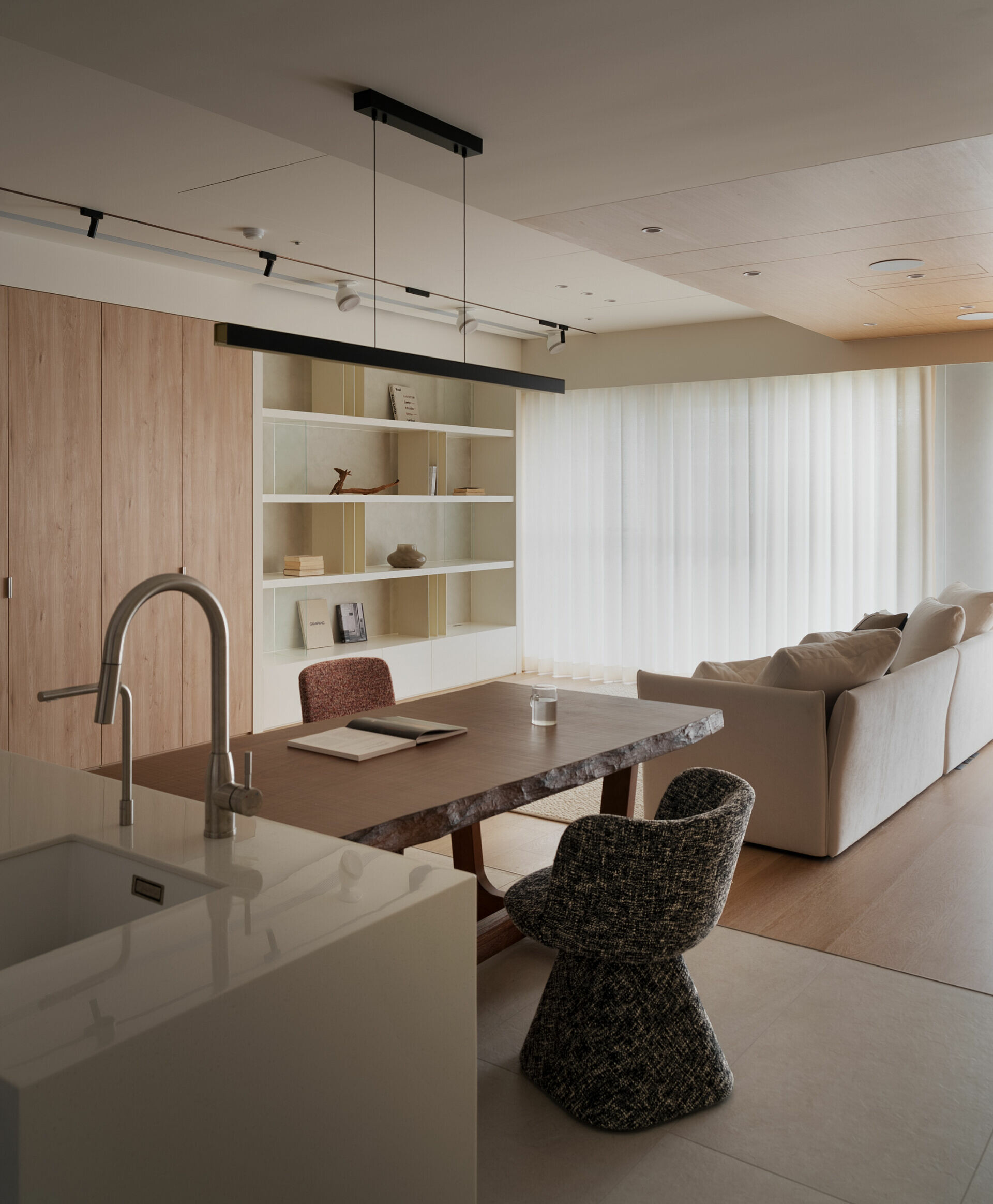
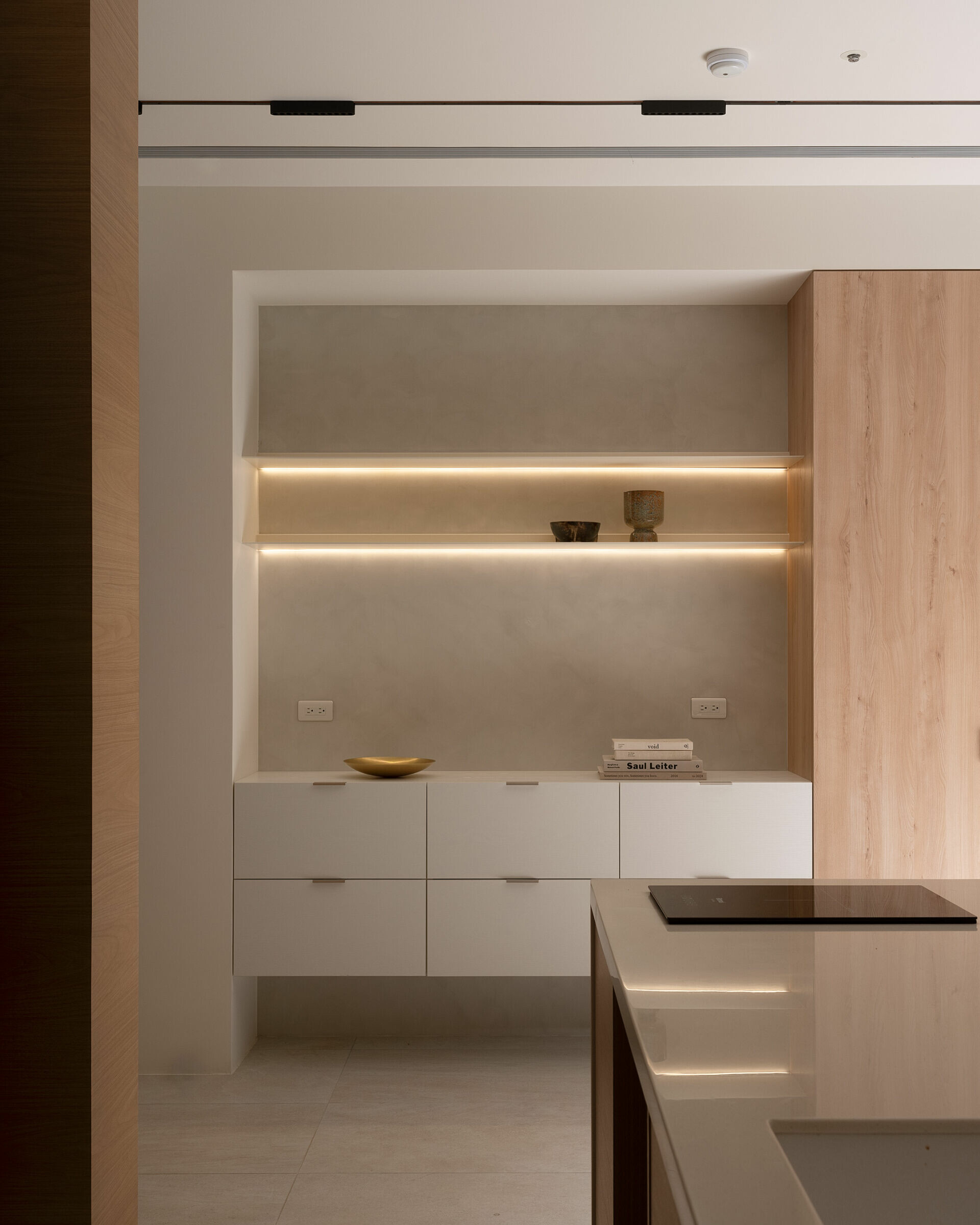
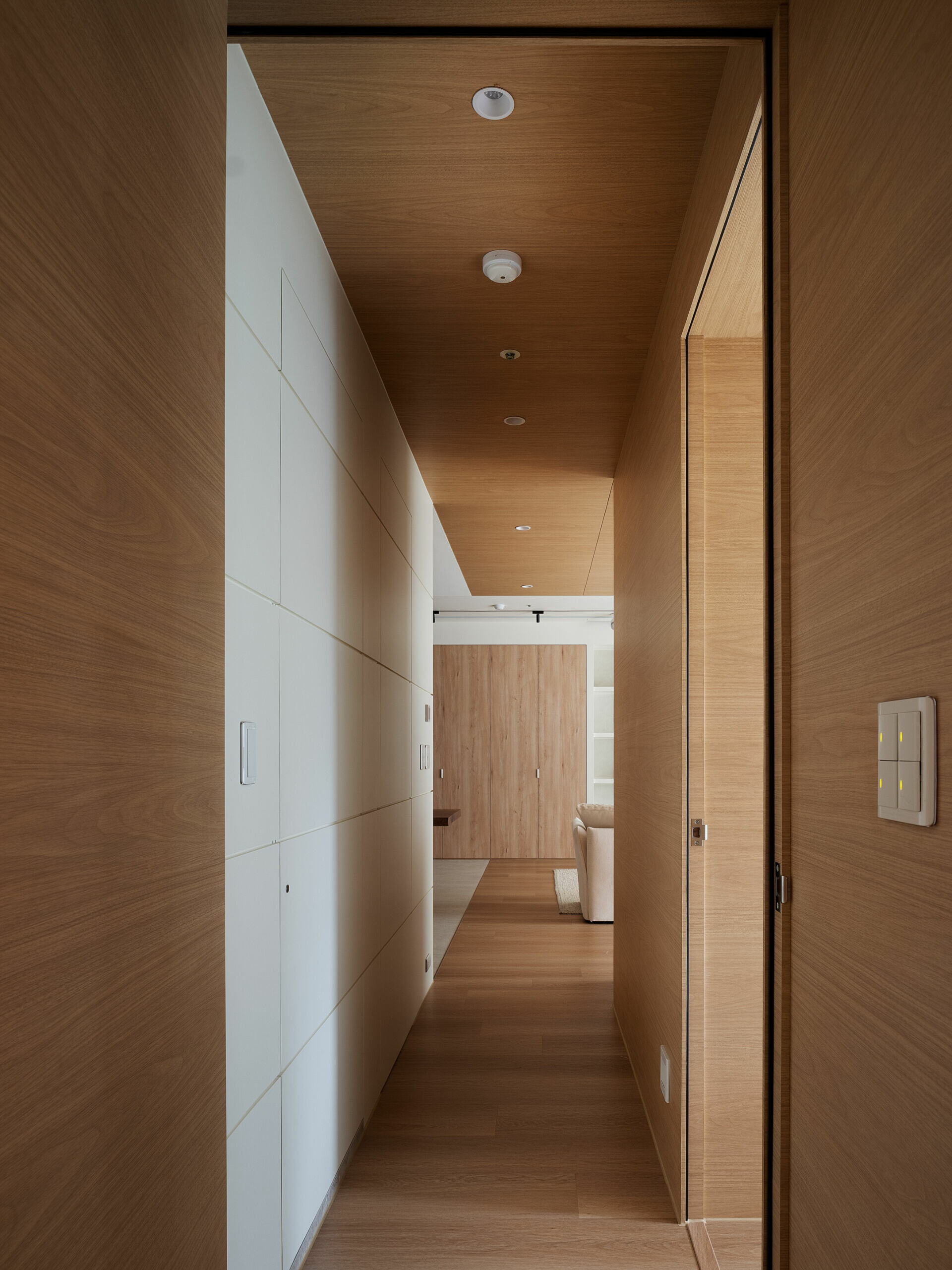
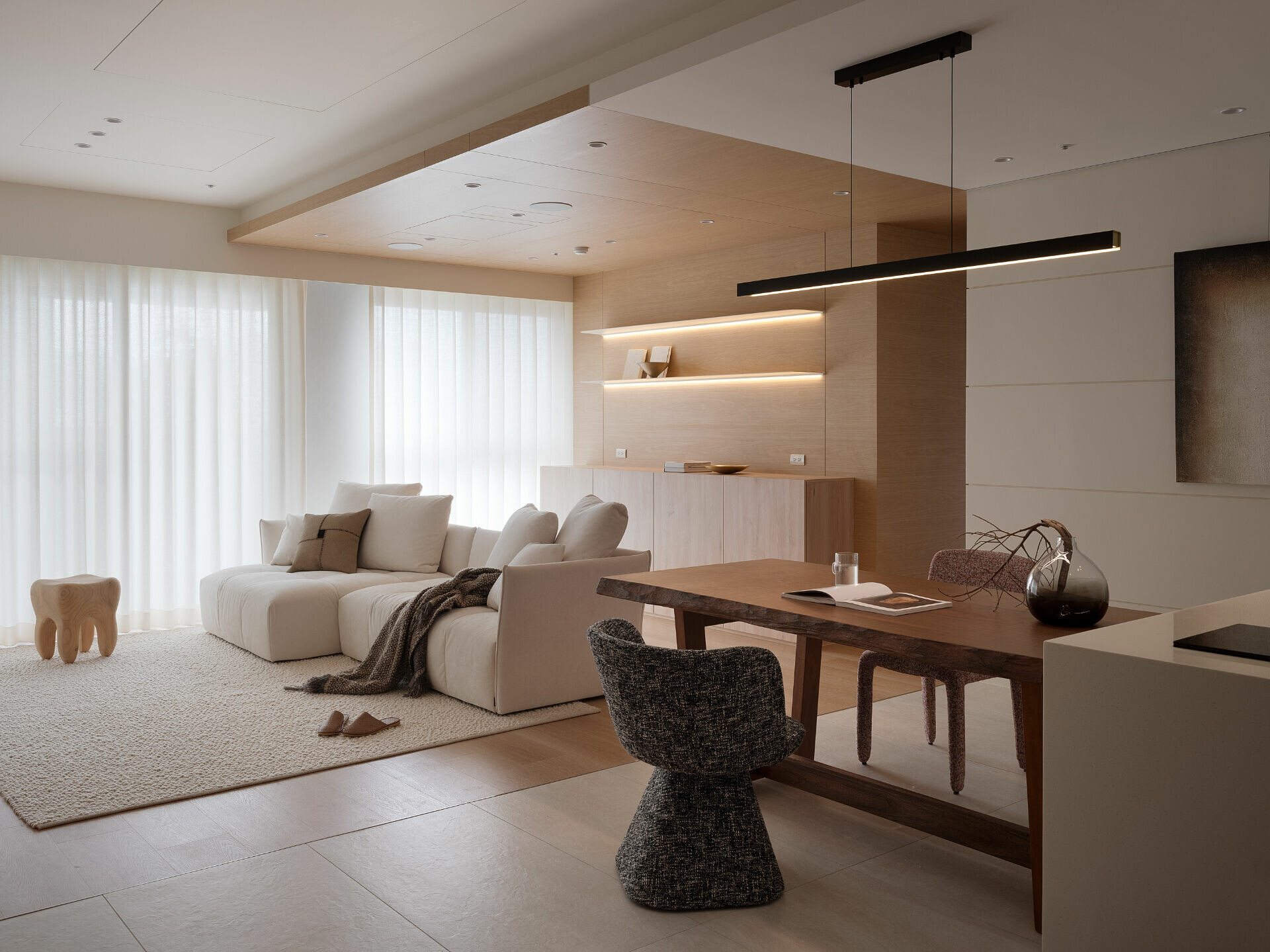
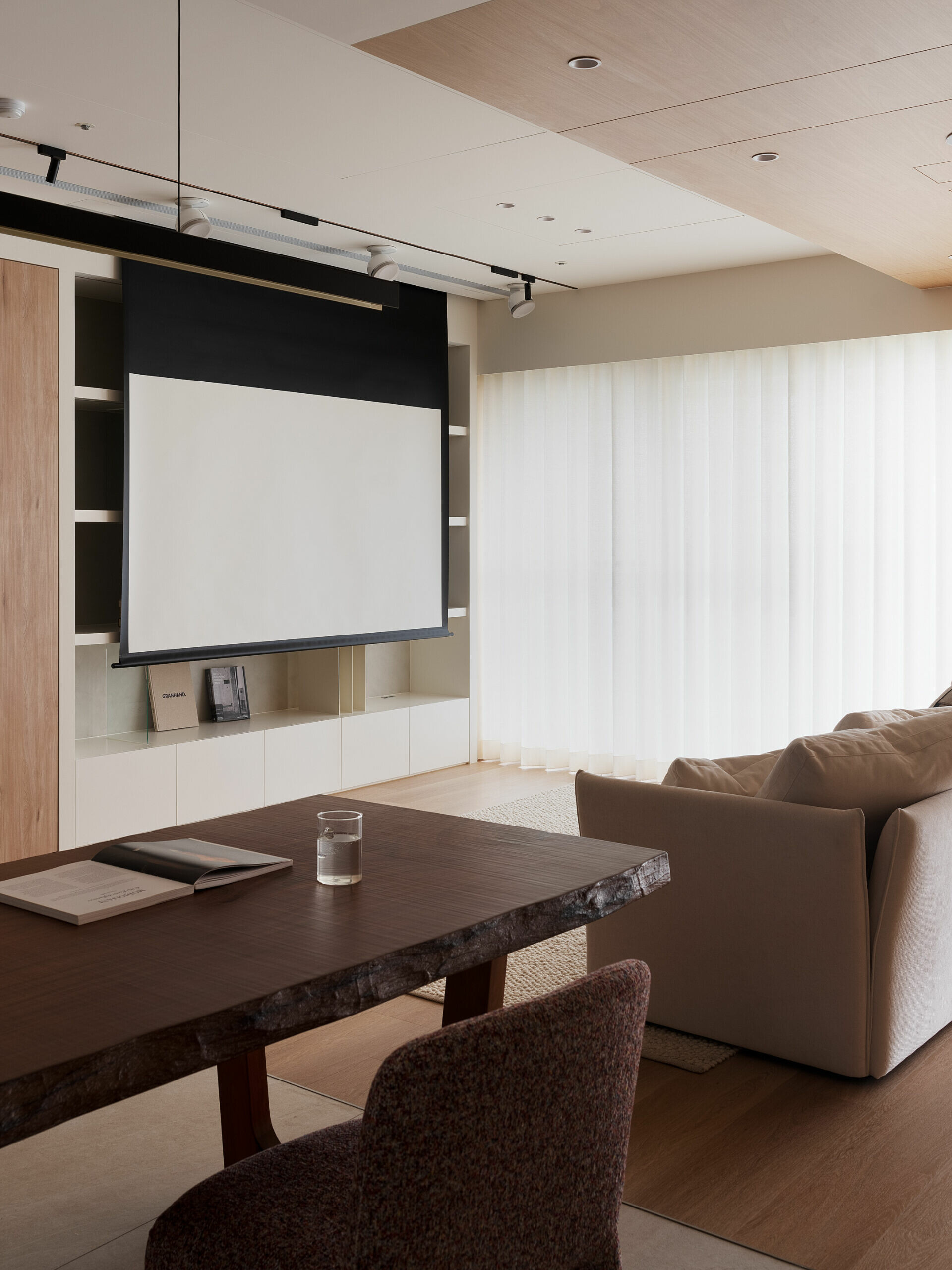
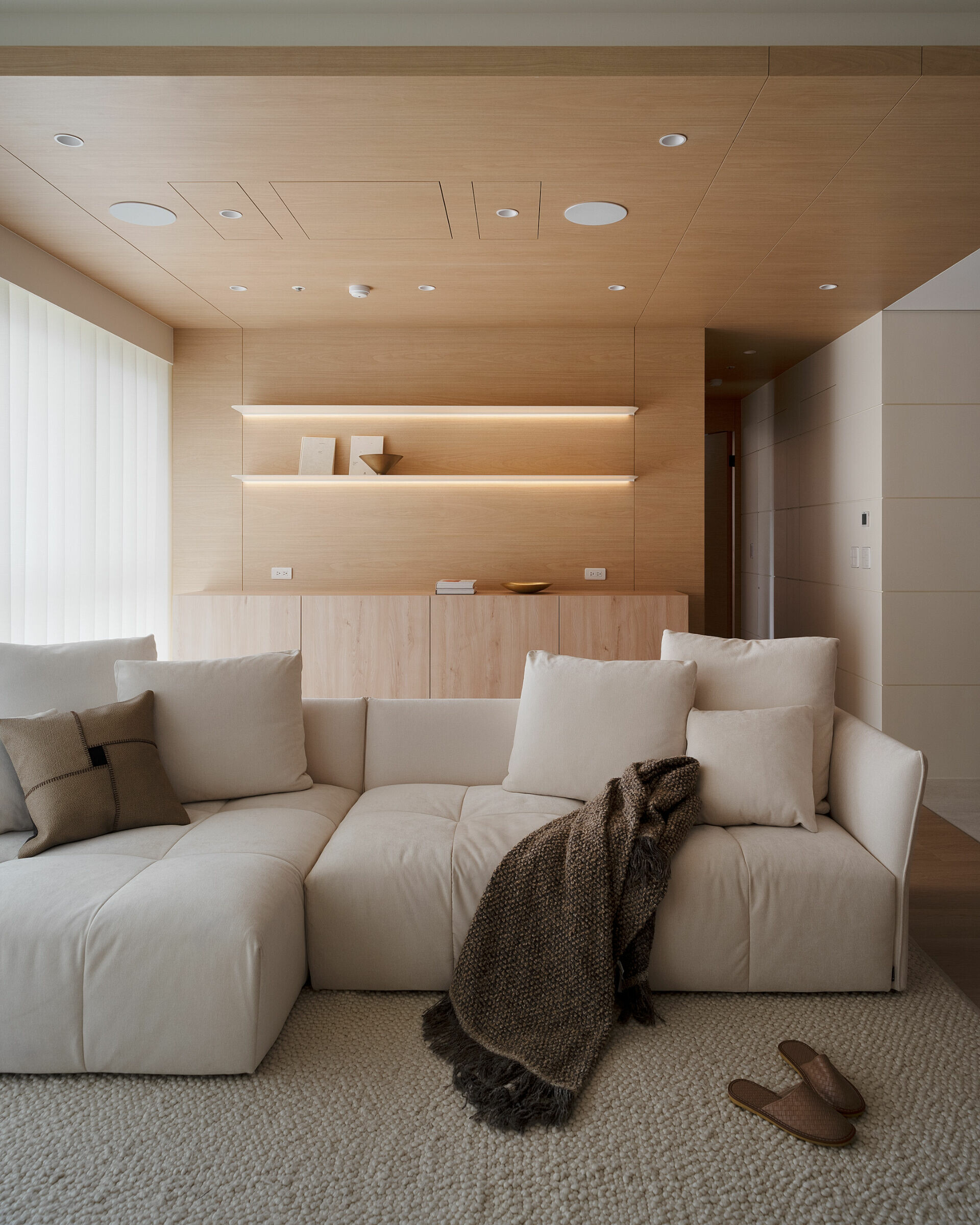
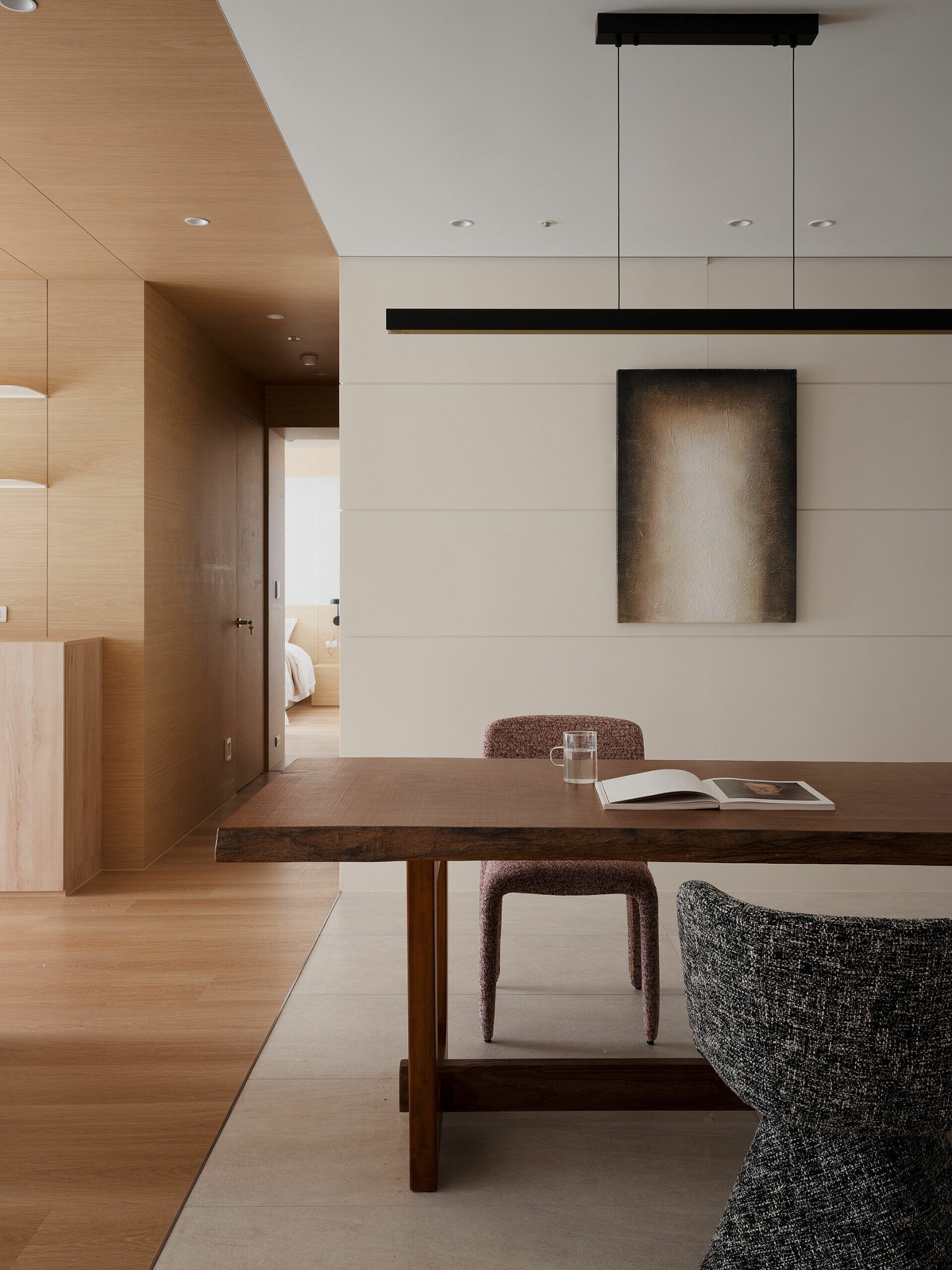
Closeness, however, does not require fusion. The two remain distinct individuals, and the interiors are allowed to stay distinct as well. Material and colour become the means of differentiation. In the living room, timber extends from ceiling plane to floor, shaping an atmosphere that is warm and quietly cocooning. The grain’s texture, paired with a sequence of horizontal shadow reveals, draws the eye laterally and amplifies the room’s perceived breadth, so that anyone seated or reclining within it senses a more generous scale. The dining area, by contrast, is anchored in white; vertically grained timber and aligned reveals sharpen the light, creating a brighter, more energetic impression.
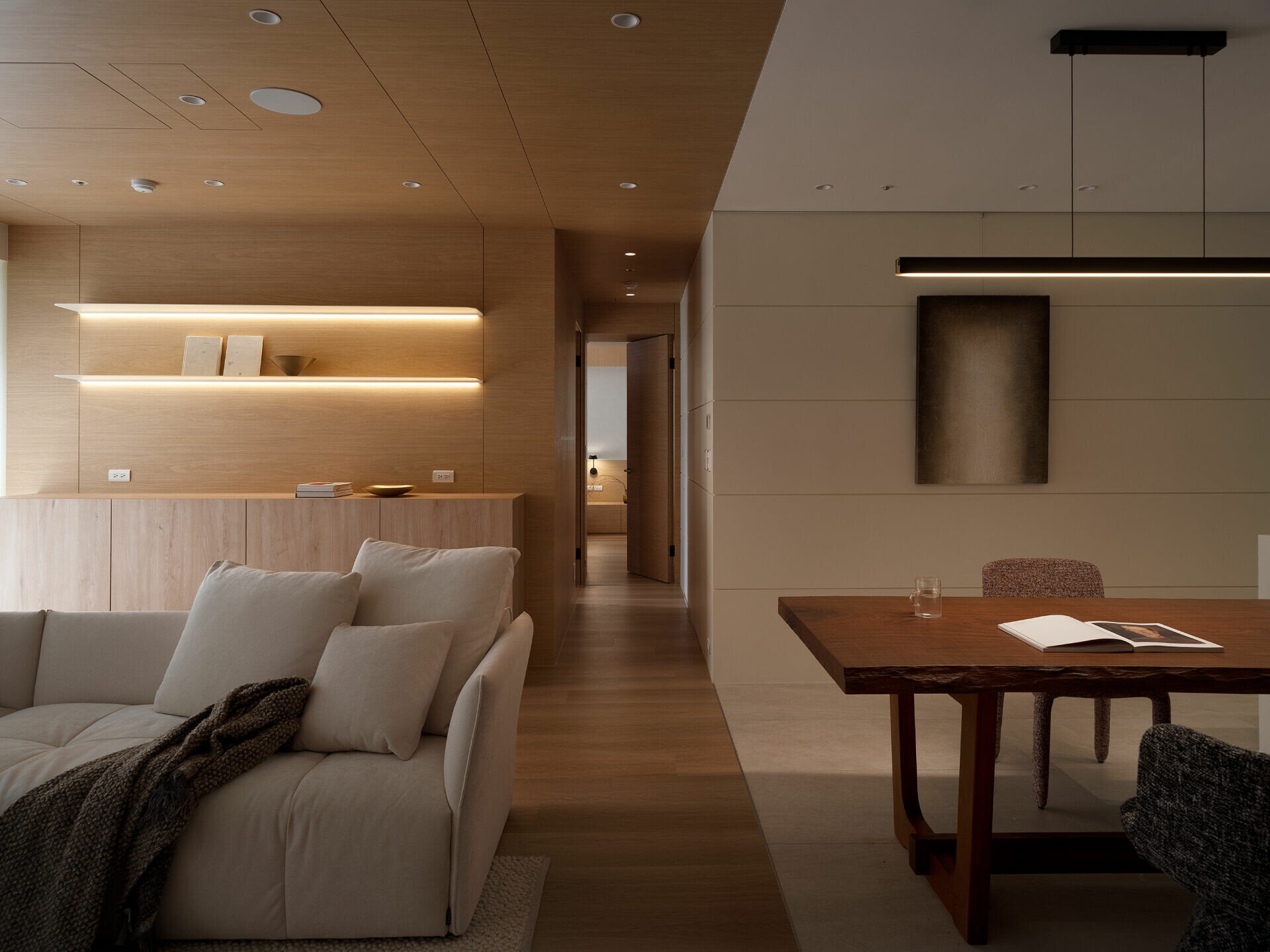
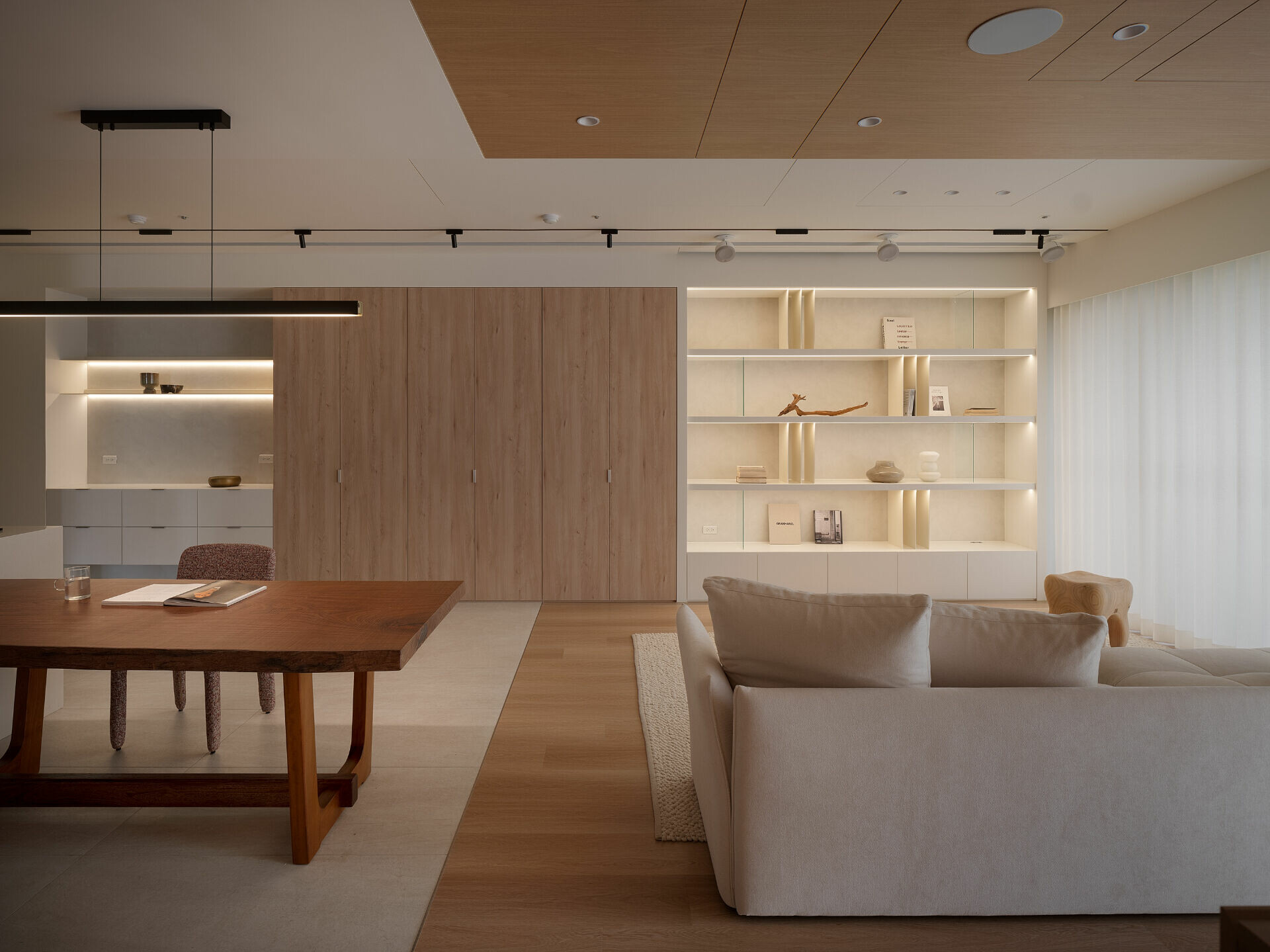
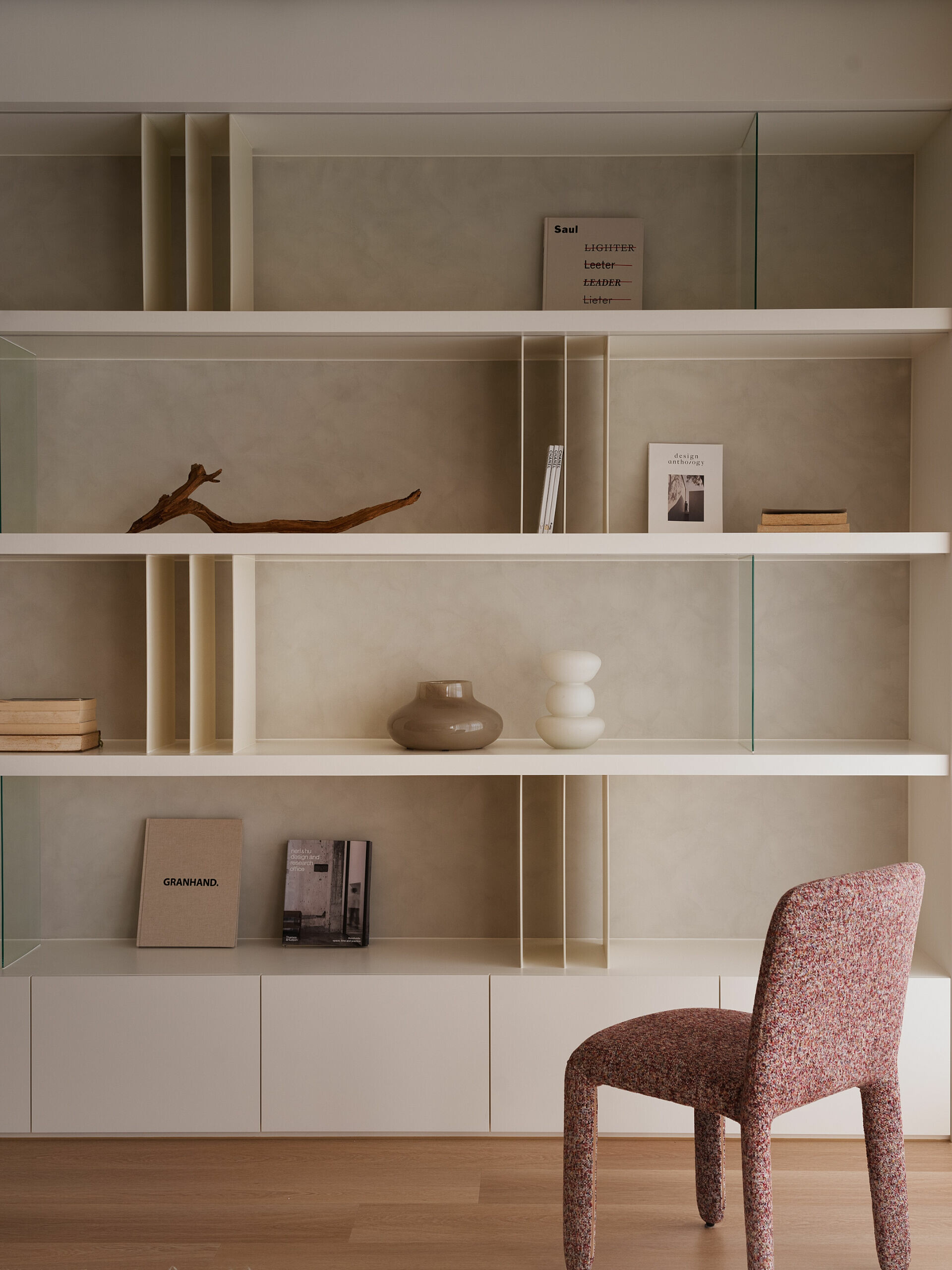
Each area carries a clear character, yet the design resists hard borders. Materials overlap and interweave, preserving difference while allowing a shared rhythm to emerge through daily interaction. Responding to the homeowners’ way of living, the conventional TV feature wall is set aside. In its place, a single expansive wall plane integrates display and storage, and in doing so naturally links the living and dining areas into one sequence. Metalwork and glass are proportioned across the elevation, bringing a sense of lightness and restraint. The fine shadows cast by the reveals shift subtly with time, letting ordinary days accumulate a richer depth as the years move forward.
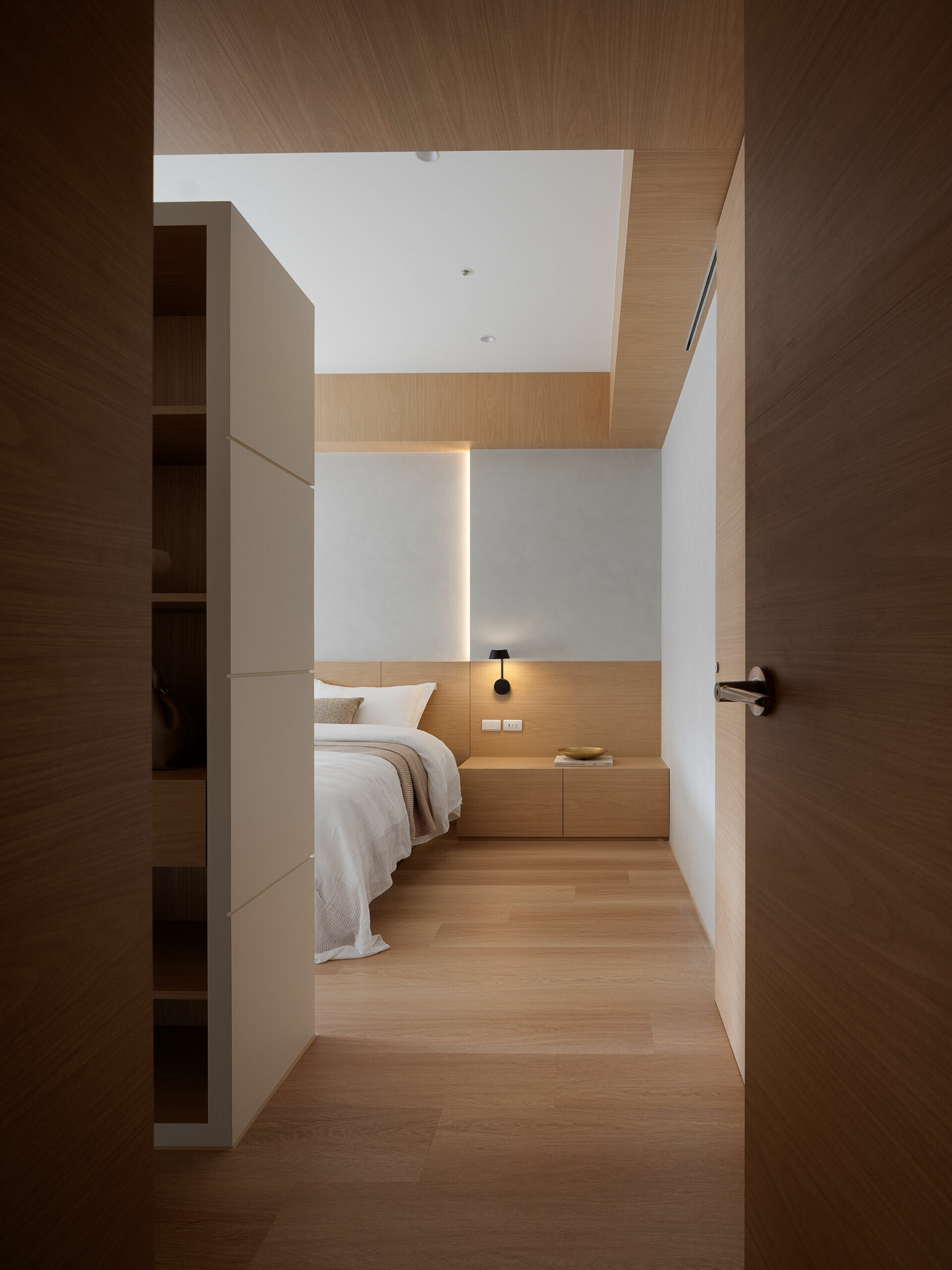
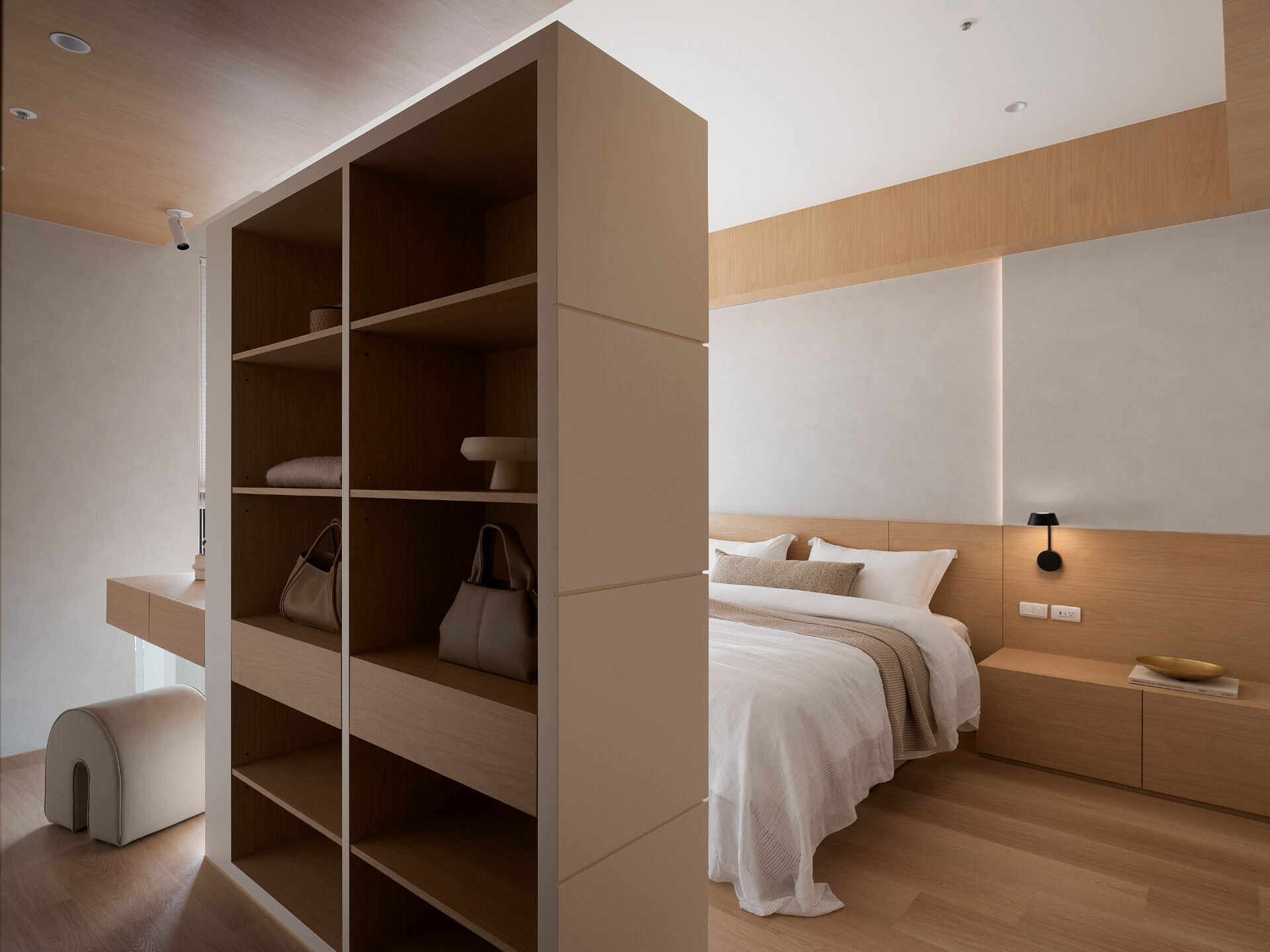
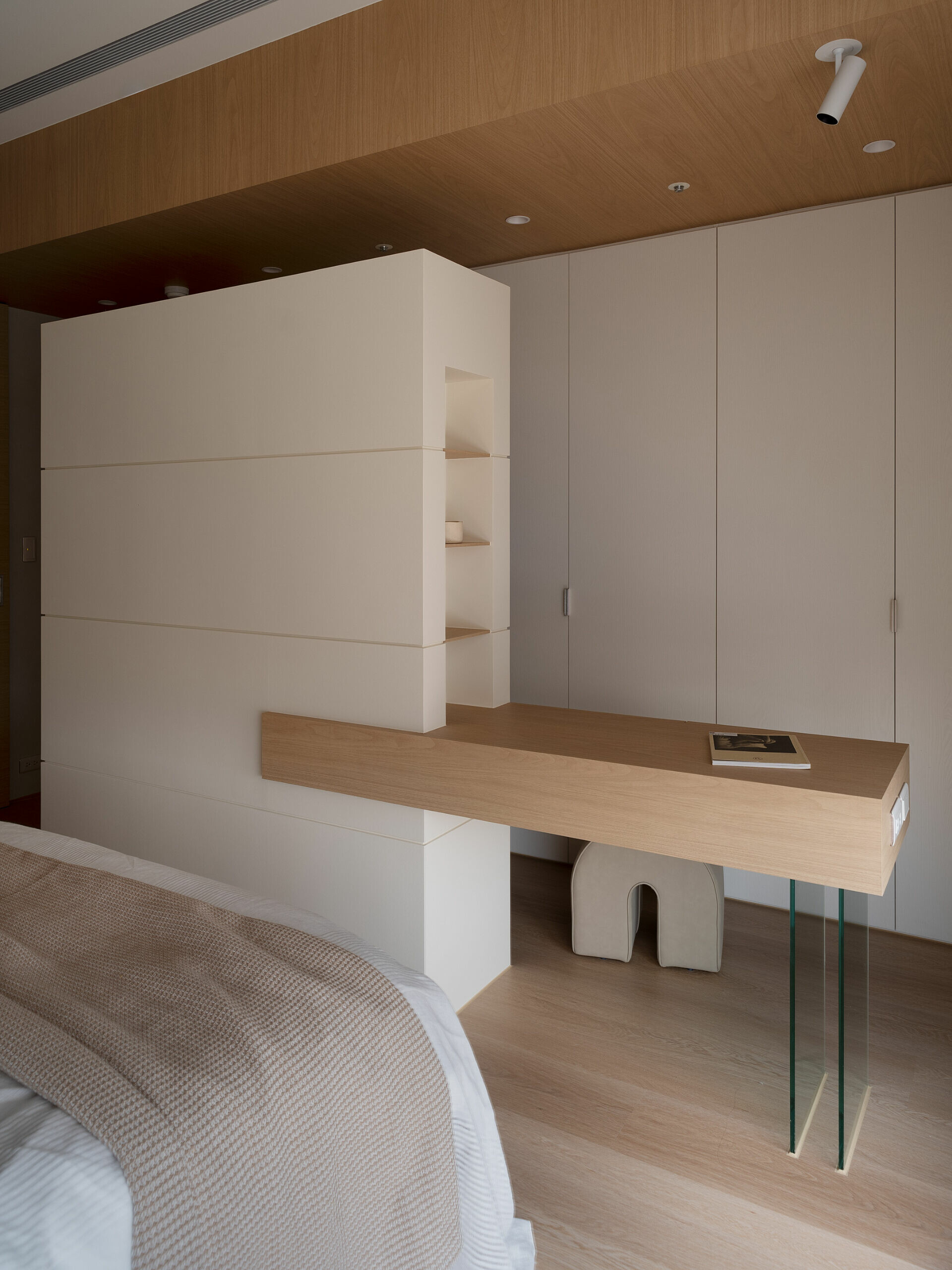
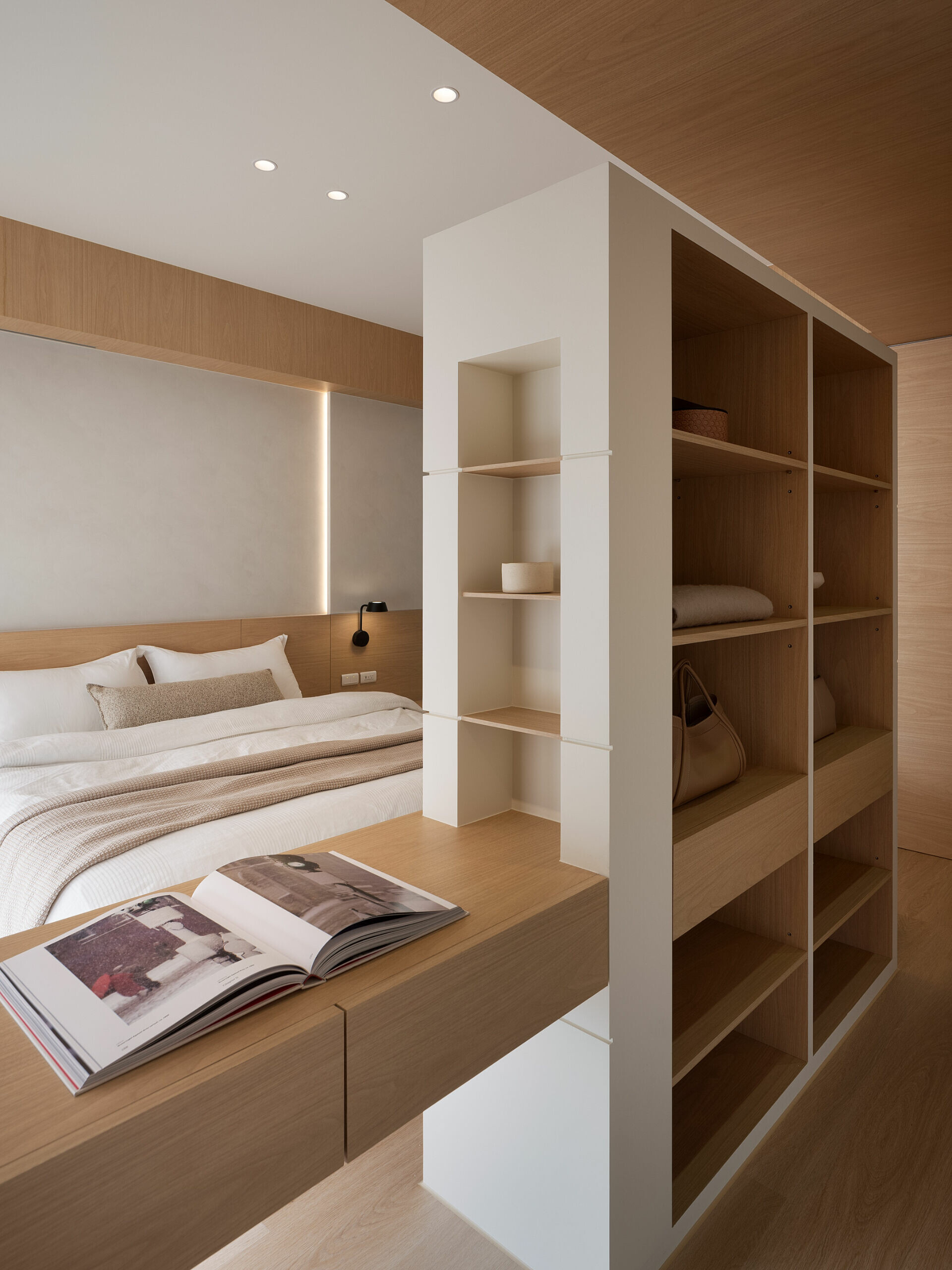
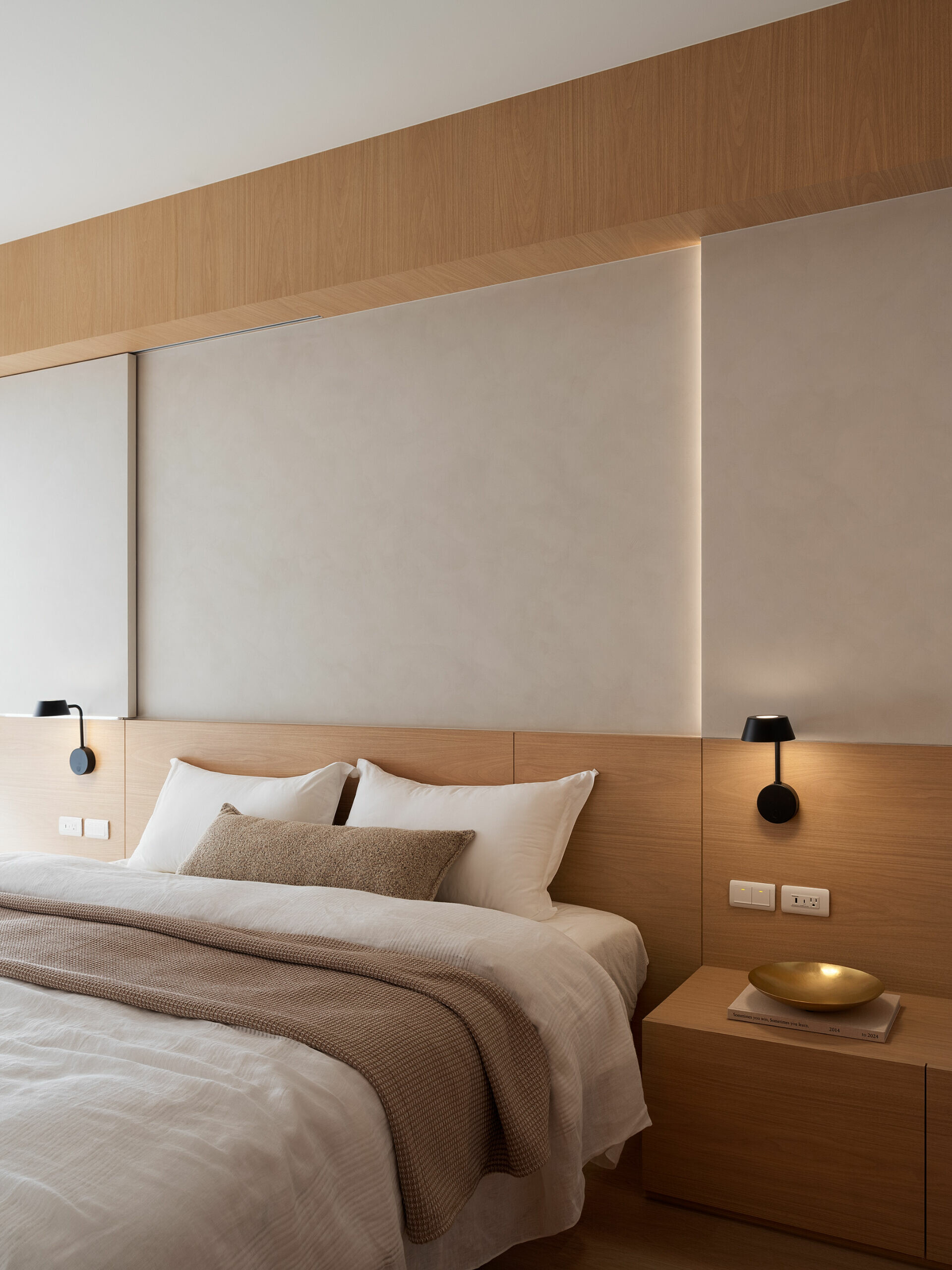
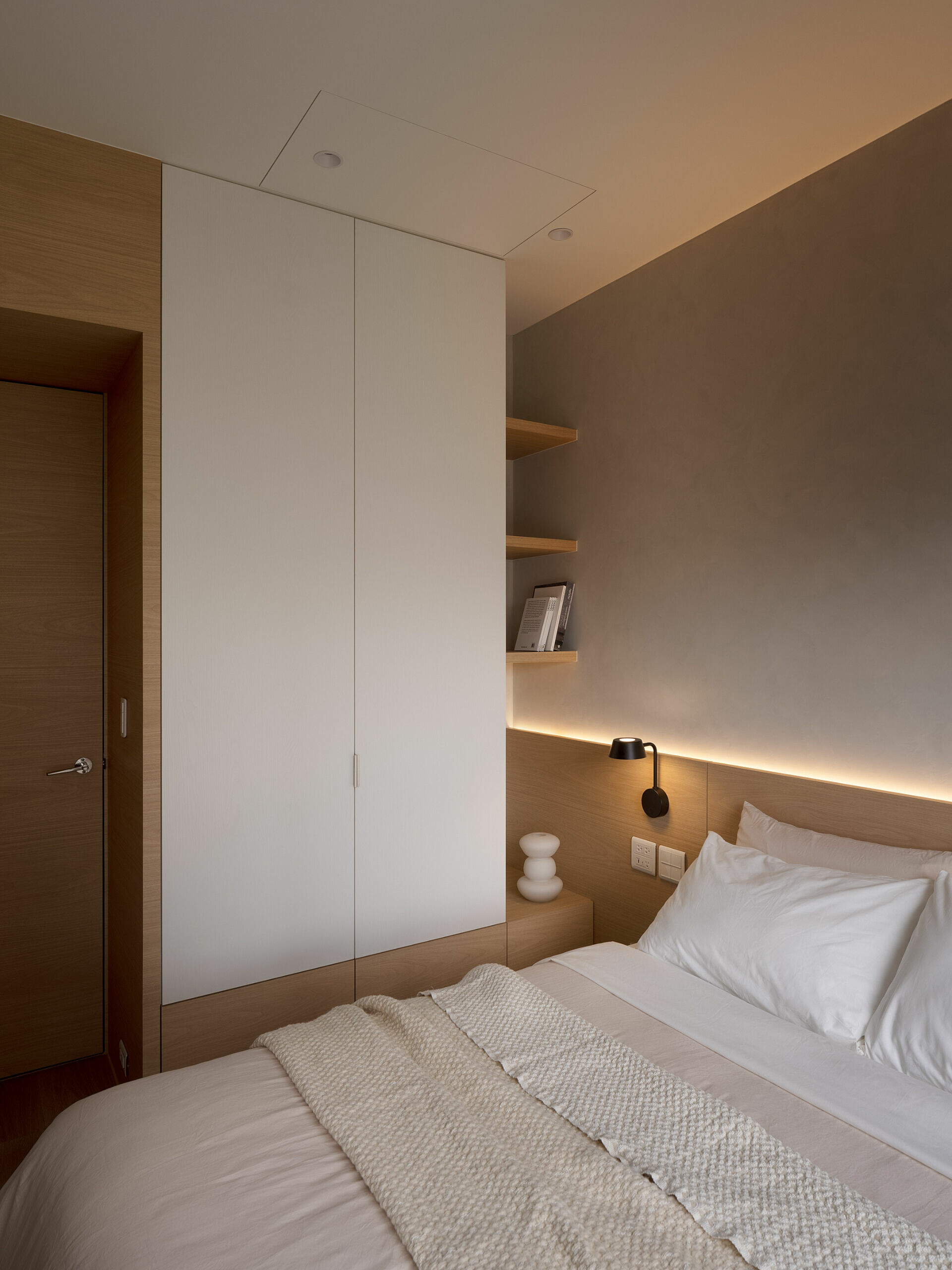
In the primary bedroom, constraints imposed by a major beam and the room’s scale call for another kind of boundary. Rather than closing the space off with a solid partition, built-in cabinetry defines the dressing area. Sightlines remain permeable, while necessary privacy is maintained, extending the same balance found in the communal spaces, where companionship and independence coexist. More intriguingly, the Lotos plaster finish that appears only in glimpses in the public areas expands here into an entire wall. Unforced and intentionally free of over-refinement, its material presence foregrounds structural honesty and gives the room a sense of breath. It also seems to speak to an ideal state of intimacy: a quiet companionship in which emotions have somewhere to settle, with no need to perform and no need to prove, only the ease of speaking plainly when one wishes to.