治癒之山
Healing “MOUNTAIN”
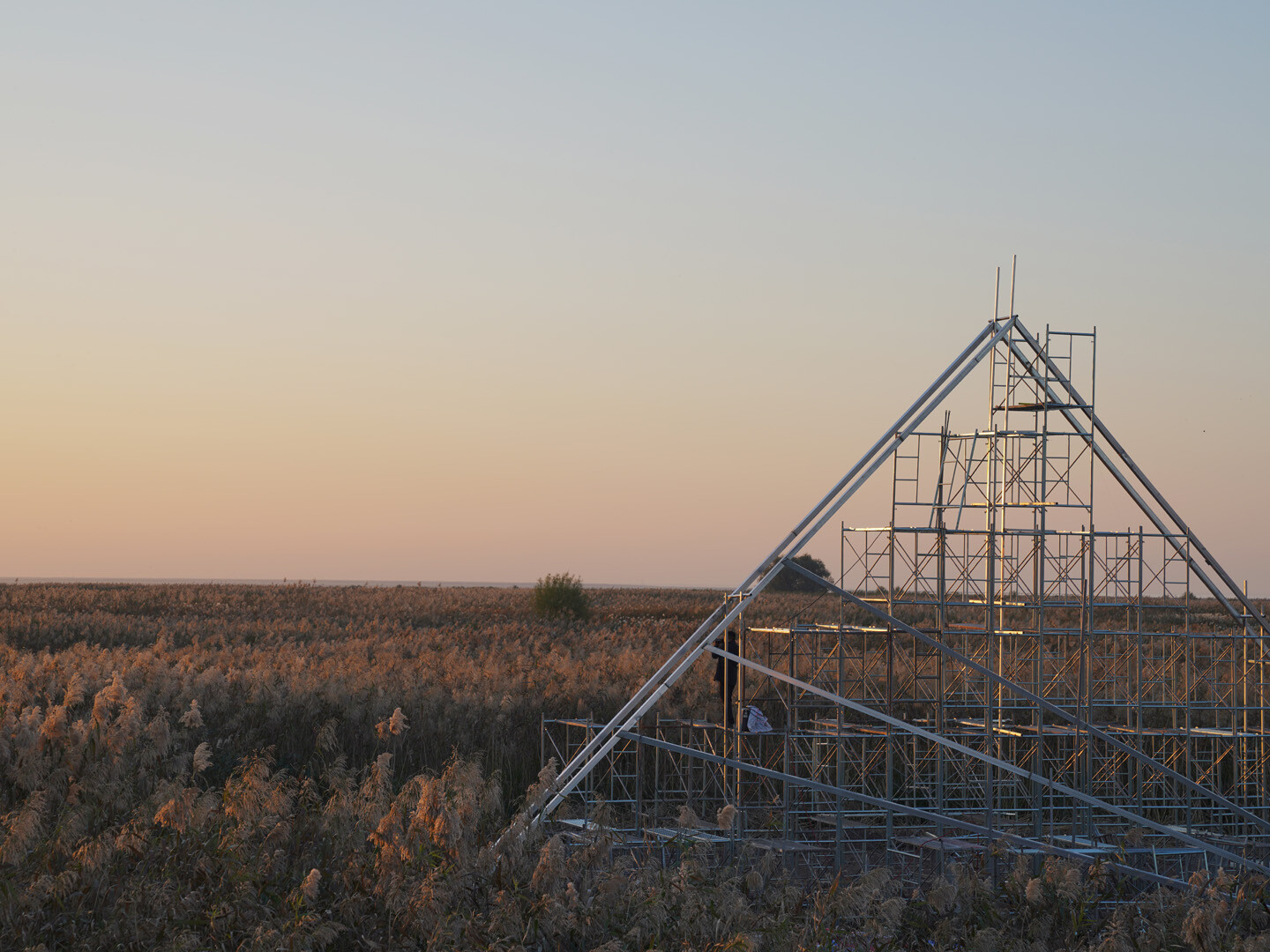
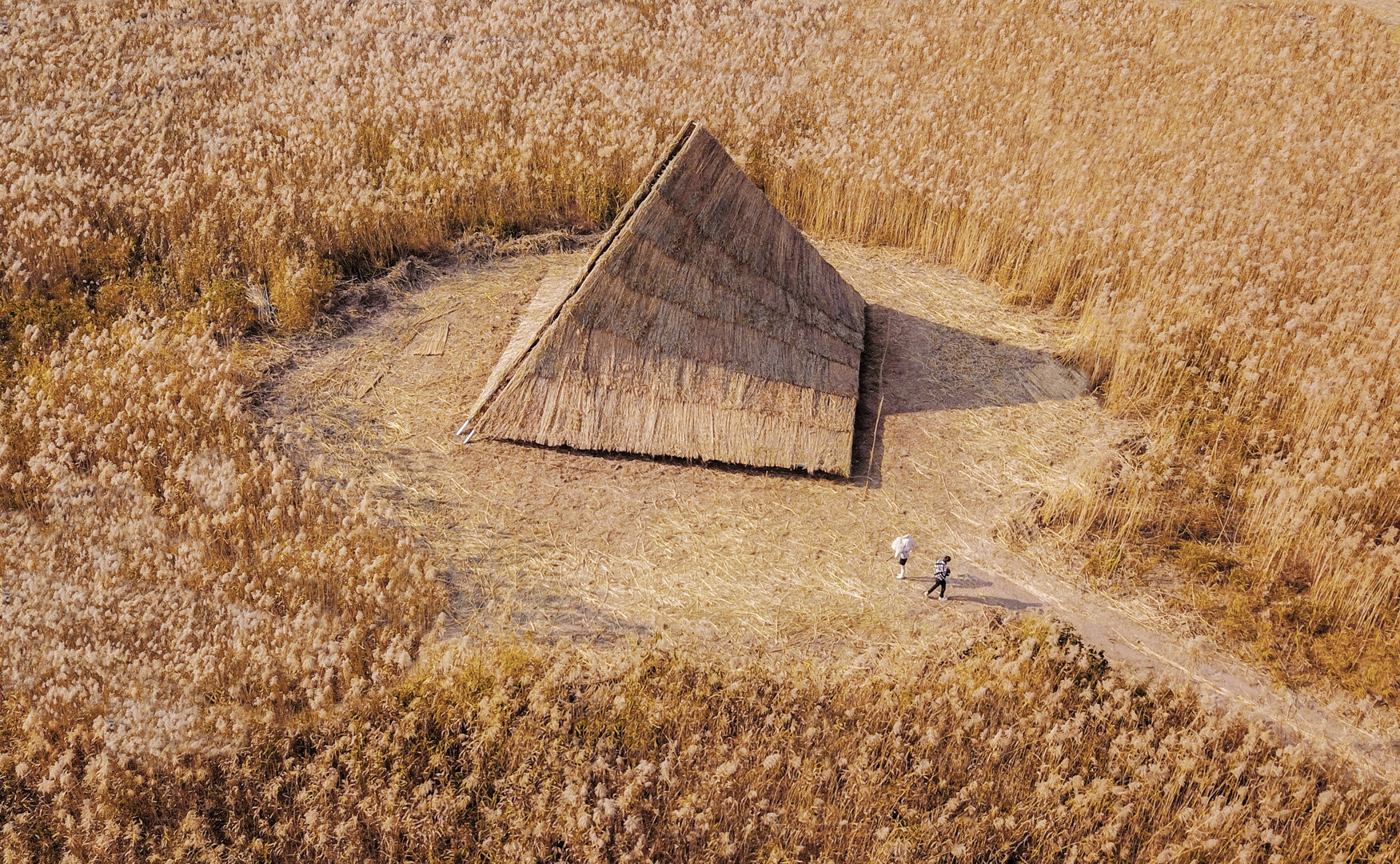
俯視這件名為「治癒之山」的藝術裝置,靜靜地佇立於田野腹地中央與「君山島」遙望,其彎曲如似山形輪廓的結構,提供人們能入內獨處、冥想,或自在坐臥於開闊明亮的外圍,環顧四周風景、沉浸自然。自古以來,位於岳陽市蒼翠洞庭湖北緣處的孤獨島嶼,一直是文人筆下古詩中的仙境之地,描述著幽靜生態與淒美的詩意人生。正因其地理四面環湖,四季分明的氣候變化,常年水氣氤氳、霧靄瀰漫的濕地特性,生長許多蘆葦,讓湖泊與霧氣為君山島構成孤立遺世的空靈氣息。每年到了枯水季節,湖水退去形成泥沙沉積,蘆葦便向外延伸數公里形成了壯觀沼澤使視野更顯遼闊,成了候鳥和水生物的棲息處,也成為當代藝術與自然交會的創作場地。
Quietly standing in the open heart of a field and gazing across toward Junshan Island, Healing “MOUNTAIN” appears like a curved silhouette of a mountain gently resting on the land. This sculptural installation invites visitors to enter its sheltered core for solitude and contemplation, or to linger freely along its bright and open periphery—surrounded by the expanse of nature. Since ancient times, Junshan Island—an isolated landform located along the lush northern edge of Dongting Lake in Yueyang, Hunan—has been a recurring subject in Chinese classical poetry. Often likened to an ethereal retreat, it embodies a landscape of seclusion, melancholy, and transcendent beauty. Surrounded on all sides by water and shrouded year-round in mist and moisture, the island exudes a quiet otherworldliness. In the dry season, as lake waters recede and silted mudflats emerge, reeds stretch outward for kilometers, forming vast wetland zones. These expansive reed beds become habitats for migratory birds and aquatic species—and, increasingly, a site where contemporary art intersects with nature.
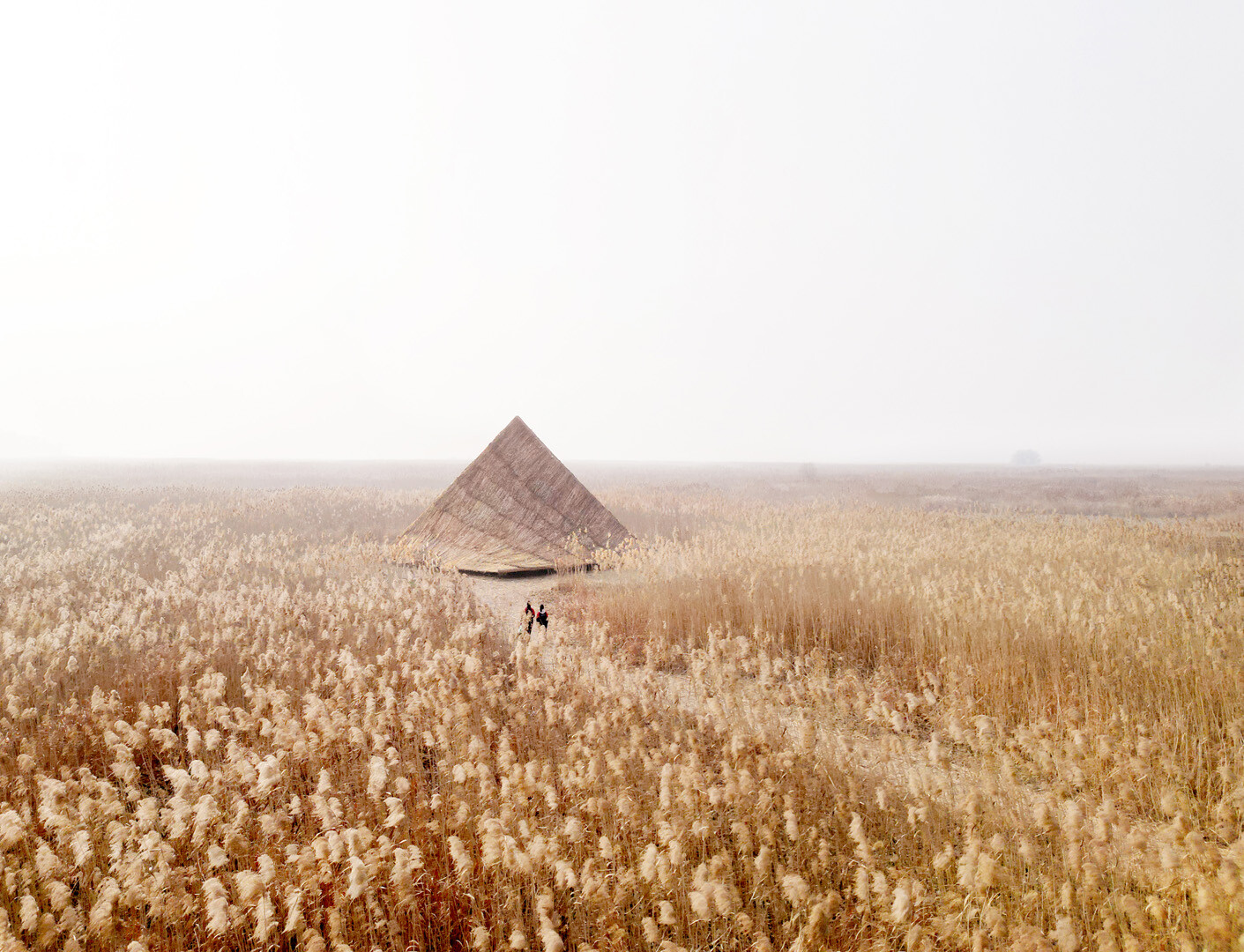
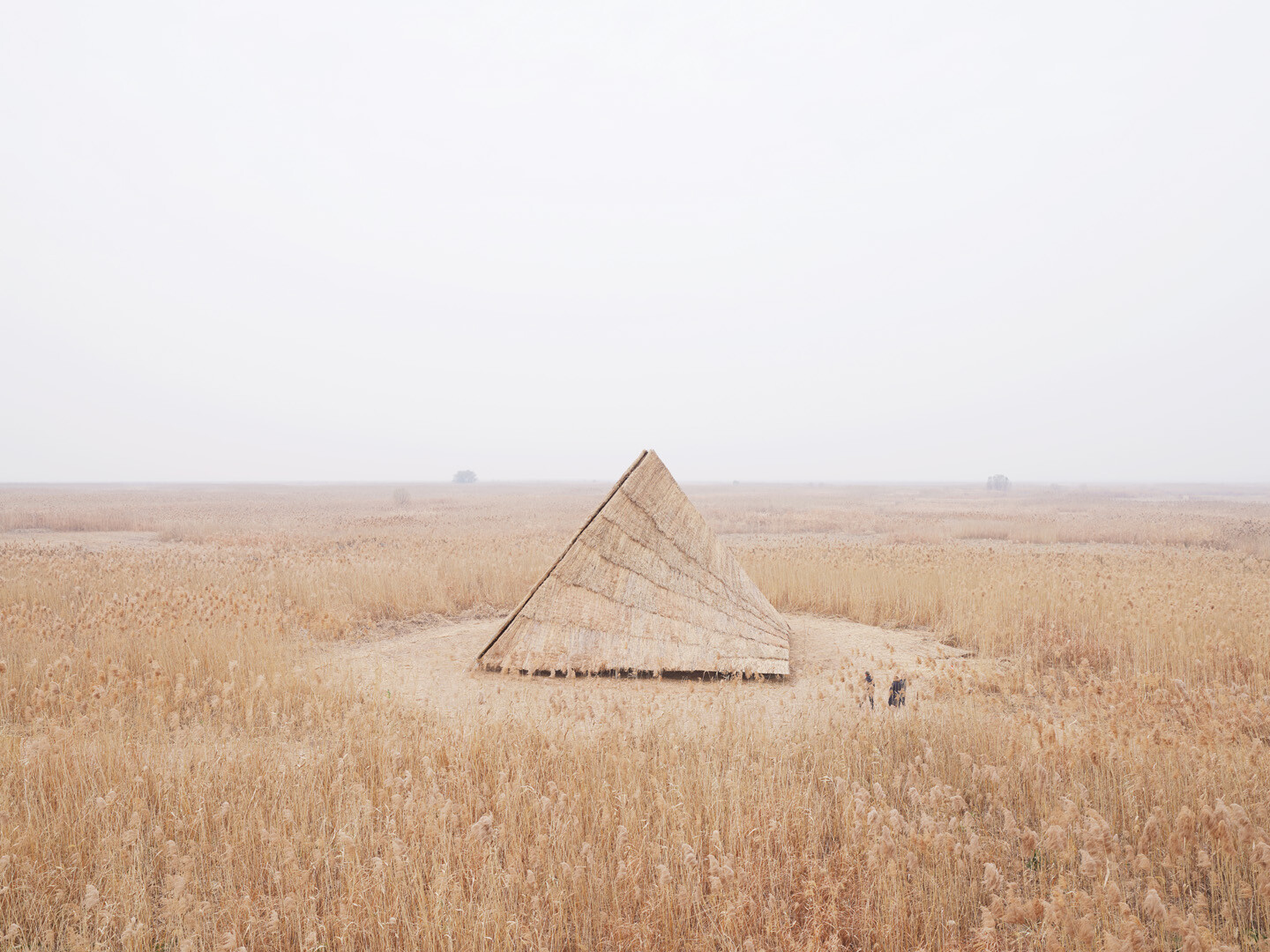
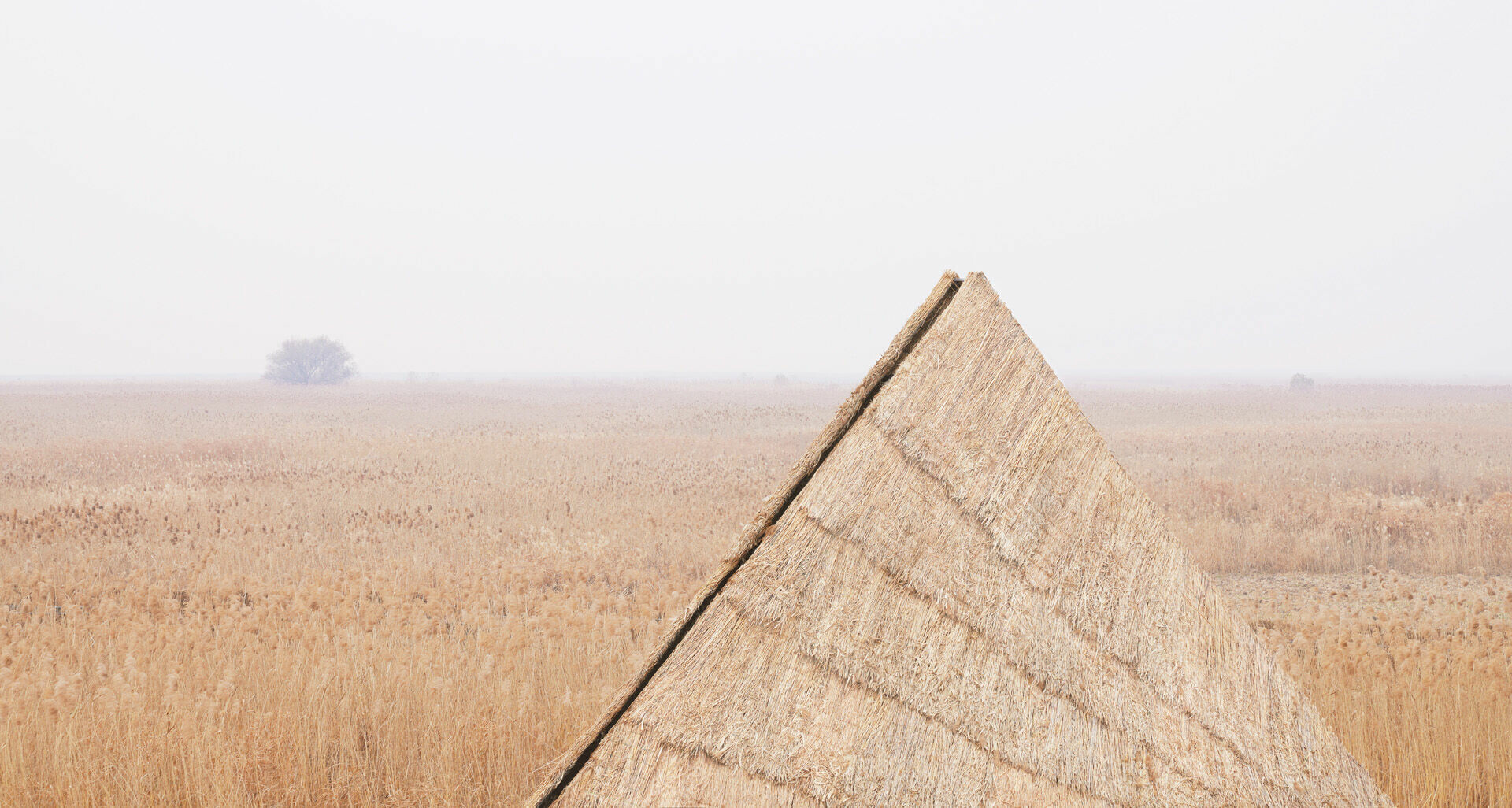
初至此地的藝術家杜揚,在晨霧仍未散去時的蘆葦叢中行走,眼目所及盡是高挺纖細的蘆葦輪廓,陽光在霧氣消散之際,忽隱忽現地在搖曳枝葉間隱微滲出,漸亮的光線漫散於這片廣袤田野,隨著溫度逐漸攀升,行走步伐越發困難,感官在這種微妙轉變的過程,可以從中意識到源自身體的渴望,杜揚便開始自我探問:「我在尋找什麼?是錨點?還是能駐足休憩、停留下來的思考之地?」於是,裝置的雛形就這樣漸漸成形,杜揚將與自己內在對話的抽象心境,轉譯成具象創作,化作如山型般的形式具體呈現。治癒之「山」在這裡可以被凝視、仰望、觸摸,甚至可以裝進人們的身軀和微小生物,使空氣和光線在縫隙中得到流動,成為一處可安歇、思考、釋放想像與到訪者互動的容器,它融入環境、包容生態、給予人們安定內在的環境。
It was in this setting that artist Du Yang first arrived. Wandering through the reeds while morning fog still lingered, he encountered a landscape of tall, swaying stalks and shifting shafts of light—sun filtering softly through moving leaves, gradually illuminating the field. As the temperature rose and walking became more strenuous, the subtle transformation of the environment heightened his bodily awareness. What was he searching for? A fixed point? A place to pause and rest? It was through this embodied questioning that the concept of the installation began to emerge—an externalization of interior thought, given form through the symbolic geometry of a mountain. Healing “MOUNTAIN” thus became a place to gaze upon, to walk into, to dwell within—a spatial gesture that receives both the human body and the smallest of living beings. Air and light move freely through its seams. The structure functions as a contemplative vessel—a shelter that blends into the landscape, accommodates the ecological context, and offers a sense of inner calm and grounding.
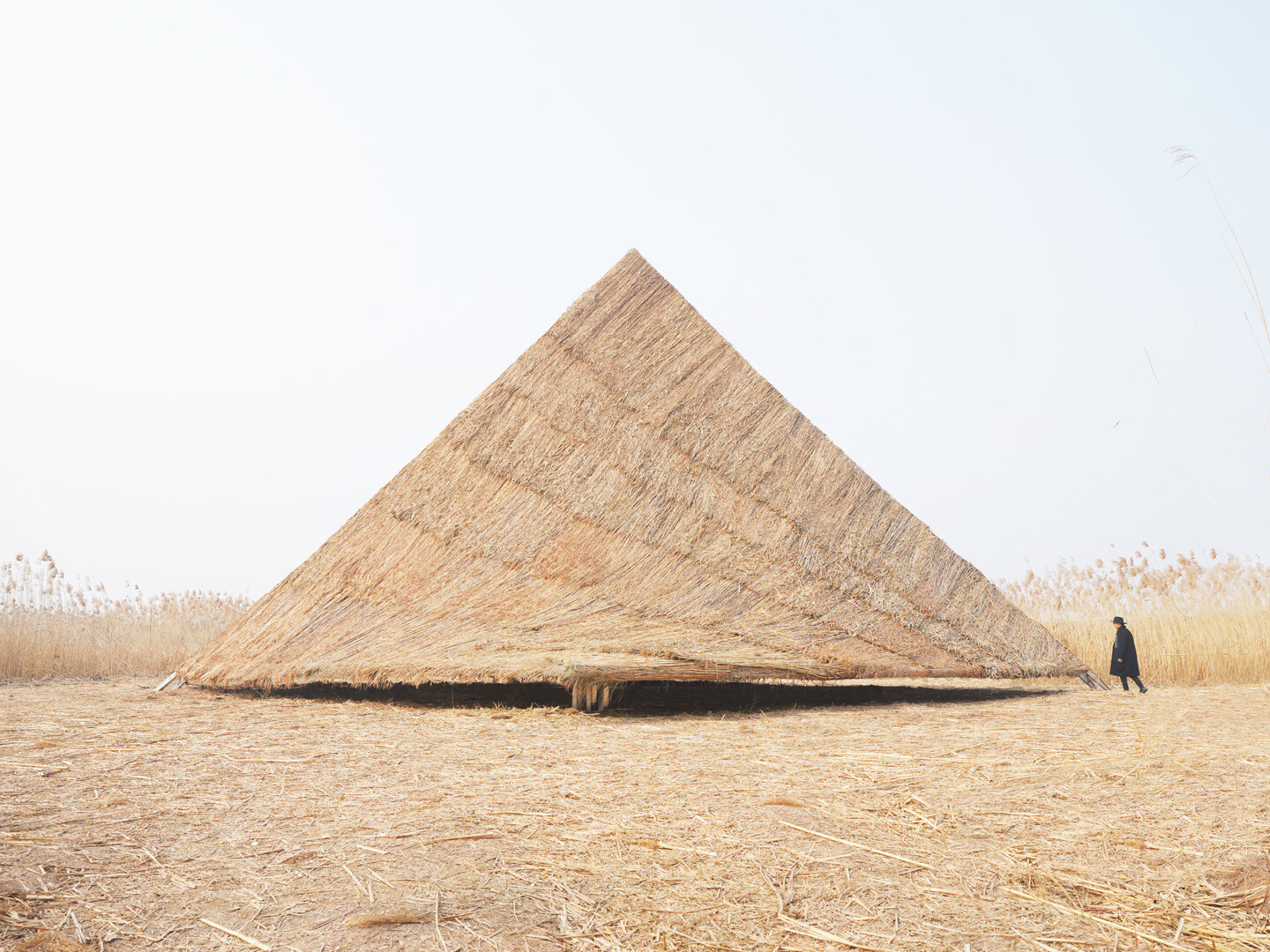
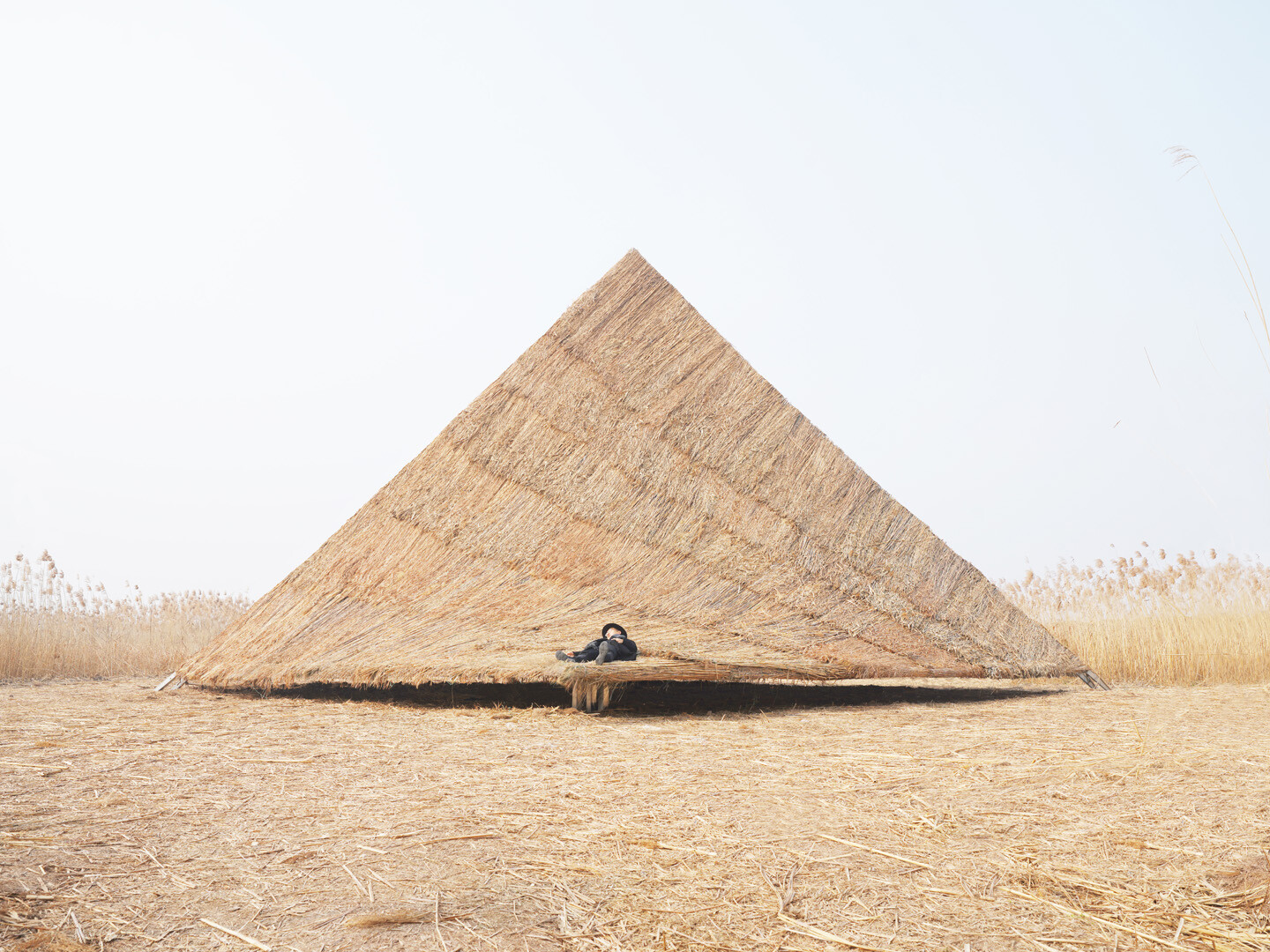
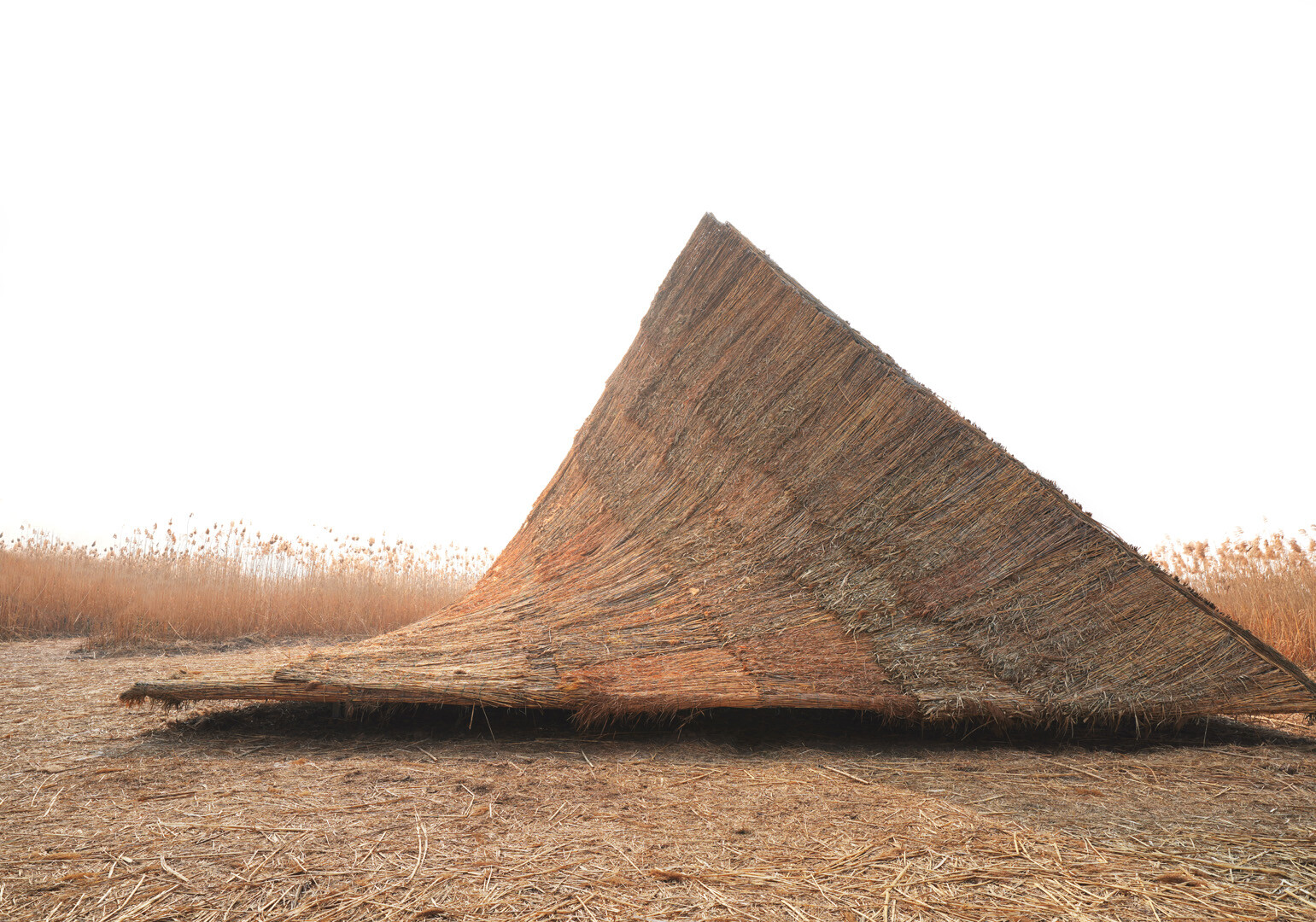
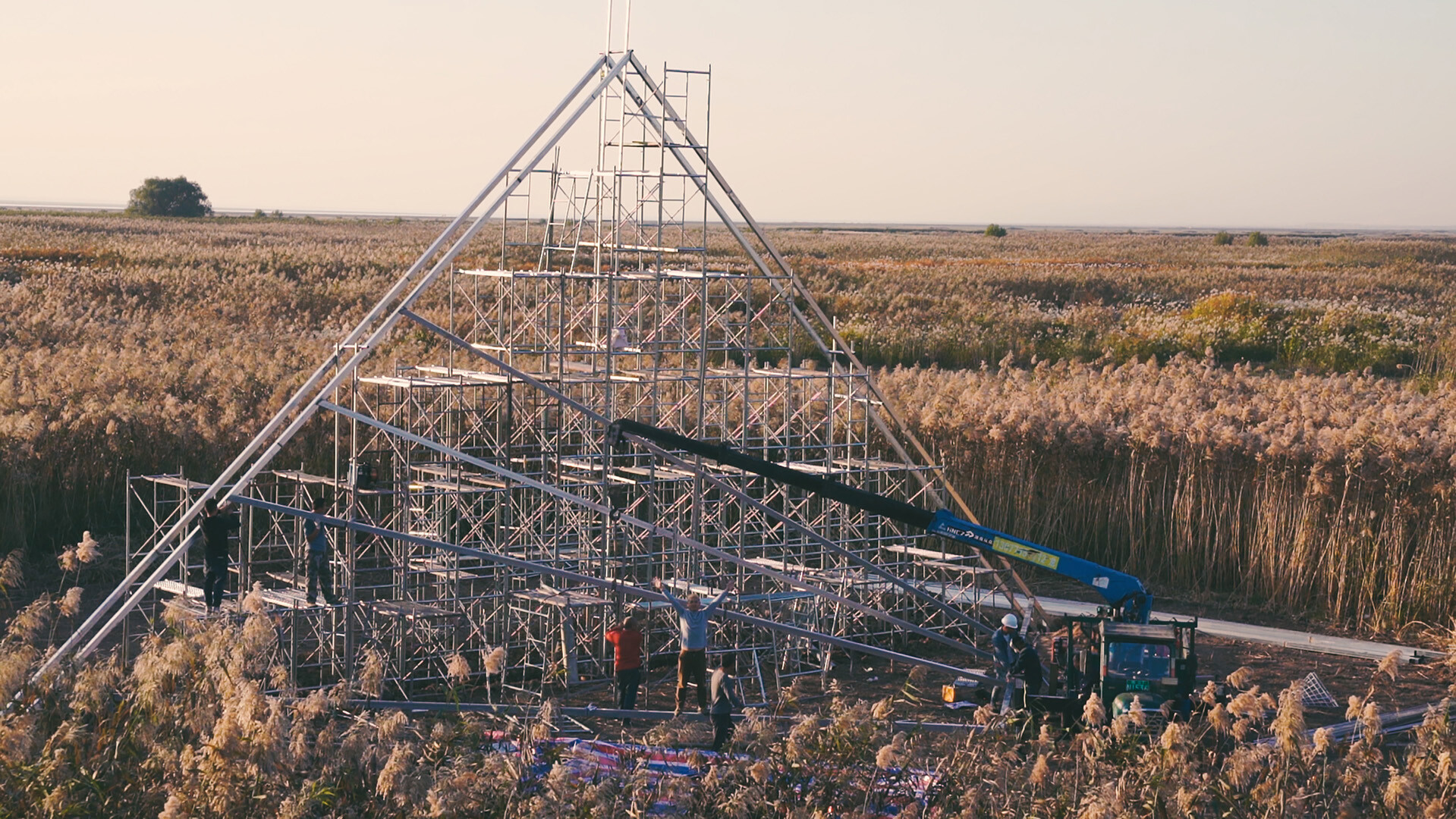
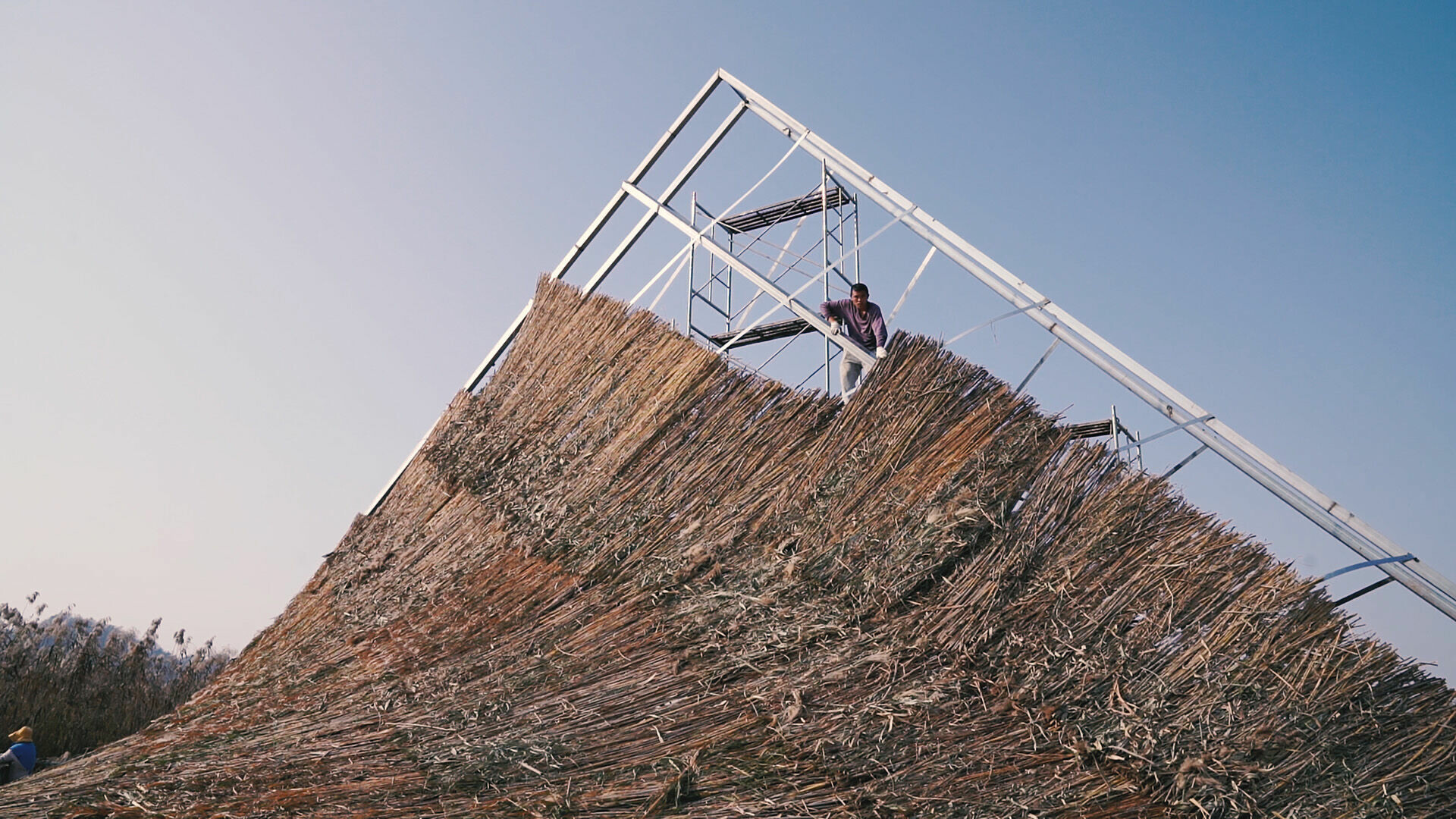
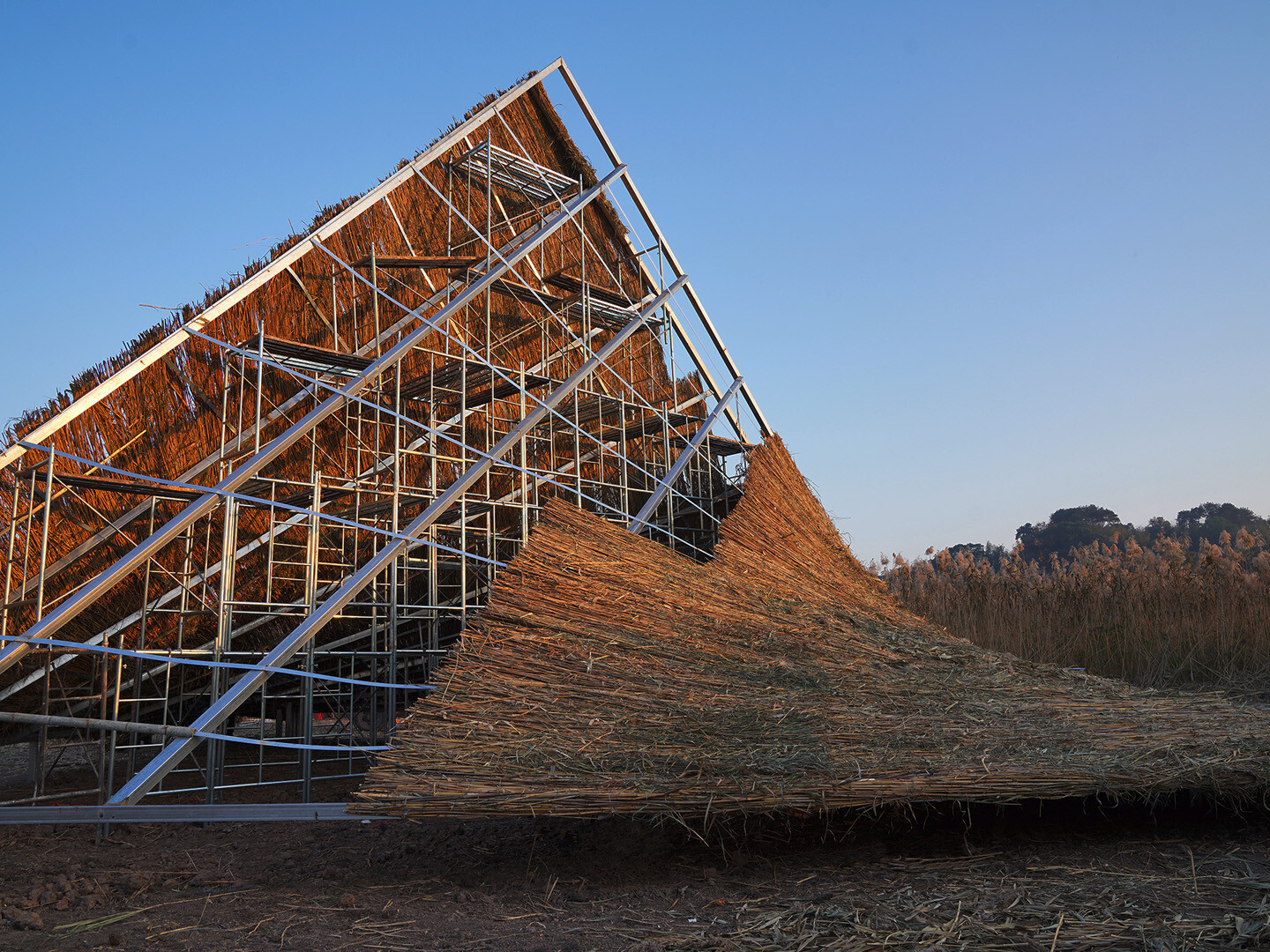
這座「山」作為一個空間概念,延承中國傳統建築屋頂詩意的脈絡,從遮蔽的陰影發展如屋脊對稱結構,整體形態可視為兩個鏡像等腰三角斜面,其邊長各為 14 公尺,於兩端對角及 5 根鋼管構成十字支撐柱,與水平鋼管焊接在一起並將其嵌入地面之下,以穩固且防止結構下沉的可能,團隊進一步於內部僅以三點支撐懸起這座幾何山形,使裝置能呈現視覺的輕盈感。在這裡,蘆葦順理成章地成為建造這座山天然的理想素材,經高密壓層工序將其製成野生蘆葦墊,覆蓋於鋼構表層,柔韌質地抹去了鋼材結構的工業感。「山頂」兩側曲面形成的縫隙,便是風、雨、光和所有生物的門廊,藉由行為體驗巍峨屹立的「山」給予遮蔭與尋求平靜,回應它在人們心中的原型,一處可進入、可仰望、可沉思彷如荒野地帶中,一座心靈甘泉的庇護所。
As a spatial concept, the project draws upon the poetic lineage of traditional Chinese rooflines. From the primal act of shading came the design logic: a ridge-like, symmetrical geometry composed of two mirrored isosceles triangular planes, each with an edge length of 14 meters. The structure is anchored at both ends by diagonal columns and stabilized by a central cross-shaped support of five welded steel tubes embedded below ground. This three-point support system minimizes contact with the earth and gives the installation a striking sense of lightness and elevation. Reed, a material indigenous to the site, naturally became the ideal cladding. Harvested from the surrounding wetlands, the reeds were compressed into dense mats and applied to the steel frame. Their supple texture and natural irregularities softened the industrial rigidity of the underlying structure, allowing the installation to blur the boundary between the fabricated and the organic. The opening between the two curved surfaces at the top functions as a passage for wind, rain, light, and life—an elemental threshold that reaffirms the archetype of the mountain not only as a formal figure, but as a spiritual refuge. Here, the mountain becomes a place to enter, to look up, and to dwell in stillness—like a quiet spring at the heart of the wilderness.