記憶之軌
The Rails of Memory
過往的傷痛也許無法痊癒,隨著時間流逝,卻能轉變為另一種形式的存在,透過有形或無形載體回望那些不加遮掩的「痂」,等待有人願意去發現、傾聽並理解。縱使歷經世代更迭,它仍化作生活中的「符號」延續下去,試圖喚起人與人之間最深層的共感與智慧。就如人們悠閒地坐在法國里昂卡諾廣場(Place Carnot)的樹蔭下,環顧人來人往的市集、來到廣場內聆聽噴泉的潺潺水流聲時,可曾想過當下感受到的和平實則是建立在無數先烈、受難者的犧牲與奮鬥之上?而在廣場內經過一座由回收鐵路部件構築而成的紀念碑時,又是否觸動內心掀起波瀾?
Past wounds may never fully heal. Yet with time, they can take on another form of existence. Through what we can touch and what we can only sense, we are brought back to scabs left exposed, waiting for someone willing to notice them, to listen, and to understand. Even as generations change, they persist as signs woven into everyday life, calling up our deepest capacity for empathy and wisdom. At Place Carnot in Lyon, France, people sit at ease beneath the trees, watching the market come and go, pausing to listen to the fountain’s gentle, continuous flow. In such a moment, do we ever consider that the peace we feel is built on the sacrifices and struggles of countless lives, of those who fought and those who suffered? And when we pass a memorial constructed from reclaimed railway components, does it leave no trace within us?
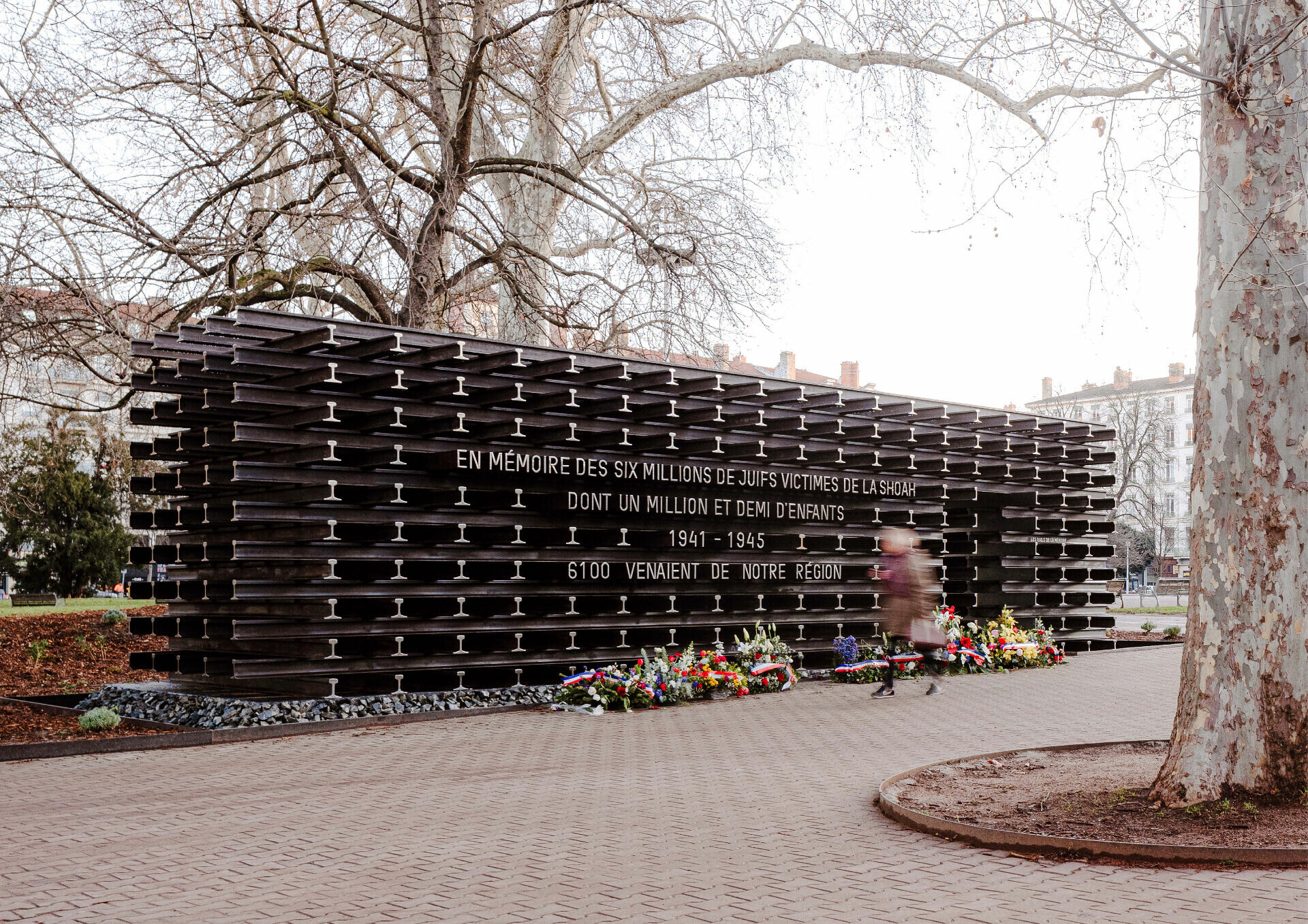
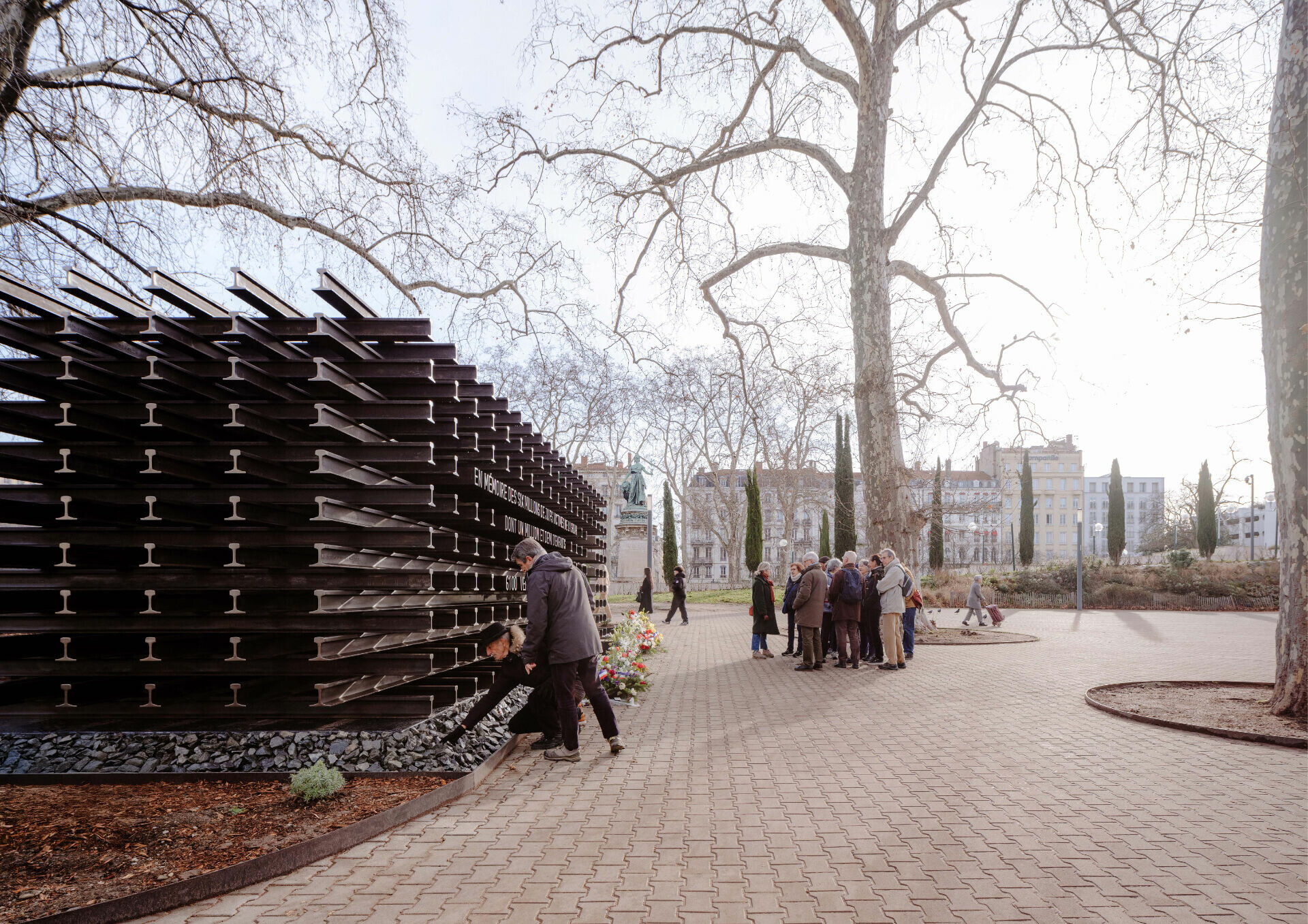
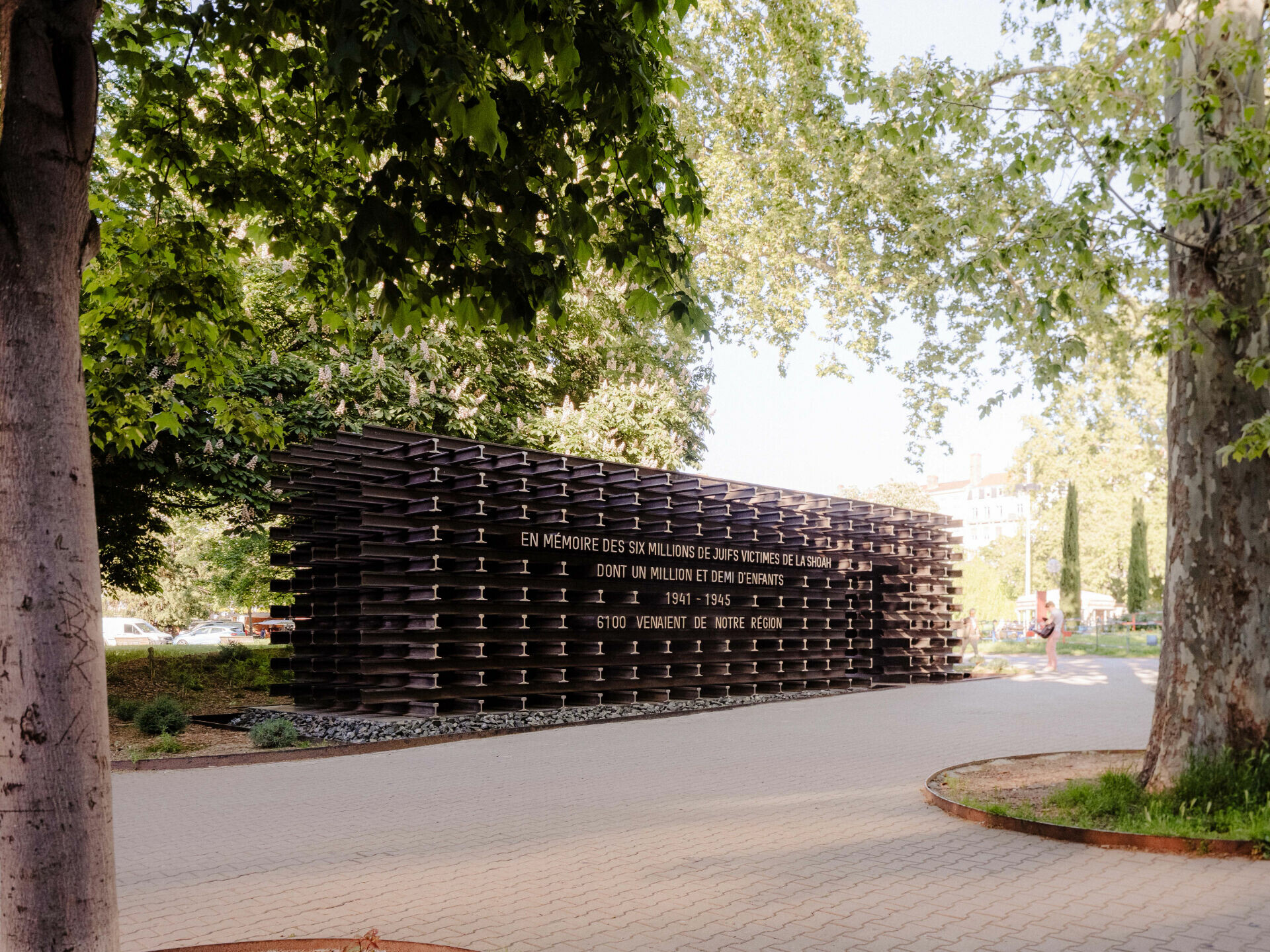
第一眼望見這座交織鋼軌的紀念性裝置時,為其組重複的成元素和巨型尺度所驚嘆;再仔細留意結構上文字標誌著:「紀念六百萬的猶太受難者,包括一百五十萬兒童,其中 6100 名受害者來自我們的地區。」心中一股複雜的情緒油然而生。在思索眼前紀念碑背後的設計構思前,先探究其所在位置,發現它會位於里昂佩拉什站(Gare de Lyon-Perrache)約一百公尺處,絕非偶然;而是法國建築師事務所 Blaising Borchardt Studio 明白二戰期間的龐大鐵道網決定了許多猶太人的離別與命運,構成了令人難以釋懷染紅的鐵路網,且該火車站曾是驅逐車隊駛向悲慘旅程的起點,故選擇運用鐵路元素打造紀念碑作為此廣場過去歷史的見證,同時賦予回收材料新意義並融入日常生活中,讓行經此地的訪客能直觀地透過觸手可及的「痕跡」面對那段曾試圖被刻意抹去的血淚史,卻能在共感之中體悟到人類歷經暴行後,那份韌性和重建的意志。
The first encounter is with form. Interlaced steel rails, monumental in scale and repetitive in rhythm, gather into a dense commemorative presence. Then the inscription comes into view: “In memory of the six million Jewish victims, including one and a half million children, 6,100 of whom were from our region.” A complicated emotion rises. Before turning to the design concept behind the memorial, begin with its location. Set around one hundred metres from Lyon-Perrache station (Gare de Lyon-Perrache), its siting is anything but accidental. Blaising Borchardt Studio understood that during the Second World War, an immense rail network shaped countless Jewish departures and destinies, leaving behind a red web of lines that remains difficult to face. This station was once the point of departure for deportation convoys heading towards a tragic journey. For that reason, trailway elements were chosen to create a memorial as a witness to the past history of this square, granting reclaimed materials new meaning by returning them to daily life. Those who pass through are confronted with traces within reach, meeting a blood-and-tears history that was once meant to be erased. In that closeness, empathy becomes possible, along with an understanding of what can endure after violence: resilience, and the will to rebuild.
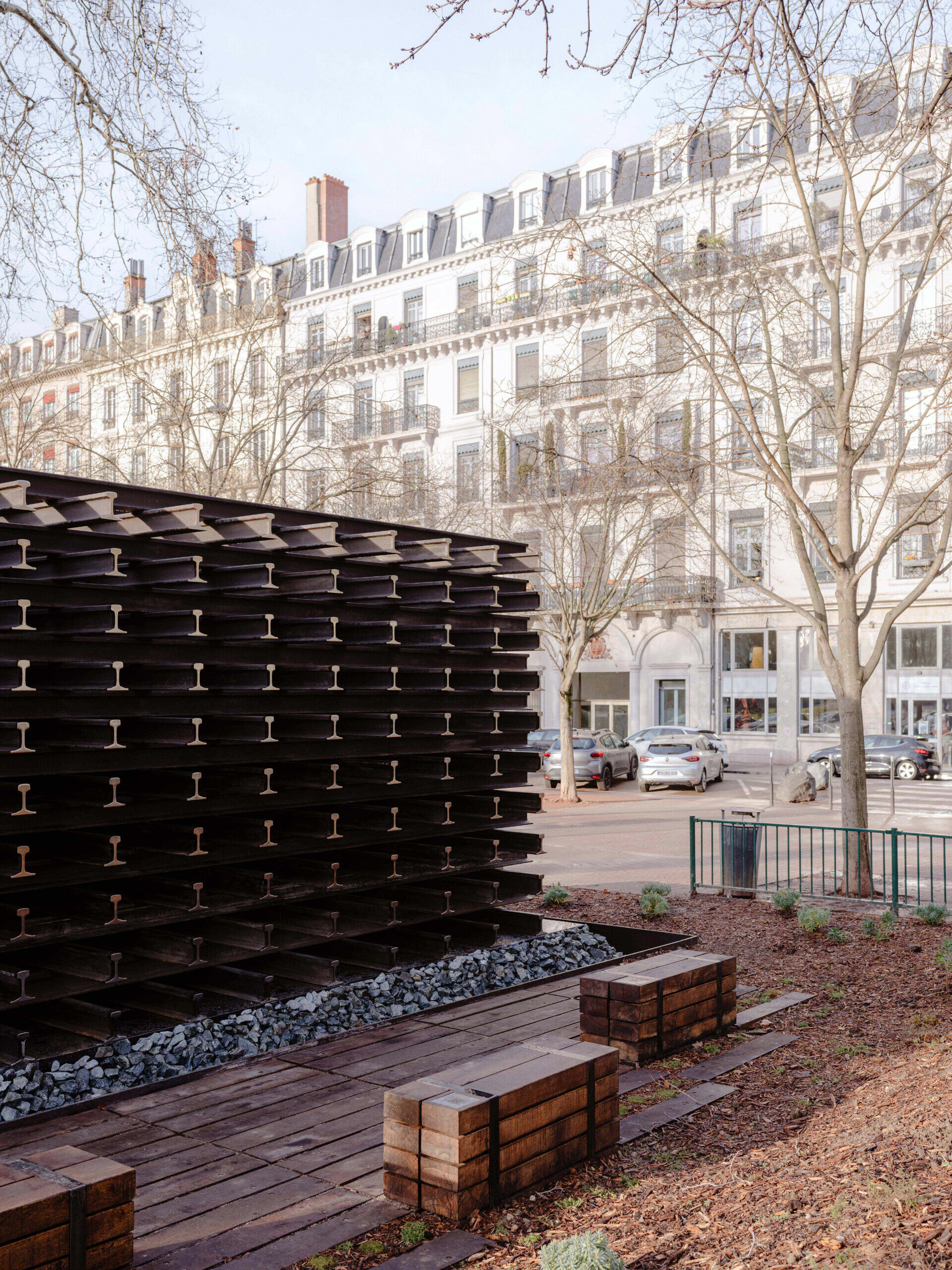
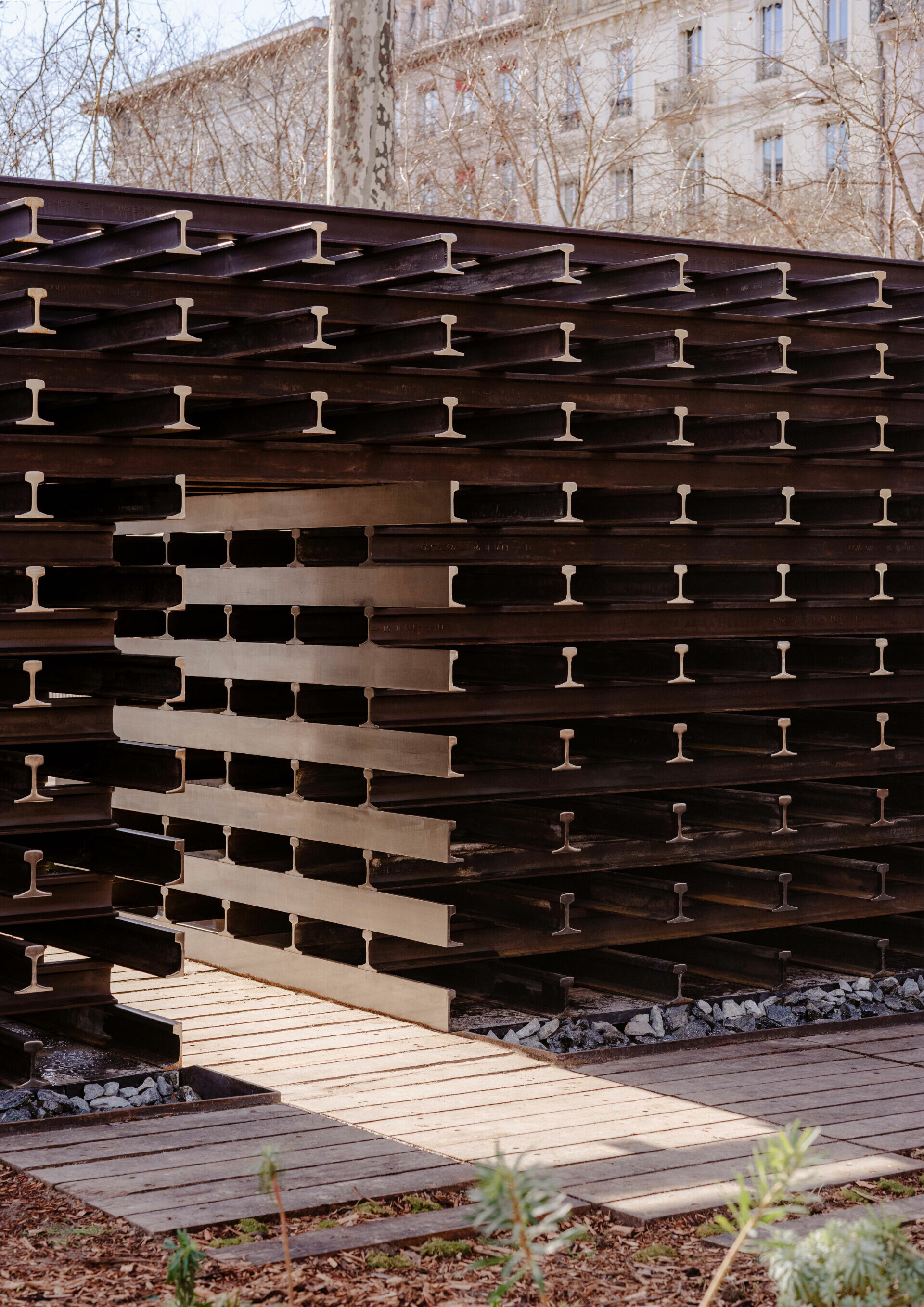
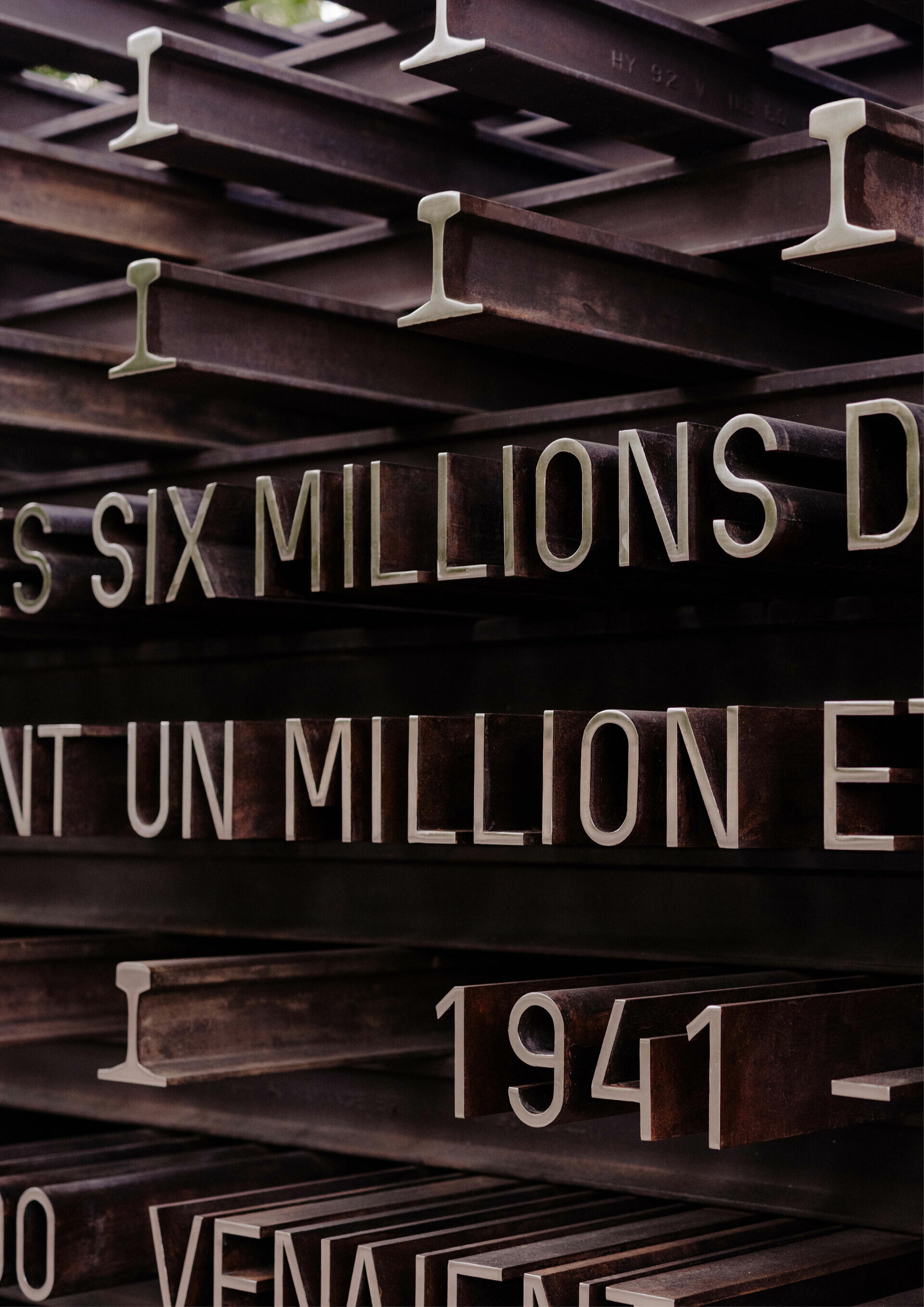
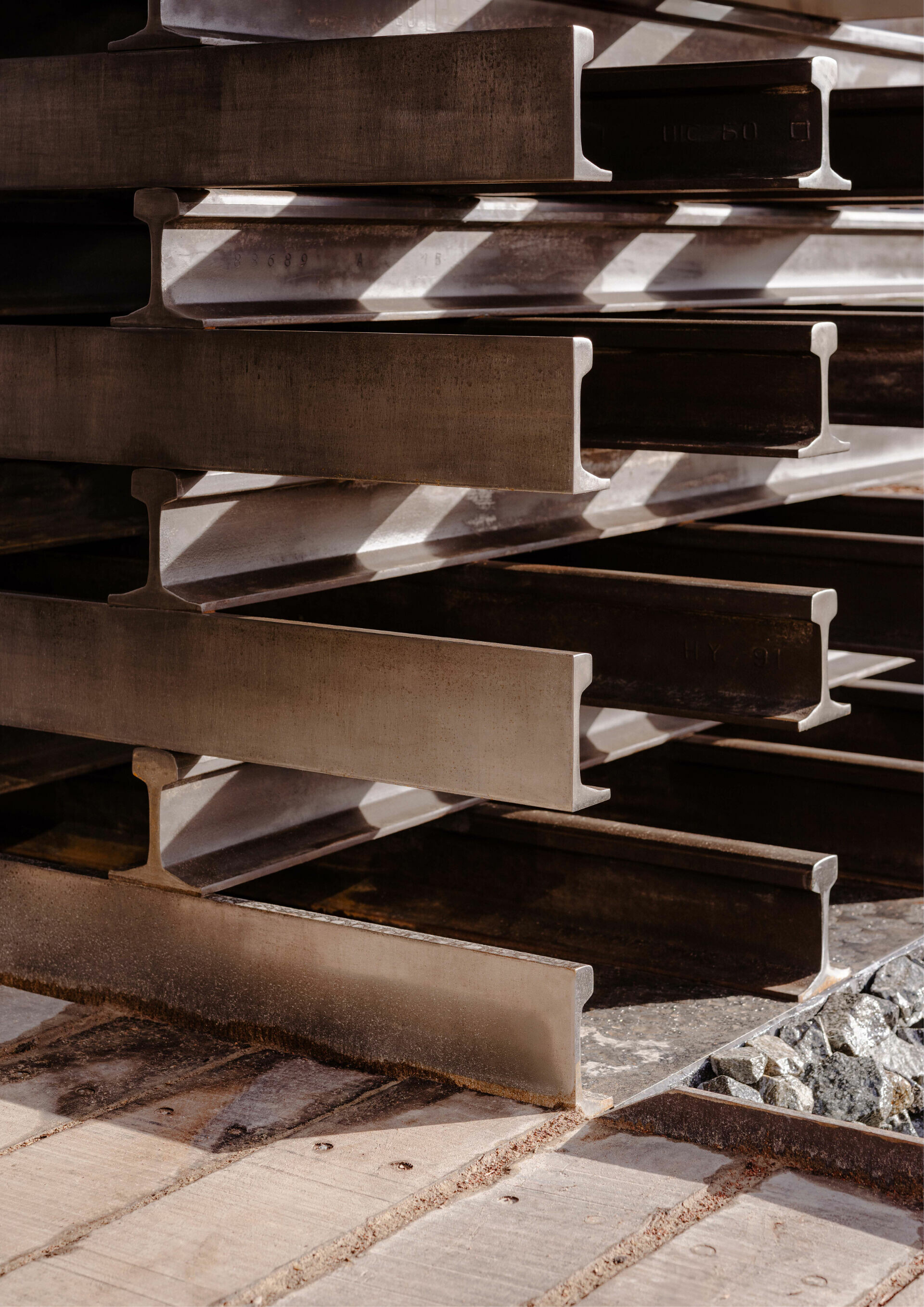
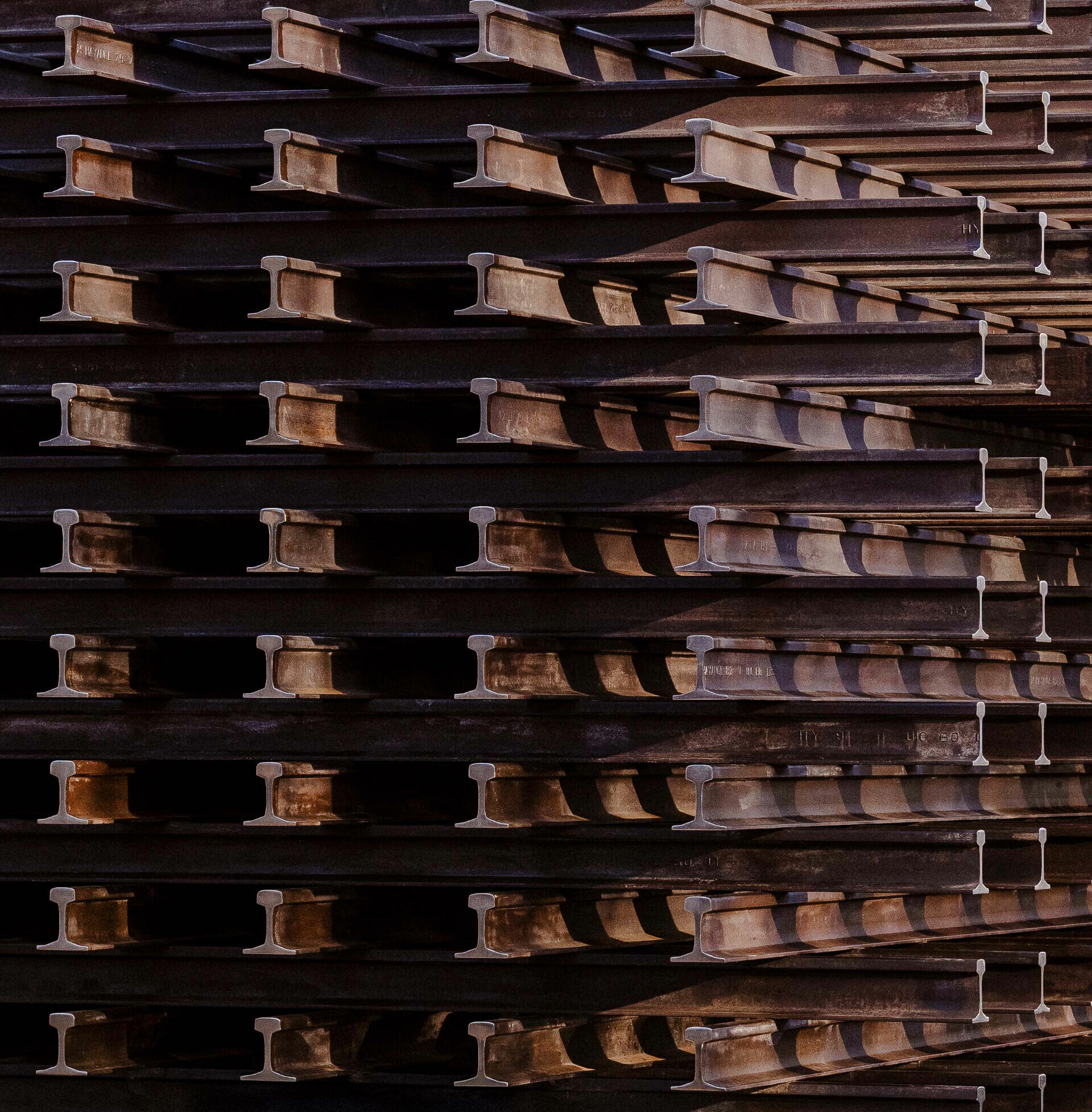
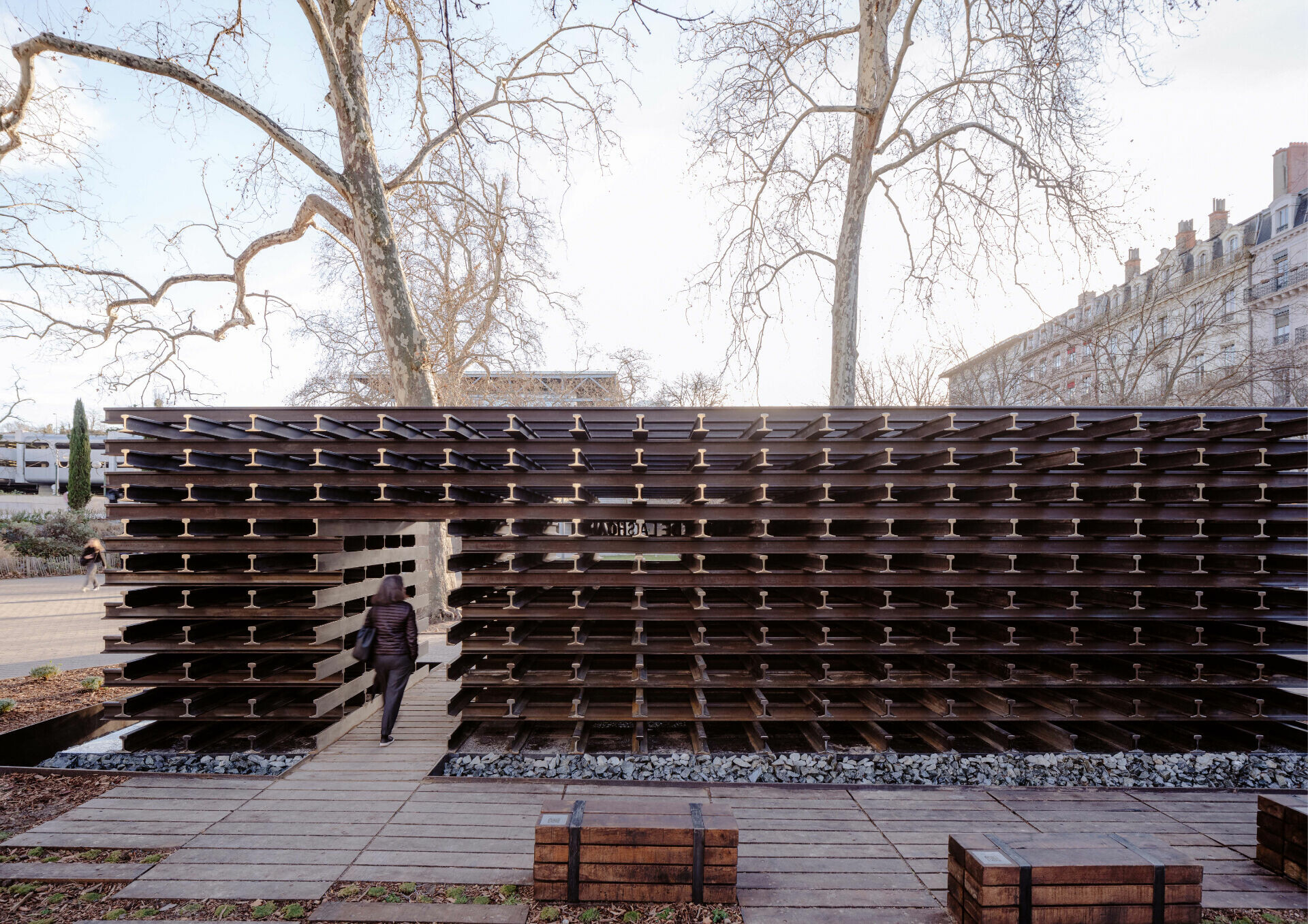
「從一開始,再利用就成為我們設計理念的核心。」設計師為了將曾經承載過無數列車重量和集體記憶的鐵軌,解構為連結過去和未來的樞紐,特意聯繫法國國家鐵路公司(SNCF),並親自前往鐵軌庫,依據每根鐵軌的變形、包漿、磨損程度和色調,悉心挑選紀念碑的組成元素,從而將曾通往集中營的鐵軌轉化為縱橫堆疊的架構,以重複累積形式跳脫平面型態形成立體結構,讓光影流動其中,暗喻著當時驅逐車隊的剪影;枕木則被重新構想為地板,引領人們從公共戶外空間過渡到鋪設道碴的紀念場域,得以細看存在每個鋼軌上的瑕疵和傷痕,在靜謐莊嚴之中感受那股歷經歲月洗鍊的力量。若仔細觀察,還會發現其與火車車廂相仿的尺寸,且使用線性總長 1173 公尺的鋼軌尺度比例,回應里昂與奧斯維辛-比克瑙之間距離約 1173 公里的悲劇故事。
“From the beginning, reuse became the core of our design philosophy.” To take rails that once bore the weight of countless trains and a collective memory and reshape them into a point of connection between past and future, the designers contacted SNCF (France’s national railway company) and visited rail depots in person. They selected elements for the memorial with care, judging each rail by its deformation, patina, degree of wear, and colour. Rails associated with routes that led to concentration camps are transformed into a criss-crossed, stacked framework. Through repeated accumulation, the work moves beyond the flat plane and becomes volume, allowing light and shadow to travel through the structure and hint, obliquely, at the silhouettes of deportation convoys. Sleepers are reimagined as flooring, guiding visitors from the public square into a memorial ground laid with ballast. Up close, the flaws and scars on each rail become legible. In an atmosphere that is quiet and solemn, the material seems to hold a strength tempered by time. Look more carefully and the proportions recall a train carriage. In total, 1,173 metres of rail are used, their total linear length serving as a scale translation, echoing the tragic distance of approximately 1,173 kilometres between Lyon and the Auschwitz-Birkenau camp.
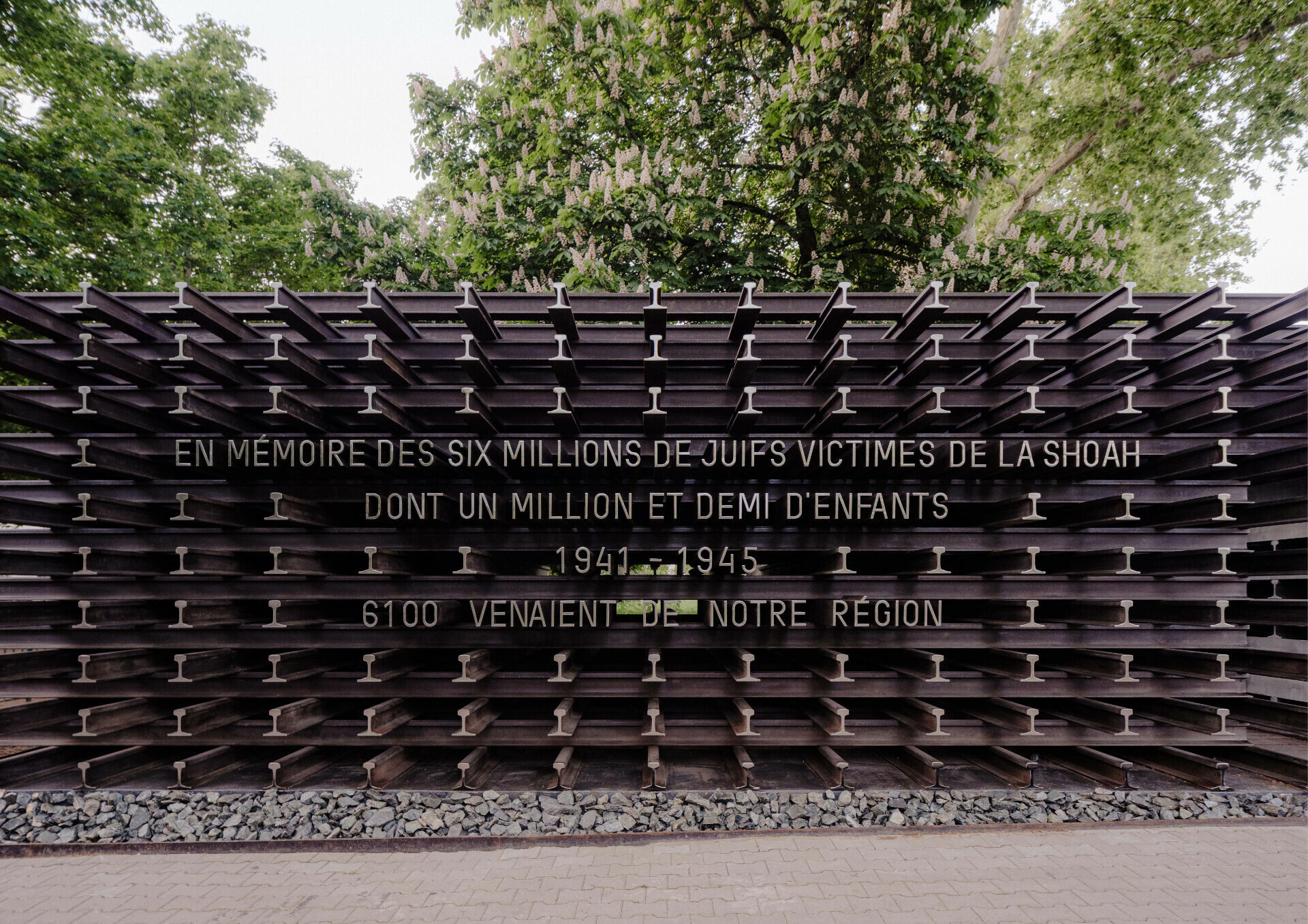
究竟是帶著痛苦記憶勇敢活下去,還是抹去悲傷假裝沒事地過日子會比較好?在《裝幀師》一書中探討了「遺忘」的議題,卻讓人意識到唯有直面過往的不堪,身心才能真正獲得解脫。《記憶之軌》並非單純作為紀念碑,更簡單有力地讓人銘記過去教訓,並透過開放形式與人互動,邀請大眾自發性地去了解屬於當地的故事,從中摸索出客觀且具包容性的紀念過程。
Which is better: to live on bravely with painful memories, or to erase sorrow and carry on as if nothing happened? The Binding explores the theme of “forgetting”, and it brings one recognition into sharp focus: only by facing what was unbearable can body and mind truly find release. Rails of Memory is not simply a monument. In a simpler, more direct way, it keeps the lessons of the past in view. Through an open form that invites interaction, it encourages the public to seek out the story of this place for themselves, and to work towards a process of remembrance that is both clear-eyed and inclusive.